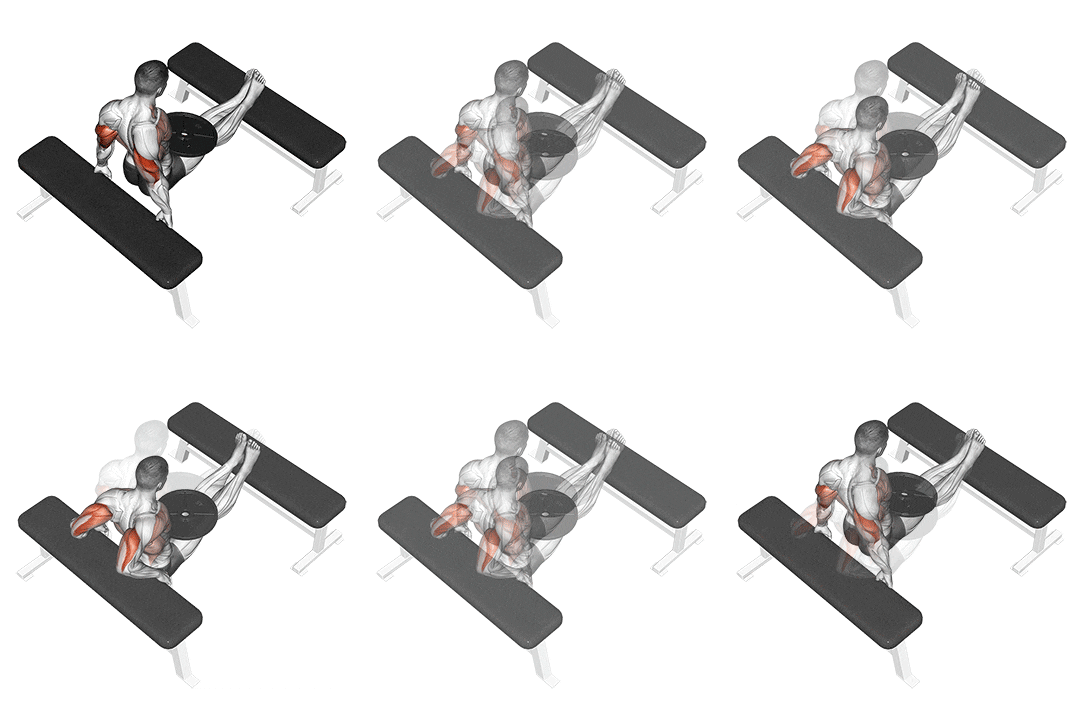
The weighted bench dip is a compound exercise that primarily targets the triceps, the muscles located on the back of the upper arms. It also engages the chest and shoulders to a lesser extent. Adding weights to the exercise increases the resistance, making it more challenging and effective for building strength and muscle in the upper body. ## Instructions 1. Place a bench or sturdy elevated surface behind you and position it parallel to your body. 2. Sit on the edge of the bench and place your hands on the edge, fingers pointing forward, while keeping your palms slightly wider than shoulder-width apart. 3. Extend your legs in front of you and slide your body forward off the bench, supporting your body weight with your hands. 4. Lower your body by bending your elbows, keeping them pointed straight back, until your upper arms are parallel to the floor. Your forearms should be perpendicular to the floor. 5. Pause briefly at the bottom position, then push through your palms to extend your elbows and return to the starting position. 6. Repeat the movement for the desired number of repetitions. ## Variations - Bodyweight Bench Dip: If you're new to the exercise or still working on building strength, you can perform bench dips without any additional weights. - Weighted Bench Dip: Hold a dumbbell or place a weight plate on your lap while performing the bench dips to increase the resistance and intensity. - Reverse Grip Bench Dip: Instead of having your fingers pointing forward, turn your hands so that your fingers point towards your body. This variation places more emphasis on the chest muscles. ## Muscles Worked - Triceps (back of the upper arms) - Chest (pectoral muscles) - Shoulders (anterior deltoids and trapezius to a lesser extent) ## Common Mistakes - Allowing the elbows to flare out to the sides: Keep your elbows pointing straight back throughout the exercise to focus on the triceps and avoid unnecessary strain on the shoulders. - Not lowering the body enough: Aim to lower yourself until your upper arms are parallel to the floor to achieve a full range of motion. - Rounded shoulders or sagging hips: Maintain a straight line from your head to your heels throughout the exercise. Avoid letting your shoulders slump or your hips drop. - Relying too much on the legs: Keep your legs extended in front of you and avoid pushing with your legs to assist in the movement. Focus on using your arms and upper body to perform the exercise. ## Safety Precautions - If you have a history of shoulder or elbow injuries, consult with a healthcare professional before attempting the weighted bench dip. - Start with lighter weights or no weights at all if you're new to the exercise, and gradually increase the resistance as you become more comfortable and stronger. - Ensure that the bench or elevated surface you're using is stable and can support your body weight. - If you feel any pain or discomfort during the exercise, stop immediately and consult with a healthcare professional if needed. Remember to maintain proper form, start with a weight that challenges you but still allows you to perform the exercise correctly, and gradually progress as your strength increases. Enjoy your workout!
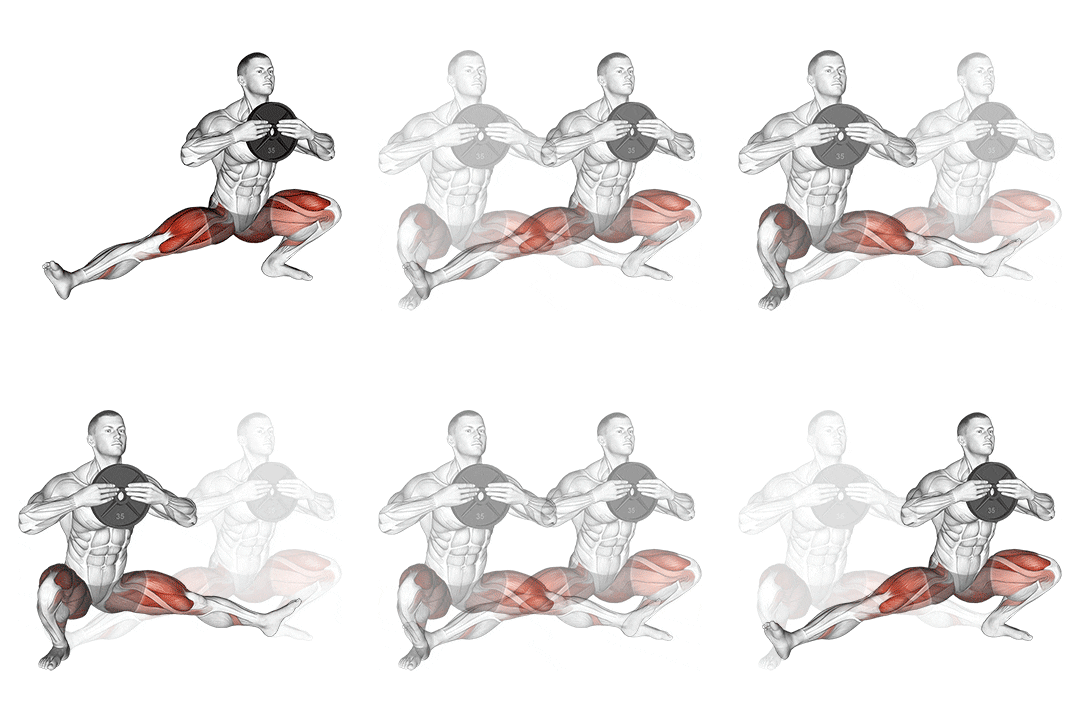
Weighted Cossack squats are a lower body exercise that targets the quadriceps, hamstrings, glutes, adductors, and core muscles. This exercise involves a wide stance and lateral movement, providing benefits such as improved lower body strength, flexibility, and stability. ## Instructions 1. Start by standing with your feet wider than shoulder-width apart and toes pointed slightly outward. 2. Hold a dumbbell, kettlebell, or a weighted barbell with both hands in front of your chest. 3. Shift your weight to one side and begin bending your knee on that side while keeping the other leg straight. 4. Lower your body by pushing your hips back and keeping your chest lifted. Aim to go as low as comfortable while maintaining good form. 5. Ensure your knee stays in line with your toes and does not collapse inward. 6. Push through the heel of the bent leg and return to the starting position. 7. Repeat the movement on the other side, shifting your weight and performing the squat on the opposite leg. 8. Continue alternating sides, performing the weighted Cossack squats for your desired number of repetitions. ## Variations - Bodyweight Cossack Squats: If you're new to the exercise or prefer to start without weights, you can perform Cossack squats using your body weight only. - Goblet Cossack Squats: Instead of holding the weight in front of your chest, hold a kettlebell or dumbbell with both hands at your chest level. - Single-Leg Cossack Squats: For an added challenge, you can elevate your non-working leg by placing it on a step or bench while performing the Cossack squat on one leg at a time. ## Muscles Worked - Quadriceps (front thigh muscles) - Hamstrings (back thigh muscles) - Glutes (buttocks) - Adductors (inner thigh muscles) - Core muscles for stabilization ## Common Mistakes - Allowing the knee to collapse inward. Focus on keeping your knee in line with your toes throughout the movement. - Leaning too far forward or rounding the back. Keep your chest lifted and maintain an upright posture. - Going too low or beyond your range of motion, which can strain the joints. Only go as low as you can comfortably without compromising form. - Rushing the movement or using momentum. Perform the exercise in a controlled manner, focusing on the muscles being worked. ## Safety Precautions - Start with a lighter weight or no weight at all to practice the movement and ensure proper form. - Use a weight that is appropriate for your strength and fitness level. - If you have any pre-existing medical conditions or injuries, consult with a healthcare professional before attempting this exercise. - Be cautious of your balance, especially when first starting. Perform the exercise near a stable support or wall if needed. - Listen to your body and avoid any movements that cause pain or discomfort. Stop immediately if you experience any sharp or intense pain. Remember to start with lighter weights and gradually increase the load as you become more comfortable and stronger. Focus on maintaining proper form throughout the exercise. Enjoy your workout, and prioritize safety!
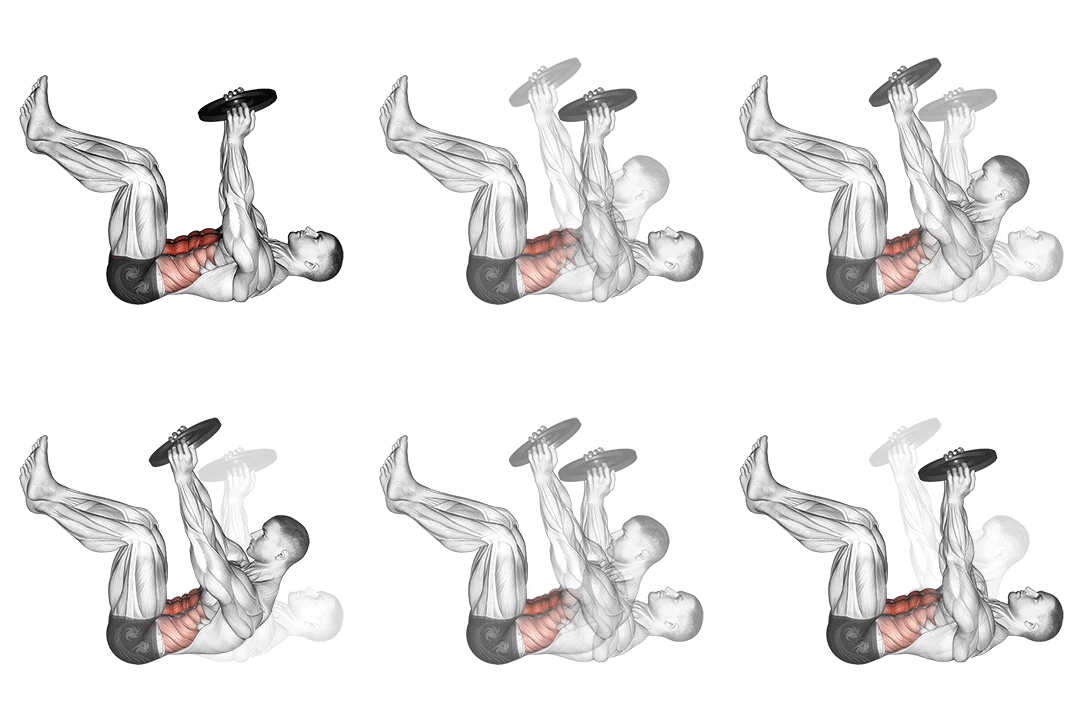
Weighted crunches are an abdominal exercise that targets the rectus abdominis (six-pack muscles) and the obliques. By adding resistance to the traditional crunch exercise, weighted crunches increase the intensity and challenge the abdominal muscles further. This exercise helps build strength and definition in the core. ## Instructions 1. Lie down on your back on an exercise mat or a flat surface. Bend your knees and place your feet flat on the ground, hip-width apart. 2. Hold a weight plate, dumbbell, or medicine ball against your chest with both hands. Choose a weight that challenges you but allows you to maintain proper form. 3. Engage your abdominal muscles by drawing your navel in towards your spine. 4. Slowly lift your head, neck, and shoulders off the ground, curling your upper body towards your knees. Keep your lower back in contact with the ground. 5. Exhale as you contract your abdominal muscles and squeeze at the top of the movement. 6. Pause for a moment at the top, then slowly lower your upper body back to the starting position with control. 7. Repeat the movement for your desired number of repetitions. ## Variations - Decline Weighted Crunches: Perform the weighted crunches on a decline bench to increase the challenge and engage the upper abdominal muscles more. - Cable Weighted Crunches: Attach a cable machine with a rope or handle to a high pulley. Hold the rope or handle in your hands and perform the crunches using the resistance provided by the cable. - Russian Twist with Weight: Sit on the ground, holding a weight plate, dumbbell, or medicine ball. Lean back slightly, lift your feet off the ground, and twist your torso from side to side, engaging your obliques. ## Muscles Worked - Rectus Abdominis (six-pack muscles) - Obliques (side abdominal muscles) ## Common Mistakes - Pulling on the neck or using excessive force with the hands behind the head. Keep your hands lightly touching the weight against your chest and use your abdominal muscles to perform the movement. - Rounding the lower back or lifting the hips off the ground. Maintain contact between your lower back and the ground throughout the exercise. - Using momentum or swinging the upper body to complete the movement. Focus on controlled and deliberate contractions of the abdominal muscles. - Holding your breath. Remember to exhale as you contract your abs and inhale as you return to the starting position. ## Safety Precautions - Choose a weight that is appropriate for your strength and fitness level. Start with a lighter weight and gradually increase as you become more comfortable. - If you have any pre-existing medical conditions or injuries, consult with a healthcare professional before attempting this exercise. - Keep your neck and head in alignment with your spine throughout the movement to avoid strain or injury. - If you feel any pain or discomfort in your lower back, stop the exercise and reassess your form. - Engage your core and avoid excessive strain on your neck and shoulders. Remember to focus on proper form and engage your abdominal muscles throughout the exercise. Gradually increase the weight and intensity as you progress. Enjoy your workout, and prioritize safety!
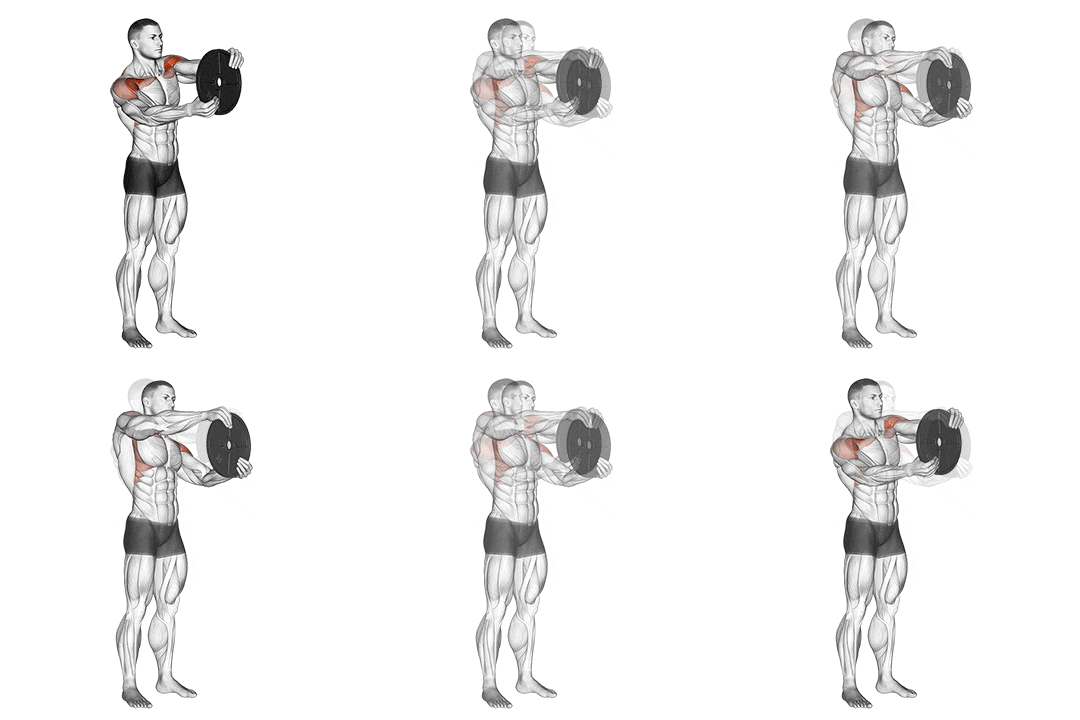
The weighted round arm exercise is a strength training exercise that primarily targets the shoulder muscles, specifically the deltoids. It also engages the muscles of the upper back and arms. This exercise is beneficial for improving shoulder stability, increasing shoulder strength, and enhancing overall upper body muscular development. ## Instructions 1. Start by standing with your feet shoulder-width apart, holding a dumbbell or a weighted object in each hand. 2. Keep your back straight and core engaged throughout the exercise. 3. Begin with your arms extended straight down in front of your thighs, palms facing your body. 4. Slowly raise your arms out to the sides in a semi-circular motion, maintaining a slight bend in your elbows. 5. Continue the circular motion until your arms are parallel to the ground, forming a "T" shape with your body. 6. Hold this position for a brief pause to fully engage the shoulder muscles. 7. Lower your arms back down to the starting position in a controlled manner. 8. Repeat the exercise for the desired number of repetitions. ## Variations - If you are a beginner or have limited shoulder mobility, you can perform this exercise without weights or with light weights until you feel comfortable with the movement. - To increase the intensity, you can use heavier dumbbells or resistance bands. - Another variation is to perform the exercise while sitting on a stability ball or bench, which adds an element of core stability. ## Muscles Worked - Primary muscles: Deltoids (shoulder muscles) - Secondary muscles: Trapezius, rhomboids, biceps, triceps ## Common Mistakes - Using momentum: Avoid swinging the weights or using excessive momentum to lift the arms. Focus on controlled and deliberate movements. - Shrugging the shoulders: Keep your shoulders down and relaxed throughout the exercise. Avoid lifting them up toward your ears. - Overarching the back: Maintain a neutral spine and avoid arching your back excessively during the movement. - Allowing the elbows to lock out: Keep a slight bend in your elbows throughout the exercise to avoid strain on the joint. ## Safety Precautions - Start with lighter weights and gradually increase the resistance as your strength improves. - If you have any shoulder injuries or pain, consult with a healthcare professional before attempting this exercise. - Maintain proper form and technique throughout the movement to reduce the risk of injury. - If you experience any discomfort or pain during the exercise, stop immediately and seek medical advice.
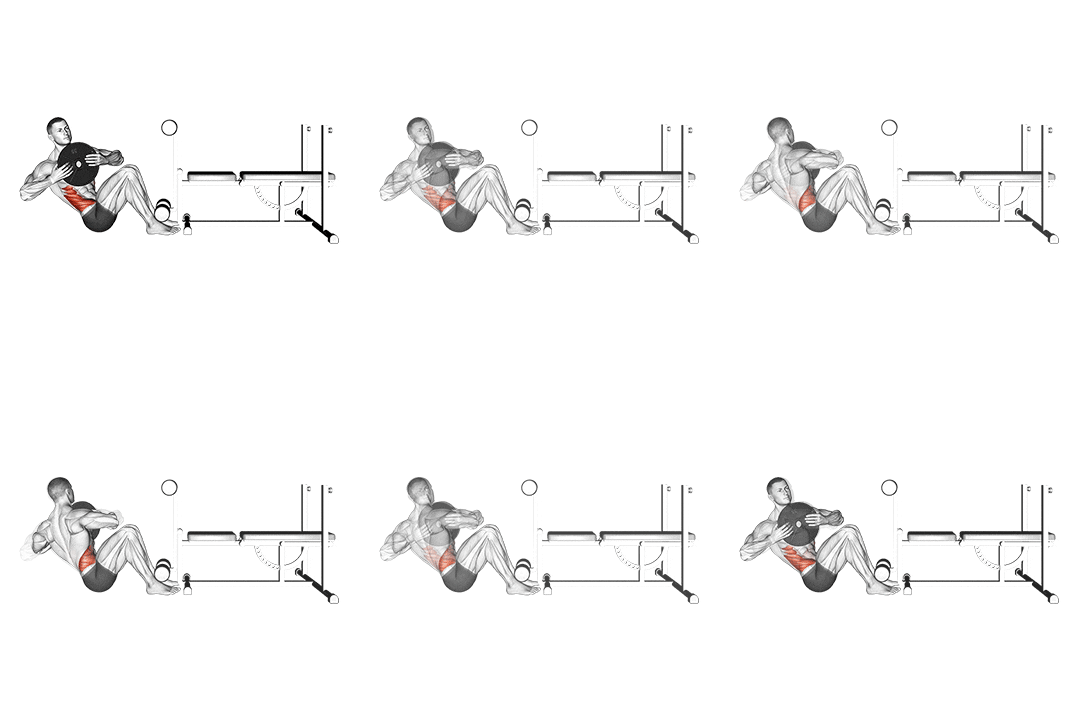
The weighted Russian twist is a popular core exercise that targets the oblique muscles, which are responsible for rotating and stabilizing the torso. By adding resistance with a weight, this exercise challenges the core muscles and helps improve rotational strength and stability. ## Instructions 1. Start by sitting on the floor with your knees bent and feet flat on the ground. You can lift your feet slightly off the ground for a more advanced variation. 2. Hold a weight, such as a dumbbell, medicine ball, or a weight plate, with both hands in front of your chest. Keep your elbows slightly bent. 3. Engage your core by pulling your navel towards your spine and maintain a straight back throughout the exercise. 4. Lean back slightly, creating a V-shape with your torso and thighs. This is your starting position. 5. Begin the exercise by rotating your torso to the right side while keeping your hips stable. Exhale during this movement. 6. Touch the weight to the ground next to your right hip or as close as you comfortably can. 7. Slowly rotate your torso to the left side, bringing the weight across your body and touching the ground next to your left hip. Inhale during this movement. 8. Continue alternating the twisting motion from side to side in a controlled manner. 9. Aim for a specific number of repetitions or perform the exercise for a set amount of time. ## Variations - Beginner Variation: If you're new to this exercise, you can perform it without any weight. Focus on mastering the twisting motion and gradually progress to adding resistance. - Advanced Variation: To increase the difficulty, you can hold a heavier weight, use a resistance band, or extend your legs straight out instead of keeping them bent. ## Muscles Worked The weighted Russian twist primarily targets the following muscles: - External and internal obliques - Rectus abdominis (six-pack muscles) - Transverse abdominis (deep core muscles) - Erector spinae (lower back muscles) ## Common Mistakes Here are some common mistakes to avoid while performing the weighted Russian twist: 1. Using momentum: Avoid relying on momentum to twist from side to side. Focus on controlled movements and engage your core muscles throughout the exercise. 2. Rounded back: Maintain proper posture and avoid rounding or hunching your back. Keep your spine straight and tall. 3. Twisting only the arms: Remember that the movement should come from your core, not just your arms. Initiate the twist from your torso, allowing your arms to follow. 4. Overarching the lower back: Avoid excessive arching of the lower back, as it can strain the spine. Keep your core engaged and maintain a neutral spine position. 5. Holding your breath: Remember to breathe naturally throughout the exercise. Exhale as you twist and inhale as you return to the starting position. ## Safety Precautions To perform the weighted Russian twist safely, consider the following precautions: 1. Start with a weight that challenges you but still allows you to maintain proper form. Gradually increase the weight as your strength improves. 2. If you have any pre-existing back or spine issues, it's recommended to consult with a healthcare professional or a qualified fitness instructor before attempting this exercise. 3. Avoid jerky or rapid movements that can strain the muscles or joints. Focus on smooth and controlled motions. 4. If you experience any pain or discomfort, especially in your lower back, stop the exercise and seek guidance from a professional. 5. As with any exercise, it's important to warm up before performing the weighted Russian twist to prepare your muscles and joints. Always listen to your body, modify the exercise as needed, and consult with a fitness professional if
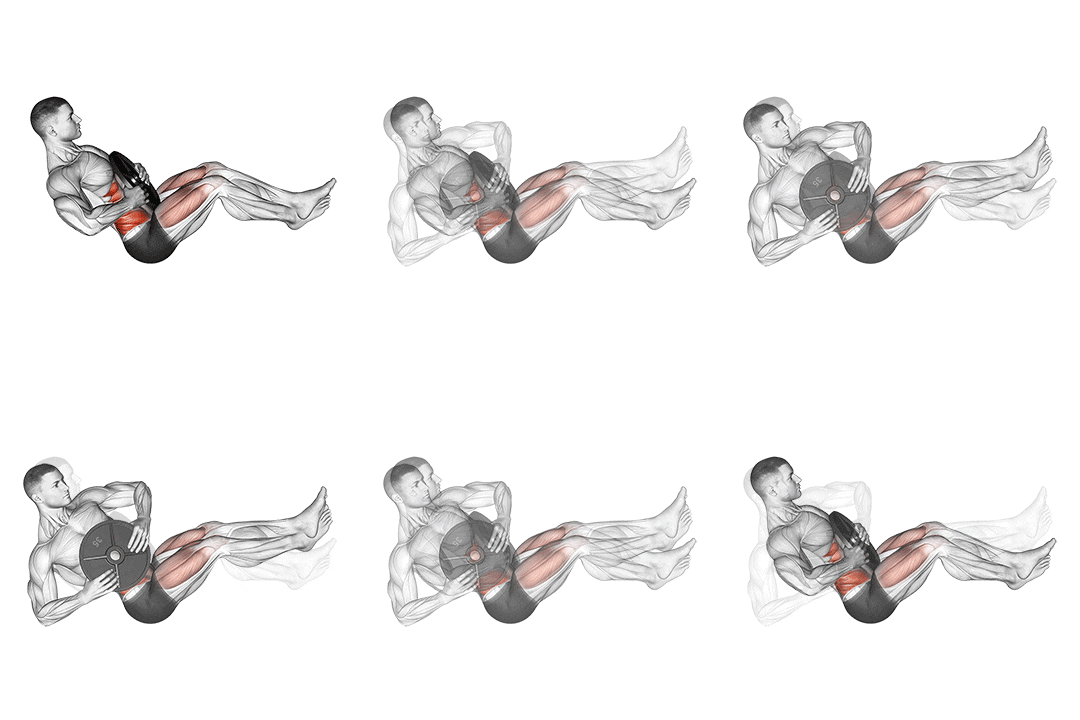
The weighted Russian twist with legs up is a variation of the standard Russian twist exercise. It targets the abdominal muscles, particularly the obliques, and also engages the hip flexors and lower abs. This exercise adds an additional challenge by lifting the legs off the ground, requiring more core strength and stability. ## Instructions 1. Start by sitting on the floor with your knees bent and feet flat on the ground. 2. Lean back slightly, maintaining a straight back and engaging your abdominal muscles. 3. Lift your feet off the ground, bending your knees at a 90-degree angle. Your lower legs should be parallel to the floor. 4. Hold a weight, such as a dumbbell or a medicine ball, with both hands in front of your chest. 5. Begin the exercise by rotating your torso to the right, bringing the weight towards the floor next to your right hip. Exhale during this movement. 6. Pause briefly at the end of the twist, then rotate your torso to the left, bringing the weight towards the floor next to your left hip. Inhale during this movement. 7. Continue alternating the twisting motion from side to side while keeping your legs lifted off the ground. ## Variations - Beginners: If you're new to this exercise or find it challenging to keep your legs lifted, you can perform the exercise with your feet resting on the ground and gradually work towards lifting them as you build strength and stability. - Advanced: To increase the difficulty, you can use a heavier weight or extend your legs fully instead of keeping them bent. This variation engages the hip flexors and lower abs to a greater extent. ## Muscles Worked The weighted Russian twist with legs up primarily targets the following muscles: - Rectus abdominis (six-pack muscles) - Internal and external obliques - Transverse abdominis (deep core muscles) - Hip flexors - Lower abs ## Common Mistakes Here are some common mistakes people make while performing the weighted Russian twist with legs up and how to avoid them: 1. Using momentum: Avoid relying on momentum or swinging your torso from side to side. Maintain control throughout the exercise to effectively engage the targeted muscles. 2. Allowing the lower back to arch excessively: Keep your lower back pressed into the ground or mat to maintain proper spinal alignment. Avoid overarching, as it can strain the lower back. 3. Neglecting core activation: Remember to engage your core muscles throughout the exercise by pulling your navel towards your spine. This helps stabilize the torso and maximizes the benefits of the exercise. ## Safety Precautions To perform the weighted Russian twist with legs up safely, consider the following precautions: 1. Start with a light weight and gradually increase the resistance as your core strength improves. 2. If you have any pre-existing back or spine issues, consult with a healthcare professional before attempting this exercise. 3. Maintain proper form and avoid excessive twisting if you experience discomfort or pain in your lower back. 4. Listen to your body and stop the exercise if you feel any sharp or persistent pain. 5. If you have difficulty keeping your legs lifted, work on building core strength and stability before attempting this variation. Remember to warm up before performing the exercise and always listen to your body. If you have any concerns or questions about proper technique, consult with a fitness professional.
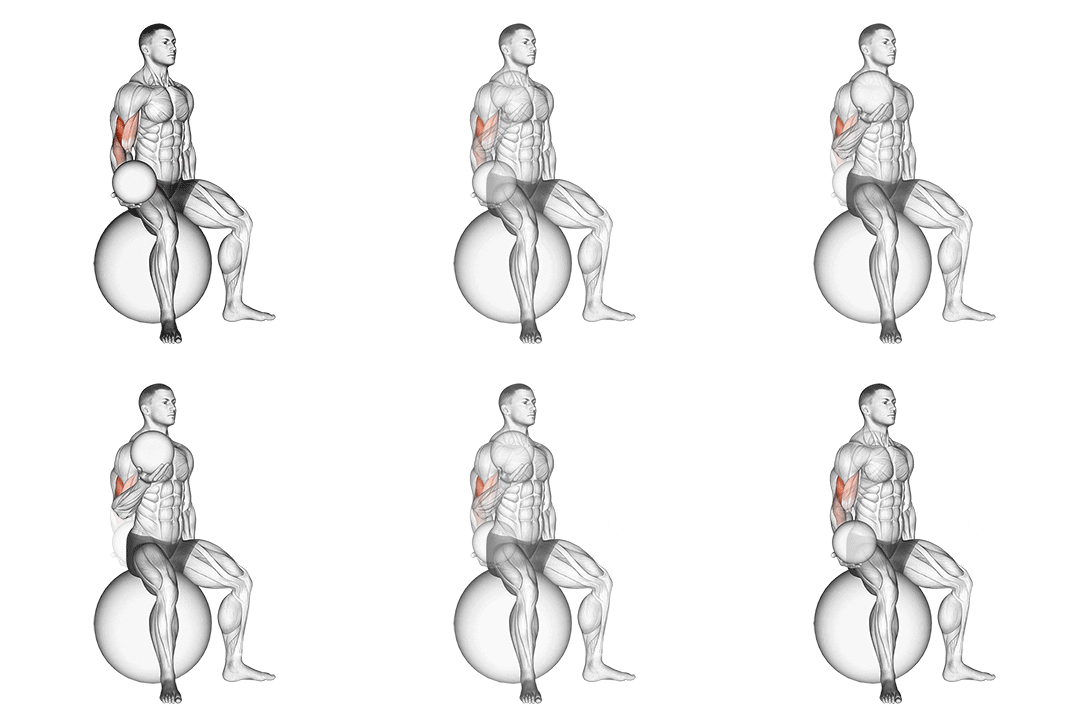
The weighted seated bicep curl on a stability ball is an exercise that targets the biceps, which are the muscles located on the front of the upper arm. Performing this exercise on a stability ball adds an element of instability, engaging the core muscles for balance and stability. ## Instructions 1. Start by sitting on a stability ball with your feet flat on the floor, hip-width apart. 2. Hold a dumbbell in each hand with your palms facing forward. Let your arms hang straight down by your sides, fully extending your elbows. 3. Walk your feet forward, rolling the ball until your lower back and mid-back are supported on the ball. Your upper back and head should be slightly off the ball, and your knees should be bent at a 90-degree angle. 4. Engage your core muscles to maintain stability on the ball throughout the exercise. 5. Keeping your upper arms stationary, exhale and slowly curl the weights towards your shoulders by bending your elbows. Maintain control and focus on squeezing your biceps at the top of the movement. 6. Pause briefly at the top of the curl, then inhale and slowly lower the weights back down to the starting position, fully extending your elbows. 7. Repeat for the desired number of repetitions. ## Variations - Beginners: If you're new to this exercise or find it challenging to maintain stability on the stability ball, you can perform the seated bicep curl on a regular bench or chair until you build sufficient core strength and balance. - Advanced: To increase the difficulty, you can use heavier dumbbells or incorporate an additional element of instability by performing the exercise on a wobble board or Bosu ball. ## Muscles Worked The weighted seated bicep curl primarily targets the following muscles: - Biceps brachii (front of the upper arm) - Brachialis (deep muscle underneath the biceps) - Brachioradialis (forearm muscle) ## Common Mistakes Here are some common mistakes people make while performing the weighted seated bicep curl on a stability ball and how to avoid them: 1. Using momentum: Avoid swinging the weights or using momentum to lift the dumbbells. Keep the movement controlled and focus on isolating the biceps. 2. Rounding the back: Maintain proper posture throughout the exercise. Avoid rounding or hunching your back on the stability ball. Keep your chest lifted, shoulders back, and core engaged. 3. Allowing the elbows to flare out: Keep your elbows close to your sides throughout the movement. This ensures that the biceps are the primary muscles engaged and reduces stress on the shoulders. 4. Holding your breath: Remember to breathe throughout the exercise. Exhale as you curl the weights up and inhale as you lower them back down. ## Safety Precautions To perform the weighted seated bicep curl on a stability ball safely, consider the following precautions: 1. Choose an appropriate weight that allows you to maintain proper form and control throughout the exercise. 2. If you have any pre-existing back or balance issues, consult with a healthcare professional before attempting this exercise. 3. Start with a stable and properly inflated stability ball. Make sure it can support your weight and is appropriate for your height. 4. Take your time to get comfortable and find your balance on the stability ball before adding weights to the exercise. 5. If you feel any discomfort or pain in your back or shoulders, stop the exercise and reassess your form. Adjust the weight or range of motion as needed. As with any exercise, it's essential to warm up before performing the exercise and consult with a fitness professional if you have any concerns or questions about proper technique
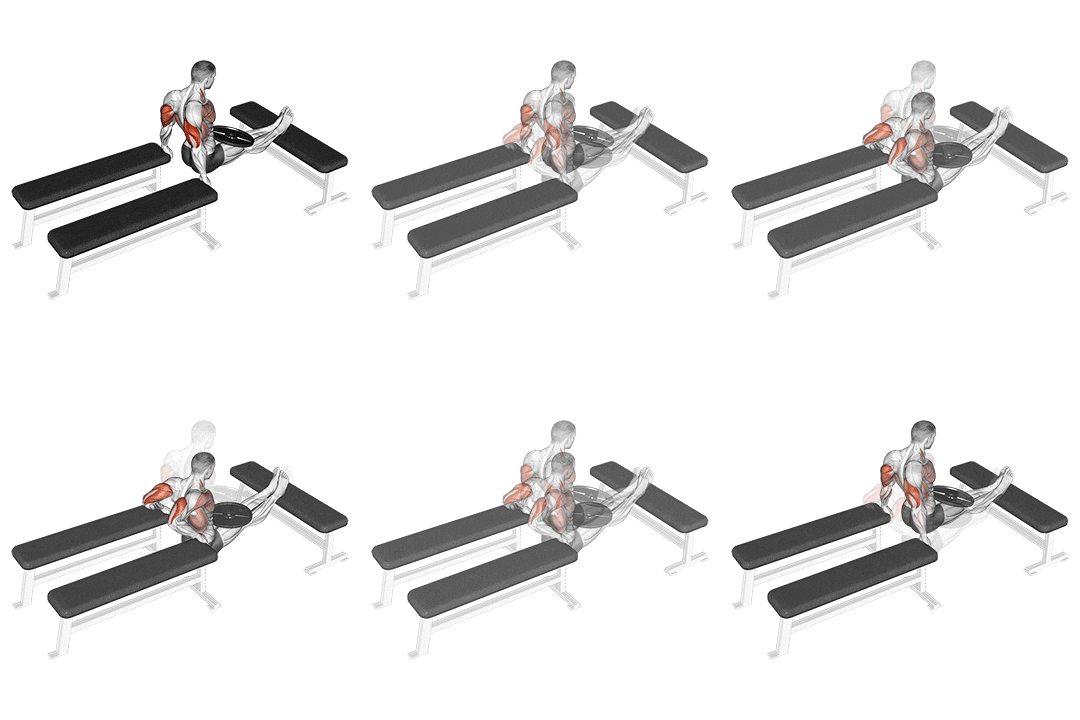
Weighted three bench dips are an exercise that primarily targets the triceps muscles of the upper arms, as well as the muscles of the chest and shoulders. It involves performing a dip motion while using additional weight to increase the resistance and challenge the muscles. ## Instructions 1. Set up three benches or elevated platforms parallel to each other, with enough space between them to perform the exercise comfortably. 2. Sit on the edge of the middle bench and place your hands on the outer benches, gripping the edges securely. 3. Extend your legs out in front of you, keeping your feet flat on the ground. 4. Slide your body off the edge of the middle bench, lowering yourself down while keeping your elbows tucked close to your sides. 5. Lower your body until your upper arms are parallel to the ground or slightly below, maintaining tension in your triceps. 6. Push through your hands and engage your triceps to raise your body back up to the starting position. 7. Repeat the dip motion for the desired number of repetitions. ## Variations - **Bodyweight Bench Dips**: If you don't have access to additional weight, you can perform the exercise using just your body weight. Follow the same instructions, but without the additional weight. - **Weighted Vest or Dip Belt**: Instead of holding weights with your hands, you can wear a weighted vest or use a dip belt with weight plates to add resistance to the exercise. - **Assisted Bench Dips**: If you find bench dips challenging, you can perform assisted bench dips by placing your feet on the ground with bent knees and using your legs to assist in pushing yourself up. ## Muscles Worked - **Triceps**: The main muscles targeted during weighted three bench dips are the triceps brachii, located at the back of the upper arms. - **Chest**: The muscles of the chest, specifically the pectoralis major, assist in the pressing motion during the exercise. - **Shoulders**: The anterior deltoids (front of the shoulders) and other muscles of the shoulder complex are engaged as stabilizers during the movement. ## Common Mistakes - **Flaring Elbows**: Avoid allowing your elbows to flare out to the sides during the dip motion. Keep your elbows close to your body to focus the effort on the triceps and minimize stress on the shoulders. - **Rounded Shoulders**: Maintain good posture throughout the exercise by keeping your shoulders down and back, avoiding rounding or hunching forward. - **Incomplete Range of Motion**: Ensure that you lower your body until your upper arms are parallel to the ground or slightly below. Avoid cutting the range of motion short, as this can reduce the effectiveness of the exercise. ## Safety Precautions - **Warm-Up**: Prior to performing weighted three bench dips, warm up your triceps, chest, and shoulders with dynamic stretches or light cardio to increase blood flow and prepare the muscles for the exercise. - **Choose Appropriate Weight**: If using additional weight, select a weight that challenges your triceps without compromising your form. Start with lighter weights and gradually increase the resistance as your strength improves. - **Controlled Movement**: Perform the exercise in a slow and controlled manner, focusing on the muscles being targeted. Avoid jerky or rapid movements that can strain the joints. - **Listen to Your Body**: If you experience any pain or discomfort during the exercise, especially in the shoulders or elbows, stop immediately and consult with a healthcare professional or fitness expert. It's always recommended to consult with a qualified fitness professional or healthcare provider before starting any new exercise program, especially if you have pre-existing medical conditions or injuries.
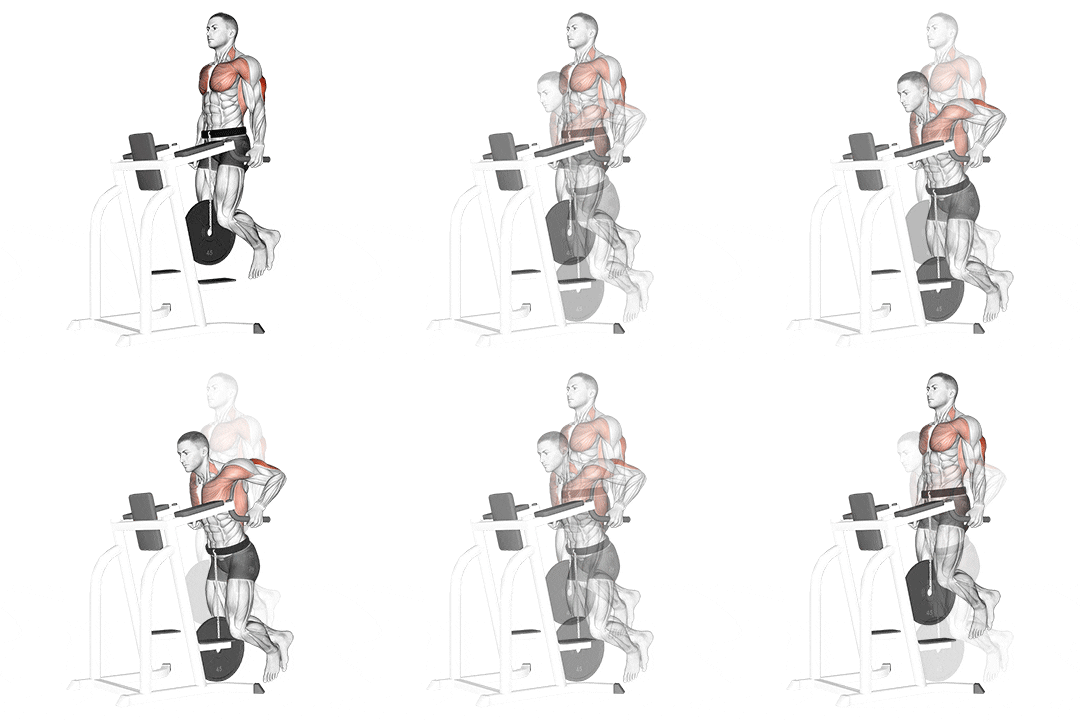
Weighted tricep dips are an exercise that primarily targets the triceps muscles of the upper arms. It involves using a bench or elevated platform to perform a dip motion, adding additional weight to increase the challenge and stimulate muscle growth and strength in the triceps. ## Instructions 1. Position a bench or elevated platform behind you and place your hands shoulder-width apart on the edge of the bench, fingers pointing forward. 2. Extend your legs out in front of you, keeping your feet flat on the ground, or place your heels on a stable surface to elevate your legs for added difficulty. 3. Slowly lower your body by bending your elbows, allowing your torso to move downward while keeping your elbows pointed backward and close to your body. 4. Continue lowering until your upper arms are parallel to the ground, feeling a stretch in your triceps. 5. Push through your hands and engage your triceps to raise your body back up to the starting position, fully extending your arms. 6. Repeat the motion for the desired number of repetitions. ## Variations - **Bodyweight Tricep Dips**: If you don't have access to additional weight, you can perform tricep dips using just your body weight. Follow the same instructions without adding any external weight. - **Weighted Vest or Dip Belt**: For added resistance, you can wear a weighted vest or use a dip belt with weight plates attached to increase the intensity of the exercise. - **Assisted Tricep Dips**: If you find tricep dips challenging, you can perform assisted tricep dips by placing your feet on the ground with bent knees and using your legs to assist in pushing yourself up. ## Muscles Worked - **Triceps**: The primary muscles targeted during weighted tricep dips are the triceps brachii, located at the back of the upper arms. - **Chest and Shoulders**: The chest and shoulder muscles, particularly the pectoralis major and anterior deltoids, also assist in the dip motion. ## Common Mistakes - **Elbows Flaring Out**: Avoid allowing your elbows to flare out to the sides during the dip. Keep your elbows pointed backward and close to your body to focus the effort on the triceps and minimize stress on the shoulders. - **Rounded Shoulders**: Maintain good posture throughout the exercise by keeping your shoulders down and back, avoiding rounding or hunching forward. - **Incomplete Range of Motion**: Ensure that you lower your body until your upper arms are parallel to the ground. Avoid cutting the range of motion short, as this can reduce the effectiveness of the exercise. ## Safety Precautions - **Warm-Up**: Prior to performing weighted tricep dips, warm up your triceps, chest, and shoulders with dynamic stretches or light cardio to increase blood flow and prepare the muscles for the exercise. - **Choose Appropriate Weight**: If using additional weight, select a weight that challenges your triceps without compromising your form. Start with lighter weights and gradually increase the resistance as your strength improves. - **Controlled Movement**: Perform the exercise in a slow and controlled manner, focusing on the muscles being targeted. Avoid jerky or rapid movements that can strain the joints. - **Listen to Your Body**: If you experience any pain or discomfort during the exercise, especially in the shoulders or elbows, stop immediately and consult with a healthcare professional or fitness expert. Always consult with a qualified fitness professional or healthcare provider before starting any new exercise program, especially if you have pre-existing medical conditions or injuries.