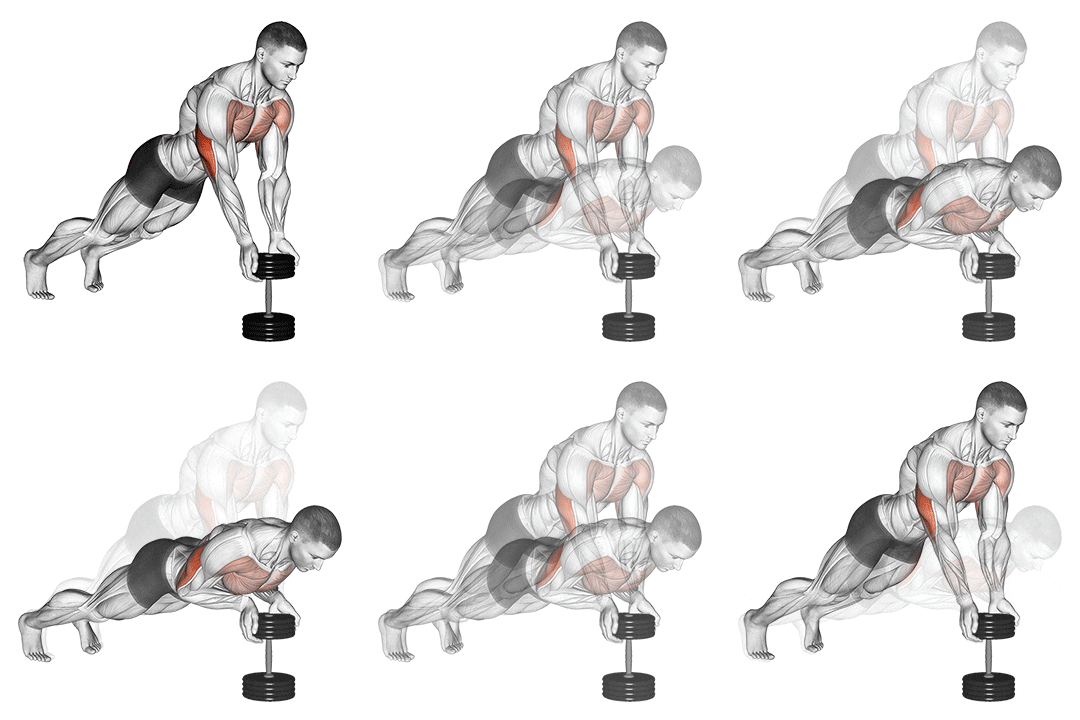
The push-up close-grip off dumbbell is an advanced variation of the traditional push-up exercise. It targets the muscles of the chest, triceps, and shoulders with an emphasis on the triceps. This exercise requires stability and strength, making it beneficial for improving upper body muscular development and overall pushing strength. ## Instructions 1. Place two dumbbells parallel to each other on the floor, with the handles aligned. 2. Assume a push-up position with your hands gripping the dumbbell handles. Position your hands closer together than shoulder-width apart, creating a close grip. 3. Engage your core muscles by pulling your belly button towards your spine. 4. Lower your body towards the floor by bending your elbows, keeping them close to your sides. Keep your body straight from head to toe. 5. Descend until your chest is just above the ground or as far as you comfortably can. 6. Push yourself back up to the starting position by straightening your arms, while maintaining control and stability. 7. Repeat the movement for the desired number of repetitions. ## Variations Here are some variations of the push-up close-grip off dumbbell that can be adjusted based on fitness levels and specific needs: 1. **Easier variation**: If the exercise is too challenging, you can perform close-grip push-ups on the floor without the use of dumbbells. This reduces the stability requirement. 2. **Harder variation**: To increase the difficulty, you can elevate your feet on an elevated surface, such as a bench or step. This increases the demand on the upper body muscles. ## Muscles Worked The push-up close-grip off dumbbell primarily targets the following muscles: - Chest (pectoralis major and minor) - Triceps (back of the upper arm) - Shoulders (deltoids) - Core muscles (to stabilize the body) ## Common Mistakes Here are some common mistakes people make while performing the push-up close-grip off dumbbell exercise and how to avoid them: 1. **Flaring the elbows**: Keep your elbows close to your sides throughout the movement. Avoid allowing them to flare out to the sides, as this puts excessive stress on the shoulder joints. 2. **Sagging the lower back**: Maintain a straight line from your head to your heels throughout the exercise. Avoid sagging your lower back or allowing your hips to drop. 3. **Limited range of motion**: Aim to descend until your chest is just above the ground or as far as you comfortably can, without compromising form. Avoid cutting the movement short. 4. **Lack of control**: Maintain control throughout the exercise. Avoid rapid or jerky movements, as they can increase the risk of injury. ## Safety Precautions To ensure safety while performing the push-up close-grip off dumbbell: 1. This exercise is more suitable for individuals with prior experience and sufficient upper body strength. Beginners may want to build strength through standard push-ups before attempting this variation. 2. Warm up your upper body with some light cardio and dynamic stretches before starting. 3. Use dumbbells that are appropriate for your strength level. Start with lighter dumbbells and progress to heavier ones as you gain strength and confidence. 4. Maintain proper form and avoid pushing yourself beyond your capabilities. It's better to perform the exercise with good form and lower intensity than to risk injury with improper technique. 5. If you have any pre-existing shoulder, wrist, or back injuries, consult with a healthcare professional before attempting this exercise. 6. If you experience any pain or discomfort, particularly in the shoulders, wrists, or elbows, stop the exercise and seek guidance from a fitness professional or healthcare provider. Always prioritize
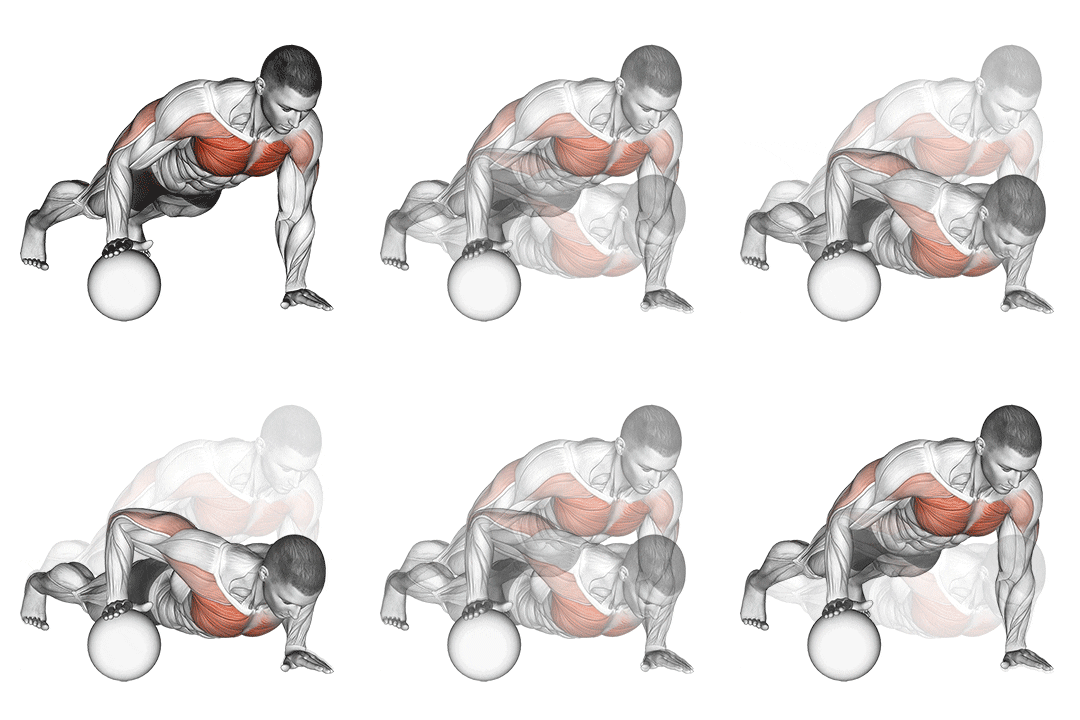
The push-up medicine ball exercise is a challenging variation of the traditional push-up that involves placing your hands on a medicine ball. This exercise targets the muscles of the chest, shoulders, arms, and core. By incorporating the unstable surface of the medicine ball, it enhances core stability and engages additional stabilizer muscles. ## Instructions 1. Start by placing a medicine ball on the ground. 2. Assume a high plank position with your hands on the medicine ball, slightly wider than shoulder-width apart. Your body should form a straight line from head to heels. 3. Engage your core muscles by pulling your belly button towards your spine. 4. Bend your elbows and lower your chest towards the medicine ball, maintaining a controlled descent. Keep your elbows close to your body. 5. Pause for a moment when your chest is close to the medicine ball, then push yourself back up to the starting position by straightening your arms. 6. Repeat the movement for the desired number of repetitions. ## Variations Here are some variations of the push-up medicine ball exercise: 1. **Modified version**: If the full push-up position on a medicine ball is too challenging, you can perform the exercise with your knees on the ground while still using the medicine ball for hand placement. 2. **Single-arm variation**: For an increased challenge and further core engagement, you can perform the exercise by placing one hand on the medicine ball and the other hand on the floor, alternating sides with each repetition. 3. **Feet elevated variation**: To target the upper chest and shoulders more intensively, you can elevate your feet on a stable platform while performing the push-up on the medicine ball. ## Muscles Worked The push-up medicine ball primarily targets the following muscles: - Chest (pectoralis major and minor) - Shoulders (deltoids) - Triceps (back of the upper arm) - Core muscles (abdominals, obliques, and deep stabilizers) ## Common Mistakes Here are some common mistakes people make while performing the push-up medicine ball exercise and how to avoid them: 1. **Sagging or arching the back**: Maintain a straight line from head to heels throughout the exercise. Avoid sagging your hips or arching your lower back. 2. **Placing hands too far apart or too close**: Position your hands slightly wider than shoulder-width apart on the medicine ball for optimal stability and engagement of the target muscles. 3. **Losing control or balance**: Focus on maintaining control and stability throughout the exercise. Engage your core muscles and keep your body aligned. 4. **Limited range of motion**: Aim to lower your chest as close to the medicine ball as possible while maintaining good form. Avoid cutting the movement short. ## Safety Precautions To ensure safety while performing the push-up medicine ball exercise: 1. If you have any pre-existing shoulder, wrist, or back injuries, consult with a healthcare professional before attempting this exercise. 2. Warm up your upper body with some light cardio and dynamic stretches before starting. 3. Start with a medicine ball size that allows you to maintain stability and control throughout the exercise. Gradually progress to a smaller or more unstable ball as your strength and stability improve. 4. Maintain a controlled and steady pace, avoiding sudden or jerky movements. 5. If you experience any pain or discomfort, especially in the wrists or shoulders, stop the exercise and seek guidance from a fitness professional or healthcare provider. As always, listen to your body, start at a comfortable level, and progress gradually to ensure safety and effectiveness.
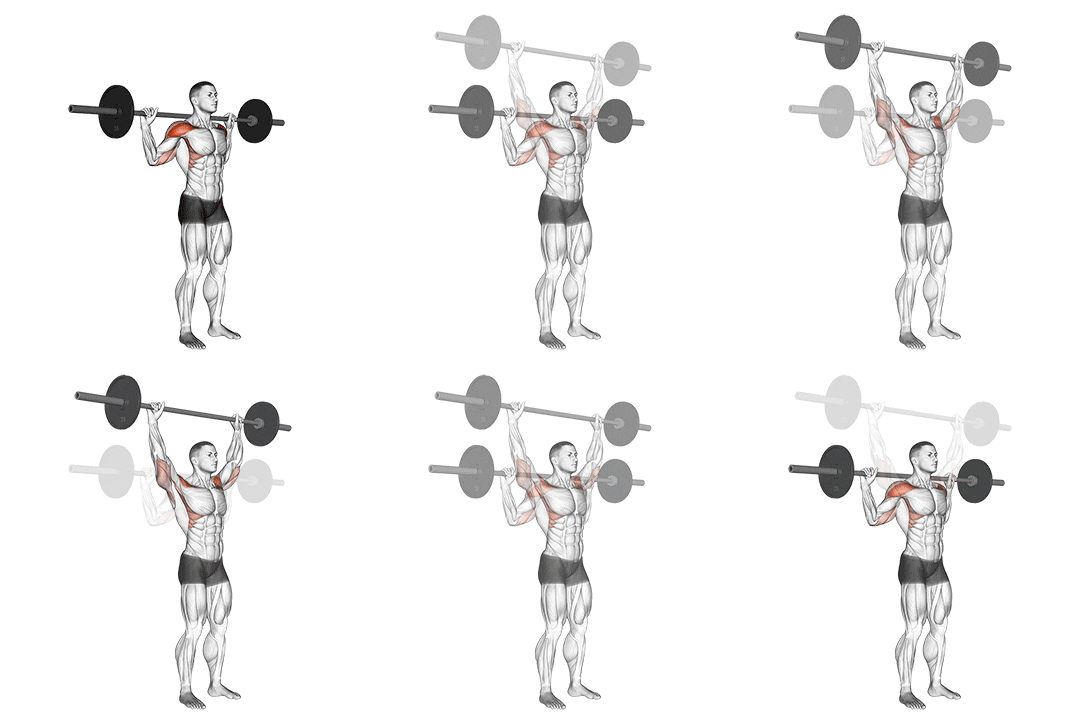
The standing behind neck press is an exercise that targets the muscles of the shoulders and upper body. It involves pressing a weight overhead from behind the neck, engaging the deltoids, triceps, and upper back muscles. This exercise helps improve shoulder strength, stability, and overall upper body development. ## Instructions 1. Begin by standing with your feet shoulder-width apart and holding a barbell or dumbbells at shoulder level, behind your neck. Your palms should be facing forward, and your elbows should be bent. 2. Engage your core muscles and maintain a neutral spine. 3. Take a deep breath and brace your core. 4. Slowly press the weight upward, extending your arms fully overhead. 5. Keep your elbows pointed out to the sides and avoid allowing them to flare forward. 6. Pause briefly at the top of the movement, then slowly lower the weight back down to the starting position behind your neck. 7. Repeat the exercise for the desired number of repetitions. ## Variations - **Dumbbell Press**: Instead of using a barbell, you can perform the behind neck press with dumbbells. Hold a dumbbell in each hand with palms facing forward, and follow the same instructions for the exercise. - **Seated Variation**: If standing is uncomfortable or you prefer a seated position, you can perform the behind neck press while sitting on a bench or chair. The technique and instructions remain the same, but you'll be in a seated position. ## Muscles Worked - Deltoids (shoulders) - Triceps - Trapezius (upper back) - Rhomboids - Rotator cuff muscles - Core muscles (stabilization) ## Common Mistakes - Arching the back: Avoid excessive arching or overarching of the lower back during the exercise. Keep your core engaged and maintain a neutral spine throughout the movement. - Straining the neck: Be mindful of your neck position and avoid excessive strain. Keep your neck in alignment with your spine and avoid tucking your chin or hyperextending your neck. - Using excessive weight: Start with a weight that allows you to maintain proper form and control throughout the exercise. Using too much weight can compromise your technique and increase the risk of injury. ## Safety Precautions - If you have any pre-existing shoulder or neck conditions, consult with a healthcare professional before attempting this exercise. - Ensure that you have the necessary mobility and flexibility in your shoulders to perform the movement comfortably. If you experience discomfort or pain, consider alternative exercises or consult with a fitness professional. - Start with a lighter weight or use dumbbells if you are new to the exercise or have limited shoulder strength. - Focus on proper form and technique throughout the movement to avoid unnecessary strain on the shoulders and neck. - If you experience any pain or discomfort during the exercise, stop immediately and consult with a healthcare professional or fitness expert.
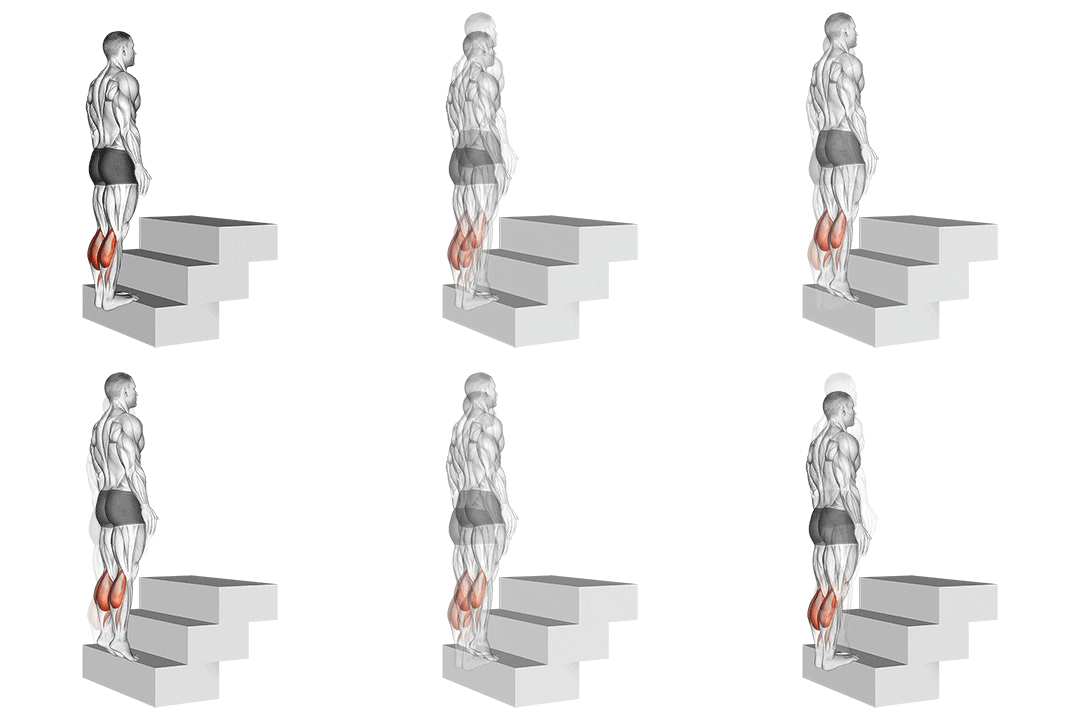
The standing calf raise on a staircase is an exercise that primarily targets the calf muscles, specifically the gastrocnemius and soleus. It involves lifting the heels to elevate the body while standing on the edge of a step or a raised platform. This exercise helps strengthen and develop the calves, improving lower leg strength and stability. ## Instructions 1. Find a sturdy staircase or a raised platform where you can comfortably stand with the balls of your feet on the edge and your heels hanging off. 2. Place your hands on a wall or a railing for support and stability. 3. Position your feet hip-width apart, with your toes pointing forward or slightly angled outward. 4. Engage your core muscles and maintain an upright posture throughout the exercise. 5. Slowly lift your heels off the edge of the step, raising your body as high as possible onto your toes. 6. Hold the top position for a brief pause, feeling a stretch in your calf muscles. 7. Lower your heels back down, allowing them to drop below the level of the step to achieve a full range of motion. 8. Repeat the exercise for the desired number of repetitions. ## Variations - **Single-Leg Calf Raise**: Perform the exercise on one leg at a time to increase the intensity and focus on each calf individually. This variation helps address any muscle imbalances between the calves. - **Weighted Calf Raise**: Hold a dumbbell or a weighted object in one or both hands to add resistance and increase the challenge of the exercise. - **Calf Raise on a Smith Machine**: Instead of using a staircase, you can use a Smith machine or a calf raise machine at the gym to perform the exercise. Adjust the platform or footpad to allow for a full range of motion. ## Muscles Worked - Gastrocnemius (calf muscle) - Soleus (calf muscle) - Plantaris (calf muscle) - Tibialis posterior (synergistic muscle) ## Common Mistakes - Bouncing: Avoid bouncing or using momentum to lift your body. Perform the exercise in a controlled manner, focusing on a smooth and deliberate motion. - Incomplete range of motion: Lower your heels below the level of the step to achieve a full stretch and maximize the benefits of the exercise. - Leaning too far forward or backward: Maintain an upright posture throughout the movement, avoiding excessive leaning. Keep your core engaged and your body aligned. ## Safety Precautions - Use a sturdy and stable staircase or platform to perform the exercise. Ensure it can support your weight and provide a secure surface for your feet. - Start with a comfortable range of motion and gradually increase the depth of the movement as your flexibility and strength improve. - If you have any pre-existing ankle or calf injuries, consult with a healthcare professional before attempting this exercise. - If you experience any pain or discomfort during the exercise, stop immediately and consult with a healthcare professional or fitness expert. - Use a handrail or a stable surface for support and balance, especially if you are new to the exercise or have concerns about stability. - Progress gradually and increase the difficulty of the exercise by adding weight or performing single-leg variations only when you have built a solid foundation of strength and balance.
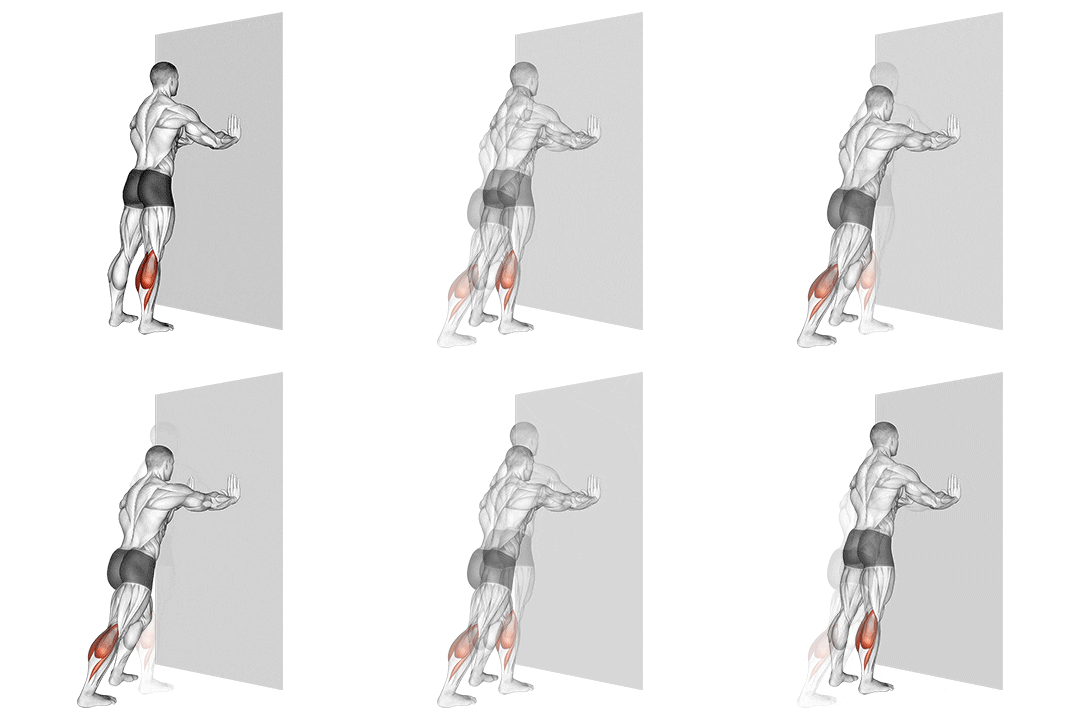
Standing calves exercise targets the calf muscles, specifically the gastrocnemius and soleus. It involves lifting the heels off the ground while standing, which helps strengthen and develop the lower leg muscles. This exercise improves calf strength, stability, and ankle mobility. ## Instructions 1. Stand with your feet shoulder-width apart, keeping your toes pointed forward or slightly angled outward. 2. Place your hands on your hips or extend your arms forward for balance. 3. Engage your core muscles and maintain an upright posture throughout the exercise. 4. Slowly lift your heels off the ground, rising up onto the balls of your feet. 5. Hold the top position for a brief pause, feeling a contraction in your calf muscles. 6. Lower your heels back down to the starting position, allowing them to drop below parallel or until you feel a stretch in your calves. 7. Repeat the exercise for the desired number of repetitions. ## Variations - **Single-Leg Standing Calves**: Perform the exercise on one leg at a time to increase the intensity and focus on each calf individually. This variation helps address any muscle imbalances between the calves. - **Weighted Standing Calves**: Hold a dumbbell or a weighted object in one or both hands to add resistance and increase the challenge of the exercise. You can hold the weights by your sides or place them on your shoulders. - **Calf Raises on a Step**: Stand on the edge of a step or a raised platform, allowing your heels to hang off. Perform the calf raises as described, but with a greater range of motion. ## Muscles Worked - Gastrocnemius (calf muscle) - Soleus (calf muscle) - Plantaris (calf muscle) - Tibialis posterior (synergistic muscle) ## Common Mistakes - Bouncing: Avoid using momentum to lift your body. Perform the exercise in a controlled manner, focusing on a smooth and deliberate motion. - Incomplete range of motion: Lower your heels below parallel or until you feel a stretch in your calves to achieve a full range of motion. - Leaning too far forward or backward: Maintain an upright posture throughout the movement, avoiding excessive leaning. Keep your core engaged and your body aligned. ## Safety Precautions - Start with a comfortable range of motion and gradually increase the depth of the movement as your flexibility and strength improve. - If you have any pre-existing ankle or calf injuries, consult with a healthcare professional before attempting this exercise. - If you experience any pain or discomfort during the exercise, stop immediately and consult with a healthcare professional or fitness expert. - Use a stable surface for standing, such as a flat floor or a calf raise machine at the gym. - Progress gradually and increase the difficulty of the exercise by adding weight or performing single-leg variations only when you have built a solid foundation of strength and balance.
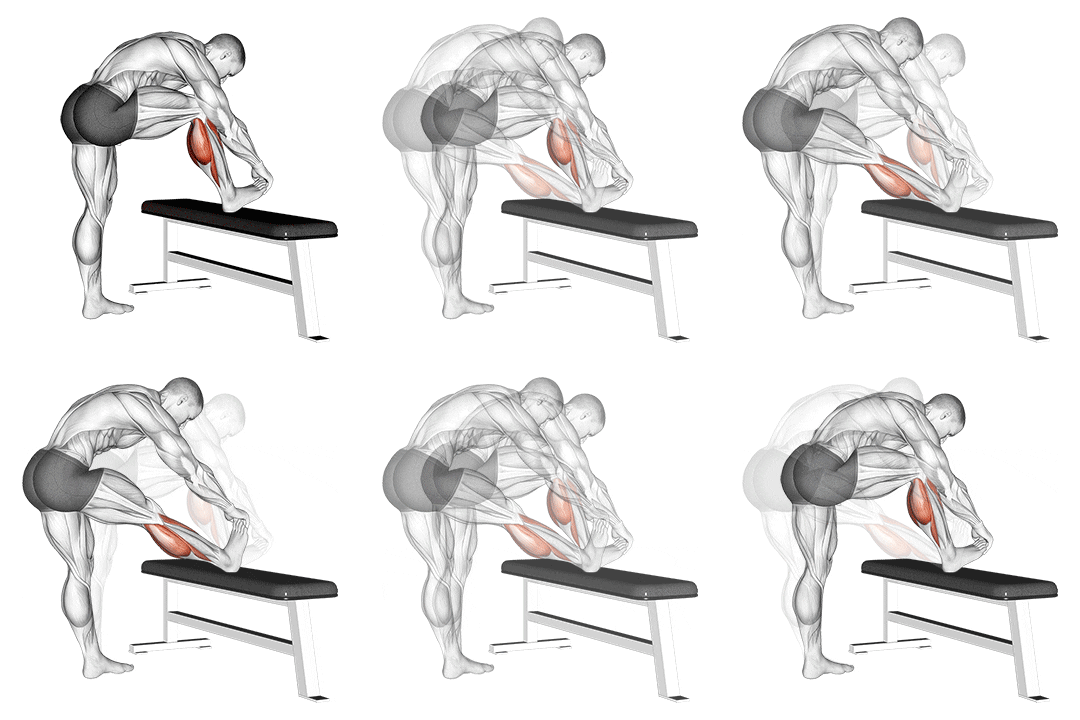
The standing calves calf stretch is an exercise that targets the calf muscles, specifically the gastrocnemius and soleus. It involves stretching the calves to improve flexibility, reduce muscle tightness, and prevent injuries. This stretch is beneficial for individuals involved in activities that require ankle mobility, such as running, jumping, and squatting. ## Instructions 1. Stand facing a wall, approximately arm's length away, with your feet hip-width apart. 2. Place your hands on the wall at shoulder height, shoulder-width apart, and lean forward, keeping your back straight. 3. Take a step back with one foot, keeping your heel on the ground and your toes pointing forward. 4. Bend your front knee and shift your weight forward, while keeping the back leg straight. 5. You should feel a stretch in your calf muscle of the back leg. 6. Hold the stretch for 20-30 seconds, while maintaining a comfortable breathing pattern. 7. Repeat the stretch on the other leg by stepping back with the opposite foot. 8. Perform the stretch on both legs for 2-3 sets. ## Variations - **Staircase Calf Stretch**: Stand on the edge of a step or a staircase, allowing your heels to hang off. Perform the calf stretch as described, but with the added benefit of an increased range of motion. - **Seated Calf Stretch**: Sit on the floor with your legs extended in front of you. Flex one foot and place a towel or stretching strap around the ball of the foot. Gently pull the towel or strap toward your body to stretch the calf muscle of the extended leg. ## Muscles Worked - Gastrocnemius (calf muscle) - Soleus (calf muscle) ## Common Mistakes - Overstretching: Avoid forcing the stretch beyond your comfort zone. Stretch to the point of tension, but not to the point of pain. - Rounded back: Maintain proper posture throughout the stretch. Keep your back straight and avoid rounding your shoulders or hunching forward. - Not engaging the core: Keep your core muscles engaged to support your spine and maintain stability during the stretch. ## Safety Precautions - Perform the stretch on a stable surface to ensure balance and prevent falls. - If you have any pre-existing calf or ankle injuries, consult with a healthcare professional before attempting this stretch. - Do not bounce or use jerky movements during the stretch. Maintain a smooth and controlled motion. - If you experience any pain or discomfort during the stretch, stop immediately and consult with a healthcare professional or fitness expert. - Gradually increase the intensity and duration of the stretch over time. Do not force the stretch beyond your comfort level.
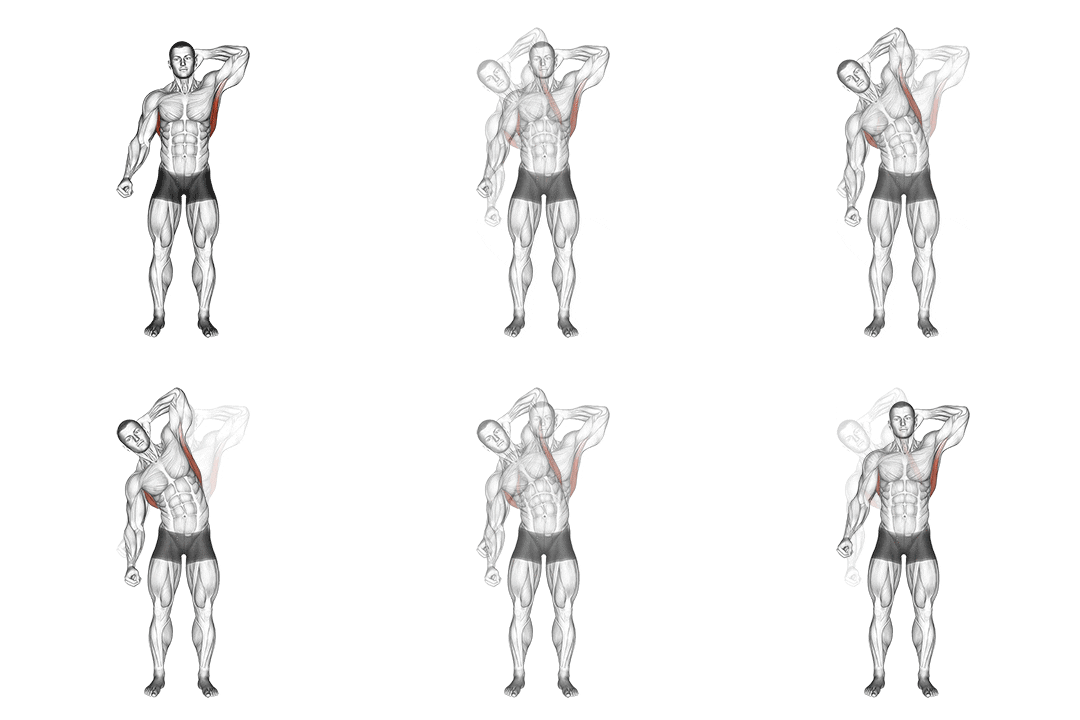
The standing lateral stretch is a stretching exercise that targets the muscles in the sides of the torso, including the obliques and the intercostal muscles. It helps improve flexibility and range of motion in the torso, promotes better posture, and relieves tension in the side body. ## Instructions Follow these step-by-step instructions to perform the standing lateral stretch correctly: 1. Stand up straight with your feet hip-width apart and arms relaxed at your sides. 2. Engage your core muscles by drawing your navel toward your spine. 3. Lift your left arm straight up overhead, reaching toward the ceiling. 4. Keep your shoulders relaxed and avoid shrugging them up toward your ears. 5. Slowly bend your torso to the right side, keeping your arm extended. 6. Feel the stretch along the left side of your body from your fingertips to your hips. 7. Hold the stretch for 15 to 30 seconds while maintaining normal breathing. 8. Return to the starting position by slowly straightening your torso. 9. Repeat the stretch on the opposite side by lifting your right arm overhead and bending your torso to the left. ## Variations Here are a few variations of the standing lateral stretch: 1. **Seated Lateral Stretch**: Perform the same stretch while seated on a chair or on the floor, with your legs extended or crossed. 2. **One-Arm Lateral Stretch**: Instead of raising both arms overhead, keep one arm down by your side and stretch the other arm overhead, bending the torso toward the opposite side. 3. **Dynamic Side Bends**: Perform the lateral stretch in a fluid, dynamic manner by continuously bending and stretching from side to side, allowing your breath to guide the movement. ## Muscles Worked The standing lateral stretch primarily targets the following muscles: 1. **Obliques**: These muscles are located on the sides of the abdomen and are responsible for side bending and rotation of the trunk. 2. **Intercostal Muscles**: These muscles are found between the ribs and assist in breathing, as well as contribute to lateral trunk movements. ## Common Mistakes Here are some common mistakes to avoid while performing the standing lateral stretch: 1. **Overarching the Lower Back**: Avoid excessive arching of the lower back during the stretch. Keep your core engaged to maintain proper alignment. 2. **Rounding the Shoulders**: Ensure that your shoulders remain relaxed and away from your ears throughout the exercise. Avoid hunching or rounding the shoulders forward. 3. **Holding the Breath**: Remember to breathe normally throughout the stretch. Holding your breath can increase tension and restrict the stretch's effectiveness. 4. **Jerky Movements**: Perform the stretch in a smooth, controlled manner. Avoid sudden or jerky movements that may strain the muscles. ## Safety Precautions To ensure safety while performing the standing lateral stretch, keep the following precautions in mind: 1. **Start Slowly**: If you're new to stretching or have any underlying health conditions, begin with gentle movements and gradually increase the range of motion. 2. **Avoid Overstretching**: Do not push yourself to the point of pain or discomfort. Stretch only to a comfortable position where you feel a gentle pull along the side of your body. 3. **Consult a Professional**: If you have any concerns or pre-existing medical conditions, it's advisable to consult with a qualified fitness professional or healthcare provider before attempting new exercises.
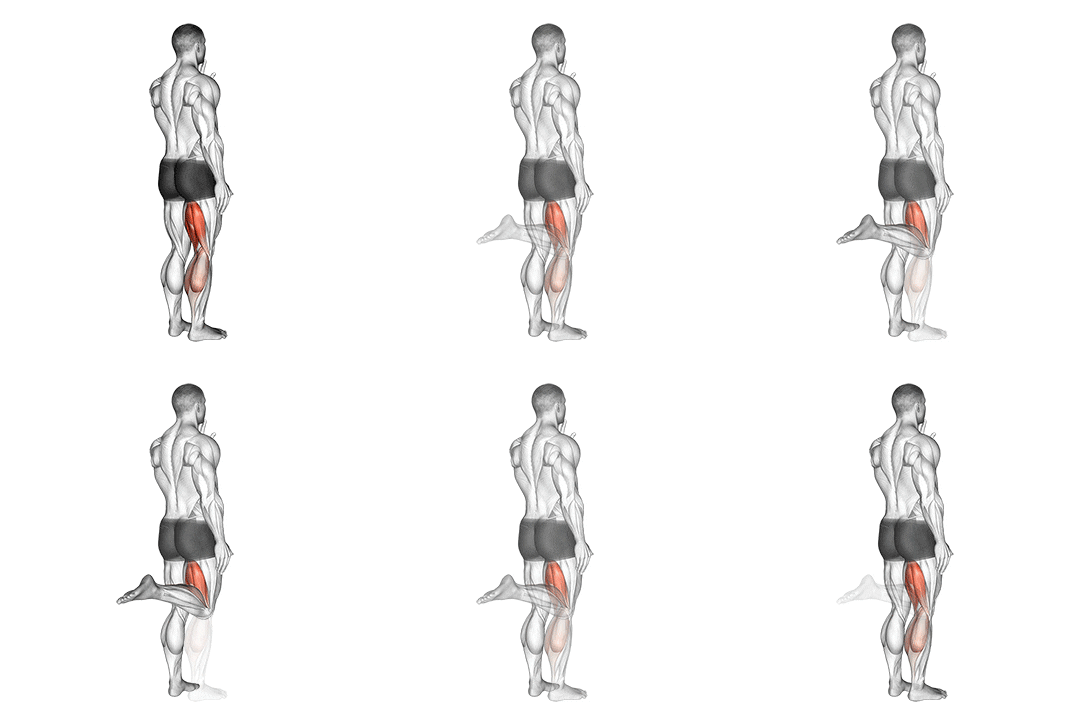
The standing single leg curl is an exercise that targets the muscles in the back of the thigh, specifically the hamstrings. It helps strengthen and tone the hamstrings, improve balance and stability, and enhance lower body function. ## Instructions Follow these step-by-step instructions to perform the standing single leg curl correctly: 1. Stand up straight with your feet hip-width apart and your arms relaxed at your sides. 2. Engage your core muscles by drawing your navel toward your spine. 3. Shift your weight onto your right leg and slightly lift your left foot off the ground. 4. Balance yourself by keeping a slight bend in your right knee. 5. While maintaining an upright posture, lift your left heel toward your glutes by flexing your left knee. 6. Keep your right knee stable and avoid excessive movement in the hip. 7. Squeeze your hamstrings at the top of the movement for a brief pause. 8. Slowly lower your left foot back down to the starting position. 9. Repeat the movement for the desired number of repetitions on the left leg, then switch to the right leg. ## Variations Here are a few variations of the standing single leg curl: 1. **Assisted Single Leg Curl**: If you find it challenging to balance, use a wall or sturdy object for support. Place your hands lightly against the wall and perform the exercise while maintaining stability. 2. **Resistance Band Single Leg Curl**: Attach a resistance band around a sturdy anchor point behind you. Loop the band around your ankle and perform the single leg curl while working against the resistance of the band. 3. **Dumbbell Single Leg Curl**: Hold a dumbbell in one hand while performing the exercise to increase the intensity and add resistance. ## Muscles Worked The standing single leg curl primarily targets the following muscles: 1. **Hamstrings**: These muscles are located at the back of the thigh and are responsible for knee flexion and hip extension. ## Common Mistakes Here are some common mistakes to avoid while performing the standing single leg curl: 1. **Swinging the Leg**: Maintain control throughout the movement and avoid swinging the leg to generate momentum. Focus on using the hamstring muscles to curl the leg. 2. **Leaning Forward or Backward**: Keep your upper body upright and avoid leaning forward or backward during the exercise. This ensures proper engagement of the hamstrings and helps maintain balance. 3. **Not Maintaining Core Stability**: Engage your core muscles throughout the exercise to stabilize your torso and support proper form. Avoid arching or rounding your lower back. 4. **Rushing the Movement**: Perform the exercise in a slow and controlled manner. Avoid rushing or using jerky movements that can compromise form and effectiveness. ## Safety Precautions To ensure safety while performing the standing single leg curl, keep the following precautions in mind: 1. **Start with Proper Warm-up**: Prior to performing the exercise, warm up your body with light aerobic activity to increase blood flow to the muscles and prepare them for exercise. 2. **Use Appropriate Weight or Resistance**: Gradually increase the difficulty of the exercise by using suitable weights or resistance bands. Start with a weight or resistance level that allows you to maintain proper form throughout the movement. 3. **Maintain Proper Balance**: Focus on maintaining balance and stability throughout the exercise. If necessary, perform the exercise near a sturdy object for support until you feel comfortable and confident in your balance. 4. **Listen to Your Body**: If you experience any pain or discomfort during the exercise, stop immediately. Consult with a fitness professional or healthcare provider if you have any concerns or pre-existing conditions that may affect your ability to perform the exercise safely.
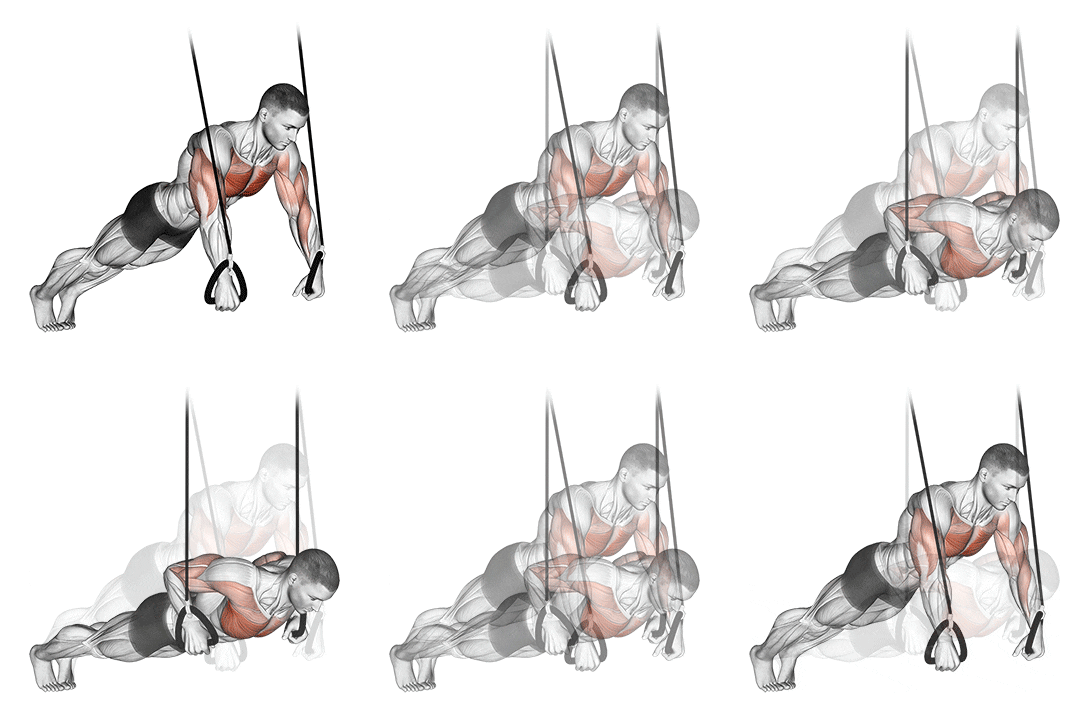
The suspended push-up, also known as the TRX push-up, is a challenging exercise that targets the chest, shoulders, triceps, and core muscles. It involves performing push-ups while using suspension straps or TRX straps, which adds instability to the movement. This exercise not only builds upper body strength but also improves balance, stability, and muscular coordination. ## Instructions 1. Adjust the suspension straps to an appropriate length. The straps should hang about waist height. 2. Stand facing away from the anchor point and hold one strap handle in each hand. 3. Step forward to create tension in the straps while extending your arms forward. Your body should be at a slight angle, leaning forward. 4. Position your feet hip-width apart, toes pointing forward, and assume a plank position with your hands directly under your shoulders. Your body should form a straight line from head to heels. 5. Engage your core muscles by drawing your navel toward your spine. 6. Bend your elbows and lower your chest towards the ground while maintaining a controlled descent. 7. Pause briefly when your chest is parallel to the ground or slightly lower. 8. Push through your palms and extend your arms to raise your body back to the starting position, maintaining control throughout the movement. 9. Repeat the exercise for the desired number of repetitions. ## Variations - Incline Suspended Push-Up: Perform the suspended push-up with the straps set higher, closer to head height, to decrease the intensity. - Decline Suspended Push-Up: Set the straps lower, closer to ankle height, to increase the difficulty of the exercise. - Single Arm Suspended Push-Up: Perform the push-up while gripping one strap handle with one hand and keeping the other arm extended for added stability challenge. - Wide Grip Suspended Push-Up: Place your hands wider than shoulder-width apart on the handles to shift the focus to the chest muscles. ## Muscles Worked - Chest (pectoralis major and minor) - Shoulders (deltoids) - Triceps - Core muscles (abdominals, obliques, and lower back) - Scapular stabilizers (rhomboids, trapezius, and serratus anterior) ## Common Mistakes - Drooping or sagging hips: Maintain a straight line from head to heels throughout the exercise, avoiding the tendency to let your hips sag or rise. - Elbows flaring out: Keep your elbows pointing back and slightly toward your sides, rather than allowing them to flare out to the sides. This helps to engage the chest muscles effectively. - Insufficient range of motion: Lower your chest to at least parallel with the ground or slightly lower to achieve a full range of motion during the exercise. - Lack of core engagement: Keep your core muscles engaged throughout the movement to maintain stability and prevent excessive sagging or arching of the back. ## Safety Precautions - Ensure that the suspension straps are securely anchored and properly adjusted before performing the exercise. - Start with a comfortable strap length and gradually increase or decrease the difficulty as you become more proficient. - If you have any pre-existing shoulder or wrist injuries, consult with a healthcare professional before attempting the exercise. - If you experience any pain or discomfort, especially in the shoulders or lower back, modify the exercise or seek guidance from a qualified fitness professional. - Maintain control and avoid sudden movements or jerking motions to prevent strain or injury to the joints and muscles. - Warm up adequately before attempting the exercise to prepare the muscles and joints for the movement.