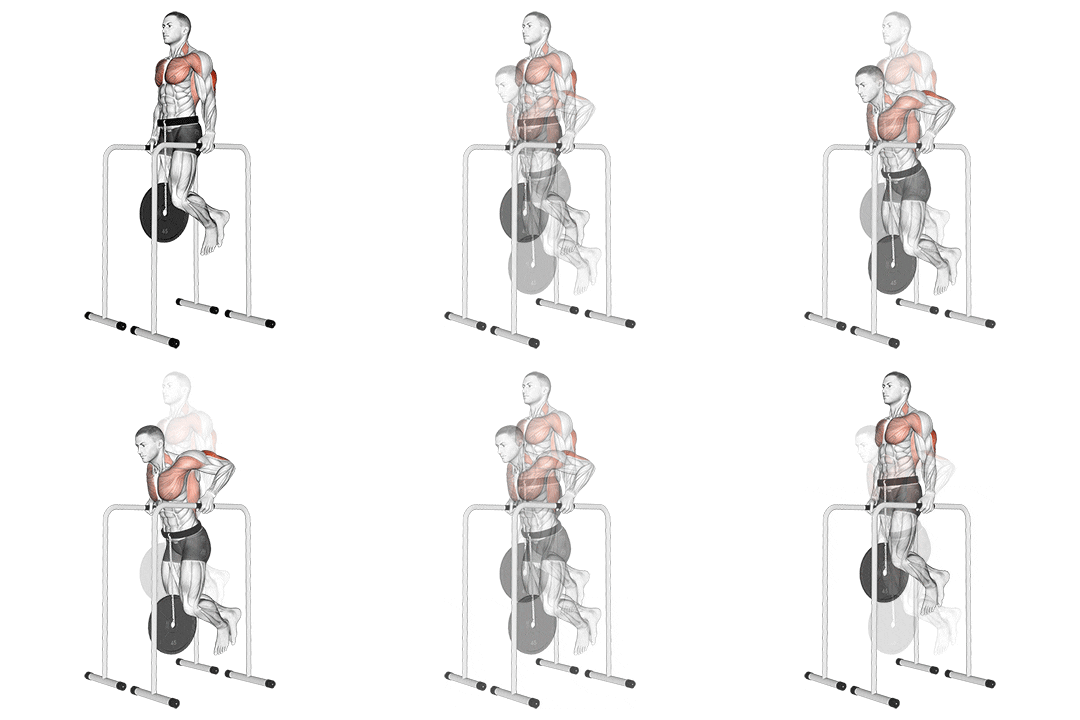
The weighted triceps dip on high parallel bars is an advanced exercise that targets the triceps muscles of the upper arms. It involves performing a dip motion using high parallel bars while adding additional weight to increase the intensity and challenge the triceps muscles. ## Instructions 1. Position yourself between two parallel bars, ensuring they are stable and securely anchored. 2. Place your hands on the bars with an overhand grip, slightly wider than shoulder-width apart. 3. Lift your body off the ground, supporting your weight with your arms, and straighten your arms. 4. To add weight, secure a dip belt around your waist and attach weight plates to the chain or straps of the belt. 5. Lower your body by bending your elbows, allowing your torso to move downward while keeping your elbows pointed backward and close to your body. 6. Continue lowering until your upper arms are parallel to the ground or slightly below, feeling a stretch in your triceps. 7. Push through your hands and engage your triceps to raise your body back up to the starting position, fully extending your arms. 8. Repeat the motion for the desired number of repetitions. ## Variations - **Bodyweight Triceps Dips on High Parallel Bars**: If you're not ready to add weight, you can perform triceps dips using just your body weight. Follow the same instructions without adding any additional weight. - **Assisted Triceps Dips**: If you find triceps dips challenging, you can use a resistance band looped under your knees or use a dip machine with assisted support to reduce the load on your triceps. ## Muscles Worked - **Triceps**: The primary muscles targeted during the weighted triceps dip on high parallel bars are the triceps brachii, located at the back of the upper arms. ## Common Mistakes - **Elbows Flaring Out**: Avoid allowing your elbows to flare out to the sides during the dip. Keep your elbows pointed backward and close to your body to focus the effort on the triceps and minimize stress on the shoulders. - **Rounded Shoulders**: Maintain good posture throughout the exercise by keeping your shoulders down and back, avoiding rounding or hunching forward. - **Incomplete Range of Motion**: Ensure that you lower your body until your upper arms are parallel to the ground or slightly below. Avoid cutting the range of motion short, as this can reduce the effectiveness of the exercise. ## Safety Precautions - **Warm-Up**: Prior to performing weighted triceps dips on high parallel bars, warm up your triceps, chest, and shoulders with dynamic stretches or light cardio to increase blood flow and prepare the muscles for the exercise. - **Choose Appropriate Weight**: If using additional weight, select a weight that challenges your triceps without compromising your form. Start with lighter weights and gradually increase the resistance as your strength improves. - **Controlled Movement**: Perform the exercise in a slow and controlled manner, focusing on the muscles being targeted. Avoid jerky or rapid movements that can strain the joints. - **Spotter**: If you're using heavy weights or attempting very challenging variations, it's advisable to have a spotter present to assist and ensure your safety. - **Secure Parallel Bars**: Make sure the parallel bars are stable and securely anchored before performing the exercise to prevent any accidents or injuries. Always consult with a qualified fitness professional or healthcare provider before attempting advanced exercises, especially if you have pre-existing medical conditions or injuries.
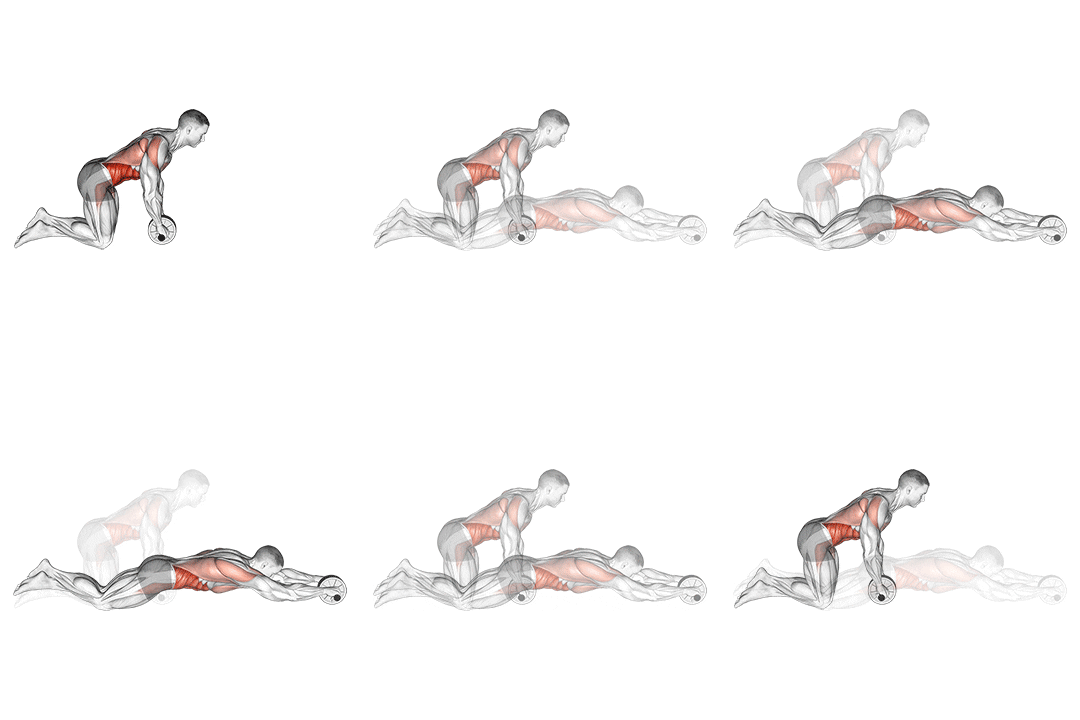
The wheel rollout is a core-strengthening exercise that primarily targets the muscles of the abdominal region, including the rectus abdominis (six-pack muscles) and the deep stabilizing muscles of the core. It also engages the muscles of the shoulders, chest, and lower back. The exercise involves extending the body forward from a kneeling position while holding onto a wheel roller, creating a challenging dynamic plank movement. ## Instructions 1. Start by kneeling on the floor with the wheel roller positioned in front of you. 2. Grip the handles of the wheel roller firmly and place your hands directly under your shoulders. 3. Engage your core muscles, brace your abs, and maintain a straight line from your head to your knees. 4. Slowly roll the wheel forward, extending your body forward in a controlled manner. 5. Continue rolling forward until you feel a stretch in your core or until your body is nearly parallel to the ground. 6. Pause for a moment at the fully extended position, ensuring you maintain stability and control. 7. Engage your core muscles and reverse the movement, rolling the wheel back towards your knees. 8. Return to the starting position while maintaining control and tension in your core. 9. Repeat the movement for the desired number of repetitions. ## Variations - **Knee Rollout**: If you find the full wheel rollout too challenging, you can modify the exercise by performing knee rollouts. Instead of starting in a kneeling position, begin in a plank position with your knees on the ground. Perform the same rolling motion, focusing on maintaining proper form and engaging the core muscles. - **Assisted Rollout**: If you are unable to perform the exercise with a wheel roller, you can use an exercise ball or a stability ball. Place your hands on the ball and roll it away from your body, following the same instructions. ## Muscles Worked - **Rectus Abdominis**: The wheel rollout targets the rectus abdominis, which is responsible for flexing the spine and creating the "six-pack" appearance. - **Obliques**: The oblique muscles, located on the sides of the abdomen, are engaged to stabilize the body during the movement. - **Shoulders and Chest**: The muscles of the shoulders and chest are activated as stabilizers during the rollout. - **Lower Back**: The muscles of the lower back, including the erector spinae, are engaged to maintain spinal stability throughout the exercise. ## Common Mistakes - **Lack of Core Engagement**: One common mistake is failing to engage the core muscles properly. Ensure you brace your abs and maintain a straight line from your head to your knees throughout the exercise. - **Excessive Forward or Upward Movement**: Avoid extending your body too far forward or allowing your lower back to sag during the rollout. Maintain control and only extend as far as you can while keeping proper form. - **Poor Shoulder and Wrist Alignment**: Keep your hands directly under your shoulders and maintain proper alignment throughout the exercise to prevent strain or discomfort in the shoulders and wrists. ## Safety Precautions - **Progress Gradually**: Start with smaller movements and gradually increase the range of motion as your core strength improves. Avoid overextending or pushing beyond your current capabilities. - **Maintain Control**: Perform the exercise in a slow and controlled manner to ensure proper form and avoid excessive strain on the core and other muscles. - **Avoid Overarching the Lower Back**: Be mindful of your lower back position throughout the movement. Avoid excessive arching or sagging, which can place stress on the lower back. - **Listen to Your Body**: If you experience any pain or discomfort in the lower back, shoulders, or wrists, stop the exercise and consult with a healthcare professional
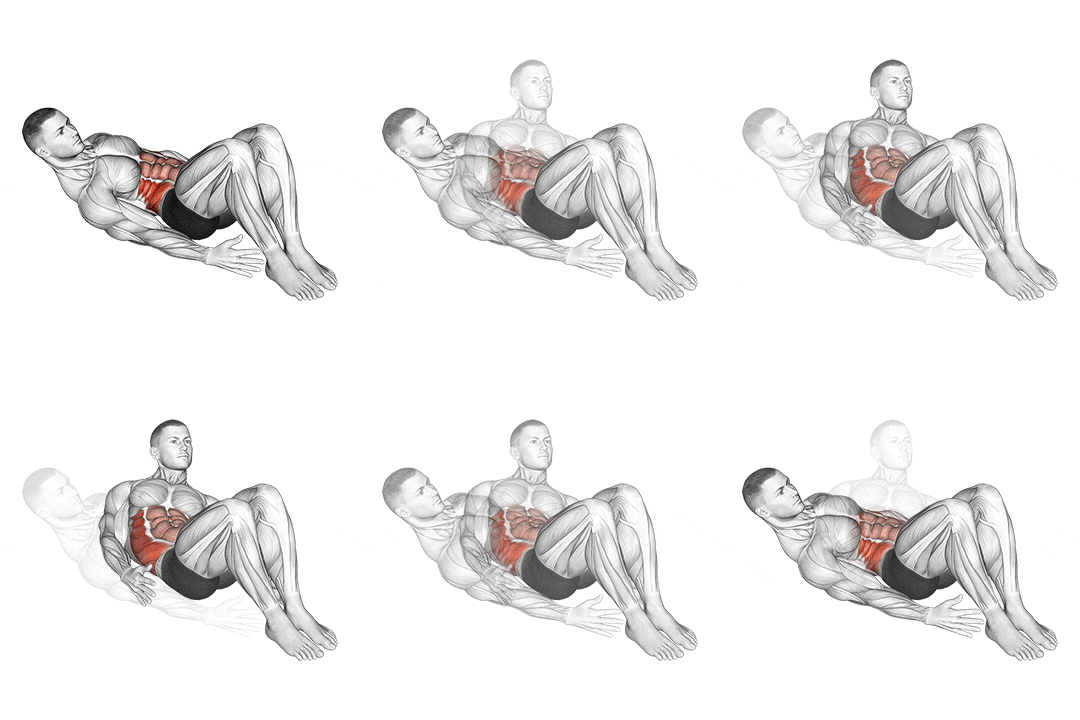
Alternate heel touchers are a core exercise that primarily targets the oblique muscles, which are located on the sides of your abdomen. This exercise also engages other core muscles, including the rectus abdominis (the "six-pack" muscles) and the transverse abdominis. ## Instructions 1. Lie flat on your back on an exercise mat or comfortable surface. 2. Bend your knees and keep your feet flat on the ground, hip-width apart. 3. Place your arms by your sides, with your palms facing down. 4. Engage your core muscles by drawing your navel toward your spine and slightly lifting your head and shoulders off the ground. 5. As you exhale, reach your right hand toward your right heel by twisting your torso. Keep your left hand and shoulder on the ground. 6. Return to the starting position and repeat the movement on the opposite side, reaching your left hand toward your left heel. 7. Continue alternating sides, performing the exercise in a controlled and rhythmic manner. 8. Aim for a fluid motion, moving at a pace that allows you to maintain proper form and engage your core muscles effectively. ## Variations - Beginners can perform the exercise with their feet elevated on a step or bench to reduce the range of motion and make it less challenging. - To increase the difficulty, advanced individuals can hold a dumbbell or a medicine ball in their hands while performing the exercise. ## Muscles Worked - Obliques (external and internal) - Rectus abdominis (six-pack muscles) - Transverse abdominis - Hip flexors (secondary muscles) ## Common Mistakes - Relying solely on the arms to reach for the heels: Remember to engage your core and twist your torso to target the oblique muscles effectively. - Using momentum instead of controlled movements: Perform the exercise in a slow and controlled manner to maximize muscle engagement. - Not keeping the head and shoulders lifted: Maintain a slight lift in the head and shoulders throughout the exercise to engage the abdominal muscles properly. ## Safety Precautions - If you have any pre-existing medical conditions or injuries, consult with a healthcare professional or a qualified fitness instructor before attempting this exercise. - Start with a range of motion that feels comfortable for your body and gradually increase it as you become more comfortable and stronger. - Avoid straining your neck or lower back during the exercise. If you experience any pain or discomfort, stop the exercise and reassess your form.
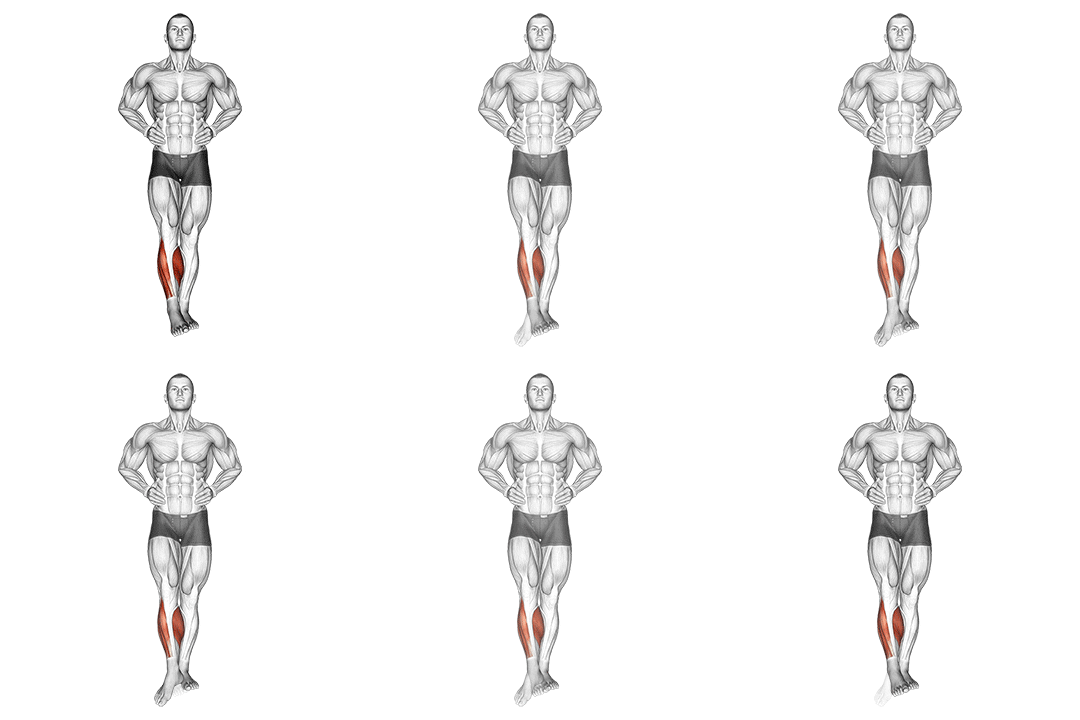
Ankle circles are a simple exercise that targets the ankle joint and helps improve ankle mobility and flexibility. It also helps in strengthening the muscles and ligaments surrounding the ankle. ## Instructions 1. Sit on a chair or the ground with your legs extended in front of you. 2. Lift one leg off the ground and extend it in front of you. 3. Point your toes forward, and begin making circular motions with your foot. 4. Start by moving your foot clockwise and then switch to counterclockwise circles. 5. Perform 10-15 circles in each direction, or as many as feels comfortable. 6. Lower your leg and repeat the exercise with the other leg. ## Variations - If sitting on a chair is uncomfortable, you can perform ankle circles while lying on your back with your legs extended in the air. - For a more dynamic variation, you can perform ankle circles while standing, either with one foot lifted off the ground or using a stable support for balance. ## Muscles Worked - Ankle joint muscles - Calves (gastrocnemius and soleus) - Tibialis anterior - Peroneal muscles ## Common Mistakes - Using excessive force or speed: Perform ankle circles with controlled and smooth movements to avoid strain or injury. - Neglecting full range of motion: Ensure that you complete the entire circle with your ankle, moving it in both clockwise and counterclockwise directions. - Holding tension in other muscles: Relax your leg and foot muscles as much as possible, focusing on isolating the movement to the ankle joint. ## Safety Precautions - If you have any ankle injuries or chronic ankle issues, consult with a healthcare professional before attempting ankle circles. - Start with gentle circles and gradually increase the size and intensity of the movement as your ankle mobility improves. - If you experience pain or discomfort during the exercise, stop immediately and consult a healthcare professional.
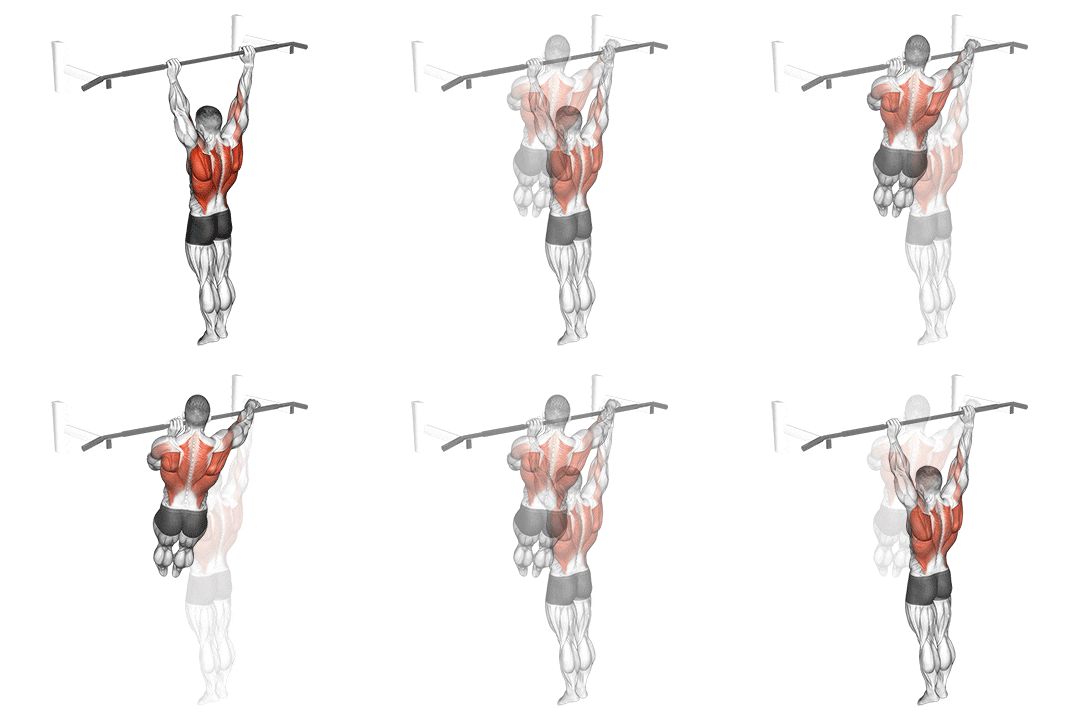
The Archer Pull-Up is a challenging variation of the traditional pull-up exercise that targets the muscles of the upper body, particularly the back and arms. It emphasizes unilateral strength and stability while providing a unique training stimulus. ## Instructions 1. Begin by gripping the pull-up bar with an overhand grip that is slightly wider than shoulder-width apart. 2. Position your body underneath the bar, hanging with your arms fully extended. 3. Take a wide stance with one hand gripping the bar in a regular overhand grip and the other hand positioned wider on the bar, creating a diagonal line with your body. 4. Engage your core and begin the movement by initiating a pull with the hand that is closer to the center of the bar. 5. As you pull your body up, keep your torso and legs straight, and focus on pulling your shoulder towards the bar. 6. Continue pulling until your chin is above the bar, maintaining a controlled and smooth movement. 7. Slowly lower yourself back down to the starting position, ensuring full arm extension. 8. Repeat the movement, alternating the hand positions for each repetition. ## Variations - Assisted Archer Pull-Up: If you're unable to perform the exercise with your body weight, you can use resistance bands or an assisted pull-up machine to reduce the load and assist your movements. - Eccentric Archer Pull-Up: If you struggle with the concentric (lifting) phase of the exercise, you can focus on the eccentric (lowering) phase only. Jump or use a step to get to the top position, and then lower yourself down slowly in a controlled manner. ## Muscles Worked - Latissimus dorsi (lats) - Rhomboids - Biceps brachii - Forearm muscles (brachioradialis, flexors, and extensors) - Core muscles (engaged for stability) ## Common Mistakes - Using excessive momentum: Avoid swinging or kicking your legs to generate momentum. Focus on controlled and smooth movements throughout the exercise. - Lifting the chin excessively: Aim to bring your chin just above the bar without excessively tilting your head backward to maintain proper alignment and engagement of the targeted muscles. - Neglecting proper hand positioning: Ensure that the hand grip is correct, with one hand closer to the center of the bar and the other hand wider. This allows for proper engagement of the targeted muscles. ## Safety Precautions - Prioritize proper form and technique over the number of repetitions. Performing the exercise with correct form is crucial to avoid injury. - If you're new to pull-ups or lack the necessary strength, gradually build your strength and skill level before attempting the Archer Pull-Up. - If you have any shoulder or back injuries, it's important to consult with a healthcare professional before attempting this exercise.
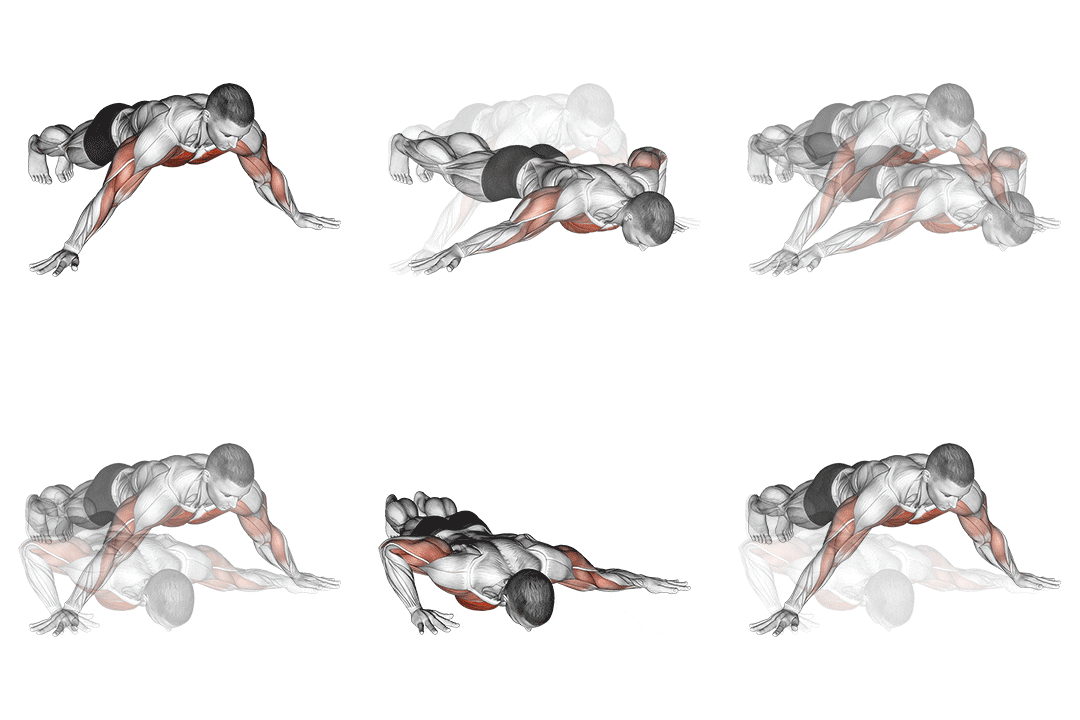
The Archer Push-Up is a challenging variation of the traditional push-up exercise that targets the muscles of the chest, shoulders, triceps, and core. It involves asymmetric arm positioning, which increases the demand on specific muscle groups while providing a unique training stimulus. ## Instructions 1. Begin in a high plank position with your hands slightly wider than shoulder-width apart. 2. Take a wide stance with one hand positioned closer to the center of your chest and the other hand positioned wider, creating a diagonal line with your body. 3. Engage your core, maintain a straight line from your head to your heels, and lower your body towards the ground by bending your elbows. 4. As you descend, focus on bending the arm that is closer to the center of your chest while keeping the other arm relatively straight. 5. Lower your chest as close to the ground as possible while maintaining control and proper form. 6. Push through the palm of your bent arm, extending your elbow and returning to the starting position. 7. Repeat the movement, alternating the arm positions for each repetition. ## Variations - Modified Archer Push-Up: If the full Archer Push-Up is too challenging, you can perform the exercise with your knees on the ground while maintaining the same arm positioning. - Wall Archer Push-Up: For beginners or individuals who need a more accessible variation, the exercise can be performed with the hands on a wall instead of the ground. ## Muscles Worked - Pectoralis major (chest) - Anterior deltoids (front of the shoulders) - Triceps brachii (back of the upper arms) - Core muscles (engaged for stability) ## Common Mistakes - Sagging or arching the lower back: Maintain a straight line from your head to your heels throughout the movement and engage your core to prevent excessive sagging or arching of the back. - Allowing the hips to drop: Keep your glutes engaged and avoid letting your hips sink towards the ground. - Flaring the elbows out excessively: Keep your elbows relatively close to your body to ensure proper engagement of the chest and triceps muscles. ## Safety Precautions - If you have any shoulder or wrist injuries or conditions, it's important to consult with a healthcare professional before attempting this exercise. - Prioritize proper form and technique over the number of repetitions. Performing the exercise with correct form is crucial to avoid injury. - Listen to your body and start with a variation that is appropriate for your current fitness level. Gradually progress to more challenging variations as you build strength and stability.
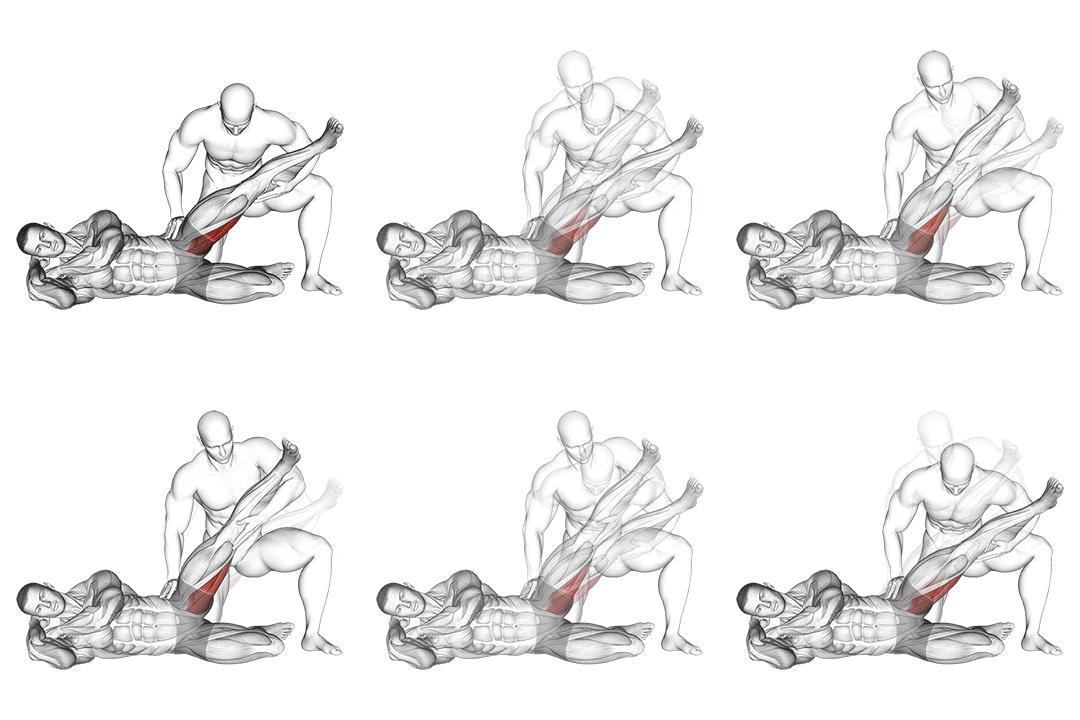
The Assisted Side Lying Adductor Stretch targets the adductor muscles, primarily the inner thigh muscles. It helps improve flexibility and range of motion in the hips and can be particularly beneficial for individuals with tight adductors or those who participate in activities that require lateral movements. ## Instructions 1. Lie on your side on a comfortable surface, such as a mat or a padded floor. 2. Extend your bottom leg straight and slightly behind your body. 3. Bend your top leg at the knee and place the foot on the ground in front of your bottom leg for stability. 4. Slowly slide your bottom leg away from your body, keeping it straight and parallel to the ground. 5. Stop when you feel a gentle stretch in your inner thigh. 6. To increase the stretch, gently press down on your top knee with your hand or forearm, applying light pressure. 7. Hold the stretch for 20-30 seconds, while breathing deeply and relaxing into the stretch. 8. Release the pressure and slowly slide your leg back to the starting position. 9. Repeat the stretch on the other side by flipping over and lying on your opposite side. ## Variations - Unassisted Side Lying Adductor Stretch: If you have sufficient flexibility, you can perform the stretch without pressing down on the top knee. Simply focus on sliding your bottom leg away to the point of a comfortable stretch. - Standing Adductor Stretch: Stand with your legs wider than shoulder-width apart and shift your weight to one side while keeping the other leg straight. Lean gently toward the side you are stretching until you feel a stretch in your inner thigh. ## Muscles Worked - Adductor longus - Adductor brevis - Adductor magnus - Gracilis ## Common Mistakes - Overstretching: Avoid pushing yourself too far into the stretch, as it may cause pain or injury. Find a comfortable stretch and gradually increase it over time. - Holding your breath: Remember to breathe deeply and naturally throughout the stretch to promote relaxation and enhance the effectiveness of the stretch. - Rounding the back: Keep your spine in a neutral position and avoid rounding or arching your back. Focus on maintaining good posture throughout the stretch. ## Safety Precautions - If you have any hip or groin injuries or conditions, consult with a healthcare professional before attempting this stretch. - Start with a gentle stretch and gradually increase the intensity as your flexibility improves. - If you feel any sharp or severe pain during the stretch, stop immediately and seek guidance from a healthcare professional.
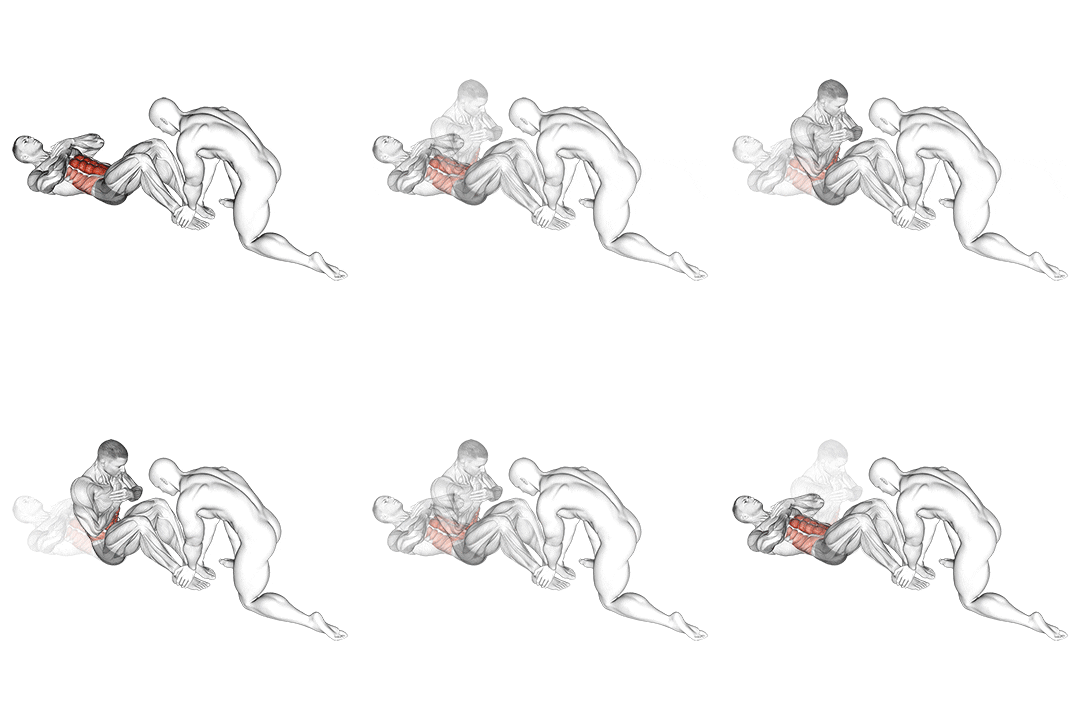
The Assisted Sit-Up is an exercise that targets the muscles of the core, particularly the rectus abdominis (commonly known as the "abs"). It involves using an assistive device or having a partner to provide support, making it suitable for individuals who may have difficulty performing a full sit-up on their own or for those looking to build core strength gradually. ## Instructions 1. Begin by lying flat on your back on a mat or a comfortable surface with your knees bent and feet flat on the ground. 2. If using an assistive device, secure your feet under the foot pads or have a partner hold your feet in place. 3. Cross your arms over your chest or place your hands behind your ears, avoiding any pulling or tugging on your neck or head. 4. Engage your core muscles by drawing your navel towards your spine. 5. Slowly begin to curl your upper body forward, lifting your shoulder blades off the ground and leading with your chest. 6. Continue the movement until your torso is in an upright, seated position. 7. Pause for a moment at the top, maintaining tension in your abdominal muscles. 8. Slowly lower your body back down to the starting position with control, keeping your core engaged throughout the descent. 9. Repeat the movement for the desired number of repetitions. ## Variations - Assisted Sit-Up with Resistance Bands: Attach a resistance band around a sturdy anchor point and secure it around your upper back. As you perform the sit-up, the resistance band provides assistance and helps you return to the starting position. - Elevated Assisted Sit-Up: Perform the assisted sit-up with your feet elevated on a stable surface, such as a bench or step. This variation increases the challenge by placing your body at a decline angle. ## Muscles Worked - Rectus abdominis (abs) - External and internal obliques - Hip flexors - Lower back muscles (erector spinae) ## Common Mistakes - Using momentum: Avoid using momentum or jerking your body to complete the movement. Focus on controlled and smooth movements throughout the exercise. - Rounding the lower back: Keep your lower back pressed against the ground throughout the movement to maintain proper spinal alignment and engage the abdominal muscles effectively. - Pulling on the neck: Keep your hands gently placed behind your ears or crossed over your chest, and avoid pulling or tugging on your neck during the sit-up. Let your abdominal muscles do the work. ## Safety Precautions - If you have any pre-existing back or neck conditions or injuries, consult with a healthcare professional before attempting this exercise. - Start with a comfortable range of motion that allows you to maintain control and proper form. Gradually increase the range of motion as your core strength improves. - Engage your core muscles throughout the exercise to support your spine and protect your lower back. - If you experience any pain or discomfort during the exercise, stop and reassess your form.
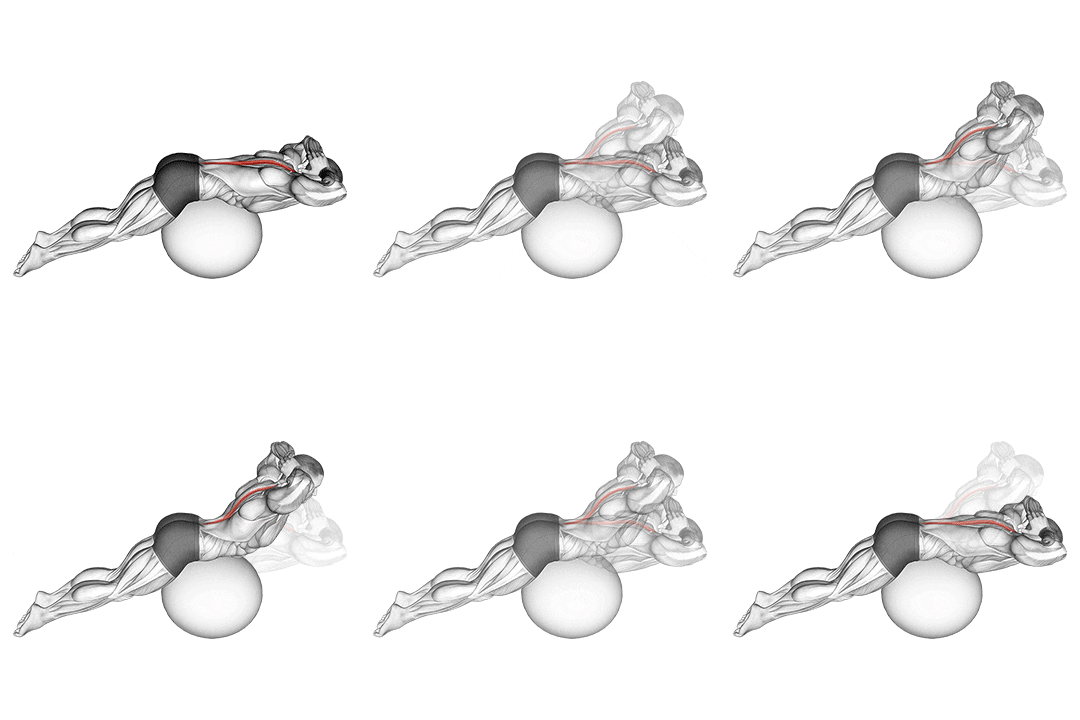
The Back Extension on Exercise Ball is an exercise that targets the muscles of the lower back (erector spinae) and helps improve spinal extension and core stability. It involves performing a back extension movement while lying face-down on an exercise ball, providing an unstable surface that engages additional muscles to maintain balance. ## Instructions 1. Place an exercise ball on the floor and position yourself in front of it, facing down. 2. Lie on the exercise ball with your hips resting on the ball and your feet firmly planted on the ground for stability. 3. Walk your feet forward, allowing the ball to roll underneath your body until it supports your lower abdomen and hips. 4. Position your hands behind your head or cross your arms over your chest. 5. Engage your core muscles by drawing your navel towards your spine. 6. Begin the movement by lifting your upper body off the ball, leading with your chest and maintaining a neutral spine. 7. Continue to lift until your upper body is in line with your legs or until you feel a comfortable stretch in your lower back. 8. Pause for a moment at the top, focusing on squeezing your lower back muscles. 9. Slowly lower your upper body back down to the starting position with control. 10. Repeat the movement for the desired number of repetitions. ## Variations - Dumbbell Back Extension: Hold a dumbbell or weight plate against your chest to increase the resistance and intensity of the exercise. - Superman on Exercise Ball: Extend your arms forward while performing the back extension to engage the muscles of the upper back and shoulders. ## Muscles Worked - Erector spinae (lower back muscles) - Gluteus maximus (buttocks) - Hamstrings - Core muscles (transverse abdominis and obliques) ## Common Mistakes - Hyperextending the lower back: Avoid excessive arching of the lower back, as it can strain the spine. Focus on maintaining a neutral spine throughout the movement. - Using momentum: Use controlled movements and avoid relying on momentum to lift your upper body. The focus should be on engaging the target muscles. - Rounding the shoulders: Keep your shoulders pulled back and down, away from your ears, to maintain proper alignment and avoid unnecessary tension in the neck and upper back. ## Safety Precautions - If you have any pre-existing back conditions or injuries, consult with a healthcare professional before attempting this exercise. - Start with a comfortable range of motion that allows you to maintain control and proper form. Gradually increase the range of motion as your back strength and flexibility improve. - Engage your core muscles throughout the exercise to support your spine and protect your lower back. - If you experience any pain or discomfort during the exercise, stop and reassess your form.