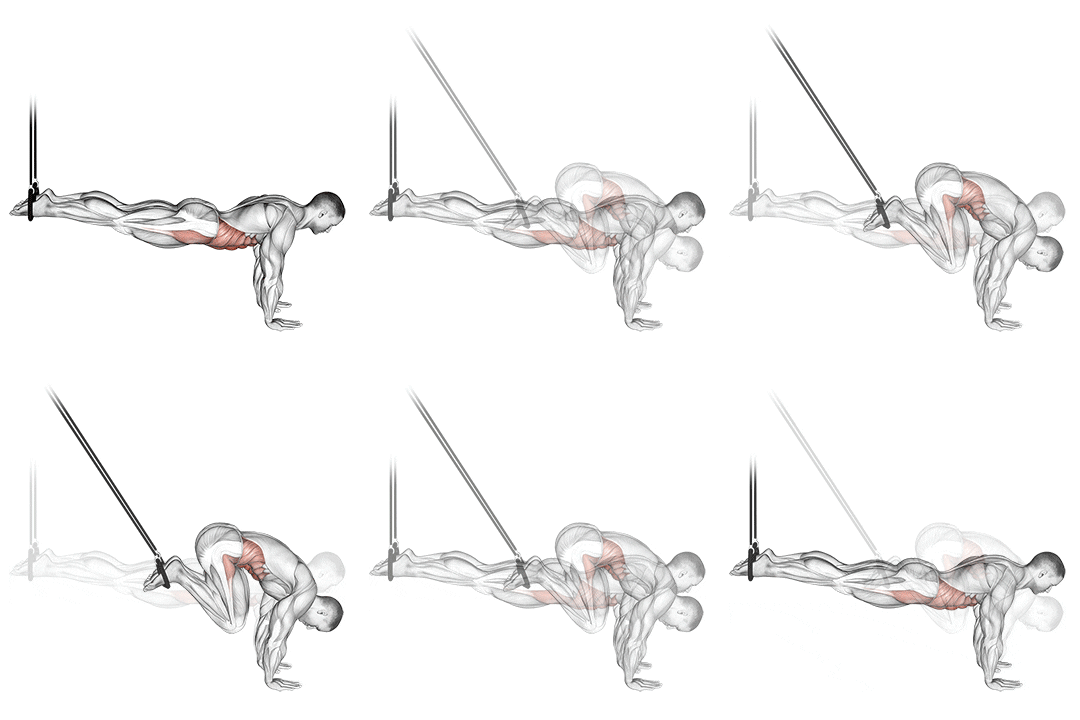
The suspended reverse crunch is an advanced abdominal exercise that targets the lower abs and hip flexors. It involves suspending your body using straps or rings while performing a reverse crunch motion, creating a challenging and effective core workout. This exercise helps strengthen the abdominal muscles, improve core stability, and enhance overall body control. ## Instructions 1. Set up suspension straps or rings at an appropriate height. Make sure they are securely anchored. 2. Stand facing the suspension system and hold the handles or straps with your palms facing each other. 3. Lean back, allowing your body to form a straight line from head to toe, with your arms extended in front of you. 4. Engage your core muscles by drawing your navel toward your spine. 5. Bend your knees and lift them toward your chest while simultaneously rolling your pelvis upward. 6. Continue the movement, curling your hips off the ground and contracting your lower abs. Pause for a moment at the top of the movement. 7. Slowly lower your legs and uncurl your hips, returning to the starting position with control. 8. Repeat the exercise for the desired number of repetitions. ## Variations - Bent-Knee Suspended Reverse Crunch: Perform the exercise with your knees bent instead of straightening your legs. This modification reduces the difficulty and places less strain on the hip flexors. - Suspended Pike: Instead of bending your knees toward your chest, lift your legs straight up, aiming to touch your toes to the straps or rings. This variation increases the challenge and places more emphasis on the lower abs. - Suspended Knee Tucks: Perform a knee tuck by bringing your knees toward your chest without rolling your pelvis upward. This variation targets the lower abs and hip flexors. ## Muscles Worked - Lower abdominal muscles (rectus abdominis) - Hip flexors (iliopsoas) - Obliques (secondary muscles engaged for stabilization) ## Common Mistakes - Using momentum: Avoid swinging or using momentum to lift your legs. Focus on controlled and deliberate movements to engage the target muscles effectively. - Straining the neck: Keep your neck relaxed and avoid straining it during the exercise. Maintain a neutral head position. - Failing to engage the core: Remember to engage your core throughout the movement to stabilize your body and target the desired muscles. - Allowing the lower back to arch excessively: Maintain a neutral spine position and avoid excessive arching of the lower back. Engage your core to support your lower back. ## Safety Precautions - Ensure that the suspension straps or rings are properly anchored and secure before starting the exercise. - If you are new to suspension training or have limited core strength, start with the modified version or assisted variations to gradually build strength and stability. - Focus on maintaining proper form and control throughout the exercise, rather than aiming for a high number of repetitions. - If you experience any pain or discomfort, especially in the lower back or hips, modify the exercise or consult a fitness professional. - Warm up adequately before attempting the exercise to prepare the muscles for the movement. - If you have any pre-existing injuries or medical conditions, consult with a healthcare professional before incorporating this exercise into your routine.
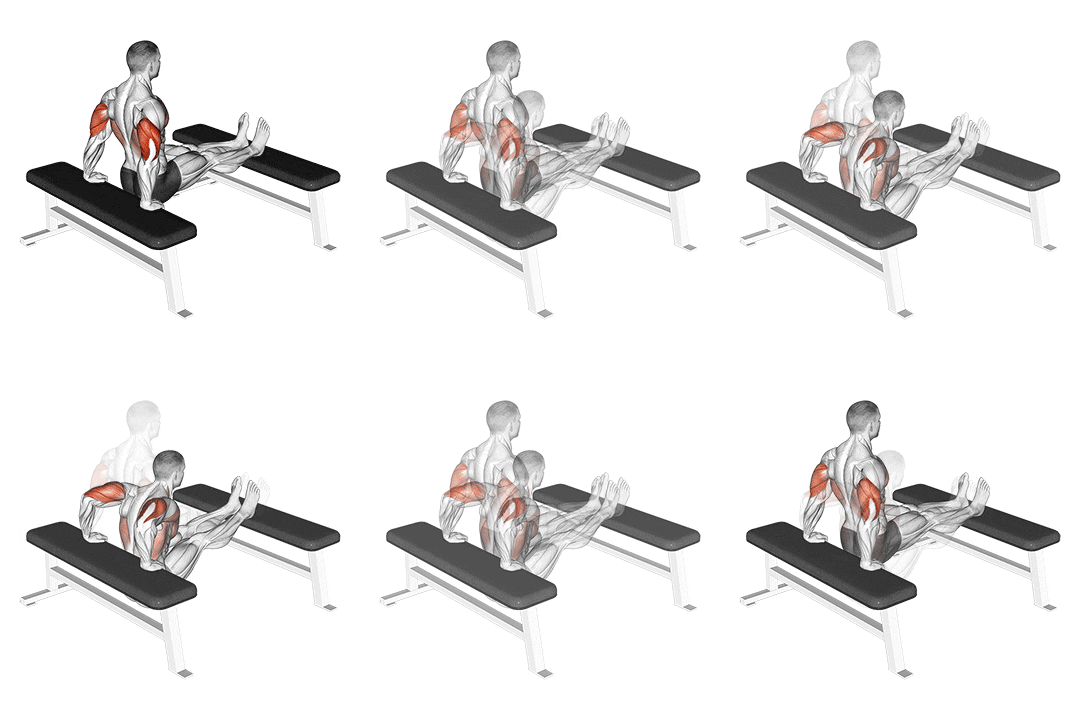
The bench leg triceps dip is a variation of the triceps dip exercise that specifically targets the triceps muscles while placing less stress on the shoulders and chest. By elevating the legs on a bench or step, the exercise becomes more challenging and provides a greater focus on the triceps. It is an effective exercise for building strength and muscle tone in the upper arms. ## Instructions 1. Place a stable bench or step behind you and position your hands shoulder-width apart on the edge of the bench, fingers pointing forward. 2. Walk your feet forward and place them on another bench or step in front of you, with your legs extended and heels resting on the bench. 3. Slide your hips off the edge of the bench, supporting your body weight with your arms. 4. Lower your body by bending your elbows, allowing them to flare out to the sides. Keep your back close to the bench throughout the movement. 5. Continue lowering your body until your upper arms are parallel to the ground, or you feel a stretch in your triceps. 6. Pause briefly in the lowered position, then push through your hands to extend your arms and raise your body back to the starting position. 7. Repeat for the desired number of repetitions. ## Variations - **Weighted Bench Leg Triceps Dip**: To increase the intensity of the exercise, you can add weight by using a dip belt or holding a dumbbell between your feet. - **Assisted Bench Leg Triceps Dip**: If you need additional assistance, you can use resistance bands or an assisted dip machine to reduce the amount of bodyweight you are lifting. ## Muscles Worked - Primary muscles: Triceps brachii - Secondary muscles: Core muscles (rectus abdominis, obliques) ## Common Mistakes - Allowing the elbows to flare out excessively: Keep your elbows pointing backward and avoid letting them flare out to the sides. This places more emphasis on the triceps muscles. - Not maintaining proper shoulder position: Keep your shoulders down and back, away from your ears, throughout the exercise. Avoid shrugging or hunching your shoulders. - Rounding the back: Keep your back straight and avoid rounding or arching it. Engage your core muscles to maintain stability. - Not achieving a full range of motion: Lower your body until your upper arms are parallel to the ground or you feel a stretch in your triceps. Avoid shortening the range of motion by not descending far enough. ## Safety Precautions - Use stable benches or steps that can support your weight and provide a secure footing for your legs. - If you have any pre-existing shoulder or elbow injuries, consult with a healthcare professional before attempting bench leg triceps dips. - Listen to your body and stop the exercise if you experience any sharp pain or discomfort. - Engage your core muscles throughout the exercise to stabilize your body and reduce stress on your lower back. - Start with a controlled and manageable range of motion. Gradually increase the depth as you become more comfortable and gain strength. - Be cautious with the bench height and foot placement to ensure stability and prevent slipping or falling.
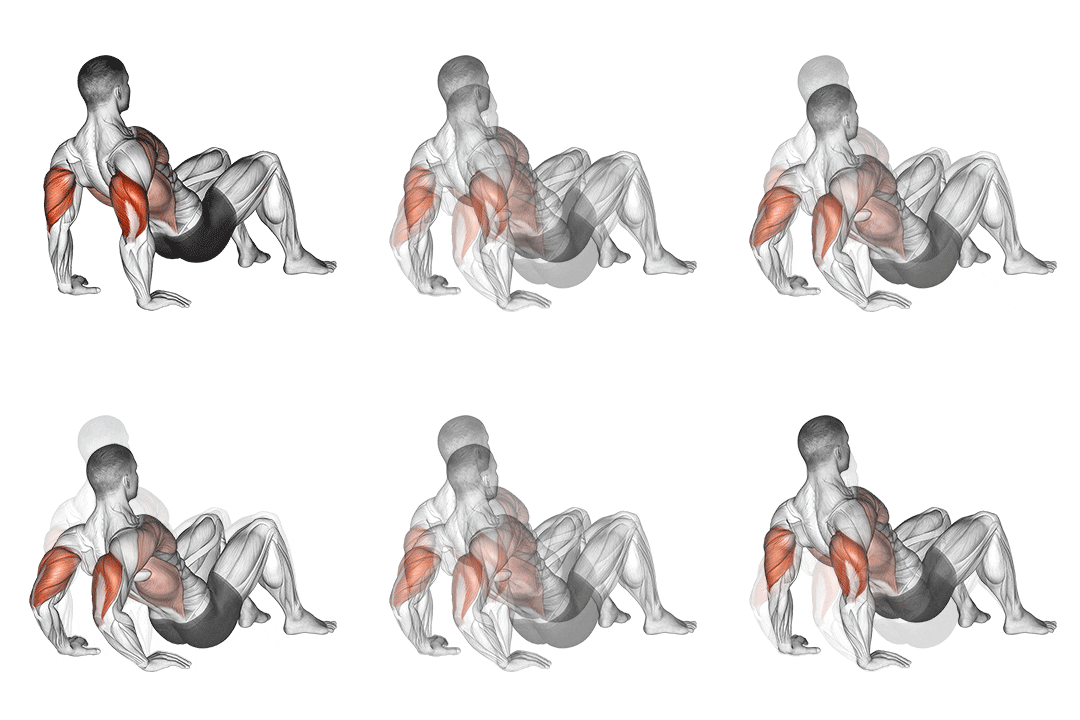
Triceps dips on the floor are a bodyweight exercise that primarily targets the triceps muscles. This exercise requires no equipment and can be done anywhere. Triceps dips on the floor are effective for strengthening and toning the back of the upper arms. ## Instructions 1. Sit on the floor with your legs extended in front of you and your feet together or slightly apart. 2. Place your hands on the floor, slightly behind your hips, fingers pointing forward. Keep your hands shoulder-width apart or slightly narrower. 3. Press through your hands and lift your hips off the floor, shifting your weight onto your hands. 4. Bend your elbows and lower your body towards the floor while keeping your back close to your hands. 5. Continue descending until your elbows are at a 90-degree angle or slightly smaller. 6. Pause briefly in the lowered position, then push through your hands to extend your arms and raise your body back to the starting position. 7. Repeat for the desired number of repetitions. ## Variations - **Assisted Triceps Dips**: If you find triceps dips on the floor too challenging, you can place your feet on a stable elevated surface, such as a bench or step. This reduces the amount of bodyweight you have to lift, making the exercise easier. - **Weighted Triceps Dips**: To increase the difficulty and intensity of the exercise, you can add weight by wearing a weighted vest or placing a weight plate on your lap. ## Muscles Worked - Primary muscles: Triceps brachii - Secondary muscles: Core muscles (rectus abdominis, obliques), chest (pectoralis major), shoulders (deltoids) ## Common Mistakes - Letting the elbows flare out: Keep your elbows pointing straight back or slightly inward throughout the exercise. This helps target the triceps effectively. - Not maintaining proper shoulder position: Keep your shoulders down and back, away from your ears, during the exercise. Avoid shrugging or hunching your shoulders. - Not achieving a full range of motion: Lower your body until your elbows are at a 90-degree angle or slightly smaller. Descending too shallowly limits the effectiveness of the exercise. - Rounding the back: Maintain a straight back throughout the movement. Avoid rounding or arching your back by engaging your core muscles. ## Safety Precautions - Ensure that the floor surface is stable and non-slippery to prevent slipping during the exercise. - If you have any pre-existing shoulder or elbow injuries, consult with a healthcare professional before attempting triceps dips on the floor. - Listen to your body and stop the exercise if you experience any sharp pain or discomfort. - Engage your core muscles throughout the exercise to stabilize your body and reduce stress on your lower back. - If you have wrist pain or discomfort, consider performing triceps dips on parallel bars or using push-up handles to keep your wrists in a more neutral position.
The triceps press, also known as triceps extension, is an isolation exercise that specifically targets the triceps muscles. It involves extending the arms against resistance to strengthen and tone the back of the upper arms. The triceps press can be performed with dumbbells, a barbell, resistance bands, or a cable machine. ## Instructions 1. Stand or sit on a bench with your back straight and core engaged. Hold a dumbbell in each hand, palms facing inward. 2. Raise the dumbbells overhead, fully extending your arms. 3. Keep your upper arms close to your ears and elbows pointing forward. 4. Slowly lower the dumbbells behind your head by bending your elbows, allowing them to flare out to the sides. 5. Lower the dumbbells until your forearms are parallel to the ground or you feel a stretch in your triceps. 6. Pause briefly in the lowered position, then straighten your arms and raise the dumbbells back to the starting position. 7. Repeat for the desired number of repetitions. ## Variations - **Seated Triceps Press**: Perform the triceps press while sitting on a bench or chair. This variation provides stability and isolates the triceps muscles without engaging the legs. - **Single-Arm Triceps Press**: Instead of using both arms simultaneously, perform the exercise with one arm at a time. This allows for better focus on each triceps muscle individually. - **Overhead Cable Triceps Press**: Attach a straight bar or rope handle to a cable machine. Stand facing away from the machine and grasp the handle with your palms facing down. Extend your arms overhead and perform the triceps press by bending and extending your elbows against the resistance of the cable. ## Muscles Worked - Primary muscles: Triceps brachii - Secondary muscles: Shoulders (deltoids) ## Common Mistakes - Allowing the elbows to flare out excessively: Keep your elbows pointing forward and close to your ears throughout the movement. This ensures proper engagement of the triceps muscles. - Using momentum: Avoid swinging or using momentum to lift the weights. Focus on controlled movements and engage your triceps muscles to perform the exercise. - Arching the back: Maintain a neutral spine and avoid arching your back during the triceps press. Engage your core muscles to stabilize your body. - Locking the elbows: While you should fully extend your arms, avoid hyperextending or locking your elbows at the top of the movement. Maintain a slight bend to keep tension on the triceps muscles. ## Safety Precautions - Start with lighter weights and gradually increase the resistance as you gain strength and confidence in your form. - If you have any pre-existing elbow, shoulder, or back injuries, consult with a healthcare professional before attempting the triceps press. - Avoid using excessively heavy weights that compromise your form and increase the risk of injury. - Perform the exercise in a controlled manner, focusing on the contraction and extension of the triceps muscles. - If using a barbell, ensure proper grip and control throughout the movement to prevent the barbell from slipping or dropping. - If using a cable machine, be aware of the cable tension and position yourself at a suitable distance from the machine to maintain stability and control.
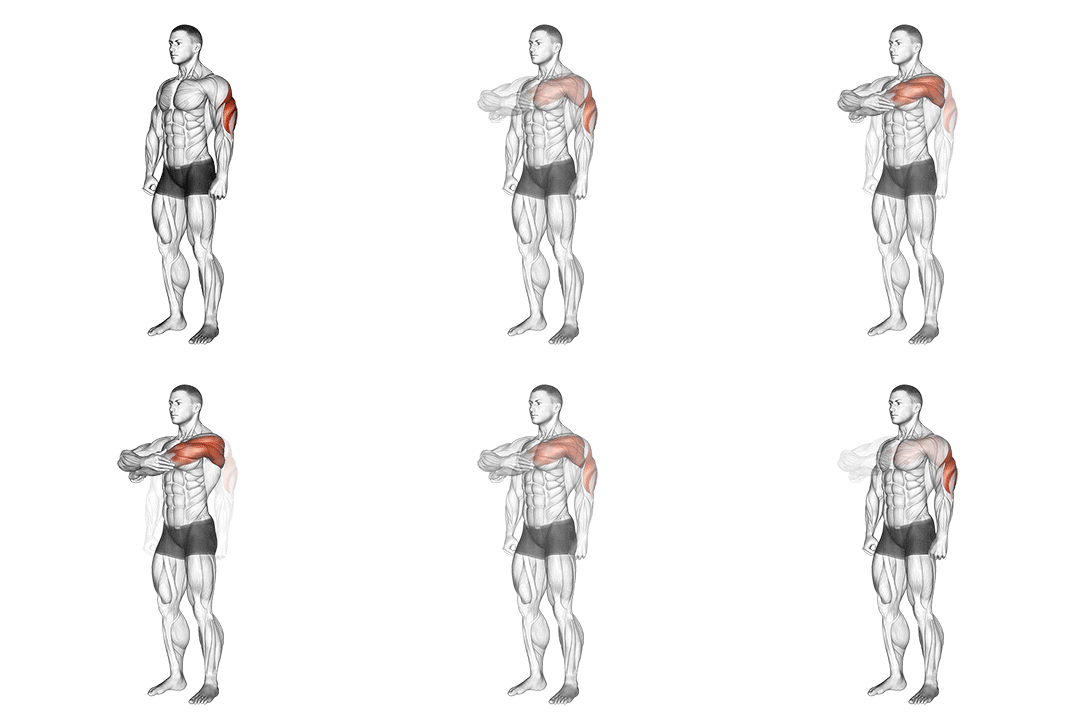
The triceps stretch is a stretching exercise that targets the triceps muscles located at the back of the upper arms. This stretch helps to improve flexibility and range of motion in the triceps, promoting better overall upper body mobility. ## Instructions 1. Stand tall with your feet shoulder-width apart. 2. Raise one arm overhead, bending it at the elbow and reaching your hand towards the opposite shoulder blade. 3. With your other hand, gently grasp the elbow of the raised arm. 4. Apply a light downward pressure on the elbow to deepen the stretch. 5. Hold the stretch for 15 to 30 seconds, feeling a gentle pull in the triceps. 6. Release the stretch and repeat on the other side. 7. Perform the stretch on each arm for 2 to 3 sets. ## Variations - **Overhead Triceps Stretch**: Instead of reaching behind the back, keep the arm raised overhead and bend it at the elbow. Use the opposite hand to gently pull the elbow towards the head, deepening the stretch. - **Wall Assisted Triceps Stretch**: Stand facing a wall and place one hand against the wall at shoulder height. Rotate your body away from the wall, allowing the triceps to stretch. Adjust the distance from the wall to increase or decrease the intensity of the stretch. ## Muscles Worked - Primary muscles: Triceps brachii ## Common Mistakes - Pulling too hard: Avoid applying excessive force during the stretch. The stretch should be gentle and comfortable, without any pain. - Shrugging the shoulders: Keep your shoulders relaxed and down, away from the ears, throughout the stretch. Avoid tensing or shrugging the shoulders. - Arching the back: Maintain a neutral spine position and avoid arching your back. Engage your core muscles to stabilize the torso. - Holding the breath: Remember to breathe deeply and naturally throughout the stretch. Avoid holding your breath, as it can increase tension in the muscles. ## Safety Precautions - Perform the triceps stretch on a stable surface to ensure balance and stability. - If you have any pre-existing shoulder or elbow injuries, consult with a healthcare professional before attempting the triceps stretch. - Stop the stretch immediately if you experience sharp pain or discomfort. - Start with a gentle stretch and gradually increase the intensity over time. - Listen to your body and avoid overstretching. The stretch should be within a comfortable range for you. - If you have limited flexibility, use a towel or strap to assist in reaching the hand behind the back during the stretch.
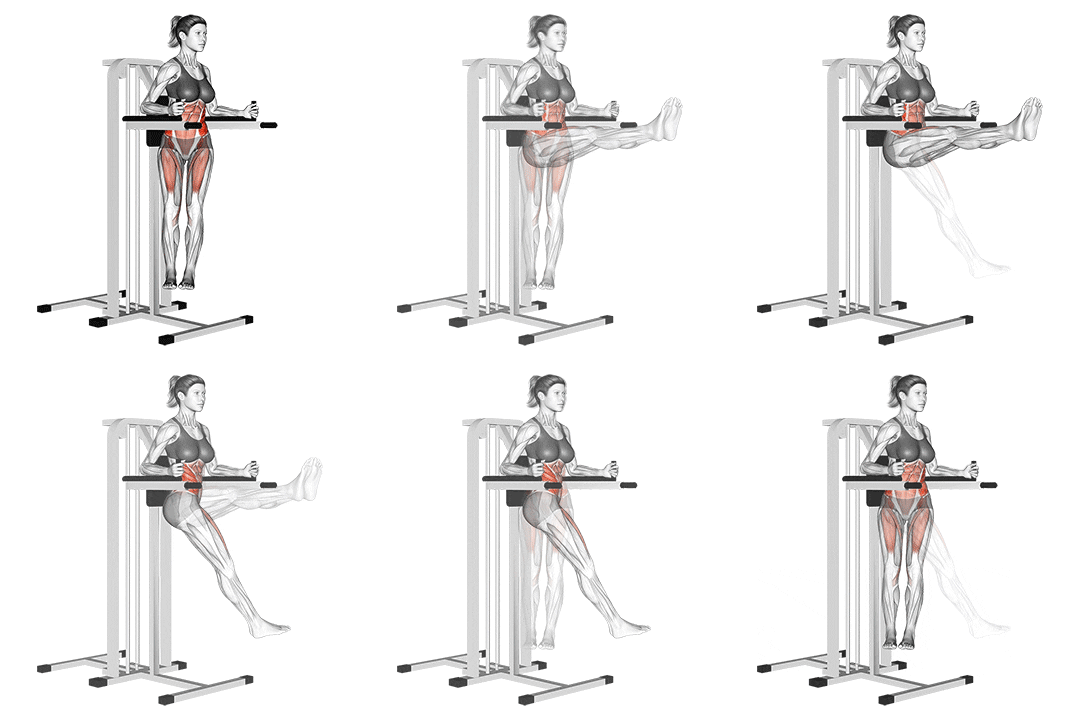
The twisted leg raise is an exercise that targets the abdominal muscles, including the rectus abdominis and obliques. This exercise helps strengthen the core, improve stability, and enhance abdominal definition. It is suitable for females looking to tone their midsection and develop overall core strength. ## Instructions 1. Lie flat on your back on an exercise mat or a comfortable surface. 2. Bend your knees and place your feet flat on the ground, hip-width apart. Keep your arms by your sides. 3. Engage your core by drawing your belly button toward your spine. 4. Lift both legs off the ground, keeping them bent at a 90-degree angle. 5. As you raise your legs, simultaneously twist your hips to one side, bringing your knees toward that side of your body. 6. Lower your legs back to the starting position while maintaining control. 7. Repeat the movement, but this time twist your hips to the opposite side. 8. Continue alternating the twisting motion from side to side for the desired number of repetitions or time. ## Variations - Beginner Variation: If you find it challenging to perform the exercise with both legs lifted, you can modify it by keeping one foot on the ground while raising and twisting the opposite leg. Alternate between sides for each repetition. - Advanced Variation: To increase the difficulty, you can straighten your legs and perform the twisted leg raise with straight legs instead of bent knees. This variation requires more core strength and flexibility. ## Muscles Worked - Rectus abdominis (six-pack muscles) - Obliques (internal and external) - Hip flexors - Lower back muscles (erector spinae) ## Common Mistakes - Using momentum: Avoid swinging your legs or using momentum to lift them. Focus on controlled movements to engage the target muscles effectively. - Arching the back: Keep your lower back pressed against the mat throughout the exercise. Avoid arching or lifting the hips off the ground. - Not engaging the core: Ensure that you actively engage your core by contracting your abdominal muscles. This will help stabilize your spine and maximize the effectiveness of the exercise. ## Safety Precautions - If you have any pre-existing lower back or abdominal injuries, consult with a healthcare professional before attempting this exercise. - Start with a range of motion that feels comfortable for your body. You can gradually increase the twist as your flexibility and strength improve. - Listen to your body and avoid overexertion or pushing through pain. If you experience any discomfort or pain, stop the exercise and seek guidance from a qualified fitness professional. - It is always recommended to perform a proper warm-up before engaging in any exercise routine to prepare your muscles and reduce the risk of injury.
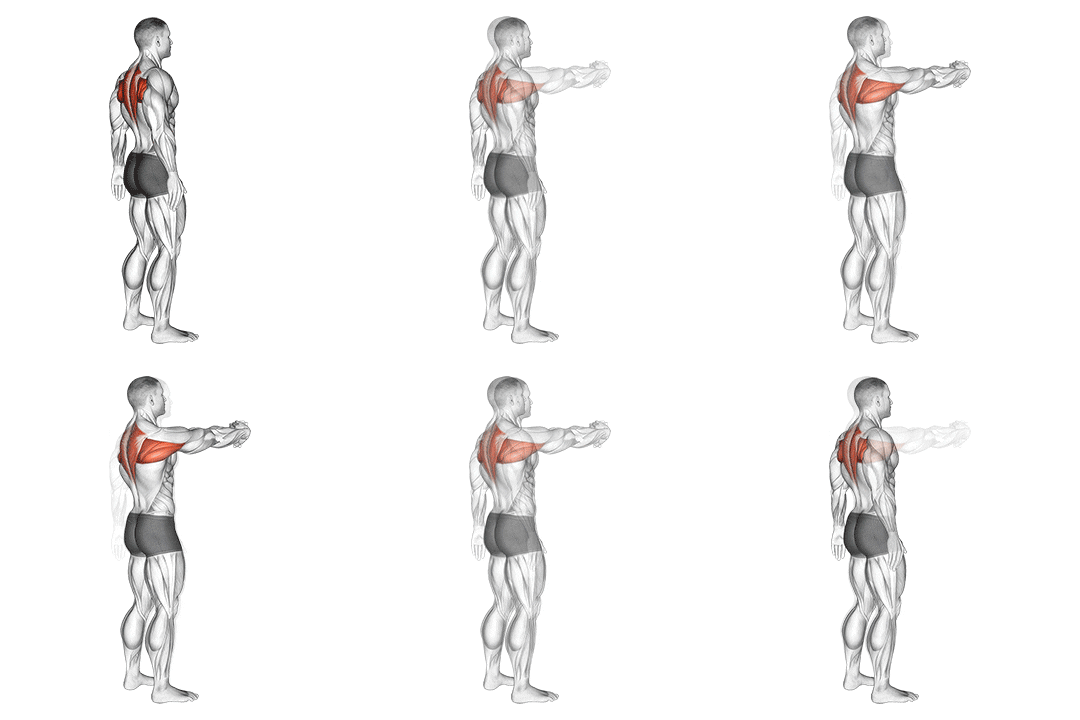
The upper back stretch is an exercise that targets the muscles of the upper back, including the rhomboids, trapezius, and posterior deltoids. This stretch helps relieve tension in the upper back, improves posture, and promotes flexibility and mobility in the shoulder area. ## Instructions 1. Stand or sit upright with good posture. 2. Interlace your fingers in front of your body, palms facing away from you. 3. Extend your arms forward, keeping them parallel to the ground. 4. Round your upper back by pushing your palms away from your body and allowing your shoulder blades to separate. 5. As you push your palms forward, let your head drop slightly and feel a stretch in your upper back. 6. Hold the stretch for 15-30 seconds while breathing deeply. 7. Release the stretch and relax your arms. ## Variations - Seated Variation: If standing is uncomfortable or not feasible, you can perform this stretch while sitting on a chair or on the edge of a bed. Follow the same instructions, but maintain an upright seated position. - Wall Variation: Stand with your back against a wall and perform the upper back stretch while pressing your palms against the wall. This variation provides additional support and stability. ## Muscles Worked - Rhomboids - Trapezius (middle and lower fibers) - Posterior deltoids - Erector spinae (supporting muscles) ## Common Mistakes - Shrugging the shoulders: Avoid lifting your shoulders toward your ears during the stretch. Keep them relaxed and focused on the upper back extension. - Overarching the lower back: Maintain a neutral spine and avoid excessive arching in the lower back. Engage your core muscles to support proper posture. - Straining the neck: While dropping your head slightly can enhance the stretch, be mindful not to strain your neck. Keep it relaxed and in a comfortable position. ## Safety Precautions - If you have any existing upper back or shoulder injuries, it's advisable to consult with a healthcare professional or a qualified physical therapist before performing this stretch. - Start with a gentle range of motion and gradually increase the stretch as you feel comfortable. Avoid forcing or jerking movements. - Do not hold your breath during the stretch. Breathe deeply and exhale slowly to promote relaxation and enhance the effectiveness of the stretch. - If you experience pain or discomfort, ease off the stretch and modify the intensity as needed. Each individual's flexibility and limitations may vary.
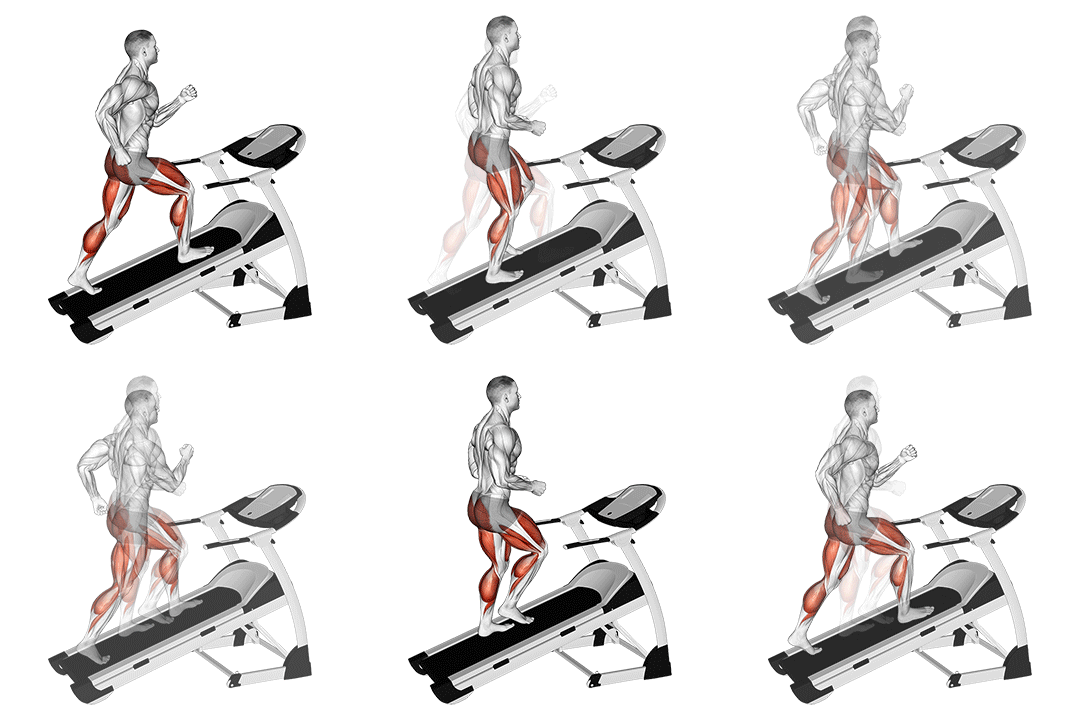
Walking on an incline treadmill is a cardiovascular exercise that involves walking on a treadmill set at an incline. It primarily targets the lower body muscles, including the glutes, quadriceps, hamstrings, and calves. This exercise helps improve cardiovascular endurance, burn calories, and strengthen the leg muscles. ## Instructions 1. Begin by adjusting the incline level on the treadmill to your desired intensity. Start with a low incline and gradually increase it as you become more comfortable. 2. Stand on the treadmill with your feet shoulder-width apart and maintain an upright posture. 3. Start the treadmill at a slow pace, allowing yourself to get accustomed to the incline. 4. Begin walking by taking natural strides, landing on your heel and rolling through to your toes. 5. Keep your core engaged and your arms relaxed, swinging them naturally by your sides. 6. Maintain a steady pace that challenges you but still allows you to walk comfortably. 7. Continue walking on the incline treadmill for your desired duration, aiming for at least 20-30 minutes for an effective cardiovascular workout. 8. Once you're finished, gradually decrease the incline and the speed of the treadmill before stepping off. ## Variations - Incline Interval Training: Alternate between periods of walking on a high incline and a low incline or a flat surface to add variation and intensity to your workout. - Side Step: To engage the inner and outer thighs, you can incorporate side steps while walking on the incline treadmill. Take wide steps to the side, alternating sides with each step. - Walking Lunges: Integrate walking lunges into your routine by taking lunging steps while walking on the incline. ## Muscles Worked - Glutes (buttocks) - Quadriceps (front thigh muscles) - Hamstrings (back thigh muscles) - Calves (gastrocnemius and soleus muscles) ## Common Mistakes - Leaning forward or holding onto the handrails excessively, which reduces the effectiveness of the exercise. Maintain an upright posture and only use the handrails for balance if necessary. - Taking short, shuffling steps instead of natural strides. Aim for a smooth heel-to-toe motion. - Overstriding or taking too large steps, which can strain the knees. Maintain a stride length that feels comfortable and natural. - Setting the incline too high initially. Start with a moderate incline and gradually increase it as your fitness level improves. ## Safety Precautions - Always warm up before starting the exercise to prepare your muscles. - Wear proper footwear with good arch support and traction. - Stay hydrated throughout the workout by drinking water. - If you have any pre-existing medical conditions or injuries, consult with a healthcare professional before attempting this exercise. - If you feel any pain or discomfort during the exercise, stop immediately and seek medical advice if needed. Remember to listen to your body and gradually increase the intensity of the incline as you become more comfortable and stronger. Enjoy your workout!
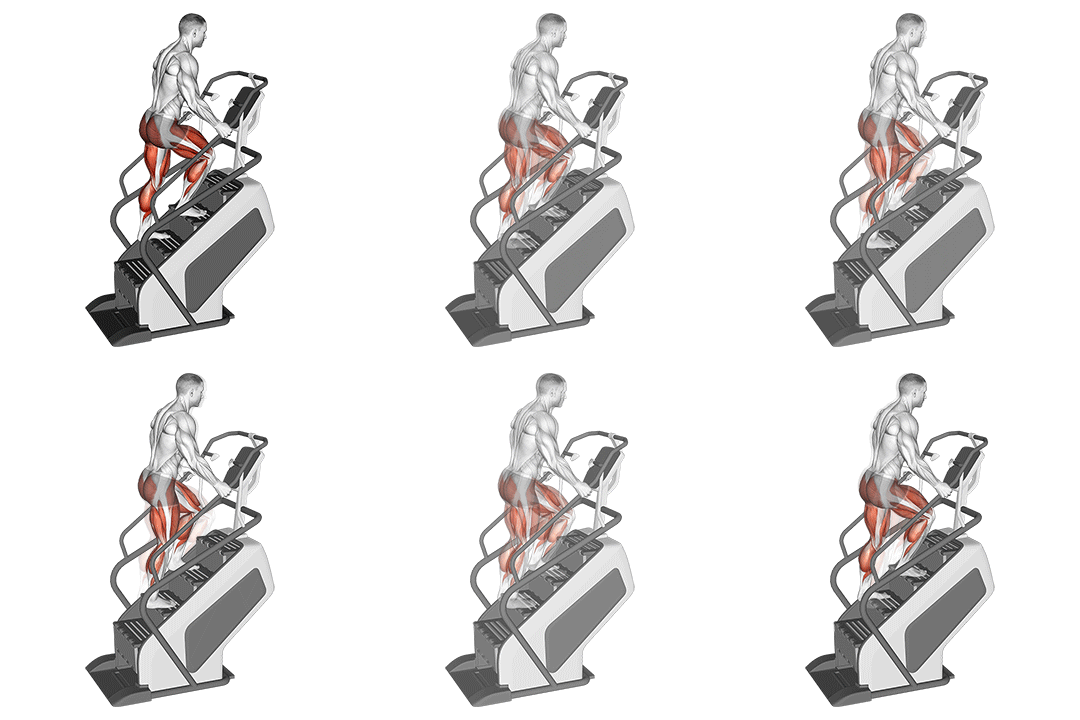
Walking on a StepMill, also known as a StairMaster, is a cardiovascular exercise that simulates climbing stairs. It primarily targets the lower body muscles, including the quadriceps, hamstrings, glutes, and calves. This exercise provides a high-intensity cardio workout, improves lower body strength, and enhances overall cardiovascular endurance. ## Instructions 1. Begin by stepping onto the StepMill, ensuring your entire foot is placed securely on each step. 2. Stand upright with your shoulders back, engaging your core muscles. 3. Start the machine at a comfortable pace. Gradually increase the speed and intensity as you warm up. 4. Step up one step at a time, driving through the balls of your feet and using your legs to lift your bodyweight. 5. Maintain an upright posture throughout the exercise, avoiding leaning forward or backward. 6. Swing your arms naturally to assist with the movement and maintain balance. 7. Continue stepping for your desired duration, aiming for at least 20-30 minutes for an effective cardiovascular workout. 8. Gradually reduce the speed and intensity as you approach the end of your workout. 9. Step off the StepMill carefully once it comes to a complete stop. ## Variations - Interval Training: Incorporate interval training by alternating between periods of higher intensity and lower intensity. Increase the speed and resistance for a certain duration and then return to a moderate pace to recover. - Side Step: To engage different muscles, incorporate side steps while using the StepMill. Step to the side, alternating sides with each step, to work the inner and outer thighs. - Reverse Climb: Change the direction of the steps, climbing backward to target the muscles differently. ## Muscles Worked - Quadriceps (front thigh muscles) - Hamstrings (back thigh muscles) - Glutes (buttocks) - Calves (gastrocnemius and soleus muscles) ## Common Mistakes - Leaning on the handrails or gripping them too tightly. Use the handrails for balance only when necessary, and try to maintain an upright posture. - Taking overly large steps or bounding, which can strain the knees and ankles. Use controlled and comfortable steps. - Slouching or hunching the shoulders. Keep your back straight and engage your core muscles. - Relying too much on the arms for support. Allow your legs to do the majority of the work. ## Safety Precautions - Start with a warm-up and stretching routine to prepare your muscles before using the StepMill. - Wear appropriate footwear with good arch support and traction. - Begin with a moderate pace and gradually increase the speed and intensity over time. - Stay hydrated by drinking water before, during, and after the workout. - If you have any pre-existing medical conditions or injuries, consult with a healthcare professional before attempting this exercise. - Stop the exercise immediately if you experience any pain, dizziness, or shortness of breath. Remember to adjust the intensity and speed of the StepMill according to your fitness level and gradually progress as you become more comfortable and stronger. Enjoy your workout, and stay safe!