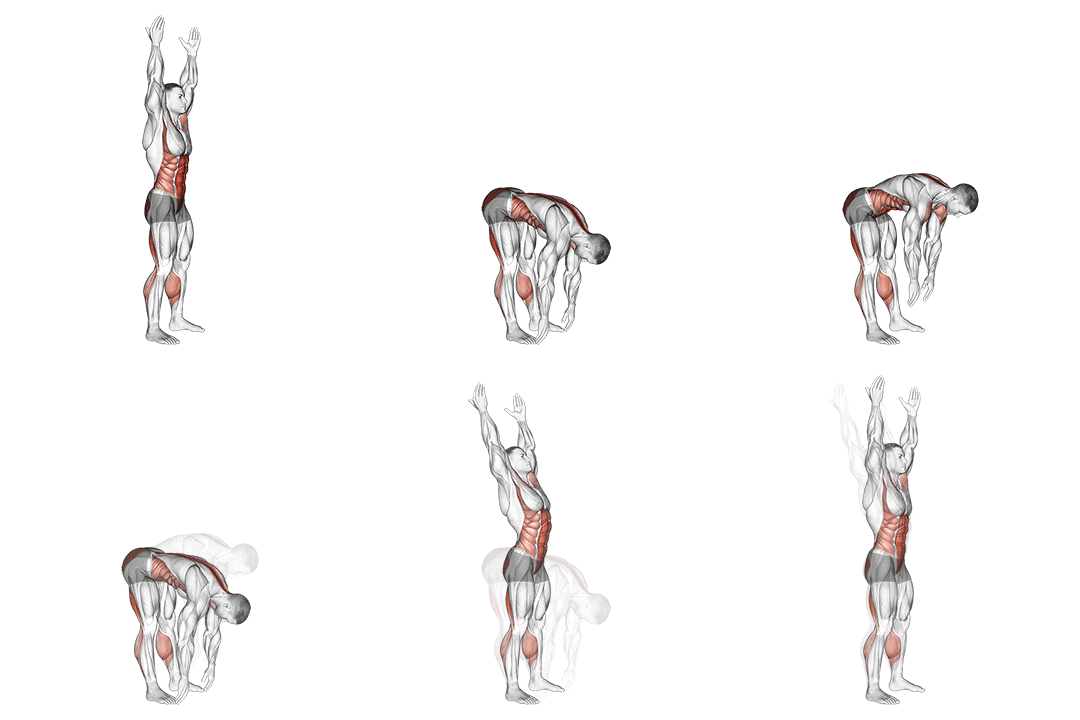
The two toe touch exercise is a dynamic stretching exercise that targets the hamstrings, lower back, and hip flexors. It helps improve flexibility and mobility in the lower body and enhances overall lower body strength. ## Instructions 1. Stand up straight with your feet shoulder-width apart. 2. Extend your arms out to the sides, parallel to the ground. 3. Keeping your legs straight, hinge at the hips and bend forward. 4. Reach down with both hands towards your toes, aiming to touch them. 5. As you reach down, simultaneously lift one leg straight up behind you, keeping it in line with your torso. 6. Hold the position briefly and then lower the raised leg back down. 7. Return to the starting position, standing upright with both feet on the ground. 8. Repeat the movement, this time lifting the opposite leg as you reach down towards your toes. 9. Continue alternating legs with each repetition. ## Variations - Beginner Variation: If you find it challenging to touch your toes, you can modify the exercise by bending your knees slightly. This will reduce the stretch on the hamstrings and make it easier to reach down. - Advanced Variation: To increase the difficulty, you can hold a light dumbbell or kettlebell in one hand while performing the toe touch. This adds resistance and engages the upper body muscles as well. ## Muscles Worked - Hamstrings - Lower back muscles (erector spinae) - Hip flexors ## Common Mistakes - Rounding the back: Maintain a neutral spine throughout the exercise and avoid rounding your back as you reach down. Keep your chest lifted and shoulders back. - Bending the knees excessively: While it's acceptable to have a slight bend in the knees, avoid excessive knee flexion. Keep your legs as straight as possible to target the hamstrings effectively. - Using momentum: Focus on controlled movements and avoid using momentum to swing your leg up. The emphasis should be on the muscles' engagement rather than speed. ## Safety Precautions - If you have any existing lower back or hamstring injuries, consult with a healthcare professional or a qualified fitness trainer before attempting this exercise. - Perform the movement within a comfortable range of motion. Avoid pushing beyond your flexibility limits, as it may lead to strain or injury. - If you experience pain or discomfort during the exercise, stop immediately and seek guidance from a fitness professional or healthcare provider.
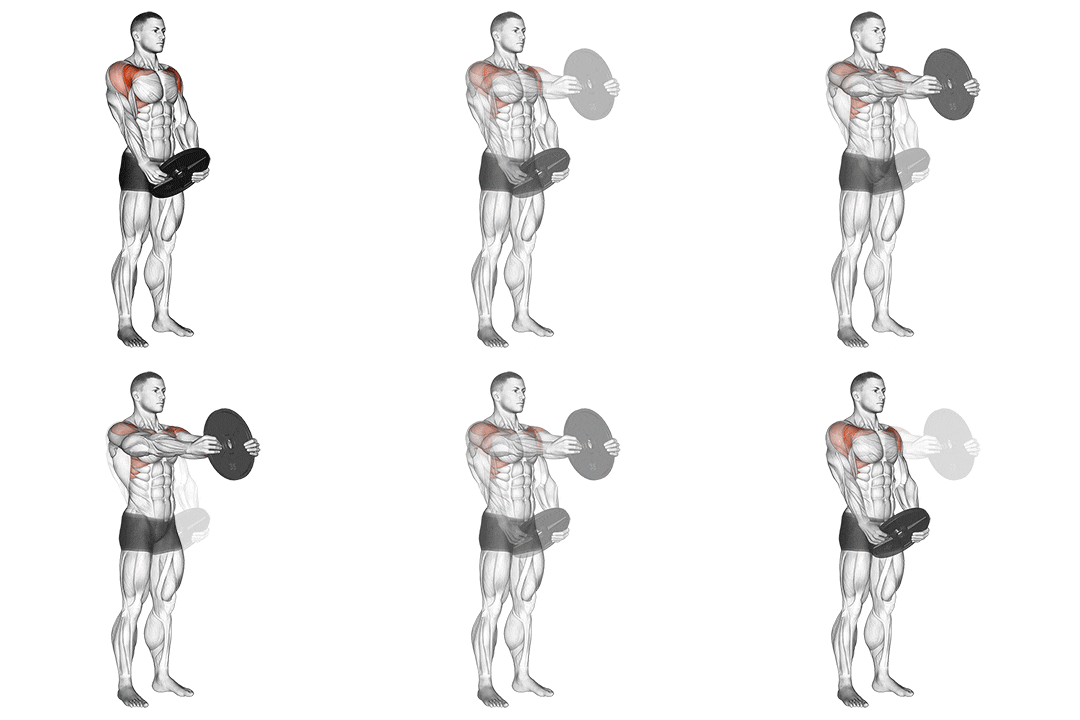
The weighted front raise is an upper body exercise that primarily targets the anterior deltoids (front shoulder muscles) and also engages the muscles of the upper back and arms. It involves lifting a weight in front of your body, from a resting position to shoulder level, while keeping your arms extended. ## Instructions 1. Stand with your feet shoulder-width apart and hold a dumbbell in each hand with an overhand grip. 2. Allow your arms to hang down in front of your thighs, palms facing your body. This is the starting position. 3. Keeping your arms straight, exhale and lift the dumbbells directly in front of you, with a slight bend at the elbows. Maintain control throughout the movement and avoid swinging or using momentum. 4. Continue lifting until the dumbbells are at shoulder level and your arms are parallel to the floor. Hold this position for a brief pause while squeezing your shoulder muscles. 5. Inhale and slowly lower the dumbbells back to the starting position, maintaining control and avoiding rapid descent. 6. Repeat for the desired number of repetitions. ## Variations - **Alternating Front Raise**: Instead of raising both dumbbells simultaneously, you can perform the exercise by raising one arm at a time, alternating between left and right. - **Seated Front Raise**: Perform the exercise while sitting on a bench or chair. This variation can help stabilize the body and isolate the shoulder muscles. - **Resistance Band Front Raise**: If you don't have access to dumbbells, you can use resistance bands to perform the front raise. Simply step on the band with both feet and hold the handles or ends of the band with your hands. Follow the same lifting motion as described above. ## Muscles Worked The main muscles worked during the weighted front raise include: - Anterior deltoids (front shoulder muscles) - Lateral deltoids (side shoulder muscles) - Upper trapezius (upper back muscles) - Biceps brachii (front upper arm muscles) - Forearm muscles (brachioradialis and wrist flexors) ## Common Mistakes - Using excessive weight: It's important to choose a weight that allows you to maintain proper form and control throughout the exercise. Using too much weight can lead to compromised technique and potential injury. - Swinging the body: Avoid using momentum or swinging your body to lift the dumbbells. Keep your core engaged and focus on using your shoulder muscles to perform the movement. - Raising the dumbbells too high: Lifting the dumbbells above shoulder level can put unnecessary strain on the shoulder joint. Aim to lift until your arms are parallel to the floor and shoulder level. - Allowing the elbows to bend excessively: While a slight bend in the elbows is acceptable, avoid fully flexing the elbows during the raise. Keep your arms mostly straight throughout the exercise. ## Safety Precautions - Start with lighter weights and gradually increase the load as your strength and technique improve. - If you have any pre-existing shoulder or upper body injuries, consult with a healthcare professional before attempting this exercise. - Maintain proper posture throughout the exercise, keeping your spine neutral and avoiding excessive arching or rounding of the back. - If you experience any pain or discomfort during the exercise, stop immediately and seek medical advice.
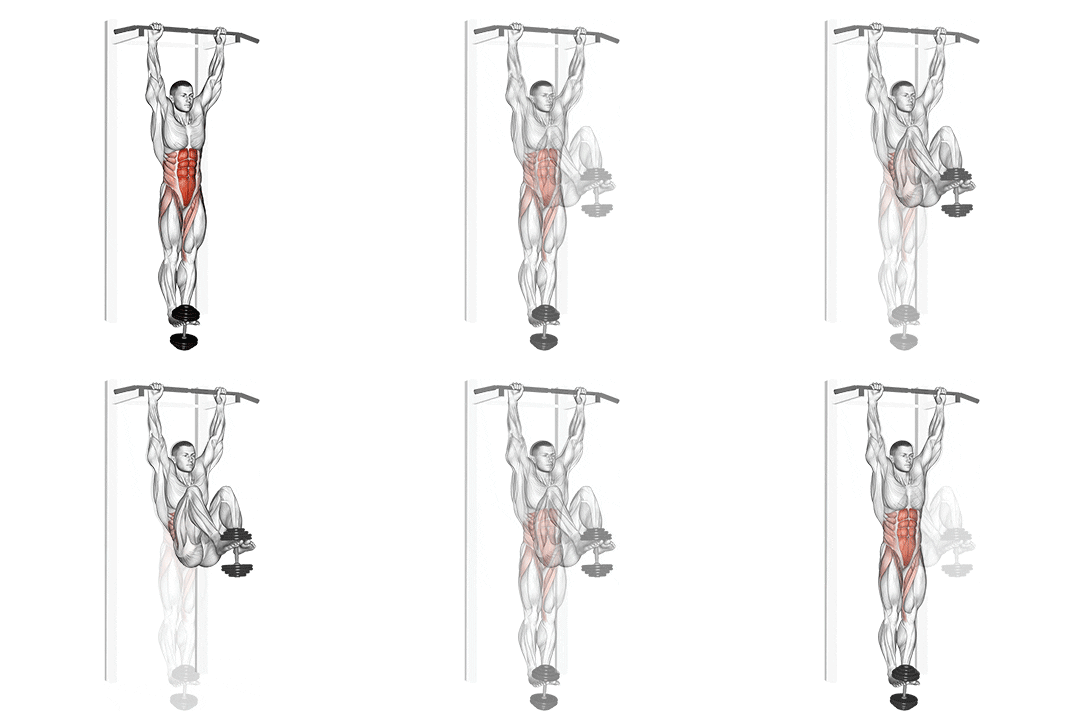
The weighted hanging leg-hip raise is a challenging compound exercise that primarily targets the abdominal muscles, particularly the lower abs, and also engages the hip flexors and the muscles of the lower back. It involves hanging from a pull-up bar while raising your legs and hips, creating a controlled and controlled movement. ## Instructions 1. Hang from a pull-up bar with an overhand grip, ensuring your arms are fully extended and your body is straight. 2. If using ankle weights, secure them around your ankles. 3. Engage your core muscles and maintain a tight grip on the bar. 4. Keeping your legs together and your knees straight, exhale and slowly raise your legs in front of you. 5. Continue lifting until your legs are parallel to the floor or as high as you can comfortably go without straining your lower back. 6. At the top of the movement, pause for a brief moment and squeeze your abdominal muscles. 7. Inhale and slowly lower your legs back down to the starting position, maintaining control and avoiding swinging or jerking motions. 8. Repeat for the desired number of repetitions. ## Variations - **Bent Knee Raises**: If you find it challenging to keep your legs straight throughout the movement, you can perform the exercise with your knees bent. This variation reduces the intensity and places more emphasis on the abdominal muscles. - **Weighted Leg-Hip Raise**: To increase the difficulty, you can add ankle weights or hold a dumbbell between your feet while performing the leg-hip raise. Gradually increase the weight as your strength improves. - **Captain's Chair Leg Raise**: If you don't have access to a pull-up bar, you can use a captain's chair or a dip station with padded armrests. Position yourself with your back against the backrest and your arms resting on the armrests. From there, lift your legs by bending at the knees and hips, bringing your knees toward your chest. ## Muscles Worked The main muscles worked during the weighted hanging leg-hip raise include: - Rectus abdominis (six-pack muscles) - Transverse abdominis (deep core stabilizer) - Hip flexors (iliopsoas) - Obliques (side abdominal muscles) - Lower back muscles (erector spinae) ## Common Mistakes - Swinging or using momentum: Avoid using swinging motions or momentum to lift your legs. Focus on engaging your core and using your abdominal muscles to perform the movement in a controlled manner. - Not maintaining a straight body position: Keep your body straight throughout the exercise, avoiding excessive arching or rounding of the back. This helps target the abdominal muscles effectively and reduces the strain on the lower back. - Lifting the legs too high: While it's important to lift your legs high enough to engage the abdominal muscles, avoid lifting beyond a point where you feel excessive strain in your lower back. Lift to a comfortable range of motion without sacrificing proper form. - Not breathing properly: Remember to exhale as you lift your legs and inhale as you lower them. This helps stabilize the core and maintain control throughout the exercise. ## Safety Precautions - Ensure that the pull-up bar or any equipment you are using for hanging is secure and can support your body weight. - If you have any pre-existing lower back or abdominal injuries, consult with a healthcare professional before attempting this exercise. - Start with your body weight alone and gradually add weight or increase difficulty as you gain strength and improve your technique. - If you experience any pain or discomfort in your lower back or abdominal region, stop immediately and seek medical advice.
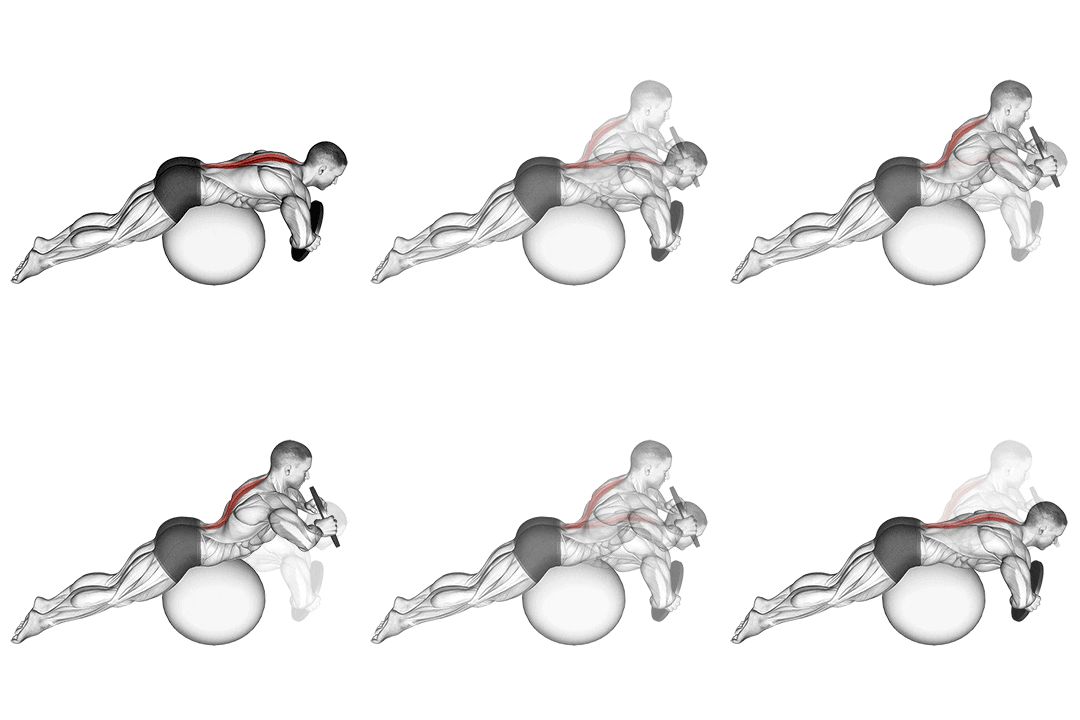
The weighted hyperextension on a stability ball is an exercise that targets the muscles of the lower back, glutes, and hamstrings. It involves lying face down on a stability ball while performing a controlled extension of the upper body. ## Instructions 1. Place a stability ball on the floor and position yourself in front of it. 2. Lie face down on the stability ball, with your hips resting on the ball and your feet securely planted on the floor for stability. 3. Hold a weight plate or dumbbell against your chest, keeping your elbows bent. 4. Engage your core muscles and keep your body straight from your head to your feet. 5. Begin the movement by exhaling and slowly lifting your upper body while maintaining a straight line from head to toe. Keep your back and neck aligned. 6. Lift until your upper body is parallel to the floor or until you feel a comfortable stretch in your lower back. 7. Hold the top position for a brief pause, squeezing your glutes and lower back muscles. 8. Inhale and slowly lower your upper body back down to the starting position in a controlled manner. 9. Repeat for the desired number of repetitions. ## Variations - **Bodyweight Hyperextension**: If you're new to this exercise or don't have access to weights, you can perform the movement without any added resistance, using just your body weight. - **Hyperextension with Arms Extended**: Instead of holding the weight against your chest, you can extend your arms overhead while performing the hyperextension. This variation increases the difficulty and engages the muscles of the upper back and shoulders to a greater extent. ## Muscles Worked The main muscles worked during the weighted hyperextension on a stability ball include: - Erector spinae (lower back muscles) - Gluteus maximus (large butt muscle) - Hamstrings (back of the thigh muscles) - Core muscles (deep stabilizers) ## Common Mistakes - Hyperextending the lower back: Avoid excessive arching of the lower back at the top of the movement. Focus on using your glutes and lower back muscles to lift your upper body while maintaining a neutral spine alignment. - Not engaging the core: It's important to engage your core muscles throughout the exercise to stabilize your body and prevent excessive strain on the lower back. - Using momentum: Perform the movement in a slow and controlled manner, avoiding any swinging or jerking motions. This ensures that the targeted muscles are effectively engaged. - Raising the legs: Keep your feet securely planted on the floor throughout the exercise. Avoid lifting or swinging your legs as this can shift the focus away from the intended muscle groups. ## Safety Precautions - Ensure that the stability ball is properly inflated and provides a stable surface. - If you have any pre-existing lower back conditions or injuries, consult with a healthcare professional before attempting this exercise. - Start with lighter weights or bodyweight only and gradually increase the load as your strength and stability improve. - If you experience any pain or discomfort in your lower back during the exercise, stop immediately and seek medical advice.
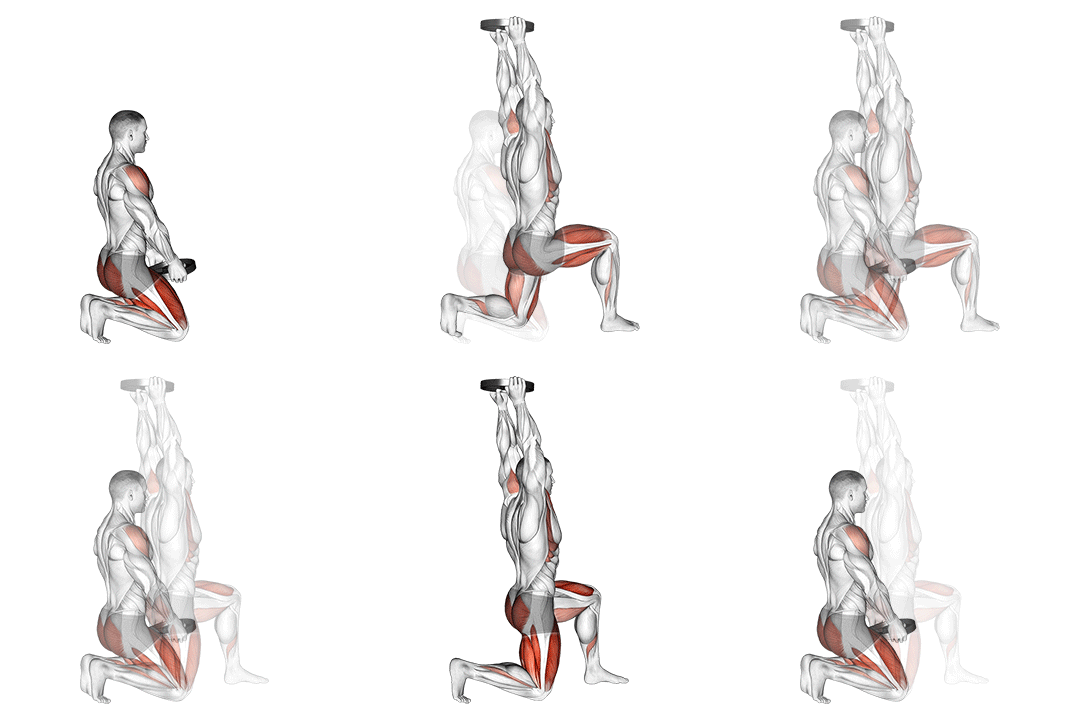
The weighted kneeling step with swing is a dynamic exercise that targets the lower body, specifically the quadriceps, glutes, and hamstrings. It also engages the core muscles for stability and balance. This exercise combines a forward stepping motion with a swinging motion to challenge the muscles and improve overall lower body strength and coordination. ## Instructions 1. Start by holding a dumbbell or kettlebell in each hand with an overhand grip. 2. Begin in a kneeling position on a mat or soft surface, with one knee on the ground and the other foot placed firmly on the floor in front of you, creating a 90-degree angle at the knee. 3. Keep your back straight, engage your core, and maintain a neutral spine. 4. With the weight evenly distributed between your hands, exhale and push off your front foot, lifting your body up and bringing your back knee forward into a standing position. 5. Simultaneously swing the dumbbells or kettlebells forward and upward, reaching shoulder height or slightly higher. 6. As you swing the weights, focus on keeping your core engaged and maintaining control throughout the movement. 7. Inhale and step back with the foot that was forward, returning to the kneeling position. 8. Repeat the movement with the opposite leg and continue alternating legs for the desired number of repetitions. ## Variations - **Unweighted Kneeling Step with Swing**: If you're new to this exercise or prefer to start without weights, you can perform the movement without dumbbells or kettlebells, focusing on the stepping and swinging motion. - **Walking Kneeling Step with Swing**: Instead of returning to the kneeling position after each step, you can perform a walking version of this exercise. Take a step forward with one leg while swinging the weights, then bring the back leg forward into a standing position, and repeat the movement with the opposite leg. ## Muscles Worked The main muscles worked during the weighted kneeling step with swing include: - Quadriceps (front thigh muscles) - Gluteus maximus (butt muscles) - Hamstrings (back of the thigh muscles) - Core muscles (including the abdominal and back muscles) - Hip flexors ## Common Mistakes - Leaning too far forward or backward: Maintain an upright posture throughout the exercise, avoiding excessive leaning in any direction. This helps engage the targeted muscles effectively and prevents strain on the back. - Neglecting the core engagement: Engage your core muscles throughout the movement to provide stability and control. This helps maintain balance and proper alignment. - Using excessive weight: Start with lighter weights and gradually increase the load as your strength and technique improve. Using weights that are too heavy can compromise form and increase the risk of injury. - Allowing the knees to cave inward: Keep your knees aligned with your toes throughout the exercise. Avoid allowing the knees to collapse inward, as this can place stress on the knee joint. Focus on maintaining proper alignment and engaging the hip and glute muscles. ## Safety Precautions - Ensure that you have sufficient space to perform the exercise without any obstructions. - Use a mat or soft surface to protect your knees during the kneeling position. - Start with lighter weights and progress gradually to heavier weights as your strength and stability improve. - If you have any pre-existing knee or hip conditions, consult with a healthcare professional before attempting this exercise. - If you experience any pain or discomfort during the exercise, particularly in the knee joints, stop immediately and seek medical advice.
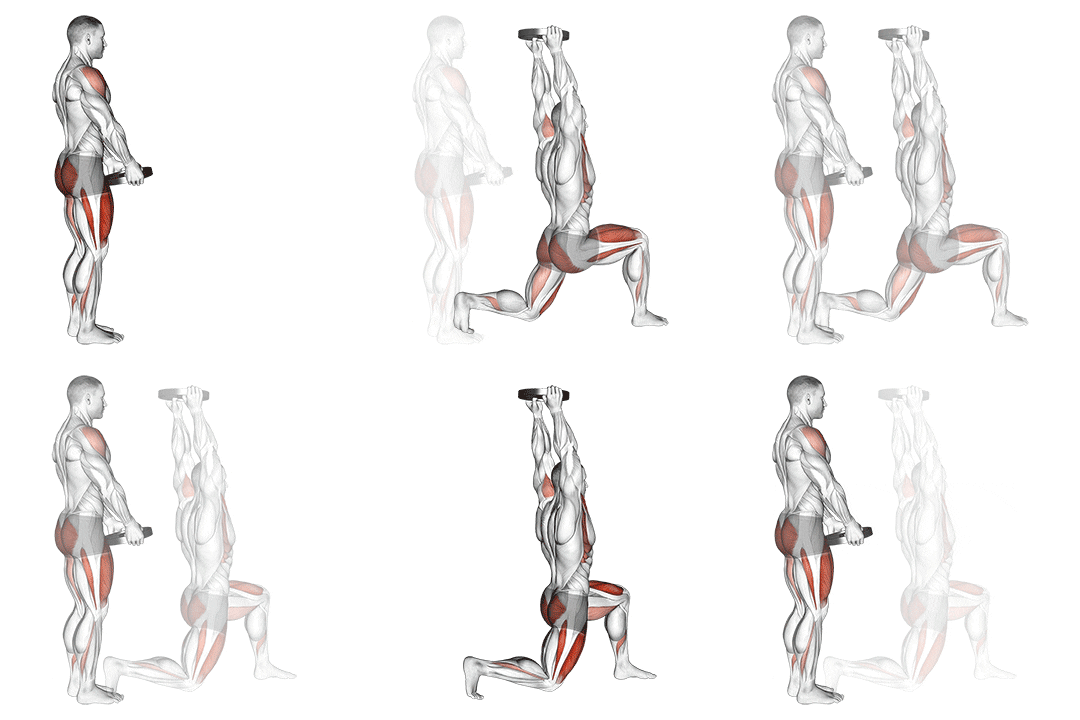
The weighted lunge with swing is a compound exercise that targets the lower body, specifically the quadriceps, hamstrings, glutes, and calves. It also engages the core muscles and improves stability and coordination. This exercise combines the lunge movement with a swinging motion, adding an extra challenge and intensity to the lower body muscles. ## Instructions 1. Start by holding a dumbbell or kettlebell in each hand with an overhand grip, allowing your arms to hang naturally by your sides. 2. Stand with your feet hip-width apart and your back straight. 3. Take a large step forward with one leg, lowering your body into a lunge position. Your front knee should be bent at approximately a 90-degree angle, and your back knee should be just above the ground. 4. As you lower into the lunge, simultaneously swing the weights forward and upward in a controlled manner. The swing should end at approximately chest height. 5. Engage your core muscles to maintain balance and stability throughout the movement. 6. Push through your front heel and bring your back leg forward to return to the starting position, while simultaneously lowering the weights back down by your sides. 7. Repeat the movement with the opposite leg, alternating legs for the desired number of repetitions. ## Variations - **Reverse Lunge with Swing**: Instead of stepping forward into a lunge, you can perform a reverse lunge by stepping backward. This variation places more emphasis on the glutes and hamstrings. - **Walking Lunge with Swing**: Instead of returning to the starting position after each lunge, you can perform a walking version of this exercise. Take a step forward into a lunge, swing the weights, and then bring the back leg forward into the next lunge, repeating the movement while walking forward. ## Muscles Worked The main muscles worked during the weighted lunge with swing include: - Quadriceps (front thigh muscles) - Hamstrings (back of the thigh muscles) - Gluteus maximus (butt muscles) - Calves (gastrocnemius and soleus) - Core muscles (including the abdominal and back muscles) ## Common Mistakes - Allowing the front knee to extend beyond the toes: When performing the lunge, ensure that your front knee does not extend past your toes. This helps maintain proper form and reduces stress on the knee joint. Step out far enough so that your knee stays aligned with your ankle. - Not keeping an upright torso: Avoid leaning too far forward or backward during the lunge. Keep your torso upright and engage your core muscles for stability. - Using excessive weights: Start with lighter weights and focus on proper form and technique. Gradually increase the weight as your strength improves. Using weights that are too heavy can compromise your form and increase the risk of injury. - Neglecting the swinging motion: Make sure to perform the swinging motion with control and coordination. Avoid using momentum or swinging the weights excessively. The swing should be controlled and purposeful, engaging the muscles throughout the movement. ## Safety Precautions - Choose appropriate weights that allow you to maintain proper form throughout the exercise. - Keep your core engaged and maintain stability and balance during the lunges. - If you have any pre-existing knee or hip conditions, consult with a healthcare professional before attempting this exercise. - Perform the exercise on a non-slip surface to prevent slipping or loss of balance. - If you experience any pain or discomfort, particularly in the knees or lower back, stop the exercise and seek medical advice.
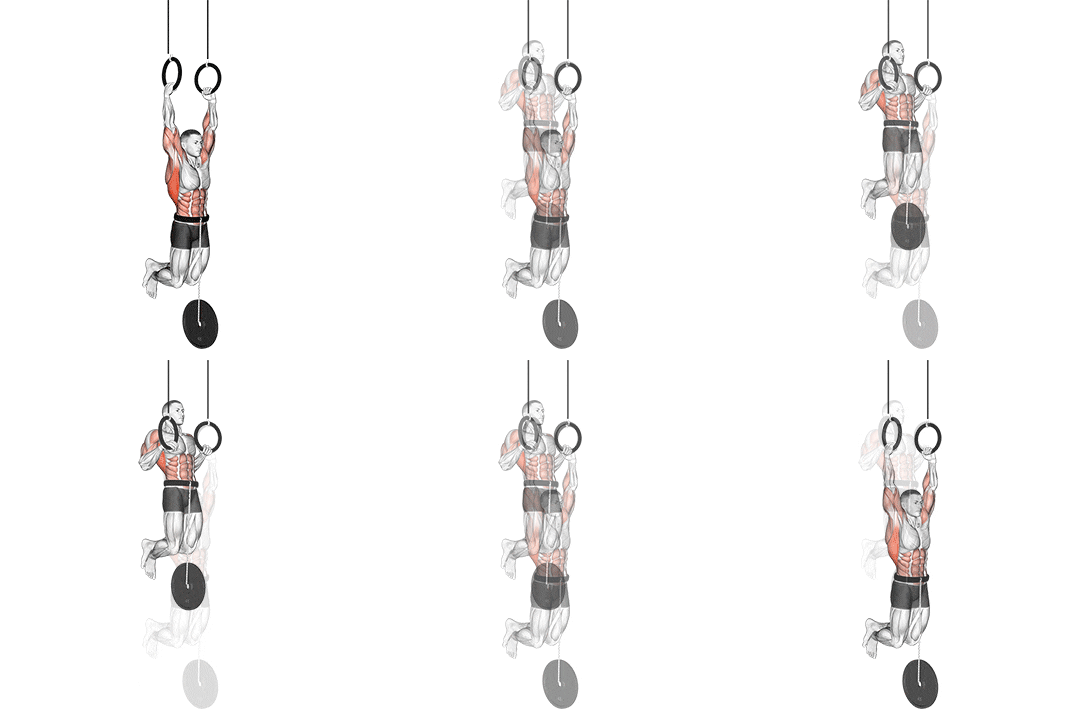
The weighted muscle up is an advanced calisthenics exercise that targets the upper body, specifically the chest, back, shoulders, and arms. It is a compound exercise that combines a pull-up with a dip, requiring significant upper body strength, stability, and coordination. The weighted version adds additional resistance to further challenge the muscles and promote strength gains. ## Instructions 1. Begin by attaching a weight plate or weighted vest securely to your body. Ensure that the weight is properly fastened and won't shift during the exercise. 2. Stand in front of a high bar or gymnastics rings with your feet shoulder-width apart. 3. Reach up and grip the bar or rings with an overhand grip, slightly wider than shoulder-width apart. 4. Hang from the bar or rings with your arms fully extended and your shoulders engaged. 5. Initiate the movement by pulling yourself up towards the bar, keeping your elbows close to your body and driving your chest towards the bar. 6. Once your chin is above the bar, transition smoothly into the dip phase of the exercise by pushing your body upward, extending your arms and straightening your elbows. 7. Lower yourself back down in a controlled manner, reversing the dip motion until your arms are fully extended. 8. Lower yourself further into the hanging position, and then proceed into the next repetition by initiating the pull-up phase. 9. Repeat the sequence for the desired number of repetitions. ## Variations - **Assisted Muscle Up**: If you're unable to perform a full muscle-up, you can use a resistance band or an assisted pull-up machine to help support your body weight and gradually build the necessary strength. - **Weighted Pull-Up and Dip**: If performing a full muscle-up is too challenging, you can focus on weighted pull-ups and dips separately. Build strength in these exercises individually before progressing to the full muscle-up. ## Muscles Worked The main muscles worked during the weighted muscle up include: - Latissimus dorsi (back muscles) - Rhomboids (mid-back muscles) - Pectoralis major (chest muscles) - Deltoids (shoulder muscles) - Triceps brachii (arm muscles) ## Common Mistakes - Using momentum: Avoid using excessive swinging or kipping motions to generate momentum. Instead, focus on controlled and strict movements to effectively target the muscles. - Lack of proper shoulder engagement: Ensure that you fully engage your shoulder muscles throughout the exercise. This helps maintain stability and prevents unnecessary strain on the joints. - Insufficient core activation: Activate your core muscles by bracing your abs and maintaining a stable torso throughout the movement. This helps maintain control and proper form. - Neglecting proper form: Maintain a smooth and controlled motion throughout the exercise. Avoid rushing through the pull-up and dip phases or using improper technique. ## Safety Precautions - Ensure that the bar or rings are secure and can support both your body weight and the additional weight. Use a reliable and sturdy setup. - Gradually increase the weight used for the exercise as your strength improves. - If you're new to the muscle-up or unsure of your ability to perform the exercise safely, consider working with a qualified fitness professional to learn proper technique and receive guidance. - Warm up adequately before attempting the exercise to prepare your muscles and joints. - Listen to your body and stop the exercise if you experience any pain or discomfort. Consult with a healthcare professional if needed.
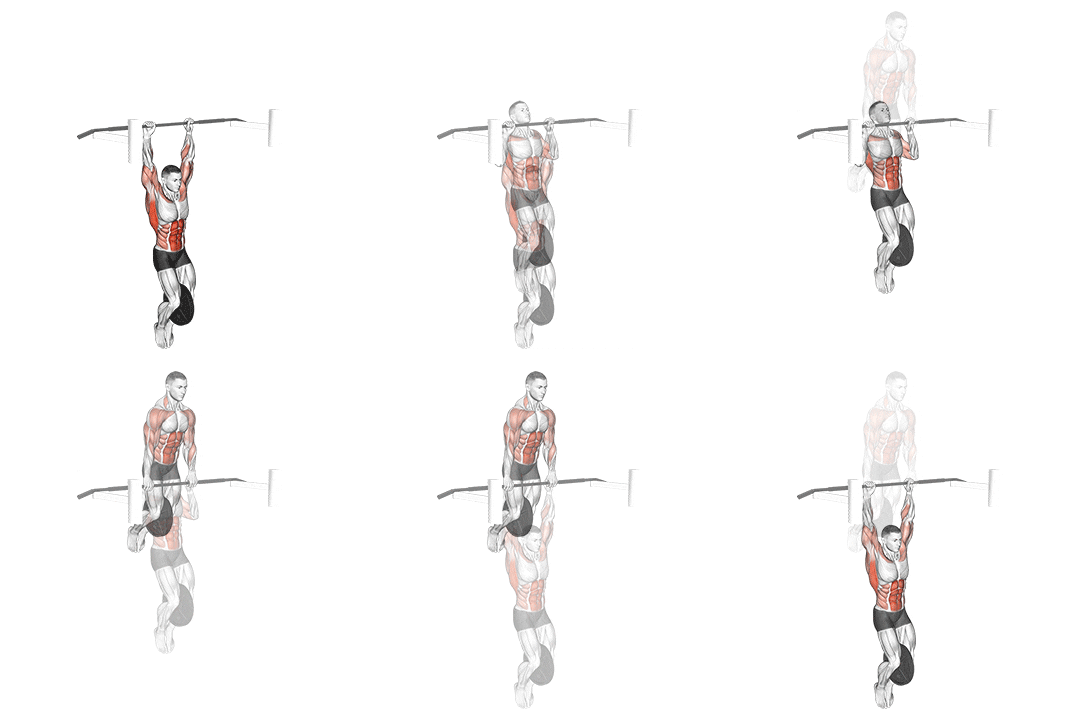
The weighted muscle up on a bar is an advanced calisthenics exercise that targets the upper body, particularly the chest, back, shoulders, and arms. It is a compound exercise that combines a pull-up and a dip, requiring exceptional upper body strength, stability, and coordination. By adding extra weight, you increase the resistance and intensity of the exercise, promoting further strength gains and muscle development. ## Instructions 1. Attach a weight plate or wear a weighted vest securely to your body, ensuring it is properly fastened and won't shift during the exercise. 2. Stand facing a pull-up bar with your feet shoulder-width apart. 3. Reach up and grip the bar with an overhand grip, slightly wider than shoulder-width apart. 4. Hang from the bar with your arms fully extended, engaging your shoulders and maintaining a straight body position. 5. Initiate the movement by pulling yourself upward, driving your chest towards the bar. Keep your elbows close to your body throughout the pull-up. 6. Once your chin is above the bar, transition smoothly into the dip phase of the exercise by pushing your body upward, extending your arms and straightening your elbows. 7. Lower yourself back down in a controlled manner, reversing the dip motion until your arms are fully extended. 8. Lower yourself further into the hanging position, and then proceed into the next repetition by initiating the pull-up phase. 9. Repeat the sequence for the desired number of repetitions. ## Variations - **Assisted Muscle Up**: If you're unable to perform a full muscle-up, you can use a resistance band or an assisted pull-up machine to assist with the movement and gradually build strength. - **Weighted Pull-Up and Dip**: If performing a full muscle-up is too challenging, you can focus on weighted pull-ups and dips separately to build strength in those exercises before attempting the full muscle-up. ## Muscles Worked The weighted muscle up primarily targets the following muscles: - Latissimus dorsi (back muscles) - Rhomboids (mid-back muscles) - Pectoralis major (chest muscles) - Deltoids (shoulder muscles) - Triceps brachii (arm muscles) ## Common Mistakes - Using momentum: Avoid using excessive swinging or kipping movements to generate momentum. Maintain control throughout the exercise for maximum muscle engagement. - Insufficient shoulder engagement: Ensure that you fully engage your shoulder muscles throughout the exercise. This helps maintain stability and prevent unnecessary strain on the joints. - Neglecting proper form: Focus on maintaining strict form throughout the pull-up and dip phases. Avoid using improper technique or rushing through the movements. - Insufficient core activation: Activate your core muscles by bracing your abs and maintaining a stable torso throughout the exercise. This helps with control and proper form. ## Safety Precautions - Ensure that the pull-up bar is secure and can support your body weight and the additional weight. Use a reliable and sturdy setup. - Gradually increase the weight used for the exercise as your strength improves, ensuring that you can maintain proper form and control. - If you're new to the exercise or unsure about your ability to perform it safely, consider working with a qualified fitness professional for guidance and instruction. - Warm up adequately before attempting the exercise to prepare your muscles and joints. - Listen to your body and stop the exercise if you experience any pain or discomfort. If necessary, consult with a healthcare professional.
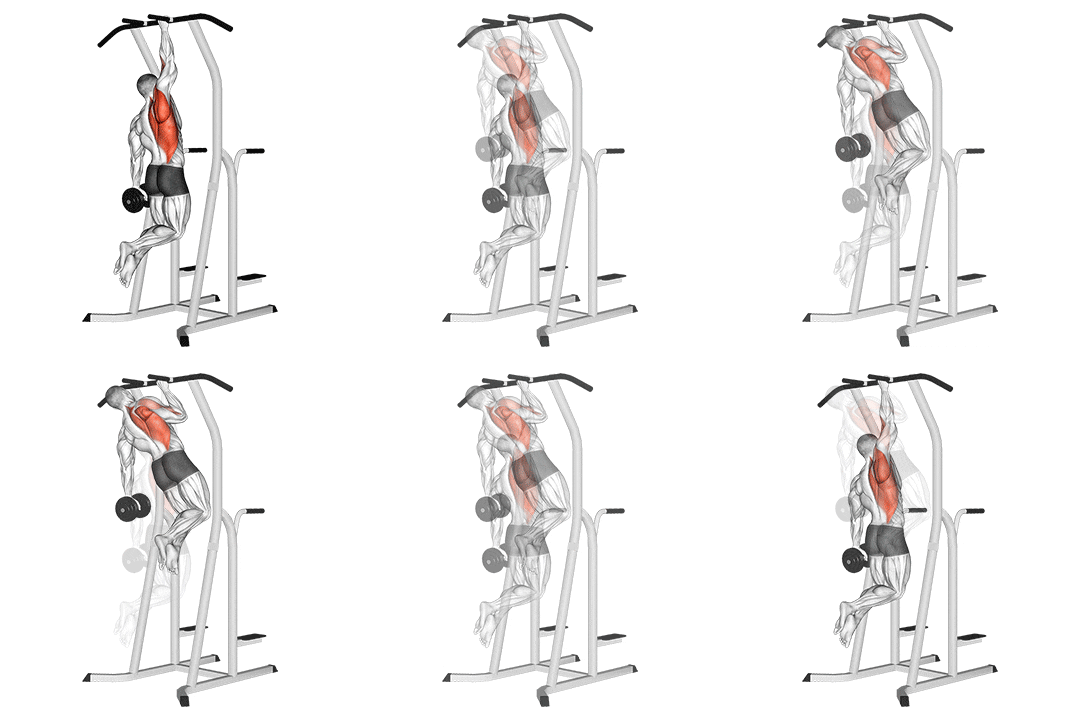
The weighted one hand pull-up is an advanced upper body exercise that targets the back, biceps, and core muscles. It involves performing a pull-up motion with the assistance of only one arm while holding additional weight. This exercise requires exceptional upper body strength, grip strength, and stability. ## Instructions 1. Attach a weight plate or wear a weighted vest securely to your body. Ensure the weight is properly fastened and won't shift during the exercise. 2. Stand facing a pull-up bar with your feet shoulder-width apart. 3. Reach up and grip the bar with an overhand grip, shoulder-width apart. 4. Hang from the bar with your arms fully extended, engaging your shoulders and maintaining a straight body position. 5. Begin the movement by initiating the pull-up with one arm. Keep your non-working arm extended to the side. 6. Drive your elbow down and back while pulling your body up toward the bar. Focus on using the muscles of the working arm and back to pull yourself up. 7. Continue pulling until your chin is above the bar, maintaining a controlled motion. 8. Lower yourself back down in a controlled manner until your arm is fully extended. 9. Repeat the movement for the desired number of repetitions and then switch to the other arm. ## Variations - **Assisted One Hand Pull-Up**: If performing a one hand pull-up is too challenging, you can use a resistance band or an assisted pull-up machine to provide assistance and gradually build strength. - **Partial One Hand Pull-Up**: If a full range of motion is too challenging, focus on performing partial range one hand pull-ups, gradually increasing the range as you gain strength. - **Negatives**: Start from the top position of a one hand pull-up and lower yourself down slowly, focusing on the eccentric portion of the exercise. This helps build strength for the full movement. ## Muscles Worked The weighted one hand pull-up primarily targets the following muscles: - Latissimus dorsi (back muscles) - Biceps brachii (arm muscles) - Rhomboids (mid-back muscles) - Rear deltoids (shoulder muscles) - Core muscles for stability and balance. ## Common Mistakes - Using momentum: Avoid using excessive swinging or kipping movements to generate momentum. Focus on controlled and strict movements for maximum muscle engagement. - Neglecting proper form: Maintain proper body alignment throughout the exercise. Avoid twisting or leaning excessively to one side. - Insufficient shoulder engagement: Ensure that you engage your shoulder muscles and maintain stability throughout the movement. This helps prevent injury and maximizes the effectiveness of the exercise. - Insufficient grip strength: Develop grip strength through exercises like farmer's carries or grip-specific training to improve your ability to hold on during the exercise. ## Safety Precautions - Ensure that the pull-up bar is secure and can support your body weight and the additional weight. Use a reliable and sturdy setup. - Gradually increase the weight used for the exercise as your strength improves, ensuring you can maintain proper form and control. - If you're new to the exercise or unsure about your ability to perform it safely, consider working with a qualified fitness professional for guidance and instruction. - Warm up adequately before attempting the exercise to prepare your muscles and joints. - Listen to your body and stop the exercise if you experience any pain or discomfort. If necessary, consult with a healthcare professional.