
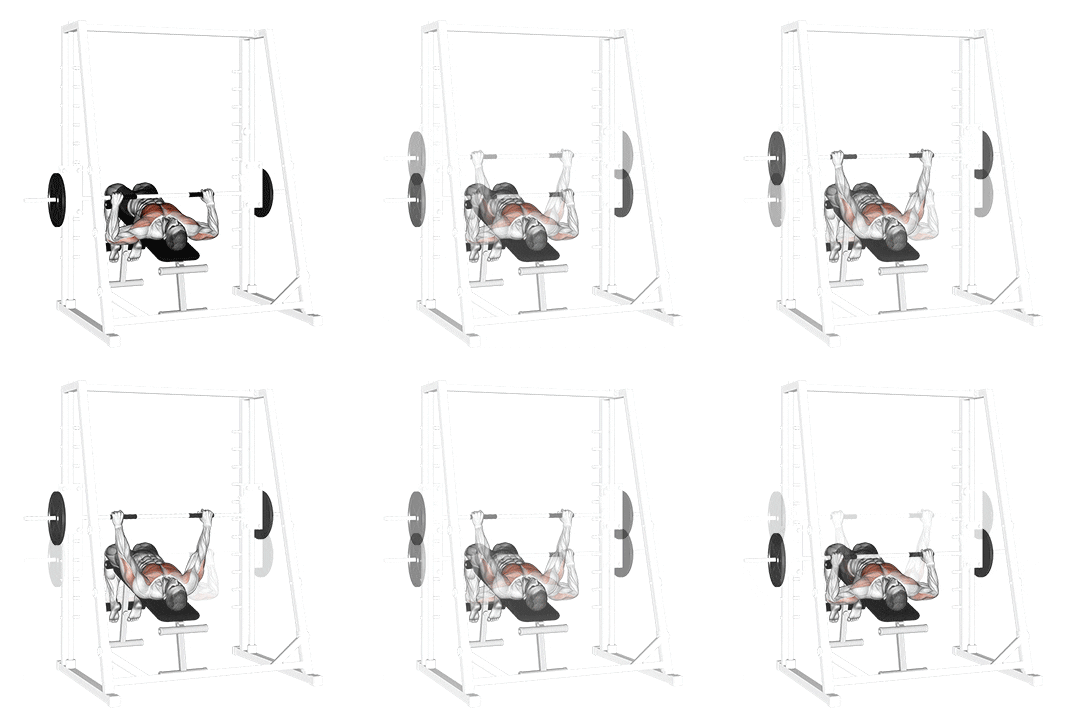
The Smith decline bench press is a variation of the bench press exercise performed on a decline bench with the assistance of a Smith machine. It primarily targets the lower chest muscles (pectoralis major) and also engages the triceps and anterior deltoids. This exercise helps in building strength and muscle definition in the chest region. ## Instructions Here are the step-by-step instructions for performing the Smith decline bench press correctly: 1. Adjust the decline bench on the Smith machine to a suitable angle. Typically, it ranges from 15 to 30 degrees decline. 2. Lie down on the bench and position yourself so that the barbell aligns with your upper chest. 3. Grab the barbell with an overhand grip, slightly wider than shoulder-width apart. 4. Lift the barbell off the rack and hold it directly above your chest, arms fully extended. 5. Lower the barbell slowly and under control towards your lower chest, maintaining a slight bend in your elbows. 6. As the barbell approaches your chest, pause briefly and then push it back up to the starting position by extending your arms. 7. Repeat the movement for the desired number of repetitions. ## Variations The Smith decline bench press can be modified or adjusted based on fitness levels or specific needs. Here are a few variations: 1. Dumbbell Decline Bench Press: Instead of using a barbell and Smith machine, you can perform the decline bench press using dumbbells. This variation adds more stability and allows for a greater range of motion. 2. Close-Grip Decline Bench Press: Bring your hands closer together on the barbell, with a grip narrower than shoulder-width. This variation emphasizes the triceps muscles to a greater extent. 3. Resistance Band Decline Bench Press: Attach resistance bands to the barbell and secure the other ends to the base of the Smith machine or any stable anchor. This variation adds accommodating resistance, making the movement more challenging at the top. ## Muscles Worked The Smith decline bench press primarily targets the following muscles: 1. Pectoralis major (lower chest) 2. Triceps brachii (back of the upper arm) 3. Anterior deltoids (front of the shoulders) 4. Clavicular fibers of the pectoralis major (upper chest) to a lesser extent ## Common Mistakes Here are some common mistakes to avoid while performing the Smith decline bench press: 1. Arching the back excessively: Maintain a stable and neutral spine position throughout the exercise to avoid excessive stress on the lower back. 2. Flaring the elbows out: Keep your elbows at an angle of approximately 45 degrees from your body to prevent excessive strain on the shoulders. 3. Bouncing the barbell off the chest: Maintain control and avoid using momentum to push the weight back up. 4. Lifting too much weight: Start with a manageable weight and gradually increase it as you develop strength and proper form. 5. Neglecting a full range of motion: Lower the barbell until it touches your lower chest and then push it back up to full arm extension. ## Safety Precautions To ensure safety while performing the Smith decline bench press, keep the following precautions in mind: 1. Warm up adequately before starting the exercise to prepare your muscles for the workout. 2. Ensure that the decline bench is securely locked in place and stable. 3. Use collars on the barbell to prevent the weights from sliding off. 4. Have a spotter or training partner available, especially when using heavier weights. 5. If you have any pre-existing shoulder or chest injuries, consult with a healthcare professional before attempting this exercise. 6. Listen to your body and stop immediately if you experience any sharp pain
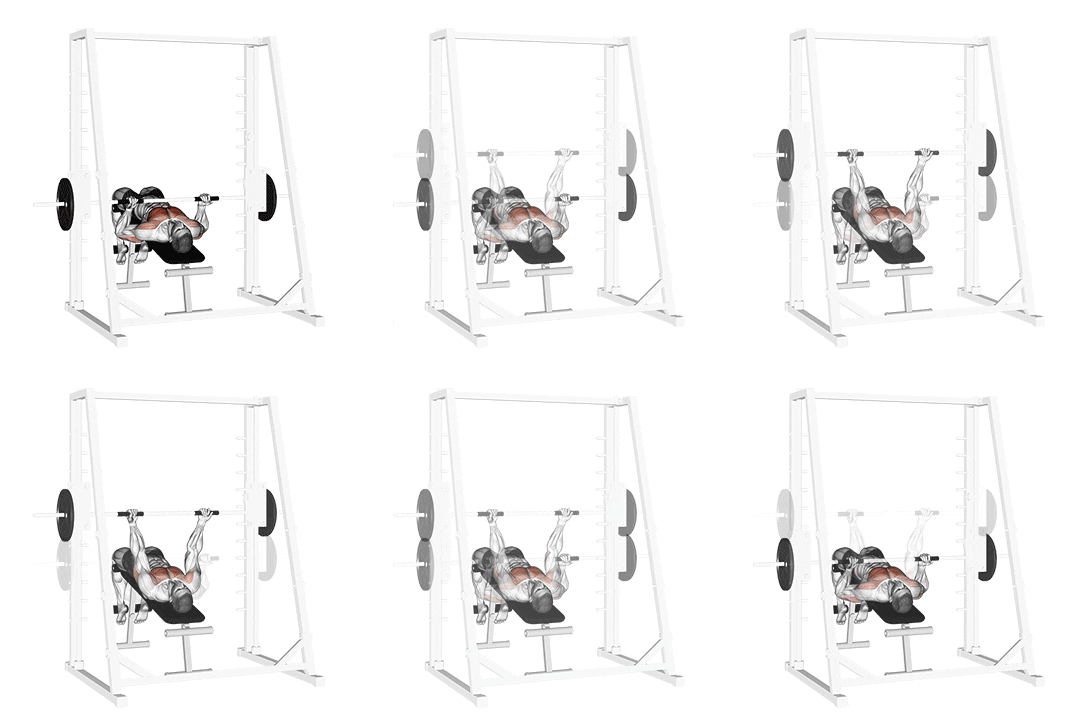
The Smith decline reverse-grip press is a variation of the bench press exercise performed on a decline bench with a reverse grip on the barbell. This exercise primarily targets the upper chest muscles (clavicular fibers of the pectoralis major) and also engages the front deltoids and triceps. It helps in developing the upper chest and creating a well-rounded chest appearance. ## Instructions Here are the step-by-step instructions for performing the Smith decline reverse-grip press correctly: 1. Adjust the decline bench on the Smith machine to a suitable angle (typically 15 to 30 degrees decline). 2. Lie down on the bench and position yourself so that the barbell aligns with your upper chest. 3. Grab the barbell with an underhand grip (palms facing up), slightly wider than shoulder-width apart. 4. Lift the barbell off the rack and hold it directly above your chest, arms fully extended. 5. Lower the barbell slowly and under control towards your upper chest, maintaining a slight bend in your elbows. 6. As the barbell approaches your chest, pause briefly and then push it back up to the starting position by extending your arms. 7. Repeat the movement for the desired number of repetitions. ## Variations The Smith decline reverse-grip press can be modified or adjusted based on fitness levels or specific needs. Here are a few variations: 1. Dumbbell Decline Reverse-Grip Press: Instead of using a barbell and Smith machine, you can perform the exercise using dumbbells. This variation allows for a greater range of motion and individual arm movement. 2. Cable Decline Reverse-Grip Press: Attach stirrup handles to a low cable pulley machine and perform the exercise in a decline position. This variation provides constant tension throughout the movement. 3. Decline Push-Up with Reverse Grip: Assume a push-up position with your hands placed slightly wider than shoulder-width apart and fingers pointing towards your feet. Perform push-ups in a decline position, focusing on engaging the upper chest muscles. ## Muscles Worked The Smith decline reverse-grip press primarily targets the following muscles: 1. Clavicular fibers of the pectoralis major (upper chest) 2. Anterior deltoids (front of the shoulders) 3. Triceps brachii (back of the upper arm) ## Common Mistakes Here are some common mistakes to avoid while performing the Smith decline reverse-grip press: 1. Arching the back excessively: Maintain a stable and neutral spine position throughout the exercise to avoid excessive strain on the lower back. 2. Flaring the elbows out: Keep your elbows at an angle of approximately 45 degrees from your body to prevent excessive strain on the shoulders. 3. Using excessive momentum: Avoid using momentum to lift the weight. Focus on a controlled and deliberate movement. 4. Lifting too much weight: Start with a manageable weight and gradually increase it as you develop strength and proper form. 5. Neglecting a full range of motion: Lower the barbell until it touches your upper chest and then push it back up to full arm extension. ## Safety Precautions To ensure safety while performing the Smith decline reverse-grip press, keep the following precautions in mind: 1. Warm up adequately before starting the exercise to prepare your muscles for the workout. 2. Ensure that the decline bench is securely locked in place and stable. 3. Use collars on the barbell to prevent the weights from sliding off. 4. Have a spotter or training partner available, especially when using heavier weights. 5. If you have any pre-existing shoulder or chest injuries, consult with a healthcare professional before attempting this exercise. 6. Listen to your body and stop immediately
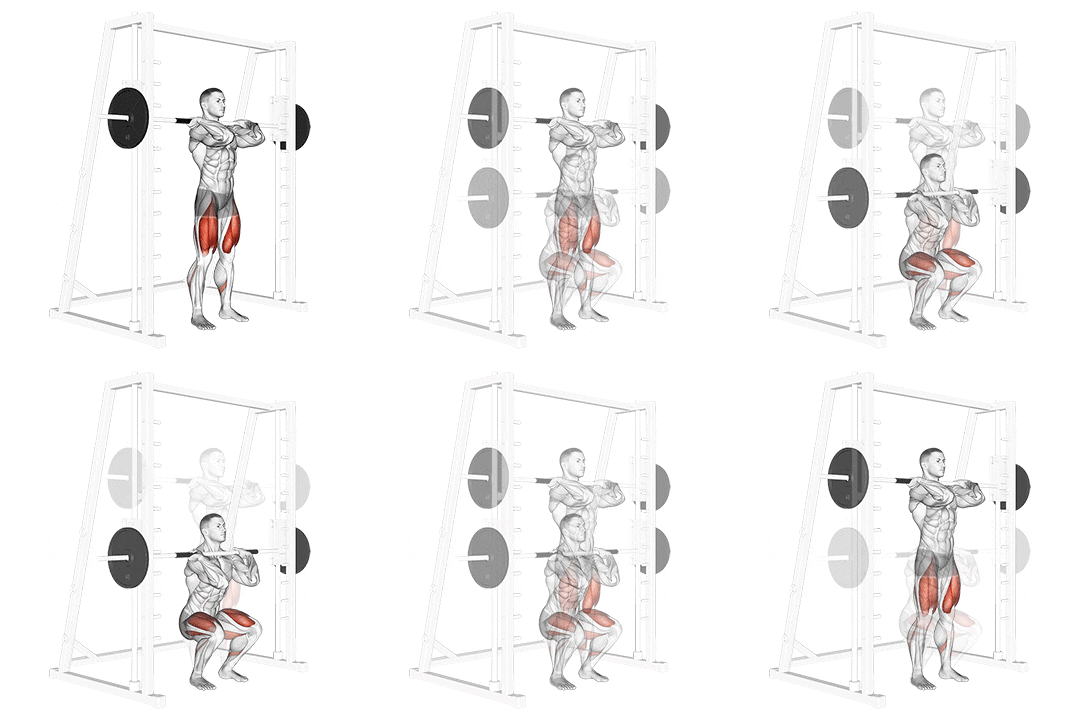
The Smith front squat with a clean grip is an exercise that targets the muscles of the lower body, particularly the quadriceps, hamstrings, and glutes. It involves using a Smith machine to perform a front squat while holding the barbell in a clean grip position. This exercise helps improve lower body strength, stability, and overall leg development. ## Instructions Here are the step-by-step instructions for performing the Smith front squat (clean grip) correctly: 1. Set the barbell on the Smith machine at an appropriate height, usually around shoulder level. 2. Stand facing the Smith machine with your feet shoulder-width apart or slightly wider. 3. Reach forward and grip the barbell with an overhand grip, palms facing upwards. Your hands should be slightly wider than shoulder-width apart. 4. Lift the barbell off the rack, step back, and position it in front of your shoulders, resting on your fingertips with your elbows pointing forward. 5. Keep your chest up, core engaged, and maintain a straight back throughout the exercise. 6. Begin the movement by bending at your knees and hips, as if sitting back into a chair. Lower your body until your thighs are parallel to the ground or slightly below. 7. Pause briefly in the bottom position, then push through your heels to extend your knees and hips, returning to the starting position. 8. Repeat the movement for the desired number of repetitions. ## Variations Here are a few variations of the Smith front squat (clean grip): 1. Smith Front Squat (Crossed-arm Grip): Instead of using the clean grip, cross your arms in front of your chest and hold the barbell with your hands on the opposite shoulders. This variation may be more comfortable for some individuals and allows for a more upright torso position. 2. Dumbbell Front Squat: Use dumbbells instead of the barbell. Hold a dumbbell in each hand, resting them on the front of your shoulders, and perform the front squat. 3. Goblet Squat: Hold a kettlebell or a dumbbell vertically in front of your chest with both hands, close to your body. Perform a squat with the weight held at the center of your chest. ## Muscles Worked The Smith front squat primarily targets the following muscles: 1. Quadriceps (Rectus femoris, vastus lateralis, vastus medialis, vastus intermedius) 2. Hamstrings (Biceps femoris, semitendinosus, semimembranosus) 3. Glutes (Gluteus maximus) 4. Calves (Gastrocnemius, soleus) 5. Core muscles (Abdominals and obliques) for stability and support ## Common Mistakes Here are some common mistakes to avoid while performing the Smith front squat: 1. Allowing the knees to cave inward: Keep your knees in line with your toes throughout the movement. 2. Leaning too far forward: Maintain an upright torso and avoid excessive forward lean to prevent strain on the lower back. 3. Not going low enough: Aim to lower your body until your thighs are parallel to the ground or slightly below to achieve the full range of motion. 4. Rounding the back: Keep your back straight and avoid rounding your shoulders or arching your lower back. 5. Using excessive weight: Start with a manageable weight and focus on proper form and technique before increasing the load. ## Safety Precautions To ensure safety while performing the Smith front squat (clean grip), consider the following precautions: 1. Warm up adequately before starting the exercise to prepare your muscles for the workout. 2. Maintain proper form and technique throughout the movement to avoid injuries. 3. Use coll
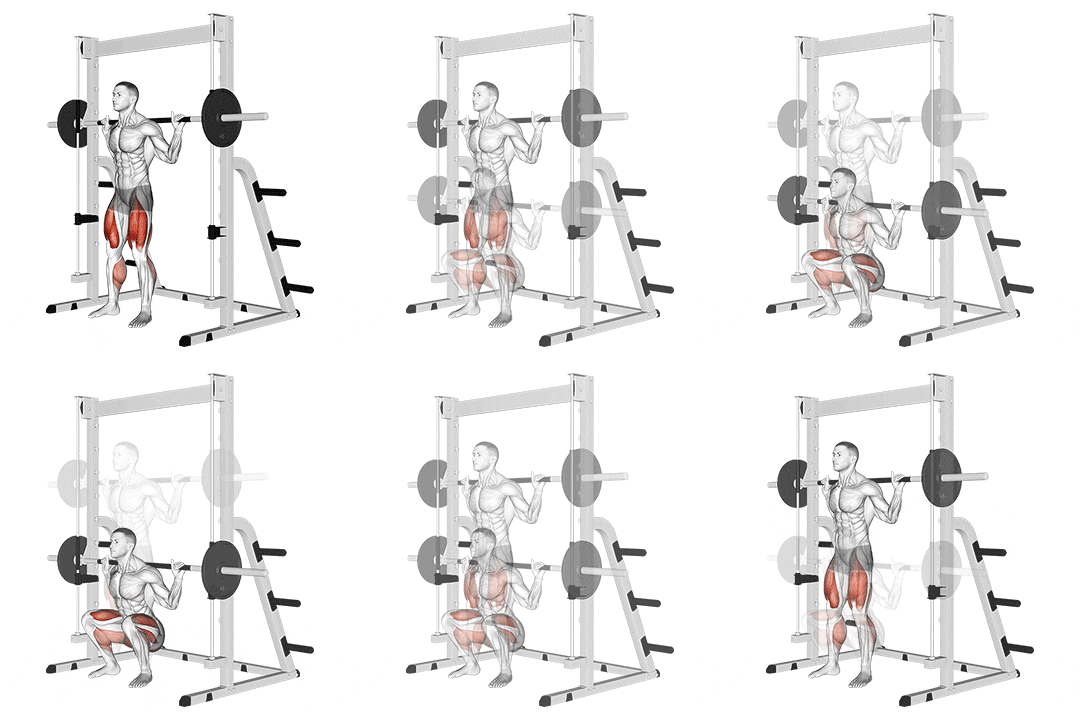
The Smith full squat is an exercise that targets the lower body, primarily focusing on the quadriceps, hamstrings, and glutes. It involves using a Smith machine to perform a squatting motion with the barbell fixed on a guided vertical path. This exercise helps develop lower body strength, improve overall leg muscle definition, and enhance functional movements such as sitting, standing, and walking. ## Instructions Here are the step-by-step instructions for performing the Smith full squat correctly: 1. Adjust the barbell on the Smith machine to an appropriate height, typically aligned with your upper chest or slightly lower. 2. Stand under the barbell, positioning it on the back of your shoulders, just below the base of your neck. Grasp the barbell with an overhand grip, slightly wider than shoulder-width apart. 3. Step away from the rack, keeping your feet shoulder-width apart or slightly wider. Position your toes slightly outward. 4. Brace your core, maintain a straight back, and look forward. Keep your chest lifted throughout the exercise. 5. Initiate the movement by bending at the hips and knees simultaneously. Lower your body by pushing your hips back and keeping your knees in line with your toes. 6. Continue descending until your thighs are parallel to the ground or slightly below, ensuring your knees are bent at approximately a 90-degree angle. 7. Pause briefly at the bottom position, maintaining tension in your muscles. 8. Push through your heels, extend your hips and knees, and return to the starting position, standing upright. 9. Repeat the movement for the desired number of repetitions. ## Variations Here are a few variations of the Smith full squat: 1. Narrow Stance Full Squat: Perform the full squat with your feet positioned closer together. This variation places more emphasis on the quadriceps. 2. Wide Stance Full Squat: Assume a wider stance with your feet positioned beyond shoulder-width apart. This variation targets the glutes and inner thigh muscles to a greater extent. 3. Smith Box Squat: Place a box or bench behind you and lower your body until you lightly touch the box with your glutes before returning to the starting position. This variation helps with depth control and can be useful for individuals with mobility limitations. 4. Single-Leg Smith Squat: Stand on one leg and perform the squatting motion using the Smith machine. This variation challenges balance, stability, and activates the muscles in each leg individually. ## Muscles Worked The Smith full squat primarily targets the following muscles: 1. Quadriceps (Rectus femoris, vastus lateralis, vastus medialis, vastus intermedius) 2. Hamstrings (Biceps femoris, semitendinosus, semimembranosus) 3. Glutes (Gluteus maximus, gluteus medius, gluteus minimus) 4. Calves (Gastrocnemius, soleus) 5. Core muscles (Abdominals and obliques) for stability and support ## Common Mistakes Here are some common mistakes to avoid while performing the Smith full squat: 1. Leaning too far forward: Maintain an upright torso throughout the movement to avoid excessive strain on the lower back. Focus on keeping your chest lifted and looking forward. 2. Allowing the knees to cave inward: Keep your knees in line with your toes throughout the exercise to prevent potential knee issues. 3. Rounding the back: Maintain a straight back and avoid rounding your shoulders or arching your lower back. This ensures proper spinal alignment and reduces the risk of injury. 4. Not going low enough: Aim to lower your body until your thighs are parallel to the ground or slightly below to achieve the full range of motion. ## Safety Precautions Warm up: Begin with a proper warm-up routine to prepare your muscles and joints for the exercise. Perform dynamic stretches, leg swings, and light cardio to increase blood flow and flexibility. Proper setup: Position yourself correctly under the Smith machine bar. Place it on your upper back, across your traps, and ensure it's secured properly with the safety pins engaged. Stance and foot positioning: Position your feet shoulder-width apart or slightly wider, with toes pointing slightly outward. This helps maintain stability and proper alignment during the squat. Maintain proper posture: Keep your chest up, shoulders back, and maintain a neutral spine throughout the movement. Avoid rounding or excessive arching of the back, as this can lead to strain or injury. Gradual progression: Start with lighter weights and gradually increase the resistance over time as your strength improves. Avoid rapid progression to prevent overexertion and potential injuries. Spotter: If possible, have a spotter nearby to provide assistance, monitor your form, and ensure your safety during the exercise.
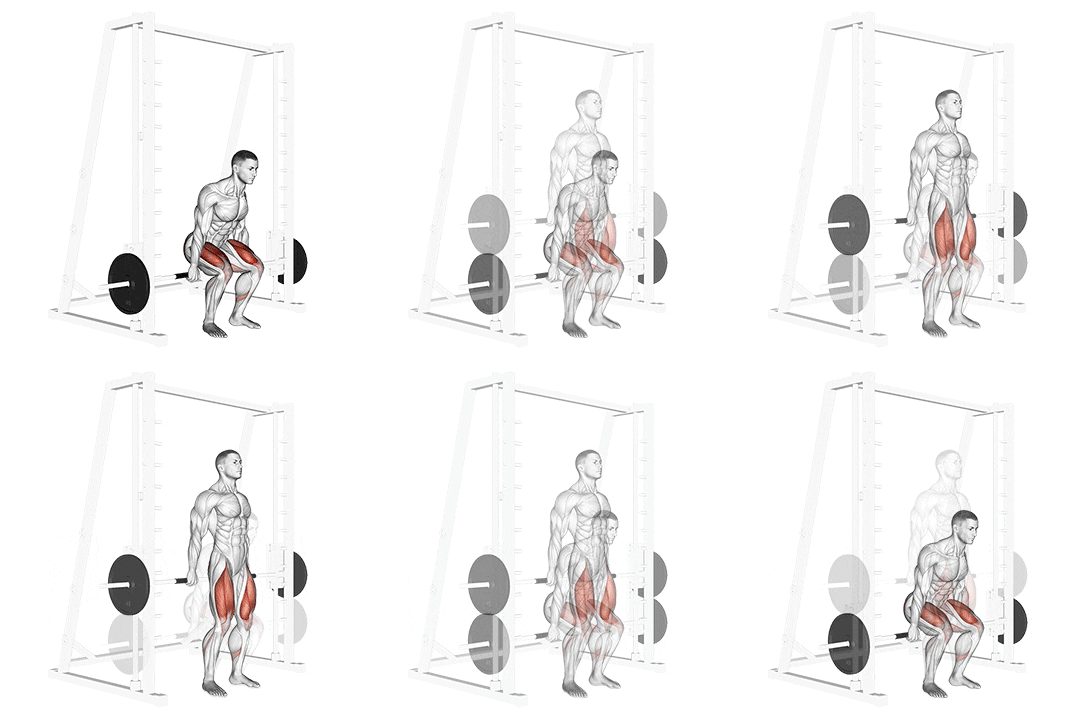
The Smith hack squat is an exercise that primarily targets the quadriceps, hamstrings, and glutes. It is performed on a Smith machine with the barbell behind your legs, mimicking the motion of a traditional hack squat. The Smith hack squat helps develop lower body strength, improves leg muscle definition, and enhances overall lower body stability. ## Instructions Here are the step-by-step instructions for performing the Smith hack squat correctly: 1. Stand facing the Smith machine with your feet shoulder-width apart, toes pointed slightly outward. 2. Position yourself under the barbell of the Smith machine, allowing it to rest behind your legs, on your upper calves. 3. Grab the barbell with an overhand grip, hands wider than shoulder-width apart. Your palms should be facing backward. 4. Stand up straight, keeping your chest up and core engaged. 5. Unrack the barbell by pushing up with your legs, using your heels to support the weight. 6. Keeping your back straight and core engaged, slowly lower your body by bending at the knees and hips. Descend until your thighs are parallel to the ground or slightly lower. 7. Pause briefly in the bottom position, then push through your heels to extend your knees and hips, returning to the starting position. 8. Repeat the movement for the desired number of repetitions. ## Variations Here are a few variations of the Smith hack squat: 1. Reverse Hack Squat: Position yourself facing the Smith machine and place your shoulders against the padded portion of the machine. Perform the hack squat with the barbell in front of your body. 2. Hack Squat Machine: Use a dedicated hack squat machine if available. This machine provides a more fixed range of motion and may offer additional support for the back and legs. 3. Single-Leg Hack Squat: Perform the hack squat with one leg at a time, focusing on each leg individually. This variation challenges balance, stability, and strengthens each leg independently. ## Muscles Worked The Smith hack squat primarily targets the following muscles: 1. Quadriceps (Rectus femoris, vastus lateralis, vastus medialis, vastus intermedius) 2. Hamstrings (Biceps femoris, semitendinosus, semimembranosus) 3. Glutes (Gluteus maximus, gluteus medius, gluteus minimus) 4. Calves (Gastrocnemius, soleus) ## Common Mistakes Here are some common mistakes to avoid while performing the Smith hack squat: 1. Rounding the back: Maintain a straight back and avoid rounding your shoulders or arching your lower back. This helps prevent injury and ensures proper form. 2. Placing feet too far forward: Position your feet shoulder-width apart and avoid placing them too far forward. This ensures proper alignment and reduces stress on the knees. 3. Allowing knees to cave inward: Keep your knees in line with your toes throughout the exercise. Avoid letting them collapse inward, as this can lead to knee strain or injury. 4. Using excessive weight: Start with a manageable weight and focus on proper form. Avoid using weights that compromise your ability to maintain good posture and control. 5. Locking knees at the top: Avoid fully locking your knees at the top of the movement. Maintain a slight bend to keep tension on the muscles and avoid joint strain. ## Safety Precautions To ensure safety while performing the Smith hack squat, consider the following precautions: 1. Warm up adequately before starting the exercise to prepare your muscles for the workout. 2. Use a weight that is appropriate for your fitness level and allows you to maintain proper form. 3. Keep the movement controlled and avoid using momentum to lift the weight
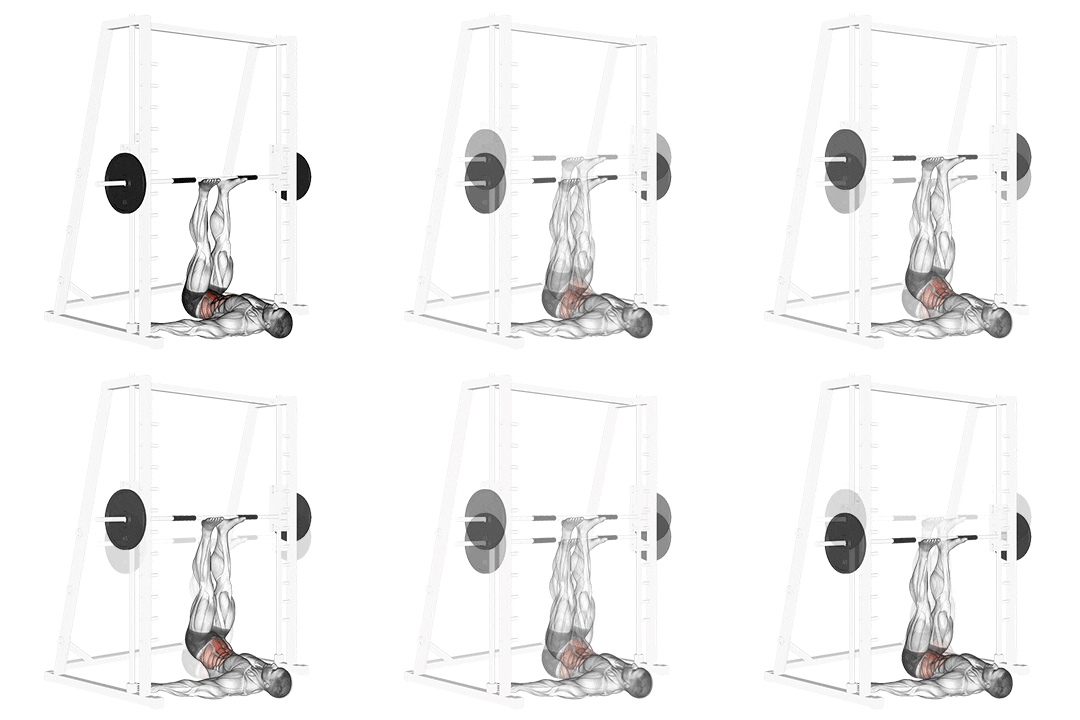
The Smith hip raise, also known as the Smith machine hip thrust, is an exercise that primarily targets the glutes and hamstrings. It involves using a Smith machine to perform a hip thrust motion, which helps strengthen the posterior chain, improve hip extension, and enhance overall lower body power. ## Instructions Here are the step-by-step instructions for performing the Smith hip raise correctly: 1. Set up the Smith machine by placing a bench or a platform underneath the barbell. Position the barbell at an appropriate height, just above your hips. 2. Sit on the ground with your back against the bench or platform and your feet planted firmly on the floor, hip-width apart. Ensure that your shoulder blades are resting against the bench or platform. 3. Roll the barbell towards your body, aligning it directly above your hips. Place a pad or a folded towel over the barbell for added comfort. 4. Engage your core, squeeze your glutes, and drive through your heels to lift your hips off the ground until your body forms a straight line from your knees to your shoulders. 5. Hold the top position for a brief pause, focusing on squeezing your glutes. 6. Slowly lower your hips back down to the starting position under control. 7. Repeat the movement for the desired number of repetitions. ## Variations Here are a few variations of the Smith hip raise: 1. Single-Leg Smith Hip Raise: Perform the hip raise using only one leg at a time. This variation increases the focus on each glute individually, improves balance, and provides a greater challenge. 2. Smith Glute Bridge: Instead of lifting the hips straight up, perform a glute bridge motion by bending the knees and driving the hips upward while keeping the shoulders on the bench or platform. 3. Banded Smith Hip Raise: Place a resistance band around your thighs, just above your knees, to add extra resistance and increase glute activation during the movement. ## Muscles Worked The Smith hip raise primarily targets the following muscles: 1. Glutes (Gluteus maximus, gluteus medius, gluteus minimus) 2. Hamstrings (Biceps femoris, semitendinosus, semimembranosus) 3. Quadriceps (Rectus femoris, vastus lateralis, vastus medialis, vastus intermedius) ## Common Mistakes Here are some common mistakes to avoid while performing the Smith hip raise: 1. Hyperextending the lower back: Focus on maintaining a neutral spine throughout the exercise and avoid overarching the lower back. 2. Not engaging the glutes: Concentrate on squeezing your glutes at the top of the movement to maximize muscle activation. 3. Relying on the lower back: Ensure that the primary force comes from the glutes and hamstrings rather than relying solely on the lower back muscles. 4. Lifting the hips too high: Aim to achieve a straight line from your knees to your shoulders without excessively lifting the hips higher than necessary. 5. Placing the feet too far away: Position your feet at a distance that allows for optimal stability and engagement of the glutes. ## Safety Precautions To ensure safety while performing the Smith hip raise, consider the following precautions: 1. Start with a lighter weight and gradually increase the load as you become more comfortable with the movement. 2. Use a pad or a folded towel to cushion the barbell and protect your hips. 3. Maintain proper form and technique throughout the exercise to prevent straining the lower back. 4. Avoid locking your knees at the top of the movement and focus on maintaining tension in the glutes and hamstrings. 5. If you have any existing lower back or hip issues
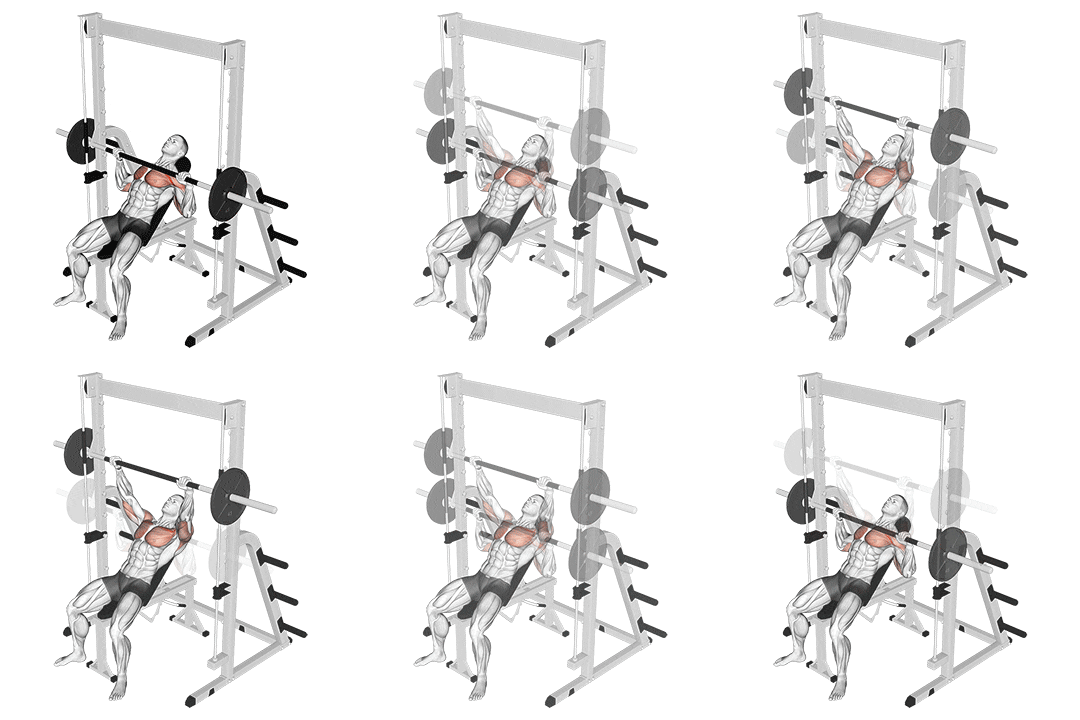
The Smith incline bench press is a variation of the traditional bench press exercise that targets the upper chest, shoulders, and triceps. It involves using a Smith machine with an adjustable incline bench to perform the pressing motion. The Smith incline bench press helps develop upper body strength, improves chest and shoulder muscle definition, and enhances overall pushing power. ## Instructions Here are the step-by-step instructions for performing the Smith incline bench press correctly: 1. Set up the Smith machine by adjusting the bench to a desired incline angle, typically between 30 to 45 degrees. 2. Position yourself on the bench, ensuring that your feet are firmly planted on the ground for stability. 3. Lie back on the bench with your head, upper back, and buttocks in contact with the surface. Maintain a slight arch in your lower back. 4. Grip the barbell with a slightly wider than shoulder-width overhand grip. Your palms should be facing away from you. 5. Unrack the barbell by extending your arms and aligning it directly above your upper chest. 6. Lower the barbell slowly towards your upper chest, maintaining control and a slight tuck of the elbows. 7. Pause briefly when the barbell touches your chest, and then push the barbell back up by extending your arms. 8. Fully extend your arms without locking out your elbows at the top of the movement. 9. Repeat the movement for the desired number of repetitions. ## Variations Here are a few variations of the Smith incline bench press: 1. Smith Flat Bench Press: Perform the bench press on a flat bench rather than an inclined bench. This variation primarily targets the middle and lower chest muscles. 2. Dumbbell Incline Bench Press: Instead of using a barbell, use dumbbells while performing the incline bench press. This variation helps improve unilateral strength, stability, and can allow for a greater range of motion. 3. Wide Grip Incline Bench Press: Use a wider grip on the barbell, placing your hands slightly wider than shoulder-width apart. This variation emphasizes the outer portion of the chest muscles. ## Muscles Worked The Smith incline bench press primarily targets the following muscles: 1. Upper Chest (Pectoralis major - clavicular portion) 2. Front Shoulders (Anterior deltoids) 3. Triceps (Triceps brachii) ## Common Mistakes Here are some common mistakes to avoid while performing the Smith incline bench press: 1. Flaring the elbows: Keep your elbows slightly tucked in during the movement to maintain proper form and reduce stress on the shoulders. 2. Bouncing the bar off the chest: Avoid bouncing the barbell off your chest at the bottom of the movement. This reduces muscle engagement and can increase the risk of injury. 3. Arching the lower back excessively: While maintaining a slight arch in the lower back is necessary, avoid excessive arching, as it can lead to strain or injury. 4. Using too much weight: Start with a weight that allows you to maintain proper form and control throughout the exercise. Avoid lifting excessively heavy weights that compromise your technique. 5. Neglecting proper breathing: Remember to breathe naturally throughout the movement. Exhale as you push the barbell up and inhale as you lower it down. ## Safety Precautions To ensure safety while performing the Smith incline bench press, consider the following precautions: 1. Warm up adequately before starting the exercise to prepare your muscles for the workout. 2. Use collars on the barbell to secure the weights in place and prevent them from shifting. 3. Start with a lighter weight if you are new to the exercise or have any shoulder or chest injuries
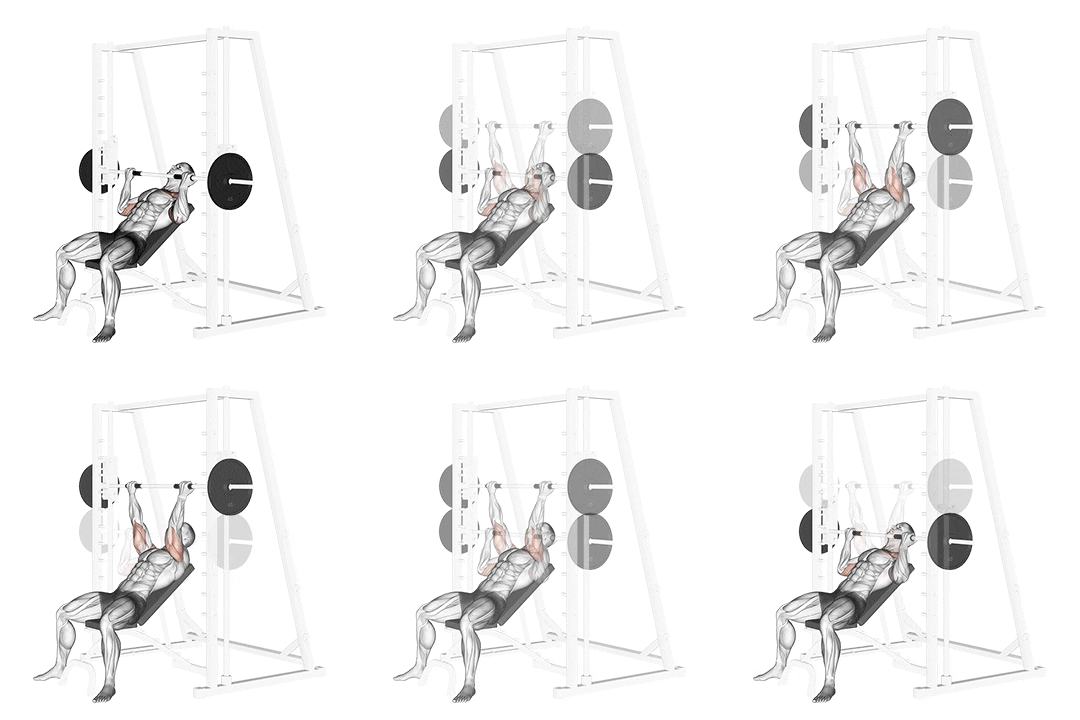
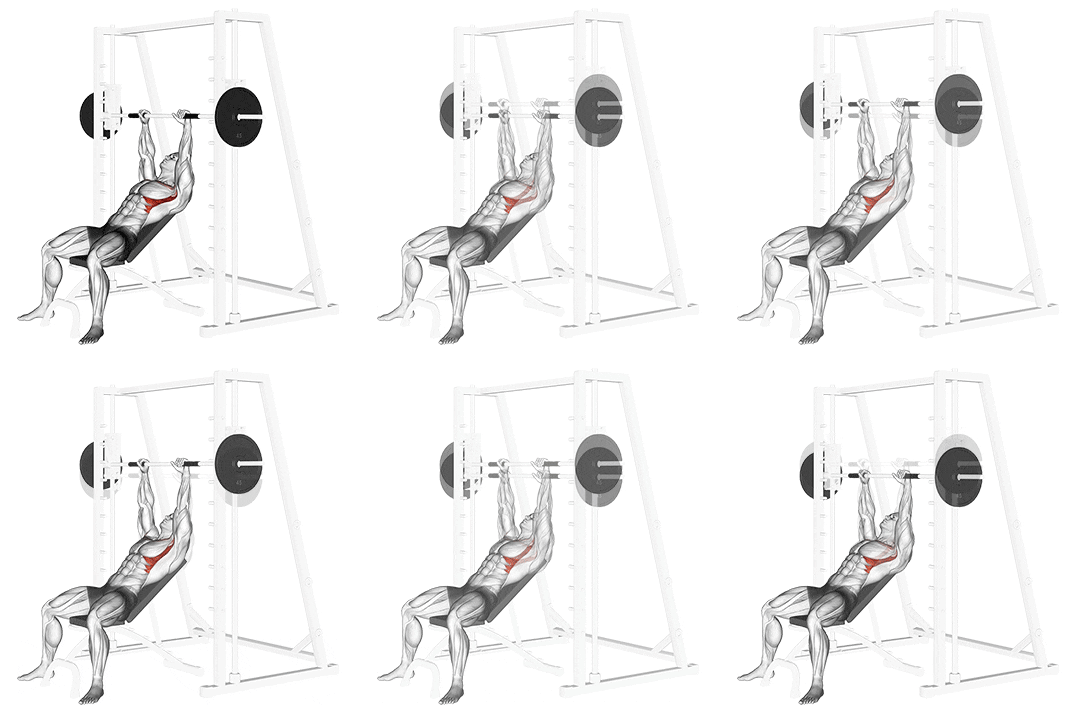
The Smith incline reverse-grip press is a variation of the incline bench press exercise that targets the upper chest, front shoulders, and triceps with an emphasis on the inner portion of the chest muscles. It involves using a Smith machine and a reverse grip (palms facing towards you) while performing the pressing motion. The Smith incline reverse-grip press helps develop upper body strength, improves chest definition, and enhances the mind-muscle connection in the targeted muscles. ## Instructions Here are the step-by-step instructions for performing the Smith incline reverse-grip press correctly: 1. Set up the Smith machine by adjusting the bench to a desired incline angle, typically between 30 to 45 degrees. 2. Position yourself on the bench, ensuring that your feet are firmly planted on the ground for stability. 3. Lie back on the bench with your head, upper back, and buttocks in contact with the surface. Maintain a slight arch in your lower back. 4. Grip the barbell with a reverse grip, with your palms facing towards you and your hands slightly wider than shoulder-width apart. 5. Unrack the barbell by extending your arms and aligning it directly above your upper chest. 6. Lower the barbell slowly towards your upper chest, maintaining control and a slight tuck of the elbows. 7. Pause briefly when the barbell touches your chest, and then push the barbell back up by extending your arms. 8. Fully extend your arms without locking out your elbows at the top of the movement. 9. Repeat the movement for the desired number of repetitions. ## Variations Here are a few variations of the Smith incline reverse-grip press: 1. Dumbbell Incline Reverse-Grip Press: Instead of using a barbell, use dumbbells while performing the exercise. This variation allows for greater freedom of movement and increased stabilization. 2. Cable Incline Reverse-Grip Press: Use a cable machine with a low pulley and an incline bench to perform the exercise. This variation provides constant tension throughout the movement and can help improve muscle definition. 3. Close-Grip Incline Reverse-Grip Press: Bring your hands closer together on the barbell, with your thumbs almost touching each other. This variation emphasizes the inner portion of the chest muscles even more. ## Muscles Worked The Smith incline reverse-grip press primarily targets the following muscles: 1. Inner Chest (Pectoralis major - sternal portion) 2. Front Shoulders (Anterior deltoids) 3. Triceps (Triceps brachii) ## Common Mistakes Here are some common mistakes to avoid while performing the Smith incline reverse-grip press: 1. Flaring the elbows: Keep your elbows slightly tucked in during the movement to maintain proper form and reduce stress on the shoulders. 2. Arching the lower back excessively: While maintaining a slight arch in the lower back is necessary, avoid excessive arching, as it can lead to strain or injury. 3. Using too much weight: Start with a weight that allows you to maintain proper form and control throughout the exercise. Avoid lifting excessively heavy weights that compromise your technique. 4. Neglecting proper breathing: Remember to breathe naturally throughout the movement. Exhale as you push the barbell up and inhale as you lower it down. 5. Rushing the movement: Perform the exercise with controlled and deliberate motions, avoiding any jerking or bouncing. ## Safety Precautions To ensure safety while performing the Smith incline reverse-grip press, consider the following precautions: 1. Warm up adequately before starting the exercise to prepare your muscles for the workout. 2. Use collars on the barbell to
The Smith incline shoulder raises are a variation of shoulder raises performed on an inclined bench using a Smith machine. This exercise primarily targets the deltoid muscles of the shoulders, specifically the lateral (middle) deltoids. It helps to develop shoulder strength, improve shoulder muscle definition, and enhance shoulder stability. ## Instructions Here are the step-by-step instructions for performing Smith incline shoulder raises correctly: 1. Set up the Smith machine by adjusting the bench to a desired incline angle, typically between 30 to 45 degrees. 2. Sit on the incline bench with your back firmly supported and your feet flat on the ground. 3. Grasp the barbell with a pronated grip (palms facing down) at shoulder-width or slightly wider. 4. Position the barbell in front of your thighs, resting on your upper thighs. 5. Engage your core and maintain a neutral spine throughout the exercise. 6. Lift the barbell by raising your arms straight out in front of you, keeping a slight bend in your elbows. 7. Continue lifting until your arms are parallel to the floor or slightly higher, ensuring that the movement is controlled and focused on the shoulders. 8. Pause briefly at the top of the movement and squeeze your shoulder muscles. 9. Slowly lower the barbell back to the starting position with control. 10. Repeat the movement for the desired number of repetitions. ## Variations Here are a few variations of Smith incline shoulder raises: 1. Dumbbell Incline Shoulder Raises: Instead of using a barbell, you can perform the exercise using dumbbells. This allows for a greater range of motion and individual arm control. 2. Seated Smith Shoulder Press: Sit upright on the incline bench and perform shoulder presses using the Smith machine. This variation targets the entire shoulder complex, including the anterior, medial, and posterior deltoids. 3. Cable Incline Shoulder Raises: Attach D-handle grips to the low pulley of a cable machine and perform shoulder raises while sitting on an incline bench. This variation provides constant tension throughout the movement. ## Muscles Worked The Smith incline shoulder raises primarily target the following muscles: 1. Lateral Deltoids (Middle shoulder muscles) 2. Anterior Deltoids (Front shoulder muscles) 3. Traps (Upper fibers) ## Common Mistakes Here are some common mistakes to avoid while performing Smith incline shoulder raises: 1. Using excessive weight: Start with lighter weights to ensure proper form and avoid strain or injury. 2. Swinging the body: Maintain strict control throughout the exercise and avoid swinging or using momentum to lift the weight. 3. Raising the arms too high: Avoid raising the arms above shoulder level as it can lead to excessive stress on the shoulder joint. 4. Shrugging the shoulders: Keep the shoulders relaxed and avoid shrugging them up towards the ears during the movement. 5. Neglecting proper breathing: Breathe naturally throughout the exercise, exhaling as you lift the weight and inhaling as you lower it. ## Safety Precautions To ensure safety while performing Smith incline shoulder raises, consider the following precautions: 1. Warm up your shoulder muscles with dynamic stretches or light exercises before starting the exercise. 2. Use collars on the barbell to secure the weights in place and prevent them from shifting. 3. Start with a weight that allows you to maintain proper form and control throughout the exercise. 4. If you have any shoulder injuries or conditions, consult with a healthcare professional or a qualified fitness trainer before attempting this exercise. 5. If you experience any pain or discomfort during the exercise, stop immediately and seek medical advice if needed.