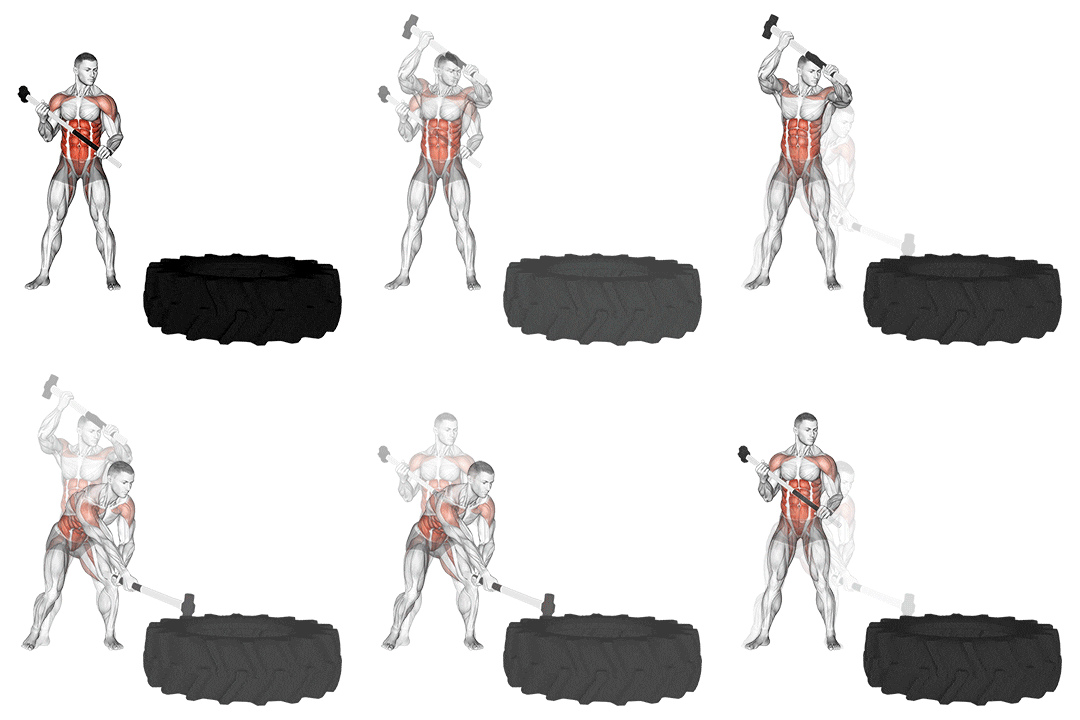
The sledgehammer exercise is a full-body workout that targets various muscles while simulating the motion of swinging a sledgehammer. It involves using a sledgehammer to strike a tire or other sturdy object. This exercise improves upper body strength, core stability, and cardiovascular endurance. ## Instructions 1. Stand with your feet shoulder-width apart, gripping the sledgehammer with both hands near the end of the handle. 2. Position yourself in front of a tire or another heavy, stable object that can withstand the impact. 3. Engage your core muscles and maintain a stable stance throughout the exercise. 4. Begin by lifting the sledgehammer overhead, extending your arms fully. 5. With a controlled motion, forcefully swing the sledgehammer downward, striking the tire or object. 6. As you swing down, simultaneously pivot your hips, generate power from your core, and transfer that energy into the strike. 7. Allow the momentum of the downward swing to carry the sledgehammer toward the ground. 8. Once the sledgehammer reaches the lowest point, use your core and upper body strength to reverse the motion and bring the sledgehammer back up to the starting position. 9. Repeat the swinging motion for the desired number of repetitions or as instructed by your fitness professional. ## Variations - **Alternating Grip**: Change your grip on the sledgehammer, alternating between overhand and underhand grips during the swings. - **Single-Arm Swings**: Perform the exercise with one hand on the sledgehammer, alternating between left and right arms. - **Side-to-Side Swings**: Instead of striking the tire directly in front of you, swing the sledgehammer in a diagonal pattern from one side of your body to the other. ## Muscles Worked - Shoulders - Back (especially the latissimus dorsi) - Core muscles (abdominals and obliques) - Glutes - Quadriceps - Hamstrings - Forearms ## Common Mistakes - Using too much arm strength: Focus on generating power from your core and using your entire body to swing the sledgehammer, rather than relying solely on your arms. - Poor form and posture: Maintain a neutral spine, engage your core, and avoid excessive bending or twisting of the back. - Overexertion: Start with a lighter sledgehammer and gradually increase the weight as you become comfortable and proficient with the exercise. - Lack of control: Maintain control throughout the exercise and avoid swinging the sledgehammer haphazardly, as it can lead to injury. ## Safety Precautions - Ensure you have enough space around you and that the area is clear of any obstacles or individuals. - Start with a sledgehammer of appropriate weight for your fitness level and gradually progress as your strength and technique improve. - Wear suitable footwear with good traction to maintain stability during the exercise. - Maintain a safe distance from others while performing the exercise to avoid accidental collisions. - Prioritize safety by using a sturdy and secure tire or object to strike, ensuring it is placed on a stable surface. - If you have any pre-existing medical conditions or injuries, consult with a qualified fitness professional or healthcare provider before attempting this exercise. - Start with a warm-up and stretching routine to prepare your muscles for the exercise, and remember to cool down afterward.
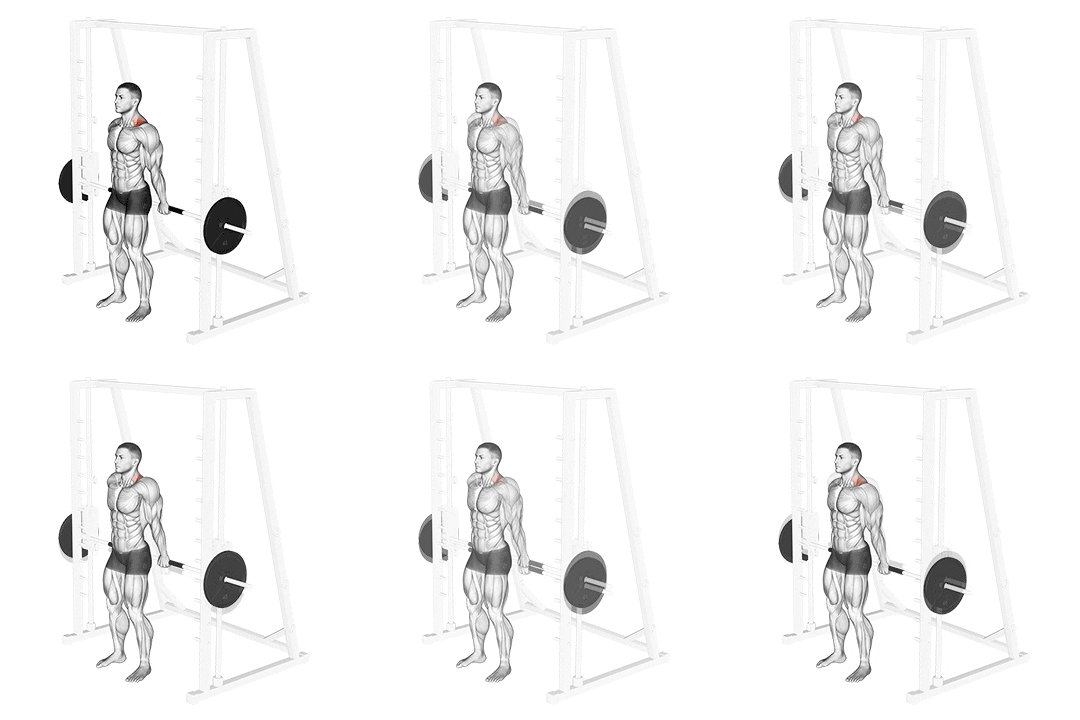
The Smith back shrug is an exercise that targets the upper back muscles, primarily the trapezius muscles. It involves using a Smith machine to perform a shrugging motion, which helps strengthen and develop the muscles responsible for shoulder elevation and scapular retraction. ## Instructions 1. Position yourself in front of a Smith machine with the barbell at an appropriate height. The barbell should be set at the level of your thighs. 2. Stand with your feet shoulder-width apart and a slight bend in your knees. 3. Grasp the barbell with an overhand grip, hands slightly wider than shoulder-width apart. 4. Keep your arms extended and your shoulders relaxed. 5. Begin the movement by elevating your shoulders upward, squeezing your shoulder blades together. 6. Hold the contracted position for a brief moment, feeling the tension in your upper back. 7. Slowly lower your shoulders back down to the starting position. 8. Repeat the movement for the desired number of repetitions or as instructed by your fitness professional. ## Variations - **Dumbbell Shrugs**: Instead of using a Smith machine, perform shrugs with dumbbells held at your sides. This allows for a greater range of motion and more individual control over each shoulder's movement. - **Barbell Shrugs**: If a Smith machine is not available, barbell shrugs can be performed using a free-weight barbell. Stand with the barbell in front of your thighs and perform the shrugging motion. ## Muscles Worked - Trapezius (upper, middle, and lower fibers) - Rhomboids - Levator scapulae - Deltoids (to a lesser extent) ## Common Mistakes - Rounding the back or hunching the shoulders forward: Maintain good posture throughout the exercise, keeping your back straight and shoulders pulled back. - Using excessive momentum or bouncing: Avoid using momentum to lift the weight. Lift and lower the weight in a controlled manner, focusing on muscle engagement. - Neglecting full range of motion: Elevate your shoulders as high as possible while maintaining control and proper form. Avoid shrugging solely from the neck; engage the upper back muscles fully. - Holding your breath: Breathe naturally throughout the exercise. Exhale as you lift your shoulders and inhale as you lower them. ## Safety Precautions - Start with a lighter weight and gradually increase as your strength and technique improve. - If you have any pre-existing medical conditions or injuries, consult with a qualified fitness professional or healthcare provider before attempting this exercise. - Ensure the Smith machine is set up properly and secure before use. - Use a controlled and steady motion to avoid unnecessary strain on the muscles and joints. - Do not excessively arch or strain your neck during the exercise. Maintain a neutral head position. - Listen to your body and stop the exercise if you experience any pain or discomfort.
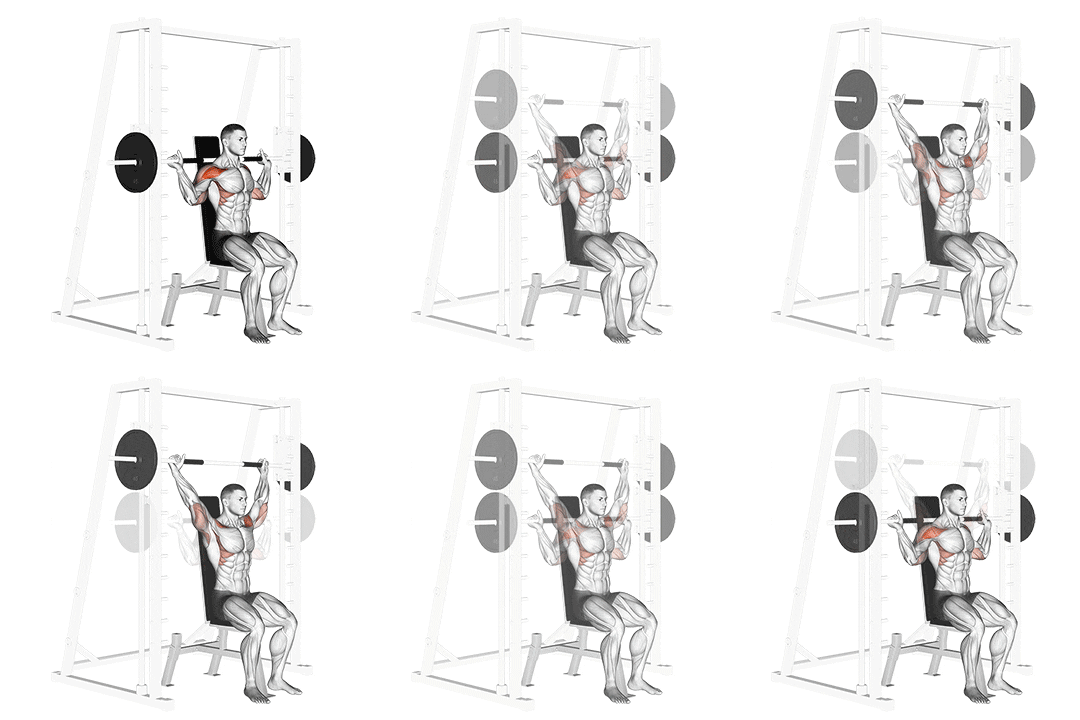
The Smith behind neck press is an exercise that targets the shoulder muscles, particularly the deltoids (shoulder muscles). It involves using a Smith machine to perform a pressing motion with the barbell positioned behind the neck. This exercise helps to develop shoulder strength, stability, and overall upper body pressing power. ## Instructions 1. Adjust the barbell height on the Smith machine so that it is positioned at a comfortable level behind your neck. 2. Stand with your feet shoulder-width apart and grip the barbell with a slightly wider than shoulder-width grip. 3. Lift the barbell off the rack by extending your arms fully. 4. Step back and position yourself in a stable stance, maintaining a slight bend in your knees. 5. Keep your core engaged and maintain good posture with your chest up and shoulder blades pulled back. 6. Lower the barbell by bending your elbows and bringing it down toward the back of your neck, maintaining control throughout the descent. 7. Once the barbell reaches just above or lightly touches the back of your neck, press it upward by extending your elbows. 8. Extend your arms fully at the top of the movement without locking out your elbows. 9. Pause briefly in the extended position, feeling the contraction in your shoulder muscles. 10. Slowly lower the barbell back down to the starting position and repeat the movement for the desired number of repetitions. ## Variations - **Seated Smith Behind Neck Press**: Perform the exercise in a seated position on an adjustable bench with back support. This variation provides stability and allows you to focus solely on the pressing movement. - **Dumbbell Behind Neck Press**: If a Smith machine is not available, the exercise can be performed with dumbbells. Hold the dumbbells at shoulder level and press them upward, keeping them in line with the back of your neck. ## Muscles Worked - Deltoids (shoulder muscles) - Triceps (back of the arms) - Trapezius (upper back) ## Common Mistakes - Rounding or excessive arching of the lower back: Maintain a neutral spine throughout the exercise to prevent strain on the lower back. Engage your core muscles to support proper posture. - Bringing the barbell too far down or excessively forward: Lower the barbell until it lightly touches the back of your neck, without going too low or allowing it to shift forward. - Locking out the elbows at the top of the movement: Extend your arms fully but avoid hyperextending or forcefully locking out your elbows. - Using excessive weight: Start with a manageable weight and focus on maintaining proper form and control before progressing to heavier loads. ## Safety Precautions - Ensure the Smith machine is set up properly and secure before use. - Start with a lighter weight or resistance and gradually increase as you become comfortable and proficient with the exercise. - If you have any pre-existing shoulder issues or limitations, consult with a qualified fitness professional or healthcare provider before attempting this exercise. - Keep the movement controlled and avoid any sudden jerking or bouncing motions. - Listen to your body and stop the exercise if you experience any pain or discomfort, particularly in the shoulders or neck.
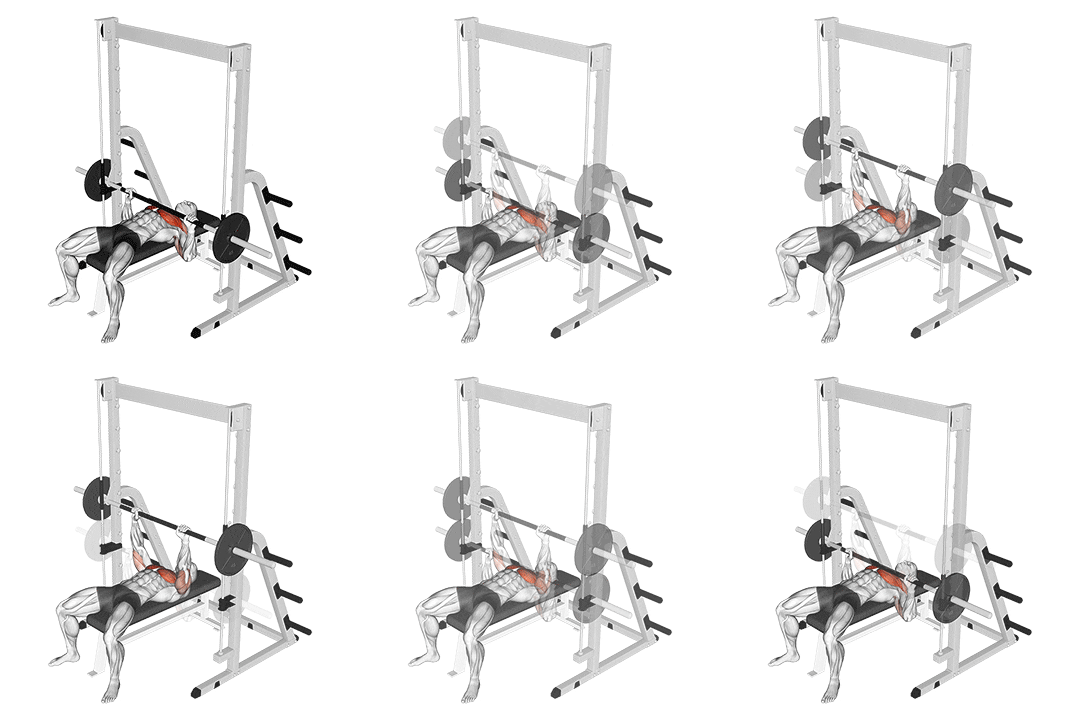
The Smith bench press is a variation of the traditional bench press exercise that utilizes a Smith machine. It primarily targets the chest muscles (pectoralis major and minor), along with secondary engagement of the shoulders and triceps. The Smith bench press helps to develop upper body strength and muscle mass. ## Instructions 1. Adjust the barbell height on the Smith machine to a level that allows you to comfortably reach it while lying on the bench. 2. Lie down on the bench with your feet flat on the floor and your back pressed firmly against the bench. 3. Position yourself so that the barbell is directly above your upper chest, with your eyes aligned with the bar. 4. Grasp the barbell with a slightly wider than shoulder-width grip. Ensure that your grip is secure and balanced. 5. Lift the barbell off the rack by extending your arms fully, maintaining control of the weight. 6. Lower the barbell slowly and under control until it touches the middle or lower part of your chest. Maintain proper form and avoid bouncing the weight off your chest. 7. Pause briefly at the bottom position, maintaining tension in your chest muscles. 8. Press the barbell upward by extending your arms and pushing the weight back to the starting position. Keep your elbows in line with your wrists throughout the movement. 9. Extend your arms fully without locking out your elbows at the top of the movement. 10. Repeat the exercise for the desired number of repetitions. ## Variations - **Incline Smith Bench Press**: Set the bench at an inclined angle (around 30-45 degrees) to target the upper chest muscles more intensely. - **Decline Smith Bench Press**: Set the bench at a declined angle (around 30-45 degrees) to emphasize the lower chest muscles. - **Close-Grip Smith Bench Press**: Place your hands closer together on the barbell to shift more emphasis onto the triceps muscles. ## Muscles Worked - Pectoralis major (chest muscles) - Pectoralis minor - Anterior deltoids (front shoulders) - Triceps brachii (back of the arms) - Stabilizer muscles, including the core muscles ## Common Mistakes - Arching the lower back excessively: Maintain a neutral spine throughout the exercise to avoid straining the lower back. Engage your core muscles and keep your feet firmly planted on the floor. - Flaring the elbows out too wide: Keep your elbows at a 45-degree angle to your body to avoid unnecessary stress on the shoulder joints. - Bouncing the weight off the chest: Control the movement and avoid using momentum to lift the weight. Pause briefly at the bottom position before pressing the weight back up. - Locking out the elbows forcefully: Extend your arms fully but avoid hyperextending or forcefully locking out your elbows. - Using excessive weight: Start with a weight that allows you to maintain proper form and gradually increase as your strength and technique improve. ## Safety Precautions - Ensure the Smith machine is set up properly and secure before use. - Use collars on the barbell to prevent the weights from sliding off. - If you have any pre-existing shoulder or chest issues, consult with a qualified fitness professional or healthcare provider before attempting this exercise. - Start with a weight that you can handle comfortably and progressively increase the load as you gain strength and confidence. - Use a spotter, especially when working with heavier weights, to ensure safety and assistance if needed. - Maintain control of the weight throughout the exercise to avoid accidents or injuries. - Listen to your body and stop the exercise if you experience any pain or discomfort.
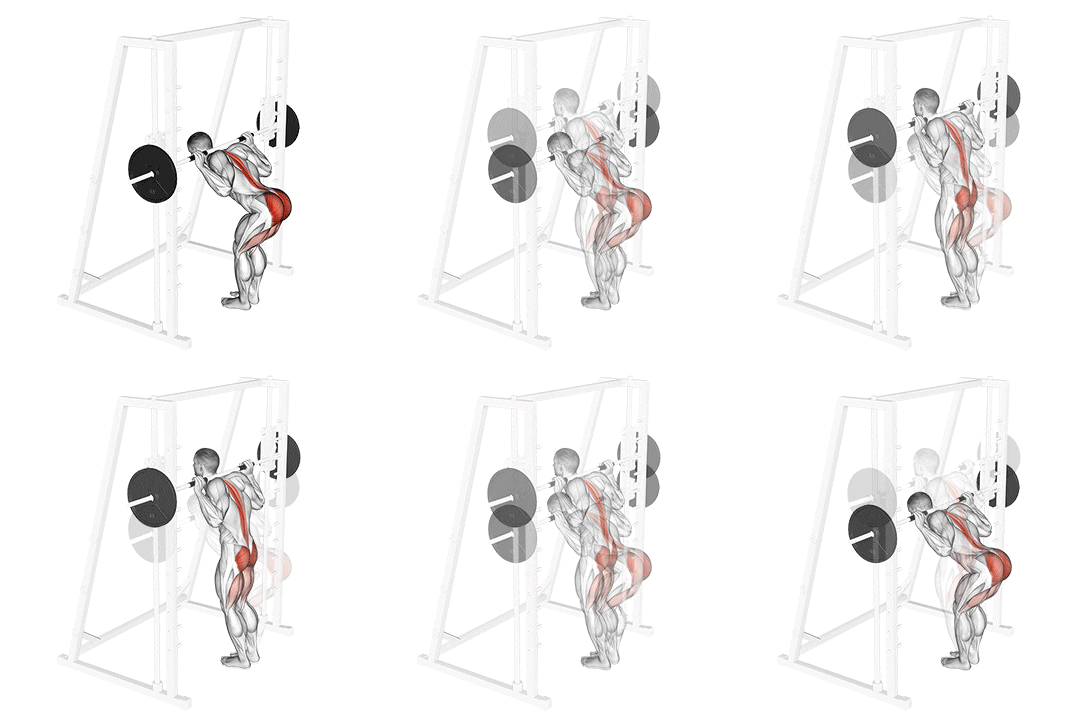
The Smith bent knee good morning is an exercise that targets the muscles of the posterior chain, including the hamstrings, glutes, and lower back. It involves a hinging motion at the hips while keeping the knees slightly bent. This exercise helps to strengthen the posterior muscles and improve hip mobility and stability. ## Instructions 1. Set up the Smith machine with the barbell at an appropriate height, usually positioned at the level of your upper traps. 2. Stand facing away from the machine and position yourself underneath the bar, with your feet shoulder-width apart. 3. Step forward and place the barbell across your upper traps, just below the base of your neck. Ensure a secure and comfortable grip on the bar. 4. Take a step back and position your feet slightly wider than shoulder-width apart, toes pointing slightly outward. 5. Engage your core muscles and maintain a slight bend in your knees throughout the exercise. 6. Begin the movement by hinging forward at the hips, keeping your back flat and maintaining the natural curve of your spine. 7. Lower your torso toward the floor while maintaining the bend in your knees until you feel a stretch in your hamstrings. 8. Keep the weight in your heels and push your hips back as you descend, maintaining control and stability. 9. Pause briefly in the stretched position, then engage your glutes and hamstrings to lift your torso back up to the starting position. 10. Repeat the movement for the desired number of repetitions, focusing on maintaining proper form and control. ## Variations - **Barbell Good Morning**: If a Smith machine is not available, the exercise can be performed with a barbell. Hold the barbell across your upper traps or use a low bar position on your back. - **Romanian Deadlift**: This exercise is similar to the bent knee good morning but typically involves using a barbell and a full hip extension at the top of the movement. ## Muscles Worked - Hamstrings - Glutes - Lower back (erector spinae) - Core muscles for stability ## Common Mistakes - Rounding or arching the lower back: Maintain a neutral spine throughout the movement and avoid excessive curvature of the lower back. Engage your core muscles to stabilize the spine. - Descending too low or with improper form: Lower your torso until you feel a stretch in your hamstrings while maintaining a flat back. Do not overextend or allow the back to round excessively. - Allowing the knees to straighten: Keep a slight bend in your knees throughout the exercise to maintain tension in the posterior chain and protect the knees. - Using excessive weight: Start with a lighter weight and focus on proper technique and control. Gradually increase the load as your strength and form improve. ## Safety Precautions - Start with a lighter weight or resistance and gradually increase as you become comfortable and proficient with the exercise. - If you have any pre-existing lower back issues or limitations, consult with a qualified fitness professional or healthcare provider before attempting this exercise. - Maintain proper form and control throughout the movement to prevent strain or injury. - Listen to your body and stop the exercise if you experience any pain or discomfort, particularly in the lower back or hamstrings. - Engage your core muscles to stabilize your spine and protect your lower back. - Use a spotter or a Smith machine with safety catches, especially when working with heavier weights. - Focus on maintaining proper balance and stability throughout the exercise.
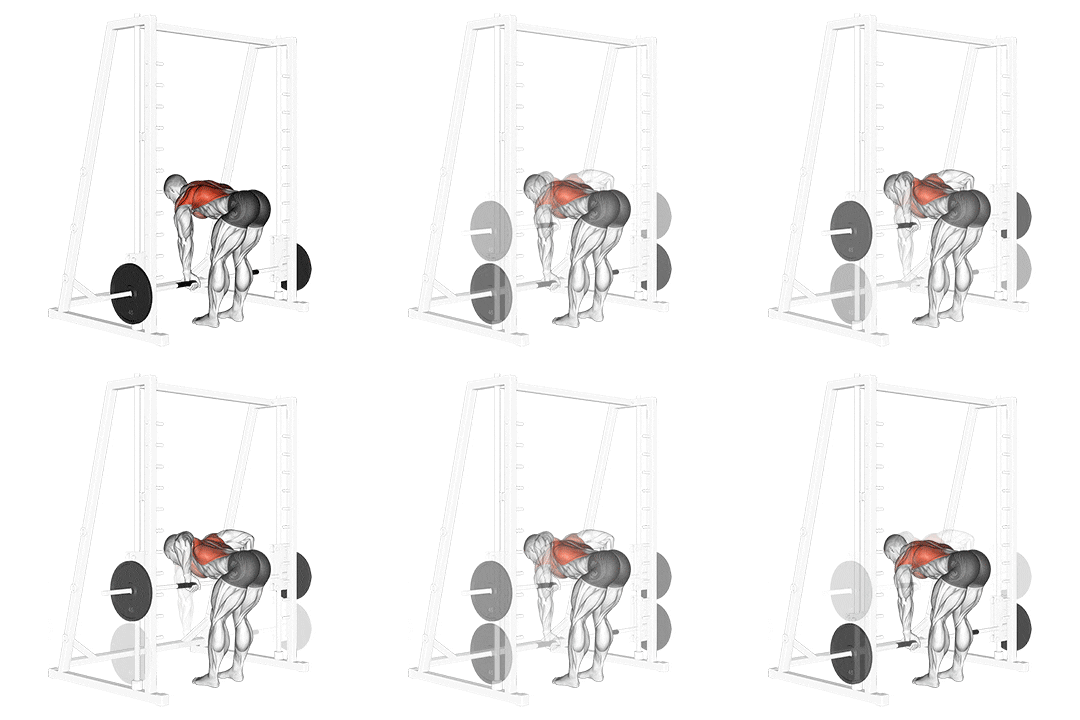
The Smith bent over row is an exercise that primarily targets the muscles of the back, including the lats (latissimus dorsi), rhomboids, and rear deltoids. It also engages the biceps and the muscles of the core. The exercise involves a pulling motion that helps to improve back strength, posture, and overall upper body development. ## Instructions 1. Set up the Smith machine by adjusting the barbell height to just below knee level. 2. Stand facing the machine with your feet shoulder-width apart. Position yourself close to the bar and grasp it with an overhand grip, slightly wider than shoulder-width apart. 3. Hinge forward at the hips, keeping your back flat and maintaining a slight bend in your knees. Your torso should be at about a 45-degree angle to the floor. 4. Engage your core muscles and retract your shoulder blades, pulling them down and back. 5. Begin the movement by pulling the barbell up toward your lower chest, focusing on driving your elbows back. 6. Keep your elbows close to your body as you lift the weight, squeezing your shoulder blades together at the top of the movement. 7. Pause briefly in the contracted position, then slowly lower the weight back down, fully extending your arms. 8. Repeat the movement for the desired number of repetitions, maintaining proper form and control throughout. ## Variations - **Underhand Grip Bent Over Row**: Use an underhand grip (palms facing up) instead of an overhand grip to shift more emphasis onto the biceps muscles. - **Dumbbell Bent Over Row**: Instead of using a Smith machine, this exercise can be performed with dumbbells, allowing for a freer range of motion and greater stabilization. ## Muscles Worked - Latissimus dorsi (lats) - Rhomboids - Rear deltoids - Biceps brachii - Erector spinae (lower back) - Core muscles for stability ## Common Mistakes - Rounding the back: Maintain a flat back throughout the exercise to protect your spine and engage the target muscles effectively. - Using excessive weight: Start with a weight that allows you to maintain proper form and control. Avoid using momentum or relying on other muscle groups to lift the weight. - Shrugging the shoulders: Keep your shoulders down and away from your ears throughout the movement. Focus on pulling with the back muscles instead. - Not fully extending the arms: Ensure that your arms are fully extended at the bottom of the movement to engage the muscles fully. - Using a narrow grip: Use a grip that is slightly wider than shoulder-width apart to target the back muscles effectively. ## Safety Precautions - Start with a lighter weight or resistance and gradually increase as you become comfortable and proficient with the exercise. - If you have any pre-existing back issues or limitations, consult with a qualified fitness professional or healthcare provider before attempting this exercise. - Maintain proper form and control throughout the movement to prevent strain or injury. - Listen to your body and stop the exercise if you experience any pain or discomfort, particularly in the back or shoulders. - Engage your core muscles to stabilize your spine and protect your lower back. - Use a spotter or a Smith machine with safety catches, especially when working with heavier weights. - Focus on maintaining proper balance and stability throughout the exercise.
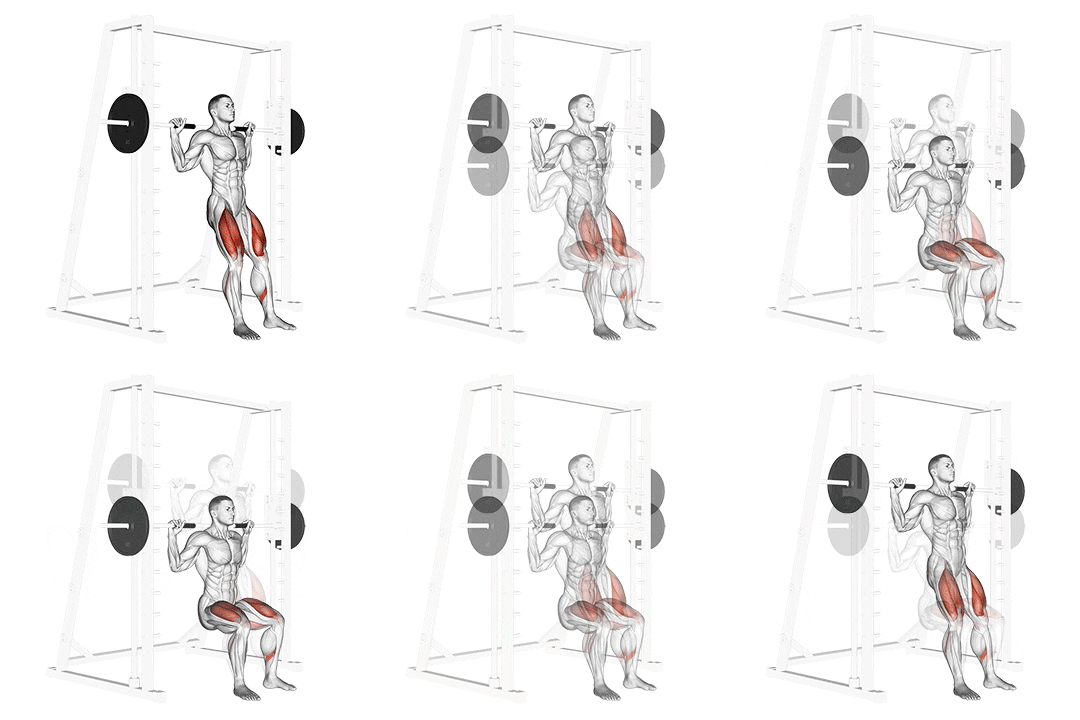
The Smith chair squat is an exercise that targets the muscles of the lower body, including the quadriceps, glutes, and hamstrings. It is a variation of the traditional squat exercise that utilizes a Smith machine and a chair or bench for added stability. This exercise helps to improve lower body strength, stability, and overall functional movement. ## Instructions 1. Set up the Smith machine with the barbell at an appropriate height, usually positioned just below shoulder level. 2. Place a chair or bench behind you, ensuring that it is stable and will not move during the exercise. 3. Stand facing away from the machine, with your feet shoulder-width apart and your toes pointing slightly outward. 4. Position yourself underneath the bar and rest it comfortably across your upper traps or across your shoulders. 5. Take a step back and position your feet at a comfortable distance from the chair or bench, ensuring that your feet are still shoulder-width apart. 6. Engage your core muscles and maintain an upright posture throughout the exercise. 7. Begin the movement by bending at the hips and knees, lowering your body toward the chair or bench. 8. Aim to lower yourself until your glutes lightly touch the surface of the chair or bench. 9. Keep your weight in your heels and push through your feet as you stand back up to the starting position, fully extending your hips and knees. 10. Repeat the movement for the desired number of repetitions, focusing on maintaining proper form and control. ## Variations - **Bodyweight Chair Squat**: Perform the exercise without using any additional weight or resistance, relying solely on your bodyweight. - **Dumbbell Chair Squat**: Hold a pair of dumbbells in your hands, either at your sides or at shoulder level, to add extra resistance to the exercise. - **Single-Leg Chair Squat**: Perform the exercise using only one leg, with the non-working leg extended slightly forward or elevated behind you. ## Muscles Worked - Quadriceps (front of the thighs) - Glutes (buttocks) - Hamstrings (back of the thighs) - Calves (gastrocnemius and soleus) - Core muscles for stability ## Common Mistakes - Allowing the knees to collapse inward: Keep your knees in line with your toes throughout the movement, preventing them from caving inward. Focus on pushing your knees out slightly to engage the glute muscles. - Rounding or arching the lower back: Maintain a neutral spine throughout the exercise and avoid excessive curvature of the lower back. Engage your core muscles to stabilize the spine. - Not lowering to an appropriate depth: Aim to lower yourself until your glutes lightly touch the surface of the chair or bench, ensuring a full range of motion. Avoid shallow squats. - Leaning too far forward or backward: Maintain an upright posture and distribute your weight evenly through your feet. Avoid leaning too far forward or backward, which can place undue stress on the joints. - Using excessive weight: Start with a lighter weight or resistance and focus on proper technique and control. Gradually increase the load as your strength and form improve. ## Safety Precautions - Start with a lighter weight or resistance and gradually increase as you become comfortable and proficient with the exercise. - If you have any pre-existing knee or back issues, consult with a qualified fitness professional or healthcare provider before attempting this exercise. - Maintain proper form and control throughout the movement to prevent strain or injury. - Listen to your body and stop the exercise if you experience any pain or discomfort, particularly in the knees, lower back, or hips. - Engage your core muscles to stabilize your spine and protect your lower back. - Use a spotter or a Smith machine with
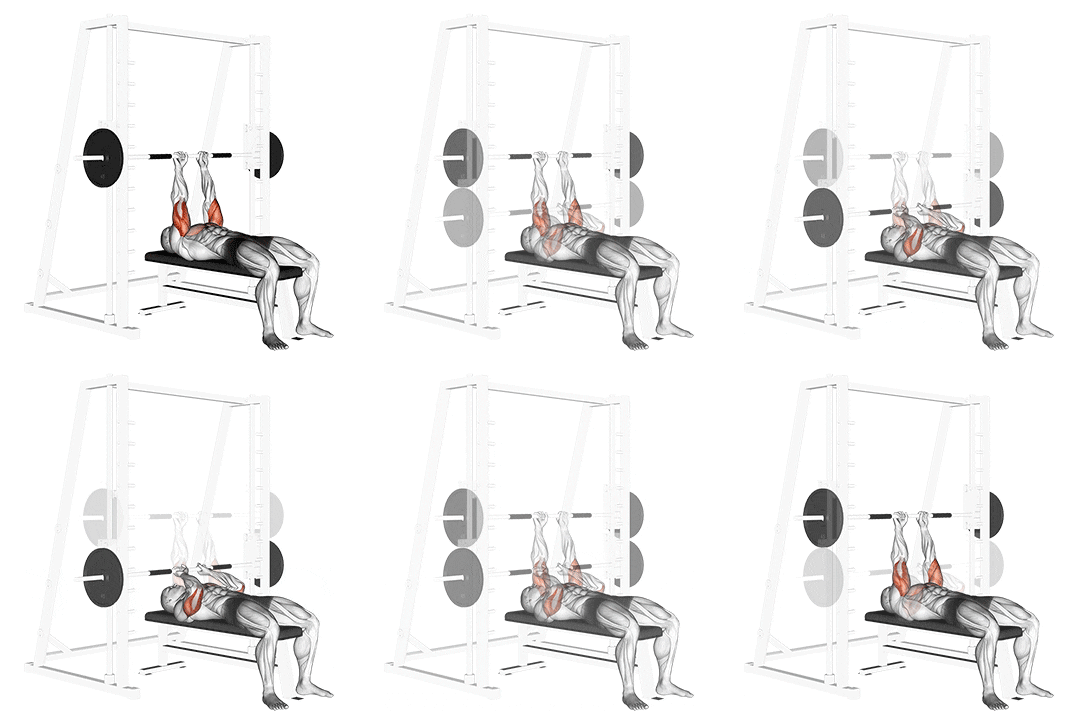
The Smith close-grip bench press is an exercise that primarily targets the triceps muscles of the upper arms, as well as the chest and shoulders. It is a variation of the traditional bench press that utilizes a narrow grip on the barbell, placing more emphasis on the triceps. This exercise helps to develop upper body strength, particularly in the triceps, and can contribute to improved pushing power and overall upper body development. ## Instructions 1. Set up the Smith machine by adjusting the barbell height to a level that allows you to comfortably unrack and rack the weight. 2. Sit on the bench and position yourself underneath the bar. Place your hands on the bar with a grip that is narrower than shoulder-width apart, palms facing forward or slightly angled inward. 3. Arch your back slightly, plant your feet firmly on the ground, and create a stable base. 4. Unrack the bar and hold it directly above your chest with your arms fully extended. This is the starting position. 5. Slowly lower the bar towards your lower chest by bending your elbows. Keep your elbows tucked in close to your sides throughout the movement. 6. Aim to bring the bar down until it lightly touches your chest or comes close to it. 7. Pause briefly at the bottom of the movement, then push the bar back up by extending your elbows, focusing on contracting your triceps. 8. Fully extend your arms at the top of the movement, but avoid locking out your elbows. 9. Repeat the movement for the desired number of repetitions, maintaining proper form and control. ## Variations - **Dumbbell Close-Grip Bench Press**: Instead of using a Smith machine, this exercise can be performed using dumbbells. It allows for a freer range of motion and increased stabilization. - **Incline Close-Grip Bench Press**: Perform the close-grip bench press on an inclined bench to target the upper chest and front shoulders to a greater extent. - **Resistance Band Close-Grip Bench Press**: Attach resistance bands to the barbell or use a barbell with built-in band hooks to add accommodating resistance and increase the intensity of the exercise. ## Muscles Worked - Triceps brachii (main emphasis) - Chest muscles (pectoralis major) - Front shoulders (anterior deltoids) - Stabilizer muscles of the upper body, including the core muscles ## Common Mistakes - Flaring the elbows out: Keep your elbows close to your sides throughout the movement to emphasize the triceps and reduce stress on the shoulder joints. - Arching the lower back excessively: Maintain a slight arch in your lower back, but avoid excessive arching, which can put strain on the lower back. Engage your core muscles to stabilize your spine. - Bouncing the bar off the chest: Control the movement and avoid using momentum to bounce the bar off your chest. This can reduce the effectiveness of the exercise and increase the risk of injury. - Using excessive weight: Start with a weight that allows you to maintain proper form and control. Avoid using momentum or relying on other muscle groups to lift the weight. - Not fully extending the arms: Ensure that your arms are fully extended at the top of the movement to engage the triceps muscles fully. - Neglecting proper breathing: Inhale as you lower the bar and exhale as you push it back up, maintaining a steady and controlled breathing pattern. ## Safety Precautions - Start with a lighter weight or resistance and gradually increase as you become comfortable and proficient with the exercise. - If you have any pre-existing shoulder or elbow issues, consult with a qualified fitness professional or healthcare provider before attempting this exercise. - Maintain proper form and control throughout the movement to
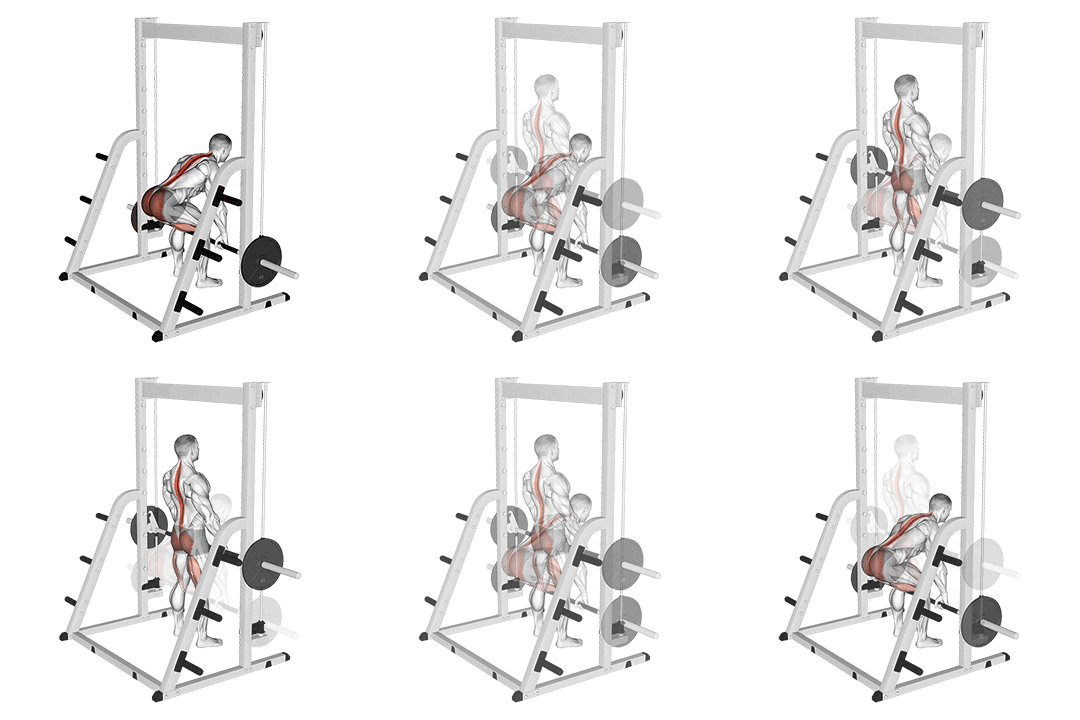
The Smith deadlift is a variation of the traditional deadlift exercise. It targets multiple muscle groups, including the glutes, hamstrings, quadriceps, lower back, and core. The exercise involves lifting a weighted barbell using a Smith machine, which provides a guided vertical path. ## Instructions Here are the step-by-step instructions for performing the Smith deadlift correctly: 1. Begin by standing in front of the Smith machine with your feet shoulder-width apart. 2. Position the barbell at the level of your mid-shins by adjusting the height of the Smith machine. 3. Step forward and grasp the barbell with an overhand grip, slightly wider than shoulder-width apart. 4. Ensure your back is straight, chest up, and shoulders pulled back. 5. Take a deep breath, brace your core, and start the movement by driving through your heels, extending your hips, and standing upright. 6. As you lift the barbell, keep it close to your body and maintain a neutral spine position. 7. Once you reach the top position, where your body is fully upright, squeeze your glutes. 8. Lower the barbell back down by bending at the hips and keeping your back straight. The barbell should follow a controlled descent along the same path. 9. Repeat the movement for the desired number of repetitions. ## Variations The Smith deadlift can be modified or adjusted based on fitness levels or specific needs. Here are a few variations: 1. Sumo Smith Deadlift: Instead of using a shoulder-width stance, position your feet wider apart with toes pointed outward. 2. Romanian Smith Deadlift: Perform the exercise with a slight bend in the knees and focus on stretching the hamstrings and glutes. 3. Single-Leg Smith Deadlift: Lift one leg off the ground and perform the deadlift using only one leg. This variation adds a stability challenge and targets each leg individually. ## Muscles Worked The Smith deadlift primarily targets the following muscles: 1. Glutes (Gluteus maximus) 2. Hamstrings (Biceps femoris, semitendinosus, semimembranosus) 3. Quadriceps (Rectus femoris, vastus lateralis, vastus medialis, vastus intermedius) 4. Lower back (Erector spinae) 5. Core muscles (Abdominals and obliques) ## Common Mistakes Here are some common mistakes to avoid while performing the Smith deadlift: 1. Rounding the back: Maintain a neutral spine throughout the exercise to prevent excessive strain on the lower back. 2. Using too much weight: Start with a manageable weight and gradually increase it as your strength improves. 3. Allowing the knees to cave inwards: Keep your knees aligned with your toes throughout the movement. 4. Using excessive momentum: Avoid using momentum to lift the weight. Focus on a controlled and deliberate movement. 5. Locking out the knees at the top: Instead, maintain a slight bend in the knees to prevent excessive stress on the joint. ## Safety Precautions To ensure safety while performing the Smith deadlift, keep the following precautions in mind: 1. Warm up adequately before starting the exercise to prepare your muscles for the workout. 2. Maintain proper form and technique throughout the movement to avoid injuries. 3. Start with lighter weights and gradually increase the load as you become more comfortable and confident. 4. If you have any pre-existing back or knee issues, consult with a healthcare professional before attempting this exercise. 5. Listen to your body and stop immediately if you experience any sharp pain or discomfort.