
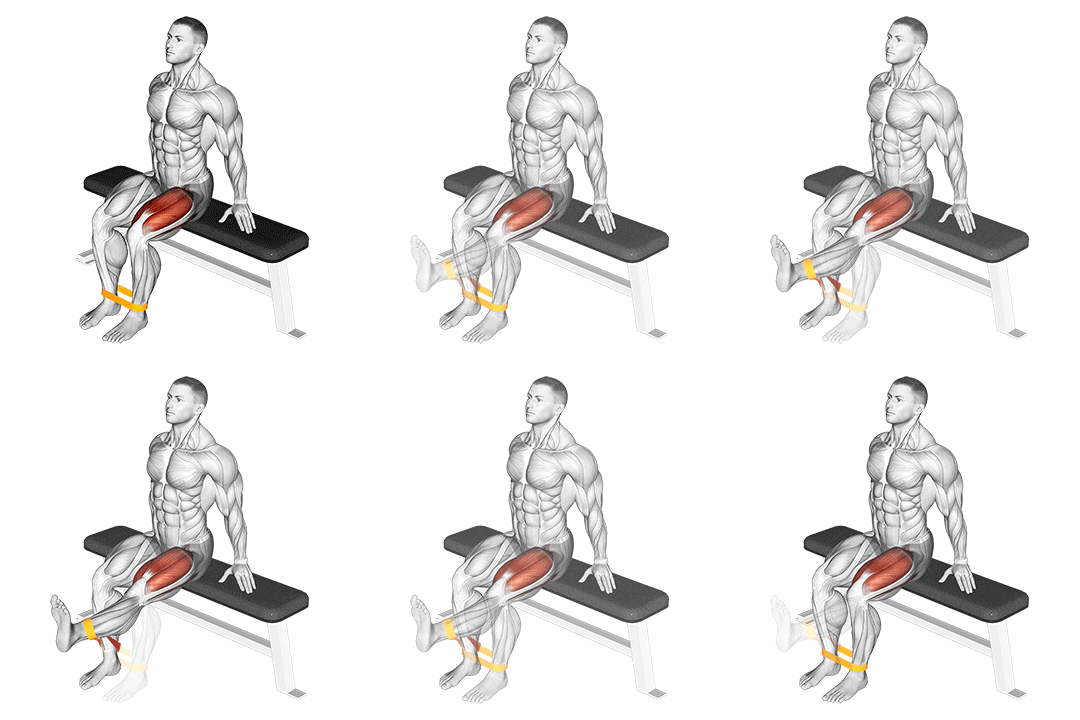
Resistance Band Leg Extension is an exercise that targets the quadriceps, which are the muscles on the front of the thighs. It involves using a resistance band attached to a fixed point to create resistance while extending the legs against the band. This exercise helps strengthen and tone the quadriceps, improve knee stability, and enhance lower body strength. ## Instructions 1. Attach a resistance band to a fixed point or anchor, such as a sturdy pole or furniture leg. 2. Place a chair or bench a few feet in front of the anchor point. 3. Sit on the edge of the chair or bench and loop the other end of the resistance band around your ankles or feet. 4. Position your feet hip-width apart, with your knees bent at a 90-degree angle and your feet flat on the floor. 5. Engage your core muscles and maintain an upright posture throughout the exercise. 6. Start by extending one leg straight out in front of you, pushing against the resistance band. 7. Keep your foot flexed, toes pointing upward, and your leg parallel to the floor. 8. Pause briefly at the end of the extension to squeeze the quadriceps muscles. 9. Slowly bend your knee and return to the starting position, maintaining control and tension on the resistance band. 10. Repeat the movement with the other leg. 11. Continue alternating legs for the desired number of repetitions. ## Variations - **Seated Leg Extension**: If you don't have access to a resistance band, you can perform a similar exercise using a leg extension machine at the gym. Sit on the machine, adjust the weight according to your strength level, and extend your legs against the resistance provided by the machine. - **Standing Leg Extension**: Instead of sitting, stand tall and loop the resistance band around your ankles. Extend one leg straight out in front of you against the resistance of the band, then return to the starting position. This variation adds an element of balance and engages more core muscles. - **Single-Leg Leg Extension**: Perform the leg extension exercise with one leg at a time, while keeping the other leg elevated off the ground. This variation increases the challenge and focuses more on each quadriceps individually. ## Muscles Worked - Quadriceps (rectus femoris, vastus lateralis, vastus medialis, vastus intermedius) ## Common Mistakes - Allowing the back to round or slouching: Maintain an upright posture and engage your core muscles throughout the exercise. - Not fully extending the leg: Ensure that you fully straighten your leg and reach the end range of motion while keeping control and tension on the resistance band. - Using momentum: Avoid swinging your leg or using momentum to perform the movement. Focus on controlled and deliberate extensions. - Allowing the knees to cave inward: Keep your knees in line with your toes and avoid letting them collapse inward. This helps maintain proper alignment and prevents unnecessary stress on the knee joint. ## Safety Precautions - Choose an appropriate resistance band that provides enough challenge but still allows you to maintain proper form. - Make sure the resistance band is securely attached to the anchor point and does not snap or slip during the exercise. - If you have any knee or hip injuries or conditions, consult with a healthcare professional or fitness trainer before attempting this exercise. - Start with a lighter resistance or fewer repetitions if you are new to the exercise or have limited strength in the quadriceps. - If you experience any pain or discomfort, modify the exercise or discontinue it. Listen to your body and work within your limits.
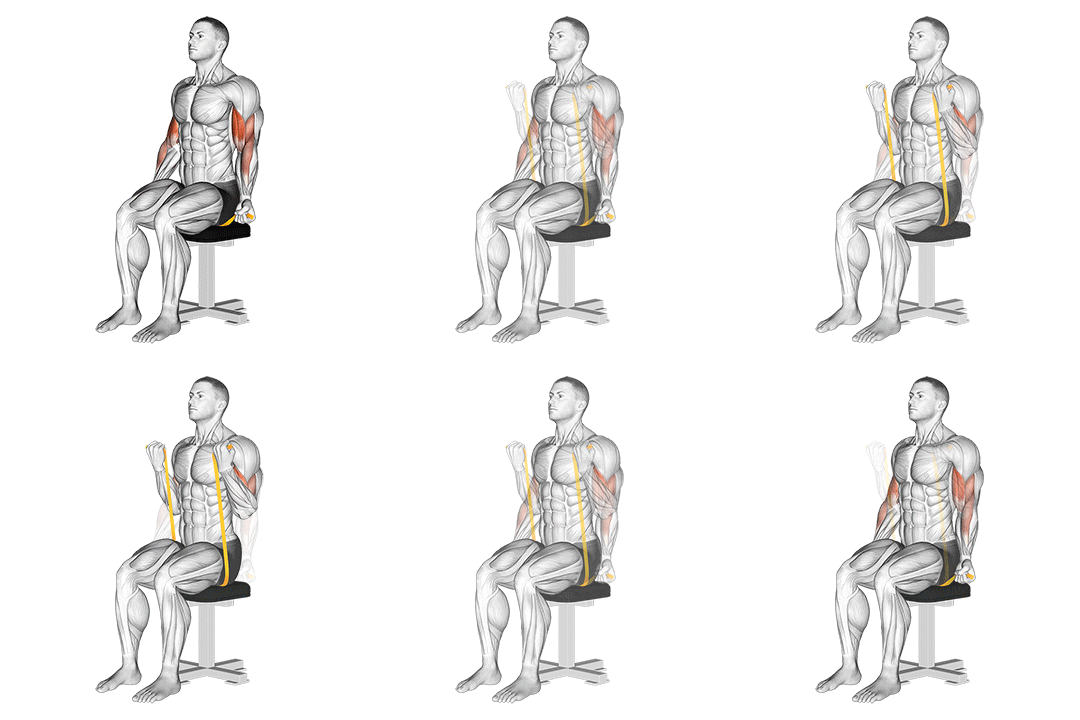
The Resistance Band Seated Biceps Curl is an exercise that targets the biceps brachii, which are the muscles on the front of the upper arms. It involves using a resistance band to create resistance while performing biceps curls in a seated position. This exercise helps strengthen and tone the biceps, improve arm strength, and enhance overall upper body muscular development. ## Instructions 1. Sit on a chair or bench with your feet flat on the floor and your back upright. 2. Place the resistance band under your feet and hold one end of the band in each hand, palms facing upward. 3. Start with your arms fully extended, elbows close to your sides, and the resistance band taut. 4. Keep your wrists straight and your shoulders relaxed throughout the exercise. 5. Slowly curl your hands upward, bending at the elbows, and bring the resistance band towards your shoulders. 6. Keep your upper arms stationary and only move your forearms. 7. Squeeze your biceps at the top of the curl and pause briefly. 8. Slowly lower the resistance band back to the starting position, maintaining control and tension on the band. 9. Repeat the movement for the desired number of repetitions. ## Variations - **Standing Biceps Curl**: If you prefer to perform the exercise while standing, you can do so by placing the resistance band under your feet and curling your arms as described in the seated version. Standing adds an element of core and balance engagement. - **Single-Arm Biceps Curl**: Perform the biceps curl exercise with one arm at a time, focusing on each biceps individually. This variation can help correct muscle imbalances and provide a greater challenge. - **Hammer Curls**: Instead of curling the hands with palms facing upward, keep your palms facing each other throughout the movement. This variation targets both the biceps and the brachialis muscle, which lies underneath the biceps. ## Muscles Worked - Biceps brachii (main target) - Brachialis - Brachioradialis (forearm muscle) ## Common Mistakes - Using momentum: Avoid swinging your body or using momentum to curl the resistance band. Keep the movement slow and controlled, focusing on the contraction of the biceps. - Allowing the elbows to flare out: Keep your elbows close to your sides throughout the exercise. This helps isolate the biceps and prevents excessive strain on the shoulder joints. - Rounding the back or hunching the shoulders: Maintain an upright posture with your shoulders relaxed and your back straight. Avoid slouching or rounding your upper body. - Gripping the resistance band too tightly: Maintain a firm but comfortable grip on the resistance band. Avoid excessive tension in your hands and forearms. ## Safety Precautions - Choose an appropriate resistance band that provides enough challenge but still allows you to maintain proper form. - Make sure the resistance band is securely positioned under your feet and does not snap or slip during the exercise. - If you have any pre-existing elbow or shoulder injuries, consult with a healthcare professional or fitness trainer before attempting this exercise. - Start with a lighter resistance or fewer repetitions if you are new to the exercise or have limited arm strength. - If you experience any pain or discomfort, modify the exercise or discontinue it. Listen to your body and work within your limits.
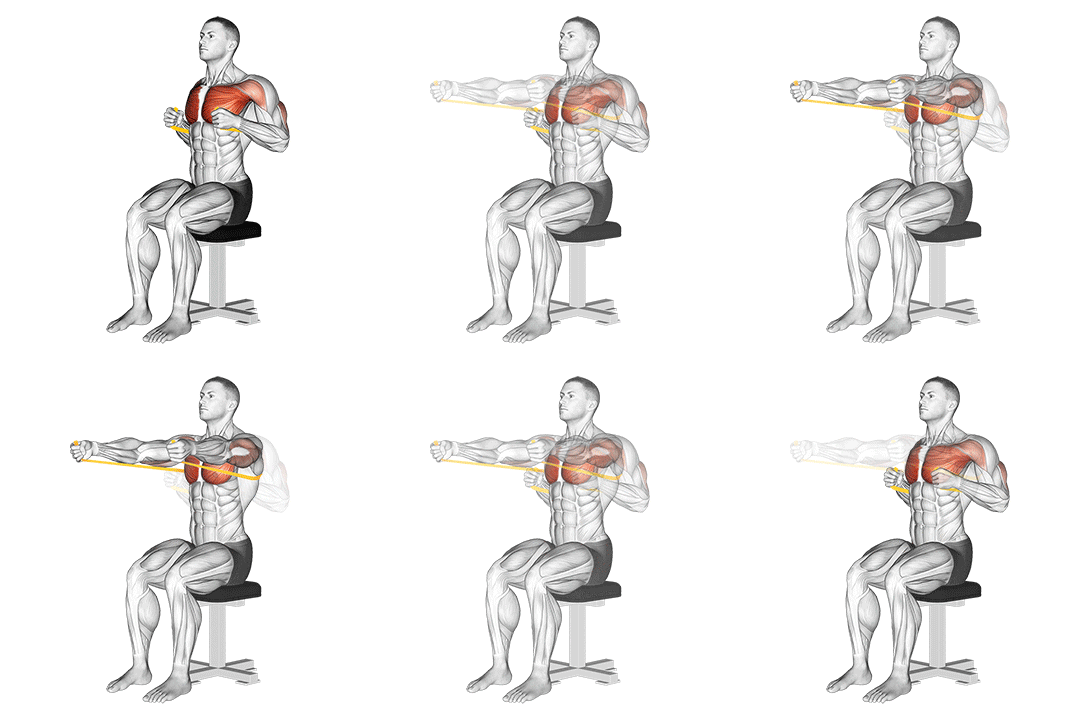
The Resistance Band Seated Chest Press is an exercise that targets the muscles of the chest, specifically the pectoralis major and pectoralis minor. It involves using a resistance band to create resistance while performing a pressing motion, simulating a chest press exercise. This exercise helps strengthen and tone the chest muscles, enhance upper body strength, and improve pushing power. ## Instructions 1. Sit on a chair or bench with your feet flat on the floor and your back upright. 2. Place the resistance band behind your back, positioning it across your upper back and shoulders. 3. Hold one end of the resistance band in each hand, near your shoulders, with your palms facing forward. 4. Start with your elbows bent at approximately 90 degrees, forming a goalpost shape with your arms. 5. Engage your core muscles and maintain an upright posture throughout the exercise. 6. Press both hands forward, extending your arms straight in front of you. 7. Keep your wrists straight and your elbows slightly soft (slightly bent) to avoid locking them. 8. Squeeze your chest muscles at the end of the press and pause briefly. 9. Slowly retract your arms and bring your hands back to the starting position, maintaining control and tension on the resistance band. 10. Repeat the movement for the desired number of repetitions. ## Variations - **Standing Chest Press**: If you prefer to perform the exercise while standing, you can do so by stepping on the resistance band with your feet and performing the same pressing motion described in the seated version. Standing engages additional core and lower body muscles. - **Single-Arm Chest Press**: Perform the chest press exercise with one arm at a time, focusing on each side of the chest individually. This variation can help correct muscle imbalances and provide a greater challenge. - **Incline Chest Press**: Perform the chest press exercise on an incline bench or an inclined surface. This variation shifts more emphasis to the upper chest muscles. ## Muscles Worked - Pectoralis major (chest muscle) - Pectoralis minor (chest muscle) - Anterior deltoids (front shoulder muscles) - Triceps brachii (back of upper arm) ## Common Mistakes - Allowing the back to round or hunching the shoulders: Maintain an upright posture with your shoulders back and your chest lifted throughout the exercise. - Not fully extending the arms: Make sure to fully straighten your arms at the end of the press while keeping control and tension on the resistance band. - Using momentum: Avoid using momentum or swinging your body to complete the movement. Focus on controlled and deliberate presses. - Gripping the resistance band too tightly: Maintain a firm but comfortable grip on the resistance band. Avoid excessive tension in your hands and forearms. ## Safety Precautions - Choose an appropriate resistance band that provides enough challenge but still allows you to maintain proper form. - Make sure the resistance band is securely positioned behind your back and does not snap or slip during the exercise. - If you have any pre-existing shoulder or chest injuries, consult with a healthcare professional or fitness trainer before attempting this exercise. - Start with a lighter resistance or fewer repetitions if you are new to the exercise or have limited upper body strength. - If you experience any pain or discomfort, modify the exercise or discontinue it. Listen to your body and work within your limits.
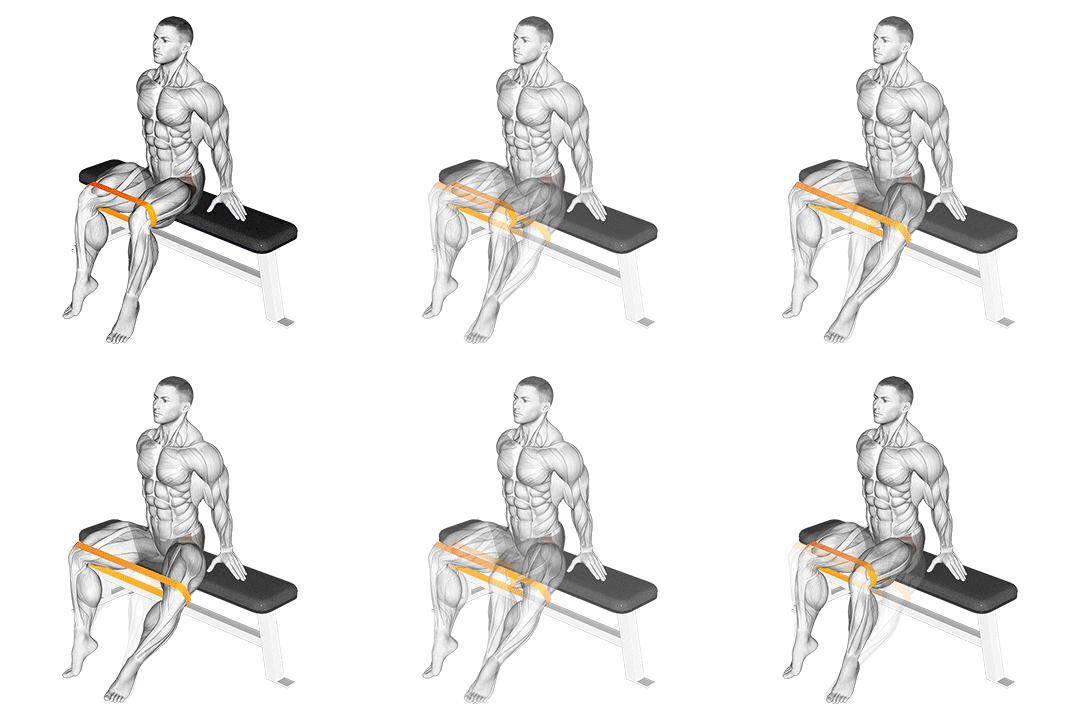
The resistance band seated hip abduction is an exercise that targets the muscles of the hip, specifically the gluteus medius and gluteus minimus. It involves using a resistance band to add resistance and strengthen the hip abductors. This exercise helps improve hip stability, balance, and overall lower body strength. ## Instructions 1. Start by sitting on a chair or bench with your back straight and feet flat on the floor. 2. Place a resistance band around your thighs, just above the knees. Make sure the band is secure and doesn't slip. 3. Position your knees and feet hip-width apart, maintaining a neutral position. 4. Engage your core muscles and keep your upper body stable throughout the exercise. 5. Slowly and simultaneously, push both knees outwards against the resistance of the band. 6. Continue pushing until you feel a contraction in the muscles on the side of your hips. 7. Hold the position for a brief moment, then slowly release the tension and bring your knees back to the starting position. 8. Repeat for the desired number of repetitions. ## Variations - **Band Strength**: You can use resistance bands with different levels of resistance to increase or decrease the intensity of the exercise. - **Seated Position**: If a chair or bench is not available, you can perform this exercise while seated on the floor with your legs extended in front of you. Place the resistance band around your thighs and follow the same instructions. - **Unilateral Hip Abduction**: Instead of pushing both knees outwards simultaneously, you can perform the exercise one leg at a time. This variation provides a greater challenge to the stabilizing muscles of the hip. ## Muscles Worked - Gluteus medius - Gluteus minimus ## Common Mistakes - Allowing the knees to cave inward: Be mindful of maintaining proper knee alignment throughout the exercise. Avoid letting the knees collapse inward. - Rounding the back: Keep your back straight and avoid slouching or rounding your spine during the exercise. - Using excessive momentum: Control the movement and avoid using momentum or jerking motions to perform the exercise. Focus on the targeted muscles. ## Safety Precautions - Start with a lighter resistance band and gradually increase the intensity as you become comfortable with the exercise. - If you have any pre-existing hip or knee injuries or conditions, consult with a healthcare professional before attempting this exercise. - Maintain proper form and avoid overexertion to prevent strain or injury. - If you experience any pain or discomfort during the exercise, stop immediately and seek guidance from a qualified fitness professional.
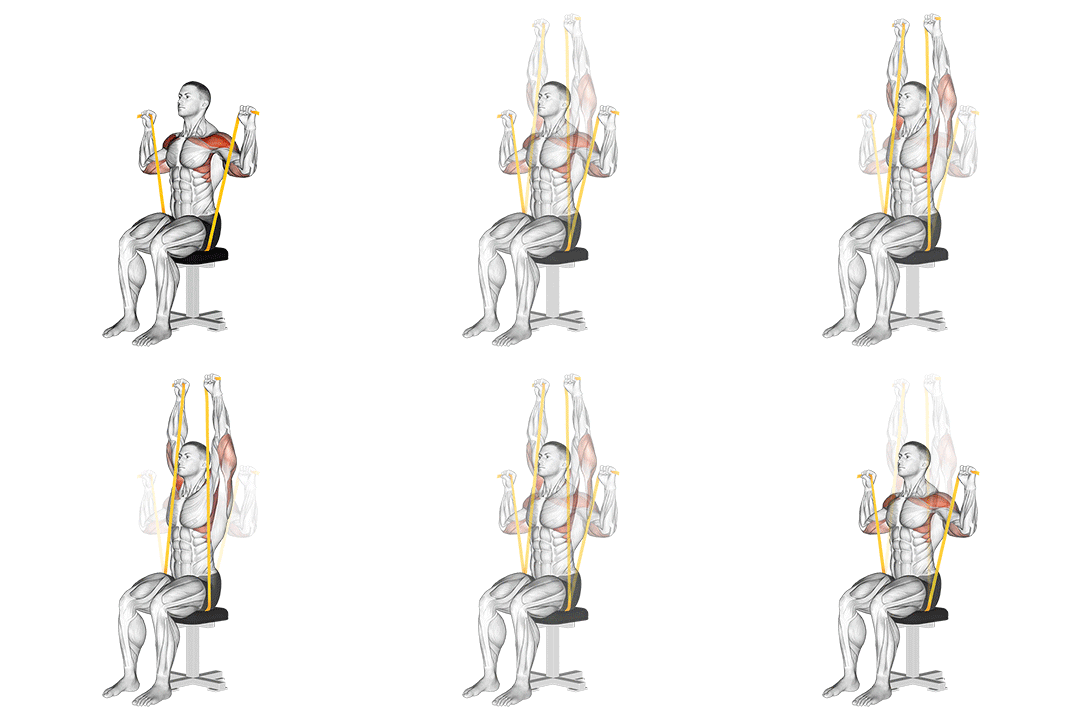
The resistance band seated shoulder press is an exercise that targets the muscles of the shoulders, specifically the deltoids. It involves using a resistance band to provide resistance while pressing the arms overhead. This exercise helps strengthen the shoulder muscles, improve upper body strength, and enhance shoulder stability. ## Instructions 1. Start by sitting on a chair or bench with your back straight and feet flat on the floor. 2. Place the resistance band under your glutes and hold the handles or ends of the band in each hand. 3. Bring your hands up to shoulder level, with your palms facing forward and elbows bent at a 90-degree angle. 4. Engage your core muscles and keep your upper body stable throughout the exercise. 5. Press your hands upward, extending your arms fully overhead while maintaining control of the band. 6. Pause briefly at the top of the movement, feeling the contraction in your shoulder muscles. 7. Slowly lower your hands back down to the starting position, bending your elbows to return to the 90-degree angle. 8. Repeat for the desired number of repetitions. ## Variations - **Band Strength**: You can use resistance bands with different levels of resistance to increase or decrease the intensity of the exercise. - **Seated Position**: If a chair or bench is not available, you can perform this exercise while seated on the floor with your legs extended in front of you. Place the resistance band under your glutes and follow the same instructions. - **Single-Arm Shoulder Press**: Instead of pressing both arms simultaneously, you can alternate between pressing one arm at a time. This variation adds an additional challenge to the stabilizing muscles of the core and shoulders. ## Muscles Worked - Deltoids (shoulder muscles) - Triceps (back of the upper arms) - Upper back muscles (rhomboids and trapezius) for stabilization ## Common Mistakes - Shrugging the shoulders: Avoid raising or tensing your shoulders toward your ears during the press. Keep them relaxed and focused on the movement of the arms. - Arching the lower back: Maintain proper posture and avoid excessive arching of the lower back. Engage your core muscles to stabilize your spine throughout the exercise. - Using momentum: Control the movement and avoid using momentum or swinging motions to press the band overhead. Focus on the targeted muscles and maintain a steady and controlled pace. ## Safety Precautions - Choose a resistance band that suits your strength and fitness level. Start with a lighter resistance and gradually increase as you become comfortable with the exercise. - Keep the band securely positioned under your glutes to prevent it from slipping or snapping during the movement. - If you have any shoulder injuries or conditions, consult with a healthcare professional before attempting this exercise. - Maintain proper form and avoid overexertion to prevent strain or injury. - If you experience any pain or discomfort during the exercise, stop immediately and seek guidance from a qualified fitness professional.
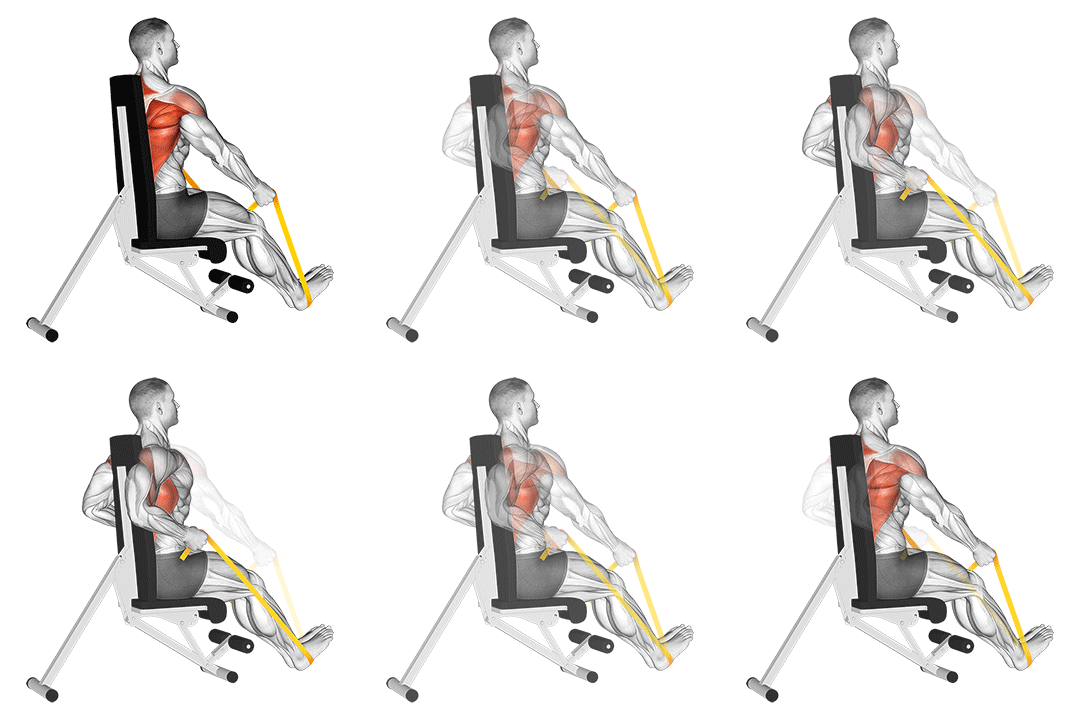
The resistance band seated straight back row is an exercise that targets the muscles of the upper back, particularly the rhomboids and the middle trapezius. It involves using a resistance band to mimic the movement of a traditional seated row exercise. This exercise helps strengthen the upper back muscles, improve posture, and enhance overall back strength. ## Instructions 1. Start by sitting on a chair or bench with your back straight, feet flat on the floor, and knees slightly bent. 2. Place the resistance band around your feet and hold the handles or ends of the band in each hand, palms facing each other. 3. Sit tall, engage your core muscles, and maintain a neutral spine throughout the exercise. 4. Begin with your arms fully extended in front of you, shoulder-width apart, and elbows slightly bent. 5. Slowly pull the resistance band backward, squeezing your shoulder blades together. 6. Focus on initiating the movement from your back muscles rather than your arms. 7. Continue pulling until your hands are positioned near your lower chest or upper abdomen, with your elbows pointing straight back. 8. Hold the position for a brief moment, feeling the contraction in your upper back muscles. 9. Slowly release the tension and return to the starting position with your arms fully extended. 10. Repeat for the desired number of repetitions. ## Variations - **Band Strength**: You can use resistance bands with different levels of resistance to increase or decrease the intensity of the exercise. - **Seated Position**: If a chair or bench is not available, you can perform this exercise while seated on the floor with your legs extended in front of you. Place the resistance band around your feet and follow the same instructions. - **Single-Arm Straight Back Row**: Instead of using both arms simultaneously, you can perform the exercise one arm at a time. This variation adds an additional challenge to the stabilizing muscles and allows for a more focused effort on each side. ## Muscles Worked - Rhomboids - Middle trapezius - Rear deltoids - Biceps (secondary) ## Common Mistakes - Rounding the back: Keep your back straight and avoid slouching or rounding your spine during the exercise. Maintain proper posture throughout the movement. - Using excessive momentum: Control the movement and avoid using momentum or jerking motions to perform the exercise. Focus on engaging the targeted muscles and maintain a slow and controlled pace. - Pulling with the arms instead of the back: Initiate the movement from your upper back muscles, focusing on squeezing the shoulder blades together. Avoid relying solely on arm strength to perform the row. ## Safety Precautions - Choose a resistance band that suits your strength and fitness level. Start with a lighter resistance and gradually increase as you become comfortable with the exercise. - Ensure that the resistance band is securely positioned around your feet and that it won't slip or snap during the movement. - If you have any back or shoulder injuries or conditions, consult with a healthcare professional before attempting this exercise. - Maintain proper form and avoid overexertion to prevent strain or injury. - If you experience any pain or discomfort during the exercise, stop immediately and seek guidance from a qualified fitness professional.
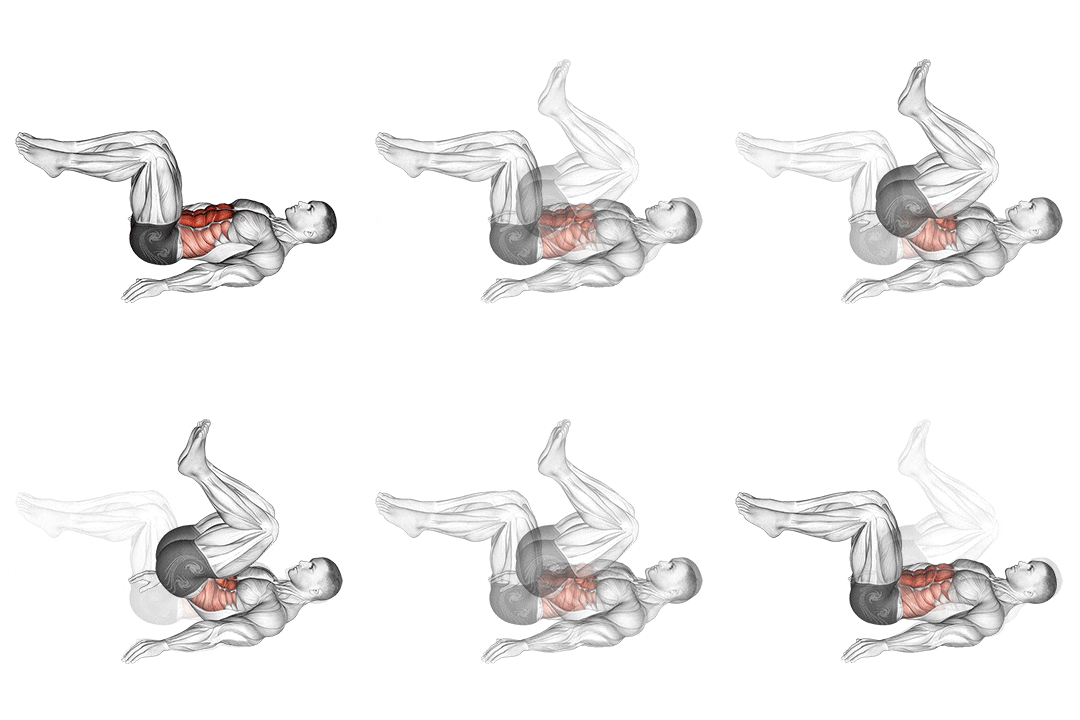
The reverse crunch is an abdominal exercise that primarily targets the lower abs. It involves lifting the hips off the ground and curling the knees toward the chest, engaging the core muscles. This exercise helps strengthen the abdominal muscles, particularly the lower rectus abdominis, and improves core stability. ## Instructions 1. Lie flat on your back on a mat or the floor with your arms by your sides. 2. Bend your knees and lift your feet off the ground, so your thighs are perpendicular to the floor. This is the starting position. 3. Engage your core muscles and press your lower back into the floor to stabilize your spine. 4. While keeping your knees bent, exhale and slowly curl your hips off the ground, lifting your knees toward your chest. 5. At the top of the movement, pause and squeeze your abs for a brief moment, maintaining tension in your core. 6. Inhale and slowly lower your hips back down to the starting position, maintaining control throughout the movement. 7. Repeat for the desired number of repetitions. ## Variations - **Leg Extension**: For an added challenge, instead of keeping your knees bent throughout the exercise, straighten your legs and lift them toward the ceiling. This variation increases the difficulty by requiring more control and strength from the lower abs. - **Weighted Reverse Crunch**: Hold a dumbbell or a medicine ball between your feet while performing the reverse crunch to increase resistance and intensify the exercise. - **Reverse Crunch on an Incline**: Perform the reverse crunch on an incline bench to increase the range of motion and engage the lower abs more effectively. ## Muscles Worked - Lower rectus abdominis (lower abs) - Hip flexors - Obliques (secondary) ## Common Mistakes - Using momentum: Avoid swinging your legs or using momentum to lift your hips off the ground. Focus on using your abdominal muscles to control the movement. - Arching the lower back: Keep your lower back pressed against the floor throughout the exercise to maintain proper form and prevent strain on the back. - Lifting the shoulders off the ground: The movement should primarily come from the hips and lower abs. Avoid lifting your shoulders off the ground or straining your neck during the exercise. ## Safety Precautions - If you have any lower back or neck injuries or conditions, consult with a healthcare professional before attempting this exercise. - Start with a controlled range of motion and gradually increase as your strength and flexibility improve. - Engage your core muscles and maintain proper form throughout the exercise to avoid straining the back or neck. - If you experience any pain or discomfort during the exercise, stop immediately and seek guidance from a qualified fitness professional.
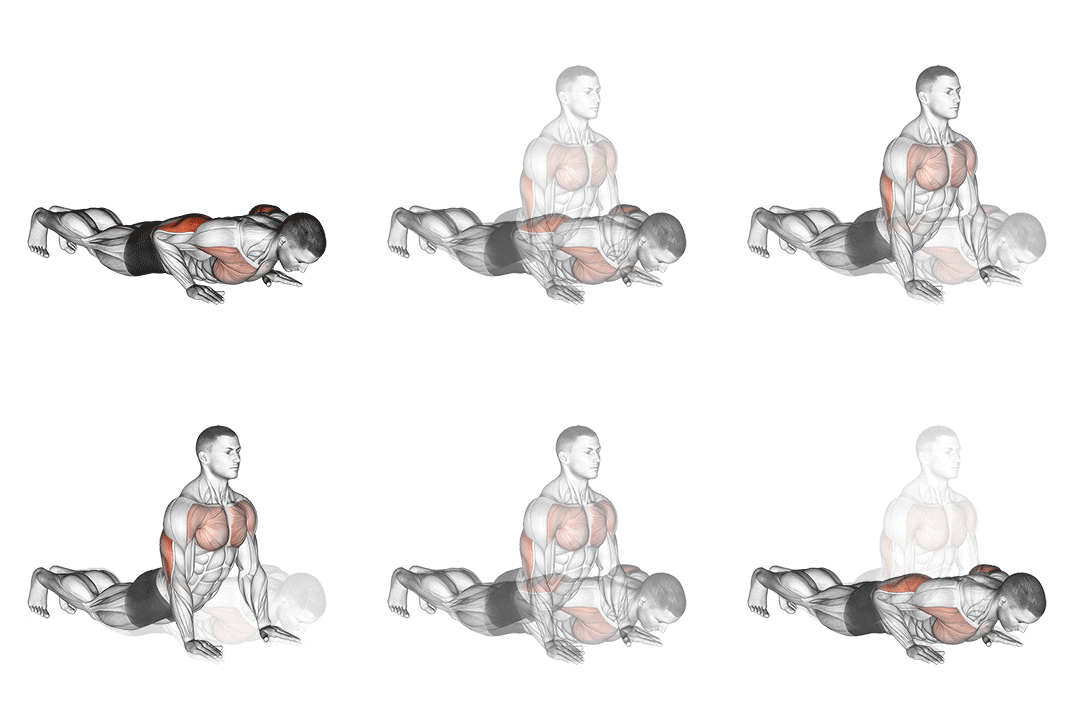
The reverse dip is an exercise that targets the muscles of the upper body, particularly the triceps, shoulders, and chest. It involves using a dip bar or parallel bars to perform a dip motion in the opposite direction compared to the traditional dip exercise. The reverse dip helps strengthen the triceps, improve upper body pushing strength, and engage the stabilizing muscles of the shoulders and core. ## Instructions 1. Stand facing a dip bar or parallel bars with your hands gripping the bars, palms facing forward, and arms fully extended. 2. Step forward with both feet and lean your torso backward, creating an angle of approximately 45 degrees between your body and the bars. This is the starting position. 3. Engage your core muscles and keep your shoulders down and back throughout the exercise. 4. Lower your body by bending your elbows and allowing them to flare outward slightly. Maintain control and descend until your upper arms are parallel to the floor or slightly below. 5. Pause briefly at the bottom of the movement, feeling the stretch in your chest and shoulders. 6. Push through your hands and extend your elbows to lift your body back up to the starting position, fully extending your arms. 7. Repeat for the desired number of repetitions. ## Variations - **Assisted Reverse Dip**: If you're unable to perform a full reverse dip, you can use an assisted dip machine or resistance bands to reduce the weight you have to lift. This modification allows you to build strength gradually. - **Bench Dip**: If dip bars or parallel bars are not available, you can perform a similar movement using a bench. Sit on the edge of a sturdy bench, place your hands beside your hips, fingers pointing forward, and perform the dip motion by lowering and raising your body using your arms. ## Muscles Worked - Triceps - Shoulders (deltoids) - Chest (pectoralis major and minor) - Stabilizing muscles of the shoulders and core ## Common Mistakes - Rounding the shoulders: Keep your shoulders down and back, away from your ears, throughout the exercise. Avoid rounding or hunching your shoulders forward. - Allowing elbows to flare excessively: Maintain a slight outward flare of the elbows, but avoid excessively flaring them out to the sides. This can put strain on the shoulder joints. - Not maintaining core stability: Engage your core muscles throughout the exercise to maintain proper form and stability. Avoid excessive arching or sagging of the lower back. ## Safety Precautions - Start with a controlled range of motion and gradually increase as your strength improves. - Use proper hand placement and grip on the dip bars or parallel bars to ensure stability and prevent slipping. - If you have any shoulder, elbow, or wrist injuries or conditions, consult with a healthcare professional before attempting this exercise. - Do not descend too low or allow your shoulders to go below your elbows, as this can put excessive stress on the shoulder joints. - If you experience any pain or discomfort during the exercise, stop immediately and seek guidance from a qualified fitness professional.
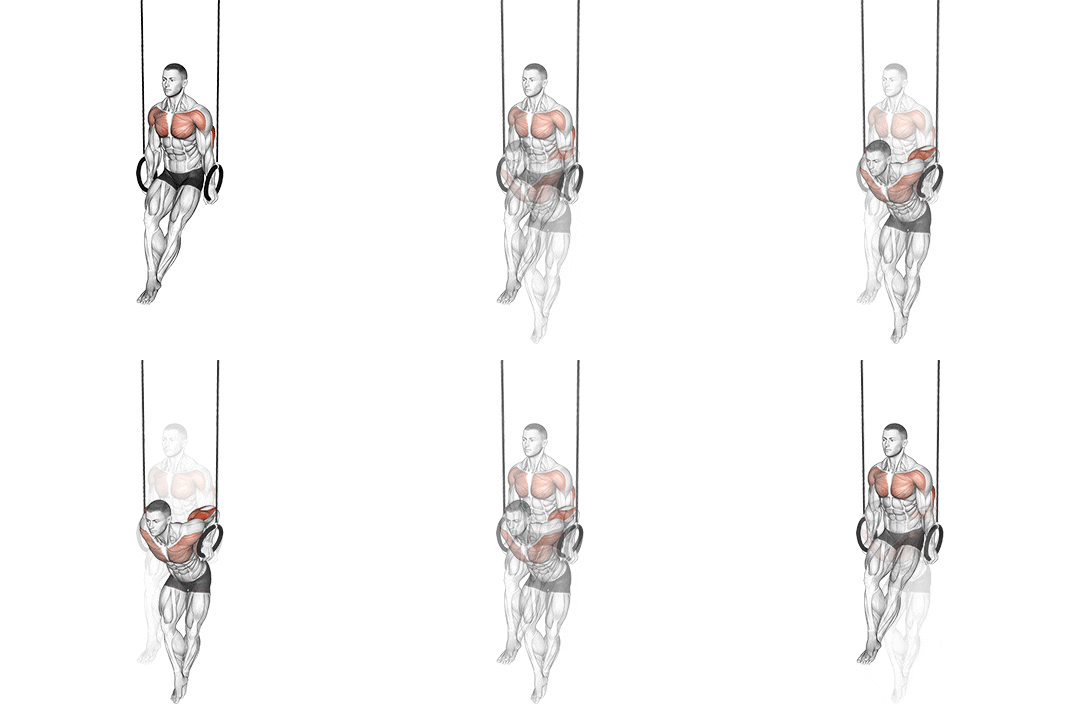
Ring dips are a challenging bodyweight exercise that primarily targets the muscles of the upper body, including the chest, triceps, and shoulders. This exercise involves using gymnastic rings, which adds an element of instability, requiring increased muscle activation and core stability. Ring dips also engage the muscles of the core and the stabilizer muscles of the shoulder and arms. ## Instructions 1. Start by adjusting the height of the gymnastic rings so that they hang at arm's length above the ground. Ensure that the rings are stable and properly secured. 2. Stand between the rings and grip each ring firmly with an overhand grip. 3. Jump or step up, allowing your body to hang between the rings with your arms fully extended and your feet off the ground. 4. Keep your torso upright, engage your core, and maintain a neutral spine throughout the exercise. 5. Slowly lower your body by bending your elbows, allowing your shoulders to move down and slightly forward. Lower yourself until your upper arms are parallel to the ground or until you reach a comfortable range of motion. 6. Pause briefly at the bottom, then press through your hands and extend your elbows to push yourself back up to the starting position. 7. Repeat for the desired number of repetitions. ## Variations - Assisted Ring Dips: If you're unable to perform a full ring dip, you can use a resistance band placed under your knees or feet to provide assistance. - Band-Resisted Ring Dips: To increase the intensity, you can attach a resistance band to the rings and wrap it around your upper back, adding resistance as you perform the dips. - Weighted Ring Dips: For advanced users, you can add extra weight by wearing a weighted vest or holding a dumbbell between your legs. ## Muscles Worked - Chest (pectoralis major) - Triceps brachii - Anterior deltoids (front shoulder muscles) - Core muscles (to stabilize the body) ## Common Mistakes - Flaring the elbows out to the sides: Keep your elbows close to your body throughout the movement to properly target the triceps and avoid unnecessary strain on the shoulder joints. - Allowing the shoulders to shrug: Keep your shoulders down and avoid shrugging them up toward your ears. This helps maintain proper form and reduces the risk of shoulder injuries. - Lack of control and range of motion: Avoid using momentum to complete the movement. Control the descent and ascent, ensuring you go through a full range of motion. ## Safety Precautions - Warm up adequately before attempting ring dips to prepare the muscles and joints. - Ensure that the rings are properly secured and the height is appropriate for your skill level. - Start with a comfortable range of motion and gradually increase it as you gain strength and flexibility. - If you have any shoulder or wrist issues, consult with a fitness professional or healthcare provider before attempting ring dips. - Listen to your body and stop the exercise if you experience pain or discomfort.