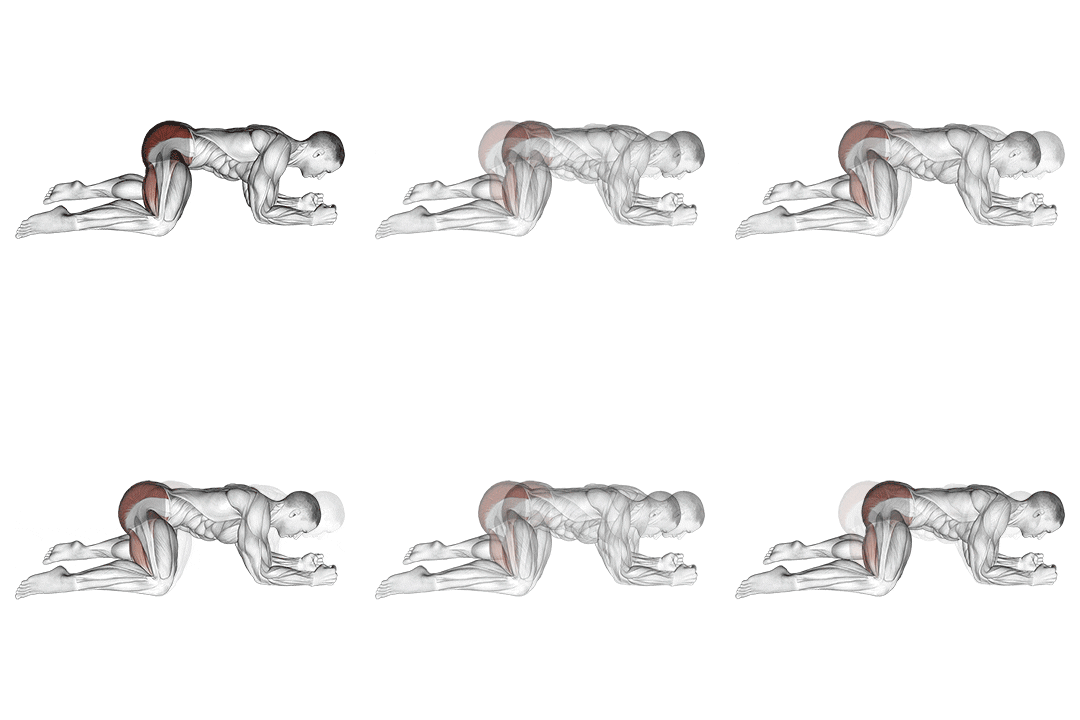
The rocking frog stretch is a dynamic stretching exercise that targets the muscles of the hips, particularly the hip flexors and adductors. This exercise involves sitting in a deep squat position and rocking back and forth, promoting flexibility, mobility, and improved range of motion in the hips. ## Instructions 1. Start by standing with your feet shoulder-width apart. 2. Lower yourself into a deep squat position, keeping your feet flat on the ground and your heels down. 3. Place your hands together in front of your chest, using your elbows to gently push your knees out. 4. From this deep squat position, shift your weight forward onto your toes and extend your legs, lifting your hips up and forward. 5. As you shift your weight forward, straighten your legs as much as possible while keeping your heels down. 6. Continue rocking forward until your weight is over your toes and your hips are as far forward as they can go. 7. From this extended position, shift your weight back, lowering your hips toward the ground and bending your knees, returning to the deep squat position. 8. Repeat the rocking motion, moving back and forth between the extended and deep squat positions for the desired number of repetitions. ## Variations - Supported Rocking Frog Stretch: If you have difficulty maintaining balance or mobility in the deep squat position, you can use a support, such as a stable object or a TRX suspension trainer, to assist you in maintaining stability. - Advanced Rocking Frog Stretch: For individuals with greater flexibility, the rocking motion can be performed with the feet elevated on blocks or steps, increasing the depth of the stretch. ## Muscles Worked - Hip flexors (including iliopsoas) - Adductors (inner thigh muscles) - Quadriceps - Glutes ## Common Mistakes - Rounded back: Keep your back straight and avoid rounding your spine during the rocking motion. - Shifting weight too far forward: While rocking forward, ensure that your weight remains balanced and doesn't shift excessively onto your toes, as this may strain the knees. - Insufficient depth: Try to achieve a deep squat position to effectively stretch the hip muscles. If you struggle to reach the deep squat, work on hip mobility and flexibility before attempting the rocking frog stretch. ## Safety Precautions - If you have any knee or hip injuries or conditions, consult with a healthcare professional before attempting the rocking frog stretch. - Start with a comfortable range of motion and gradually increase the depth of the squat as you gain flexibility and strength. - Listen to your body and avoid pushing into pain or discomfort. It's important to maintain proper form and avoid overstretching or straining the muscles. - If you experience any sharp pain or discomfort, stop the exercise and seek guidance from a qualified professional.
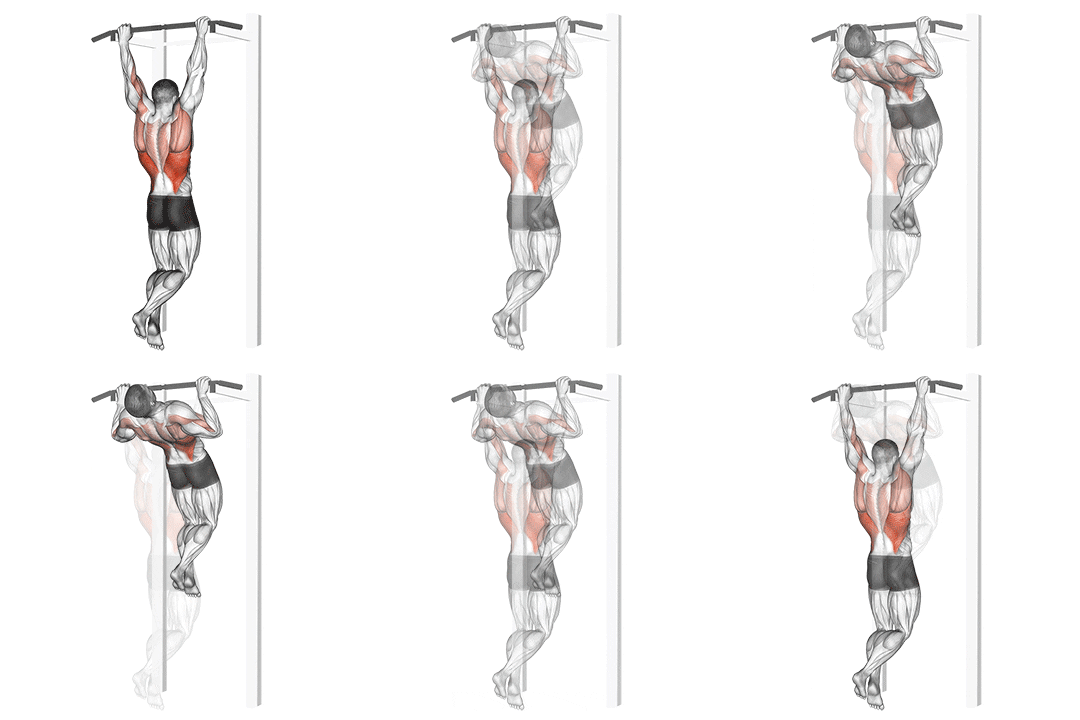
The Rocky Pull-Up Pulldown is a compound exercise that combines elements of a pull-up and a lat pulldown. This exercise targets the muscles of the back, particularly the latissimus dorsi (lats), along with the biceps and other muscles of the upper body. It is an effective exercise for developing upper body strength and muscle definition. ## Instructions 1. Start by setting up a pull-up bar at a height that allows you to hang freely with your arms fully extended. Ensure that the bar is stable and can support your body weight. 2. Stand underneath the bar, facing towards it. Position your hands shoulder-width apart or slightly wider, using an overhand grip (palms facing away from you). 3. Jump or step up, grabbing the bar with your hands. Hang with your arms fully extended and your feet off the ground. 4. From the hanging position, engage your core and initiate the movement by pulling your shoulder blades down and back. 5. Bend your elbows and pull your body upward towards the bar, aiming to bring your chin over the bar or as close as possible. 6. Once you reach the top of the movement, pause briefly and squeeze your back muscles. 7. Slowly lower yourself back down to the starting position with control, fully extending your arms and allowing your shoulder blades to stretch at the bottom. 8. Repeat for the desired number of repetitions. ## Variations - Assisted Rocky Pull-Up Pulldown: If you're unable to perform a full pull-up, you can use a resistance band looped around the bar and under your knees or feet to provide assistance. - Weighted Rocky Pull-Up Pulldown: For advanced users, you can add additional resistance by wearing a weighted vest or attaching weight plates to a belt around your waist. ## Muscles Worked - Latissimus dorsi (lats) - Biceps brachii - Rhomboids - Trapezius (upper and middle fibers) - Posterior deltoids (rear shoulder muscles) ## Common Mistakes - Swinging or using momentum: Avoid using excessive swinging or momentum to complete the movement. Focus on controlled and deliberate pulling motions. - Rounded shoulders: Keep your shoulders pulled down and back throughout the exercise to engage the target muscles effectively and maintain proper form. - Partial range of motion: Aim to perform the exercise through a full range of motion, ensuring that your chin goes above the bar and your arms are fully extended at the bottom. ## Safety Precautions - Ensure that the pull-up bar is securely mounted and can support your body weight. - Warm up adequately before attempting the exercise to prepare your muscles and joints. - If you have any shoulder or back injuries or conditions, consult with a fitness professional or healthcare provider before attempting the Rocky Pull-Up Pulldown. - Use a controlled and smooth motion throughout the exercise to minimize the risk of injury. - If you experience any pain or discomfort, especially in the shoulders or elbows, stop the exercise and seek guidance from a qualified professional.
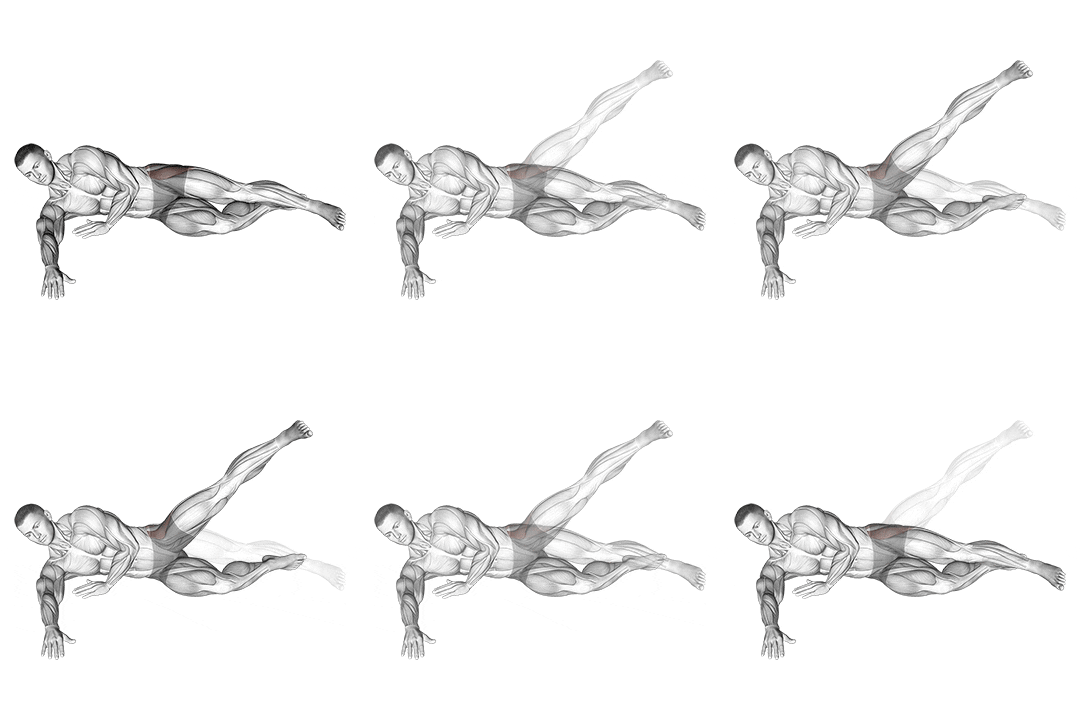
Side hip abduction is an exercise that targets the hip abductor muscles, particularly the gluteus medius and gluteus minimus. It involves lifting the leg laterally away from the body, engaging the outer hip muscles. This exercise helps to improve hip stability, strengthen the gluteal muscles, and enhance overall lower body strength and balance. ## Instructions 1. Start by standing upright with your feet shoulder-width apart and your arms relaxed by your sides. 2. Engage your core muscles by drawing your navel towards your spine. 3. Shift your weight onto one leg while maintaining a slight bend in the knee. 4. Keeping your leg straight, lift the opposite leg laterally away from your body. 5. Lift your leg as high as possible without compromising your form or leaning excessively to the side. 6. Pause for a moment at the top of the movement, then slowly lower your leg back to the starting position. 7. Repeat the movement for the desired number of repetitions on one side, then switch to the other side and perform the exercise with the opposite leg. ## Variations - **Resistance Band Side Hip Abduction**: Place a resistance band around your ankles or just above your knees to add resistance and increase the challenge of the exercise. The band provides constant tension and intensifies the engagement of the hip abductor muscles. - **Side-Lying Side Hip Abduction**: If standing is challenging or not feasible, you can perform the exercise while lying on your side. Lie on your side with your legs straight and stacked. Lift the top leg laterally away from your body, then lower it back down. ## Muscles Worked The side hip abduction primarily targets the following muscles: - Hip abductor muscles (gluteus medius, gluteus minimus) - Tensor fasciae latae - Core muscles (engaged for stability) ## Common Mistakes 1. **Leaning or tilting the body**: Maintain an upright posture throughout the exercise. Avoid leaning or tilting excessively to the side. Focus on engaging the hip muscles without compromising your form. 2. **Bending the lifted leg**: Keep your lifted leg straight throughout the movement. Avoid bending at the knee, as this reduces the activation of the hip abductor muscles. 3. **Lifting the leg too high**: Lift your leg only to a comfortable range of motion without compromising your form or balance. Focus on feeling the contraction in the hip abductor muscles. 4. **Neglecting core engagement**: Keep your core muscles engaged throughout the exercise to stabilize your body and maintain proper alignment. 5. **Relying on momentum**: Perform the movement in a controlled manner without using momentum. Avoid swinging or jerking the leg up. ## Safety Precautions - Prioritize a proper warm-up to prepare your muscles for the exercise. - If you have any existing hip, knee, or lower back issues, modify the exercise or consult with a healthcare professional or qualified fitness trainer to determine if it is suitable for you. - Start with a comfortable range of motion and gradually increase the height of the leg lift as your strength and stability improve. - Listen to your body and avoid overexertion or pushing through pain. If you experience any discomfort or pain, stop the exercise and seek professional advice. - Maintain proper form and technique throughout the exercise. Focus on stability and controlled movements. - Progress gradually and allow for adequate rest and recovery between workouts.
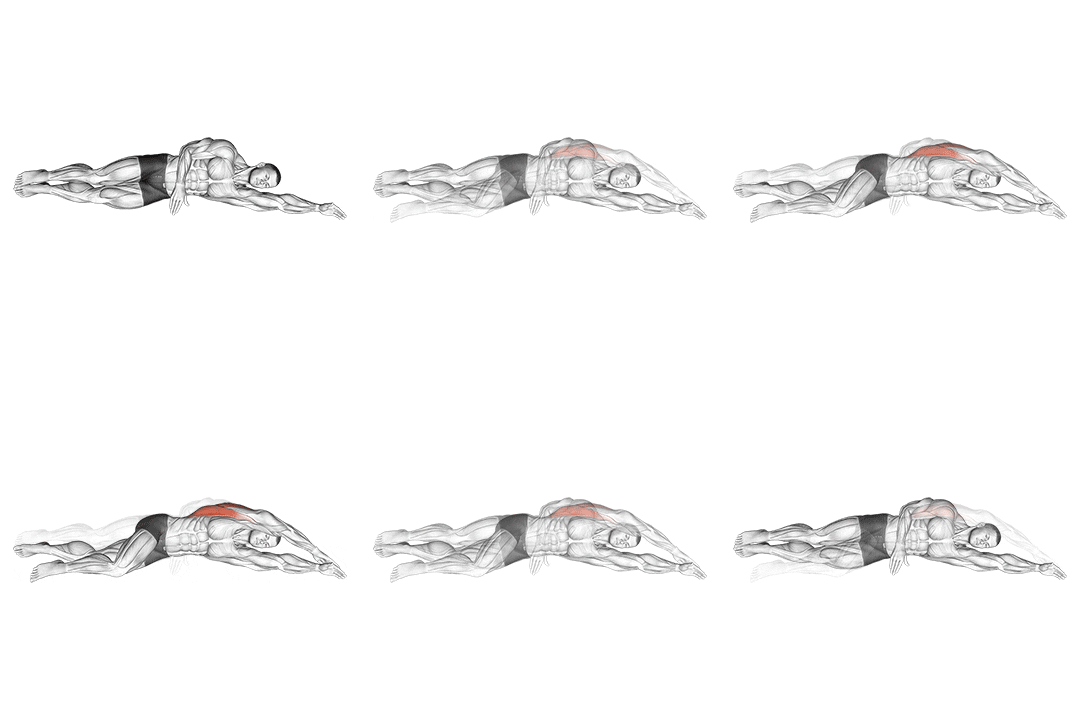
The side lying floor stretch is a stretching exercise that targets the muscles of the side body, particularly the lats (latissimus dorsi) and the obliques. This stretch helps to improve flexibility, release tension in the side muscles, and promote better posture. ## Instructions 1. Start by lying on your side on a comfortable mat or floor. Keep your legs extended and stacked on top of each other. 2. Extend your lower arm straight out in front of you, parallel to your body, and rest your head on it for support. 3. Bend your upper arm at the elbow and place your hand on the back of your head, gently supporting it. 4. Inhale deeply, and as you exhale, engage your core muscles and gently press your lower arm into the floor. 5. Simultaneously, extend your upper arm and rotate your torso slightly, aiming to bring your top elbow and shoulder toward the floor. 6. Feel the stretch along the side of your body from your hip to your armpit. 7. Hold the stretch for 20-30 seconds while maintaining relaxed breathing. 8. Slowly release the stretch and return to the starting position. 9. Repeat the stretch on the other side. ## Variations - **Seated Side Stretch**: If lying down is uncomfortable, you can perform a seated side stretch. Sit on the edge of a chair or a stability ball with your feet flat on the ground. Reach one arm overhead and lean to the opposite side, feeling the stretch along the side of your body. - **Standing Side Stretch**: Stand with your feet hip-width apart and raise one arm overhead. Lean to the opposite side, creating a gentle stretch along the side of your body. ## Muscles Worked The side lying floor stretch primarily targets the following muscles: - Latissimus dorsi (lats) - External obliques - Internal obliques - Quadratus lumborum ## Common Mistakes 1. **Raising the shoulder**: Avoid lifting the shoulder toward the ear during the stretch. Keep the shoulder relaxed and focus on the stretch along the side of the body. 2. **Straining the neck**: Make sure to support your head with your hand and avoid excessive pulling or straining of the neck muscles. 3. **Overarching the lower back**: Maintain a neutral position in your lower back throughout the stretch. Avoid arching your lower back excessively. 4. **Not breathing deeply**: Remember to take deep breaths during the stretch to promote relaxation and enhance the effectiveness of the stretch. 5. **Overstretching**: Be gentle with the stretch and avoid pushing beyond your comfortable range of motion. Stretch to a point of tension, not pain. ## Safety Precautions - Perform the stretch on a comfortable surface, such as a mat or carpeted floor. - If you have any existing neck or back conditions, modify the stretch or consult with a healthcare professional or qualified fitness trainer before attempting it. - Avoid jerking or bouncing movements during the stretch. Maintain a smooth and controlled motion. - Stop the stretch immediately if you experience any sharp or intense pain. Discontinue the exercise or seek professional advice. - Progress gradually with the stretch, increasing the range of motion over time. - Remember to breathe deeply and maintain relaxed breathing throughout the stretch. - Listen to your body and adjust the intensity of the stretch based on your comfort level.
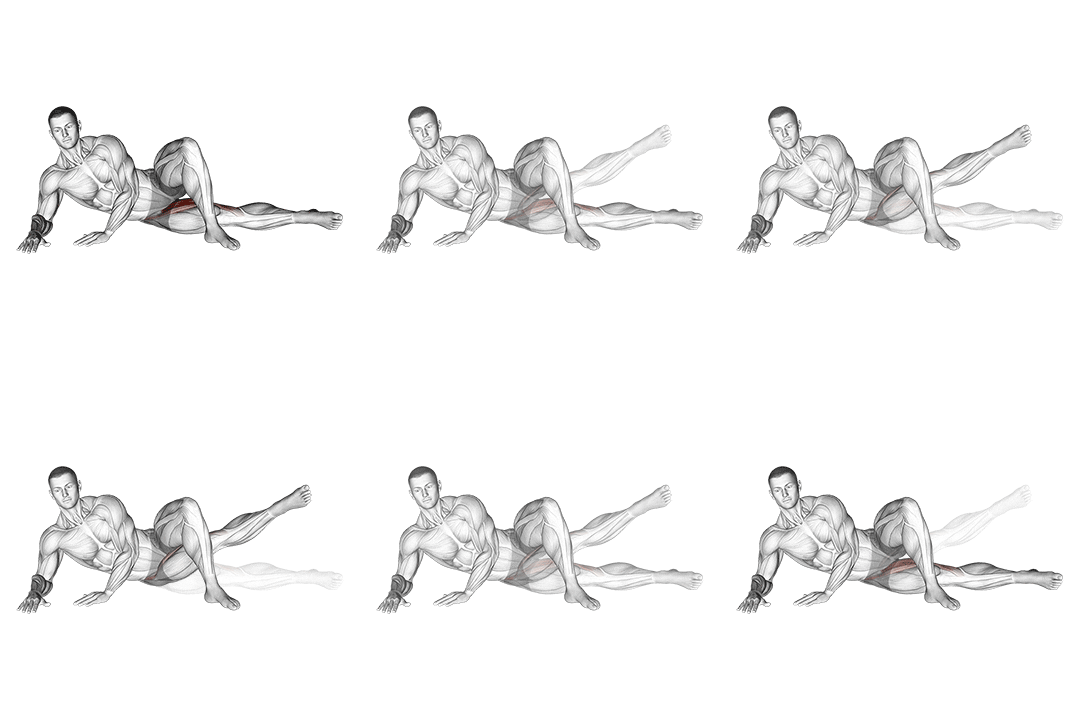
Side lying hip adduction is an exercise that targets the muscles of the inner thighs, specifically the hip adductors. This exercise involves lying on your side and lifting your top leg against gravity to work the muscles responsible for bringing your legs together. ## Instructions 1. Start by lying on your side on a comfortable mat or exercise surface. Ensure that your body is in a straight line, with your bottom leg extended and your top leg positioned slightly in front of the bottom leg. 2. Rest your head on your lower arm for support, and place your upper hand on the floor in front of your chest for stability. 3. Keeping your leg straight, slowly lift your top leg upward as high as comfortably possible without rotating your hips. Keep the movement controlled and avoid any jerking motions. 4. Pause briefly at the top of the movement, focusing on squeezing the inner thigh muscles. 5. Slowly lower your leg back down to the starting position. 6. Repeat the exercise for the desired number of repetitions and then switch sides to work the opposite leg. ## Variations - Resistance Band: Place a resistance band around both legs, just above the knees, to add resistance and increase the intensity of the exercise. - Ankle Weights: Strap on ankle weights to make the exercise more challenging and further engage the hip adductor muscles. - Stability Ball: Perform the exercise while lying on a stability ball to challenge your balance and core stability while working the hip adductors. ## Muscles Worked The main muscles targeted during side lying hip adduction include: - Hip Adductors (adductor magnus, adductor longus, adductor brevis, gracilis) - Tensor fasciae latae - Sartorius (assists in hip adduction) ## Common Mistakes - Raising the leg too high: Avoid lifting the leg beyond a comfortable range of motion, as it may lead to unnecessary strain on the hip or lower back. - Rolling the hips forward or backward: Maintain proper alignment by keeping the hips stacked vertically throughout the exercise. Avoid rolling the top hip forward or backward. - Using momentum: Perform the movement slowly and with control. Avoid swinging the leg or using momentum to lift it. ## Safety Precautions - If you have any existing hip or knee injuries, consult with a healthcare professional or a qualified fitness trainer before attempting this exercise. - Start with light or no resistance and gradually increase the difficulty as your strength improves. - Engage your core muscles throughout the exercise to provide stability and protect your lower back. - If you experience any pain or discomfort, stop the exercise and consult a professional. Listen to your body and work within your limits.
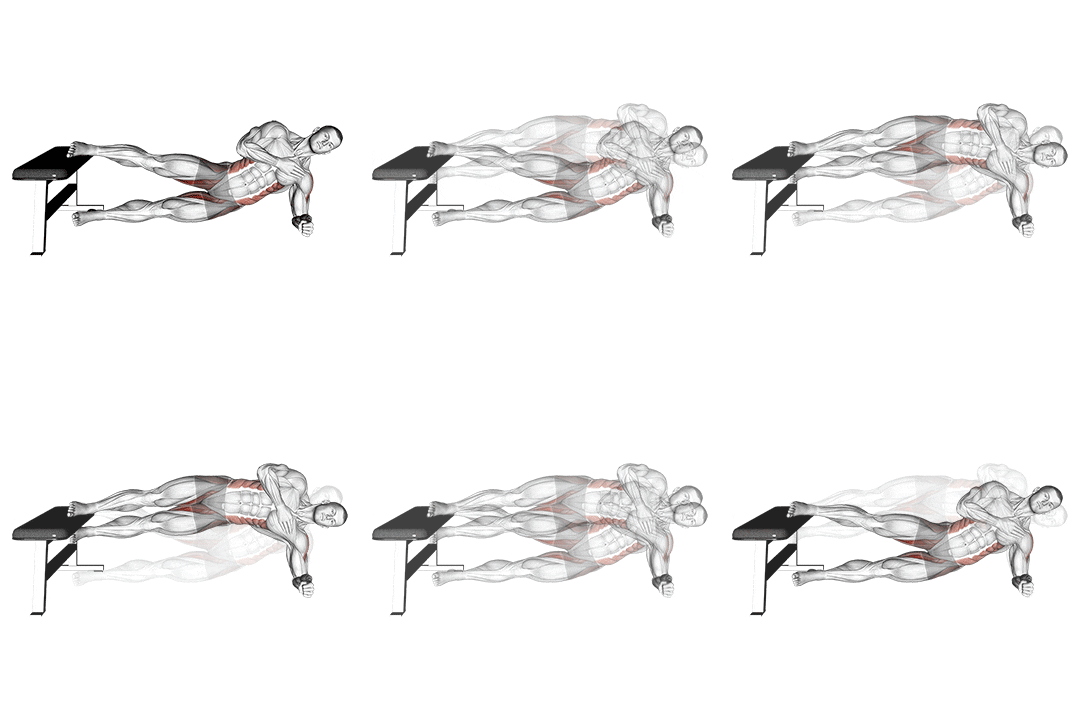
The side plank hip adduction is an exercise that targets the muscles of the core, particularly the obliques, while also engaging the hip adductors. This exercise involves maintaining a side plank position and performing controlled movements to bring the top leg towards the bottom leg. ## Instructions 1. Start by lying on your side on a mat or exercise surface. Position yourself on your elbow, with your elbow directly beneath your shoulder and your forearm resting on the ground perpendicular to your body. 2. Stack your legs on top of each other and straighten them. Your body should form a straight line from head to toe. 3. Engage your core muscles, squeeze your glutes, and lift your hips off the ground, coming into a side plank position. Your body weight should be supported by your forearm and the side of your bottom foot. 4. Once you are stable in the side plank position, lift your top leg upward, keeping it straight, and bring it across your body towards the bottom leg. 5. Pause briefly when your legs meet, focusing on squeezing the inner thigh muscles. 6. Slowly lower your top leg back to the starting position. 7. Repeat the exercise for the desired number of repetitions and then switch sides to work the opposite leg. ## Variations - Modified Side Plank: If the full side plank is challenging, you can modify the exercise by bending the bottom leg and resting the knee on the ground while keeping the top leg extended. - Knee-to-Chest Variation: Instead of lifting the top leg and bringing it across, you can bend the knee and perform knee-to-chest movements while in the side plank position. This variation still engages the core and hip adductors effectively. - Resistance Band: Place a resistance band around both legs, just above the knees, to add resistance and intensify the exercise. ## Muscles Worked The main muscles targeted during side plank hip adduction include: - Obliques (external and internal) - Transversus abdominis - Rectus abdominis - Hip Adductors (adductor magnus, adductor longus, adductor brevis, gracilis) ## Common Mistakes - Collapsing or sagging hips: Maintain a straight line from head to toe throughout the exercise. Avoid letting your hips drop or sag. Engage your core and glutes to keep your body stable. - Lifting the top leg too high: Focus on controlled movements and avoid lifting the leg beyond a comfortable range of motion. Overlifting can strain the hip or lower back. - Allowing the shoulders to roll forward: Keep your shoulders stacked vertically, and avoid rolling them forward or hunching. Maintain proper alignment throughout the exercise. ## Safety Precautions - If you have any existing shoulder, hip, or lower back issues, consult with a healthcare professional or a qualified fitness trainer before attempting this exercise. - Start with a modified version or choose a variation that suits your current fitness level and gradually progress as your strength improves. - Maintain proper form and alignment throughout the exercise to avoid unnecessary strain on the joints and muscles. - Listen to your body and stop the exercise if you experience pain or discomfort. It's important to work within your limits and not push beyond what feels safe and comfortable for you.
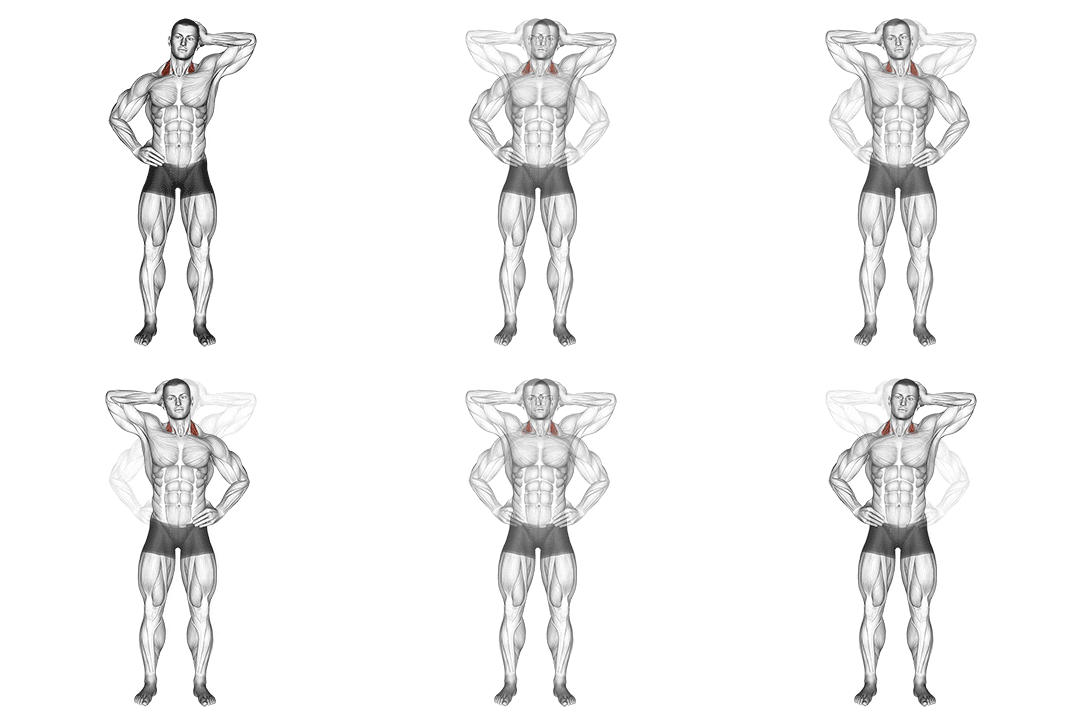
The side push neck stretch is an exercise that targets the muscles of the neck and upper trapezius. This stretch helps to release tension and improve flexibility in the neck, promoting relaxation and reducing stiffness. ## Instructions 1. Begin by standing or sitting in an upright position with good posture. 2. Tilt your head slightly to one side, bringing your ear closer to your shoulder on that side. 3. Place the hand on the same side as the tilt on the side of your head, gently applying a light pressure. 4. As you push your head to the side with your hand, resist the movement by gently pushing your head in the opposite direction with your neck muscles. 5. Hold the stretch for 15-30 seconds while maintaining a gentle pressure and resisting the movement. 6. Release the pressure and slowly bring your head back to the starting position. 7. Repeat the stretch on the opposite side by tilting your head to the other side and using the hand on that side to apply gentle pressure. ## Variations - Seated Variation: This stretch can also be performed while sitting on a chair. Sit with good posture, and follow the same instructions as above. - Seated Resistance Variation: Instead of resisting the movement with your neck muscles, you can use your hand to provide resistance. Place your hand on the same side as the tilt against your head, and push your head into your hand while holding the stretch. ## Muscles Worked The main muscles targeted during the side push neck stretch include: - Sternocleidomastoid - Upper trapezius - Scalene muscles - Levator scapulae ## Common Mistakes - Applying too much pressure: Avoid using excessive force when pushing your head to the side. Apply a gentle pressure that allows you to feel the stretch without causing discomfort or pain. - Shrugging the shoulder: Keep your shoulder relaxed and avoid shrugging it towards your ear during the stretch. Maintain a neutral position with the shoulder. - Hyperextending the neck: Be mindful of your head position and avoid leaning your head too far back or extending the neck too much. Keep the stretch within a comfortable range of motion. ## Safety Precautions - Be cautious if you have any neck injuries or conditions. If you experience pain or discomfort during the stretch, stop immediately and consult with a healthcare professional. - Perform the stretch with control and avoid jerking or sudden movements. - Do not push beyond your comfort level. The stretch should be gentle and should not cause any pain. - If you have any concerns or uncertainties about performing this stretch, it's recommended to consult with a qualified healthcare professional or a physical therapist. They can provide personalized guidance and ensure the exercise is suitable for your specific needs.
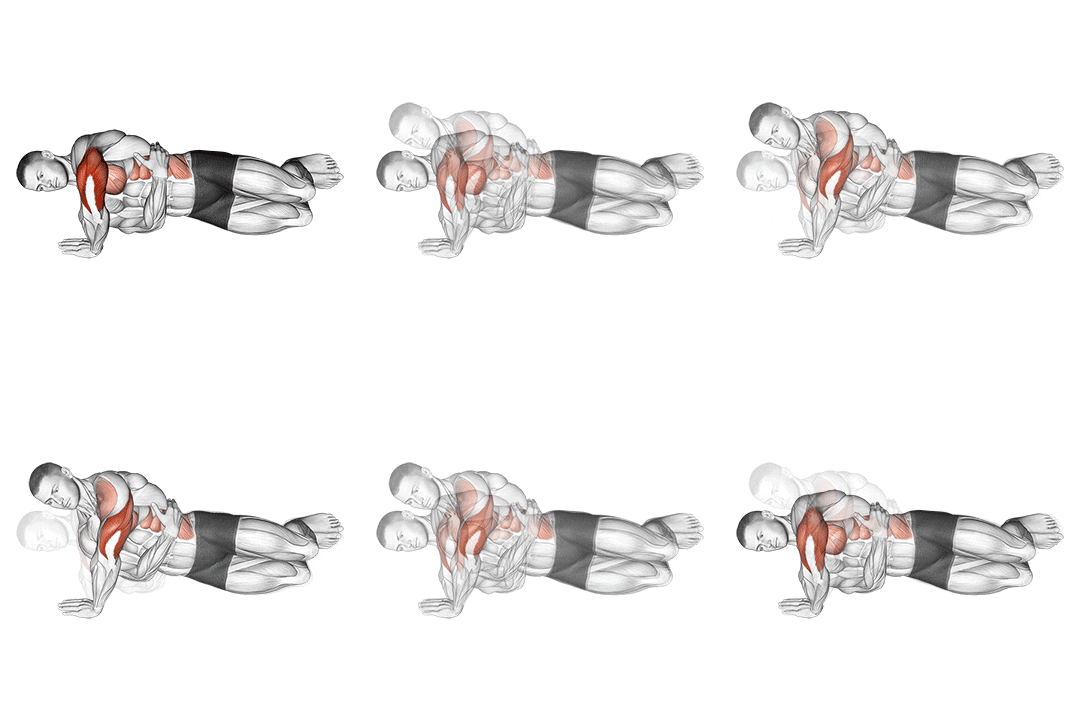
The side push-up is an exercise that targets the muscles of the chest, shoulders, triceps, and core. It is a variation of the traditional push-up that adds rotational movement, engaging the muscles in a different way and increasing the challenge. ## Instructions 1. Start in a plank position with your hands slightly wider than shoulder-width apart, fingers pointing forward. 2. Rotate your body to one side, shifting your weight onto one hand and the corresponding foot. Your body should be in a side plank position, with your feet stacked or the top foot slightly in front of the bottom foot for stability. 3. Lower your body toward the floor by bending your elbow, keeping it close to your side. Aim to bring your chest as close to the ground as possible. 4. Push through your palm and straighten your arm, returning to the starting position. 5. Repeat the movement for the desired number of repetitions, then rotate to the other side and repeat the exercise. ## Variations - Modified Side Push-Up: Perform the exercise with your knees on the ground for a modified version. This reduces the amount of bodyweight being lifted, making it more accessible for beginners or those with less upper body strength. - Elevated Side Push-Up: Place your hand on an elevated surface, such as a step or bench, to increase the challenge. This variation emphasizes the chest and shoulders even more. - Slow Tempo: Perform the push-up with a slower tempo, taking more time to lower and raise your body. This increases the time under tension and intensifies the exercise. ## Muscles Worked The main muscles targeted during the side push-up include: - Pectoralis major (chest muscles) - Anterior and medial deltoids (shoulders) - Triceps brachii - Core muscles (including obliques) ## Common Mistakes - Sagging hips or lower back: Keep your body in a straight line throughout the exercise. Avoid allowing your hips to sag or your lower back to arch excessively. - Shrugging the shoulders: Keep your shoulders away from your ears and avoid shrugging. Maintain a stable and engaged shoulder position throughout the movement. - Flaring elbows: Keep your elbows tucked close to your sides rather than allowing them to flare out to the sides. This helps to engage the chest muscles more effectively. ## Safety Precautions - Maintain proper form and alignment throughout the exercise to avoid strain on the shoulders, wrists, or lower back. - Start with a modified version or choose a variation that suits your current fitness level and gradually progress as your strength improves. - Engage your core muscles and maintain a stable, controlled movement throughout the exercise. - If you have any existing shoulder, wrist, or lower back issues, consult with a healthcare professional or a qualified fitness trainer before attempting this exercise. - Listen to your body and stop the exercise if you experience pain or discomfort. It's important to work within your limits and not push beyond what feels safe and comfortable for you.
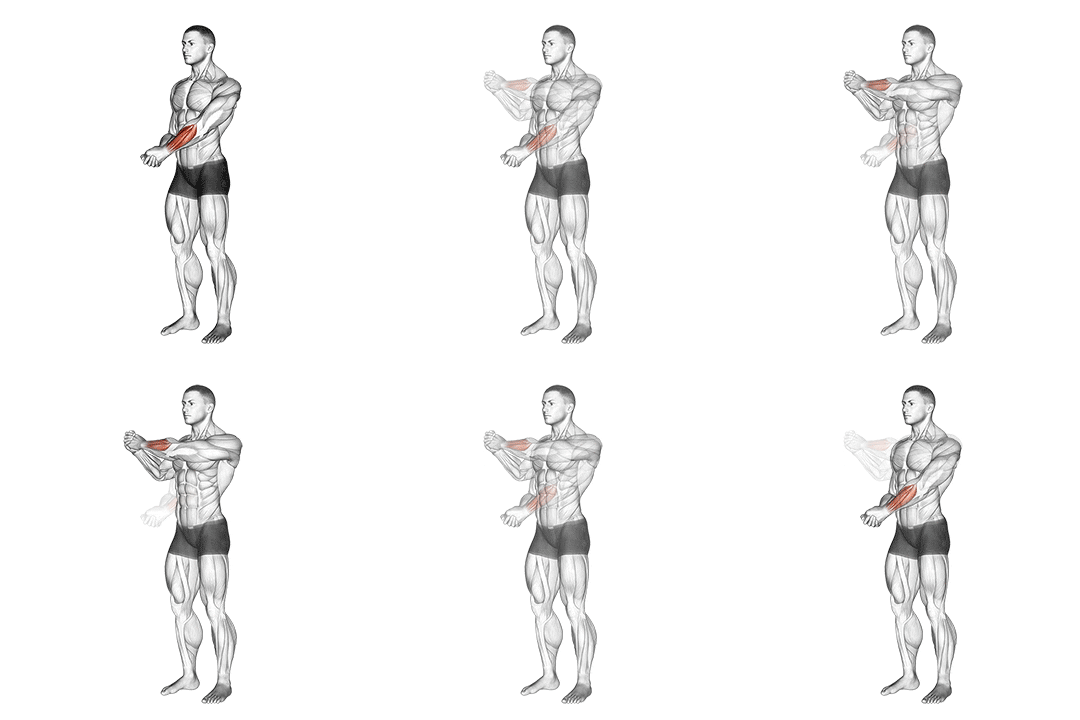
The side wrist pull stretch targets the muscles and tendons of the wrists and forearms. This stretch helps improve flexibility, relieve tension, and increase mobility in the wrist joint. ## Instructions 1. Start by extending one arm straight out in front of you, parallel to the ground. 2. Rotate your palm to face down. 3. With your other hand, gently grasp the fingers of the extended arm near the fingertips. 4. Apply a gentle, steady pulling force to the fingers, pulling them backward toward your body. 5. Keep your arm straight and maintain a slight tension in the fingers and wrist. 6. Hold the stretch for 15-30 seconds, feeling the stretch in the wrist and forearm. 7. Release the stretch and repeat on the other side. ## Variations - Finger Extension Stretch: Instead of pulling the fingers backward, you can focus on extending and stretching the fingers individually. Hold each finger and thumb in an extended position for a few seconds, feeling the stretch in the finger joints and palm. - Wrist Flexion Stretch: Perform the stretch with your palm facing up. Gently pull your fingers toward your body, feeling the stretch in the front of your wrist and forearm. ## Muscles Worked The main muscles targeted during the side wrist pull stretch include: - Flexor carpi radialis - Flexor carpi ulnaris - Flexor digitorum superficialis - Extensor carpi radialis longus - Extensor carpi radialis brevis - Extensor carpi ulnaris ## Common Mistakes - Excessive pulling force: Avoid pulling too hard or applying excessive force to the fingers and wrist. The stretch should be gentle and controlled. - Holding your breath: Remember to breathe normally throughout the stretch. Avoid holding your breath, as it can increase tension in the muscles. - Overstretching: Be mindful of your limits and do not push beyond a comfortable range of motion. Stop the stretch if you feel any pain or discomfort. ## Safety Precautions - Perform the stretch with control and avoid jerking or sudden movements. - If you have any wrist or hand injuries or conditions, consult with a healthcare professional or a qualified physical therapist before attempting this stretch. - If you feel any pain or discomfort during the stretch, stop immediately and consult with a professional. - Start with a gentle stretch and gradually increase the intensity as your wrist flexibility improves. - Listen to your body and work within your limits. Everyone's flexibility is different, so do not compare your range of motion to others. - If you have any concerns or uncertainties about performing this stretch, it's recommended to consult with a qualified healthcare professional or a physical therapist. They can provide personalized guidance and ensure the exercise is suitable for your specific needs.