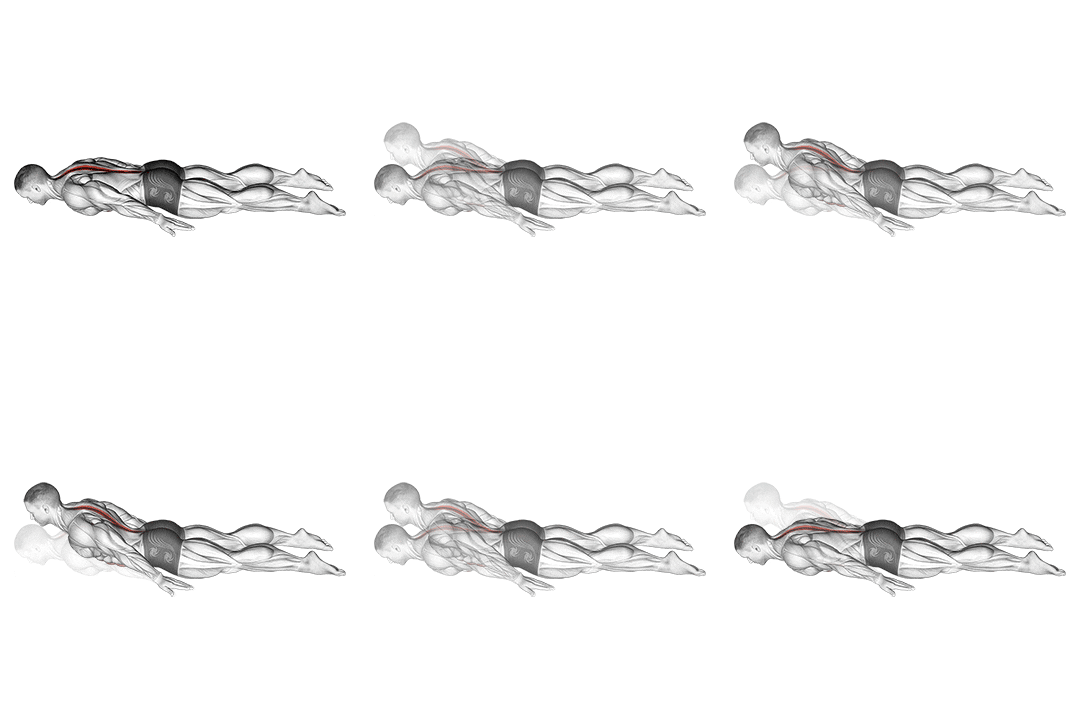
The lower back curl, also known as the back extension or hyperextension, is an exercise that targets the muscles of the lower back. It involves extending the spine against resistance, which helps strengthen the erector spinae muscles and improve spinal stability. This exercise can be performed using a dedicated back extension machine or on a stability ball. ## Instructions 1. Position yourself on a back extension machine or lie face down on a stability ball with your hips resting on the edge of the ball and your feet securely anchored. 2. Cross your arms over your chest or place your hands behind your head, whichever feels more comfortable. 3. Engage your core muscles by drawing your navel in toward your spine. 4. Slowly lower your upper body toward the ground, maintaining a straight line from your head to your hips. 5. Keep your neck in a neutral position by looking down toward the ground or slightly forward. 6. Exhale and lift your upper body by contracting your lower back muscles. Focus on using the muscles of your lower back to lift, rather than using your arms or momentum. 7. Continue lifting until your upper body is in line with your legs or slightly beyond. 8. Hold the contracted position for a brief moment, focusing on squeezing your lower back muscles. 9. Inhale and slowly lower your upper body back to the starting position. 10. Repeat for the desired number of repetitions. ## Variations - Weighted Back Extension: Hold a weight plate or dumbbell against your chest or perform the exercise while holding a weight behind your head to increase resistance. - Stability Ball Back Extension: Instead of using a back extension machine, perform the exercise on a stability ball. Position your hips on the ball and extend your upper body toward the ground, then lift back up using the same technique described above. - Superman Exercise: Lie face down on the ground with your arms extended overhead and your legs straight. Lift your arms and legs off the ground simultaneously, engaging your lower back muscles. Hold for a brief moment, then lower back down. ## Muscles Worked The lower back curl primarily targets the erector spinae muscles, which run along the length of the spine and are responsible for extending and stabilizing the spine. It also engages the glutes, hamstrings, and other core muscles to a lesser extent. ## Common Mistakes - Arching the Neck: Avoid excessive neck extension or flexion during the exercise. Keep your neck in a neutral position throughout the movement. - Using Momentum: Focus on using controlled movements and avoid relying on momentum to lift your upper body. Engage the muscles of your lower back to perform the movement. - Hyperextending the Back: While it's important to extend the spine during the exercise, avoid excessive hyperextension that places undue stress on the lower back. Maintain a controlled range of motion. - Rounded Shoulders: Keep your shoulders pulled back and down throughout the exercise. Avoid rounding your shoulders forward, as this can strain the upper back and neck. ## Safety Precautions - Start with a weight or resistance level that is appropriate for your fitness level and gradually increase as you become stronger. - If using a back extension machine, adjust the machine to fit your body properly. The pad should rest comfortably against your hips. - If using a stability ball, ensure that it is properly inflated and provides sufficient stability. - Maintain proper form and control throughout the exercise to minimize the risk of injury. - If you have any pre-existing lower back conditions or pain, consult with a healthcare professional before performing the exercise.
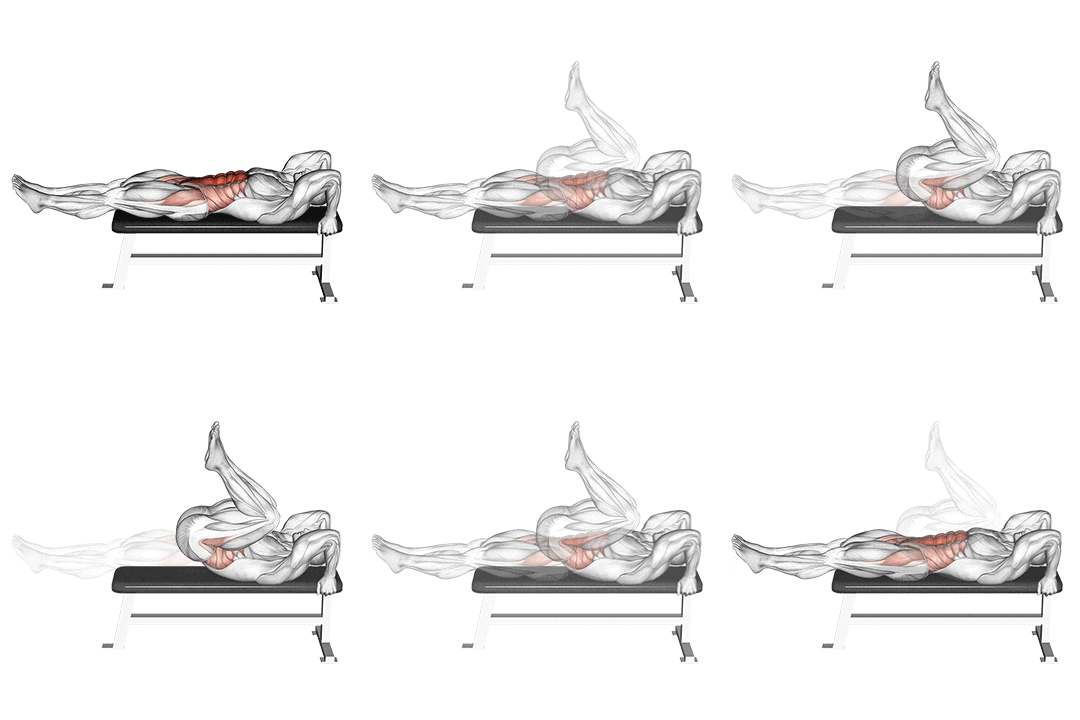
The lying leg-hip raise is an exercise that primarily targets the muscles of the core and hip flexors. It involves lying flat on your back and lifting your legs and hips off the ground, engaging the abdominal muscles to stabilize the body. This exercise helps to strengthen the core, improve hip mobility, and enhance overall stability. ## Instructions 1. Lie down on your back on a mat or flat surface with your legs extended. 2. Place your arms by your sides, palms facing down. 3. Engage your abdominal muscles and press your lower back into the ground. 4. Slowly raise your legs off the ground, keeping them straight or slightly bent at the knees. Simultaneously, lift your hips off the ground. 5. Continue lifting until your legs are pointing directly upwards, perpendicular to the floor, and your hips are off the ground. 6. Hold the position for a second or two, focusing on maintaining stability and tension in your core. 7. Slowly lower your legs and hips back down to the starting position with control. 8. Repeat the movement for the desired number of repetitions. ## Variations - Beginner Variation: If you're new to this exercise or have difficulty lifting both legs at once, you can start by raising one leg at a time while keeping the other leg bent with the foot on the floor. - Advanced Variation: To increase the challenge, you can hold a dumbbell or a medicine ball between your feet as you raise your legs and hips. ## Muscles Worked - Rectus abdominis (abs) - Transverse abdominis - Hip flexors (iliopsoas) - Obliques (secondary) ## Common Mistakes - Using momentum: Avoid swinging your legs or using momentum to lift your hips. Focus on controlled movements throughout the exercise. - Arching the lower back: Ensure that your lower back stays pressed into the ground throughout the movement. Avoid excessive arching, as it can strain the lower back. - Lifting legs too high: Lift your legs and hips until they are perpendicular to the floor. Avoid overextending the range of motion, as it can lead to unnecessary strain on the lower back. ## Safety Precautions - Consult with a healthcare professional or fitness trainer before attempting this exercise, especially if you have any pre-existing medical conditions or injuries. - Perform the exercise on a mat or cushioned surface to provide support and minimize discomfort. - Engage your core muscles and maintain proper form throughout the movement to avoid excessive strain on the lower back. - If you experience any pain or discomfort, stop the exercise immediately and seek professional advice.
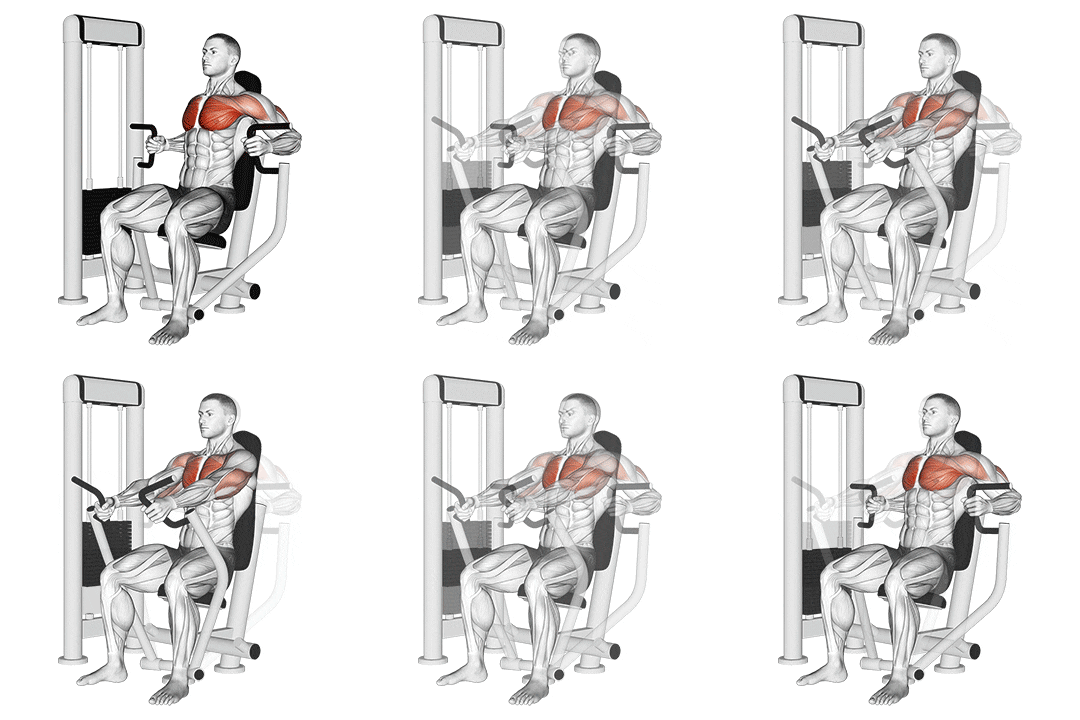
The machine inner chest press is an exercise that specifically targets the inner muscles of the chest, primarily the pectoralis major. This exercise is performed using a chest press machine, which provides resistance and stability. The machine inner chest press helps to develop strength and definition in the inner chest muscles, contributing to a well-rounded chest appearance. ## Instructions 1. Adjust the seat height on the chest press machine so that the handles are at chest level when you're seated. 2. Sit on the machine with your back firmly against the backrest and feet flat on the floor. 3. Grasp the handles with an overhand grip, slightly wider than shoulder-width apart. 4. Press your back against the backrest and engage your core for stability. 5. Push the handles forward while extending your arms fully, keeping a slight bend in the elbows. 6. Slowly and with control, allow the handles to return to the starting position, allowing your elbows to bend comfortably. 7. Repeat the movement for the desired number of repetitions. ## Variations - Alternative Machine: If the chest press machine is not available, you can perform a similar exercise using a cable machine with the appropriate attachments. Adjust the pulleys to chest height and use handles or cuffs to replicate the pressing motion. - Dumbbell Variation: If you prefer free weights, you can perform dumbbell chest presses on a flat bench. Lie flat on the bench with a dumbbell in each hand, and press the weights up and together, focusing on squeezing the inner chest muscles at the top of the movement. ## Muscles Worked - Pectoralis major (inner chest) - Anterior deltoids (front shoulders) - Triceps brachii (secondary) ## Common Mistakes - Using too much weight: Avoid using excessive weight that compromises your form and control. Choose a weight that allows you to perform the exercise with proper technique. - Flaring elbows: Keep your elbows slightly tucked in throughout the movement. Avoid letting them flare out to the sides, as it shifts the emphasis away from the inner chest muscles. - Not maintaining proper alignment: Ensure that your back is firmly against the backrest throughout the exercise. Avoid rounding your shoulders or arching your lower back. - Rushing the movement: Perform the exercise in a slow and controlled manner. Avoid using momentum or bouncing the weights, as it reduces the effectiveness of the exercise. ## Safety Precautions - Adjust the machine according to your body size and comfort to ensure proper alignment and range of motion. - Warm up before starting the exercise to prepare your muscles for the workload. - If you're new to the exercise, start with lighter weights and gradually increase the resistance as you become comfortable with the movement. - If you experience any pain or discomfort during the exercise, stop immediately and consult a fitness professional or healthcare provider. - Remember to breathe steadily throughout the exercise, exhaling during the exertion phase and inhaling during the return phase.
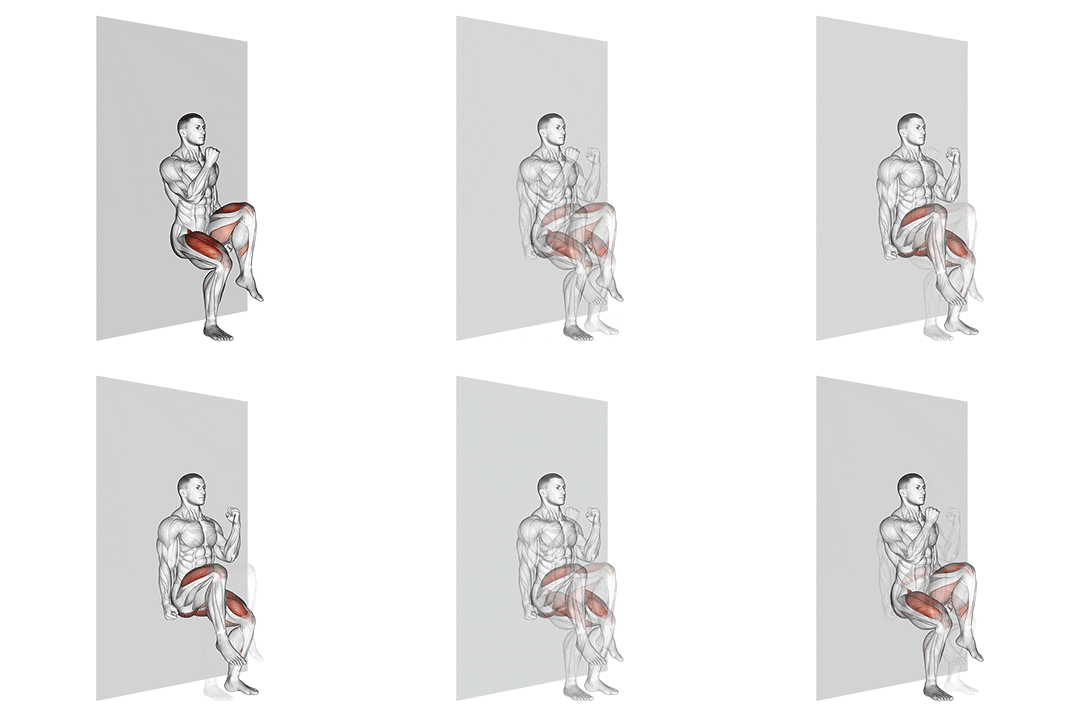
The march sit (wall) is an exercise that targets the core muscles, particularly the lower abdominal muscles. It is performed against a wall to provide stability and support. This exercise helps to strengthen the core, improve balance, and engage the lower abs. ## Instructions 1. Stand with your back against a wall and your feet shoulder-width apart. 2. Slowly slide down the wall, bending your knees until you reach a seated position. Your thighs should be parallel to the ground, and your knees should be at a 90-degree angle. 3. Engage your core muscles and press your lower back into the wall for stability. 4. Lift one foot off the ground, bringing your knee up toward your chest while keeping your back against the wall. 5. Hold the lifted knee in the air for a moment, maintaining your balance. 6. Lower the lifted leg back down and repeat the movement with the other leg. 7. Alternate lifting each leg in a marching motion while maintaining the seated position against the wall. 8. Continue the march for the desired number of repetitions or duration. ## Variations - Wall Sit with Twist: Instead of lifting the knees in a marching motion, you can add a twist to engage the oblique muscles. While in the wall sit position, lift one foot off the ground and rotate your torso, bringing the lifted knee toward the opposite elbow. Return to the starting position and repeat on the other side. - Weighted March Sit: To increase the challenge, you can hold a medicine ball or dumbbell against your chest while performing the march sit against the wall. ## Muscles Worked - Rectus abdominis (lower abs) - Obliques - Quadriceps - Glutes ## Common Mistakes - Leaning forward: Avoid leaning forward or rounding the shoulders during the exercise. Maintain an upright posture with your back pressed against the wall throughout the movement. - Allowing knees to collapse inward: Keep your knees aligned with your toes throughout the exercise. Avoid letting them cave inward, as it can put stress on the knee joints. - Lifting the leg too high: Lift your knees toward your chest without excessively lifting the leg. Aim for a comfortable range of motion that engages the lower abs while maintaining balance. - Holding your breath: Remember to breathe steadily throughout the exercise. Inhale and exhale naturally to ensure proper oxygen flow and muscle engagement. ## Safety Precautions - Choose a sturdy wall to lean against and ensure that it is clean and free from any hazards. - If you have knee or lower back issues, consult with a healthcare professional before attempting this exercise. - Start with a shallow wall sit and gradually increase the depth as you build strength and comfort. - If you experience any pain or discomfort during the exercise, stop immediately and seek advice from a fitness professional or healthcare provider. - Listen to your body and work within your own comfort and ability level.
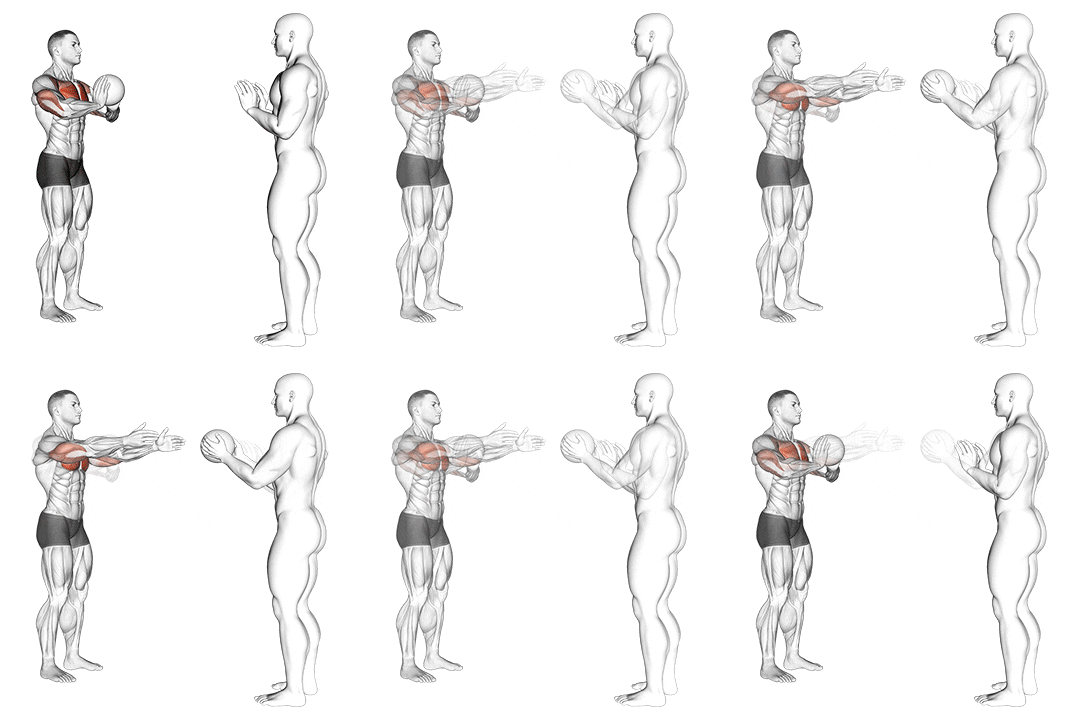
The medicine ball chest pass is an explosive exercise that targets the muscles of the chest, shoulders, and arms. It involves forcefully throwing a medicine ball from the chest, mimicking a pushing motion. This exercise helps to develop upper body power, strength, and coordination. ## Instructions 1. Stand with your feet shoulder-width apart and hold a medicine ball with both hands at chest level. 2. Engage your core muscles and maintain a tall and upright posture. 3. Take a small step forward with one foot to initiate the movement. 4. Quickly extend your arms forward, forcefully pushing the medicine ball away from your chest. 5. Release the ball at the end of the extension, allowing it to leave your hands. 6. Aim to throw the ball with enough force to reach a target or a partner at a short distance. 7. Allow your body to follow through with the throwing motion, stepping forward with the opposite foot. 8. Retrieve the ball and repeat the movement for the desired number of repetitions. ## Variations - Alternating Chest Pass: Instead of throwing the ball with both hands simultaneously, you can alternate the throwing motion, passing the ball from one hand to the other as you push it forward. - Overhead Medicine Ball Slam: Instead of throwing the ball from the chest, lift the medicine ball overhead and forcefully slam it into the ground. Catch the rebound and repeat the movement. ## Muscles Worked - Pectoralis major (chest) - Anterior deltoids (front shoulders) - Triceps brachii - Core muscles (engaged for stability) ## Common Mistakes - Using too heavy of a ball: Choose a medicine ball weight that allows you to perform the exercise with proper form and control. Using a ball that is too heavy can compromise your technique and increase the risk of injury. - Allowing the back to arch: Maintain a stable and neutral spine throughout the exercise. Avoid arching your back excessively as you push the ball forward. - Not using the lower body: Generate power for the chest pass by initiating the movement with a small step forward and a forceful push from the legs and hips. Engage the lower body to maximize the power of the throw. - Lack of control: Focus on maintaining control throughout the exercise. Avoid rushing the movement and ensure that the ball is released with accuracy and intention. ## Safety Precautions - Choose an appropriate weight medicine ball for your strength and ability level. - Perform the exercise in an open area with enough space to throw the ball without any obstructions or hazards. - Ensure that you have a firm grip on the ball throughout the movement to prevent it from slipping out of your hands. - If you have any pre-existing shoulder or arm injuries, consult with a healthcare professional before attempting this exercise. - If performing the exercise with a partner, maintain clear communication and coordination to ensure a safe and accurate throw and catch. - If using a wall as a target, make sure it is sturdy and free from any sharp or fragile objects that could be damaged by the ball.
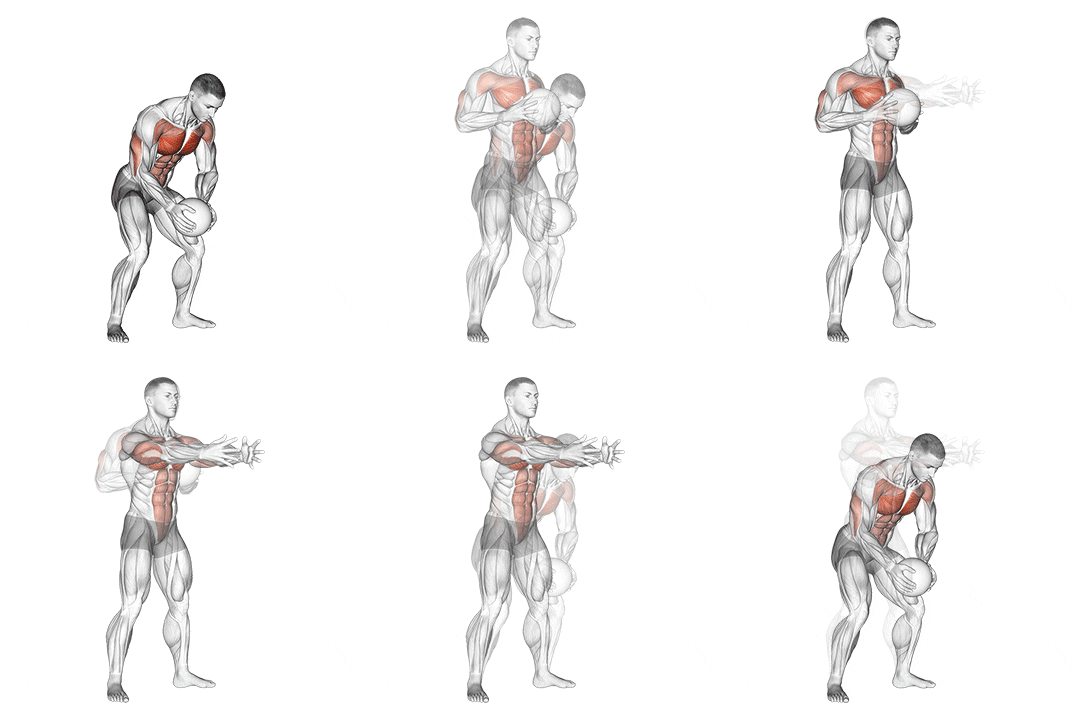
The medicine ball chest push is an exercise that targets the muscles of the chest, shoulders, and arms. It involves forcefully pushing a medicine ball away from the chest, mimicking a pushing motion. This exercise helps to develop upper body strength, power, and explosiveness. ## Instructions 1. Stand with your feet shoulder-width apart and hold a medicine ball with both hands at chest level. 2. Engage your core muscles and maintain an upright posture. 3. Bend your knees slightly and position the ball close to your chest. 4. In a controlled and explosive motion, push the medicine ball forward, extending your arms fully. 5. Keep your core engaged and maintain stability throughout the movement. 6. Allow the ball to travel a short distance before catching it or allowing it to rebound off a wall or partner. 7. Retrieve the ball and repeat the exercise for the desired number of repetitions. ## Variations - Alternating Chest Push: Instead of pushing the ball with both hands simultaneously, you can alternate the pushing motion, pushing the ball with one hand at a time while the other hand remains in a static position at the chest. - Seated Medicine Ball Chest Push: Sit on a stability ball or bench with your feet planted firmly on the ground. Hold the medicine ball at chest level and perform the chest push motion while maintaining a seated position. - Resistance Band Medicine Ball Chest Push: Attach a resistance band to a sturdy anchor point behind you. Hold the band with both hands, keeping it stretched across your chest. Perform the chest push motion against the resistance of the band. ## Muscles Worked - Pectoralis major (chest) - Anterior deltoids (front shoulders) - Triceps brachii - Core muscles (engaged for stability) ## Common Mistakes - Allowing the back to arch: Maintain a stable and neutral spine throughout the exercise. Avoid overarching your back or leaning backward excessively. - Poor control and form: Focus on maintaining control and proper form throughout the movement. Avoid using excessive momentum or jerky motions. - Using too heavy of a ball: Choose a medicine ball weight that allows you to perform the exercise with proper form and control. Using a ball that is too heavy can compromise your technique and increase the risk of injury. - Neglecting core engagement: Keep your core muscles engaged throughout the exercise to provide stability and enhance the power of the push. ## Safety Precautions - Choose an appropriate weight medicine ball for your strength and ability level. - Perform the exercise on a non-slip surface and ensure that you have enough space to perform the movement without any obstructions or hazards. - If you have any pre-existing shoulder or arm injuries, consult with a healthcare professional before attempting this exercise. - Warm up your muscles and joints before performing the exercise to prepare them for the movement. - If you experience any pain or discomfort during the exercise, stop immediately and seek advice from a fitness professional or healthcare provider. - Maintain control throughout the movement to prevent any strain or injury to the muscles or joints.
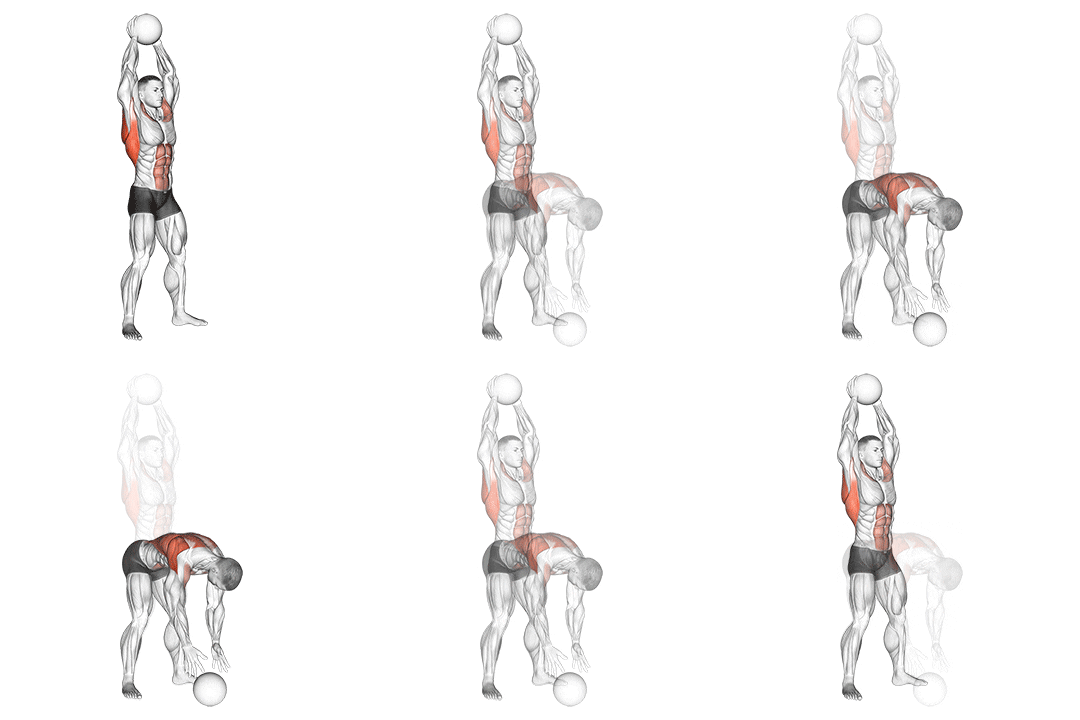
The medicine ball overhead slam is a dynamic exercise that primarily targets the core, shoulders, and upper body. It involves lifting a medicine ball overhead and forcefully slamming it down to the ground with full power and control. This exercise helps to develop power, strength, and explosiveness while engaging multiple muscle groups. ## Instructions 1. Start by standing with your feet shoulder-width apart, holding a medicine ball with both hands in front of your chest. 2. Engage your core and lift the medicine ball above your head, fully extending your arms. 3. As you bring the ball overhead, rise onto your toes to generate additional power. 4. With a controlled and forceful motion, slam the medicine ball down to the ground in front of you. 5. As you slam the ball, bend your knees and hinge at the hips, allowing the ball to hit the ground between your feet. 6. Maintain proper form and control throughout the exercise. 7. Retrieve the medicine ball by bending at the knees and hips, keeping your back straight. 8. Repeat the exercise for the desired number of repetitions. ## Variations - If you're new to the exercise or have limited upper body strength, you can start with a lighter medicine ball and gradually increase the weight as you progress. - Alternatively, you can perform the overhead slam with a slam ball or a sandbag instead of a medicine ball, depending on the equipment available. - For an added challenge, you can perform the exercise on an unstable surface like a Bosu ball or a foam mat, which will engage more stabilizer muscles. ## Muscles Worked - Core muscles (abdominals, obliques, and lower back) - Shoulders (deltoids) - Upper back (trapezius and rhomboids) - Chest (pectoral muscles) - Arms (biceps and triceps) ## Common Mistakes - Using too much lower back instead of engaging the core muscles: Make sure to activate your core and avoid arching your lower back excessively during the movement. - Allowing the shoulders to roll forward: Keep your shoulders pulled back and down throughout the exercise to maintain proper posture. - Using excessive momentum: Focus on generating power from your core and upper body, rather than relying solely on momentum. Control the movement both on the way up and during the slam. ## Safety Precautions - Start with a weight that you can comfortably handle to ensure proper form and prevent strain or injury. - Maintain a stable footing throughout the exercise to avoid losing balance. - Ensure you have enough space around you to perform the movement without obstruction. - It is advisable to consult with a qualified fitness professional before attempting new exercises, especially if you have any pre-existing medical conditions or injuries.
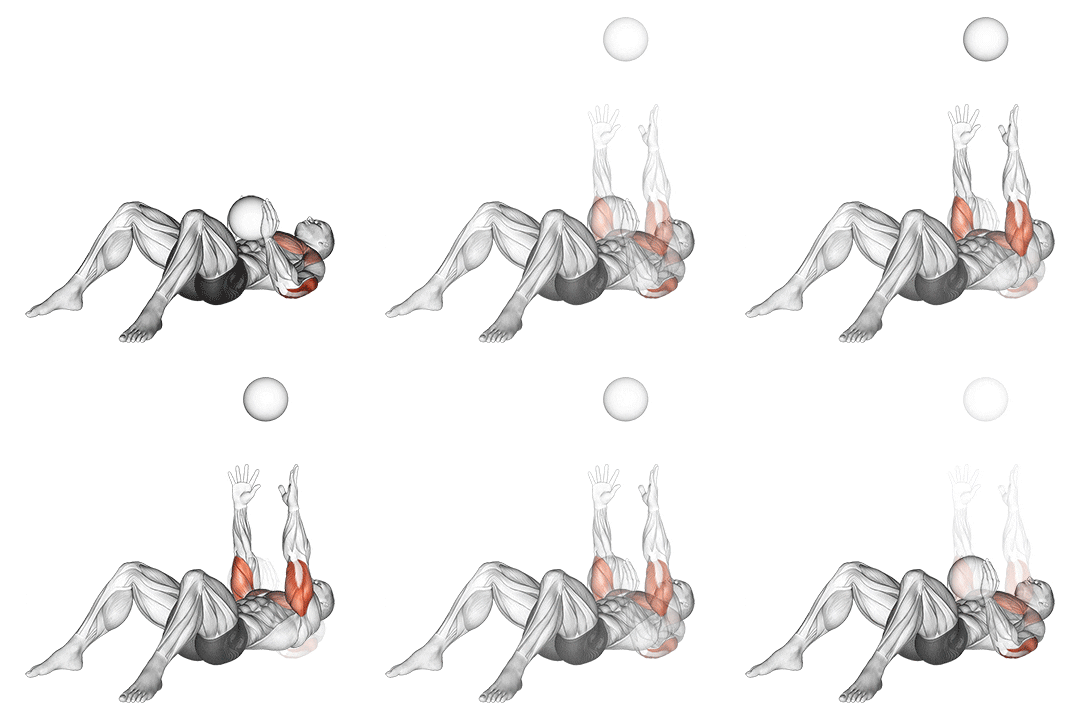
The medicine ball supine chest throw is an explosive exercise that targets the chest, shoulders, and triceps. It involves lying on your back and throwing a medicine ball upward from your chest with force. This exercise is great for developing upper body power, strength, and coordination. ## Instructions 1. Start by lying flat on your back on a mat or bench with your knees bent and feet flat on the ground. 2. Hold a medicine ball with both hands at your chest level, keeping your elbows out to the sides. 3. Engage your core and squeeze your shoulder blades together. 4. Press the medicine ball away from your chest, fully extending your arms. 5. Explosively throw the medicine ball upward towards the ceiling, aiming for maximum height and distance. 6. As you release the ball, push through your feet and extend your hips to generate power. 7. Catch the medicine ball or allow it to bounce off a wall or partner, depending on the equipment and setup. 8. Repeat the exercise for the desired number of repetitions. ## Variations - If you're new to the exercise or have limited upper body strength, you can start with a lighter medicine ball and gradually increase the weight as you progress. - An alternative variation is to perform the supine chest throw with a partner. Instead of catching the ball yourself, your partner can catch and return it to you for continuous throws. - If you don't have a partner or wall, you can perform the exercise outdoors and throw the medicine ball upward as high as possible, focusing on the explosive movement. ## Muscles Worked - Chest muscles (pectoral muscles) - Shoulders (deltoids) - Triceps ## Common Mistakes - Allowing the elbows to flare out excessively: Keep your elbows pointed out to the sides and avoid excessive inward or outward rotation during the movement. - Arching the lower back: Maintain a neutral spine throughout the exercise and avoid excessive arching of the lower back. - Using excessive wrist movement: Focus on using the chest, shoulders, and triceps to generate power rather than relying on excessive wrist movement. ## Safety Precautions - Start with a weight that you can comfortably handle to ensure proper form and prevent strain or injury. - Ensure you have enough space above you to perform the movement without obstruction. - Use a medicine ball with a texture or grip that allows you to securely hold it during the throw. - It is advisable to consult with a qualified fitness professional before attempting new exercises, especially if you have any pre-existing medical conditions or injuries.
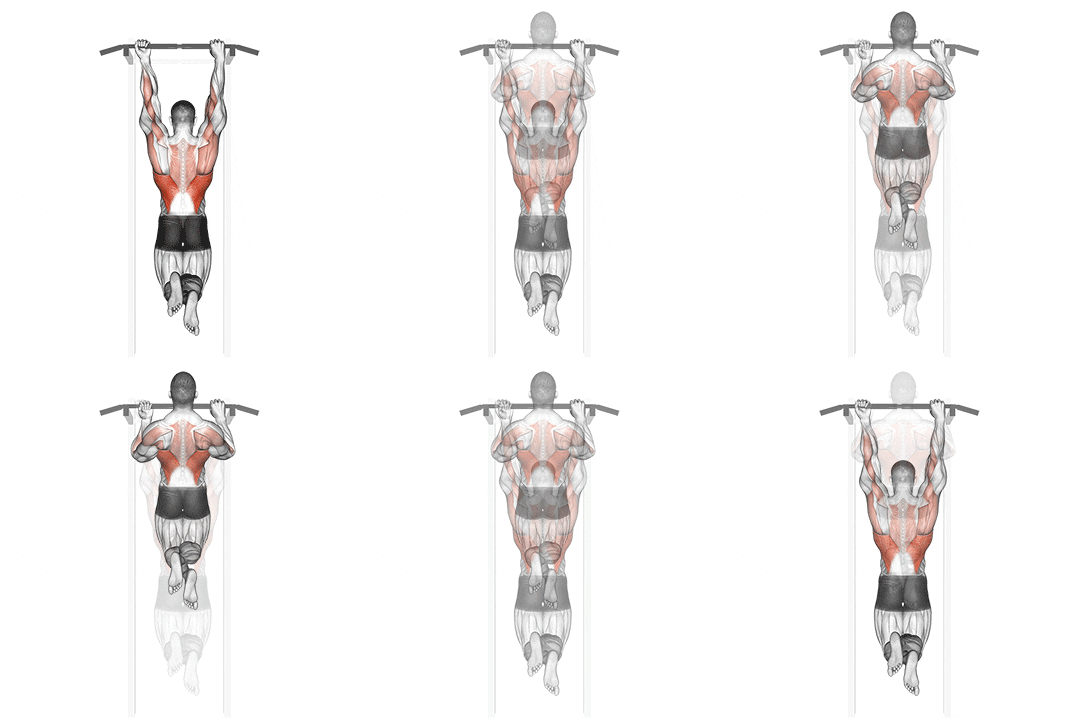
The mixed grip chin-up is an upper body exercise that primarily targets the back muscles, specifically the latissimus dorsi, biceps, and rear deltoids. It involves hanging from a pull-up bar and pulling your body upward while gripping the bar with one hand in an overhand grip and the other hand in an underhand grip. This exercise helps in building upper body strength, improving grip strength, and developing a well-rounded back. ## Instructions 1. Stand beneath a pull-up bar and reach up to grip it with one hand in an overhand (pronated) grip (palm facing away from you) and the other hand in an underhand (supinated) grip (palm facing towards you). 2. Hang from the bar with your arms fully extended and your shoulder blades pulled down and back. 3. Engage your core and initiate the movement by pulling your shoulder blades back and down. 4. Simultaneously pull yourself upward by bending your arms and squeezing your back muscles. 5. Continue pulling until your chin is above the bar and your elbows are flexed. 6. Pause briefly at the top of the movement and then lower yourself down with control until your arms are fully extended. 7. Repeat the exercise for the desired number of repetitions, alternating the grip position with each set. ## Variations - Assisted Mixed Grip Chin-Up: If you're unable to perform the exercise without assistance, you can use a resistance band looped around the pull-up bar or a chin-up assist machine to reduce the resistance and make the movement easier. - Weighted Mixed Grip Chin-Up: Once you've mastered the bodyweight version, you can add additional resistance by wearing a weighted vest or attaching a weight plate to a dip belt. - Neutral Grip Chin-Up: Instead of using an overhand-underhand grip, you can perform the exercise with both palms facing each other on parallel handles or using neutral grip attachments. ## Muscles Worked - Latissimus dorsi (lats) - Biceps brachii - Rear deltoids (posterior deltoids) - Rhomboids - Lower trapezius - Brachialis ## Common Mistakes - Relying too much on momentum: Avoid using excessive swinging or kicking to generate momentum. Focus on controlled and deliberate movements. - Not achieving full range of motion: Make sure to lower yourself fully until your arms are fully extended at the bottom and pull up until your chin is above the bar. - Rounded shoulders and poor posture: Maintain a neutral spine and avoid rounding your shoulders forward. Keep your chest up and shoulder blades pulled down and back throughout the exercise. ## Safety Precautions - Ensure that the pull-up bar is securely mounted and can support your body weight. - Warm up adequately before attempting chin-ups to prepare your muscles and joints. - If you have any shoulder or elbow injuries or conditions, consult with a qualified professional to determine if this exercise is suitable for you. - Start with a grip width that feels comfortable and gradually progress to wider or narrower grips as you become more proficient. - Maintain control throughout the exercise to prevent any sudden movements or accidents.