
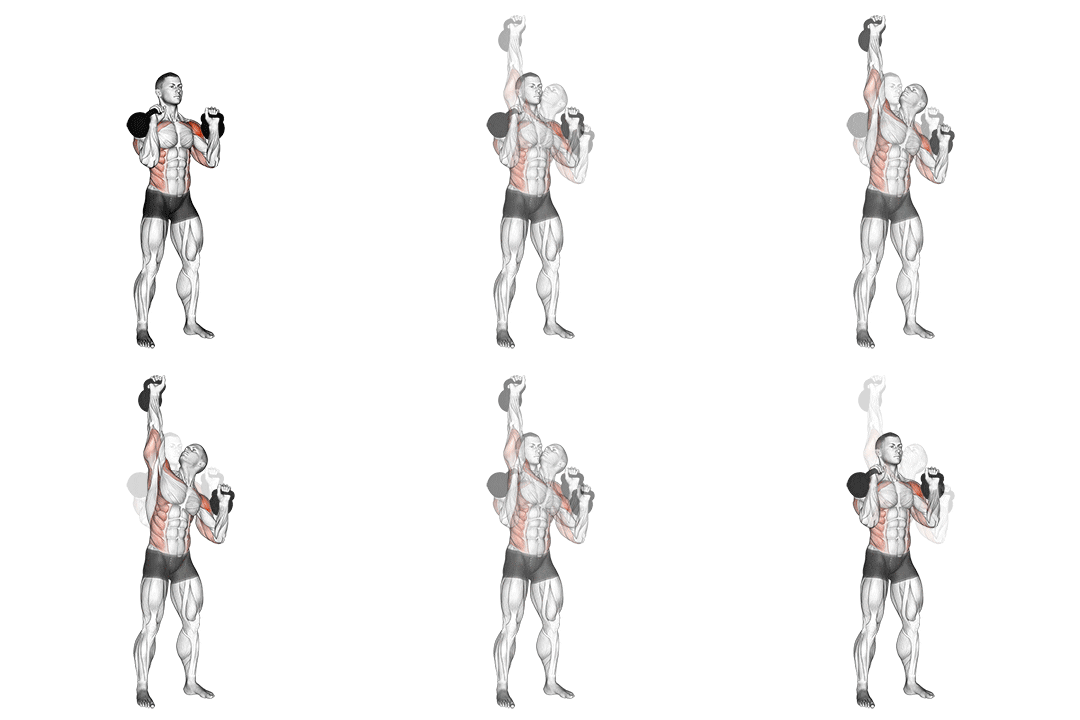
The kettlebell seesaw press is an exercise that targets the shoulders, triceps, and core muscles. It involves pressing two kettlebells overhead in an alternating fashion, creating a dynamic and challenging movement pattern. This exercise enhances shoulder stability, upper body strength, and coordination. ## Instructions 1. Begin by standing with your feet shoulder-width apart, holding a kettlebell in each hand at shoulder level, with your palms facing forward. 2. Engage your core and maintain an upright posture throughout the exercise. 3. Press one kettlebell upward, extending your arm fully while keeping the other kettlebell at the shoulder level. 4. Lower the kettlebell back down to the starting position while simultaneously pressing the other kettlebell upward. 5. Continue alternating the pressing motion in a seesaw-like fashion, maintaining a controlled and steady pace. 6. Focus on maintaining stability and proper form throughout the exercise. 7. Repeat for the desired number of repetitions on each side. ## Variations - Seated Seesaw Press: Perform the exercise while seated on a bench or chair to minimize the involvement of the lower body and focus solely on the upper body pressing motion. - Single-arm Seesaw Press: Instead of using two kettlebells, perform the exercise with one kettlebell at a time, alternating between arms. This variation allows for a greater emphasis on shoulder stability and unilateral strength development. ## Muscles Worked - Shoulders (deltoids) - Triceps (triceps brachii) - Core muscles (abdominals, obliques) ## Common Mistakes - Using excessive momentum: Avoid swinging or using momentum to lift the kettlebells. Maintain control and perform the exercise in a slow and controlled manner. - Arching the back: Keep your core engaged and maintain a neutral spine throughout the exercise. Avoid arching or overarching the lower back. - Lack of stability: Ensure a stable base by firmly planting your feet on the ground and maintaining proper posture. ## Safety Precautions - Choose kettlebell weights that allow you to maintain proper form and control. - Perform the exercise in a clear and open space to avoid any obstructions. - If you have any pre-existing shoulder or back issues, consult with a fitness professional before attempting this exercise. - Warm up your shoulder joints and muscles before performing the seesaw press. - Start with lighter weights and gradually increase the load as you become comfortable with the movement and your strength improves. - If you experience any pain or discomfort during the exercise, stop immediately and seek guidance from a qualified professional.
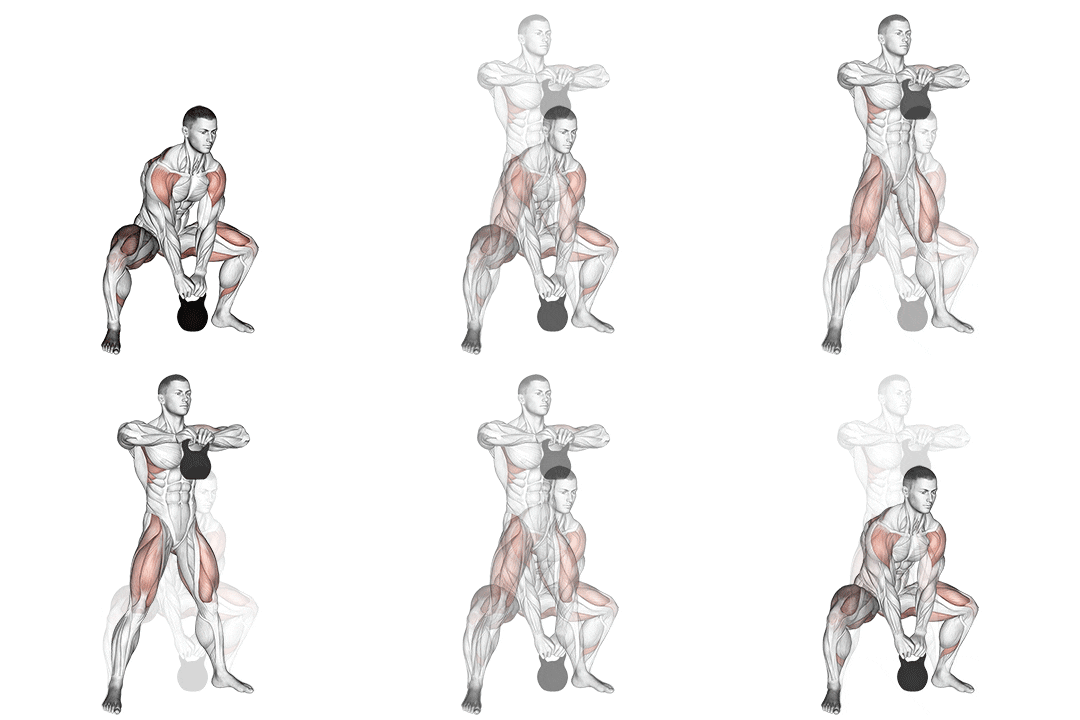
The kettlebell sumo high pull is a dynamic exercise that targets the muscles of the posterior chain, including the glutes, hamstrings, back, and shoulders. It involves a powerful hip hinge motion combined with an upward pulling movement, providing benefits such as strength development, explosive power, and improved posture. ## Instructions 1. Start by standing with your feet wider than shoulder-width apart in a sumo stance, toes slightly turned out. Place a kettlebell on the ground between your feet. 2. Hinge at the hips, bending your knees slightly, and reach down to grab the kettlebell with both hands using an overhand grip. 3. Keep your back straight, chest lifted, and core engaged throughout the exercise. 4. Begin the movement by driving through your heels, extending your hips and knees forcefully, and pulling the kettlebell upwards. 5. As you pull the kettlebell up, keep it close to your body, leading with your elbows and retracting your shoulder blades. 6. When the kettlebell reaches chest height, quickly reverse the motion and lower it back down to the starting position. 7. Repeat the movement for the desired number of repetitions. ## Variations - Single-Arm Kettlebell Sumo High Pull: Perform the exercise using only one arm at a time, alternating between arms. This variation challenges core stability and unilateral strength. - Kettlebell Sumo Deadlift High Pull: Instead of lowering the kettlebell back to the ground between repetitions, continue the movement by transitioning into a sumo deadlift high pull, pulling the kettlebell towards your chin. This variation adds an extra element of cardiovascular conditioning. ## Muscles Worked - Glutes - Hamstrings - Back (trapezius, rhomboids, erector spinae) - Shoulders (deltoids) - Core muscles (abdominals, obliques) ## Common Mistakes - Rounded back: Maintain a neutral spine and avoid rounding your lower back during the movement. Engage your core and keep your chest lifted. - Using the arms too much: Remember that the power for the movement comes from the hips and lower body. Focus on initiating the movement with a forceful hip extension rather than relying solely on the arms. - Lack of control: Maintain control throughout the exercise. Avoid using excessive momentum or swinging the kettlebell. ## Safety Precautions - Choose an appropriate kettlebell weight that allows you to maintain proper form and control. - Warm up your hip, shoulder, and back muscles before performing the exercise. - Keep a safe distance from other individuals or objects while performing the movement to prevent any accidents. - If you have any pre-existing back or hip issues, consult with a fitness professional before attempting this exercise. - Start with lighter weights and gradually increase the load as you become comfortable with the movement and your strength improves. - If you experience any pain or discomfort during the exercise, stop immediately and seek guidance from a qualified professional.
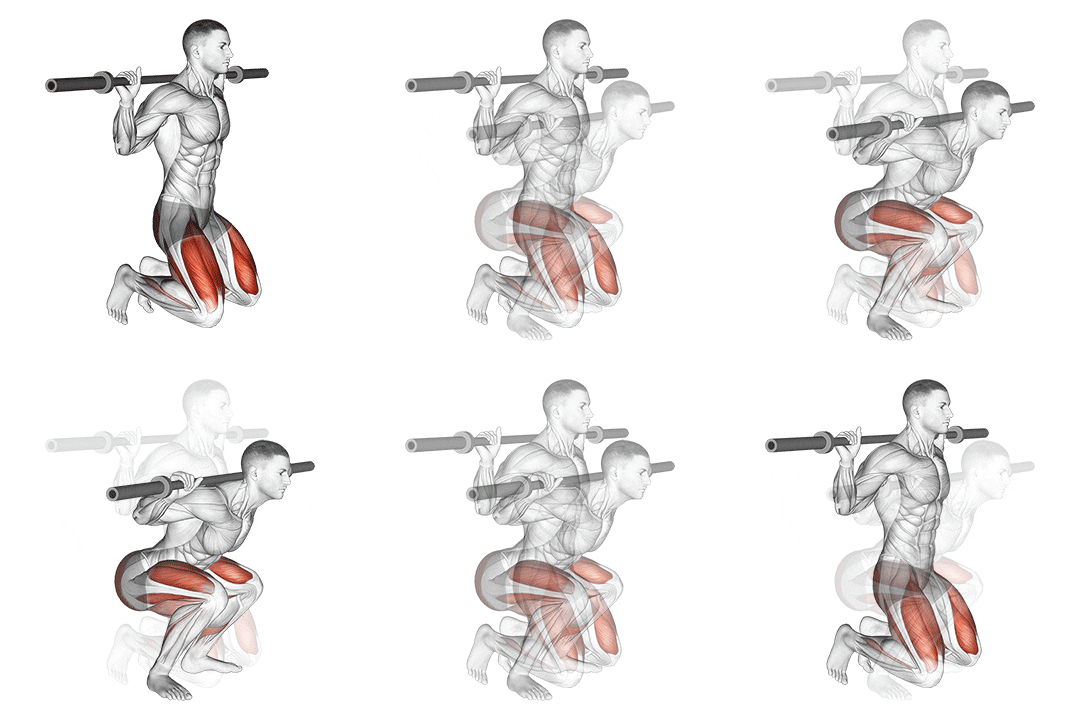
The Kneeling Jump Squat is an explosive lower body exercise that targets the quadriceps, hamstrings, glutes, and calves. It involves transitioning from a kneeling position to a jumping squat position, which helps improve lower body power, strength, and muscular endurance. ## Instructions 1. Start by kneeling on an exercise mat or a padded surface. 2. Position your knees hip-width apart and align your feet with your knees. 3. Engage your core muscles by drawing your navel towards your spine. 4. From the kneeling position, quickly and explosively push through your legs, extending your hips, knees, and ankles to jump vertically. 5. As you jump, swing your arms overhead for momentum and balance. 6. Land softly back into the kneeling position, controlling the descent. 7. Repeat the movement for the desired number of repetitions, maintaining a fluid and rhythmic motion. ## Variations - Kneeling Jump Squat with Medicine Ball: Hold a medicine ball or a weight plate against your chest while performing the exercise to increase resistance and challenge your upper body stability. - Single-Leg Kneeling Jump Squat: Perform the exercise with one leg lifted off the ground, alternating between legs. This variation increases the demand on the working leg and enhances balance and stability. ## Muscles Worked - Quadriceps (front thigh muscles) - Hamstrings (back thigh muscles) - Glutes (buttocks muscles) - Calves (gastrocnemius and soleus) ## Common Mistakes - Lack of control: Maintain control throughout the movement, especially during the landing phase, to prevent excessive stress on the joints. - Not using full range of motion: Ensure that you fully extend your hips, knees, and ankles during the jump and return to a kneeling position, completing the entire movement. - Poor landing technique: Land with soft knees to absorb the impact and avoid excessive stress on the joints. Avoid landing with locked knees or in a deep squat position. - Insufficient core engagement: Maintain a strong core throughout the exercise to provide stability and protect the lower back. ## Safety Precautions - Ensure you have sufficient space and a safe landing surface. - Start with lower jumps and gradually increase the height and intensity as your strength and technique improve. - Warm up adequately before attempting this exercise to prepare your muscles and joints. - If you have any knee or joint issues, it is advisable to consult with a healthcare professional before attempting this exercise. - Listen to your body and avoid the exercise if you experience any pain or discomfort. - Consider practicing proper landing techniques and strengthening exercises to support the knees and lower body joints. - If you're new to plyometric exercises or have any concerns, seek guidance from a qualified fitness professional.
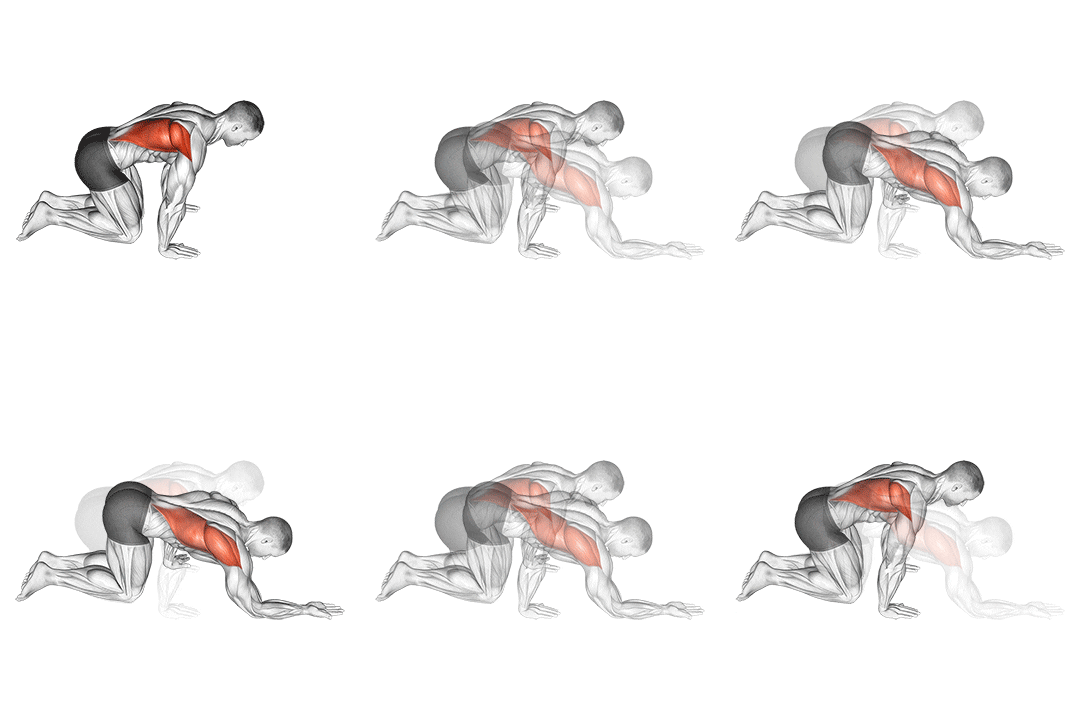
The Kneeling Lat Stretch is a stretching exercise that targets the latissimus dorsi muscles, commonly known as the lats. It helps improve shoulder and upper back flexibility, releases tension in the lats, and promotes better posture. ## Instructions 1. Start by kneeling on an exercise mat or a padded surface. 2. Position your knees hip-width apart and align your feet with your knees. 3. Extend your arms straight overhead, keeping them shoulder-width apart. 4. Slowly lower your upper body by bending at the waist and allowing your hands to reach forward. 5. Continue lowering your torso until you feel a stretch in your lats and the sides of your back. 6. Hold the stretch for 20-30 seconds while maintaining relaxed breathing. 7. Slowly return to the starting position by raising your upper body back up. 8. Repeat the stretch for the desired number of repetitions. ## Variations - Seated Lat Stretch: Perform the same stretching motion while sitting on a chair or bench, with your feet flat on the ground and your hands reaching forward. - Standing Lat Stretch: Stand with your feet hip-width apart and extend your arms overhead. Lean your upper body to the side, feeling the stretch in the opposite lat. Repeat on the other side. ## Muscles Worked - Latissimus dorsi (lats) - Teres major - Rhomboids - Lower trapezius ## Common Mistakes - Hunching the shoulders: Avoid shrugging or lifting the shoulders toward the ears during the stretch. Keep the shoulders relaxed and down. - Overarching the lower back: Maintain a neutral spine and avoid excessive arching of the lower back. Engage your core muscles to support proper alignment. - Holding the breath: Remember to breathe deeply and naturally throughout the stretch. Avoid holding your breath, which can cause tension and limit the effectiveness of the stretch. - Stretching too forcefully: Be gentle and avoid pulling or jerking movements. Allow the stretch to be gradual and controlled. ## Safety Precautions - Listen to your body and stretch within your comfortable range of motion. Avoid pushing yourself into a painful or uncomfortable position. - If you have any existing shoulder or back injuries, it is advisable to consult with a healthcare professional before attempting this stretch. - Take your time and perform the stretch slowly and mindfully to prevent sudden strain or injury. - Do not force the stretch beyond your comfort level. The stretch should feel challenging but not painful. - If you experience any sharp pain or discomfort, stop the stretch immediately and consult with a fitness professional or healthcare provider. - Incorporate this stretch into a well-rounded flexibility routine and combine it with other stretches targeting different muscle groups for overall flexibility and balance.
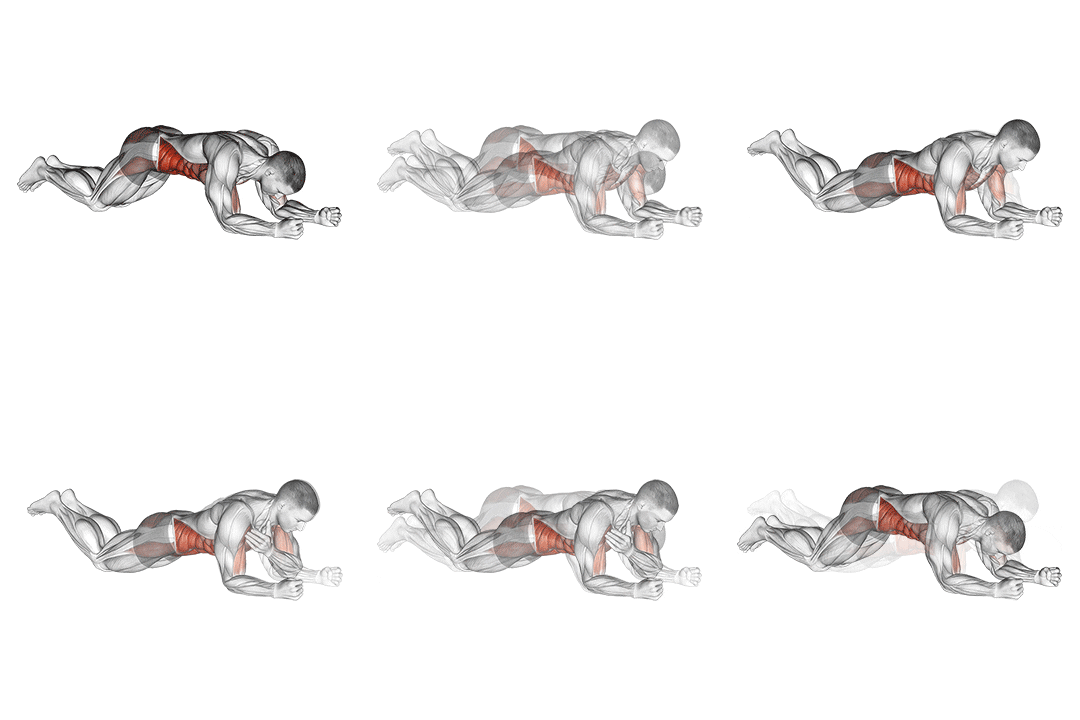
The Kneeling Plank Tap Shoulder is a core exercise that targets the abdominal muscles, particularly the rectus abdominis and the obliques. It also engages the muscles of the shoulders, chest, and arms. This exercise improves core stability, shoulder stability, and overall body control. ## Instructions 1. Start by kneeling on an exercise mat or a padded surface. 2. Place your hands on the mat directly under your shoulders, fingers pointing forward. 3. Extend your legs straight behind you, resting on the balls of your feet, creating a straight line from your head to your heels. 4. Engage your core muscles by drawing your navel towards your spine. 5. Keeping your body stable and straight, lift your right hand off the mat and tap your left shoulder. 6. Return your right hand to the mat and repeat the movement with your left hand, tapping your right shoulder. 7. Continue alternating sides, tapping each shoulder with the opposite hand. 8. Maintain proper form and alignment throughout the exercise, avoiding excessive sagging or lifting of the hips. 9. Repeat for the desired number of repetitions. ## Variations - Modified Kneeling Plank Tap: Perform the exercise from a modified plank position, with your knees on the ground instead of straightening your legs. - Plank Tap Knee-to-Elbow: Instead of tapping the shoulders, bring your right knee toward your left elbow and then alternate sides, engaging the obliques more intensely. ## Muscles Worked - Rectus abdominis (six-pack muscles) - Obliques (side abdominal muscles) - Shoulders (deltoids) - Chest (pectoral muscles) - Arms (triceps and biceps) - Core muscles (transverse abdominis, erector spinae) ## Common Mistakes - Sagging or lifting the hips: Maintain a straight line from your head to your heels throughout the exercise. Avoid sagging or lifting your hips, which can compromise the effectiveness of the exercise. - Rounding the back: Keep your back flat and avoid rounding or arching the spine. Engage your core muscles to maintain a stable and neutral spine. - Rushing the movement: Perform the exercise with control and focus on quality rather than speed. Avoid rushing the taps and maintain proper form throughout. - Allowing the head to drop: Keep your head aligned with your spine and avoid dropping it down or looking up excessively. ## Safety Precautions - If you have any wrist, shoulder, or back issues, it is advisable to consult with a healthcare professional before attempting this exercise. - Engage your core muscles to protect your lower back and maintain stability during the exercise. - Start with shorter sets and gradually increase the duration as you build strength and endurance. - If you experience any pain or discomfort, stop the exercise and consult with a fitness professional or healthcare provider. - Maintain a controlled breathing pattern throughout the exercise. Exhale as you tap the shoulder and inhale as you return to the starting position. - Focus on proper form and technique rather than the number of repetitions. Quality of movement is more important than quantity. - Incorporate this exercise into a well-rounded core workout routine and combine it with other exercises targeting different muscle groups for overall strength and stability.
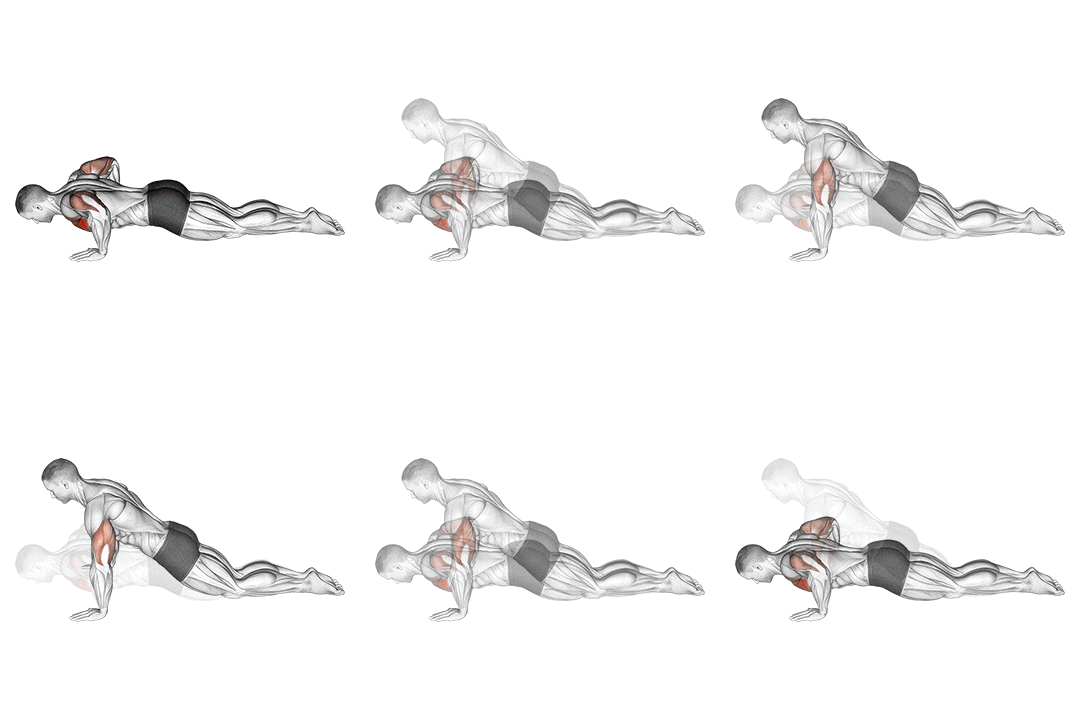
The Kneeling Push-Up is a modified version of the traditional push-up exercise. It targets the chest, shoulders, triceps, and core muscles. This exercise is suitable for individuals who are working on building upper body strength or are unable to perform a full push-up from a plank position. ## Instructions 1. Start by kneeling on an exercise mat or a padded surface. 2. Position your knees hip-width apart and align your feet with your knees. 3. Place your hands on the mat slightly wider than shoulder-width apart, fingers pointing forward or slightly outward. 4. Extend your arms fully and position your hands directly under your shoulders. 5. Engage your core muscles by drawing your navel towards your spine. 6. Lower your upper body towards the mat by bending your elbows, keeping them close to your sides. 7. Continue lowering until your chest is just above the ground or as far as your strength allows. 8. Pause for a moment in the lowered position. 9. Push through your hands to extend your arms and return to the starting position. 10. Maintain a straight line from your head to your knees throughout the exercise. 11. Repeat for the desired number of repetitions. ## Variations - Incline Push-Up: Perform the push-up with your hands placed on an elevated surface, such as a bench or step, to decrease the intensity and work on building strength gradually. - Decline Push-Up: Place your feet on an elevated surface, such as a bench or step, while keeping your hands on the ground. This variation increases the intensity by placing more emphasis on the upper chest and shoulders. - Diamond Push-Up: Position your hands close together in a diamond shape, with your thumbs and index fingers touching. This variation targets the triceps muscles more intensely. ## Muscles Worked - Chest (pectoral muscles) - Shoulders (deltoids) - Triceps (back of the upper arm) - Core muscles (transverse abdominis, rectus abdominis, obliques) ## Common Mistakes - Sagging or lifting the hips: Keep your body in a straight line from your head to your knees throughout the exercise. Avoid sagging or lifting your hips, which can compromise the effectiveness of the exercise. - Elbows flaring out: Keep your elbows close to your sides as you lower your body. Avoid letting your elbows flare out to the sides, as it can put unnecessary stress on the shoulder joints. - Rushing the movement: Perform the exercise with control and focus on proper form. Avoid rushing the repetitions and maintain a steady pace. - Lack of full range of motion: Lower your body until your chest is just above the ground or as far as your strength allows. Avoid shortening the range of motion by not lowering yourself enough. ## Safety Precautions - If you have any shoulder, wrist, or lower back issues, it is advisable to consult with a healthcare professional before attempting this exercise. - Engage your core muscles to maintain stability and protect your lower back during the exercise. - Start with a comfortable number of repetitions and gradually increase the intensity and volume as your strength improves. - If you experience any pain or discomfort, stop the exercise and consult with a fitness professional or healthcare provider. - Maintain a controlled breathing pattern throughout the exercise. Exhale as you push yourself up and inhale as you lower your body. - Focus on maintaining proper form and technique rather than the number of repetitions. Quality of movement is more important than quantity. - Incorporate this exercise into a well-rounded upper body workout routine and combine it with other exercises targeting different muscle groups for overall strength and balance.
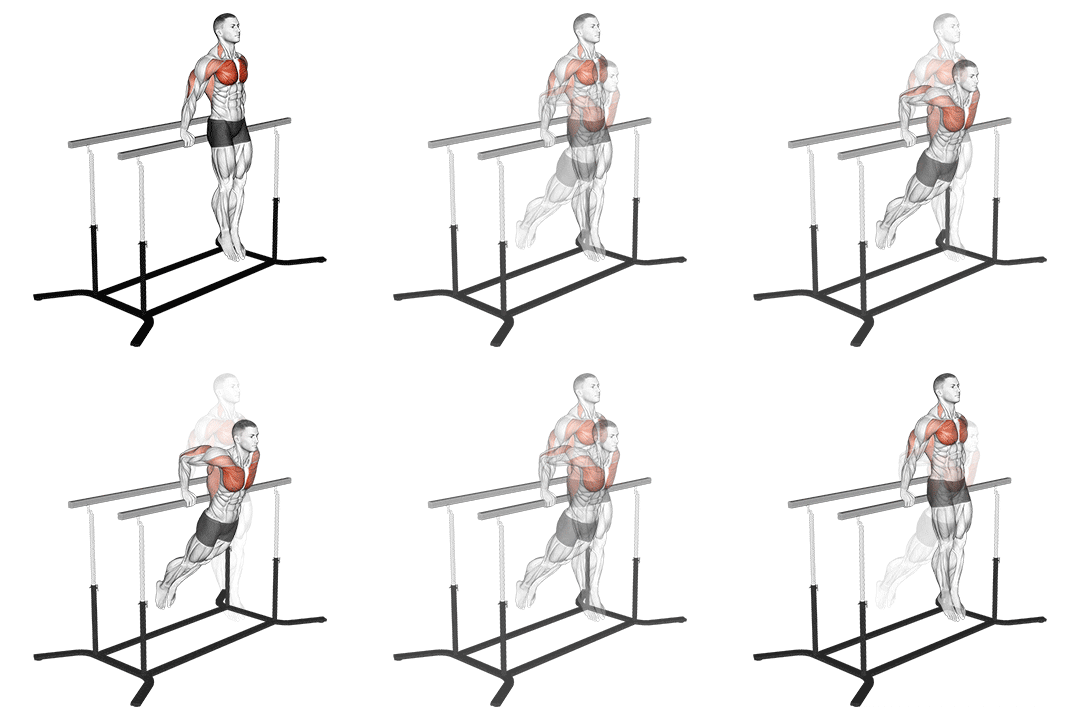
Korean dips, also known as Russian dips or Russian push-ups, are a compound bodyweight exercise that primarily targets the triceps, chest, shoulders, and core muscles. This exercise involves dipping your body between two parallel bars while keeping your legs straight and suspended in the air. Korean dips help to develop upper body strength, stability, and muscular endurance. ## Instructions 1. Find a set of parallel bars that are sturdy and at an appropriate height for your skill level. Gymnastics or dip bars are ideal, but you can also use dip stations or parallel bars at a park. 2. Stand between the bars and place your hands on the bars with an overhand grip, slightly wider than shoulder-width apart. 3. Lift your feet off the ground and extend your legs in front of you, crossing your ankles. 4. Lower your body by bending your elbows, keeping them pointed back and close to your sides. Lower until your shoulders are below your elbows, aiming to create a 90-degree angle with your arms. 5. Pause briefly at the bottom of the movement and then push through your palms to straighten your arms and lift your body back up to the starting position. 6. Keep your core engaged throughout the exercise and maintain a controlled and smooth motion. 7. Repeat for the desired number of repetitions. ## Variations - Assisted Korean Dips: If you're unable to perform the exercise with your legs straight and suspended, you can bend your knees and rest your feet on a stable surface, such as a bench or step, to provide assistance. - Band-Assisted Korean Dips: Attach resistance bands to the parallel bars and loop them around your feet to reduce the load and provide assistance as you perform the dip. - Weighted Korean Dips: Once you have built sufficient strength, you can add additional resistance by wearing a weighted vest or placing a weight plate on your lap. ## Muscles Worked - Triceps (back of the upper arm) - Chest (pectoral muscles) - Shoulders (deltoids) - Core muscles (transverse abdominis, rectus abdominis, obliques) - Stabilizer muscles of the upper body ## Common Mistakes - Allowing elbows to flare out: Keep your elbows pointed back and close to your sides throughout the movement. Avoid letting your elbows flare out to the sides, as it can put excessive stress on the shoulder joints. - Hunching shoulders or rounding the back: Maintain good posture throughout the exercise. Keep your shoulders down and back, and avoid rounding or hunching your upper back. - Lack of full range of motion: Aim to lower your body until your shoulders are below your elbows to achieve a full range of motion. Avoid shortening the range of motion by not lowering yourself enough. - Using momentum or swinging: Perform the exercise with control and avoid using momentum or swinging motions to lift your body. Focus on engaging the target muscles and maintaining proper form. ## Safety Precautions - Ensure that the parallel bars or dip station you use are stable and secure before attempting the exercise. - Start with a comfortable number of repetitions and gradually increase the intensity and volume as your strength improves. - If you have any shoulder, wrist, or elbow issues, it is advisable to consult with a healthcare professional before attempting this exercise. - Engage your core muscles to maintain stability and protect your lower back during the exercise. - If you experience any pain or discomfort, stop the exercise and consult with a fitness professional or healthcare provider. - Maintain a controlled breathing pattern throughout the exercise. Exhale as you push yourself up and inhale as you lower your body. - Focus on maintaining proper form and technique rather than the number of repetitions. Quality of movement is
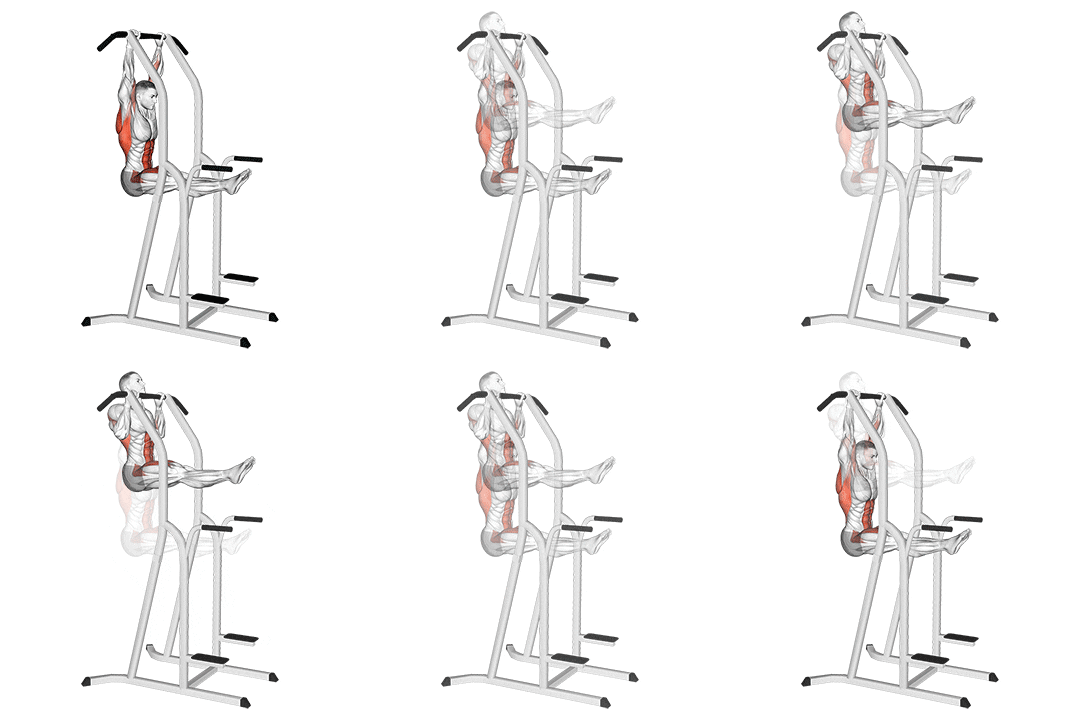
The L-Pull-Up is a challenging variation of the traditional pull-up exercise. It primarily targets the muscles of the upper body, particularly the back, biceps, and shoulders. The exercise also engages the core muscles, providing an additional stability and strength challenge. ## Instructions 1. Start by gripping an overhead bar with your palms facing away from you, slightly wider than shoulder-width apart. 2. Hang from the bar with your arms fully extended and your feet off the ground. 3. Engage your core muscles and lift your legs in front of you, forming an "L" shape with your body. Keep your legs straight and parallel to the ground. 4. Begin the pull-up movement by squeezing your shoulder blades together and pulling your body upward. Focus on using your back and arm muscles to pull yourself up, rather than relying solely on your arms. 5. Continue pulling until your chin is above the level of the bar. 6. Slowly lower yourself back to the starting position with control, fully extending your arms and maintaining the "L" shape with your legs throughout the movement. 7. Repeat for the desired number of repetitions. ## Variations - Assisted L-Pull-Up: If you're unable to perform a full L-Pull-Up yet, you can use resistance bands or an assisted pull-up machine to provide assistance during the movement. - L-Sit Pull-Up: Instead of keeping your legs straight in front of you, you can perform the exercise with your knees bent, bringing your thighs toward your chest, which creates an "L" shape with your body. - Weighted L-Pull-Up: Once you have mastered the L-Pull-Up, you can add additional resistance by using a weight belt or holding a dumbbell between your feet. ## Muscles Worked - Latissimus dorsi (back muscles) - Biceps brachii (biceps) - Rhomboids - Trapezius - Deltoids (shoulders) - Core muscles (engaged for stability) ## Common Mistakes - Using momentum: Avoid using momentum or swinging your body to complete the exercise. This reduces the effectiveness of the movement and increases the risk of injury. Focus on controlled and deliberate movements. - Not engaging the core: It's important to actively engage your core muscles throughout the exercise to maintain the "L" shape and stability. - Shrugging the shoulders: Avoid shrugging your shoulders toward your ears. Instead, keep your shoulders down and back, focusing on the pulling motion with your back muscles. - Not fully extending the arms: Make sure to fully extend your arms at the starting position and lower yourself with control to maintain proper form. ## Safety Precautions - Ensure that the overhead bar you are using is secure and can support your body weight. - Warm up properly before attempting L-Pull-Ups to prepare your muscles and joints. - If you're a beginner or have any pre-existing injuries or conditions, consult with a fitness professional before attempting this exercise. - Start with a level of difficulty that matches your fitness level, gradually increasing intensity as you become stronger. - If you experience pain or discomfort during the exercise, stop immediately and seek medical advice if needed.
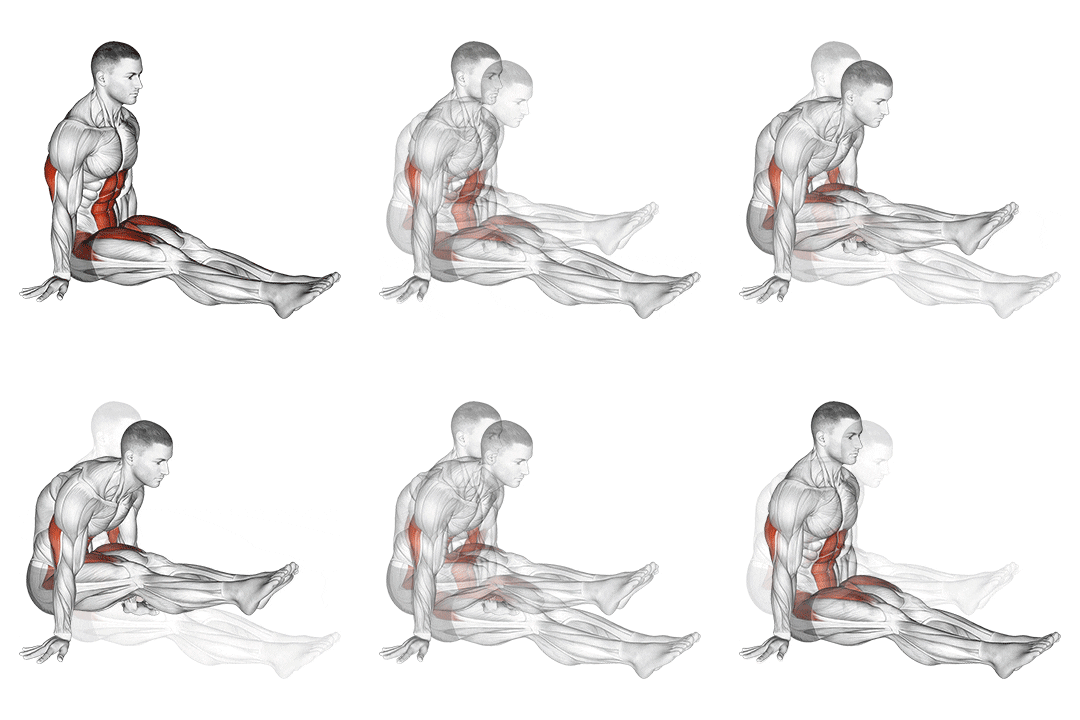
The L-Sit on the floor is a challenging bodyweight exercise that targets the core muscles, particularly the abs and hip flexors. It also engages the muscles of the arms, shoulders, and lower back. The L-Sit on the floor helps improve core strength, stability, and overall body control. ## Instructions 1. Sit on the floor with your legs extended in front of you. 2. Place your hands on the floor, slightly wider than shoulder-width apart, with your fingers pointing forward. 3. Press through your palms and lift your body off the ground, keeping your legs straight. 4. Engage your core muscles and lift your legs off the ground, raising them to a position parallel to the floor. Your body should form an "L" shape. 5. Maintain a strong and upright posture, with your shoulders down and away from your ears. 6. Hold the L-Sit position for the desired duration, aiming to keep your legs lifted and parallel to the ground. 7. Slowly lower your legs and lower your body back to the starting position. 8. Repeat for the desired number of repetitions or hold for a specific duration. ## Variations - Tuck L-Sit: If you find the L-Sit on the floor too challenging, you can start with a tuck L-Sit. Instead of extending your legs, bend your knees and bring them closer to your chest while maintaining the lifted position. - One-Leg L-Sit: Begin by lifting one leg at a time while keeping the other leg extended. Alternate between legs or hold the position with one leg lifted for a specific duration before switching. - L-Sit on Parallel Bars or Dip Bars: If available, you can perform the L-Sit on parallel bars or dip bars. The raised position provides additional space for the legs and may make the exercise slightly easier. ## Muscles Worked - Rectus abdominis (abs) - Hip flexors - Quadriceps - Deltoids (shoulders) - Triceps - Lower back muscles ## Common Mistakes - Allowing the shoulders to shrug: Avoid raising your shoulders towards your ears. Keep them down and away from your ears throughout the exercise. - Sagging or rounding the lower back: Maintain a straight and neutral spine. Avoid rounding your lower back or allowing it to sag, as it can put unnecessary strain on the spine. - Not engaging the core: Focus on actively engaging your core muscles throughout the exercise to maintain stability and proper form. - Letting the legs drop: Strive to keep your legs lifted and parallel to the ground. Avoid allowing them to drop or sag, as it reduces the effectiveness of the exercise. ## Safety Precautions - Make sure you have adequate wrist and shoulder mobility before attempting the L-Sit on the floor. - If you have any wrist or shoulder pain or injuries, consult with a fitness professional or healthcare provider before attempting this exercise. - Start with shorter holds and gradually increase the duration as you build strength and endurance. - Stop the exercise if you experience pain or discomfort, and seek medical advice if necessary. - Warm up properly before attempting the L-Sit to prepare your muscles and joints. - If you have any pre-existing conditions or concerns, consult with a professional to determine if this exercise is suitable for you.