
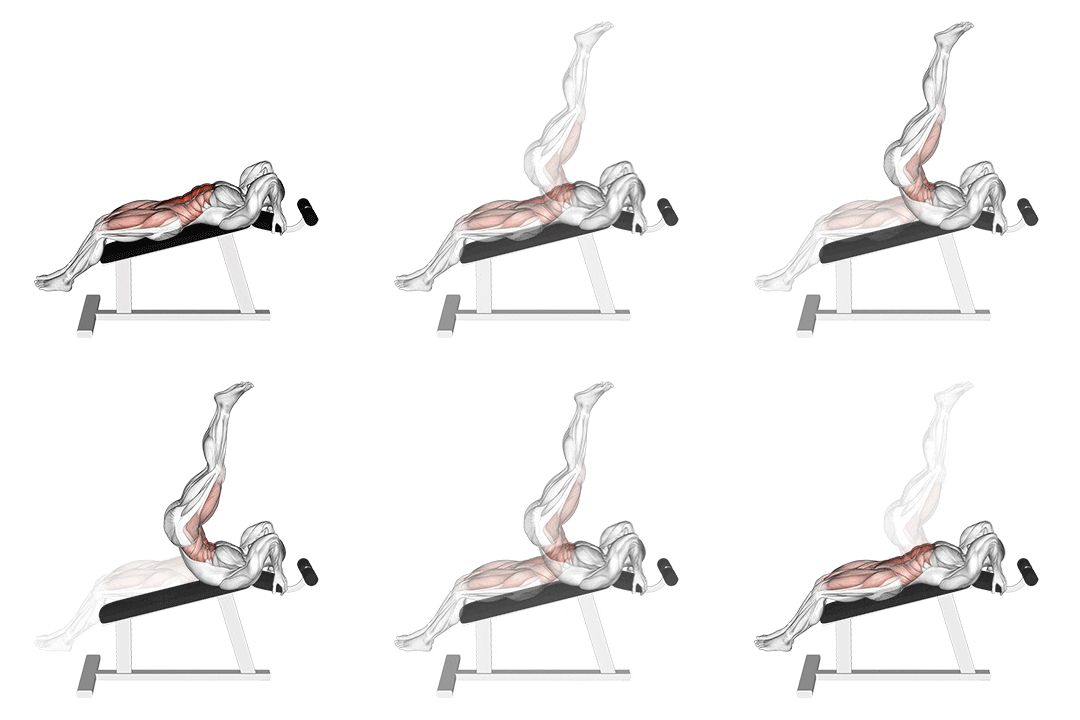
The incline leg hip raise with straight legs is an exercise that targets the lower abdominal muscles, specifically the hip flexors and the rectus abdominis. By performing this exercise on an incline bench or surface, you increase the challenge and engage the core muscles to stabilize your body. This exercise helps to strengthen the lower abs and improve overall core stability. ## Instructions 1. Set up an incline bench or surface at an angle of approximately 30-45 degrees. 2. Lie on the incline bench with your upper back and head supported, and your feet facing the ceiling. 3. Extend your legs fully, keeping them together and straight. 4. Place your hands by your sides or grip the sides of the bench for support. 5. Engage your core muscles by drawing your navel towards your spine. 6. Keeping your legs straight and together, lift them up towards the ceiling while maintaining control. 7. Continue to raise your legs until they are perpendicular to the floor or until you feel a contraction in your lower abs. 8. Pause for a moment at the top of the movement, focusing on squeezing your lower abs. 9. Slowly lower your legs back down to the starting position with control. 10. Repeat for the desired number of repetitions. ## Variations - Bent Knee Incline Leg Hip Raise: If straight leg raises are too challenging, you can modify the exercise by bending your knees at a 90-degree angle. Perform the same movement, but with your knees bent throughout the exercise. - Decline Leg Hip Raise: To increase the difficulty, perform the exercise on a decline bench or surface with your head positioned lower than your feet. This variation adds more resistance and engages the lower abs to a greater degree. ## Muscles Worked - Primary muscles: Lower abdominal muscles (rectus abdominis), hip flexors - Secondary muscles: Core muscles, including the obliques and transverse abdominis ## Common Mistakes - Using momentum: Avoid using momentum or swinging your legs to lift them up. Focus on engaging your core muscles and performing the movement with control. - Arching the back: Keep your lower back pressed against the incline bench throughout the exercise. Avoid arching or lifting your back off the bench, as it can strain the lower back. - Raising the legs too high: Lift your legs until they are perpendicular to the floor or until you feel a contraction in your lower abs. Avoid lifting the legs beyond this point, as it can lead to excessive strain on the hip flexors and lower back. ## Safety Precautions - If you have any pre-existing back or hip issues, or if you experience pain or discomfort during the exercise, consult with a healthcare professional before attempting the incline leg hip raise. - Start with a lower incline angle and gradually increase the incline as you gain strength and stability. - Maintain a slow and controlled movement throughout the exercise to prevent injury and engage the target muscles effectively. - If you have difficulty keeping your legs straight, you can slightly bend your knees while performing the exercise until you build the necessary flexibility and strength. - Listen to your body and modify the exercise as needed to suit your fitness level and capabilities.
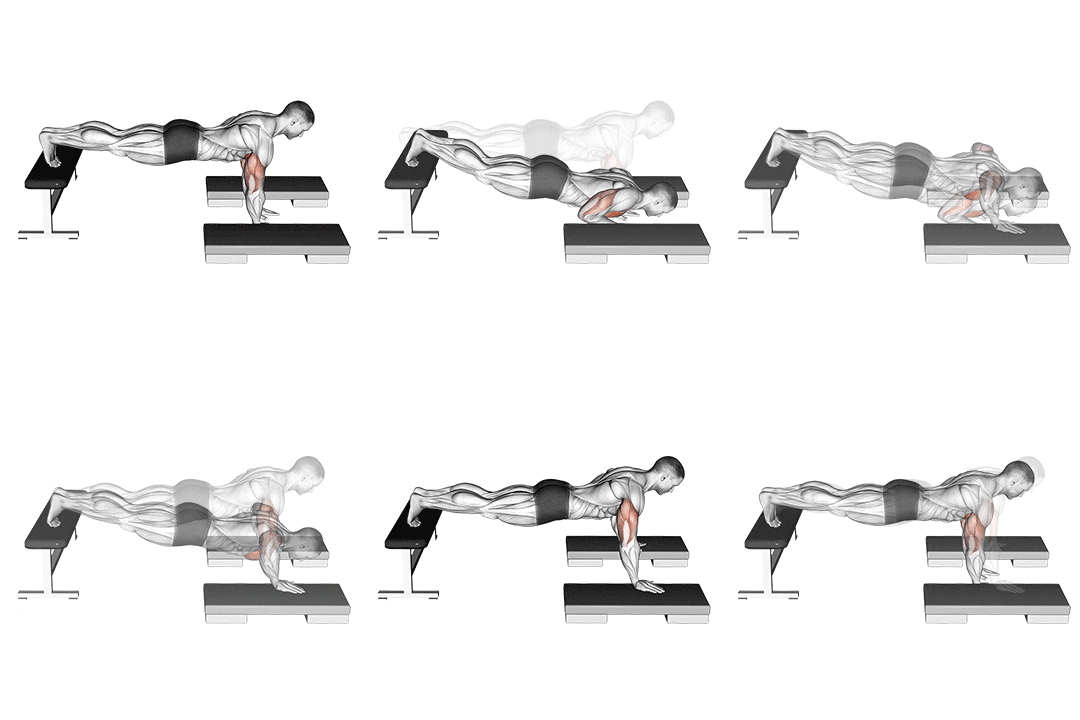
The incline push-up depth jump is a challenging plyometric exercise that combines the upper body strengthening benefits of incline push-ups with the explosive power of depth jumps. This exercise targets the muscles of the chest, shoulders, triceps, and core while also improving lower body power and coordination. It is an advanced exercise that requires good upper body strength and proper jumping mechanics. ## Instructions 1. Set up an incline surface such as an elevated platform, bench, or step. 2. Assume a push-up position with your hands slightly wider than shoulder-width apart on the incline surface. Your body should be in a straight line from head to heels. 3. Perform a push-up by lowering your chest towards the incline surface while keeping your elbows close to your sides. 4. Push through your palms and extend your arms to return to the starting push-up position. 5. Once in the starting position, immediately jump off the incline surface, propelling your body upward and forward. 6. As you land, bend your knees and absorb the impact by landing softly with a slight bend in your hips, knees, and ankles. 7. Immediately reset and get back into the push-up position on the incline surface. 8. Repeat the sequence, performing another push-up followed by a depth jump. 9. Continue alternating between the incline push-up and depth jump for the desired number of repetitions. ## Variations - Modified Incline Push-Up Depth Jump: If the exercise is too challenging, you can modify it by performing the incline push-ups on your knees or using a lower incline surface. - Depth Jump to Incline Push-Up: This variation reverses the sequence. Start with a depth jump and then immediately transition into an incline push-up. This variation emphasizes the explosive power of the lower body. - Box Jump to Incline Push-Up: Replace the depth jump with a box jump, where you jump onto a box or platform and then transition into an incline push-up. This variation further challenges lower body power and coordination. ## Muscles Worked - Primary muscles: Chest (pectoral muscles), shoulders (deltoids), triceps, core muscles - Secondary muscles: Glutes, quadriceps, hamstrings, calves ## Common Mistakes - Poor landing mechanics: When performing the depth jump, ensure that you land with a soft landing, bending your knees and absorbing the impact to protect your joints. - Incomplete range of motion: During the incline push-up, lower your chest towards the incline surface until your arms are at approximately 90 degrees or slightly lower to maximize the engagement of the target muscles. - Lack of control: Maintain control throughout the exercise. Avoid rushing through the movements, as it can compromise form and increase the risk of injury. ## Safety Precautions - This exercise is advanced and requires a good level of upper body strength, lower body power, and coordination. Ensure you have mastered regular push-ups and depth jumps before attempting this combination exercise. - Choose an appropriate incline surface and box height based on your fitness level and capabilities. Start with lower heights and progress gradually. - Warm up thoroughly before attempting the incline push-up depth jump to prepare your muscles and joints for the explosive movements. - Ensure proper landing mechanics during the depth jump to minimize the risk of joint stress. Focus on landing softly and absorbing the impact through your muscles. - Listen to your body and adjust the exercise as needed to suit your fitness level. If you experience pain or discomfort, discontinue the exercise and consult with a healthcare professional.
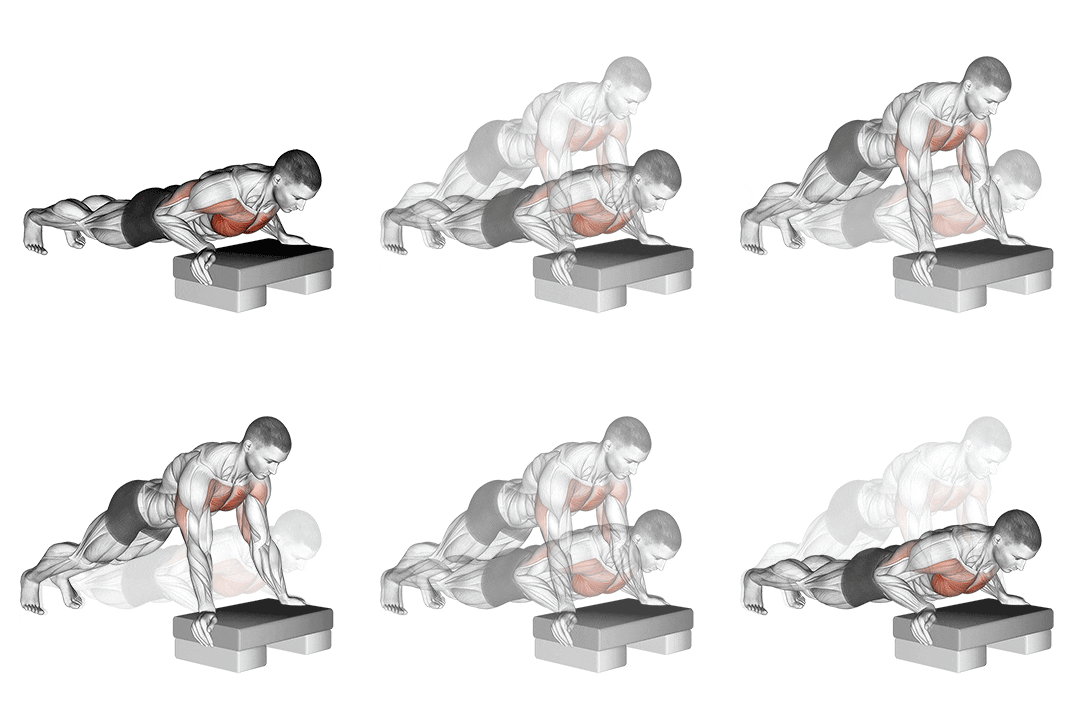
The incline push-up is a variation of the traditional push-up exercise that targets the muscles of the chest, shoulders, and triceps. In this exercise, the upper body is elevated by using an incline surface such as a bench, step, or elevated platform. The incline push-up is an excellent option for individuals who are working on building upper body strength, especially those who may find regular push-ups too challenging. It allows for gradual progression and helps develop proper push-up form. ## Instructions 1. Set up an incline surface such as a bench, step, or elevated platform. 2. Stand facing the incline surface and place your hands slightly wider than shoulder-width apart on the surface. 3. Step back with your feet until your body is in a straight line from head to heels, with your arms extended. 4. Engage your core muscles by drawing your navel toward your spine. 5. Lower your body towards the incline surface by bending your elbows, keeping them close to your sides. 6. Continue lowering your body until your chest is just above the surface or until you feel a comfortable stretch in your chest and shoulders. 7. Pause for a moment in the bottom position, maintaining control and tension in your muscles. 8. Push through your palms and extend your arms to return to the starting position. 9. Repeat the movement for the desired number of repetitions. ## Variations - Decline Push-Up: Place your feet on an elevated surface, such as a bench or step, while keeping your hands on the ground. This variation increases the emphasis on the shoulders and upper chest. - Knee Push-Up: Perform the exercise with your knees on the ground instead of your feet. This modification reduces the amount of body weight you have to lift and is suitable for individuals who are still building upper body strength. - Wide Grip Incline Push-Up: Place your hands wider than shoulder-width apart on the incline surface. This variation targets the chest muscles to a greater extent. ## Muscles Worked - Primary muscles: Chest (pectoral muscles), shoulders (deltoids), triceps - Secondary muscles: Core muscles (abdominals, lower back), biceps, upper back muscles (rhomboids), stabilizer muscles of the shoulder and scapula ## Common Mistakes - Arching or sagging the lower back: Maintain a straight line from head to heels throughout the exercise. Avoid arching or sagging your lower back, as it can lead to improper form and potential strain on the lower back. - Flaring the elbows: Keep your elbows at a slight angle (approximately 45 degrees) from your body rather than letting them flare out to the sides. This helps target the chest and triceps more effectively. - Rushing the movement: Maintain control throughout the exercise, both during the descent and ascent. Avoid rushing or bouncing, as it diminishes the effectiveness of the exercise and increases the risk of injury. ## Safety Precautions - Choose an appropriate incline surface that suits your fitness level and capabilities. Start with a moderate incline and gradually increase the difficulty as you gain strength. - Maintain proper form and alignment throughout the exercise to prevent strain on the joints and muscles. - If you have any pre-existing shoulder or wrist issues, or if you experience pain or discomfort during the exercise, consult with a healthcare professional before attempting incline push-ups. - Warm up your upper body with dynamic stretching or light exercises before performing incline push-ups to prepare your muscles and joints for the movement. - Listen to your body and adjust the exercise as needed. If you experience pain or discomfort, reduce the incline or choose a different variation that suits your abilities.
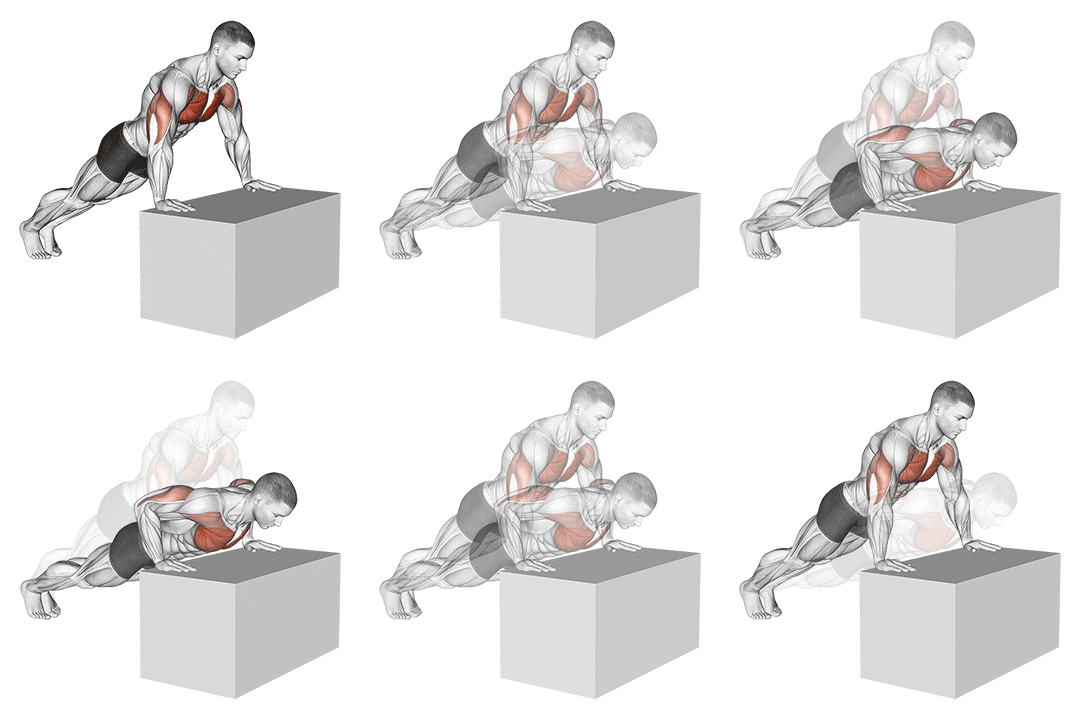
The incline push-up on a box is a variation of the traditional push-up exercise that targets the muscles of the chest, shoulders, and triceps. This exercise is performed with the upper body elevated on a box or platform, which increases the challenge and intensity of the movement. Incline push-ups on a box provide a great workout for building upper body strength and stability. ## Instructions 1. Place a sturdy box or platform on the ground. 2. Stand facing the box and position your hands on the edge of the box, slightly wider than shoulder-width apart. 3. Step back with your feet, extending your legs behind you, so your body forms a straight line from head to heels. 4. Engage your core muscles by drawing your navel toward your spine. 5. Lower your chest towards the box by bending your elbows, keeping them close to your sides. 6. Continue lowering your body until your chest is just above the box or until you feel a comfortable stretch in your chest and shoulders. 7. Pause for a moment in the bottom position, maintaining control and tension in your muscles. 8. Push through your palms and extend your arms to return to the starting position. 9. Repeat the movement for the desired number of repetitions. ## Variations - Decline Push-Up (on Box): Place your feet on a higher box or platform, while keeping your hands on the lower box. This variation increases the emphasis on the shoulders and upper chest. - Knee Push-Up (on Box): Perform the exercise with your knees on the ground instead of your feet. This modification reduces the amount of body weight you have to lift and is suitable for individuals who are still building upper body strength. ## Muscles Worked - Primary muscles: Chest (pectoral muscles), shoulders (deltoids), triceps - Secondary muscles: Core muscles (abdominals, lower back), biceps, upper back muscles (rhomboids), stabilizer muscles of the shoulder and scapula ## Common Mistakes - Arching or sagging the lower back: Maintain a straight line from head to heels throughout the exercise. Avoid arching or sagging your lower back, as it can lead to improper form and potential strain on the lower back. - Flaring the elbows: Keep your elbows at a slight angle (approximately 45 degrees) from your body rather than letting them flare out to the sides. This helps target the chest and triceps more effectively. - Rushing the movement: Maintain control throughout the exercise, both during the descent and ascent. Avoid rushing or bouncing, as it diminishes the effectiveness of the exercise and increases the risk of injury. ## Safety Precautions - Choose a sturdy and stable box or platform to perform the exercise on, ensuring it can support your body weight. - Maintain proper form and alignment throughout the exercise to prevent strain on the joints and muscles. - If you have any pre-existing shoulder or wrist issues, or if you experience pain or discomfort during the exercise, consult with a healthcare professional before attempting incline push-ups on a box. - Warm up your upper body with dynamic stretching or light exercises before performing incline push-ups to prepare your muscles and joints for the movement. - Listen to your body and adjust the exercise as needed. If you experience pain or discomfort, reduce the height of the box or choose a different variation that suits your abilities.
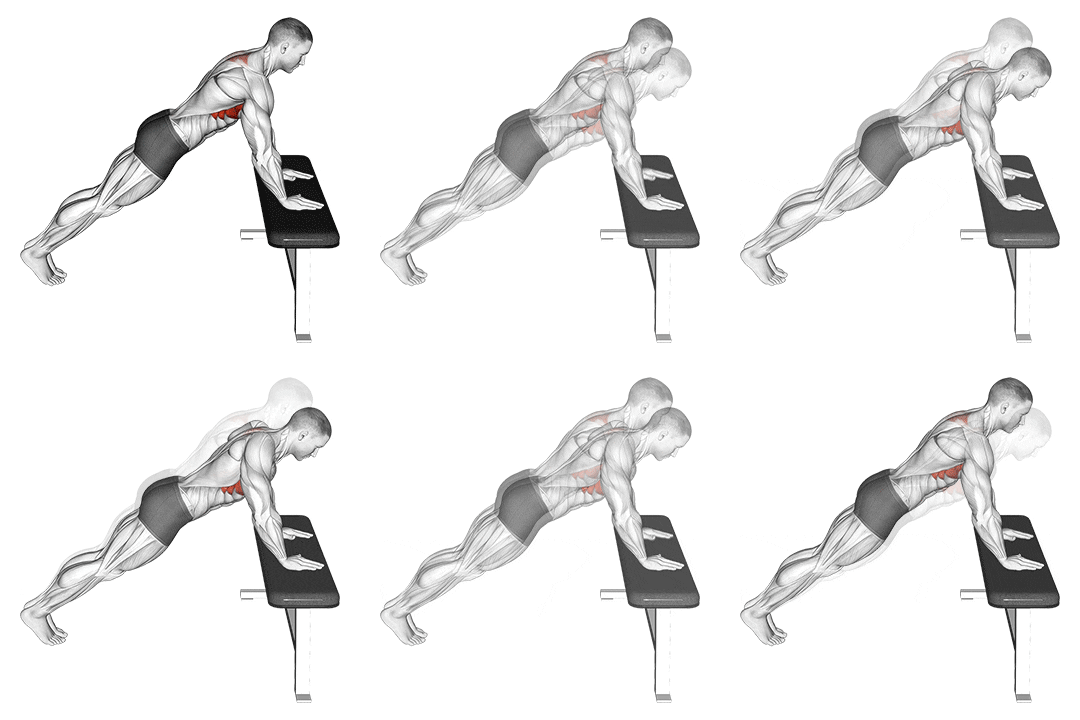
The incline scapula push-up is an exercise that targets the muscles of the upper back, particularly the scapulae (shoulder blades) and the muscles surrounding them. It helps improve scapular stability, posture, and upper body strength. This exercise is performed with an incline, such as a bench or step, which reduces the intensity compared to a standard scapula push-up on the ground. ## Instructions 1. Place a bench or step at a height that allows you to comfortably perform the exercise. 2. Stand facing the bench or step and position your feet shoulder-width apart. 3. Bend forward at the waist and place your hands on the edge of the bench or step, slightly wider than shoulder-width apart. 4. Walk your feet backward, extending your legs so that your body forms a straight line from head to toe. Your weight should be on your toes, and your arms should be straight. 5. Engage your core muscles and maintain a neutral spine throughout the exercise. 6. While keeping your arms straight, focus on retracting and depressing your shoulder blades. Imagine squeezing your shoulder blades together and pulling them downward. 7. Slowly allow your shoulder blades to protract and elevate by allowing your chest to sink towards the bench or step. 8. Once you have reached a comfortable depth, reverse the movement by retracting and depressing your shoulder blades again to push yourself back up to the starting position. 9. Repeat for the desired number of repetitions. ## Variations - To make the exercise more challenging, you can decrease the incline by using a lower bench or step. - If you want to increase the difficulty further, you can perform the exercise on the ground without any incline. ## Muscles Worked The incline scapula push-up primarily targets the following muscles: - Rhomboids - Trapezius - Serratus anterior - Posterior deltoids - Rotator cuff muscles - Stabilizer muscles of the scapulae ## Common Mistakes - Rounding the upper back: Avoid rounding your upper back during the exercise. Keep your spine in a neutral position. - Shifting weight forward: Ensure that your weight is evenly distributed between your hands and toes throughout the exercise. Avoid shifting your weight too far forward or backward. - Allowing elbows to flare out: Keep your elbows slightly bent and pointing towards your feet throughout the movement. Avoid allowing them to flare out to the sides. - Shrugging the shoulders: Focus on depressing the shoulders (pulling them downward) instead of shrugging them up towards the ears. ## Safety Precautions - If you have any pre-existing shoulder or neck injuries, it's advisable to consult with a healthcare professional before attempting this exercise. - Choose a bench or step height that allows you to maintain proper form without straining your shoulders or back. - Start with a comfortable range of motion and gradually increase it as your scapular strength and stability improve. - Listen to your body and stop the exercise if you experience any pain or discomfort.
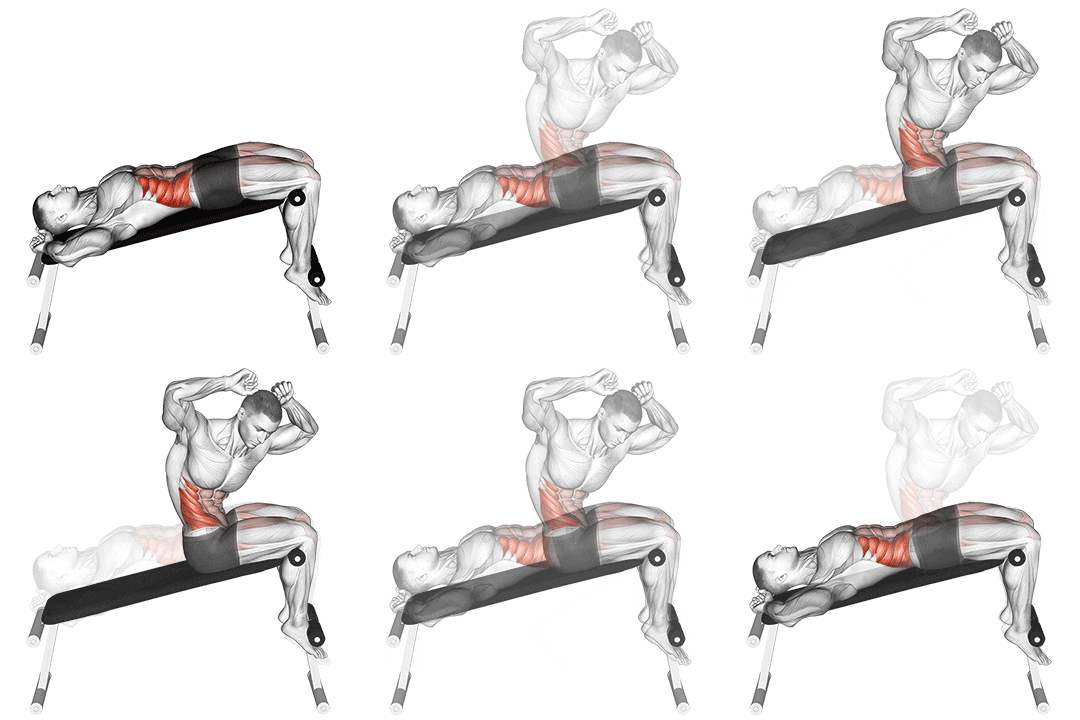
The incline twisting sit-up is an exercise that targets the abdominal muscles, particularly the obliques. It involves a twisting motion, which adds an extra challenge and engages the muscles responsible for rotating and stabilizing the torso. This exercise is performed on an incline, such as a decline bench or an adjustable sit-up bench, to increase the difficulty and activate the core muscles more effectively. ## Instructions 1. Set up an incline bench at a suitable angle (usually around 30-45 degrees) and secure your feet under the foot pads or have a partner hold them for stability. 2. Lie back on the bench with your knees bent and your hands lightly touching the sides of your head or crossed over your chest. 3. Engage your core muscles and lift your upper body off the bench by flexing your abdominals. This is the starting position. 4. As you come up, simultaneously twist your torso to one side, aiming to bring your opposite elbow towards the opposite knee. 5. Slowly lower your upper body back down to the starting position while maintaining control. 6. Repeat the movement on the other side, twisting your torso to the opposite direction and bringing the other elbow towards the opposite knee. 7. Continue alternating sides for the desired number of repetitions. ## Variations - If you find the exercise too challenging, you can modify it by performing the twisting sit-up on a less steep incline or on a flat surface. - To increase the difficulty, you can hold a weight plate or a medicine ball against your chest while performing the sit-up. ## Muscles Worked The incline twisting sit-up primarily targets the following muscles: - Rectus abdominis (six-pack muscles) - Obliques (internal and external) - Hip flexors - Transverse abdominis (deep core muscles) ## Common Mistakes - Using momentum: Avoid using momentum to lift your upper body off the bench. Instead, focus on using your abdominal muscles to initiate and control the movement. - Pulling on the neck: Do not pull on your neck with your hands during the sit-up. Keep your hands lightly touching the sides of your head or crossed over your chest to avoid strain. - Not fully twisting: Make sure to rotate your torso fully with each repetition, bringing the elbow towards the opposite knee. Avoid just lifting your upper body without engaging the twisting motion. - Holding the breath: Remember to breathe throughout the exercise. Exhale as you come up and twist, and inhale as you lower yourself back down. ## Safety Precautions - If you have any pre-existing back or neck conditions, it's advisable to consult with a healthcare professional before attempting this exercise. - Choose an incline bench angle that allows you to maintain proper form and avoid excessive strain on your lower back. - Start with a range of motion that is comfortable for you and gradually increase it as your core strength improves. - If you feel any pain or discomfort in your lower back during the exercise, stop immediately and reassess your form.
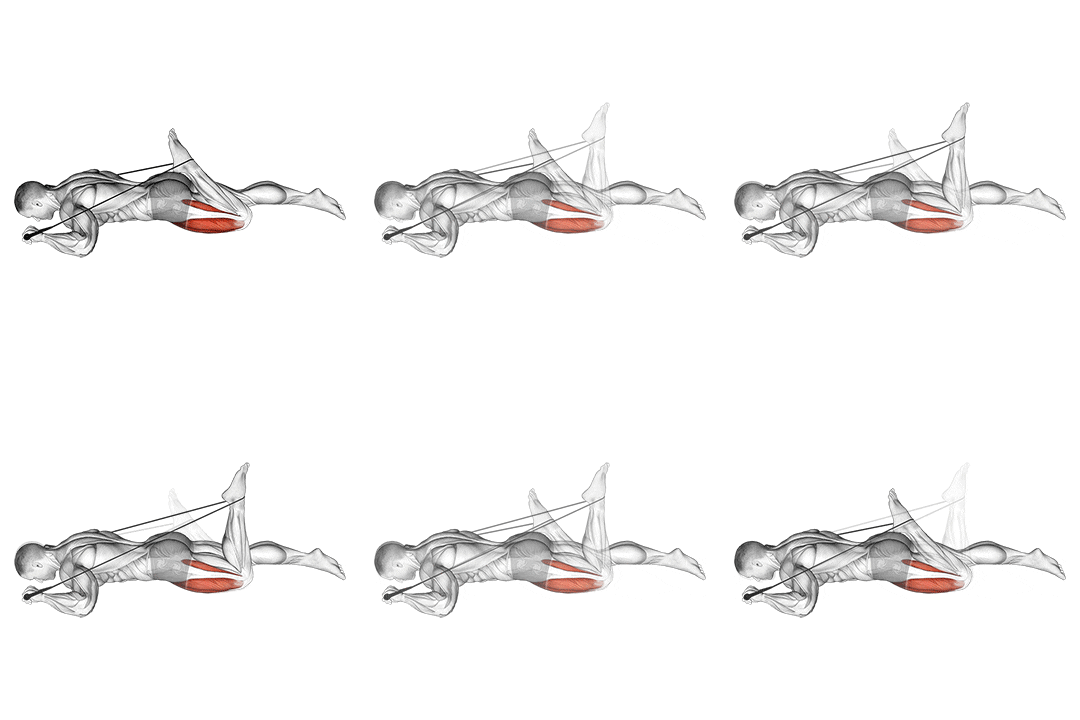
The intermediate hip flexor and quad stretch is an exercise that targets the hip flexor muscles and the quadriceps at the front of the thigh. It helps to increase flexibility, alleviate tightness in the hip area, and improve overall lower body mobility. This stretch is more advanced than basic quad stretches and provides a deeper stretch for those who have developed sufficient flexibility. ## Instructions 1. Begin in a lunge position with your right leg forward and your left leg extended behind you. 2. Keep your right knee directly above your ankle, and your left knee resting on the ground. 3. Slowly lower your left knee towards the ground, keeping your torso upright and engaging your core muscles. 4. As you lower your left knee, simultaneously reach back with your left hand and grab your left foot or ankle. 5. Once you have a firm grip on your left foot or ankle, gently pull your foot towards your glutes to deepen the stretch in your left hip flexor and quad. 6. Hold the stretch for 20 to 30 seconds, while focusing on maintaining good posture and breathing deeply. 7. Release the stretch by slowly releasing your foot or ankle and returning your left leg to the starting position. 8. Repeat the stretch on the opposite side by switching the position of your legs. ## Variations - If reaching back and grabbing your foot or ankle is challenging, you can use a yoga strap or a towel looped around your foot to assist with the stretch. Hold onto the strap or towel with your left hand and gently pull it towards your glutes to deepen the stretch. - If you have difficulty balancing in the lunge position, you can perform this stretch while holding onto a sturdy object, such as a wall or chair, for support. ## Muscles Worked The intermediate hip flexor and quad stretch primarily targets the following muscles: - Hip flexors (including the psoas and rectus femoris) - Quadriceps (particularly the rectus femoris) ## Common Mistakes - Arching the lower back: Avoid arching your lower back during the stretch. Keep your core engaged and maintain a neutral spine. - Leaning too far forward: Ensure that you maintain an upright posture throughout the stretch. Avoid leaning excessively forward, as this can diminish the effectiveness of the stretch. - Holding your breath: Remember to breathe deeply and naturally throughout the stretch. Avoid holding your breath, as it can create tension in the muscles. - Overstretching: Be mindful not to push the stretch beyond your comfort zone. It should feel like a gentle pull or mild discomfort, but not painful. Listen to your body and avoid forcing the stretch. ## Safety Precautions - If you have any knee or hip injuries or conditions, it's advisable to consult with a healthcare professional before attempting this stretch. - Start with a conservative range of motion and gradually increase the depth of the stretch as your flexibility improves. - If you experience any pain or discomfort during the stretch, release the position immediately. - Avoid any jerking or bouncing movements while performing the stretch, as this can strain the muscles and joints. - Perform the stretch on a soft surface or use a folded mat or towel to provide cushioning for your knee.
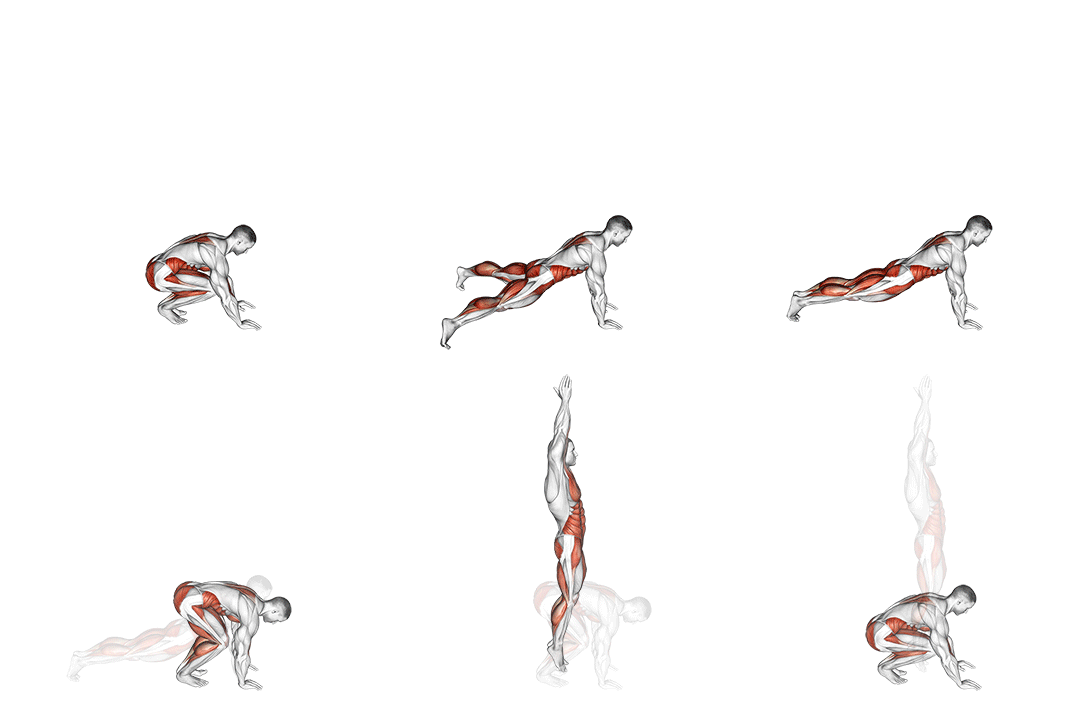
The jack burpee is a dynamic, full-body exercise that combines the movements of a jumping jack and a burpee. It targets multiple muscle groups and provides a cardiovascular challenge. This exercise helps to improve overall strength, endurance, and explosiveness. ## Instructions 1. Start by standing with your feet shoulder-width apart and your arms relaxed at your sides. 2. Perform a jumping jack by jumping both feet out to the sides while simultaneously raising your arms out to the sides and overhead. 3. Immediately drop into a squat position by bending your knees and pushing your hips back. 4. Place your hands on the floor, shoulder-width apart, slightly in front of your feet. 5. Kick your feet back to a plank position, keeping your core engaged and your body in a straight line. 6. Perform a push-up by lowering your chest towards the floor, maintaining a strong plank position. 7. Push through your hands and return to the plank position. 8. Jump your feet forward, returning to the squat position. 9. Explosively jump up, extending your hips and knees while swinging your arms overhead. 10. Land softly with your knees slightly bent, returning to the starting position. 11. Repeat the exercise for the desired number of repetitions or time. ## Variations - Modified Jack Burpee: Perform the exercise without the push-up. Instead of lowering into a push-up position, simply step your feet back to a plank position and step them back in before jumping up. - Burpee with Alternating Leg Raises: Add an extra challenge to the exercise by performing a leg raise with each jump. As you jump your feet back to the plank position, lift one leg off the ground and then switch legs with each rep. ## Muscles Worked - Quadriceps - Hamstrings - Glutes - Calves - Abdominals - Chest - Shoulders - Triceps ## Common Mistakes - Poor form: Maintain proper form throughout the exercise. Avoid rounding your back or allowing your knees to collapse inward during the squat and jump. - Lack of control: Focus on controlled movements and avoid rushing through the exercise. This will help you maintain good form and reduce the risk of injury. - Skipping the push-up: If you're aiming to include the push-up in the exercise, make sure to perform it with proper technique, lowering your chest to the floor and maintaining a strong plank position. - Landing with locked knees: When jumping up, land with your knees slightly bent to absorb the impact and prevent excess strain on your joints. ## Safety Precautions - If you have any pre-existing medical conditions, such as joint issues or cardiovascular problems, consult with a healthcare professional before attempting this exercise. - Warm up properly before performing jack burpees to prepare your muscles and joints for the dynamic movements. - If you experience any pain, dizziness, or difficulty breathing during the exercise, stop immediately and seek medical advice if necessary. - Choose a suitable pace and intensity level that matches your fitness capabilities. Gradually increase the intensity as you become more comfortable and stronger.
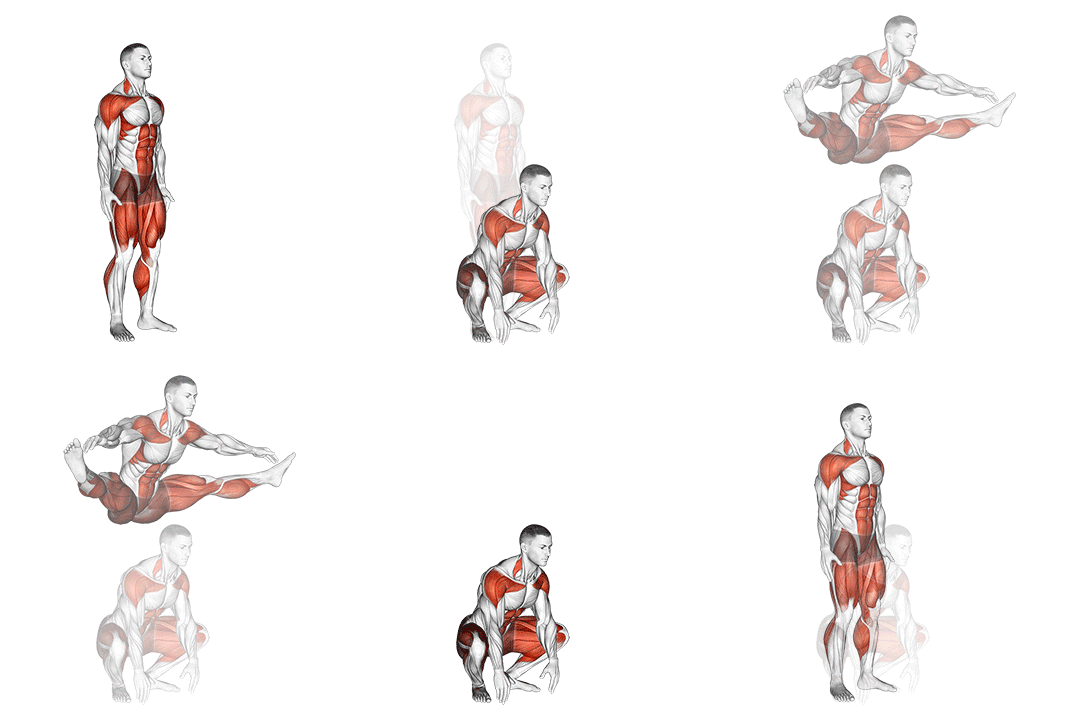
The jack jump is a plyometric exercise that involves explosive jumping movements combined with coordination and agility. It targets multiple muscle groups, primarily the lower body, and provides cardiovascular benefits. This exercise helps to improve lower body power, coordination, and overall athleticism. ## Instructions 1. Start by standing with your feet hip-width apart and your arms relaxed at your sides. 2. Bend your knees and jump explosively into the air, extending your hips and knees fully. 3. While in the air, spread your legs out to the sides and bring your arms out to the sides and overhead. 4. Simultaneously bring your legs back together and your arms back down to the starting position. 5. Land softly with your knees slightly bent to absorb the impact. 6. Immediately repeat the movement, jumping explosively again. 7. Continue performing the jumping motion for the desired number of repetitions or time. ## Variations - Modified Jack Jump: If the full jump is too challenging, you can modify the exercise by performing a step-out and step-in motion instead of jumping. Step out to the sides and raise your arms as you step, then step back in and lower your arms. - Single-Leg Jack Jump: Increase the difficulty and engage your stability muscles by performing the exercise on one leg at a time. Jump explosively while maintaining balance on one leg, then switch to the other leg. ## Muscles Worked - Quadriceps - Hamstrings - Glutes - Calves - Hip abductors - Hip adductors ## Common Mistakes - Poor landing technique: Ensure that you land softly and with your knees slightly bent to absorb the impact and prevent excess strain on your joints. - Lack of explosive power: Focus on explosive and quick movements during the jump. Use your leg muscles to generate power and height in the jump. - Loss of coordination: Maintain control and coordination throughout the exercise. Practice the movement slowly at first, gradually increasing speed and intensity as you become more comfortable. - Insufficient range of motion: Fully extend your hips and knees during the jump to maximize the engagement of your lower body muscles. ## Safety Precautions - If you have any pre-existing medical conditions or joint issues, consult with a healthcare professional before attempting this exercise. - Warm up properly before performing jack jumps to prepare your muscles and joints for the explosive movements. - Ensure that you have enough space and a safe, non-slip surface for jumping. - Start with a comfortable intensity and gradually increase the height and intensity of the jumps as you become more proficient and confident. - If you experience any pain, dizziness, or difficulty breathing during the exercise, stop immediately and seek medical advice if necessary. - Listen to your body and take breaks as needed. It's important to exercise at a pace and intensity that suits your fitness level.