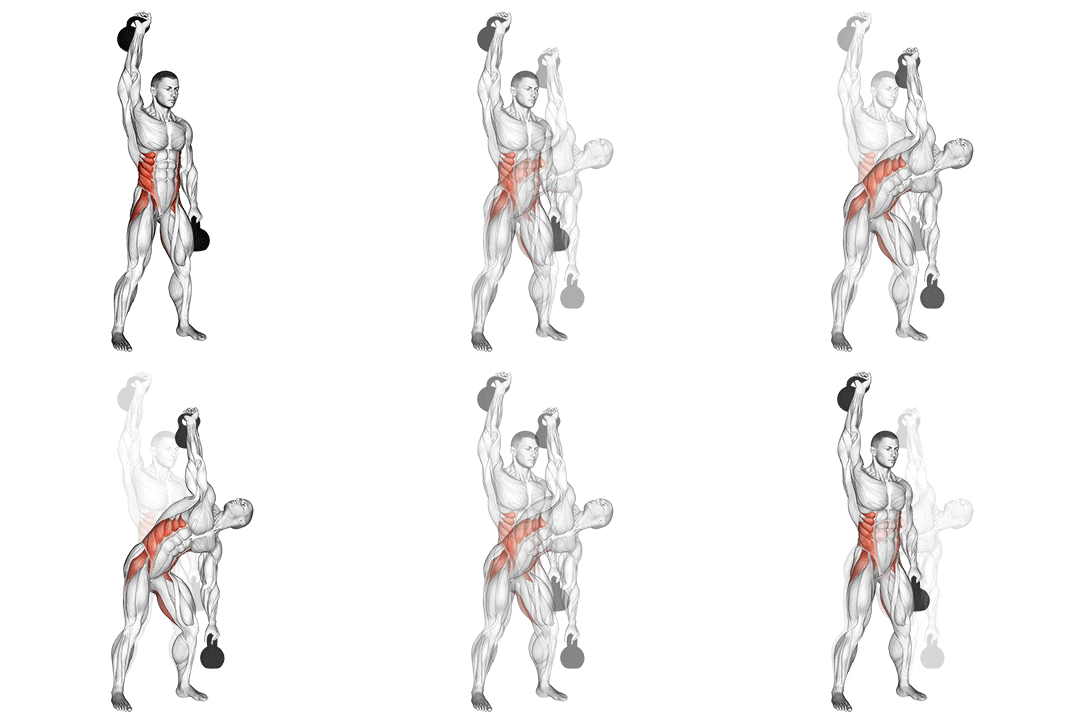
The kettlebell double windmill is a unilateral exercise that primarily targets the muscles of the core, shoulders, and hips. It involves a lateral bending movement combined with hip hinge and rotation. The exercise improves core strength, shoulder stability, hip mobility, and overall body coordination. ## Instructions 1. Start by standing with your feet slightly wider than shoulder-width apart, toes angled outward. Hold a kettlebell in your right hand with an overhand grip, allowing it to hang at arm's length by your side. 2. Rotate your right foot outward approximately 45 degrees while keeping your left foot pointed forward. 3. Press the kettlebell overhead, extending your right arm fully with your palm facing forward. 4. Begin the movement by shifting your weight onto your left leg while simultaneously hinging at the hips, pushing them back and to the right. 5. Maintain a slight bend in your left knee as you lean your torso to the right, reaching down with your left hand toward your left foot. 6. Keep your eyes on the kettlebell as you lower your torso, maintaining a straight line from your right hand to your right foot. 7. Once you have reached your maximum comfortable range of motion, reverse the movement by engaging your core and driving through your left foot to return to an upright position. 8. Repeat the movement for the desired number of repetitions before switching sides. ## Variations - Beginners can start with a lighter kettlebell or no weight at all until they become comfortable with the movement pattern. - If you have limited shoulder mobility, you can perform the exercise with the kettlebell in the racked position (at your shoulder) instead of overhead. - Another variation is the staggered stance windmill, where you have one foot positioned in front of the other, providing a different challenge to your balance and stability. ## Muscles Worked - Core muscles (obliques, abdominals, and lower back) - Shoulders (deltoids) - Hips (glutes and hip abductors) - Hamstrings - Quadriceps ## Common Mistakes - Twisting the hips too much: Maintain a straight line from your hand to your foot and avoid excessive rotation of the hips. Focus on lateral bending and hinging at the hips. - Rounding or arching the lower back: Keep your core engaged and maintain a neutral spine throughout the movement to avoid strain on the lower back. Avoid excessive forward or backward lean. - Poor shoulder stability: Maintain a stable and strong shoulder position throughout the movement. Avoid shrugging your shoulder or allowing the kettlebell to drift forward or backward. - Insufficient hip hinge: Focus on pushing your hips back and to the side to initiate the movement, ensuring that you engage the hip muscles effectively. ## Safety Precautions - Warm up adequately before performing the exercise to prepare your muscles and joints. - Start with a weight that you can handle comfortably and progress gradually as your strength and technique improve. - Be cautious if you have any existing shoulder, back, or hip injuries. It's advisable to consult with a fitness professional or healthcare provider to ensure it is safe for you. - Maintain proper form and control throughout the exercise to reduce the risk of injury. - If you experience any pain or discomfort during the exercise, stop immediately and seek medical advice if needed.
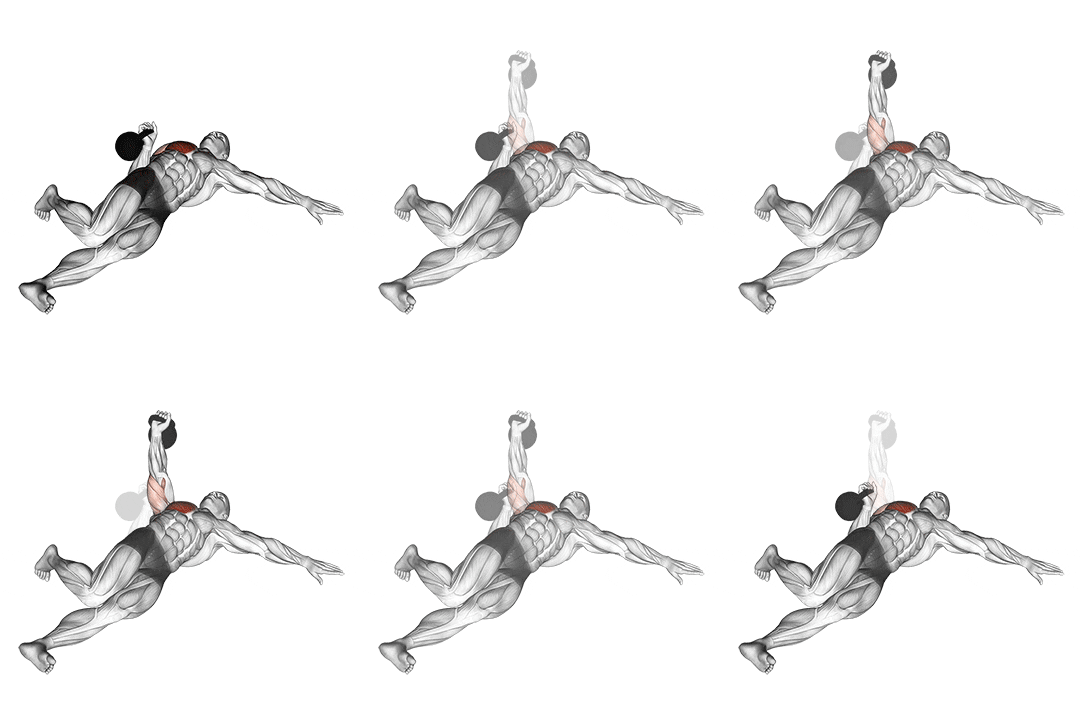
The kettlebell extended range one arm press on the floor is a challenging exercise that targets the muscles of the upper body, particularly the shoulders, triceps, and core. It involves pressing a kettlebell from the floor to an extended position overhead using one arm. This exercise helps to build upper body strength, shoulder stability, and core control. ## Instructions 1. Start by placing a kettlebell on the floor in front of you. Stand with your feet shoulder-width apart, facing the kettlebell. 2. Bend your knees and hinge at the hips, keeping your back straight, and grip the kettlebell handle with one hand using an overhand grip. 3. With your grip secure, extend your legs and lift the kettlebell off the floor, bringing it to your shoulder while maintaining a strong core and an upright posture. 4. Once the kettlebell is at your shoulder, rotate your wrist so that your palm faces forward and your elbow is directly under the kettlebell. 5. Brace your core and press the kettlebell overhead by fully extending your arm and locking out your elbow. 6. Pause for a moment at the top, ensuring your shoulder is stable and your arm is fully extended. 7. Slowly lower the kettlebell back down to your shoulder in a controlled manner. 8. From the shoulder position, carefully lower the kettlebell back to the floor while maintaining proper form. 9. Repeat the movement for the desired number of repetitions on one side before switching to the other arm. ## Variations - Beginners can start with a lighter kettlebell or no weight at all until they become comfortable with the movement pattern and build sufficient strength. - If you have limited mobility or flexibility, you can perform the exercise while kneeling on one knee instead of standing. - Another variation is the half-range press, where you only press the kettlebell to a halfway position overhead instead of a full lockout. ## Muscles Worked - Shoulders (deltoids) - Triceps - Core muscles (abdominals and lower back) - Stabilizer muscles in the shoulder girdle and upper body ## Common Mistakes - Arching the back: Maintain a neutral spine throughout the exercise to avoid excessive strain on the lower back. Engage your core muscles and keep your torso upright. - Failing to fully extend the arm: Ensure that you fully extend your arm overhead and lock out your elbow at the top of the movement. This helps to engage the target muscles effectively. - Allowing the kettlebell to drift forward: Keep the kettlebell in line with your shoulder and avoid letting it drift too far forward. This helps maintain proper alignment and stability. - Using excessive momentum: Control the movement throughout the exercise and avoid relying on momentum to press the kettlebell overhead. Focus on slow, controlled movements. ## Safety Precautions - Warm up adequately before performing the exercise to prepare your muscles and joints. - Start with a weight that you can handle comfortably and progress gradually as your strength and technique improve. - Maintain proper form and control throughout the exercise to reduce the risk of injury. - If you have any pre-existing shoulder or back injuries, it's advisable to consult with a fitness professional or healthcare provider to ensure it is safe for you. - Use a clear space around you to perform the exercise to avoid any potential hazards. - If you experience any pain or discomfort during the exercise, stop immediately and seek medical advice if needed.
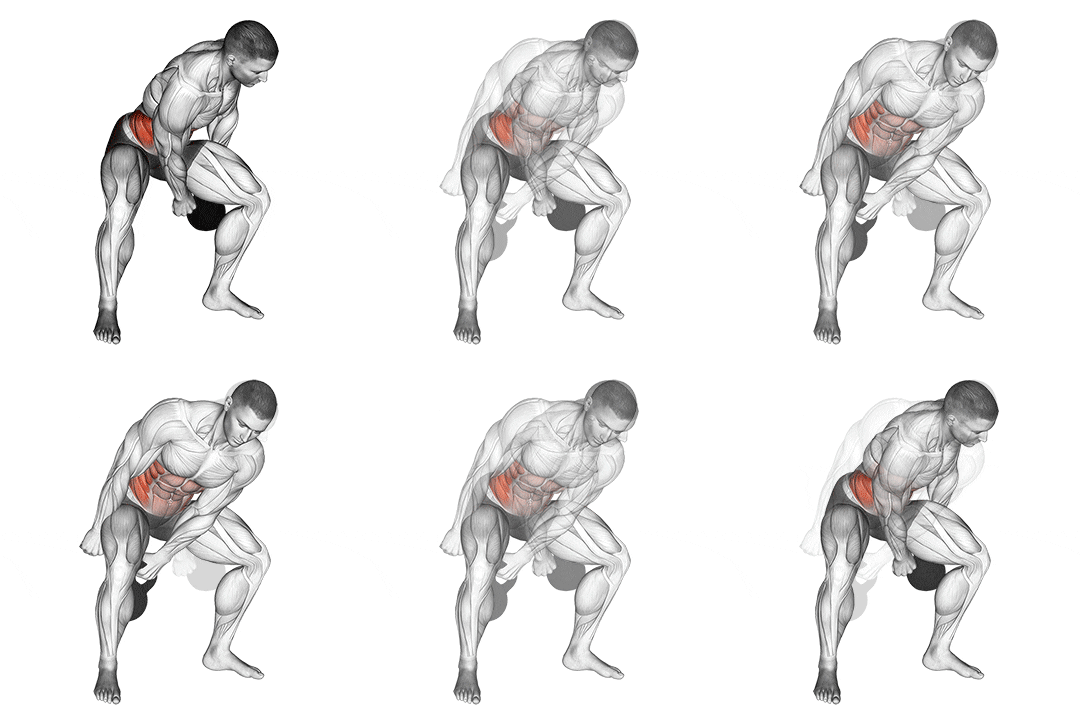
The kettlebell figure 8 is a dynamic exercise that targets the muscles of the core, hips, and lower body. It involves passing the kettlebell between the legs in a figure 8 pattern, challenging coordination, balance, and muscular endurance. This exercise improves core stability, hip mobility, and overall body strength. ## Instructions 1. Stand with your feet shoulder-width apart, knees slightly bent, and hold a kettlebell in your right hand. 2. Begin the movement by swinging the kettlebell between your legs from front to back, passing it behind your right leg with your right hand. 3. As the kettlebell passes behind your right leg, reach your left hand across your body to grasp the kettlebell handle. 4. Swing the kettlebell back between your legs from back to front, passing it in front of your left leg with your left hand. 5. As the kettlebell passes in front of your left leg, reach your right hand across your body to grasp the kettlebell handle. 6. Repeat the movement, swinging the kettlebell between your legs in a continuous figure 8 pattern, alternating hands with each pass. 7. Continue the figure 8 motion for the desired number of repetitions. ## Variations - Beginners can start with a lighter kettlebell and focus on mastering the movement pattern before progressing to heavier weights. - If you have limited mobility or flexibility, you can perform the exercise with a wider stance or with a smaller range of motion. - Another variation is the figure 8 to hold, where you pause and hold the kettlebell at the front or back of the figure 8 pattern for a few seconds before continuing. ## Muscles Worked - Core muscles (abdominals, obliques, and lower back) - Hip muscles (glutes and hip abductors) - Quadriceps - Hamstrings ## Common Mistakes - Rounding the back: Maintain a neutral spine throughout the exercise to avoid strain on the lower back. Engage your core muscles and focus on proper posture. - Allowing the kettlebell to swing too far away: Control the movement and keep the kettlebell within a comfortable range of motion. Avoid excessive swinging that may compromise form and stability. - Using the arms too much: The power for this exercise should come from your hips and core. Avoid relying solely on your arms to swing the kettlebell. - Lack of coordination: Take time to practice the movement pattern and start with a slower pace if needed. Focus on coordination and gradually increase speed as you become more comfortable. ## Safety Precautions - Warm up adequately before performing the exercise to prepare your muscles and joints. - Start with a weight that you can handle comfortably and progress gradually as your coordination and technique improve. - Maintain proper form and control throughout the exercise to reduce the risk of injury. - Ensure you have sufficient space around you to perform the exercise safely. - Be cautious of any obstacles or hazards in the vicinity that may interfere with the swinging motion. - If you have any pre-existing back or hip injuries, it's advisable to consult with a fitness professional or healthcare provider to ensure it is safe for you. - If you experience any pain or discomfort during the exercise, stop immediately and seek medical advice if needed.
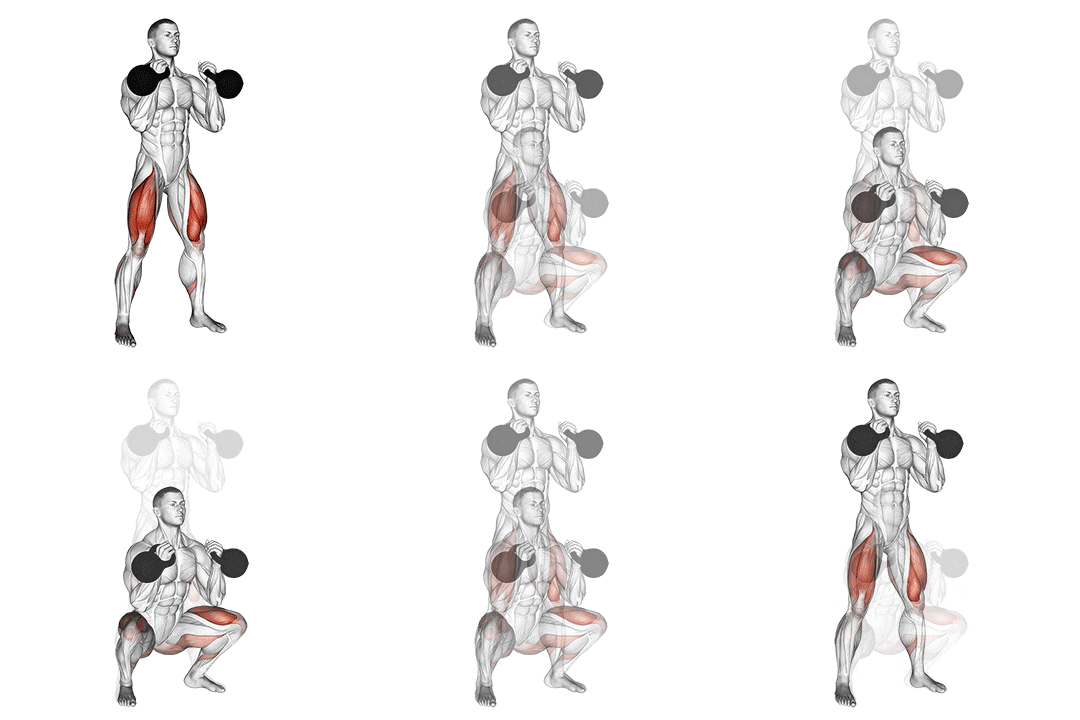
The kettlebell front squat is a compound exercise that primarily targets the muscles of the lower body, including the quadriceps, hamstrings, and glutes. It also engages the core muscles for stability and balance. This exercise helps to develop lower body strength, improve mobility, and enhance overall functional fitness. ## Instructions 1. Begin by holding a kettlebell in both hands with an overhand grip, close to your chest. Stand with your feet slightly wider than shoulder-width apart, toes slightly angled outwards. 2. Engage your core, keep your chest up, and maintain a neutral spine throughout the exercise. 3. Lower your body by bending at the hips and knees, as if you are sitting back into a chair. Keep your weight on your heels and your knees tracking in line with your toes. 4. Continue descending until your thighs are parallel to the ground, or as low as your mobility allows while maintaining good form. Keep your chest up and your back straight. 5. Pause briefly at the bottom of the squat, then drive through your heels to push yourself back up to the starting position. 6. Exhale as you push up, maintaining control and stability throughout the movement. 7. Repeat the exercise for the desired number of repetitions. ## Variations - Beginners can start with bodyweight squats or use a lighter kettlebell before progressing to heavier weights. - If you have difficulty maintaining balance or stability, you can perform the exercise while holding onto a sturdy object, such as a squat rack or TRX straps, for support. - Another variation is the goblet squat, where you hold a kettlebell with both hands in front of your chest instead of at the sides. ## Muscles Worked - Quadriceps - Hamstrings - Glutes - Calves - Core muscles (abdominals and lower back) ## Common Mistakes - Allowing the knees to collapse inward: Focus on keeping your knees in line with your toes throughout the movement. Engage your glutes and abductors to maintain proper knee alignment. - Leaning too far forward: Keep your chest up and your back straight. Avoid excessive forward lean, as it can strain the lower back and shift the load away from the legs. - Lifting the heels off the ground: Keep your weight on your heels throughout the exercise. If you find your heels lifting, try to distribute your weight evenly and engage your glutes and hamstrings. - Lack of depth: Strive to achieve a parallel squat position, or lower if your mobility allows. Aim for a full range of motion while maintaining proper form. ## Safety Precautions - Warm up adequately before performing the exercise to prepare your muscles and joints. - Start with a weight that you can handle comfortably and progress gradually as your strength and technique improve. - Ensure that you have sufficient space and a stable surface to perform the exercise. - If you have any pre-existing knee or back injuries, it's advisable to consult with a fitness professional or healthcare provider to ensure it is safe for you. - Maintain proper form throughout the exercise and listen to your body. If you experience pain or discomfort, stop immediately and seek medical advice if needed. - Remember to breathe continuously during the exercise. Inhale as you lower your body and exhale as you push back up. - If you are new to the exercise, it can be helpful to have a spotter or trainer to provide guidance and ensure correct form.
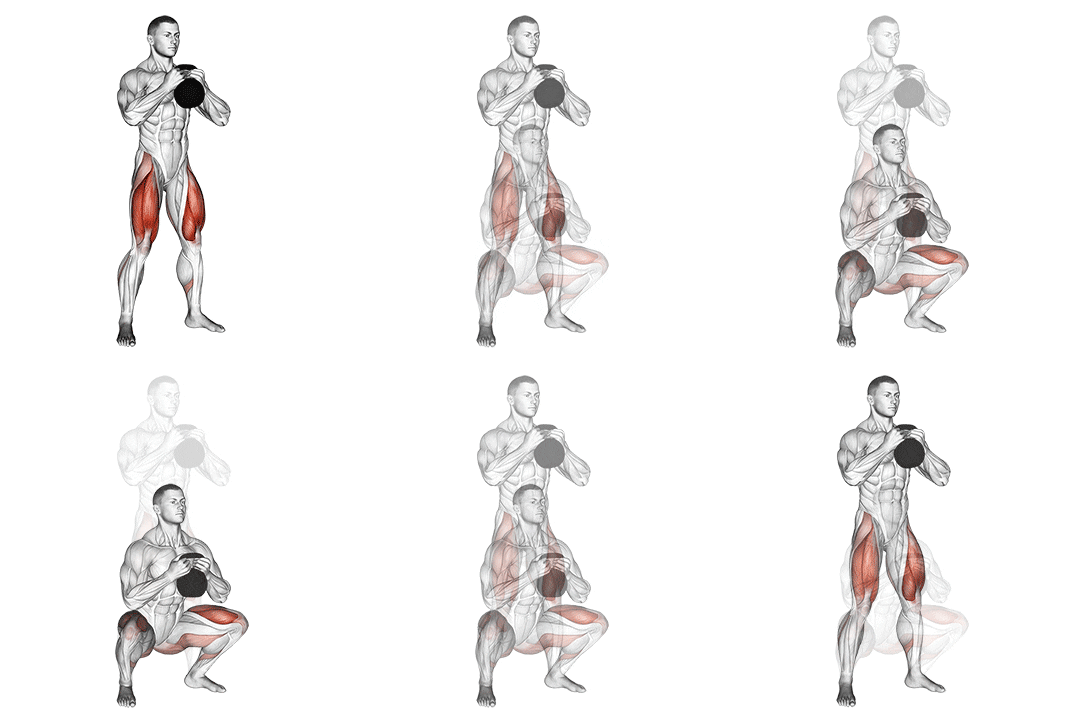
The kettlebell goblet squat is a compound exercise that primarily targets the lower body muscles, including the quadriceps, hamstrings, and glutes. It also engages the core muscles and promotes overall strength, stability, and mobility. This exercise is named after the way you hold the kettlebell, close to your chest, resembling a goblet. ## Instructions 1. Stand with your feet slightly wider than shoulder-width apart, toes pointing slightly outward. Hold a kettlebell with both hands vertically in front of your chest, close to your body, with your elbows pointing down. 2. Engage your core, keep your chest up, and maintain a neutral spine throughout the exercise. 3. Lower your body by bending at the hips and knees, as if you are sitting back into a chair. Keep your weight on your heels and your knees tracking in line with your toes. 4. Continue descending until your thighs are parallel to the ground, or as low as your mobility allows while maintaining good form. Keep your chest up and your back straight. 5. Pause briefly at the bottom of the squat, then push through your heels to rise back up to the starting position, fully extending your hips and knees. 6. Exhale as you push up, maintaining control and stability throughout the movement. 7. Repeat the exercise for the desired number of repetitions. ## Variations - Beginners can start with bodyweight squats before progressing to using a kettlebell. - If you don't have a kettlebell, you can use a dumbbell or any other weighted object held close to your chest. - To increase the difficulty, you can perform the goblet squat on an unstable surface, such as a BOSU ball or a balance disc. - Another variation is the sumo goblet squat, where you adopt a wider stance with your feet turned out more to target the inner thigh muscles. ## Muscles Worked - Quadriceps - Hamstrings - Glutes - Calves - Core muscles (abdominals and lower back) ## Common Mistakes - Allowing the knees to collapse inward: Focus on keeping your knees in line with your toes throughout the movement. Engage your glutes and abductors to maintain proper knee alignment. - Leaning too far forward: Keep your chest up and your back straight. Avoid excessive forward lean, as it can strain the lower back and shift the load away from the legs. - Lifting the heels off the ground: Keep your weight on your heels throughout the exercise. If you find your heels lifting, try to distribute your weight evenly and engage your glutes and hamstrings. - Lack of depth: Strive to achieve a parallel squat position, or lower if your mobility allows. Aim for a full range of motion while maintaining proper form. ## Safety Precautions - Warm up adequately before performing the exercise to prepare your muscles and joints. - Start with a weight that you can handle comfortably and progress gradually as your strength and technique improve. - Ensure that you have sufficient space and a stable surface to perform the exercise. - If you have any pre-existing knee or back injuries, it's advisable to consult with a fitness professional or healthcare provider to ensure it is safe for you. - Maintain proper form throughout the exercise and listen to your body. If you experience pain or discomfort, stop immediately and seek medical advice if needed. - Remember to breathe continuously during the exercise. Inhale as you lower your body and exhale as you push back up. - If you are new to the exercise, it can be helpful to have a spotter or trainer to provide guidance and ensure correct form.
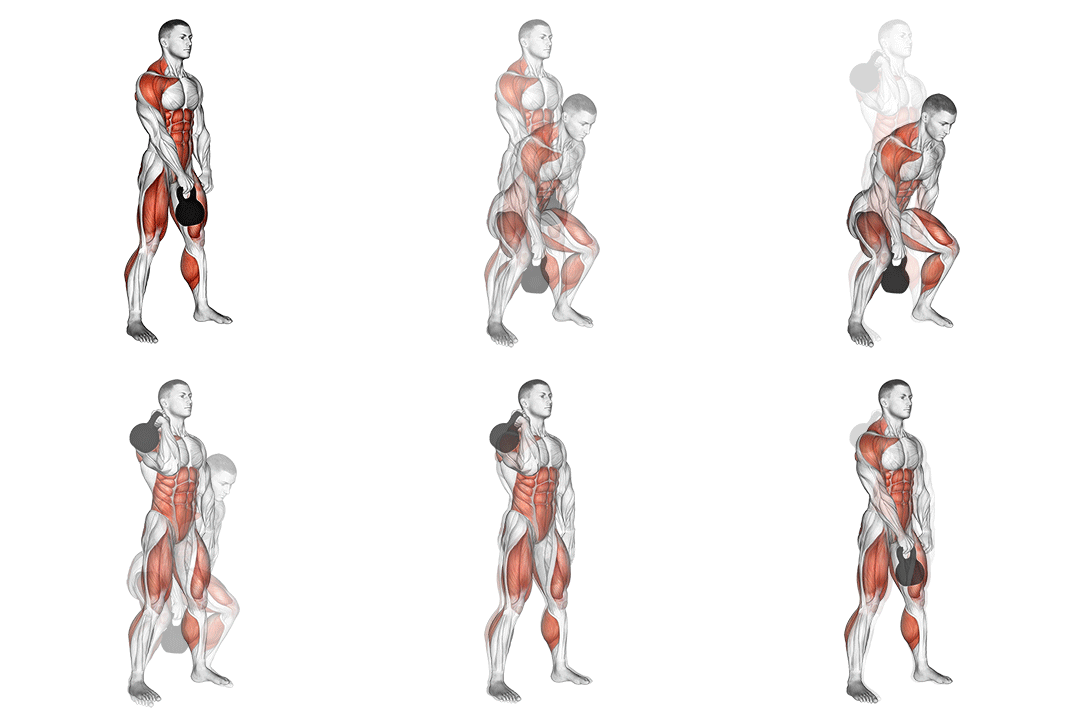
The kettlebell hang clean is a dynamic exercise that targets multiple muscle groups, including the legs, hips, core, and upper body. It involves explosively lifting the kettlebell from a hanging position to the racked position at the shoulders. This exercise helps improve power, coordination, and full-body strength. ## Instructions 1. Begin by standing with your feet shoulder-width apart, holding a kettlebell in each hand with an overhand grip. Let the kettlebells hang at arm's length in front of your thighs. 2. Engage your core, keep your back straight, and slightly bend your knees. 3. Initiate the movement by explosively extending your hips and knees while simultaneously pulling the kettlebells upwards. 4. As the kettlebells rise, keep them close to your body and use the momentum to pull them towards your shoulders. 5. As the kettlebells reach chest height, quickly rotate your elbows forward and under the kettlebells, bringing them to the racked position at your shoulders. 6. Catch the kettlebells softly on your forearms and upper chest, ensuring your palms face inward and your elbows are positioned beneath the kettlebells. 7. Once you have caught the kettlebells, pause briefly to stabilize the weight. 8. To return to the starting position, lower the kettlebells back to the hanging position by reversing the movement. Control the descent and repeat for the desired number of repetitions. ## Variations - If you're new to the kettlebell hang clean, you can start with a single kettlebell and gradually progress to using two kettlebells simultaneously. - You can perform the hang clean using dumbbells instead of kettlebells. - Another variation is the single-arm kettlebell hang clean, where you perform the exercise one arm at a time. This variation provides additional core and stability challenges. ## Muscles Worked - Quadriceps - Hamstrings - Glutes - Calves - Deltoids (shoulders) - Trapezius - Forearms - Core muscles (abdominals and lower back) ## Common Mistakes - Using excessive arm strength: Remember that the power for the movement comes from your hips and legs. Focus on explosively extending your hips and knees to generate momentum. - Not keeping the kettlebells close to the body: Keep the kettlebells close to your body throughout the movement. This helps maintain control and prevents strain on your lower back. - Rounding the back: Maintain a neutral spine throughout the exercise. Avoid rounding your back or hunching your shoulders forward. - Lifting with the arms instead of the hips: Emphasize hip and leg drive rather than relying solely on your arm strength. This ensures proper technique and maximizes the benefits of the exercise. ## Safety Precautions - Warm up adequately before performing the exercise to prepare your muscles and joints. - Start with a weight that you can handle comfortably and focus on mastering the technique before increasing the weight. - Ensure that you have sufficient space and a clear path for the kettlebells' upward movement. - Keep your grip secure on the kettlebells throughout the exercise to avoid dropping them. - If you have any pre-existing shoulder or back injuries, it's advisable to consult with a fitness professional or healthcare provider to ensure it is safe for you. - Maintain proper form throughout the exercise and listen to your body. If you experience pain or discomfort, stop immediately and seek medical advice if needed. - Remember to breathe continuously during the exercise. Inhale during the downward phase and exhale forcefully as you explosively lift the kettlebells. - If you are new to the exercise, it can be helpful to have a spotter or trainer
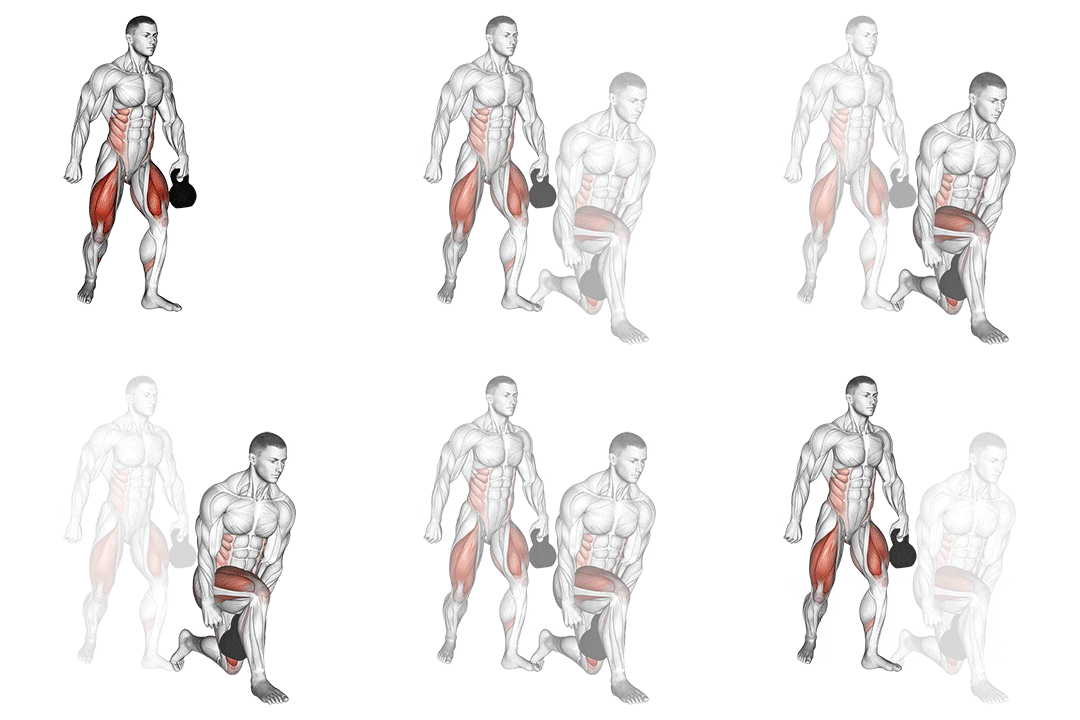
The Kettlebell Lunge Pass Through is an exercise that targets multiple muscle groups in the lower body, including the quadriceps, hamstrings, glutes, and calves. It also engages the core muscles for stability and balance. This exercise combines the benefits of lunges and kettlebell training, promoting leg strength, balance, coordination, and functional movement. ## Instructions 1. Start by standing upright with your feet shoulder-width apart, holding a kettlebell by the horns (handles) close to your chest. 2. Take a step forward with your right foot, ensuring that your knee is directly above your ankle and your thigh is parallel to the ground. Your left knee should be slightly bent, and your back heel should be lifted. 3. As you lunge forward, simultaneously pass the kettlebell under your right thigh from your right hand to your left hand. 4. Maintain a straight back and an upright posture throughout the movement. 5. Push off with your right foot, returning to the starting position while passing the kettlebell back to your right hand under your left thigh. 6. Repeat the lunge and pass through on the opposite side by stepping forward with your left foot, passing the kettlebell under your left thigh from your left hand to your right hand. 7. Continue alternating sides for the desired number of repetitions. ## Variations - Bodyweight Variation: If you're new to this exercise or don't have access to a kettlebell, you can perform the exercise without any additional weight. Simply follow the same instructions, focusing on the lunge and the passing motion. - Reverse Lunge Variation: Instead of stepping forward, you can perform a reverse lunge by stepping backward with one leg while passing the kettlebell through. This variation places slightly different emphasis on the muscles and challenges balance in a different way. ## Muscles Worked - Quadriceps (front of the thighs) - Hamstrings (back of the thighs) - Glutes (buttocks) - Calves - Core muscles for stability and balance ## Common Mistakes - Allowing the front knee to extend past the toes during the lunge: Keep the knee directly above the ankle to maintain proper alignment and reduce the risk of injury. - Leaning the torso too far forward: Maintain an upright posture throughout the exercise to engage the core and prevent strain on the lower back. - Losing balance or stability: Focus on maintaining a stable base and engage the core muscles for balance and control. ## Safety Precautions - Ensure you have proper footwear and a stable surface to perform the exercise. - Start with a lighter kettlebell or no weight at all if you're new to the exercise or have any limitations or injuries. - Warm up your muscles before attempting the exercise to reduce the risk of injury. - If you experience any pain or discomfort during the exercise, stop immediately and consult with a fitness professional or healthcare provider.
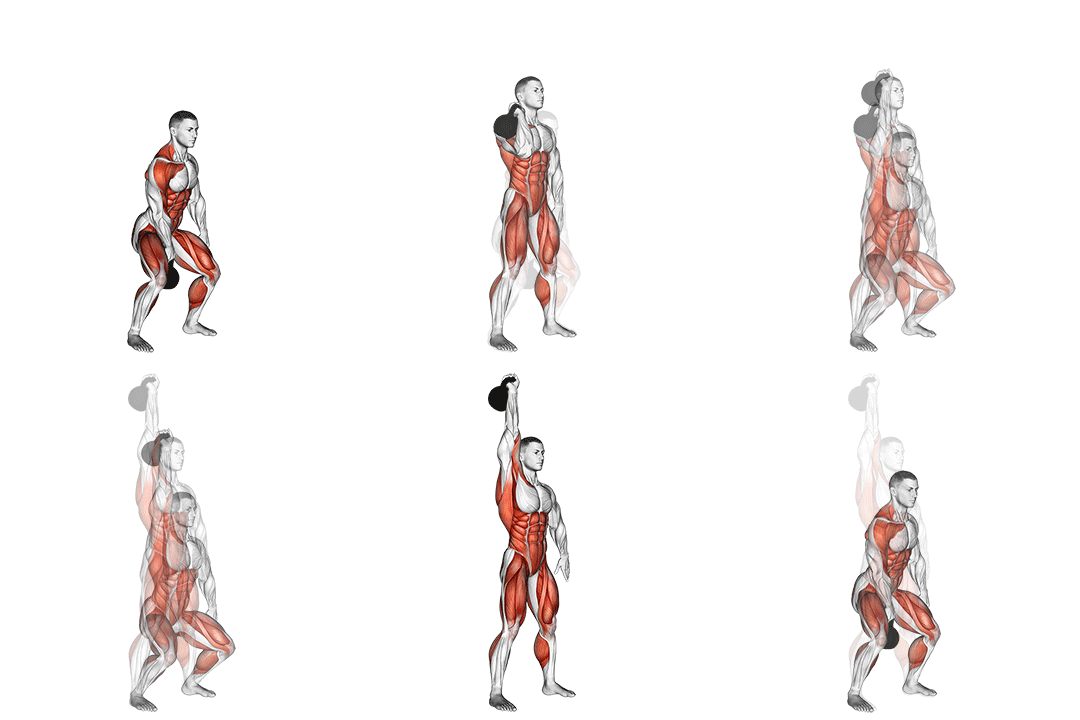
The Kettlebell One Arm Clean and Jerk is a dynamic exercise that targets multiple muscle groups, including the shoulders, back, hips, and core. It is a total body movement that combines elements of strength, power, and coordination. This exercise helps to improve overall strength, explosiveness, and conditioning. ## Instructions 1. Begin with the kettlebell on the ground between your feet, shoulder-width apart. 2. Bend at the hips and knees, maintaining a straight back, and grip the kettlebell handle with one hand. 3. Engage your core and use your legs and hips to generate power as you explosively stand up, pulling the kettlebell up towards your shoulder. 4. As the kettlebell reaches shoulder height, rotate your hand around the handle, allowing your palm to face forward. 5. Simultaneously, dip slightly at the knees and hips, then forcefully extend your legs, driving the kettlebell overhead. 6. Lock out your arm at the top of the movement, fully extending your elbow. 7. Lower the kettlebell back down to the starting position in a controlled manner. 8. Repeat the movement for the desired number of repetitions on one side before switching to the other arm. ## Variations - Kettlebell Double Clean and Jerk: Instead of using one kettlebell, you can perform the exercise with two kettlebells. The movement pattern remains the same, but you will be holding a kettlebell in each hand, requiring increased strength and coordination. - Alternating Clean and Jerk: Rather than performing consecutive repetitions on one side, you can alternate between arms with each repetition. This variation allows for balanced development and adds an additional challenge. ## Muscles Worked - Shoulders (deltoids) - Back muscles (latissimus dorsi, rhomboids) - Hips (glutes, hip flexors) - Legs (quadriceps, hamstrings) - Core muscles for stability and bracing ## Common Mistakes - Using too much arm strength: The power for the clean and jerk should primarily come from the legs and hips, not just the arms. Focus on generating power from the lower body. - Not maintaining a straight back: Keep your back flat and engaged throughout the movement to avoid strain or injury. - Neglecting proper technique: It's important to learn and practice proper form before increasing weight or intensity. Work with a qualified instructor to ensure you're executing the exercise correctly. ## Safety Precautions - Use a kettlebell that is appropriate for your strength and skill level. - Warm up your muscles before attempting the exercise to reduce the risk of injury. - Pay attention to your grip and make sure the kettlebell handle is secure in your hand. - Engage your core muscles and maintain proper posture throughout the movement. - Start with lighter weights and gradually increase the load as you become comfortable with the exercise. - If you experience any pain or discomfort during the exercise, stop immediately and consult with a fitness professional or healthcare provider.
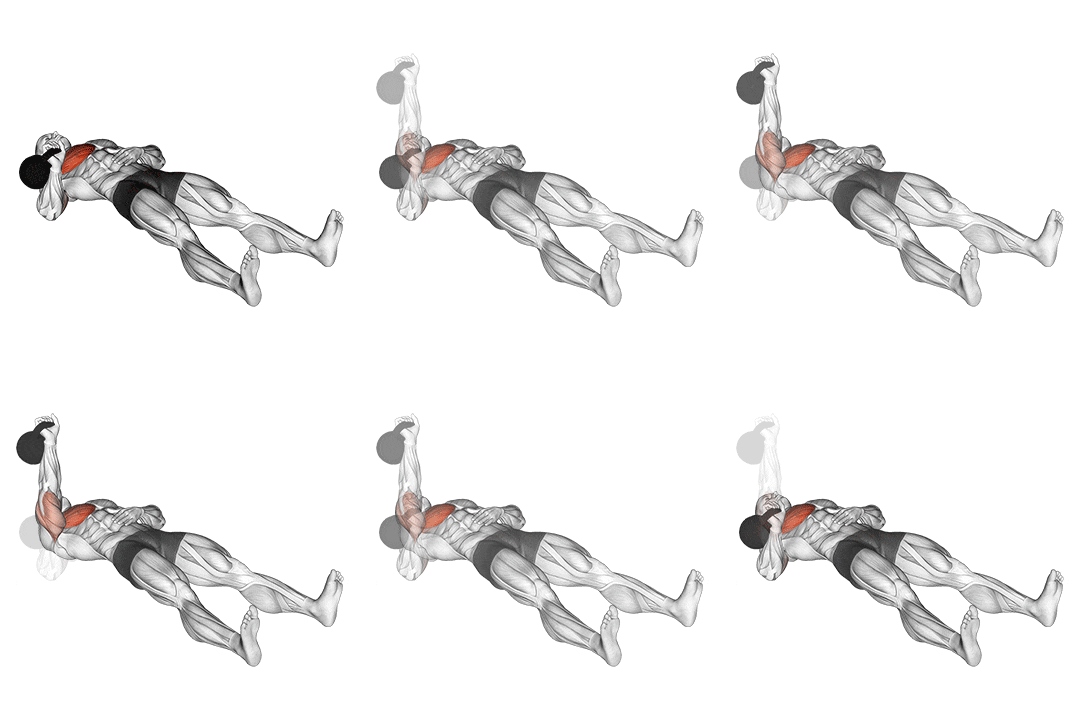
The Kettlebell One Arm Floor Press is an upper body exercise that primarily targets the chest muscles (pectoralis major) and triceps. It also engages the shoulders and core muscles for stability. This exercise is performed lying on the floor, making it a great option for those who don't have access to a bench or prefer a floor-based workout. It helps to develop upper body strength, muscular endurance, and stability. ## Instructions 1. Start by lying on your back on the floor with your knees bent and feet flat on the ground. 2. Hold a kettlebell in one hand, with your palm facing towards your feet. Extend your arm straight up towards the ceiling, aligning it with your shoulder. 3. Brace your core and maintain a stable base by pressing your opposite arm and opposite leg into the floor. 4. Lower the kettlebell slowly and under control towards your shoulder, keeping your upper arm close to your body. 5. Pause for a moment when your upper arm touches the floor. 6. Press the kettlebell back up to the starting position, fully extending your arm and squeezing your chest muscles. 7. Repeat for the desired number of repetitions on one side before switching to the other arm. ## Variations - Bilateral Floor Press: If you have access to two kettlebells or dumbbells, you can perform the exercise with both arms simultaneously. The movement remains the same, but you will be pressing with both arms at the same time, challenging your upper body strength and stability further. - Single-Arm Floor Press with Bridge: After completing each repetition, you can lift your hips off the ground into a bridge position while keeping one arm extended with the kettlebell. This variation adds an additional challenge to the exercise by engaging the glutes and core muscles. ## Muscles Worked - Chest muscles (pectoralis major) - Triceps - Shoulders (anterior deltoids) - Core muscles for stability and bracing ## Common Mistakes - Flaring the elbows: Keep your elbows tucked close to your body throughout the movement to engage the chest muscles properly and reduce strain on the shoulders. - Losing stability: Maintain a stable base by pressing your opposite arm and opposite leg into the floor. This will help to prevent excessive rocking or shifting during the exercise. - Rushing the movement: Control the descent and ascent of the kettlebell to maximize the engagement of the target muscles. Avoid bouncing the weight off the floor. ## Safety Precautions - Use a kettlebell weight that is appropriate for your strength and skill level. - Ensure you have proper grip on the kettlebell to avoid accidental drops. - Pay attention to your shoulder and wrist alignment to prevent any discomfort or injury. - Start with lighter weights and gradually increase the load as you become comfortable with the exercise. - If you experience any pain or discomfort during the exercise, stop immediately and consult with a fitness professional or healthcare provider.