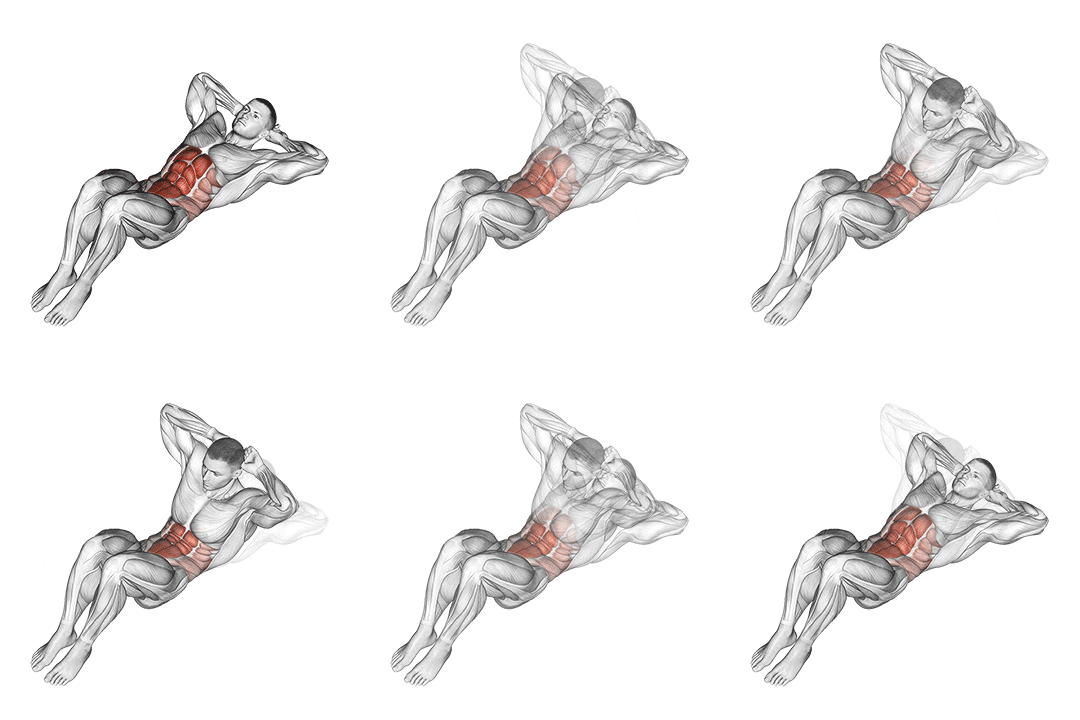
The crunch floor is an abdominal exercise that targets the rectus abdominis, commonly known as the "six-pack" muscles. It is an effective exercise for strengthening and toning the abdominal muscles. ## Instructions 1. Lie flat on your back on a comfortable exercise mat or on the floor. 2. Bend your knees and place your feet flat on the floor, hip-width apart. Keep your arms crossed over your chest, or you can place your hands behind your head with your fingertips lightly touching the sides of your head. 3. Engage your core by drawing your navel toward your spine and pressing your lower back into the floor. 4. Slowly lift your shoulders off the floor, using your abdominal muscles to initiate the movement. Focus on contracting your abs rather than pulling on your neck or using momentum. 5. Exhale as you crunch up, keeping your neck relaxed and your chin slightly lifted. Your shoulder blades should be lifted off the floor. 6. Pause at the top of the movement, squeezing your abdominal muscles for a brief moment. 7. In a controlled manner, lower your shoulders back down to the starting position, inhaling as you do so. Your lower back should remain pressed against the floor throughout the exercise. 8. Repeat for the desired number of repetitions. ## Variations - Modified Crunch: If you're a beginner or have neck or lower back issues, you can perform a modified version of the crunch. Instead of lifting your shoulders off the floor, focus on contracting your abs while keeping your head and shoulders in contact with the floor. - Stability Ball Crunch: Place a stability ball under your lower back to increase the range of motion and engage more muscles. - Weighted Crunch: Hold a dumbbell, medicine ball, or weight plate against your chest to add resistance and increase the difficulty of the exercise. ## Muscles Worked The main muscles targeted during the crunch floor exercise are: - Rectus abdominis (six-pack muscles) - External obliques (side abdominals) - Internal obliques (deep abdominals) - Transverse abdominis (deep core stabilizer) ## Common Mistakes - Using neck muscles: Avoid pulling on your neck or leading the movement with your head. Keep your neck relaxed and focus on using your abdominal muscles to lift your shoulders. - Using momentum: Perform the crunch in a slow and controlled manner. Avoid swinging or using momentum to lift your shoulders off the floor. - Lifting your lower back: Keep your lower back pressed against the floor throughout the exercise. Lifting your lower back can strain the spine and take away the focus from the abdominal muscles. ## Safety Precautions - If you have any pre-existing medical conditions or concerns, consult with a healthcare professional before attempting this exercise. - Start with a comfortable range of motion and gradually increase it as your core strength improves. - If you experience any pain or discomfort during the exercise, stop immediately and reassess your form. - Engage your core and breathe properly throughout the exercise to maintain stability and prevent excessive strain on the lower back.
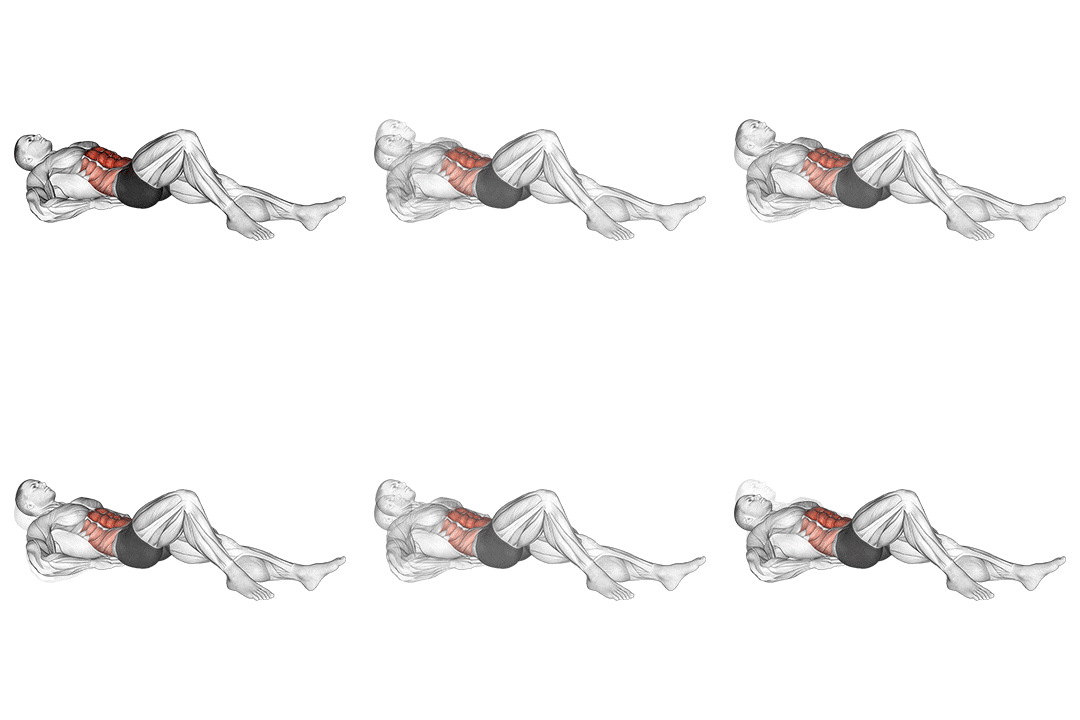
The curl-up is an abdominal exercise that targets the rectus abdominis and the hip flexor muscles. It is commonly used to strengthen the core and improve abdominal endurance. ## Instructions 1. Lie flat on your back on an exercise mat or on the floor. 2. Bend your knees and place your feet flat on the floor, hip-width apart. Keep your arms extended along your sides, palms facing down. 3. Engage your core by drawing your navel toward your spine and pressing your lower back into the floor. 4. Slowly lift your head, neck, and shoulders off the floor, using your abdominal muscles to initiate the movement. Avoid tucking your chin into your chest. 5. Continue to curl up until your shoulder blades are completely off the floor. 6. Hold the position for a moment, maintaining the contraction in your abdominal muscles. 7. Slowly lower your upper body back down to the starting position in a controlled manner. 8. Repeat for the desired number of repetitions. ## Variations - Modified Curl-Up: If you find the full curl-up challenging, you can start with a modified version. Instead of lifting your entire upper body, focus on lifting just your head and shoulders off the floor while keeping your lower back pressed into the ground. - Swiss Ball Curl-Up: Place a stability ball under your lower back and perform the curl-up while maintaining balance on the ball. This variation adds instability and engages additional muscles for stabilization. - Weighted Curl-Up: Hold a weight plate, dumbbell, or medicine ball against your chest to increase resistance and intensify the exercise. ## Muscles Worked The main muscles targeted during the curl-up exercise are: - Rectus abdominis (six-pack muscles) - Hip flexors (iliopsoas and rectus femoris) - External obliques (side abdominals) - Internal obliques (deep abdominals) - Transverse abdominis (deep core stabilizer) ## Common Mistakes - Using momentum: Avoid using momentum to lift your upper body. Focus on using your abdominal muscles to initiate and control the movement. - Straining the neck: Do not pull on your neck or use your neck muscles to lift your head and shoulders. Keep your neck relaxed and focus on engaging your abdominal muscles. - Rounding the lower back: Maintain contact between your lower back and the floor throughout the exercise. Avoid rounding or arching your lower back, as it can lead to strain or discomfort. ## Safety Precautions - If you have any pre-existing medical conditions or concerns, consult with a healthcare professional before attempting this exercise. - Start with a comfortable range of motion and gradually increase it as your core strength improves. - If you experience any pain or discomfort during the exercise, stop immediately and reassess your form. - Engage your core and breathe properly throughout the exercise to maintain stability and prevent excessive strain on the lower back and neck. - If you have a history of lower back problems, it may be advisable to perform this exercise under the guidance of a qualified fitness professional to ensure proper form and technique.
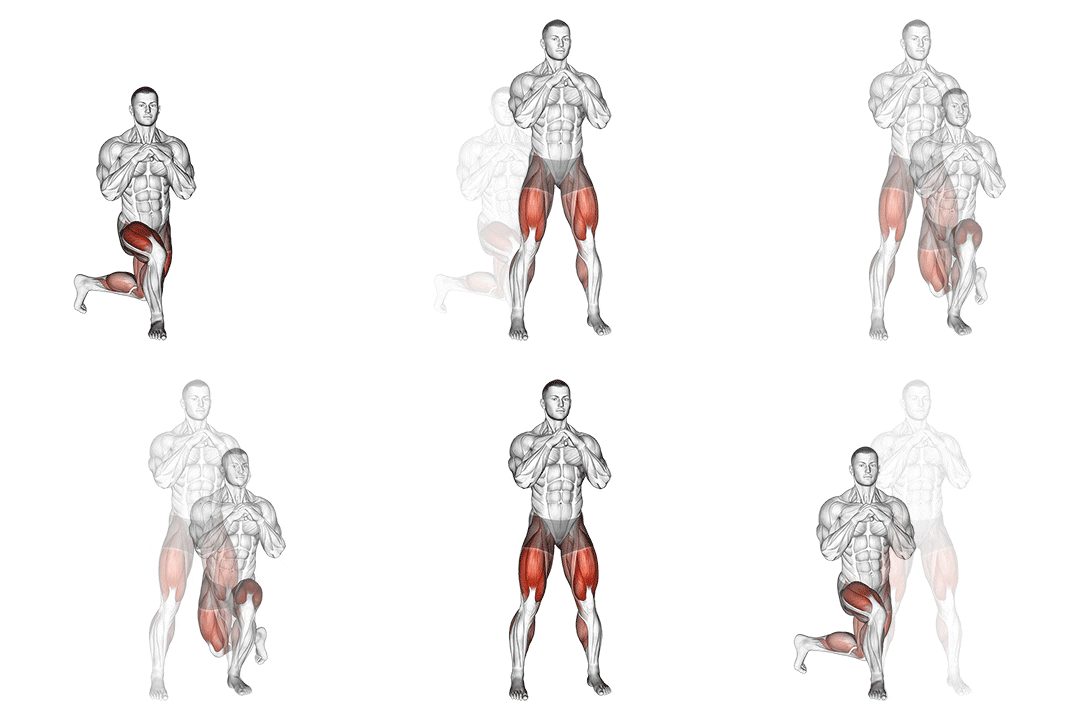
The curtsey squat is a lower body exercise that targets the glutes, quadriceps, hamstrings, and inner thighs. It is a compound exercise that helps improve lower body strength, stability, and balance. ## Instructions 1. Stand with your feet hip-width apart, maintaining good posture with your chest up and shoulders back. 2. Take a step diagonally back and behind your other leg, crossing it over. 3. Bend both knees as you lower your body down into a curtsey position. Your front knee should be aligned with your front foot, and your back knee should be hovering just above the floor. 4. Keep your weight evenly distributed between both feet. 5. Push through your front heel to return to the starting position. 6. Repeat on the other side, stepping diagonally back and behind with the opposite leg. 7. Continue alternating sides for the desired number of repetitions. ## Variations - Dumbbell Curtsey Squat: Hold a dumbbell in each hand, resting them on your shoulders or by your sides, to add resistance and increase the difficulty. - Bodyweight Curtsey Lunge: If you're a beginner or prefer to start without weights, you can perform the curtsey squat using just your bodyweight. - Curtsy Jump Squat: Once you have mastered the basic curtsey squat, you can add an explosive jump into the exercise by pushing off both feet and switching legs in mid-air. ## Muscles Worked The main muscles targeted during the curtsey squat exercise are: - Glutes (gluteus maximus, gluteus medius) - Quadriceps (rectus femoris, vastus lateralis, vastus medialis, vastus intermedius) - Hamstrings (biceps femoris, semitendinosus, semimembranosus) - Adductors (inner thigh muscles) ## Common Mistakes - Leaning forward: Maintain an upright posture throughout the exercise. Avoid leaning forward excessively, as it can put unnecessary strain on the lower back. - Not crossing behind enough: Ensure that your stepping leg crosses far enough behind your other leg to engage the glutes and inner thigh muscles effectively. - Collapsing knee: Keep your knee aligned with your foot during the curtsey squat. Avoid letting your knee cave inwards or outwards. - Neglecting balance: Maintain good balance and control throughout the movement. Engage your core and focus on stable foot placement to avoid wobbling or loss of stability. ## Safety Precautions - Start with a weight or resistance level that is appropriate for your fitness level and gradually increase as you progress. - If you have any knee or hip issues, consult with a healthcare professional before attempting this exercise. - Ensure that the surface you're performing the curtsey squat on is stable and free of any obstacles. - Listen to your body and perform the exercise within your comfortable range of motion. If you feel any pain or discomfort, stop immediately and reassess your form. - Warm up adequately before starting the exercise to prepare your muscles for the movement and help prevent injury.
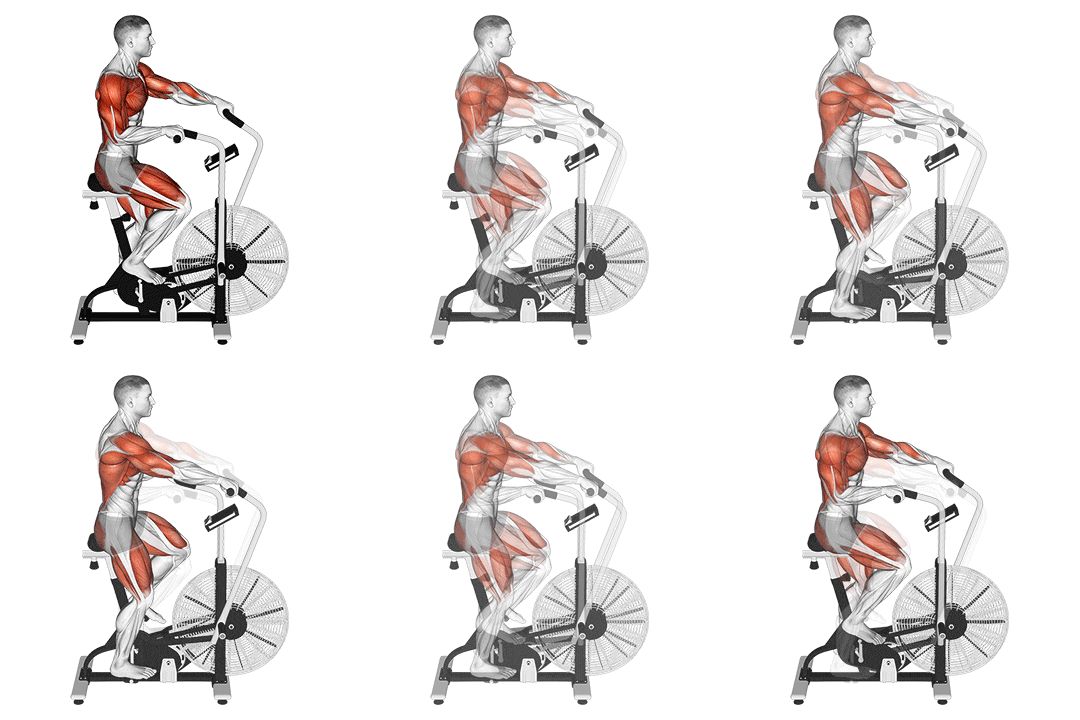
The cycle cross trainer, also known as an elliptical machine or elliptical trainer, is a cardio exercise equipment that simulates the motion of running, walking, or climbing stairs. It provides a low-impact, full-body workout that targets the muscles of the legs, glutes, core, and upper body. The cycle cross trainer is an excellent choice for cardiovascular fitness, calorie burning, and improving overall endurance. ## Instructions 1. Step onto the foot pedals of the cycle cross trainer and grasp the handlebars. 2. Stand tall with your feet hip-width apart, maintaining a neutral posture. 3. Begin by pedaling in a smooth and controlled motion, moving your legs in an elliptical or circular path. 4. Coordinate the movement of your arms with your legs by holding onto the handlebars and allowing your arms to move naturally. 5. Maintain a steady and consistent pace throughout your workout. 6. To increase the intensity, you can adjust the resistance level on the machine. 7. Continue pedaling for the desired duration of your workout. ## Variations - Forward/Reverse Pedaling: Most cycle cross trainers allow you to pedal both forward and in reverse. Alternating between forward and reverse pedaling engages different muscles and adds variety to your workout. - Interval Training: Incorporate intervals of higher intensity by increasing your speed or resistance for a specific period, followed by a recovery phase of lower intensity. This variation helps boost cardiovascular fitness and calorie burn. - High Incline Setting: If your machine has an incline feature, you can increase the incline to target your glutes and hamstrings more intensely. ## Muscles Worked The main muscles targeted or engaged during the cycle cross trainer exercise are: - Quadriceps (front of the thighs) - Hamstrings (back of the thighs) - Glutes (gluteus maximus) - Calves (gastrocnemius and soleus) - Core muscles (abdominals and lower back) - Upper body muscles (biceps, triceps, chest, and back) to a lesser extent ## Common Mistakes - Slouching or Leaning Forward: Maintain an upright posture throughout the exercise. Avoid slouching or leaning on the handlebars excessively. - Gripping Handlebars Too Tightly: Hold the handlebars lightly to maintain balance and stability. Avoid gripping them tightly, as it can lead to tension in the upper body and restrict the natural arm movement. - Using Only Legs: Engage your core and actively involve your upper body by allowing your arms to move naturally with the leg motion. Avoid relying solely on your legs for movement. - Excessive Speed or Resistance: Maintain a controlled pace and avoid setting the resistance too high, especially if you're new to using the cycle cross trainer. Gradually increase the intensity as your fitness level improves. ## Safety Precautions - Familiarize yourself with the operation and safety features of the specific cycle cross trainer you are using. - Adjust the machine to your body size and comfort settings before starting your workout. - Warm up by pedaling at a comfortable pace for a few minutes to prepare your muscles and joints. - Listen to your body and choose an intensity level that suits your fitness level and goals. - Stay hydrated and take breaks as needed during longer workouts. - If you have any pre-existing medical conditions or concerns, consult with a healthcare professional before starting a new exercise program. - Stop immediately if you feel any pain, dizziness, or discomfort, and seek medical attention if necessary.
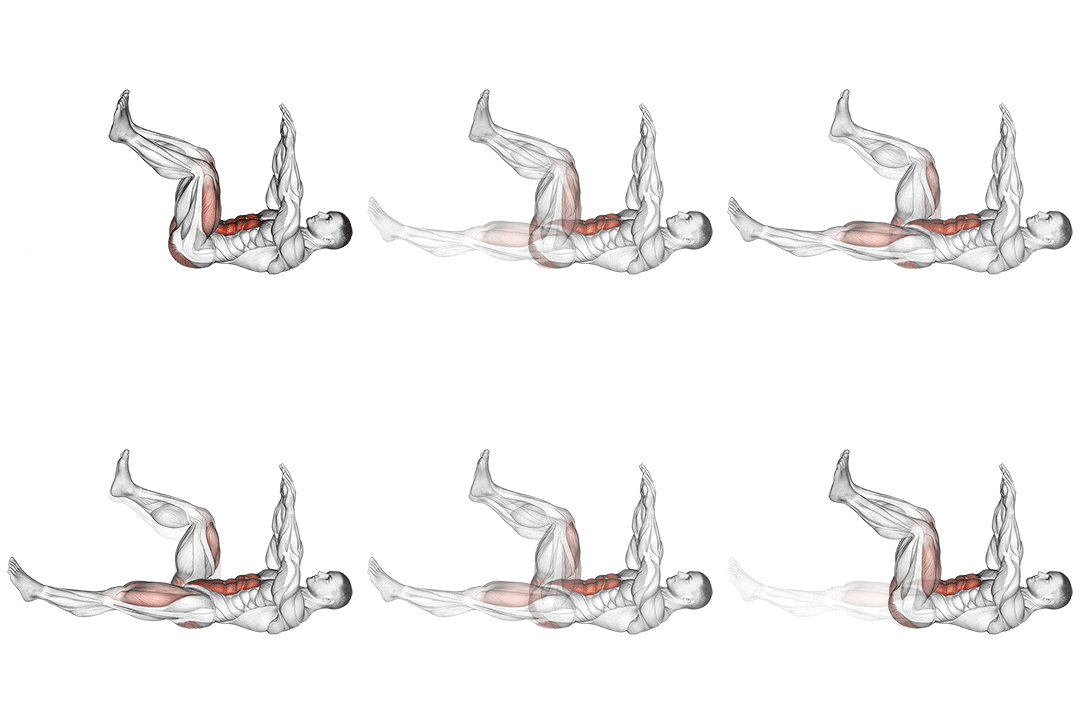
The dead bug exercise is a core exercise that targets the muscles of the abdomen, including the rectus abdominis, transverse abdominis, and obliques. It also engages the stabilizing muscles of the lower back and hip region. The exercise involves maintaining a stable core while moving the arms and legs, promoting core strength, stability, and coordination. ## Instructions 1. Lie flat on your back on an exercise mat or on the floor. 2. Bend your knees and lift your legs, creating a 90-degree angle at the hips and knees. Your shins should be parallel to the floor. 3. Raise your arms straight up toward the ceiling, perpendicular to your torso, with your palms facing each other. 4. Engage your core by drawing your navel toward your spine and pressing your lower back into the floor. 5. Slowly lower your right arm and left leg toward the floor, simultaneously extending them. 6. Stop the movement just before your arm and leg touch the floor. Maintain control and stability in your core throughout. 7. Return your right arm and left leg to the starting position. 8. Repeat the movement on the opposite side, lowering your left arm and right leg toward the floor. 9. Continue alternating sides for the desired number of repetitions. ## Variations - Arm-Only Dead Bug: If you're new to the exercise or want to focus solely on the upper body, you can perform the dead bug movement with the arms only, keeping the legs stationary. - Leg-Only Dead Bug: Similarly, you can isolate the lower body by keeping the arms still and performing the dead bug movement with the legs only. - Stability Ball Dead Bug: Place a stability ball between your arms and legs while performing the dead bug exercise. This variation adds an element of instability, further challenging your core stability and coordination. ## Muscles Worked The main muscles targeted or engaged during the dead bug exercise are: - Rectus abdominis (six-pack muscles) - Transverse abdominis (deep core stabilizer) - Obliques (internal and external) - Hip flexors (iliopsoas) ## Common Mistakes - Arching the Lower Back: Keep your lower back pressed into the floor throughout the exercise. Avoid arching your back excessively, as it can strain the lower back. - Allowing the Shoulders to Lift: Keep your shoulders grounded and maintain stability in your upper body. Avoid lifting or shrugging your shoulders during the movement. - Holding Your Breath: Breathe naturally throughout the exercise. Avoid holding your breath, as it can hinder core engagement and stability. - Losing Core Engagement: Focus on actively engaging your core by drawing your navel toward your spine. Avoid allowing your core to relax or disengage during the movement. ## Safety Precautions - If you have any pre-existing medical conditions or concerns, consult with a healthcare professional before attempting this exercise. - Start with a range of motion and level of difficulty that is comfortable for you. Gradually increase the challenge as your core strength improves. - If you experience any pain or discomfort in your lower back, modify the movement or reduce the range of motion. - Perform the exercise on a mat or padded surface to provide cushioning and support for your back. - Keep your movements slow and controlled, focusing on maintaining stability and proper form. - If you feel any strain or discomfort in your neck or shoulders, double-check your form and make sure you're not tensing or straining these areas. - If you're new to the exercise, it may be helpful to have a fitness professional guide you through proper form and technique to ensure optimal results and reduce the risk of injury.
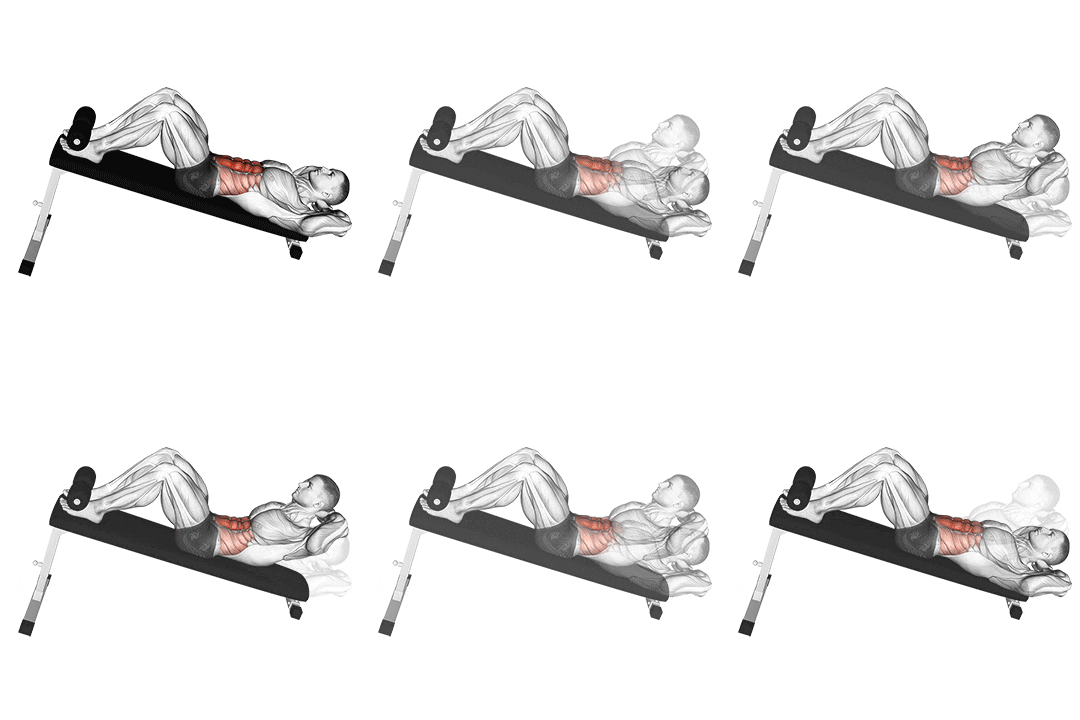
The decline crunch is an abdominal exercise that targets the rectus abdominis, commonly known as the "six-pack" muscles. It involves performing a crunch motion on a decline bench or with your feet elevated, increasing the resistance on the abdominal muscles and intensifying the exercise. ## Instructions 1. Set up a decline bench at an appropriate angle (usually between 30 to 45 degrees) or secure your feet under a stable object to create an elevated position. 2. Lie back on the bench or mat, keeping your knees bent and your feet flat on the bench or floor. 3. Place your hands lightly behind your head, supporting your neck, or cross them over your chest. 4. Engage your core by drawing your navel toward your spine and pressing your lower back into the bench. 5. Slowly lift your upper body off the bench, curling your shoulders towards your pelvis. 6. Exhale as you perform the crunch, focusing on contracting your abdominal muscles. 7. Hold the contracted position briefly, ensuring you feel the tension in your abs. 8. In a controlled manner, lower your upper body back down to the starting position. 9. Repeat the movement for the desired number of repetitions. ## Variations - Weighted Decline Crunch: Hold a weight plate or dumbbell against your chest to add resistance and increase the difficulty of the exercise. - Decline Russian Twist: Perform a decline crunch, and at the top of the movement, twist your torso from side to side, engaging your obliques as well. - Decline Reverse Crunch: Instead of lifting your upper body toward your knees, lift your knees towards your chest, focusing on the lower abdominals. ## Muscles Worked The main muscles targeted or engaged during the decline crunch exercise are: - Rectus abdominis (six-pack muscles) - Obliques (internal and external) ## Common Mistakes - Pulling on the Neck: Avoid pulling on your neck during the crunch. Keep your hands lightly supporting your head, but let your abs do the work. - Using Momentum: Perform the exercise in a slow and controlled manner, focusing on the contraction of your abs. Avoid using momentum to lift your upper body. - Lifting Hips off the Bench: Keep your lower back and hips in contact with the bench throughout the exercise. Avoid lifting your hips or arching your back excessively. - Not Engaging the Core: Ensure you engage your core by actively drawing your navel toward your spine and maintaining proper core stability throughout the movement. ## Safety Precautions - If you have any pre-existing medical conditions or concerns, consult with a healthcare professional before attempting this exercise. - Start with an incline angle that is comfortable for you, and gradually increase the angle as you gain strength and familiarity with the exercise. - Use a stable decline bench or secure your feet properly to ensure stability and prevent any slipping or accidents. - If you experience any discomfort or pain in your lower back, modify the exercise or reduce the range of motion. - Listen to your body and perform the exercise within your comfortable range of motion. Avoid overexerting yourself or pushing through sharp pain. - Warm up your abdominal muscles and other surrounding muscles before performing the exercise to prepare them for the movement. - If you're new to the exercise, it may be helpful to have a fitness professional guide you through proper form and technique to ensure optimal results and reduce the risk of injury.
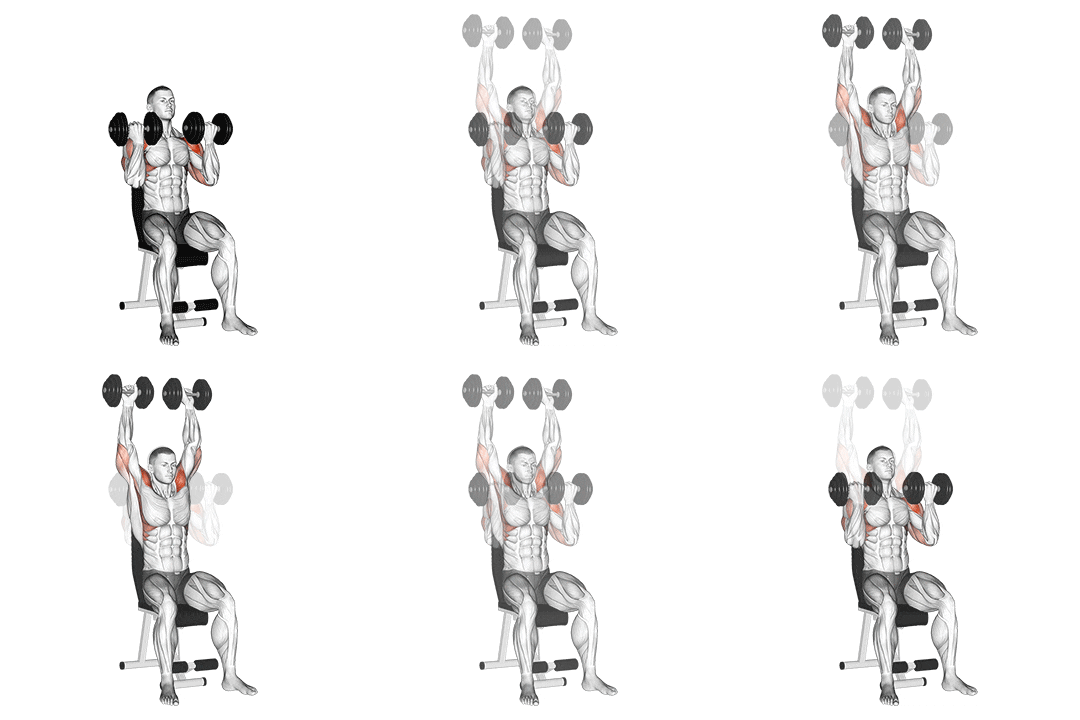
The dumbbell Arnold press is a variation of the traditional dumbbell shoulder press. It is named after the famous bodybuilder and actor, Arnold Schwarzenegger. This exercise primarily targets the shoulder muscles, specifically the deltoids, while also engaging the triceps and upper back muscles. The Arnold press adds an additional rotational component, making it an effective exercise for developing shoulder strength, stability, and mobility. ## Instructions 1. Start by sitting on a bench or chair with a backrest, holding a dumbbell in each hand at shoulder level. Your palms should be facing your body, and your elbows should be bent. 2. Begin the movement by pressing the dumbbells upward, simultaneously rotating your wrists outward, so that your palms end up facing forward at the top of the movement. 3. Continue to press the dumbbells overhead until your arms are fully extended but not locked at the elbows. Keep your core engaged and maintain good posture throughout the exercise. 4. Slowly reverse the movement by rotating your wrists back inward and lowering the dumbbells back to the starting position at shoulder level. 5. Repeat for the desired number of repetitions. ## Variations - If you are new to this exercise or have limited shoulder mobility, you can perform the Arnold press while seated on a bench with back support. This provides added stability and helps maintain proper form. - To increase the difficulty, you can perform the Arnold press while standing, which engages your core muscles for stability. - Another variation is to perform the exercise one arm at a time. While holding one dumbbell at shoulder level, press it overhead, rotate the wrist, and then lower it back to the starting position. Repeat with the other arm. ## Muscles Worked - Primary muscles: Deltoids (shoulders) - Secondary muscles: Triceps, upper back muscles (trapezius and rhomboids) ## Common Mistakes - Using excessive weight: It's important to choose an appropriate weight that allows you to maintain proper form and perform the exercise with control. - Arching the back: Avoid excessive backward leaning or arching of the lower back. Keep your core muscles engaged and maintain a neutral spine throughout the exercise. - Using momentum: Avoid using momentum to lift the dumbbells. Focus on controlled movements and maintain a steady pace. ## Safety Precautions - Start with lighter weights and gradually increase the resistance as you become comfortable with the exercise. - Warm up your shoulder joints and muscles before performing the Arnold press to reduce the risk of injury. - If you have any pre-existing shoulder or back conditions, consult with a fitness professional or healthcare provider before attempting this exercise. - If you experience pain or discomfort during the exercise, stop immediately and seek guidance from a qualified professional.
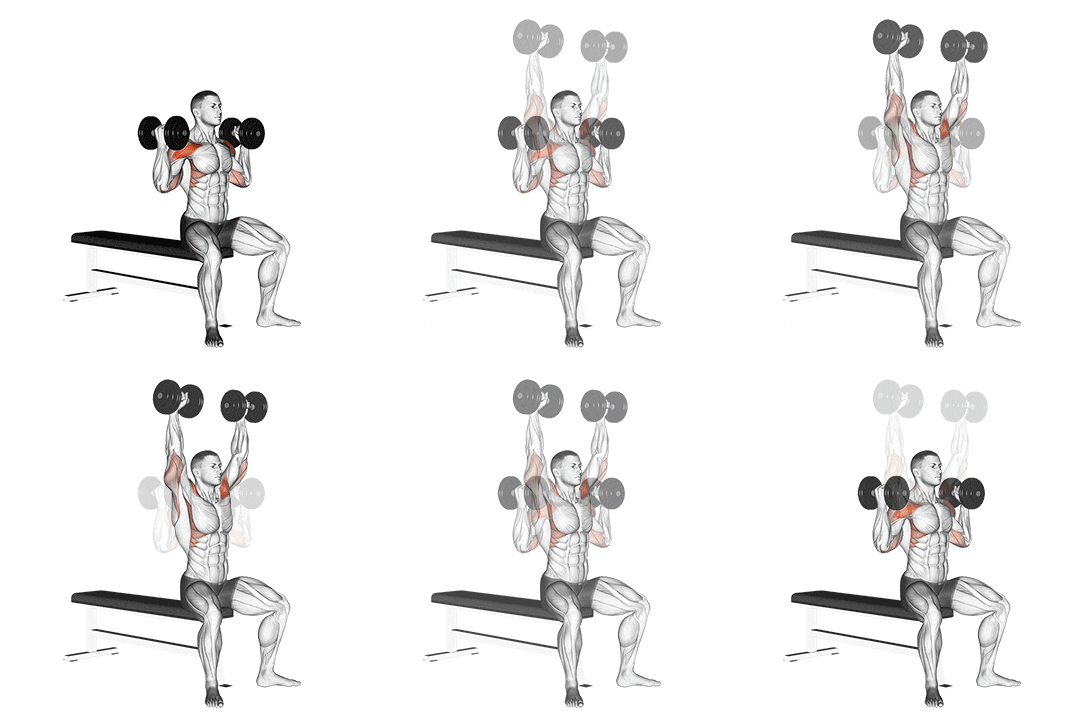
The dumbbell Arnold press is a compound exercise that primarily targets the shoulder muscles, including the deltoids. It is named after Arnold Schwarzenegger, who popularized the exercise. The Arnold press is known for its ability to enhance shoulder strength, stability, and mobility. It involves a rotational movement, which engages additional muscles and provides a well-rounded shoulder workout. ## Instructions 1. Start by standing or sitting on a bench with back support. Hold a dumbbell in each hand at shoulder level, with your palms facing your body and your elbows bent. 2. Initiate the movement by pressing the dumbbells upward while simultaneously rotating your wrists outward. Continue the rotation until your palms face forward at the top of the movement. 3. As you press the dumbbells overhead, extend your arms fully without locking your elbows. Keep your core engaged and maintain good posture throughout the exercise. 4. Slowly reverse the movement by rotating your wrists inward and lowering the dumbbells back to the starting position at shoulder level. 5. Repeat the exercise for the desired number of repetitions. ## Variations - Seated Variation: If you prefer added stability or have limited mobility, perform the Arnold press while seated on a bench with back support. This variation allows you to maintain proper form and focus on targeting the shoulder muscles. - One-Arm Arnold Press: Instead of using both dumbbells simultaneously, perform the exercise one arm at a time. Hold one dumbbell at shoulder level, press it overhead while rotating the wrist, and then lower it back down. Repeat the movement with the other arm. This variation helps improve symmetry and address muscle imbalances. - Standing Variation: Stand up while performing the Arnold press to engage your core muscles for stability and work on overall balance. ## Muscles Worked - Primary Muscles: Deltoids (Anterior, Lateral, and Posterior heads) - Secondary Muscles: Triceps, Upper Back Muscles (Trapezius and Rhomboids), Rotator Cuff Muscles ## Common Mistakes - Using Excessive Weight: Select an appropriate weight that allows you to maintain proper form and control throughout the exercise. Avoid sacrificing form for heavier weights. - Arching the Back: Keep your back straight and avoid excessive arching or leaning backward. Engage your core muscles and maintain proper posture to protect your spine. - Rounding Shoulders: Maintain good shoulder posture throughout the exercise. Avoid shrugging or rounding the shoulders forward, as this may lead to strain or discomfort. - Using Momentum: Perform the Arnold press with controlled movements. Avoid using momentum to lift the dumbbells, as it reduces the effectiveness of the exercise. Focus on a slow and controlled tempo. ## Safety Precautions - Warm up your shoulder joints and muscles with dynamic stretches or light cardio before performing the Arnold press to reduce the risk of injury. - Start with lighter weights if you are new to the exercise or have limited shoulder mobility. Gradually increase the resistance as you gain strength and confidence. - If you have any pre-existing shoulder or back conditions, consult with a fitness professional or healthcare provider before attempting this exercise. - Listen to your body. If you experience pain or discomfort during the exercise, stop immediately and seek guidance from a qualified professional.
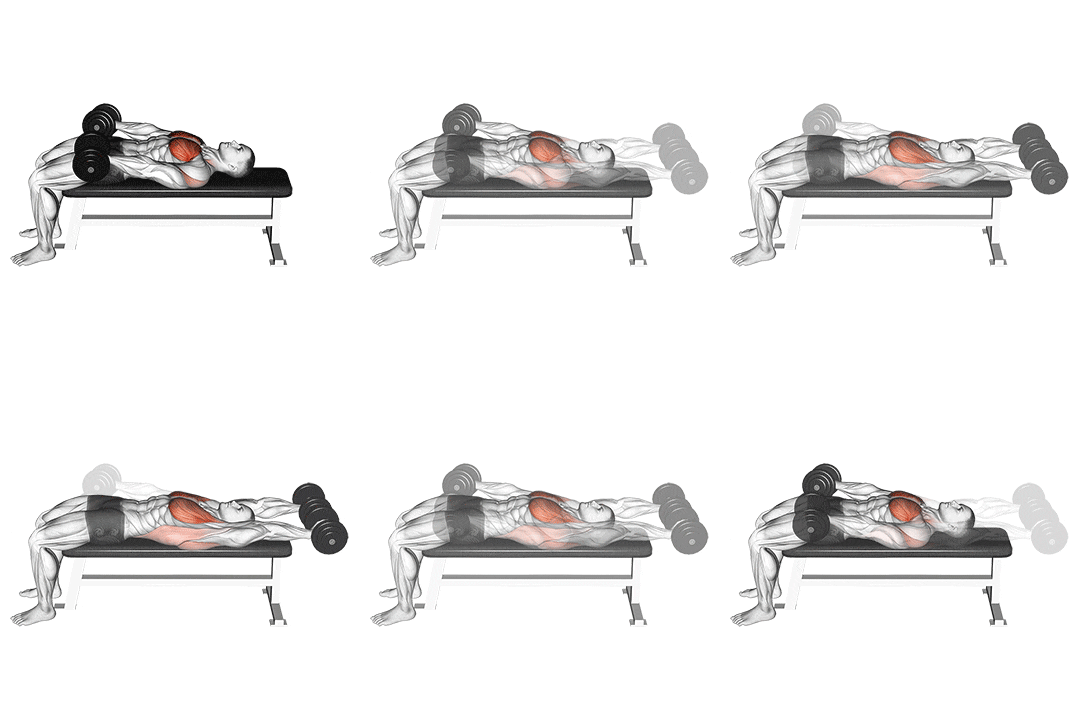
The dumbbell around pullover is a compound exercise that primarily targets the muscles of the back, including the latissimus dorsi (lats) and the muscles of the chest. It involves a combination of a pullover and a chest fly motion, providing an effective workout for the upper body. This exercise helps improve upper body strength, shoulder mobility, and overall muscular development. ## Instructions 1. Lie down on a bench with your feet flat on the floor and your knees bent. 2. Hold a dumbbell in both hands, grasping it with an overhand grip (palms facing down). 3. Extend your arms overhead and slightly bend your elbows. 4. Keeping a slight bend in your elbows throughout the movement, lower the dumbbell in a semicircular motion toward the floor behind your head. Your arms should move around and slightly above your head. 5. Continue the motion until you feel a stretch in your chest and shoulders, but avoid going too far if it causes discomfort or strain. 6. Reverse the motion by raising the dumbbell back to the starting position, following the same semicircular path. 7. Repeat for the desired number of repetitions. ## Variations - One-Arm Dumbbell Around Pullover: Perform the exercise one arm at a time by holding a single dumbbell with one hand. This variation can help address muscle imbalances and provide a different challenge to your core stability. - Stability Ball Dumbbell Around Pullover: Instead of using a bench, lie down on a stability ball while performing the exercise. This variation increases the engagement of your core muscles and challenges your balance. - Cable Machine Pullover: If you have access to a cable machine, you can use a straight or curved bar attachment to perform the pullover motion. This variation provides constant tension throughout the movement. ## Muscles Worked - Primary Muscles: Latissimus Dorsi (Lats), Pectoralis Major (Chest) - Secondary Muscles: Rhomboids, Deltoids, Triceps, Biceps, Core Muscles ## Common Mistakes - Using Excessive Weight: Choose a weight that allows you to maintain proper form and control throughout the exercise. Using weights that are too heavy can lead to loss of control and strain on the shoulders and back. - Arching the Lower Back: Keep your lower back in contact with the bench throughout the exercise. Avoid excessive arching or lifting of the hips, as it may strain the lower back. - Dropping the Dumbbell Too Low: Avoid lowering the dumbbell too far behind your head if it causes discomfort or strain in the shoulders or neck. Find a range of motion that feels comfortable for your body. - Flaring Elbows: Keep your elbows slightly bent and avoid fully extending or locking them during the exercise. This helps maintain tension in the targeted muscles and reduces stress on the joints. ## Safety Precautions - Start with a lighter weight and gradually increase the resistance as you become more comfortable with the exercise. - Ensure that you have proper shoulder mobility before attempting this exercise. If you have any pre-existing shoulder issues, consult with a fitness professional or healthcare provider. - Avoid performing the dumbbell around pullover if you have any current or previous injuries or conditions that may be aggravated by this exercise. - Maintain a controlled tempo throughout the exercise and avoid using momentum to swing the dumbbell. Focus on the quality of the movement rather than the speed or the amount of weight lifted. - If you experience any pain or discomfort during the exercise, stop immediately and consult with a qualified professional.