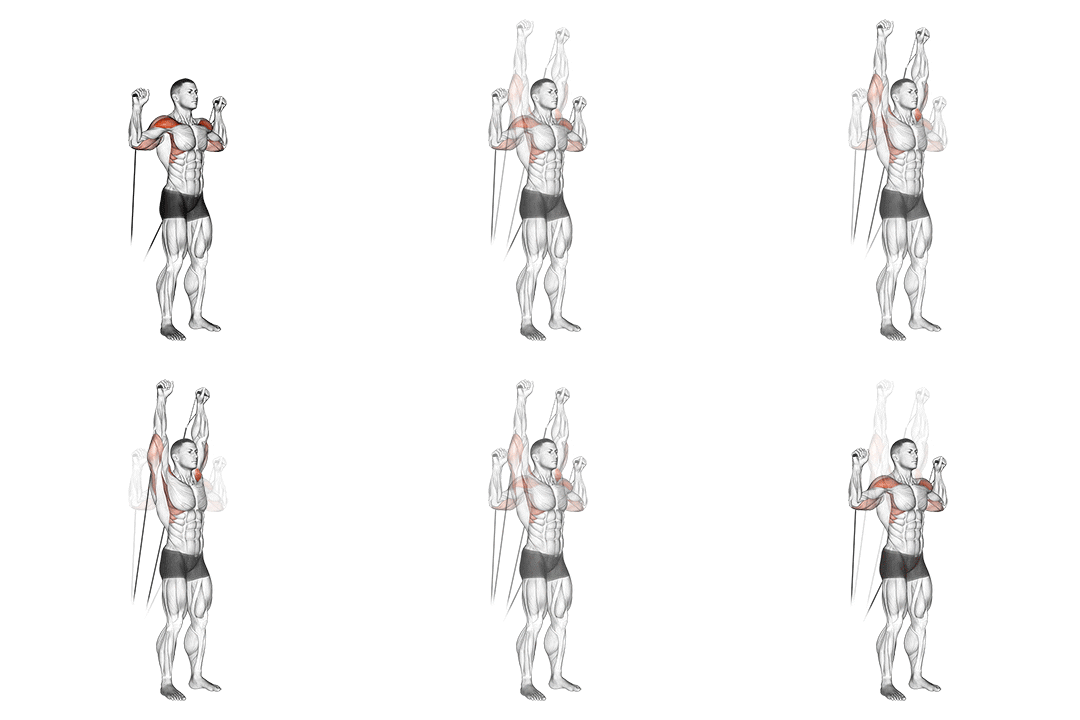
The cable shoulder press is an exercise that primarily targets the deltoid muscles of the shoulders. It involves pressing the cables overhead in a controlled manner, providing resistance throughout the entire range of motion. This exercise helps in building strength and muscular endurance in the shoulders, improving upper body stability, and enhancing overall shoulder development. ## Instructions 1. Start by adjusting the height of the cable pulleys to shoulder level. Stand in the center of the cable machine with your feet shoulder-width apart and your knees slightly bent. 2. Grab the handles of the cable attachments with an overhand grip (palms facing forward). Position your hands slightly wider than shoulder-width apart. 3. Pull the handles towards your shoulders while keeping your elbows pointing down and slightly forward. 4. Stand tall, brace your core, and keep your chest up. This is your starting position. 5. Begin the movement by pressing the handles upward, fully extending your arms overhead. Maintain a slight bend in your elbows throughout the exercise to keep tension on the shoulders and prevent strain on the joints. 6. Pause briefly at the top of the movement, feeling the contraction in your shoulder muscles. 7. Slowly lower the handles back to the starting position under control, allowing your shoulders to stretch without fully relaxing the muscles. 8. Repeat for the desired number of repetitions. ## Variations - Seated Cable Shoulder Press: Perform the same exercise while sitting on a bench or an adjustable seat with back support. - Single-Arm Cable Shoulder Press: Instead of using both arms simultaneously, perform the exercise with one arm at a time, alternating between sides. - Reverse Cable Shoulder Press: Stand with your back to the cable machine and face the pulleys. Perform the shoulder press by pulling the handles from behind your body and pressing them forward and upward. ## Muscles Worked The cable shoulder press primarily targets the following muscles: - Deltoids (front, middle, and rear heads) - Triceps (secondary muscle) ## Common Mistakes - Using excessive momentum: Avoid using momentum or swinging your body to lift the weights. Focus on controlled movements and engage your shoulder muscles throughout the exercise. - Shrugging the shoulders: Maintain good posture and avoid shrugging your shoulders towards your ears. Keep them relaxed and stable throughout the movement. - Overarching the lower back: Keep your core engaged and maintain a neutral spine position. Avoid excessive arching of the lower back to prevent strain. - Locking out the elbows: Maintain a slight bend in your elbows throughout the exercise to avoid hyperextension and minimize stress on the joints. ## Safety Precautions - Start with lighter weights and gradually increase the resistance as you become comfortable with the exercise. - If you have any shoulder or joint issues, consult with a fitness professional or healthcare provider before performing the cable shoulder press. - Maintain proper form and technique to avoid injury. If you experience any pain or discomfort, stop the exercise and seek medical advice. - Use a controlled and smooth motion throughout the exercise, avoiding jerky or sudden movements. - Keep the cable handles secure and avoid letting them slip from your grip during the exercise.
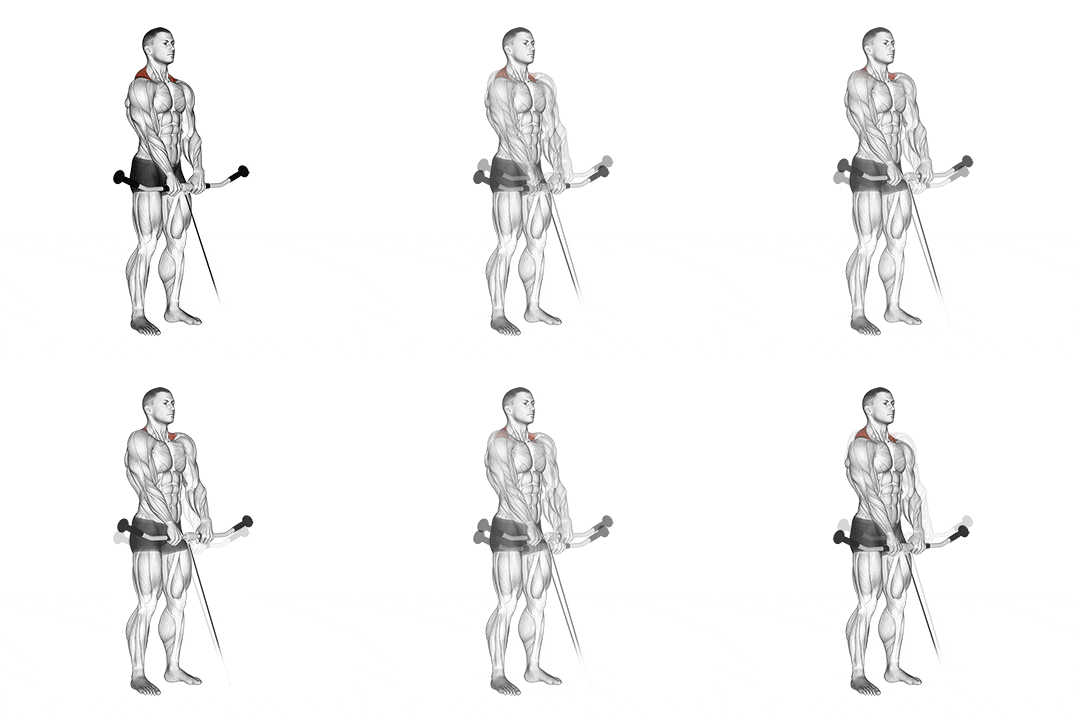
The cable shrug is an exercise that primarily targets the trapezius muscles of the upper back and shoulders. It involves lifting and squeezing the shoulders in an upward motion while holding onto the cable handles. This exercise helps in developing strength and size in the upper back, improving posture, and enhancing overall upper body stability. ## Instructions 1. Start by adjusting the height of the cable pulleys to about waist level. Stand in the center of the cable machine with your feet shoulder-width apart and your knees slightly bent. 2. Grab the handles of the cable attachments with an overhand grip (palms facing your body). Position your hands shoulder-width apart. 3. Keep your arms straight and allow your shoulders to relax in a neutral position. 4. Stand tall, brace your core, and keep your chest up. This is your starting position. 5. Initiate the movement by shrugging your shoulders straight upward, focusing on lifting them towards your ears. 6. Squeeze your shoulder blades together at the top of the movement and hold for a brief pause, emphasizing the contraction in your upper back muscles. 7. Slowly lower your shoulders back down to the starting position, maintaining control throughout the exercise. 8. Repeat for the desired number of repetitions. ## Variations - Single-Arm Cable Shrug: Instead of using both arms simultaneously, perform the exercise with one arm at a time, alternating between sides. - Dumbbell Shrug: Stand upright while holding a dumbbell in each hand with your palms facing your body. Shrug your shoulders upward in the same manner as the cable shrug. - Barbell Shrug: Stand with your feet shoulder-width apart, holding a barbell in front of you with an overhand grip. Shrug your shoulders upward, lifting the barbell as high as possible while maintaining control. ## Muscles Worked The cable shrug primarily targets the following muscles: - Trapezius (upper, middle, and lower fibers) - Levator scapulae (secondary muscle) ## Common Mistakes - Rounding the shoulders: Avoid rounding or hunching your shoulders forward during the exercise. Keep them back and down to maintain proper posture. - Using excessive weight: Focus on using a weight that allows you to maintain proper form and range of motion. Using excessively heavy weights may compromise your technique and increase the risk of injury. - Not fully contracting the muscles: At the top of the movement, make sure to squeeze your shoulder blades together and feel the contraction in your upper back muscles. Avoid simply going through the motions without engaging the targeted muscles. - Shrugging the neck: Keep your neck relaxed and avoid shrugging or tensing the muscles around your neck. The movement should primarily involve the shoulders. ## Safety Precautions - Start with lighter weights and gradually increase the resistance as you become comfortable with the exercise. - If you have any shoulder or neck issues, consult with a fitness professional or healthcare provider before performing the cable shrug. - Maintain proper form and technique to avoid injury. If you experience any pain or discomfort, stop the exercise and seek medical advice. - Use a controlled and smooth motion throughout the exercise, avoiding jerky or sudden movements. - Keep the cable handles secure and avoid letting them slip from your grip during the exercise.
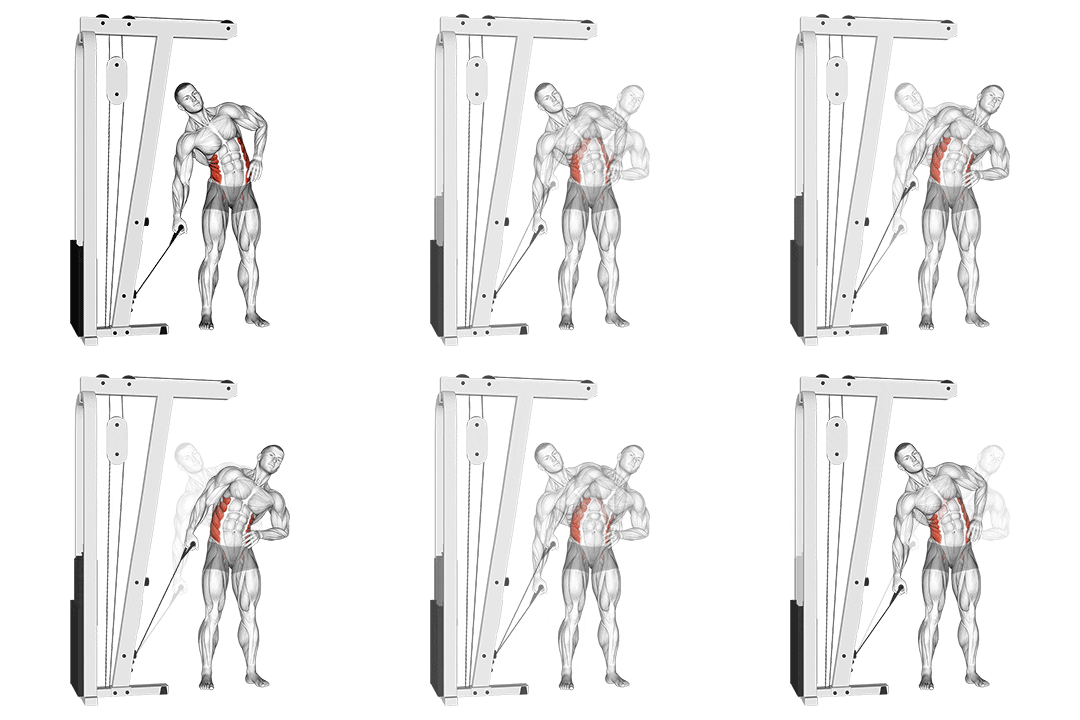
The cable side bend is an exercise that primarily targets the oblique muscles, located on the sides of the abdomen. It involves bending sideways while holding onto a cable handle, providing resistance to the lateral movement. This exercise helps in strengthening and toning the obliques, improving core stability, and enhancing the aesthetics of the waistline. ## Instructions 1. Start by adjusting the height of the cable pulley to the lowest position. Stand sideways to the cable machine with your feet shoulder-width apart and your knees slightly bent. The cable handle should be in the hand farthest from the machine. 2. Grab the handle with an underhand grip (palm facing up) and position your hand next to your hip. Keep your arm straight but not locked. 3. Stand tall, brace your core, and maintain good posture with your chest up and shoulders back. This is your starting position. 4. Initiate the movement by bending sideways towards the cable machine, lowering the handle as far as comfortably possible. 5. Keep your core engaged and focus on using the oblique muscles to perform the movement. Avoid using momentum or leaning forward or backward. 6. Pause briefly at the bottom of the movement, feeling the stretch in your oblique muscles. 7. Slowly return to the starting position by raising your torso back to an upright position, keeping the movement controlled and emphasizing the contraction in your obliques. 8. Repeat for the desired number of repetitions and then switch sides to work the opposite oblique muscles. ## Variations - Dumbbell Side Bend: Instead of using a cable machine, hold a dumbbell in one hand and perform the side bend by lowering the weight towards the side. - Weighted Side Bend: Hold a weight plate or a kettlebell in one hand and perform the side bend using the same technique as the cable side bend. ## Muscles Worked The cable side bend primarily targets the following muscles: - Obliques (external and internal) ## Common Mistakes - Leaning too far forward or backward: Maintain an upright position throughout the exercise and avoid leaning excessively in any direction. - Using excessive weight: Focus on using a weight or resistance level that allows you to perform the exercise with proper form and range of motion. Using too much weight may compromise your technique and strain your lower back. - Bending forward at the hips: The movement should be a lateral bend rather than a forward or backward bend. Keep your hips stationary and focus on bending from the side. - Raising the shoulder: Avoid shrugging or raising the shoulder on the side of the movement. Keep your shoulders relaxed and down throughout the exercise. ## Safety Precautions - Start with lighter weights or resistance and gradually increase as you become comfortable with the exercise. - If you have any pre-existing back or oblique injuries, consult with a fitness professional or healthcare provider before performing the cable side bend. - Maintain proper form and technique to avoid injury. If you experience any pain or discomfort, stop the exercise and seek medical advice. - Keep your movements controlled and avoid jerky or sudden motions. - Use a weight or resistance level that challenges your oblique muscles without compromising your stability and control. - Be mindful of the cable handle and avoid letting it slip from your grip during the exercise.
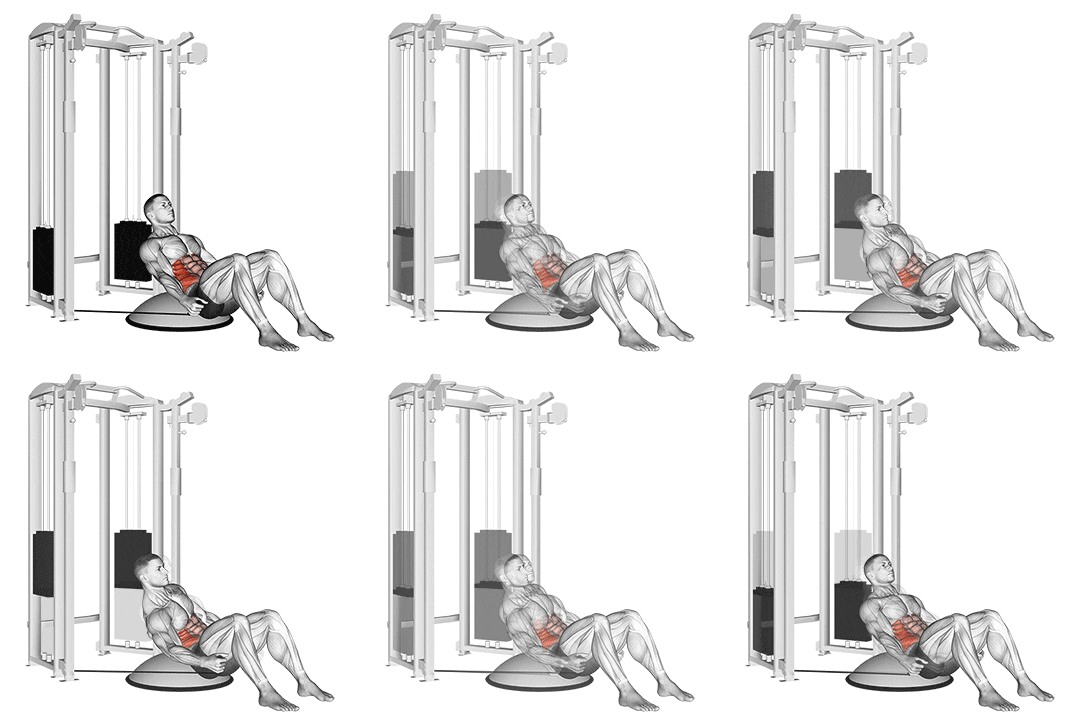
The cable side bend crunch on a Bosu ball is an advanced exercise that targets the oblique muscles while also engaging the core and improving balance. By incorporating the Bosu ball, it adds an element of instability, requiring increased core activation and control throughout the movement. ## Instructions 1. Start by placing a Bosu ball on the floor with the rounded side facing up. 2. Adjust the height of the cable pulley to the lowest position. Stand sideways to the cable machine, with the Bosu ball on the side closest to the machine. 3. Place your foot closest to the cable machine on the center of the Bosu ball and position your other foot slightly behind you for balance. 4. Grab the handle with an underhand grip (palm facing up) and position your hand next to your hip. Keep your arm straight but not locked. 5. Stand tall, brace your core, and maintain good posture with your chest up and shoulders back. This is your starting position. 6. Initiate the movement by bending sideways towards the cable machine while simultaneously pulling your knee up and crunching your obliques. 7. Lower your knee and torso back to the starting position in a controlled manner. 8. Repeat for the desired number of repetitions and then switch sides to work the opposite oblique muscles. ## Variations - Bodyweight Side Bend Crunch: Perform the same movement without the cable machine, using only your body weight for resistance. - Dumbbell Side Bend Crunch: Hold a dumbbell in the hand opposite to the Bosu ball and perform the side bend crunch while maintaining balance on the Bosu ball. ## Muscles Worked The cable side bend crunch primarily targets the following muscles: - Obliques (external and internal) - Rectus abdominis (core muscles) - Hip flexors (secondary muscles) ## Common Mistakes - Poor balance and instability: Focus on maintaining proper balance on the Bosu ball throughout the exercise. Start with a stable stance and engage your core for stability. - Using excessive weight or resistance: Use a weight or resistance level that allows you to maintain control and stability on the Bosu ball. Avoid using weights that compromise your form and balance. - Allowing the lower back to arch excessively: Keep your core engaged and your lower back stable throughout the movement. Avoid excessive arching or rounding of the lower back. - Rushing through the exercise: Perform the exercise with slow and controlled movements, focusing on the contraction of the oblique muscles and maintaining balance on the Bosu ball. ## Safety Precautions - This exercise is more advanced and requires good balance and core stability. Ensure you are comfortable and proficient with standard cable side bends and Bosu ball exercises before attempting this combination. - Start with lighter weights or resistance and gradually increase as you become comfortable and confident in your balance. - If you have any pre-existing back or oblique injuries, consult with a fitness professional or healthcare provider before performing the cable side bend crunch on a Bosu ball. - Maintain proper form and technique to avoid injury. If you experience any pain or discomfort, stop the exercise and seek medical advice. - Use the Bosu ball on a non-slip surface to prevent slipping or sliding during the exercise. - Be cautious and mindful of the cable handle to avoid letting it slip from your grip during the exercise.
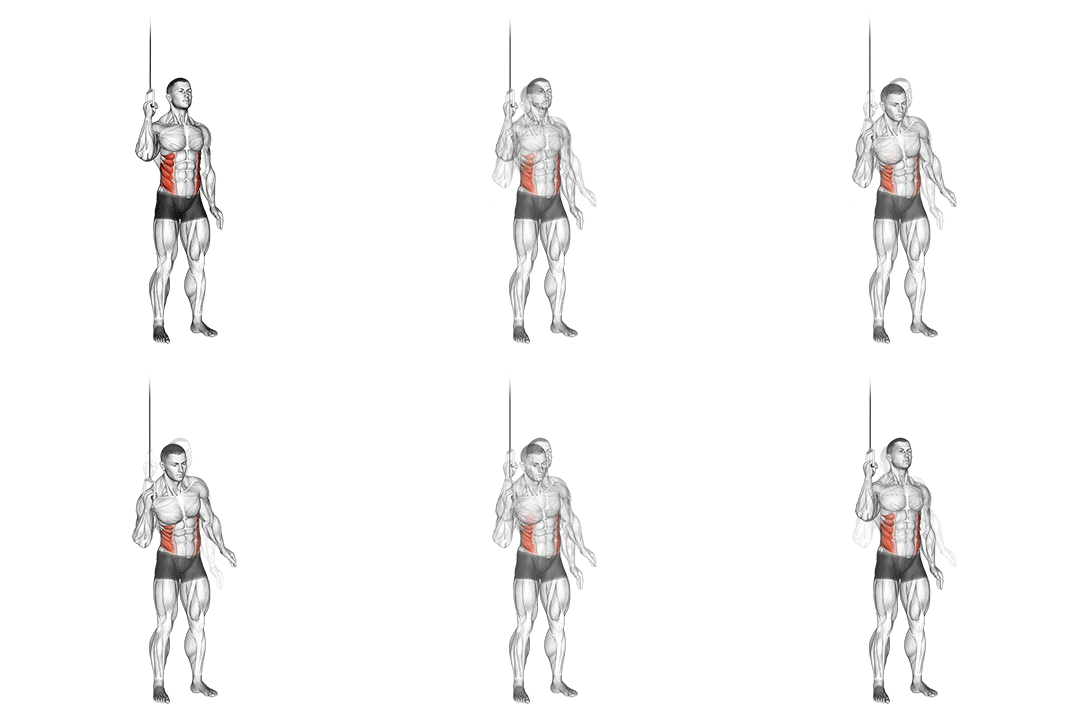
The cable side crunch is an exercise that targets the oblique muscles, which are located on the sides of the abdomen. It involves performing a controlled side bend while holding onto a cable handle, providing resistance to the lateral movement. This exercise helps strengthen and tone the obliques, improving core stability, and enhancing overall abdominal definition. ## Instructions 1. Start by adjusting the height of the cable pulley to approximately shoulder level. Stand sideways to the cable machine, with your feet shoulder-width apart and knees slightly bent. The cable handle should be in the hand farthest from the machine. 2. Grab the handle with an underhand grip (palm facing up) and position your hand next to your ear. Your elbow should be bent, pointing out to the side. 3. Stand tall, brace your core, and maintain good posture with your chest up and shoulders back. This is your starting position. 4. Initiate the movement by bending sideways towards the cable machine, leading with your elbow and focusing on squeezing your oblique muscles. 5. Perform a side crunch by simultaneously bringing your elbow down towards your hip and contracting your obliques. 6. Pause briefly at the bottom of the movement, feeling the contraction in your oblique muscles. 7. Slowly return to the starting position by extending your torso and raising your elbow back up, maintaining control and emphasizing the engagement of the obliques. 8. Repeat for the desired number of repetitions and then switch sides to work the opposite oblique muscles. ## Variations - Dumbbell Side Crunch: Instead of using a cable machine, hold a dumbbell in the hand opposite to the direction you are bending and perform the side crunch by lowering the weight towards the side. - Bodyweight Side Crunch: Perform the same movement without any external resistance, using only your body weight for resistance. ## Muscles Worked The cable side crunch primarily targets the following muscles: - Obliques (external and internal) ## Common Mistakes - Using excessive weight or resistance: Start with a weight or resistance level that allows you to maintain proper form and range of motion. Using too much weight can compromise your technique and increase the risk of injury. - Relying on momentum: Avoid using momentum to perform the movement. Instead, focus on a slow and controlled motion, engaging the oblique muscles throughout the exercise. - Allowing the torso to rotate: Keep your torso facing forward throughout the exercise. Avoid rotating or twisting your torso as you perform the side crunch. - Holding the breath: Remember to breathe consistently throughout the exercise. Inhale during the starting position and exhale as you perform the side crunch. ## Safety Precautions - Start with lighter weights or resistance and gradually increase as you become comfortable and confident with the exercise. - If you have any pre-existing back or oblique injuries, consult with a fitness professional or healthcare provider before performing the cable side crunch. - Maintain proper form and technique to avoid injury. If you experience any pain or discomfort, stop the exercise and seek medical advice. - Use a controlled and smooth motion throughout the exercise, avoiding jerky or sudden movements. - Be cautious and mindful of the cable handle to avoid letting it slip from your grip during the exercise.
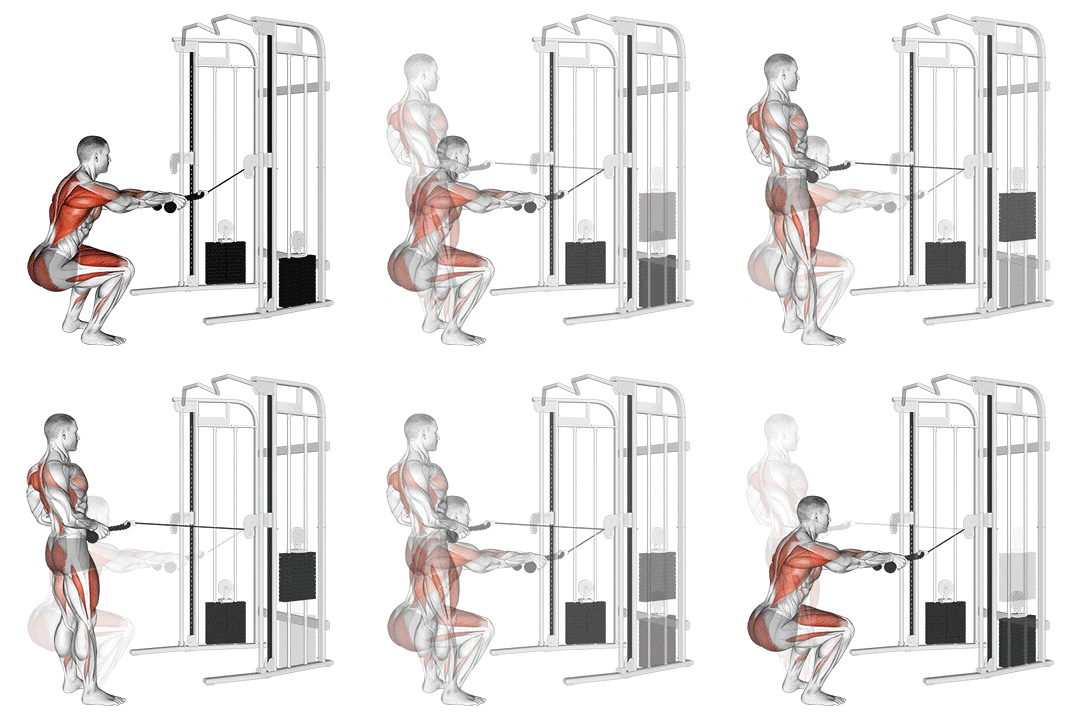
The cable squat row with a rope attachment is a compound exercise that targets multiple muscle groups, including the back, legs, and core. It combines a squat movement with a rowing motion, providing a full-body workout. This exercise helps in building strength and muscle mass in the back and legs, improving posture, and enhancing overall functional fitness. ## Instructions 1. Start by setting the cable pulley at a low position and attaching a rope handle. 2. Stand facing the cable machine with your feet shoulder-width apart. Hold the rope attachment with an overhand grip (palms facing each other) and extend your arms fully in front of you. Your torso should be upright, and your knees slightly bent. This is your starting position. 3. Engage your core, maintain a neutral spine, and brace your abs. 4. Begin the movement by bending at the hips and knees, lowering your body into a squat position. Keep your chest up, and ensure that your knees track in line with your toes. 5. As you reach the bottom of the squat, simultaneously pull the rope attachment towards your body by retracting your shoulder blades and flexing your elbows. Focus on squeezing your back muscles during the rowing motion. 6. Pause briefly at the top of the row, feeling the contraction in your back muscles. 7. Extend your arms back out in front of you while simultaneously standing back up to the starting position. 8. Repeat for the desired number of repetitions. ## Variations - Wide Grip Cable Squat Row: Use a wider grip on the rope attachment to emphasize different muscles in the back, such as the lats. - Single-Arm Cable Squat Row: Perform the exercise using only one arm at a time, alternating between sides. - Cable Squat Pull: Instead of rowing the rope attachment towards your body, perform a pulling motion, bringing the attachment towards your chin or chest. ## Muscles Worked The cable squat row primarily targets the following muscles: - Latissimus dorsi (lats) - Rhomboids - Trapezius (traps) - Erector spinae (lower back) - Glutes - Quadriceps - Hamstrings - Core muscles ## Common Mistakes - Rounding the back: Maintain a neutral spine throughout the exercise. Avoid rounding or arching your back, as this can strain the lower back. - Using momentum: Focus on performing the exercise with controlled movements. Avoid using momentum or swinging your body to complete the rowing motion. - Allowing the knees to collapse inward: Keep your knees aligned with your toes during the squat portion of the exercise. Avoid letting your knees cave inward, as this can strain the knee joints. - Not engaging the core: Remember to brace your core throughout the exercise. This helps stabilize the spine and protect against potential injury. ## Safety Precautions - Start with lighter weights or resistance and gradually increase as you become comfortable and confident with the exercise. - Maintain proper form and technique to avoid injury. If you experience any pain or discomfort, stop the exercise and seek medical advice. - Keep your movements controlled and avoid jerking or sudden motions. - Ensure that the cable machine is securely set up and the rope attachment is properly attached. - Use a weight or resistance level that challenges you without compromising your form and stability. - If you have any pre-existing back or knee injuries, consult with a fitness professional or healthcare provider before performing the cable squat row.
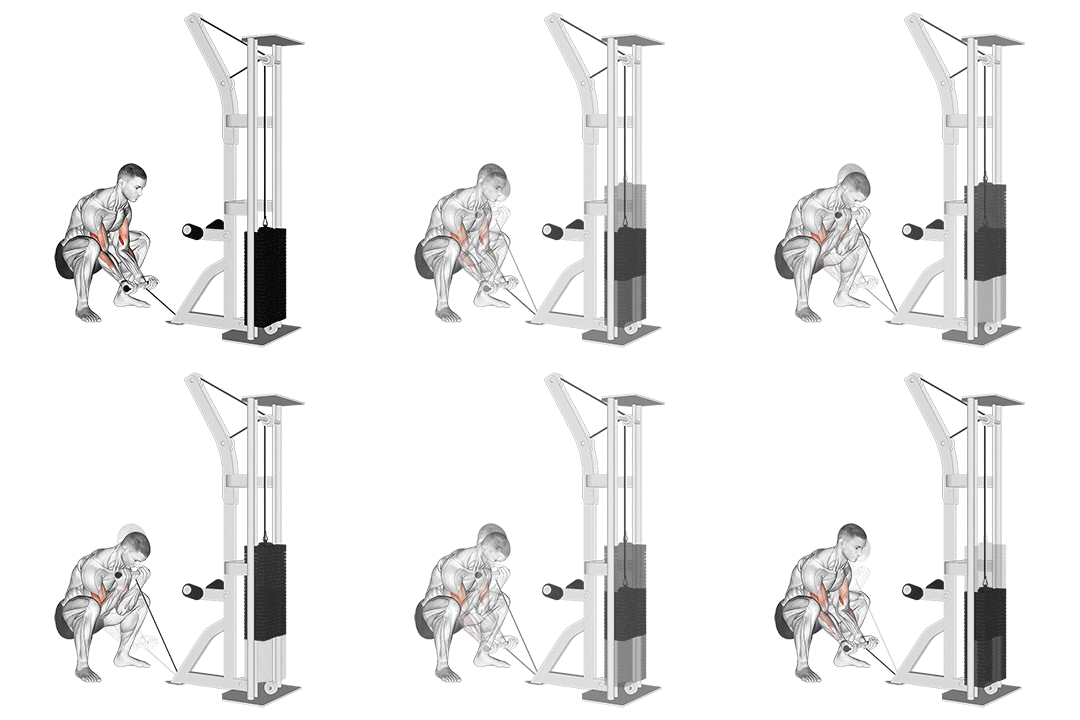
The cable squatting curl is a compound exercise that targets the muscles of the biceps and the lower body. It combines a squatting movement with a bicep curl, providing a challenging and effective workout for both the upper and lower body. This exercise helps in developing arm strength and size while also engaging the muscles of the legs and core. ## Instructions 1. Start by setting the cable pulley at a low position and attaching a straight bar handle. 2. Stand facing the cable machine with your feet shoulder-width apart. Hold the straight bar handle with an underhand grip (palms facing up) and let your arms hang straight down in front of you. This is your starting position. 3. Engage your core, maintain an upright posture, and keep your chest up throughout the exercise. 4. Begin the movement by bending at the hips and knees, lowering your body into a squat position. Keep your weight on your heels and ensure that your knees track in line with your toes. 5. As you reach the bottom of the squat, maintain the squat position and initiate the bicep curl by flexing your elbows and curling the straight bar handle towards your shoulders. 6. Squeeze your biceps at the top of the curl and then slowly lower the straight bar handle back down to the starting position. 7. Extend your legs and stand back up to the starting position, maintaining control and stability throughout the exercise. 8. Repeat for the desired number of repetitions. ## Variations - Single-Arm Cable Squatting Curl: Perform the exercise using only one arm at a time, alternating between sides. - Dumbbell Squatting Curl: Hold a dumbbell in each hand, with your arms fully extended down, and perform the squatting curl motion. - Resistance Band Squatting Curl: Use a resistance band instead of a cable machine to perform the squatting curl. Attach the band under your feet and hold the ends in your hands. ## Muscles Worked The cable squatting curl primarily targets the following muscles: - Biceps brachii - Quadriceps - Hamstrings - Glutes - Core muscles (abdominals and lower back) as stabilizers ## Common Mistakes - Rounding the back: Maintain a neutral spine throughout the exercise. Avoid rounding or arching your back, as this can strain the lower back. - Using momentum: Focus on performing the exercise with controlled movements. Avoid using momentum or swinging your body to complete the bicep curl. - Allowing the knees to collapse inward: Keep your knees aligned with your toes during the squat portion of the exercise. Avoid letting your knees cave inward, as this can strain the knee joints. - Not engaging the core: Remember to brace your core throughout the exercise. This helps stabilize the spine and protect against potential injury. ## Safety Precautions - Start with lighter weights or resistance and gradually increase as you become comfortable and confident with the exercise. - Maintain proper form and technique to avoid injury. If you experience any pain or discomfort, stop the exercise and seek medical advice. - Keep your movements controlled and avoid jerking or sudden motions. - Ensure that the cable machine is securely set up and the straight bar handle is properly attached. - Use a weight or resistance level that challenges you without compromising your form and stability. - If you have any pre-existing back or knee injuries, consult with a fitness professional or healthcare provider before performing the cable squatting curl.
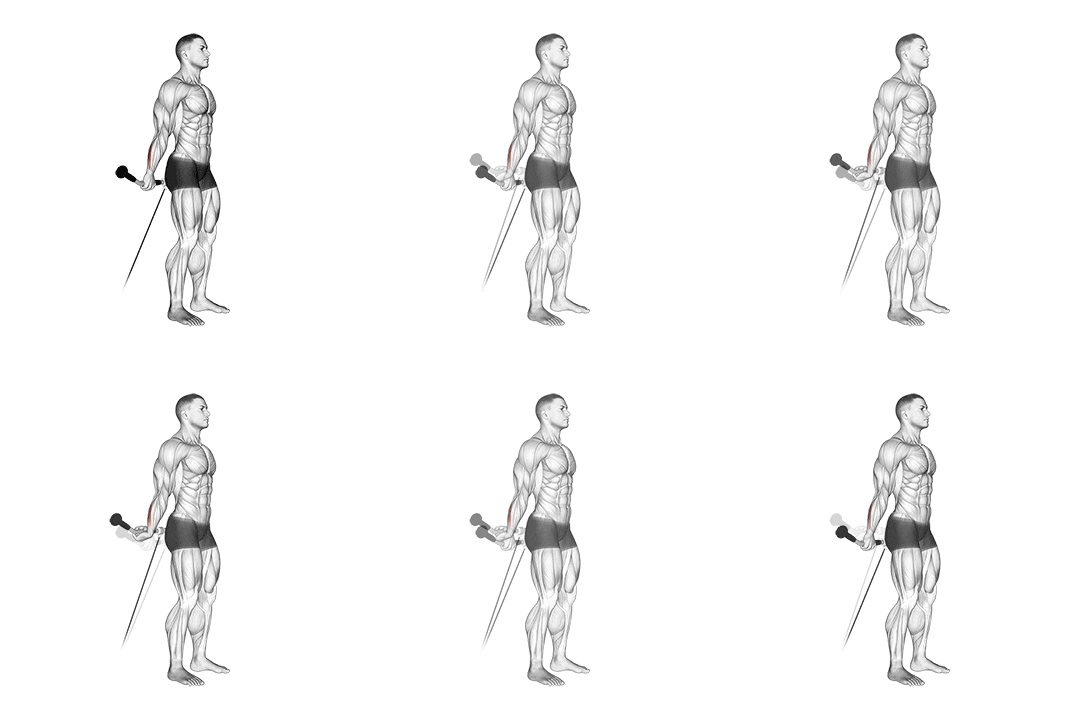
The cable standing back wrist curl is an exercise that targets the muscles of the forearms, specifically the extensor muscles. It involves extending the wrists against resistance provided by a cable machine. This exercise helps in strengthening the wrists and improving grip strength, which is beneficial for various activities such as weightlifting, sports, and everyday tasks that require forearm strength. ## Instructions 1. Start by setting the cable pulley at a low position and attaching a straight bar handle. 2. Stand facing away from the cable machine with your feet shoulder-width apart. Hold the straight bar handle with an overhand grip (palms facing down) and let your arms hang straight down in front of you. This is your starting position. 3. Engage your core and maintain an upright posture throughout the exercise. 4. Keep your upper arms stationary and perpendicular to the floor. Your elbows should be slightly bent. 5. Initiate the movement by extending your wrists, pulling the straight bar handle upward and away from your body. 6. Continue the upward motion until your wrists are fully extended, and you feel a contraction in your forearm muscles. 7. Hold the contracted position for a brief moment, squeezing your forearms. 8. Slowly lower the straight bar handle back down to the starting position, allowing your wrists to flex and return to a neutral position. 9. Repeat for the desired number of repetitions. ## Variations - Rope Attachment: Instead of using a straight bar handle, you can attach a rope handle to the cable machine. Grip the ends of the rope with an overhand grip, and perform the same wrist extension motion. - One-Arm Cable Standing Back Wrist Curl: Perform the exercise one arm at a time by using a single cable attachment and focusing on each forearm individually. ## Muscles Worked The cable standing back wrist curl primarily targets the following muscles: - Extensor carpi radialis longus - Extensor carpi radialis brevis - Extensor carpi ulnaris ## Common Mistakes - Using too much weight: Start with lighter resistance to ensure proper form and prevent excessive strain on the wrists and forearms. - Relying on momentum: Perform the exercise with controlled movements and avoid using momentum to swing the weight. Focus on using the muscles of the forearms to lift the weight. - Allowing the wrists to collapse: Maintain a neutral wrist position throughout the exercise. Avoid letting the wrists flex or extend excessively, as this can put additional stress on the joints. - Shrugging the shoulders: Keep your shoulders relaxed and avoid shrugging or tensing them during the exercise. Maintain a stable and upright posture throughout. ## Safety Precautions - Start with lighter weights or resistance and gradually increase as you become comfortable and confident with the exercise. - If you have any wrist or forearm injuries or conditions, consult with a fitness professional or healthcare provider before performing the cable standing back wrist curl. - Maintain proper form and technique to avoid injury. If you experience any pain or discomfort, stop the exercise and seek medical advice. - Use a weight or resistance level that challenges you without compromising your form and stability. - Ensure that the cable machine is securely set up and the straight bar handle is properly attached. - If you have any wrist discomfort during the exercise, consider using wrist wraps or supports to provide additional stability and reduce strain.
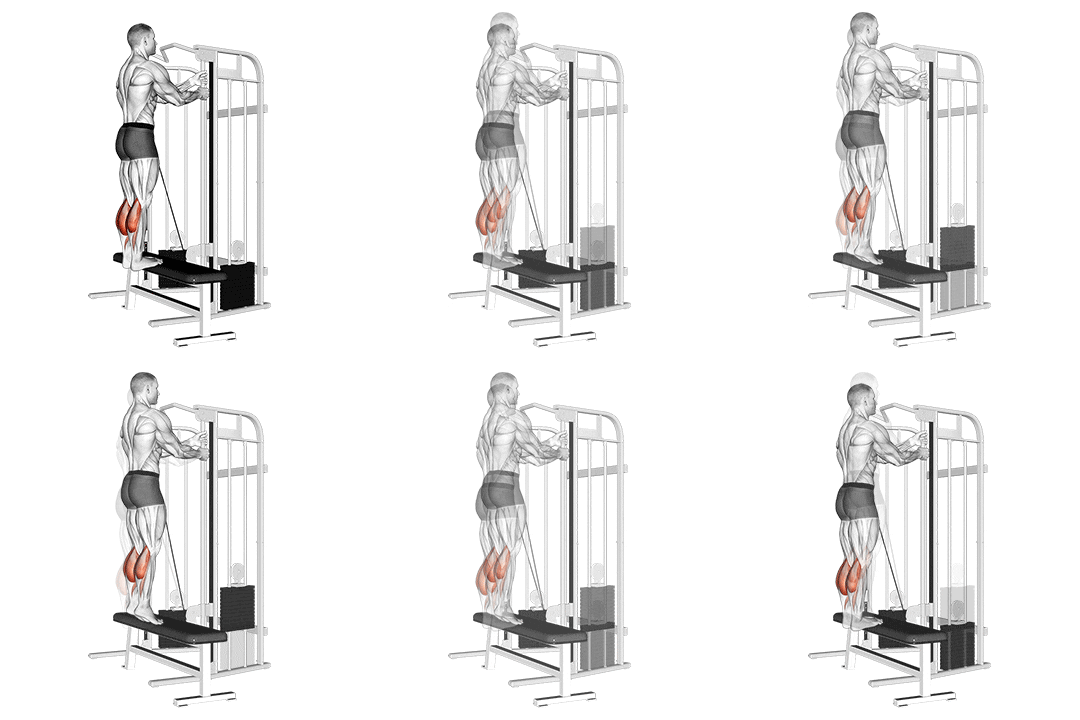
The cable standing calf raise is an exercise that primarily targets the calf muscles, specifically the gastrocnemius and soleus muscles. It involves standing on the edge of a platform or step and using a cable machine to provide resistance as you raise your heels. This exercise helps in developing strength, size, and definition in the calves, as well as improving ankle stability and balance. ## Instructions 1. Begin by setting the cable pulley at the lowest position and attaching a calf raise block or step to the cable machine. 2. Stand facing the cable machine with the balls of your feet on the calf raise block or step, and your heels hanging off the edge. Position your feet hip-width apart or slightly narrower. 3. Place your hands on the machine or hold onto a stable support for balance. 4. Engage your core and maintain an upright posture throughout the exercise, with your shoulders back and chest lifted. 5. Start with your heels lowered towards the ground, allowing a full stretch in your calves. 6. Initiate the movement by raising your heels as high as possible by pushing through the balls of your feet. 7. Squeeze your calf muscles at the top of the movement and hold for a brief moment to maximize the contraction. 8. Slowly lower your heels back down to the starting position, allowing your calves to stretch again. 9. Repeat for the desired number of repetitions. ## Variations - Single-Leg Cable Standing Calf Raise: Perform the exercise using only one leg at a time, focusing on each calf individually. - Dumbbell Standing Calf Raise: Hold a dumbbell in one hand or both hands to add additional resistance while performing the standing calf raise. ## Muscles Worked The cable standing calf raise primarily targets the following muscles: - Gastrocnemius (upper calf muscle) - Soleus (deep calf muscle) - Plantaris (assists in calf raises) ## Common Mistakes - Using excessive weight: Start with lighter resistance and focus on proper form and range of motion. Using too much weight can compromise your form and lead to less effective results or potential injury. - Leaning too far forward or backward: Maintain an upright posture throughout the exercise. Avoid leaning excessively forward or backward, as this can shift the emphasis away from the calves and increase strain on other muscles or joints. - Bouncing or using momentum: Perform the exercise with controlled movements and avoid bouncing at the bottom or using momentum to lift your heels. Focus on the contraction and extension of the calf muscles. - Not achieving a full range of motion: Lower your heels as far as possible to achieve a full stretch in your calves at the bottom of the movement, and raise your heels as high as possible at the top to fully contract the calf muscles. ## Safety Precautions - Start with lighter weights or resistance and gradually increase as you become comfortable and confident with the exercise. - If you have any pre-existing calf or ankle injuries, consult with a fitness professional or healthcare provider before performing the cable standing calf raise. - Use a weight or resistance level that challenges you without compromising your form and stability. - Ensure that the cable machine is securely set up and the calf raise block or step is stable. - Keep your movements controlled and avoid jerking or sudden motions. - If you experience any pain or discomfort, particularly in the calf muscles or Achilles tendon, stop the exercise and seek medical advice.