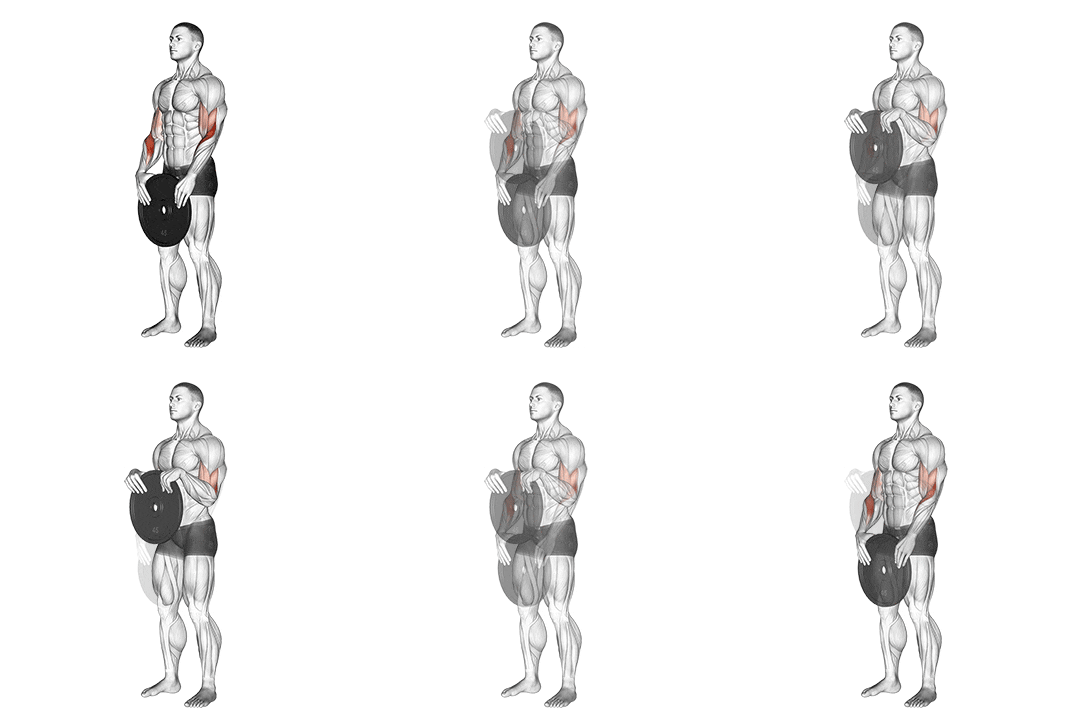
The weighted standing curl is an isolation exercise that primarily targets the muscles of the upper arm, specifically the biceps. It involves lifting a weight (such as dumbbells or a barbell) while keeping the upper arms stationary, focusing the effort on the biceps. This exercise helps strengthen and tone the biceps, enhancing arm aesthetics and improving grip strength. ## Instructions 1. Stand upright with your feet shoulder-width apart, holding a weight in each hand, palms facing forward. 2. Keep your upper arms close to your sides, with your elbows fully extended and locked. 3. Engage your core and maintain a neutral spine throughout the exercise. 4. Initiate the movement by flexing your elbows, curling the weights toward your shoulders while keeping your upper arms stationary. 5. Continue the curl until your forearms are fully contracted and the weights are close to your shoulders. 6. Squeeze your biceps at the top of the movement, ensuring a strong contraction. 7. Slowly lower the weights back down to the starting position, fully extending your elbows. 8. Repeat the exercise for the desired number of repetitions. ## Variations - **Alternating Standing Curl**: Perform the exercise one arm at a time, alternating between each arm with each repetition. - **Hammer Curl**: Instead of having your palms facing forward, hold the weights with your palms facing inward (neutral grip), targeting the brachialis muscle in addition to the biceps. - **Preacher Curl**: Use a preacher curl bench or an incline bench to support your upper arms while performing the curls, isolating the biceps even more. - **Resistance Band Curl**: Use resistance bands instead of weights to perform the curl, adjusting the tension by choosing a band with appropriate resistance. ## Muscles Worked - Biceps brachii (main focus) - Brachialis (synergistic muscle) - Brachioradialis (forearm muscle) ## Common Mistakes - Using momentum: Avoid swinging or using momentum to lift the weights. Focus on controlled movements, keeping the biceps engaged throughout the exercise. - Leaning back or hunching forward: Maintain an upright posture throughout the exercise, avoiding excessive backward or forward leaning. - Allowing the elbows to move forward: Keep the upper arms stationary and close to your sides throughout the movement, ensuring that only the forearms are involved in the curl. - Not fully extending the elbows: Lower the weights back down until your elbows are fully extended to maximize the range of motion and engage the biceps fully. ## Safety Precautions - Choose weights that are appropriate for your strength level and gradually increase the load as you progress. - Warm up your arms and shoulders before performing the exercise to prepare the muscles. - Maintain proper form and technique to minimize the risk of injury. - Avoid using excessively heavy weights that compromise your form or cause discomfort. - If you have any pre-existing conditions or injuries in the wrists, elbows, or shoulders, consult with a healthcare professional or a qualified fitness trainer before attempting the weighted standing curl. - Listen to your body and stop the exercise if you experience any sharp pain or discomfort.
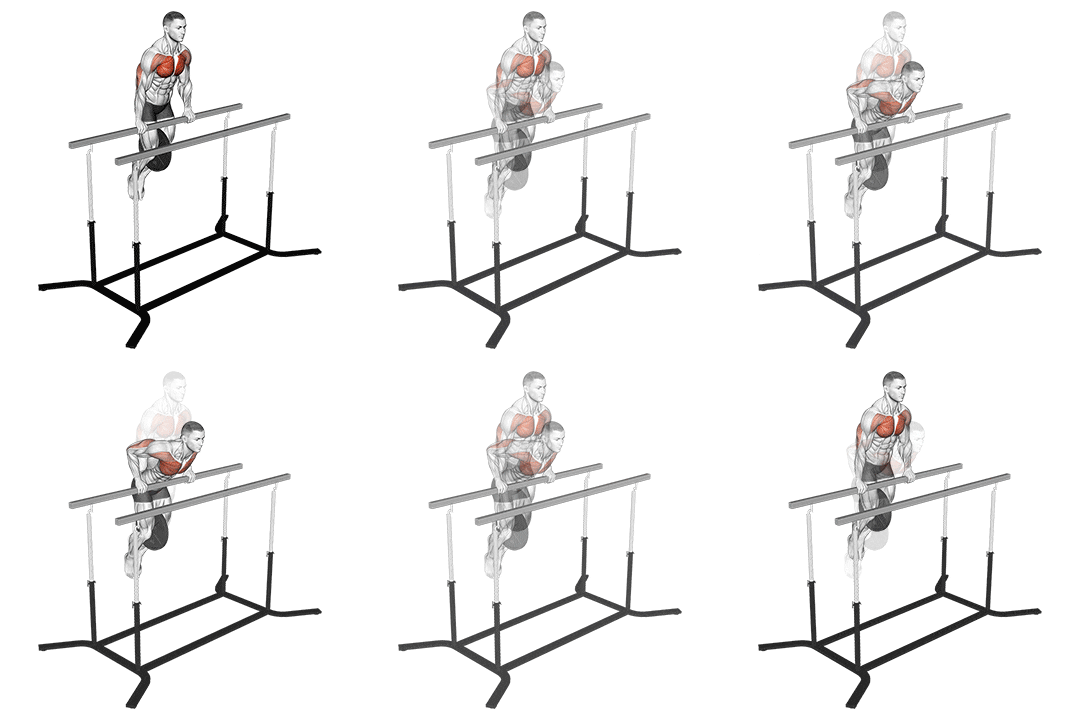
The weighted straight bar dip is a compound exercise that targets the muscles of the upper body, particularly the chest, shoulders, and triceps. It involves using a straight bar or dip bar apparatus and adding additional weight to the exercise by using a weight belt or holding a dumbbell between the feet. This exercise is effective for building upper body strength, developing muscle mass in the chest and triceps, and enhancing overall upper body stability. ## Instructions 1. Begin by gripping a straight bar or dip bars with an overhand grip, slightly wider than shoulder-width apart. 2. Lift yourself up and support your body weight by fully extending your arms. Keep your shoulders down and back, and your chest lifted. 3. If using a weight belt, secure the desired weight to the belt. If using a dumbbell, hold it securely between your feet. 4. Engage your core muscles by pulling your belly button in towards your spine. 5. Slowly lower your body by bending your elbows, allowing them to flare out slightly to the sides. Lower yourself until your upper arms are parallel to the ground or slightly below, feeling a stretch in your chest and shoulders. 6. Pause briefly at the bottom position, maintaining tension in your muscles. 7. Push through your hands to extend your elbows and return to the starting position. 8. Exhale as you push back up to the top, fully extending your arms. 9. Repeat the exercise for the desired number of repetitions. ## Variations - **Assisted Dip**: Use an assisted dip machine or resistance bands to assist with the movement if you are unable to perform the exercise with your full body weight. - **Weighted Bench Dip**: Place your hands on a bench or step behind you and perform the dip movement, with the weight on your thighs or using a weight belt. - **Parallel Bar Dip**: Use parallel dip bars instead of a straight bar, adjusting the grip width as needed. - **Ring Dip**: Perform the dip exercise using gymnastic rings instead of fixed bars, which requires greater stabilization and engages more muscle groups. ## Muscles Worked - Chest (pectoralis major and minor) - Shoulders (deltoids) - Triceps (triceps brachii) - Core muscles (stabilization) ## Common Mistakes - Allowing the shoulders to shrug or elevate: Keep your shoulders down and back throughout the exercise to maintain proper shoulder alignment and avoid unnecessary stress. - Leaning too far forward or backward: Maintain an upright position throughout the movement, avoiding excessive leaning in any direction. - Not achieving the full range of motion: Lower yourself until your upper arms are parallel to the ground or slightly below to fully engage the targeted muscles. - Flaring the elbows out excessively: While a slight flare is natural, avoid excessive outward rotation of the elbows, as it can strain the shoulder joints. Keep your elbows in a comfortable position. ## Safety Precautions - Warm up adequately before performing weighted straight bar dips to prepare your muscles and joints. - Ensure that the straight bar or dip bars are stable and secure before starting the exercise. - Use proper form and technique throughout the exercise to prevent injury. - Start with lighter weights or bodyweight dips and gradually increase the load as you become more comfortable and stronger. - If you have any existing shoulder, elbow, or wrist issues, consult with a healthcare professional or a qualified fitness trainer before attempting weighted straight bar dips. - Use a spotter or assistance if necessary, especially when handling heavy weights or performing near-failure sets. - Maintain control throughout the exercise and avoid swinging or jerking movements that can strain the muscles or joints. - If you experience pain or discomfort, stop the exercise and seek professional advice.
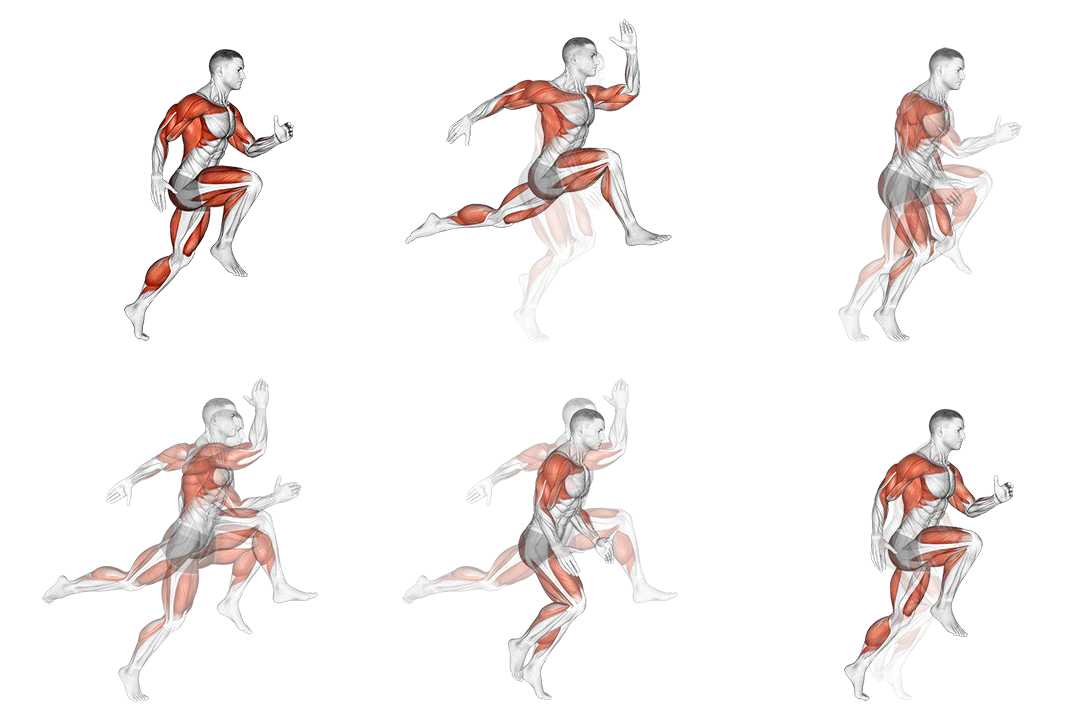
The wheel run, also known as the ab wheel rollout, is an advanced core exercise that targets the muscles of the abdominal region, including the rectus abdominis (six-pack muscles), obliques, and deep core stabilizers. It involves using an ab wheel or an exercise wheel to extend the body forward from a kneeling position, engaging the core muscles to control the movement. This exercise helps build core strength, improves stability and balance, and enhances overall functional fitness. ## Instructions 1. Start by kneeling on the floor or a mat with the ab wheel positioned in front of you. 2. Place your hands on the handles of the wheel, shoulder-width apart, with your palms facing downward. 3. Engage your core muscles by pulling your belly button in towards your spine. 4. Begin the movement by rolling the wheel forward, extending your body and allowing your arms to move straight out in front of you. 5. Continue rolling out until your body is fully extended, keeping your back straight and your core muscles activated. 6. Pause briefly in the extended position, maintaining tension in your core. 7. Slowly reverse the movement by pulling the wheel back towards your knees, engaging your core muscles to control the descent. 8. Return to the starting position, with the wheel under your shoulders and your arms fully extended. 9. Repeat the exercise for the desired number of repetitions. ## Variations - **Knee Rollout**: If you find the full wheel run challenging, you can start with knee rollouts. Instead of kneeling, begin in a push-up position with your knees on the ground and perform the same movement, rolling the wheel forward and back. - **Standing Rollout**: Once you have mastered the kneeling version, you can progress to standing rollouts. Stand upright with the wheel in front of you, perform the rollout by hinging at the hips and keeping your body straight, and return to the starting position. - **Assisted Rollout**: If you need assistance, you can perform the exercise with a resistance band attached to an anchor point behind you. Hold the band with your hands and use it to assist in the rollout and return. ## Muscles Worked - Rectus abdominis (six-pack muscles) - Obliques (side abdominal muscles) - Deep core stabilizers (transverse abdominis) - Hip flexors - Shoulder muscles (stabilization) ## Common Mistakes - Arching the lower back: Keep your core engaged and maintain a neutral spine throughout the movement, avoiding excessive arching or sagging of the lower back. - Allowing the shoulders to shrug: Keep your shoulders down and away from your ears, focusing on engaging the core muscles rather than relying on the shoulders. - Overextending or hyperextending the body: Avoid extending too far forward, as this can strain the lower back. Maintain control and go only as far as you can while keeping proper form. - Relying on momentum: Focus on controlled movements, avoiding fast or jerky motions. Use your core strength to initiate and control the movement. ## Safety Precautions - Warm up your core muscles before performing the wheel run to prepare them for the exercise. - Start with caution, as the wheel run is an advanced exercise. Build core strength with other exercises before attempting the full rollout. - Maintain proper form and technique to prevent injury. - If you have any existing lower back issues, consult with a healthcare professional or a qualified fitness trainer before attempting the wheel run. - Begin with shorter rollouts and gradually increase the range of motion as you become stronger and more comfortable with the exercise. - Engage your core muscles and maintain stability throughout the movement to protect your lower back. - If you experience pain or discomfort, stop
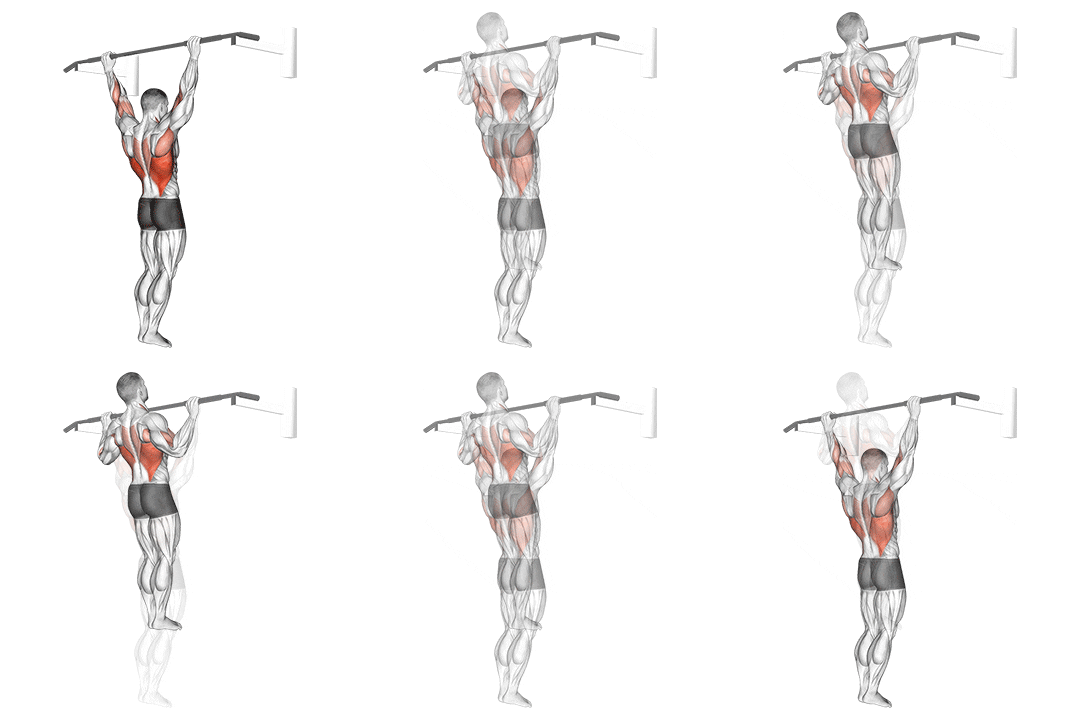
The wide grip pull-up is a challenging upper body exercise that primarily targets the muscles of the back, specifically the latissimus dorsi (lats), as well as the biceps and shoulders. It involves suspending your body from an overhead bar with a wide grip and pulling yourself up until your chin clears the bar. This exercise helps build upper body strength, improves posture, and enhances overall back development. ## Instructions 1. Stand underneath an overhead bar and reach up with both hands, gripping the bar with a wide overhand grip. Your hands should be placed wider than shoulder-width apart. 2. Hang from the bar with your arms fully extended, and engage your core muscles. 3. Pull your shoulder blades down and back, maintaining good posture throughout the movement. 4. Initiate the pull-up by squeezing your shoulder blades together and pulling your body up towards the bar. Keep your elbows pointing out to the sides. 5. Continue pulling until your chin clears the bar, or as high as you can comfortably go. 6. Pause briefly at the top of the movement, with your chest close to the bar and your shoulder blades squeezed together. 7. Lower your body down with control, extending your arms back to the starting position. 8. Repeat the exercise for the desired number of repetitions. ## Variations - **Assisted Pull-Up**: Use an assisted pull-up machine or resistance bands to provide assistance during the movement if you are unable to perform the exercise with your full body weight. - **Band-Assisted Pull-Up**: Loop a resistance band around the bar and place your foot or knee in the band to assist with the pull-up. - **Negative Pull-Up**: Start at the top position of the pull-up and slowly lower yourself down, focusing on the eccentric (lowering) portion of the movement. - **Weighted Pull-Up**: Use a weight belt or hold a dumbbell between your feet to add additional resistance to the exercise. ## Muscles Worked - Latissimus dorsi (lats) - Biceps brachii - Rhomboids - Trapezius - Posterior deltoids (shoulders) - Forearm muscles (grip strength) ## Common Mistakes - Swinging or using momentum: Avoid using excessive swinging or momentum to perform the pull-up. Maintain control and focus on using your back and arm muscles to lift your body. - Not fully extending the arms: Ensure that your arms are fully extended at the bottom of the movement before initiating the pull-up. - Rounding the back: Keep your back straight and maintain good posture throughout the exercise. Avoid excessive rounding or arching of the spine. - Using a grip that is too wide: Find a grip width that is comfortable for your shoulders. Avoid excessively wide grips that can strain the shoulder joints. ## Safety Precautions - Warm up adequately before performing wide grip pull-ups to prepare your upper body muscles and joints. - Ensure that the overhead bar is stable and secure before starting the exercise. - Use proper form and technique to prevent injury. - Start with assisted variations if you are unable to perform the exercise with your body weight. - Gradually increase the intensity and difficulty of the exercise as you become stronger. - If you have any existing shoulder or back issues, consult with a healthcare professional or a qualified fitness trainer before attempting wide grip pull-ups. - Use a spotter or assistance if necessary, especially when handling heavy weights or performing near-failure sets. - Listen to your body and avoid overexertion. If you experience pain or discomfort, stop the exercise and seek professional advice.
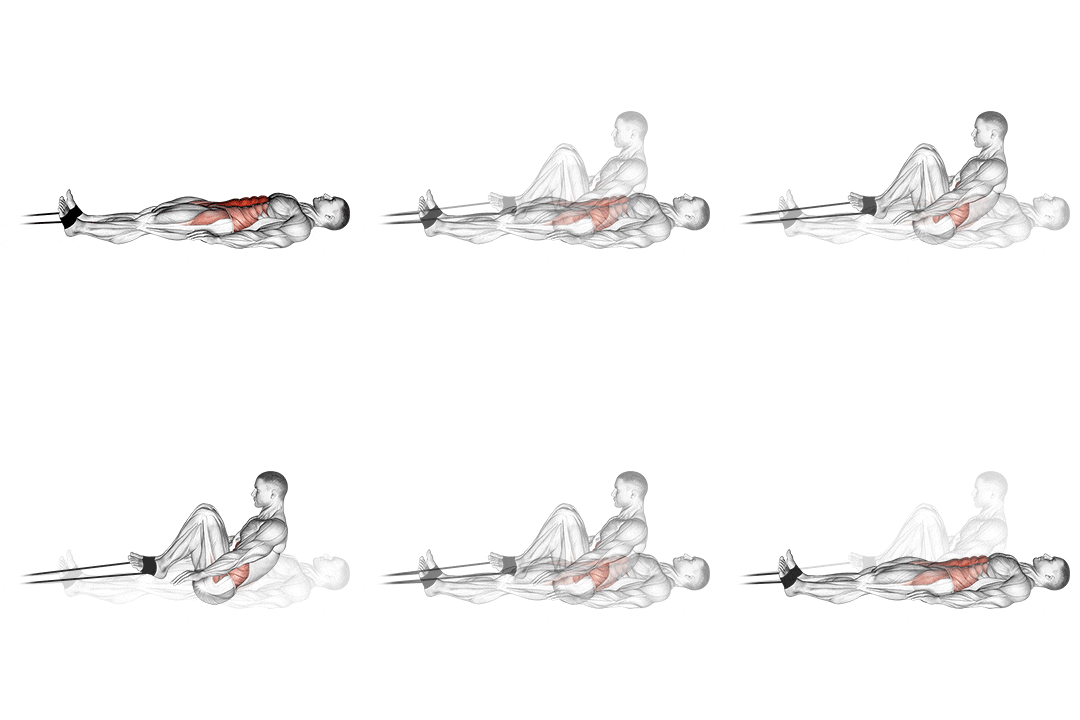
The band jack knife sit-up is an advanced abdominal exercise that targets the rectus abdominis (six-pack muscles) and engages the hip flexors. It combines the traditional sit-up motion with the added resistance of a band, challenging the core muscles and enhancing abdominal strength and stability. ## Instructions 1. Start by attaching a resistance band to a secure anchor point behind you, such as a pole or heavy furniture. Ensure that the band is securely fastened and that it provides adequate tension. 2. Lie down on your back on a mat or the floor with your legs extended straight and your arms extended overhead, holding onto the band. 3. Place your feet through the band's handles and loop them around your ankles, creating tension in the band. 4. Engage your core muscles by drawing your belly button in towards your spine. 5. Initiate the movement by flexing your hips and bending your knees, bringing them towards your chest while lifting your upper body off the ground. 6. At the top of the movement, reach your hands towards your feet and aim to touch your toes with your fingertips. 7. Slowly lower your upper body and extend your legs back to the starting position, keeping tension on the band throughout the movement. 8. Repeat the movement for the desired number of repetitions. ## Variations - Band Resistance: You can adjust the difficulty of the exercise by using different resistance bands with varying levels of tension. Thicker bands provide more resistance, while thinner bands offer less resistance. - Band Placement: Experiment with placing the band at different heights or angles to target different areas of the core and challenge different muscles. - Modified Jack Knife: If the full jack knife sit-up is too challenging, you can modify the exercise by bending your knees and bringing them towards your chest while keeping your feet on the ground. This reduces the lever arm and makes the movement easier. ## Muscles Worked The band jack knife sit-up primarily targets the following muscles: - Rectus abdominis (six-pack muscles) - Hip flexors (iliopsoas) - Transverse abdominis (deep abdominal muscle) - Obliques (side abdominal muscles) - Lower back muscles (erector spinae) ## Common Mistakes - Relying on momentum: Avoid using momentum to lift your upper body and legs. Focus on a controlled and deliberate movement, engaging the abdominal muscles throughout. - Straining the neck: Keep your neck relaxed and in line with your spine. Avoid pulling on your neck or tucking your chin too close to your chest. - Arching the lower back: Maintain a slight posterior pelvic tilt to keep your lower back pressed into the floor or mat. Avoid excessive arching, which can strain the lower back. ## Safety Precautions - Choose a resistance band with an appropriate level of tension based on your strength and fitness level. Start with lighter bands if you're a beginner and gradually increase the resistance as you progress. - Ensure that the resistance band is securely anchored and that the anchor point is stable. - Perform the exercise on a mat or padded surface to provide cushioning and support for your back. - If you have any pre-existing conditions or injuries, particularly in the back or neck, consult with a qualified fitness professional or healthcare provider before attempting the band jack knife sit-up. - If you experience any pain or discomfort during the exercise, particularly in the lower back or neck, stop immediately and seek guidance from a fitness professional.
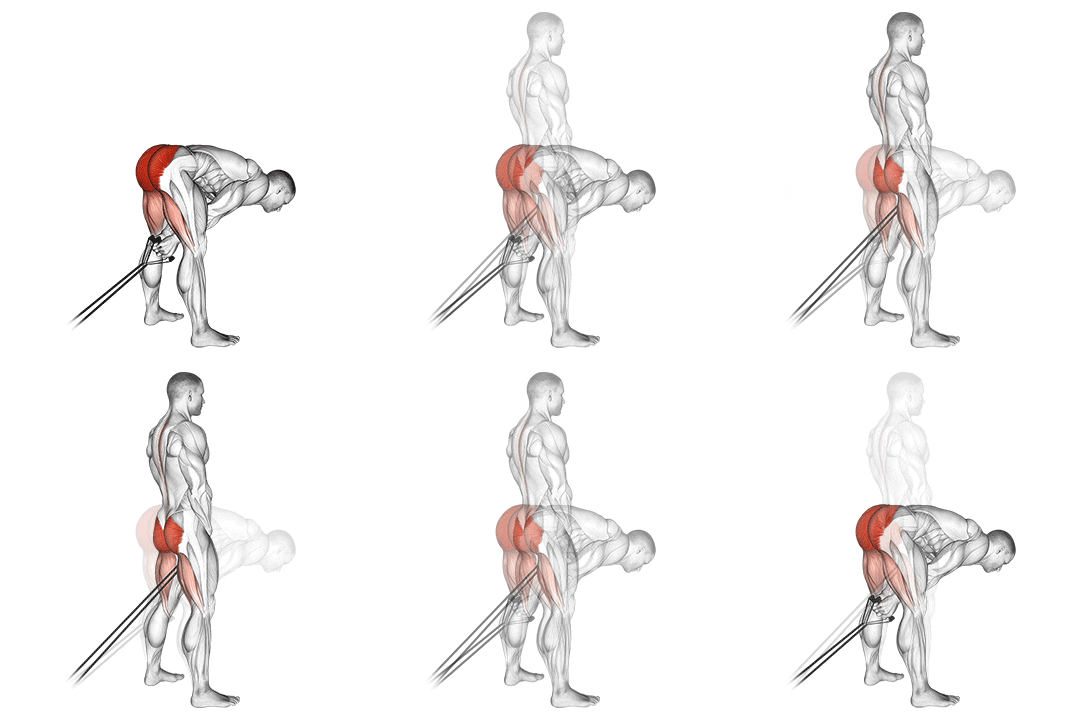
The band pull through is a compound exercise that primarily targets the glutes (gluteus maximus) and hamstrings. It involves using a resistance band attached to a low anchor point to perform a hip hinge movement, promoting strength, stability, and power in the posterior chain. ## Instructions 1. Start by attaching a resistance band to a low anchor point, such as a sturdy post or base of a squat rack. Step inside the band and position it around your hips. 2. Stand with your feet slightly wider than hip-width apart, toes pointed slightly outward. Engage your core muscles by drawing your belly button in towards your spine. 3. Begin the movement by hinging at the hips, pushing your hips back and bending forward while maintaining a slight bend in your knees. 4. As you hinge forward, allow the band tension to pull your hips back, maintaining a neutral spine and keeping your chest lifted. 5. Continue the movement until your torso is parallel to the ground, feeling a stretch in your hamstrings. 6. From this position, forcefully contract your glutes and drive your hips forward, using the tension from the band to pull your hips through. 7. Squeeze your glutes at the top of the movement, then slowly hinge back down to the starting position. 8. Repeat for the desired number of repetitions. ## Variations - Band Resistance: You can adjust the difficulty of the exercise by using bands with different levels of tension. Thicker bands provide more resistance, while thinner bands offer less resistance. - Band Placement: Experiment with placing the band around different areas, such as above the knees or around the ankles, to target different muscle groups and challenge different areas of the posterior chain. - Single-Leg Variation: To increase the challenge and target each leg individually, you can perform the pull through while balancing on one leg. Alternate legs for each repetition. ## Muscles Worked The band pull through primarily targets the following muscles: - Gluteus maximus (glutes) - Hamstrings - Erector spinae (muscles along the spine) - Core muscles for stability ## Common Mistakes - Rounding the back: Maintain a neutral spine throughout the movement. Avoid rounding or excessively arching the back, as it can lead to strain or injury. - Using too much upper body or arm strength: Focus on driving the movement through the hips and engaging the glutes and hamstrings. Avoid pulling with your arms or using them to initiate the movement. - Not fully extending the hips: Make sure to fully extend your hips at the top of the movement, squeezing your glutes. This maximizes the benefits for the glute and hamstring muscles. ## Safety Precautions - Choose a resistance band with an appropriate level of tension based on your strength and fitness level. Start with lighter bands if you're a beginner and gradually increase the resistance as you progress. - Ensure that the resistance band is securely anchored and that the anchor point is stable. - Maintain proper form and technique throughout the exercise. Avoid any jerking or sudden movements that can strain the muscles or joints. - If you have any pre-existing conditions or injuries, particularly in the back or hips, consult with a qualified fitness professional or healthcare provider before attempting the band pull through. - If you experience any pain or discomfort during the exercise, particularly in the lower back or hips, stop immediately and seek guidance from a fitness professional.
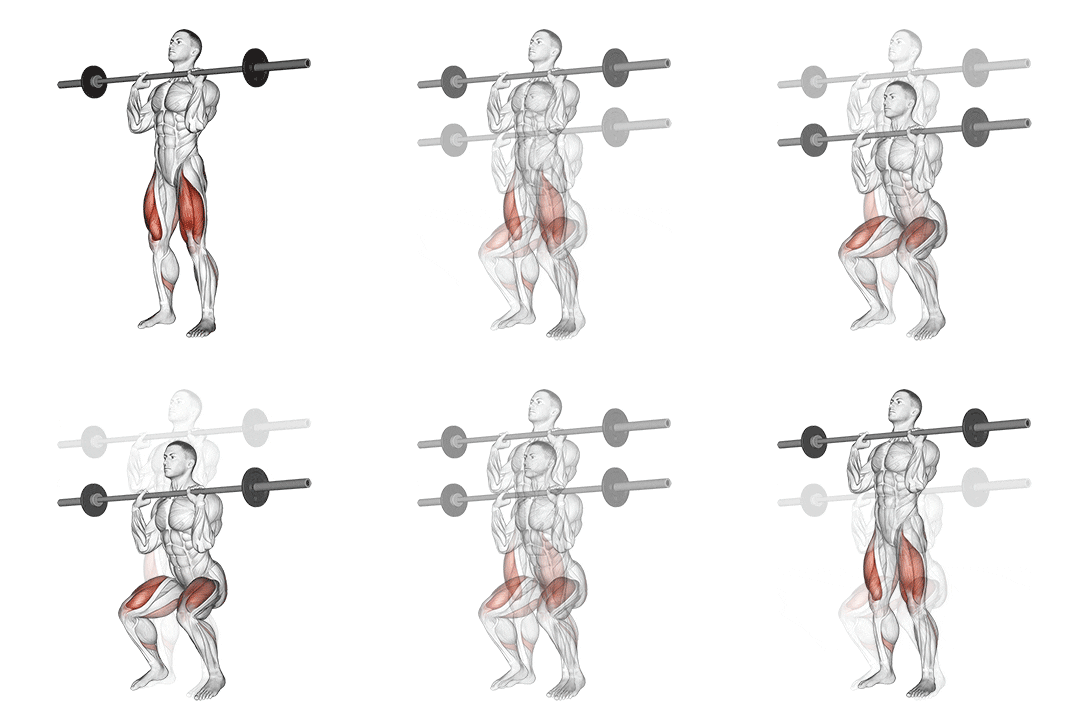
The barbell front chest squat is an exercise that primarily targets the quadriceps, while also engaging the glutes, hamstrings, and core muscles. It involves holding the barbell in front of the chest, which shifts the emphasis to the front of the legs compared to the traditional back squat. This exercise helps develop lower body strength, power, and overall lower body muscularity. ## Instructions 1. Start by setting up a barbell in a squat rack at an appropriate height. 2. Stand facing the barbell with your feet shoulder-width apart. 3. Reach forward and grip the barbell with an overhand grip, positioning your hands slightly wider than shoulder-width apart. 4. Lift the barbell off the rack and step back, maintaining an upright torso and keeping your elbows high, so the barbell is positioned in front of your chest. 5. Place your feet slightly wider than shoulder-width apart, with your toes slightly pointed out. 6. Keeping your core engaged, initiate the squat by bending your knees and hips, lowering your body down towards the ground. 7. Descend until your thighs are parallel to the floor or slightly below, ensuring your knees track in line with your toes. 8. Keep your chest up and maintain an upright posture throughout the movement. 9. Pause briefly in the bottom position, then push through your heels and extend your hips and knees, returning to the starting position. 10. Repeat for the desired number of repetitions. ## Variations - Goblet Front Squat: Instead of using a barbell, you can hold a dumbbell or kettlebell in a goblet position in front of your chest. This variation can be more comfortable for individuals who have difficulty holding a barbell in the front position. - Safety Squat Bar Front Squat: If a traditional barbell is not available, you can use a safety squat bar, which is designed specifically for front squats. It allows for an easier grip and reduces strain on the wrists and shoulders. ## Muscles Worked - Primary muscles: Quadriceps - Secondary muscles: Glutes, hamstrings, core muscles ## Common Mistakes - Leaning too far forward: Maintain an upright torso throughout the exercise. Avoid excessive forward lean, as it can shift the emphasis away from the quadriceps and compromise your balance and form. - Allowing the knees to cave inwards: Keep your knees in line with your toes during the entire movement. Avoid letting them collapse inward, as it can put stress on the knee joints. Focus on pushing your knees out slightly as you squat. - Rounding the back: Keep your back straight and avoid rounding or arching your spine during the exercise. Engage your core muscles to maintain stability and support your spine. - Using excessive weight: Start with a weight that allows you to maintain proper form and control. Using too much weight can compromise your technique and increase the risk of injury. ## Safety Precautions - Warm up adequately before performing the exercise to prepare your muscles for the movement. - Ensure the barbell is securely racked and balanced before lifting it off. - Use a weight that challenges you without sacrificing your form. - Maintain proper breathing throughout the exercise, inhaling as you lower your body and exhaling as you push through your heels to rise. - If you have any pre-existing knee, hip, or back conditions, consult with a healthcare professional or fitness trainer before attempting the exercise to ensure it is safe for you. - If you experience any pain or discomfort during the exercise, stop immediately and seek medical advice if needed.
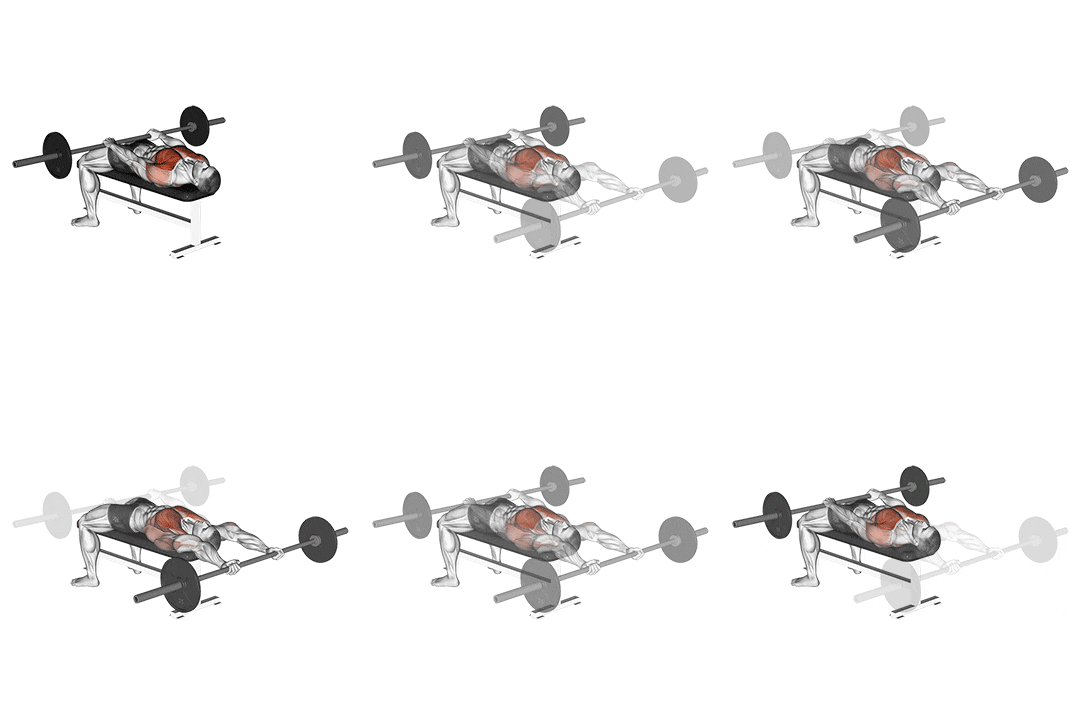
The barbell front raise and pullover is a combination exercise that targets multiple muscle groups, primarily the shoulders and upper back. It involves lifting the barbell from a lowered position in front of the thighs to an overhead position while simultaneously performing a pullover motion, engaging the muscles of the upper back. This exercise helps improve shoulder strength, stability, and upper body muscularity. ## Instructions 1. Stand upright with your feet shoulder-width apart, holding a barbell with an overhand grip (palms facing down). Your hands should be positioned slightly wider than shoulder-width apart. 2. Allow the barbell to hang down in front of your thighs, with your arms fully extended. 3. Keep your core engaged and maintain a slight bend in your knees throughout the exercise. 4. Initiate the movement by raising the barbell directly in front of your body, keeping your arms straight. Lift the barbell until it reaches shoulder height or slightly above, ensuring that your wrists remain in line with your forearms. 5. Once the barbell reaches shoulder height, begin to simultaneously move the barbell backward in an arc motion while bending your elbows. 6. Lower the barbell behind your head and continue the movement until you feel a stretch in your upper back muscles. 7. Pause briefly in the pullover position, then reverse the motion by extending your arms forward and raising the barbell back to the starting position. 8. Repeat for the desired number of repetitions. ## Variations - Dumbbell Front Raise and Pullover: Perform the exercise using dumbbells instead of a barbell. This allows for greater freedom of movement and may be preferable for individuals with wrist or shoulder limitations. - Cable Front Raise and Pullover: Attach a handle to a cable machine and set it to a low pulley position. Perform the front raise and pullover motion by pulling the handle towards your body in an arc motion. ## Muscles Worked - Primary muscles: Anterior deltoids (front shoulders), upper back muscles (such as the latissimus dorsi and rhomboids) - Secondary muscles: Lateral deltoids (side shoulders), trapezius, biceps, triceps ## Common Mistakes - Rounding the back: Maintain good posture throughout the exercise. Avoid rounding or arching your back. Keep your core engaged and maintain a slight natural curve in your spine. - Using excessive weight: Start with a weight that allows you to maintain proper form and control. Using too much weight can compromise your technique and increase the risk of injury. - Swinging the barbell: Keep the movement controlled and avoid using momentum to lift the barbell. Focus on using your shoulder muscles to perform the front raise and your upper back muscles to perform the pullover. - Shrugging the shoulders: Keep your shoulders down and away from your ears throughout the exercise. Avoid shrugging or lifting your shoulders up as you raise the barbell. ## Safety Precautions - Warm up adequately before performing the exercise to prepare your muscles for the movement. - Use a weight that challenges you without sacrificing your form. - If you have any pre-existing shoulder or back conditions, consult with a healthcare professional or fitness trainer before attempting the exercise to ensure it is safe for you. - If you experience any pain or discomfort during the exercise, stop immediately and seek medical advice if needed.
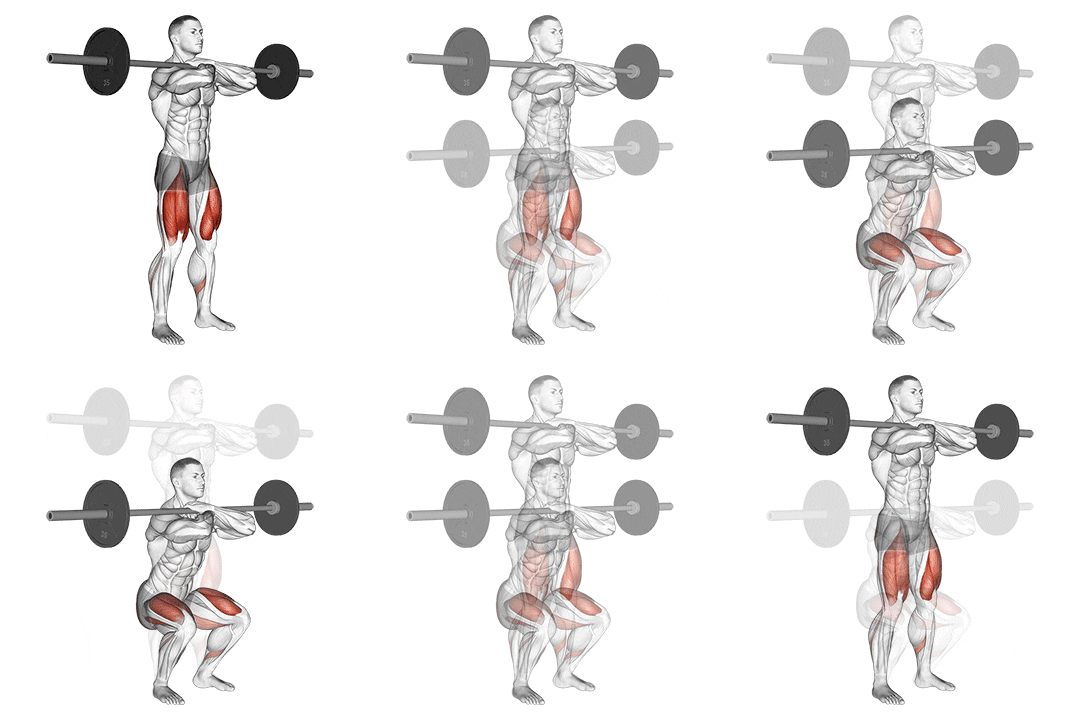
The barbell front squat is a lower body exercise that primarily targets the quadriceps, while also engaging the glutes, hamstrings, and core muscles. It involves holding the barbell in front of the body, resting it on the front deltoids and upper chest. This exercise helps develop lower body strength, power, and overall lower body muscularity. ## Instructions 1. Start by setting up a barbell in a squat rack at an appropriate height. 2. Stand facing the barbell with your feet shoulder-width apart. 3. Reach forward and grip the barbell with an overhand grip, positioning your hands just outside shoulder-width apart. 4. Lift the barbell off the rack and step back, maintaining an upright torso. 5. Bring the barbell to rest on the front of your shoulders, with your elbows lifted high and pointing forward. Keep your chest up and maintain a tight core throughout the exercise. 6. Place your feet slightly wider than shoulder-width apart, with your toes slightly pointed out. 7. Keeping your core engaged, initiate the squat by bending your knees and hips, lowering your body down towards the ground. 8. Descend until your thighs are parallel to the floor or slightly below, ensuring your knees track in line with your toes. 9. Keep your chest up and maintain an upright posture throughout the movement. 10. Pause briefly in the bottom position, then push through your heels and extend your hips and knees, returning to the starting position. 11. Repeat for the desired number of repetitions. ## Variations - Goblet Front Squat: Instead of using a barbell, you can hold a dumbbell or kettlebell in a goblet position in front of your chest. This variation can be more comfortable for individuals who have difficulty holding a barbell in the front position. - Zercher Squat: Hold the barbell in the crook of your elbows with your arms crossed in front of your chest. This variation places additional emphasis on the core and upper back muscles. ## Muscles Worked - Primary muscles: Quadriceps - Secondary muscles: Glutes, hamstrings, core muscles ## Common Mistakes - Leaning too far forward: Maintain an upright torso throughout the exercise. Avoid excessive forward lean, as it can shift the emphasis away from the quadriceps and compromise your balance and form. - Allowing the knees to cave inwards: Keep your knees in line with your toes during the entire movement. Avoid letting them collapse inward, as it can put stress on the knee joints. Focus on pushing your knees out slightly as you squat. - Rounding the back: Keep your back straight and avoid rounding or arching your spine during the exercise. Engage your core muscles to maintain stability and support your spine. - Using excessive weight: Start with a weight that allows you to maintain proper form and control. Using too much weight can compromise your technique and increase the risk of injury. ## Safety Precautions - Warm up adequately before performing the exercise to prepare your muscles for the movement. - Ensure the barbell is securely racked and balanced before lifting it off. - Use a weight that challenges you without sacrificing your form. - Maintain proper breathing throughout the exercise, inhaling as you lower your body and exhaling as you push through your heels to rise. - If you have any pre-existing knee, hip, or back conditions, consult with a healthcare professional or fitness trainer before attempting the exercise to ensure it is safe for you. - If you experience any pain or discomfort during the exercise, stop immediately and seek medical advice if needed.