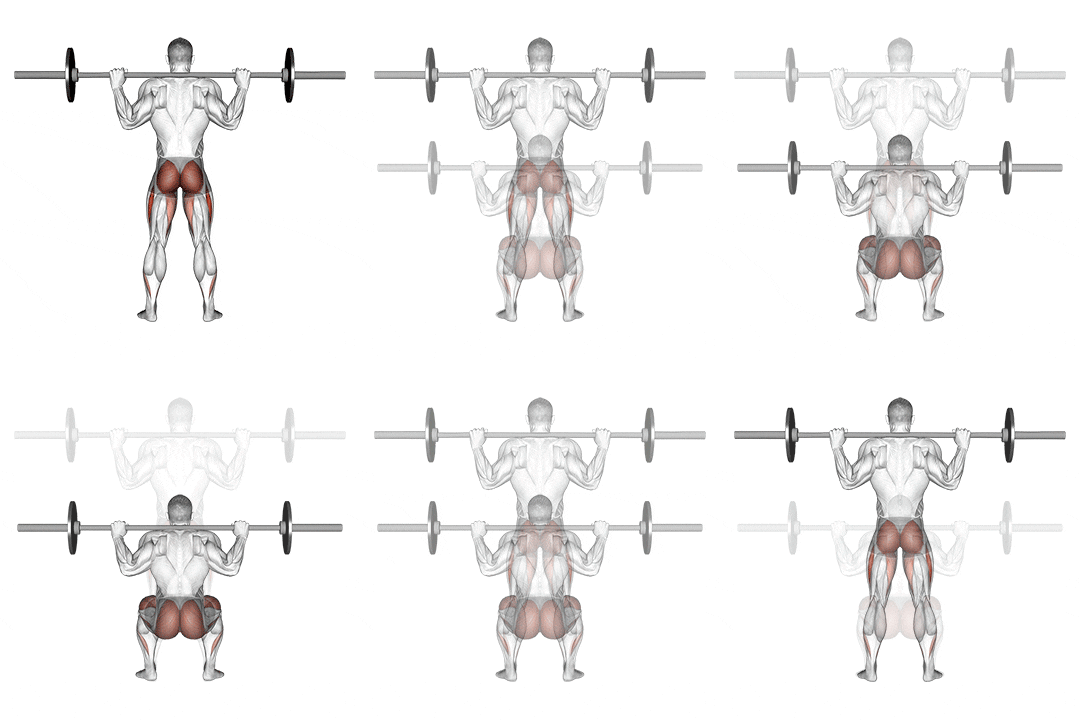
The barbell full squat is a compound exercise that primarily targets the muscles of the lower body, including the quadriceps, hamstrings, and glutes. It also engages the core muscles and stabilizers. This exercise involves lowering your body into a deep squat position with the barbell resting on your upper back, then returning to a standing position. It helps develop lower body strength, power, and muscularity. ## Instructions 1. Start by setting up a barbell in a squat rack at an appropriate height. Position the barbell on your upper back, resting it on your trapezius muscles. Take an overhand grip on the bar with your hands slightly wider than shoulder-width apart. 2. Stand with your feet slightly wider than shoulder-width apart. Position your toes slightly turned out. 3. Take a deep breath, brace your core, and unlock your hips by pushing them back. Initiate the squat by bending your knees and hips simultaneously, keeping your chest up and maintaining an upright torso. 4. Lower your body down into a squat position, aiming to bring your thighs parallel to the floor or slightly below. Keep your knees tracking in line with your toes. 5. Maintain a neutral spine position throughout the movement, avoiding excessive rounding or arching of the back. 6. Pause briefly at the bottom of the squat, then push through your heels to extend your hips and knees, returning to a standing position. 7. Exhale as you rise to the starting position and repeat for the desired number of repetitions. ## Variations - Front Squat: Instead of placing the barbell on your upper back, you can perform front squats by holding the barbell in front of your shoulders, crossing your arms to support it. - Box Squat: Perform squats by using a box or bench behind you as a guide for depth. This variation can be helpful for maintaining consistent depth and for individuals with mobility limitations. - Bulgarian Split Squat: This exercise involves placing one foot behind you on an elevated surface (e.g., bench) and performing squats with the other leg. It provides additional focus on unilateral leg strength and stability. ## Muscles Worked - Primary muscles: Quadriceps, hamstrings, glutes - Secondary muscles: Calves, core muscles, lower back ## Common Mistakes - Leaning too far forward: Maintain an upright torso throughout the exercise. Avoid excessive forward lean, as it can shift the emphasis away from the quadriceps and compromise your balance and form. Engage your core and focus on pushing through your heels. - Allowing the knees to cave inwards: Keep your knees in line with your toes during the entire movement. Avoid letting them collapse inward, as it can put stress on the knee joints. Focus on pushing your knees out slightly as you squat. - Rounding the back: Keep your back straight and avoid rounding or arching your spine during the exercise. Engage your core muscles to maintain stability and support your spine. - Going too shallow or too deep: Aim to bring your thighs parallel to the floor or slightly below. Avoid going too shallow where the exercise becomes less effective, or too deep where it compromises your form and places excessive stress on your joints. - Using excessive weight: Start with a weight that allows you to maintain proper form and control. Using too much weight can compromise your technique and increase the risk of injury. ## Safety Precautions - Warm up adequately before performing the exercise to prepare your muscles for the movement. - Ensure the barbell is securely racked and balanced before lifting it off. - Use a weight that challenges you without sacrificing your form. - Maintain proper breathing throughout the exercise, inhaling as you lower your body and exhaling
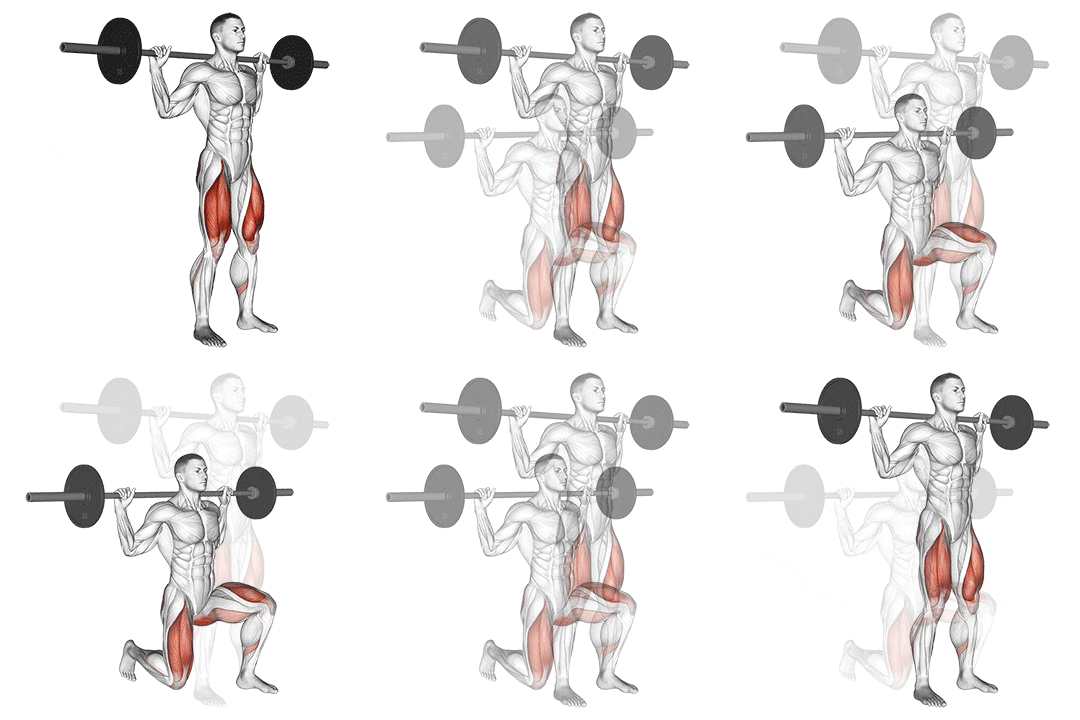
The barbell rear lunge is a compound exercise that primarily targets the muscles of the lower body, including the quadriceps, hamstrings, glutes, and calves. It involves stepping back into a lunge position while holding a barbell, which helps improve lower body strength, stability, and balance. ## Instructions 1. Set up the barbell: Load an appropriate weight onto a barbell and position it on your upper back, resting it on your trapezius muscles. Grasp the barbell with an overhand grip, slightly wider than shoulder-width apart. 2. Stand tall: Stand with your feet hip-width apart, maintaining an upright posture. Engage your core for stability throughout the exercise. 3. Step back: Take a step backward with one foot, ensuring a comfortable stride length. Keep your torso upright and your chest lifted. 4. Lower your body: Bend both knees simultaneously, lowering your body towards the ground. Keep your front knee aligned with your toes and your back knee pointing toward the floor. Descend until your front thigh is parallel to the ground, or slightly lower if you have the flexibility and strength. 5. Push through your front heel: Push off through your front heel and extend your knees and hips to return to the starting position. Keep your weight centered and maintain control throughout the movement. 6. Alternate sides: Step back with the opposite leg and repeat the lunge on the other side. 7. Continue lunging: Alternate legs and perform the desired number of repetitions, maintaining proper form and control throughout the exercise. ## Variations - Dumbbell Rear Lunge: Hold a dumbbell in each hand instead of using a barbell. This variation allows for greater freedom of movement and can be beneficial for unilateral strength development. - Walking Barbell Rear Lunge: Instead of stepping back and returning to the starting position, continue walking forward with the barbell on your back, alternating lunges with each step. - Bulgarian Split Squat: Elevate your rear foot onto a bench or step, and perform a split squat with the barbell on your back. This variation increases the range of motion and places greater emphasis on the front leg. ## Muscles Worked - Quadriceps (front of thighs) - Hamstrings (back of thighs) - Gluteus maximus (buttocks) - Calves (gastrocnemius and soleus) - Core muscles (stabilization) ## Common Mistakes - Leaning too far forward: Maintain an upright posture throughout the lunge. Avoid excessive forward lean, as it can place excessive stress on the knees and reduce the effectiveness of the exercise. - Allowing the front knee to collapse inward: Keep your front knee aligned with your toes throughout the lunge. Avoid allowing it to collapse inward, as it can lead to instability and potential knee strain. - Insufficient depth: Descend until your front thigh is parallel to the ground or slightly lower. Avoid shallow lunges that limit the activation of the targeted muscles. - Using excessive weight: Start with a weight that allows you to maintain proper form and control. Avoid using too much weight, as it can compromise your technique and increase the risk of injury. - Lack of control and stability: Focus on maintaining control throughout the entire range of motion. Avoid rushing the movement or relying on momentum to complete the lunge. ## Safety Precautions - Perform the exercise in a clear and spacious area to ensure you have enough room to step back and lunge safely. - Start with a lighter weight and gradually increase the load as you become comfortable with the exercise. - Maintain proper balance and stability throughout the movement to avoid tripping or falling. - If you have any knee or lower back issues,
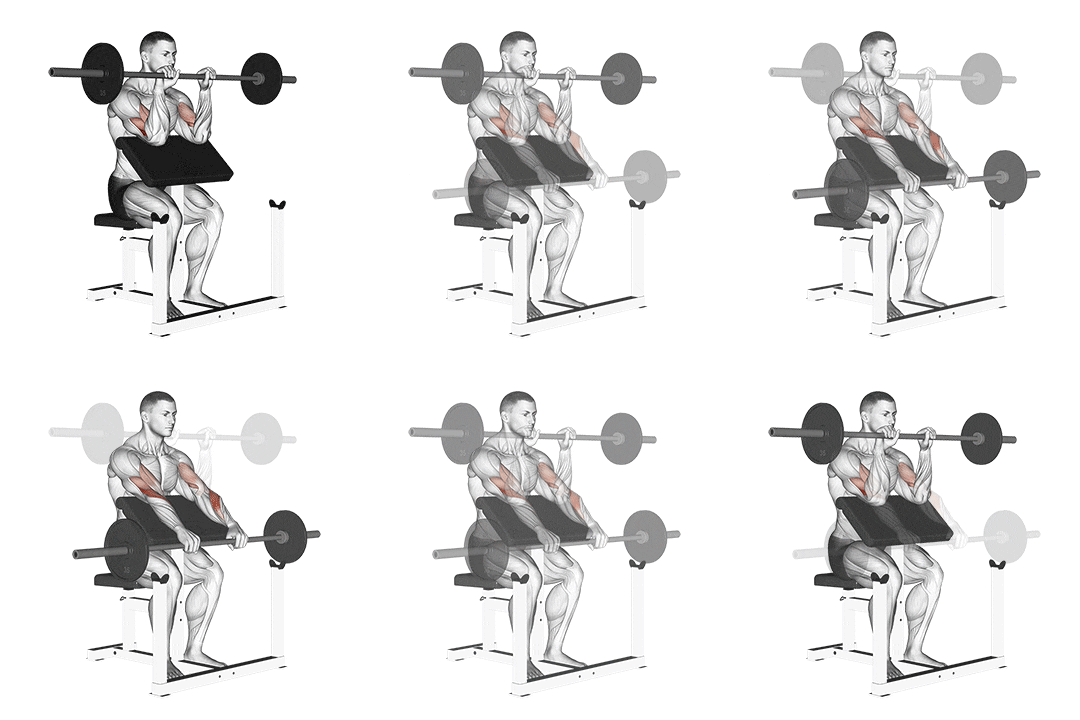
The barbell reverse preacher curl is an isolation exercise that primarily targets the brachialis and brachioradialis muscles of the forearm. It also engages the biceps brachii to a lesser extent. This exercise involves curling a barbell while seated at a preacher curl bench with an underhand grip, focusing on the muscles on the back of the forearm. ## Instructions 1. Set up the preacher curl bench: Adjust the preacher curl bench so that the pad is positioned just below your armpits when seated. 2. Load the barbell: Select an appropriate weight for the exercise and load it onto the barbell. 3. Adjust your seat: Sit on the preacher curl bench with your feet flat on the floor, ensuring that your arms can fully extend and hang comfortably in front of you. 4. Grip the barbell: Grasp the barbell with an underhand grip (palms facing up), slightly wider than shoulder-width apart. Your hands should be positioned just outside of your thighs. 5. Position your upper arms: Rest your upper arms against the preacher curl bench pad, allowing your forearms to hang straight down with the barbell in your hands. 6. Begin the curl: Exhale and curl the barbell upwards by flexing your forearms, bringing the barbell toward your shoulders. Keep your upper arms stationary and maintain control throughout the movement. 7. Squeeze at the top: When the barbell reaches shoulder level, pause briefly and contract your forearms. 8. Lower the barbell: Inhale and slowly lower the barbell back down to the starting position, fully extending your forearms. 9. Repeat: Perform the desired number of repetitions, maintaining proper form and control throughout the exercise. ## Variations - Dumbbell Reverse Preacher Curl: Use dumbbells instead of a barbell to perform the exercise. This allows for a greater range of motion and may provide a different stimulus to the muscles. - Cable Reverse Preacher Curl: Attach a straight bar or rope attachment to a low cable pulley. Sit on the preacher curl bench and grasp the bar or rope with an underhand grip. Perform the curling motion with the cable resistance. - Machine Reverse Preacher Curl: Use a specialized machine designed for reverse preacher curls, which provides stability and allows you to focus solely on the forearm muscles. ## Muscles Worked - Brachialis - Brachioradialis - Biceps brachii (secondary) ## Common Mistakes - Using momentum: Avoid swinging or using momentum to lift the barbell. Focus on controlled and deliberate movements throughout the exercise. - Gripping the bar too tightly: Maintain a firm but relaxed grip on the barbell. Avoid excessive tension in the forearms, which can limit the effectiveness of the exercise. - Arching the back: Keep your back straight and avoid arching it during the movement. Maintain proper posture and engage your core for stability. - Lifting the upper arms: Ensure your upper arms remain stationary against the preacher curl bench pad throughout the exercise. Avoid using your shoulders or upper body to assist in the movement. - Not fully extending the forearms: Allow your forearms to fully extend at the bottom of the movement, ensuring a full range of motion. Avoid cutting the range short, as it reduces the effectiveness of the exercise. ## Safety Precautions - Start with a lighter weight and gradually increase the load as you become comfortable with the exercise. - Maintain proper form and control throughout the movement to avoid strain or injury to the forearm muscles and wrists. - If you have any pre-existing forearm or elbow conditions, consult with a healthcare professional or fitness trainer before attempting this exercise.
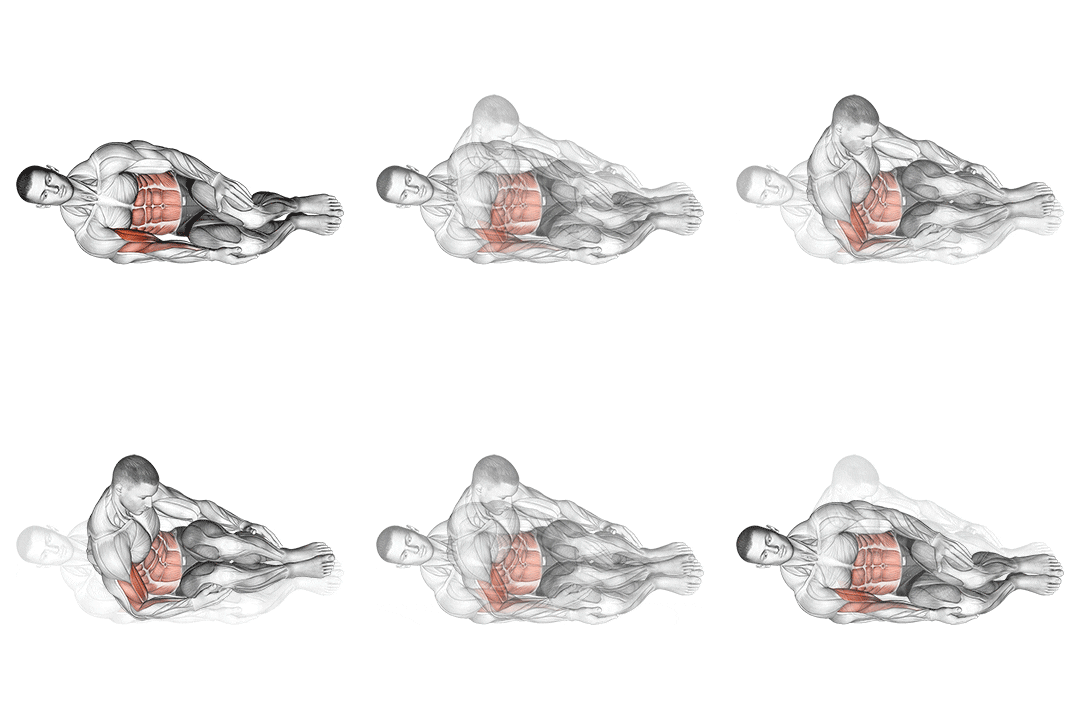
The bodyweight side lying biceps curl is an exercise that targets the biceps brachii muscles, which are located on the front of the upper arm. This exercise is performed while lying on your side and involves curling your bodyweight against gravity, providing resistance to strengthen and tone the biceps. ## Instructions 1. Start by lying on your side on a mat or comfortable surface. Extend your legs straight and stack them on top of each other. 2. Support your head with your bottom arm and place your top hand on the mat in front of your chest for stability. 3. Bend your bottom arm at the elbow, bringing your forearm across your torso and resting your hand on your opposite shoulder. 4. While keeping your upper arm stationary and parallel to your torso, exhale and curl your upper body off the mat by contracting your biceps. 5. Continue curling up until your shoulder and upper back are off the mat. 6. Inhale and slowly lower your body back down to the starting position. 7. Repeat for the desired number of repetitions, then switch sides and perform the exercise with the opposite arm. ## Variations - If lying on the side is uncomfortable or not feasible, you can perform the biceps curl while lying on your back with your knees bent and feet flat on the ground. - To increase the difficulty, you can hold a dumbbell or a resistance band in the hand performing the curl. - For individuals with limited mobility or wrist issues, an alternative is to perform the exercise using a wrist-supported biceps curl machine, if available. ## Muscles Worked The bodyweight side lying biceps curl primarily targets the biceps brachii muscles, which are responsible for flexing the elbow joint. It also engages the brachialis and brachioradialis muscles located in the forearm. ## Common Mistakes - Using excessive momentum or swinging the body to lift up. Maintain control throughout the movement and focus on isolating the biceps. - Allowing the shoulder to rotate forward or shrugging it up towards the ear. Keep the shoulder stabilized and avoid excessive tension in the neck and upper traps. - Not fully extending the arm during the downward phase. Make sure to lower your body all the way back to the starting position to maximize the range of motion and engage the biceps fully. ## Safety Precautions - If you have any shoulder or back injuries or conditions, it is recommended to consult with a healthcare professional before attempting this exercise. - Start with a weight or resistance level that is appropriate for your fitness level and gradually increase it as your strength improves. - Pay attention to your form and technique throughout the exercise to avoid putting unnecessary strain on the joints or muscles. - If you experience any pain or discomfort, stop the exercise immediately and seek guidance from a qualified professional.
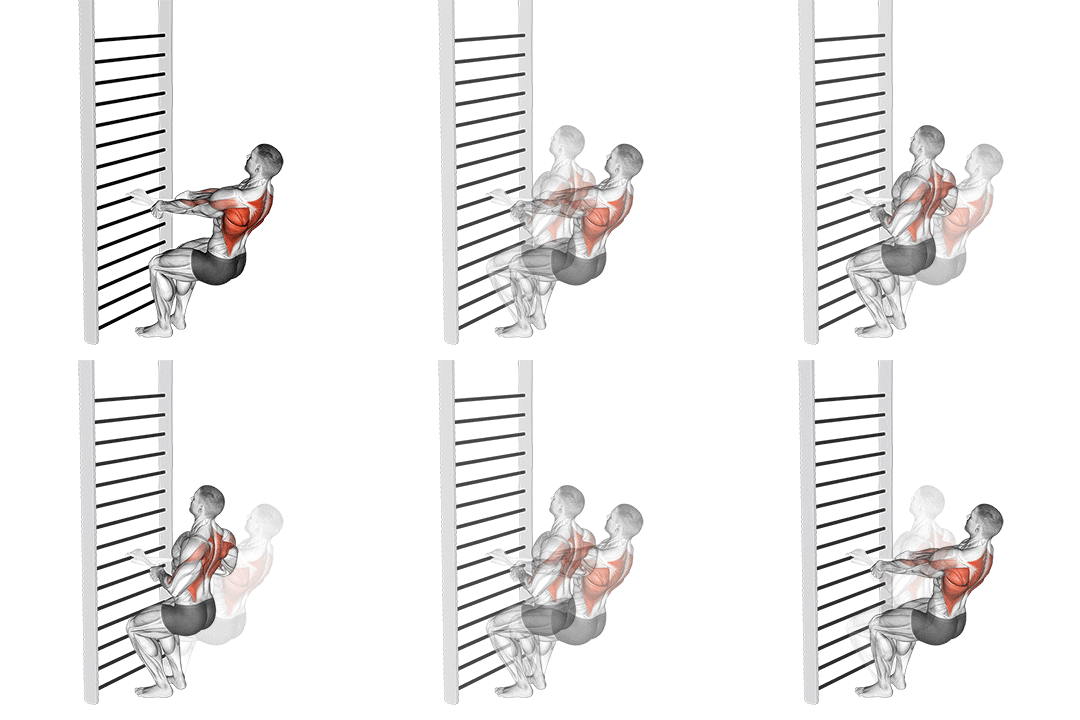
The bodyweight squatting row with a towel is a compound exercise that targets multiple muscle groups, including the back, biceps, and lower body. This exercise combines a squatting movement with a rowing motion, making it an effective full-body exercise for strength and coordination. ## Instructions 1. Start by standing with your feet slightly wider than shoulder-width apart. Hold a towel with both hands, gripping it shoulder-width apart. 2. Sit back into a squat position by bending at the hips and knees, keeping your chest up and your back straight. 3. As you descend into the squat, simultaneously lean forward from the hips and extend your arms forward while holding the towel. 4. Once in the squat position, maintain the hinge at the hips and engage your core. 5. Initiate the rowing motion by pulling the towel towards your chest while simultaneously straightening your legs and returning to the standing position. 6. Squeeze your shoulder blades together as you pull the towel towards your chest, engaging the muscles of your back and biceps. 7. Slowly lower the towel back to the starting position while simultaneously descending into the squat again. 8. Repeat the squatting row for the desired number of repetitions. ## Variations - If you don't have a towel, you can use a resistance band or a suspension trainer (like TRX) to perform the squatting row. - For beginners or individuals with limited mobility, you can perform the exercise with a smaller range of motion by squatting only partially or using a shallower squat. - To increase the difficulty, you can add a jump at the end of each squatting row, incorporating a plyometric element to the exercise. ## Muscles Worked The bodyweight squatting row primarily targets the muscles of the back, including the latissimus dorsi, rhomboids, and trapezius. The biceps are also engaged during the rowing motion. Additionally, the squatting component of the exercise activates the quadriceps, hamstrings, glutes, and core muscles. ## Common Mistakes - Allowing the back to round or hunch forward during the squat or row. Maintain a neutral spine throughout the exercise to protect your lower back and maximize the effectiveness of the movement. - Not fully extending the arms or retracting the shoulder blades during the row. Focus on squeezing your shoulder blades together at the end of the rowing motion to fully engage the back muscles. - Using momentum to swing the body during the row instead of relying on controlled muscle contractions. Perform the exercise in a slow and controlled manner to maintain proper form and target the intended muscles. ## Safety Precautions - Ensure that you have enough space around you to perform the exercise safely without obstacles or hazards. - If you have any existing back, shoulder, or knee injuries, it is recommended to consult with a healthcare professional before attempting this exercise. - Start with a comfortable range of motion and weight resistance. Gradually increase the intensity as your strength and form improve. - Maintain proper form throughout the exercise, paying attention to your posture and avoiding excessive strain on any joints or muscles. - If you experience any pain or discomfort, stop the exercise and seek guidance from a qualified professional.
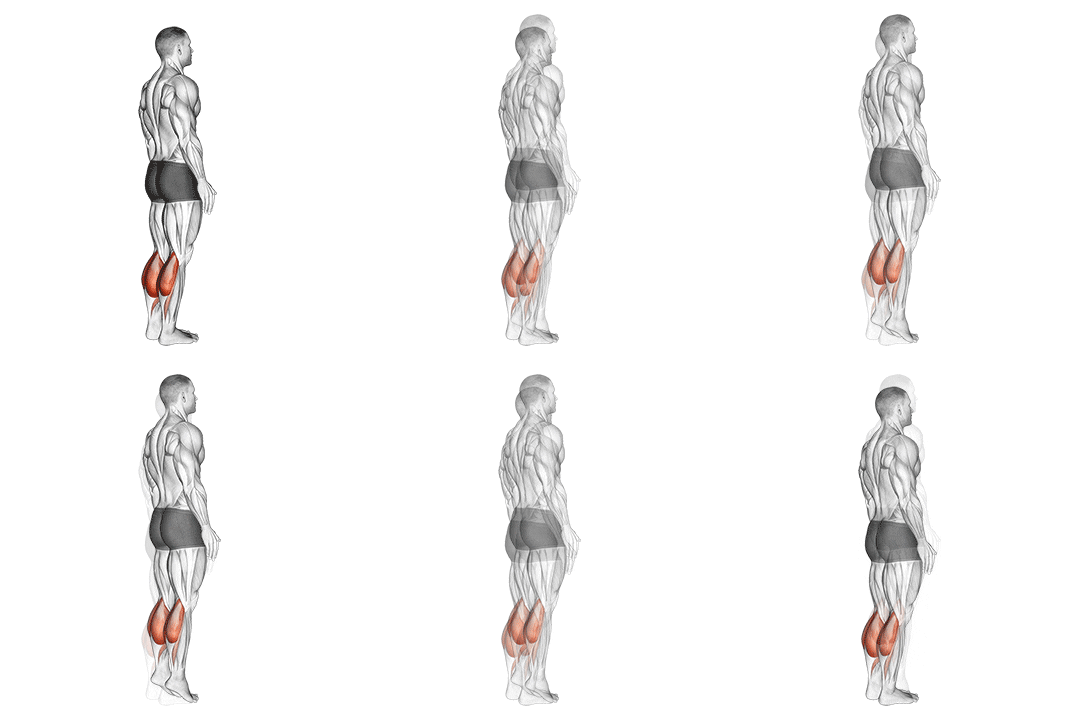
The bodyweight standing calf raise is an exercise that targets the calf muscles, specifically the gastrocnemius and soleus. It involves lifting your bodyweight onto your toes, working the muscles responsible for plantar flexion of the ankle. This exercise helps strengthen and tone the calves, which are important for activities like walking, running, and jumping. ## Instructions 1. Stand tall with your feet shoulder-width apart, maintaining a straight posture. 2. Position your hands on your hips or hold onto a stable surface for support, such as a wall or a chair. 3. Engage your core muscles to stabilize your body throughout the exercise. 4. Slowly rise up onto the balls of your feet by pushing through your toes, lifting your heels off the ground. 5. Continue lifting until you are standing on your tiptoes, feeling a stretch in your calf muscles. 6. Pause for a brief moment at the top, then slowly lower your heels back down to the starting position. 7. Repeat the movement for the desired number of repetitions. ## Variations - To increase the difficulty, you can perform the standing calf raises on a raised surface, such as a step or a sturdy block, allowing for a greater range of motion. - If you have access to gym equipment, you can use a calf raise machine or add weight resistance by holding dumbbells or wearing a weighted vest. - For individuals who find it challenging to balance, the exercise can be done while holding onto a stable object for support. ## Muscles Worked The bodyweight standing calf raise primarily targets the calf muscles. The gastrocnemius, located on the back of the lower leg, is the main muscle worked during the exercise. The soleus, a deeper calf muscle, is also engaged. ## Common Mistakes - Raising the heels too quickly or using momentum to lift the body. Focus on performing the movement in a controlled manner, emphasizing the contraction of the calf muscles. - Allowing the feet to roll inwards (pronation) or outwards (supination). Keep your feet aligned with your legs, maintaining a neutral foot position throughout the exercise. - Not achieving a full range of motion. Lower your heels down until you feel a stretch in your calves, and rise up as high as possible onto your tiptoes to maximize the contraction. ## Safety Precautions - If you have any pre-existing ankle or calf injuries, it is recommended to consult with a healthcare professional before attempting this exercise. - Start with a comfortable range of motion and gradually increase it as your flexibility and strength improve. - Avoid locking your knees or hyperextending your ankles at the top of the movement. Maintain control and engage the muscles without relying on joint laxity. - If you experience any pain or discomfort, especially in the joints, stop the exercise and seek guidance from a qualified professional. - If you have balance issues or are prone to falling, perform the exercise near a sturdy object that you can hold onto for support.
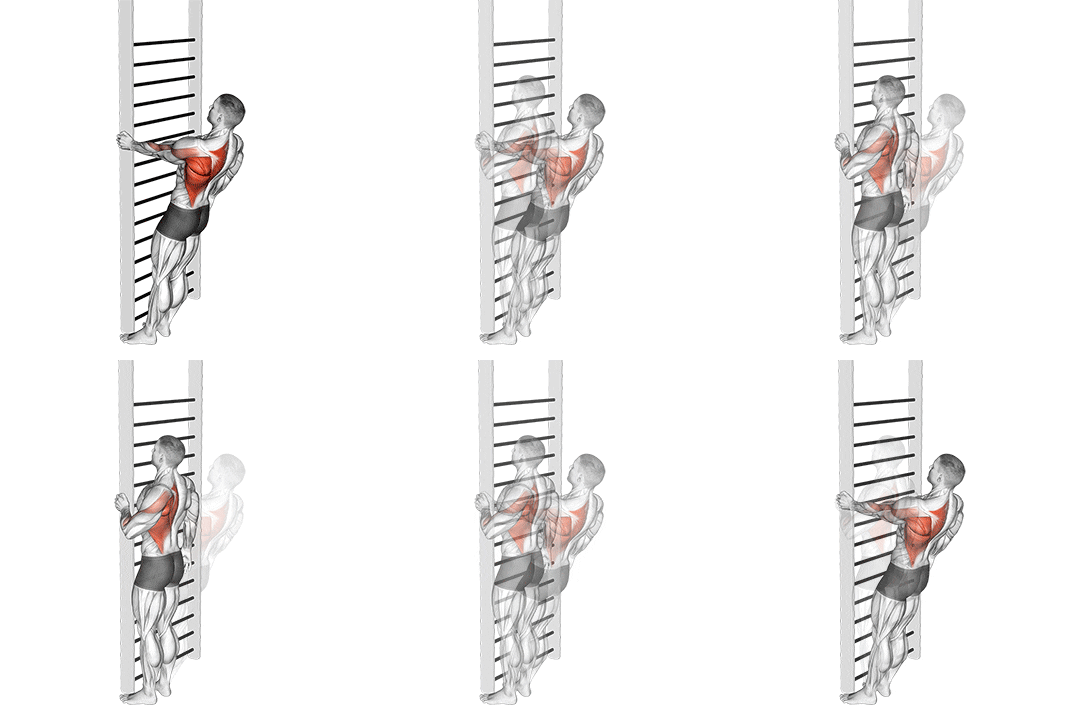
The bodyweight standing close-grip one arm row is an exercise that targets the muscles of the back, including the latissimus dorsi, rhomboids, and trapezius. It involves rowing one arm at a time, using bodyweight resistance, to strengthen and tone the back muscles. This exercise also improves posture and helps to correct muscle imbalances. ## Instructions 1. Stand with your feet shoulder-width apart, maintaining a slight bend in your knees. 2. Place one hand on a stable surface, such as a bench or a wall, for support. 3. Extend your opposite arm straight down towards the ground, keeping it fully extended throughout the exercise. 4. Keeping your back straight and your core engaged, exhale and pull the extended arm upward towards your torso, bending at the elbow. 5. Squeeze your shoulder blades together at the top of the movement, focusing on contracting the muscles of your back. 6. Inhale and slowly lower your arm back down to the starting position, fully extending it. 7. Repeat the movement for the desired number of repetitions, then switch sides and perform the exercise with the opposite arm. ## Variations - If you don't have a stable surface for support, you can use a resistance band anchored to a sturdy object to perform the one arm row. - To increase the difficulty, you can hold a dumbbell or a kettlebell in the hand performing the row. - For individuals who need additional stability, you can perform the exercise with a staggered stance, placing one foot slightly in front of the other. ## Muscles Worked The bodyweight standing close-grip one arm row primarily targets the latissimus dorsi (lats) muscles of the back. It also engages the rhomboids, trapezius, and other muscles of the upper back and shoulders to support the rowing motion. ## Common Mistakes - Allowing the torso to rotate or twist during the row. Keep your torso stable and face forward throughout the movement. - Rounding the shoulders or hunching the back. Maintain proper posture with a neutral spine and avoid excessive tension in the neck and upper traps. - Using momentum to complete the movement instead of relying on controlled muscle contractions. Focus on a slow and controlled motion to maximize the effectiveness of the exercise. ## Safety Precautions - If you have any existing back, shoulder, or wrist injuries, it is recommended to consult with a healthcare professional before attempting this exercise. - Start with a weight or resistance level that is appropriate for your fitness level and gradually increase it as your strength improves. - Engage your core muscles throughout the exercise to maintain stability and prevent excessive strain on the lower back. - Pay attention to your form and technique, ensuring that the movement is performed in a controlled manner without jerking or excessive swinging. - If you experience any pain or discomfort, stop the exercise and seek guidance from a qualified professional.
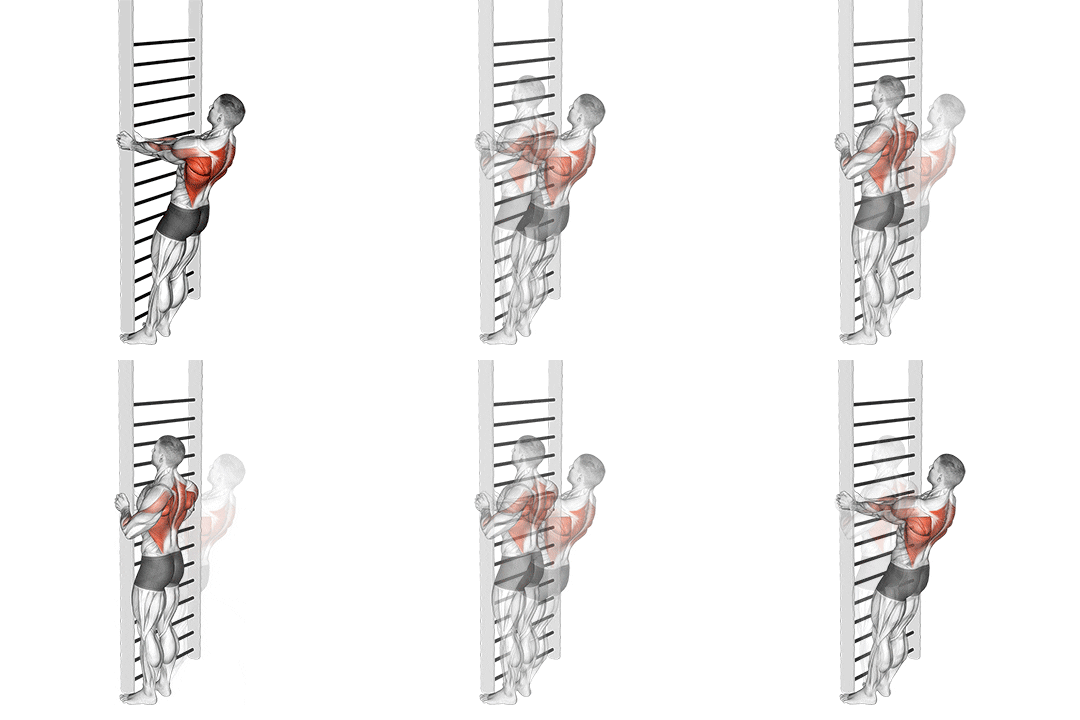
The bodyweight standing close-grip row is an exercise that targets the muscles of the back, including the latissimus dorsi, rhomboids, and trapezius. It involves pulling your bodyweight towards your hands, mimicking a rowing motion. This exercise helps to strengthen and tone the upper back, improve posture, and promote balanced muscle development. ## Instructions 1. Stand with your feet shoulder-width apart, maintaining a slight bend in your knees. 2. Extend your arms in front of you, parallel to the ground, with your palms facing each other. This is your starting position. 3. Keeping your back straight and your core engaged, exhale and pull your hands towards your body by retracting your shoulder blades. 4. Focus on squeezing your shoulder blades together at the top of the movement, while maintaining a stable torso. 5. Pause for a moment at the top, then inhale and slowly return to the starting position, extending your arms fully. 6. Repeat the movement for the desired number of repetitions. ## Variations - If you have access to a suspension trainer (e.g., TRX), you can perform the close-grip row using the straps, adjusting the difficulty by changing the angle of your body. - To increase the difficulty, you can elevate your feet on an elevated surface, such as a bench or a step, to increase the resistance. - For beginners or individuals with limited upper body strength, you can perform the exercise with your knees slightly bent or use a lighter resistance band. ## Muscles Worked The bodyweight standing close-grip row primarily targets the muscles of the upper back. The main muscles engaged include the latissimus dorsi (lats), rhomboids, trapezius, and rear deltoids. The biceps and forearms also assist in the pulling motion. ## Common Mistakes - Allowing the shoulders to shrug or the neck to tense up. Keep your shoulders relaxed and away from your ears throughout the movement. - Using excessive momentum or swinging to complete the row. Focus on controlling the movement and engaging the target muscles. - Arching the lower back or rounding the upper back. Maintain a neutral spine position throughout the exercise and avoid excessive strain on the lower back. ## Safety Precautions - If you have any existing back, shoulder, or wrist injuries, it is recommended to consult with a healthcare professional before attempting this exercise. - Start with a comfortable range of motion and resistance level. Gradually increase the difficulty as your strength and form improve. - Engage your core muscles throughout the exercise to stabilize your torso and protect your lower back. - Maintain proper form and technique, avoiding jerky or uncontrolled movements. - If you experience any pain or discomfort, especially in the joints, stop the exercise and seek guidance from a qualified professional.
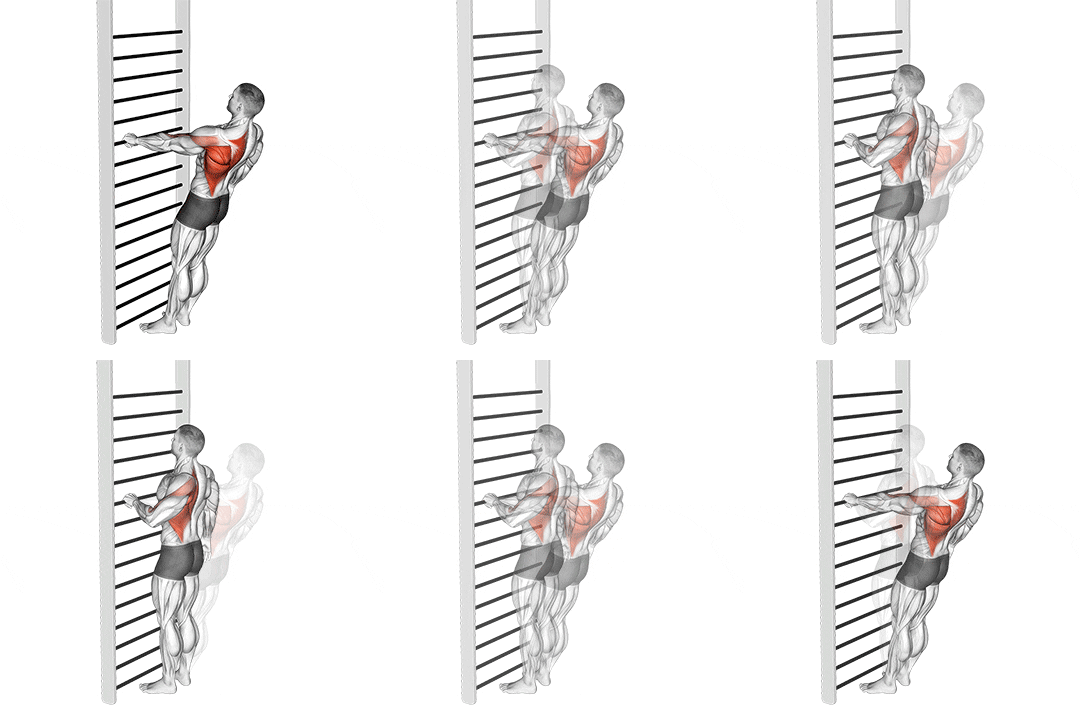
The bodyweight standing one arm row is an exercise that targets the muscles of the back, including the latissimus dorsi, rhomboids, and trapezius. It involves pulling your bodyweight up with one arm, simulating a rowing motion. This exercise helps to strengthen and tone the upper back, improve posture, and promote balanced muscle development. ## Instructions 1. Stand with your feet shoulder-width apart, maintaining a slight bend in your knees. 2. Place one hand on a stable surface, such as a bench or a wall, for support. 3. Extend your opposite arm straight down towards the ground, keeping it fully extended throughout the exercise. 4. Keeping your back straight and your core engaged, exhale and pull your elbow straight up, squeezing your shoulder blade towards your spine. 5. Focus on pulling your hand towards your torso while maintaining a stable torso and avoiding excessive rotation. 6. Pause for a moment at the top of the movement, then inhale and slowly lower your arm back down to the starting position, fully extending it. 7. Repeat the movement for the desired number of repetitions, then switch sides and perform the exercise with the opposite arm. ## Variations - If you don't have a stable surface for support, you can perform the one arm row by using a resistance band attached to a sturdy object or by using a suspension trainer (e.g., TRX). - To increase the difficulty, you can perform the exercise with a staggered stance, placing one foot slightly in front of the other, or by using a heavier resistance band. - For beginners or individuals with limited upper body strength, you can perform the exercise with your knees slightly bent or use a lighter resistance band. ## Muscles Worked The bodyweight standing one arm row primarily targets the muscles of the upper back. The main muscles engaged include the latissimus dorsi (lats), rhomboids, trapezius, and rear deltoids. The biceps and forearms also assist in the pulling motion. ## Common Mistakes - Rounding the shoulders or hunching the back. Maintain proper posture with a neutral spine and avoid excessive tension in the neck and upper traps. - Allowing the torso to rotate or twist during the row. Keep your torso stable and face forward throughout the movement. - Using excessive momentum or jerking to complete the row. Focus on a controlled and smooth movement, emphasizing the contraction of the target muscles. ## Safety Precautions - If you have any existing back, shoulder, or wrist injuries, it is recommended to consult with a healthcare professional before attempting this exercise. - Start with a weight or resistance level that is appropriate for your fitness level and gradually increase it as your strength improves. - Engage your core muscles throughout the exercise to maintain stability and prevent excessive strain on the lower back. - Pay attention to your form and technique, ensuring that the movement is performed in a controlled manner without jerking or excessive swinging. - If you experience any pain or discomfort, stop the exercise and seek guidance from a qualified professional.