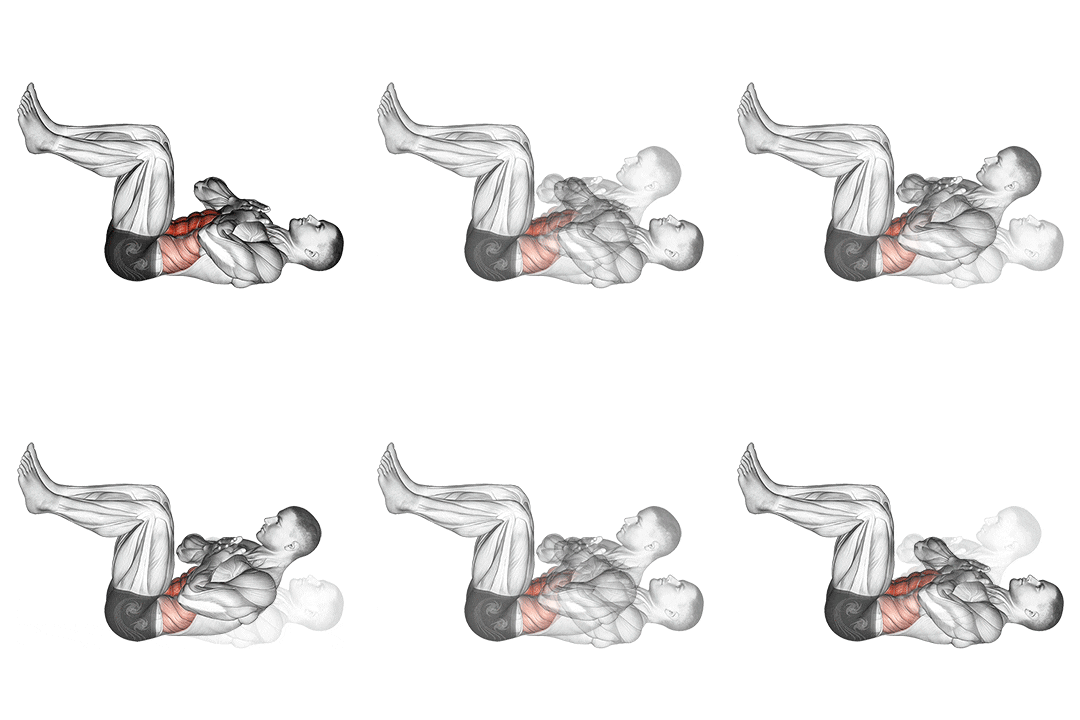
The Tuck Crunch is an abdominal exercise that targets the rectus abdominis muscles (commonly known as the "six-pack") and the hip flexors. It involves curling the upper body and bringing the knees toward the chest in a tucked position. This exercise helps strengthen and tone the core muscles. ## Instructions 1. Lie flat on your back on a mat or a comfortable surface. 2. Bend your knees and lift your feet off the ground, so your thighs are perpendicular to the floor. 3. Curl your upper body off the ground, bringing your chest toward your knees. Simultaneously, bring your knees toward your chest by lifting your hips off the ground. 4. As you curl up, keep your lower back pressed against the floor and engage your core muscles. 5. Hold the tucked position for a moment, feeling the contraction in your abs. 6. Slowly lower your upper body and extend your legs back to the starting position, but without letting your feet touch the ground. 7. Repeat the movement for the desired number of repetitions. ## Variations - Beginner Variation: If the full Tuck Crunch is challenging, you can start by performing the exercise with your feet resting on the ground. As you build strength and improve your technique, gradually lift your feet off the ground to the tucked position. - Advanced Variation: To increase the difficulty, you can hold a medicine ball or a weight plate against your chest while performing the exercise. This adds resistance and intensifies the workout. ## Muscles Worked - Rectus abdominis (six-pack muscles) - Hip flexors (iliopsoas, rectus femoris) ## Common Mistakes - Using momentum or pulling with the neck instead of engaging the abdominal muscles. Focus on using your abs to initiate and control the movement. - Not maintaining proper form and allowing the lower back to arch off the ground. Keep your lower back pressed against the floor throughout the exercise. - Bringing the knees too close to the face, which can strain the neck or create excessive hip flexion. Aim to bring the knees toward the chest while maintaining a comfortable and controlled position. ## Safety Precautions - If you have any pre-existing neck or lower back injuries, consult with a fitness professional or healthcare provider before attempting this exercise. - Start with a warm-up and perform some light stretching for the abdominal muscles. - Engage your core muscles and breathe naturally throughout the exercise. - Control the movement and avoid any jerking or sudden movements that can strain the muscles. - If you experience any sharp pain or discomfort, stop the exercise and seek medical advice.
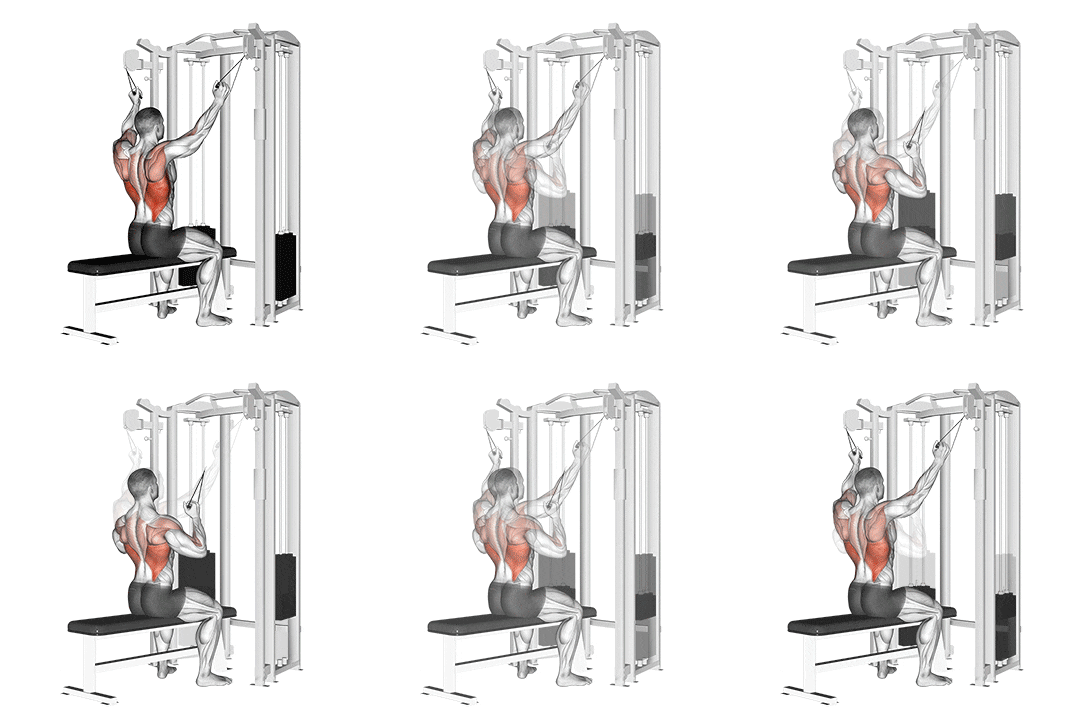
The Twin Handle Parallel Grip Lat Pulldown is an exercise that targets the latissimus dorsi (commonly known as the lats) muscles, as well as the muscles in the upper back and arms. It involves pulling a cable bar down toward the upper chest while maintaining a parallel grip with handles positioned in line with each other. This exercise helps to improve back strength, posture, and overall upper body development. ## Instructions 1. Adjust the seat height of the lat pulldown machine so that your thighs are positioned comfortably beneath the thigh pads. 2. Sit facing the machine with your feet flat on the ground and grasp the twin handles with an overhand grip (palms facing down), making sure the handles are parallel to each other. 3. Keep your back straight, chest up, and shoulders relaxed. 4. Lean back slightly, around 30 degrees, while maintaining good posture. 5. Begin the movement by pulling the handles down towards your upper chest while simultaneously squeezing your shoulder blades together. 6. Continue pulling until your upper arms are parallel to the floor and the handles are near your upper chest. 7. Pause for a moment, feeling the contraction in your back muscles. 8. Slowly and in a controlled manner, return the handles back to the starting position, fully extending your arms. 9. Repeat the movement for the desired number of repetitions. ## Variations - Underhand Grip: Instead of using an overhand grip, you can use an underhand grip (palms facing up) to target the muscles in a slightly different way. This variation places more emphasis on the biceps. - Wide Grip: To target the outer portion of the lats, you can use a wider grip on the handles. This variation provides a broader range of motion and emphasizes the width of the back. - Single-Arm Lat Pulldown: Perform the exercise using one arm at a time, focusing on each side independently. This variation helps to improve unilateral strength and stability. ## Muscles Worked - Latissimus dorsi (lats) - Rhomboids - Trapezius - Biceps - Posterior deltoids (shoulders) - Forearms ## Common Mistakes - Using excessive body momentum or jerking the weight. Focus on using controlled movements and engaging the targeted muscles. - Allowing the shoulders to elevate or the back to round forward during the movement. Keep your shoulders down and back, and maintain good posture throughout. - Gripping the handles too tightly, which can lead to unnecessary tension in the forearms. Maintain a firm, but not overly tight, grip. - Pulling the handles behind the head instead of toward the upper chest. This can strain the shoulders and neck. Aim to bring the handles down to the upper chest level. ## Safety Precautions - Adjust the weight of the lat pulldown machine to an appropriate level for your strength and fitness level. - Use smooth and controlled movements throughout the exercise to minimize the risk of injury. - Maintain proper form, including good posture and neutral spine alignment. - Avoid excessive leaning or using the lower back to generate momentum during the movement. - If you have any pre-existing shoulder, back, or neck issues, consult with a fitness professional or healthcare provider before attempting this exercise.
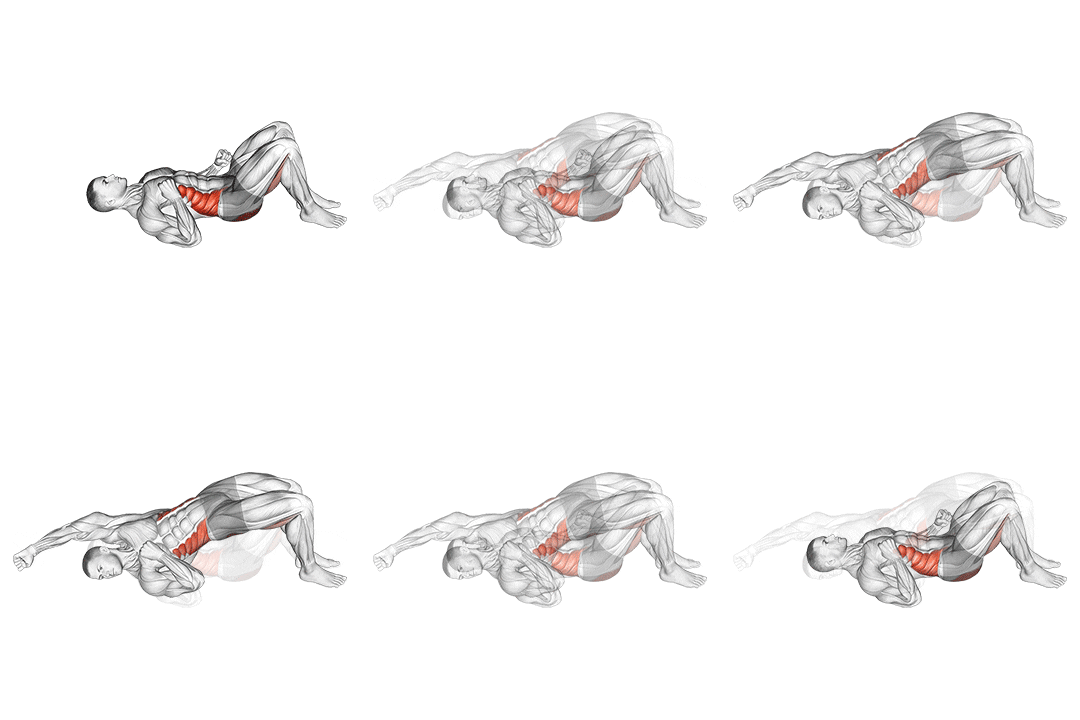
The Twist Hip Lift is an exercise that targets the abdominal muscles, especially the obliques. It involves a combination of a hip lift and a twisting motion, engaging the core muscles and promoting stability and strength in the torso. ## Instructions 1. Start by lying flat on your back on a mat or a comfortable surface. 2. Bend your knees and place your feet flat on the ground, hip-width apart. 3. Extend your arms straight out to the sides, parallel to the ground. 4. Engage your core muscles by drawing your belly button in towards your spine. 5. Lift your hips off the ground, pushing through your heels, until your body forms a straight line from your shoulders to your knees. 6. As you lift your hips, twist your lower body to one side, bringing your knees towards the ground on that side. 7. Lower your hips back to the ground, keeping your feet and shoulders in contact with the surface. 8. Return to the starting position and repeat the movement on the opposite side. 9. Alternate sides with each repetition. ## Variations - Modified Twist Hip Lift: If lifting your hips off the ground is challenging, you can perform the exercise with your hips remaining on the ground. Focus on the twisting motion while keeping your lower body stable. - Weighted Twist Hip Lift: To increase the difficulty, you can hold a dumbbell or a medicine ball against your chest while performing the exercise. This adds resistance and intensifies the workout. ## Muscles Worked - Obliques (external and internal) - Rectus abdominis (six-pack muscles) - Transverse abdominis (deep core muscles) - Hip flexors ## Common Mistakes - Allowing the shoulders or feet to lift off the ground during the movement. Keep the shoulders and feet stable and in contact with the surface throughout. - Using momentum to lift the hips instead of engaging the core muscles. Focus on using the abdominal muscles to initiate the movement. - Twisting too forcefully or excessively, which can strain the lower back. Keep the movement controlled and within a comfortable range of motion. - Holding tension in the neck and shoulders. Keep the upper body relaxed and focus on engaging the core muscles. ## Safety Precautions - If you have any pre-existing back or hip injuries, consult with a fitness professional or healthcare provider before attempting this exercise. - Start with a warm-up and perform some light stretching for the abdominal muscles and hip flexors. - Engage your core muscles and maintain proper form throughout the exercise. - Use controlled movements and avoid any jerking or sudden motions that can strain the muscles. - If you experience any sharp pain or discomfort, stop the exercise and seek medical advice.
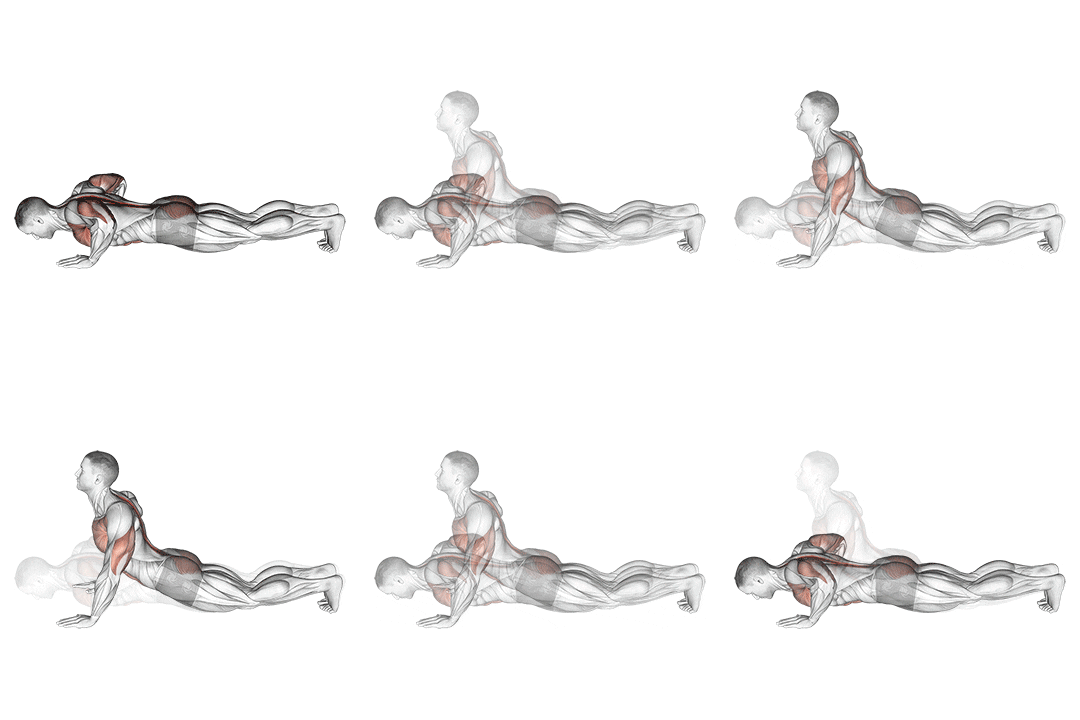
Upward Facing Dog, also known as Urdhva Mukha Svanasana in yoga, is a backbend pose that targets the muscles in the back, shoulders, and chest. It is often incorporated into yoga sequences and helps improve posture, strengthen the spine, and increase flexibility in the upper body. ## Instructions 1. Start by lying face down on a mat or a comfortable surface. 2. Place your palms flat on the ground beside your ribs, fingers spread wide and pointing forward. 3. Engage your core muscles and press the tops of your feet firmly into the ground. 4. Inhale and slowly straighten your arms, lifting your chest off the ground. 5. Keep your legs engaged and your thighs lifted off the ground. 6. Roll your shoulders back and down, opening your chest and allowing your heart to lift. 7. Look straight ahead or slightly upwards, avoiding any strain on your neck. 8. Hold the pose for a few breaths, feeling a gentle stretch through the front of your body. 9. To release, exhale and slowly lower your chest back down to the ground. ## Variations - Modified Upward Facing Dog: If lifting your entire chest off the ground is challenging, you can start with a modified version. Keep your hands on the ground, but lift only the upper part of your chest, keeping your lower ribs and belly on the ground. - Sphinx Pose: Instead of fully straightening your arms, you can perform Sphinx Pose by resting on your forearms, keeping your elbows directly under your shoulders. This variation provides a gentler backbend while still opening the chest and stretching the spine. ## Muscles Worked - Spinal erectors - Deltoids (shoulders) - Pectoralis major and minor (chest) - Rectus abdominis (abs) - Hip flexors - Quadriceps ## Common Mistakes - Overarching the lower back and putting excessive pressure on the lumbar spine. Engage your core muscles and maintain length in your lower back while performing the pose. - Straining the neck by looking too far up or holding the head in an unnatural position. Keep the neck in line with the spine and look straight ahead or slightly upward. - Not distributing the weight evenly between the hands and fingers. Press your palms firmly into the ground and distribute the weight evenly through your hands. - Holding the breath or shallow breathing. Remember to breathe deeply and steadily throughout the pose to stay relaxed and focused. ## Safety Precautions - If you have any existing back or wrist injuries, it is advisable to consult with a qualified yoga instructor or healthcare professional before attempting this pose. - Warm up your body and stretch your spine before practicing Upward Facing Dog. - Listen to your body and respect your limits. Avoid pushing yourself into any painful or uncomfortable positions. - If you experience sharp pain, dizziness, or discomfort, release the pose and seek guidance from a professional.
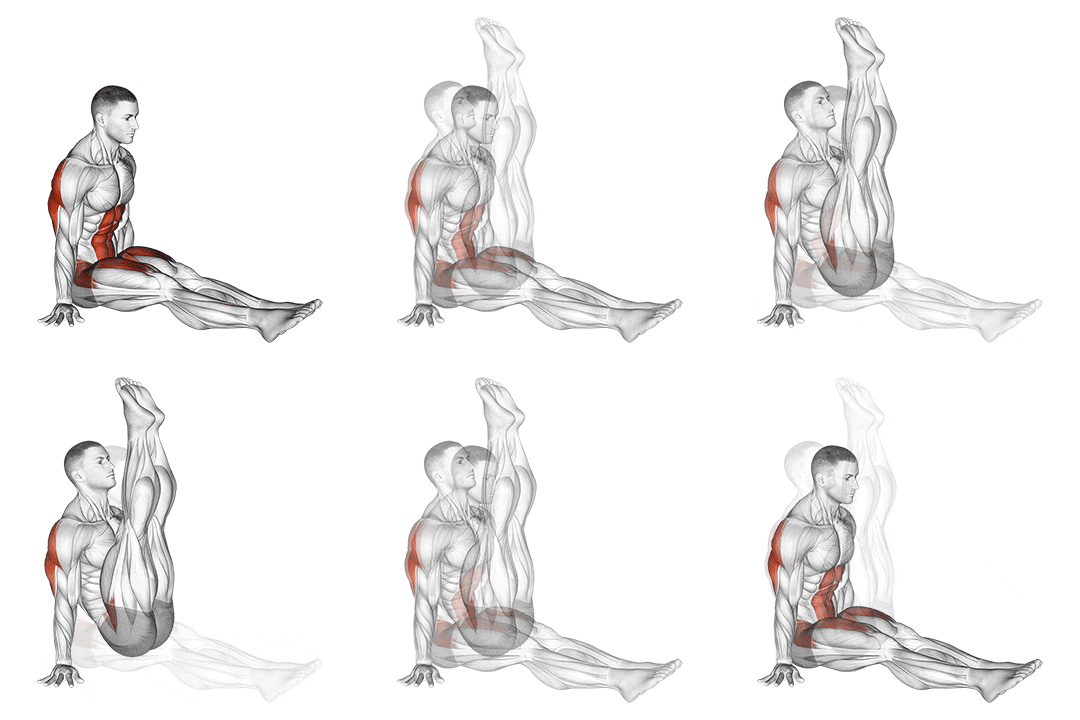
The V-Sit on Floor is an exercise that targets the abdominal muscles, particularly the rectus abdominis (six-pack muscles), as well as the hip flexors. It involves balancing on the sit bones while lifting the legs and torso to form a "V" shape. This exercise helps improve core strength, stability, and overall body control. ## Instructions 1. Start by sitting on the floor with your legs extended in front of you. 2. Place your hands slightly behind your hips, fingers pointing towards your feet, and lean back slightly while keeping your back straight. 3. Engage your core muscles by drawing your belly button in towards your spine. 4. Lift your feet off the ground, bending at the hips and knees, while simultaneously leaning back further and balancing on your sit bones. 5. Keep your chest lifted and your spine straight as you lift your legs to form a "V" shape with your body. 6. Aim to bring your torso and legs as close together as possible while maintaining balance. 7. Hold the position for a few seconds, focusing on contracting your abdominal muscles. 8. Slowly lower your torso and legs back to the starting position, returning your feet to the ground. 9. Repeat the movement for the desired number of repetitions. ## Variations - Supported V-Sit: If balancing on your sit bones is challenging, you can place your hands on the floor beside your hips for support. This modification allows you to focus on engaging the core muscles while building strength and stability. - V-Sit with Leg Lifts: Once you are comfortable with the V-Sit, you can add an additional challenge by alternating leg lifts. Lift one leg at a time while maintaining the V shape with your torso and the opposite leg extended. ## Muscles Worked - Rectus abdominis (six-pack muscles) - Transverse abdominis (deep core muscles) - Hip flexors - Quadriceps ## Common Mistakes - Rounding the back or hunching the shoulders. Maintain an upright posture with your chest lifted and your shoulders relaxed. - Allowing the legs or torso to drop too low. Focus on keeping your legs and torso lifted to maintain the "V" shape. - Holding tension in the neck or jaw. Keep the upper body relaxed and avoid straining the neck muscles. - Holding the breath. Remember to breathe steadily throughout the exercise. ## Safety Precautions - If you have any existing back or neck conditions, it is advisable to consult with a fitness professional or healthcare provider before attempting this exercise. - Start with a warm-up to prepare your body, particularly your core and hip muscles, for the exercise. - Engage your core muscles and maintain proper form throughout the exercise. - Take it slow and gradually increase the duration and intensity of the V-Sit as your strength improves. - If you experience any sharp pain or discomfort, stop the exercise and seek medical advice.
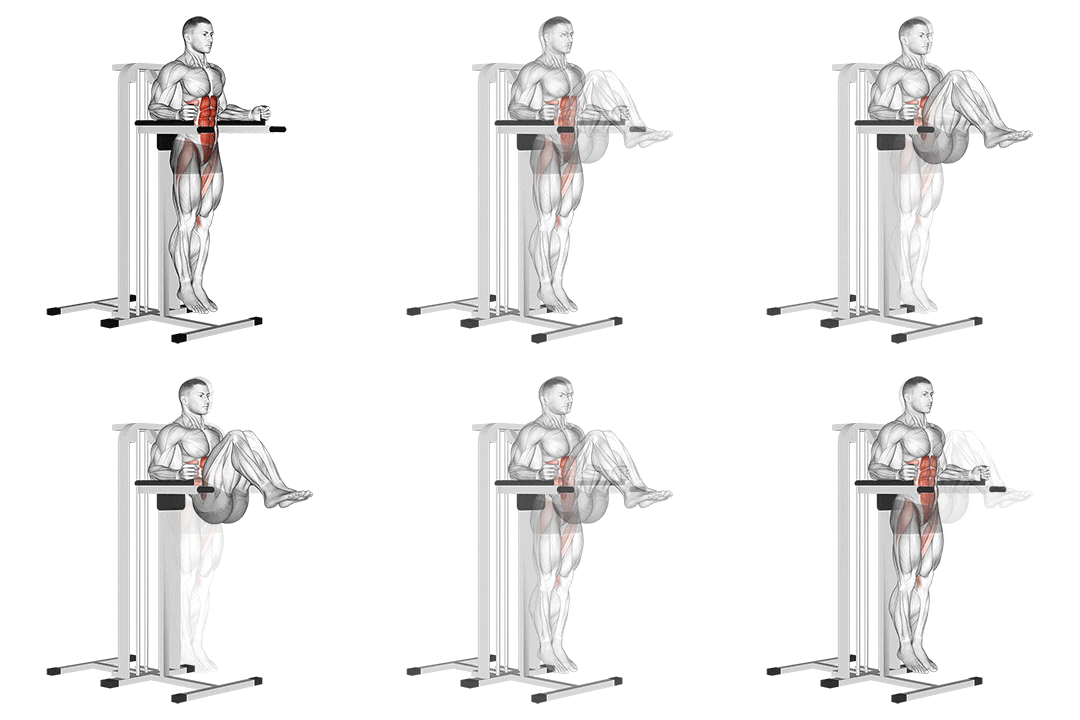
The Vertical Leg Raise is an exercise that targets the abdominal muscles, particularly the lower abs, as well as the hip flexors. It involves lifting the legs in a controlled manner while hanging from parallel bars, engaging the core muscles to stabilize the body. This exercise helps strengthen the abs, improve hip flexibility, and enhance overall core strength. ## Instructions 1. Stand between parallel bars and grip the bars with an overhand grip, palms facing forward. 2. Hang freely with your arms fully extended and your body straight. 3. Engage your core muscles by drawing your belly button in towards your spine. 4. Keeping your legs straight, exhale and raise your legs up in front of you until they are parallel to the ground or slightly higher. 5. Pause for a moment at the top of the movement, focusing on contracting your abs. 6. Inhale and slowly lower your legs back down to the starting position. 7. Repeat the movement for the desired number of repetitions. ## Variations - Bent Knee Vertical Leg Raise: If keeping your legs straight is challenging, you can perform the exercise with your knees bent. This modification reduces the intensity and allows you to focus on engaging the core muscles. - Hanging Knee Raise: Instead of raising both legs together, you can perform the exercise by raising one knee at a time. This variation provides additional stability and control while still targeting the abs and hip flexors. ## Muscles Worked - Rectus abdominis (six-pack muscles) - Transverse abdominis (deep core muscles) - Hip flexors - Obliques (engaged for stabilization) ## Common Mistakes - Using momentum to swing the legs instead of using the core muscles. Focus on controlled movements and engage your abs throughout the exercise. - Allowing the shoulders to shrug or the back to round. Keep your shoulders down and back, and maintain proper posture throughout. - Using the arms to pull or push yourself up. The primary focus should be on the abdominal and hip flexor muscles, with the arms providing support and stability. - Arching the lower back excessively. Maintain a neutral spine position and avoid overarching to prevent strain on the lower back. ## Safety Precautions - If you have any pre-existing shoulder, wrist, or back injuries, it is advisable to consult with a fitness professional or healthcare provider before attempting this exercise. - Warm up your body and perform some light stretching for the abdominal muscles and hip flexors. - Start with a comfortable height for the parallel bars, ensuring that you can fully extend your arms without any strain or discomfort. - Engage your core muscles and maintain proper form throughout the exercise. - Use controlled movements and avoid any jerking or swinging motions that can strain the muscles or joints. - If you experience any sharp pain or discomfort, stop the exercise and seek medical advice.
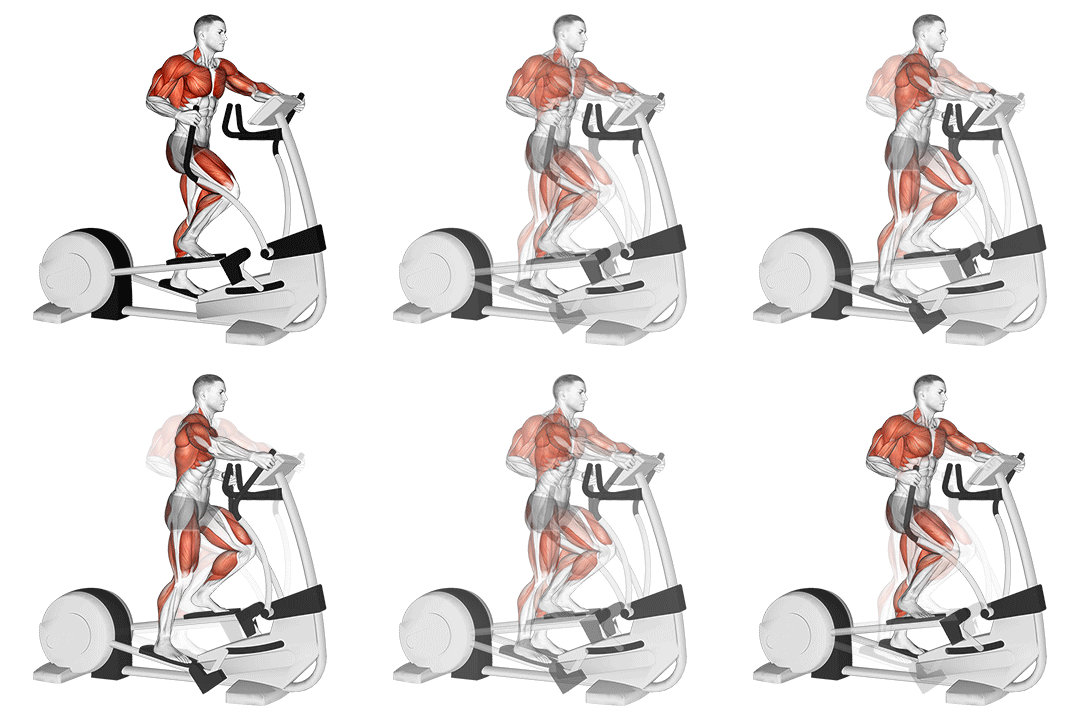
Walking on an elliptical cross trainer is a low-impact cardiovascular exercise that simulates the motion of walking or running. It targets the lower body muscles, including the quadriceps, hamstrings, glutes, and calves, while also engaging the core and upper body muscles for stability. This exercise provides a great cardio workout, helps improve endurance, and is gentle on the joints. ## Instructions 1. Stand on the foot pedals of the elliptical cross trainer with your feet hip-width apart. 2. Grasp the handles firmly with an overhand grip and maintain an upright posture. 3. Begin by pushing down on one foot pedal while simultaneously pulling up on the opposite handle. 4. As you push down with one foot, let the other foot rise naturally. 5. Coordinate your arm and leg movements, alternating between pushing and pulling, creating a fluid motion. 6. Continue walking on the elliptical cross trainer, gradually increasing your speed and resistance as desired. 7. Maintain a steady and controlled pace throughout the exercise, keeping your movements smooth and natural. 8. Aim for a duration that suits your fitness level and goals. Start with a comfortable time frame and gradually increase it over time. ## Variations - Reverse Motion: Instead of pushing forward, you can change the direction of the elliptical cross trainer and push backward. This variation targets the muscles in your lower body from a different angle. - High Intensity Intervals: To add intensity to your workout, incorporate intervals of higher resistance or speed. Increase the resistance level and pedal faster for a short period, then return to your regular pace for recovery. ## Muscles Worked - Quadriceps - Hamstrings - Glutes - Calves - Core muscles (engaged for stability) - Upper body muscles (shoulders, arms, and chest) are engaged when using the handlebars ## Common Mistakes - Leaning too heavily on the handlebars: Avoid putting excessive weight on the handlebars, as it reduces the engagement of the lower body muscles. Maintain a light grip and let your legs do the work. - Slouching or rounding the back: Keep your back straight and maintain good posture throughout the exercise. Avoid hunching forward or arching your back. - Holding tension in the neck or shoulders: Relax your shoulders and keep your neck relaxed. Avoid tensing up, as it can lead to unnecessary strain. - Using only the lower body: Remember to engage your core and upper body muscles by actively pushing and pulling the handles. This adds an extra element of workout and helps maintain balance. ## Safety Precautions - Adjust the resistance and speed settings to a level that is comfortable for you, especially if you're a beginner or returning to exercise after a break. - Warm up before starting the exercise to prepare your muscles for the workout. - Listen to your body and avoid overexertion. Start with shorter durations and gradually increase the time as your fitness level improves. - Wear proper athletic shoes with good support to provide stability and reduce the risk of slipping or injury. - Stay hydrated by drinking water before, during, and after your workout. - If you have any underlying health conditions or concerns, consult with a healthcare professional before starting any exercise program.
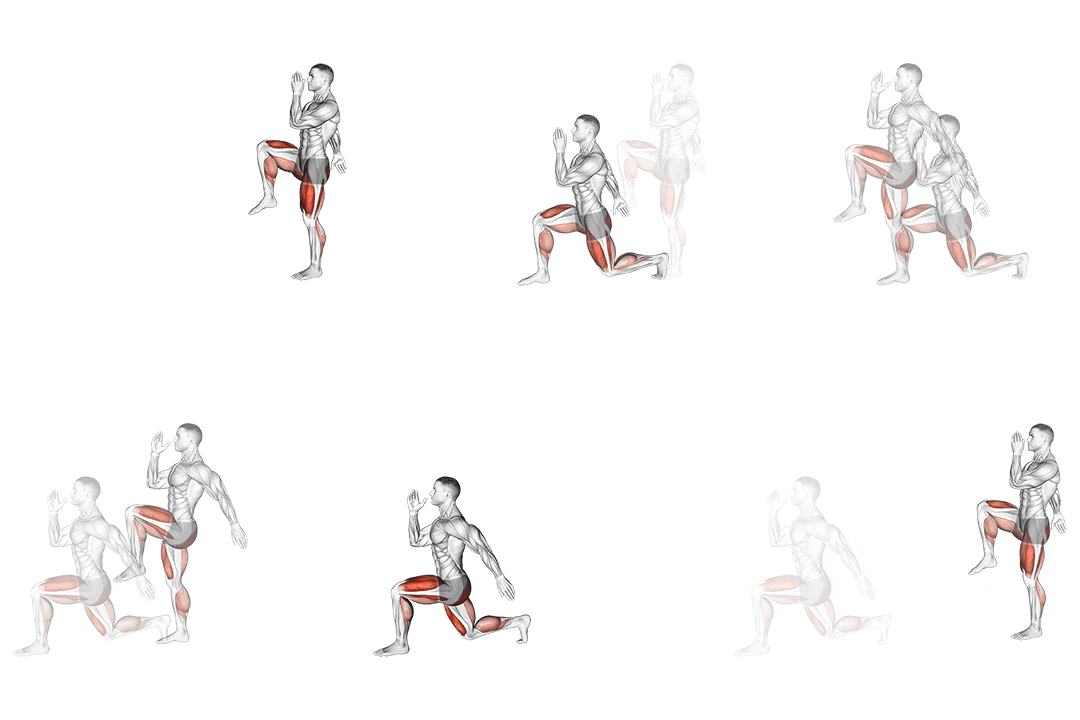
The Walking High Knees Lunge is a compound exercise that combines elements of high knees and lunges. It targets multiple muscle groups, including the quadriceps, hamstrings, glutes, and core muscles. This exercise helps improve cardiovascular endurance, lower body strength, and overall coordination. ## Instructions 1. Stand tall with your feet hip-width apart and your arms hanging by your sides. 2. Begin by lifting your right knee up towards your chest, driving it as high as possible while maintaining a tall posture. 3. As you lower your right knee, simultaneously step forward with your left foot into a forward lunge position. 4. Lower your body into the lunge by bending your left knee until it forms a 90-degree angle, while keeping your right knee lifted. 5. Push off your left foot and bring your right foot forward, lowering it into a forward lunge position as you simultaneously lift your left knee. 6. Repeat the movement, alternating legs, as if you are walking in place while performing lunges. 7. Continue for the desired number of repetitions or a specific distance. ## Variations - Beginners can modify this exercise by reducing the range of motion. Instead of lifting the knees as high, they can perform a marching motion while stepping into lunges. - To increase the difficulty, weights such as dumbbells or a weighted vest can be added. - For individuals with knee issues, the walking motion can be performed without the lunges, focusing solely on lifting the knees while walking. ## Muscles Worked - Quadriceps (front of the thigh) - Hamstrings (back of the thigh) - Glutes (buttocks) - Calves - Core muscles (abdominals and lower back) for stabilization ## Common Mistakes - Allowing the knees to collapse inward during the lunges: Maintain proper alignment by keeping the knees in line with the toes. - Leaning too far forward or backward during the lunges: Keep an upright posture throughout the exercise to engage the targeted muscles effectively. - Lifting the knees too low: Aim to bring the knees up as high as possible to engage the core and hip flexor muscles. ## Safety Precautions - If you have any pre-existing knee or hip conditions, consult with a healthcare professional before attempting this exercise. - Start with a shorter range of motion and gradually increase it as your flexibility and strength improve. - Perform the exercise on a stable surface to avoid slipping or losing balance. - Listen to your body and stop the exercise if you experience any pain or discomfort.
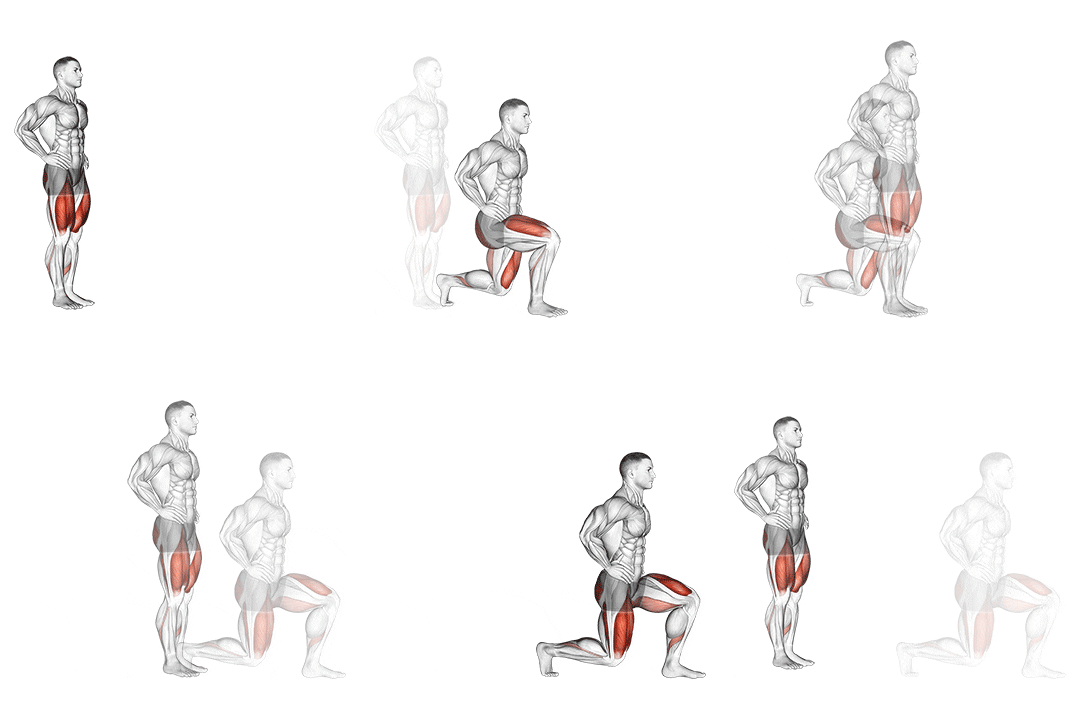
The Walking Lunge is a lower body exercise that primarily targets the muscles of the legs, including the quadriceps, hamstrings, and glutes. It also engages the core muscles for stability and balance. This exercise helps improve leg strength, stability, and overall lower body endurance. ## Instructions 1. Stand tall with your feet hip-width apart and your arms hanging by your sides. 2. Take a step forward with your right foot, extending it out in front of you. 3. Lower your body by bending both knees until your back knee is a few inches above the ground, and your front thigh is parallel to the floor. Keep your torso upright and your core engaged. 4. Push through your front heel and step forward with your left foot, bringing it beside your right foot. 5. Repeat the movement, stepping forward with the opposite leg and performing a lunge. 6. Continue alternating legs and walking forward, maintaining a smooth and controlled motion. 7. Continue for the desired number of repetitions or a specific distance. ## Variations - To increase the difficulty, you can hold dumbbells or kettlebells in your hands while performing the walking lunges. - If you have limited space, you can perform stationary lunges by stepping forward into a lunge position and then stepping back to the starting position before lunging with the other leg. - Beginners or individuals with balance issues can use a wall or sturdy support for assistance and stability while performing the walking lunges. ## Muscles Worked - Quadriceps (front of the thigh) - Hamstrings (back of the thigh) - Glutes (buttocks) - Calves - Core muscles (abdominals and lower back) for stabilization ## Common Mistakes - Allowing the front knee to extend past the toes: Keep the front knee in line with the ankle and avoid excessive forward movement. - Leaning the torso too far forward or backward: Maintain an upright posture throughout the exercise to ensure proper engagement of the targeted muscles. - Not stepping far enough with each lunge: Take a long enough step forward to create a 90-degree angle at the front knee when lowering into the lunge position. ## Safety Precautions - If you have any pre-existing knee or hip conditions, consult with a healthcare professional before attempting this exercise. - Perform the exercise on a stable surface to avoid slipping or losing balance. - Take care not to let the front knee collapse inward during the lunges. Keep it in line with the toes. - Engage your core muscles and maintain proper form throughout the exercise to prevent strain on the lower back. - Start with a shorter range of motion and gradually increase it as your flexibility and strength improve. - Listen to your body and stop the exercise if you experience any pain or discomfort.