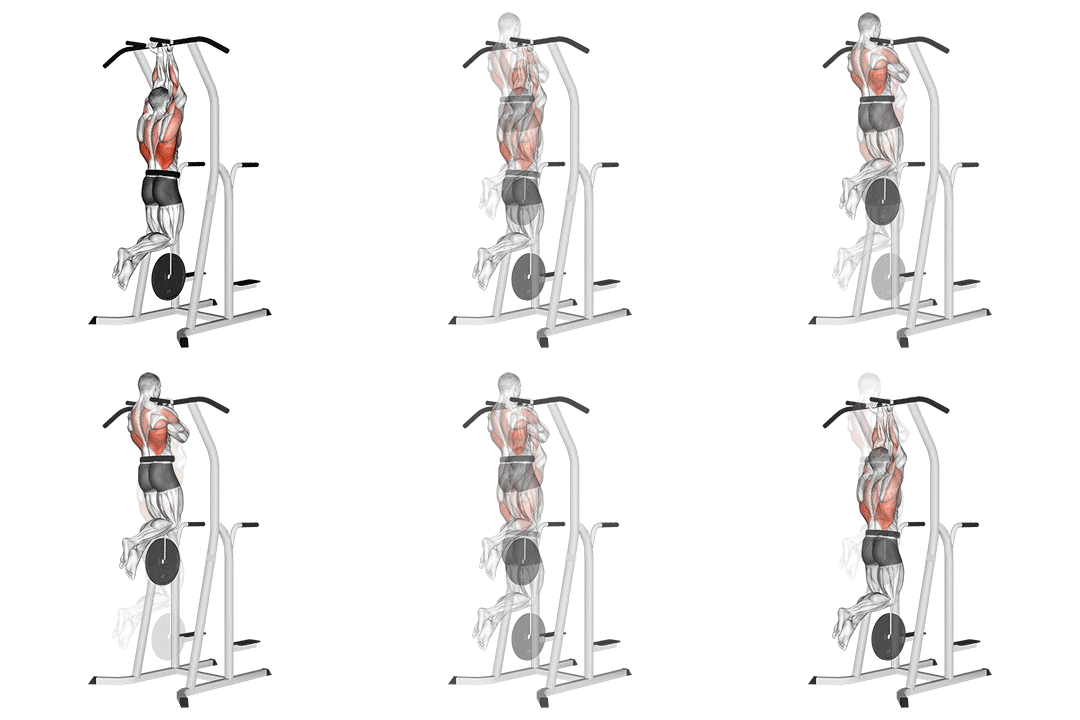
The Weighted Close Grip Chin-Up on Dip Cage is an advanced upper body exercise that primarily targets the muscles of the back, including the lats (latissimus dorsi), biceps, and rear deltoids. This exercise also engages the muscles of the arms, shoulders, and core. Adding weight to the exercise increases resistance and helps build strength and muscle mass in the upper body. ## Instructions 1. Set up a dip cage with a chin-up bar at a height that allows you to hang freely with your arms fully extended. 2. Attach a weight plate or a weight belt with the desired amount of weight to your body. 3. Stand on a bench or step and reach up to grip the chin-up bar with your hands in a close grip position, slightly narrower than shoulder-width apart, palms facing towards you (underhand grip). 4. Engage your core, squeeze your glutes, and retract your shoulder blades. 5. Initiate the movement by pulling yourself up towards the bar, focusing on using your back muscles. Keep your elbows close to your body throughout the movement. 6. Continue pulling until your chin is above the bar and your upper chest touches it. 7. Slowly lower yourself back down to the starting position, fully extending your arms. 8. Repeat the movement for the desired number of repetitions. ## Variations - If you don't have access to a dip cage, you can perform the exercise using a sturdy chin-up bar or a pull-up station. - To decrease the difficulty, you can use a resistance band for assistance. Loop the band around the bar and place your feet or knees in the band to provide support during the movement. - If you are unable to perform the exercise with added weight, you can start with bodyweight chin-ups and gradually progress to weighted variations. ## Muscles Worked - Latissimus dorsi (lats) - Biceps brachii (biceps) - Rear deltoids (posterior shoulders) - Rhomboids - Trapezius - Forearm muscles - Core muscles (stabilization) ## Common Mistakes - Using excessive swinging or momentum: Maintain control throughout the movement, avoiding swinging or kicking to assist the lift. Focus on engaging the target muscles. - Not fully retracting the shoulder blades: Prioritize squeezing the shoulder blades together to engage the back muscles effectively. - Allowing the elbows to flare out to the sides: Keep the elbows close to the body throughout the movement to emphasize the back muscles and protect the shoulders. ## Safety Precautions - Ensure that the dip cage and chin-up bar are secure and stable before starting the exercise. - Start with a weight that you can comfortably handle and gradually increase it as your strength improves. - Maintain proper form and avoid straining the neck or lower back during the movement. - If you experience any pain or discomfort, especially in the shoulders or wrists, discontinue the exercise and consult with a healthcare professional. - If you are new to weighted chin-ups or have any underlying conditions, it's recommended to seek guidance from a qualified fitness professional to ensure proper technique and safety.
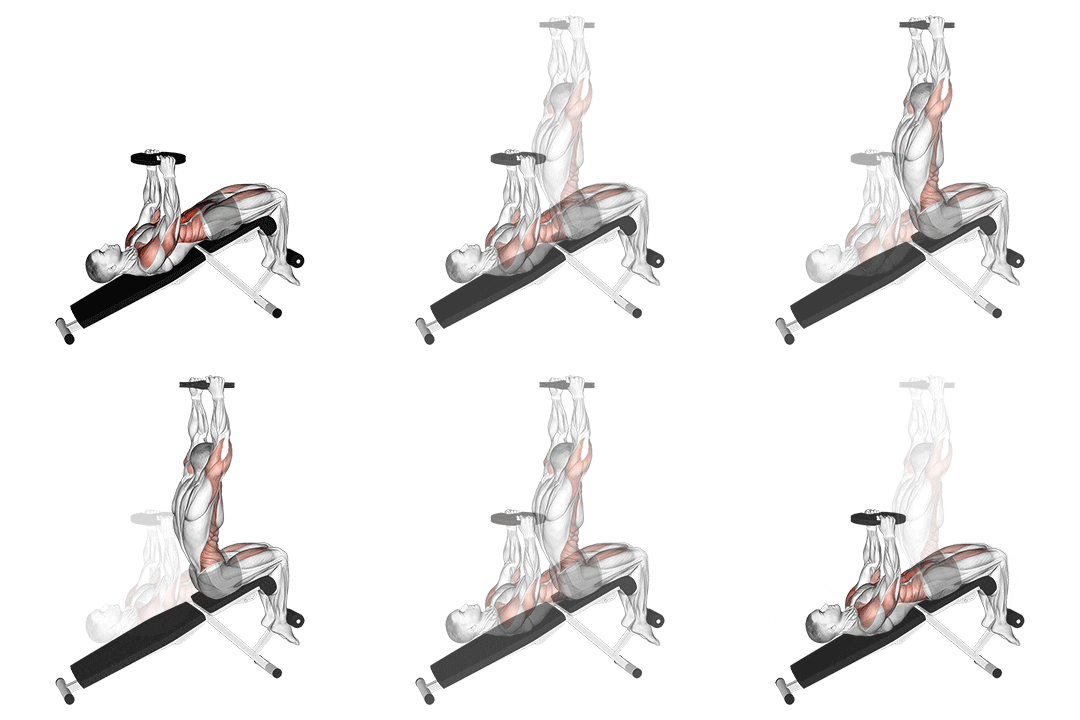
The Weighted Decline Sit-Up is an abdominal exercise that targets the muscles of the core, specifically the rectus abdominis (six-pack muscles), obliques, and hip flexors. This exercise involves performing a sit-up motion on a decline bench while holding a weight plate or a dumbbell against the chest. It helps strengthen the abdominal muscles, improve core stability, and enhance overall core strength. ## Instructions 1. Set up a decline bench at an angle of approximately 30-45 degrees. 2. Secure your feet at the top of the decline bench, either under the provided foot pads or by having a partner hold them. 3. Lie back on the bench with your knees bent and your feet positioned firmly on the bench. 4. Hold a weight plate or a dumbbell against your chest, crossing your arms over it to secure it in place. 5. Engage your core muscles by drawing your belly button towards your spine. 6. Slowly lift your torso off the bench by flexing your abs and curling your spine forward. 7. Continue the movement until your upper body is nearly upright, or you reach a comfortable range of motion. 8. Lower your torso back down to the starting position under control, keeping your core engaged throughout the movement. 9. Repeat the exercise for the desired number of repetitions. ## Variations - If you don't have access to a decline bench, you can perform the exercise on a flat surface or use an incline bench for a less challenging variation. - To increase the difficulty, you can hold the weight plate or dumbbell at arm's length above your chest throughout the exercise. - If you find it challenging to hold the weight against your chest, you can place the weight behind your head, keeping your arms extended. ## Muscles Worked - Rectus abdominis (six-pack muscles) - Obliques (side abdominal muscles) - Hip flexors ## Common Mistakes - Using momentum or relying on the neck muscles: Avoid using momentum to lift your torso and focus on engaging the core muscles to perform the movement. Do not strain your neck by pulling on it or using it to lift your upper body. - Pulling on the head or neck with the hands: Keep your hands either crossed over the chest or behind the head without pulling on the neck during the exercise. - Arching the lower back excessively: Maintain a neutral spine position throughout the movement and avoid excessive arching or rounding of the lower back. ## Safety Precautions - If you have a history of lower back issues or any other medical conditions, consult with a healthcare professional before attempting this exercise. - Start with a weight that you can comfortably handle and gradually increase it as your strength improves. - Perform the exercise in a controlled manner, focusing on the quality of the movement rather than speed or quantity. - If you experience any pain or discomfort, especially in the lower back, stop the exercise and consult with a qualified fitness professional or healthcare provider. - Engage your core muscles throughout the exercise to provide stability and protect the spine. - If you are new to weighted decline sit-ups or have any concerns, consider seeking guidance from a qualified fitness professional to ensure proper form and safety.
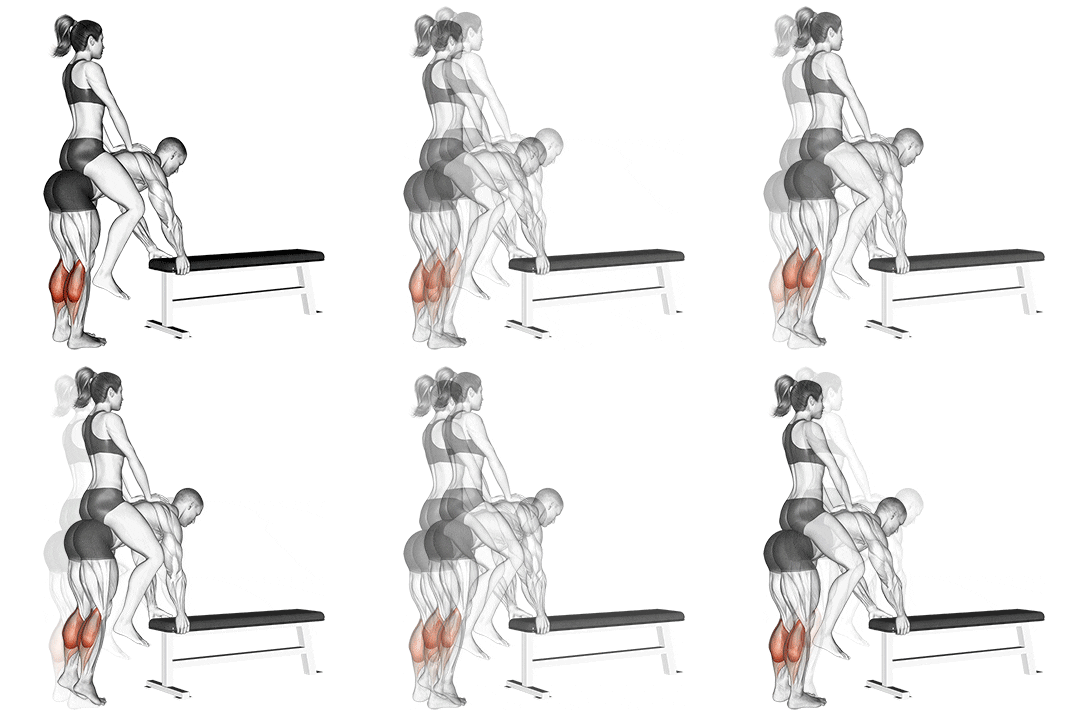
The Weighted Donkey Calf Raise is an exercise that specifically targets the calf muscles, primarily the gastrocnemius. This exercise involves using a weighted apparatus or having a partner sit on your back while performing calf raises. It helps develop strength and size in the calves, leading to improved lower leg stability and power. ## Instructions 1. Position yourself on a calf raise machine or a raised platform with your toes resting on the edge and the balls of your feet supporting your body weight. Alternatively, you can have a partner sit on your lower back, holding onto your shoulders for stability. 2. Adjust the machine or platform so that your heels are hanging off the edge, allowing for a full range of motion. 3. Place a weight plate or a dumbbell on top of your thighs, or have your partner apply pressure to add resistance. 4. Position your feet hip-width apart with your toes pointing forward. 5. Begin the movement by pushing through the balls of your feet and raising your heels as high as possible, extending your ankles. 6. Hold the peak contraction for a brief moment, feeling the stretch in your calves. 7. Slowly lower your heels back down to the starting position, allowing your calves to stretch. 8. Repeat the exercise for the desired number of repetitions. ## Variations - If a calf raise machine or platform is not available, you can perform donkey calf raises using a standing calf raise machine or a sturdy elevated surface, such as a step or block. - To increase the difficulty, you can use heavier weights or gradually progress to single-leg donkey calf raises. - If you don't have access to weights, you can perform bodyweight donkey calf raises by using your partner's weight or relying solely on the resistance of your own body. ## Muscles Worked - Gastrocnemius (calf muscles) - Soleus (calf muscles) - Plantar flexors (muscles responsible for pointing the toes) ## Common Mistakes - Using momentum or bouncing at the bottom: Ensure a controlled movement throughout the exercise, avoiding any sudden movements or bouncing at the bottom of the motion. - Rounding the lower back: Maintain proper posture throughout the exercise, keeping your core engaged and your back straight. Avoid excessive rounding of the lower back. - Not utilizing a full range of motion: Aim to achieve a full stretch at the bottom of the movement and a complete contraction at the top by raising the heels as high as possible. ## Safety Precautions - If you have any pre-existing conditions or injuries related to the calves, ankles, or lower extremities, consult with a healthcare professional before attempting this exercise. - Start with a weight or resistance that allows you to maintain proper form and gradually increase it as your strength improves. - Maintain a stable and balanced position throughout the exercise, focusing on control and stability. - If using a partner for added weight, ensure they are positioned securely and are able to maintain their balance without causing strain or discomfort. - If you experience any pain or discomfort, especially in the calves or ankles, stop the exercise and consult with a qualified fitness professional or healthcare provider. - Engage your core muscles and maintain proper form throughout the exercise to prevent strain on the lower back.
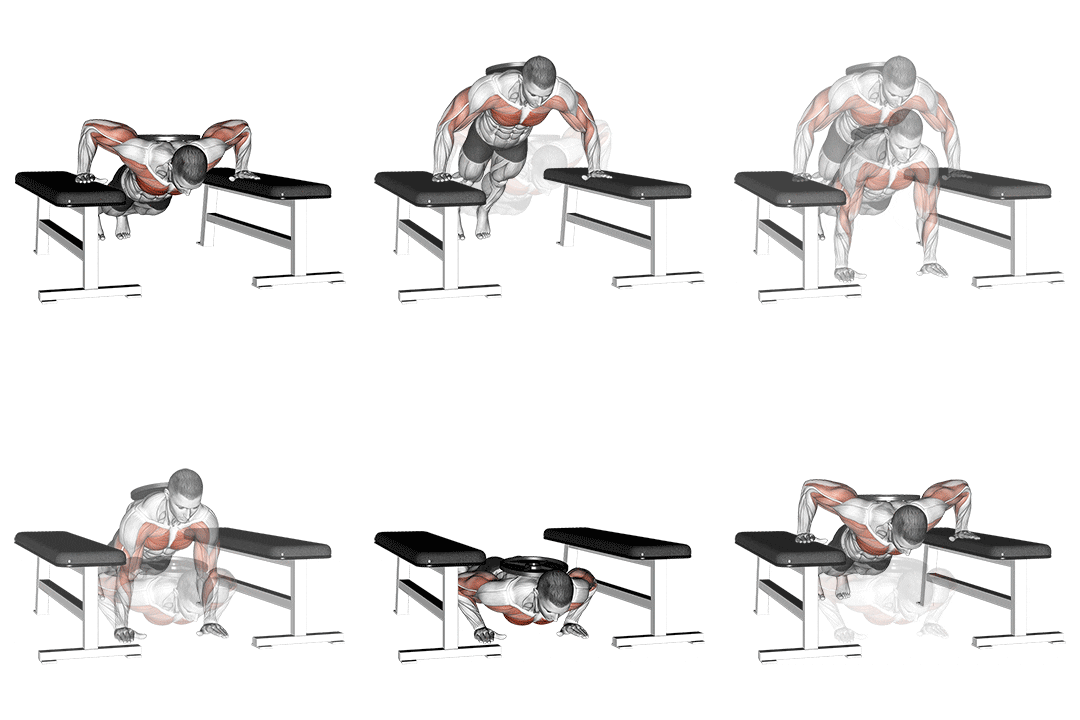
The Weighted Drop Push-Up is an advanced variation of the traditional push-up exercise that targets the muscles of the chest, shoulders, and triceps. This exercise involves performing a push-up while wearing a weighted vest or having weight plates positioned on your upper back. It helps increase upper body strength, muscle hypertrophy, and overall pushing power. ## Instructions 1. Place a weighted vest on your torso or position weight plates securely on your upper back. 2. Assume a standard push-up position on the floor with your hands slightly wider than shoulder-width apart. 3. Engage your core muscles, maintain a straight line from your head to your heels, and keep your feet together. 4. Lower your body towards the floor by bending your elbows, keeping them close to your sides. 5. Lower your chest as close to the floor as possible while maintaining control and proper form. 6. Pause for a brief moment at the bottom position. 7. Push through your hands and extend your elbows to return to the starting position. 8. Repeat the exercise for the desired number of repetitions. ## Variations - If you don't have a weighted vest, you can place weight plates on your upper back or secure a sandbag or backpack filled with weights. - To decrease the difficulty, you can perform the exercise on an elevated surface, such as a bench or step, to reduce the amount of bodyweight you need to push. - If you are unable to perform the exercise with added weight, you can start with bodyweight push-ups and gradually progress to weighted variations. ## Muscles Worked - Pectoralis major (chest muscles) - Anterior deltoids (front shoulder muscles) - Triceps brachii (back of the upper arm) ## Common Mistakes - Flaring the elbows out: Keep your elbows close to your sides throughout the movement to emphasize the chest and triceps muscles and avoid unnecessary strain on the shoulder joints. - Allowing the hips to sag or the lower back to arch: Maintain a straight line from your head to your heels throughout the exercise. Engage your core muscles to prevent sagging or arching of the back. - Not achieving a full range of motion: Lower your chest as close to the floor as possible while maintaining proper form. Aim to go through a complete range of motion for optimal muscle activation. ## Safety Precautions - Start with a weight or resistance that allows you to maintain proper form and gradually increase it as your strength improves. - Ensure that the weighted vest or weight plates are securely fastened and properly positioned on your body. - Perform the exercise on a stable and non-slip surface to prevent accidents or injuries. - If you experience any pain or discomfort, especially in the shoulders or wrists, discontinue the exercise and consult with a healthcare professional. - Engage your core muscles throughout the exercise to provide stability and protect the spine. - If you are new to weighted drop push-ups or have any concerns, consider seeking guidance from a qualified fitness professional to ensure proper form and safety.
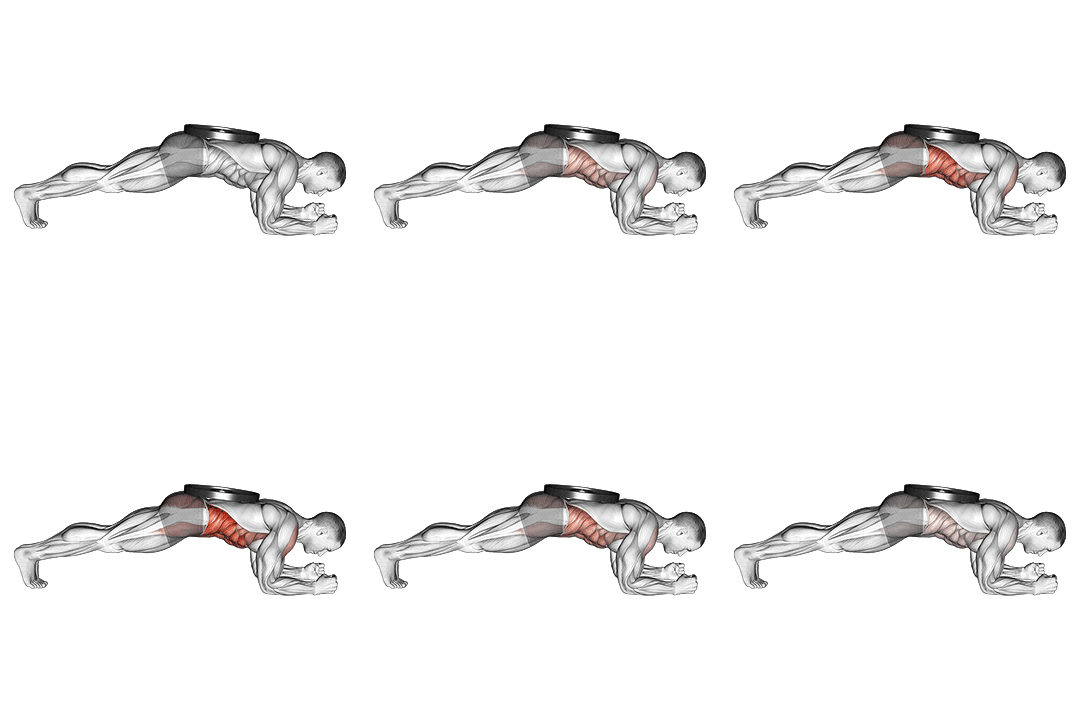
The Weighted Front Plank is an exercise that targets the muscles of the core, including the rectus abdominis, obliques, and deep stabilizing muscles. It involves assuming a plank position while adding external resistance, such as a weight plate or a sandbag, to increase the challenge and engage the core muscles more intensely. This exercise helps improve core strength, stability, and endurance. ## Instructions 1. Start by placing a mat or exercise mat on the floor. 2. Lie face down on the mat and position your elbows directly under your shoulders, with your forearms flat on the mat. 3. Extend your legs straight behind you, resting on your toes, and engage your core by drawing your belly button towards your spine. 4. Lift your body off the mat, maintaining a straight line from your head to your heels. 5. Position a weight plate or a sandbag on your upper back, between your shoulder blades. Make sure it is secure and balanced. 6. Hold the position for the desired duration, maintaining a strong core and avoiding sagging or excessive arching of the back. 7. Breathe steadily and avoid holding your breath. 8. Lower your body back down to the mat to finish the exercise. ## Variations - If you find the exercise too challenging with the added weight, you can start by performing a front plank without any external resistance. As you progress, you can gradually increase the difficulty by adding weight. - If placing the weight on your upper back is uncomfortable, you can hold a weight plate on your lower back or even position it on your shoulders. - To decrease the intensity, you can perform the exercise with your knees bent and resting on the mat instead of being on your toes. ## Muscles Worked - Rectus abdominis (six-pack muscles) - Obliques (side abdominal muscles) - Transverse abdominis (deep core stabilizers) - Erector spinae (back muscles) - Hip muscles (including hip flexors and glutes) ## Common Mistakes - Allowing the hips to sag or the lower back to arch: Maintain a straight line from your head to your heels throughout the exercise. Engage your core muscles and focus on keeping your hips level. - Holding the breath: Remember to breathe normally throughout the exercise. Avoid holding your breath, as it can increase tension and decrease performance. - Placing the weight too high on the upper back: Ensure the weight is securely positioned between your shoulder blades and centered on your upper back for optimal stability and balance. ## Safety Precautions - Start with a weight that you can comfortably handle and gradually increase it as your strength and stability improve. - Avoid excessive strain on the wrists by ensuring that your elbows are directly under your shoulders and distributing your weight evenly through your forearms. - If you have any pre-existing conditions or injuries related to the core, wrists, or shoulders, consult with a healthcare professional before attempting this exercise. - Engage your core muscles throughout the exercise to provide stability and protect the spine. - If you experience any pain or discomfort, especially in the lower back or wrists, discontinue the exercise and consult with a qualified fitness professional or healthcare provider. - Listen to your body and take breaks as needed. It's better to maintain proper form and quality of movement than to push through excessive fatigue or discomfort.
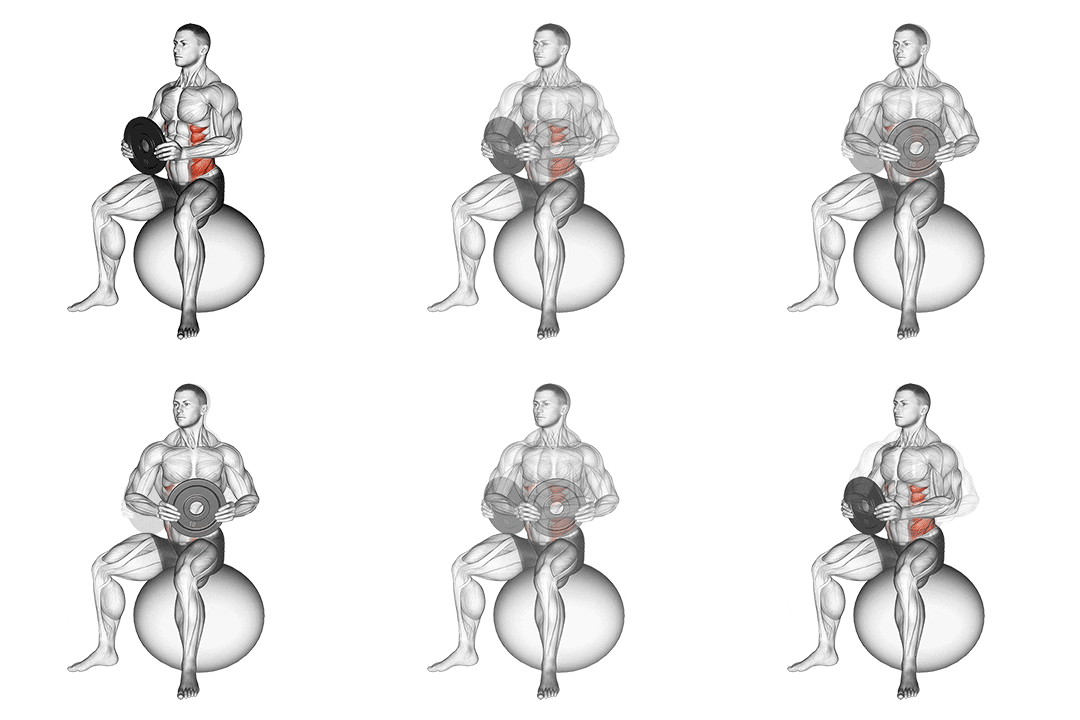
The Weighted Seated Twist on a Stability Ball is an exercise that targets the muscles of the core, particularly the obliques. This exercise involves sitting on a stability ball while holding a weight or medicine ball and rotating the torso from side to side. It helps improve core strength, stability, and rotational power. ## Instructions 1. Start by selecting an appropriate weight or medicine ball for your fitness level. 2. Sit on a stability ball and walk your feet forward, rolling the ball until your lower back is supported on the ball and your knees are at a 90-degree angle. 3. Hold the weight or medicine ball with both hands, positioning it close to your chest. 4. Engage your core muscles by drawing your belly button towards your spine. 5. Slowly rotate your torso to one side, allowing the weight to move with you, while keeping your hips and lower body stable. 6. Pause for a brief moment at the end of the rotation, feeling the contraction in your oblique muscles. 7. Return to the starting position and then repeat the movement to the opposite side. 8. Continue alternating sides for the desired number of repetitions. ## Variations - If you don't have a stability ball, you can perform seated twists on a stable chair or bench. - To increase the challenge, you can use a heavier weight or medicine ball. - If you have difficulty maintaining balance on the stability ball, you can perform the exercise without weights until you feel comfortable and stable enough to add resistance. ## Muscles Worked - Obliques (side abdominal muscles) - Rectus abdominis (six-pack muscles) - Transverse abdominis (deep core stabilizers) - Erector spinae (back muscles) ## Common Mistakes - Using momentum: Avoid using momentum to twist from side to side. Focus on controlled and deliberate movements, engaging the core muscles throughout the exercise. - Allowing the lower back to round or arch: Maintain proper posture and alignment by keeping your lower back supported on the stability ball and your core engaged. - Over-rotating or twisting too far: Only rotate as far as your range of motion allows without straining or compromising your form. Listen to your body and work within your limits. ## Safety Precautions - Choose a stable and properly inflated stability ball that suits your height and weight. - Start with a weight or resistance that you can handle comfortably and gradually increase it as your strength and stability improve. - Keep your movements controlled and avoid any sudden or jerky motions that could strain your muscles or destabilize the ball. - If you have any pre-existing conditions or injuries related to the core, back, or hips, consult with a healthcare professional before attempting this exercise. - Engage your core muscles throughout the exercise to provide stability and protect the spine. - If you experience any pain or discomfort, especially in the lower back or hips, discontinue the exercise and consult with a qualified fitness professional or healthcare provider. - Be aware of your surroundings and make sure you have enough space around you to perform the exercise safely.
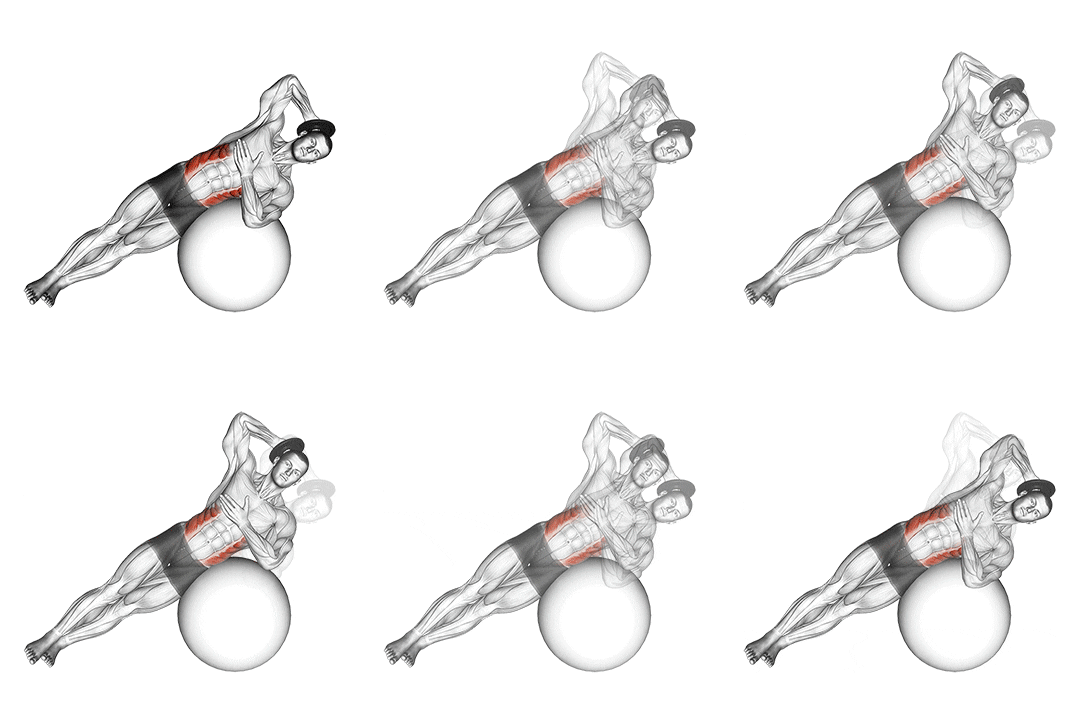
The Weighted Side Bend on a Stability Ball is an exercise that targets the muscles of the core, particularly the obliques and the muscles along the sides of the waist. This exercise involves performing lateral flexion while sitting on a stability ball and holding a weight. It helps strengthen the core muscles, improve stability, and enhance overall posture. ## Instructions 1. Start by selecting an appropriate weight dumbbell or kettlebell for your fitness level. 2. Sit on a stability ball and walk your feet forward, rolling the ball until your lower back is supported on the ball and your knees are at a 90-degree angle. 3. Hold the weight in one hand, allowing it to rest against the side of your thigh. Place your other hand behind your head or on your hip for support. 4. Engage your core muscles by drawing your belly button towards your spine. 5. Keeping your torso upright and your hips stable, slowly bend sideways towards the side opposite to the weight, allowing the weight to lower towards the floor. 6. Keep your movements controlled and feel the stretch on the opposite side of your torso. 7. Pause briefly at the bottom of the movement, then slowly return to the starting position. 8. Repeat the exercise for the desired number of repetitions, then switch to the other side and perform the same number of repetitions. ## Variations - If you don't have a stability ball, you can perform the exercise while seated on a stable chair or bench. - To increase the challenge, you can use a heavier weight or increase the number of repetitions. - If you prefer, you can perform the exercise without weights and focus on using your body weight for resistance. ## Muscles Worked - Obliques (side abdominal muscles) - Erector spinae (back muscles) - Transverse abdominis (deep core stabilizers) ## Common Mistakes - Rounding or arching the back: Maintain proper posture and alignment throughout the exercise. Keep your spine neutral and engage your core to stabilize the movement. - Using excessive momentum: Avoid using momentum to lift the weight. Focus on slow and controlled movements, emphasizing the contraction in the oblique muscles. - Leaning forward or backward: Keep your torso upright and avoid leaning forward or backward. This ensures that the exercise targets the intended muscles effectively. ## Safety Precautions - Choose a stable and properly inflated stability ball that suits your height and weight. - Start with a weight or resistance that you can handle comfortably and gradually increase it as your strength and stability improve. - Keep your movements controlled and avoid any sudden or jerky motions that could strain your muscles or destabilize the ball. - If you have any pre-existing conditions or injuries related to the core, back, or hips, consult with a healthcare professional before attempting this exercise. - Engage your core muscles throughout the exercise to provide stability and protect the spine. - If you experience any pain or discomfort, especially in the lower back or hips, discontinue the exercise and consult with a qualified fitness professional or healthcare provider. - Be aware of your surroundings and make sure you have enough space around you to perform the exercise safely.
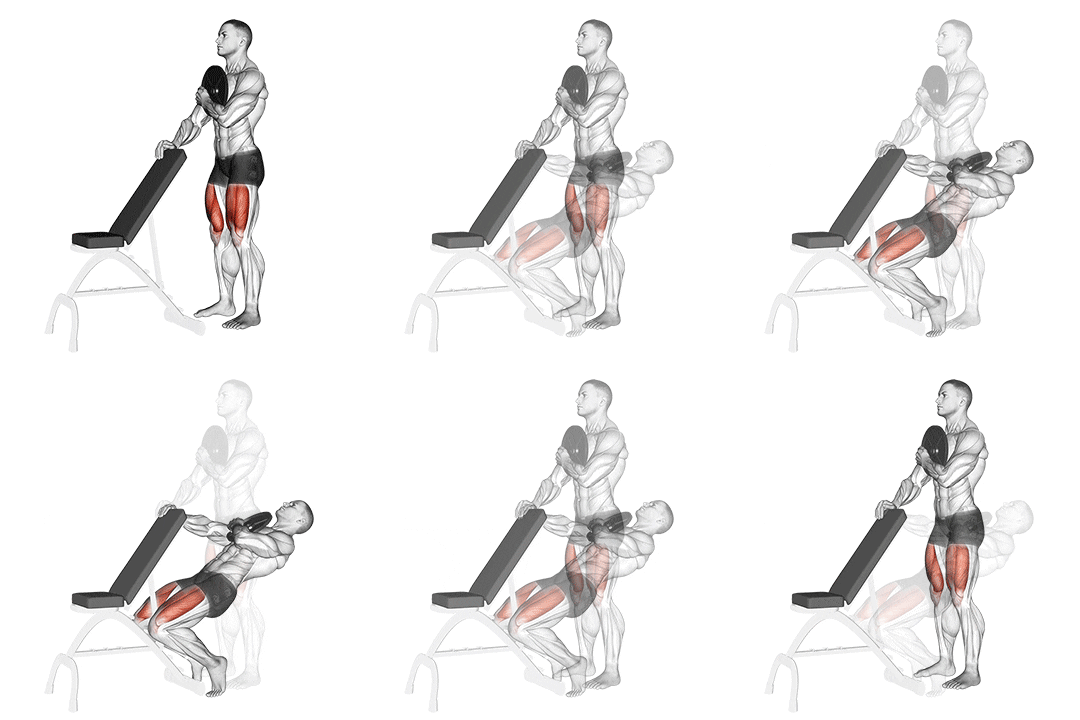
The Weighted Sissy Squat is an advanced lower body exercise that primarily targets the quadriceps muscles of the thighs. It involves performing a deep squat while leaning back and placing tension on the quadriceps. This exercise helps develop strength, size, and definition in the quadriceps, while also engaging the glutes and calves. ## Instructions 1. Start by standing upright with your feet shoulder-width apart and a dumbbell or barbell held against your chest, or you can hold onto a stable support like a squat rack. 2. Position your feet so that your toes are pointing slightly outward. 3. Begin the movement by leaning back slightly, keeping your torso tall and your core engaged. 4. Slowly lower your body by bending at the knees and hips, as if sitting back into a chair, while maintaining an upright position and keeping your knees in line with your toes. 5. Descend until your thighs are parallel to the ground or lower, feeling a deep stretch in your quadriceps. 6. Pause briefly at the bottom of the squat, then push through your heels and extend your knees and hips to return to the starting position. 7. Repeat the exercise for the desired number of repetitions. ## Variations - Bodyweight Sissy Squat: If you're new to the exercise or find it challenging, you can start by performing sissy squats without any additional weight. Focus on proper form and gradually progress by adding resistance. - Machine-Assisted Sissy Squat: If you have access to a sissy squat machine, you can use it to assist with the movement and gradually increase resistance as needed. - Single-Leg Sissy Squat: Once you have mastered the basic sissy squat, you can challenge yourself further by performing the exercise on one leg at a time, either with or without weights. ## Muscles Worked - Quadriceps (rectus femoris, vastus lateralis, vastus intermedius, vastus medialis) - Glutes (gluteus maximus) - Calves (gastrocnemius, soleus) ## Common Mistakes - Leaning too far back: While it's important to lean back slightly to engage the quadriceps, avoid excessive backward lean, as it can put excessive stress on the knees and lower back. Maintain control and balance throughout the movement. - Allowing the knees to cave inward: Keep your knees in line with your toes throughout the exercise to maintain proper knee alignment and prevent unnecessary stress on the joints. Focus on pushing your knees outwards during the movement. - Not going deep enough: To fully engage the quadriceps, aim to lower your body until your thighs are at least parallel to the ground. This ensures proper activation of the target muscles. - Using excessive momentum: Perform the exercise with a controlled tempo, focusing on the contraction and extension of the quadriceps. Avoid relying on momentum to complete the movement. ## Safety Precautions - If you have any knee, hip, or lower back issues, consult with a healthcare professional before attempting this exercise. - Start with lighter weights or bodyweight and gradually increase the load as you become more comfortable and confident with the movement. - Maintain proper form and alignment throughout the exercise. Avoid any sudden or jerky movements that could lead to injury. - Engage your core muscles and maintain a neutral spine throughout the exercise to provide stability and protect your back. - If you experience any pain or discomfort, especially in the knees, discontinue the exercise and seek guidance from a qualified fitness professional or healthcare provider. - Use a spotter or perform the exercise in a safe environment to ensure stability and prevent accidents. - If you're new to the exercise, consider seeking guidance from a qualified fitness professional to learn the
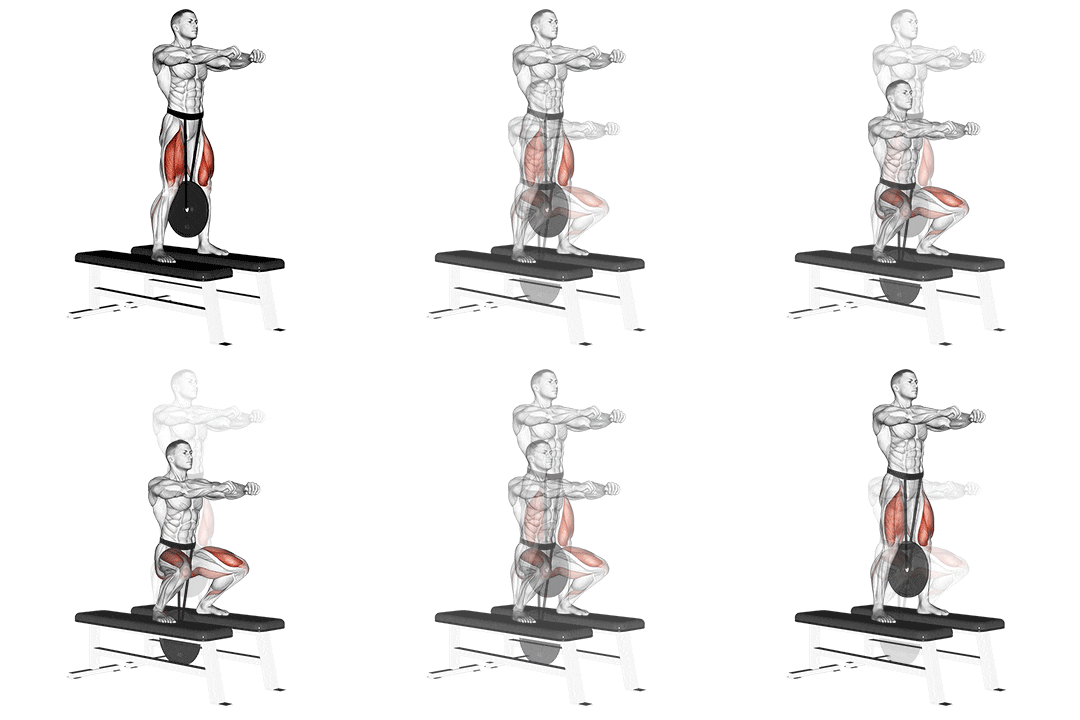
The weighted squat is a compound exercise that primarily targets the muscles of the lower body, including the quadriceps, hamstrings, and glutes. It involves holding a weight (such as a barbell, dumbbells, or kettlebells) while performing the squat movement. This exercise is highly effective for building lower body strength, improving overall stability and balance, and enhancing functional fitness. ## Instructions 1. Start by standing with your feet slightly wider than shoulder-width apart, toes pointed slightly outward. 2. Hold the weight securely against your upper body. If using a barbell, place it on your upper back across your trapezius muscles, gripping it with both hands. If using dumbbells or kettlebells, hold them at shoulder height with your palms facing inward. 3. Engage your core muscles by pulling your belly button in towards your spine. 4. Begin the movement by bending at your knees and hips, as if sitting back into an imaginary chair. Keep your chest up and your spine neutral. 5. Lower your body down until your thighs are parallel to the ground or slightly below. Ensure your knees are tracking over your toes and not collapsing inward. 6. Pause briefly in the lowered position, then push through your heels to drive yourself back up to the starting position. 7. Exhale as you stand up and squeeze your glutes at the top of the movement. 8. Repeat the exercise for the desired number of repetitions. ## Variations - **Goblet Squat**: Hold a single dumbbell or kettlebell at chest level with both hands, close to your body, while performing the squat. - **Front Squat**: Rest a barbell on the front of your shoulders, crossing your arms to hold it in place, and perform the squat movement. - **Box Squat**: Place a sturdy box or bench behind you and aim to lightly touch your glutes to it during the squat, ensuring proper depth and control. - **Bulgarian Split Squat**: Elevate one foot behind you on a bench or step while performing a single-leg squat with the other leg, holding weights in your hands if desired. ## Muscles Worked - Quadriceps (front of the thighs) - Hamstrings (back of the thighs) - Glutes (buttocks) - Calves (gastrocnemius and soleus) - Core muscles (abdominals and lower back) - stabilization ## Common Mistakes - Allowing the knees to cave inward: Keep your knees in line with your toes throughout the movement to maintain proper alignment and prevent undue stress on the knee joints. - Rounding the lower back: Maintain a neutral spine position by keeping your chest up and avoiding excessive forward or backward leaning. - Not reaching the proper depth: Aim to lower yourself until your thighs are parallel to the ground or slightly below. Failing to achieve this depth limits the activation of the targeted muscles. - Lifting the heels off the ground: Keep your weight balanced through your entire foot, with the heels firmly planted on the ground. ## Safety Precautions - Warm up adequately before performing weighted squats to prepare your muscles and joints. - Use proper form and technique throughout the exercise to prevent injury. - Start with lighter weights and gradually increase the load as you become more comfortable and stronger. - If you have any existing knee or back issues, consult with a healthcare professional or a qualified fitness trainer before attempting weighted squats. - Maintain control and avoid rushing through the exercise to reduce the risk of accidents. - If using a barbell, use collars to secure the weights in place and ensure they don't slide off during the exercise.