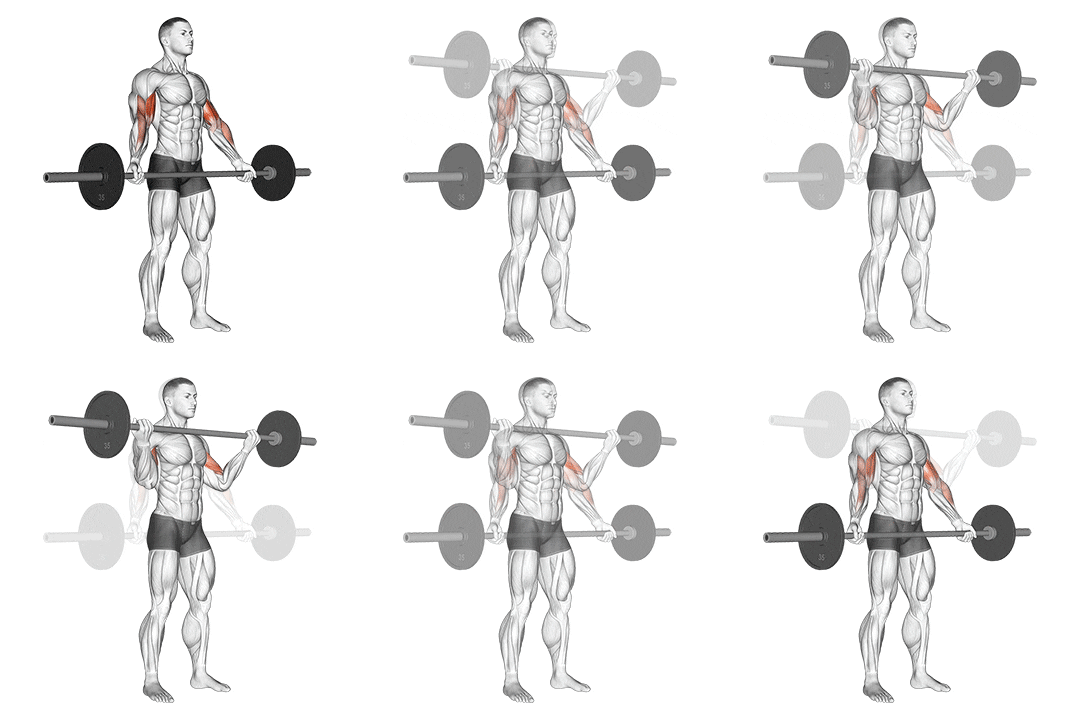
The barbell standing wide grip biceps curl is an exercise that targets the biceps muscles of the upper arms. By using a wide grip on the barbell, it places greater emphasis on the outer portion of the biceps, helping to develop size and strength in this area. It also engages the forearms and stabilizing muscles of the upper body. ## Instructions 1. Stand with your feet shoulder-width apart and hold a barbell with an overhand grip, placing your hands slightly wider than shoulder-width apart. Your palms should be facing forward, and the barbell should be resting against your thighs. This is your starting position. 2. Take a deep breath and brace your core. 3. Keeping your upper arms stationary, exhale and curl the barbell upward by contracting your biceps. Continue curling until the barbell is close to your shoulders. 4. Hold the contracted position for a brief moment, squeezing your biceps. 5. Inhale and slowly lower the barbell back to the starting position, extending your arms fully and feeling a stretch in your biceps. 6. Repeat the movement for the desired number of repetitions. ## Variations - EZ-Bar Wide Grip Biceps Curl: Perform the exercise using an EZ-bar, which has a zigzag or wavy grip in the center. The EZ-bar allows for a more comfortable grip and may reduce strain on the wrists. - Dumbbell Wide Grip Biceps Curl: Use dumbbells instead of a barbell. Hold one dumbbell in each hand, with your palms facing forward, and perform the biceps curl movement as described. - Cable Wide Grip Biceps Curl: Attach a straight bar or a rope handle to a cable machine at a low height. Stand facing the machine, grasp the bar or rope with a wide grip, and perform the curling motion against the resistance of the cable. ## Muscles Worked - Primary muscles: Biceps brachii (outer portion) - Secondary muscles: Brachialis, brachioradialis, forearms ## Common Mistakes - Swinging the body: Avoid using momentum or swinging your body to lift the weight. Keep your upper body stationary and focus on isolating the biceps muscles. - Leaning back excessively: Maintain an upright posture throughout the exercise. Avoid leaning back or using excessive backward arching, as it can strain your lower back. - Using excessive weight: Start with a weight that allows you to maintain proper form and control. Avoid using a weight that forces you to use other muscles to lift it or compromises your technique. - Not fully extending the arms: Ensure that you fully extend your arms at the bottom of each repetition to maximize the range of motion and engage the biceps fully. - Over-gripping the barbell: Grip the barbell firmly but avoid over-gripping or tensing your forearms excessively. Maintain a comfortable grip to allow the biceps to perform the majority of the work. ## Safety Precautions - Use an appropriate weight that allows you to maintain proper form and control throughout the exercise. - Warm up your biceps and forearms before starting the exercise to reduce the risk of strains or injuries. - If you have any pre-existing conditions or injuries, consult with a healthcare professional or fitness trainer before attempting this exercise. - Engage your core muscles and maintain proper posture throughout the movement. - Avoid jerking or using sudden, rapid movements to lift the weight. Perform the exercise in a controlled manner. - Pay attention to your body's signals. If you experience any pain or discomfort, stop the exercise and seek guidance from a professional. - Gradually increase the load as you become comfortable and proficient with the exercise, but avoid
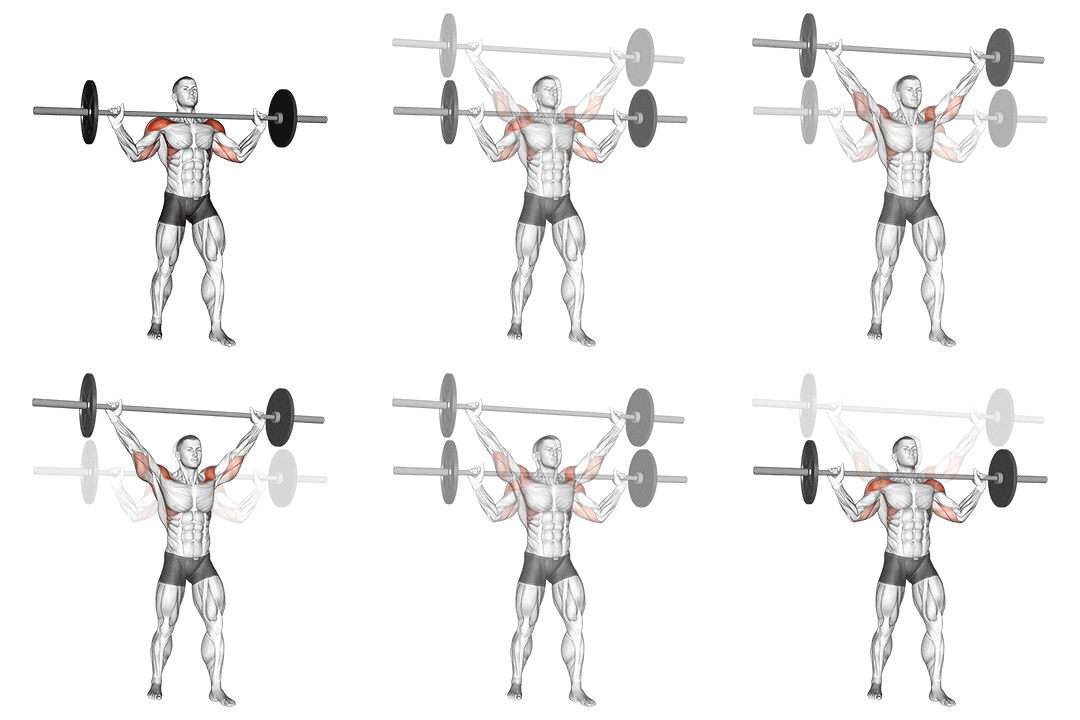
The barbell standing wide military press is a compound exercise that primarily targets the shoulder muscles, specifically the deltoids (shoulder muscles), while also engaging the triceps and upper back muscles. It involves pressing a barbell overhead in a standing position with a wide grip. ## Instructions 1. Begin by standing with your feet shoulder-width apart and the barbell positioned in front of your upper chest, resting on your anterior deltoids (front shoulders). 2. Grasp the barbell with a wide grip, slightly wider than shoulder-width apart. Your palms should be facing forward, and your elbows should be pointing out to the sides. 3. Lift the barbell off the rack or clean it from the floor, ensuring your core is engaged and your back is straight. 4. Take a step back from the rack if necessary and position your feet firmly on the ground. 5. Brace your core and maintain a neutral spine throughout the exercise. 6. Inhale and begin pressing the barbell upward by extending your arms. Keep your elbows pointing outwards and avoid excessive arching of the lower back. 7. Continue pressing until your arms are fully extended overhead, but do not lock out your elbows. 8. Hold the barbell momentarily at the top, then exhale and slowly lower it back down to the starting position. 9. Repeat the movement for the desired number of repetitions. ## Variations - Dumbbell Wide Military Press: Perform the same movement with dumbbells instead of a barbell, allowing for a greater range of motion and increased stability. - Seated Wide Military Press: Perform the exercise while seated on a bench or an adjustable weight bench. This variation provides support for the lower back and can be beneficial for those with balance or stability issues. - Smith Machine Wide Military Press: Utilize a Smith machine instead of a barbell for added stability and controlled movement. ## Muscles Worked - Primary Muscles: Deltoids (front, side, and rear shoulders) - Secondary Muscles: Triceps, Upper Back (Trapezius and Rhomboids) ## Common Mistakes - Arching the lower back excessively: Maintain a neutral spine throughout the exercise and avoid overarching the lower back to prevent strain or injury. - Shrugging the shoulders: Keep your shoulders down and away from your ears. Avoid shrugging or lifting them during the pressing motion. - Using momentum: Ensure that the movement is controlled and avoid using momentum to lift the weight. Focus on the muscles being targeted. - Allowing the elbows to flare out: Keep your elbows pointing outwards and avoid allowing them to excessively flare out during the exercise. This helps maintain proper form and reduces stress on the shoulder joints. ## Safety Precautions - Warm up properly before starting the exercise to prepare your muscles and joints. - Start with a lighter weight to practice proper form and gradually increase the load as you become more comfortable and confident. - Maintain a strong core and stable base throughout the exercise to support your spine. - If you have any shoulder or back injuries or conditions, consult with a healthcare professional or fitness trainer before attempting this exercise. - Use collars on the barbell to prevent the weights from sliding off during the movement. - If performing the exercise without a spotter, ensure you can safely bail out of the movement if needed by setting up safety pins or using a power rack.
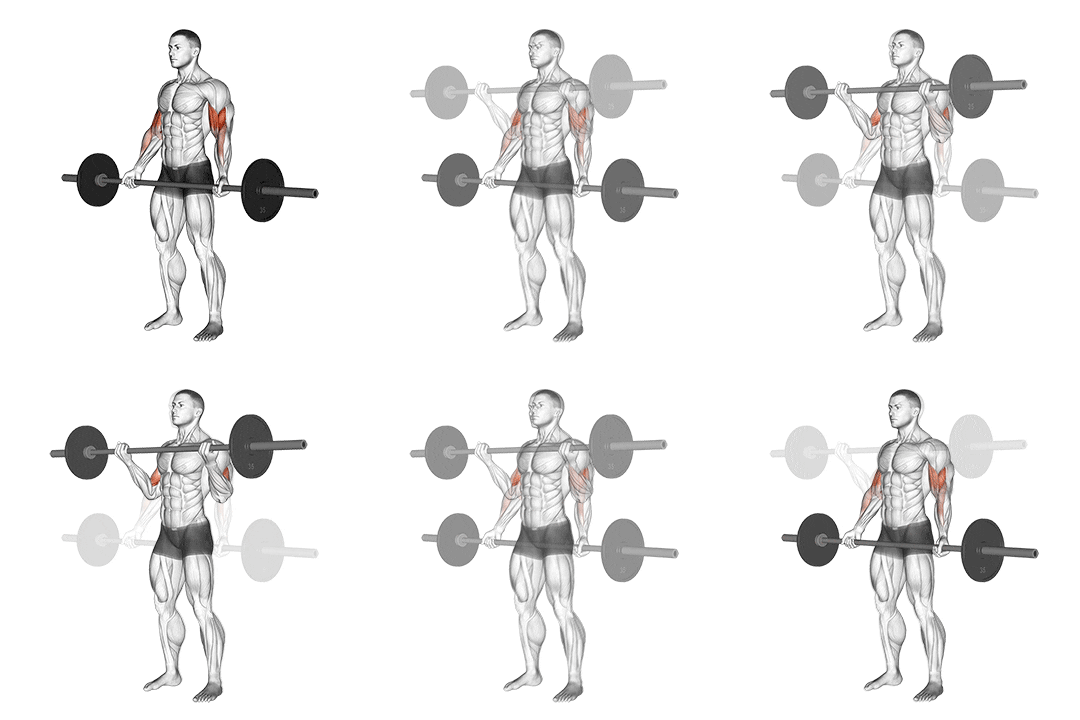
The barbell standing wide-grip curl is a bicep exercise that targets the muscles in the upper arms, specifically the biceps brachii. By using a wider grip on the barbell, this variation places more emphasis on the outer portion of the biceps. ## Instructions 1. Stand with your feet shoulder-width apart and hold a barbell with a wide overhand grip. Your hands should be positioned slightly wider than shoulder-width apart. 2. Let your arms hang straight down in front of your thighs, with your palms facing away from your body. 3. Keep your upper arms stationary and your elbows close to your sides. 4. While keeping your upper arms still, exhale and slowly curl the barbell upward by contracting your biceps. Focus on squeezing the biceps at the top of the movement. 5. Continue to curl the barbell until your forearms are fully contracted and the barbell is at shoulder level. 6. Pause for a moment, then inhale and slowly lower the barbell back to the starting position, fully extending your arms. 7. Repeat the movement for the desired number of repetitions. ## Variations - Narrow Grip: Instead of a wide grip, use a narrower grip on the barbell. This variation places more emphasis on the inner portion of the biceps. - EZ-Bar Wide-Grip Curl: Perform the exercise using an EZ-bar, which has a curved shape that can provide a more comfortable grip and reduce strain on the wrists. - Dumbbell Wide-Grip Curl: Use dumbbells instead of a barbell to work each arm independently, allowing for a greater range of motion and muscle activation. ## Muscles Worked - Primary Muscles: Biceps Brachii (outer portion) - Secondary Muscles: Brachialis, Brachioradialis ## Common Mistakes - Using momentum: Avoid swinging the barbell or using momentum to lift the weight. Focus on controlled, slow movements to maximize muscle activation. - Allowing the elbows to flare out: Keep your elbows close to your sides throughout the exercise. This helps isolate the biceps and prevents excessive strain on the shoulders. - Arching the back: Maintain proper posture by keeping your back straight and avoiding excessive arching. Engage your core to stabilize your body during the movement. - Gripping the bar too tightly: Maintain a firm but relaxed grip on the barbell. Avoid excessive gripping, as it can put unnecessary strain on the forearms and wrists. ## Safety Precautions - Warm up your arms and wrists before starting the exercise to prevent injury. - Start with a lighter weight to practice proper form and gradually increase the load as you become more comfortable and confident. - Avoid using weights that are too heavy, as it can compromise your form and increase the risk of injury. - If you have any pre-existing wrist or elbow conditions, consult with a healthcare professional or fitness trainer before attempting this exercise. - Be cautious when lifting the barbell to avoid hitting or injuring your body. - If you experience any pain or discomfort during the exercise, stop immediately and consult with a healthcare professional.
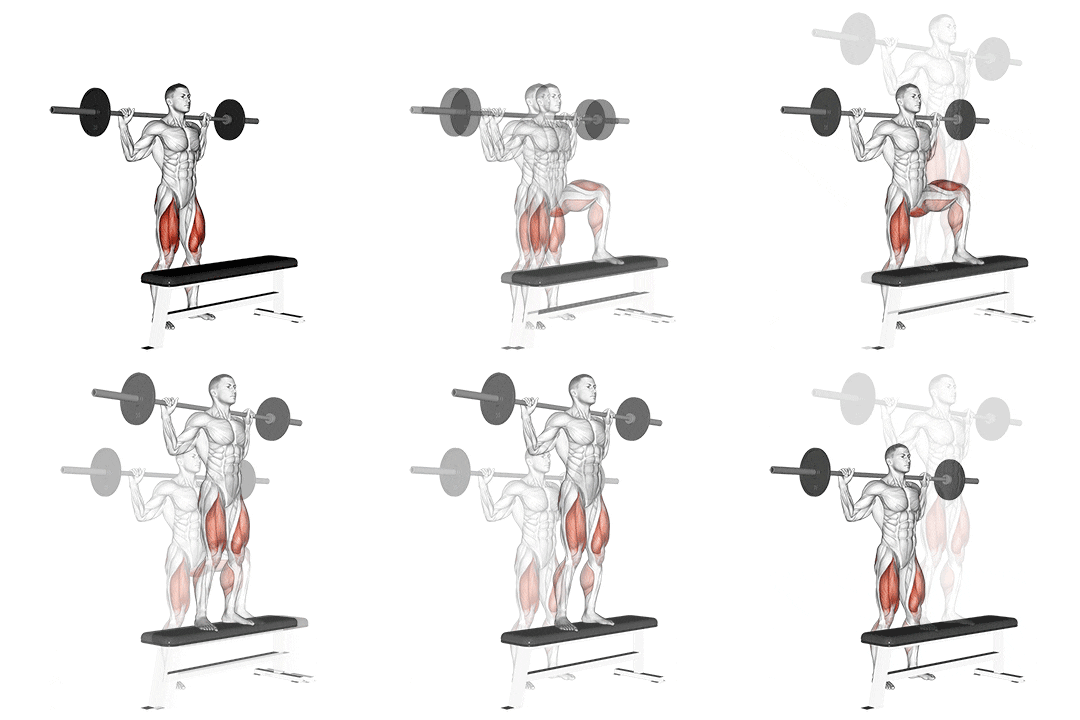
The barbell step-up is a compound exercise that targets the lower body, particularly the quadriceps, hamstrings, glutes, and calves. It involves stepping up onto a platform or bench while holding a barbell, making it an effective exercise for building lower body strength, stability, and coordination. ## Instructions 1. Stand in front of a platform or bench, holding a barbell across your upper back (behind your neck) with an overhand grip. Keep your feet hip-width apart. 2. Position the platform in front of you at a comfortable distance. The height of the platform can vary depending on your fitness level and preference. 3. Engage your core and maintain a straight back throughout the exercise. 4. Place your right foot firmly on the platform, ensuring that your whole foot is in contact with the surface. 5. Push through your right foot and drive your body upward, lifting yourself onto the platform. Fully extend your right leg and bring your left foot up to join it. 6. Step back down with your left foot first, followed by your right foot, lowering yourself back to the starting position. 7. Repeat the movement, alternating your lead foot for each repetition. 8. Continue the step-ups for the desired number of repetitions. ## Variations - Dumbbell Step-Up: Instead of using a barbell, hold a pair of dumbbells at your sides or in a racked position. - Weighted Vest Step-Up: Wear a weighted vest to add resistance to the exercise, increasing the intensity and challenge. - Lateral Step-Up: Perform step-ups to the side, stepping onto the platform with a lateral motion. This variation targets the muscles in a different plane of movement. ## Muscles Worked - Primary Muscles: Quadriceps, Hamstrings, Glutes - Secondary Muscles: Calves, Core Stabilizers ## Common Mistakes - Not fully extending the hips: When stepping up, make sure to fully extend your hips at the top of the movement, squeezing your glutes. This ensures that you're getting the maximum benefit from the exercise. - Leaning forward or rounding the back: Maintain an upright posture throughout the exercise, avoiding excessive leaning or rounding of the back. This helps to engage the core and prevent strain on the lower back. - Using too much momentum: Avoid using momentum to propel yourself onto the platform. Instead, focus on controlled movements and engage the targeted muscles. - Allowing the knee to collapse inward: Keep your knee in line with your toes throughout the movement. Avoid allowing the knee to collapse inward, as it can place stress on the knee joint. ## Safety Precautions - Choose a platform or bench that is sturdy and stable, with a height that suits your fitness level. - Start with a lower platform height and gradually increase it as you gain strength and confidence. - Use a spotter or perform the exercise in front of a mirror to ensure proper form. - Keep the barbell securely positioned on your upper back, ensuring it doesn't shift or slide during the movement. - If you experience any knee or lower back pain, consult with a healthcare professional or fitness trainer before attempting this exercise. - Perform a proper warm-up before starting the exercise to prepare your muscles and joints. - Start with lighter weights or bodyweight and progress gradually as you become comfortable with the movement.
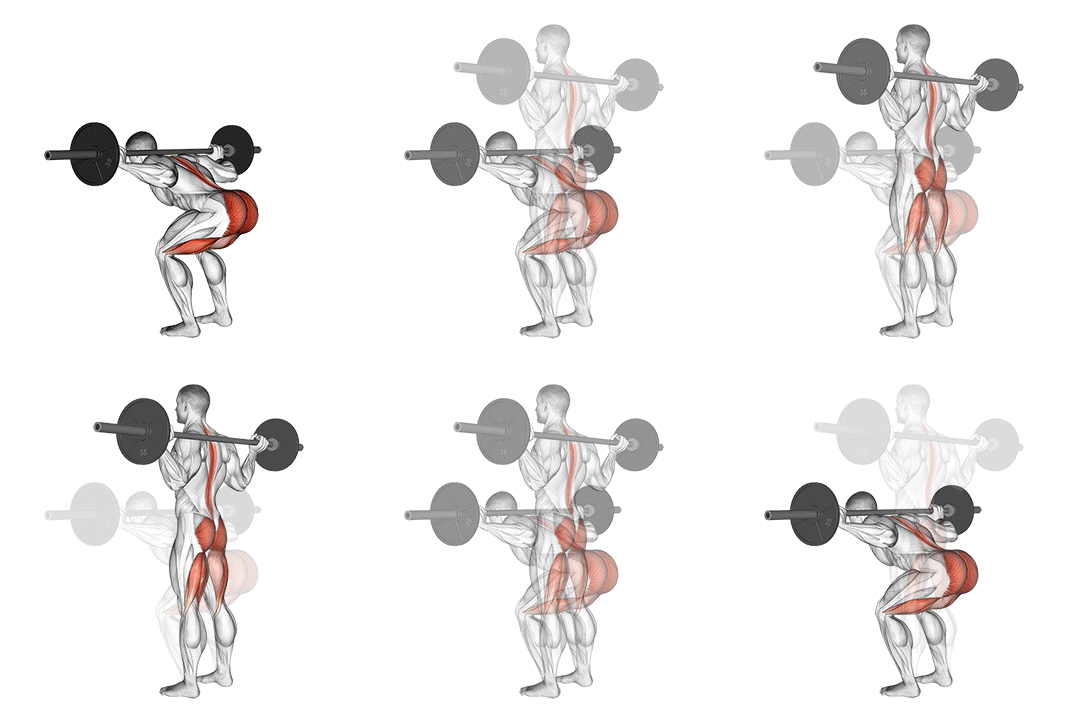
The barbell stiff leg good morning is an exercise that primarily targets the muscles of the posterior chain, including the hamstrings, glutes, and lower back. It involves bending forward at the hips while maintaining a straight back, which helps strengthen the posterior muscles and improve hip hinge mechanics. ## Instructions 1. Begin by placing a barbell across your upper back, resting it on your trapezius muscles. Your feet should be shoulder-width apart, and your toes can be slightly turned out. 2. Stand tall with your core engaged, chest up, and shoulders back. 3. Unlock your knees and initiate the movement by hinging forward at the hips, pushing your hips back while maintaining a slight bend in your knees. Imagine pushing your glutes back towards the wall behind you. 4. Keep your back straight and lower your upper body until you feel a stretch in your hamstrings. Aim to maintain a flat or slightly arched back throughout the movement. 5. Once you reach the bottom position, pause briefly, then engage your glutes and hamstrings to reverse the movement. 6. Return to the starting position by extending your hips, driving them forward while keeping your back straight. 7. Repeat the movement for the desired number of repetitions. ## Variations - Dumbbell Stiff Leg Good Morning: Hold dumbbells in each hand instead of using a barbell to perform the exercise. - Romanian Deadlift (RDL): This exercise is similar to the stiff leg good morning but typically involves a more vertical shin position and a focus on the stretch and contraction of the hamstrings. - Single-Leg Stiff Leg Good Morning: Perform the exercise while balancing on one leg. This variation adds an element of instability and places greater emphasis on each leg individually. ## Muscles Worked - Primary Muscles: Hamstrings, Glutes (particularly the gluteus maximus), Erector Spinae (lower back) - Secondary Muscles: Core (abdominals, obliques), Quadriceps, Calves ## Common Mistakes - Rounding the back: Maintain a straight or slightly arched back throughout the movement. Avoid rounding the back, as it can increase the risk of injury and reduce the effectiveness of the exercise. - Allowing the knees to bend too much: While the knees should have a slight bend, avoid excessive knee flexion and focus on hinging at the hips to engage the hamstrings and glutes. - Initiating the movement with the knees: The movement should be initiated by pushing the hips back and not by bending the knees. This ensures proper engagement of the posterior chain muscles. - Lowering the torso too far: Lower your torso until you feel a stretch in your hamstrings, but avoid going too low, as it may compromise your form and strain the lower back. ## Safety Precautions - Start with a lighter weight or even perform the exercise with just your body weight until you have mastered the proper form and technique. - Warm up your posterior chain muscles with dynamic stretches or lighter exercises before performing the stiff leg good morning. - Engage your core muscles throughout the movement to provide stability and support for your lower back. - If you have any pre-existing lower back issues, consult with a healthcare professional or fitness trainer before attempting this exercise. - Focus on controlled movements and avoid using momentum to lift the weight. This exercise requires concentration and stability. - If you experience any pain or discomfort during the exercise, stop immediately and consult with a healthcare professional.
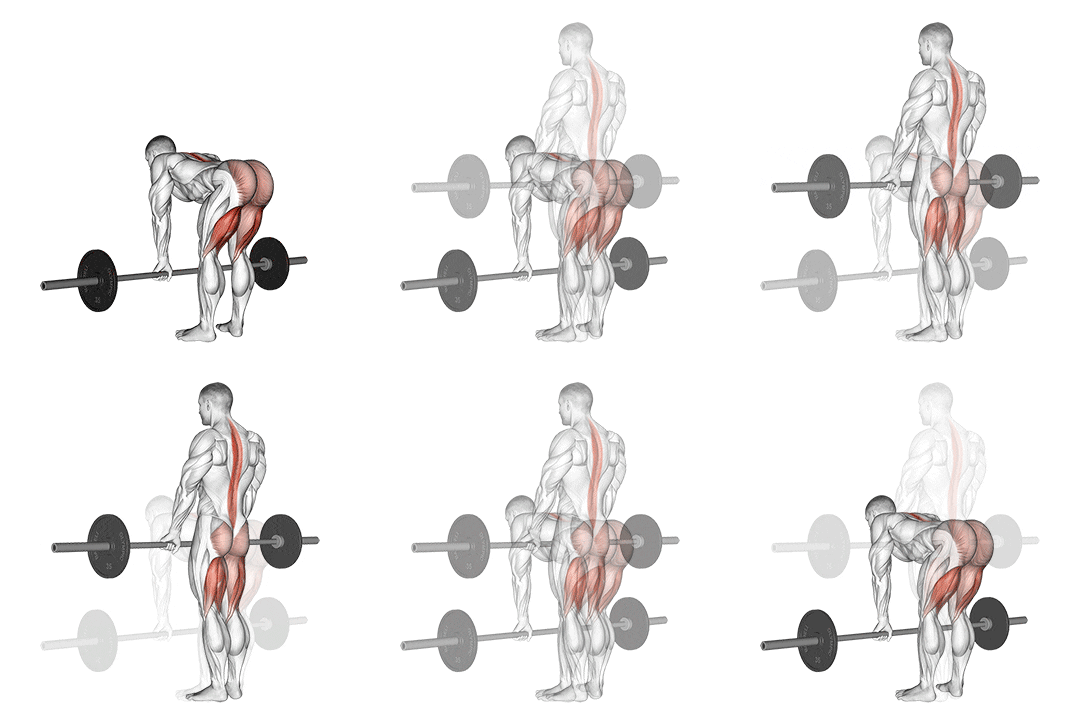
The barbell straight leg deadlift, also known as the Romanian deadlift, is an exercise that primarily targets the muscles of the posterior chain, including the hamstrings, glutes, and lower back. It involves hinging forward at the hips while maintaining a slight bend in the knees, which helps to strengthen the hip extensors and improve overall hip and posterior chain strength. ## Instructions 1. Begin by standing with your feet hip-width apart and the barbell on the floor in front of you. Your toes can be slightly turned out. 2. Bend at the hips and reach down to grip the barbell with an overhand grip that is slightly wider than shoulder-width apart. Your arms should be fully extended and outside of your legs. 3. Engage your core, keep your back straight, and ensure your shoulders are pulled back and down. 4. Begin the movement by pushing your hips back and lowering the barbell towards the floor. Keep a slight bend in your knees throughout the exercise. 5. Lower the barbell while maintaining a straight back until you feel a stretch in your hamstrings. Be cautious not to round your back during the descent. 6. Pause for a moment when you reach the bottom position, then engage your hamstrings and glutes to reverse the movement. 7. Drive your hips forward, squeeze your glutes, and raise the barbell back up to the starting position. 8. Repeat the movement for the desired number of repetitions. ## Variations - Dumbbell Straight Leg Deadlift: Perform the exercise using dumbbells instead of a barbell. This can provide more freedom of movement and allow for unilateral training. - Sumo Deadlift: Take a wider stance with your feet turned out at an angle, similar to a sumo wrestler's stance. This variation places more emphasis on the inner thighs and glutes. - Deficit Straight Leg Deadlift: Stand on a platform or step to increase the range of motion and stretch on the hamstrings. This variation provides a deeper stretch and can further challenge the posterior chain muscles. ## Muscles Worked - Primary Muscles: Hamstrings, Glutes (particularly the gluteus maximus), Erector Spinae (lower back) - Secondary Muscles: Core (abdominals, obliques), Quadriceps, Calves ## Common Mistakes - Rounding the back: Maintain a straight or slightly arched back throughout the movement. Avoid rounding the back, as it can increase the risk of injury and reduce the effectiveness of the exercise. - Bending the knees too much: While the knees should have a slight bend, avoid excessive knee flexion. Focus on hinging at the hips to engage the hamstrings and glutes. - Initiating the movement with the lower back: The movement should be initiated by pushing the hips back and not by bending the lower back. This ensures proper engagement of the posterior chain muscles. - Lowering the bar too far or bouncing the weight: Lower the bar until you feel a stretch in your hamstrings, but avoid going too low or bouncing the weight off the ground. Maintain control throughout the exercise. ## Safety Precautions - Start with a lighter weight or even perform the exercise with just your body weight until you have mastered the proper form and technique. - Warm up your posterior chain muscles with dynamic stretches or lighter exercises before performing the straight leg deadlift. - Engage your core muscles throughout the movement to provide stability and support for your lower back. - If you have any pre-existing lower back issues, consult with a healthcare professional or fitness trainer before attempting this exercise. - Focus on controlled movements and avoid using momentum to lift the weight. This exercise requires concentration and stability. - If
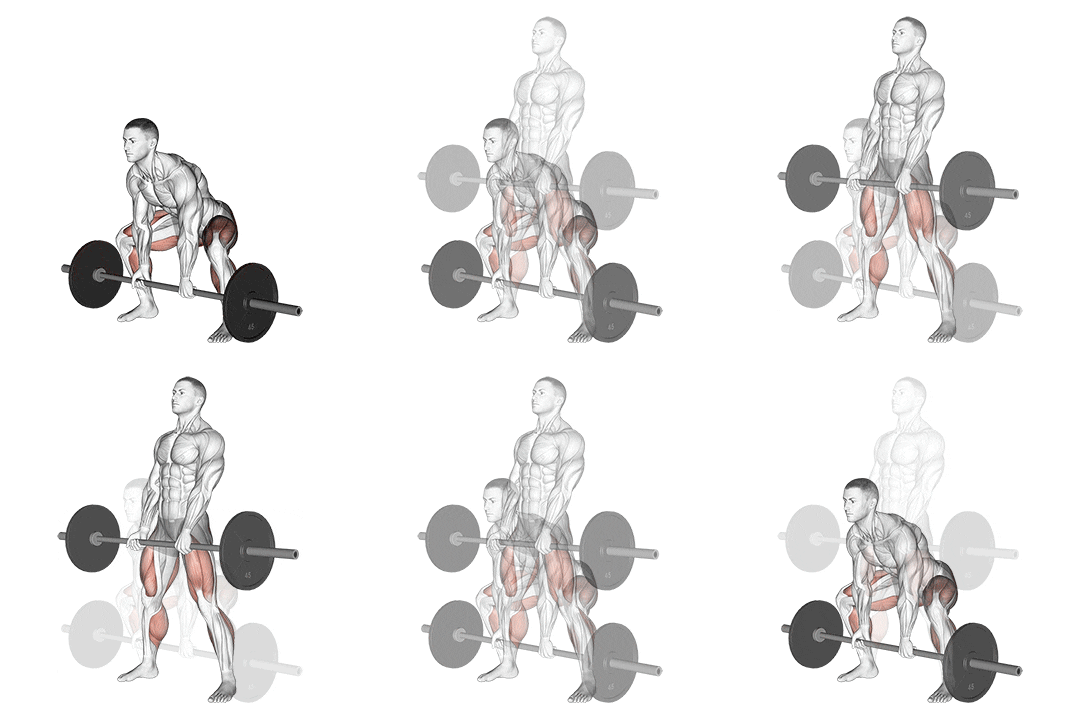
The barbell sumo deadlift is a compound exercise that primarily targets the muscles of the lower body, including the glutes, hamstrings, quadriceps, and inner thighs. It involves lifting a barbell from the floor while using a wide stance and having the hands placed inside the knees. The sumo deadlift variation places additional emphasis on the inner thigh muscles and can be beneficial for improving overall lower body strength and power. ## Instructions 1. Begin by standing with your feet wider than shoulder-width apart and your toes pointed out at an angle (usually around 45 degrees). 2. Position a barbell on the floor in front of you, and step in towards the bar so that your shins are close to touching it. 3. Bend at the hips and knees to lower your body down, grasping the barbell with an overhand grip. Your hands should be inside your knees, with a grip wider than shoulder-width apart. 4. Engage your core, keep your back straight, and ensure your shoulders are pulled back and down. 5. Take a deep breath, brace your core, and begin the lift by driving through your heels and pushing the floor away. 6. As you stand up, keep your back straight and focus on extending your hips forward. Pull the barbell up along your legs, maintaining a close contact. 7. Once you reach a fully upright position, squeeze your glutes and engage your inner thigh muscles. 8. Lower the barbell back down to the floor by bending at the hips and knees, maintaining control throughout the descent. 9. Repeat the movement for the desired number of repetitions. ## Variations - Dumbbell Sumo Deadlift: Perform the exercise using dumbbells instead of a barbell. This allows for greater freedom of movement and can provide an opportunity for unilateral training. - Trap Bar Sumo Deadlift: Use a trap bar or hex bar instead of a barbell. This variation can provide a more ergonomic grip and may feel more comfortable for some individuals. - Sumo Deadlift High Pull: Incorporate an explosive pull, utilizing the hips and upper body to lift the barbell higher. This variation adds an element of power and conditioning to the exercise. ## Muscles Worked - Primary Muscles: Glutes, Hamstrings, Quadriceps, Inner Thighs (adductors) - Secondary Muscles: Calves, Core (abdominals, obliques), Upper Back (trapezius, rhomboids) ## Common Mistakes - Rounding the back: Maintain a straight or slightly arched back throughout the movement. Avoid rounding the back, as it can increase the risk of injury and reduce the effectiveness of the exercise. - Allowing the knees to collapse inward: Keep your knees in line with your toes throughout the movement. Avoid allowing the knees to cave inward, as it can strain the knee joints. - Lifting with the arms: The sumo deadlift primarily involves lower body strength. Avoid relying too much on the arms to lift the weight. Instead, focus on driving through the legs and hips to initiate the movement. - Lifting the weight too far from the body: Keep the barbell close to your legs throughout the lift. Avoid letting it drift away from your body, as it can place excessive stress on the lower back. ## Safety Precautions - Start with a lighter weight or even perform the exercise with just your body weight until you have mastered the proper form and technique. - Warm up your lower body muscles with dynamic stretches or lighter exercises before performing the sumo deadlift. - Engage your core muscles throughout the movement to provide stability and support for your lower back. - If you have any pre-existing
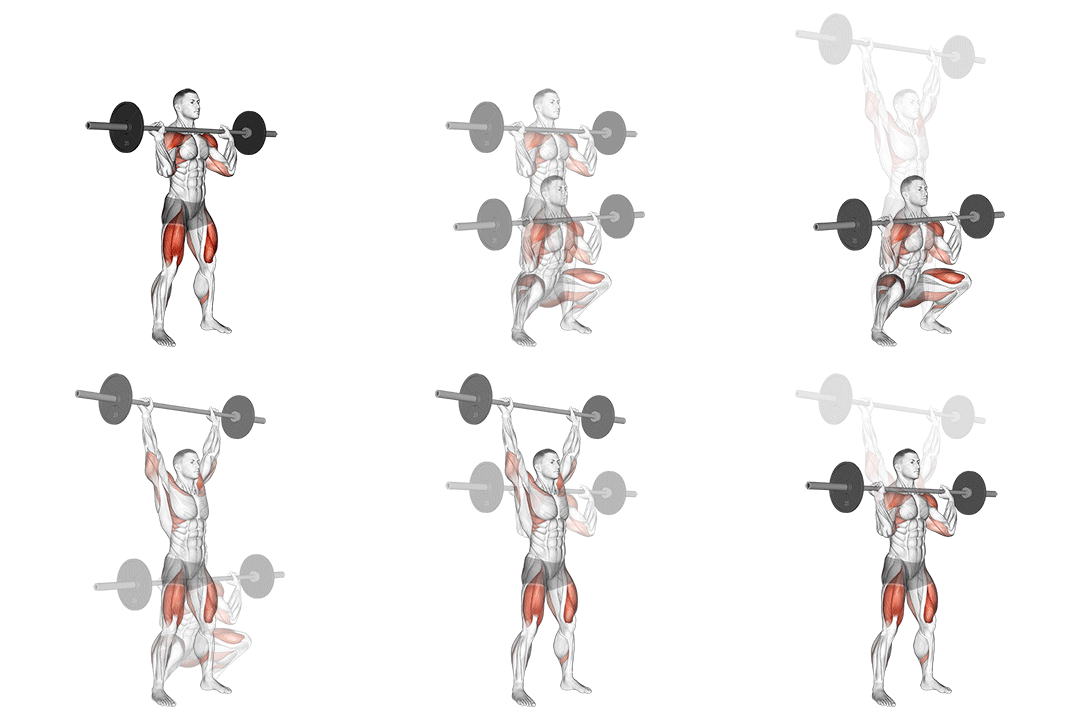
The barbell thruster is a compound exercise that combines a front squat with an overhead press. It targets multiple muscle groups simultaneously, including the legs, shoulders, and core. This exercise is known for its effectiveness in building strength, power, and muscular endurance. ## Instructions 1. Begin by standing with your feet shoulder-width apart, holding a barbell in front of your shoulders with an overhand grip. The barbell should be resting on the front of your shoulders, and your elbows should be raised so that your upper arms are parallel to the floor. 2. Lower your body into a squat position by bending your knees and hips. Keep your chest up, back straight, and core engaged throughout the movement. 3. Descend into a full squat position until your thighs are parallel to the floor or slightly below. 4. From the bottom of the squat, explosively drive through your heels to extend your hips and return to a standing position. As you rise up, simultaneously press the barbell overhead by extending your arms fully. 5. Lock out your elbows and hold the barbell overhead for a brief moment. 6. Lower the barbell back to the starting position on the front of your shoulders while simultaneously descending into the next squat repetition. 7. Repeat the movement for the desired number of repetitions. ## Variations - Dumbbell Thruster: Perform the exercise using dumbbells instead of a barbell. This variation allows for greater freedom of movement and can provide an opportunity for unilateral training. - Kettlebell Thruster: Hold a kettlebell in each hand at shoulder level, and perform the same movement as the barbell thruster. This variation adds a unique challenge to the exercise and engages the stabilizer muscles. - Wall Ball Thruster: Hold a medicine ball at chest level, perform a squat, and explosively drive upward while throwing the ball against a wall. Catch the ball on the rebound and immediately descend into the next squat repetition. ## Muscles Worked - Primary Muscles: Quadriceps, Glutes, Shoulders (Deltoids), Core (Abdominals, Obliques) - Secondary Muscles: Hamstrings, Calves, Triceps ## Common Mistakes - Rounding the back: Maintain a straight or slightly arched back throughout the movement. Avoid rounding the back, as it can increase the risk of injury and reduce the effectiveness of the exercise. - Not fully extending the hips and arms: At the top of the movement, fully extend your hips and lock out your elbows to maximize the engagement of the targeted muscles. - Allowing the knees to collapse inward: Keep your knees in line with your toes throughout the movement. Avoid allowing the knees to cave inward, as it can strain the knee joints. - Using excessive weight: Start with a weight that allows you to maintain proper form and technique. Gradually increase the weight as your strength and proficiency improve. - Lack of core engagement: Keep your core muscles engaged throughout the movement to provide stability and support for your spine. ## Safety Precautions - Warm up your muscles with dynamic stretches or lighter exercises before performing the barbell thruster. - Ensure that you have proper shoulder mobility and flexibility before attempting this exercise. If you have any shoulder issues or limitations, consult with a healthcare professional or fitness trainer. - Focus on controlled movements and avoid using momentum to lift the weight. This exercise requires concentration and stability. - Use a squat rack or have a spotter available when using heavier weights to ensure safety. - If you experience any pain or discomfort during the exercise, stop immediately and consult a healthcare professional.
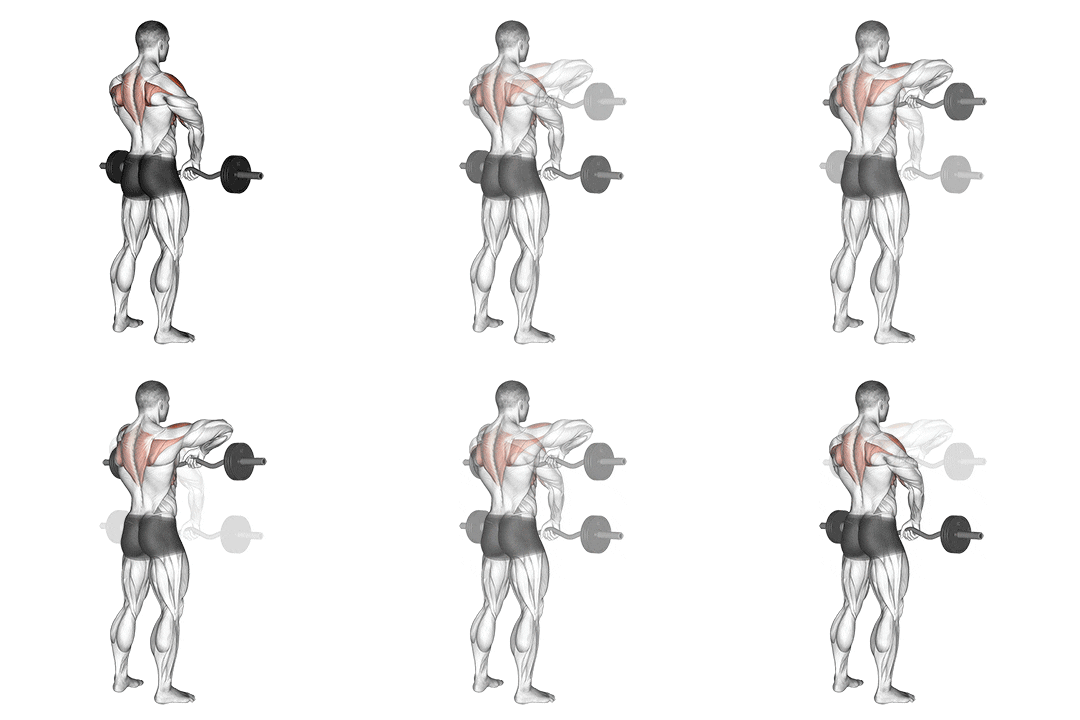
The barbell upright row is an exercise that primarily targets the muscles of the shoulders, specifically the deltoids, as well as the muscles of the upper back and arms. It involves lifting a barbell in a vertical motion, mimicking the movement of pulling a rope straight up towards the chin. The upright row is effective for developing shoulder strength and stability, improving posture, and enhancing upper body aesthetics. ## Instructions 1. Begin by standing with your feet shoulder-width apart, holding a barbell in front of your thighs with an overhand grip. Your hands should be slightly narrower than shoulder-width apart. 2. Engage your core, keep your back straight, and maintain a neutral spine throughout the exercise. 3. Lift the barbell by pulling it straight up towards your chin, keeping it close to your body. Elbows should be raised and out to the sides. 4. As you lift the barbell, focus on squeezing your shoulder blades together and driving your elbows upward. 5. Continue the upward motion until the barbell reaches chin height or slightly lower, while keeping it close to your body. 6. Hold the position for a brief moment, focusing on the contraction of the shoulder muscles. 7. Slowly lower the barbell back down to the starting position, controlling the descent. 8. Repeat the movement for the desired number of repetitions. ## Variations - Dumbbell Upright Row: Perform the exercise using dumbbells instead of a barbell. This variation allows for greater freedom of movement and can provide an opportunity for unilateral training. - Cable Upright Row: Attach a straight bar or handle to a cable machine and perform the upright row motion. This variation provides constant tension throughout the movement. - Smith Machine Upright Row: Use a Smith machine instead of a barbell for added stability and control. ## Muscles Worked - Primary Muscles: Deltoids (Anterior, Lateral), Trapezius, Rhomboids - Secondary Muscles: Biceps, Forearms ## Common Mistakes - Excessive weight: Avoid using excessively heavy weight, as it can lead to poor form and increase the risk of injury. Focus on maintaining proper technique throughout the exercise. - Shrugging the shoulders: Keep your shoulders down and avoid shrugging them up towards your ears during the movement. Maintain a relaxed and stable neck position. - Elbows too high or too low: Ensure that your elbows are raised and out to the sides in a controlled manner. Avoid excessively raising the elbows above shoulder height or allowing them to drop too low. - Using momentum: Avoid using momentum or swinging the weight to lift it. Focus on controlled and deliberate movements to engage the targeted muscles effectively. - Gripping the bar too wide or narrow: Find a grip width that feels comfortable and allows for a natural movement pattern. Avoid gripping the barbell too wide or narrow, as it can strain the wrists and shoulders. ## Safety Precautions - Start with a lighter weight or even perform the exercise with just the barbell to ensure proper form and technique before adding additional weight. - Warm up your shoulders and upper back with dynamic stretches or lighter exercises before performing the barbell upright row. - If you have pre-existing shoulder or neck issues, consult with a healthcare professional or fitness trainer to determine if this exercise is suitable for you. - Avoid jerking or using excessive force during the movement. Maintain control and focus on proper form. - If you experience any pain or discomfort, especially in the shoulders or wrists, stop the exercise and consult a healthcare professional.