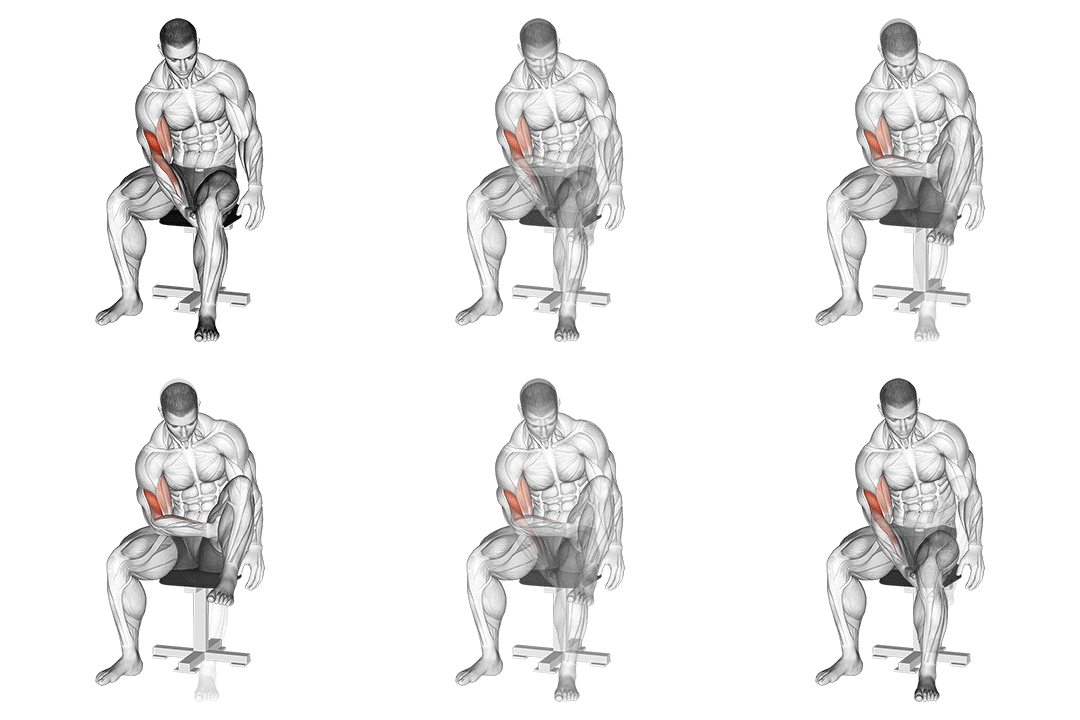
The biceps leg concentration curl is an exercise that targets the biceps muscles of the upper arm. It involves isolating the biceps by performing a curl movement while seated and resting the back of the arm on the thigh. This exercise helps to strengthen and develop the biceps muscles, improving arm aesthetics and functional upper body strength. ## Instructions Follow these step-by-step instructions to perform the biceps leg concentration curl: 1. Sit on a flat bench or chair with your feet flat on the floor and knees slightly bent. 2. Hold a dumbbell in one hand with an underhand grip (palms facing up). 3. Place the back of your upper arm against the inside of your thigh on the same side as the hand holding the dumbbell. 4. Allow your arm to fully extend, letting the weight hang down toward the floor. 5. Keep your back straight and engage your core for stability. 6. Slowly curl the dumbbell upward toward your shoulder, contracting your biceps. 7. Keep your upper arm stationary and focus on using the biceps to lift the weight. 8. Continue to curl until the dumbbell is close to your shoulder or you feel a strong contraction in your biceps. 9. Pause for a moment at the top of the movement, squeezing your biceps. 10. Slowly lower the weight back to the starting position, fully extending your arm. 11. Repeat the movement for the desired number of repetitions. 12. Switch sides and repeat the exercise with the other arm. ## Variations Here are a few variations of the biceps leg concentration curl that you can try: 1. Alternating Arm Curl: Instead of performing the exercise one arm at a time, alternate the curls between each arm. This variation increases the challenge and provides a more dynamic workout. 2. Resistance Band Curl: If you don't have access to dumbbells, you can use a resistance band. Step on the band with one foot and hold the other end with your hand. Perform the curl movement while keeping tension on the band. ## Muscles Worked The biceps leg concentration curl primarily targets the following muscles: 1. Biceps Brachii: The muscles located on the front of the upper arm that assist in elbow flexion and forearm supination. ## Common Mistakes Be aware of these common mistakes to ensure proper form and maximize the effectiveness of the exercise: 1. Using momentum: Avoid swinging the weight or using momentum to lift the dumbbell. Focus on controlled movements and isolate the biceps. 2. Leaning too far forward: Keep your back straight and avoid leaning too far forward, as this may put strain on your lower back. Maintain an upright position throughout the exercise. 3. Allowing the upper arm to move: Keep your upper arm stationary against your thigh throughout the movement. The movement should occur at the elbow joint, with the forearm doing the work. ## Safety Precautions To perform the biceps leg concentration curl safely, keep the following precautions in mind: 1. Choose an appropriate weight that challenges your muscles without compromising your form or causing excessive strain. 2. If you have any pre-existing arm, shoulder, or back injuries, consult with a healthcare professional before attempting this exercise. 3. Focus on maintaining proper form and control throughout the exercise to avoid jerky movements or injury. 4. Breathe naturally throughout the movement, exhaling during the lifting phase and inhaling during the lowering phase. 5. If you experience any pain or discomfort during the exercise, stop immediately and seek guidance from a qualified fitness professional or healthcare provider. Remember to start with lighter weights if you're new to this exercise and gradually increase the resistance as your strength improves. Proper form and control are key
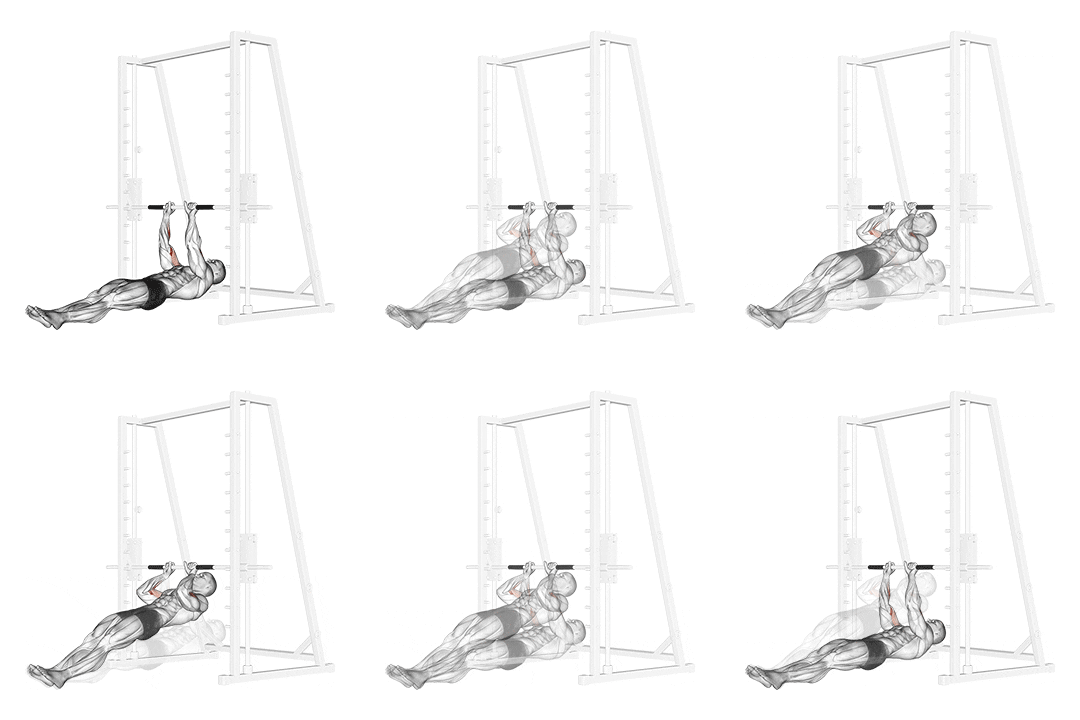
Biceps narrow pull-ups, also known as close-grip pull-ups or chin-ups, are a variation of the classic pull-up exercise. This exercise primarily targets the biceps muscles of the upper arm, along with the muscles of the back, including the latissimus dorsi. Biceps narrow pull-ups provide an effective way to develop upper body strength and enhance the aesthetics of the arms and back. ## Instructions Follow these step-by-step instructions to perform biceps narrow pull-ups: 1. Find a pull-up bar or sturdy overhead bar and grip it with your palms facing toward you (underhand grip). 2. Position your hands closer together than the shoulder width, approximately shoulder-width apart or slightly narrower. 3. Hang from the bar with your arms fully extended, ensuring your body is straight and your feet are off the ground. 4. Engage your core muscles by drawing your navel toward your spine. 5. Initiate the pull-up by bending your elbows and pulling your chest toward the bar, while keeping your elbows close to your body. 6. Continue pulling until your chin is above the bar or as high as you can comfortably go. 7. Pause briefly at the top of the movement, squeezing your biceps and upper back muscles. 8. Slowly lower your body back to the starting position with control, fully extending your arms. 9. Repeat the movement for the desired number of repetitions. ## Variations Here are a few variations of biceps narrow pull-ups that you can try: 1. Assisted Biceps Narrow Pull-Ups: If you're unable to perform the exercise without assistance, use resistance bands or an assisted pull-up machine to lighten the load and gradually build strength. 2. Weighted Biceps Narrow Pull-Ups: Once you've mastered bodyweight pull-ups, you can add extra resistance by using a weight belt or holding a dumbbell between your feet or thighs. ## Muscles Worked The biceps narrow pull-ups primarily target the following muscles: 1. Biceps Brachii: The muscles located on the front of the upper arm that assist in elbow flexion and forearm supination. 2. Latissimus Dorsi: The large muscles of the back that contribute to shoulder extension, adduction, and downward rotation. ## Common Mistakes Be aware of these common mistakes to ensure proper form and maximize the effectiveness of the exercise: 1. Using momentum: Avoid using swinging or jerking movements to propel yourself up. Focus on controlled and smooth motions throughout the exercise. 2. Shrugging the shoulders: Keep your shoulders down and away from your ears. Avoid shrugging or lifting your shoulders toward your head during the movement. 3. Arching the back excessively: Maintain a neutral spine position throughout the exercise. Avoid excessive arching of the lower back, as it may strain the lower back muscles. ## Safety Precautions To perform biceps narrow pull-ups safely, keep the following precautions in mind: 1. Ensure that the pull-up bar or overhead bar is securely fixed and can support your body weight. 2. Start with a grip width and difficulty level that is appropriate for your current strength and fitness level. 3. If you have any pre-existing shoulder, elbow, or back injuries, consult with a healthcare professional before attempting this exercise. 4. Engage your core muscles throughout the exercise to provide stability and protect your lower back. 5. Breathe continuously and avoid holding your breath during the movement. 6. If you experience any pain or discomfort during the exercise, stop immediately and seek guidance from a qualified fitness professional or healthcare provider. Gradually increase the difficulty and intensity of the exercise as your strength improves. Practice proper form and control to ensure a safe and effective workout.
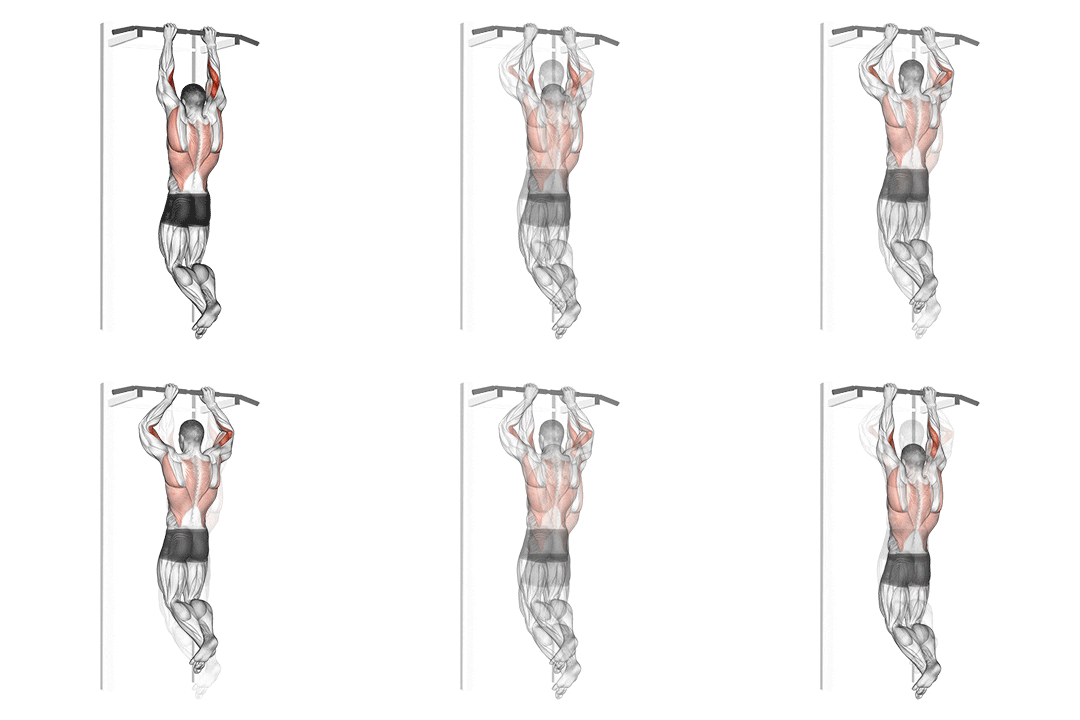
The biceps pull-up is a challenging exercise that targets the biceps muscles of the upper arm. It involves hanging from a bar and pulling your body upward using the strength of your arms. This exercise not only helps to develop and strengthen the biceps but also engages other muscles of the upper body, including the back and shoulders. Biceps pull-ups are a compound exercise that can improve upper body strength and contribute to a well-rounded physique. ## Instructions Follow these step-by-step instructions to perform biceps pull-ups: 1. Stand beneath a pull-up bar or use a stable overhead bar that allows your arms to fully extend without touching the ground. 2. Jump or use a step to reach the bar and grab it with an underhand grip (palms facing you), slightly wider than shoulder-width apart. 3. Hang from the bar with your arms fully extended and your feet off the ground. 4. Engage your core muscles by drawing your navel toward your spine. 5. Initiate the pull-up by bending your elbows and pulling your body upward until your chin reaches or clears the bar. 6. Keep your elbows close to your body throughout the movement. 7. Squeeze your biceps and upper back muscles at the top of the movement. 8. Lower your body back to the starting position with control, fully extending your arms. 9. Repeat the movement for the desired number of repetitions. ## Variations Here are a few variations of biceps pull-ups that you can try: 1. Assisted Biceps Pull-Ups: If you're unable to perform pull-ups without assistance, you can use a resistance band, an assisted pull-up machine, or have a partner assist you by holding your legs or providing minimal assistance. 2. Weighted Biceps Pull-Ups: Once you've built sufficient strength, you can add extra resistance by wearing a weight belt or holding a dumbbell between your feet or thighs. ## Muscles Worked The biceps pull-up primarily targets the following muscles: 1. Biceps Brachii: The muscles located on the front of the upper arm that assist in elbow flexion and forearm supination. 2. Latissimus Dorsi: The large muscles of the back that contribute to shoulder extension, adduction, and downward rotation. ## Common Mistakes Be aware of these common mistakes to ensure proper form and maximize the effectiveness of the exercise: 1. Swinging the body: Avoid using momentum or swinging your body to lift yourself up. Focus on controlled movements using the strength of your arms. 2. Partial range of motion: Strive to perform full-range pull-ups by lowering your body until your arms are fully extended and pulling yourself up until your chin clears the bar. 3. Using excessive momentum from the legs: Keep your legs straight and avoid kicking or using excessive leg movement to assist the pull-up. ## Safety Precautions To perform biceps pull-ups safely, keep the following precautions in mind: 1. Ensure that the pull-up bar or overhead bar is securely fixed and can support your body weight. 2. Start with a grip width and difficulty level that is appropriate for your current strength and fitness level. 3. If you have any pre-existing shoulder, elbow, or back injuries, consult with a healthcare professional before attempting this exercise. 4. Engage your core muscles throughout the exercise to provide stability and protect your lower back. 5. Breathe continuously and avoid holding your breath during the movement. 6. If you experience any pain or discomfort during the exercise, stop immediately and seek guidance from a qualified fitness professional or healthcare provider. Gradually progress in terms of repetitions and strength to build up your ability to perform biceps pull-ups. Maintain proper form and control to ensure a safe and
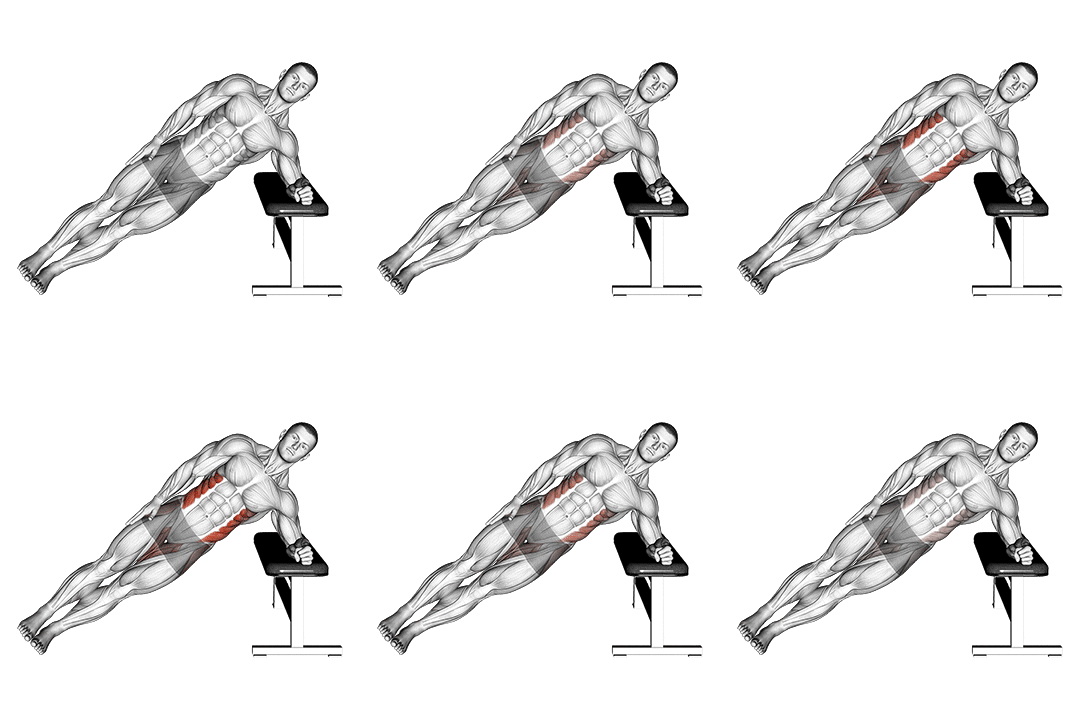
The bodyweight incline side plank is a variation of the traditional side plank exercise. It targets the core muscles, including the obliques and transverse abdominis, as well as the muscles in the shoulders, hips, and legs. The exercise involves balancing the body in a side plank position with the support of an incline surface, such as a bench or step. This exercise helps improve core stability, balance, and overall strength. ## Instructions 1. Start by placing an incline surface, such as a bench or step, next to you. 2. Lie on your side with your legs extended and stacked on top of each other. 3. Position your forearm on the ground perpendicular to your body, with your elbow directly beneath your shoulder. 4. Place your top hand on your hip or extend it towards the ceiling for added difficulty. 5. Engage your core muscles and lift your hips off the ground, maintaining a straight line from your head to your feet. 6. Position your feet on the incline surface, with your bottom foot slightly in front of your top foot for stability. 7. Keep your body in a straight line, avoiding any sagging or twisting. 8. Hold the position for a designated amount of time (e.g., 30 seconds to 1 minute). 9. Slowly lower your hips back to the ground and switch sides to perform the exercise on the opposite side. ## Variations - Beginner Variation: Perform the exercise with your knees bent and resting on the ground instead of extending your legs. - Advanced Variation: Once you become comfortable with the incline side plank, you can try lifting your top leg off the bottom leg, increasing the challenge and engaging the hip abductor muscles. ## Muscles Worked - Core muscles (obliques, transverse abdominis) - Shoulder muscles (deltoids) - Hip muscles (glutes, hip abductors) - Leg muscles (quadriceps, hamstrings) ## Common Mistakes - Allowing the hips to sag: Maintain a straight line from your head to your feet throughout the exercise. Avoid sagging or allowing your hips to drop towards the ground. - Placing the supporting elbow too far forward or backward: Ensure your elbow is directly beneath your shoulder to maintain proper alignment and stability. - Lack of core engagement: Focus on actively engaging your core muscles throughout the exercise. Avoid relying solely on your supporting arm. ## Safety Precautions - Start with a suitable incline surface height. If you're new to the exercise, choose a lower incline to gradually build strength and stability. - If you have any shoulder, wrist, or lower back issues, consult with a healthcare professional or fitness trainer before attempting this exercise. - Listen to your body and avoid pushing yourself too hard. If you experience pain or discomfort, stop the exercise and seek guidance.
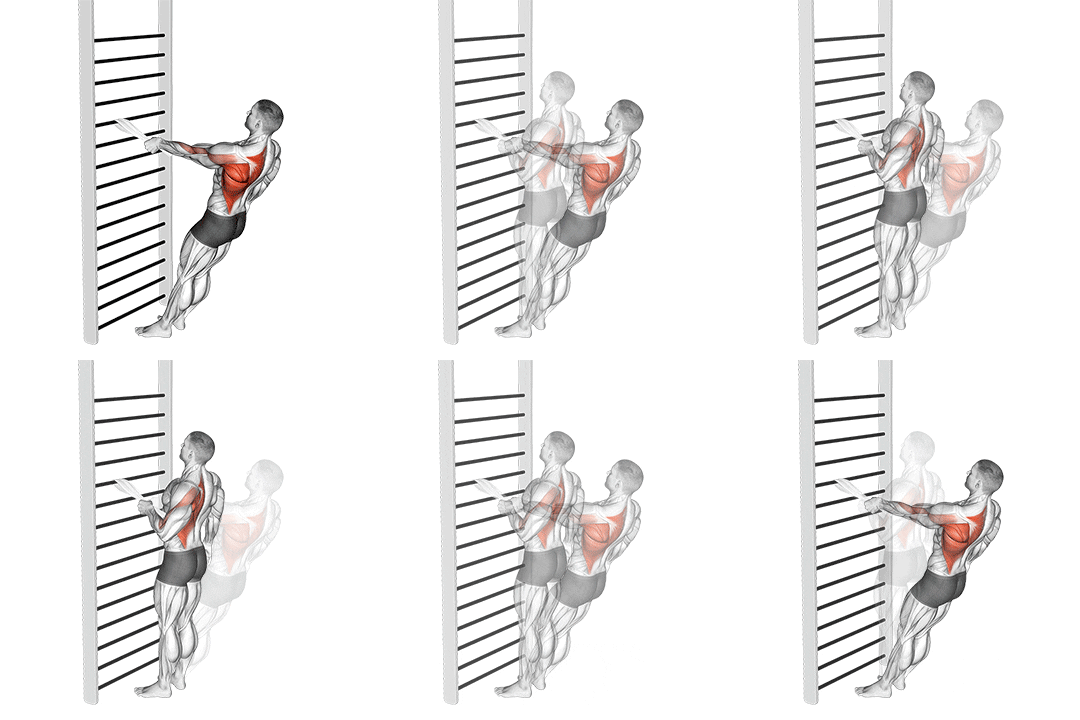
The bodyweight standing one-arm row with a towel is an exercise that primarily targets the muscles of the upper back, including the rhomboids, trapezius, and latissimus dorsi. It also engages the biceps and core muscles. This exercise is beneficial for improving upper body strength, posture, and stability. ## Instructions 1. Start by standing with your feet shoulder-width apart and knees slightly bent. 2. Take a towel and hold one end in your hand, allowing the towel to hang down in front of you. 3. Bend forward from your hips, keeping your back straight and chest lifted. 4. Extend your arm holding the towel, so it is fully stretched in front of you. 5. Initiate the movement by pulling the towel towards your body, bending your elbow and retracting your shoulder blade. 6. Keep your core engaged and maintain a stable stance throughout the exercise. 7. Pull the towel until your elbow is at or slightly behind your torso, and your hand is close to your ribcage. 8. Pause for a moment, squeezing your shoulder blade. 9. Slowly extend your arm back to the starting position, maintaining control throughout the movement. 10. Repeat the exercise for the desired number of repetitions. 11. Switch arms and perform the same number of repetitions on the opposite side. ## Variations - If you find the exercise too challenging, you can perform it with both hands on the towel instead of using one arm at a time. This will provide more stability and support. - For an added challenge, you can perform the exercise while standing on one leg, which will further engage your core and improve balance. ## Muscles Worked - Rhomboids - Trapezius - Latissimus dorsi - Biceps - Core muscles (abdominals and obliques) ## Common Mistakes - Rounding the back: Maintain a straight back throughout the exercise and avoid hunching forward. - Using excessive momentum: Focus on a controlled and deliberate movement, avoiding jerking or swinging motions. - Shrugging the shoulders: Keep your shoulders relaxed and down, avoiding the tendency to elevate them. - Not engaging the core: Keep your core muscles engaged to maintain stability and support the movement. ## Safety Precautions - Ensure that you have sufficient space around you to perform the exercise without any obstructions. - If you have any pre-existing back or shoulder injuries, consult with a healthcare professional before attempting this exercise. - Start with a lighter resistance or towel length to familiarize yourself with the movement before progressing to heavier loads. - If you experience pain or discomfort during the exercise, stop immediately and seek medical advice.
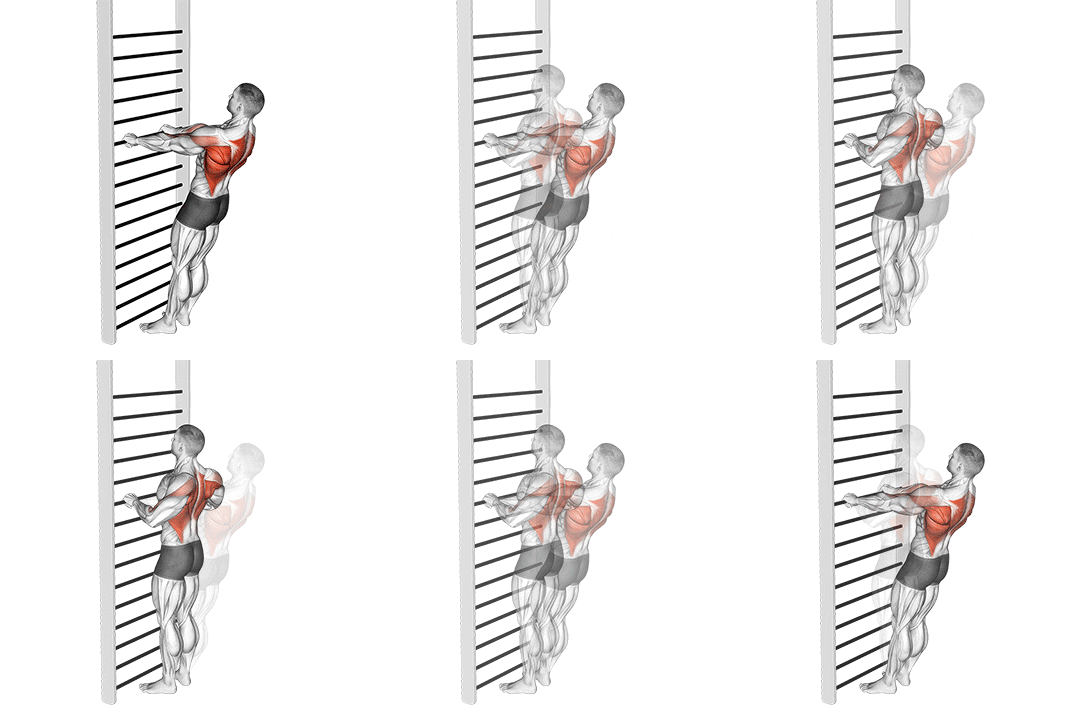
The bodyweight standing row is an exercise that targets the muscles of the upper back, including the rhomboids, trapezius, and latissimus dorsi. It also engages the biceps and core muscles. This exercise is beneficial for developing upper body strength, improving posture, and enhancing overall back muscle function. ## Instructions 1. Begin by standing with your feet shoulder-width apart and knees slightly bent. 2. Extend your arms in front of you, keeping them parallel to the ground. 3. Imagine pulling your shoulder blades together and down while maintaining a tall posture. 4. Bend your elbows and pull them back, squeezing your shoulder blades together as you bring your hands towards your chest. 5. Focus on using the muscles of your upper back to perform the movement, rather than relying solely on your arms. 6. Pause briefly in the fully contracted position, feeling the engagement in your upper back muscles. 7. Slowly extend your arms back to the starting position, maintaining control throughout the movement. 8. Repeat the exercise for the desired number of repetitions. ## Variations - Resistance Band Standing Row: Attach a resistance band to a stable anchor point in front of you and hold the handles in your hands. Perform the rowing motion as described above, with the resistance provided by the band. - Inverted Row: Find a sturdy horizontal bar or use a Smith machine at an appropriate height. Lie underneath the bar, grasp it with an overhand grip, and keep your body straight. Pull your chest towards the bar by squeezing your shoulder blades together, then slowly lower yourself back down. - One-Arm Standing Row: Instead of using both arms simultaneously, perform the exercise with one arm at a time. This variation can help address muscle imbalances and provide a greater challenge. ## Muscles Worked - Rhomboids - Trapezius - Latissimus dorsi - Biceps - Core muscles (abdominals and obliques) ## Common Mistakes - Rounded shoulders: Keep your shoulders pulled back and down throughout the movement to maintain proper posture. - Using excessive momentum: Avoid using momentum to perform the exercise. Focus on a controlled and deliberate motion. - Not squeezing shoulder blades: Make sure to actively squeeze your shoulder blades together at the peak of the movement to engage the target muscles fully. - Allowing elbows to flare out: Keep your elbows close to your sides as you pull, rather than allowing them to flare out to the sides. ## Safety Precautions - Ensure that you have sufficient space around you to perform the exercise without any obstructions. - If you have any pre-existing back or shoulder injuries, consult with a healthcare professional before attempting this exercise. - Start with a comfortable resistance or difficulty level and gradually increase as your strength improves. - If you experience pain or discomfort during the exercise, stop immediately and seek medical advice.
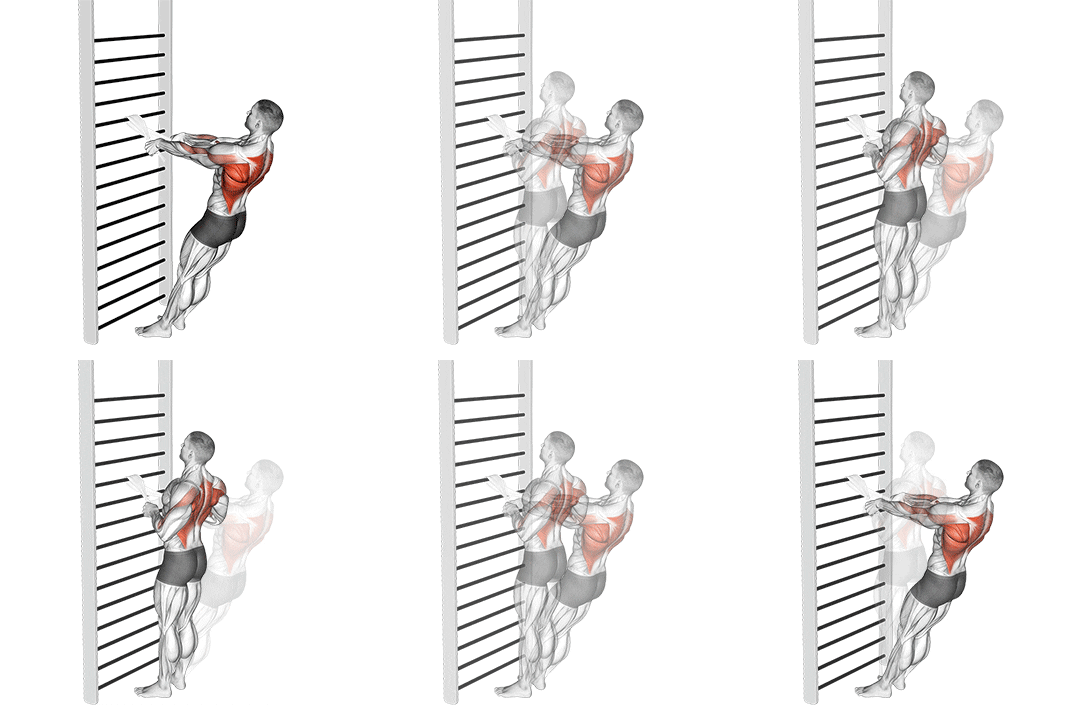
The bodyweight standing row with a towel is an exercise that targets the muscles of the upper back, including the rhomboids, trapezius, and latissimus dorsi. It also engages the biceps and core muscles. This exercise helps improve upper body strength, posture, and shoulder stability. ## Instructions 1. Stand with your feet shoulder-width apart and knees slightly bent. 2. Take a towel and hold it with both hands, gripping each end. 3. Extend your arms in front of you, keeping them parallel to the ground. 4. Brace your core and maintain a tall posture throughout the exercise. 5. Initiate the movement by pulling the towel towards your body, bending your elbows and retracting your shoulder blades. 6. Focus on squeezing your shoulder blades together as you bring the towel towards your chest. 7. Keep your elbows close to your body as you pull. 8. Pause briefly in the fully contracted position, feeling the engagement in your upper back muscles. 9. Slowly extend your arms back to the starting position, maintaining control throughout the movement. 10. Repeat the exercise for the desired number of repetitions. ## Variations - Single-Arm Towel Row: Perform the exercise using one arm at a time. This variation allows you to focus on each side individually and can help address muscle imbalances. - Resistance Band Standing Row: Instead of using a towel, you can use a resistance band. Step on the band with your feet, and hold the handles or the ends of the band. Perform the rowing motion as described above, with the resistance provided by the band. ## Muscles Worked - Rhomboids - Trapezius - Latissimus dorsi - Biceps - Core muscles (abdominals and obliques) ## Common Mistakes - Rounding the shoulders: Maintain a straight back and avoid rounding the shoulders forward during the movement. - Using excessive momentum: Focus on a controlled and deliberate motion, avoiding jerking or swinging the towel. - Not fully retracting the shoulder blades: Make sure to actively squeeze and retract your shoulder blades at the peak of the movement to engage the upper back muscles fully. - Allowing the elbows to flare out: Keep your elbows close to your sides as you pull, rather than allowing them to move outward. ## Safety Precautions - Ensure that you have sufficient space around you to perform the exercise without any obstructions. - If you have any pre-existing back or shoulder injuries, consult with a healthcare professional before attempting this exercise. - Start with a comfortable resistance or difficulty level and gradually increase as your strength improves. - If you experience pain or discomfort during the exercise, stop immediately and seek medical advice.
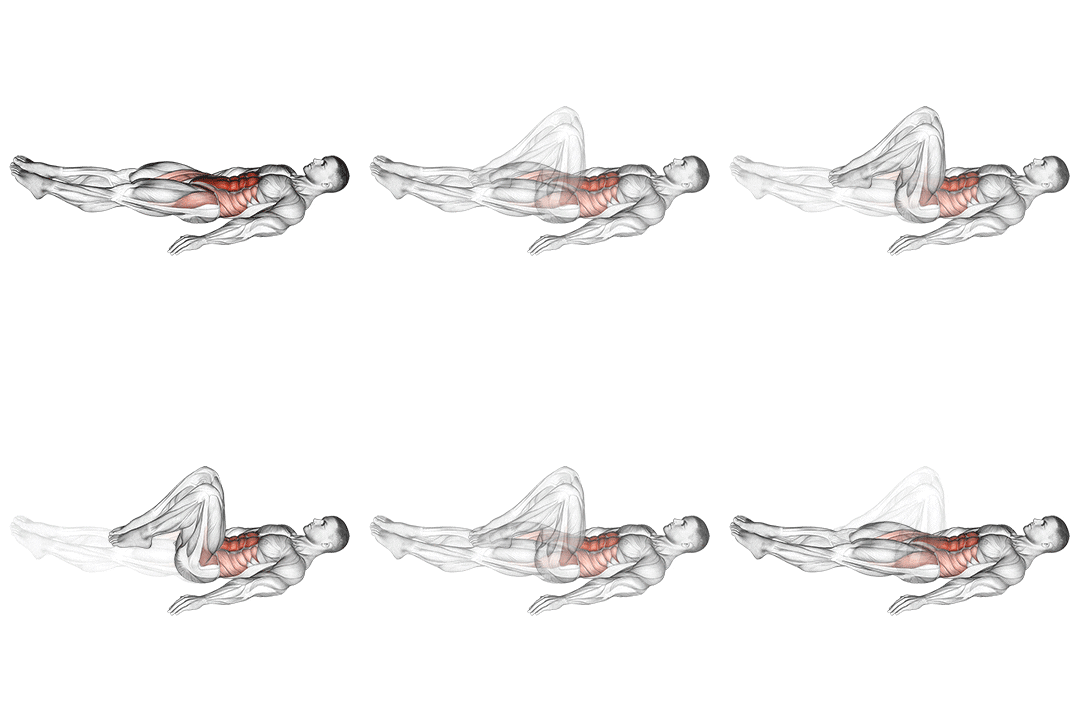
The bottoms-up exercise is a challenging exercise that primarily targets the muscles of the shoulders, including the deltoids and rotator cuff muscles. This exercise involves holding a weight, typically a kettlebell, upside down by the handle, requiring strong shoulder stability, grip strength, and control. It helps improve shoulder strength, stability, and overall upper body coordination. ## Instructions 1. Start by selecting an appropriate kettlebell weight for your fitness level. 2. Stand with your feet shoulder-width apart. 3. Hold the kettlebell by the handle with an overhand grip. 4. Flip the kettlebell upside down so that the bottom (the round part) is facing upward. 5. Keep your elbow close to your body and hold the kettlebell at chest height. 6. Brace your core and maintain a tall posture throughout the exercise. 7. Begin by pressing the kettlebell overhead, fully extending your arm. 8. Focus on keeping the kettlebell stable and balanced as you lift it. 9. Hold the kettlebell in the top position for a few seconds, ensuring that it remains steady. 10. Slowly lower the kettlebell back to the starting position, maintaining control throughout the movement. 11. Repeat the exercise for the desired number of repetitions. ## Variations - Single-Arm Bottoms-Up: Perform the exercise using one arm at a time. This variation increases the demand on shoulder stability and grip strength. - Bottoms-Up Carry: Instead of performing repetitions, walk while holding the kettlebell upside down by the handle. This variation challenges your shoulder stability and grip strength while also engaging the core muscles. ## Muscles Worked - Deltoids (shoulder muscles) - Rotator cuff muscles - Forearm muscles - Core muscles (stabilization) ## Common Mistakes - Losing control of the kettlebell: Start with a lighter weight to ensure you can maintain control throughout the exercise. Gradually increase the weight as your stability improves. - Rounding the shoulders: Keep your shoulders pulled back and down throughout the movement to maintain proper posture and shoulder stability. - Not engaging the core: Keep your core muscles engaged to provide stability and support for the movement. - Rushing the exercise: Focus on slow, controlled movements to maximize the benefits and maintain control of the kettlebell. ## Safety Precautions - Choose an appropriate kettlebell weight that allows you to maintain control and proper form throughout the exercise. - Ensure that you have sufficient space around you to perform the exercise without any obstructions. - If you have any pre-existing shoulder or wrist injuries, consult with a healthcare professional before attempting this exercise. - Start with a lighter weight and gradually progress as your strength and stability improve. - If you experience pain or discomfort during the exercise, stop immediately and seek medical advice.
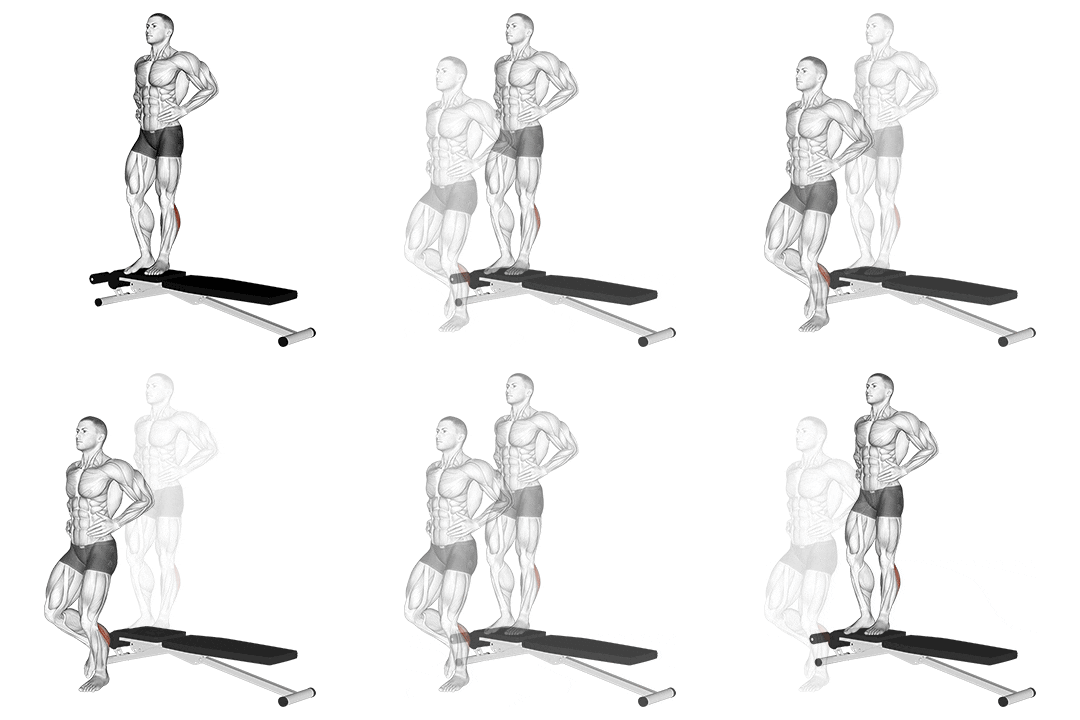
The box jump down with one leg stabilization is an exercise that targets the lower body, specifically the quadriceps, glutes, hamstrings, and calf muscles. It also improves balance, stability, and explosive power. This exercise involves jumping off a box or platform and landing on one leg, followed by maintaining balance and stability on that leg. ## Instructions 1. Start by standing on top of a sturdy box or platform, facing forward. 2. Choose a box height that is appropriate for your fitness level. Beginners can start with a lower box height and progress gradually. 3. Stand tall with your feet hip-width apart. 4. Lift one leg off the ground, extending it slightly in front of you. 5. Engage your core and maintain a stable posture throughout the exercise. 6. Jump off the box with your supporting leg (the one on the ground), pushing through the heel and extending the hip and knee. 7. Land softly on the same leg, with your knee bent to absorb the impact. Focus on landing with control and balance. 8. As you land, immediately stabilize yourself on the single leg, maintaining your balance for a few seconds. 9. Keep your chest lifted, shoulders back, and gaze forward to maintain proper alignment. 10. Slowly bring your lifted leg down to the ground, regaining your balance. 11. Step down from the box with the supporting leg to reset and prepare for the next repetition. 12. Repeat the exercise for the desired number of repetitions on one leg, then switch to the other leg. ## Variations - Box Jump Down with Both Legs: If jumping and stabilizing on one leg is too challenging, you can perform the exercise by jumping off the box with both legs and landing on both legs simultaneously. This modification reduces the balance and stability requirement. - Box Step Down with One Leg Stabilization: Instead of jumping off the box, step down with one leg and focus on stabilizing on that leg after landing. This modification reduces the impact and intensity of the exercise. ## Muscles Worked - Quadriceps - Glutes - Hamstrings - Calf muscles - Core muscles (stabilization) ## Common Mistakes - Lack of control on landing: Focus on landing softly and with control to minimize the impact on your joints. - Allowing the knee to collapse inward: Keep your knee aligned with your toes and avoid inward collapsing or excessive valgus motion. - Not maintaining a stable posture: Engage your core and maintain an upright posture throughout the exercise to ensure proper alignment and stability. - Rushing through the exercise: Take your time to perform each repetition with proper form and control. Avoid rushing the movements. ## Safety Precautions - Ensure that the box or platform used is sturdy and stable, capable of supporting your body weight. - Start with a lower box height and gradually increase as your strength and stability improve. - Avoid jumping from a box that is too high for your fitness level or that you are uncomfortable with. - Pay attention to your landing technique to minimize the impact on your joints. Land softly and with control. - If you have any pre-existing knee, ankle, or hip injuries, consult with a healthcare professional before attempting this exercise. - If you experience pain or discomfort during the exercise, stop immediately and seek medical advice.