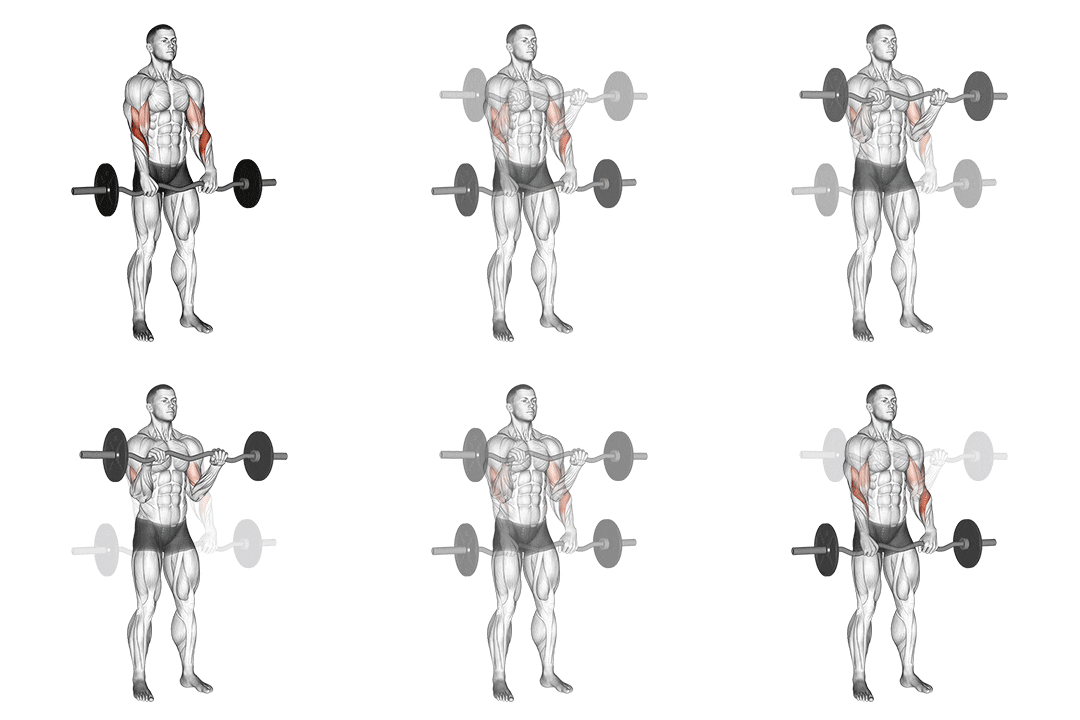
The EZ barbell reverse grip curl is an exercise that primarily targets the brachialis and brachioradialis muscles in the forearms, with secondary involvement of the biceps brachii muscles. This exercise is performed with a reverse grip, meaning your palms face downward, which places more emphasis on the forearm muscles. It helps to strengthen the forearm muscles, improve grip strength, and develop overall arm aesthetics. ## Instructions 1. Stand upright with your feet shoulder-width apart and grab an EZ barbell with an underhand grip (palms facing downward) and hands placed shoulder-width apart. 2. Let your arms hang straight down in front of you, fully extended, with the barbell resting against your thighs. This is your starting position. 3. Keeping your upper arms stationary, exhale and curl the barbell upward by contracting your forearm muscles. Focus on squeezing your forearms throughout the movement. 4. Continue curling the barbell until your forearms are fully contracted and the barbell is at shoulder level. Hold this position for a brief moment, squeezing your forearms. 5. Inhale and slowly lower the barbell back down to the starting position, maintaining control throughout the descent. 6. Repeat for the desired number of repetitions. ## Variations - Dumbbell Reverse Grip Curl: Perform the exercise using dumbbells instead of an EZ barbell. This allows for independent arm movement and can help address any muscle imbalances. - Cable Reverse Grip Curl: Attach a straight bar or rope handle to a cable machine and perform the reverse grip curl. This variation provides constant tension throughout the movement. ## Muscles Worked The EZ barbell reverse grip curl primarily targets the following muscles: - Brachialis - Brachioradialis - Biceps brachii (secondary involvement) ## Common Mistakes - Using momentum: Avoid swinging or using momentum to lift the barbell. Focus on controlled movements, allowing the targeted muscles to do the work. - Rounding the back or hunching the shoulders: Maintain proper posture throughout the exercise. Keep your back straight, shoulders back and down, and core engaged. - Gripping the bar too tightly: Maintain a firm grip on the barbell, but avoid excessive gripping that may lead to forearm and wrist discomfort. Find a comfortable balance. ## Safety Precautions - Choose an appropriate weight that allows you to maintain proper form and control throughout the exercise. - Keep your wrists in a neutral position to minimize stress on the joint. Avoid excessive bending or extending of the wrists. - If you experience any pain or discomfort in your forearms, wrists, or elbows, stop the exercise and consult with a fitness professional or healthcare provider. - If you have any pre-existing conditions or injuries, consult with a healthcare professional before attempting this exercise. - Start with a proper warm-up to prepare your muscles and joints for the exercise.
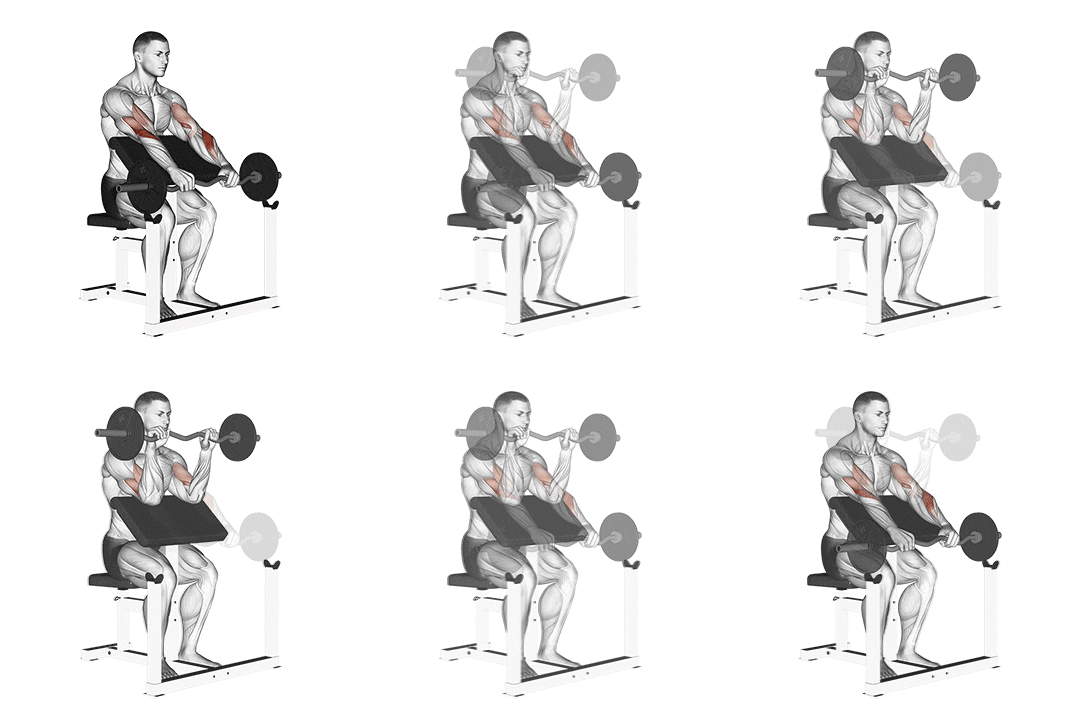
The EZ barbell reverse grip preacher curl is an exercise that primarily targets the biceps brachii muscles, with emphasis on the outer portion of the biceps. This exercise is performed on a preacher curl bench with a reverse grip, meaning your palms face downward. The preacher curl bench helps isolate the biceps and reduces momentum, allowing for focused biceps activation and muscle development. ## Instructions 1. Adjust the preacher curl bench so that the angled pad is positioned under your armpits when seated. 2. Sit on the preacher curl bench and grasp the EZ barbell with an underhand grip (palms facing downward), hands shoulder-width apart. 3. Rest your upper arms on the angled pad, allowing your forearms to hang freely, fully extended, with the barbell in your hands. This is your starting position. 4. Inhale and curl the barbell upward, contracting your biceps. Keep your upper arms and elbows stationary throughout the movement. Focus on squeezing the biceps. 5. Continue curling the barbell until your forearms are fully contracted and the barbell is at shoulder level. Hold this position for a brief moment, emphasizing the peak contraction in your biceps. 6. Exhale and slowly lower the barbell back down to the starting position, maintaining control throughout the descent. 7. Repeat for the desired number of repetitions. ## Variations - Dumbbell Reverse Grip Preacher Curl: Perform the exercise using dumbbells instead of an EZ barbell. This allows for independent arm movement and can help address any muscle imbalances. - Machine Reverse Grip Preacher Curl: Utilize a preacher curl machine with a reverse grip attachment. This variation provides stability and consistent resistance throughout the movement. ## Muscles Worked The EZ barbell reverse grip preacher curl primarily targets the following muscles: - Biceps brachii (emphasis on the outer portion) ## Common Mistakes - Using excessive weight: Choose a weight that allows you to maintain proper form and control throughout the exercise. Using too heavy of a weight can lead to swinging or compromising your technique. - Relying on momentum: Avoid using momentum to lift the barbell. Focus on controlled movements, ensuring that your biceps are doing the work. - Allowing the shoulders to elevate: Keep your shoulders relaxed and avoid shrugging them up during the exercise. Maintain proper posture with your chest up and shoulders down and back. ## Safety Precautions - Choose an appropriate weight that challenges you but still allows you to maintain proper form. - Ensure that the preacher curl bench is adjusted to a suitable height and securely locked in place. - If you experience any pain or discomfort in your elbows, wrists, or shoulders, stop the exercise and consult with a fitness professional or healthcare provider. - If you have any pre-existing conditions or injuries, consult with a healthcare professional before attempting this exercise. - Start with a proper warm-up to prepare your muscles and joints for the exercise.
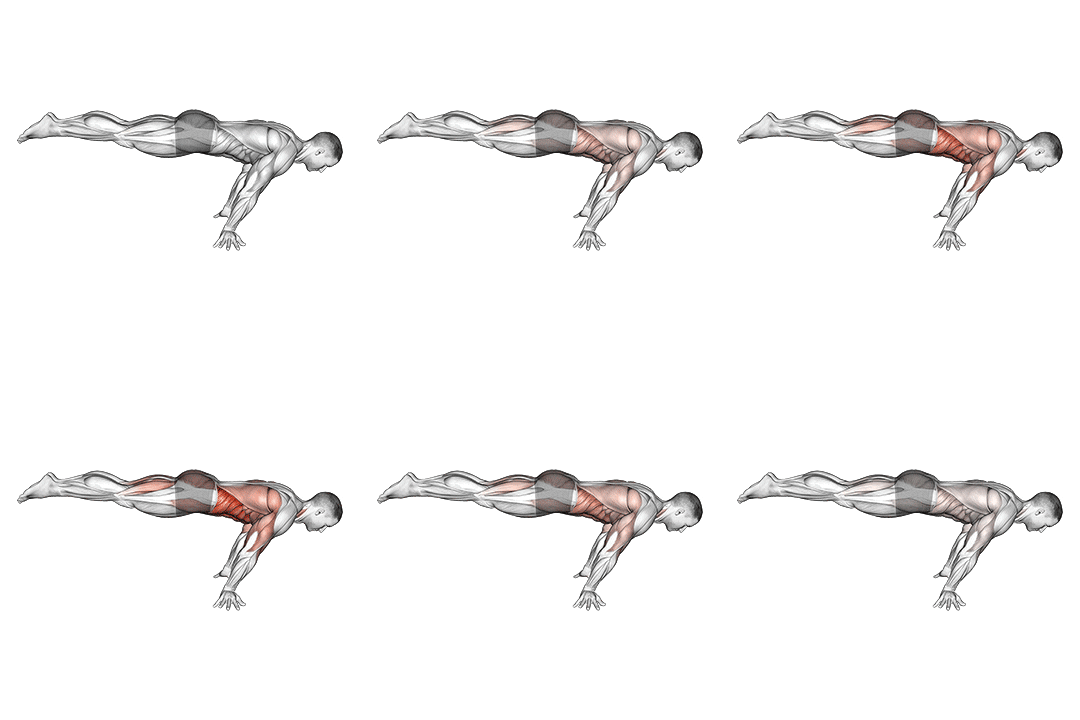
The Full Planche is an advanced gymnastics strength exercise that involves holding a horizontal position with the body parallel to the ground, supported only by the hands and without any contact with the lower body. It primarily targets the upper body, particularly the shoulders, chest, triceps, and core muscles. The Full Planche requires exceptional upper body strength, stability, and body control. ## Instructions Here are the step-by-step instructions for performing the Full Planche exercise correctly: 1. Start by placing your hands on the ground with your fingers pointing forward. Your hands should be slightly wider than shoulder-width apart. 2. Lower yourself down into a squat position with your knees bent and your feet lifted off the ground. Keep your elbows straight and your arms fully extended. 3. Lean forward and shift your weight onto your hands while lifting your feet off the ground. As you do this, extend your legs and keep them straight. 4. Gradually transfer your weight onto your hands and engage your core muscles to lift your lower body off the ground. Your body should be parallel to the ground, with your arms fully extended and your feet hovering off the floor. 5. Aim to hold the Full Planche position for as long as possible while maintaining control and proper form. 6. When you are ready to come out of the position, slowly lower your legs back down to the starting position. ## Variations Here are some variations or modifications you can consider for the Full Planche exercise: 1. Tuck Planche: Instead of fully extending your legs, you can tuck your knees towards your chest while maintaining the horizontal body position. This variation reduces the demand on the core and allows for better balance. 2. Advanced Tuck Planche: In this variation, the knees are kept straight and lifted higher toward the chest, increasing the difficulty level. 3. Straddle Planche: Instead of keeping the legs together, spread them apart in a straddle position. This variation challenges the shoulder and core stability further. 4. Half Planche: In the half planche, one leg is extended straight while the other leg remains tucked or bent, reducing the overall load on the upper body. ## Muscles Worked The Full Planche primarily targets the following muscles: 1. Deltoids (shoulders) 2. Pectoralis major (chest) 3. Triceps brachii (triceps) 4. Rectus abdominis (core) 5. Obliques (core) ## Common Mistakes Here are some common mistakes people make while performing the Full Planche exercise and how to avoid them: 1. Lack of proper progression: The Full Planche is an extremely challenging exercise. It is important to build sufficient strength and stability through progressive exercises like planche progressions, push-ups, and core strengthening exercises before attempting the Full Planche. 2. Insufficient scapular depression: It is crucial to actively depress your shoulder blades (pulling them downward) to engage the proper muscles and achieve the necessary shoulder stability. 3. Collapsing shoulders: Avoid allowing your shoulders to collapse forward or elevate toward your ears. Keep them engaged and pulled back throughout the exercise. 4. Lack of core engagement: To maintain proper body alignment and stability, engage your core muscles by pulling your belly button in towards your spine. 5. Insufficient wrist mobility and strength: Adequate wrist mobility and strength are essential for the Full Planche. Gradually build up your wrist strength and flexibility through wrist stretches and strengthening exercises. ## Safety Precautions To ensure safety while performing the Full Planche exercise, consider the following precautions: 1. Warm up adequately before attempting the exercise to prepare your muscles and joints for the demands of the movement. 2. Perform the exercise on a soft
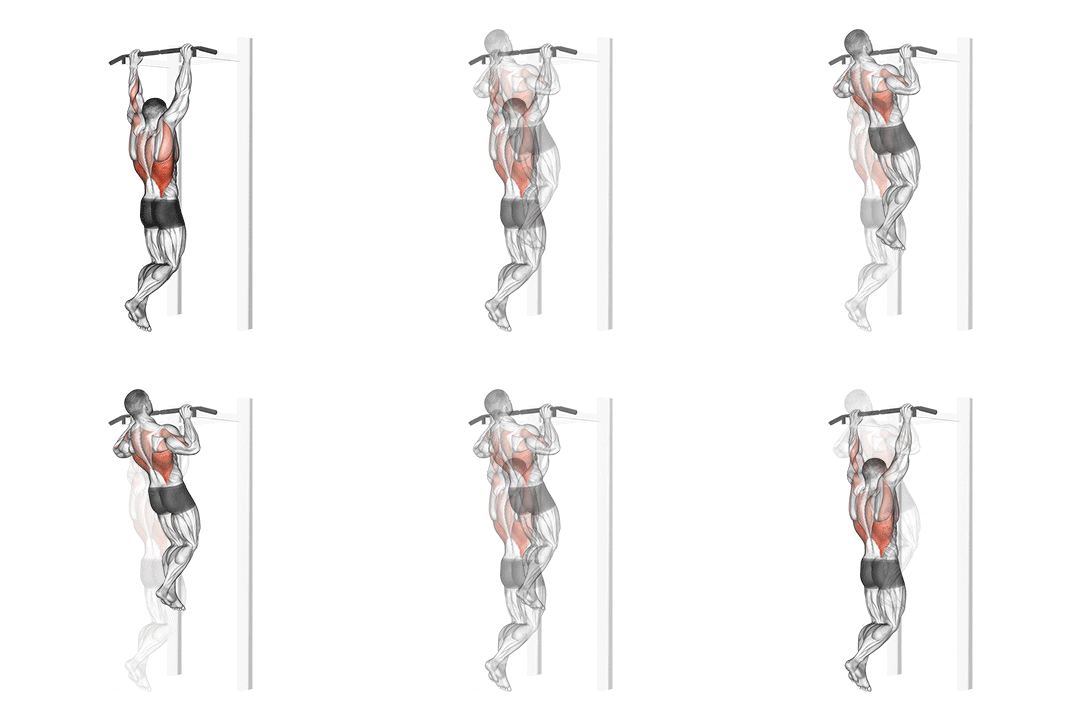
The Gironda Sternum Chin is an exercise that targets the muscles of the upper body, particularly the back, biceps, and shoulders. It is named after Vince Gironda, a renowned bodybuilding coach. This exercise involves a variation of the chin-up, emphasizing a higher range of motion and focusing on the contraction of the back muscles. ## Instructions Here are the step-by-step instructions for performing the Gironda Sternum Chin exercise correctly: 1. Stand in front of a chin-up bar and reach up to grip the bar with an underhand (supine) grip, slightly wider than shoulder-width apart. 2. Hang from the bar with your arms fully extended, feet off the ground, and your body relaxed. 3. Engage your back muscles and initiate the movement by pulling your shoulder blades down and back. This will help activate the back muscles and create a stable base. 4. Begin pulling yourself up towards the bar, aiming to bring your chest all the way up to touch the bar or as close as possible to your sternum (breastbone). 5. Focus on squeezing your shoulder blades together and using your back muscles to pull yourself up, rather than relying solely on your arms. 6. Once you reach the top position, pause for a brief moment to maximize the contraction in your back muscles. 7. Slowly lower yourself back down to the starting position with control, fully extending your arms. 8. Repeat the exercise for the desired number of repetitions. ## Variations Here are some variations or modifications you can consider for the Gironda Sternum Chin exercise: 1. Assisted Sternum Chin: If you're unable to perform the exercise with your bodyweight, you can use an assisted chin-up machine or resistance bands for assistance. 2. Weighted Sternum Chin: Once you have built strength, you can add additional resistance by wearing a weighted vest or holding a dumbbell or weight plate between your feet. 3. Mixed Grip Sternum Chin: Instead of using an underhand grip, you can use a mixed grip with one hand supine and the other hand pronated (overhand). This variation can engage the muscles in a slightly different way. ## Muscles Worked The Gironda Sternum Chin primarily targets the following muscles: 1. Latissimus dorsi (back) 2. Biceps brachii (biceps) 3. Rhomboids (upper back) 4. Posterior deltoids (shoulders) 5. Trapezius (upper back and shoulders) ## Common Mistakes Here are some common mistakes people make while performing the Gironda Sternum Chin exercise and how to avoid them: 1. Using momentum: Avoid using swinging or kicking movements to help you complete the exercise. Focus on controlled and deliberate movements to engage the target muscles effectively. 2. Neglecting proper form: Ensure that you maintain a straight body position throughout the exercise, avoiding excessive arching or rounding of the back. Keep your core engaged and your shoulder blades pulled down and back. 3. Insufficient range of motion: Aim to bring your chest all the way up to touch the bar or as close as possible to your sternum. Avoid shortening the range of motion, as it reduces the effectiveness of the exercise. 4. Overreliance on the arms: While the biceps are involved in the exercise, it is important to initiate the movement with the back muscles and focus on their contraction to maximize results. ## Safety Precautions To ensure safety while performing the Gironda Sternum Chin exercise, consider the following precautions: 1. Warm up adequately before attempting the exercise to prepare your muscles and joints for the demands of the movement. 2. Use a sturdy and secure chin-up bar that can support
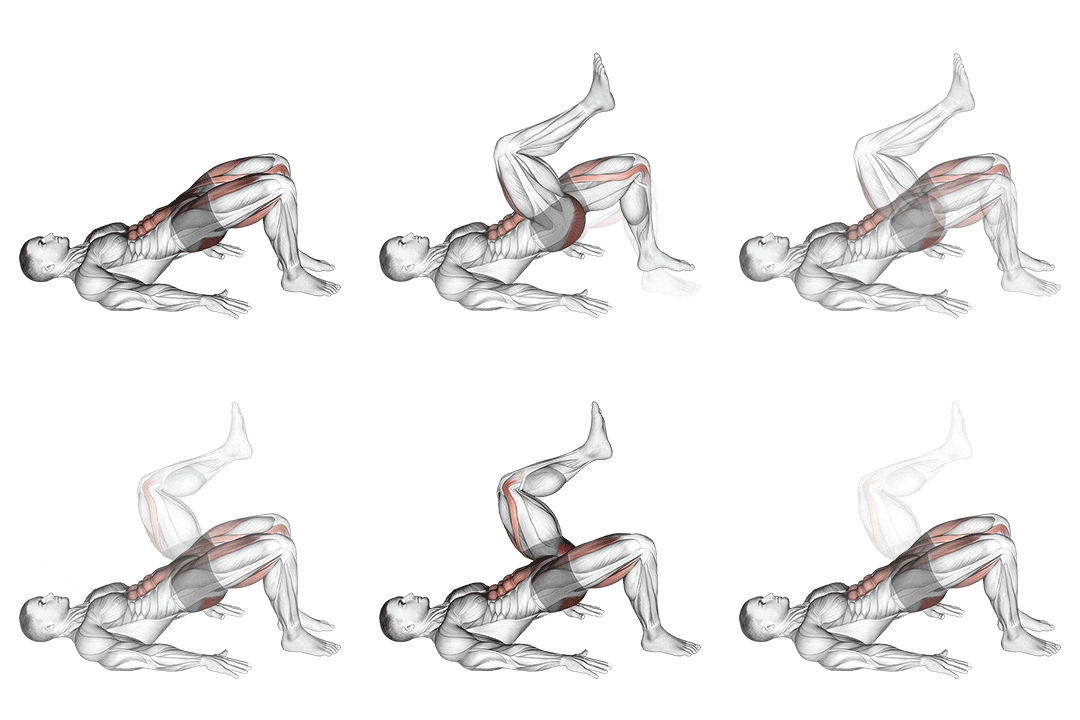
The Glute Bridge March is an exercise that targets the glutes, hamstrings, and core muscles. It involves lifting the hips off the ground into a bridge position and then performing a marching movement by lifting and lowering each leg alternately. This exercise is beneficial for improving hip and core stability, strengthening the glutes, and enhancing overall lower body strength. ## Instructions Here are the step-by-step instructions for performing the Glute Bridge March exercise correctly: 1. Lie flat on your back on an exercise mat or the floor with your knees bent and your feet flat on the ground. Keep your arms relaxed by your sides. 2. Engage your core muscles by drawing your belly button in towards your spine. This will help maintain stability throughout the exercise. 3. Push through your heels and lift your hips off the ground, driving your glutes and hamstrings. Your body should form a straight line from your shoulders to your knees. 4. Once in the bridge position, maintain a stable core and avoid excessive arching or sagging of the lower back. 5. Begin the marching movement by lifting one foot off the ground while keeping your knee bent at a 90-degree angle. 6. Slowly and with control, lower the lifted leg back down to the ground while maintaining the bridge position. 7. Repeat the movement with the opposite leg, lifting it off the ground while keeping the knee bent. 8. Continue alternating the leg movement, maintaining a steady and controlled pace. 9. Aim to perform the exercise for the desired number of repetitions or for a specific duration. ## Variations Here are some variations or modifications you can consider for the Glute Bridge March exercise: 1. Single-Leg Glute Bridge March: Perform the exercise with one leg lifted off the ground while keeping the other leg extended straight. This variation increases the challenge on the glutes and hamstrings. 2. Weighted Glute Bridge March: Place a weight, such as a dumbbell or barbell, on your hips while performing the exercise to add resistance and increase the intensity. ## Muscles Worked The Glute Bridge March primarily targets the following muscles: 1. Gluteus maximus (glutes) 2. Hamstrings 3. Core muscles (including the rectus abdominis, obliques, and transverse abdominis) 4. Hip stabilizers ## Common Mistakes Here are some common mistakes people make while performing the Glute Bridge March exercise and how to avoid them: 1. Allowing the hips to sag: Maintain a straight line from your shoulders to your knees throughout the exercise. Avoid excessive arching or sagging of the lower back. 2. Raising the hips too high: Lift your hips to a point where your body forms a straight line. Avoid overextending the lower back or creating excessive tension in the neck and shoulders. 3. Not engaging the core: It is important to keep your core muscles activated throughout the exercise to stabilize the spine and maintain proper form. Focus on drawing your belly button in towards your spine. 4. Rushing the movement: Perform the Glute Bridge March in a controlled manner, focusing on the mind-muscle connection. Avoid rushing through the exercise and prioritize quality over quantity. ## Safety Precautions To ensure safety while performing the Glute Bridge March exercise, consider the following precautions: 1. Use a comfortable and supportive exercise mat or surface to perform the exercise. 2. If you have any existing lower back or hip conditions, consult with a healthcare professional before attempting the exercise. 3. Start with a range of motion and intensity that is appropriate for your fitness level. Gradually increase the difficulty as you become more comfortable and stronger. 4. If you experience any pain or discomfort during the exercise
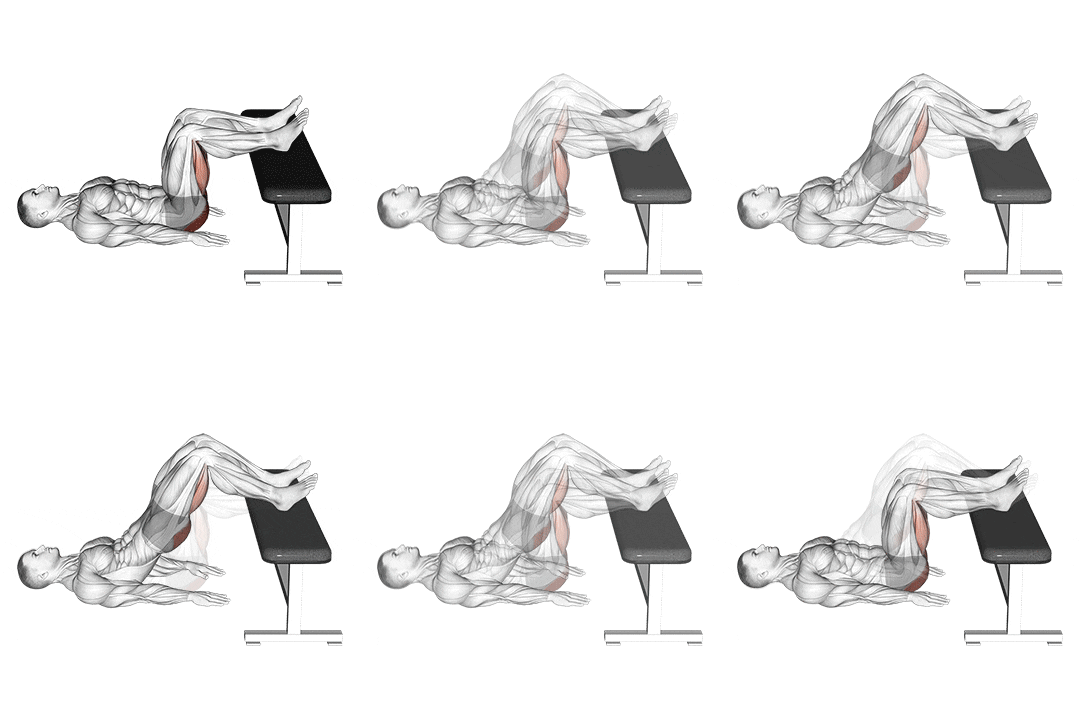
The Glute Bridge with Two Legs on Bench is an exercise that primarily targets the glutes, hamstrings, and core muscles. It involves lifting the hips off the ground and placing both feet on a bench or elevated surface, creating a bridge position. This exercise is beneficial for strengthening the glutes, improving hip stability, and enhancing overall lower body strength. ## Instructions Here are the step-by-step instructions for performing the Glute Bridge with Two Legs on Bench exercise correctly: 1. Lie flat on your back on an exercise mat or the floor with your knees bent and your feet flat on the ground. Place a bench or elevated surface near your feet. 2. Position your feet shoulder-width apart on the bench, ensuring that your heels are in contact with the surface. 3. Engage your core muscles by drawing your belly button in towards your spine. This will help maintain stability throughout the exercise. 4. Push through your heels and lift your hips off the ground, driving your glutes and hamstrings. Your body should form a straight line from your shoulders to your knees. 5. Once in the bridge position with both feet on the bench, maintain a stable core and avoid excessive arching or sagging of the lower back. 6. Hold the bridge position for a brief moment, focusing on squeezing your glutes at the top of the movement. 7. Slowly lower your hips back down to the starting position, maintaining control and engaging your glutes and hamstrings. 8. Repeat the exercise for the desired number of repetitions. ## Variations Here are some variations or modifications you can consider for the Glute Bridge with Two Legs on Bench exercise: 1. Single-Leg Glute Bridge on Bench: Perform the exercise with one leg lifted off the bench while keeping the other foot on the surface. This variation increases the challenge on the glutes and hamstrings. 2. Weighted Glute Bridge on Bench: Place a weight, such as a dumbbell or barbell, on your hips while performing the exercise to add resistance and increase the intensity. ## Muscles Worked The Glute Bridge with Two Legs on Bench primarily targets the following muscles: 1. Gluteus maximus (glutes) 2. Hamstrings 3. Core muscles (including the rectus abdominis, obliques, and transverse abdominis) ## Common Mistakes Here are some common mistakes people make while performing the Glute Bridge with Two Legs on Bench exercise and how to avoid them: 1. Allowing the hips to sag: Maintain a straight line from your shoulders to your knees throughout the exercise. Avoid excessive arching or sagging of the lower back. 2. Raising the hips too high: Lift your hips to a point where your body forms a straight line. Avoid overextending the lower back or creating excessive tension in the neck and shoulders. 3. Not engaging the core: It is important to keep your core muscles activated throughout the exercise to stabilize the spine and maintain proper form. Focus on drawing your belly button in towards your spine. 4. Placing too much pressure on the neck: Avoid straining your neck or placing excessive pressure on it. Keep your neck relaxed and aligned with your spine throughout the exercise. ## Safety Precautions To ensure safety while performing the Glute Bridge with Two Legs on Bench exercise, consider the following precautions: 1. Use a stable and sturdy bench or elevated surface that can support your bodyweight. 2. If you have any existing lower back or hip conditions, consult with a healthcare professional before attempting the exercise. 3. Start with a range of motion and intensity that is appropriate for your fitness level. Gradually increase the difficulty as you become more comfortable and stronger.
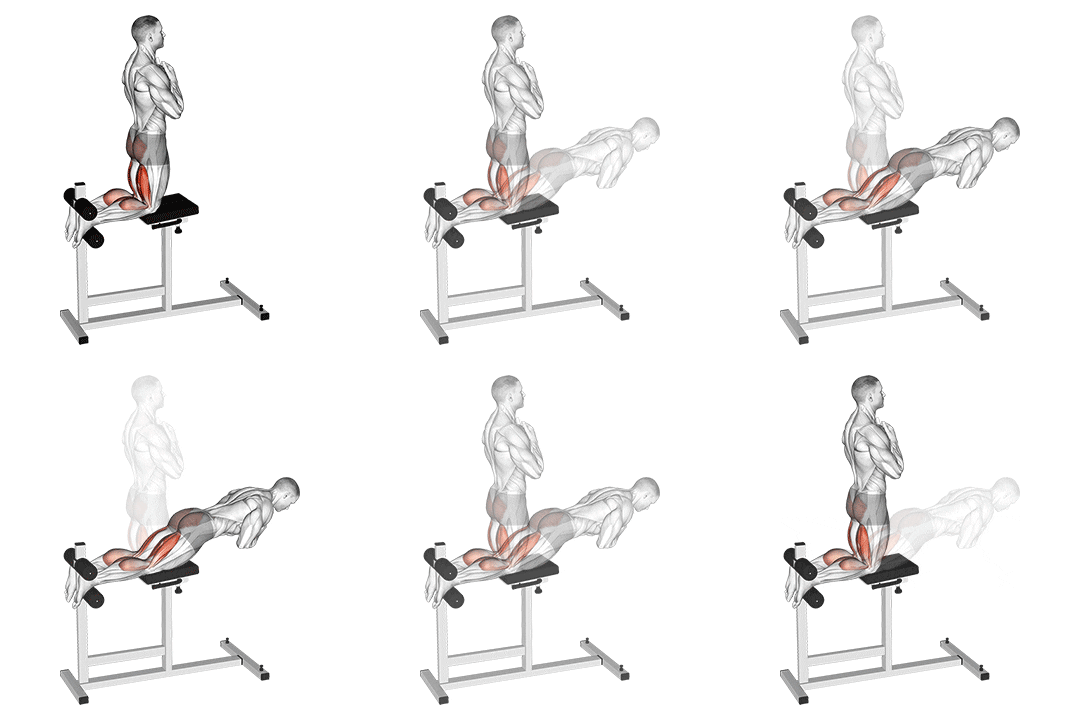
The Glute-Ham Raise is an advanced exercise that primarily targets the posterior chain muscles, including the glutes, hamstrings, and lower back. It involves extending the hips and flexing the knees against resistance to lift the torso from a horizontal position. This exercise is beneficial for developing strength and stability in the posterior chain, improving athletic performance, and reducing the risk of lower body injuries. ## Instructions Here are the step-by-step instructions for performing the Glute-Ham Raise exercise correctly: 1. Position yourself on a glute-ham raise machine or secure your feet firmly under a stable object, such as a partner or a barbell. 2. Position your upper body so that it is parallel to the ground, with your knees slightly bent and your hips extended. 3. Engage your core muscles by drawing your belly button in towards your spine. 4. Lower your upper body towards the ground, maintaining control and a straight body position. Your torso should be hinged at the hips. 5. From the bottom position, begin to lift your upper body by contracting your glutes and hamstrings. Initiate the movement by pulling with your hamstrings. 6. Continue lifting until your body is in a straight line from your head to your heels. Your knees should be flexed at the top of the movement. 7. Slowly lower your body back down to the starting position, maintaining control and engaging your glutes and hamstrings. 8. Repeat the exercise for the desired number of repetitions. ## Variations Here are some variations or modifications you can consider for the Glute-Ham Raise exercise: 1. Assisted Glute-Ham Raise: If you're unable to perform the exercise with your bodyweight, you can use an assisted glute-ham raise machine or have a partner hold your ankles to provide assistance. 2. Banded Glute-Ham Raise: Attach resistance bands to the machine or anchor them around your shoulders to add extra resistance throughout the movement. 3. Eccentric Glute-Ham Raise: Focus on the eccentric, or lowering, portion of the movement by slowly controlling the descent. This variation can help build strength and control. ## Muscles Worked The Glute-Ham Raise primarily targets the following muscles: 1. Gluteus maximus (glutes) 2. Hamstrings 3. Erector spinae (lower back) 4. Gastrocnemius (calves) 5. Core muscles (including the rectus abdominis, obliques, and transverse abdominis) ## Common Mistakes Here are some common mistakes people make while performing the Glute-Ham Raise exercise and how to avoid them: 1. Rounding the back: Maintain a neutral spine throughout the exercise. Avoid rounding or arching the lower back, as it can put unnecessary stress on the spine. Engage your core to maintain stability. 2. Using momentum: Avoid using momentum or swinging motions to complete the exercise. Focus on controlled movements and engage the target muscles throughout the entire range of motion. 3. Not engaging the glutes and hamstrings: Concentrate on contracting the glutes and hamstrings as you lift your body. These muscles should be the primary drivers of the movement. 4. Overextending the hips: While it's important to extend the hips, avoid excessive hyperextension. Maintain control and focus on achieving a straight line from your head to your heels. ## Safety Precautions To ensure safety while performing the Glute-Ham Raise exercise, consider the following precautions: 1. If you're new to the exercise or have any existing lower back or hamstring issues, start with caution and gradually increase the difficulty. 2. Use a proper glute-ham raise machine or secure your
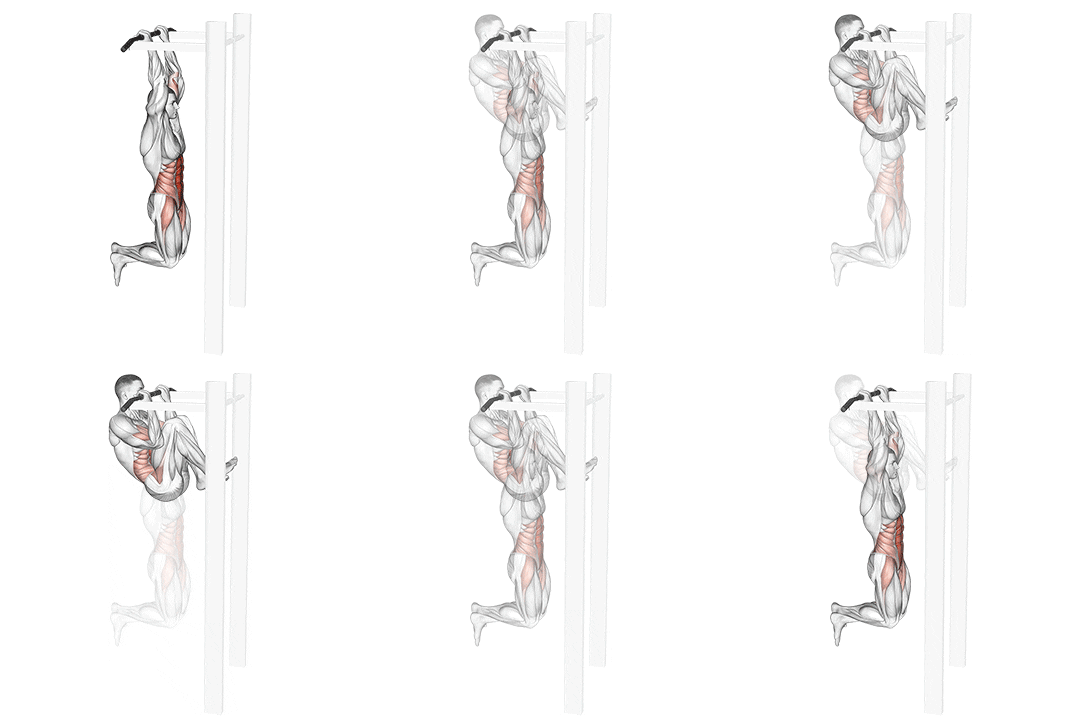
The Gorilla Chin exercise is a variation of the traditional chin-up or pull-up exercise. It targets the muscles of the upper body, particularly the back, biceps, and shoulders. The exercise involves a dynamic movement where the body is lifted towards the bar while simultaneously performing a knee raise. This exercise helps to build upper body strength, improve grip strength, and engage the core muscles. ## Instructions Here are the step-by-step instructions for performing the Gorilla Chin exercise correctly: 1. Stand in front of a pull-up bar or chin-up bar. Position your hands shoulder-width apart on the bar using an underhand grip (palms facing towards you). 2. Hang from the bar with your arms fully extended and your feet off the ground. Engage your core muscles to maintain stability. 3. Begin the exercise by pulling your body upward towards the bar, bending your elbows and keeping them close to your sides. Focus on using your back and biceps muscles to initiate the movement. 4. As you pull yourself up, simultaneously lift your knees towards your chest, bringing them up as high as possible. 5. Continue pulling until your chin is above the bar and your knees are in their highest position. 6. Hold this position briefly, squeezing your back muscles and engaging your core. 7. Slowly lower your body back down to the starting position, extending your arms fully and lowering your knees. 8. Repeat the exercise for the desired number of repetitions. ## Variations Here are some variations or modifications you can consider for the Gorilla Chin exercise: 1. Assisted Gorilla Chin: If you're unable to perform the exercise with your bodyweight, you can use a resistance band for assistance. Loop the band around the bar and place one foot or knee in the band to provide support. 2. Weighted Gorilla Chin: Once you have mastered the bodyweight version, you can add additional resistance by using a weight belt or holding a dumbbell between your feet. ## Muscles Worked The Gorilla Chin primarily targets the following muscles: 1. Latissimus dorsi (lats) 2. Biceps brachii (biceps) 3. Rhomboids 4. Trapezius (upper and middle fibers) 5. Deltoids (shoulders) 6. Rectus abdominis (abs) and other core muscles (during knee raise) ## Common Mistakes Here are some common mistakes people make while performing the Gorilla Chin exercise and how to avoid them: 1. Lack of control: Maintain control throughout the exercise and avoid using momentum to swing or jerk the body. Focus on a controlled and smooth movement. 2. Rounded shoulders: Keep your shoulders pulled back and down throughout the movement. Avoid hunching or shrugging the shoulders. 3. Insufficient range of motion: Aim to bring your chin above the bar and lift your knees as high as possible during the knee raise. Avoid partial repetitions and strive for a full range of motion. 4. Overarching the lower back: Engage your core muscles to maintain a neutral spine position. Avoid excessive arching of the lower back during the knee raise. ## Safety Precautions To ensure safety while performing the Gorilla Chin exercise, consider the following precautions: 1. Use a secure and stable pull-up bar or chin-up bar that can support your bodyweight. 2. If you have any existing shoulder or back injuries, consult with a healthcare professional before attempting the exercise. 3. Start with a level of difficulty that is appropriate for your fitness level and gradually progress as you become stronger. 4. Maintain proper form and technique throughout the exercise to minimize the risk of injury. 5. Listen to your body and avoid pushing through sharp or severe pain. Discontinue the
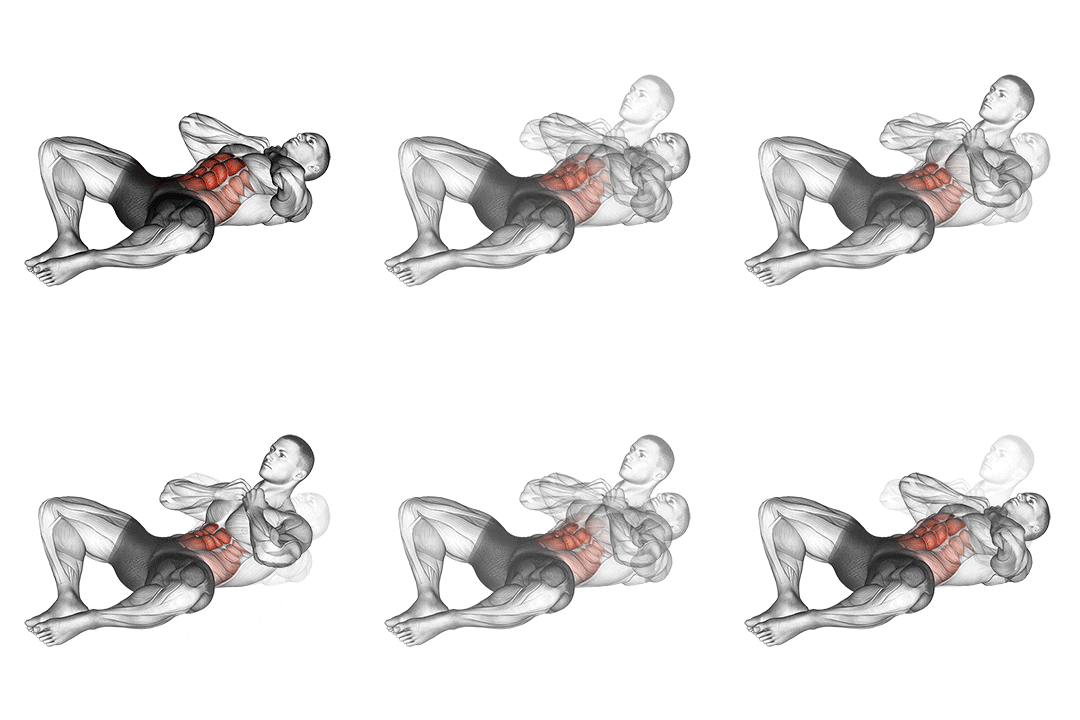
The Groin Crunch exercise is designed to target the muscles of the inner thighs, also known as the groin muscles or adductor muscles. This exercise helps strengthen and tone the adductor muscles, improve flexibility in the groin area, and enhance overall lower body stability. It can be beneficial for athletes involved in sports that require lateral movements or individuals looking to tone and strengthen their inner thigh muscles. ## Instructions Here are the step-by-step instructions for performing the Groin Crunch exercise correctly: 1. Start by lying flat on your back on a mat or the floor. Bend your knees and place the soles of your feet together, allowing your knees to fall out to the sides. This is the starting position. 2. Engage your core muscles by drawing your belly button in towards your spine. Keep your back flat against the floor throughout the exercise. 3. Inhale and exhale as you lift your feet off the ground, bringing your knees towards your chest. As you do this, contract your inner thigh muscles to initiate the movement. 4. At the top of the movement, squeeze your inner thighs together and hold the contraction for a moment. 5. In a controlled manner, slowly lower your feet back to the starting position, allowing your knees to fall out to the sides. 6. Repeat the exercise for the desired number of repetitions. ## Variations Here are some variations or modifications you can consider for the Groin Crunch exercise: 1. Weighted Groin Crunch: Hold a dumbbell or a medicine ball between your feet to add resistance and increase the challenge. 2. Resistance Band Groin Crunch: Place a resistance band around your thighs, just above the knees, and perform the exercise while maintaining tension on the band. ## Muscles Worked The Groin Crunch primarily targets the following muscles: 1. Adductor muscles (inner thighs) 2. Rectus abdominis (abs) and other core muscles (stabilization) ## Common Mistakes Here are some common mistakes people make while performing the Groin Crunch exercise and how to avoid them: 1. Using momentum: Avoid swinging or using momentum to lift your feet. Focus on controlled movements and engage the inner thigh muscles to initiate the movement. 2. Straining the neck: Keep your neck relaxed and avoid pulling on it with your hands. Let your core and inner thigh muscles do the work. 3. Lifting the lower back: Keep your lower back flat against the floor throughout the exercise. Avoid arching or lifting the lower back off the ground. 4. Not engaging the inner thigh muscles: Focus on contracting and squeezing the inner thigh muscles as you lift your feet. Visualize bringing your knees towards your chest using the inner thigh muscles. ## Safety Precautions To ensure safety while performing the Groin Crunch exercise, consider the following precautions: 1. If you have any pre-existing groin or hip injuries, consult with a healthcare professional before attempting this exercise. 2. Start with a range of motion that is comfortable for you. As you become more flexible and stronger, gradually increase the range of motion. 3. Avoid pushing yourself to the point of pain or discomfort. Listen to your body and stop if you experience sharp or severe pain. 4. Use a padded mat or cushion to provide support and comfort for your lower back during the exercise. 5. If you experience any unusual pain or discomfort, discontinue the exercise and consult with a healthcare professional.