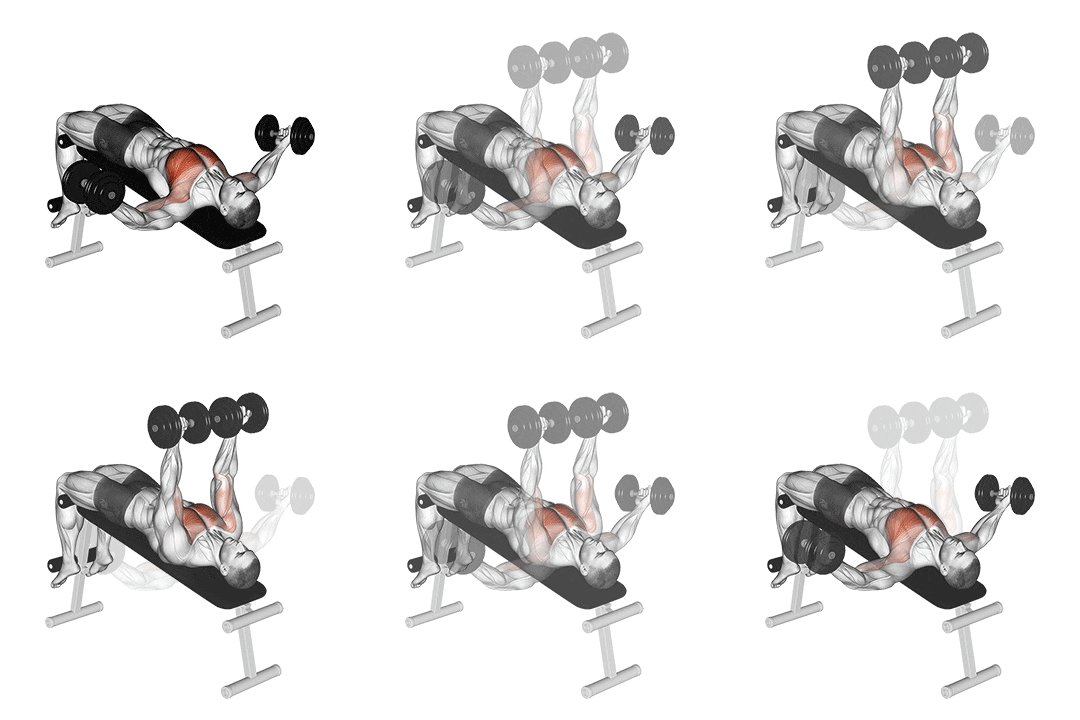
The Dumbbell Decline Twist Fly is an exercise that targets the chest muscles, particularly the pectoralis major. It involves a combination of a traditional chest fly motion and a twisting motion, which helps engage the muscles from different angles. This exercise promotes chest muscle development and enhances shoulder stability. ## Instructions 1. Set up a decline bench at an angle of approximately 30-45 degrees. 2. Sit on the decline bench with your back flat against the pad and your feet secured under the leg support. 3. Hold a dumbbell in each hand with a neutral grip (palms facing each other) and extend your arms straight up above your chest. 4. While exhaling, lower the dumbbells out to the sides in a controlled manner, maintaining a slight bend in your elbows. 5. Simultaneously, twist your wrists inward so that your palms face your feet. 6. Continue lowering the dumbbells until you feel a stretch in your chest. 7. While inhaling, reverse the motion by bringing your arms back up and returning to the starting position, keeping the twist in your wrists. 8. Repeat the movement for the desired number of repetitions. ## Variations - Beginners: If you're new to this exercise or have limited strength, you can start with lighter dumbbells or perform the exercise without weights until you feel comfortable with the movement. - Advanced: For an added challenge, you can use heavier dumbbells or increase the number of sets and repetitions. - Alternating Twist Fly: Instead of performing the exercise with both arms simultaneously, you can alternate the twisting fly motion between each arm. ## Muscles Worked The Dumbbell Decline Twist Fly primarily targets: - Pectoralis major (chest muscles) ## Common Mistakes - Using excessive weight: It's important to choose a weight that allows you to maintain proper form and control throughout the exercise. Using weights that are too heavy can compromise your technique and increase the risk of injury. - Flaring the elbows: Keep your elbows slightly bent and avoid allowing them to flare out excessively. This helps maintain tension in the chest muscles and minimizes stress on the shoulder joints. - Overarching the lower back: Maintain a stable and neutral position with your lower back against the bench. Avoid excessive arching, as it can strain the lower back and reduce the effectiveness of the exercise. - Rounding the shoulders: Keep your shoulders back and down throughout the exercise. Avoid allowing your shoulders to hunch forward, as it can lead to poor posture and decreased muscle engagement. ## Safety Precautions - Prior to performing this exercise, ensure that you have no pre-existing conditions or injuries that may be aggravated by the movement. If you're uncertain, consult with a qualified fitness professional or healthcare provider. - Use a spotter if necessary, especially when using heavy weights or if you're new to the exercise. - Maintain proper form throughout the exercise to minimize the risk of injury. - If you experience any pain or discomfort, stop the exercise and seek advice from a healthcare professional.
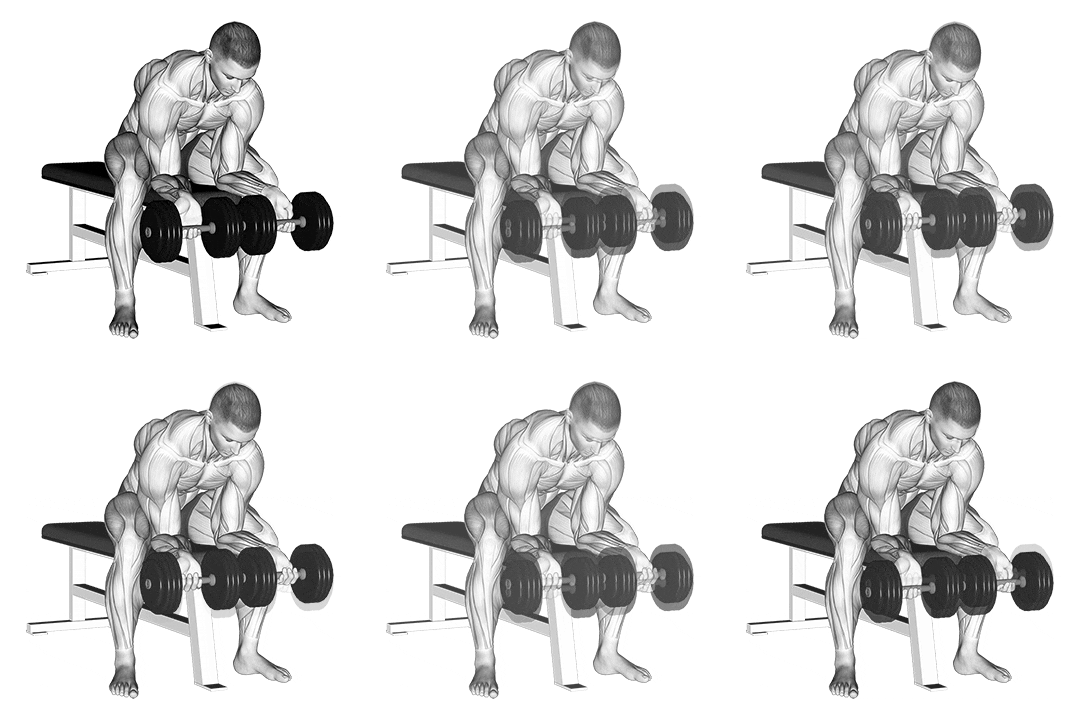
Dumbbell finger curls are an exercise that specifically targets the muscles of the forearm, including the flexor muscles in the lower arm. This exercise involves gripping a dumbbell and curling it using only your fingers and wrists. It helps to improve grip strength, forearm strength, and coordination. ## Instructions 1. Stand or sit on a bench with your feet flat on the floor, maintaining proper posture. 2. Hold a dumbbell in your hand with an underhand grip (palms facing upward) and let it hang down in front of you. 3. Your fingers should be fully extended and positioned around the dumbbell handle. 4. While exhaling, curl your fingers and wrap them around the dumbbell handle, squeezing it tightly. 5. Continue curling the fingers until the dumbbell is fully gripped, holding it securely in your hand. 6. Hold the fully curled position for a moment, focusing on feeling the engagement in your fingers and forearms. 7. While inhaling, gradually release your grip and extend your fingers, allowing the dumbbell to return to the starting position. 8. Repeat the movement for the desired number of repetitions. 9. After completing the set, switch to the other hand and repeat the exercise. ## Variations - Variation 1: If you don't have access to dumbbells, you can use other objects with weight, such as a barbell, kettlebell, or even a weighted plate. - Variation 2: To increase the challenge, you can use a thicker grip attachment or wrap a towel around the dumbbell handle to create a thicker grip. This variation will further engage the muscles of the forearms and improve grip strength. ## Muscles Worked The Dumbbell Finger Curls primarily target: - Forearm flexor muscles ## Common Mistakes - Gripping too tightly: Avoid gripping the dumbbell excessively tight, as this may lead to excessive tension or strain in the forearm muscles. Maintain a firm but comfortable grip throughout the exercise. - Relying on the wrist: The primary movement should come from the fingers, not the wrist. Keep your wrist relatively stable and focus on curling your fingers to lift and lower the dumbbell. - Using excessive weight: Start with a weight that allows you to maintain proper form and control throughout the exercise. Using weights that are too heavy can compromise your technique and increase the risk of injury. - Neglecting full range of motion: Ensure that you fully extend your fingers at the starting position and fully curl them to grip the dumbbell. Avoid shortening the range of motion by only partially curling the fingers. ## Safety Precautions - Begin with a lighter weight to allow your fingers and forearms to adapt to the exercise. Gradually increase the weight as your grip strength improves. - Pay attention to your hand and wrist positioning to avoid any discomfort or pain. If you experience any pain, modify the exercise or consult with a healthcare professional. - Maintain proper form throughout the exercise to minimize the risk of injury. - If you have any pre-existing conditions or injuries in your hands, wrists, or forearms, consult with a qualified fitness professional or healthcare provider before performing this exercise.
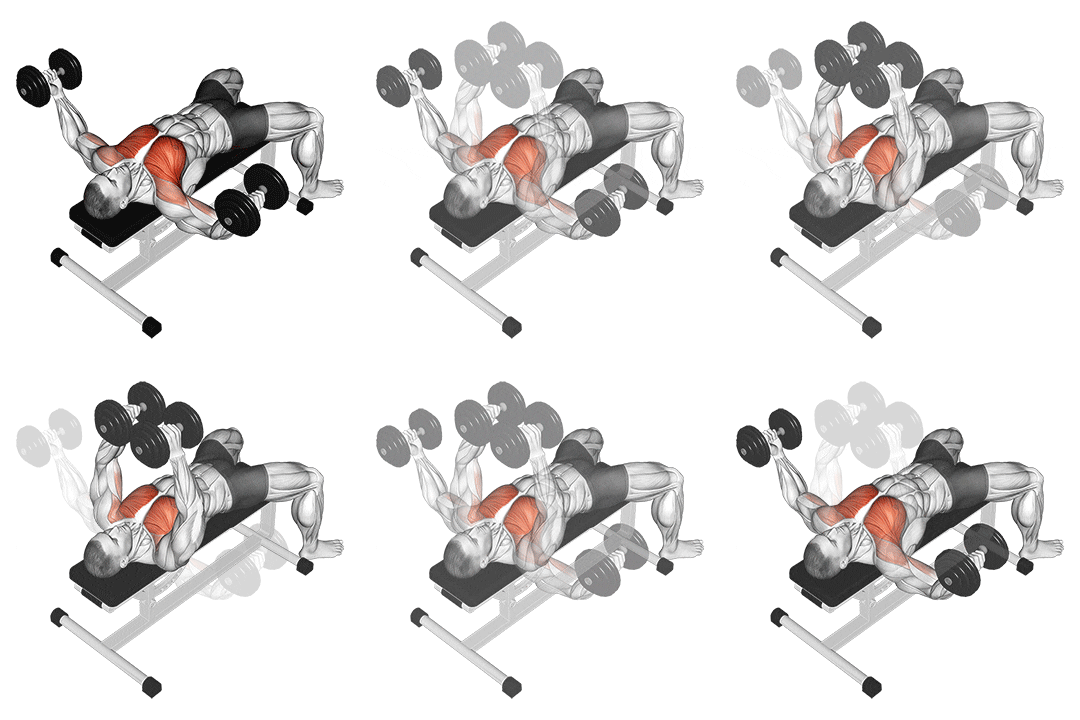
The Dumbbell Fly is an exercise that primarily targets the chest muscles, specifically the pectoralis major. It involves a horizontal adduction movement, where the arms are brought together against resistance. This exercise helps in developing and strengthening the chest muscles, enhancing upper body aesthetics and functional strength. ## Instructions 1. Lie flat on a bench with your feet planted firmly on the ground. 2. Hold a dumbbell in each hand with a neutral grip (palms facing each other) and extend your arms directly above your chest. 3. Bend your elbows slightly to maintain a slight bend throughout the movement. 4. While exhaling, lower the dumbbells out to the sides in a wide arc, maintaining control and feeling a stretch in your chest muscles. 5. Continue lowering the dumbbells until your arms are parallel to the ground or until you feel a comfortable stretch in your chest. 6. While inhaling, reverse the motion by squeezing your chest muscles and bringing the dumbbells back up to the starting position. 7. Keep a controlled pace throughout the exercise, focusing on feeling the contraction in your chest muscles. 8. Repeat the movement for the desired number of repetitions. ## Variations - Incline Dumbbell Fly: Perform the dumbbell fly on an incline bench instead of a flat bench. This variation emphasizes the upper chest muscles. - Decline Dumbbell Fly: Perform the dumbbell fly on a decline bench to target the lower chest muscles. - Alternating Dumbbell Fly: Instead of performing the exercise with both arms simultaneously, you can alternate the fly motion between each arm. ## Muscles Worked The Dumbbell Fly primarily targets: - Pectoralis major (chest muscles) - Anterior deltoids (front shoulders) - Serratus anterior (stabilizing muscles under the chest) ## Common Mistakes - Using excessive weight: Select a weight that allows you to maintain proper form and control throughout the exercise. Using weights that are too heavy can compromise your technique and increase the risk of injury. - Flaring the elbows: Keep your elbows slightly bent and avoid allowing them to flare out excessively. This helps maintain tension in the chest muscles and minimizes stress on the shoulder joints. - Overarching the lower back: Maintain a stable and neutral position with your lower back against the bench. Avoid excessive arching, as it can strain the lower back and reduce the effectiveness of the exercise. - Rounding the shoulders: Keep your shoulders back and down throughout the exercise. Avoid allowing your shoulders to hunch forward, as it can lead to poor posture and decreased muscle engagement. ## Safety Precautions - Prior to performing this exercise, ensure that you have no pre-existing conditions or injuries that may be aggravated by the movement. If you're uncertain, consult with a qualified fitness professional or healthcare provider. - Use a spotter if necessary, especially when using heavy weights or if you're new to the exercise. - Maintain proper form throughout the exercise to minimize the risk of injury. - If you experience any pain or discomfort, stop the exercise and seek advice from a healthcare professional.
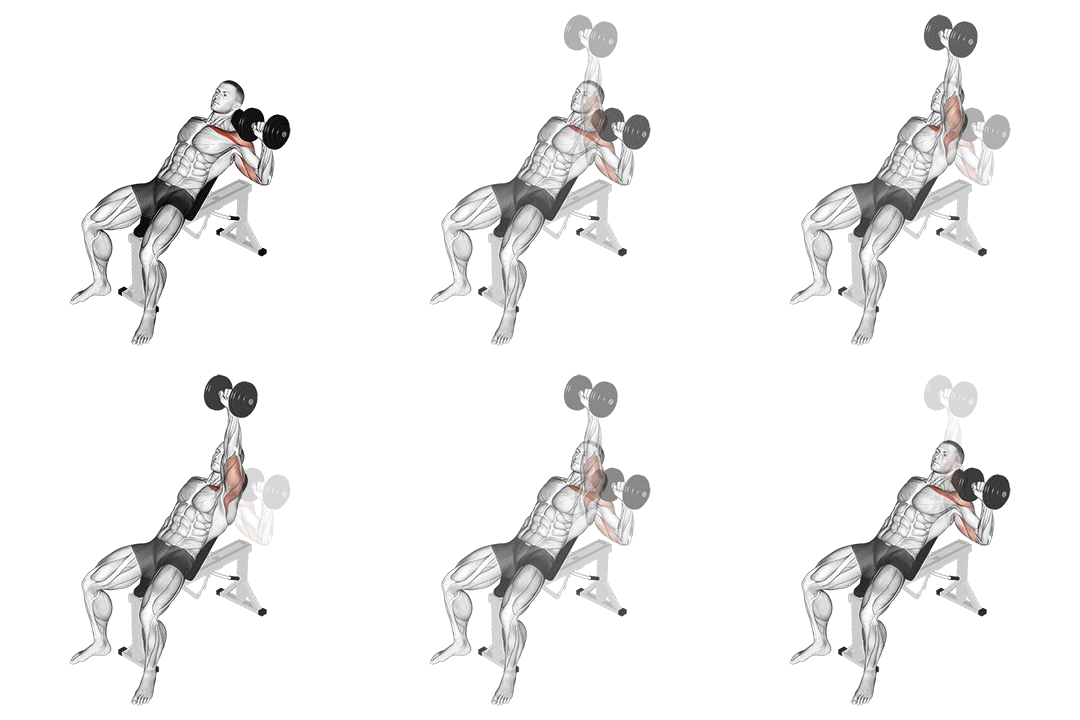
The dumbbell incline one arm press is an exercise that primarily targets the chest muscles, particularly the pectoralis major, while also engaging the shoulders and triceps. This exercise helps to develop upper body strength and size, focusing on the upper and middle regions of the chest. ## Instructions 1. Adjust an incline bench to a 45-degree angle and grab a dumbbell in one hand. 2. Sit on the incline bench with your back pressed firmly against it. Plant your feet flat on the floor for stability. 3. Hold the dumbbell with a pronated grip (palm facing forward) at shoulder level, with your elbow bent and your upper arm parallel to the floor. 4. Press the dumbbell upward, extending your arm fully while maintaining control. 5. Pause briefly at the top of the movement when your arm is fully extended but without locking the elbow joint. 6. Slowly lower the dumbbell back to the starting position, maintaining control throughout the movement. 7. Repeat the exercise for the desired number of repetitions on one arm before switching to the other arm. ## Variations - If you're new to this exercise or have limited strength, you can start with a lighter dumbbell or use resistance bands instead. - To increase the challenge, you can use a heavier dumbbell or increase the incline of the bench. - Another variation is to perform the exercise with both arms simultaneously, using dumbbells of equal weight. ## Muscles Worked - Primary muscles: Pectoralis major (chest) - Secondary muscles: Anterior deltoids (front shoulders), triceps ## Common Mistakes - Using excessive weight: It's important to choose a weight that allows you to maintain proper form and control throughout the exercise. Using too heavy of a weight can compromise your stability and increase the risk of injury. - Flaring the elbows: Keep your elbows slightly tucked in toward your body throughout the movement to emphasize the chest muscles and avoid unnecessary strain on the shoulders. - Arching the back: Maintain a stable and neutral spine position by keeping your back pressed against the incline bench and avoiding excessive arching. ## Safety Precautions - Warm up adequately before starting the exercise to prepare your muscles for the movement. - Maintain proper form throughout the exercise, keeping your back firmly pressed against the incline bench and avoiding excessive arching. - Use a spotter if necessary, especially when using heavy weights or performing the exercise with both arms simultaneously. - If you have any pre-existing shoulder or chest injuries, consult with a healthcare professional or fitness expert before attempting this exercise.
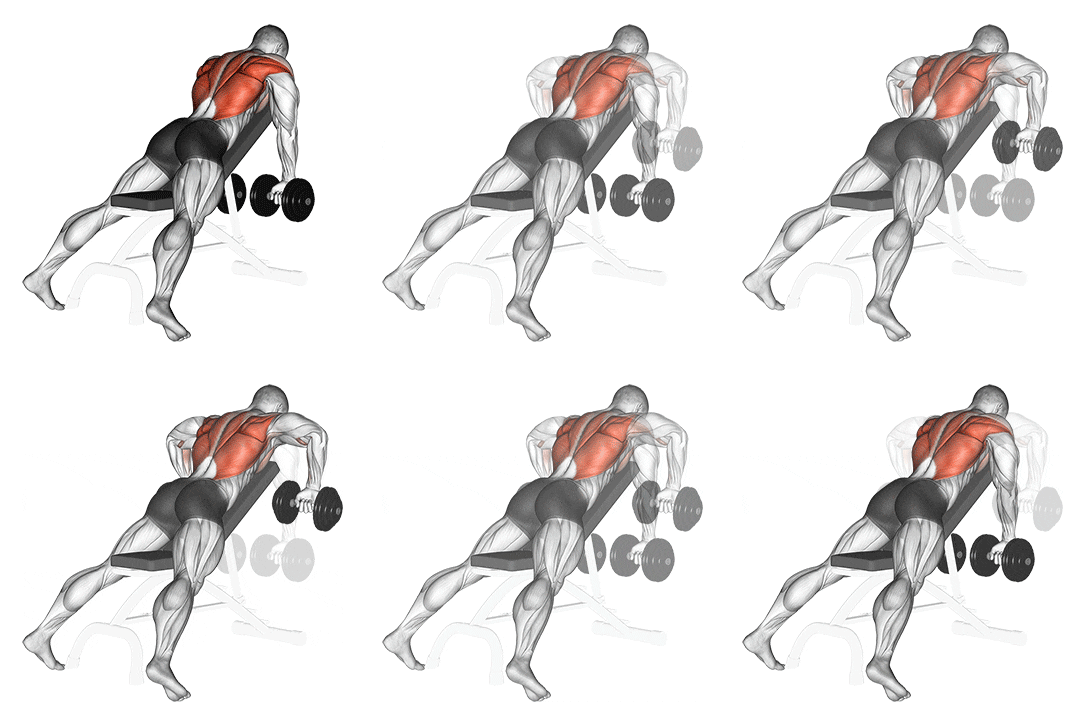
The dumbbell incline row is an upper body exercise that primarily targets the muscles in your back, specifically the latissimus dorsi (lats), rhomboids, and middle trapezius. It also engages the biceps, rear deltoids, and the muscles of your core. This exercise is great for building upper body strength, improving posture, and enhancing pulling movements. ## Instructions 1. Set up an incline bench at a 45-degree angle and place a pair of dumbbells on the floor at the foot of the bench. 2. Position yourself face down on the bench with your chest resting against the incline and your feet firmly on the floor. 3. Reach forward and grab the dumbbells with an overhand grip. Your hands should be slightly wider than shoulder-width apart. 4. Brace your core, retract your shoulder blades, and pull the dumbbells up towards your chest, keeping your elbows close to your body. Focus on squeezing your back muscles at the top of the movement. 5. Slowly lower the dumbbells back to the starting position while maintaining control. 6. Repeat for the desired number of repetitions. ## Variations - **Resistance Band Incline Row**: If you don't have access to dumbbells, you can use resistance bands attached to an anchor point in front of you. Perform the exercise in the same manner, pulling the bands towards your chest. - **Single Arm Dumbbell Incline Row**: Instead of using both dumbbells simultaneously, perform the exercise one arm at a time. This variation increases the stability challenge and allows for a greater focus on each side of the back. - **Supine Grip Incline Row**: Instead of using an overhand grip, use an underhand grip (palms facing up). This variation targets the muscles in the upper back and biceps in a slightly different way. ## Muscles Worked - Latissimus dorsi (lats) - Rhomboids - Middle trapezius - Biceps - Rear deltoids - Core muscles (stabilization) ## Common Mistakes - **Using Momentum**: Avoid using momentum to pull the dumbbells up. Focus on a controlled movement and use your back muscles to perform the exercise. - **Rounding the Shoulders**: Maintain proper posture throughout the movement. Avoid rounding your shoulders forward and keep your chest open. - **Lifting the Hips**: Keep your hips pressed against the bench throughout the exercise. Lifting your hips decreases the effectiveness of the movement and puts unnecessary strain on your lower back. - **Excessive Elbow Flare**: Keep your elbows close to your body throughout the movement. Allowing your elbows to flare out reduces the engagement of the targeted muscles. ## Safety Precautions - Choose an appropriate weight that challenges you but still allows you to maintain proper form. - If you have lower back issues, it's recommended to consult with a healthcare professional before performing this exercise. - If you experience any pain or discomfort during the exercise, stop immediately and seek guidance from a qualified fitness professional.
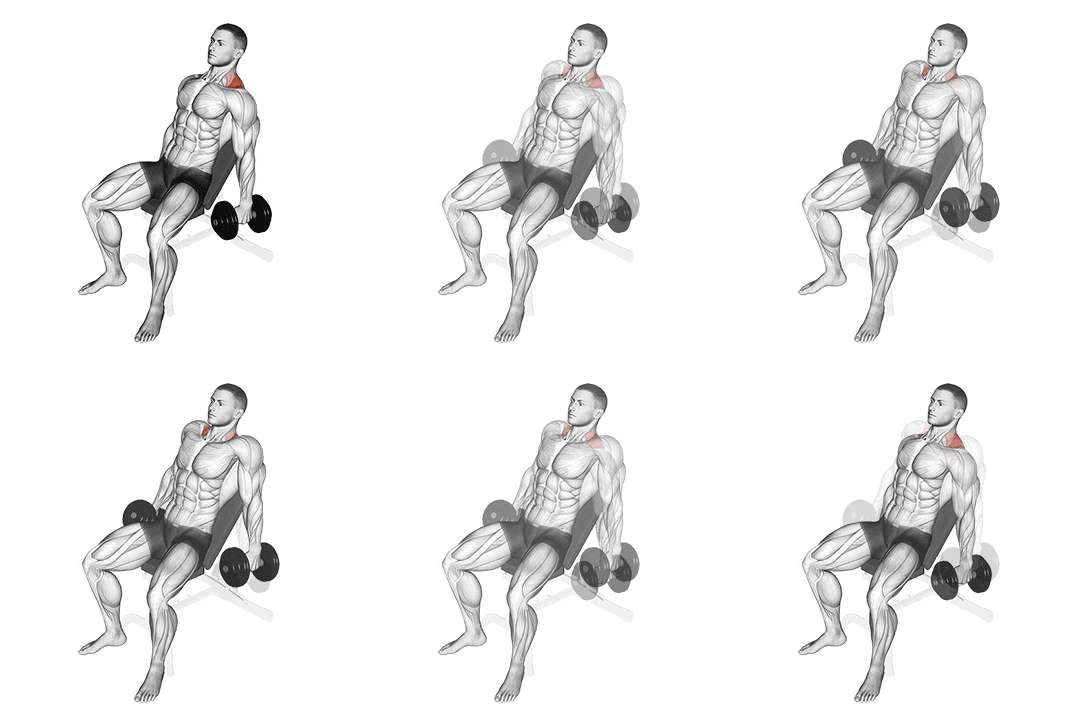
The dumbbell incline shrug is an exercise that targets the upper trapezius muscles in your upper back and shoulders. It involves lifting and shrugging your shoulders while positioned on an incline bench. This exercise helps to strengthen and develop the muscles responsible for shoulder elevation and scapular retraction. ## Instructions 1. Set up an incline bench at a 45-degree angle and place a pair of dumbbells on the floor at the foot of the bench. 2. Sit on the incline bench with your chest against the incline and your feet flat on the floor. 3. Reach forward and grab the dumbbells with an overhand grip, palms facing your body. 4. Allow your arms to hang straight down towards the floor, keeping a slight bend in your elbows. 5. Keeping your back straight and your chest against the incline, lift your shoulders as high as possible by shrugging them towards your ears. Hold the contraction for a brief pause. 6. Lower your shoulders back down to the starting position in a controlled manner. 7. Repeat for the desired number of repetitions. ## Variations - **Seated Dumbbell Shrug**: If you don't have access to an incline bench, you can perform the exercise while seated on a regular bench or chair. The movement remains the same, focusing on shoulder elevation and scapular retraction. - **Barbell Incline Shrug**: Instead of using dumbbells, you can use a barbell for this exercise. Hold the barbell with an overhand grip, allowing it to hang in front of your thighs. Perform the shrugging motion, lifting the barbell towards your ears. ## Muscles Worked - Upper trapezius - Rhomboids - Levator scapulae - Upper back and shoulder muscles ## Common Mistakes - **Using Excessive Weight**: Avoid using weights that are too heavy, as it can compromise your form and lead to potential injury. Focus on using a weight that allows you to perform the exercise with proper technique. - **Rounded Shoulders**: Maintain good posture throughout the movement. Avoid rounding your shoulders forward and keep your chest open. - **Lifting with the Arms**: The movement should primarily come from the shoulders and upper back, not from the arms. Avoid using excessive arm strength to lift the dumbbells. - **Jerking or Bouncing**: Maintain control throughout the exercise. Avoid any sudden or jerky movements and perform the shrugging motion in a smooth and controlled manner. ## Safety Precautions - Start with lighter weights and gradually increase the load as you become more comfortable with the exercise. - If you have any pre-existing shoulder or neck conditions, it's recommended to consult with a healthcare professional before performing this exercise. - Maintain proper form and technique throughout the exercise to avoid strain on your neck and upper back. - If you experience any pain or discomfort during the exercise, stop immediately and seek guidance from a qualified fitness professional.
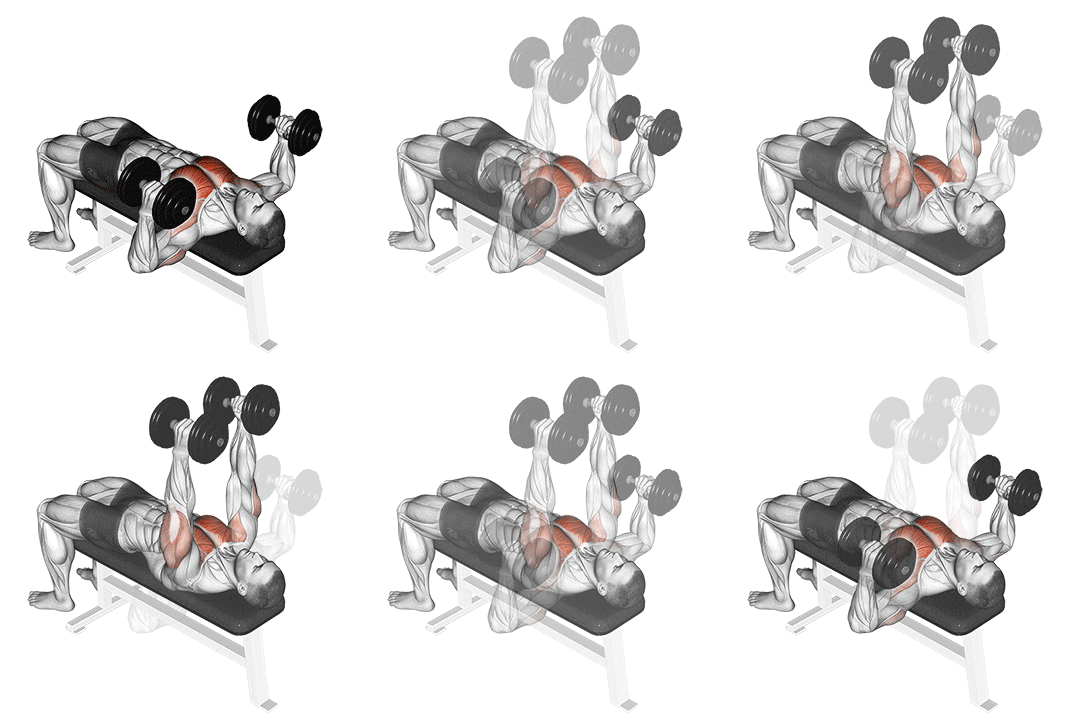
The dumbbell lying hammer press is an exercise that primarily targets the muscles of the chest, shoulders, and triceps. It is a variation of the traditional dumbbell bench press, where the dumbbells are held in a neutral or hammer grip position. This exercise helps develop strength and size in the upper body, particularly the chest and triceps. ## Instructions 1. Lie down on a flat bench with your feet firmly planted on the floor. 2. Hold a dumbbell in each hand with a neutral grip (palms facing each other) and extend your arms straight up over your chest. This is your starting position. 3. Lower the dumbbells slowly and with control, keeping your elbows slightly bent. 4. As you lower the dumbbells, aim to bring them to the sides of your chest while maintaining the neutral grip. 5. Pause for a brief moment when the dumbbells are near your chest. 6. Push the dumbbells back up to the starting position, fully extending your arms without locking out your elbows. 7. Repeat for the desired number of repetitions. ## Variations - **Dumbbell Incline Hammer Press:** Perform the same movement on an incline bench set at a 45-degree angle. This variation targets the upper chest muscles to a greater extent. - **Dumbbell Decline Hammer Press:** Perform the same movement on a decline bench set at a slight downward angle. This variation places more emphasis on the lower chest muscles. - **Alternating Hammer Press:** Instead of pressing both dumbbells simultaneously, alternate pressing one dumbbell up while the other stays lowered. This variation can help improve stability and address muscular imbalances. ## Muscles Worked - Pectoralis major (chest muscles) - Anterior deltoids (front shoulder muscles) - Triceps brachii (back of the upper arm) ## Common Mistakes - **Using excessive weight:** Avoid selecting weights that are too heavy, as it may compromise your form and increase the risk of injury. Start with a weight that allows you to maintain proper technique throughout the exercise. - **Arching the back:** Keep your back flat against the bench and maintain a neutral spine throughout the movement. Avoid excessive arching or lifting the hips off the bench. - **Flaring the elbows:** Keep your elbows at a slight angle (not fully perpendicular to your torso) to reduce strain on the shoulder joints. Avoid letting your elbows flare out to the sides. - **Rushing the movement:** Perform the exercise in a controlled manner, both during the lowering and lifting phases. Avoid using momentum to bounce the weights off your chest. - **Neglecting full range of motion:** Lower the dumbbells until they are close to your chest, aiming for a full range of motion. Avoid stopping short or limiting the depth of the press. ## Safety Precautions - Warm up properly before starting the exercise to prepare your muscles for the workload. - Use a spotter or have someone nearby who can assist you, especially when using heavy weights. - Maintain a stable grip on the dumbbells throughout the exercise to prevent them from slipping. - If you have any pre-existing shoulder or chest injuries, it is advisable to consult with a healthcare professional or a qualified fitness trainer before attempting this exercise. - If you experience any pain or discomfort during the exercise, stop immediately and seek medical advice if needed.
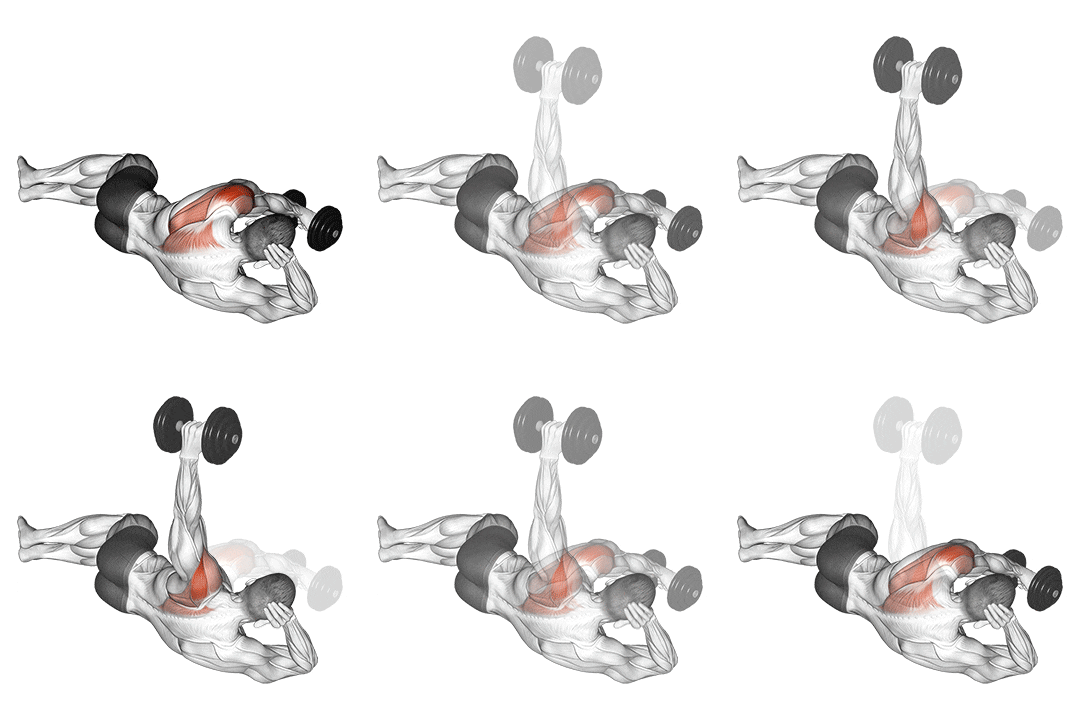
The dumbbell lying on floor rear delt raise is an exercise that primarily targets the rear deltoid muscles, which are located on the backside of the shoulders. This exercise helps strengthen and develop the rear delts, improving shoulder stability and posture. It can also contribute to a well-rounded and balanced shoulder appearance. ## Instructions 1. Start by lying face down on the floor with your legs extended and your forehead resting on the floor. 2. Hold a dumbbell in each hand with a neutral grip (palms facing each other), allowing your arms to hang straight down towards the floor. This is your starting position. 3. Keep your arms straight with a slight bend at the elbows throughout the exercise. 4. Engage your core and glutes to maintain stability throughout the movement. 5. Begin the exercise by simultaneously raising both arms out to the sides, maintaining the same slight bend in the elbows. 6. Continue raising your arms until they are in line with your body or slightly higher, focusing on squeezing your shoulder blades together. 7. Hold the contracted position for a brief moment, then slowly lower the dumbbells back to the starting position. 8. Repeat for the desired number of repetitions. ## Variations - **Seated Bent-Over Rear Delt Raise:** Instead of lying on the floor, sit on a bench with your feet flat on the floor. Bend forward at the waist, keeping your back straight, and perform the same movement pattern with dumbbells. - **Resistance Band Rear Delt Raise:** If you don't have dumbbells, you can use resistance bands. Step on the middle of the band with both feet and grasp the handles. Perform the exercise by following the same movement pattern as described above. ## Muscles Worked - Rear deltoids (posterior deltoids) - Upper back muscles (rhomboids, trapezius) ## Common Mistakes - **Using excessive weight:** It's important to select a weight that allows you to maintain proper form and control throughout the exercise. Avoid using weights that are too heavy, as it can lead to improper technique and potential injury. - **Raising the arms too high:** Avoid lifting your arms too high or going beyond the line of your body. Aim to raise your arms until they are in line with your body or slightly higher, focusing on contracting the rear deltoids. - **Using momentum:** Perform the exercise in a controlled manner, using your rear deltoids to lift the dumbbells. Avoid using momentum or swinging your body to raise the weights. - **Neglecting scapular retraction:** Focus on squeezing your shoulder blades together as you raise your arms, emphasizing the contraction of the rear deltoids and upper back muscles. - **Allowing the head to lift:** Keep your forehead resting on the floor throughout the exercise. Avoid lifting your head or straining your neck. ## Safety Precautions - Start with lighter weights and gradually increase the resistance as your strength and technique improve. - If you have any pre-existing shoulder or back injuries, it is advisable to consult with a healthcare professional or a qualified fitness trainer before attempting this exercise. - Maintain proper breathing throughout the exercise. Breathe out as you raise your arms and breathe in as you lower them. - If you experience any pain or discomfort during the exercise, stop immediately and seek medical advice if needed.
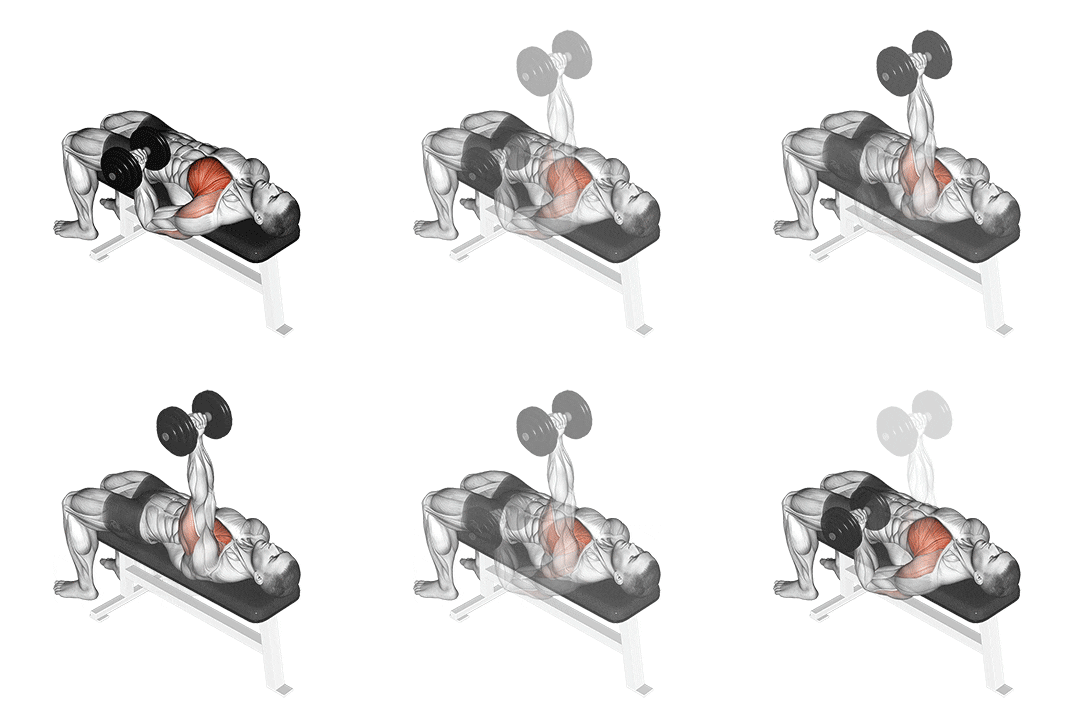
The dumbbell lying one arm press V.2 is an exercise that targets the muscles of the chest, shoulders, and triceps. It is a unilateral exercise, meaning it is performed one arm at a time, which helps address muscle imbalances and engage the stabilizer muscles. This exercise contributes to overall upper body strength and development. ## Instructions 1. Start by lying down on a flat bench with your knees bent and your feet firmly planted on the floor. 2. Hold a dumbbell in one hand with an overhand grip (palm facing away from your body). This is your starting position. 3. Extend your arm upward, pressing the dumbbell towards the ceiling while maintaining control. 4. Keep your elbow slightly bent throughout the movement to engage the targeted muscles. 5. Pause briefly when your arm is fully extended. 6. Slowly lower the dumbbell back to the starting position, maintaining control and resisting the weight. 7. Complete the desired number of repetitions with one arm, then switch to the other arm and repeat the exercise. ## Variations - **Dumbbell Lying Two-Arm Press:** Instead of performing the exercise one arm at a time, you can perform it with both arms simultaneously. This variation allows for increased stability and potentially allows you to lift heavier weights. - **Dumbbell Lying Floor Press:** If you prefer a different exercise that targets similar muscles, you can perform the dumbbell lying floor press. In this exercise, you lie on the floor with both arms, and then press the dumbbells upward while keeping your elbows in contact with the floor. ## Muscles Worked - Pectoralis major (chest muscles) - Anterior deltoids (front shoulder muscles) - Triceps brachii (back of the upper arm) ## Common Mistakes - **Using excessive weight:** Select a weight that allows you to maintain proper form and control throughout the exercise. Using weights that are too heavy can compromise your technique and increase the risk of injury. - **Arching the back:** Keep your back flat against the bench and maintain a neutral spine throughout the movement. Avoid excessive arching or lifting the hips off the bench. - **Flaring the elbow:** Keep your elbow slightly bent throughout the movement and avoid letting it flare out to the side. This helps maintain proper form and reduces stress on the shoulder joint. - **Rushing the movement:** Perform the exercise in a slow and controlled manner, both during the pressing and lowering phases. Avoid using momentum or jerking motions to lift the weight. - **Neglecting stability:** Engage your core and maintain stability throughout the exercise. Avoid excessive twisting or shifting of the torso. ## Safety Precautions - Warm up properly before starting the exercise to prepare your muscles for the workload. - If you have any pre-existing shoulder or chest injuries, it is advisable to consult with a healthcare professional or a qualified fitness trainer before attempting this exercise. - Use a weight that you can comfortably handle with proper form and control. - If you experience any pain or discomfort during the exercise, stop immediately and seek medical advice if needed.