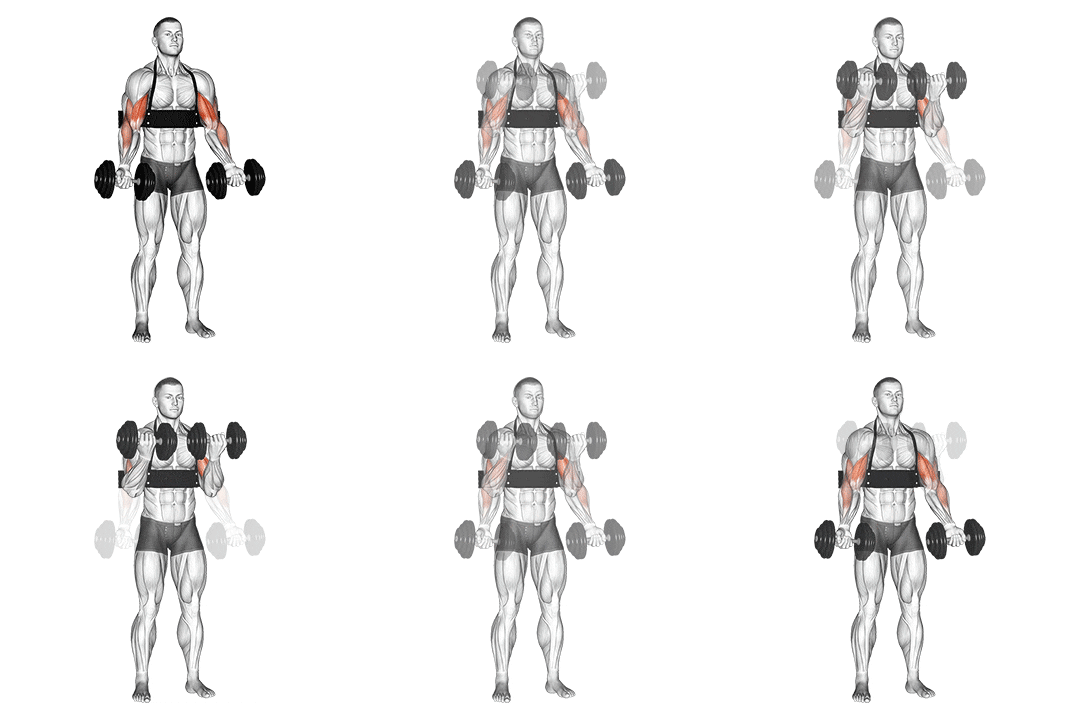
The dumbbell biceps curl with an arm blaster is a variation of the traditional dumbbell biceps curl exercise. The arm blaster is a supportive device that helps stabilize the upper arms, isolating the biceps and reducing the involvement of other muscles. This exercise primarily targets the biceps brachii muscles, providing a focused and intense workout to build strength and size in the arms. ## Instructions 1. Attach the arm blaster securely around your upper arms, just above the elbows. 2. Stand up straight with a dumbbell in each hand, palms facing forward. Keep your feet shoulder-width apart. 3. Relax your shoulders and maintain a neutral spine throughout the exercise. 4. Engage your core muscles for stability. 5. Start with your arms fully extended, allowing the dumbbells to hang by your sides. 6. Keeping your upper arms stationary due to the arm blaster's support, exhale and slowly curl the dumbbells towards your shoulders by flexing your elbows. Focus on contracting your biceps. 7. Continue the movement until the dumbbells are at shoulder level or until you can no longer maintain proper form. 8. Hold the contracted position for a brief pause, squeezing your biceps. 9. Inhale and gradually lower the dumbbells back to the starting position while maintaining control. 10. Repeat the desired number of repetitions. ## Variations The dumbbell biceps curl with an arm blaster does not offer many variations. However, you can adjust the weight of the dumbbells to cater to your fitness level. ## Muscles Worked The main muscles targeted during the dumbbell biceps curl with an arm blaster are: - Biceps brachii (brachialis and brachioradialis to a lesser extent) ## Common Mistakes - Rounding the back: Keep your back straight and avoid hunching or rounding your shoulders during the movement. - Using momentum: Avoid swinging or using excessive body movement to lift the dumbbells. Maintain strict control throughout the exercise. - Lifting too heavy: Start with a weight that allows you to maintain proper form and gradually increase the weight as you become stronger. - Allowing the elbows to move forward: Keep your upper arms stationary due to the arm blaster's support and only use your elbows to flex and extend during the exercise. ## Safety Precautions - Ensure that the arm blaster is properly secured and fits comfortably around your upper arms to avoid discomfort or potential injury. - Start with a proper warm-up to prepare your muscles for the exercise. - Use an appropriate weight that challenges your muscles but allows you to maintain proper form. - If you have any pre-existing conditions or injuries, consult with a healthcare professional before attempting this exercise. - If you experience pain or discomfort, stop the exercise and seek guidance from a fitness professional. - Maintain control throughout the movement and avoid jerking or sudden movements that can strain your muscles or joints. - Stay hydrated and breathe naturally throughout the exercise.
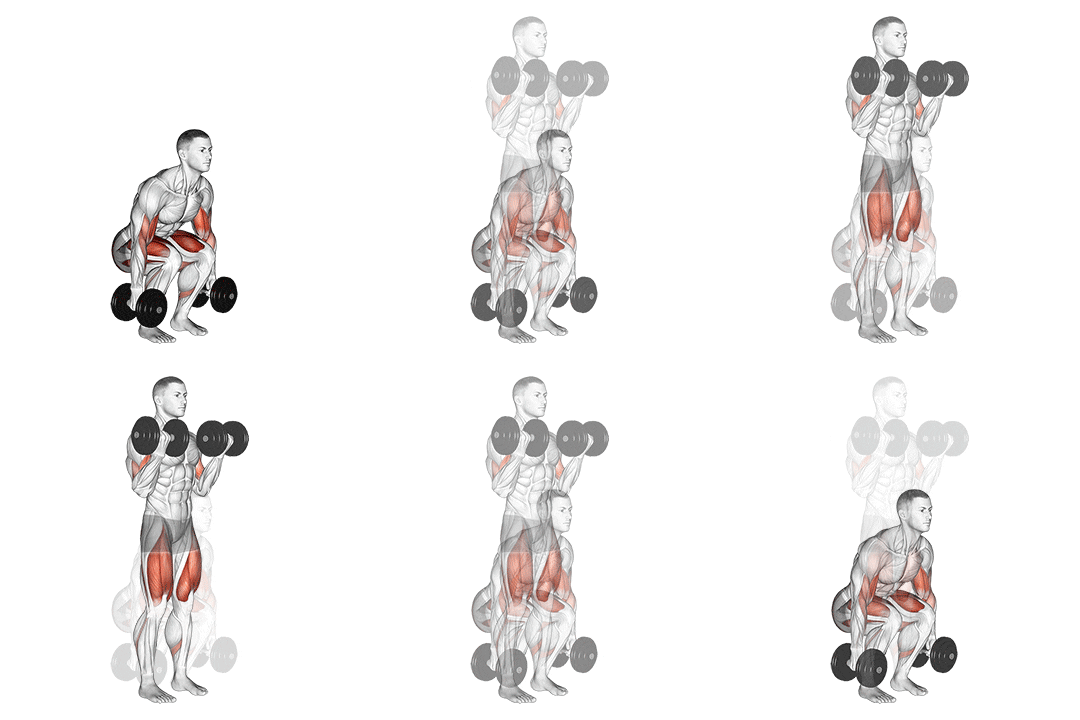
The dumbbell biceps curl squat is a compound exercise that combines the biceps curl with a squat movement. It targets both the biceps and lower body muscles, providing a comprehensive workout. This exercise helps improve overall strength, muscle coordination, and functional fitness. ## Instructions 1. Stand up straight with a dumbbell in each hand, palms facing forward. Keep your feet shoulder-width apart. 2. Relax your shoulders and maintain a neutral spine throughout the exercise. 3. Engage your core muscles for stability. 4. Start with your arms fully extended, allowing the dumbbells to hang by your sides. 5. Lower yourself into a squat position by bending your knees and hips, as if sitting back into a chair. Keep your chest lifted and back straight. 6. As you begin to rise from the squat position, exhale and perform a biceps curl. Flex your elbows and bring the dumbbells towards your shoulders. 7. Continue the squat movement until you reach a fully upright position while simultaneously completing the biceps curl. 8. Hold the contracted position for a brief pause, squeezing your biceps and maintaining balance. 9. Inhale and lower the dumbbells back to the starting position while simultaneously descending into another squat. 10. Repeat the exercise for the desired number of repetitions. ## Variations - Biceps Curl Squat with Alternating Arms: Instead of performing a simultaneous biceps curl with both arms, alternate the curls by lifting one dumbbell at a time while performing the squat. - Goblet Biceps Curl Squat: Hold a single dumbbell vertically against your chest with both hands (palms facing upward). Perform the squat while keeping the dumbbell close to your body. As you rise from the squat, perform a biceps curl with the dumbbell. - Barbell Biceps Curl Squat: Use a barbell instead of dumbbells. Hold the barbell with an underhand grip (palms facing upward) and rest it in front of your thighs. Perform the squat while holding the barbell, and as you rise, curl the barbell towards your shoulders. ## Muscles Worked The main muscles targeted during the dumbbell biceps curl squat are: - Biceps brachii (brachialis and brachioradialis to a lesser extent) - Quadriceps - Hamstrings - Glutes - Calves - Core muscles for stabilization ## Common Mistakes - Leaning too far forward: Maintain an upright posture and avoid leaning excessively forward during the squat portion of the exercise. - Using momentum: Control the movement throughout the exercise, especially during the biceps curl. Avoid swinging the dumbbells or using momentum to lift the weights. - Rounding the back: Keep your back straight and avoid hunching or rounding your shoulders during the movement. - Lifting too heavy: Choose a weight that allows you to maintain proper form and perform the exercise with control and stability. ## Safety Precautions - Start with a proper warm-up to prepare your muscles for the exercise. - Use an appropriate weight that challenges your muscles but allows you to maintain proper form. - If you have any pre-existing conditions or injuries, consult with a healthcare professional before attempting this exercise. - Ensure that your knees are in line with your toes during the squat and avoid excessive inward or outward movement. - Maintain control throughout the movement and avoid jerking or sudden movements that can strain your muscles or joints. - If you experience pain or discomfort, stop the exercise and seek guidance from a fitness professional. - Stay hydrated and breathe naturally throughout the exercise.
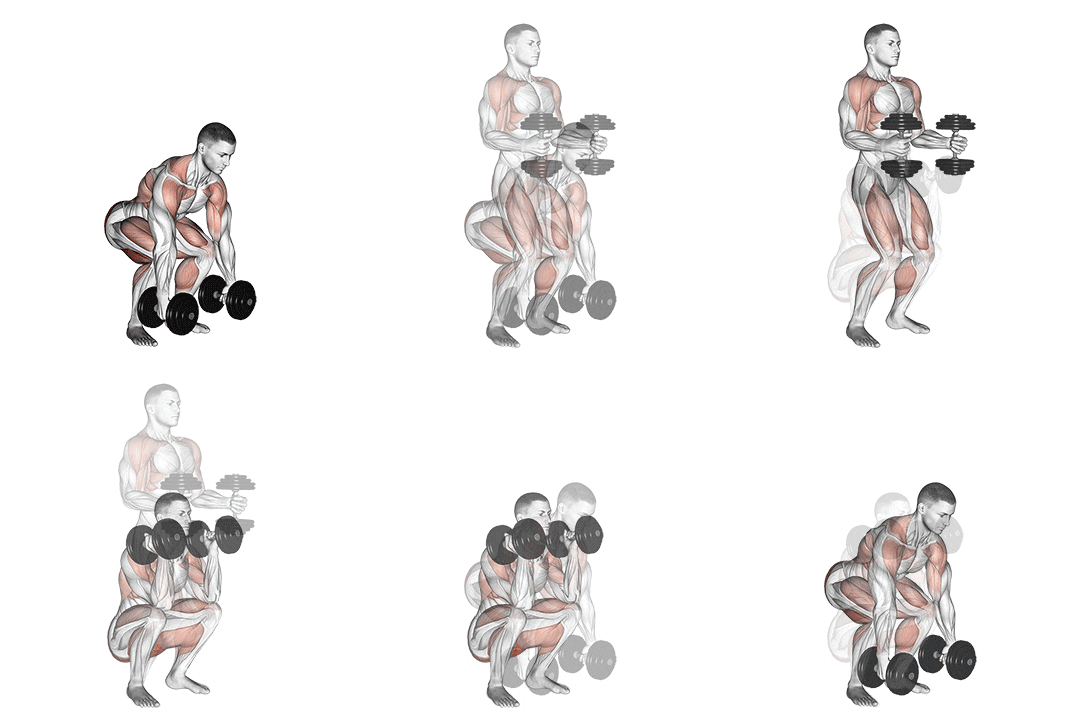
The dumbbell clean is a compound exercise that targets multiple muscle groups, primarily focusing on the lower body, core, and upper body. It involves explosively lifting the dumbbells from the floor to the shoulders in a fluid and controlled motion. This exercise improves power, strength, and coordination while engaging the major muscle groups. ## Instructions 1. Begin by standing with your feet hip-width apart, holding a dumbbell in each hand with an overhand grip (palms facing your thighs). Keep your back straight and core engaged. 2. Lower yourself into a squat position by bending at the knees and hips, keeping your chest lifted and weight on your heels. The dumbbells should be resting on the floor in front of you. 3. Explosively extend your hips and knees to generate upward momentum. As you do this, simultaneously shrug your shoulders and pull the dumbbells towards your shoulders. 4. Use the momentum to continue pulling the dumbbells upward. As they rise, rotate your elbows under the dumbbells, catching them at shoulder height with your palms facing upward. 5. Once you have caught the dumbbells, stand up straight and maintain a stable position. Your elbows should be in line with your shoulders, and your core should be engaged for stability. 6. Lower the dumbbells back down to the starting position by reversing the movement. Bend at the hips and knees, allowing the dumbbells to descend towards the floor. 7. Repeat the exercise for the desired number of repetitions. ## Variations - Single-Arm Dumbbell Clean: Perform the exercise with one arm at a time, using a single dumbbell. This variation challenges stability and allows for unilateral training. - Dumbbell Hang Clean: Instead of starting from the floor, begin the exercise with the dumbbells hanging at your sides. This variation emphasizes the explosive pulling motion without the squatting component. - Barbell Clean: Use a barbell instead of dumbbells. The barbell clean follows similar principles but requires a different grip and hand placement. ## Muscles Worked The main muscles targeted during the dumbbell clean are: - Quadriceps - Hamstrings - Glutes - Calves - Trapezius - Deltoids - Rhomboids - Biceps - Forearm muscles ## Common Mistakes - Rounding the back: Maintain a straight back throughout the exercise and avoid excessive rounding or arching. - Not using leg power: Utilize the power generated from the lower body to drive the upward movement. Avoid relying solely on the arms. - Using excessive upper body strength: Focus on the explosive hip and leg drive, allowing the dumbbells to be pulled upward by the momentum generated. - Lack of control: Maintain control throughout the exercise, avoiding jerky or uncontrolled movements. ## Safety Precautions - Begin with lighter weights and focus on mastering the technique before progressing to heavier loads. - Perform a thorough warm-up to prepare your muscles for the exercise. - Keep your core engaged and maintain proper form throughout the movement. - If you have any pre-existing conditions or injuries, consult with a healthcare professional before attempting this exercise. - Ensure that the area around you is clear to avoid any obstacles while performing the exercise. - Use proper grip and hand placement to securely hold the dumbbells. - Start with a controlled speed and gradually increase the speed as you become more proficient in the movement. - If you experience pain or discomfort, stop the exercise and seek guidance from a fitness professional. - Stay hydrated and breathe naturally throughout the exercise.
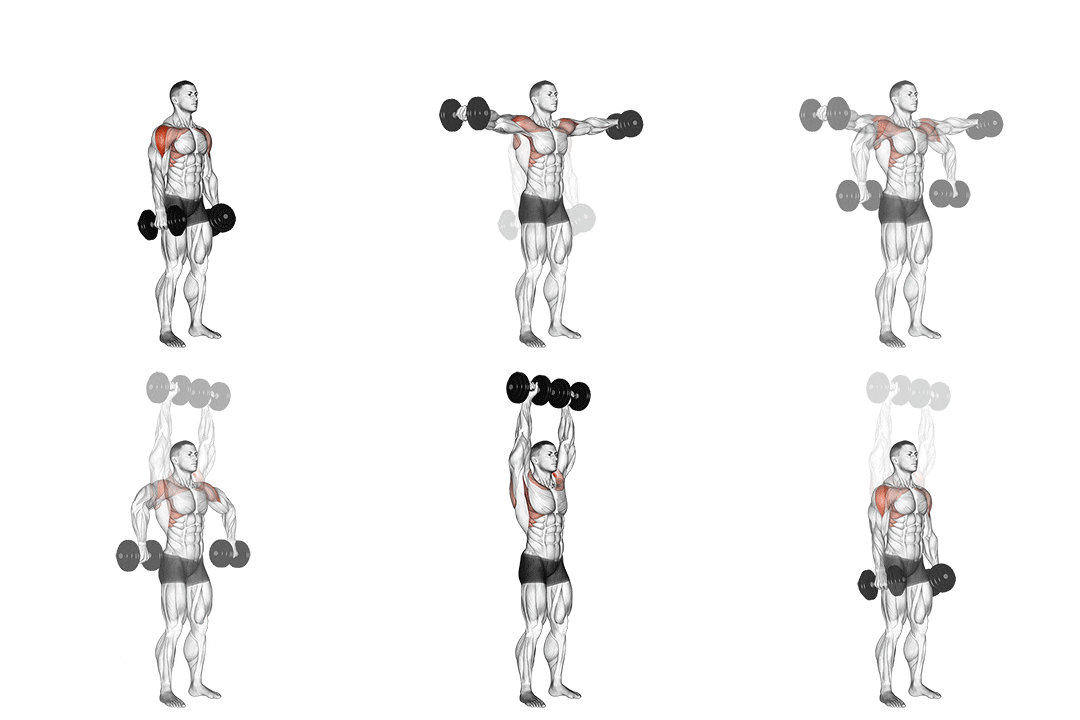
The dumbbell Cuban press is a shoulder exercise that targets the deltoid muscles and the muscles of the upper back. It involves a combination of movements, including a front raise, external rotation, and an overhead press. This exercise helps improve shoulder strength, stability, and mobility while also engaging the muscles responsible for maintaining good posture. ## Instructions 1. Stand with your feet shoulder-width apart, holding a dumbbell in each hand with an overhand grip (palms facing down) and your arms fully extended down by your sides. 2. Begin the movement by lifting the dumbbells in front of your body, keeping your elbows slightly bent. Raise the dumbbells until they are at shoulder level, with your palms facing the ground. 3. From this position, rotate your arms externally by bringing your elbows out to the sides and your forearms parallel to the ground. Your palms should now be facing forward. 4. Maintaining the external rotation, press the dumbbells overhead by extending your arms fully. Your palms should end up facing away from your body at the top of the movement. 5. Pause briefly at the top of the press, then reverse the movement by lowering the dumbbells back down to shoulder level while rotating your arms internally, so your palms are facing downward again. 6. Lower the dumbbells back to the starting position by performing a controlled front raise, keeping your elbows slightly bent. 7. Repeat the movement for the desired number of repetitions, maintaining proper form throughout. ## Variations - Seated Dumbbell Cuban Press: Perform the exercise while sitting on a bench or chair. This variation helps isolate the shoulders and upper back muscles while minimizing lower body involvement. - Resistance Band Cuban Press: If you don't have access to dumbbells, you can use resistance bands with handles to perform the Cuban press. Anchor the band under your feet, hold the handles, and follow the same movement pattern as with dumbbells. ## Muscles Worked - Shoulders (deltoids) - Upper back (rhomboids, traps) ## Common Mistakes - Using excessive weight: Start with lighter dumbbells to ensure proper form and gradually increase the weight as you gain strength and stability. - Rounding the shoulders: Avoid rounding your shoulders forward during the movement. Keep them pulled back and down to maintain proper posture. - Not maintaining control: Control the movement throughout the exercise, avoiding any jerking or swinging motions. - Arching the lower back: Engage your core and maintain a neutral spine to avoid excessive arching in the lower back. ## Safety Precautions - Choose an appropriate dumbbell weight that allows you to maintain proper form and control throughout the exercise. - If you have any pre-existing shoulder or upper back injuries, consult with a healthcare professional or fitness trainer before attempting this exercise. - Perform the exercise on a stable surface and ensure you have enough space around you to perform the movement safely. - Focus on proper breathing. Inhale during the eccentric (lowering) phase and exhale during the concentric (lifting) phase of the movement. - If you experience any pain or discomfort during the exercise, stop immediately and seek guidance from a qualified professional.
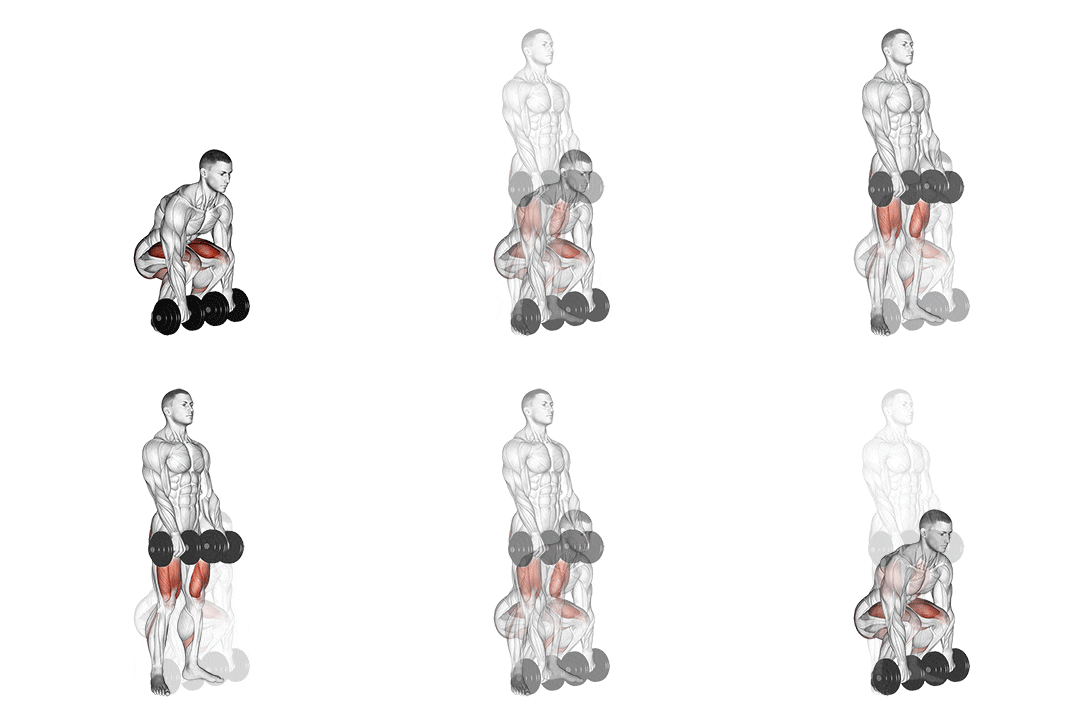
The dumbbell deadlift is a compound exercise that targets multiple muscle groups, primarily the posterior chain. It involves lifting a pair of dumbbells from the floor to a standing position while maintaining a neutral spine. The dumbbell deadlift helps strengthen the glutes, hamstrings, lower back, and core muscles while also improving overall hip and lower body strength. ## Instructions 1. Begin by standing with your feet shoulder-width apart, toes pointing forward, and a dumbbell on the floor in front of each foot. 2. Hinge at the hips and bend your knees slightly to lower yourself down while keeping your back straight and chest lifted. Grasp the dumbbells with an overhand grip, palms facing your body. 3. Engage your core, squeeze your glutes, and maintain a neutral spine position throughout the movement. 4. Drive through your heels, extend your hips, and straighten your knees to lift the dumbbells off the floor. Keep your arms fully extended and let the dumbbells hang by your sides. 5. As you lift the dumbbells, maintain a straight back and avoid rounding or arching your spine. 6. Stand tall, fully extending your hips and knees, while holding the dumbbells at your sides. 7. To complete the movement, lower the dumbbells back down by hinging at the hips and bending your knees, returning to the starting position with control. 8. Repeat the exercise for the desired number of repetitions, maintaining proper form throughout. ## Variations - Single-Leg Dumbbell Deadlift: Perform the exercise with one leg at a time, lifting one dumbbell while balancing on the opposite leg. This variation further challenges stability and engages the muscles of the hips and legs individually. - Romanian Dumbbell Deadlift: In this variation, keep a slight bend in your knees throughout the movement, focusing on hinging at the hips and maintaining tension in the hamstrings and glutes. The Romanian deadlift emphasizes the posterior chain muscles to a greater extent. - Sumo Dumbbell Deadlift: Take a wider stance with your feet and turn your toes out at a 45-degree angle. This variation targets the inner thighs (adductors) and places less emphasis on the hamstrings. ## Muscles Worked - Glutes (gluteus maximus) - Hamstrings - Lower back (erector spinae) - Quadriceps - Core muscles (abdominals and obliques) ## Common Mistakes - Rounding or arching the back: Maintain a neutral spine throughout the movement and avoid excessive rounding or arching of the back. Engage your core and keep your chest lifted. - Using momentum instead of controlled movement: Lift the dumbbells with control, focusing on the muscles being targeted, rather than relying on momentum or jerking motions. - Allowing the knees to collapse inward: Keep your knees in line with your toes throughout the exercise. Avoid letting them collapse inward, which can put stress on the knee joints. - Lifting too much weight: Start with lighter dumbbells and gradually increase the weight as your form and strength improve. Using excessive weight can compromise your technique and increase the risk of injury. ## Safety Precautions - Choose an appropriate dumbbell weight that allows you to maintain proper form and control throughout the exercise. - If you have any pre-existing back, hip, or knee injuries, consult with a healthcare professional or fitness trainer before attempting this exercise. - Ensure that the area around you is clear and free from any obstacles to avoid tripping or stumbling. - Focus on proper breathing. Inhale during the eccentric (lowering) phase and exhale during the concentric (lifting)
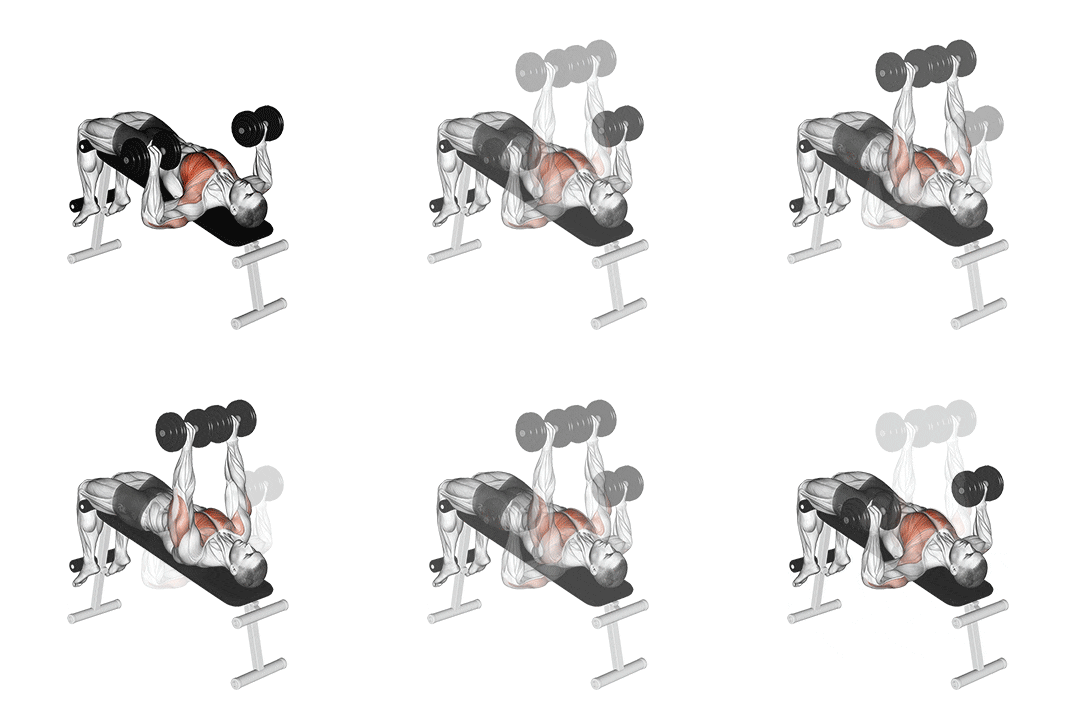
The dumbbell decline bench press is a compound exercise that primarily targets the lower chest muscles (pectoralis major) and triceps. It is performed on a decline bench with the upper body positioned at a lower angle than the hips. This exercise helps build strength, size, and definition in the lower chest while also engaging the shoulders and triceps. ## Instructions 1. Set up a decline bench at an appropriate angle (usually between 15 to 30 degrees). 2. Lie down on the bench with your head positioned lower than your hips, securing your feet under the provided footpads or placing them flat on the floor. 3. Hold a dumbbell in each hand, palms facing forward, and extend your arms straight up over your chest. This is the starting position. 4. Inhale and slowly lower the dumbbells towards the sides of your chest, keeping your elbows at a 45-degree angle from your body. 5. Pause for a brief moment when the dumbbells are near your chest, then exhale and press the dumbbells back up to the starting position by extending your arms fully. 6. Repeat the movement for the desired number of repetitions, maintaining control and proper form throughout. ## Variations - Barbell Decline Bench Press: Instead of using dumbbells, you can perform the decline bench press with a barbell. This allows you to lift heavier weights and may provide a slightly different range of motion. - Machine Decline Press: If you have access to a decline press machine, you can use it as an alternative to dumbbells. This variation provides a guided range of motion and may be suitable for beginners or those who prefer using machines. ## Muscles Worked - Lower chest (pectoralis major) - Triceps - Anterior deltoids (shoulders) - Serratus anterior (stabilizer muscles) ## Common Mistakes - Arching the back excessively: Maintain proper form by keeping your back flat against the bench throughout the movement. Avoid excessive arching, as it can strain the lower back. - Flaring the elbows out too wide: Keep your elbows at a 45-degree angle from your body to engage the chest muscles effectively. Avoid excessively flaring your elbows, which may put unnecessary stress on the shoulder joints. - Using excessive weight: Start with a weight that allows you to maintain proper form and control. Avoid using weights that are too heavy, as it may compromise your technique and increase the risk of injury. - Failing to lower the dumbbells fully: Aim to bring the dumbbells to a position where your upper arms are parallel to the floor or slightly lower. Lowering the dumbbells too shallowly limits the range of motion and reduces the effectiveness of the exercise. ## Safety Precautions - Choose an appropriate weight that matches your strength and abilities. - Ensure that the decline bench is stable and securely positioned before starting the exercise. - Warm up your shoulder, chest, and triceps muscles with some light stretching or warm-up sets before performing the exercise. - Maintain control throughout the movement and avoid using momentum to lift the weights. - If you experience any pain or discomfort, especially in the shoulders or lower back, stop the exercise and consult with a healthcare professional or fitness trainer.
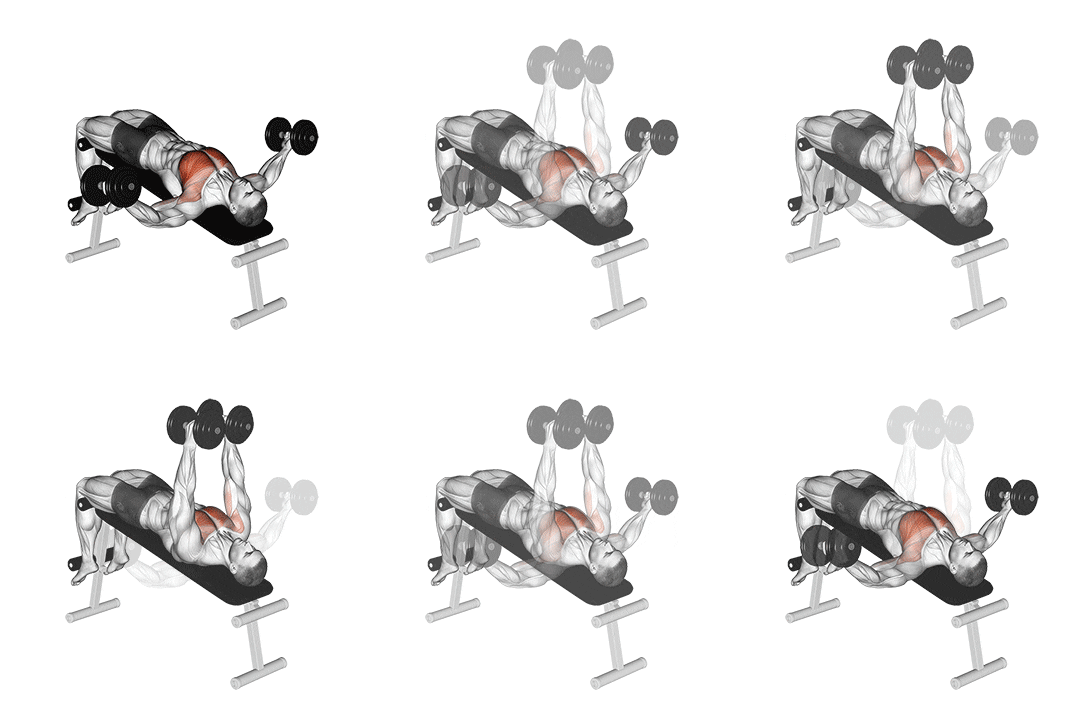
The dumbbell decline fly is an isolation exercise that targets the lower and outer portions of the chest muscles (pectoralis major). It is performed on a decline bench with the upper body positioned at a lower angle than the hips. This exercise helps to develop and define the lower chest, enhance chest aesthetics, and improve overall upper body strength. ## Instructions 1. Set up a decline bench at an appropriate angle (typically between 15 to 30 degrees). 2. Lie down on the bench with your head positioned lower than your hips, securing your feet under the provided footpads or placing them flat on the floor. 3. Hold a dumbbell in each hand, palms facing each other, and extend your arms straight up over your chest. This is the starting position. 4. Inhale and slowly lower the dumbbells to the sides, maintaining a slight bend in your elbows. Imagine hugging a large tree trunk as you lower the weights. 5. Open your arms in a controlled and wide arc until you feel a stretch in your chest muscles. Keep your elbows slightly bent throughout the movement to avoid excessive stress on the shoulder joints. 6. Exhale and bring the dumbbells back up to the starting position by squeezing your chest muscles and bringing your arms together in a hugging motion. 7. Repeat the movement for the desired number of repetitions, focusing on the contraction and stretch of the chest muscles. ## Variations - Cable Decline Fly: Instead of using dumbbells, you can perform decline flyes using cable pulley machines. Attach D-handles to the lower pulleys, position yourself on the decline bench, and follow the same movement pattern as with dumbbells. - Machine Decline Fly: If available, you can use a decline fly machine, which provides a guided range of motion and allows you to adjust the weight easily. ## Muscles Worked - Lower chest (pectoralis major) - Front shoulder (anterior deltoids) - Triceps (secondary muscles) ## Common Mistakes - Using excessively heavy weights: Choose weights that allow you to maintain proper form and control throughout the exercise. Using weights that are too heavy may compromise your technique and increase the risk of injury. - Failing to maintain a slight bend in the elbows: Keep a slight bend in your elbows throughout the movement to prevent excessive strain on the shoulder joints and ensure that the tension stays on the chest muscles. - Performing the exercise with a flat back: Maintain a natural arch in your lower back and keep your shoulder blades squeezed together to provide stability and engage the chest muscles effectively. - Rushing through the exercise: Perform the exercise in a slow and controlled manner, focusing on the mind-muscle connection and feeling the stretch and contraction of the chest muscles at each repetition. ## Safety Precautions - Choose an appropriate weight that matches your strength and abilities. - Ensure that the decline bench is stable and securely positioned before starting the exercise. - Warm up your chest muscles with some light stretching or warm-up sets before performing the exercise. - Avoid locking out your elbows at the top of the movement to maintain tension on the chest muscles. - If you experience any pain or discomfort, especially in the shoulders or lower back, stop the exercise and consult with a healthcare professional or fitness trainer.
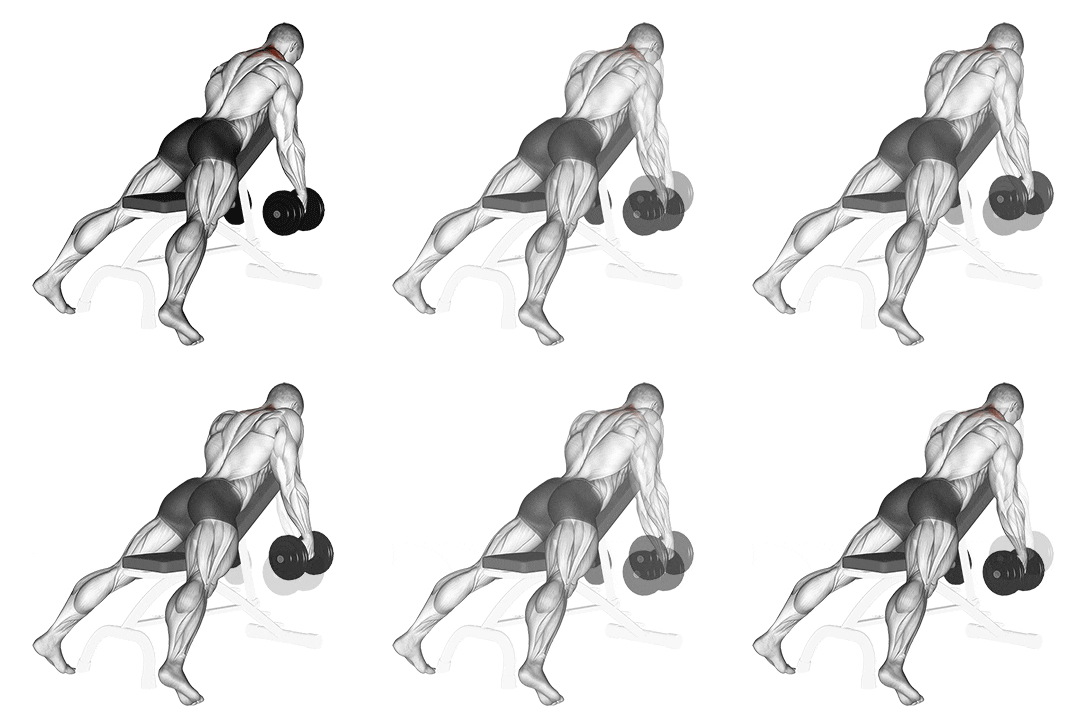
The Dumbbell Decline Shrug is an exercise that primarily targets the trapezius muscles, particularly the upper traps. It involves shrugging the shoulders upward against resistance while positioned on a decline bench. This exercise helps to strengthen and develop the upper back and shoulder muscles, promoting better posture and shoulder stability. ## Instructions 1. Set up a decline bench at an angle of approximately 30-45 degrees. 2. Sit on the decline bench with your back flat against the pad and your feet securely placed under the leg support. 3. Hold a dumbbell in each hand, allowing your arms to hang naturally by your sides with your palms facing your body. 4. Relax your shoulders and maintain a neutral spine position throughout the exercise. 5. While exhaling, elevate your shoulders upward as high as possible by contracting your upper traps. 6. Hold the top position for a brief moment, focusing on squeezing your upper traps to maximize the contraction. 7. While inhaling, slowly lower your shoulders back down to the starting position in a controlled manner. 8. Repeat the movement for the desired number of repetitions. ## Variations - Beginners: If you're new to this exercise or have limited strength, you can start with lighter dumbbells or perform the exercise without weights until you feel comfortable with the movement. - Advanced: For an added challenge, you can use heavier dumbbells or increase the number of sets and repetitions. - Alternating Shrugs: Instead of shrugging both shoulders simultaneously, you can perform the exercise by alternating the shrug motion between each shoulder. - Barbell Decline Shrug: If you prefer using a barbell, you can perform the decline shrug using a barbell instead of dumbbells. ## Muscles Worked The Dumbbell Decline Shrug primarily targets: - Trapezius (upper traps) ## Common Mistakes - Using excessive weight: Select a weight that allows you to maintain proper form and control throughout the exercise. Using weights that are too heavy can compromise your technique and increase the risk of injury. - Shrugging the shoulders forward: Avoid rounding your upper back or allowing your shoulders to roll forward. Keep your shoulders back and down to effectively target the upper traps. - Using momentum: Execute the exercise with controlled movements, avoiding any swinging or jerking motions. Focus on the contraction and squeeze of the upper traps. - Neglecting full range of motion: Ensure that you fully elevate your shoulders at the top of the movement, emphasizing the contraction of the upper traps. Avoid performing partial shrugs that limit the range of motion. ## Safety Precautions - Before attempting this exercise, ensure that you have no pre-existing conditions or injuries that may be aggravated by the movement. If you're uncertain, consult with a qualified fitness professional or healthcare provider. - If using heavy weights, consider having a spotter present to assist and ensure your safety. - Maintain proper form throughout the exercise to minimize the risk of injury. - If you experience any pain or discomfort, cease the exercise and seek advice from a healthcare professional.
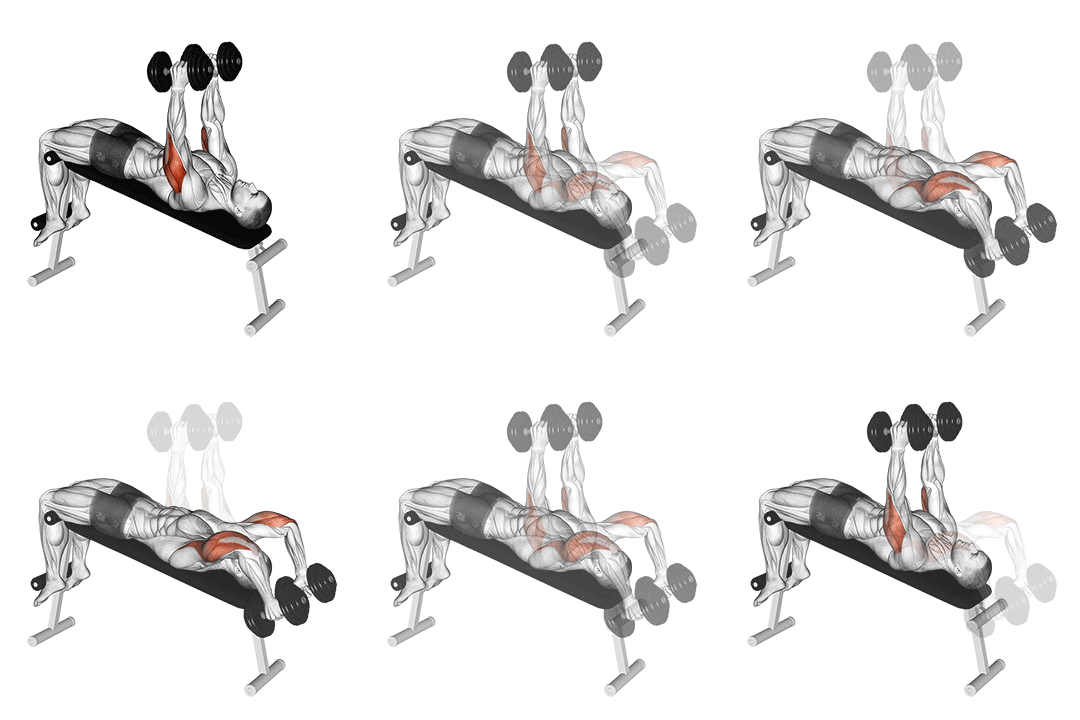
The Dumbbell Decline Triceps Extension is an exercise that targets the triceps muscles, which are located on the back of the upper arm. This exercise involves extending the elbows against resistance while lying on a decline bench. It helps strengthen and tone the triceps, contributing to improved arm strength and definition. ## Instructions 1. Set up a decline bench at an angle of approximately 30-45 degrees. 2. Sit on the decline bench with your back flat against the pad and your feet secured under the leg support. 3. Hold a dumbbell in each hand with an overhand grip (palms facing away from your body). 4. Start with your arms extended vertically above your shoulders, perpendicular to the floor. 5. Keep your upper arms stationary throughout the exercise. 6. While exhaling, bend your elbows and lower the dumbbells down toward the sides of your head in a controlled manner. 7. Keep your elbows close to your head and maintain a stable position with your upper arms. 8. Pause briefly at the bottom of the movement, feeling the stretch in your triceps. 9. While inhaling, extend your elbows and raise the dumbbells back to the starting position. 10. Repeat the movement for the desired number of repetitions. ## Variations - Beginners: If you're new to this exercise or have limited strength, you can start with lighter dumbbells or perform the exercise without weights until you feel comfortable with the movement. - Advanced: For an added challenge, you can use heavier dumbbells or increase the number of sets and repetitions. - Single Arm Triceps Extension: Instead of using both dumbbells simultaneously, you can perform the exercise one arm at a time, focusing on each triceps individually. ## Muscles Worked The Dumbbell Decline Triceps Extension primarily targets: - Triceps brachii (back of the upper arm) ## Common Mistakes - Using excessive weight: It's crucial to choose a weight that allows you to maintain proper form throughout the exercise. Using weights that are too heavy can compromise your technique and increase the risk of injury. - Flaring the elbows: Keep your elbows close to your head throughout the movement. Avoid allowing your elbows to flare out to the sides, as this reduces the engagement of the triceps and places unnecessary strain on the shoulder joints. - Using momentum: Perform the exercise with controlled movements, avoiding any jerking or swinging motions. Focus on the contraction and extension of the triceps. - Allowing the upper arms to move: Keep your upper arms stationary throughout the exercise. Avoid letting them drift forward or backward, as this shifts the emphasis away from the triceps. ## Safety Precautions - Prior to performing this exercise, ensure that you have no pre-existing conditions or injuries that may be aggravated by the movement. If you're uncertain, consult with a qualified fitness professional or healthcare provider. - Use a spotter if necessary, especially when using heavy weights or if you're new to the exercise. - Maintain proper form throughout the exercise to minimize the risk of injury. - If you experience any pain or discomfort, particularly in the elbows or shoulders, stop the exercise and seek advice from a healthcare professional.