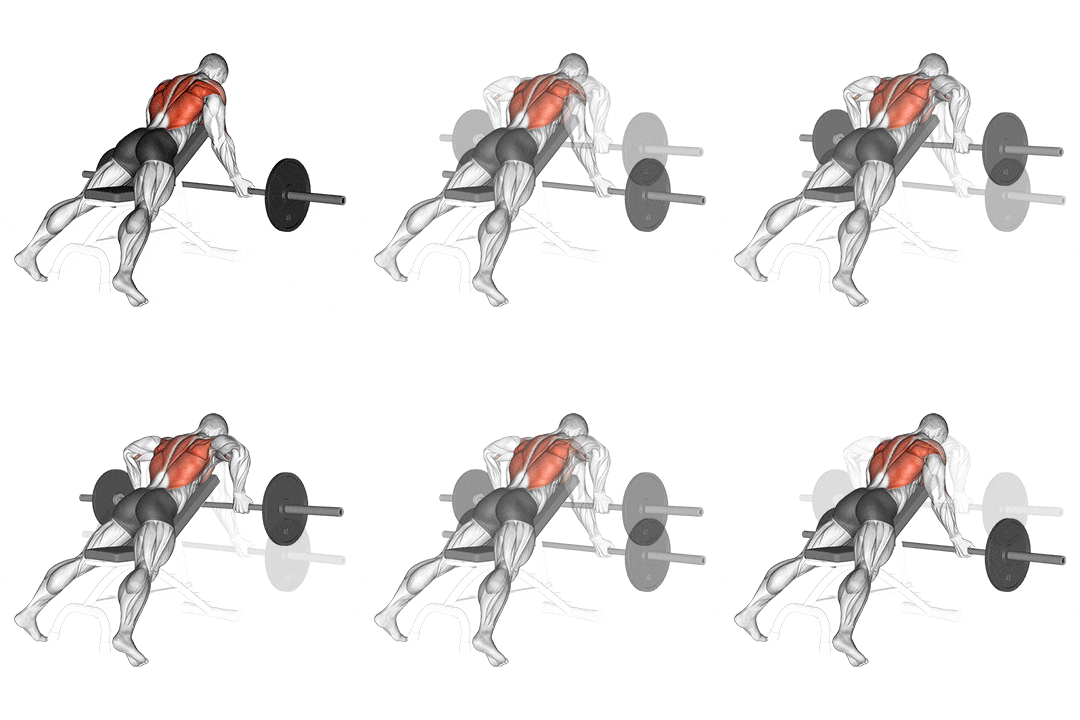
The barbell reverse grip incline bench row is an exercise that targets the muscles of the back, including the rhomboids, middle trapezius, rear deltoids, and biceps brachii. This exercise is performed on an incline bench with an underhand grip (palms facing up), allowing for a different angle of contraction and targeting the upper back and rear shoulder muscles. ## Instructions 1. Set an incline bench to an appropriate angle (typically around 45 degrees). 2. Stand facing the incline bench and lean forward, placing your chest against the bench. 3. Hold a barbell with an underhand grip (palms facing up), hands slightly wider than shoulder-width apart. 4. With your arms fully extended, let the barbell hang down towards the floor. 5. Keep your back straight, engage your core, and maintain a neutral spine. 6. Inhale and pull the barbell towards your lower chest by retracting your shoulder blades and bending your elbows, keeping them close to your body. 7. Squeeze your back muscles at the top of the movement and pause briefly to maximize muscle contraction. 8. Exhale and slowly lower the barbell back to the starting position, fully extending your arms. 9. Repeat the movement for the desired number of repetitions. ## Variations - Dumbbell Reverse Grip Incline Bench Row: Instead of using a barbell, this exercise can be performed with dumbbells. Hold a dumbbell in each hand with an underhand grip and perform the rowing motion on the incline bench. - Machine Reverse Grip Incline Bench Row: If available, you can use a machine designed specifically for reverse grip incline bench rows. This machine provides stability and can make it easier to adjust the weight. - Resistance Band Reverse Grip Incline Bench Row: Attach resistance bands to the bottom of the bench and hold the other ends in your hands. Perform the rowing motion while maintaining tension in the bands. ## Muscles Worked The barbell reverse grip incline bench row primarily targets the following muscles: - Rhomboids - Middle trapezius - Rear deltoids - Biceps brachii (as secondary muscles) ## Common Mistakes - Rounding the back: Maintain proper form throughout the exercise by keeping your back straight and your core engaged. Avoid rounding your back or hunching your shoulders forward. - Pulling with the arms instead of the back: Initiate the movement by retracting your shoulder blades and engaging the back muscles. Avoid relying solely on your arms to pull the weight. - Using excessive momentum: Focus on using controlled movements and avoid using momentum to lift the weight. This ensures that the targeted muscles are properly engaged. ## Safety Precautions - Start with a light weight and gradually increase it as your strength improves. - Use an incline bench at an appropriate angle for your comfort and range of motion. - Keep your neck aligned with your spine and avoid looking up or down excessively during the movement. - If you have any pre-existing back or shoulder injuries, it's advisable to consult with a healthcare professional before attempting this exercise. - Warm up your back muscles before performing this exercise to reduce the risk of injury. - If you experience any pain or discomfort during the exercise, stop immediately and seek guidance from a fitness professional or healthcare provider.
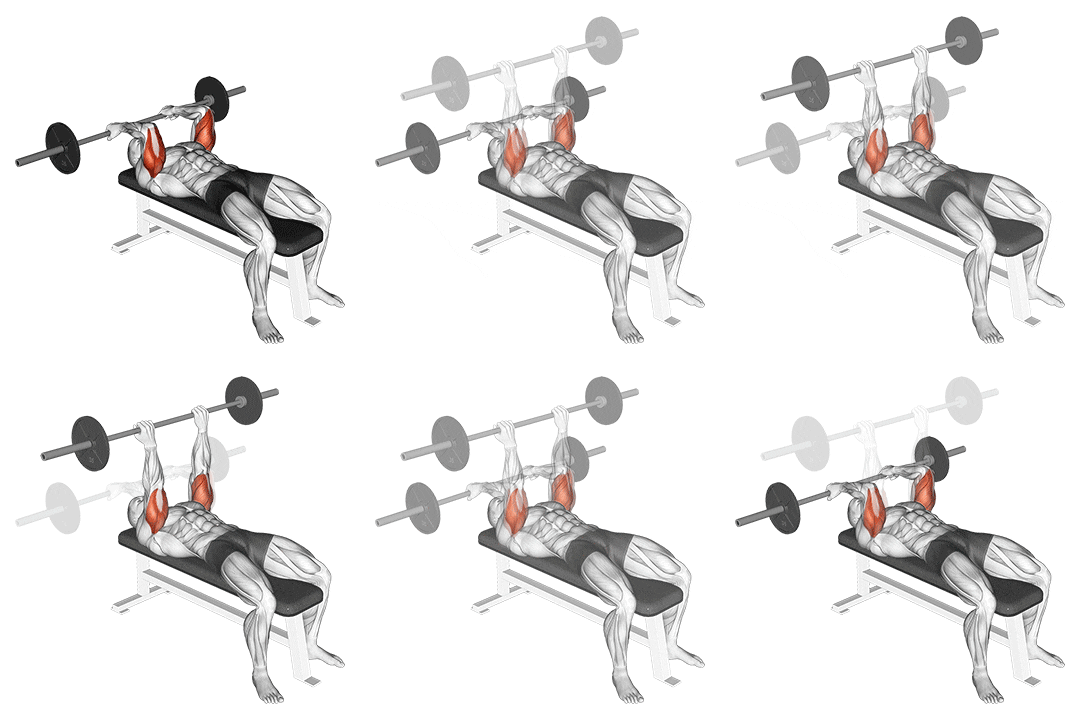
The barbell reverse grip skullcrusher, also known as the barbell lying triceps extension with a reverse grip, is an exercise that primarily targets the triceps muscles. It involves extending the elbows while lying on a bench and holding the barbell with an underhand grip (palms facing up). This exercise helps strengthen and tone the triceps, contributing to overall arm strength and aesthetics. ## Instructions 1. Lie flat on a bench with your feet flat on the floor. 2. Hold a barbell with an underhand grip (palms facing up), hands slightly narrower than shoulder-width apart. 3. Lift the barbell above your chest, arms fully extended and perpendicular to the floor. 4. Keeping your upper arms stationary, inhale and slowly lower the barbell in a controlled manner towards your forehead, bending your elbows. 5. Lower the barbell until your forearms are parallel to the floor or until you feel a stretch in your triceps. 6. Pause briefly in the stretched position, then exhale and extend your elbows to lift the barbell back to the starting position. 7. Repeat the movement for the desired number of repetitions. ## Variations - Dumbbell Reverse Grip Skullcrusher: Instead of using a barbell, this exercise can be performed with dumbbells. Hold a dumbbell in each hand with an underhand grip and perform the lying triceps extension motion. - EZ-Bar Reverse Grip Skullcrusher: Use an EZ-bar (a curved barbell) with an underhand grip to perform the exercise. The EZ-bar can provide a more comfortable grip and put less strain on the wrists. ## Muscles Worked The barbell reverse grip skullcrusher primarily targets the following muscles: - Triceps brachii (long head, lateral head, and medial head) ## Common Mistakes - Flaring the elbows out: Keep your elbows close to your head throughout the movement. Avoid allowing your elbows to flare out to the sides, as this can shift the focus away from the triceps. - Lowering the bar too far: Lower the barbell until your forearms are parallel to the floor or until you feel a stretch in your triceps. Avoid lowering the bar too close to your face, as this can strain the elbows and wrists. - Using excessive weight: Start with a weight that allows you to maintain proper form and control. Avoid using excessive weight that compromises your technique and puts unnecessary strain on the joints. ## Safety Precautions - Start with a light weight and gradually increase it as your strength improves. - Keep your wrists in a neutral position throughout the exercise to avoid strain or discomfort. - Use an appropriate grip width that feels comfortable and secure for your wrists and hands. - If you have any pre-existing elbow or wrist injuries, it's advisable to consult with a healthcare professional before attempting this exercise. - Warm up your triceps and elbows before performing this exercise to reduce the risk of injury. - If you experience any pain or discomfort during the exercise, stop immediately and seek guidance from a fitness professional or healthcare provider.
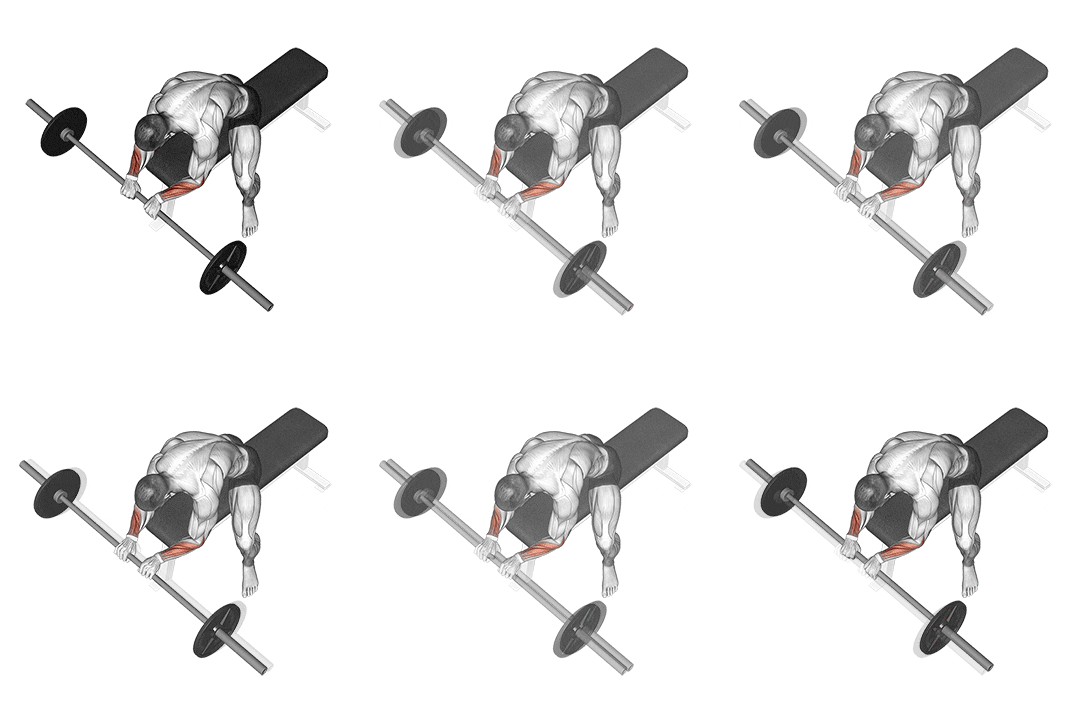
The barbell reverse wrist curl v.2 is an exercise that targets the muscles of the forearms, specifically the extensor muscles. It involves flexing the wrists in the opposite direction compared to traditional wrist curls. This exercise helps strengthen the muscles responsible for wrist extension and grip strength. ## Instructions 1. Begin by standing or sitting on a bench with your feet flat on the floor. Hold a barbell with an overhand grip (palms facing down) at shoulder-width or slightly narrower. 2. Rest your forearms on your thighs or the bench, ensuring that your wrists are hanging just beyond your knees. 3. Start with your wrists in a neutral position, neither flexed nor extended. 4. Slowly lower the barbell by extending your wrists, allowing it to roll towards your fingertips. 5. Maintain control as you lower the barbell as far as comfortably possible. 6. Pause briefly at the bottom of the movement, feeling a stretch in your forearms. 7. Begin to curl the barbell back up by flexing your wrists, rolling it towards your palms. 8. Continue curling until your wrists are fully flexed and the barbell is close to your fingers. 9. Hold the top position for a moment, squeezing your forearms. 10. Repeat the movement for the desired number of repetitions. ## Variations - Dumbbell Reverse Wrist Curl: This exercise can be performed using dumbbells instead of a barbell, allowing for a greater range of motion and individual arm work. - Cable Reverse Wrist Curl: Attach a rope handle to a low cable pulley and perform the wrist curl motion while holding the rope. This variation provides constant tension throughout the movement. - Seated Reverse Wrist Curl: Perform the exercise while seated, with your forearms resting on your thighs or a bench for support. ## Muscles Worked The barbell reverse wrist curl v.2 primarily targets the following muscles: - Forearm Extensors - Brachioradialis ## Common Mistakes - Using excessive weight: Avoid using too much weight, as it can compromise proper form and lead to wrist strain or injury. Start with a weight that allows you to perform the exercise with control and good technique. - Relying on momentum: Maintain a slow and controlled movement throughout the exercise. Avoid using momentum to swing the weight up or drop it quickly on the descent. - Allowing the wrists to collapse: Keep your wrists straight and aligned with your forearms throughout the movement. Do not let your wrists flex or deviate. ## Safety Precautions - Start with a light weight and gradually increase it as your strength improves. - Maintain a proper grip on the barbell to prevent it from slipping out of your hands. - If you experience any discomfort or pain in your wrists or forearms, stop the exercise and consult a fitness professional or healthcare provider. - Always warm up your wrists and forearms before performing this exercise to reduce the risk of injury. - If you have any pre-existing wrist or forearm injuries, it's advisable to consult with a healthcare professional before attempting this exercise.
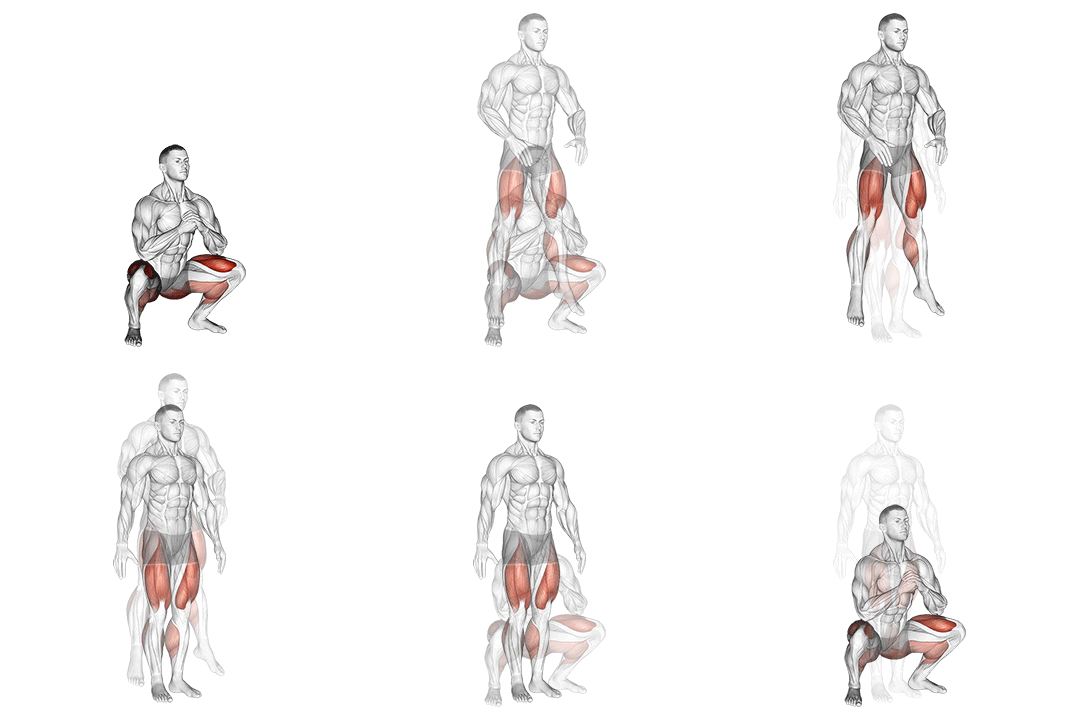
The bodyweight drop jump squat is a plyometric exercise that targets the lower body, particularly the quadriceps, glutes, and calves. It combines the explosive power of a jump squat with the added challenge of landing from an elevated position. This exercise helps to improve lower body strength, power, and agility. ## Instructions 1. Begin by standing on an elevated surface, such as a box or step, with your feet hip-width apart. 2. Position your body in a squatting stance, bending your knees and lowering your hips while keeping your chest lifted and core engaged. 3. Explosively jump off the box, extending your hips, knees, and ankles to propel yourself into the air. 4. While in mid-air, quickly reposition your body and prepare to land softly on the ground. 5. As you land, bend your knees and hips to absorb the impact, aiming for a smooth and controlled landing. 6. Immediately upon landing, go into the next repetition by explosively jumping back up onto the elevated surface. 7. Repeat the exercise for the desired number of repetitions. ## Variations - Beginners can start with a lower box height or use a stable surface, such as a low step, instead of an elevated surface. - Advanced individuals can increase the height of the box or perform the exercise with additional weight, such as holding dumbbells or wearing a weighted vest. ## Muscles Worked - Quadriceps (front of the thighs) - Glutes (buttocks) - Calves - Hamstrings (back of the thighs) - Hip flexors ## Common Mistakes - Landing with stiff legs: Avoid locking your knees upon landing. Keep your knees slightly bent to absorb the impact and protect your joints. - Allowing knees to collapse inward: Maintain proper knee alignment by tracking them in line with your toes throughout the exercise. - Not using a full range of motion: Ensure you squat deeply before jumping off the box and fully extend your hips, knees, and ankles during the jump. - Failing to land softly: Focus on landing with control and minimizing the impact. Land quietly and aim for a smooth transition into the next repetition. ## Safety Precautions - Start with a lower box height and gradually increase it as you become more comfortable and confident. - Use a stable and non-slip surface for the box or step to prevent accidents. - Maintain proper form and alignment throughout the exercise. - If you have any pre-existing knee or joint issues, consult with a healthcare professional before attempting this exercise.
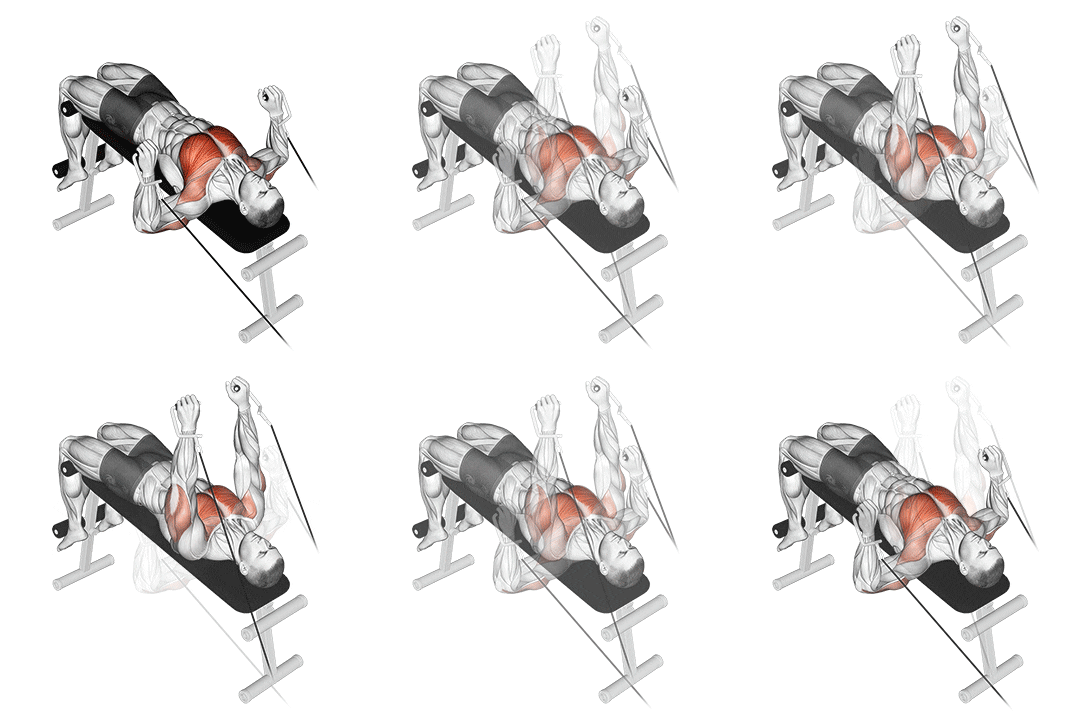
The cable decline press is an exercise that targets the chest muscles, primarily the pectoralis major, while also engaging the triceps and anterior deltoids. It involves using a cable machine and a decline bench to perform a pressing motion, simulating a decline bench press. This exercise helps build strength and size in the chest muscles, improves upper body pushing power, and enhances overall upper body muscular development. ##Instructions 1. Set up a decline bench at a slight angle (approximately 30-45 degrees) and position it in front of a cable machine. 2. Attach handles or a bar to the low pulleys of the cable machine. 3. Adjust the weight on the cable machine to a suitable level. 4. Sit on the decline bench and position yourself with your head lower than your hips. 5. Grasp the handles or bar with an overhand grip (palms facing away from you) at about shoulder width. 6. Plant your feet firmly on the ground and push your back into the bench, creating a stable base. 7. Inhale and lower the handles or bar toward your chest in a controlled manner, keeping your elbows slightly bent. 8. Maintain tension in your chest muscles as you lower the weight, feeling a stretch in your pectoralis major. 9. Exhale and push the handles or bar away from your body in a straight line, extending your arms fully but avoiding locking out your elbows. 10. Squeeze your chest muscles at the end of the movement, feeling the contraction. 11. In a controlled manner, slowly bring the handles or bar back to the starting position, allowing your elbows to bend to a 90-degree angle. 12. Repeat for the desired number of repetitions. ##Variations - Single-arm cable decline press: Perform the exercise one arm at a time by using a single handle or focusing on one side at a time. - Dumbbell decline press: Instead of using a cable machine, you can perform the exercise using dumbbells while lying on a decline bench. - Machine decline press: If a cable machine is not available, you can use a chest press machine with a decline setting to target the chest muscles. ##Muscles Worked - Primary muscles: Pectoralis major (chest muscles) - Secondary muscles: Triceps, anterior deltoids (front shoulders) ##Common Mistakes - Allowing the elbows to flare out: Keep your elbows close to your sides and avoid letting them flare out during the exercise. This helps target the chest muscles more effectively. - Arching the back excessively: Maintain a slight arch in your lower back, but avoid excessive arching. This helps maintain proper spinal alignment and prevents strain on the lower back. - Using too much weight: Choose a weight that allows you to maintain proper form and control throughout the exercise. Using excessive weight can compromise your technique and increase the risk of injury. ##Safety Precautions - Warm up before starting the exercise to prepare your chest muscles for the workout. - Adjust the decline bench angle according to your comfort and fitness level. Beginners may start with a less steep decline. - Keep your core engaged throughout the exercise to support your back and maintain stability. - If you have any pre-existing shoulder or chest conditions, consult with a fitness professional or healthcare provider before performing the cable decline press. - If you experience pain or discomfort during the exercise, stop and seek medical advice if necessary.
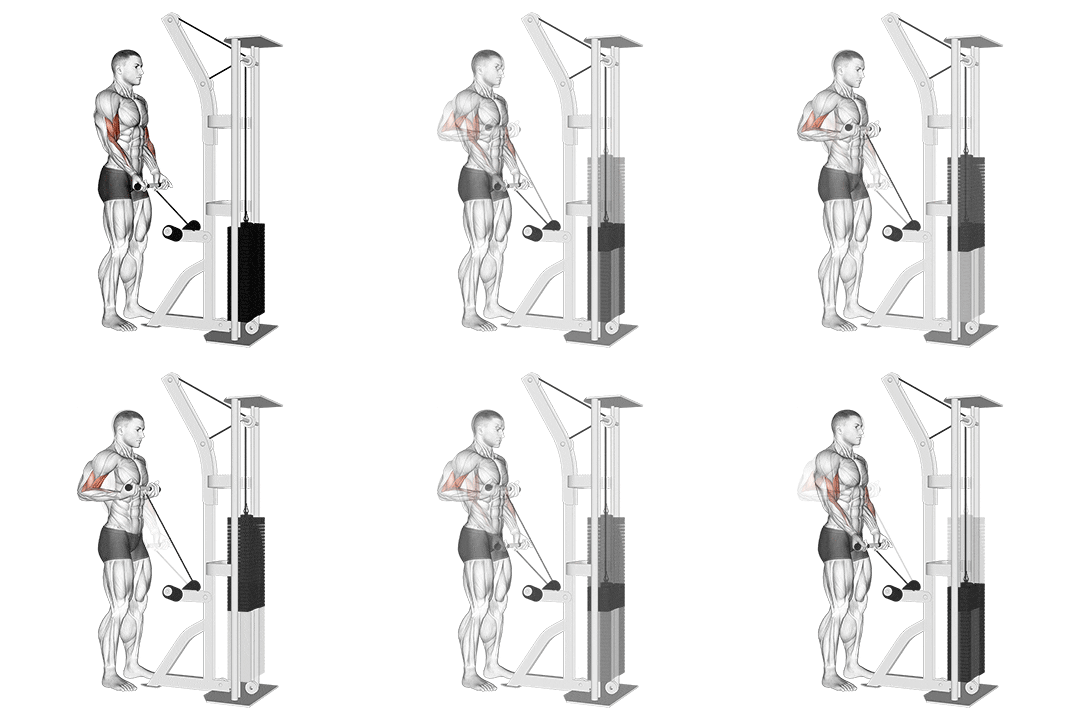
The cable drag curl is an exercise that targets the biceps muscles, specifically the long head of the biceps brachii. It involves using a cable machine to perform a curling motion that emphasizes the peak contraction of the biceps. This exercise helps to build strength and size in the biceps, improve upper arm definition, and enhance overall arm aesthetics. ##Instructions 1. Stand facing a cable machine with the pulley set at the lowest position. 2. Grasp the handles or rope attachment with an underhand grip (palms facing up) at shoulder width. 3. Position your feet shoulder-width apart and maintain a slight bend in your knees. 4. Engage your core and keep your back straight throughout the exercise. 5. Start with your arms fully extended, allowing the weight stack to pull your arms forward. 6. Initiate the movement by flexing your elbows and curling the handles or rope toward your shoulders. 7. Keep your upper arms stationary and focus on pulling the handles or rope backward in a drag-like motion. 8. As you curl, keep your elbows close to your sides and squeeze your biceps at the top of the movement. 9. Pause for a moment at the peak contraction and then slowly lower the handles or rope back to the starting position under control. 10. Repeat for the desired number of repetitions. ##Variations - Wide-grip cable drag curl: Perform the exercise with a wider grip on the handles or rope attachment to target the outer portion of the biceps. - Single-arm cable drag curl: Perform the exercise one arm at a time by using a single handle or focusing on one side at a time. - Alternating cable drag curl: Curl one arm at a time, alternating between the left and right sides. ##Muscles Worked - Primary muscles: Biceps brachii (long head) - Secondary muscles: Brachialis, brachioradialis ##Common Mistakes - Using excessive weight: Select a weight that allows you to maintain proper form and control throughout the exercise. Using too much weight can lead to swinging or using momentum, reducing the effectiveness of the exercise. - Allowing the elbows to flare out: Keep your elbows close to your sides and avoid allowing them to move forward or flare out during the movement. This helps isolate the biceps and prevents excessive strain on the shoulders. - Not fully extending the arms: Make sure to fully extend your arms at the starting position to maximize the range of motion and engage the biceps fully. ##Safety Precautions - Warm up before starting the exercise to prepare your biceps muscles for the workout. - Use a weight that challenges you but allows you to maintain proper form and control. - Keep your core engaged and maintain proper posture throughout the exercise to avoid strain on the lower back. - If you have any pre-existing elbow or biceps issues, consult with a fitness professional or healthcare provider before performing the cable drag curl. - If you experience pain or discomfort during the exercise, stop and seek medical advice if necessary.
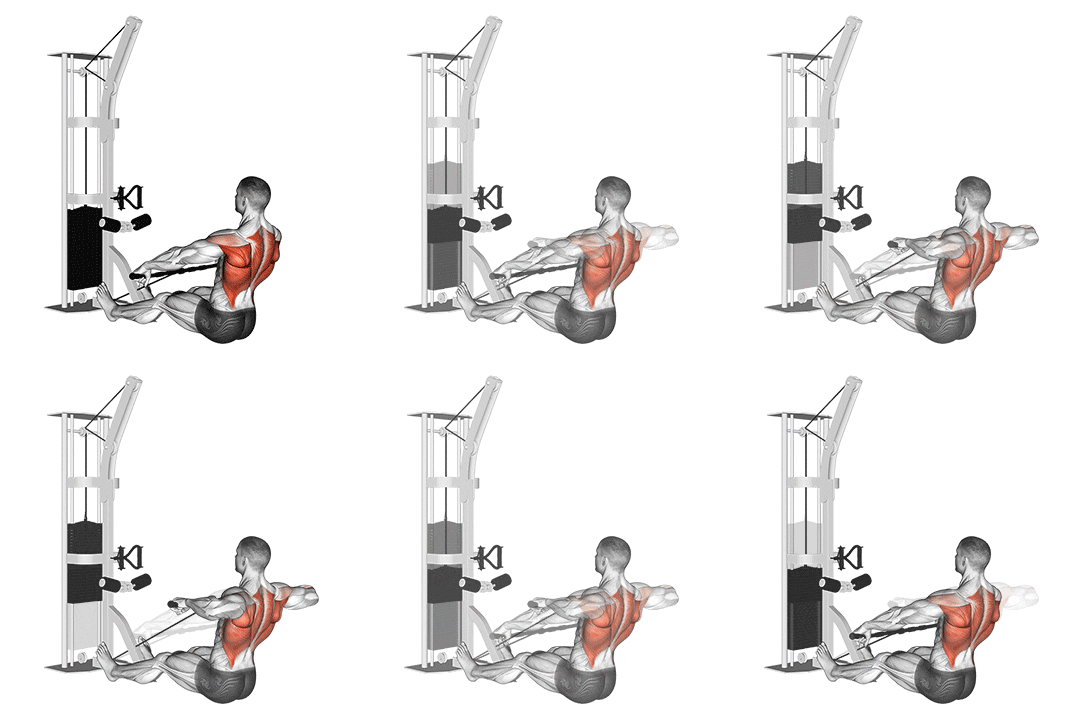
The cable floor seated wide-grip row is an exercise that targets the muscles of the back, particularly the latissimus dorsi (lats) and the middle and lower trapezius. It involves using a cable machine and a seated position on the floor to perform a rowing motion with a wide grip. This exercise helps to strengthen the back muscles, improve posture, and enhance overall upper body strength and stability. ##Instructions 1. Set up a cable machine with a low pulley attachment and attach a wide-grip handle. 2. Sit on the floor facing the cable machine and extend your legs in front of you, keeping your knees slightly bent. 3. Position your feet firmly on the ground, hip-width apart, and flex your ankles to create a stable base. 4. Grab the handle with an overhand grip (palms facing down) at a wide grip, wider than shoulder-width apart. 5. Lean back slightly while maintaining an upright posture and engage your core for stability. 6. Start with your arms extended in front of you, maintaining a slight bend in your elbows. 7. Initiate the movement by retracting your shoulder blades and pulling the handle towards your lower chest. 8. Keep your elbows pointing out to the sides and aim to bring them back as far as possible. 9. Squeeze your shoulder blades together at the peak of the movement, feeling the contraction in your back muscles. 10. Pause for a moment at the fully contracted position and then slowly extend your arms back to the starting position, maintaining control. 11. Repeat for the desired number of repetitions. ##Variations - Neutral grip wide-grip row: Perform the exercise using a neutral grip handle or attachment (palms facing each other) instead of an overhand grip. - Single-arm wide-grip row: Perform the exercise one arm at a time by using a single handle or focusing on one side at a time. - Bilateral wide-grip row: Use both hands simultaneously to perform the wide-grip row. ##Muscles Worked - Primary muscles: Latissimus dorsi (lats), middle and lower trapezius - Secondary muscles: Rhomboids, rear deltoids, biceps ##Common Mistakes - Using momentum: Avoid using momentum to pull the weight, as it reduces the effectiveness of the exercise. Focus on controlled movements and engage the back muscles throughout the entire range of motion. - Rounding the back: Keep your back straight and avoid rounding or hunching your shoulders forward. Maintain a neutral spine position to properly target the back muscles and prevent strain on the lower back. - Pulling with the arms instead of the back: Concentrate on initiating the movement by squeezing your shoulder blades together and pulling with your back muscles, rather than relying solely on your arms. ##Safety Precautions - Warm up before starting the exercise to prepare your back muscles for the workout. - Use a weight that allows you to maintain proper form and control throughout the exercise. - Keep your core engaged and maintain proper posture throughout the exercise to avoid strain on the lower back. - If you have any pre-existing back or shoulder conditions, consult with a fitness professional or healthcare provider before performing the cable floor seated wide-grip row. - If you experience pain or discomfort during the exercise, stop and seek medical advice if necessary.
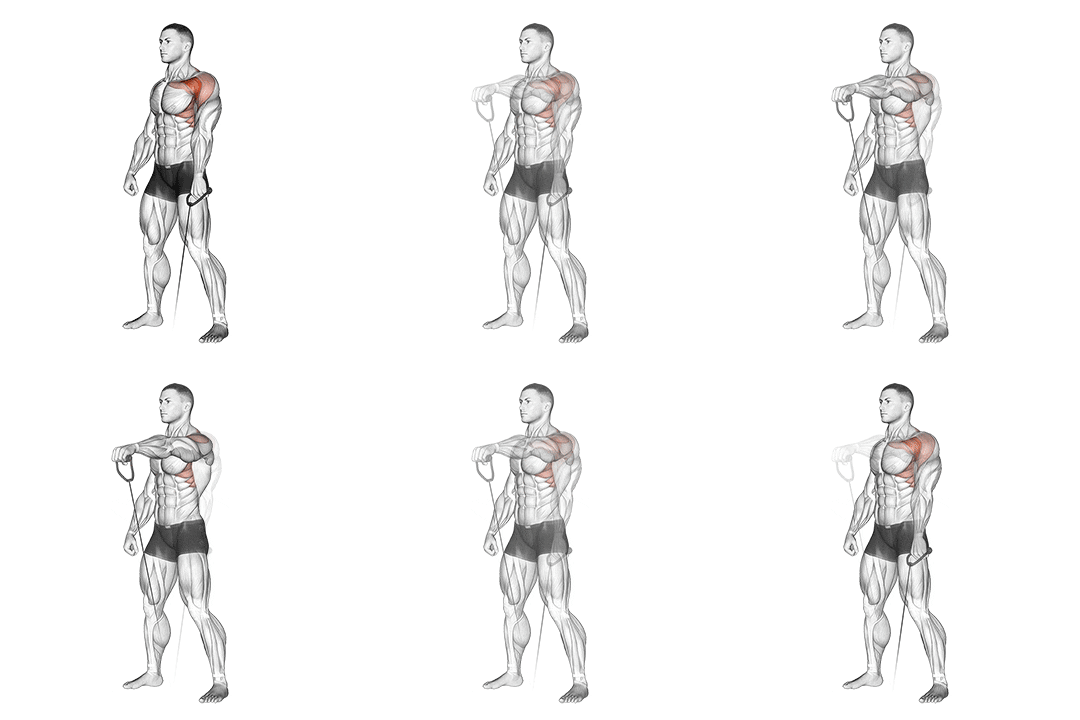
The cable forward raise is an exercise that primarily targets the anterior deltoids (front shoulders) along with the lateral deltoids (side shoulders) and upper trapezius. It involves using a cable machine to lift the arms forward in a controlled manner. This exercise helps to strengthen and develop the front and side shoulder muscles, improving shoulder stability and enhancing overall upper body aesthetics. ##Instructions 1. Stand facing a cable machine with the pulley set at the lowest position. 2. Adjust the weight on the cable machine to a suitable level. 3. Grasp the handle or attachment with an overhand grip (palms facing down) using one or both hands. 4. Position your feet shoulder-width apart and maintain a slight bend in your knees. 5. Engage your core and keep your back straight throughout the exercise. 6. Start with your arms hanging straight down in front of you, maintaining a slight bend in your elbows. 7. Initiate the movement by raising your arms forward and upward in a controlled manner. 8. Keep your arms straight or maintain a slight bend in your elbows, depending on your comfort and range of motion. 9. Continue lifting until your arms are parallel to the ground or slightly above shoulder level. 10. Hold the top position briefly, focusing on the contraction in your shoulder muscles. 11. Slowly lower your arms back down to the starting position in a controlled manner. 12. Repeat for the desired number of repetitions. ##Variations - Single-arm cable forward raise: Perform the exercise one arm at a time by using a single handle or focusing on one side at a time. - Alternating cable forward raise: Raise one arm at a time, alternating between the left and right sides. - Dumbbell forward raise: Instead of using a cable machine, you can perform the exercise using dumbbells, holding one in each hand. ##Muscles Worked - Primary muscles: Anterior deltoids (front shoulders) - Secondary muscles: Lateral deltoids (side shoulders), upper trapezius, serratus anterior ##Common Mistakes - Using excessive weight: Choose a weight that allows you to maintain proper form and control throughout the exercise. Using too much weight can compromise your technique and increase the risk of injury. - Swinging the arms: Avoid using momentum or swinging your arms to lift the weight. Focus on using your shoulder muscles to control the movement. - Shrugging the shoulders: Keep your shoulders down and avoid shrugging them towards your ears. Maintain a relaxed and stable shoulder position throughout the exercise. ##Safety Precautions - Warm up before starting the exercise to prepare your shoulder muscles for the workout. - Use a weight that challenges you but allows you to maintain proper form and control. - If you have any pre-existing shoulder or neck conditions, consult with a fitness professional or healthcare provider before performing the cable forward raise. - If you experience pain or discomfort during the exercise, stop and seek medical advice if necessary.
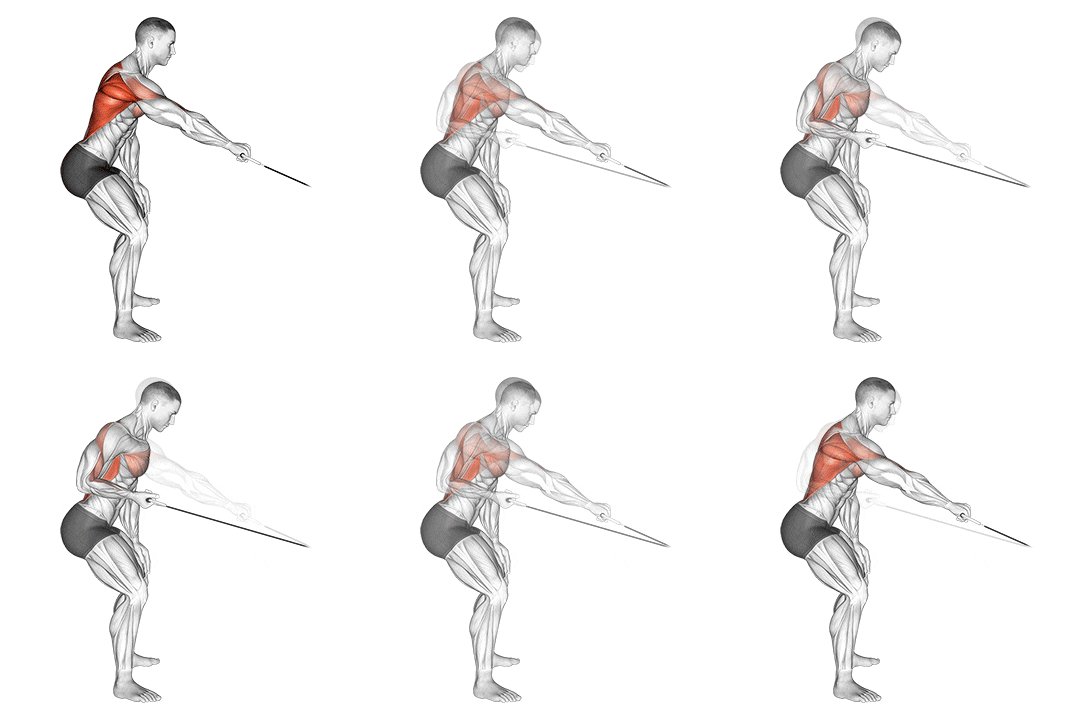
The cable palm rotational row is an exercise that targets the muscles of the back, specifically the lats (latissimus dorsi) and the rhomboids. It involves a rowing motion with a rotation of the palms, which helps to engage the muscles from different angles and enhance overall back strength and stability. ##Instructions 1. Set the cable machine with the pulley positioned at chest height. 2. Attach a handle or grip attachment to the cable. 3. Stand facing the cable machine, with your feet shoulder-width apart and your knees slightly bent. 4. Grasp the handle with an overhand grip (palms facing down) and step back to create tension in the cable. 5. Keep your core engaged and maintain good posture throughout the exercise. 6. Initiate the movement by pulling the handle toward your torso, retracting your shoulder blades and squeezing your back muscles. 7. As you pull the handle toward your torso, rotate your palms so that they face upward (supination). 8. Continue to pull until your elbows are fully flexed and your hands are near your sides. 9. Hold the position for a moment, feeling the contraction in your back muscles. 10. Slowly release the tension on the cable and extend your arms forward, rotating your palms back to the starting position (pronation). 11. Repeat for the desired number of repetitions. ##Variations - Using different grip attachments, such as a V-bar or a rope attachment, to provide variations in hand position and muscle engagement. - Performing the exercise one arm at a time for unilateral training. ##Muscles Worked - Primary muscles: Latissimus dorsi (lats), rhomboids - Secondary muscles: Biceps, rear deltoids ##Common Mistakes - Using excessive weight or momentum. Focus on using a weight that allows for controlled movements and proper form. - Allowing the shoulders to roll forward or the back to round. Maintain a neutral spine and keep your shoulder blades retracted throughout the movement. - Not fully extending the arms or retracting the shoulder blades at the starting position. Ensure that you have a full range of motion with each repetition. ##Safety Precautions - Choose an appropriate weight or resistance level that allows you to maintain proper form and control. - Keep your core engaged and maintain good posture throughout the exercise. - Avoid using jerky or sudden movements that may strain the muscles or joints. - If you have any pre-existing back or shoulder injuries, consult with a healthcare professional before attempting this exercise. - Stop the exercise immediately if you experience any pain or discomfort and seek medical advice if needed.