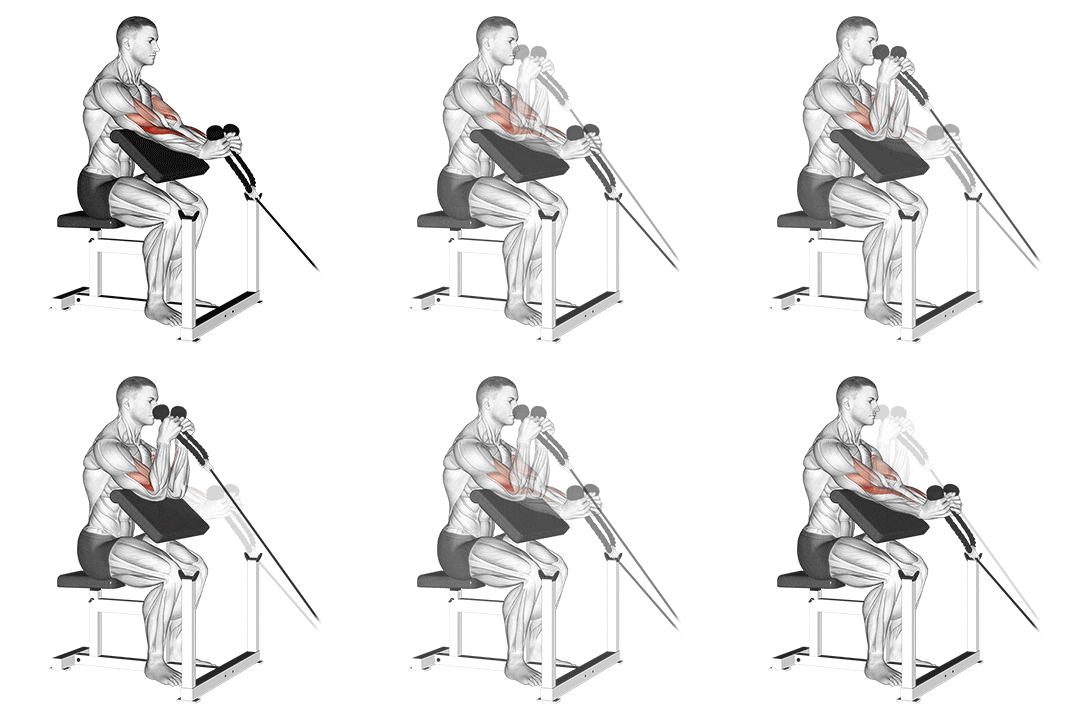
The cable rope hammer preacher curl is an isolation exercise that primarily targets the brachialis and brachioradialis muscles of the upper arm. It also engages the biceps to a lesser extent. This exercise helps to develop and strengthen the muscles of the forearm and upper arm, resulting in improved grip strength and arm aesthetics. ##Instructions 1. Start by setting up a preacher curl station with a cable machine. Attach a rope handle to the cable pulley at the lowest position. 2. Sit on the preacher curl bench and position your upper arms firmly against the angled pad, with your chest resting against the pad. 3. Grasp the rope handle with an underhand grip (palms facing up) and hold your arms fully extended. 4. Keep your upper arms stationary and exhale as you flex your elbows, curling the rope handle towards your shoulders in a hammer-like motion. 5. Squeeze your biceps and forearms at the top of the movement, holding the contraction for a brief moment. 6. In a controlled manner, inhale and gradually extend your arms, returning to the starting position. 7. Repeat for the desired number of repetitions. ##Variations - Grip variations: You can try using different grip attachments, such as a straight bar or an EZ bar, to target the muscles from different angles. - Dumbbell hammer curls: If a cable machine is not available, you can perform hammer curls with dumbbells. Stand upright with a dumbbell in each hand, palms facing your torso. Curl the dumbbells simultaneously towards your shoulders, keeping your upper arms stationary. - Alternating hammer curls: Perform the exercise by curling one arm at a time, alternating between left and right. This variation helps to isolate each arm and allows for a greater focus on form and control. ##Muscles Worked - Brachialis - Brachioradialis - Biceps - Forearms ##Common Mistakes - Using excessive momentum: Avoid swinging or using momentum to lift the weight. Focus on a slow and controlled movement throughout the exercise. - Rounding the back: Maintain proper posture and avoid hunching or rounding your back during the exercise. Keep your chest lifted and core engaged. - Allowing the elbows to flare out: Keep your elbows close to your sides throughout the movement. Avoid letting them move forward or outward. ##Safety Precautions - Start with a weight that allows you to maintain proper form and control. Gradually increase the resistance as your strength improves. - Ensure that the cable machine is securely set up and the weight stack is stable. - If you have any wrist, elbow, or shoulder issues, consult with a fitness professional or healthcare provider before attempting this exercise. - If you experience any pain or discomfort during the exercise, stop immediately and seek guidance from a qualified professional.
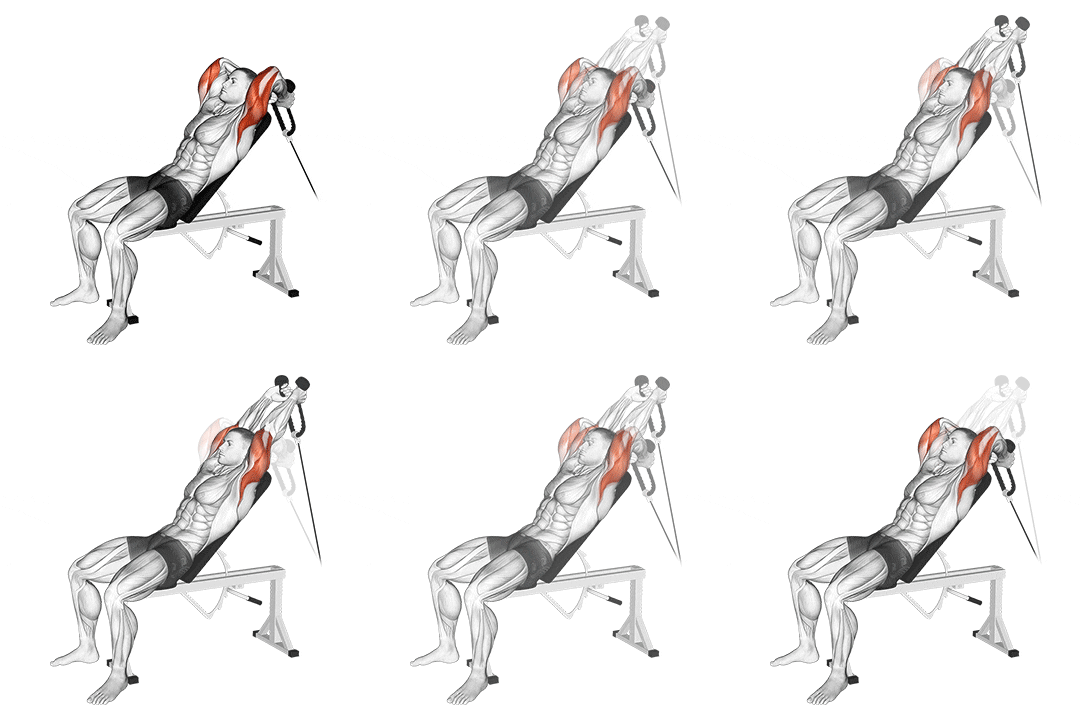
The cable rope incline tricep extension is an isolation exercise that primarily targets the triceps, the muscles located at the back of the upper arm. It also engages the shoulders and stabilizer muscles to a lesser extent. This exercise helps to strengthen and tone the triceps, enhancing arm definition and overall upper body strength. ##Instructions 1. Start by setting up an incline bench in front of a cable machine. Attach a rope handle to the cable pulley at a high position. 2. Adjust the bench to a moderate incline, around 45 degrees. 3. Sit on the bench with your back against the incline pad, feet flat on the floor, and grasp the rope handle with an overhand grip (palms facing down). 4. Position your hands close together, with your elbows slightly bent and tucked in by your sides. 5. Begin with your forearms parallel to the ground, elbows forming a 90-degree angle. 6. Keeping your upper arms stationary, exhale as you extend your forearms downward, fully extending your arms and engaging your triceps. 7. Hold the contracted position briefly, squeezing your triceps. 8. In a controlled manner, inhale and gradually return to the starting position, allowing your forearms to return to the parallel position. 9. Repeat for the desired number of repetitions. ##Variations - Rope grip variations: Experiment with different grip attachments, such as a straight bar or a V-bar, to target the triceps from slightly different angles. - One-arm tricep extension: Instead of using both arms simultaneously, perform the exercise with one arm at a time. This variation allows for greater focus and isolation of each tricep. - Standing cable tricep extension: If an incline bench is not available, you can perform the exercise in a standing position. Use a high cable pulley and a rope handle, following the same movement pattern. ##Muscles Worked - Triceps ##Common Mistakes - Swinging or using momentum: Avoid using momentum to lift the weight. Maintain a controlled and smooth movement throughout the exercise. - Allowing the elbows to flare out: Keep your elbows tucked in by your sides throughout the movement. Avoid letting them move forward or outward, as this can shift the focus away from the triceps. - Not fully extending the arms: Ensure that you fully extend your arms at the bottom of the movement to engage the triceps effectively. ##Safety Precautions - Begin with a weight that allows you to maintain proper form and control. Gradually increase the resistance as your strength improves. - Keep your core engaged and maintain a stable seated position on the incline bench throughout the exercise. - If you have any pre-existing elbow or shoulder issues, consult with a fitness professional or healthcare provider before attempting this exercise. - If you experience any pain or discomfort during the exercise, stop immediately and seek guidance from a qualified professional.
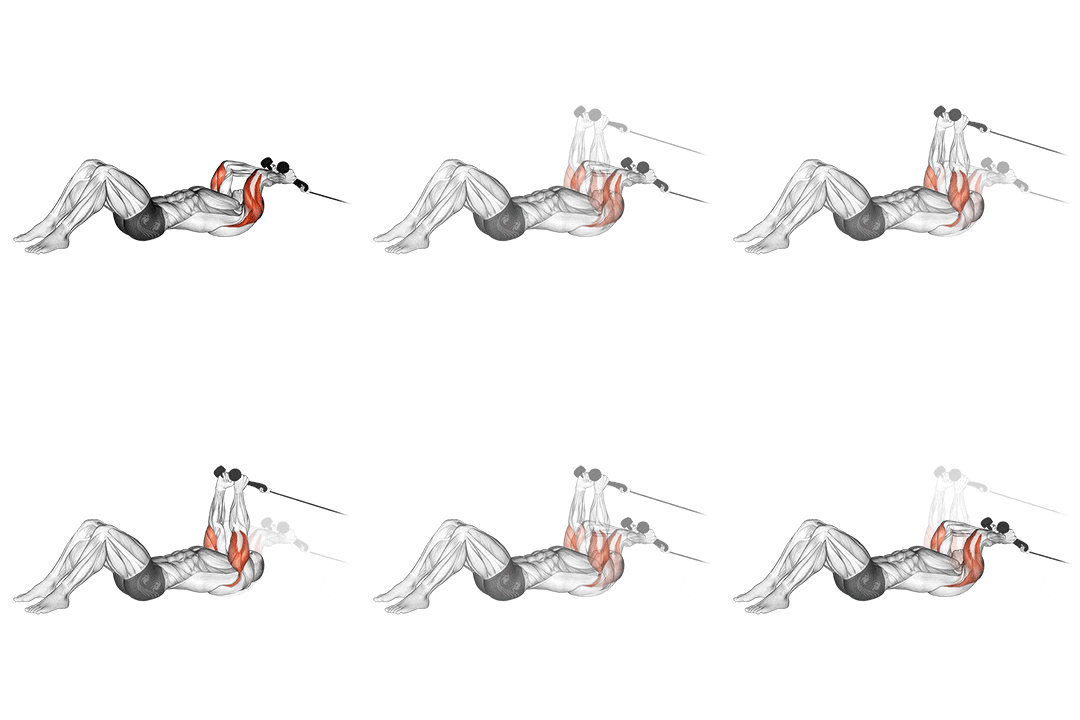
The cable rope lying on floor tricep extension is an isolation exercise that primarily targets the triceps, the muscles located at the back of the upper arm. It also engages the shoulders and stabilizer muscles to a lesser extent. This exercise helps to strengthen and tone the triceps, enhancing arm definition and overall upper body strength. ##Instructions 1. Start by setting up a cable machine with a rope handle attached to the high pulley. 2. Place an exercise mat or towel on the floor in front of the cable machine. 3. Lie down on your back with your head closest to the cable machine, and position yourself so that your head, shoulders, and upper back are supported on the mat or towel. 4. Extend your arms straight up toward the cable machine, grasping the rope handle with an overhand grip (palms facing down). 5. Keep your upper arms stationary and perpendicular to the floor, with your elbows slightly bent. 6. Exhale as you slowly lower the rope handle down toward your head, bending your elbows and engaging your triceps. 7. Continue lowering until your forearms are parallel to the floor or until you feel a stretch in your triceps. 8. Hold the contracted position briefly, focusing on the tension in your triceps. 9. In a controlled manner, inhale and gradually extend your arms, raising the rope handle back to the starting position. 10. Repeat for the desired number of repetitions. ##Variations - Single-arm tricep extension: Perform the exercise with one arm at a time, focusing on each tricep individually. This allows for greater concentration and control. - Dumbbell lying tricep extension: If a cable machine is not available, you can perform a similar movement using dumbbells. Lie down on a bench with a dumbbell in each hand, palms facing in. Extend your arms up toward the ceiling, and then slowly lower the dumbbells toward your head, bending your elbows and engaging your triceps. - Resistance band tricep extension: Attach a resistance band to a sturdy anchor point above you. Lie down on the floor or a mat and hold the band with an overhand grip. Perform the tricep extension by extending your arms and bringing your hands toward your head. ##Muscles Worked - Triceps ##Common Mistakes - Raising the upper arms: Keep your upper arms stationary and perpendicular to the floor throughout the exercise. Avoid allowing them to move or rotate. - Not controlling the movement: Maintain a slow and controlled tempo throughout the exercise, focusing on engaging the triceps and avoiding momentum. - Not fully extending the arms: Make sure to fully extend your arms at the top of the movement, squeezing your triceps. ##Safety Precautions - Choose a weight or resistance level that allows you to maintain proper form and control. - Use a supportive mat or towel to cushion your head, shoulders, and upper back while lying on the floor. - If you have any pre-existing elbow or shoulder issues, consult with a fitness professional or healthcare provider before attempting this exercise. - If you experience any pain or discomfort during the exercise, stop immediately and seek guidance from a qualified professional.
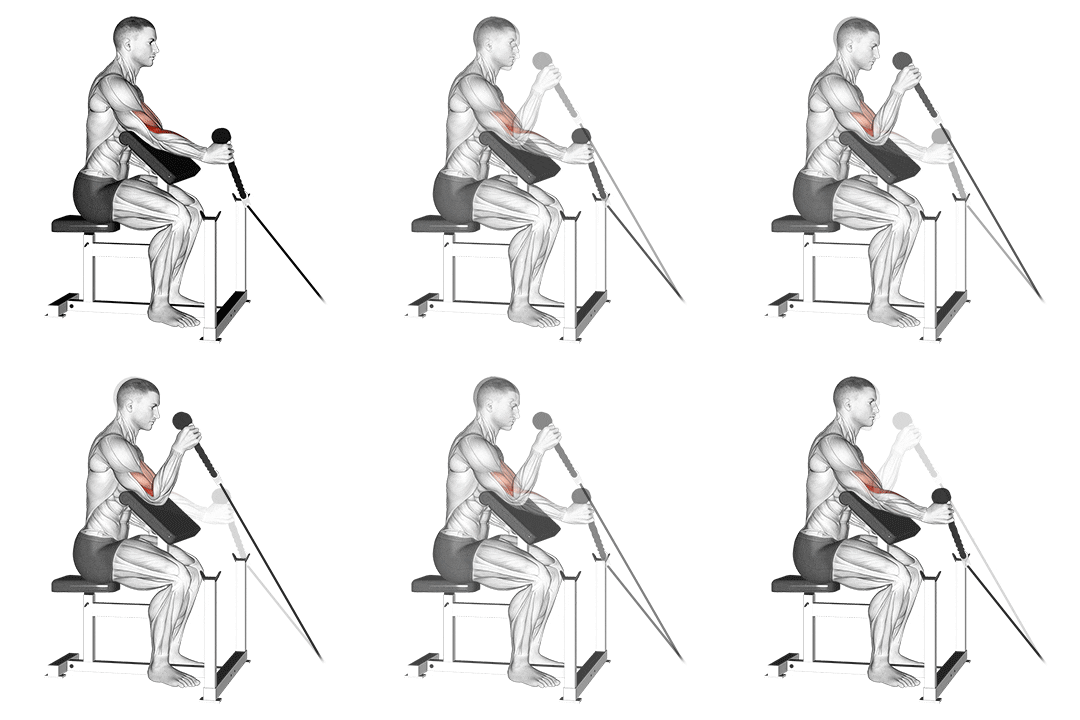
The cable rope one-arm hammer preacher curl is an isolation exercise that targets the brachialis and brachioradialis muscles of the upper arm, as well as the biceps. By performing this exercise with one arm at a time, it allows for better focus on each arm and helps to correct strength imbalances. The hammer grip engages the forearm muscles, contributing to improved grip strength and overall arm development. ##Instructions 1. Start by setting up a preacher curl station with a cable machine. Attach a rope handle to the cable pulley at the lowest position. 2. Adjust the preacher curl bench to a height that allows your upper arm to rest comfortably on the angled pad. 3. Stand next to the preacher curl bench, facing the cable machine. Grasp the rope handle with an underhand grip (palms facing up) using one hand. 4. Rest the back of your upper arm against the pad, allowing your arm to fully extend and the cable to be taut. 5. Position your feet shoulder-width apart for stability. 6. Keeping your upper arm stationary, exhale as you flex your elbow, curling the rope handle towards your shoulder in a hammer-like motion. 7. Squeeze your biceps and forearm muscles at the top of the movement, holding the contraction for a brief moment. 8. In a controlled manner, inhale and gradually extend your arm, returning to the starting position with your forearm parallel to the ground. 9. Repeat for the desired number of repetitions on one arm before switching to the other arm. ##Variations - Grip variations: Experiment with different grip attachments, such as a straight bar or an EZ bar, to target the muscles from slightly different angles. - Two-arm hammer preacher curl: Instead of performing the exercise with one arm at a time, you can curl both arms simultaneously using a rope handle or other grip attachments. - Seated one-arm hammer preacher curl: Perform the exercise while seated on the preacher curl bench, following the same movement pattern. This variation provides additional support and stability. ##Muscles Worked - Brachialis - Brachioradialis - Biceps - Forearm muscles (grip strength) ##Common Mistakes - Rounding the back: Maintain proper posture throughout the exercise. Avoid hunching or rounding your back and keep your chest lifted. - Using excessive momentum: Avoid using swinging or jerking motions to lift the weight. Focus on controlled and deliberate movements. - Allowing the elbow to move forward: Keep your upper arm stationary and avoid allowing the elbow to move forward during the curl. This ensures better isolation of the targeted muscles. ##Safety Precautions - Start with a weight that allows you to maintain proper form and control. Gradually increase the resistance as your strength improves. - Ensure that the cable machine is properly set up and the weight stack is secure. - If you have any wrist, elbow, or shoulder issues, consult with a fitness professional or healthcare provider before attempting this exercise. - If you experience any pain or discomfort during the exercise, stop immediately and seek guidance from a qualified professional.
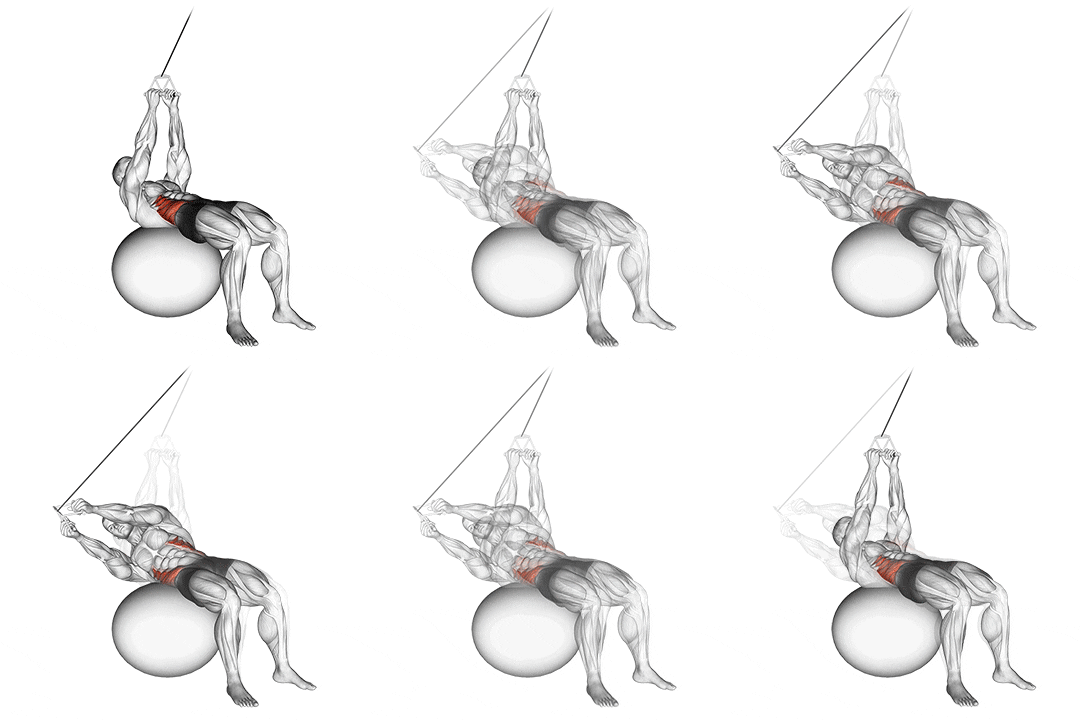
Cable Russian twists on a stability ball are a core-strengthening exercise that targets the oblique muscles, which are located on the sides of the abdomen. This exercise also engages the rectus abdominis (six-pack muscles), lower back, and hip flexors. By incorporating the stability ball and the resistance provided by the cable, it challenges balance and stability, making it an effective exercise for improving core strength, rotational power, and overall functional fitness. ##Instructions 1. Start by setting up a cable machine with a D-handle attached to the high pulley. 2. Place a stability ball on the floor a few feet away from the cable machine. 3. Sit on the stability ball and walk your feet forward until your upper back is resting on the ball. Your knees should be bent at a 90-degree angle, with your feet flat on the ground. 4. Grasp the D-handle with both hands, palms facing inward, and extend your arms straight in front of your chest. 5. Engage your core and lift your upper body off the ball, creating a V-shape with your thighs and torso. 6. Keeping your back straight and your abs tight, exhale as you rotate your torso to one side, bringing the cable handle toward your hip. 7. Pause briefly at the end of the rotation, feeling the contraction in your oblique muscles. 8. In a controlled manner, inhale as you rotate your torso back to the center, keeping your abs engaged. 9. Repeat the rotation to the opposite side. 10. Continue alternating sides for the desired number of repetitions. ##Variations - Medicine ball Russian twists: Instead of using a cable machine, hold a medicine ball or a dumbbell with both hands and perform the twisting motion while seated on the stability ball. - Weighted cable Russian twists: Attach a cable handle to the low pulley and hold it with both hands. Sit on the stability ball and perform the Russian twists, allowing the cable to provide resistance throughout the movement. ##Muscles Worked - Obliques (external and internal) - Rectus abdominis - Lower back muscles - Hip flexors ##Common Mistakes - Using momentum: Avoid relying on momentum to rotate your torso. Focus on controlled and deliberate movements, engaging the core muscles throughout. - Rounding the back: Keep your back straight and maintain good posture throughout the exercise. Avoid hunching or rounding your back. - Failing to engage the core: Remember to actively engage your core muscles throughout the exercise to stabilize your body and maximize the benefits. ##Safety Precautions - Choose a cable resistance level that challenges your core muscles but allows you to maintain proper form and control. - Ensure that the stability ball is properly inflated and stable before using it. - If you have any pre-existing back or core issues, consult with a fitness professional or healthcare provider before attempting this exercise. - If you experience any pain or discomfort during the exercise, stop immediately and seek guidance from a qualified professional.
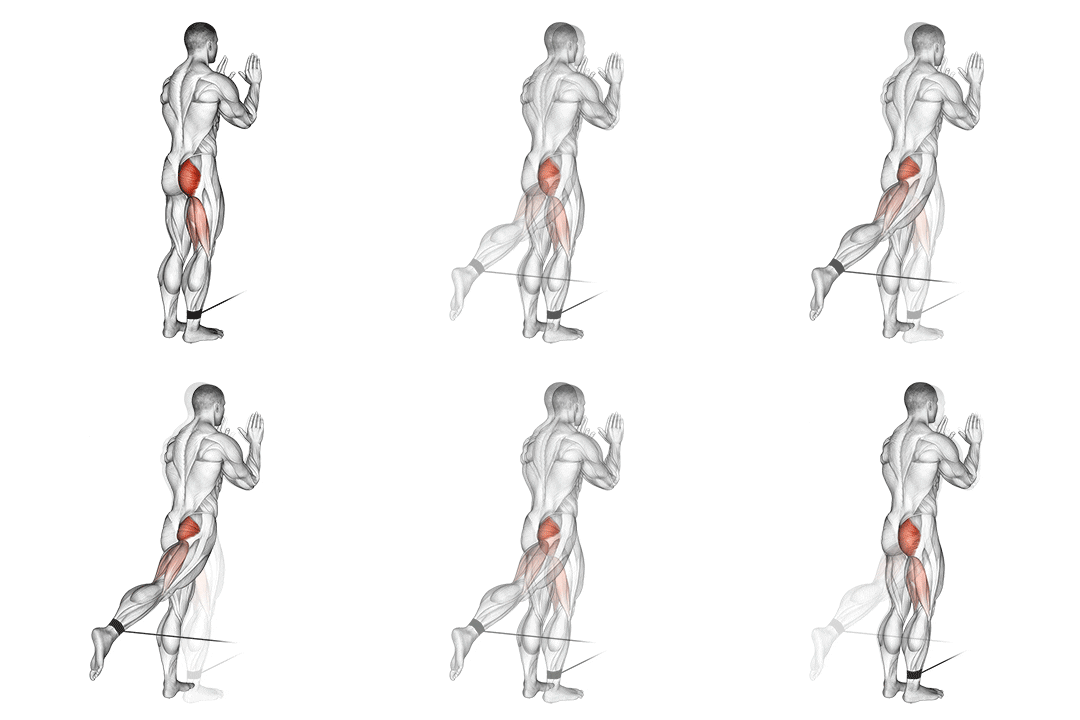
The cable standing hip extension is an exercise that targets the glutes, specifically the gluteus maximus, as well as the hamstrings. It involves extending the hip joint against resistance provided by a cable machine. This exercise helps improve hip strength, stability, and overall lower body development. ##Instructions 1. Start by setting up a cable machine with an ankle cuff attachment at the lowest setting. 2. Attach the ankle cuff to your ankle and stand facing away from the machine, with your feet shoulder-width apart. 3. Position yourself at a distance from the machine where there is tension on the cable but you can maintain balance and stability. 4. Place your hands on your hips or hold onto a stable object for support. 5. Engage your core muscles and maintain an upright posture throughout the exercise. 6. Exhale and slowly extend your leg straight back, squeezing your glutes as you do so. Keep your knee straight but not locked. 7. Pause for a moment at the fully extended position, feeling the contraction in your glutes and hamstrings. 8. Inhale and slowly return to the starting position, bending your knee and bringing your leg back to the starting point. 9. Repeat for the desired number of repetitions and then switch to the other leg. ##Variations - Resistance Variation: Adjust the weight on the cable machine to increase or decrease the intensity of the exercise. - Standing Cable Kickback: Perform the exercise with a kicking motion, bending the knee and kicking the leg straight back in a controlled manner. - One-Legged Variation: Perform the exercise using only one leg at a time, which increases the challenge and places greater emphasis on each leg individually. ##Muscles Worked - Gluteus maximus (buttocks muscles) - Hamstrings (back of the thighs) - Erector spinae (lower back muscles) - Core muscles (stabilization) ##Common Mistakes - Arching the Back: Avoid excessive arching of the lower back during the movement. Keep your core engaged and maintain a neutral spine. - Using Momentum: Perform the exercise in a controlled manner, avoiding any swinging or jerking motions. Focus on using the glutes to initiate the movement. - Not Squeezing the Glutes: At the top of the movement, consciously squeeze your glutes to fully engage them. ##Safety Precautions - Start with a lighter weight and gradually increase the resistance as your strength and technique improve. - Maintain stability and balance throughout the exercise. Use a stable object or hold onto a support if needed. - If you have any pre-existing hip or lower back injuries, consult with a healthcare professional before attempting this exercise. - Listen to your body and stop the exercise if you experience any pain or discomfort.
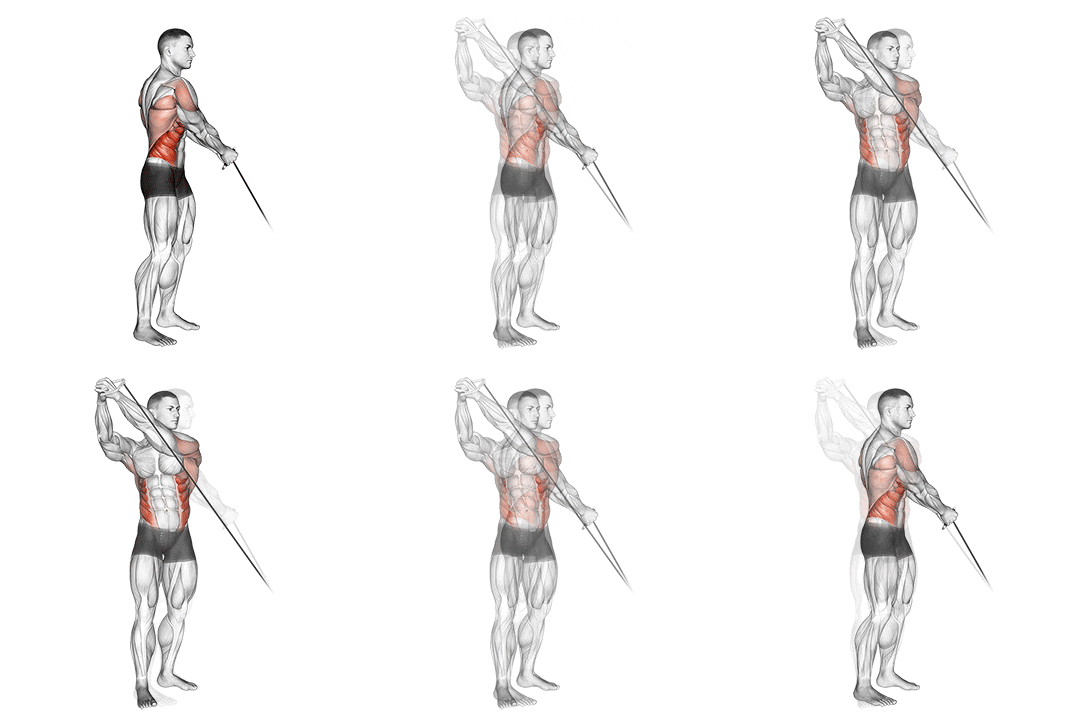
The cable standing lift is an exercise that targets the shoulders, specifically the deltoid muscles, as well as the muscles of the upper back. It involves lifting the cable handles from a low position to a high position while maintaining proper form and control. This exercise helps improve shoulder strength, stability, and overall upper body development. ##Instructions 1. Start by setting up a cable machine with the handles attached at a low position. 2. Stand facing the machine with your feet shoulder-width apart and knees slightly bent. 3. Grab one handle in each hand with a palms-down grip, and stand far enough from the machine to create tension on the cables. This is your starting position. 4. Engage your core muscles and maintain an upright posture throughout the exercise. 5. Exhale and slowly lift both handles simultaneously, leading with your elbows. Keep your arms slightly bent throughout the movement. 6. Lift the handles up and slightly out to the sides until they reach shoulder height. 7. Pause for a moment at the top of the movement, feeling the contraction in your shoulder muscles. 8. Inhale and slowly lower the handles back down to the starting position, maintaining control. 9. Repeat for the desired number of repetitions. ##Variations - Single-Arm Variation: Perform the exercise with one arm at a time, focusing on each shoulder separately. - High-to-Low Variation: Instead of starting with the handles at a low position, begin with the handles above your shoulders and bring them down and in front of your body in a controlled motion. - Resistance Variation: Adjust the weight on the cable machine to increase or decrease the intensity of the exercise. ##Muscles Worked - Deltoids (shoulder muscles) - Trapezius (upper back muscles) - Rhomboids (mid-back muscles) ##Common Mistakes - Using Momentum: Avoid using momentum to lift the handles. Focus on controlled and deliberate movements. - Shrugging the Shoulders: Keep your shoulders down and back throughout the exercise to engage the target muscles effectively. - Rounding the Back: Maintain a neutral spine and avoid excessive arching or rounding of the back. ##Safety Precautions - Start with a weight that challenges you but still allows you to maintain proper form. - If you have any pre-existing shoulder or back injuries, consult with a healthcare professional before attempting this exercise. - Engage your core muscles for stability throughout the exercise. - Listen to your body and stop the exercise if you experience any pain or discomfort.
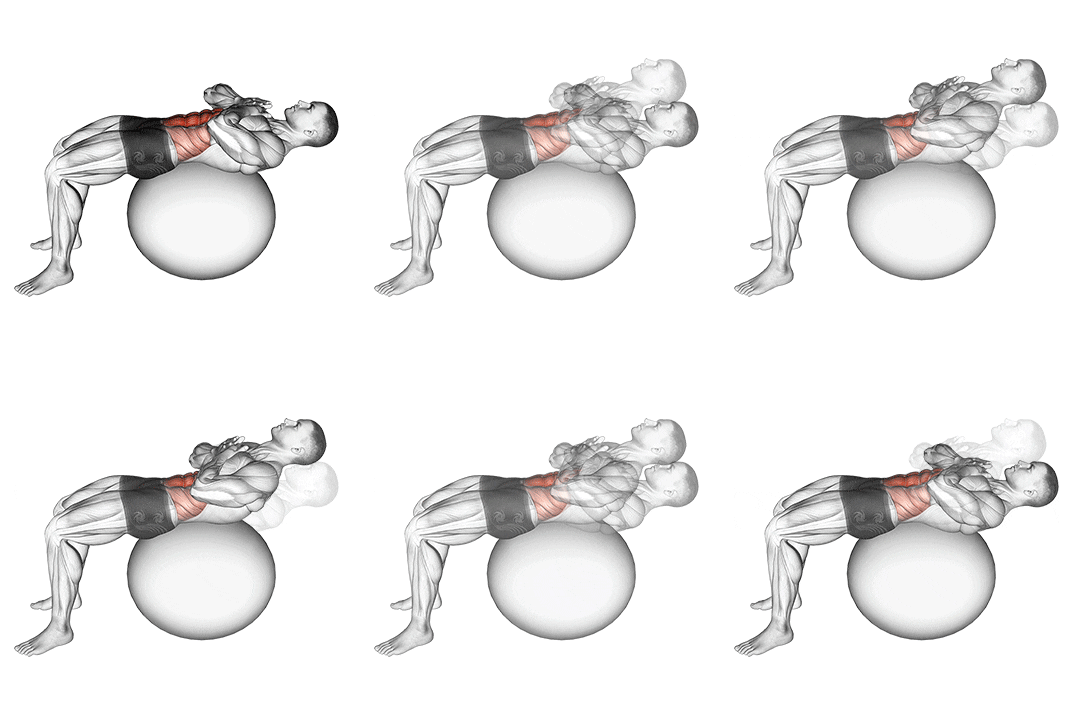
The crunch on a stability ball is an abdominal exercise that targets the rectus abdominis (six-pack muscles) and engages the stabilizer muscles in the core. By performing the crunch on an unstable surface, such as a stability ball, it increases the challenge and activates more muscle fibers in the abdominals. This exercise helps strengthen the core, improve balance, and enhance overall abdominal strength. ## Instructions 1. Start by sitting on a stability ball and slowly walk your feet forward while rolling the ball underneath your lower back. The ball should be positioned at your lower back, with your feet flat on the floor and knees bent at a 90-degree angle. 2. Place your hands lightly behind your ears or cross them over your chest. 3. Engage your core by drawing your navel towards your spine. 4. Inhale deeply, and as you exhale, contract your abdominal muscles and curl your upper body forward, lifting your shoulder blades off the ball. 5. Keep your neck relaxed and chin slightly lifted, focusing on using your abdominal muscles to perform the movement. 6. Pause briefly at the top of the movement, squeezing your abs. 7. Inhale as you slowly lower your upper body back down, maintaining control and keeping contact with the stability ball. 8. Repeat the movement for the desired number of repetitions. ## Variations - Weighted Crunch: Hold a dumbbell or a weight plate against your chest while performing the crunch to add resistance and increase the intensity of the exercise. - Twist Crunch: Add a twisting motion to the crunch by bringing your elbow toward the opposite knee as you lift your upper body off the stability ball. This variation targets the obliques in addition to the rectus abdominis. ## Muscles Worked - Rectus abdominis (six-pack muscles) - Obliques (secondary muscles) - Stabilizer muscles in the core ## Common Mistakes - Pulling on the neck: Avoid pulling on the neck or using the hands to forcefully lift the head. Keep your hands lightly behind your ears or crossed over your chest, and focus on using your abdominal muscles to perform the movement. - Using momentum: Perform the exercise in a controlled manner and avoid using momentum to lift the upper body. Concentrate on engaging the core and using the abdominal muscles to curl the torso forward. - Arching the lower back: Keep your lower back in contact with the stability ball throughout the exercise. Avoid excessive arching or overarching of the lower back. - Not fully contracting the abs: At the top of the movement, focus on fully contracting the abdominal muscles, squeezing them for maximum engagement and benefit. ## Safety Precautions - Choose a stability ball appropriate for your height and weight. Make sure it is properly inflated and provides a stable surface. - If you have any back or neck injuries or conditions, consult with a healthcare professional before attempting this exercise. - Engage your core muscles throughout the exercise to maintain stability and protect your lower back. - Start with a few repetitions and gradually increase the intensity and duration as you become more comfortable with the exercise. - If you experience any pain or discomfort during the exercise, stop immediately and consult a fitness professional or healthcare provider.
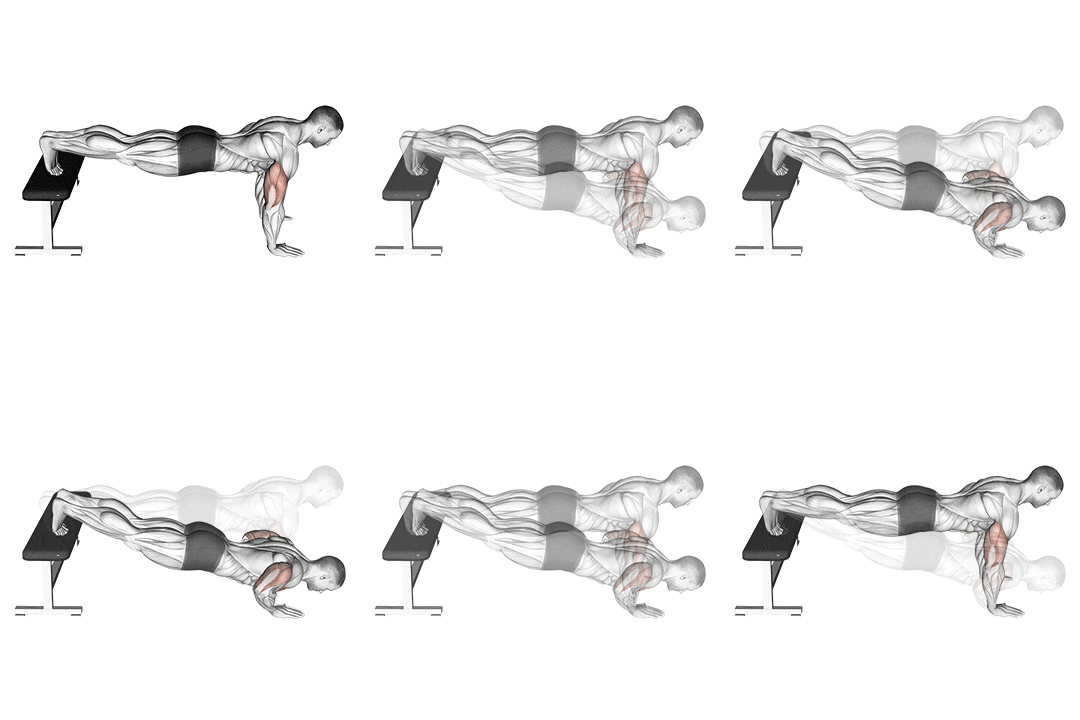
The decline push-up is a variation of the traditional push-up exercise that targets the muscles of the chest, shoulders, and triceps. By elevating the feet on an elevated surface, such as a bench or step, the decline push-up increases the resistance and places greater emphasis on the upper body muscles. ## Instructions 1. Position yourself facing down on the floor, with your hands slightly wider than shoulder-width apart and your toes on an elevated surface, such as a bench or step. 2. Engage your core by drawing your navel toward your spine and keeping your body in a straight line from head to toe. 3. Lower your body towards the floor by bending your elbows, while maintaining a tight and stable core. 4. Continue lowering until your chest is just above the floor or until you reach a comfortable range of motion. 5. Pause briefly in the lowered position, and then push through your hands to extend your arms and return to the starting position. 6. Keep your body aligned and avoid sagging or arching your back throughout the movement. 7. Repeat the exercise for the desired number of repetitions. ## Variations - Incline Push-Up: Perform the push-up with your hands on an elevated surface, such as a bench or step, and your feet on the floor. This variation reduces the intensity and places more emphasis on the lower chest muscles. - Diamond Push-Up: Place your hands close together, forming a diamond shape with your thumbs and index fingers on the floor. This variation targets the triceps muscles to a greater extent. - Plyometric Push-Up: Once you've mastered the decline push-up, you can add an explosive element by pushing off the elevated surface with enough force to allow your hands to leave the ground momentarily. ## Muscles Worked The main muscles targeted or engaged during the decline push-up exercise are: - Chest muscles (pectoralis major and minor) - Shoulder muscles (deltoids) - Triceps brachii (back of the upper arm) ## Common Mistakes - Flaring Elbows: Keep your elbows at a 45-degree angle from your body. Avoid letting your elbows flare out to the sides, as it can strain the shoulder joints. - Sagging or Arching Back: Maintain a straight line from your head to your heels. Avoid sagging your hips or arching your lower back during the movement. - Poor Core Engagement: Engage your core muscles throughout the exercise to maintain stability and prevent your hips from sagging. - Insufficient Range of Motion: Lower your body until your chest is just above the floor or until you reach a comfortable range of motion. Avoid performing partial repetitions or stopping too high. ## Safety Precautions - If you have any pre-existing medical conditions or concerns, consult with a healthcare professional before attempting this exercise. - Choose an elevated surface that is stable and secure to prevent slipping or accidents. - Warm up your upper body and perform dynamic stretches for the chest, shoulders, and triceps before starting the exercise. - Listen to your body and perform the exercise within your comfortable range of motion. Avoid overexerting yourself or pushing through sharp pain. - Keep your breathing steady and exhale as you push up from the lowered position. - If you experience any discomfort or pain, modify the exercise or choose a less challenging variation. - If you're new to the exercise, it may be helpful to have a fitness professional guide you through proper form and technique to ensure optimal results and reduce the risk of injury.