
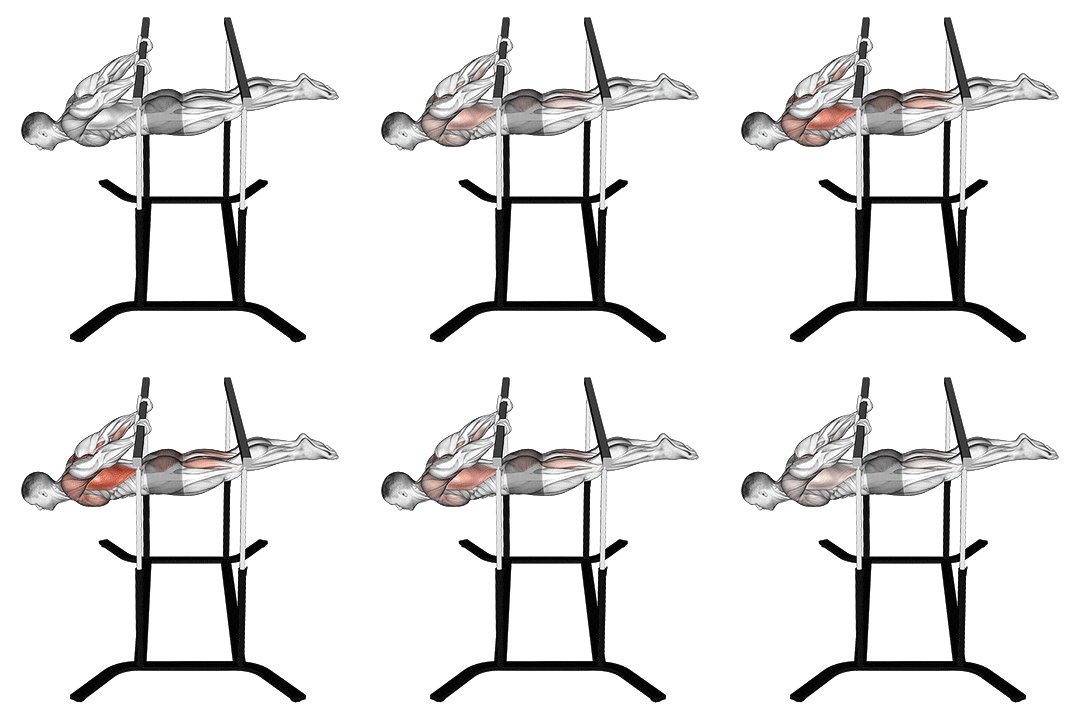
The back lever is an advanced gymnastic exercise that targets the muscles of the upper body, particularly the back, shoulders, and core. It involves holding your body parallel to the ground while hanging from a bar or rings, with your arms straight and your body fully extended. The back lever requires significant strength, stability, and body control. ## Instructions 1. Start by hanging from a bar or rings with an overhand grip, slightly wider than shoulder-width apart. 2. Engage your core and scapula muscles by pulling your shoulder blades down and back. 3. Bend your knees and tuck your legs towards your chest. 4. Simultaneously, lean your upper body backward, allowing your legs to extend forward. 5. Continue the movement until your body is parallel to the ground, with your arms straight and fully extended. 6. Keep your entire body tight and maintain a straight line from your shoulders to your toes. 7. Hold the position for the desired duration, focusing on proper form and body alignment. 8. To come out of the back lever, reverse the movement by tucking your legs back towards your chest and returning to the starting hanging position. ## Variations - Advanced Back Lever: Once you have mastered the basic back lever, you can progress to more advanced variations such as the straddle back lever or the full straight body back lever. - Assisted Back Lever: Use resistance bands or have a spotter assist you by providing support under your hips or feet to lighten the load and make the exercise more achievable. ## Muscles Worked - Primary muscles: Latissimus dorsi (back muscles), posterior deltoids (rear shoulder muscles), rhomboids (mid-back muscles), and core muscles for stability. - Secondary muscles: Biceps, triceps, forearms, and grip strength. ## Common Mistakes - Allowing the hips to sag or arch: Maintain a straight line from shoulders to toes throughout the movement, avoiding excessive sagging or arching. - Not engaging the core and shoulder muscles: Focus on pulling your shoulder blades down and back and actively engaging your core to maintain stability and control. - Using excessive momentum: Avoid using swinging or kicking movements to get into or out of the back lever. Control the movement with strength and precision. ## Safety Precautions - The back lever is an advanced exercise and should only be attempted by individuals who have sufficient upper body and core strength. - Ensure that you have developed adequate shoulder and back strength before attempting the back lever. - Progress gradually, starting with easier variations and gradually working towards the full back lever. - It is recommended to have a qualified coach or spotter to provide guidance, support, and ensure safety during the exercise. - If you experience any pain, discomfort, or instability while attempting the back lever, stop immediately and seek guidance from a professional.
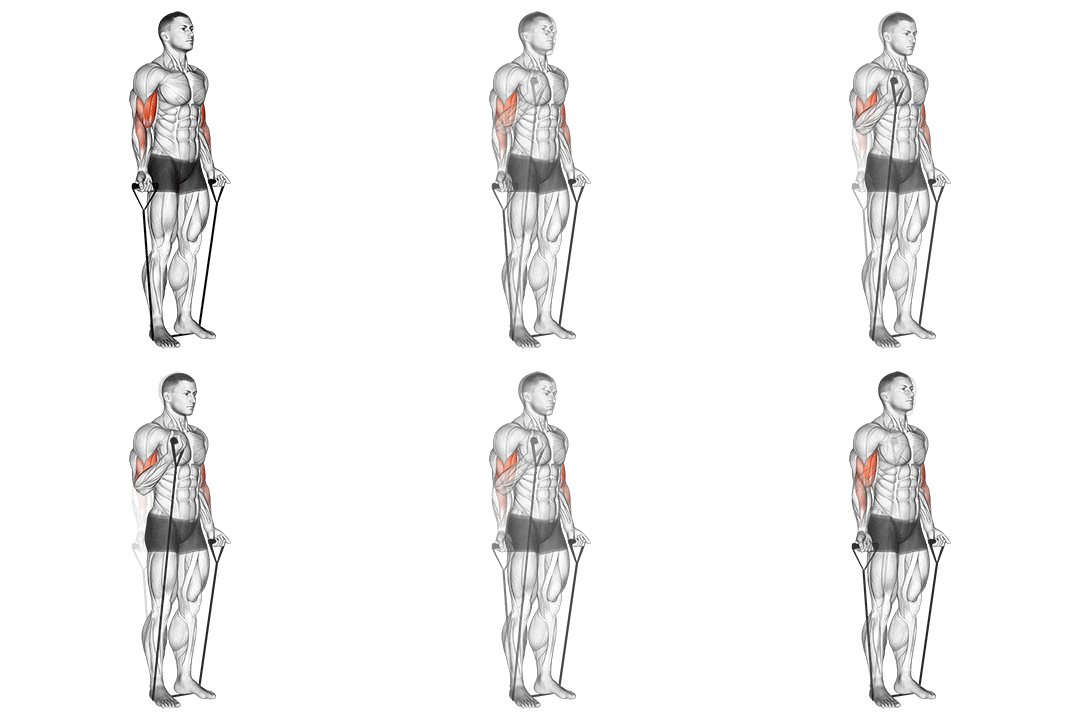
The band alternating biceps curl is an exercise that targets the biceps muscles of the upper arms. By using resistance bands, it provides resistance throughout the entire range of motion, helping to strengthen and tone the biceps while improving grip strength. ## Instructions 1. Stand with your feet shoulder-width apart, knees slightly bent, and core engaged. 2. Hold a resistance band in each hand, with your palms facing forward. 3. Step on the middle of the band with both feet, ensuring the band is securely anchored. 4. Start with your arms fully extended, elbows close to your sides, and the bands taut. 5. Keeping your elbows stationary, exhale and flex your right arm at the elbow, bringing your right hand towards your right shoulder. 6. Keep your wrist straight and focus on contracting the biceps throughout the movement. 7. Pause briefly at the top of the movement, then slowly lower your right arm back to the starting position while inhaling. 8. Repeat the movement with your left arm, and continue alternating arms for the desired number of repetitions. ## Variations - Resistance Band Curl: If you don't have access to resistance bands, you can perform the alternating biceps curl using dumbbells or barbells. - Seated Alternating Biceps Curl: Sit on a bench or chair with your back supported and perform the exercise in a seated position. This variation isolates the biceps muscles further and removes any potential momentum from the lower body. ## Muscles Worked - Biceps brachii (front upper arm muscles) - Brachialis (muscles beneath the biceps) - Brachioradialis (forearm muscle) ## Common Mistakes - Using momentum: Avoid swinging or using momentum to lift the weights. Focus on controlled movements and isolate the biceps muscles. - Allowing the elbows to move forward or outward: Keep your elbows stationary and close to your sides throughout the exercise to target the biceps effectively. - Not fully extending the arms: Ensure that you fully extend your arms at the starting position to achieve a complete range of motion and engage the biceps fully. ## Safety Precautions - Choose a resistance band with appropriate tension for your fitness level. Start with a lighter band and progress to heavier ones as your strength improves. - Maintain proper form and technique throughout the exercise to prevent strain or injury. - If you experience any pain or discomfort in your wrists, elbows, or shoulders, discontinue the exercise and consult with a qualified fitness professional or healthcare provider. - As with any exercise, listen to your body and avoid overexertion. Start with a manageable number of repetitions and gradually increase as you get stronger.
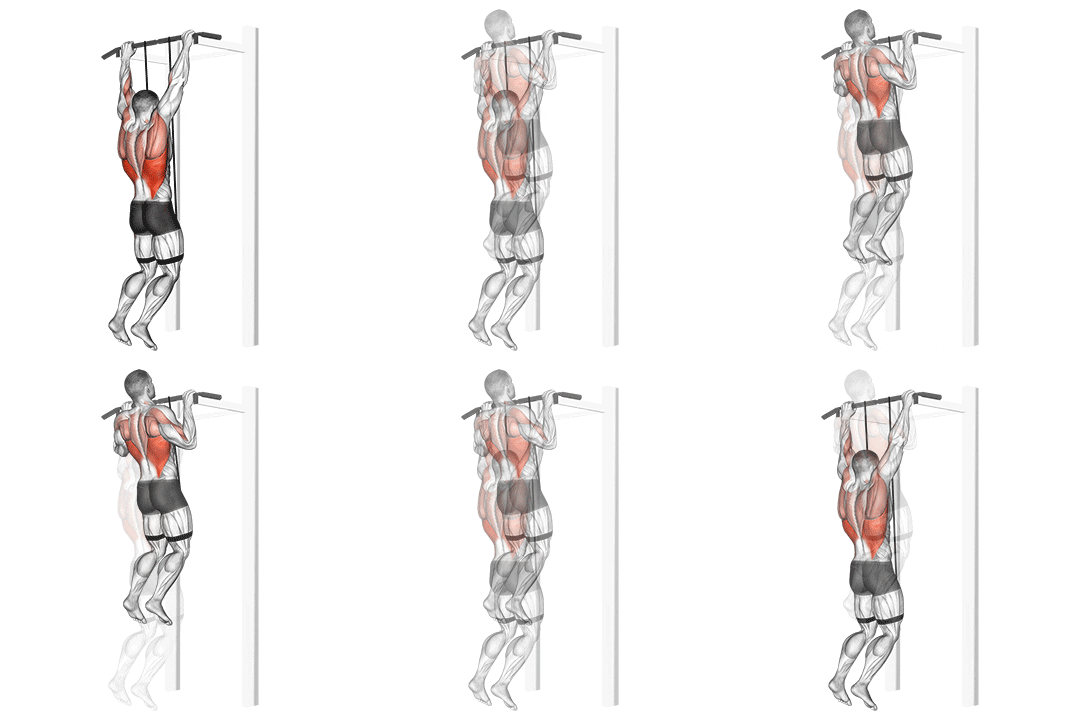
The band-assisted pull-up is an exercise that targets the muscles of the upper body, particularly the back, shoulders, and arms. It is a modified version of the pull-up exercise that utilizes resistance bands to assist with the movement, making it more accessible for individuals who are working towards performing unassisted pull-ups. This exercise helps develop upper body strength, improves posture, and increases pulling power. ## Instructions 1. Attach a resistance band to a pull-up bar or sturdy overhead structure. 2. Step onto the band with one or both feet, depending on the level of assistance needed. The higher you place your feet on the band, the more assistance you'll receive. 3. Reach up and grasp the pull-up bar with an overhand grip, hands slightly wider than shoulder-width apart. 4. Hang with your arms fully extended, shoulders engaged, and core activated. 5. As you exhale, pull your body upward by bending your elbows and retracting your shoulder blades. 6. Keep your chest lifted and aim to bring your chin above the level of the bar. 7. Pause briefly at the top of the movement, then inhale as you slowly lower your body back to the starting position with control. 8. Repeat the exercise for the desired number of repetitions. ## Variations - Band Resistance: Adjust the thickness or resistance of the band to modify the level of assistance. Thicker bands provide more assistance, while thinner bands offer less assistance. - Band Placement: Adjust the placement of the band on the pull-up bar or overhead structure to change the angle of assistance. Higher placement provides more assistance, while lower placement increases the challenge. - Eccentric Pull-Ups: Instead of performing the full pull-up motion, focus on the lowering (eccentric) phase only. Use the band assistance to get into the top position, then slowly lower yourself down in a controlled manner to build strength. ## Muscles Worked - Latissimus dorsi (lats) - Rhomboids - Trapezius (upper and middle fibers) - Biceps brachii (arms) - Forearm muscles - Core muscles (engaged for stability) ## Common Mistakes - Using excessive momentum: Avoid swinging or kicking your legs to generate momentum. Focus on controlled and smooth movements. - Not engaging the back muscles fully: Initiate the movement by squeezing your shoulder blades together and engaging your back muscles before pulling yourself up. - Allowing the shoulders to shrug: Keep your shoulders down and away from your ears throughout the exercise to maintain proper form and target the intended muscles effectively. ## Safety Precautions - Choose a resistance band with appropriate tension to provide the desired level of assistance. - Ensure that the band is securely attached and positioned, preventing it from slipping or releasing during the exercise. - Maintain proper form and technique throughout the movement to prevent strain or injury. - If you experience any pain or discomfort, discontinue the exercise and consult with a qualified fitness professional or healthcare provider. - If you are new to pull-up exercises or have limited upper body strength, start with a lighter band or higher assistance level and gradually progress to less assistance as your strength improves.
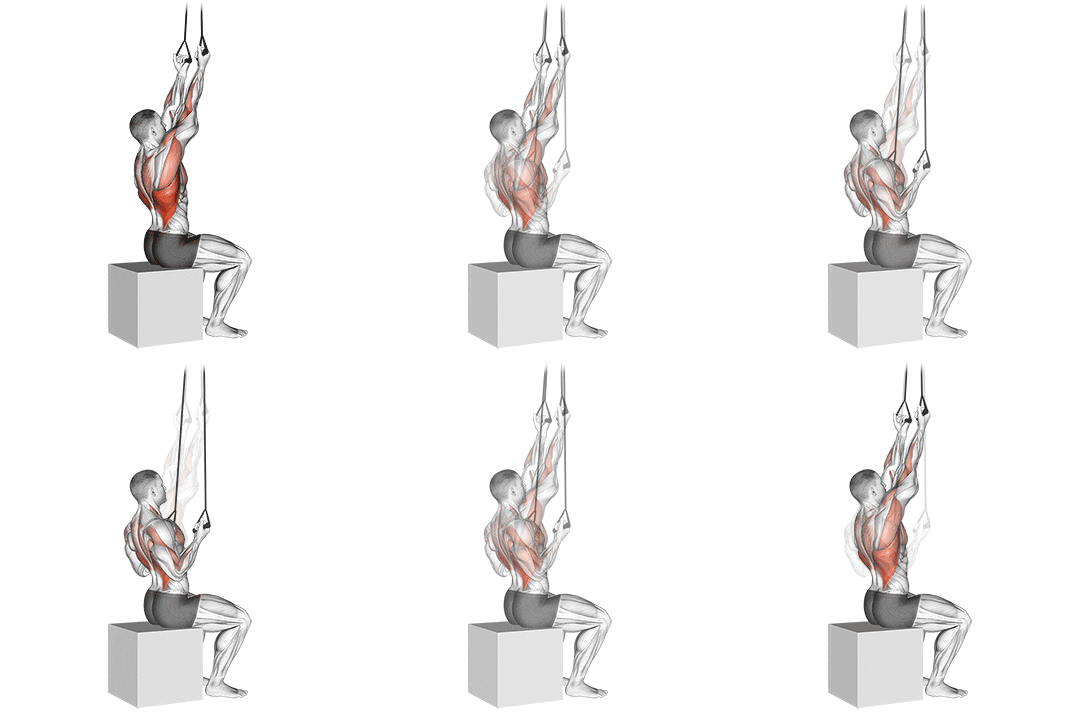
The band fixed back underhand pulldown is an exercise that primarily targets the muscles of the back, particularly the latissimus dorsi (lats), biceps, and rear deltoids. By using a resistance band attached to a fixed anchor point, this exercise simulates the motion of a lat pulldown machine and helps to develop strength and muscle definition in the upper back and arms. ## Instructions 1. Attach a resistance band securely to a fixed anchor point above your head. 2. Stand facing the anchor point with your feet shoulder-width apart. 3. Grasp the band with an underhand grip (palms facing up), hands shoulder-width apart. 4. Step back to create tension in the band, ensuring there is enough resistance for a challenging workout. 5. Keep your back straight, chest up, and shoulders down and back throughout the exercise. 6. Engage your core and slightly lean back, maintaining a stable position. 7. Start with your arms fully extended, pulling the band taut. 8. Pull the band down toward your upper chest by flexing your elbows and driving them down and back. 9. Focus on squeezing your shoulder blades together and engaging your back muscles as you pull. 10. Continue pulling until your hands reach your upper chest and your elbows are in line with your torso. 11. Pause briefly in the contracted position, feeling the tension in your back muscles. 12. Slowly reverse the movement and extend your arms back to the starting position, maintaining control. 13. Repeat for the desired number of repetitions. ## Variations - Band Assisted Pull-Up: If you struggle with the underhand pulldown, you can use a resistance band looped around a pull-up bar or sturdy anchor point. Place your feet or knees in the band to assist you as you pull yourself up. - Band Seated Row: Sit on the floor or a bench, secure the band around your feet, and perform a rowing motion by pulling the band toward your midsection. This variation targets similar muscles as the fixed back underhand pulldown but from a seated position. ## Muscles Worked - Primary muscles: Latissimus dorsi (lats), biceps brachii, rear deltoids - Secondary muscles: Rhomboids, lower trapezius, brachialis, brachioradialis, forearm muscles ## Common Mistakes - Using excessive momentum: Avoid swinging or using momentum to pull the band down. Focus on controlled and deliberate movements to engage the target muscles effectively. - Rounding the back: Maintain proper posture throughout the exercise by keeping your back straight and avoiding rounding or hunching your shoulders. - Not fully extending or contracting: Make sure to fully extend your arms at the top and fully contract your back muscles at the bottom of the movement for maximum benefit. ## Safety Precautions - Choose a resistance band with an appropriate tension level for your fitness level and gradually increase the resistance as you get stronger. - Securely anchor the band to a stable and sturdy structure to avoid any accidents or injuries. - Use a controlled and smooth motion throughout the exercise to prevent strain on your joints and muscles. - If you have any pre-existing conditions or injuries in your shoulders, elbows, or back, consult with a healthcare professional before attempting this exercise. - If you experience any pain or discomfort during the exercise, stop immediately and seek guidance from a fitness professional or healthcare provider.
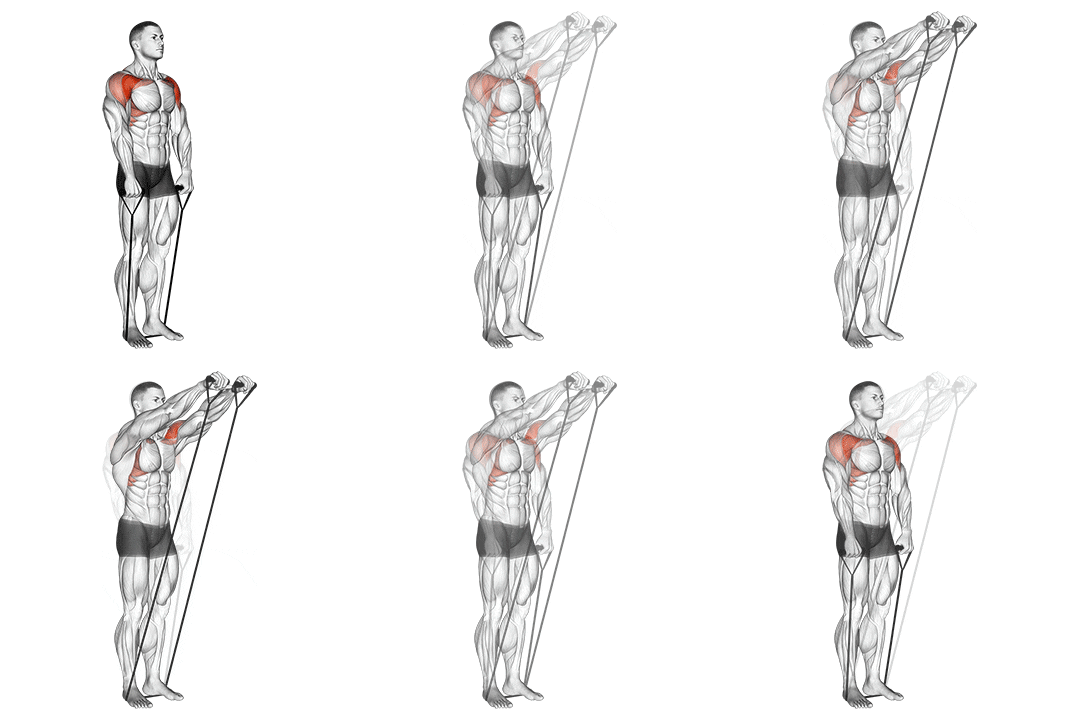
The band front raise is an exercise that targets the muscles of the shoulders, specifically the anterior deltoids (front delts). This exercise involves lifting the arms forward against resistance provided by a resistance band. It helps to strengthen the front delts, improve shoulder stability, and enhance overall upper body strength. ## Instructions 1. Stand with your feet shoulder-width apart, holding a resistance band with an overhand grip. 2. Keep your arms fully extended and your palms facing downward, resting the band against the front of your thighs. 3. Engage your core and maintain good posture with a slight bend in your knees. 4. Keep your shoulders down and back, avoiding any slouching or rounding. 5. Begin the movement by lifting your arms directly in front of you, maintaining a slight bend in your elbows. 6. Continue lifting until your arms are parallel to the floor or slightly higher, ensuring the band remains taut. 7. Pause briefly at the top of the movement, focusing on contracting your front delts. 8. Slowly lower your arms back to the starting position under control. 9. Repeat for the desired number of repetitions. ## Variations - Single-Arm Band Front Raise: Perform the exercise one arm at a time by holding the resistance band with only one hand while keeping the other hand at your side. This variation can help identify and correct any strength imbalances between the shoulders. - Alternating Band Front Raise: Instead of lifting both arms simultaneously, alternate the lifting motion, raising one arm at a time while the other remains lowered. This variation can provide additional challenge and engage your core for stability. ## Muscles Worked - Primary muscles: Anterior deltoids (front delts) - Secondary muscles: Lateral deltoids (side delts), upper chest, trapezius, serratus anterior ## Common Mistakes - Using momentum: Avoid swinging or using momentum to lift the arms. Focus on a controlled and deliberate motion to engage the targeted muscles effectively. - Rounding the back: Maintain proper posture throughout the exercise by keeping your back straight and avoiding any excessive arching or rounding of the spine. - Lifting too high: Avoid lifting the arms above shoulder level, as it may put unnecessary strain on the shoulders. Lift until your arms are parallel to the floor or slightly higher. ## Safety Precautions - Choose a resistance band with an appropriate tension level for your fitness level and gradually increase the resistance as you get stronger. - Ensure the resistance band is securely anchored and will not slip or snap during the exercise. - Use a controlled and smooth motion throughout the exercise to prevent strain on your shoulders and maintain proper form. - If you have any pre-existing shoulder or neck injuries, consult with a healthcare professional before attempting this exercise. - If you experience any pain or discomfort during the exercise, stop immediately and seek guidance from a fitness professional or healthcare provider.
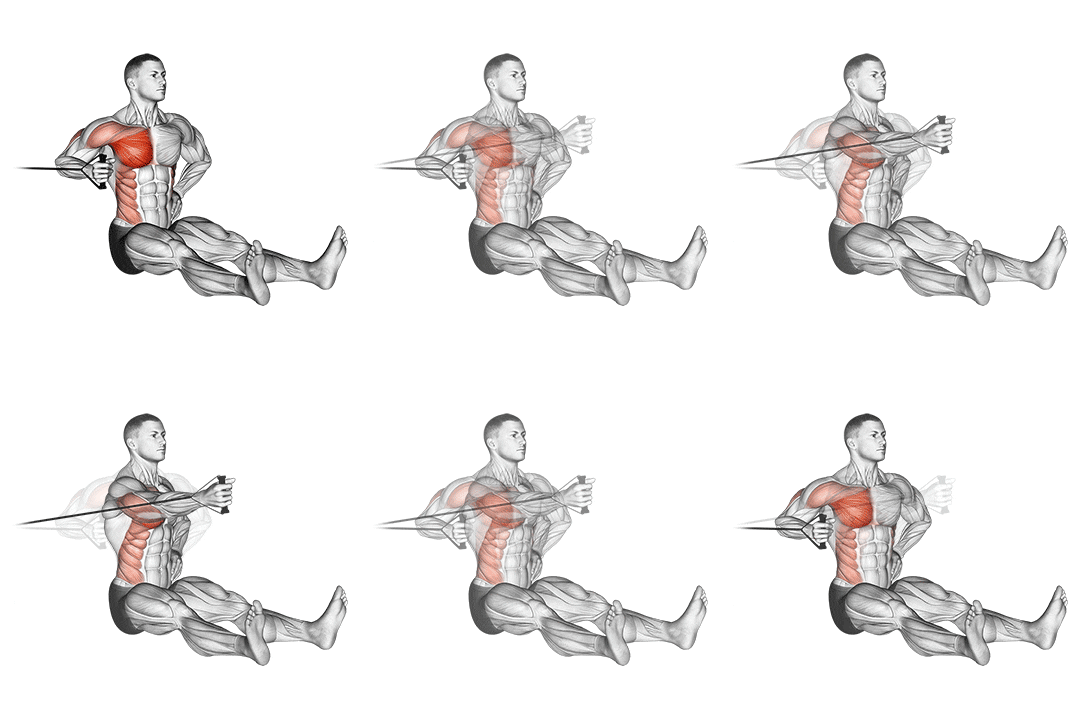
The band one arm twisting chest press is an exercise that targets the chest muscles (pectoralis major and minor) while also engaging the muscles of the shoulders and triceps. The twisting motion adds an additional challenge and engages the core muscles. ## Instructions 1. Begin by attaching a resistance band to a secure anchor point at chest height. 2. Stand with your side facing the anchor point and hold the band in one hand, positioning your arm across your body. 3. Take a step away from the anchor point to create tension in the band. Stand with your feet shoulder-width apart and maintain a stable stance. 4. Position your hand near the center of your chest, with your palm facing down. 5. Engage your core muscles and maintain good posture throughout the exercise. 6. Press the band away from your chest, extending your arm fully in front of you. As you press, twist your torso away from the anchor point, pivoting on your back foot. 7. Hold the extended position for a moment, feeling the contraction in your chest muscles. 8. Slowly reverse the movement, bringing your arm back to the starting position while simultaneously twisting your torso back to the original position. 9. Repeat the movement for the desired number of repetitions on one arm before switching to the other arm. ## Variations - **Band Resistance**: You can adjust the resistance level by using bands with different tensions. Thicker bands offer more resistance. - **Bilateral Press**: Instead of performing the exercise with one arm at a time, you can hold a resistance band in each hand and perform a twisting chest press with both arms simultaneously. - **Seated Variation**: If standing is not comfortable or feasible, you can perform the exercise while seated on a bench or chair, maintaining proper posture. ## Muscles Worked - Pectoralis Major (chest) - Pectoralis Minor - Anterior Deltoids (front shoulders) - Triceps Brachii - Core muscles (stabilization) ## Common Mistakes - **Poor Posture**: Maintain an upright posture throughout the exercise, avoiding excessive leaning or arching of the back. Keep your shoulders down and back, and avoid hunching your shoulders forward. - **Incomplete Twist**: Ensure that you fully rotate your torso away from the anchor point as you press the band forward. Aim to achieve a full twist while keeping your arm extended. - **Using Momentum**: Avoid using momentum or excessive force to press the band. Focus on controlled movements and feel the contraction in your chest muscles throughout the exercise. ## Safety Precautions - Consult with a healthcare professional or fitness trainer before attempting this exercise, especially if you have any pre-existing shoulder or back conditions. - Choose a resistance band with appropriate tension for your fitness level. Start with lighter resistance and gradually increase as you become stronger. - Ensure that the band is securely attached to the anchor point and positioned to prevent it from slipping or snapping during the exercise. - Control the movement and avoid jerky or sudden motions to prevent strain or injury to the muscles or joints. - If you experience any pain or discomfort, particularly in the shoulder or chest, discontinue the exercise and seek professional advice. - Engage your core muscles throughout the exercise to provide stability and support for your spine. - Breathe naturally throughout the exercise, exhaling as you press the band and inhaling as you return to the starting position. - Gradually increase the resistance and repetitions as your strength and control improve.
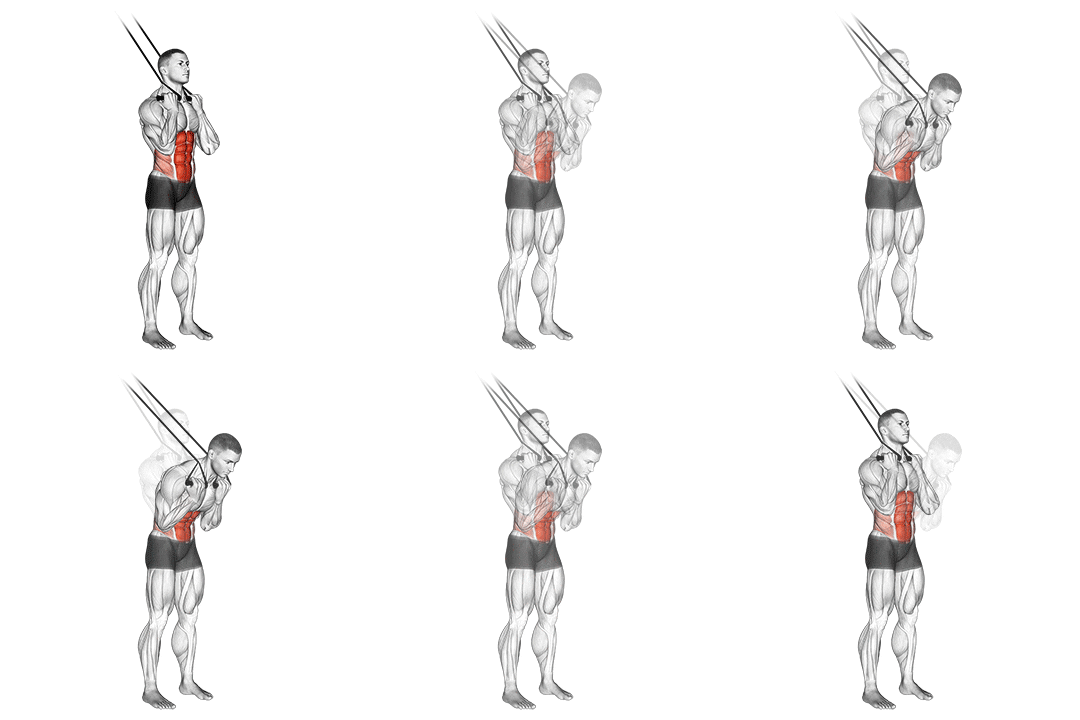
The band standing crunch is an abdominal exercise that targets the core muscles, particularly the rectus abdominis (six-pack muscles) and the obliques. It involves using a resistance band to add tension and resistance to the crunching movement. This exercise helps strengthen the core, improve stability, and enhance overall abdominal definition. ## Instructions Here are the step-by-step instructions for performing the band standing crunch correctly: 1. Begin by attaching a resistance band to a secure anchor point, such as a pole or door handle, at about chest height. 2. Stand facing away from the anchor point, and hold the ends of the band with both hands, crossing them over your chest. 3. Take a step or two forward to create tension in the band. Position your feet shoulder-width apart, maintaining good posture with your shoulders back and your core engaged. 4. Keeping your upper body upright and your lower body stationary, initiate the movement by flexing your waist and crunching your upper body forward. 5. Focus on contracting your abdominal muscles as you bring your chest towards your hips. 6. Pause for a moment at the peak of the contraction, feeling the tension in your abs. 7. Slowly return to the starting position, extending your spine and stretching the abs. 8. Repeat the movement for the desired number of repetitions. ## Variations Here are a few variations of the band standing crunch that you can try: 1. **Diagonal Band Standing Crunch**: Perform the standing crunch with the band crossing diagonally across your body. This variation targets the obliques (side abdominal muscles) more intensely. 2. **Single-Arm Band Standing Crunch**: Perform the exercise using one arm at a time, while the other hand holds the band or remains by your side. This modification challenges the core stability and allows you to focus on each side of the body individually. 3. **Alternating Band Standing Crunch**: Perform the standing crunch while alternating the crunching motion from side to side. This variation engages the obliques and adds a rotational element to the exercise. ## Muscles Worked The band standing crunch primarily targets the following muscles: 1. Rectus abdominis (six-pack muscles) 2. Obliques (internal and external, side abdominal muscles) 3. Transverse abdominis (deep core muscles) 4. Hip flexors (engaged as secondary muscles) ## Common Mistakes Avoid these common mistakes to get the most out of your band standing crunch: 1. **Using momentum**: Focus on controlled movements rather than relying on momentum to perform the exercise. Maintain a slow and controlled pace throughout the crunching motion, engaging the abdominal muscles. 2. **Pulling on the band**: Avoid excessively pulling on the band with your arms. The band should provide resistance, but the main effort should come from the abdominal muscles. Focus on crunching and contracting the abs. 3. **Neck and shoulder tension**: Keep your neck and shoulders relaxed throughout the exercise. Avoid straining or pulling with your neck or hunching your shoulders. Let the abs do the work. 4. **Not fully contracting the abs**: Ensure that you fully contract the abdominal muscles at the peak of the movement. Squeeze the abs and hold for a brief moment to maximize the effectiveness of the exercise. ## Safety Precautions Consider the following safety precautions when performing the band standing crunch: 1. **Choose the right resistance band**: Select a band with an appropriate level of resistance for your fitness level. Starting with a lighter band and gradually increasing the resistance as you get stronger is recommended. 2. **Maintain proper form**: Keep good posture throughout the exercise, with your shoulders back and core engaged. Avoid excessive bending or arching of the spine. 3. **Listen
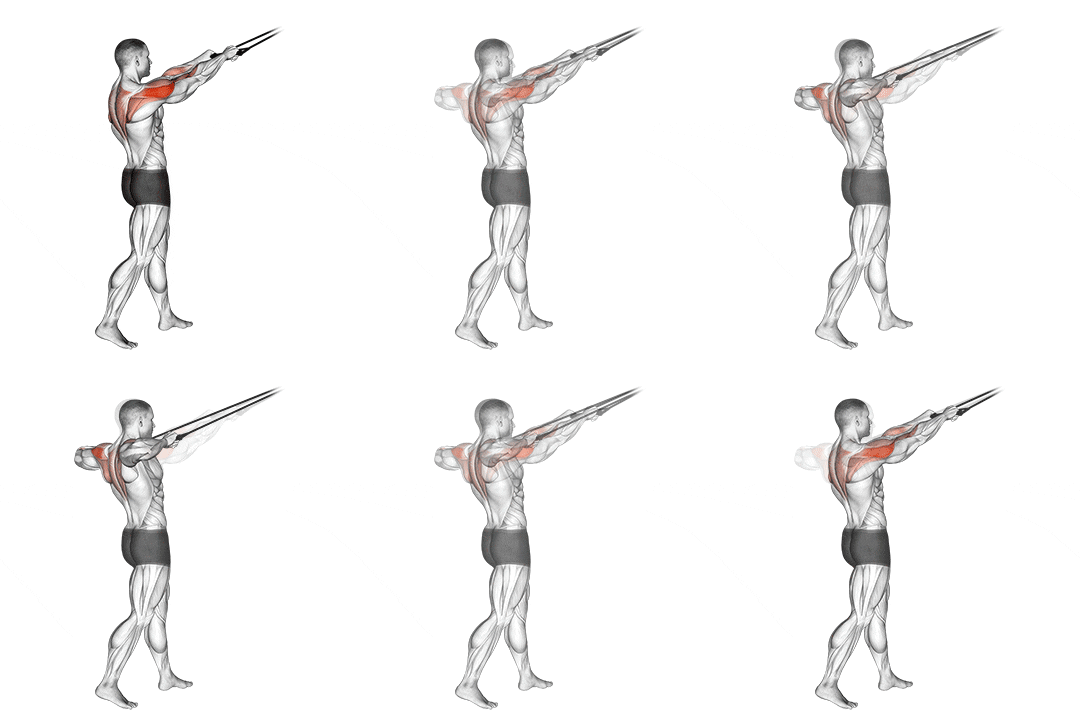
The band standing rear delt row is an exercise that primarily targets the rear deltoid muscles, which are located at the back of the shoulders. It involves using resistance bands to provide tension and resistance while performing a rowing movement. This exercise helps strengthen the rear delts, improving shoulder stability, posture, and overall upper body strength. ## Instructions Here are the step-by-step instructions for performing the band standing rear delt row correctly: 1. Begin by securing a resistance band to a sturdy anchor point at approximately waist height. 2. Stand facing the anchor point with your feet shoulder-width apart. Hold the resistance band handles or grip the band directly with your hands, palms facing each other. 3. Take a step back to create tension in the band, keeping your arms extended in front of you and your core engaged. 4. Maintaining a slight bend in your knees, hinge forward at the hips while maintaining a neutral spine. Your torso should be at about a 45-degree angle to the floor. 5. From this starting position, pull the resistance band handles or the band itself toward your body, driving your elbows backward and squeezing your shoulder blades together. 6. Keep your upper arms parallel to the ground and your wrists straight throughout the movement. 7. Pause for a moment at the fully contracted position, feeling the contraction in your rear delts. 8. Slowly release the tension and return to the starting position, extending your arms forward. 9. Repeat the movement for the desired number of repetitions. ## Variations Here are a few variations of the band standing rear delt row that you can try: 1. **Single-Arm Band Standing Rear Delt Row**: Perform the exercise one arm at a time. This variation allows you to focus on each side of your body individually and can help address any muscular imbalances. 2. **Bilateral Band Standing Rear Delt Row**: Instead of using two separate handles, grip the band with both hands, placing them close together at the center of the band. This variation provides a different hand position and grip challenge. 3. **Band Bent-Over Rear Delt Row**: Instead of standing, perform the exercise in a bent-over position. Hinge forward at the hips until your torso is parallel to the floor, and then perform the rowing motion. This variation places more emphasis on the rear delts. ## Muscles Worked The band standing rear delt row primarily targets the following muscles: 1. Rear deltoids (posterior deltoids) 2. Upper back muscles (rhomboids and middle trapezius) 3. Lateral deltoids (side deltoids) 4. Biceps (front of the upper arms) 5. Forearms (grip strength) ## Common Mistakes Avoid these common mistakes to get the most out of your band standing rear delt row: 1. **Shrugging the shoulders**: Keep your shoulders relaxed and avoid shrugging them up toward your ears during the rowing motion. Focus on pulling with your rear delts and squeezing your shoulder blades together. 2. **Hunching the back**: Maintain a neutral spine throughout the exercise. Avoid hunching your back or rounding your shoulders forward. Keep your core engaged and your torso stable. 3. **Using momentum**: Concentrate on performing the movement with controlled and deliberate motions. Avoid using momentum or jerking the bands to perform the exercise. 4. **Not fully extending the arms**: Make sure to fully extend your arms in front of you at the starting position and return to that position between each repetition. This allows you to achieve a full range of motion and engage the rear delts effectively. ## Safety Precautions Consider the following safety precautions when performing the band standing rear delt row: 1.
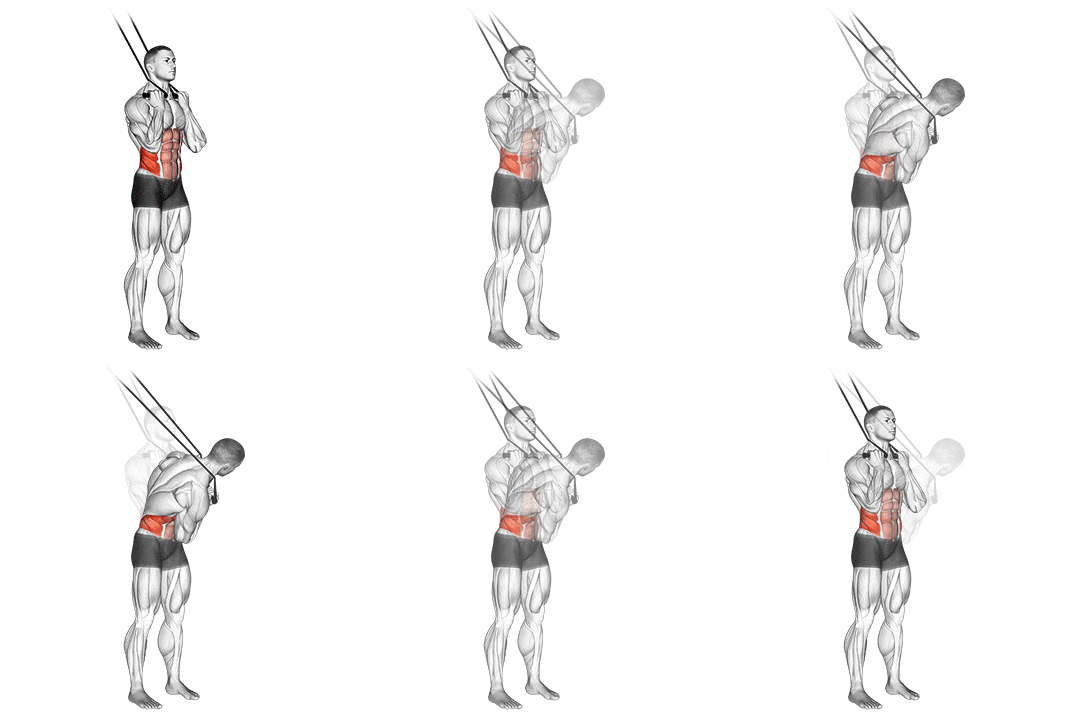
The band standing twisting crunch is an exercise that targets the abdominal muscles, particularly the obliques (side abdominal muscles). It involves using a resistance band to add resistance and tension to the twisting motion, enhancing core strength, stability, and rotational power. ## Instructions Here are the step-by-step instructions for performing the band standing twisting crunch correctly: 1. Begin by attaching a resistance band to a secure anchor point, such as a pole or door handle, at about chest height. 2. Stand facing the anchor point, and hold the ends of the band with both hands, crossing them over your chest. 3. Take a step or two forward to create tension in the band. Position your feet shoulder-width apart, maintaining good posture with your shoulders back and your core engaged. 4. Keeping your upper body upright and your lower body stationary, initiate the movement by rotating your torso to one side. 5. Simultaneously crunch your upper body down and towards the side you're twisting, aiming to bring your elbow towards the opposite hip. 6. Contract your oblique muscles and feel the tension in your side abs. 7. Pause for a moment at the peak of the contraction, then slowly return to the starting position, untwisting and extending your spine. 8. Repeat the movement on the other side, alternating between each side for the desired number of repetitions. ## Variations Here are a few variations of the band standing twisting crunch that you can try: 1. **Diagonal Band Standing Twisting Crunch**: Perform the twisting crunch with the band crossing diagonally across your body. This variation emphasizes the obliques and engages the core muscles from different angles. 2. **Single-Arm Band Standing Twisting Crunch**: Perform the exercise using one arm at a time, while the other hand holds the band or remains by your side. This modification adds an extra challenge to core stability and allows you to focus on each side of the body individually. 3. **Standing Woodchop**: Begin with the band anchored high above your head. As you twist and crunch down, pull the band diagonally across your body, mimicking a woodchopping motion. This variation adds a dynamic and functional aspect to the exercise. ## Muscles Worked The band standing twisting crunch primarily targets the following muscles: 1. Obliques (internal and external, side abdominal muscles) 2. Rectus abdominis (six-pack muscles) 3. Transverse abdominis (deep core muscles) 4. Hip flexors (engaged as secondary muscles) ## Common Mistakes Avoid these common mistakes to get the most out of your band standing twisting crunch: 1. **Using momentum**: Maintain control throughout the exercise and avoid relying on momentum to perform the movement. Focus on slow, controlled twists and contractions of the obliques. 2. **Pulling on the band**: Remember that the band is there to provide resistance, but the effort should come from the abdominal muscles. Avoid excessively pulling on the band with your arms. Focus on contracting and twisting through your core. 3. **Straining the neck**: Keep your neck relaxed throughout the exercise. Avoid pulling or straining with your neck. Let the movement and contraction come from your obliques. 4. **Not fully contracting the obliques**: Ensure that you fully contract the oblique muscles at the peak of the movement. Squeeze the sides of your waist, feeling the tension in the obliques. ## Safety Precautions Consider the following safety precautions when performing the band standing twisting crunch: 1. **Choose the right resistance band**: Select a band with an appropriate level of resistance for your fitness level. Starting with a lighter band and gradually increasing the resistance as you get stronger is recommended. 2.