
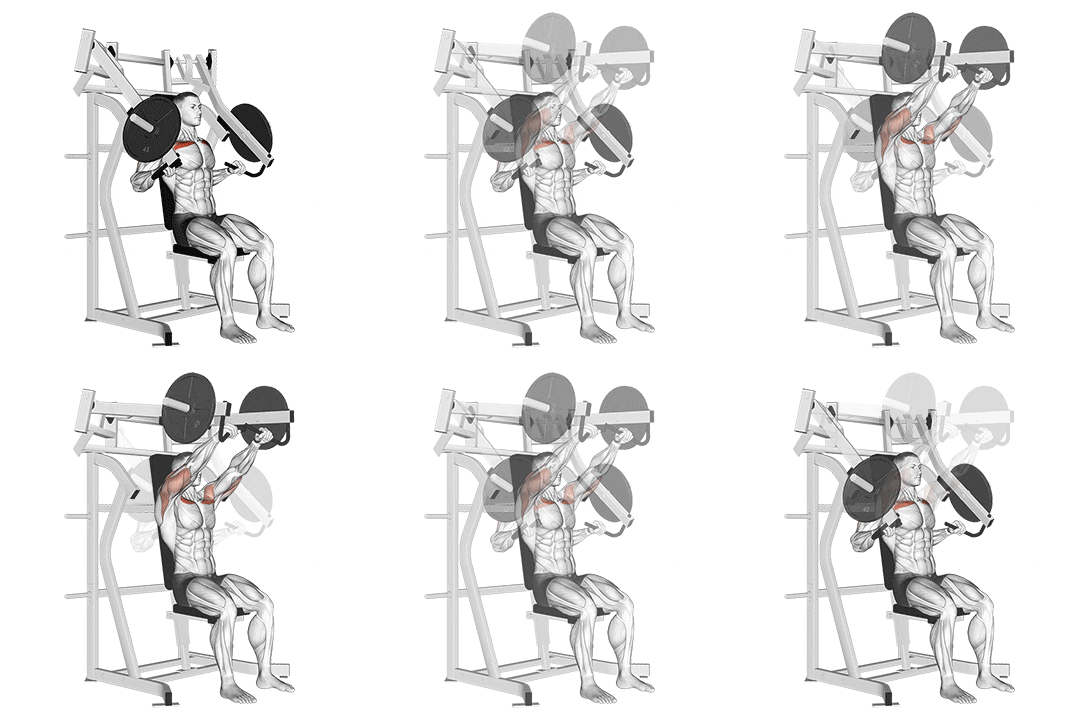
The lever incline chest press is an upper body exercise that primarily targets the chest muscles (pectoralis major and minor). It also engages the shoulders (deltoids) and triceps to a lesser extent. This exercise is performed using a lever machine, which provides a stable platform and allows for controlled movement throughout the exercise. ## Instructions 1. Adjust the seat height of the lever machine so that the handles are at chest level when seated. 2. Sit on the machine with your back firmly against the backrest and feet planted on the floor. 3. Grasp the handles with an overhand grip, slightly wider than shoulder-width apart. 4. Start with your arms extended straight in front of you, parallel to the floor, and your elbows slightly bent. 5. Inhale and slowly lower the handles toward your upper chest while keeping your elbows slightly below shoulder level. Maintain control and avoid letting the handles slam into your chest. 6. Pause for a moment when the handles are close to your chest. 7. Exhale and push the handles back up to the starting position, fully extending your arms without locking out your elbows. 8. Repeat the movement for the desired number of repetitions. ## Variations - Weight adjustment: The lever machine usually has a weight stack that can be adjusted according to your fitness level. Increase or decrease the weight as necessary. - Grip variation: You can try different grip widths (wider or narrower) to emphasize different areas of the chest and shoulders. - Incline angle: Adjusting the incline of the machine allows you to target different parts of the chest. A higher incline focuses more on the upper chest, while a lower incline targets the mid-chest. ## Muscles Worked - Primary muscles: Pectoralis major (chest muscles) - Secondary muscles: Pectoralis minor, deltoids (shoulders), triceps (back of the arms) ## Common Mistakes - Using momentum: Avoid using excessive momentum or bouncing the handles off your chest. Maintain control throughout the movement. - Arching the back: Keep your back firmly against the backrest and avoid excessive arching or leaning backward during the exercise. - Flaring elbows: Keep your elbows slightly below shoulder level and avoid letting them flare out to the sides. This helps maintain tension on the chest muscles. ## Safety Precautions - Start with a lighter weight to ensure proper form and technique before increasing the load. - Maintain proper posture throughout the exercise, with your back supported and feet planted firmly on the floor. - If you have any pre-existing shoulder or chest injuries, consult with a fitness professional or healthcare provider before attempting this exercise. - If you experience any pain or discomfort during the exercise, stop immediately and seek advice from a qualified professional.
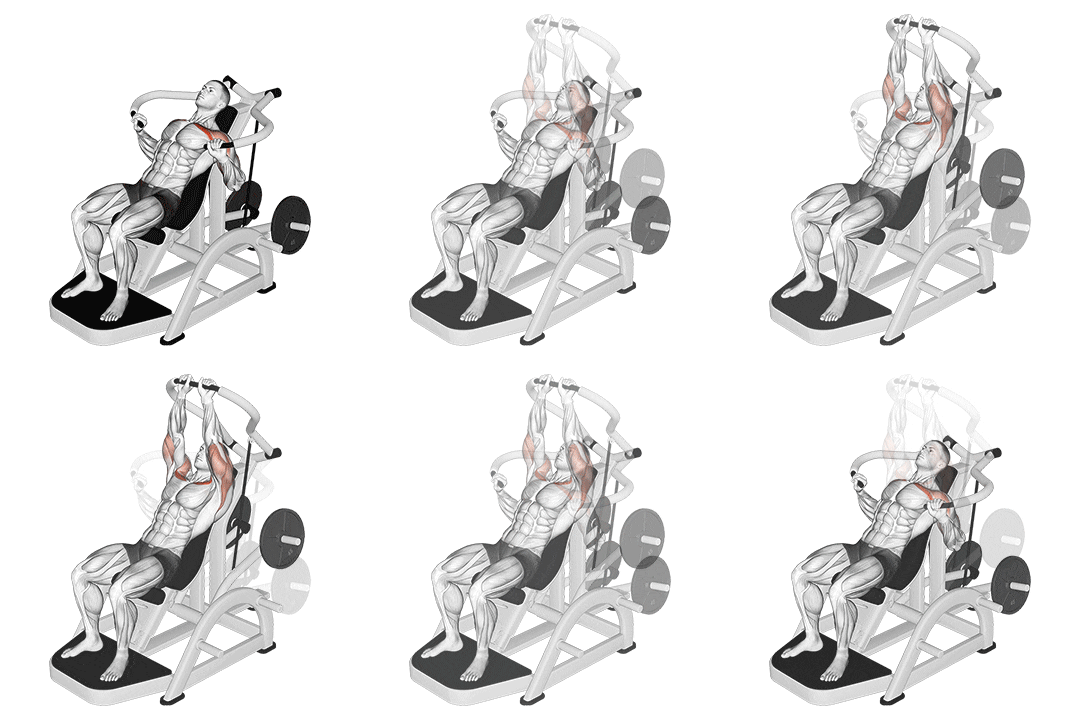
The lever incline chest press is a strength training exercise that primarily targets the muscles of the chest (pectoralis major and minor). It also engages the shoulders (deltoids) and triceps to a lesser extent. This exercise is performed using a lever machine, which provides stability and allows for controlled movement throughout the exercise. ## Instructions 1. Adjust the seat height of the lever machine so that the handles are positioned at chest level when seated. 2. Sit on the machine with your back firmly against the backrest and your feet flat on the floor. 3. Grasp the handles with an overhand grip, slightly wider than shoulder-width apart. 4. Start with your arms extended straight in front of you, parallel to the floor, and your elbows slightly bent. 5. Inhale and slowly lower the handles towards your upper chest, while maintaining control and avoiding rapid or jerky movements. Your elbows should be slightly below shoulder level. 6. Pause for a moment when the handles are close to your chest, feeling a stretch in your chest muscles. 7. Exhale and push the handles back up to the starting position by extending your arms fully, without locking out your elbows. 8. Repeat the movement for the desired number of repetitions. ## Variations - Weight adjustment: The lever machine usually has a weight stack that can be adjusted according to your fitness level. Increase or decrease the weight as needed. - Grip variation: You can experiment with different grip widths (wider or narrower) to emphasize different areas of the chest and shoulders. - Incline angle: Adjusting the incline of the machine allows you to target different portions of the chest. Higher inclines focus more on the upper chest, while lower inclines target the mid-chest. ## Muscles Worked - Primary muscles: Pectoralis major (chest muscles) - Secondary muscles: Pectoralis minor, deltoids (shoulders), triceps (back of the arms) ## Common Mistakes - Using momentum: Avoid using momentum or bouncing the handles off your chest. Control the movement throughout the exercise. - Arching the back: Keep your back firmly against the backrest and avoid excessive arching or leaning backward during the exercise. This ensures proper form and reduces the risk of injury. - Flaring elbows: Maintain proper form by keeping your elbows slightly below shoulder level and avoiding excessive outward flaring. This helps maintain tension on the chest muscles. ## Safety Precautions - Start with a weight that allows you to maintain proper form and technique. Gradually increase the load as you become comfortable and proficient with the exercise. - Ensure that the lever machine is set up correctly and stable before performing the exercise. - Maintain proper posture throughout the exercise, with your back supported against the backrest and your feet planted firmly on the floor. - If you have any pre-existing shoulder or chest injuries, consult with a fitness professional or healthcare provider before attempting this exercise. - If you experience any pain or discomfort during the exercise, stop immediately and seek guidance from a qualified professional.
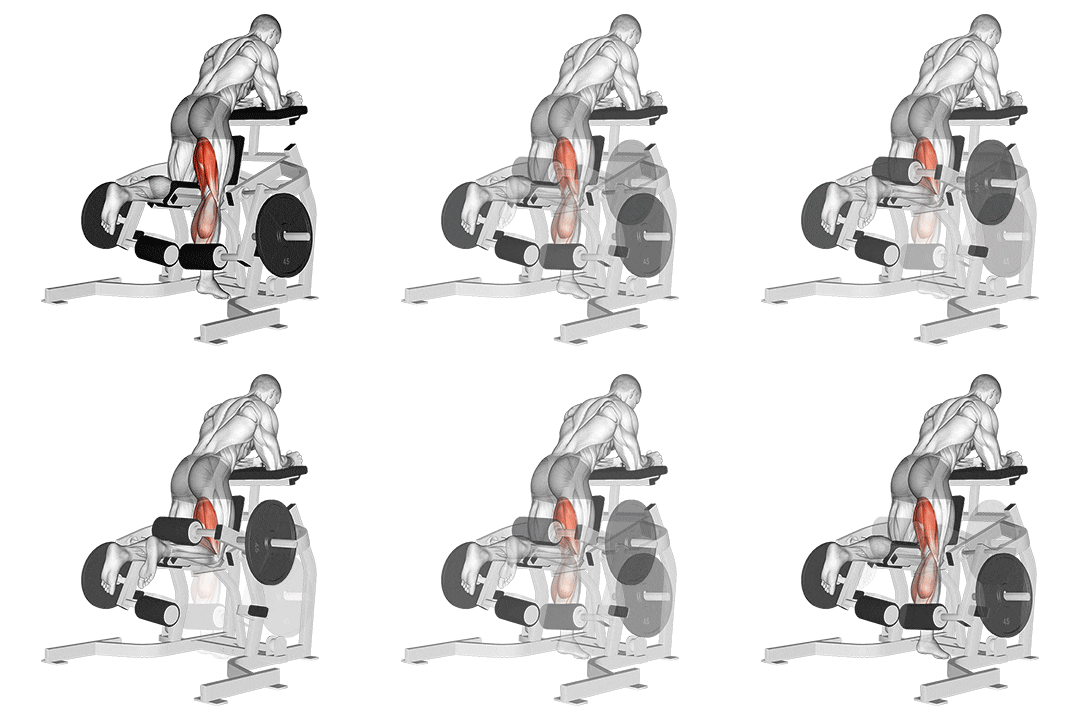
The lever kneeling leg curl is an isolation exercise that primarily targets the muscles of the hamstrings. It involves flexing the knee joint against resistance while in a kneeling position. This exercise helps strengthen and tone the hamstrings, which are important muscles for lower body stability, balance, and athletic performance. ## Instructions 1. Adjust the lever machine according to your height and comfort. Set the leg pad so that it rests just above your Achilles tendon when you are in a kneeling position. 2. Position yourself on the machine by kneeling facing downwards, with your knees directly below the leg pad and your toes tucked under the ankle pad. 3. Grasp the handles or the sides of the machine for stability. 4. Engage your core, keep your back straight, and maintain a neutral spine throughout the exercise. 5. Inhale and slowly curl your lower legs towards your glutes by flexing your knees. Focus on using your hamstrings to initiate the movement. 6. Contract your hamstrings at the top of the movement and hold for a moment, squeezing the muscle. 7. Exhale and slowly extend your legs back to the starting position, fully straightening your knees without locking them. 8. Repeat the movement for the desired number of repetitions. ## Variations - Weight adjustment: The lever machine usually has a weight stack that can be adjusted to suit your fitness level. Increase or decrease the weight as needed. - Single-leg variation: Instead of using both legs simultaneously, you can perform the exercise with one leg at a time for a greater challenge and increased focus on each leg. - Tempo variation: You can experiment with different tempos, such as slowing down the eccentric (lowering) portion of the movement or pausing at the top or bottom, to increase the intensity and challenge the muscles differently. ## Muscles Worked - Primary muscles: Hamstrings (biceps femoris, semitendinosus, semimembranosus) ## Common Mistakes - Arching the back: Avoid excessive arching or rounding of the back during the exercise. Keep your core engaged and maintain a neutral spine position. - Using momentum: Focus on a controlled and smooth movement throughout the exercise. Avoid using momentum to swing the legs up or let them drop quickly during the lowering phase. - Incorrect knee alignment: Ensure that your knees remain aligned with the leg pad throughout the movement. Avoid allowing them to move inward or outward. ## Safety Precautions - Start with a lighter weight or resistance to ensure proper form and technique before progressing to heavier loads. - Pay attention to the alignment of your knees, making sure they are in line with the leg pad to avoid placing unnecessary stress on the joints. - If you have any knee or lower back issues, consult with a fitness professional or healthcare provider before attempting this exercise. - Listen to your body and stop immediately if you experience any pain or discomfort. - Always warm up before performing the exercise and stretch your hamstrings afterwards to maintain flexibility and reduce the risk of injury.
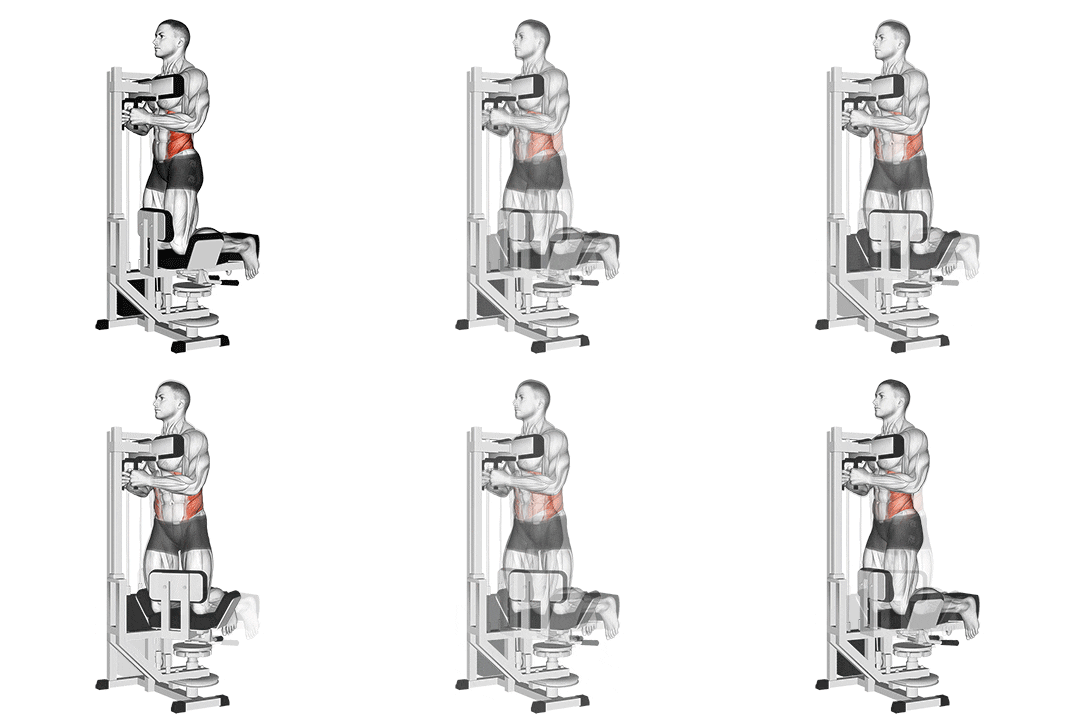
The lever kneeling twist is an exercise that targets the muscles of the core, particularly the obliques. It involves rotational movement from a kneeling position, helping to strengthen the muscles responsible for torso stability and spinal rotation. This exercise can improve functional movement, sports performance, and overall core strength. ## Instructions 1. Adjust the lever machine according to your height and comfort. Set the handles or the resistance attachment at chest level. 2. Kneel down in front of the machine, facing sideways with your feet firmly planted on the ground and hip-width apart. 3. Grasp the handles or the resistance attachment with both hands, positioning your arms in front of your chest with elbows slightly bent. 4. Engage your core and maintain an upright posture with a neutral spine throughout the exercise. 5. Inhale and initiate the movement by rotating your torso to one side, leading with your chest. Keep your hips and lower body stable. 6. Continue rotating until you reach the end of your comfortable range of motion or until you feel a stretch in your oblique muscles. 7. Exhale and slowly return to the starting position, controlling the movement and maintaining core engagement. 8. Repeat the rotation to the opposite side, alternating back and forth for the desired number of repetitions. ## Variations - Resistance adjustment: The lever machine usually allows for adjusting the resistance. Increase or decrease the weight or resistance level based on your fitness level and ability. - Tempo variation: You can modify the tempo of the exercise by slowing down the rotational movement or adding pauses at the end range of motion to increase the challenge and muscle engagement. - One-arm variation: Instead of using both hands simultaneously, you can perform the exercise with one arm at a time, which increases the demand on the oblique muscles and challenges the core stability further. ## Muscles Worked - Primary muscles: Internal and external obliques - Secondary muscles: Transverse abdominis, rectus abdominis, erector spinae, quadratus lumborum ## Common Mistakes - Relying on momentum: Avoid using momentum or swinging the upper body to perform the rotation. Focus on controlled and deliberate movements to engage the target muscles effectively. - Allowing the hips to rotate: Maintain stability in your hips and lower body throughout the exercise. Avoid excessive movement or rotation in the hips. - Not fully engaging the core: Keep your core muscles activated throughout the entire movement to provide stability and protect the spine. ## Safety Precautions - Begin with a lighter resistance or weight to ensure proper form and technique before progressing to heavier loads. - Keep a neutral spine throughout the exercise, avoiding excessive twisting or arching of the back. - If you have any pre-existing back or spinal conditions, consult with a fitness professional or healthcare provider before attempting this exercise. - If you experience any pain or discomfort, especially in the lower back, stop the exercise and seek guidance from a qualified professional. - Maintain proper breathing throughout the exercise, inhaling before initiating the twist and exhaling during the rotation. - If using a lever machine, ensure that it is properly adjusted and secure before starting the exercise.
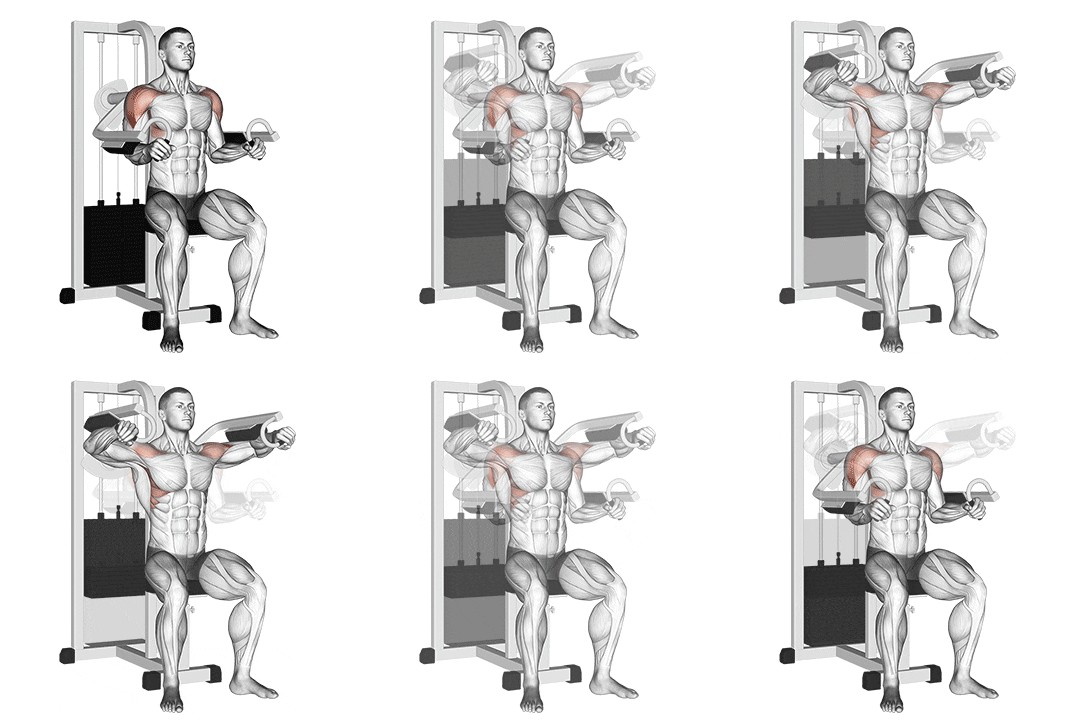
The lever lateral raise is an exercise that primarily targets the lateral deltoids, the muscles on the sides of the shoulders. It involves lifting the arms out to the sides against resistance, which helps to strengthen and tone the shoulder muscles. This exercise can improve shoulder stability, posture, and overall upper body aesthetics. ## Instructions 1. Adjust the lever machine according to your height and comfort. Set the handles at shoulder level or slightly below. 2. Stand facing the machine with your feet shoulder-width apart. Grasp the handles with an overhand grip. 3. Position your arms straight down by your sides, palms facing inward. 4. Engage your core, keep your back straight, and maintain a slight bend in your knees throughout the exercise. 5. Inhale and simultaneously lift both arms out to the sides until they reach shoulder level or slightly below. Maintain a slight bend in your elbows. 6. Pause for a moment at the top of the movement, squeezing your shoulder muscles. 7. Exhale and slowly lower your arms back down to the starting position in a controlled manner. 8. Repeat the movement for the desired number of repetitions. ## Variations - Weight adjustment: The lever machine typically allows for adjusting the weight or resistance. Increase or decrease the load as needed for your fitness level. - Single-arm variation: Instead of using both arms simultaneously, you can perform the exercise one arm at a time to provide a greater challenge and focus on each side. - Seated variation: If a seated position is available on the lever machine, you can perform the exercise while seated to stabilize the lower body and isolate the shoulder muscles further. ## Muscles Worked - Primary muscles: Lateral deltoids (side shoulder muscles) - Secondary muscles: Anterior deltoids (front shoulder muscles), trapezius (upper back), supraspinatus, and other stabilizer muscles of the shoulder ## Common Mistakes - Using momentum: Avoid swinging or using momentum to lift the weights. Focus on controlled movements and engage the shoulder muscles throughout the exercise. - Raising the arms too high: Avoid lifting the arms above shoulder level, as it can increase the risk of injury or strain on the shoulder joints. - Poor posture: Maintain good posture throughout the exercise, keeping your chest lifted, shoulders back and down, and avoiding excessive leaning or rounding of the back. ## Safety Precautions - Start with a lighter weight or resistance to ensure proper form and technique before increasing the load. - If you have any shoulder injuries or conditions, consult with a fitness professional or healthcare provider before attempting this exercise. - Avoid locking your elbows at the top of the movement to prevent excessive stress on the joints. - If you experience any pain or discomfort during the exercise, stop immediately and seek guidance from a qualified professional. - Maintain a controlled breathing pattern throughout the exercise, exhaling during the lifting phase and inhaling during the lowering phase. - Ensure that the lever machine is properly adjusted and stable before performing the exercise.
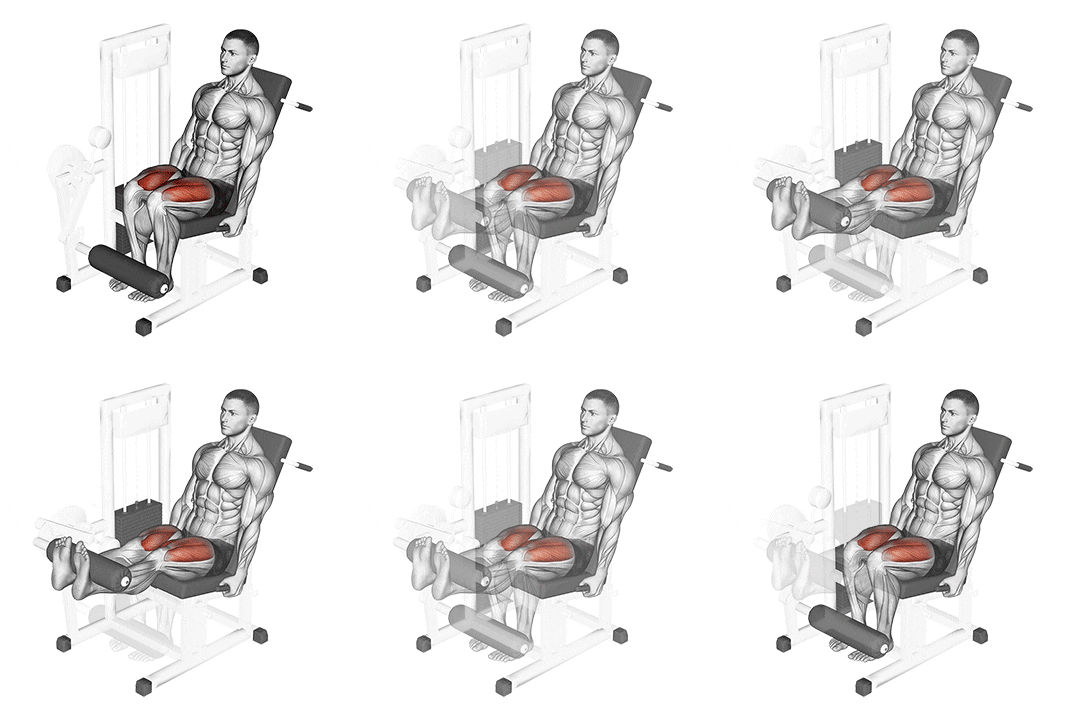
The lever leg extension is an isolation exercise that primarily targets the quadriceps muscles, located in the front of the thigh. It involves extending the knees against resistance, helping to strengthen and tone the quads. This exercise is commonly used to improve lower body strength, stability, and overall leg aesthetics. ## Instructions 1. Adjust the lever machine according to your height and comfort. Set the leg pad so that it rests just above your ankles when you are seated. 2. Sit on the machine with your back against the backrest and your legs extended in front of you, resting your shins against the leg pad. 3. Grasp the handles on the sides of the machine for stability. 4. Engage your core, keep your back straight, and maintain a neutral spine throughout the exercise. 5. Inhale and slowly extend your legs, pushing against the resistance. Focus on contracting your quadriceps and fully straightening your knees. 6. Pause for a moment at the top of the movement, squeezing your quads. 7. Exhale and slowly lower your legs back down to the starting position, controlling the movement. 8. Repeat the movement for the desired number of repetitions. ## Variations - Weight adjustment: The lever machine typically allows for adjusting the weight or resistance. Increase or decrease the load based on your fitness level. - Tempo variation: You can modify the tempo of the exercise by slowing down the lifting phase or adding pauses at the top to increase the intensity and muscle engagement. - Single-leg variation: Instead of using both legs simultaneously, you can perform the exercise with one leg at a time to provide a greater challenge and focus on each leg individually. ## Muscles Worked - Primary muscles: Quadriceps (rectus femoris, vastus lateralis, vastus medialis, vastus intermedius) ## Common Mistakes - Using momentum: Avoid swinging your legs or using momentum to lift the weight. Focus on controlled movements and engage your quads throughout the exercise. - Allowing the back to arch: Maintain proper posture throughout the exercise, avoiding excessive arching of the back. Keep your core engaged and your back against the backrest. - Locking the knees: While you want to fully extend your knees, avoid locking them out completely at the top of the movement to prevent excessive stress on the joints. ## Safety Precautions - Start with a lighter weight or resistance to ensure proper form and technique before progressing to heavier loads. - If you have any knee injuries or conditions, consult with a fitness professional or healthcare provider before attempting this exercise. - Avoid jerking or sudden movements during the exercise. Maintain a smooth and controlled motion. - If you experience any pain or discomfort in the knees, stop immediately and seek guidance from a qualified professional. - Maintain a controlled breathing pattern throughout the exercise, exhaling during the lifting phase and inhaling during the lowering phase. - Ensure that the lever machine is properly adjusted and stable before performing the exercise.
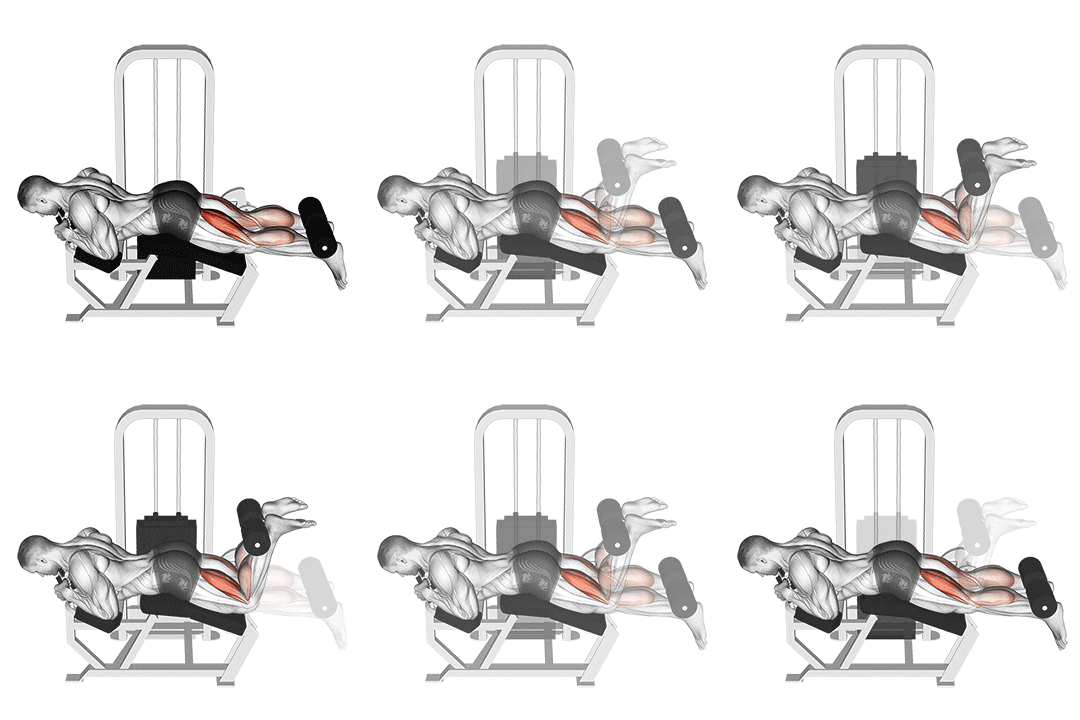
The lever lying leg curl is an exercise that targets the muscles of the posterior thigh, particularly the hamstrings. It involves bending the knees against resistance while lying face down on a lever machine. This exercise helps to strengthen and tone the hamstrings, improving lower body strength, balance, and overall leg development. ## Instructions 1. Adjust the lever machine according to your height and comfort. Set the leg pad so that it rests just above your ankles when you are lying face down on the machine. 2. Lie face down on the machine with your torso flat on the bench and your legs fully extended, positioned under the leg pad. 3. Grasp the handles or hold on to the designated grips of the machine for stability. 4. Engage your core, keep your hips down, and maintain a neutral spine throughout the exercise. 5. Inhale and slowly bend your knees, bringing your heels toward your glutes. Focus on contracting your hamstrings and maintaining control of the movement. 6. Pause for a moment at the top of the movement, squeezing your hamstrings. 7. Exhale and slowly lower your legs back down to the starting position, maintaining control and avoiding sudden drops. 8. Repeat the movement for the desired number of repetitions. ## Variations - Weight adjustment: The lever machine typically allows for adjusting the weight or resistance. Increase or decrease the load based on your fitness level. - Tempo variation: You can modify the tempo of the exercise by slowing down the lifting phase or adding pauses at the top to increase the intensity and muscle engagement. - Single-leg variation: Instead of using both legs simultaneously, you can perform the exercise with one leg at a time to provide a greater challenge and focus on each leg individually. ## Muscles Worked - Primary muscles: Hamstrings (biceps femoris, semitendinosus, semimembranosus) ## Common Mistakes - Raising the upper body: Avoid lifting or arching your upper body off the bench during the exercise. Keep your torso flat and maintain proper alignment. - Using momentum: Avoid swinging your legs or using momentum to lift the weight. Focus on controlled movements and engage your hamstrings throughout the exercise. - Allowing the hips to lift: Keep your hips down and maintain stability in your lower body. Avoid excessive lifting or arching of the hips. ## Safety Precautions - Start with a lighter weight or resistance to ensure proper form and technique before progressing to heavier loads. - If you have any knee or lower back injuries or conditions, consult with a fitness professional or healthcare provider before attempting this exercise. - Avoid jerking or sudden movements during the exercise. Maintain a smooth and controlled motion. - If you experience any pain or discomfort in the knees or hamstrings, stop immediately and seek guidance from a qualified professional. - Maintain a controlled breathing pattern throughout the exercise, exhaling during the lifting phase and inhaling during the lowering phase. - Ensure that the lever machine is properly adjusted and stable before performing the exercise.
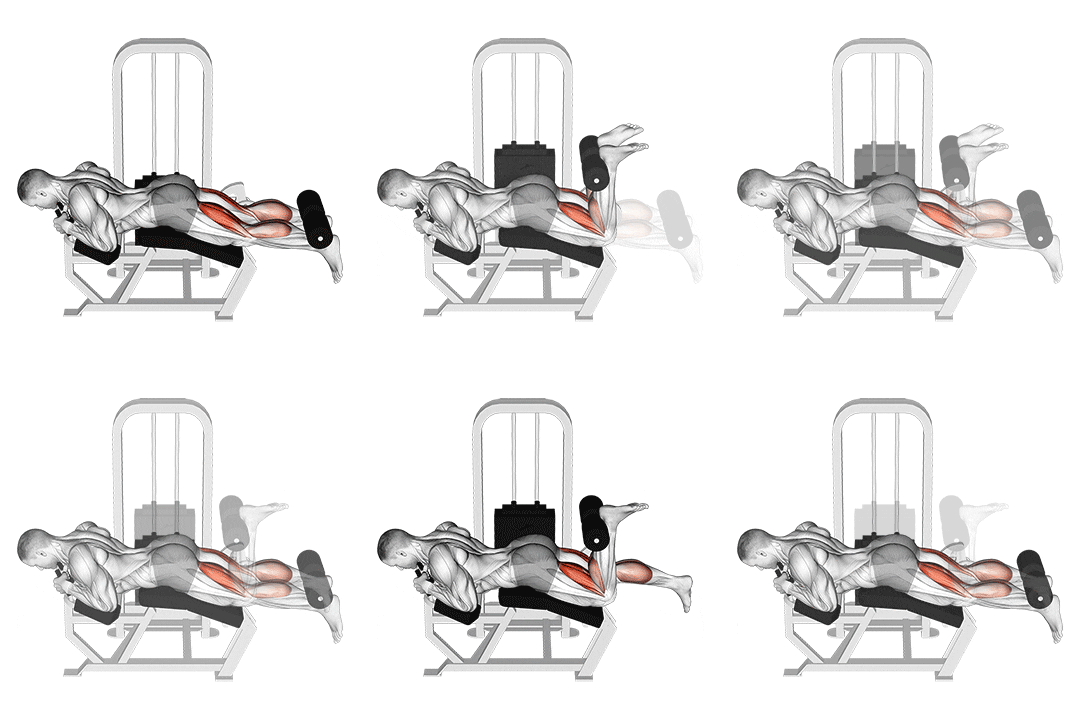
The lever lying two-one leg curl is an exercise that targets the muscles of the posterior thigh, specifically the hamstrings. It involves bending one leg at a time against resistance while lying face down on a lever machine. This exercise helps to strengthen and tone the hamstrings, improve lower body strength and balance, and address any strength imbalances between the legs. ## Instructions 1. Adjust the lever machine according to your height and comfort. Set the leg pad so that it rests just above your ankles when you are lying face down on the machine. 2. Lie face down on the machine with your torso flat on the bench and your legs fully extended, positioned under the leg pad. 3. Grasp the handles or hold on to the designated grips of the machine for stability. 4. Engage your core, keep your hips down, and maintain a neutral spine throughout the exercise. 5. Start with one leg extended straight, while the other leg is bent at the knee with the heel brought toward your glute. 6. Inhale and slowly curl the bent leg, bringing the heel toward your glute. Focus on contracting your hamstrings and maintaining control of the movement. 7. Pause for a moment at the top of the movement, squeezing your hamstrings. 8. Exhale and slowly lower your bent leg back down to the starting position, maintaining control and avoiding sudden drops. 9. Repeat the movement for the desired number of repetitions on one leg, then switch to the other leg and repeat the same steps. ## Variations - Weight adjustment: The lever machine typically allows for adjusting the weight or resistance. Increase or decrease the load based on your fitness level. - Tempo variation: You can modify the tempo of the exercise by slowing down the lifting phase or adding pauses at the top to increase the intensity and muscle engagement. ## Muscles Worked - Primary muscles: Hamstrings (biceps femoris, semitendinosus, semimembranosus) ## Common Mistakes - Raising the upper body: Avoid lifting or arching your upper body off the bench during the exercise. Keep your torso flat and maintain proper alignment. - Using momentum: Avoid swinging your leg or using momentum to lift the weight. Focus on controlled movements and engage your hamstrings throughout the exercise. - Allowing the hips to lift: Keep your hips down and maintain stability in your lower body. Avoid excessive lifting or arching of the hips. ## Safety Precautions - Start with a lighter weight or resistance to ensure proper form and technique before progressing to heavier loads. - If you have any knee or lower back injuries or conditions, consult with a fitness professional or healthcare provider before attempting this exercise. - Avoid jerking or sudden movements during the exercise. Maintain a smooth and controlled motion. - If you experience any pain or discomfort in the knees or hamstrings, stop immediately and seek guidance from a qualified professional. - Maintain a controlled breathing pattern throughout the exercise, exhaling during the lifting phase and inhaling during the lowering phase. - Ensure that the lever machine is properly adjusted and stable before performing the exercise.
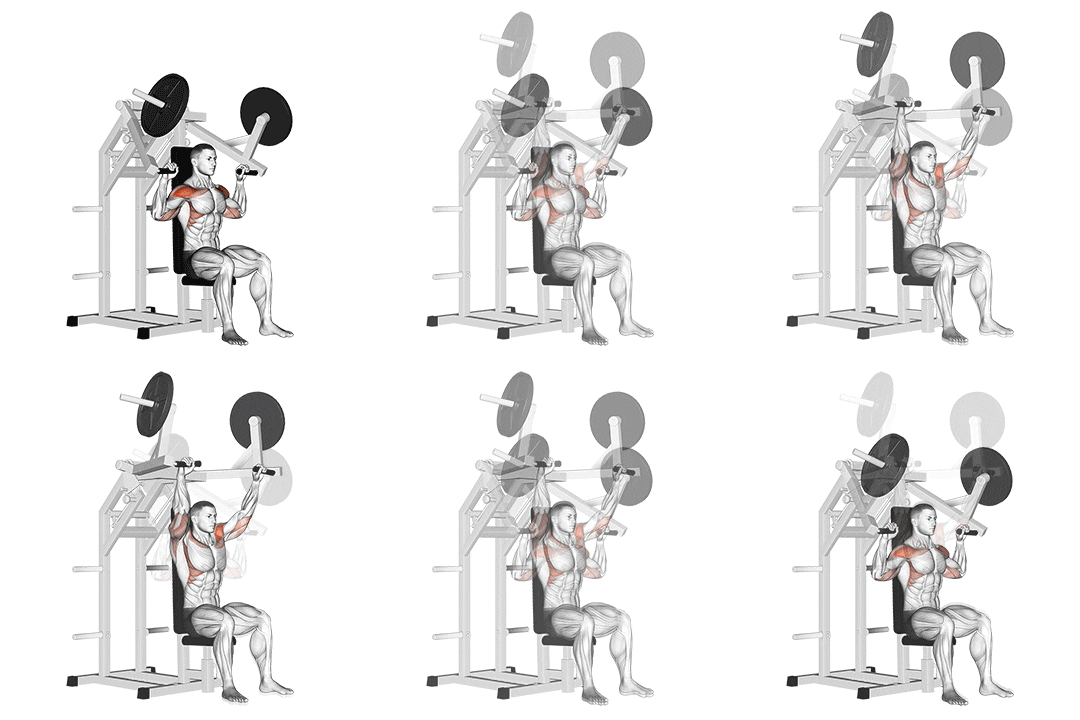
The lever military press is an exercise that targets the muscles of the shoulders, specifically the deltoids. It involves pressing a lever or barbell overhead while seated or standing. This exercise helps to develop strength, size, and definition in the shoulder muscles, improving upper body strength and overall shoulder stability. ## Instructions 1. Adjust the lever machine or set up a barbell at a height that allows you to comfortably reach it while seated or standing. 2. Sit on a bench or stand with your feet shoulder-width apart, maintaining a stable and balanced position. 3. Grasp the lever handles or the barbell with an overhand grip slightly wider than shoulder-width apart. 4. Lift the weight off the rack or from the starting position, positioning it at shoulder level. 5. Inhale and press the weight overhead by extending your arms, pushing the lever or barbell straight up. 6. Maintain control and engage your shoulder muscles throughout the movement. 7. Exhale as you reach the top position, fully extending your arms without locking out your elbows. 8. Pause briefly at the top, ensuring stability and muscle engagement. 9. Slowly lower the weight back down to shoulder level, inhaling during the descent. 10. Repeat the movement for the desired number of repetitions. ## Variations - Seated or standing: You can perform the lever military press while seated on a bench with back support or while standing. Both variations target the shoulders but may emphasize different stabilizer muscles. - Grip variation: You can adjust your grip width on the barbell, placing your hands closer together or wider apart to target different areas of the shoulders. - Dumbbell press: If a lever machine or barbell is not available, you can use dumbbells and perform the dumbbell shoulder press, lifting one dumbbell in each hand. ## Muscles Worked - Primary muscles: Deltoids (anterior, medial, and posterior heads) - Secondary muscles: Triceps, upper chest, upper back, and core muscles for stabilization. ## Common Mistakes - Shrugging the shoulders: Avoid lifting your shoulders toward your ears during the movement. Keep your shoulders down and engage the shoulder muscles without excessive elevation. - Arching the lower back: Maintain proper posture and avoid overarching your lower back. Engage your core muscles to support your spine throughout the exercise. - Using excessive momentum: Avoid using momentum to lift the weight. Focus on controlled movements and avoid excessive swinging or jerking. - Locking out the elbows: While you want to fully extend your arms, avoid locking out your elbows at the top of the movement to prevent excessive stress on the joints. ## Safety Precautions - Start with a lighter weight or resistance to ensure proper form and technique before progressing to heavier loads. - If you have any shoulder injuries or conditions, consult with a fitness professional or healthcare provider before attempting this exercise. - Maintain a controlled breathing pattern throughout the exercise, exhaling during the lifting phase and inhaling during the lowering phase. - If using a lever machine, ensure that it is properly adjusted and stable before performing the exercise. - Use a spotter or seek assistance when handling heavy weights to ensure safety and prevent injury. - If you experience any pain or discomfort in the shoulders, stop immediately and seek guidance from a qualified professional.