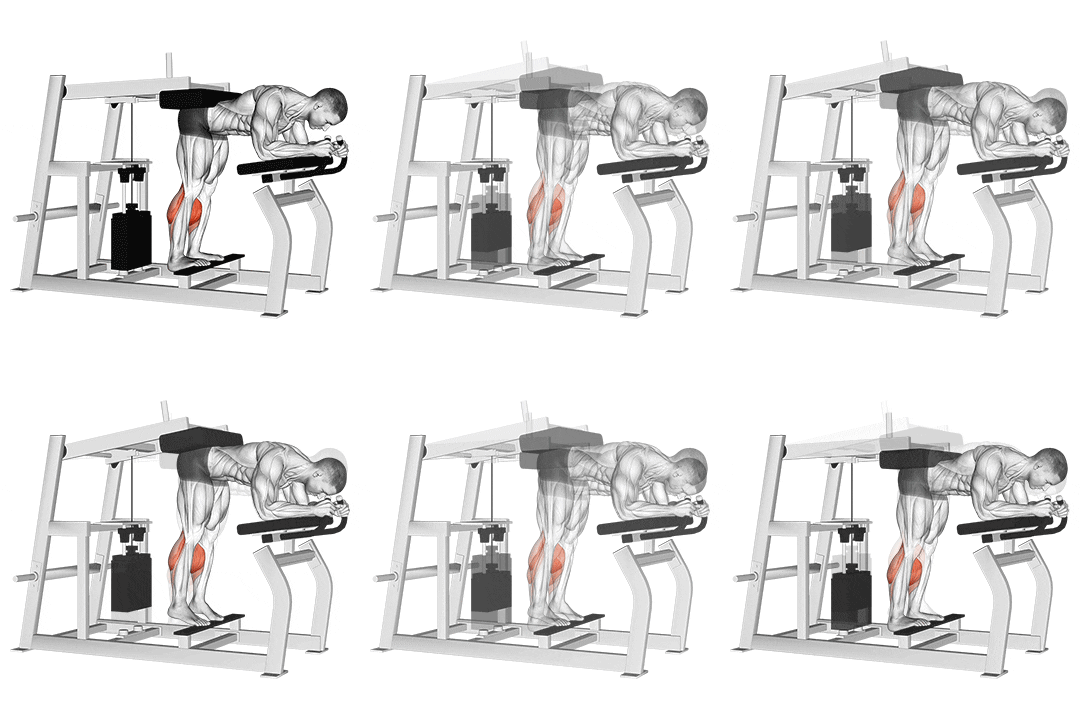
The lever donkey calf raise is an exercise that specifically targets the calf muscles, particularly the gastrocnemius. It involves using a lever machine to perform calf raises, which helps develop strength and definition in the calves. This exercise is particularly beneficial for athletes involved in running, jumping, or any activities that require powerful lower leg movements. ## Instructions 1. Position yourself on a lever machine designed for calf raises. Your shoulders should be placed under the shoulder pads, and your forearms should rest on the arm pads. 2. Adjust the lever machine so that the balls of your feet are on the edge of the foot platform and your heels are hanging off. 3. Make sure your feet are hip-width apart, with your toes pointing forward. 4. Slowly lift your heels by extending your ankles, pushing against the resistance of the lever machine. 5. Continue raising your heels until you are on the balls of your feet and feel a full contraction in your calf muscles. 6. Hold the contracted position for a brief moment, focusing on squeezing your calf muscles. 7. Lower your heels back down, allowing your calves to stretch, but maintaining control throughout the descent. 8. Repeat the movement for the desired number of repetitions. ## Variations - Weight Adjustment: Adjust the weight on the lever machine to match your fitness level and desired intensity. - Single-Leg Donkey Calf Raise: Perform the exercise with one leg at a time by crossing the other leg behind your calf. This variation helps address muscle imbalances and provides a greater challenge. - Donkey Calf Raise on a Smith Machine: If a lever machine is not available, you can perform donkey calf raises using a Smith machine. Stand facing the barbell of the Smith machine and position your shoulders under the bar. Place the balls of your feet on a raised platform or weight plates, and follow the same instructions for the exercise. ## Muscles Worked - Primary Muscles: Gastrocnemius (calf muscles) ## Common Mistakes - Bouncing: Avoid bouncing at the bottom of the movement or using momentum to lift your heels. This diminishes the effectiveness of the exercise. Instead, focus on controlled and deliberate movements. - Shifting Hips or Shoulders: Maintain a stable position throughout the exercise. Avoid excessive movement or shifting of your hips or shoulders. This ensures that the calves are primarily responsible for the movement. - Insufficient Range of Motion: Aim for a full range of motion by lowering your heels until you feel a stretch in your calves, and then raising them until you achieve a full contraction. Avoid shortening the movement by not lowering your heels enough. - Lack of Mind-Muscle Connection: Concentrate on engaging your calf muscles throughout the exercise. Visualize the contraction and actively squeeze your calves at the top of the movement for maximum benefit. ## Safety Precautions - Start with a conservative weight and gradually increase it as you become comfortable with the exercise. - Maintain proper form and alignment to minimize the risk of injury. - If you have any pre-existing ankle, calf, or foot injuries, consult with a qualified fitness professional or healthcare provider before attempting this exercise. - If you experience any pain or discomfort during the exercise, stop immediately and seek guidance from a fitness professional.
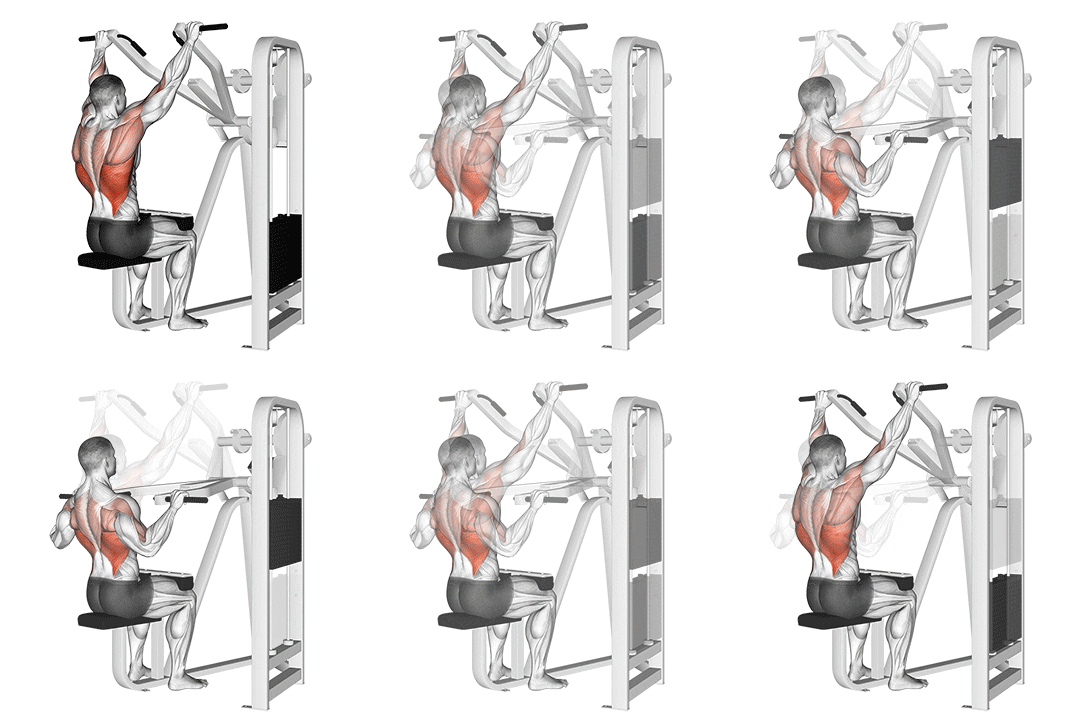
The lever front pulldown is an exercise that primarily targets the muscles of the back, specifically the latissimus dorsi (lats), along with secondary engagement of the biceps and rear deltoids. It is performed using a lever machine that provides stability and control throughout the movement. This exercise helps develop upper body strength, improves posture, and enhances the overall aesthetic appearance of the back. ## Instructions 1. Adjust the lever machine so that the seat height is appropriate for your height. Sit on the machine with your knees positioned securely under the knee pads. 2. Grasp the handles with an overhand grip (palms facing away from you), slightly wider than shoulder-width apart. 3. Sit upright with your chest lifted, shoulders back, and core engaged. 4. Lean back slightly while keeping your torso straight and maintaining a neutral spine position. 5. Pull the handles downward toward your upper chest while maintaining control throughout the movement. 6. Squeeze your shoulder blades together at the bottom of the movement to fully engage the back muscles. 7. Pause briefly at the bottom of the movement, feeling the contraction in your back muscles. 8. Slowly release the handles and return to the starting position with control. 9. Repeat for the desired number of repetitions. ## Variations - Grip Variations: Experiment with different grips, such as a close grip or a wide grip, to target the back muscles from slightly different angles. You can also try a supinated grip (palms facing toward you) to emphasize the biceps. - Unilateral Pulldown: Instead of using both handles simultaneously, you can perform the exercise unilaterally by pulling one arm down at a time. This helps address muscle imbalances and increases stability. - Assisted Pulldown: If you find the exercise challenging, you can use a lever machine with adjustable weight assistance or resistance bands to assist with the movement until you build enough strength. ## Muscles Worked - Primary Muscles: Latissimus dorsi (lats) - back muscles - Secondary Muscles: Biceps brachii (front of the upper arm), rear deltoids (back of the shoulders), rhomboids (between the shoulder blades) ## Common Mistakes - Using Momentum: Avoid using momentum or swinging your body to complete the movement. Focus on controlled and deliberate movements, emphasizing the engagement of the back muscles. - Shrugging Shoulders: Keep your shoulders down and away from your ears throughout the exercise. Avoid shrugging or lifting your shoulders as you pull the handles down. - Arching or Hyperextending the Back: Maintain proper form by keeping your back straight and avoiding excessive arching or hyperextension. Engage your core muscles to maintain stability and prevent strain on the lower back. - Pulling Handles Too Far Behind the Neck: Avoid pulling the handles down too far behind your neck, as this can place unnecessary stress on the shoulder joints. Instead, aim to bring the handles down toward your upper chest. ## Safety Precautions - Start with a conservative weight and gradually increase it as you become comfortable with the exercise. - Maintain proper form and alignment to minimize the risk of injury. - If you have any pre-existing back or shoulder injuries, consult with a qualified fitness professional or healthcare provider before attempting this exercise. - If you experience any pain or discomfort during the exercise, stop immediately and seek guidance from a fitness professional.
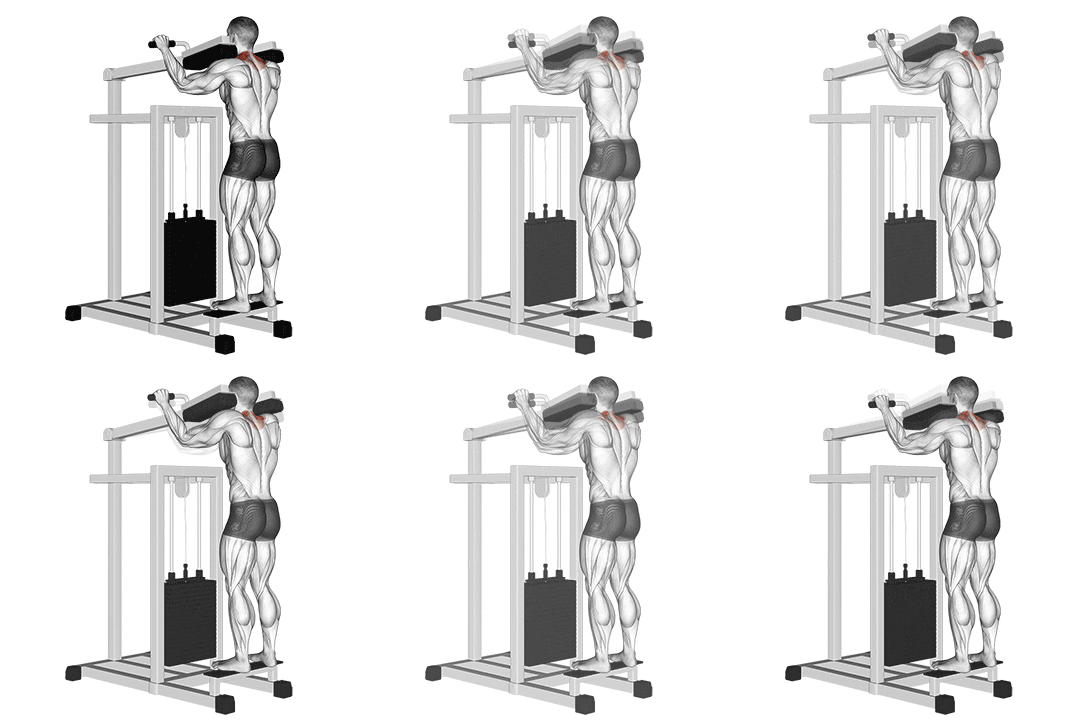
The lever gripless shrug is an exercise that primarily targets the muscles of the upper back and shoulders, specifically the trapezius muscles. It involves performing a shrugging motion without the use of any handles or grips, relying solely on the muscles of the upper back to lift the weight. This exercise helps strengthen and develop the trapezius muscles, improving posture and shoulder stability. ## Instructions 1. Adjust the lever machine to an appropriate height so that the lever is at the level of your upper thighs. 2. Stand facing the lever machine with your feet shoulder-width apart and a slight bend in your knees. 3. Position yourself close to the machine, allowing your thighs to come in contact with the lever. 4. Cross your arms in front of your chest, placing your hands on your opposite shoulders or upper arms. 5. Keep your torso upright, shoulders back, and core engaged throughout the exercise. 6. Begin the movement by lifting your shoulders upward in a shrugging motion, focusing on squeezing your shoulder blades together. 7. Lift your shoulders as high as possible while maintaining control and without leaning forward or backward. 8. Hold the contracted position for a brief moment, feeling the tension in your upper back muscles. 9. Slowly lower your shoulders back down to the starting position, maintaining control throughout the descent. 10. Repeat for the desired number of repetitions. ## Variations - Weight Adjustment: Adjust the weight on the lever machine to match your fitness level and desired intensity. - Unilateral Shrug: Instead of crossing your arms, you can perform the exercise unilaterally by shrugging one shoulder at a time. This variation helps address muscle imbalances and provides a greater challenge. - Dumbbell Shrug: If a lever machine is not available, you can perform shrugs using dumbbells. Hold a dumbbell in each hand, with your arms by your sides, and perform the shrugging motion by lifting your shoulders upward. ## Muscles Worked - Primary Muscles: Trapezius (upper back muscles) ## Common Mistakes - Leaning Forward or Backward: Maintain an upright position throughout the exercise. Avoid leaning forward or backward, as this can reduce the effectiveness of the movement and place strain on the lower back. - Using Momentum: Avoid using momentum to lift your shoulders. Focus on controlled and deliberate movements, emphasizing the contraction of the upper back muscles. - Raising the Arms: Keep your arms crossed in front of your chest throughout the exercise. Avoid raising or extending your arms, as this reduces the engagement of the upper back muscles. - Shrugging the Neck: Focus on shrugging your shoulders, not your neck. Avoid tensing or shrugging your neck upward. Keep your neck relaxed and let the movement be driven by the upper back muscles. ## Safety Precautions - Start with a conservative weight and gradually increase it as you become comfortable with the exercise. - Maintain proper form and alignment to minimize the risk of injury. - If you have any pre-existing shoulder or neck injuries, consult with a qualified fitness professional or healthcare provider before attempting this exercise. - If you experience any pain or discomfort during the exercise, stop immediately and seek guidance from a fitness professional.
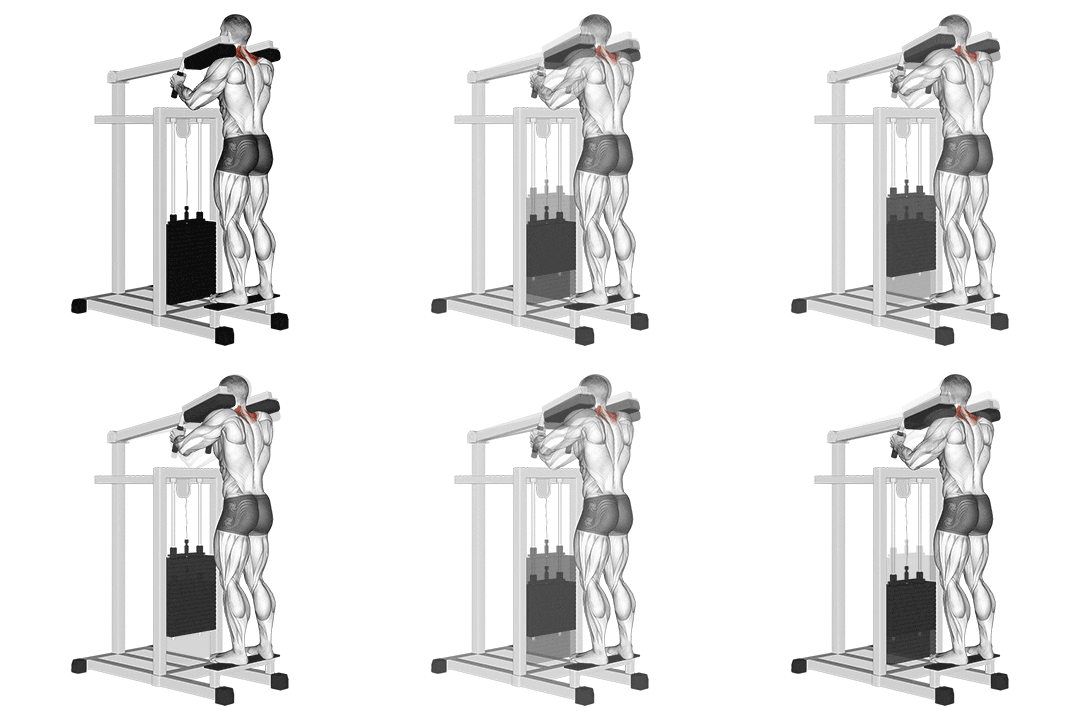
The lever gripless shrug is an exercise that primarily targets the muscles of the upper back, particularly the trapezius muscles. It involves performing a shrugging motion without the use of any handles or grips, relying solely on the muscles of the upper back to lift the weight. This exercise helps strengthen and develop the trapezius muscles, improving posture, shoulder stability, and overall upper body strength. ## Instructions 1. Adjust the lever machine to an appropriate height so that the lever is at the level of your upper thighs. 2. Stand facing the lever machine with your feet shoulder-width apart and a slight bend in your knees. 3. Position yourself close to the machine, allowing your thighs to come in contact with the lever. 4. Cross your arms in front of your body, placing your hands on the opposite shoulders or upper arms. 5. Keep your torso upright, shoulders back, and core engaged throughout the exercise. 6. Begin the movement by lifting your shoulders upward in a shrugging motion, focusing on squeezing your shoulder blades together. 7. Lift your shoulders as high as possible while maintaining control and without leaning forward or backward. 8. Hold the contracted position for a brief moment, feeling the tension in your upper back muscles. 9. Slowly lower your shoulders back down to the starting position, maintaining control throughout the descent. 10. Repeat for the desired number of repetitions. ## Variations - Weight Adjustment: Adjust the weight on the lever machine to match your fitness level and desired intensity. - Unilateral Shrug: Instead of crossing your arms, you can perform the exercise unilaterally by shrugging one shoulder at a time. This variation helps address muscle imbalances and provides a greater challenge. - Dumbbell Shrug: If a lever machine is not available, you can perform shrugs using dumbbells. Hold a dumbbell in each hand, with your arms by your sides, and perform the shrugging motion by lifting your shoulders upward. - Barbell Shrug: Hold a barbell with an overhand grip, hands slightly wider than shoulder-width apart. Allow the barbell to rest against your thighs. Perform the shrugging motion by lifting your shoulders upward while keeping the barbell close to your body. ## Muscles Worked - Primary Muscles: Trapezius (upper back muscles) ## Common Mistakes - Leaning Forward or Backward: Maintain an upright position throughout the exercise. Avoid leaning forward or backward, as this can reduce the effectiveness of the movement and place strain on the lower back. - Using Momentum: Avoid using momentum to lift your shoulders. Focus on controlled and deliberate movements, emphasizing the contraction of the upper back muscles. - Raising the Arms: Keep your arms crossed in front of your body throughout the exercise. Avoid raising or extending your arms, as this reduces the engagement of the upper back muscles. - Shrugging the Neck: Focus on shrugging your shoulders, not your neck. Avoid tensing or shrugging your neck upward. Keep your neck relaxed and let the movement be driven by the upper back muscles. ## Safety Precautions - Start with a conservative weight and gradually increase it as you become comfortable with the exercise. - Maintain proper form and alignment to minimize the risk of injury. - If you have any pre-existing shoulder or neck injuries, consult with a qualified fitness professional or healthcare provider before attempting this exercise. - If you experience any pain or discomfort during the exercise, stop immediately and seek guidance from a fitness professional.
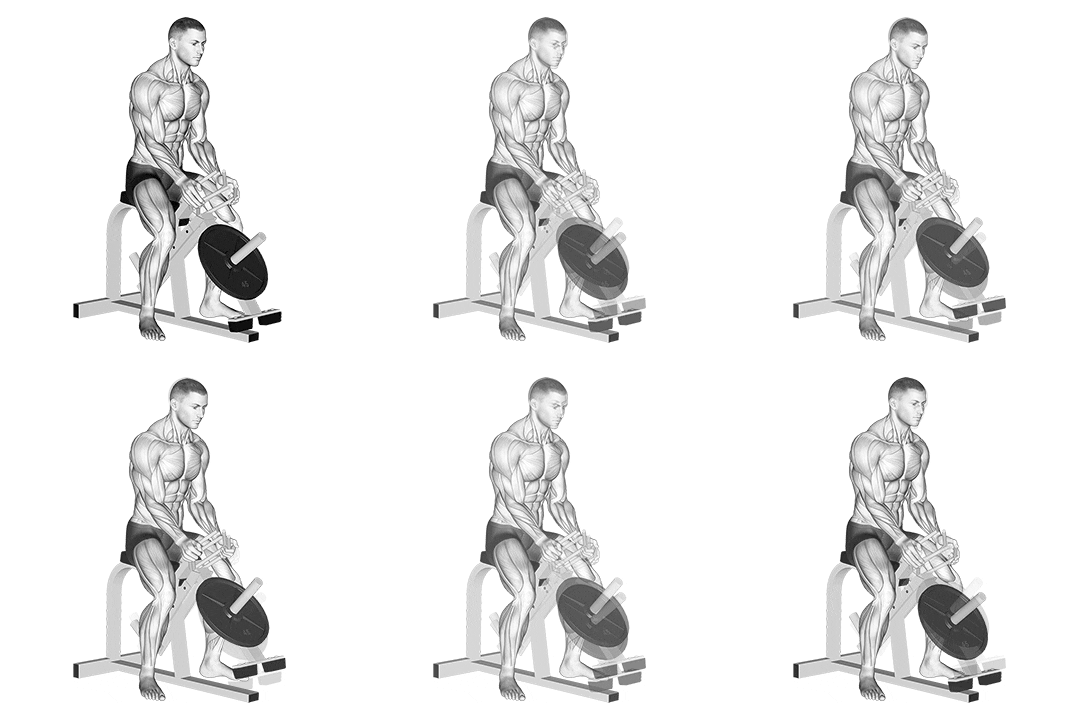
The lever gripper hands exercise is designed to improve grip strength and forearm muscles. It involves gripping and squeezing a lever or handle with your hands to develop strength and endurance in the muscles responsible for gripping and controlling hand movements. This exercise can benefit athletes involved in sports like rock climbing, weightlifting, and martial arts, as well as individuals who want to enhance their overall hand strength and grip. ## Instructions 1. Adjust the lever machine to an appropriate height or position where you can comfortably reach the handle. 2. Stand or sit in a stable position with good posture, keeping your back straight and your shoulders relaxed. 3. Place your hands on the lever handle, ensuring a secure grip. 4. Engage your grip by squeezing the lever handle with your hands. 5. Hold the squeeze for a few seconds, emphasizing the contraction of the muscles in your hands and forearms. 6. Release the grip slowly and repeat for the desired number of repetitions. 7. You can perform the exercise with both hands simultaneously or alternate between hands. ## Variations - Resistance Adjustment: Adjust the weight or resistance on the lever machine to match your fitness level and desired intensity. Increase the resistance gradually as your grip strength improves. - Single-Handed Grip: Instead of using both hands simultaneously, you can perform the exercise with one hand at a time. This variation helps address muscle imbalances and provides a greater challenge. - Gripping Tools: If a lever machine is not available, you can use various gripping tools like grip trainers, hand grippers, or thick bars to achieve a similar effect. These tools can be found in fitness stores or online. ## Muscles Worked - Primary Muscles: Forearm muscles (flexors and extensors), hand muscles (intrinsic and extrinsic), grip muscles. ## Common Mistakes - Overexerting Grip: Avoid excessive force or gripping too tightly, as it can lead to muscle strain or fatigue. Maintain a firm grip without straining excessively. - Neglecting Full Range of Motion: Ensure that you fully open and close your hands during the exercise. Avoid partial movements or limited range of motion. - Using Momentum: Focus on controlled and deliberate movements, avoiding any swinging or jerking motions. Emphasize the contraction of the muscles throughout the exercise. - Not Allowing Sufficient Recovery: Like any other muscle group, the forearm and hand muscles need time to recover. Avoid overtraining by providing adequate rest between workout sessions. ## Safety Precautions - Start with a conservative resistance or weight and gradually increase it as you become comfortable with the exercise. - If you have any pre-existing hand, wrist, or forearm injuries, consult with a qualified fitness professional or healthcare provider before attempting this exercise. - If you experience any pain or discomfort during the exercise, stop immediately and seek guidance from a fitness professional. - Avoid gripping the lever or handle too tightly, as it can lead to excessive stress on the joints and tendons. Maintain a grip that is firm but not overly tight.
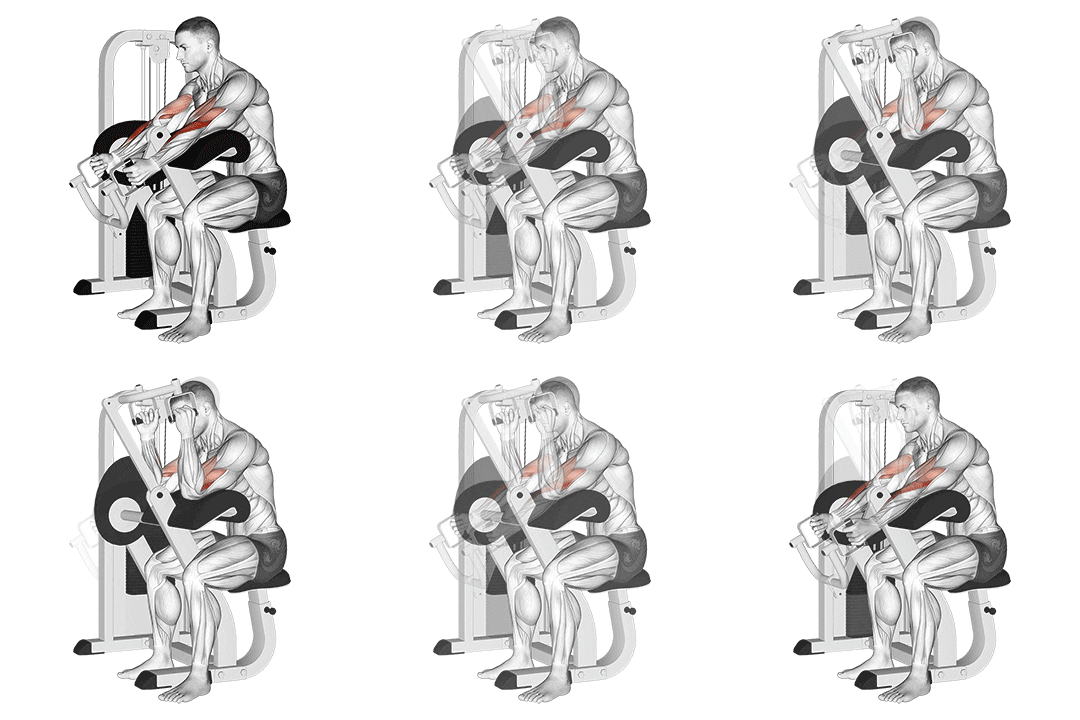
The lever hammer grip preacher curl is an exercise that primarily targets the muscles of the biceps, specifically the brachialis and brachioradialis. It involves using a lever machine with a hammer grip (palms facing each other) while performing preacher curls. This exercise helps develop and strengthen the biceps, contributing to overall arm strength and aesthetics. ## Instructions 1. Adjust the lever machine to an appropriate height so that the lever is at the level of your chest or slightly below. 2. Sit on the preacher curl bench with your chest pressed against the pad and your armpits resting on the top of the pad. 3. Grasp the lever handles with a hammer grip (palms facing each other), hands shoulder-width apart. 4. Ensure that your upper arms are firmly positioned on the pad and your elbows are slightly bent. 5. Keep your chest lifted, shoulders back, and core engaged throughout the exercise. 6. Begin the movement by flexing your elbows and curling the lever handles upward, while keeping your upper arms stationary. 7. Continue the curl until your forearms are fully contracted and the lever handles are close to your shoulders. 8. Hold the contracted position for a brief moment, squeezing your biceps. 9. Slowly lower the lever handles back down to the starting position, maintaining control throughout the descent. 10. Repeat for the desired number of repetitions. ## Variations - Weight Adjustment: Adjust the weight on the lever machine to match your fitness level and desired intensity. - Dumbbell Preacher Curl: If a lever machine is not available, you can perform preacher curls with dumbbells. Sit on a preacher curl bench and hold a dumbbell in each hand with a hammer grip. Perform the curling motion by flexing your elbows and lifting the dumbbells towards your shoulders. - Barbell Preacher Curl: Use a barbell instead of lever handles. Sit on a preacher curl bench and hold the barbell with a hammer grip, hands shoulder-width apart. Perform the curling motion by flexing your elbows and lifting the barbell towards your shoulders. ## Muscles Worked - Primary Muscles: Biceps (brachialis, brachioradialis) - Secondary Muscles: Forearm muscles, particularly the brachioradialis ## Common Mistakes - Using Momentum: Avoid swinging or using momentum to lift the lever handles. Focus on controlled movements, emphasizing the contraction of the biceps. - Poor Form: Maintain proper form throughout the exercise. Avoid lifting your upper arms off the pad or excessively arching your back. Keep your upper arms stationary and engage your core for stability. - Gripping Too Tight: Maintain a firm but relaxed grip on the lever handles. Avoid gripping too tightly, as it can cause unnecessary strain on the forearm muscles. - Not Using Full Range of Motion: Ensure that you fully extend your elbows at the bottom of the movement and fully contract your biceps at the top. Avoid shortening the range of motion by only partially extending or contracting your arms. ## Safety Precautions - Start with a conservative weight and gradually increase it as you become comfortable with the exercise. - Maintain proper form and alignment to minimize the risk of injury. - If you have any pre-existing elbow or wrist injuries, consult with a qualified fitness professional or healthcare provider before attempting this exercise. - If you experience any pain or discomfort during the exercise, stop immediately and seek guidance from a fitness professional.
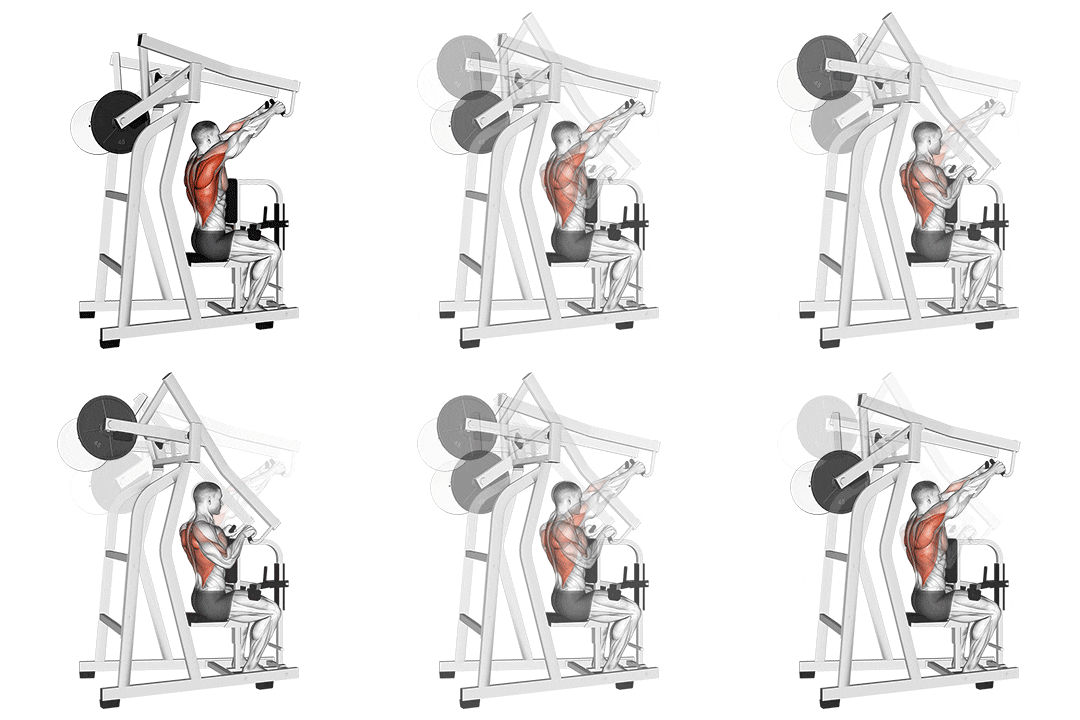
The lever high row is an exercise that targets the muscles of the upper back, including the rhomboids, rear deltoids, and middle trapezius. It involves pulling a lever or handle towards your upper abdomen while keeping your elbows high and back muscles engaged. This exercise helps improve upper body strength, posture, and shoulder stability. ## Instructions 1. Adjust the lever machine to an appropriate height so that the lever is within reach while seated or standing. 2. Stand or sit facing the lever machine with your feet shoulder-width apart and a slight bend in your knees. 3. Grasp the lever handles with an overhand grip (palms facing down), hands slightly wider than shoulder-width apart. 4. Keep your chest lifted, shoulders back, and core engaged throughout the exercise. 5. Begin the movement by pulling the lever handles toward your upper abdomen, driving your elbows back and keeping them high. 6. Squeeze your shoulder blades together at the peak of the movement, focusing on engaging the muscles of the upper back. 7. Hold the contracted position for a brief moment, feeling the tension in your back muscles. 8. Slowly extend your arms, returning to the starting position while maintaining control. 9. Repeat for the desired number of repetitions. ## Variations - Weight Adjustment: Adjust the weight on the lever machine to match your fitness level and desired intensity. - Unilateral High Row: Instead of using both arms simultaneously, you can perform the exercise with one arm at a time. This variation helps address muscle imbalances and provides a greater challenge. - Cable High Row: If a lever machine is not available, you can perform high rows using a cable machine. Attach a straight bar or handle to the cable pulley at an appropriate height. Stand or sit facing the machine, grasp the bar with an overhand grip, and perform the rowing motion by pulling the bar toward your upper abdomen. ## Muscles Worked - Primary Muscles: Rhomboids, rear deltoids, middle trapezius - Secondary Muscles: Biceps, forearms, upper back muscles ## Common Mistakes - Rounded Shoulders: Maintain good posture throughout the exercise and avoid rounding your shoulders forward. Keep your chest lifted and shoulders back to properly engage the target muscles. - Using Momentum: Avoid using momentum or jerking movements to pull the lever handles. Focus on controlled and deliberate movements, emphasizing the contraction of the upper back muscles. - Shrugging Shoulders: Keep your shoulders down and avoid shrugging them upward during the movement. Focus on pulling your elbows back and squeezing your shoulder blades together. - Leaning Backward: Avoid leaning backward excessively as you pull the handles. Maintain an upright position and engage your core to prevent excessive strain on your lower back. ## Safety Precautions - Start with a conservative weight and gradually increase it as you become comfortable with the exercise. - Maintain proper form and alignment to minimize the risk of injury. - If you have any pre-existing back or shoulder injuries, consult with a qualified fitness professional or healthcare provider before attempting this exercise. - If you experience any pain or discomfort during the exercise, stop immediately and seek guidance from a fitness professional.
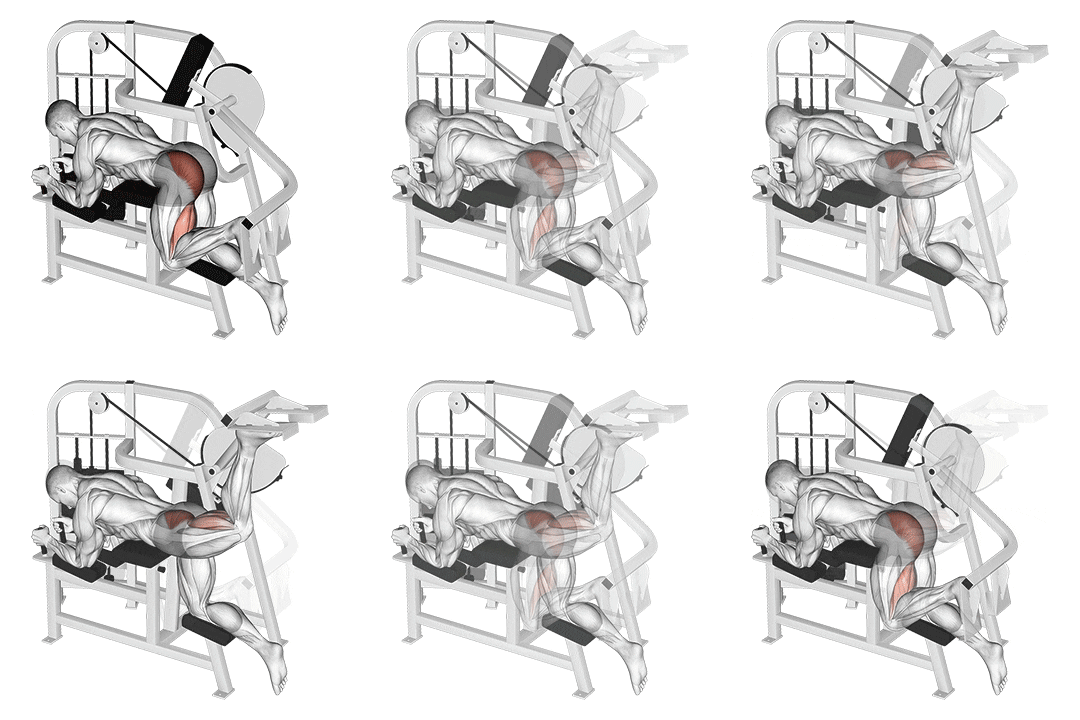
The lever hip extension is an exercise that primarily targets the muscles of the glutes, including the gluteus maximus. It involves extending the hip joint against resistance using a lever machine. This exercise helps strengthen and tone the glutes, improving hip stability, lower body power, and athletic performance. ## Instructions 1. Adjust the lever machine to an appropriate height so that the lever is positioned at the back of your ankles or lower calves. 2. Stand facing the lever machine and place your hands on the machine's handles or sides for support. 3. Position your feet hip-width apart, toes pointing forward, and maintain a slight bend in your knees. 4. Keep your core engaged and maintain a tall posture throughout the exercise. 5. Initiate the movement by pushing your hips back and hinging forward at the waist while maintaining a neutral spine. 6. Allow your upper body to lean slightly forward while keeping your chest lifted and your back straight. 7. Continue the movement by driving your hips forward, extending your hip joint until your body is in a straight line from head to heels. 8. Squeeze your glutes at the top of the movement, focusing on the contraction. 9. Slowly lower your hips back down, returning to the starting position with controlled movement. 10. Repeat for the desired number of repetitions. ## Variations - Weight Adjustment: Adjust the weight on the lever machine to match your fitness level and desired intensity. - Single-Leg Hip Extension: Perform the exercise using one leg at a time. This variation increases the challenge and helps address muscle imbalances. - Band-Resisted Hip Extension: Attach a resistance band around your ankles or thighs to add extra resistance to the hip extension movement. This variation increases the challenge throughout the range of motion. - Barbell Hip Thrust: If a lever machine is not available, you can perform barbell hip thrusts. Sit on the floor with your upper back resting on a bench, position a barbell across your hips, and perform hip extensions by driving your hips upward. ## Muscles Worked - Primary Muscles: Gluteus maximus (buttocks) - Secondary Muscles: Hamstrings, erector spinae (lower back), quadriceps ## Common Mistakes - Rounded Back: Maintain a neutral spine throughout the exercise and avoid rounding your back. Engage your core and keep your back straight to protect your lower back. - Lack of Full Hip Extension: Ensure that you fully extend your hips at the top of the movement. Avoid stopping short of a full contraction and focus on squeezing your glutes. - Excessive Forward Lean: While leaning slightly forward is normal, avoid excessive forward lean, as it can put strain on your lower back. Maintain control and engage your glutes to perform the movement. - Not Controlling the Descent: Lower your hips back down in a controlled manner rather than letting them drop quickly. This helps maintain proper form and engages your muscles throughout the entire exercise. ## Safety Precautions - Start with a conservative weight and gradually increase it as you become comfortable with the exercise. - Maintain proper form and alignment to minimize the risk of injury. - If you have any pre-existing hip, back, or knee injuries, consult with a qualified fitness professional or healthcare provider before attempting this exercise. - If you experience any pain or discomfort during the exercise, stop immediately and seek guidance from a fitness professional.
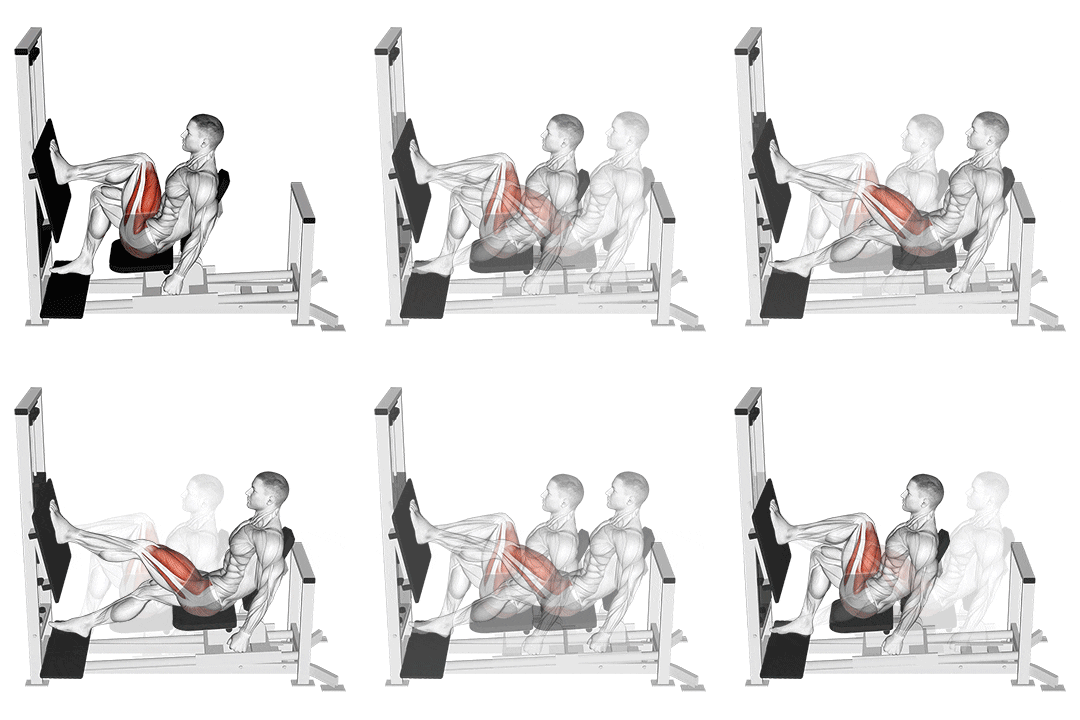
The lever horizontal one leg press is an exercise that targets the lower body, specifically the quadriceps, hamstrings, and glutes. It involves using a lever machine to press a platform away from the body using one leg at a time. This exercise helps improve lower body strength, stability, and muscle balance. ## Instructions 1. Adjust the lever machine so that the platform is positioned at an appropriate height to comfortably press with your leg. 2. Stand facing the lever machine and position yourself on one leg, keeping the other leg slightly lifted off the ground. 3. Grasp the handles or the sides of the machine for support and stability. 4. Engage your core, maintain an upright posture, and keep your chest lifted throughout the exercise. 5. Begin the movement by extending your leg and pushing the platform away from your body. 6. Focus on using your quadriceps to drive the movement, fully extending your knee without locking it. 7. Keep your foot flat on the platform and your knee aligned with your toes. 8. Pause briefly at the end of the movement when your leg is fully extended. 9. Slowly lower the platform back to the starting position with controlled movement. 10. Repeat for the desired number of repetitions and then switch to the other leg. ## Variations - Weight Adjustment: Adjust the weight on the lever machine to match your fitness level and desired intensity. - Bilateral Leg Press: Instead of performing the exercise with one leg at a time, you can use both legs simultaneously. This variation allows you to lift heavier weights and provides a different stimulus to the lower body muscles. - Single-Leg Press on a Leg Press Machine: If a lever machine is not available, you can perform single-leg presses on a traditional leg press machine. Adjust the seat and foot platform to align with your leg and perform the exercise using the same instructions as above. ## Muscles Worked - Primary Muscles: Quadriceps (front of the thigh), hamstrings (back of the thigh), gluteus maximus (buttocks) - Secondary Muscles: Calves, hip adductors, hip abductors ## Common Mistakes - Not Maintaining Control: Avoid using momentum or jerking movements to push the platform. Focus on controlled and smooth movements throughout the exercise. - Arching the Back: Keep your back straight and avoid excessive arching. Engage your core and maintain proper spinal alignment to prevent lower back strain. - Locking the Knees: While fully extending your knee, avoid locking it at the top of the movement. Maintain a slight bend in the knee to keep tension on the muscles and prevent joint stress. - Placing Too Much Weight: Use an appropriate weight that allows you to maintain proper form and complete the exercise with control. Avoid using excessive weight that compromises your technique. ## Safety Precautions - Adjust the weight on the lever machine according to your strength and capabilities. - Ensure that the lever machine is properly maintained and functioning before use. - Start with a lighter weight or resistance and gradually increase it as you become comfortable with the exercise. - If you have any knee or lower body injuries, consult with a qualified fitness professional or healthcare provider before attempting this exercise. - If you experience any pain or discomfort during the exercise, stop immediately and seek guidance from a fitness professional.