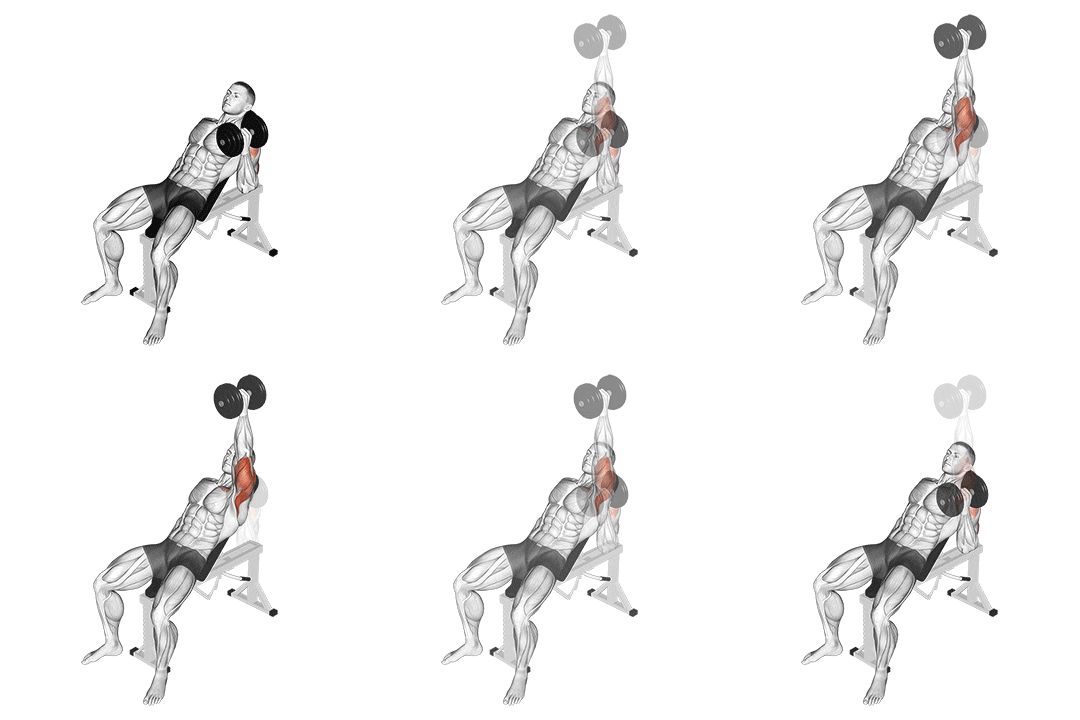
The dumbbell incline one arm hammer press is an exercise that targets the muscles of the chest, specifically the pectoralis major, while also engaging the front shoulders (anterior deltoids) and triceps. This exercise focuses on overall chest development and strength, particularly the middle and lower regions of the chest. ## Instructions 1. Start by adjusting an incline bench to a 45-degree angle and grabbing a dumbbell in one hand. 2. Sit on the incline bench with your back pressed firmly against it. Plant your feet flat on the floor for stability. 3. Hold the dumbbell in a neutral grip (palms facing each other) in front of your chest with your elbow bent at a 90-degree angle. 4. Position your upper arm parallel to the floor, making sure your forearm is perpendicular to the floor. 5. Press the dumbbell upward, extending your arm fully while maintaining control. 6. Pause briefly at the top of the movement when your arm is fully extended but without locking the elbow joint. 7. Slowly lower the dumbbell back to the starting position, maintaining control throughout the movement. 8. Repeat the exercise for the desired number of repetitions on one arm before switching to the other arm. ## Variations - If you're new to this exercise or have limited strength, you can start with a lighter dumbbell or use resistance bands instead. - To increase the challenge, you can use a heavier dumbbell or increase the incline of the bench. - Another variation is to perform the exercise with both arms simultaneously, using two dumbbells of equal weight. ## Muscles Worked - Primary muscles: Pectoralis major (chest) - Secondary muscles: Anterior deltoids (front shoulders), triceps ## Common Mistakes - Using excessive weight: It's important to choose an appropriate weight that allows you to maintain proper form and control throughout the exercise. - Flaring the elbows: Keep your elbows close to your body throughout the movement to emphasize the chest muscles and avoid unnecessary strain on the shoulders. - Arching the back: Maintain a stable and neutral spine position by keeping your back pressed against the incline bench and avoiding excessive arching. ## Safety Precautions - Warm up adequately before starting the exercise to prepare your muscles for the movement. - Maintain proper form throughout the exercise, keeping your back firmly pressed against the incline bench and avoiding excessive arching. - Use a spotter if necessary, especially when using heavy weights or performing the exercise with both arms simultaneously. - If you have any pre-existing shoulder or chest injuries, consult with a healthcare professional or fitness expert before attempting this exercise.
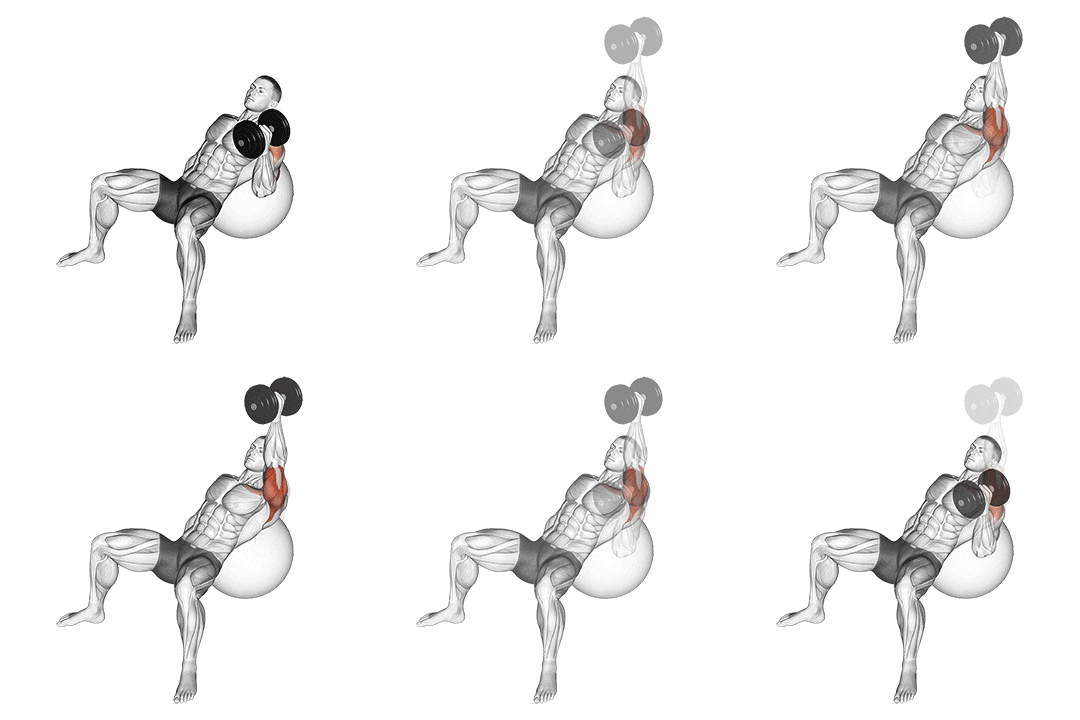
The dumbbell incline one arm hammer press on an exercise ball is an advanced variation of the hammer press exercise that adds an element of instability, engaging the core muscles in addition to targeting the chest, shoulders, and triceps. This exercise improves upper body strength, stability, and balance. ## Instructions 1. Place an exercise ball in front of an incline bench. The ball should be positioned so that when you lie face-up on it, your head, neck, and upper back are supported by the ball, while your lower back remains off the ball. 2. Grab a dumbbell in one hand and sit on the exercise ball, then carefully roll yourself onto your back while maintaining stability. 3. Position your feet shoulder-width apart, flat on the floor for balance. 4. Hold the dumbbell in a neutral grip (palms facing each other) in front of your chest, with your elbow bent at a 90-degree angle. 5. Position your upper arm parallel to the floor, making sure your forearm is perpendicular to the floor. 6. Press the dumbbell upward, extending your arm fully while maintaining control. 7. Pause briefly at the top of the movement when your arm is fully extended but without locking the elbow joint. 8. Slowly lower the dumbbell back to the starting position, maintaining control throughout the movement. 9. Repeat the exercise for the desired number of repetitions on one arm before switching to the other arm. ## Variations - If you find it challenging to maintain stability on the exercise ball, you can perform the exercise on a flat bench instead. - To increase the difficulty, you can use a heavier dumbbell or increase the incline of the bench. - Another variation is to perform the exercise with both arms simultaneously, using two dumbbells of equal weight. ## Muscles Worked - Primary muscles: Pectoralis major (chest) - Secondary muscles: Anterior deltoids (front shoulders), triceps, core stabilizers ## Common Mistakes - Lack of stability: Ensure that you maintain stability on the exercise ball by engaging your core muscles and keeping your body aligned throughout the movement. - Using excessive weight: Choose a weight that allows you to maintain proper form and control. Using too heavy of a weight can compromise your stability and increase the risk of injury. - Allowing the lower back to sag: Keep your lower back off the exercise ball and maintain a neutral spine position to avoid straining the lower back. ## Safety Precautions - It's important to choose an appropriately sized exercise ball that allows your upper back and neck to be supported while your lower back remains off the ball. - Use caution and take your time when transitioning onto the exercise ball to ensure stability. - Perform the exercise in a controlled manner, avoiding any sudden or jerky movements. - If you have any pre-existing back or shoulder issues, consult with a healthcare professional or fitness expert before attempting this exercise.
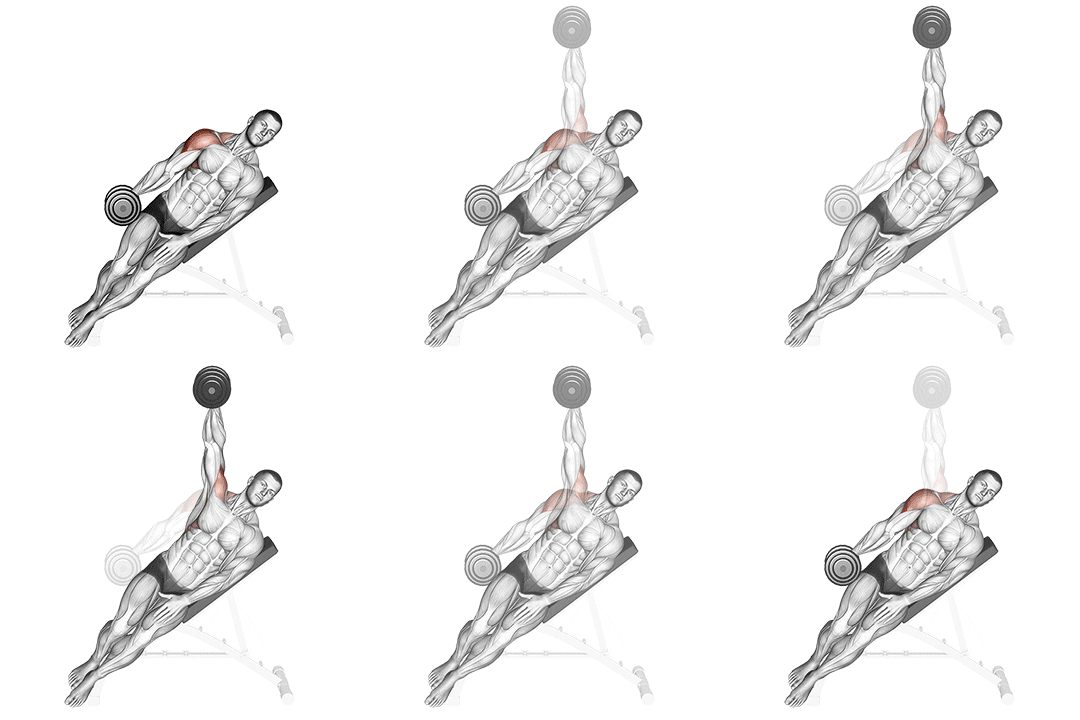
The dumbbell incline one arm lateral raise is an exercise that targets the lateral deltoid muscles of the shoulders. This exercise helps to strengthen and develop the side delts, contributing to broader and more defined shoulders. It also engages the trapezius and upper back muscles to a lesser extent. ## Instructions 1. Adjust an incline bench to a 45-degree angle and grab a dumbbell in one hand. 2. Sit on the incline bench with your back pressed firmly against it. Plant your feet flat on the floor for stability. 3. Hold the dumbbell in a neutral grip (palm facing your body) with your arm hanging down by your side. 4. Keeping a slight bend in your elbow, lift the dumbbell out to the side until your arm is parallel to the floor or slightly higher. Maintain control throughout the movement. 5. Pause briefly at the top of the movement, squeezing your lateral deltoid muscles. 6. Lower the dumbbell back to the starting position in a controlled manner. 7. Repeat the exercise for the desired number of repetitions on one arm before switching to the other arm. ## Variations - If you're new to this exercise or have limited strength, you can start with a lighter dumbbell or use resistance bands instead. - To increase the challenge, you can use a heavier dumbbell or perform the exercise on a steeper incline bench. - Another variation is to perform the exercise with both arms simultaneously, using dumbbells of equal weight. ## Muscles Worked - Primary muscles: Lateral deltoid (side shoulder) - Secondary muscles: Trapezius, upper back muscles ## Common Mistakes - Using excessive weight: It's important to choose a weight that allows you to maintain proper form and control throughout the exercise. Using too heavy of a weight can lead to swinging or poor technique. - Raising the arm too high: Avoid lifting the arm above shoulder level, as this can shift the focus away from the lateral deltoid and strain the shoulder joint. - Swinging the weight: Maintain a slow and controlled movement, avoiding any swinging or jerking motions. Focus on using the targeted muscles rather than relying on momentum. ## Safety Precautions - Warm up adequately before starting the exercise to prepare your muscles for the movement. - Maintain proper form throughout the exercise, keeping your back firmly pressed against the incline bench and avoiding excessive arching. - Use a spotter if necessary, especially when using heavy weights or performing the exercise with both arms simultaneously. - If you have any pre-existing shoulder or upper back injuries, consult with a healthcare professional or fitness expert before attempting this exercise.
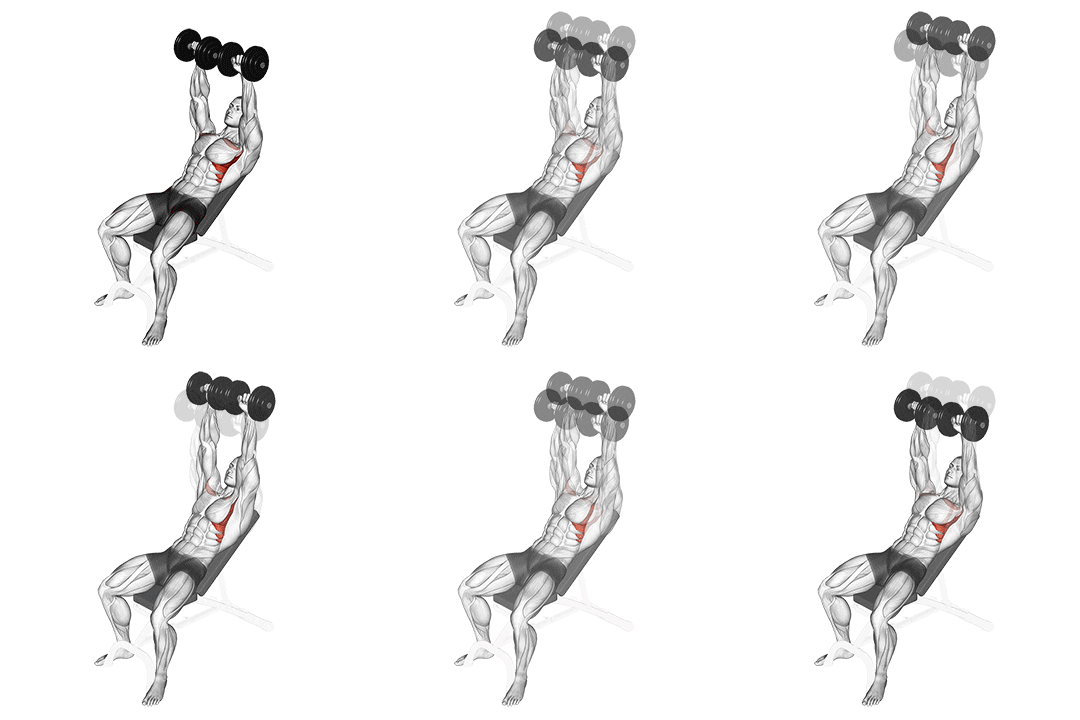
The dumbbell incline shoulder raise is an exercise that primarily targets the deltoid muscles, specifically the anterior (front) portion. It also engages the upper chest muscles and the trapezius muscles to a lesser extent. This exercise is beneficial for developing shoulder strength, stability, and aesthetics. ## Instructions 1. Start by adjusting an incline bench to a 30-45 degree angle. 2. Grab a pair of dumbbells and sit on the incline bench with your back firmly supported against the bench. 3. Place the dumbbells on your thighs and maintain a slight bend in your elbows throughout the exercise. 4. Slowly lie back on the bench, keeping the dumbbells on your thighs. 5. Once you are lying back and your feet are flat on the floor, bring the dumbbells up to the sides of your shoulders, palms facing forward. This is your starting position. 6. Keeping your core engaged and your back pressed against the bench, exhale and lift the dumbbells straight up in a controlled manner until your arms are parallel to the floor. Your elbows should be slightly higher than your wrists. 7. Hold the contracted position for a brief pause while squeezing your shoulder muscles. 8. Inhale and slowly lower the dumbbells back down to the starting position, maintaining control throughout the movement. 9. Repeat for the desired number of repetitions. ## Variations - **Seated Dumbbell Incline Shoulder Raise:** Perform the exercise while seated on a regular bench instead of an incline bench. - **Unilateral Dumbbell Incline Shoulder Raise:** Perform the exercise one arm at a time, alternating between arms. - **Cable Incline Shoulder Raise:** Attach handles to the low pulleys of a cable machine, sit on the incline bench facing away from the machine, and perform the shoulder raise by pulling the handles up and out to the sides. ## Muscles Worked - Anterior (front) deltoids (shoulders) - Upper chest muscles (pectoralis major) - Trapezius muscles (upper portion) ## Common Mistakes - Using excessive momentum: Avoid swinging the weights up or using your body's momentum to lift the dumbbells. This reduces the effectiveness of the exercise and can lead to injury. Focus on controlled movements. - Lifting too heavy: Choose an appropriate weight that allows you to maintain proper form throughout the exercise. Using weights that are too heavy can compromise your technique and increase the risk of injury. - Shrugging the shoulders: Keep your shoulders relaxed and avoid shrugging them up toward your ears. Maintain a stable shoulder position throughout the exercise. ## Safety Precautions - Start with a light weight to familiarize yourself with the exercise and ensure proper form. - If you have any shoulder or back issues, consult with a healthcare professional before attempting this exercise. - Engage your core muscles and maintain proper back support against the bench throughout the exercise. - If you experience any pain or discomfort, stop the exercise and seek medical advice.
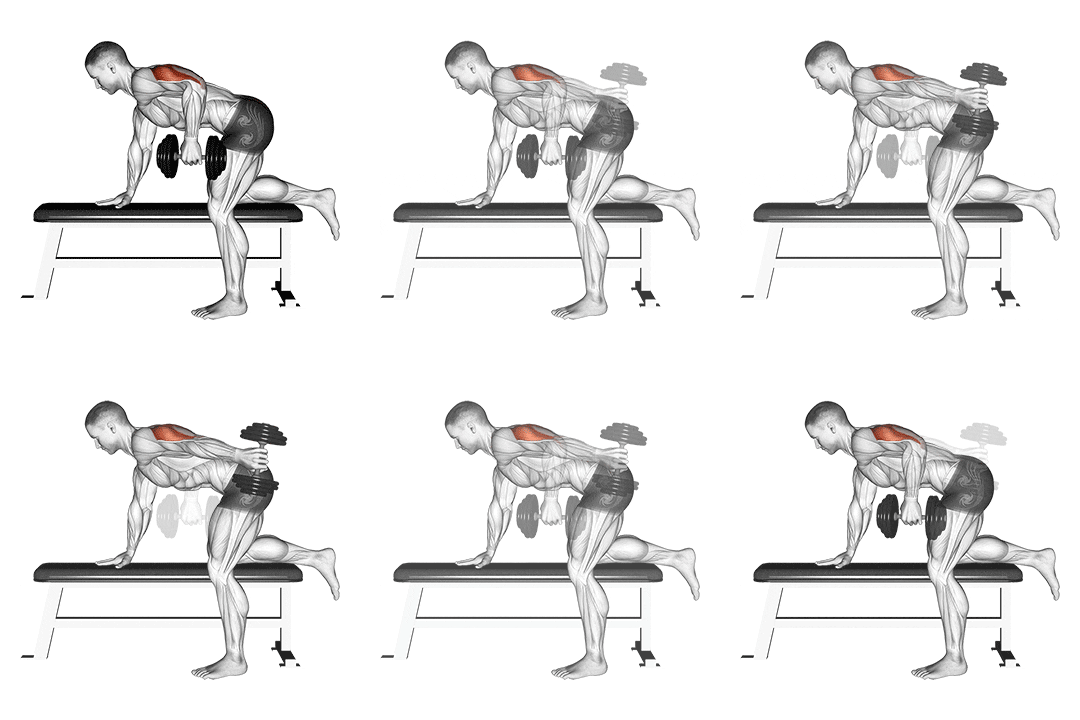
The dumbbell kickback is an exercise that primarily targets the triceps, the muscles located at the back of the upper arm. It is a great isolation exercise for strengthening and toning the triceps. The movement involves extending the arm backward against resistance, activating the triceps muscles and promoting muscular development and definition. ## Instructions 1. Start by grabbing a dumbbell in your right hand. Stand with your feet shoulder-width apart and maintain a slight bend in your knees. 2. Bend forward at the waist, keeping your back straight and parallel to the ground. Rest your left hand on your left thigh for support. 3. Position your right upper arm parallel to your torso and keep your elbow at a 90-degree angle. Your forearm should be perpendicular to the floor, with the dumbbell hanging down toward the ground. 4. Begin the movement by fully extending your right arm backward, while keeping your upper arm stationary. Focus on contracting the triceps muscles as you extend the arm. 5. Once your arm is fully extended, hold the contracted position for a brief moment, squeezing your triceps. 6. Slowly lower the dumbbell back to the starting position, controlling the movement and feeling the tension in your triceps throughout. 7. Complete the desired number of repetitions and then switch to the left arm to perform the exercise on the other side. ## Variations - **Dumbbell Kickback with Bilateral Movement**: Instead of performing the exercise one arm at a time, you can hold a dumbbell in each hand and perform the kickback simultaneously. - **Cable Kickback**: Using a cable machine with an ankle attachment, attach the cable to your ankle and perform the kickback movement, maintaining the same form as with dumbbells. - **Seated Dumbbell Kickback**: Perform the exercise while seated on a bench or chair to provide stability and isolate the triceps further. ## Muscles Worked The main muscles worked during the dumbbell kickback exercise are: - Triceps brachii (long, medial, and lateral heads) - Posterior deltoid (shoulder) ## Common Mistakes - **Swinging the Arm**: Avoid using momentum or swinging the arm to lift the weight. Focus on isolating the triceps and maintaining control throughout the movement. - **Lifting the Elbow**: Keep your upper arm parallel to your torso and avoid lifting the elbow too high. Maintaining the correct position ensures the triceps are effectively targeted. - **Incomplete Extension**: Fully extend your arm backward to engage the triceps fully. Avoid stopping short of full extension to maximize the effectiveness of the exercise. ## Safety Precautions - Choose an appropriate dumbbell weight that allows you to maintain proper form and control throughout the exercise. - Keep your core engaged and your back straight to protect your lower back from strain. - If you have any pre-existing shoulder or elbow issues, consult with a healthcare professional or a qualified trainer before performing the exercise. - Start with light weights and gradually increase the resistance as you become comfortable with the movement to prevent injury.
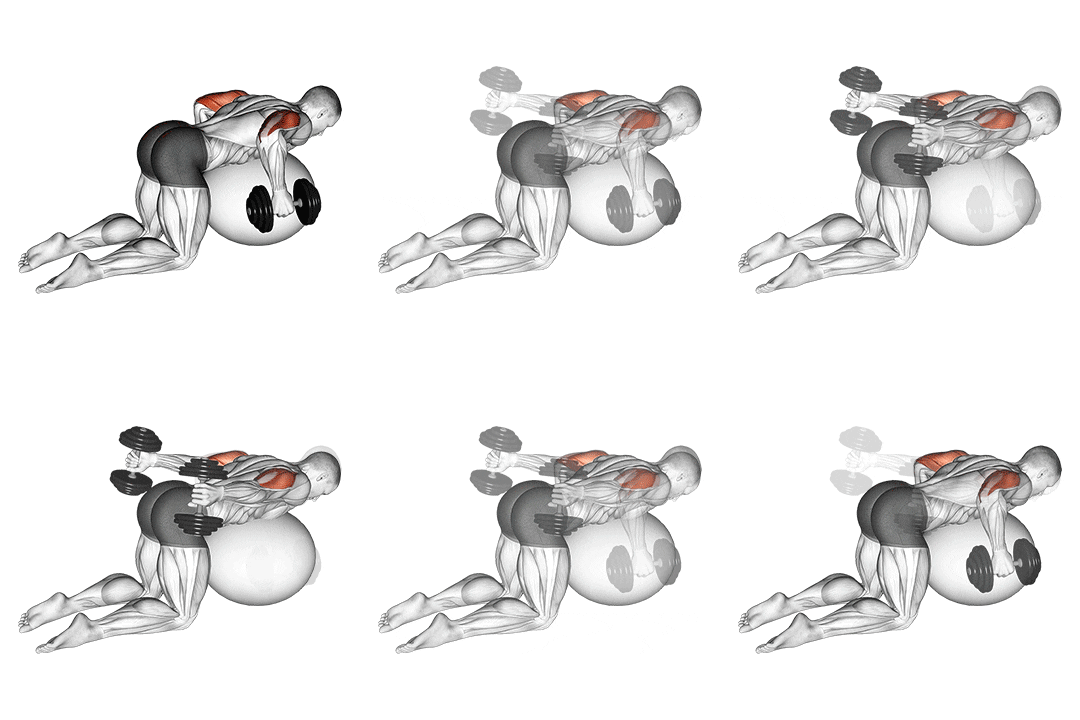
Dumbbell kickbacks on an exercise ball are a variation of the traditional dumbbell kickback exercise. This exercise targets and strengthens the triceps, while also engaging the core muscles for stability and balance. Performing kickbacks on an exercise ball adds an element of instability, which requires more effort from the stabilizing muscles. ## Instructions 1. Start by placing an exercise ball on the floor and kneeling in front of it. Position yourself so that your chest is resting on the exercise ball and your hands are holding a dumbbell in each hand. 2. Walk your hands forward on the exercise ball until your thighs and hips are resting on the ball as well. Your body should form a straight line from your knees to your shoulders. 3. Maintain a slight bend in your elbows and position your upper arms parallel to the floor. Your forearms should be hanging down perpendicular to the floor, with the dumbbells pointing toward the ground. 4. Begin the movement by extending your arms backward while keeping your upper arms stationary. Focus on contracting the triceps as you extend your arms. 5. Once your arms are fully extended, hold the contracted position for a brief moment, squeezing your triceps. 6. Slowly and in a controlled manner, lower the dumbbells back to the starting position, allowing your arms to bend at the elbows. 7. Complete the desired number of repetitions, maintaining stability on the exercise ball, and then carefully step off the ball. ## Variations - **Single Arm Dumbbell Kickbacks**: Perform the exercise one arm at a time, focusing on each tricep individually. - **Resistance Band Kickbacks on Exercise Ball**: Attach resistance bands to a stable anchor point and perform kickbacks while kneeling on the exercise ball. The resistance bands provide added resistance and challenge. - **One-Legged Dumbbell Kickbacks on Exercise Ball**: Balance on one leg while performing the kickbacks on the exercise ball, engaging the core and lower body muscles for stability. ## Muscles Worked The main muscles worked during dumbbell kickbacks on an exercise ball are: - Triceps brachii (long, medial, and lateral heads) - Core muscles (abdominals, obliques, and lower back) for stability ## Common Mistakes - **Poor Stability**: Failing to maintain stability on the exercise ball can compromise the exercise and increase the risk of injury. Ensure the ball is properly inflated and focus on engaging your core muscles for balance. - **Using Excessive Weight**: Using weights that are too heavy can lead to poor form and strain on the muscles and joints. Choose a weight that allows you to maintain proper form throughout the exercise. - **Incomplete Extension**: Make sure to fully extend your arms backward to engage the triceps effectively. Avoid stopping short of full extension to maximize the benefits of the exercise. ## Safety Precautions - Use an exercise ball that is the appropriate size for your height to ensure stability and safety. - Start with lighter weights and gradually increase the resistance as you become comfortable and confident with the exercise. - If you have any pre-existing conditions or injuries, consult with a healthcare professional or a qualified trainer before attempting this exercise. - Pay attention to your body's signals and avoid overexertion or pushing through pain. If you experience any discomfort, stop the exercise and seek guidance if needed.
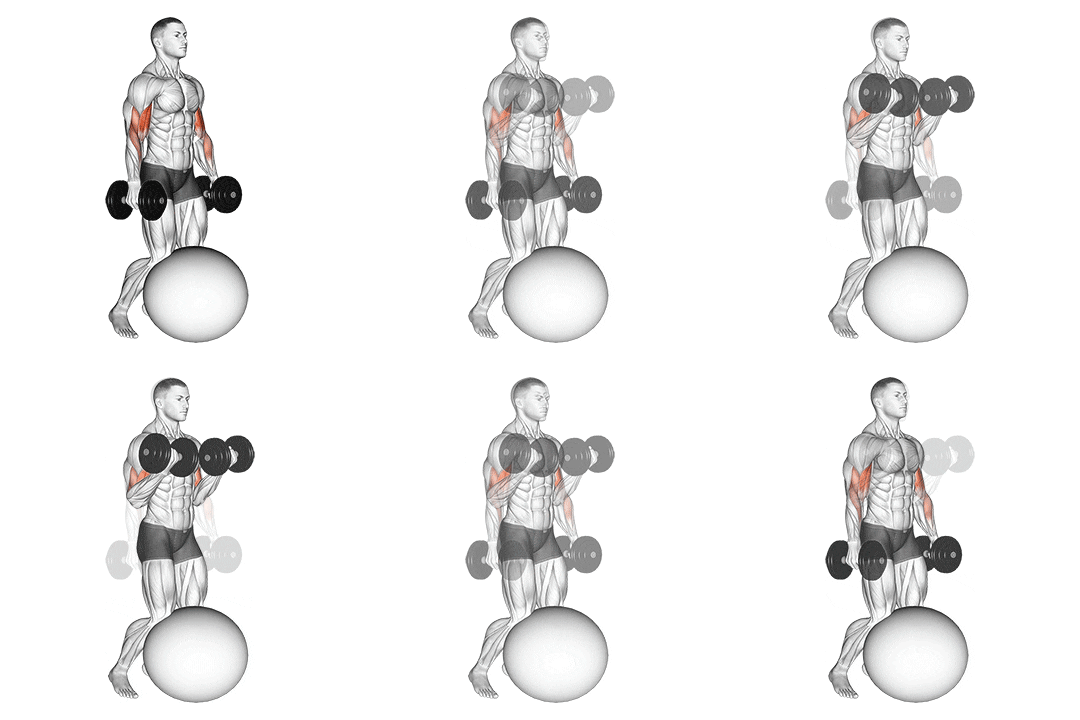
The dumbbell kneeling bicep curl on an exercise ball is a variation of the traditional bicep curl exercise that adds an element of instability. This exercise primarily targets the biceps, the muscles located at the front of the upper arm. Performing the bicep curl on an exercise ball engages the core muscles for stability and balance, providing an additional challenge. ## Instructions 1. Start by placing an exercise ball on the floor and kneeling in front of it. Position yourself so that your chest is resting on the exercise ball, and your feet are anchored firmly on the ground. 2. Hold a dumbbell in each hand with an underhand grip (palms facing upward), allowing your arms to hang naturally by your sides. 3. Keeping your upper arms stationary, slowly curl the dumbbells toward your shoulders, contracting your biceps. Keep your elbows close to your sides throughout the movement. 4. Once your forearms are close to your biceps and you have achieved a full contraction, hold the position for a brief moment, squeezing your biceps. 5. Lower the dumbbells back down to the starting position in a controlled manner, fully extending your arms and feeling a stretch in your biceps. 6. Repeat the exercise for the desired number of repetitions, maintaining stability on the exercise ball. ## Variations - **Alternating Arm Kneeling Bicep Curl**: Perform the exercise by curling one arm at a time while keeping the other arm extended. This variation allows you to focus on each arm individually. - **Hammer Curl on Exercise Ball**: Instead of using an underhand grip, use a neutral grip (palms facing each other) throughout the movement. This targets the brachialis muscle in addition to the biceps. - **Seated Dumbbell Bicep Curl**: Perform the bicep curl while seated on a bench or chair, eliminating the element of instability from the exercise ball. ## Muscles Worked The main muscles worked during the dumbbell kneeling bicep curl on an exercise ball are: - Biceps brachii - Brachialis (activated to a lesser extent) - Core muscles (abdominals, obliques, and lower back) for stability ## Common Mistakes - **Using Momentum**: Avoid swinging or using momentum to lift the dumbbells. Focus on controlled and deliberate movements to engage the biceps effectively. - **Rounded Shoulders**: Maintain proper posture throughout the exercise. Avoid rounding the shoulders forward, as it can reduce the activation of the biceps. - **Lifting Elbows**: Keep your elbows close to your sides and avoid lifting them too high. This helps maintain tension on the biceps throughout the movement. ## Safety Precautions - Use an exercise ball that is the appropriate size for your height to ensure stability and safety. - Choose dumbbells that allow you to maintain proper form and control throughout the exercise. - If you have any pre-existing conditions or injuries, consult with a healthcare professional or a qualified trainer before attempting this exercise. - Start with lighter weights and gradually increase the resistance as you become comfortable and confident with the exercise. - Pay attention to your body's signals and avoid overexertion or pushing through pain. If you experience any discomfort, stop the exercise and seek guidance if needed.
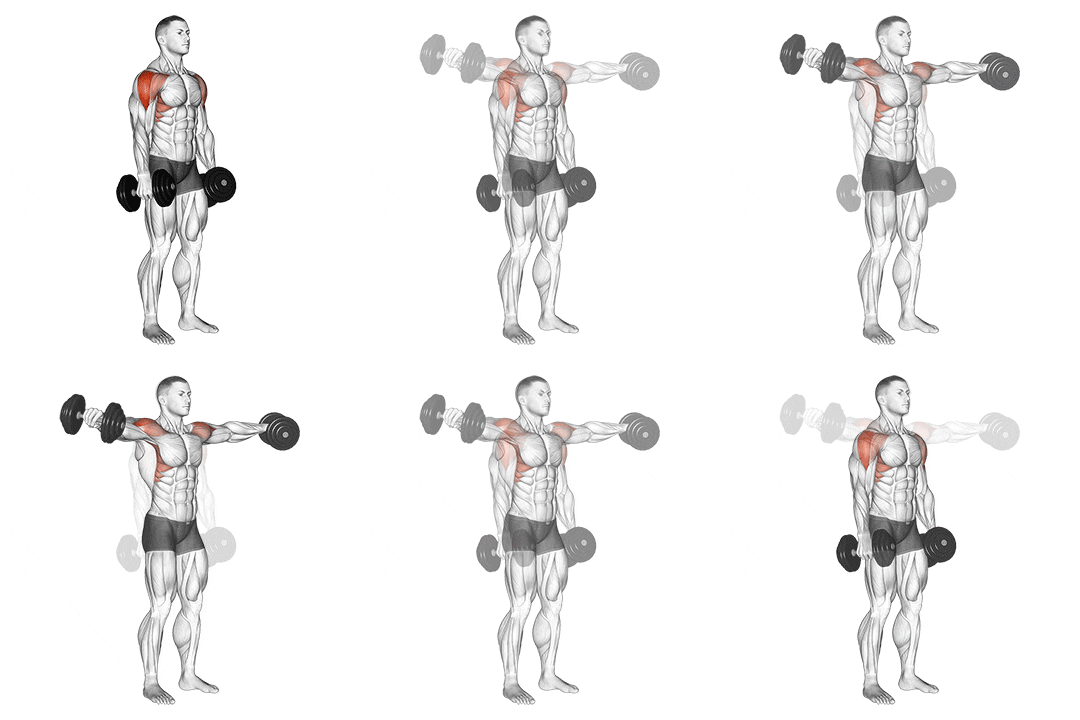
The dumbbell lateral raise is an exercise that primarily targets the lateral deltoid muscles, which are located on the sides of the shoulders. It is an effective exercise for developing shoulder strength and stability, as well as improving overall shoulder aesthetics. The lateral raise also engages other muscles such as the trapezius and the upper back muscles to a lesser extent. ## Instructions 1. Stand up straight with a dumbbell in each hand, palms facing inward. Maintain a slight bend in your elbows and let your arms hang naturally by your sides. 2. Keep your core engaged and your feet shoulder-width apart for stability. 3. Begin the movement by simultaneously raising both arms straight out to the sides. Your palms should be facing downward throughout the exercise. 4. Continue raising your arms until they are parallel to the floor or slightly below shoulder level. At this point, pause and briefly squeeze your shoulder muscles. 5. Slowly lower the dumbbells back down to the starting position in a controlled manner, resisting gravity. 6. Repeat the exercise for the desired number of repetitions, maintaining proper form and control throughout. ## Variations - **Seated Dumbbell Lateral Raise**: Perform the exercise while seated on a bench or chair to eliminate any momentum and focus solely on the shoulder muscles. - **Front Dumbbell Raise**: Instead of raising your arms to the sides, raise them straight in front of your body. This variation targets the front deltoids. - **Bent-Over Lateral Raise**: Bend forward at the hips, keeping your back flat, and perform the lateral raise with your arms hanging down and perpendicular to your torso. This variation targets the rear deltoids. ## Muscles Worked The main muscles worked during the dumbbell lateral raise are: - Lateral deltoids (middle part of the shoulder) - Anterior deltoids (front part of the shoulder) to a lesser extent - Upper back muscles (trapezius, rhomboids) to a lesser extent ## Common Mistakes - **Using Excessive Weight**: Avoid using weights that are too heavy, as it can compromise your form and lead to shoulder strain. Choose a weight that allows you to perform the exercise with proper technique and control. - **Swinging the Body**: Maintain a stable and upright posture throughout the exercise. Avoid using momentum or swinging the body to lift the dumbbells. Focus on isolating the shoulder muscles and keeping the movement controlled. - **Raising Arms Too High**: Do not raise your arms above shoulder level. Doing so can lead to shoulder impingement or excessive stress on the joint. Lift your arms to parallel to the floor or slightly below shoulder level. ## Safety Precautions - Choose dumbbells that are appropriate for your strength and fitness level. Start with lighter weights and gradually increase the resistance as you become more comfortable and proficient with the exercise. - Engage your core muscles and maintain proper posture throughout the exercise to protect your back and maintain stability. - If you have any pre-existing shoulder or joint issues, consult with a healthcare professional or a qualified trainer before attempting this exercise. - Listen to your body and avoid overexertion or pushing through pain. If you experience any discomfort, stop the exercise and seek guidance if needed.
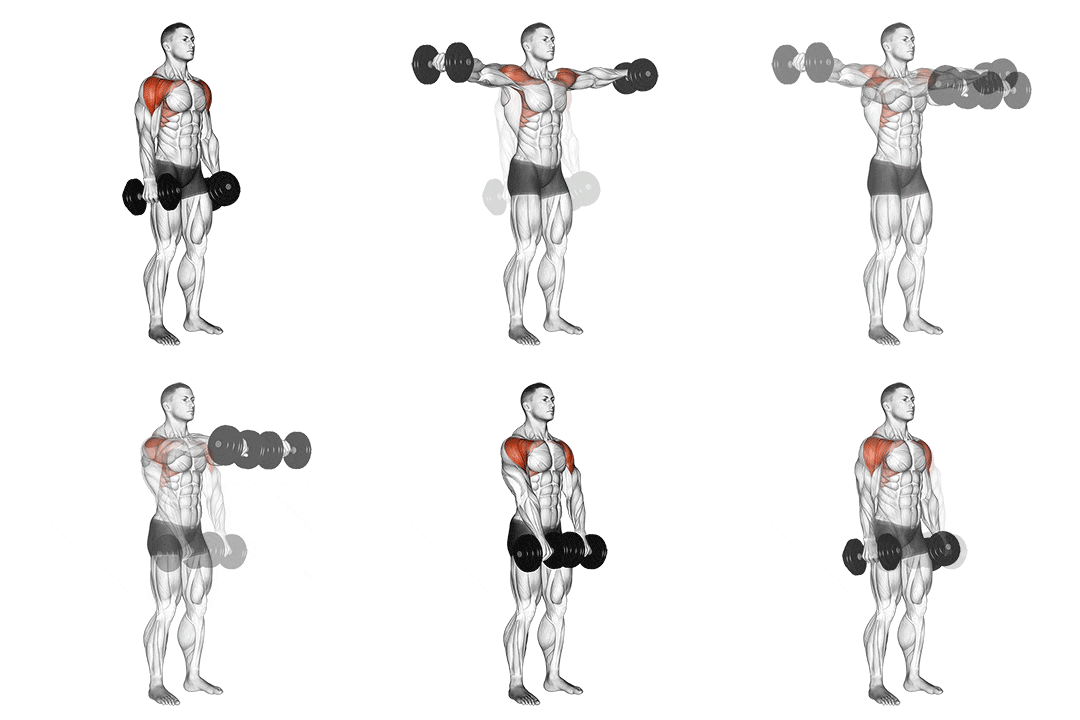
The dumbbell lateral to front raise is a compound exercise that targets the shoulders, specifically the lateral deltoids and the anterior deltoids. It combines two movements, starting with a lateral raise and transitioning into a front raise. This exercise helps develop overall shoulder strength, stability, and muscular balance. ## Instructions 1. Stand up straight with a dumbbell in each hand, palms facing your body. Maintain a slight bend in your elbows and let your arms hang naturally by your sides. 2. Keep your core engaged and your feet shoulder-width apart for stability. 3. Begin the movement by simultaneously raising both arms out to the sides until they are parallel to the floor. Your palms should be facing downward throughout this part of the exercise. 4. Once your arms are parallel to the floor, pause briefly and then transition into the front raise by smoothly and slowly bringing your arms forward until they are parallel to the floor. Your palms should be facing upward at this point. 5. Hold the position briefly, feeling the contraction in your shoulder muscles. 6. Slowly reverse the movement, lowering your arms back down to the starting position in a controlled manner. Lower them first to the lateral raise position and then return them to the starting position by lowering them to your sides. 7. Repeat the exercise for the desired number of repetitions, maintaining proper form and control throughout. ## Variations - **Alternating Dumbbell Lateral to Front Raise**: Perform the exercise by raising one arm at a time while keeping the other arm extended. This variation allows you to focus on each arm individually. - **Resistance Band Lateral to Front Raise**: Instead of using dumbbells, use resistance bands to perform the lateral to front raise. Resistance bands provide variable resistance throughout the movement and can be a suitable alternative for individuals with joint issues or limited access to dumbbells. ## Muscles Worked The main muscles worked during the dumbbell lateral to front raise are: - Lateral deltoids (middle part of the shoulder) - Anterior deltoids (front part of the shoulder) - Upper back muscles (trapezius, rhomboids) to a lesser extent ## Common Mistakes - **Using Excessive Weight**: Select a weight that allows you to perform the exercise with proper form and control. Using excessive weight can lead to compromised technique and strain on the shoulders. - **Swinging the Body**: Maintain a stable and upright posture throughout the exercise. Avoid using momentum or swinging the body to lift the dumbbells. Focus on controlled and deliberate movements. - **Lifting Arms Too High**: Do not raise your arms above shoulder level during the lateral or front raise. This can put unnecessary strain on the shoulder joint. Lift your arms to parallel to the floor or slightly below. ## Safety Precautions - Choose dumbbells that are appropriate for your strength and fitness level. Start with lighter weights and gradually increase the resistance as you become more comfortable and proficient with the exercise. - Engage your core muscles and maintain proper posture throughout the exercise to protect your back and maintain stability. - If you have any pre-existing shoulder or joint issues, consult with a healthcare professional or a qualified trainer before attempting this exercise. - Listen to your body and avoid overexertion or pushing through pain. If you experience any discomfort, stop the exercise and seek guidance if needed.