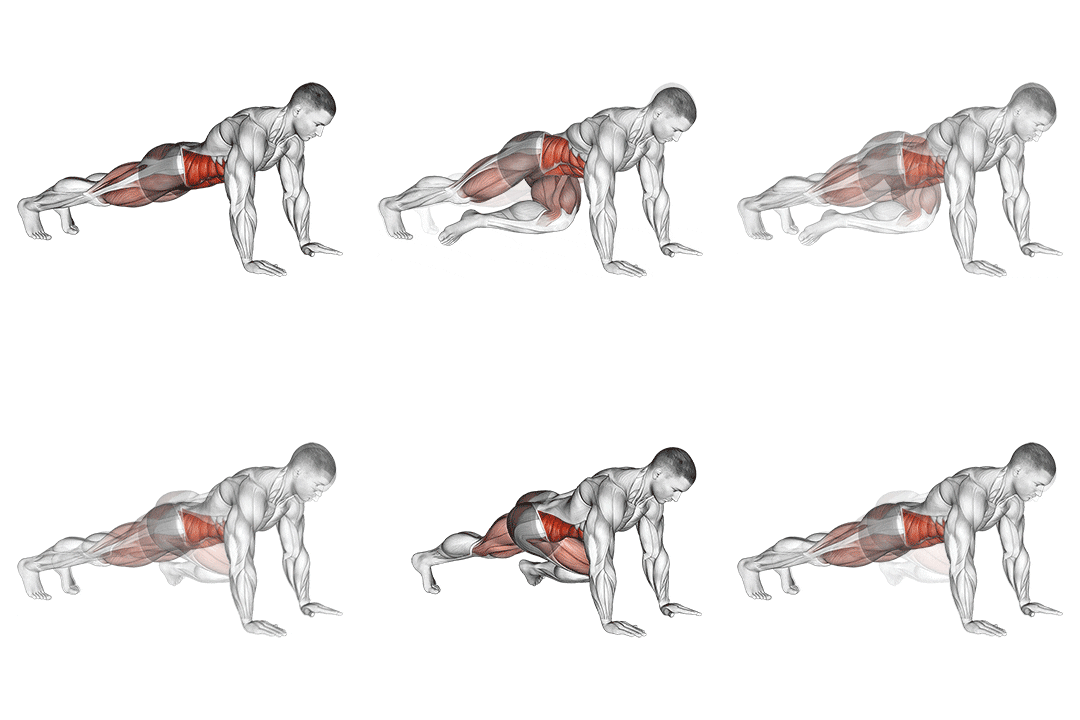
The bridge - mountain climber (cross body) is a compound exercise that targets multiple muscle groups, including the core, glutes, hamstrings, and shoulders. It combines the bridge exercise, which activates the posterior chain, with the mountain climber exercise, which engages the core and upper body. This exercise helps improve core strength, hip stability, and overall body coordination. ## Instructions 1. Start by lying on your back with your knees bent and feet flat on the floor, hip-width apart. 2. Place your arms by your sides, palms facing down. 3. Engage your core and squeeze your glutes to lift your hips off the ground, coming into a bridge position. Your body should form a straight line from your shoulders to your knees. 4. Maintain the bridge position throughout the exercise. 5. From the bridge position, bring your right knee toward your chest, engaging your core. 6. Extend your right leg straight out in front of you, keeping it parallel to the ground. 7. At the same time, reach your left hand across your body to touch or come close to your right toes. 8. Return your right leg and left hand to the starting position. 9. Repeat the movement with your left knee and right hand, crossing the midline of your body. 10. Alternate the movement, performing the cross-body mountain climber with control and coordination. 11. Continue the exercise for the desired number of repetitions on each side. ## Variations - Single-Leg Bridge - Mountain Climber: Perform the exercise by lifting one leg off the ground while maintaining the bridge position. Alternate the leg with each repetition. - Slow-Motion Bridge - Mountain Climber: Perform the exercise at a slower pace, focusing on control and stability throughout each movement. - Elevated Bridge - Mountain Climber: Place your feet on an elevated surface, such as a bench or step, while performing the exercise to increase the challenge. ## Muscles Worked - Core muscles (including rectus abdominis, obliques, and transverse abdominis) - Glutes - Hamstrings - Shoulders - Hip stabilizers ## Common Mistakes - Sagging hips or improper bridge form: Keep your hips lifted and maintain a straight line from shoulders to knees throughout the exercise. - Rounding the back: Keep your spine neutral and avoid excessive rounding or arching of the back. - Lack of core engagement: Focus on actively engaging your core muscles throughout the exercise to stabilize your body. - Allowing the shoulders to collapse: Keep your shoulders engaged and avoid sinking or shrugging them during the movements. - Rushing the exercise: Maintain a controlled tempo and avoid rushing the mountain climber movements. ## Safety Precautions - If you have any pre-existing back or shoulder injuries, consult with a healthcare professional before attempting this exercise. - Start with a comfortable range of motion and gradually increase it as your flexibility and strength improve. - Listen to your body and avoid pushing beyond your limits. If you feel any pain or discomfort, stop the exercise. - Ensure that you have a stable surface to perform the exercise on and sufficient space around you to move your limbs freely. - Engage your core muscles throughout the exercise to provide stability and support for your lower back.
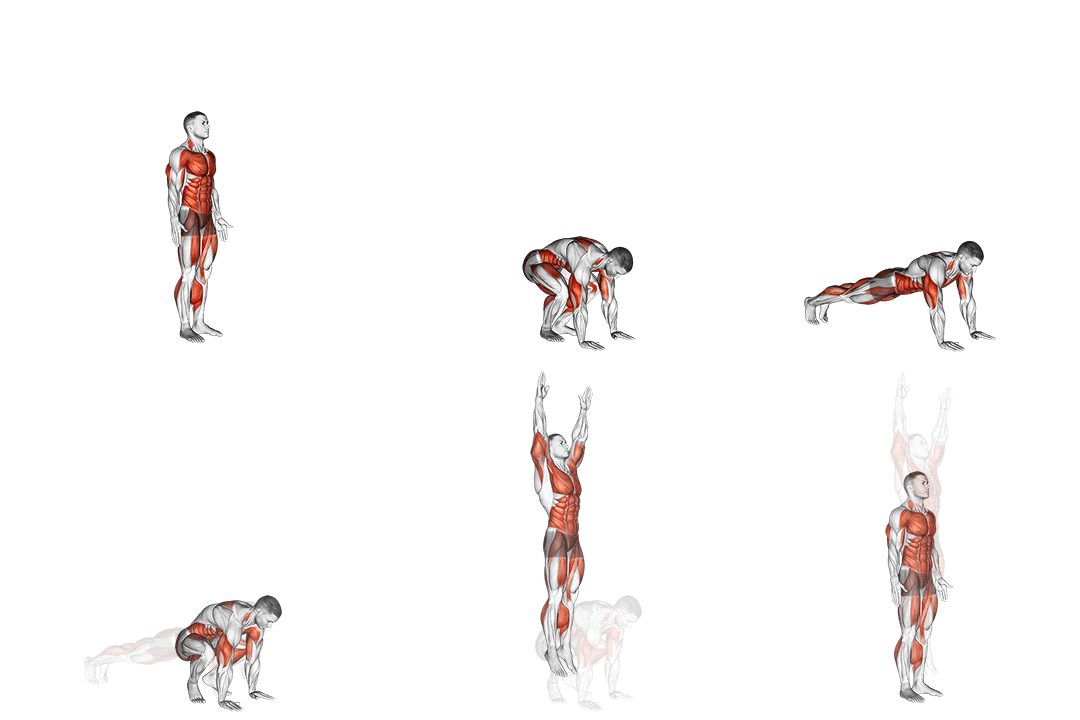
The burpee is a full-body exercise that combines elements of strength training and cardiovascular conditioning. It targets multiple muscle groups, including the chest, shoulders, arms, core, glutes, and legs. The burpee is a highly effective exercise for improving overall fitness, increasing muscular endurance, and burning calories. ## Instructions 1. Start in a standing position with your feet hip-width apart. 2. Lower your body into a squat position by bending your knees and bringing your hands down to the floor in front of you. 3. Place your hands on the floor, slightly wider than shoulder-width apart. 4. Kick your feet back to a push-up position, keeping your body in a straight line from head to heels. 5. Perform a push-up by lowering your chest towards the floor, then pushing back up to the starting position. 6. Jump your feet forward, landing them just outside of your hands. 7. Explosively jump vertically into the air, extending your arms overhead. 8. Land softly on the balls of your feet and immediately lower back into the squat position to begin the next repetition. 9. Repeat the exercise for the desired number of repetitions. ## Variations - Modified Burpee: If the standard burpee is too challenging, you can modify the exercise by omitting the push-up or the jump. For example, you can step back instead of kicking your feet back, and step forward instead of jumping. - Burpee with Variations: Once you have mastered the basic burpee, you can incorporate additional variations such as adding a tuck jump, a knee tuck, or a mountain climber during the exercise to increase the intensity and engage different muscle groups. ## Muscles Worked - Chest muscles (pectorals) - Shoulder muscles (deltoids) - Arm muscles (triceps and biceps) - Core muscles (abdominals and lower back) - Glutes - Leg muscles (quadriceps and hamstrings) ## Common Mistakes - Poor squat form: Ensure that your knees are aligned with your toes and that you maintain a neutral spine during the squat portion of the exercise. - Improper push-up technique: Keep your body in a straight line, engage your core, and lower your chest down to the floor with control. - Lack of explosiveness in the jump: Make sure to jump explosively, fully extending your hips and arms at the top of the jump. - Landing with locked knees: Land softly on the balls of your feet and bend your knees to absorb the impact of the landing. - Holding your breath: Remember to breathe throughout the exercise. Inhale during the squat and push-up portions and exhale during the jump. ## Safety Precautions - If you have any pre-existing medical conditions or injuries, consult with a healthcare professional before attempting the burpee exercise. - Start with a modified version of the burpee if you are new to the exercise or have limited fitness experience. - Ensure that you have enough space around you to perform the exercise safely. - Use proper footwear and ensure that the exercise surface is free of any hazards. - Maintain control throughout the exercise and avoid rushing the movements to reduce the risk of injury. - If you experience pain or discomfort during the exercise, stop immediately and seek medical advice.
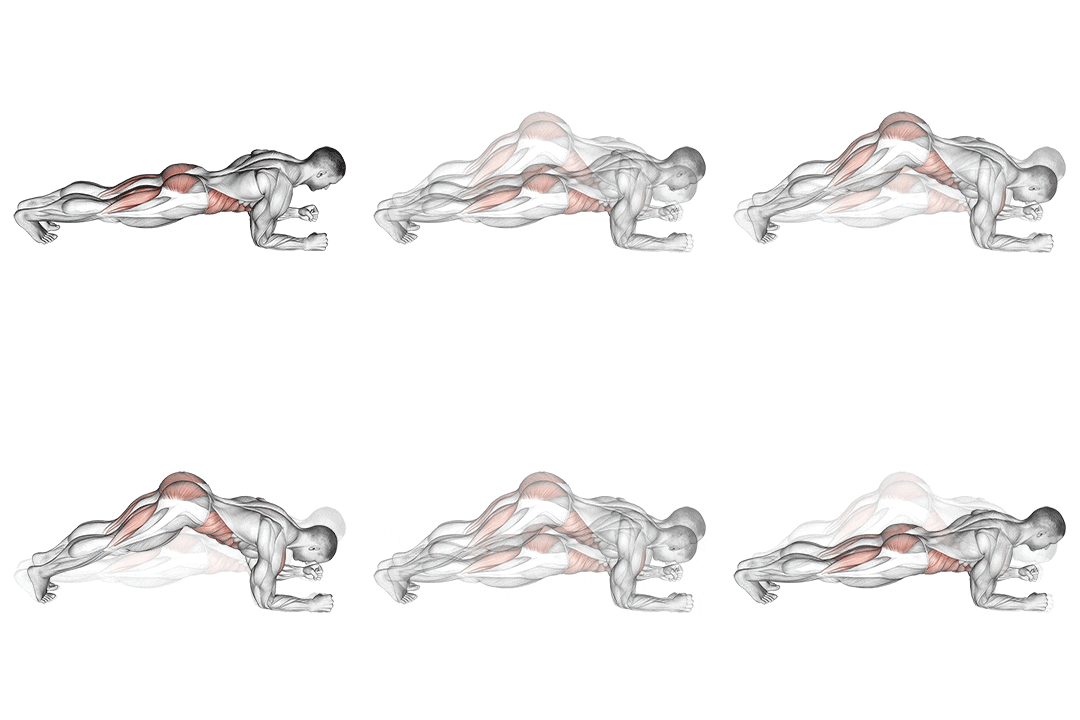
Butt-ups, also known as hip raises or glute bridges, are an exercise that primarily targets the gluteal muscles (glutes) and the hamstrings. It involves lifting your hips off the ground while keeping your feet and shoulders grounded. Butt-ups are effective for strengthening and toning the glutes, improving hip stability, and enhancing overall lower body strength. ## Instructions 1. Start by lying on your back on a mat or a flat surface with your knees bent and feet flat on the ground. Your feet should be hip-width apart, and your arms relaxed by your sides. 2. Engage your core muscles by drawing your navel toward your spine. This will help stabilize your torso throughout the exercise. 3. Press your feet firmly into the ground, ensuring that your heels are in line with your knees. 4. Squeeze your glutes and lift your hips off the ground, driving through your heels. Your body should form a straight line from your shoulders to your knees. 5. Pause for a moment at the top of the movement, focusing on squeezing your glutes. 6. Slowly lower your hips back down to the starting position, maintaining control and keeping your glutes engaged. 7. Repeat the exercise for the desired number of repetitions. ## Variations - Single-Leg Butt-Ups: Perform the exercise with one leg extended straight up toward the ceiling while the other leg remains bent. This variation increases the challenge and further targets the glutes and hamstrings. - Weighted Butt-Ups: Place a weight, such as a dumbbell or a barbell, on your hips to increase resistance and intensify the exercise. - Swiss Ball Butt-Ups: Position a Swiss ball under your feet and perform the butt-ups with your feet resting on the ball. This variation adds an element of instability, engaging the core muscles even more. ## Muscles Worked - Gluteus maximus (main glute muscle) - Hamstrings - Core muscles (including rectus abdominis and transverse abdominis) ## Common Mistakes - Arching the lower back: Keep your core engaged and maintain a neutral spine throughout the exercise. Avoid excessive arching of the lower back. - Allowing the knees to cave inward: Ensure that your knees stay in line with your feet throughout the movement. Avoid letting them collapse inward. - Relying on momentum: Focus on using your glute muscles to lift your hips rather than relying on swinging or bouncing movements. - Not fully extending the hips: Make sure to lift your hips until your body forms a straight line, emphasizing the contraction of the glutes at the top position. - Holding your breath: Breathe in a controlled manner throughout the exercise. Inhale during the descent and exhale during the upward movement. ## Safety Precautions - If you have any pre-existing hip, back, or knee conditions, consult with a healthcare professional before attempting butt-ups. - Start with a range of motion that feels comfortable for you and gradually increase it as your strength and flexibility improve. - Use a mat or a padded surface to protect your spine and provide cushioning during the exercise. - Avoid excessive strain on your neck and shoulders by keeping them relaxed throughout the movement. - If you experience pain or discomfort during the exercise, stop immediately and consult with a healthcare professional.
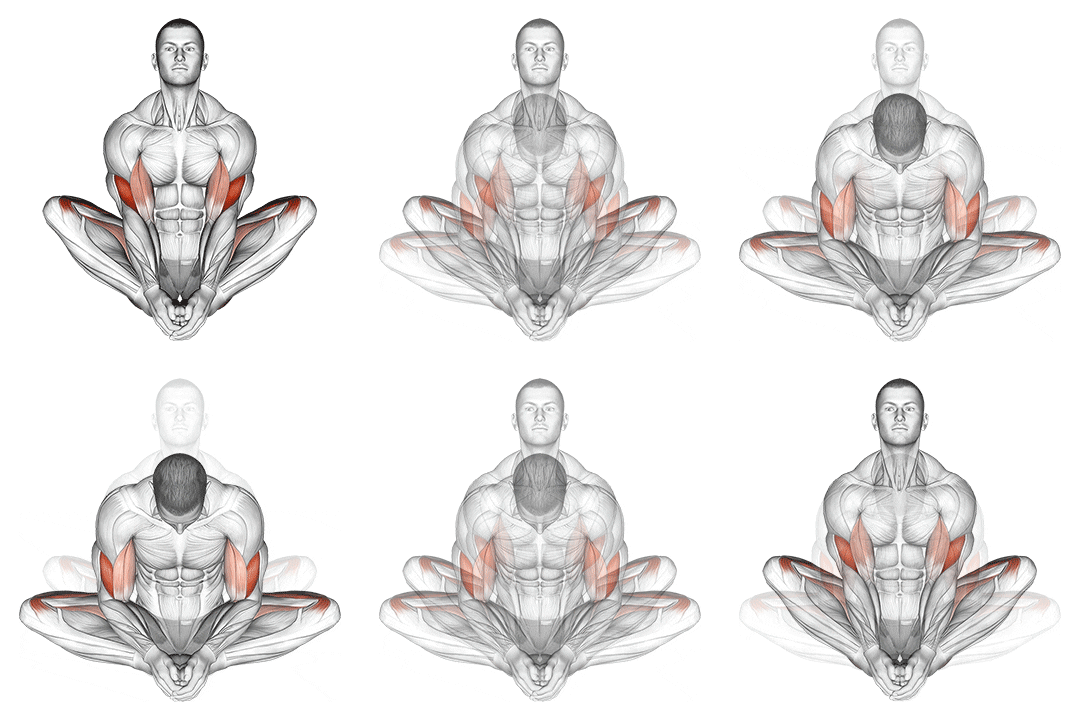
The Butterfly pose, also known as Baddha Konasana, is a seated yoga posture that targets the inner thighs, groins, and hips. It is a gentle and grounding pose that helps to improve flexibility, open the hips, and stimulate the abdominal organs. The Butterfly pose is commonly used in yoga practice for relaxation, meditation, and to release tension in the lower body. ## Instructions 1. Start by sitting on a yoga mat with your legs extended in front of you. 2. Bend your knees and bring the soles of your feet together, allowing your knees to fall open to the sides. 3. Slide your feet closer to your pelvis, bringing your heels as close to your groin as comfortable. 4. Sit up tall and engage your core muscles to maintain a straight spine. 5. With your hands, hold onto your ankles or feet. You can also place your palms on the floor beside your hips for support. 6. Relax your shoulders and allow them to gently drop away from your ears. 7. Keeping your spine long, inhale and gently press your knees downward toward the floor. Use your elbows to apply a gentle, downward pressure on your thighs if needed. 8. While maintaining the pose, focus on your breath and try to relax into the stretch. 9. Hold the pose for several breaths or as long as feels comfortable. 10. To release the pose, slowly release the pressure on your knees and extend your legs back out in front of you. ## Variations - Supported Butterfly Pose: Place folded blankets or bolsters under your outer thighs to provide support and allow for a more relaxed and passive stretch. - Reclining Butterfly Pose: Lie down on your back and bring the soles of your feet together, allowing your knees to open to the sides. This variation is suitable for those who find sitting upright challenging or prefer a more restorative version of the pose. ## Muscles Worked - Inner thighs (adductor muscles) - Groin muscles - Hip muscles - Lower back muscles ## Common Mistakes - Rounding the back: Maintain an upright posture and lengthen your spine throughout the pose. Avoid rounding or slumping the back. - Forcing the knees down: Allow your knees to naturally fall open, and avoid pushing or forcing them down. Respect your body's limitations and go only as far as feels comfortable. - Tensing the shoulders: Relax your shoulders and keep them away from your ears. Avoid unnecessary tension in the upper body. - Straining the neck: Keep your neck relaxed and in a neutral position. Avoid excessive forward or backward tilting of the head. ## Safety Precautions - Listen to your body and practice within your comfortable range of motion. Do not force yourself into a position that causes pain or discomfort. - If you have any knee or hip injuries or conditions, approach the pose with caution and modify as necessary. - Avoid bouncing or jerking movements while in the pose. Instead, maintain a gentle and steady stretch. - If you experience any sharp pain or discomfort, come out of the pose and consult with a qualified yoga instructor or healthcare professional. - Always warm up before attempting any yoga poses to prepare your body for the practice. - If you are new to yoga or have specific health concerns, it is advisable to seek guidance from a certified yoga instructor to ensure proper alignment and technique.
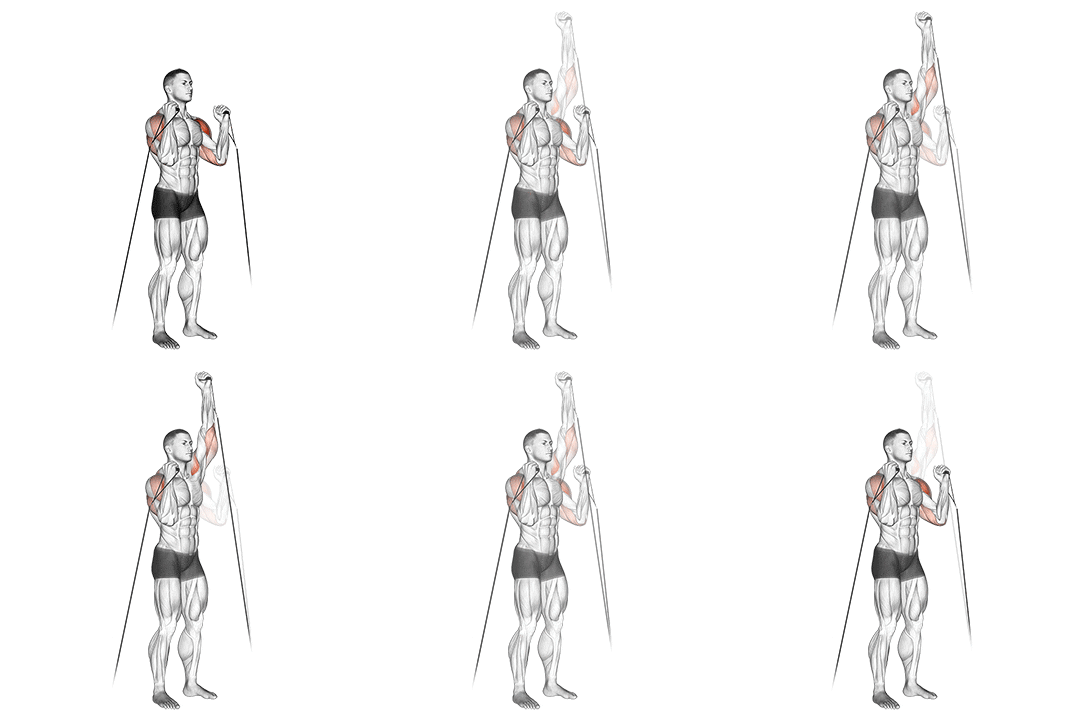
The cable alternate shoulder press is an exercise that targets the shoulder muscles, particularly the deltoids (shoulder muscles) and the triceps. It involves using a cable machine to provide resistance while pressing the weight overhead. This exercise helps to strengthen and build the shoulder muscles, improve shoulder stability, and enhance overall upper body strength and definition. ## Instructions 1. Stand in an upright position facing a cable machine with the cable pulley set at about shoulder height. 2. Grab the handle of one of the cables with an overhand grip and bring your arm up to shoulder level. Your elbow should be bent at a 90-degree angle. 3. Take a step back from the cable machine to create tension in the cable. 4. Position your feet shoulder-width apart, engage your core, and maintain a slight bend in your knees. 5. Start with your palm facing forward, and your forearm parallel to the ground. 6. Press the cable handle upward by extending your arm fully, straightening your elbow. 7. As you press up, rotate your forearm so that your palm faces forward at the top of the movement. 8. Pause for a moment at the top, making sure to keep your shoulder stabilized and your core engaged. 9. Slowly lower the cable handle back to the starting position with control. 10. Repeat the movement with the opposite arm. 11. Continue alternating between arms for the desired number of repetitions. ## Variations - Dumbbell Alternate Shoulder Press: Instead of using a cable machine, you can perform the exercise with dumbbells. Hold a dumbbell in each hand, starting with your palms facing forward at shoulder level, and press the weights overhead. - Seated Cable Alternate Shoulder Press: Sit on a bench or an adjustable seat in front of the cable machine and perform the exercise in a seated position. This variation provides stability and isolates the shoulder muscles. - Single-Arm Cable Shoulder Press: Perform the exercise with one arm at a time, using a single cable attachment. This variation allows for more focus on each side of the body individually. ## Muscles Worked - Deltoids (shoulder muscles) - Triceps ## Common Mistakes - Using excessive momentum: Avoid using momentum to lift the weight. Focus on controlled movements and engage the targeted muscles throughout the exercise. - Shrugging the shoulders: Keep your shoulders down and away from your ears throughout the movement. Avoid shrugging or tensing the neck and shoulder muscles. - Arching the back: Maintain a neutral spine and avoid excessive arching of the lower back. Engage your core to stabilize your torso. - Not fully extending the arms: Ensure that you fully extend your arms at the top of the movement, straightening your elbows. - Allowing the cable to pull you forward or backward: Maintain a stable and balanced stance, and resist any pulling or swaying motion from the cable. Control the movement and stay in control of the weight. ## Safety Precautions - Choose an appropriate weight that allows you to maintain proper form and control throughout the exercise. - If you have any shoulder or elbow injuries or conditions, consult with a healthcare professional before attempting this exercise. - Engage your core muscles to stabilize your torso and maintain proper alignment. - Avoid locking your elbows at the top of the movement to prevent excessive strain on the joint. - If you experience any pain or discomfort during the exercise, stop immediately and seek guidance from a qualified fitness professional.
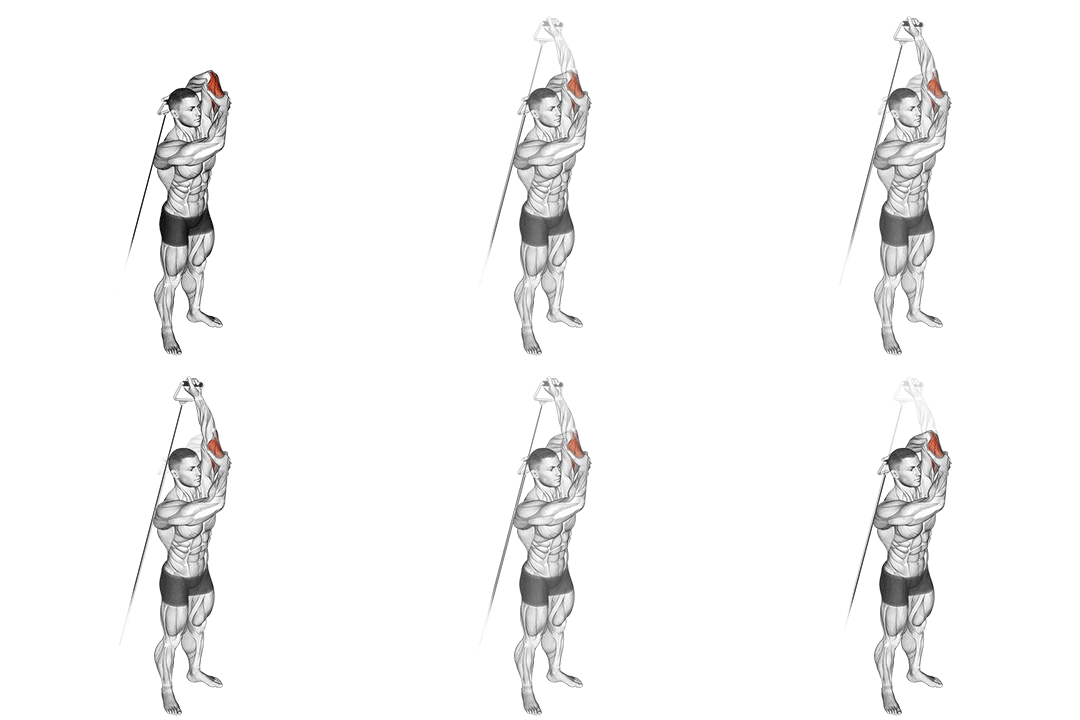
The cable alternate triceps extension is an exercise that targets the triceps muscles, which are located at the back of the upper arm. This exercise involves using a cable machine to provide resistance, specifically targeting the triceps for strength and muscle development. It is a great exercise for sculpting and toning the arms. ##Instructions 1. Start by adjusting the cable machine so that the pulley is positioned at the highest setting. Attach a single handle or rope to the cable. 2. Stand facing away from the machine with your feet shoulder-width apart. Grasp the handle or rope with an overhand grip. 3. Bring your upper arms close to your sides, keeping your elbows bent at a 90-degree angle. This is your starting position. 4. While keeping your upper arms stationary, extend one forearm downward by fully straightening your elbow. Exhale during this movement. 5. Pause for a moment at the bottom of the movement, squeezing your triceps. 6. Slowly return to the starting position by bending your elbow and allowing the forearm to move back up. 7. Repeat the movement with the opposite arm and continue alternating between arms for the desired number of repetitions. ##Variations - Single-arm cable triceps extension: Instead of alternating between arms, perform the exercise with one arm at a time. This variation allows for a greater focus on each arm individually. - Rope attachment: Use a rope instead of a handle for a different grip and muscle recruitment. - Reverse grip triceps extension: Instead of an overhand grip, use an underhand grip on the handle. This variation targets the triceps from a different angle. ##Muscles Worked The cable alternate triceps extension primarily targets the triceps muscles, specifically the lateral head, medial head, and long head of the triceps brachii. ##Common Mistakes - Using excessive momentum: Swinging the arms or using the entire body to lift the weight reduces the effectiveness of the exercise. Keep your upper arms stationary and focus on controlled movements. - Partial range of motion: Avoid only partially extending the arms. Make sure to fully straighten the elbow and squeeze the triceps at the bottom of the movement. - Arching the back: Maintain proper posture throughout the exercise. Avoid leaning backward or arching the back, as this can strain the lower back. ##Safety Precautions - Start with a lighter weight and gradually increase the resistance as your strength improves. - Keep your core engaged and maintain a stable stance throughout the exercise. - Avoid locking your elbows at the top of the movement to prevent excess stress on the joints. - If you have any pre-existing conditions or injuries, consult with a healthcare professional or fitness trainer before attempting this exercise.
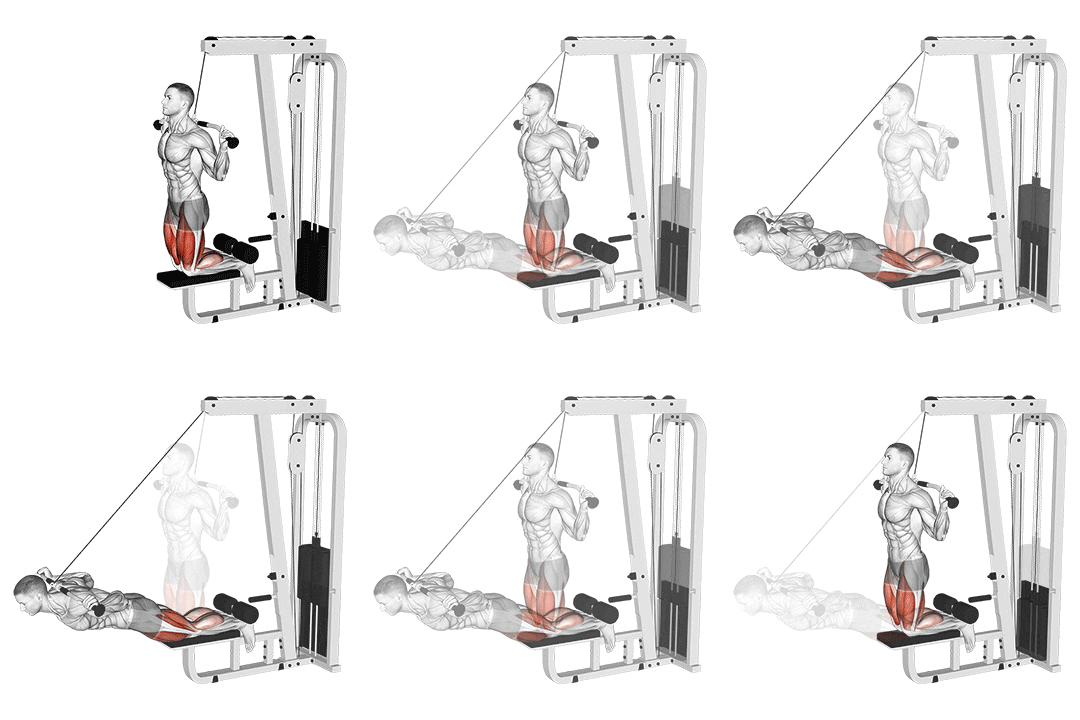
The cable assisted inverse leg curl is an exercise that targets the hamstrings, which are the muscles located at the back of the thigh. This exercise involves using a cable machine to provide resistance while performing a leg curl motion. It is an effective exercise for strengthening and developing the hamstrings. ##Instructions 1. Start by setting up a cable machine with a low pulley attachment. Attach an ankle cuff to the cable. 2. Lie face down on a bench or mat and attach the ankle cuff to your lower leg, just above the Achilles tendon. 3. Position yourself in a way that the cable is fully extended, and your legs are straight. 4. Grasp the bench or mat for stability. 5. Keeping your hips and upper body flat on the bench, flex your knees and curl your legs upward toward your glutes. 6. Squeeze your hamstrings at the top of the movement. 7. Slowly lower your legs back to the starting position with controlled motion. 8. Repeat for the desired number of repetitions. ##Variations - Standing cable assisted inverse leg curl: Instead of lying face down, you can perform this exercise while standing. Attach the ankle cuff to your lower leg and curl your leg backward against the resistance. - One-legged cable assisted inverse leg curl: Perform the exercise with one leg at a time, focusing on each leg individually for a more targeted workout. ##Muscles Worked The cable assisted inverse leg curl primarily targets the hamstrings. It specifically engages the semitendinosus, semimembranosus, and biceps femoris muscles, which make up the hamstrings at the back of the thigh. ##Common Mistakes - Raising the hips: Avoid lifting your hips off the bench or mat during the exercise. Keep your hips and upper body flat to maintain proper form and isolate the hamstrings. - Using excessive momentum: Use controlled movements throughout the exercise. Avoid swinging or jerking the legs to ensure the hamstrings do the work. - Not maintaining tension: Maintain constant tension on the hamstrings throughout the exercise. Avoid fully resting at the bottom of the movement. ##Safety Precautions - Start with a light weight and gradually increase the resistance as you become comfortable with the exercise. - Keep your core engaged and maintain a stable position on the bench or mat. - Use a weight that allows you to perform the exercise with proper form and without excessive strain on the hamstrings or lower back. - If you have any pre-existing conditions or injuries, consult with a healthcare professional or fitness trainer before attempting this exercise.
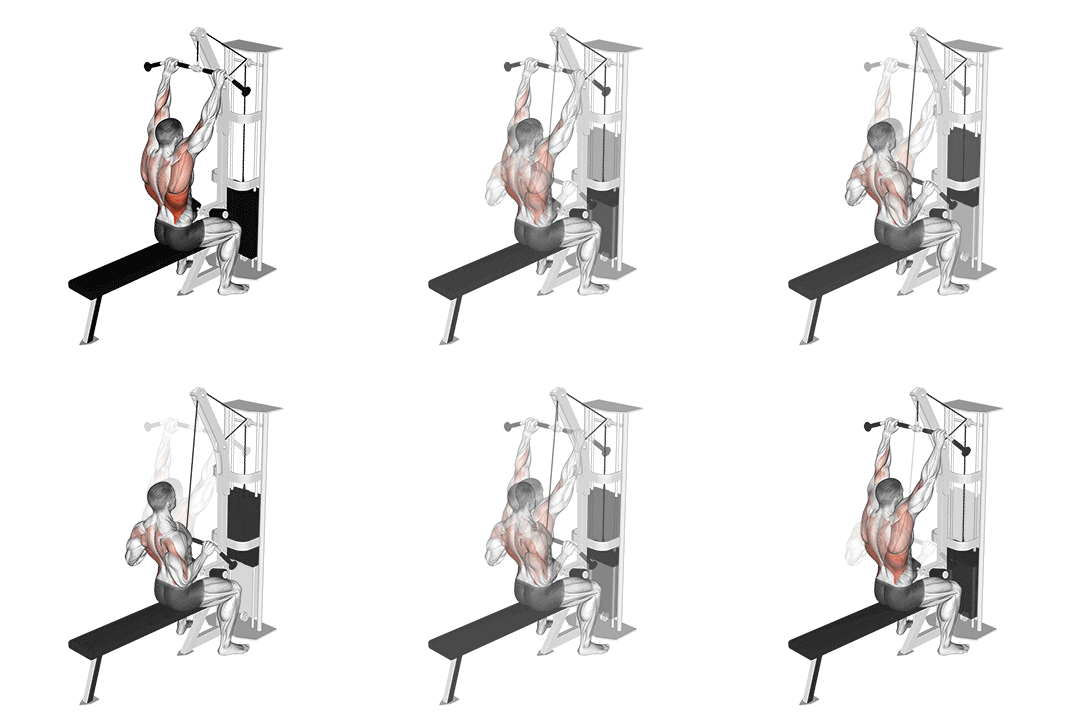
The cable bar lateral pulldown is an exercise that primarily targets the latissimus dorsi muscles, commonly known as the lats. This exercise involves using a cable machine and a bar attachment to perform a pulling motion that engages the muscles of the back and shoulders. It is a great exercise for developing upper body strength and improving posture. ##Instructions 1. Start by setting up a cable machine with a high pulley attachment and attaching a straight bar to the cable. 2. Stand facing the cable machine and grasp the bar with an overhand grip, hands slightly wider than shoulder-width apart. 3. Step back a few feet from the machine, keeping your feet shoulder-width apart and knees slightly bent for stability. 4. Engage your core, keep your chest lifted, and maintain an upright posture throughout the exercise. 5. Begin the movement by pulling the bar down towards your chest while keeping your elbows pointed downward. 6. As you pull the bar down, focus on squeezing your shoulder blades together and engaging your back muscles. 7. Continue the downward motion until the bar reaches your upper chest. 8. Pause for a moment, squeezing your back muscles. 9. Slowly and controlled, allow the bar to return to the starting position with your arms fully extended. 10. Repeat the exercise for the desired number of repetitions. ##Variations - Wide-grip lateral pulldown: Perform the exercise with a wider grip on the bar, targeting the outer portions of the back and emphasizing the lats. - Close-grip lateral pulldown: Use a close grip on the bar, bringing your hands closer together. This variation places more emphasis on the muscles of the mid-back. - Single-arm lateral pulldown: Instead of using both arms simultaneously, perform the exercise one arm at a time. This variation helps to correct muscle imbalances and allows for greater focus on each side. ##Muscles Worked The cable bar lateral pulldown primarily targets the latissimus dorsi muscles, commonly known as the lats. It also engages the muscles of the upper back, including the rhomboids, trapezius, and posterior deltoids. ##Common Mistakes - Using momentum: Avoid swinging or using momentum to pull the bar down. Focus on controlled and deliberate movements, engaging the targeted muscles throughout the exercise. - Rounding the back: Maintain proper posture throughout the exercise. Avoid rounding your back or hunching your shoulders forward. Keep your chest lifted and your back straight. - Pulling with the arms instead of the back: Ensure that the movement is initiated from the back muscles rather than solely relying on arm strength. Squeeze your shoulder blades together to engage the back muscles effectively. ##Safety Precautions - Choose an appropriate weight that allows you to maintain proper form and control throughout the exercise. - Keep your core engaged and avoid excessive leaning back during the movement. - Avoid pulling the bar behind your neck, as it can place unnecessary strain on the shoulders and neck. - If you have any pre-existing conditions or injuries, consult with a healthcare professional or fitness trainer before attempting this exercise.
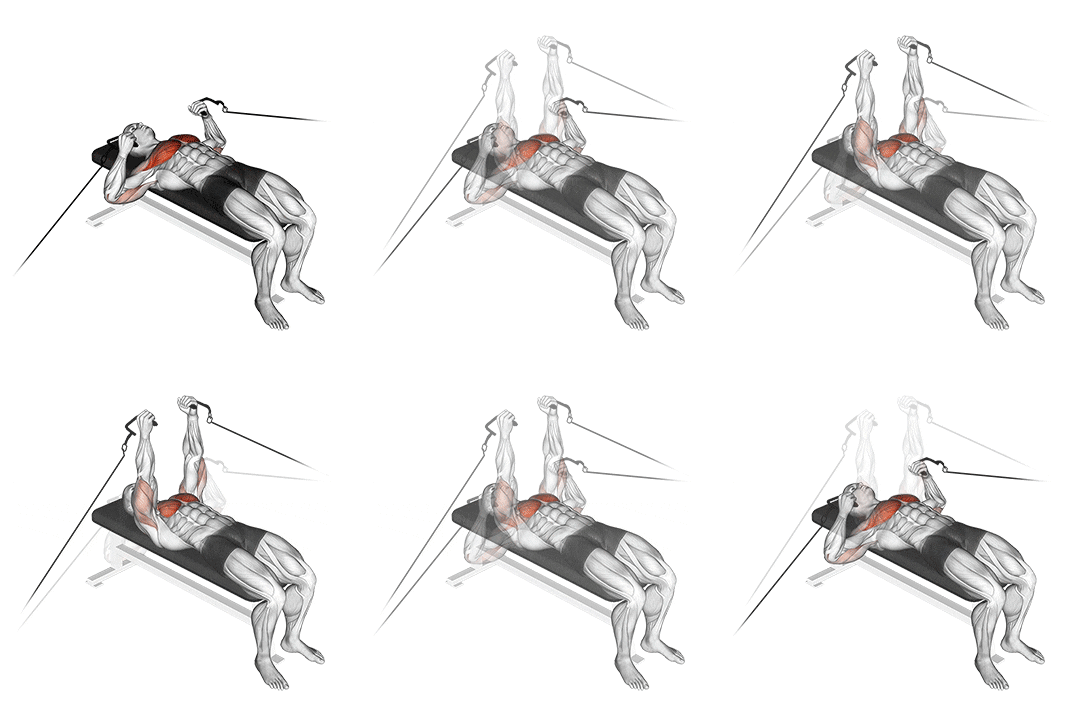
The cable bench press is an exercise that targets the chest muscles, particularly the pectoralis major. This exercise mimics the traditional barbell or dumbbell bench press but utilizes a cable machine to provide resistance. It is an effective compound exercise for building strength and size in the chest muscles. ##Instructions 1. Start by setting up a cable machine with two adjustable pulleys, one on each side. Attach handles to the pulleys at a height that corresponds to your chest level when you are lying on a bench. 2. Position a bench between the two pulleys and lie down with your back flat on the bench. 3. Grasp the handles with an overhand grip, keeping your hands slightly wider than shoulder-width apart. 4. Engage your core, plant your feet firmly on the ground, and maintain a stable position on the bench. 5. Push the handles away from your body, extending your arms fully, and bringing the handles together in front of your chest. 6. Pause briefly at the fully extended position, focusing on squeezing your chest muscles. 7. Slowly reverse the motion and bring the handles back to the starting position, allowing your elbows to bend and keeping your upper arms parallel to the floor. 8. Repeat the exercise for the desired number of repetitions. ##Variations - Single-arm cable bench press: Perform the exercise one arm at a time by using a single handle attachment. This variation helps to correct muscle imbalances and allows for greater focus on each side. - Incline cable bench press: Adjust the bench to an inclined position, targeting the upper chest muscles. - Decline cable bench press: Adjust the bench to a declined position, targeting the lower chest muscles. ##Muscles Worked The cable bench press primarily targets the pectoralis major, which is the main muscle of the chest. Additionally, it engages the anterior deltoids (front shoulders) and the triceps as secondary muscles. ##Common Mistakes - Flaring the elbows: Avoid allowing your elbows to flare out to the sides during the exercise. Keep your elbows at a 45-degree angle to your body, which helps to target the chest muscles more effectively and reduces stress on the shoulders. - Not maintaining tension: Keep tension on the chest muscles throughout the entire exercise. Avoid allowing the weight to completely rest at the bottom of the movement. - Using excessive weight: Start with a weight that allows you to maintain proper form and control throughout the exercise. Using too much weight can compromise your form and increase the risk of injury. ##Safety Precautions - Ensure that the bench is stable and secure before starting the exercise. - Maintain a controlled movement throughout the exercise, avoiding any jerking or sudden movements. - If you have any shoulder or chest injuries or conditions, consult with a healthcare professional or fitness trainer before attempting this exercise. - Gradually increase the resistance as your strength improves, but always prioritize proper form and technique over the amount of weight lifted.