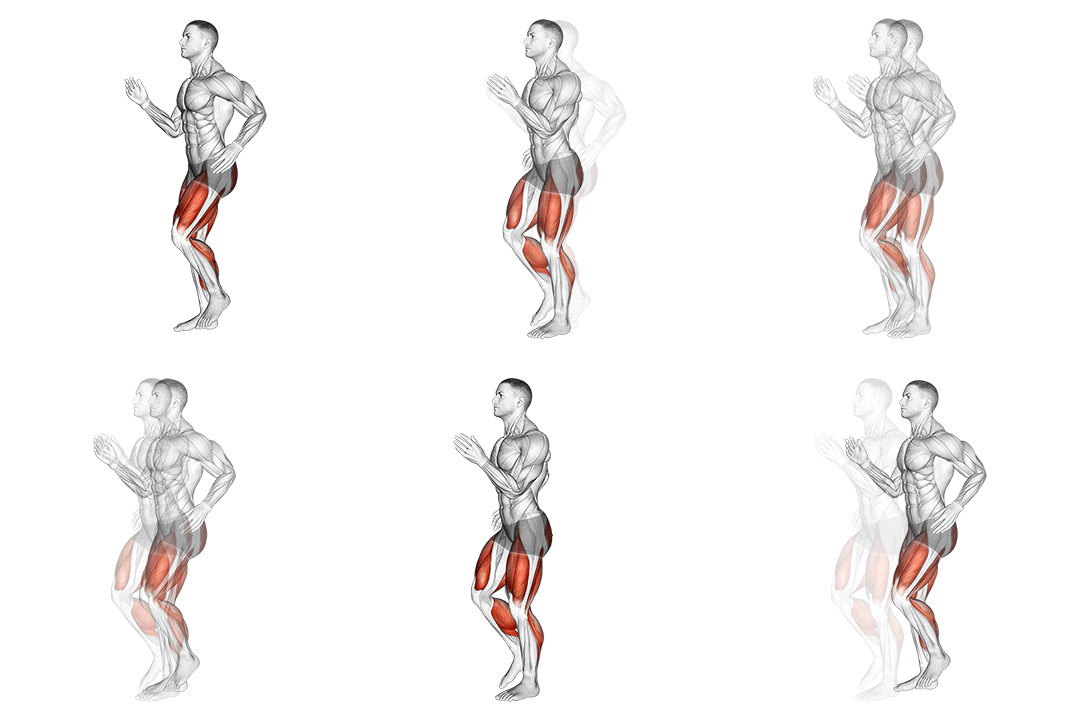
The short stride run is a running technique exercise that focuses on quick turnover and shorter stride length. It aims to improve running efficiency, cadence, and overall speed. ## Instructions 1. Start by standing tall with good posture, relaxed shoulders, and arms at your sides. 2. Begin running at a slow to moderate pace, focusing on taking shorter strides than your regular running stride. 3. Maintain an upright posture with your core engaged and your gaze forward. 4. Increase your cadence or turnover rate by taking more steps per minute. Aim for a quick and light footstrike. 5. Keep your feet low to the ground, minimizing excessive vertical movement. 6. Land on the midfoot or forefoot, allowing your heel to lightly touch the ground before pushing off. 7. Maintain a smooth and fluid motion, avoiding any sudden or jerky movements. 8. Continue running with short strides for the desired duration or distance. ## Variations - **Hill Short Stride Run**: Incorporate short stride running on an incline to further challenge your leg muscles and enhance uphill running performance. - **Speed Interval Short Stride Run**: Alternate between short stride runs and faster-paced intervals to improve acceleration and speed endurance. - **Barefoot or Minimalist Short Stride Run**: Perform the exercise without shoes or with minimal footwear to enhance foot and ankle strength and improve running form. ## Muscles Worked The short stride run primarily targets the following muscles: - Calves (gastrocnemius and soleus) - Quadriceps (front of the thigh) - Hamstrings (back of the thigh) - Glutes (buttocks) - Hip flexors - Core muscles (abdominals, obliques) ## Common Mistakes 1. **Overstriding**: Avoid taking too long of a stride, as it can lead to inefficient running mechanics and increase the risk of injury. Focus on shorter, quicker steps. 2. **Landing with a heavy footstrike**: Strive for a light and quick footstrike. Landing heavily with each step can put excessive stress on your joints. Aim to land softly and quietly. 3. **Leaning too far forward**: Maintain an upright posture while running. Avoid excessive leaning forward, as it can disrupt your balance and negatively affect your running form. 4. **Neglecting arm swing**: Pay attention to your arm swing. Keep your arms relaxed and at a 90-degree angle, swinging them forward and backward in sync with your stride to help generate forward momentum. ## Safety Precautions - Gradually incorporate short stride runs into your training routine to allow your body to adapt to the new running technique. - Listen to your body and avoid pushing beyond your limits. If you experience pain or discomfort, slow down or stop the exercise. - Choose a safe running surface and be cautious of any uneven terrain or obstacles that may increase the risk of tripping or falling. - Wear appropriate running shoes with sufficient cushioning and support to reduce the impact on your joints. - Warm up before starting the exercise with dynamic stretches and a light jog to prepare your muscles for the increased intensity. - If you have any pre-existing conditions or injuries, consult with a healthcare professional or a running coach before attempting the exercise.
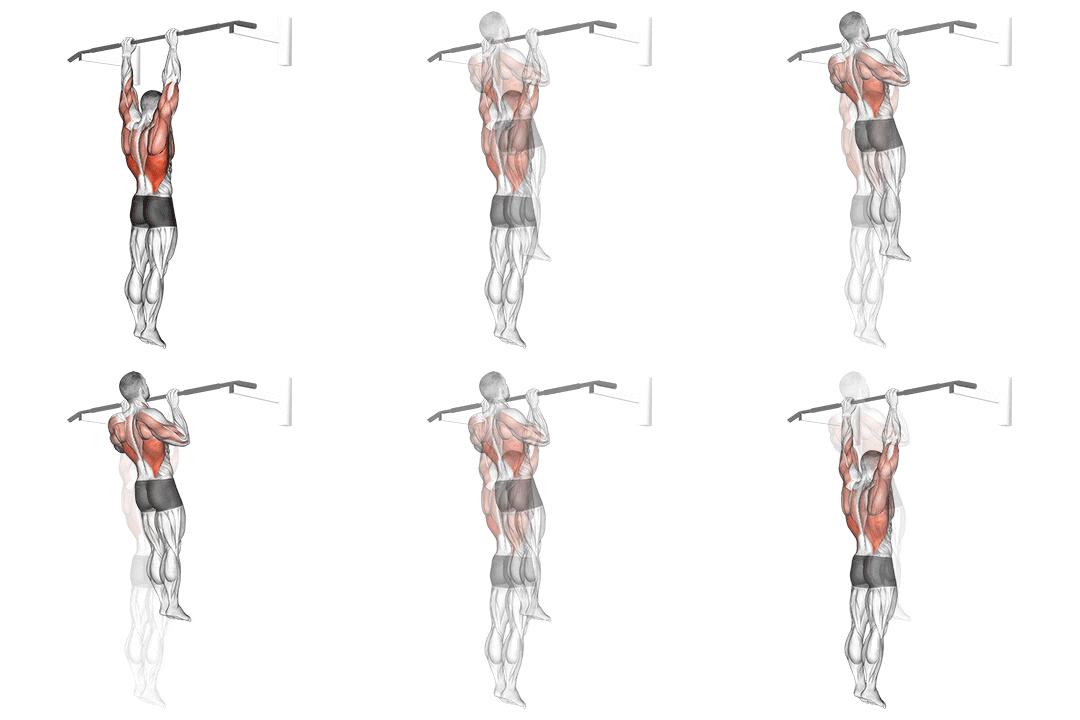
The shoulder grip pull-up is a challenging upper-body exercise that primarily targets the muscles of the back, including the latissimus dorsi, rhomboids, and posterior deltoids. This variation of the pull-up helps to develop upper body strength, improve posture, and enhance overall upper body muscularity. ## Instructions 1. Stand underneath a pull-up bar with your palms facing away from you and your hands positioned slightly wider than shoulder-width apart. This is the shoulder-width grip. 2. Jump up or use a step to reach the bar and grasp it with your palms facing away and your fingers wrapped around the bar. 3. Hang from the bar with your arms fully extended and your body in a straight line. Engage your core muscles. 4. Begin the movement by pulling your shoulder blades down and back, and then pull yourself up towards the bar. 5. Continue pulling until your chin is above the bar, maintaining a controlled movement and keeping your body straight throughout. 6. Pause briefly at the top of the movement and then lower yourself back down to the starting position with control. 7. Repeat the exercise for the desired number of repetitions. ## Variations - **Assisted Shoulder Grip Pull-Up**: If you're unable to perform full bodyweight pull-ups, you can use an assisted pull-up machine or resistance bands to provide assistance during the movement. - **Weighted Shoulder Grip Pull-Up**: For advanced individuals, you can add additional resistance by wearing a weighted vest or holding a dumbbell between your feet or thighs. This increases the intensity of the exercise and further develops strength. - **Negative Shoulder Grip Pull-Up**: If you struggle with the concentric portion (pulling up) of the exercise, focus on the eccentric or lowering phase. Jump or use a step to reach the top position and then slowly lower yourself down, emphasizing control. ## Muscles Worked The shoulder grip pull-up primarily targets the following muscles: - Latissimus dorsi (lats) - Rhomboids - Posterior deltoids (shoulders) - Biceps (brachii) - Forearm muscles (brachioradialis and flexors) ## Common Mistakes 1. **Using momentum**: Avoid using swinging or kipping movements to perform the pull-up. This reduces the effectiveness of the exercise and increases the risk of injury. Aim for controlled and smooth movements. 2. **Incomplete range of motion**: Ensure that you start each repetition from a fully extended position (arms straight) and pull yourself up until your chin clears the bar. Avoid partial reps or cheating the range of motion. 3. **Shoulder shrugging**: Keep your shoulders pulled down and back throughout the movement. Avoid shrugging your shoulders towards your ears, as this can lead to unnecessary tension and stress on the neck and upper traps. 4. **Lack of core engagement**: Remember to engage your core muscles throughout the exercise. This helps to stabilize your body and maintain proper form. ## Safety Precautions - Ensure that the pull-up bar is securely mounted and can support your body weight. - Start with a proper warm-up to prepare your upper body muscles for the exercise. - If you are a beginner, consider working on your strength with other exercises such as assisted pull-ups or lat pulldowns before attempting full bodyweight shoulder grip pull-ups. - Listen to your body and progress gradually. Avoid overexertion or attempting more repetitions than you can handle with proper form. - If you have any pre-existing shoulder or back injuries or conditions, consult with a healthcare professional or a qualified fitness trainer before attempting the exercise. - If you experience pain or discomfort during the exercise, stop immediately and seek professional guidance.
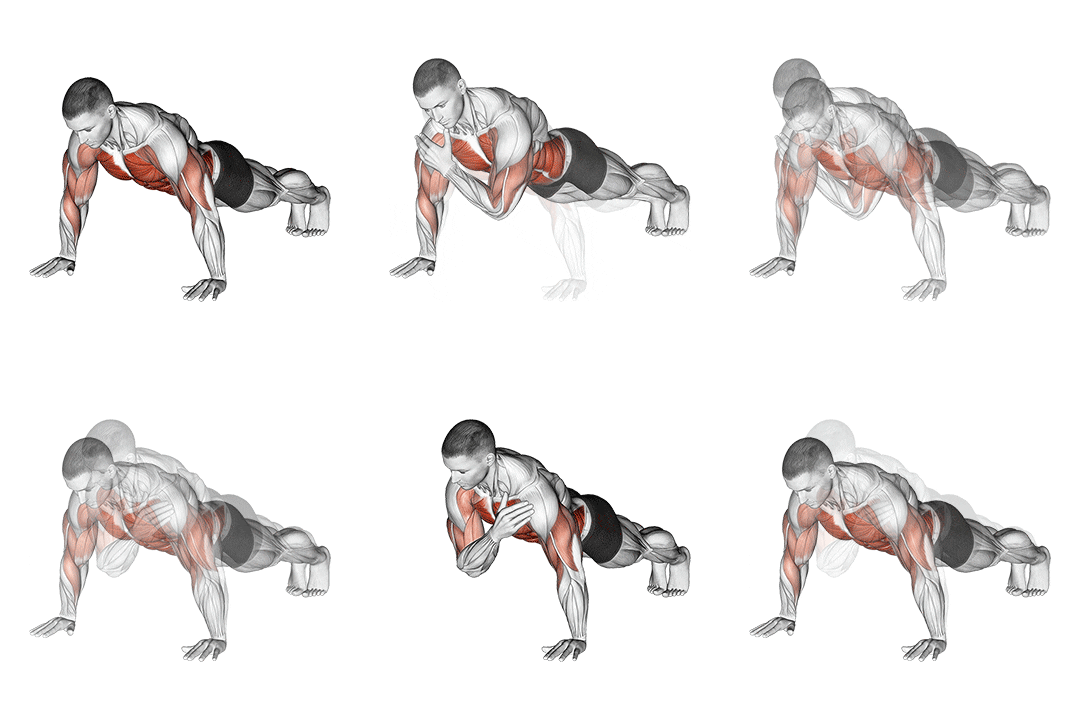
The shoulder tap exercise is a bodyweight movement that targets the core muscles, especially the obliques, while also engaging the stabilizer muscles of the shoulders and arms. It requires balance and stability, making it a great exercise for improving core strength and coordination. ## Instructions 1. Start in a high plank position with your hands directly under your shoulders and your body in a straight line from head to heels. 2. Engage your core muscles by drawing your navel towards your spine and squeezing your glutes. 3. Lift your right hand off the ground and touch your left shoulder with your fingertips. Keep your hips stable and avoid rotating or shifting your body. 4. Return your right hand to the starting position and repeat the movement on the other side, lifting your left hand to touch your right shoulder. 5. Continue alternating sides, maintaining a stable plank position and avoiding excessive movement or rotation of your torso. 6. Perform the exercise for the desired number of repetitions. ## Variations - **Modified Shoulder Tap**: If the full plank position is too challenging, you can perform the exercise from a modified plank position with your knees on the ground. Follow the same instructions, touching your shoulders while maintaining a stable core. - **Elevated Shoulder Tap**: Place your hands on an elevated surface, such as a bench or step, to decrease the difficulty of the exercise. This variation reduces the load on your core and shoulders. - **Speed Shoulder Tap**: Increase the intensity of the exercise by performing the shoulder taps at a faster pace, focusing on quick and controlled movements. ## Muscles Worked The shoulder tap primarily targets the following muscles: - Core muscles (abdominals, obliques, transverse abdominis) - Shoulders (deltoids) - Stabilizer muscles of the shoulder girdle - Arms and upper body muscles (triceps, biceps) ## Common Mistakes 1. **Holding an incorrect plank position**: Maintain a straight line from head to heels, avoiding sagging or arching your back. Engage your core and keep your hips level throughout the exercise. 2. **Excessive hip movement**: Minimize any rotational or side-to-side movement of your hips. Keep your torso stable as you tap your shoulders, maintaining a solid plank position. 3. **Lifting the hand too high**: Avoid lifting your hand too far away from your shoulder, as this can compromise your stability. Aim to touch your shoulder with a light tap while maintaining control. 4. **Rushing the movement**: Perform the exercise with control and focus on the mind-muscle connection. Avoid rushing through the shoulder taps, as this can decrease the effectiveness of the exercise. ## Safety Precautions - Ensure a stable and non-slippery surface for performing the exercise. - If you have wrist or shoulder issues, modify the exercise or consult with a healthcare professional to determine if it is suitable for you. - Maintain proper form and avoid excessive strain on your neck. Keep your gaze towards the floor, aligning your head with your spine. - If you experience any pain or discomfort during the exercise, stop immediately and seek professional guidance. - Start with a proper warm-up to prepare your core and upper body muscles for the exercise. - Progress gradually by increasing the number of repetitions or trying more challenging variations as your strength and stability improve.
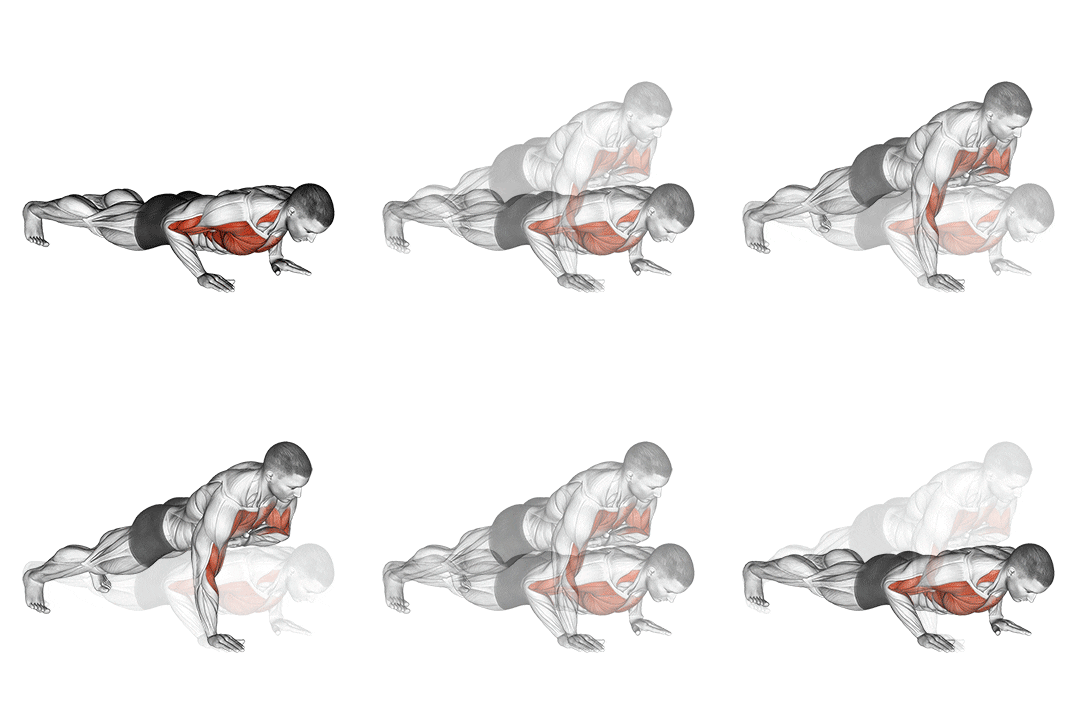
The shoulder tap push-up is a compound exercise that combines the benefits of a push-up with the added challenge of maintaining stability and core engagement through shoulder taps. This exercise targets the chest, shoulders, triceps, and core muscles, providing a comprehensive upper body and core workout. ## Instructions 1. Start in a high plank position with your hands slightly wider than shoulder-width apart and your body in a straight line from head to heels. 2. Engage your core muscles by drawing your navel towards your spine and squeezing your glutes. 3. Lower yourself towards the ground by bending your elbows, keeping them close to your sides. Aim to bring your chest close to the floor. 4. As you push back up to the starting position, lift your right hand off the ground and tap your left shoulder. 5. Lower your right hand back down and perform another push-up. 6. On the next repetition, lift your left hand and tap your right shoulder. 7. Continue alternating shoulder taps with each push-up, maintaining a stable plank position and proper form. 8. Perform the exercise for the desired number of repetitions. ## Variations - **Knee Push-Up with Shoulder Tap**: If the full push-up position is too challenging, perform the exercise from a modified plank position with your knees on the ground. Follow the same instructions, tapping your shoulders while maintaining core stability. - **Elevated Shoulder Tap Push-Up**: Place your hands on an elevated surface, such as a bench or step, to decrease the difficulty of the exercise. This variation reduces the load on your upper body and core. - **Plyometric Shoulder Tap Push-Up**: Add an explosive element to the exercise by performing a plyometric push-up, pushing off the ground with enough force to lift your hands and tap your shoulders while in mid-air. ## Muscles Worked The shoulder tap push-up primarily targets the following muscles: - Chest (pectoralis major and minor) - Shoulders (deltoids) - Triceps - Core muscles (abdominals, obliques, transverse abdominis) ## Common Mistakes 1. **Improper push-up form**: Maintain a straight line from head to heels throughout the exercise. Avoid sagging or arching your back, and keep your elbows close to your sides during the push-up portion. 2. **Excessive hip movement**: Minimize any rotational or side-to-side movement of your hips. Keep your torso stable as you tap your shoulders, maintaining a solid plank position. 3. **Incomplete range of motion**: Aim to lower yourself close to the floor during the push-up and fully extend your elbows at the top of the movement. Avoid performing partial push-ups or cutting short the shoulder taps. 4. **Lifting the hand too high during shoulder tap**: Touch your shoulder with a light tap, avoiding excessive elevation of the hand or rotating your torso to reach the shoulder. ## Safety Precautions - Ensure a stable and non-slippery surface for performing the exercise. - If you have wrist, shoulder, or lower back issues, modify the exercise or consult with a healthcare professional to determine if it is suitable for you. - Maintain proper form and avoid excessive strain on your neck. Keep your gaze towards the floor, aligning your head with your spine. - Start with a proper warm-up to prepare your upper body and core muscles for the exercise. - Progress gradually by increasing the number of repetitions or trying more challenging variations as your strength and stability improve. - If you experience any pain or discomfort during the exercise, stop immediately and seek professional guidance.
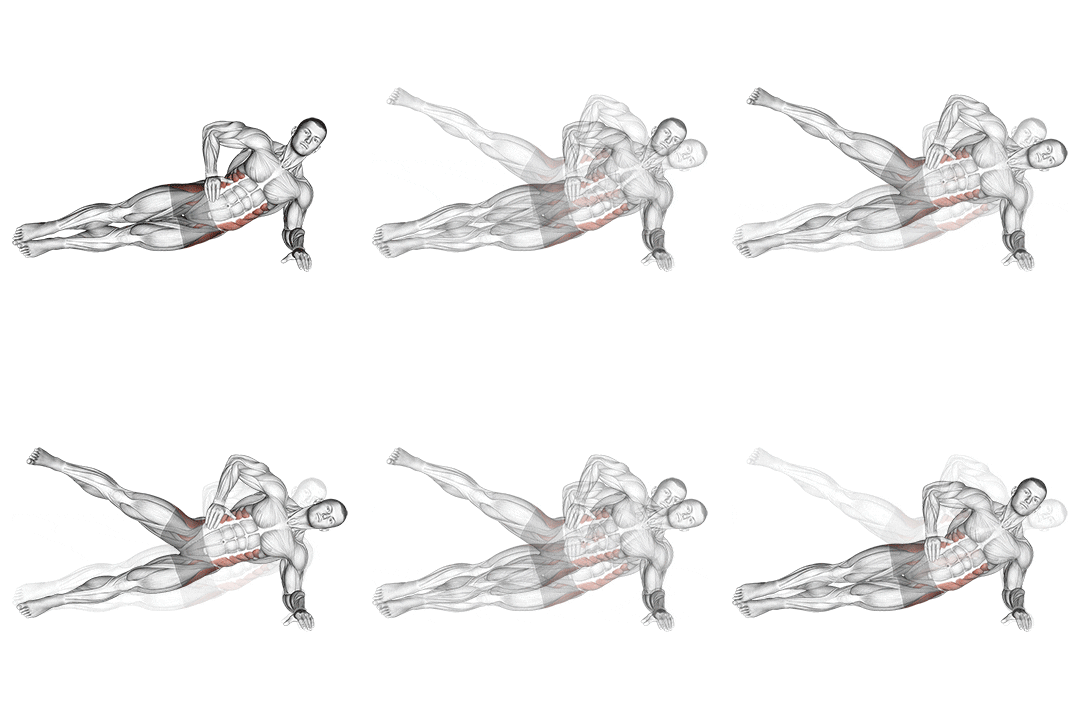
The side bridge hip abduction exercise targets the muscles of the core, particularly the obliques, while also engaging the hip abductor muscles. It involves maintaining a side plank position while lifting and lowering the top leg, which helps to improve core stability, balance, and hip strength. ## Instructions 1. Start by lying on your side with your forearm on the ground, elbow positioned directly under your shoulder. Your legs should be straight and stacked on top of each other. 2. Engage your core muscles by drawing your navel towards your spine. 3. Lift your hips off the ground, creating a straight line from your head to your heels. Keep your body in a side plank position throughout the exercise. 4. While maintaining the side plank, lift your top leg upward, keeping it straight and in line with your body. Lift until you feel a contraction in your hip muscles. 5. Slowly lower your leg back down to the starting position without allowing your hips to drop or rotate. 6. Repeat the movement for the desired number of repetitions on one side, then switch to the other side and perform the exercise with the opposite leg. ## Variations - **Modified Side Bridge**: If the full side bridge position is too challenging, you can modify the exercise by bending your bottom leg and resting your knee on the ground while performing the hip abduction with the top leg. This reduces the load on the core and makes it more accessible for beginners. - **Resistance Band Side Bridge Hip Abduction**: Place a resistance band around your thighs, just above the knees, to add resistance and increase the difficulty of the exercise. The band provides constant tension and challenges the hip abductor muscles further. ## Muscles Worked The side bridge hip abduction primarily targets the following muscles: - Core muscles (obliques, transverse abdominis) - Hip abductor muscles (gluteus medius, gluteus minimus) - Shoulder stabilizer muscles (rotator cuff muscles, trapezius) ## Common Mistakes 1. **Dropping or rotating the hips**: Maintain a straight line from head to heels throughout the exercise. Avoid allowing your hips to drop towards the ground or rotate forward or backward. Engage your core and focus on stability. 2. **Lifting the leg too high**: Lift your leg only to a comfortable range of motion, avoiding excessive elevation that may compromise your form or balance. Focus on the contraction of the hip abductor muscles. 3. **Neglecting proper alignment**: Ensure that your elbow is directly under your shoulder and that your body is in a straight line. Avoid leaning forward or backward, and keep your head aligned with your spine. 4. **Using momentum**: Perform the movement in a controlled manner, avoiding any swinging or jerking motions. Maintain a slow and controlled tempo throughout. ## Safety Precautions - Start with a proper warm-up to prepare your core and hip muscles for the exercise. - If you have any existing shoulder, wrist, or back issues, modify the exercise or consult with a healthcare professional or qualified fitness trainer to determine if it is suitable for you. - Listen to your body and do not push beyond your comfort level. Gradually increase the difficulty and intensity as your strength and stability improve. - Focus on maintaining proper form and alignment throughout the exercise. If you experience any pain or discomfort, stop immediately and seek professional guidance. - If you have balance issues or are prone to dizziness, perform the exercise near a stable support or have someone nearby to assist if needed. - Progress gradually and avoid overexertion. Quality of movement and stability are more important than the number of repetitions.
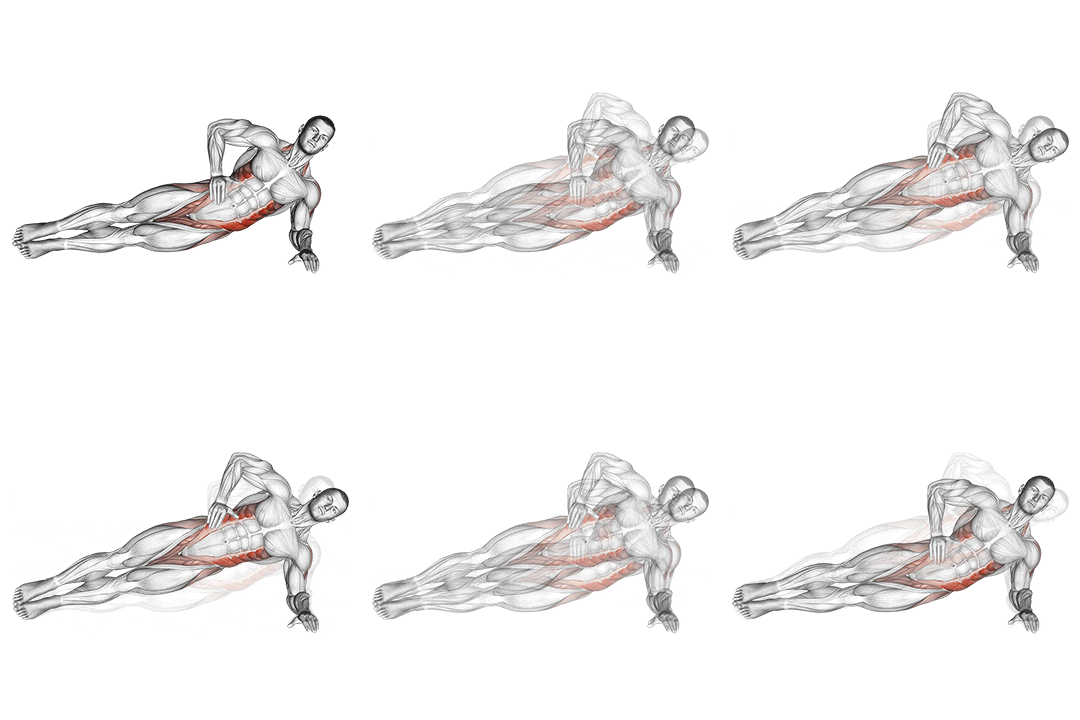
The side bridge V.2 exercise, also known as the side plank with leg lift, targets the core muscles, particularly the obliques, while also engaging the shoulder stabilizers and hip muscles. It involves maintaining a side plank position while lifting and lowering the top leg, which helps to improve core stability, balance, and hip strength. ## Instructions 1. Start by lying on your side with your forearm on the ground, elbow positioned directly under your shoulder. Your legs should be straight and stacked on top of each other. 2. Engage your core muscles by drawing your navel towards your spine. 3. Lift your hips off the ground, creating a straight line from your head to your heels. Keep your body in a side plank position throughout the exercise. 4. While maintaining the side plank, lift your top leg upward, keeping it straight and in line with your body. Lift until you feel a contraction in your hip muscles. 5. Slowly lower your leg back down to the starting position without allowing your hips to drop or rotate. 6. Repeat the movement for the desired number of repetitions on one side, then switch to the other side and perform the exercise with the opposite leg. ## Variations - **Modified Side Bridge V.2**: If the full side bridge position is too challenging, you can modify the exercise by bending your bottom leg and resting your knee on the ground while performing the leg lift with the top leg. This reduces the load on the core and makes it more accessible for beginners. - **Resistance Band Side Bridge V.2**: Place a resistance band around your thighs, just above the knees, to add resistance and increase the difficulty of the exercise. The band provides constant tension and challenges the hip muscles further. ## Muscles Worked The side bridge V.2 primarily targets the following muscles: - Core muscles (obliques, transverse abdominis) - Hip abductor muscles (gluteus medius, gluteus minimus) - Shoulder stabilizer muscles (rotator cuff muscles, trapezius) ## Common Mistakes 1. **Dropping or rotating the hips**: Maintain a straight line from head to heels throughout the exercise. Avoid allowing your hips to drop towards the ground or rotate forward or backward. Engage your core and focus on stability. 2. **Lifting the leg too high**: Lift your leg only to a comfortable range of motion, avoiding excessive elevation that may compromise your form or balance. Focus on the contraction of the hip muscles. 3. **Neglecting proper alignment**: Ensure that your elbow is directly under your shoulder and that your body is in a straight line. Avoid leaning forward or backward, and keep your head aligned with your spine. 4. **Using momentum**: Perform the movement in a controlled manner, avoiding any swinging or jerking motions. Maintain a slow and controlled tempo throughout. ## Safety Precautions - Start with a proper warm-up to prepare your core and hip muscles for the exercise. - If you have any existing shoulder, wrist, or back issues, modify the exercise or consult with a healthcare professional or qualified fitness trainer to determine if it is suitable for you. - Listen to your body and do not push beyond your comfort level. Gradually increase the difficulty and intensity as your strength and stability improve. - Focus on maintaining proper form and alignment throughout the exercise. If you experience any pain or discomfort, stop immediately and seek professional guidance. - If you have balance issues or are prone to dizziness, perform the exercise near a stable support or have someone nearby to assist if needed. - Progress gradually and avoid overexertion. Quality of movement and stability are more important than the number of repetitions.
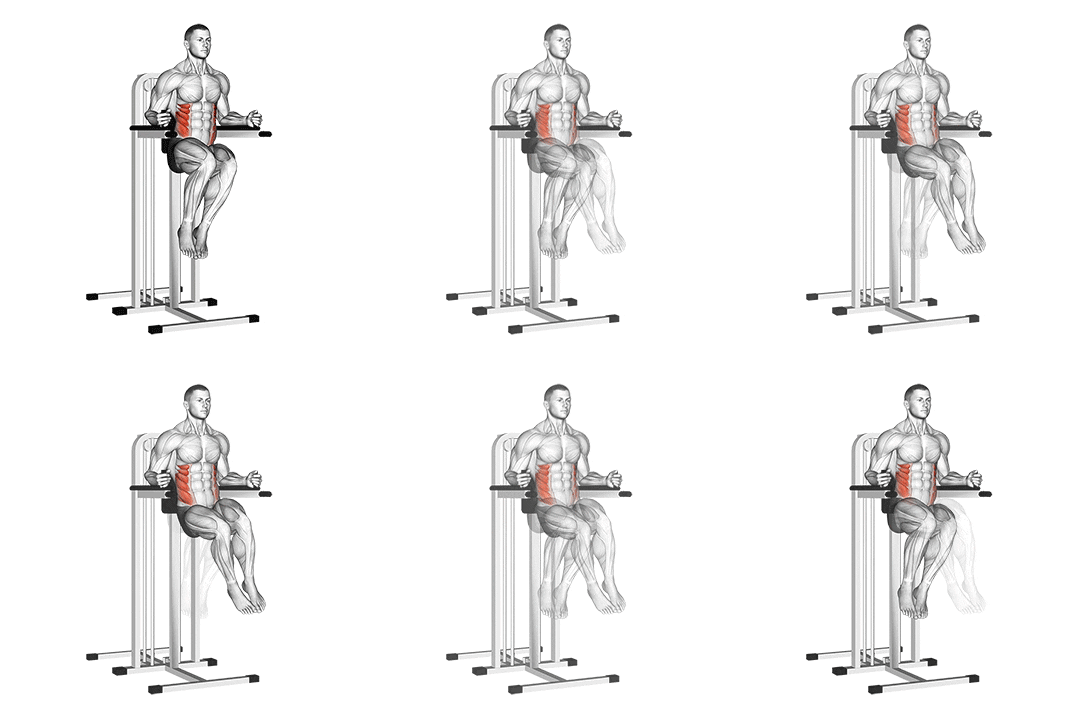
The side hip exercise on parallel bars targets the hip abductor muscles, specifically the gluteus medius and gluteus minimus. This exercise helps to strengthen the muscles responsible for hip stability and can improve overall lower body strength and balance. ## Instructions 1. Stand between parallel bars with your feet hip-width apart. 2. Grasp the parallel bars with an overhand grip, palms facing down, and fully extend your arms. 3. Lift your feet off the ground, so you are supported only by your hands on the parallel bars. 4. Shift your weight onto one side while keeping your legs straight. 5. Raise your top leg laterally away from your body as high as possible without compromising your form. 6. Slowly lower your leg back down to the starting position. 7. Repeat the movement for the desired number of repetitions on one side, then switch to the other side and perform the exercise with the opposite leg. ## Variations - **Assisted Side Hip**: If you find it challenging to support your full body weight, you can perform the exercise with your feet still touching the ground. This reduces the load on the upper body and allows for easier execution. - **Resistance Band Side Hip**: Attach a resistance band around your ankles or just above your knees to add resistance and intensify the exercise. The band provides constant tension and challenges the hip abductor muscles further. ## Muscles Worked The side hip exercise primarily targets the following muscles: - Hip abductor muscles (gluteus medius, gluteus minimus) - Core muscles (engaged for stability) - Shoulder stabilizer muscles (activated during grip and support) ## Common Mistakes 1. **Swinging the legs**: Avoid using momentum or swinging your legs during the exercise. Focus on controlled and deliberate movements to effectively engage the target muscles. 2. **Arching or rounding the back**: Maintain proper posture throughout the exercise. Keep your spine in a neutral position and engage your core to stabilize your body. 3. **Not fully extending the legs**: Ensure that your legs are straight and fully extended during the exercise. Avoid bending your knees as you lift your leg. 4. **Lifting the leg too high**: Lift your leg only to a comfortable range of motion without compromising your form. Focus on feeling the contraction in the hip abductor muscles. 5. **Uneven weight distribution**: Maintain equal weight distribution between your hands on the parallel bars to ensure balanced muscle activation and stability. ## Safety Precautions - Start with a proper warm-up to prepare your muscles for the exercise. - If you have any existing shoulder, wrist, or back issues, modify the exercise or consult with a healthcare professional or qualified fitness trainer to determine if it is suitable for you. - Gradually increase the difficulty and intensity of the exercise as your strength improves. - Listen to your body and avoid overexertion or pushing through pain. If you experience any discomfort or pain, stop the exercise and seek professional advice. - Use proper form and technique to prevent injuries. Focus on maintaining stability and engaging the target muscles throughout the movement. - Progress gradually and allow for adequate rest and recovery between workouts.
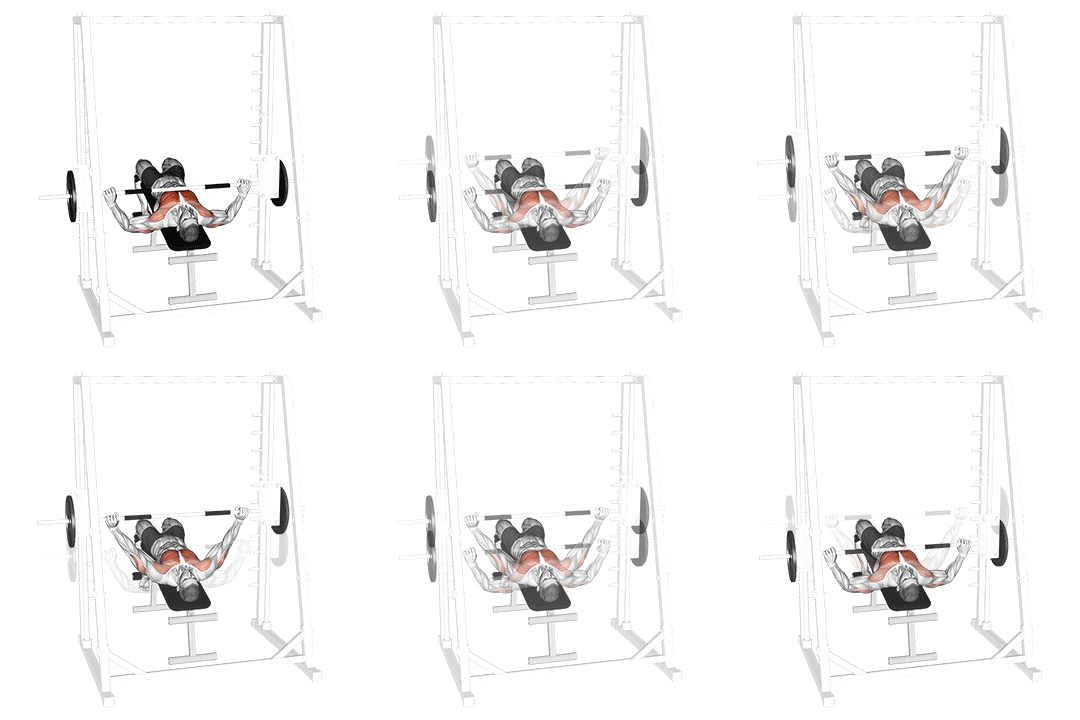
The Smith wide grip decline bench press is a variation of the traditional bench press exercise that primarily targets the lower chest muscles. This exercise is performed on a decline bench with a wide grip on the Smith machine, providing stability and control throughout the movement. It is an effective compound exercise for building strength and muscle mass in the chest, shoulders, and triceps. ## Instructions 1. Set up the decline bench on the Smith machine and adjust it to an appropriate angle (usually around 30-45 degrees decline). 2. Position yourself on the bench with your feet securely placed on the footrests. 3. Lie back on the bench, ensuring your head, shoulders, and buttocks are in contact with the bench. 4. Grasp the Smith machine bar with a wide grip, slightly wider than shoulder-width apart. 5. Lift the bar off the rack and hold it directly above your chest with your arms fully extended. 6. Lower the bar slowly and under control, allowing it to descend towards your lower chest. Keep your elbows out to the sides. 7. Continue lowering the bar until it almost touches your chest, maintaining tension in the chest muscles. 8. Pause briefly at the bottom of the movement, then push the bar back up to the starting position, fully extending your arms. 9. Repeat the movement for the desired number of repetitions. ## Variations - Narrow Grip: Perform the exercise with a narrow grip to target the triceps and inner chest muscles more intensely. - Dumbbell Decline Bench Press: Instead of using the Smith machine, use dumbbells while lying on a decline bench to engage stabilizer muscles and allow for a greater range of motion. ## Muscles Worked The Smith wide grip decline bench press primarily targets the following muscles: - Lower chest (pectoralis major, particularly the sternal fibers) - Front shoulders (anterior deltoids) - Triceps (long head) - Upper back and stabilizer muscles (to a lesser extent) ## Common Mistakes 1. Arching the back excessively: Maintain a natural arch in your lower back and keep it in contact with the bench throughout the exercise. 2. Flaring the elbows out too much: Keep your elbows at a moderate angle (around 45 degrees) to prevent unnecessary strain on the shoulder joints. 3. Bouncing the bar off the chest: Control the descent and avoid bouncing the bar off your chest, as it can lead to injury and reduce the effectiveness of the exercise. 4. Using excessive weight: Choose a weight that allows you to maintain proper form and perform the exercise with control. Using too much weight can compromise technique and increase the risk of injury. ## Safety Precautions - Warm up adequately before starting the exercise to prepare your muscles and joints. - Use a spotter, especially when lifting heavy weights, to ensure safety and assistance if needed. - Maintain control throughout the movement and avoid jerking or sudden movements. - If you have any pre-existing shoulder or chest injuries, consult with a fitness professional or healthcare provider before attempting this exercise.
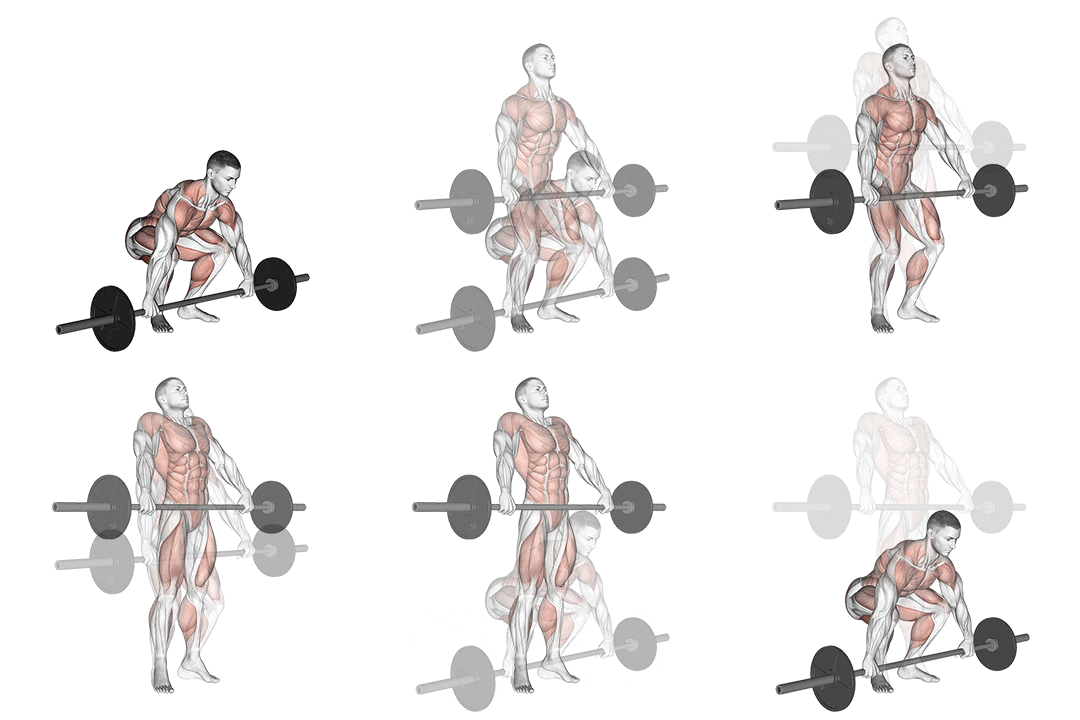
The snatch pull is an Olympic weightlifting exercise that targets the muscles used in the snatch movement. It is a powerful and explosive exercise that primarily focuses on developing strength and coordination in the muscles of the posterior chain, including the hamstrings, glutes, lower back, and shoulders. The snatch pull helps improve the pulling phase of the snatch and enhances overall power and speed. ## Instructions 1. Begin by standing with your feet hip-width apart, toes pointed slightly outward. Position the barbell on the floor in front of you. 2. Bend your knees and hinge at the hips, lowering yourself into a squat position while maintaining a flat back and a neutral spine. 3. Grasp the barbell with a wide grip, palms facing downward. Your hands should be slightly wider than shoulder-width apart. 4. Engage your core, lift your chest, and straighten your arms. This is the starting position. 5. Initiate the movement by driving through your legs, extending your hips, and explosively pulling the barbell upward. 6. As the barbell rises, keep it close to your body by shrugging your shoulders and pulling your elbows high and to the sides. 7. Continue the upward pull until you reach maximum height with your elbows high and the barbell at approximately chest level. 8. At the top of the movement, quickly lower the barbell back down by reversing the pulling motion. 9. As the barbell descends, maintain control and allow it to return to the starting position with your arms fully extended. 10. Repeat the exercise for the desired number of repetitions. ## Variations - Snatch Grip High Pull: This variation involves the same pulling motion as the snatch pull but with an emphasis on keeping the elbows high and using a narrower grip on the barbell. - Clean Pull: Similar to the snatch pull, but the clean pull focuses on the muscles used in the clean movement. The grip is typically wider, and the movement follows the path of the clean. ## Muscles Worked The snatch pull primarily targets the following muscles: - Hamstrings - Glutes - Lower back (erector spinae) - Shoulders (deltoids) - Upper back (trapezius, rhomboids) ## Common Mistakes 1. Rounding the back: Maintain a neutral spine throughout the exercise to prevent excessive stress on the lower back. Engage your core and lift your chest. 2. Using the arms too much: Remember that the snatch pull is a hip-driven movement. Focus on generating power from the legs and hips rather than relying on excessive arm pulling. 3. Not fully extending the hips: Ensure that you fully extend your hips at the top of the movement to maximize power and engage the posterior chain effectively. 4. Allowing the bar to drift away from the body: Keep the barbell close to your body throughout the movement to maintain control and maximize efficiency. ## Safety Precautions - Prioritize proper form and technique over using heavy weights. Master the movement pattern before increasing the load. - Warm up adequately to prepare your muscles and joints for the explosive nature of the exercise. - Use a weightlifting belt if necessary to provide additional support to your lower back. - If you are new to Olympic weightlifting exercises, consider working with a qualified coach to ensure proper technique and safety.