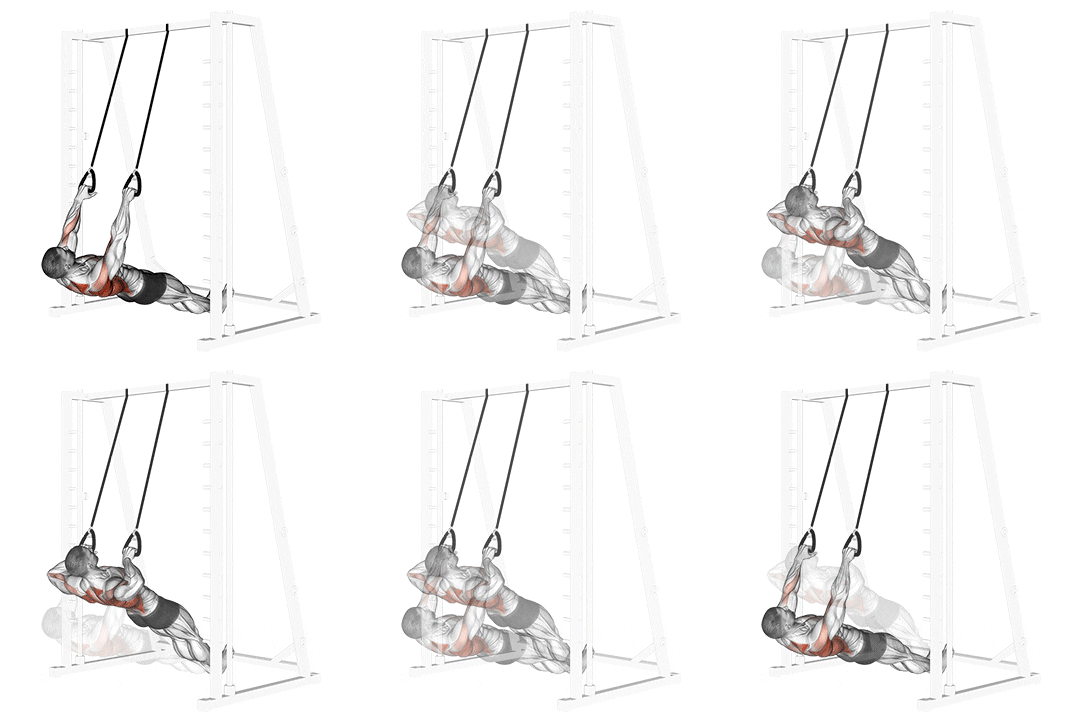
The inverted row with straps is an upper body exercise that primarily targets the muscles of the back, including the lats (latissimus dorsi), rhomboids, and rear deltoids. It also engages the muscles of the arms, such as the biceps and forearms, as well as the core muscles for stability. This exercise is performed using suspension straps or TRX straps, which allow for a dynamic and adjustable resistance. It is a great exercise for improving upper body strength, posture, and stability. ## Instructions 1. Set up the straps at an appropriate height. The handles should be about chest height when you are standing facing the anchor point. 2. Stand facing the anchor point and hold one strap handle in each hand. Your palms should be facing each other (neutral grip). 3. Walk your feet forward, lean back slightly, and extend your arms fully. Your body should be at an angle with your heels touching the ground and your arms extended in front of you. 4. Engage your core muscles and keep your body in a straight line from head to heels. 5. Pull your chest toward the handles by retracting your shoulder blades and bending your elbows. Keep your elbows close to your body throughout the movement. 6. Continue pulling until your chest reaches the handles or is slightly behind them. Squeeze your back muscles at the top of the movement. 7. Slowly lower your body back to the starting position by extending your arms. 8. Repeat for the desired number of repetitions. ## Variations - Foot Elevated Inverted Row: Elevate your feet on a bench or step to increase the difficulty and engage more muscles. - Single-Arm Inverted Row: Perform the exercise using only one arm at a time to enhance unilateral strength and stability. - Wide Grip or Narrow Grip: Adjust your hand placement on the straps to target different areas of the back and arms. ## Muscles Worked - Latissimus dorsi (lats) - Rhomboids - Rear deltoids - Biceps - Forearms - Core muscles (stabilizers) ## Common Mistakes - Using momentum: Avoid using momentum to pull yourself up. Focus on controlled movements throughout the exercise. - Shrugging the shoulders: Keep your shoulders down and away from your ears. Avoid shrugging or hunching your shoulders during the movement. - Arching the back: Maintain a straight line from head to heels. Avoid excessive arching of the lower back. - Not fully extending the arms: Make sure to fully extend your arms at the starting position and maintain tension in the muscles throughout the exercise. ## Safety Precautions - Choose an appropriate resistance level that allows you to maintain proper form and control throughout the exercise. - If you have any shoulder or back issues, consult with a fitness professional or healthcare provider before attempting this exercise. - Start with a conservative angle and gradually increase the difficulty as your strength improves. - If you feel any pain or discomfort during the exercise, stop immediately and seek guidance from a qualified professional.
The iron cross stretch is a stretching exercise that primarily targets the muscles of the chest, shoulders, and upper back. It involves extending the arms out to the sides while keeping the chest open, which helps improve flexibility and mobility in the upper body. This stretch is commonly used in gymnastics and martial arts training to enhance shoulder and chest flexibility. It can also be beneficial for individuals involved in weightlifting, CrossFit, or any activity that requires a wide range of motion in the upper body. ## Instructions 1. Stand tall with your feet shoulder-width apart and arms relaxed at your sides. 2. Begin by reaching both arms out to the sides, parallel to the floor. Your palms should be facing down. 3. Keep your chest lifted and your shoulder blades squeezed together. 4. Slowly and simultaneously move your arms backward as far as comfortably possible, aiming to bring them to a horizontal position behind your body. 5. Hold the stretched position for 15 to 30 seconds while maintaining good posture and breathing deeply. 6. Slowly return your arms back to the starting position, bringing them back to the sides of your body. 7. Repeat the stretch for the desired number of repetitions. ## Variations - Standing Wall Iron Cross: Stand facing a wall and place your hands against the wall at shoulder height. Walk your feet back, leaning your body forward while maintaining the stretched position. - Seated Iron Cross: Sit on the floor with your legs extended in front of you. Perform the same arm movement as in the standing version, aiming to bring your arms as far back as possible while keeping your chest lifted. ## Muscles Worked - Pectoralis major (chest muscles) - Deltoids (shoulder muscles) - Rhomboids - Posterior deltoids - Latissimus dorsi - Upper back muscles ## Common Mistakes - Rounded shoulders: Avoid hunching or rounding your shoulders during the stretch. Keep your shoulder blades pulled back and down to maintain good posture. - Overstretching: Do not push the stretch to the point of pain. Be gentle and gradually increase the range of motion over time. - Holding your breath: Remember to breathe deeply and consistently throughout the stretch. Avoid holding your breath, as it can create tension in the muscles. - Lack of control: Maintain control throughout the movement and avoid swinging or jerking your arms. ## Safety Precautions - If you have any shoulder or back injuries or conditions, it is advisable to consult with a healthcare professional or a qualified fitness trainer before attempting this stretch. - Perform the stretch in a slow and controlled manner, gradually increasing the range of motion over time. - If you experience any sharp pain or discomfort during the stretch, stop immediately and seek guidance from a qualified professional. - Be mindful of your own flexibility limitations and avoid pushing beyond a point that feels comfortable. Respect your body's boundaries.
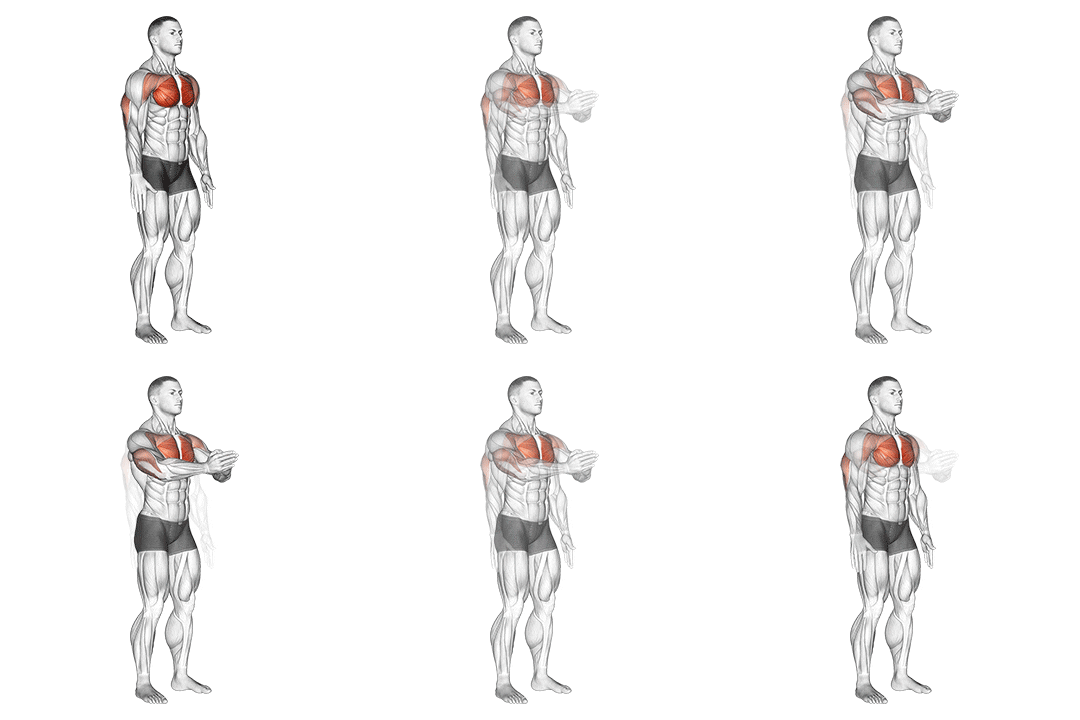
The isometric chest squeeze is an exercise that targets the chest muscles, specifically the pectoralis major. It involves squeezing the hands together in front of the chest with maximal effort while holding the position. This exercise helps to strengthen and tone the chest muscles. Isometric exercises involve contracting the muscles without any joint movement. The isometric chest squeeze is a convenient and effective exercise that can be performed anywhere without the need for equipment. ## Instructions 1. Stand or sit upright with good posture. 2. Place your hands together in front of your chest, palms touching, fingers pointing forward. 3. Create tension by pressing your hands together as hard as you can, engaging your chest muscles. 4. Hold the contraction for a specific duration, such as 10 to 30 seconds, while maintaining maximal effort. 5. Focus on keeping your shoulders relaxed and your breathing steady throughout the exercise. 6. After holding the contraction, slowly release the tension and relax your hands. 7. Repeat the exercise for the desired number of repetitions or sets. ## Variations - Wall Chest Squeeze: Stand facing a wall and place your palms on the wall at chest level. Press your hands into the wall as hard as you can, mimicking the same squeezing action. - Resistance Band Chest Squeeze: Wrap a resistance band around your back at chest level. Hold the ends of the band in each hand and press your hands together, creating tension in the band. ## Muscles Worked - Pectoralis major (chest muscles) - Anterior deltoids (front of the shoulders) - Triceps (back of the upper arms) - Biceps (to a lesser extent) ## Common Mistakes - Poor posture: Maintain good posture throughout the exercise, with your shoulders back and down. Avoid hunching or rounding the shoulders. - Insufficient effort: Make sure to squeeze your hands together with maximal effort. The intensity of the contraction is important for optimal results. - Holding your breath: Remember to breathe naturally and avoid holding your breath during the exercise. Inhale and exhale steadily throughout the contraction. - Overarching the lower back: Keep your core muscles engaged and avoid excessive arching of the lower back. ## Safety Precautions - If you have any shoulder or chest injuries or conditions, it is advisable to consult with a healthcare professional or a qualified fitness trainer before attempting this exercise. - Start with a moderate level of effort and gradually increase the intensity as your strength improves. - Do not strain or overexert yourself during the exercise. Listen to your body and stop if you experience any pain or discomfort. - If you have any existing medical conditions, follow the guidance of your healthcare provider regarding exercise limitations or modifications.
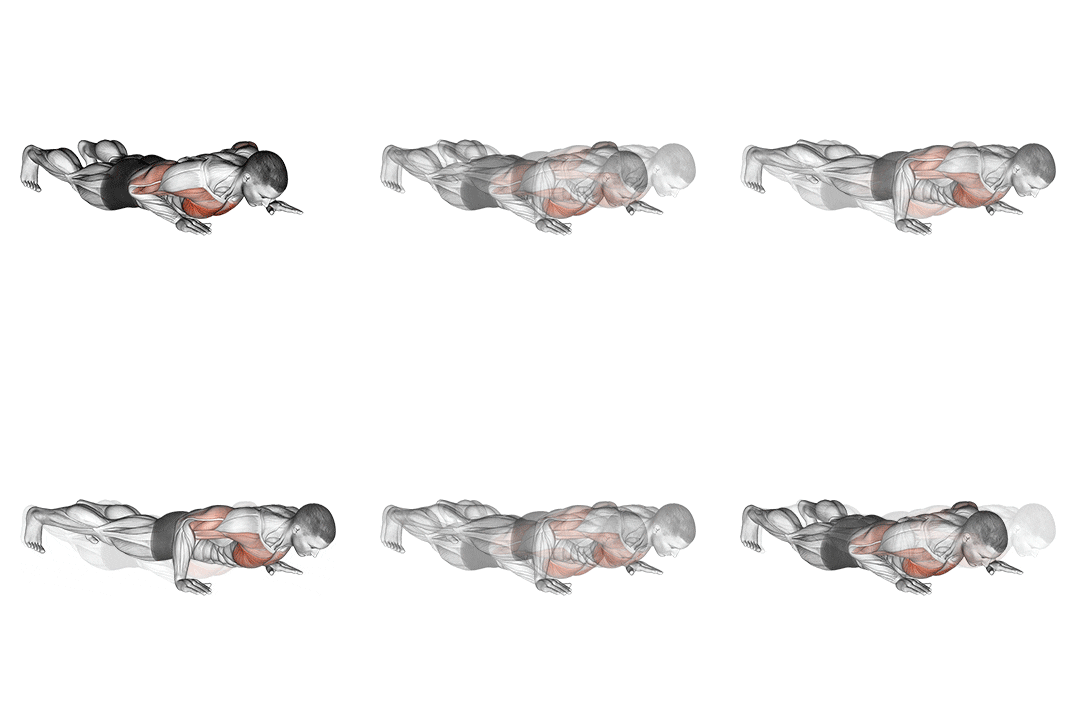
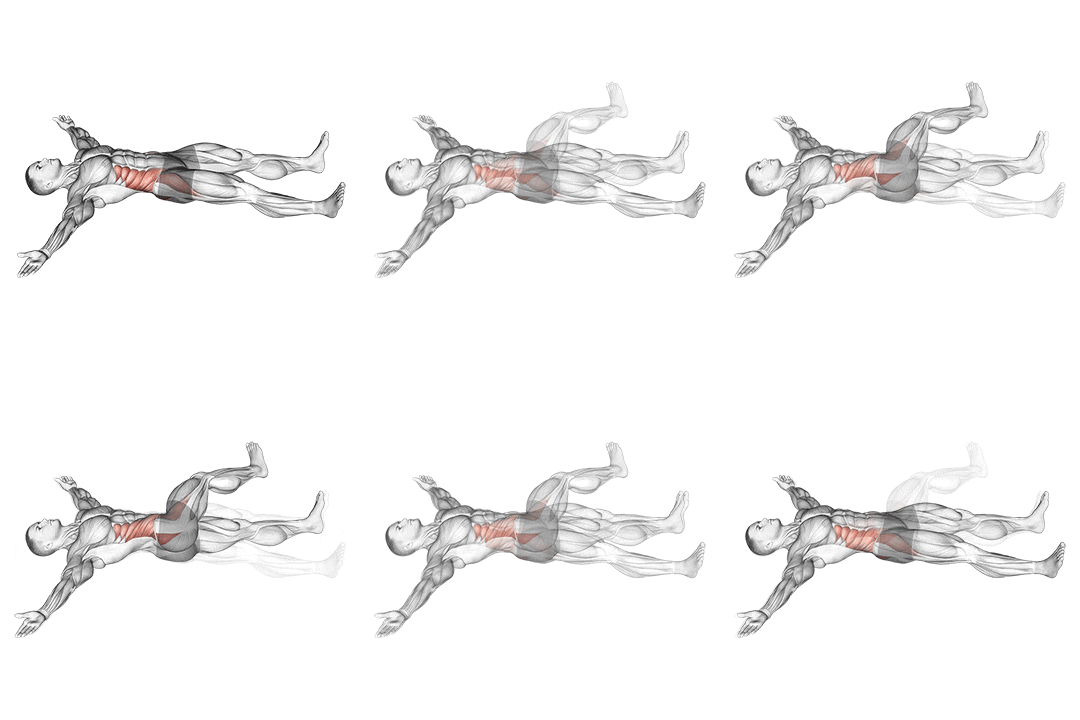
The isometric wipers exercise is a challenging core exercise that targets the abdominal muscles, specifically the obliques. It involves holding an isometric contraction while moving the legs from side to side in a controlled manner. This exercise helps to improve core stability, enhance rotational strength, and engage the muscles responsible for side-to-side movements. ## Instructions 1. Lie on your back on a mat or flat surface with your legs extended. 2. Place your arms straight out to the sides, forming a "T" shape with your body. 3. Engage your core muscles by drawing your belly button in towards your spine. 4. Lift both legs off the ground, keeping them together and maintaining a slight bend in the knees. 5. While holding the isometric contraction in your core, slowly lower your legs towards the right side, stopping a few inches above the ground. 6. Pause for a moment, then return your legs back to the center. 7. Repeat the movement, this time lowering your legs towards the left side. 8. Continue alternating the side-to-side leg movement for the desired number of repetitions or time. ## Variations - Bent Knee Isometric Wipers: Perform the exercise with your knees bent at a 90-degree angle, feet lifted off the ground. This modification reduces the lever arm and decreases the intensity. - Advanced Isometric Wipers: Increase the difficulty by straightening your legs and extending them lower towards the ground. Remember to maintain control and avoid any excessive strain on your lower back. ## Muscles Worked - Internal and external obliques (side abdominal muscles) - Rectus abdominis (front abdominal muscles) - Transverse abdominis (deep abdominal muscles) - Hip adductors (inner thigh muscles) - Hip abductors (outer hip muscles) ## Common Mistakes - Arching the lower back: Keep your lower back pressed into the mat or floor throughout the exercise to maintain proper alignment and prevent strain on the back. - Using momentum: Focus on controlled movements and avoid swinging your legs. Use your core muscles to initiate the side-to-side leg movement. - Holding your breath: Remember to breathe continuously throughout the exercise. Exhale during the exertion phase and inhale during the return phase. - Overexertion: Start with a comfortable range of motion and gradually increase the intensity as your core strength improves. Do not push beyond your limits, and listen to your body to avoid injury. ## Safety Precautions - If you have any pre-existing back or core muscle injuries or conditions, it is advisable to consult with a healthcare professional or a qualified fitness trainer before attempting this exercise. - Engage your core muscles throughout the exercise to provide stability and protect your back. - If you experience any pain or discomfort, especially in the lower back, stop the exercise and seek guidance from a qualified professional. - Maintain proper form and control during the leg movements to prevent any unnecessary strain on your muscles or joints.
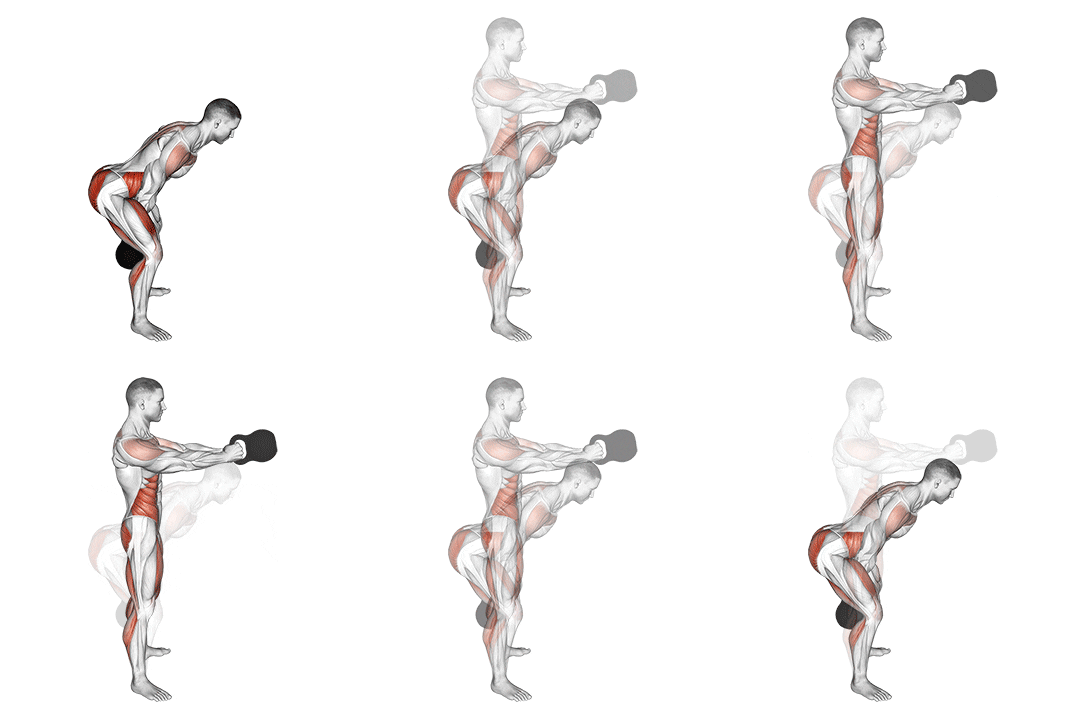
The kettlebell swing is a dynamic and explosive exercise that primarily targets the posterior chain muscles, including the glutes, hamstrings, and lower back. It involves a hip-hinging motion combined with a powerful hip thrust, creating a pendulum-like movement with the kettlebell. The kettlebell swing improves strength, power, cardiovascular endurance, and overall functional fitness. ## Instructions 1. Stand with your feet shoulder-width apart, toes slightly pointed out, and place a kettlebell on the floor in front of you. 2. Hinge at the hips, push your hips back, and bend your knees slightly while maintaining a neutral spine. 3. Reach down and grip the kettlebell handle with both hands, palms facing your body. 4. Prepare for the swing by engaging your core, keeping your shoulders down and back, and maintaining a slight bend in your elbows. 5. Start the movement by forcefully driving your hips forward, straightening your knees and extending your hips. 6. Allow the momentum generated by your hip thrust to swing the kettlebell upward. 7. At the top of the swing, your arms should be parallel to the ground, and the kettlebell should be at chest height, with your core and glutes fully engaged. 8. Control the descent by hinging at the hips and guiding the kettlebell back between your legs, maintaining the hinge in your hips. 9. Repeat the movement in a fluid, rhythmic manner, using the hips to generate power and maintaining a controlled motion throughout the exercise. ## Variations - One-Arm Kettlebell Swing: Perform the exercise using only one arm at a time, alternating between arms. This variation adds an extra challenge to core stability and unilateral strength development. - Hand-to-Hand Kettlebell Swing: As the kettlebell reaches its peak, release it with one hand and grab it with the other hand on the descent. Continuously alternate hands with each swing. - Kettlebell Swing with Resistance Band: Attach a resistance band to the kettlebell handle or your waist for added resistance and an increased challenge during the swing. ## Muscles Worked - Glutes - Hamstrings - Quadriceps - Lower back (erector spinae) - Core muscles (abdominals, obliques) ## Common Mistakes - Rounding the back: Maintain a neutral spine throughout the exercise. Avoid rounding or arching your back, as it puts unnecessary stress on the lower back. Keep your core engaged and your shoulders down and back. - Using too much arm strength: The power for the swing should come from your hips and posterior chain muscles, not from your arms. Avoid using your arms to lift or actively pull the kettlebell upward. - Overextending the hips: While it's important to generate power through hip extension, avoid hyperextending or excessively leaning back at the top of the swing. Maintain a strong and controlled position. - Lack of control: Focus on maintaining control throughout the movement. Avoid using excessive momentum or swinging the kettlebell too high, as it can lead to loss of control and potential injury. ## Safety Precautions - Choose an appropriate kettlebell weight that allows you to maintain proper form and control. - Warm up your hip, hamstring, and back muscles before performing the exercise. - Clear the surrounding area of any obstacles or individuals to avoid accidents. - Keep a firm grip on the kettlebell handle throughout the exercise to prevent it from slipping or flying out of your hands. - Avoid locking out your knees at the top of the swing to prevent strain on the joints. - If you have any pre-existing back or hip issues, consult with a fitness professional before attempting this exercise. - Start with lighter weights and gradually increase the load as you become
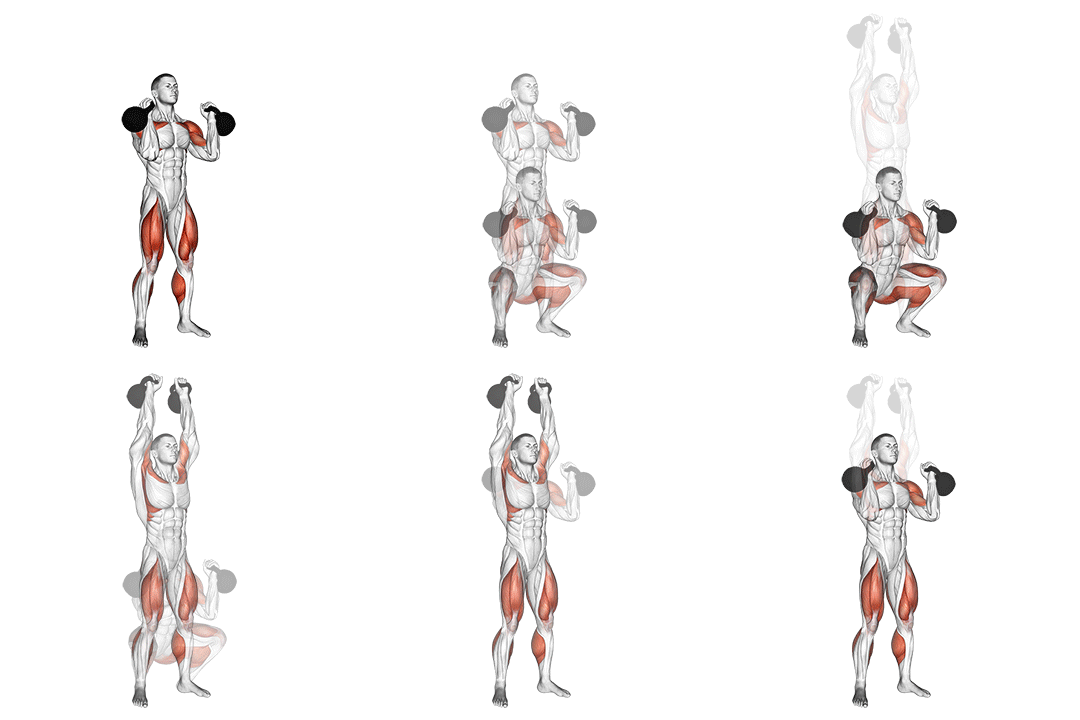
The kettlebell thruster is a compound exercise that combines a front squat with an overhead press, creating a full-body movement that targets multiple muscle groups. It primarily targets the lower body, shoulders, and core muscles. The kettlebell thruster enhances strength, power, and cardiovascular endurance while promoting functional movement patterns. ## Instructions 1. Begin by holding a kettlebell in front of your chest with both hands, palms facing inwards. Maintain a firm grip on the handle. 2. Stand with your feet shoulder-width apart and toes slightly turned out. 3. Lower into a squat position by bending at the hips and knees, keeping your chest lifted and your back straight. Allow your elbows to come between your knees while maintaining control of the kettlebell. 4. Explosively drive through your heels, extending your hips and knees, and rise to a standing position. 5. Simultaneously, press the kettlebell overhead, fully extending your arms and straightening your elbows. 6. Lower the kettlebell back to the starting position by bending your elbows and controlling the descent. 7. Repeat the squat and press movement for the desired number of repetitions. ## Variations - Single-Arm Kettlebell Thruster: Perform the exercise using only one arm at a time, alternating between arms. This variation challenges core stability and unilateral strength development. - Goblet Kettlebell Thruster: Hold a kettlebell by the horns close to your chest with both hands, rather than using an overhead grip. This variation allows for a more accessible movement and emphasizes the lower body muscles. ## Muscles Worked - Quadriceps - Glutes - Hamstrings - Shoulders (deltoids) - Triceps - Core muscles (abdominals, obliques) ## Common Mistakes - Leaning too far forward: Maintain an upright posture throughout the movement and avoid leaning excessively forward. Keep your chest lifted and your back straight. - Insufficient depth in the squat: Aim to lower yourself into a deep squat position, with your thighs parallel to the ground or lower, to fully engage the lower body muscles. - Lack of core engagement: Keep your core muscles activated throughout the exercise to provide stability and support for the movement. - Overextending the lower back: Avoid hyperextending or arching your lower back at the top of the movement. Maintain a neutral spine and engage your glutes and core to maintain proper alignment. ## Safety Precautions - Choose an appropriate kettlebell weight that allows you to maintain proper form and control. - Warm up your lower body, shoulders, and core muscles before performing the exercise. - Perform the exercise on a stable surface and ensure you have enough space to move freely. - Focus on maintaining proper technique and control throughout the movement to prevent injuries. - If you have any pre-existing knee, shoulder, or back issues, consult with a fitness professional before attempting this exercise. - Start with lighter weights and gradually increase the load as you become comfortable with the movement and your strength improves. - If you experience any pain or discomfort during the exercise, stop immediately and seek guidance from a qualified professional.
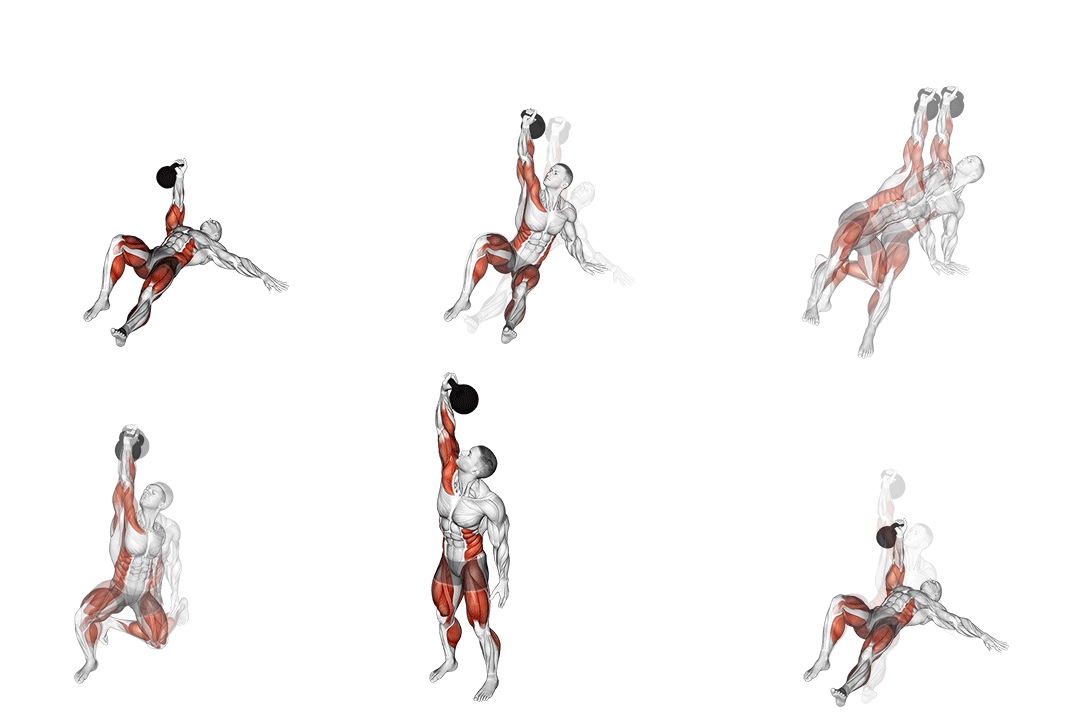
The kettlebell Turkish get up is a highly functional and challenging exercise that involves a series of movements to transition from lying down to standing while holding a kettlebell overhead. It targets multiple muscle groups, including the core, shoulders, hips, and stabilizer muscles. The exercise improves core strength, stability, mobility, and coordination. ## Instructions 1. Start by lying on your back with a kettlebell placed on the ground next to your right shoulder. 2. Bend your right knee and place your right foot flat on the ground, keeping your right arm extended toward the ceiling, holding the kettlebell. 3. Push through your right foot, engaging your core and shoulder muscles, and roll onto your left elbow while keeping the kettlebell overhead. 4. Push up onto your left hand, lifting your torso off the ground and extending your left leg. 5. Drive your hips upward, coming into a kneeling position with your right knee on the ground and your left foot planted firmly. 6. From the kneeling position, push through your right foot and stand up, keeping the kettlebell overhead throughout the movement. 7. Reverse the steps to return to the starting position, maintaining control and stability. 8. Repeat the exercise on the opposite side by switching the kettlebell to your left hand. ## Variations - Kettlebell Turkish Get Up (Lunge Style): Instead of performing the squat-style variation, you can modify the exercise to a lunge-style Turkish get up. The steps and movement pattern remain the same, but instead of coming into a kneeling position, you come into a lunge position with one knee on the ground and the other foot forward. - Lighter Weight or No Weight: If you're new to the exercise or working on your technique, you can start with a lighter kettlebell or even perform the movement without any weight until you feel comfortable and confident. ## Muscles Worked - Core muscles (abdominals, obliques) - Shoulders (deltoids) - Glutes - Hamstrings - Quadriceps - Hip stabilizer muscles ## Common Mistakes - Lack of stability and control: Focus on maintaining stability and control throughout the movement. Avoid rushing through the steps and maintain proper alignment. - Allowing the kettlebell to drift off the vertical plane: Keep the kettlebell directly over the shoulder throughout the exercise, ensuring it stays in a vertical line. - Neglecting proper breathing: Breathe deeply and maintain a controlled breathing pattern throughout the exercise to support stability and exertion. - Not engaging the core: Keep your core muscles engaged throughout the entire movement to provide stability and support for your spine. ## Safety Precautions - Choose an appropriate kettlebell weight that allows you to maintain proper form and control. - Perform the exercise on a stable surface, preferably with a mat or cushioning underneath. - Take your time and focus on mastering the technique before increasing the weight or intensity. - If you have any pre-existing shoulder, hip, or back issues, consult with a fitness professional before attempting this exercise. - Start with lighter weights or even bodyweight and gradually progress as your strength and stability improve. - If you experience any pain or discomfort during the exercise, stop immediately and seek guidance from a qualified professional.
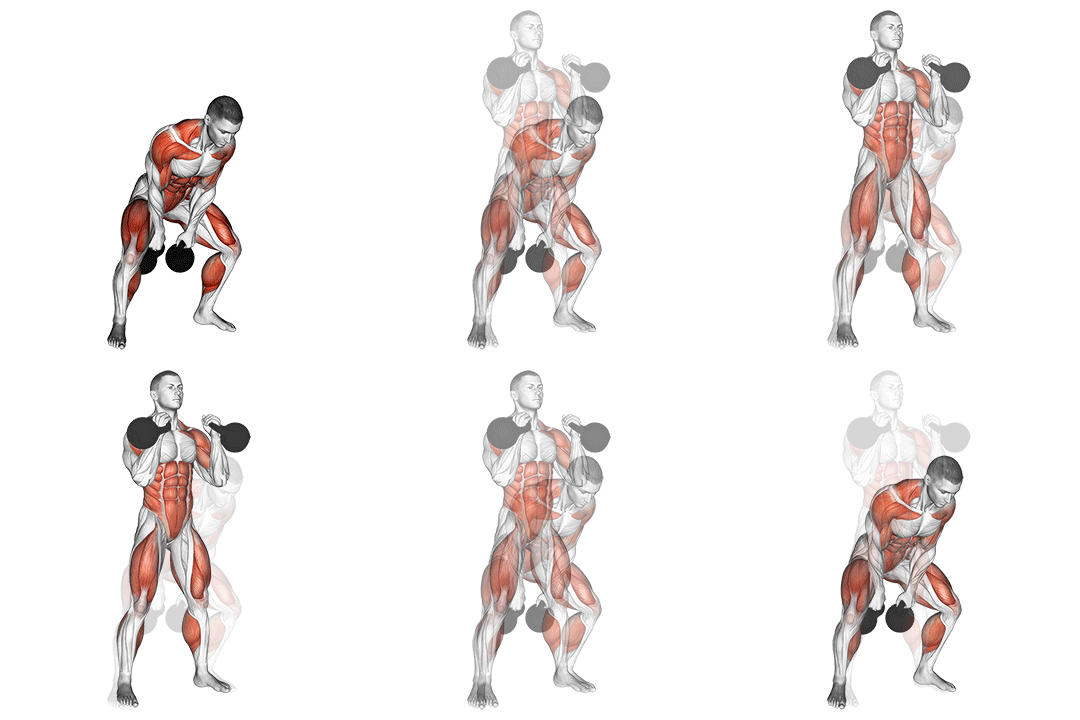
The kettlebell two arm clean is a dynamic exercise that involves lifting the kettlebells from the floor to the rack position in one smooth motion. It targets the muscles of the posterior chain, including the hips, glutes, hamstrings, and back. The exercise improves explosive power, grip strength, and coordination. ## Instructions 1. Begin by standing with your feet shoulder-width apart, toes pointing slightly outward. Place the kettlebells on the floor in front of you. 2. Hinge at the hips, keeping your back straight and chest lifted, and reach down to grasp the kettlebell handles with an overhand grip. 3. Brace your core, engage your glutes, and maintain a slight bend in your knees. 4. In one fluid motion, explosively drive through your hips, extend your knees, and pull the kettlebells up towards your shoulders. Keep your elbows close to your body as you lift. 5. As the kettlebells rise, rotate your hands and flip your wrists, allowing the kettlebells to rest on the back of your forearms in the rack position. Your palms should be facing inward, and the kettlebells should be resting against your upper arms. 6. Control the descent by guiding the kettlebells back down to the starting position. 7. Repeat the movement for the desired number of repetitions. ## Variations - Single-Arm Kettlebell Clean: Perform the exercise with one kettlebell at a time, alternating between arms. This variation allows for greater focus on each side and challenges the core and stabilizer muscles. - Hang Clean: Instead of starting from the floor, begin with the kettlebells hanging at arm's length in front of your thighs. Perform the same motion of driving through the hips and extending the knees to lift the kettlebells to the rack position. - Double Kettlebell Clean and Press: After cleaning the kettlebells to the rack position, proceed to press them overhead, fully extending your arms. Lower the kettlebells back to the rack position and repeat. ## Muscles Worked - Glutes - Hamstrings - Quadriceps - Back (erector spinae) - Shoulders (deltoids) - Forearms - Core muscles (abdominals, obliques) ## Common Mistakes - Rounding the back: Maintain a neutral spine throughout the exercise and avoid rounding your back. Engage your core and keep your chest lifted. - Using too much arm strength: The power for the clean should come from your hips and legs. Avoid relying solely on your arms to lift the kettlebells. - Lack of explosiveness: Generate power by forcefully extending your hips and knees in a swift motion. Be explosive in the upward phase of the movement. - Allowing the kettlebells to swing away from the body: Keep the kettlebells close to your body throughout the movement. Control the path of the kettlebells and avoid excessive swinging or flaring of the elbows. ## Safety Precautions - Choose an appropriate kettlebell weight that allows you to maintain proper form and control. - Warm up your hips, glutes, and shoulders before performing the exercise. - Pay attention to your grip and ensure a secure hold on the kettlebell handles throughout the movement. - Perform the exercise on a stable surface, and ensure you have enough space around you to move freely. - Focus on maintaining proper technique and control to prevent injuries. - If you have any pre-existing back or shoulder issues, consult with a fitness professional before attempting this exercise. - Start with lighter weights and gradually increase the load as you become comfortable with the movement and your strength improves. - If you experience any pain or discomfort during the exercise
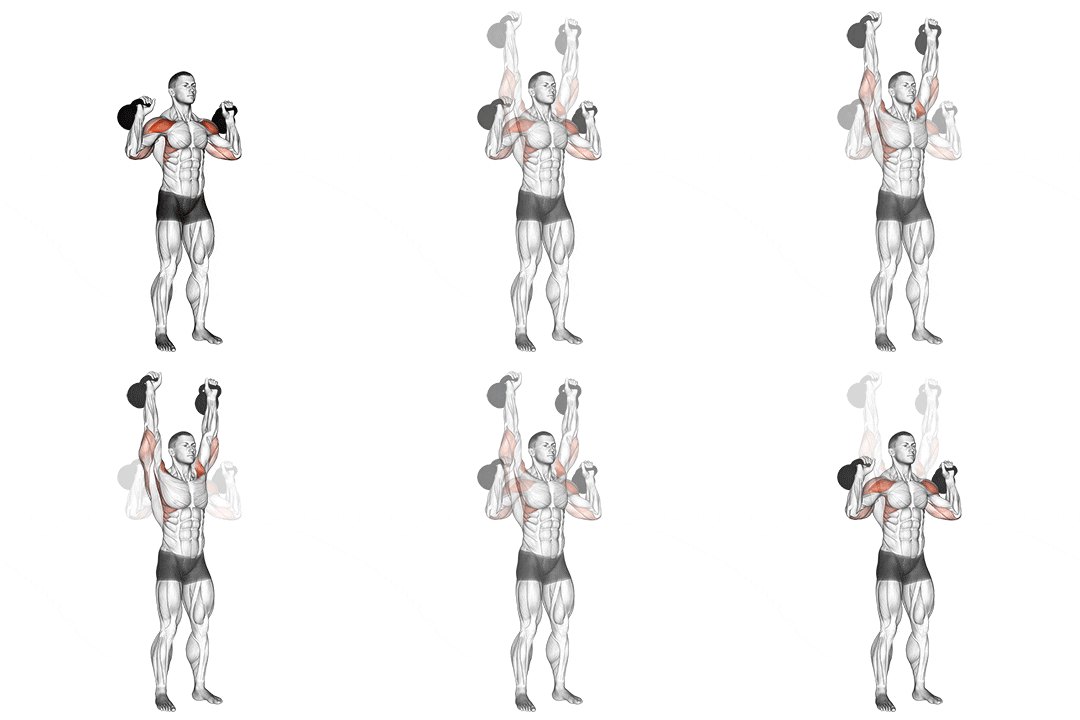
The kettlebell two arm military press is a compound exercise that targets the shoulders, triceps, and core muscles. It involves pressing the kettlebells overhead from a starting position at shoulder level. This exercise improves upper body strength, shoulder stability, and overall functional fitness. ## Instructions 1. Begin by standing with your feet shoulder-width apart and hold a kettlebell in each hand at shoulder level. Your palms should be facing forward, and your elbows should be bent. 2. Engage your core and keep your back straight throughout the movement. 3. Press the kettlebells upward by extending your arms while exhaling. Keep your wrists straight and the kettlebells balanced directly above your shoulders. 4. Once your arms are fully extended, pause briefly at the top of the movement. 5. Slowly lower the kettlebells back to the starting position by bending your elbows and inhaling. 6. Repeat the exercise for the desired number of repetitions. ## Variations - Single-Arm Kettlebell Military Press: Instead of using both arms simultaneously, perform the exercise with one arm at a time. This variation helps address muscle imbalances and allows for a greater focus on each arm. - Seated Kettlebell Military Press: Sit on a bench or chair while performing the exercise. This variation removes the element of leg and core stability, placing more emphasis on the shoulders and triceps. ## Muscles Worked - Shoulders (deltoids) - Triceps - Core muscles (abdominals, obliques) ## Common Mistakes - Arching the back: Maintain a neutral spine throughout the exercise. Avoid arching your back excessively, as it can strain your lower back. Engage your core muscles to stabilize your torso. - Leaning too far forward or backward: Keep your body upright and avoid excessive leaning in any direction. Maintain proper alignment throughout the movement. - Not fully extending the arms: Ensure that you fully extend your arms at the top of the movement to engage the muscles fully. Avoid stopping short of full extension. - Using excessive momentum: Focus on controlled movements and avoid using momentum to lift the kettlebells. Maintain a slow and steady pace throughout the exercise. ## Safety Precautions - Choose an appropriate kettlebell weight that allows you to maintain proper form and control. - Warm up your shoulder joints and muscles before performing the exercise. - If you have any pre-existing shoulder or elbow issues, consult with a fitness professional before attempting this exercise. - Engage your core muscles throughout the exercise to stabilize your spine. - If you experience any pain or discomfort during the exercise, stop immediately and seek guidance from a qualified professional. - Start with lighter weights and gradually increase the load as you become comfortable with the movement and your strength improves. - Be mindful of your surroundings and ensure you have enough space to perform the exercise without any obstructions.