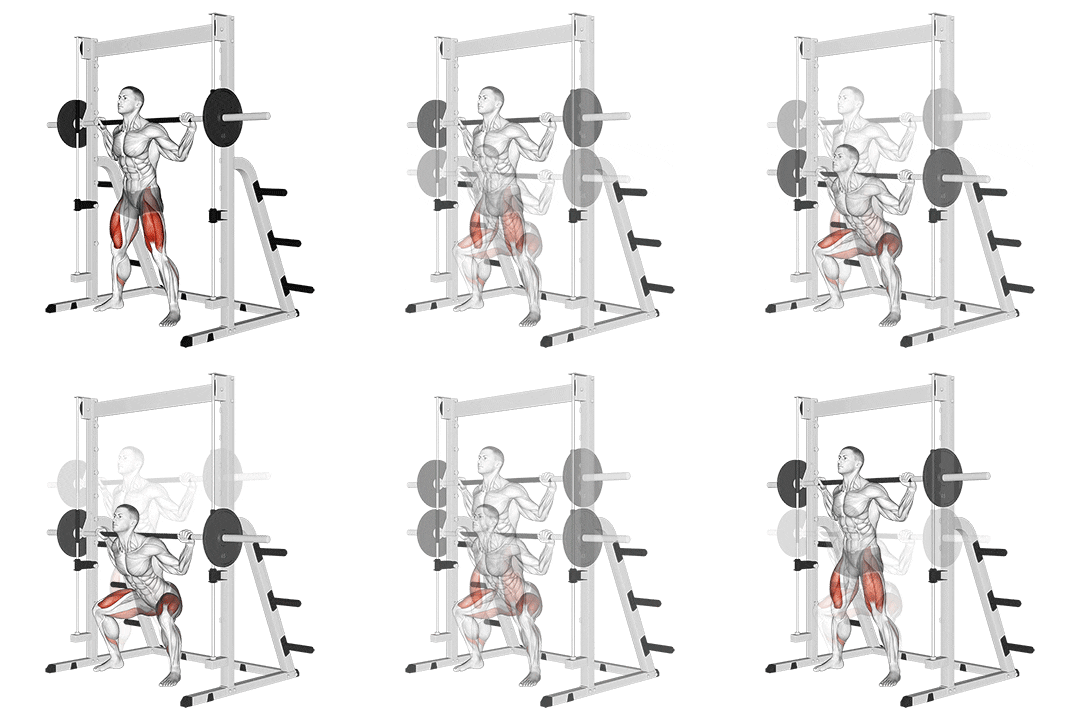
The Smith sumo squat is a variation of the traditional squat exercise that primarily targets the lower body, specifically the quadriceps, hamstrings, glutes, and inner thighs. This exercise involves performing a squat with a wider stance and the feet turned out at an angle. ## Instructions 1. Set up a Smith machine by adjusting the bar height to a level that allows you to comfortably reach it when standing with your feet shoulder-width apart. 2. Stand facing the Smith machine with your feet wider than shoulder-width apart. Position your feet so they are turned out at an angle, typically around 45 degrees. 3. Step forward and position yourself under the bar, resting it across your upper traps (the muscles between your shoulders and neck). 4. Grasp the bar with an overhand grip, wider than shoulder-width apart, ensuring that your grip is secure. 5. Lift the bar off the rack by extending your hips and knees and take a step back to create a comfortable amount of space for the movement. 6. Keep your head up, chest lifted, and core engaged throughout the exercise. 7. Inhale and initiate the squat by bending your knees and hips simultaneously, lowering your body towards the floor. 8. Continue descending until your thighs are parallel to the floor or lower, while maintaining proper form and control. 9. Exhale and push through your heels, extending your hips and knees to return to the starting position. 10. Repeat for the desired number of repetitions. ## Variations - Dumbbell Sumo Squat: Perform the sumo squat using dumbbells instead of a Smith machine. Hold a dumbbell in each hand with your arms extended down by your sides. - Goblet Sumo Squat: Hold a dumbbell vertically in front of your chest with both hands as you perform the sumo squat. This variation can provide additional core engagement. - Sumo Squat with Resistance Band: Place a resistance band around your legs, just above your knees. Perform the sumo squat while maintaining tension in the band, which adds resistance to the exercise. ## Muscles Worked - Quadriceps (front of the thighs) - Hamstrings (back of the thighs) - Glutes (buttocks) - Adductor muscles (inner thighs) - Calves and core muscles (stabilization) ## Common Mistakes - Allowing knees to cave inward: Maintain proper form by pushing your knees out in line with your toes throughout the movement. Avoid letting your knees collapse inward. - Leaning too far forward: Keep your torso upright and avoid excessive forward lean. This ensures proper engagement of the lower body muscles and reduces strain on the back. - Lifting the heels: Keep your feet flat on the ground throughout the exercise. Avoid lifting your heels, as it can shift the focus away from the targeted muscles and destabilize your balance. - Using excessive weight: Start with a weight that allows you to maintain proper form and range of motion. Gradually increase the weight as your strength improves. ## Safety Precautions - Warm up adequately before performing the exercise to prepare your muscles and joints. - If you have any knee or hip issues, consult with a healthcare professional or a qualified fitness trainer before attempting this exercise. - Use a spotter or training partner, especially when lifting heavy weights, to ensure safety and proper form. - Keep your knees in line with your toes and avoid allowing them to extend beyond your toes to prevent excessive stress on the knee joints. - If you experience any pain or discomfort during the exercise, stop immediately and seek medical advice if necessary.
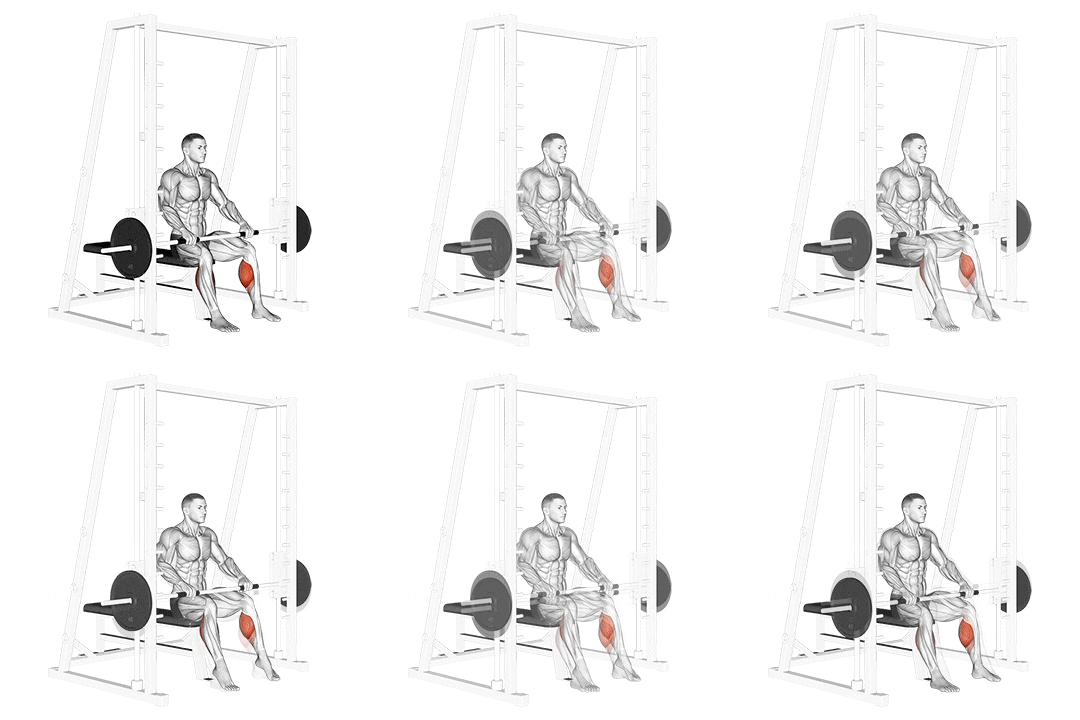
The Smith toe raise is an exercise that specifically targets the muscles of the calves, primarily the gastrocnemius and soleus muscles. It involves raising the heels while standing on a platform or step to strengthen and develop the calf muscles. ## Instructions 1. Set up a Smith machine by adjusting the bar height to a level that allows you to comfortably reach it when standing on a platform or step. 2. Stand facing the Smith machine and position yourself under the bar, resting it across your upper traps (the muscles between your shoulders and neck). 3. Place the balls of your feet on a stable platform or step with your heels hanging off the edge. 4. Grasp the bar with an overhand grip, wider than shoulder-width apart, ensuring that your grip is secure. 5. Lift the bar off the rack by extending your hips and knees and take a step back to create a comfortable amount of space for the movement. 6. Keep your head up, chest lifted, and core engaged throughout the exercise. 7. Inhale and slowly lower your heels towards the ground, allowing your calves to stretch. 8. Exhale and push through the balls of your feet, raising your heels as high as possible. 9. Squeeze your calf muscles at the top of the movement and hold for a brief moment. 10. Slowly lower your heels back down to the starting position. 11. Repeat for the desired number of repetitions. ## Variations - Single-Leg Smith Toe Raise: Perform the exercise using one leg at a time. This variation provides greater emphasis on each calf individually and can help address any muscle imbalances. - Dumbbell Toe Raise: Hold a dumbbell in one hand while performing the toe raise exercise. This adds resistance and allows for greater progression. - Seated Toe Raise: Sit on a chair or bench and place a weight plate or dumbbell on your thighs. Position the balls of your feet on a platform or step and perform the toe raise exercise while seated. ## Muscles Worked - Gastrocnemius (calf muscle) - Soleus (calf muscle) ## Common Mistakes - Relying on momentum: Avoid using momentum to lift your heels. Focus on using the calf muscles to perform the movement and maintain control throughout. - Not achieving a full range of motion: Lower your heels as far as possible to stretch the calves before raising them as high as possible to contract the muscles fully. - Leaning too far forward or backward: Keep your body upright and maintain proper alignment throughout the exercise. Avoid leaning too far forward or backward, as it can compromise form and balance. ## Safety Precautions - Warm up adequately before performing the exercise to prepare your muscles and joints. - If you have any ankle, foot, or calf injuries, consult with a healthcare professional or a qualified fitness trainer before attempting this exercise. - Use a spotter or training partner, especially when lifting heavy weights, to ensure safety and proper form. - Start with lighter weights and gradually increase the load as your strength improves. - Use a stable platform or step to perform the exercise, ensuring that it can support your body weight without wobbling or slipping. - If you experience any pain or discomfort during the exercise, stop immediately and seek medical advice if necessary.
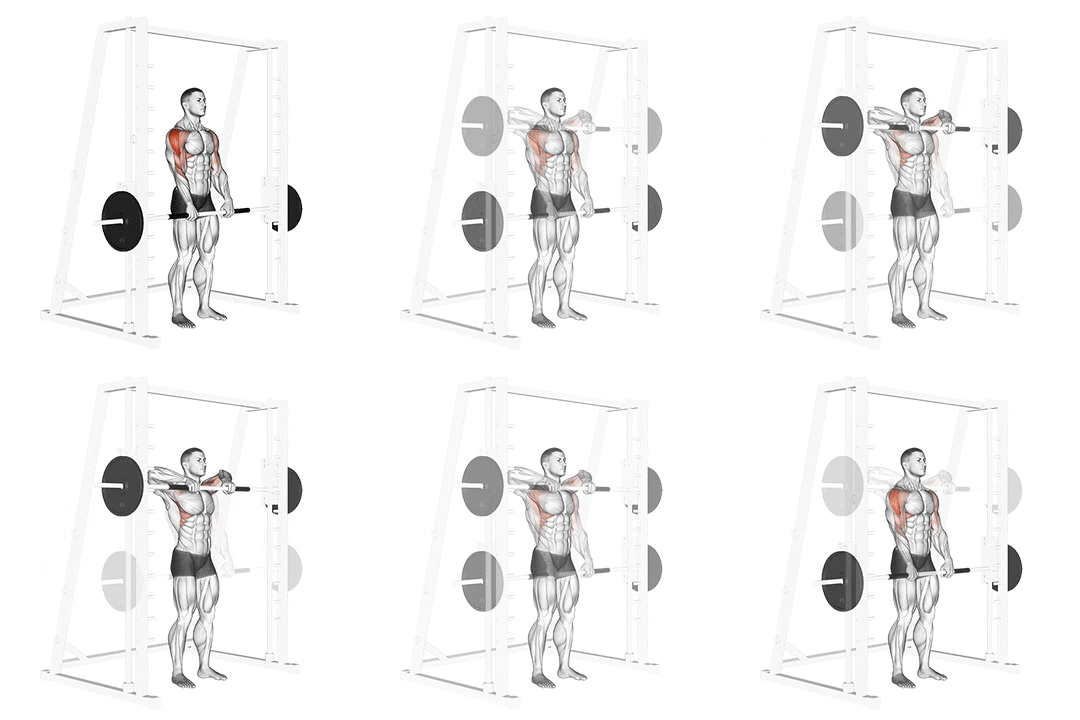
The Smith upright row is an exercise that primarily targets the muscles of the shoulders, specifically the deltoids (anterior and medial heads) and the trapezius. It involves lifting a barbell in a vertical motion close to the body, stimulating the muscles of the upper back and shoulders. ## Instructions 1. Set up a Smith machine by adjusting the bar height to approximately waist level. 2. Stand facing the Smith machine with your feet shoulder-width apart. 3. Grasp the barbell with an overhand grip, slightly narrower than shoulder-width apart. 4. Keep your arms fully extended, and the bar resting against the front of your thighs. 5. Maintain a straight back, engage your core, and keep your chest lifted throughout the exercise. 6. Inhale and exhale to prepare. 7. Keeping the bar close to your body, exhale and simultaneously raise the barbell by bending your elbows and lifting your shoulders. 8. Continue lifting until the barbell reaches chest level or slightly below, keeping it close to your body and leading with your elbows. 9. Pause briefly at the top of the movement, feeling the contraction in your shoulders and upper back. 10. Inhale and slowly lower the barbell back down to the starting position, extending your elbows and allowing your shoulders to relax. 11. Repeat for the desired number of repetitions. ## Variations - Dumbbell Upright Row: Instead of using a barbell on a Smith machine, you can perform the upright row using dumbbells. Hold a dumbbell in each hand with an overhand grip and follow the same lifting motion. - Cable Upright Row: Attach a straight bar handle to a low cable pulley machine. Stand facing the machine, grasp the handle with an overhand grip, and perform the upright row motion. - Wide Grip Upright Row: Use a wider grip on the barbell or dumbbells to emphasize the lateral head of the deltoids and engage the upper back muscles to a greater extent. ## Muscles Worked - Deltoids (anterior and medial heads) - Trapezius (upper fibers) - Rhomboids - Biceps - Forearms ## Common Mistakes - Using excessive weight: Start with a weight that allows you to maintain proper form and control. Focus on the muscle engagement rather than lifting heavy weights. - Raising the bar too high: Avoid lifting the bar above chest level, as it can strain the shoulder joints. Stop the movement once the bar reaches chest level or slightly below. - Rounded shoulders or forward head position: Maintain an upright posture throughout the exercise. Avoid rounding your shoulders or jutting your head forward, as it can lead to poor form and potential strain on the neck and shoulders. - Jerking or using momentum: Perform the exercise in a controlled manner, focusing on a smooth and controlled movement without relying on momentum or swinging the weight. ## Safety Precautions - Warm up adequately before performing the exercise to prepare your muscles and joints. - If you have any pre-existing shoulder or neck injuries, consult with a healthcare professional or a qualified fitness trainer before attempting this exercise. - Use a weight that challenges your muscles but allows you to maintain proper form and control. - Avoid lifting the barbell too high or straining the shoulder joints. Stop the movement once the bar reaches chest level or slightly below. - If you experience any pain or discomfort during the exercise, stop immediately and seek medical advice if necessary.
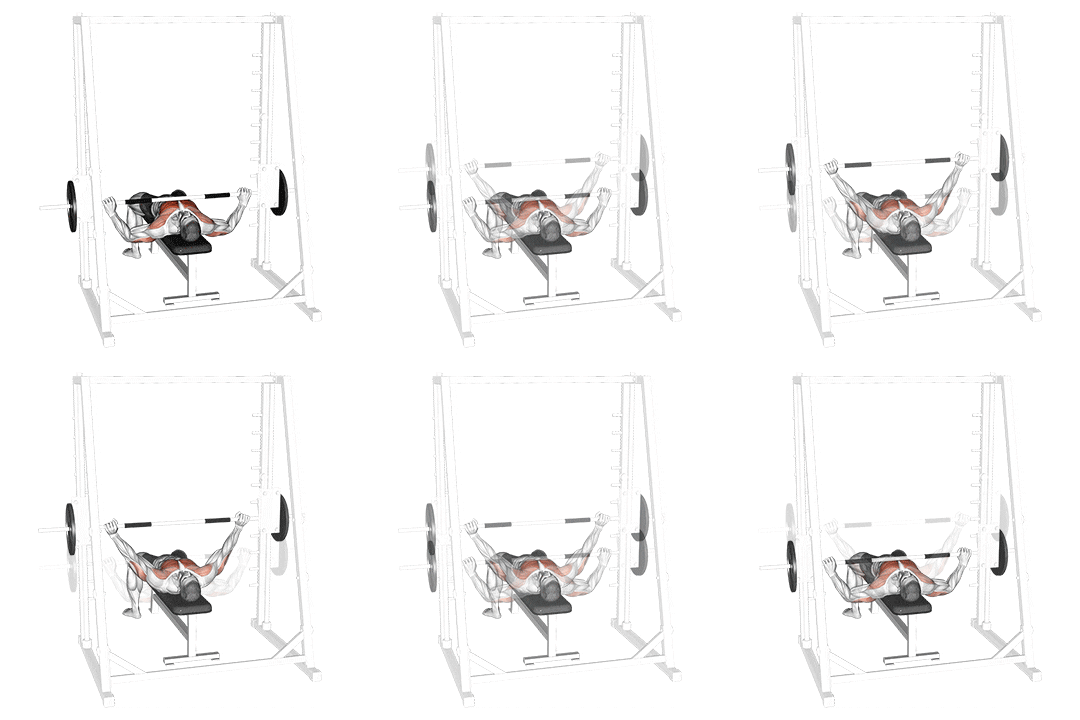
The Smith wide grip bench press is a variation of the bench press exercise that targets the muscles of the chest, primarily the pectoralis major, along with the shoulders and triceps. It involves using a wide grip on the barbell, which places more emphasis on the outer chest muscles. ## Instructions 1. Set up a Smith machine by adjusting the bar height to a level that allows you to comfortably reach it while lying on a bench. 2. Lie flat on a bench positioned under the Smith machine, with your feet firmly planted on the floor. 3. Grasp the barbell with a grip wider than shoulder-width apart, ensuring your palms are facing away from you (pronated grip). 4. Lift the barbell off the rack and hold it directly above your chest with your arms fully extended. 5. Keep your shoulder blades retracted and your back pressed firmly against the bench. 6. Inhale and slowly lower the barbell towards your chest, maintaining control and keeping your elbows slightly flared out. 7. Continue lowering until the barbell touches your chest or comes close to it, without bouncing or relaxing the muscles. 8. Pause briefly in the bottom position, feeling the stretch in your chest muscles. 9. Exhale and push the barbell back up to the starting position by extending your arms and fully contracting your chest muscles. 10. Repeat for the desired number of repetitions. ## Variations - Smith Close Grip Bench Press: Use a close grip on the barbell, placing your hands closer together (around shoulder-width or slightly narrower). This variation emphasizes the triceps to a greater extent. - Dumbbell Wide Grip Bench Press: Instead of using a barbell, you can perform the exercise using dumbbells. Lie on a flat bench and hold a dumbbell in each hand with a wide grip. Follow the same pressing motion. - Incline Wide Grip Bench Press: Adjust the bench to an incline position (around 30-45 degrees) and perform the wide grip bench press with the barbell or dumbbells. This variation targets the upper chest muscles. ## Muscles Worked - Pectoralis major (chest) - Anterior deltoids (front shoulders) - Triceps brachii (back of the arms) - Serratus anterior (muscles along the sides of the chest) ## Common Mistakes - Arching the back excessively: Maintain a stable and neutral position of your lower back throughout the exercise. Avoid excessive arching, as it can strain the lower back and reduce the effectiveness of the chest engagement. - Flaring the elbows too much: Keep your elbows slightly flared out during the movement, but avoid excessively wide angles. This helps maintain tension on the chest muscles and reduces stress on the shoulders. - Bouncing the barbell off the chest: Control the descent of the barbell and avoid bouncing it off your chest. This can strain the muscles and joints and may lead to injury. - Holding your breath: Remember to breathe throughout the exercise. Inhale during the descent and exhale as you push the barbell back up. ## Safety Precautions - Warm up adequately before performing the exercise to prepare your muscles and joints. - Use a weight that allows you to maintain proper form and control throughout the exercise. - Ensure that the bench and Smith machine are stable and secure before starting the exercise. - If you have any pre-existing shoulder or chest injuries, consult with a healthcare professional or a qualified fitness trainer before attempting this exercise. - Have a spotter or training partner available, especially when lifting heavy weights, to ensure safety and assist if needed. - If you experience any pain or discomfort during the exercise, stop immediately and seek medical advice if necessary.
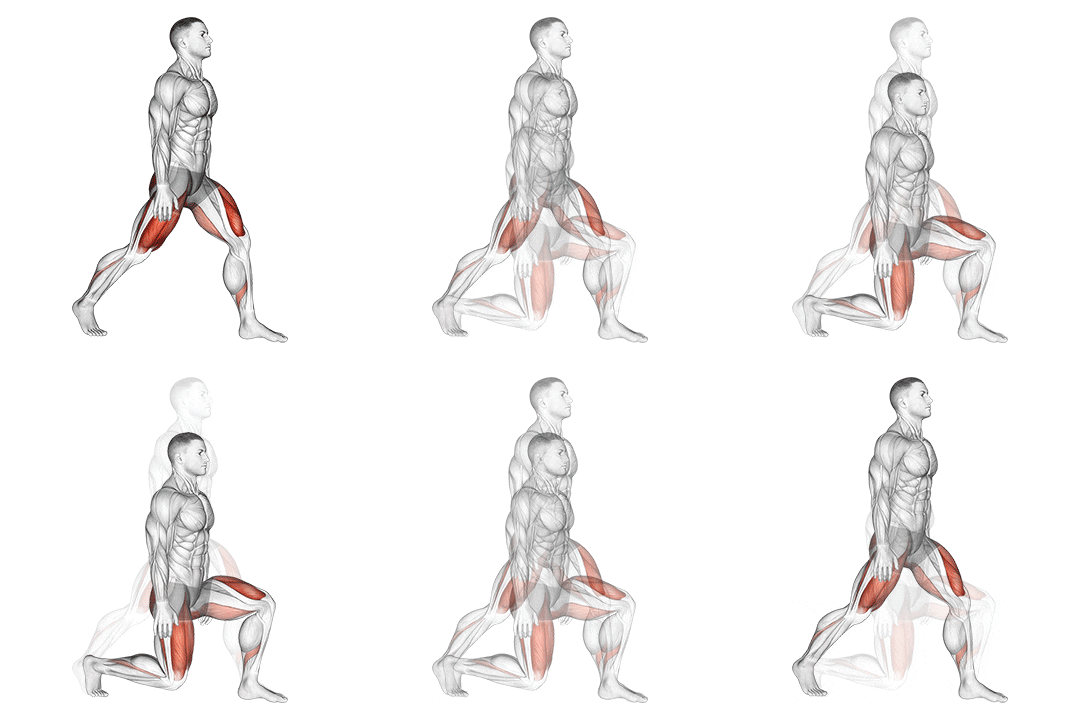
Split squats, also known as static lunges, are a unilateral lower body exercise that primarily targets the quadriceps (front thigh muscles), glutes (buttocks), and hamstrings (back of the thighs). This exercise involves stepping forward into a lunge position and performing a squat motion, focusing on one leg at a time. ## Instructions 1. Stand in an upright position with your feet hip-width apart. 2. Take a big step forward with one foot, positioning it a comfortable distance in front of you. 3. Keep your back straight, engage your core, and maintain an upright posture throughout the exercise. 4. Lower your body by bending both knees simultaneously, with your front knee directly over your ankle and your back knee pointing towards the floor. 5. Descend until your back knee is close to the ground or lightly touching the floor, while maintaining balance and stability. 6. Pause briefly in the bottom position, feeling the stretch in your front leg and maintaining control. 7. Push through your front heel and extend your front leg, returning to the starting position. 8. Repeat the movement for the desired number of repetitions, then switch legs and repeat the exercise on the other side. ## Variations - Weighted Split Squats: Hold dumbbells or a barbell across your upper back or hold a dumbbell in each hand to add resistance and increase the difficulty of the exercise. - Rear-Foot Elevated Split Squats: Place your back foot on an elevated surface such as a bench or step. This variation increases the range of motion and places more emphasis on the front leg. - Bulgarian Split Squats: Similar to rear-foot elevated split squats, but the rear foot is placed on a bench or elevated surface behind you. This variation further challenges balance and stability. ## Muscles Worked - Quadriceps (front thigh muscles) - Glutes (buttocks) - Hamstrings (back of the thighs) - Calves (gastrocnemius) - Core muscles (for stability and balance) ## Common Mistakes - Allowing the front knee to collapse inward: Ensure that your front knee remains in line with your ankle throughout the exercise to avoid undue stress on the knee joint. Focus on keeping the knee tracking over the second or third toe. - Leaning too far forward or backward: Maintain an upright posture and avoid leaning too far forward or backward. This helps target the intended muscles and prevents excessive strain on the lower back. - Not lowering the back knee enough: Aim to lower your back knee close to the ground or lightly touch the floor to achieve a full range of motion and engage the muscles effectively. - Using excessive momentum: Control the movement throughout the exercise. Avoid using momentum or bouncing to push yourself back up from the bottom position. ## Safety Precautions - Warm up adequately before performing the exercise to prepare your muscles and joints. - Start with bodyweight or lighter weights and gradually increase the resistance as your strength and stability improve. - Maintain proper balance and stability throughout the exercise. If needed, use a wall or stable object for support until you feel comfortable with the movement. - Be cautious with knee and hip issues. If you have any existing injuries or conditions, consult with a healthcare professional or a qualified fitness trainer before attempting this exercise. - Ensure that your front knee does not go past your toes during the movement to avoid excessive stress on the knee joint. - If you experience any pain or discomfort during the exercise, stop immediately and seek medical advice if necessary.
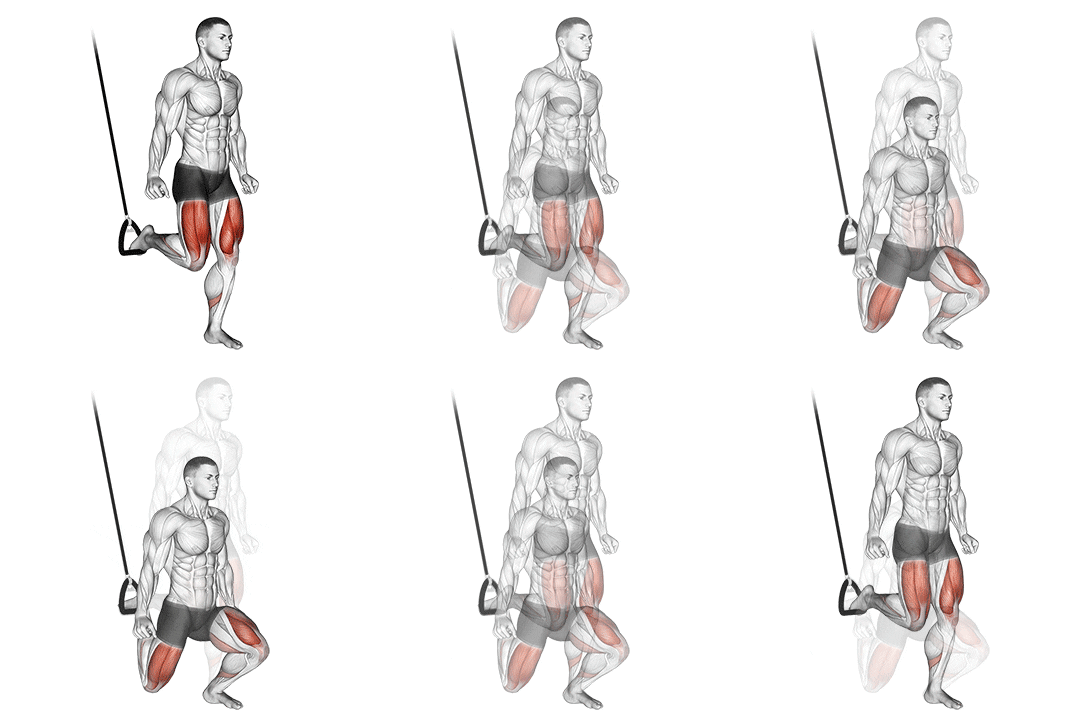
The suspended split squat, also known as the Bulgarian split squat, is a lower body exercise that primarily targets the quadriceps, glutes, and hamstrings. It also engages the stabilizer muscles of the core and lower body. This exercise is performed using suspension straps, such as TRX, and requires a split stance, with one foot elevated behind you. The suspended split squat helps improve lower body strength, balance, and stability. ## Instructions 1. Begin by attaching the suspension straps to a secure anchor point above you. Stand facing away from the anchor point and grasp the handles or straps with an overhand grip. 2. Position yourself into a split stance with one foot forward and the other foot elevated behind you, resting the top of your foot on the handle or strap. 3. Engage your core by pulling your belly button toward your spine and maintain an upright posture throughout the exercise. 4. Lower your body by bending your front knee and hip, keeping your chest lifted and your back knee descending towards the ground. 5. Descend until your front thigh is parallel to the ground or slightly lower, ensuring that your knee does not extend past your toes. 6. Press through the heel of your front foot and extend your knee and hip to return to the starting position. 7. Repeat the movement for the desired number of repetitions, then switch legs and perform the exercise with the opposite leg forward. ## Variations - Supported Split Squat: If the suspended split squat is too challenging, you can perform the exercise without the suspension straps by placing your back foot on a stable elevated surface, such as a bench or step. - Weighted Split Squat: Hold dumbbells or kettlebells in your hands to add resistance and increase the difficulty of the exercise. - Rear Foot Elevated Split Squat: Instead of using suspension straps, use a bench or step to elevate your back foot. This variation provides a similar challenge to the suspended split squat. ## Muscles Worked - Quadriceps (front thigh muscles) - Glutes (butt muscles) - Hamstrings (back of the thigh) - Calves (gastrocnemius and soleus) - Core muscles (to maintain stability) ## Common Mistakes - Leaning Too Far Forward: Keep your torso upright and avoid leaning too far forward during the exercise. This helps maintain proper alignment and maximizes the activation of the target muscles. - Allowing the Knee to Cave Inward: Ensure that your front knee stays in line with your toes throughout the movement. Avoid allowing it to collapse inward, which can put strain on the knee joint. - Insufficient Range of Motion: Descend until your front thigh is parallel to the ground or slightly lower to achieve a full range of motion. Avoid shallow squats that limit the engagement of the target muscles. - Lack of Control and Stability: Focus on maintaining control and stability throughout the exercise. Avoid using momentum or swinging motions, especially when returning to the starting position. ## Safety Precautions - Ensure that the suspension straps are properly anchored and securely fastened before starting the exercise. - Perform the exercise on a stable surface with adequate space around you to prevent collisions or injuries. - Start with a shorter stride length and gradually increase as you become more comfortable and stable with the movement. - If you have any pre-existing knee, hip, or lower back injuries, consult with a healthcare professional before attempting this exercise. - Listen to your body and modify or stop the exercise if you experience pain or discomfort.
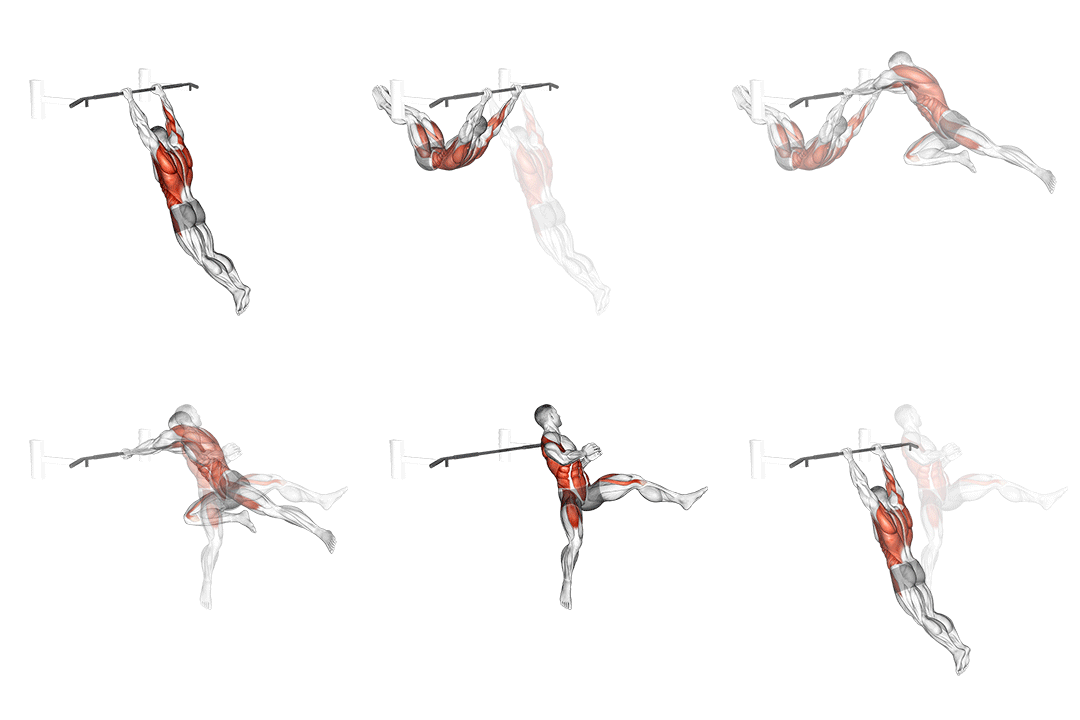
The Swing 360 is a dynamic exercise that targets multiple muscle groups and improves overall strength, stability, and coordination. It involves swinging a weight or kettlebell in a circular motion around the body. ## Instructions 1. Stand with your feet shoulder-width apart and hold a weight or kettlebell with both hands in front of your body. 2. Engage your core and maintain a slight bend in your knees throughout the exercise. 3. Start by swinging the weight back between your legs, allowing it to pass through your legs while keeping your arms straight. 4. As the weight reaches the back, forcefully drive your hips forward and swing the weight up and in front of your body. 5. Continue the upward momentum by smoothly transitioning the weight into a circular motion around your body. 6. As the weight reaches the highest point of the circle, guide it down and back through your legs, preparing for the next repetition. 7. Repeat the circular swinging motion for the desired number of repetitions. ## Variations - Beginner Variation: Start with a lighter weight or kettlebell and focus on mastering the proper form and technique before progressing to heavier weights. - Advanced Variation: Perform the exercise with a heavier weight or kettlebell, increasing the intensity and challenge. - Single-Arm Swing 360: Perform the exercise with one arm, switching arms after a set number of repetitions. This variation enhances unilateral strength and stability. ## Muscles Worked - Core muscles (including abdominals, obliques, and lower back) - Glutes (buttocks) - Hamstrings (back of the thighs) - Quadriceps (front of the thighs) - Shoulders - Forearms ## Common Mistakes - Using excessive upper body strength instead of relying on the power generated from the hips and lower body. - Allowing the weight to pull you forward or losing balance during the swing. Maintain a stable and balanced stance throughout the exercise. - Overarching or rounding the lower back. Keep your spine neutral and engage your core muscles to protect your lower back. - Swinging the weight too high or too low. The weight should reach approximately chest or shoulder height during the circular motion. ## Safety Precautions - Before attempting the Swing 360, ensure that you have sufficient space around you to perform the exercise safely. - Start with a lighter weight or kettlebell and gradually increase the weight as you become comfortable with the movement. - Maintain proper form and technique throughout the exercise to prevent strain or injury. - If you have any pre-existing medical conditions or injuries, consult with a fitness professional or healthcare provider before attempting this exercise.
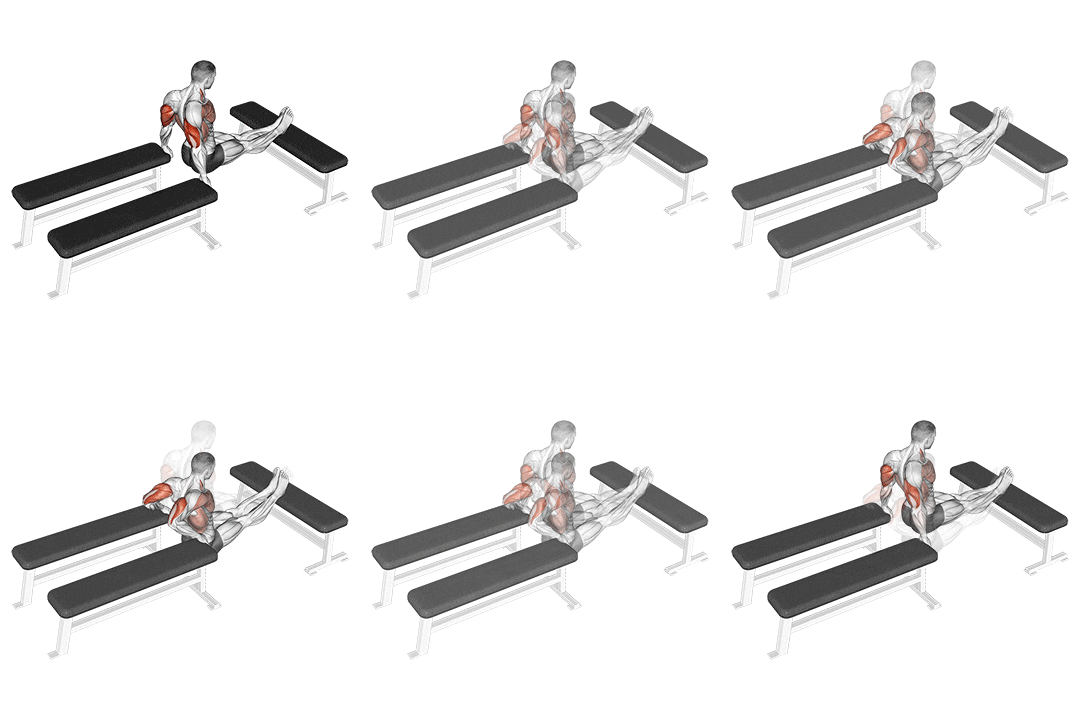
The Three Bench Dip is an effective bodyweight exercise that targets the triceps, chest, and shoulders. It helps to strengthen and tone the muscles in the upper body while also engaging the core muscles. ## Instructions 1. Place three benches or sturdy elevated surfaces parallel to each other, with enough space between them to comfortably perform the exercise. 2. Sit on the edge of the middle bench with your palms gripping the edge, fingers facing forward, and hands shoulder-width apart. 3. Extend your legs out in front of you, keeping your heels on the ground. 4. Walk your feet forward, sliding your body off the edge of the bench, so that your arms are supporting your weight and your knees are bent at a 90-degree angle. 5. Lower your body by bending your elbows, keeping them close to your body, until your upper arms are parallel to the ground. 6. Push through your palms and straighten your arms to lift your body back up to the starting position. 7. Repeat the movement for the desired number of repetitions. ## Variations - Beginner Variation: If the three bench setup is too challenging, start with just two benches or use a single bench. This reduces the range of motion and makes it easier to perform the exercise. - Advanced Variation: To increase the difficulty, you can add weight by placing a weight plate on your lap or using a weighted vest. - Single Bench Dip: Perform the exercise using a single bench or elevated surface, following the same technique. This variation is suitable for those with limited space or equipment. ## Muscles Worked - Triceps (back of the upper arms) - Chest (pectoral muscles) - Shoulders (deltoids) - Core muscles (engaged for stability) ## Common Mistakes - Allowing the shoulders to elevate toward the ears. Keep the shoulders down and away from the ears throughout the exercise. - Flaring the elbows out to the sides. Keep the elbows close to the body to emphasize the triceps muscles. - Not maintaining proper alignment. Keep your body straight and avoid sagging or hunching the back. - Relying solely on the momentum or using excessive leg assistance. Focus on using the strength of your upper body to perform the movement. ## Safety Precautions - Choose sturdy and stable benches or elevated surfaces to perform the exercise. Ensure they can support your bodyweight. - If you have any shoulder, elbow, or wrist injuries, consult with a fitness professional or healthcare provider before attempting this exercise. - Listen to your body and stop immediately if you experience any sharp pain or discomfort. - Engage your core muscles throughout the exercise to maintain stability and protect your lower back. - Gradually increase the intensity and difficulty of the exercise over time, rather than pushing yourself too hard initially.
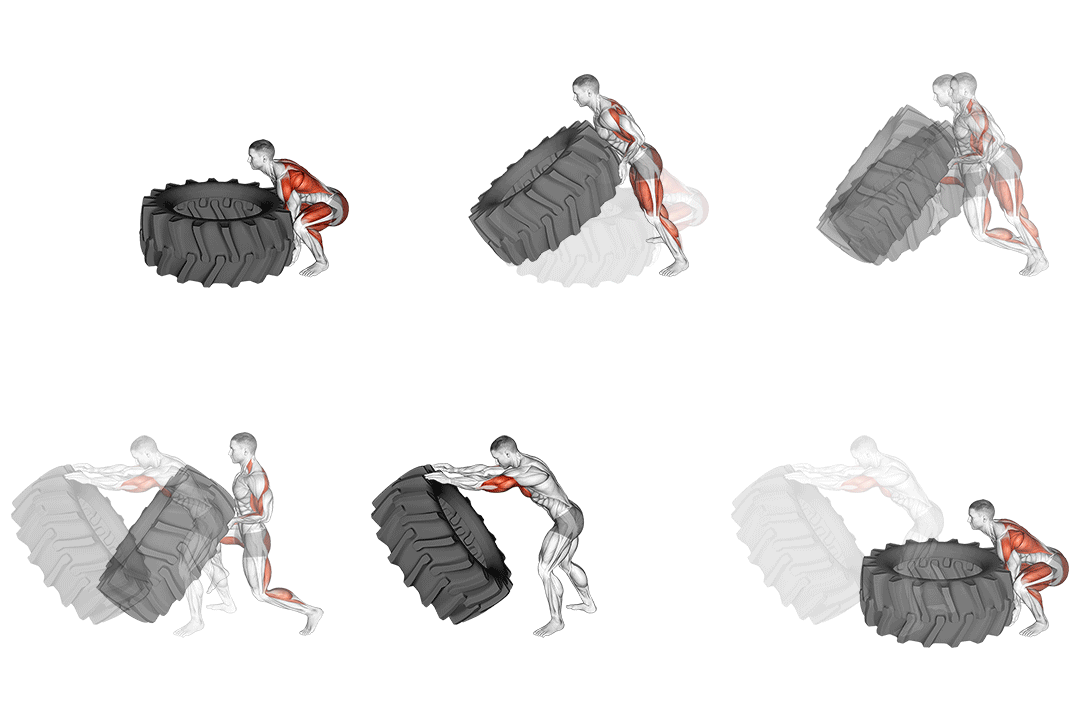
The Tire Flip is a full-body exercise that targets the muscles in the lower body, upper body, and core. It involves flipping a heavy tire, simulating functional movements like pushing and lifting. This exercise improves overall strength, power, and muscular endurance. ## Instructions 1. Find a suitable tire that is heavy enough to provide resistance but manageable for your fitness level. 2. Stand facing the tire with your feet shoulder-width apart and slightly bend your knees. 3. Squat down and grip the bottom edge of the tire with your hands, keeping your palms facing up. 4. Engage your core, lift your chest, and maintain a neutral spine throughout the exercise. 5. Drive through your legs and explosively extend your hips, using the power from your lower body to flip the tire over. 6. As the tire flips, release your grip and quickly step back to avoid contact with the tire. 7. Reset your position and repeat the movement for the desired number of repetitions. ## Variations - Beginner Variation: Start with a smaller tire or use lighter weights inside the tire to reduce the resistance and make it easier to flip. Gradually progress to heavier tires as your strength increases. - Advanced Variation: If flipping a tire becomes too easy, you can increase the difficulty by adding multiple flips per set or performing the exercise for time instead of repetitions. - Partner or Team Variation: Work with a partner or in a team setting to flip larger and heavier tires. This adds a competitive and collaborative element to the exercise. ## Muscles Worked - Quadriceps (front of the thighs) - Hamstrings (back of the thighs) - Glutes (buttocks) - Calves - Back muscles (erector spinae, latissimus dorsi) - Chest muscles (pectoralis major) - Shoulders (deltoids) - Arms (biceps, triceps, forearms) - Core muscles (abdominals, obliques) ## Common Mistakes - Using only the arms and upper body to flip the tire. Focus on generating power from your legs and hips. - Rounding or hunching the back during the movement. Maintain a neutral spine to protect your lower back. - Using improper lifting technique when gripping the tire. Make sure your fingers are underneath the tire and not in between the tire and the ground. - Not stepping back quickly enough after flipping the tire, which can lead to tripping or getting hit by the tire. Always prioritize safety and move away from the tire as soon as it's flipped. ## Safety Precautions - Use a suitable tire size and weight for your fitness level. Start with a lighter tire and gradually progress to heavier ones. - Clear the area around the tire to ensure there are no obstacles or tripping hazards. - Use proper lifting technique by engaging your legs and hips to generate power, rather than relying solely on your back and arms. - Start with a warm-up and gradually increase the intensity. This exercise can be physically demanding, so listen to your body and take breaks as needed. - If you have any pre-existing back, shoulder, or knee issues, consult with a fitness professional or healthcare provider before attempting this exercise.