

The lever seated shoulder press is an exercise that targets the muscles of the shoulders, specifically the deltoids (anterior, medial, and posterior heads). It involves using a lever or machine to perform a pressing motion overhead. This exercise helps to strengthen and develop the shoulder muscles, improve upper body pushing strength, and enhance overall shoulder stability and function. ## Instructions 1. Start by sitting on a lever seated shoulder press machine with your back against the backrest and your feet firmly planted on the floor. 2. Adjust the machine settings according to your height and comfort. Your hands should be positioned on the handles provided, slightly wider than shoulder-width apart. 3. Engage your core and maintain a neutral spine throughout the exercise. 4. Begin the exercise by pressing the handles upward, extending your arms fully while keeping your elbows slightly bent. 5. Continue pressing until your arms are fully extended overhead, but without locking your elbows. 6. Pause briefly at the top of the movement, maintaining control and tension in your shoulder muscles. 7. Slowly lower the handles back down to the starting position, allowing your elbows to bend to approximately 90 degrees. 8. Repeat the movement for the desired number of repetitions. ## Variations - **Single-Arm Lever Seated Shoulder Press:** Perform the exercise with one arm at a time, alternating between the right and left sides. This variation helps to improve balance and address any strength imbalances between the shoulders. - **Behind-the-Neck Lever Seated Shoulder Press:** Instead of pressing the handles in front of you, lower them behind your head and press upward. This variation places more emphasis on the medial and posterior deltoids. - **Resistance Band Shoulder Press:** If a lever machine is not available, you can perform a similar movement using resistance bands anchored above you. This provides a similar shoulder press motion with adjustable resistance. ## Muscles Worked The lever seated shoulder press primarily targets the following muscles: - Deltoids (anterior, medial, and posterior heads) - Triceps brachii (back of the upper arm) - Trapezius (upper back muscles) ## Common Mistakes - **Arching the Lower Back:** Maintain proper form by keeping your lower back in contact with the backrest throughout the exercise. Avoid excessive arching or overarching of the spine. - **Using Momentum:** Avoid using momentum to press the handles overhead. Focus on controlled movements and engage the shoulder muscles throughout the entire range of motion. - **Lifting Shoulders:** Keep your shoulders down and avoid shrugging them up toward your ears during the exercise. This ensures proper engagement of the target muscles and reduces strain on the neck and upper traps. - **Locking Elbows:** Avoid locking your elbows at the top of the movement. Keep a slight bend in the elbows to maintain tension in the muscles and prevent excessive stress on the joint. ## Safety Precautions - If you have any pre-existing medical conditions or injuries, consult with a healthcare professional before attempting this exercise. - Adjust the machine settings according to your comfort and biomechanics. - Start with a manageable resistance and gradually increase as you become stronger and more comfortable with the exercise. - Use controlled movements and avoid sudden or jerky motions. - If you experience any pain or discomfort, particularly in the shoulders or elbows, stop immediately and consult a qualified fitness professional. - Focus on proper form and technique to minimize the risk of injury.
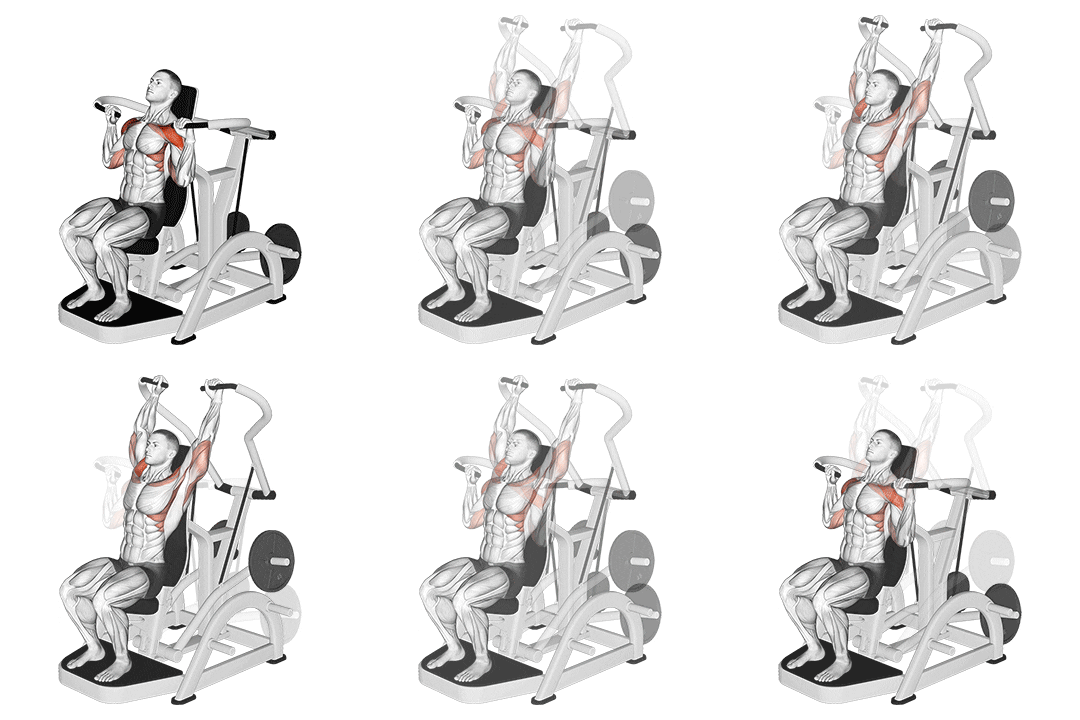
The lever shoulder press is an exercise that targets the muscles of the shoulders, specifically the deltoids (anterior, medial, and posterior heads). It involves using a lever or machine to perform a pressing motion overhead. This exercise helps to strengthen and develop the shoulder muscles, improve upper body pushing strength, and enhance overall shoulder stability and function. ## Instructions 1. Begin by sitting on a lever shoulder press machine with your back against the backrest and your feet planted firmly on the floor. 2. Adjust the machine settings according to your height and comfort. Your hands should be positioned on the handles provided, slightly wider than shoulder-width apart. 3. Engage your core and maintain a neutral spine throughout the exercise. 4. Start with the handles positioned at shoulder height, in line with your ears. 5. Press the handles upward by extending your arms fully, but without locking your elbows. 6. Continue pressing until your arms are fully extended overhead. 7. Pause briefly at the top of the movement, maintaining control and tension in your shoulder muscles. 8. Lower the handles back down to the starting position, bending your elbows to approximately 90 degrees. 9. Repeat the movement for the desired number of repetitions. ## Variations - **Single-Arm Lever Shoulder Press:** Perform the exercise with one arm at a time, alternating between the right and left sides. This variation helps to improve balance and address any strength imbalances between the shoulders. - **Behind-the-Neck Lever Shoulder Press:** Instead of pressing the handles in front of you, lower them behind your head and press upward. This variation places more emphasis on the medial and posterior deltoids. - **Resistance Band Shoulder Press:** If a lever machine is not available, you can perform a similar movement using resistance bands anchored above you. This provides a similar shoulder press motion with adjustable resistance. ## Muscles Worked The lever shoulder press primarily targets the following muscles: - Deltoids (anterior, medial, and posterior heads) - Triceps brachii (back of the upper arm) - Trapezius (upper back muscles) ## Common Mistakes - **Arching the Lower Back:** Maintain proper form by keeping your lower back in contact with the backrest throughout the exercise. Avoid excessive arching or overarching of the spine. - **Using Momentum:** Avoid using momentum to press the handles overhead. Focus on controlled movements and engage the shoulder muscles throughout the entire range of motion. - **Lifting Shoulders:** Keep your shoulders down and avoid shrugging them up toward your ears during the exercise. This ensures proper engagement of the target muscles and reduces strain on the neck and upper traps. - **Locking Elbows:** Avoid locking your elbows at the top of the movement. Keep a slight bend in the elbows to maintain tension in the muscles and prevent excessive stress on the joint. ## Safety Precautions - If you have any pre-existing medical conditions or injuries, consult with a healthcare professional before attempting this exercise. - Adjust the machine settings according to your comfort and biomechanics. - Start with a manageable resistance and gradually increase as you become stronger and more comfortable with the exercise. - Use controlled movements and avoid sudden or jerky motions. - If you experience any pain or discomfort, particularly in the shoulders or elbows, stop immediately and consult a qualified fitness professional. - Focus on proper form and technique to minimize the risk of injury.
The lever shoulder press is a compound exercise that targets the muscles of the shoulders, including the anterior deltoids, medial deltoids, and triceps. It involves using a lever or machine to press weights or resistance overhead, simulating the movement of a shoulder press. This exercise helps to develop shoulder strength, stability, and muscle definition. ## Instructions 1. Start by sitting on a lever shoulder press machine with your back against the backrest and your feet flat on the floor. 2. Adjust the machine settings to position the handles at shoulder level or slightly below. 3. Grasp the handles with an overhand grip, slightly wider than shoulder-width apart. 4. Position your elbows at approximately 90 degrees, with your upper arms parallel to the ground. 5. Engage your core and maintain a neutral spine throughout the exercise. 6. Press the handles upward by extending your arms fully, but avoid locking out your elbows. 7. Pause briefly at the top of the movement, focusing on contracting your shoulder muscles. 8. Slowly lower the handles back down to the starting position, maintaining control and resisting the weight. 9. Repeat for the desired number of repetitions. ## Variations - **Dumbbell Shoulder Press:** If a lever machine is not available, you can perform a seated dumbbell shoulder press. Sit on a bench with a dumbbell in each hand, starting with your palms facing forward. Press the dumbbells overhead while maintaining proper form and control. - **Barbell Shoulder Press:** This variation requires a barbell and can be performed standing or seated. Hold the barbell with an overhand grip slightly wider than shoulder-width. Press the barbell overhead while keeping your core engaged and maintaining proper form. - **Arnold Press:** Named after Arnold Schwarzenegger, this variation adds a rotational component to the shoulder press. Start with the dumbbells at shoulder level and palms facing your body. As you press upward, rotate your palms away from your body until they face forward at the top of the movement. Reverse the motion on the way down. ## Muscles Worked The lever shoulder press primarily targets the following muscles: - Anterior deltoids (front of the shoulders) - Medial deltoids (middle of the shoulders) - Triceps brachii (back of the upper arms) - Trapezius (upper back muscles) and other stabilizer muscles also come into play to support the movement. ## Common Mistakes - **Using Excessive Momentum:** Avoid using momentum to lift the weight. Focus on controlled and smooth movements throughout the exercise. - **Lifting Shoulders:** Keep your shoulders down and avoid shrugging them up toward your ears. This ensures proper engagement of the targeted muscles and reduces unnecessary strain on the neck and traps. - **Arching or Hyperextending the Back:** Maintain proper form by keeping your back against the backrest and avoiding excessive arching or hyperextension. This helps protect your lower back and promotes better stability during the exercise. - **Locking Elbows:** Avoid locking out your elbows at the top of the movement. Keep a slight bend in your elbows to maintain tension in the muscles and reduce stress on the joint. ## Safety Precautions - If you have any pre-existing medical conditions or injuries, consult with a healthcare professional before attempting this exercise. - Adjust the machine or seat settings according to your comfort and biomechanics. - Start with a weight or resistance level that is suitable for your fitness level and gradually increase as you become stronger. - Use controlled movements and avoid jerking or sudden motions. - Maintain proper posture throughout the exercise, with your core engaged and spine neutral. - If you experience any pain or discomfort, particularly in the shoulders or elbows, stop
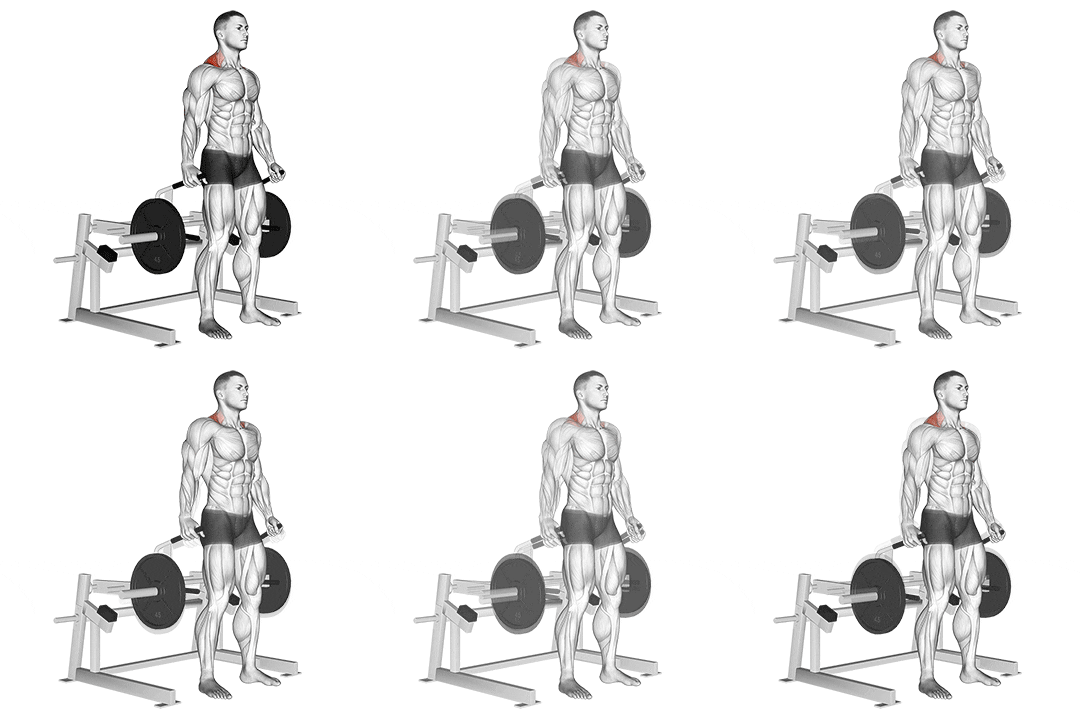
The lever shrug is an exercise that targets the muscles of the upper back and shoulders, primarily the trapezius muscles. It involves using a lever or machine to perform a shrugging motion, which helps to strengthen and develop the muscles responsible for shoulder elevation and scapular retraction. ## Instructions 1. Begin by standing or sitting on a lever shrug machine with your feet flat on the ground. 2. Adjust the machine settings to position the handles at your sides, just below waist level. 3. Grasp the handles with an overhand grip, hands shoulder-width apart or slightly wider. 4. Relax your shoulders and keep your arms straight throughout the exercise. 5. Start the movement by elevating your shoulders as high as possible, squeezing the upper back muscles. 6. Hold the contraction at the top for a brief moment, feeling the tension in your trapezius muscles. 7. Slowly lower your shoulders back down to the starting position in a controlled manner. 8. Repeat the movement for the desired number of repetitions. ## Variations - **Dumbbell Shrug:** If a lever shrug machine is not available, you can perform dumbbell shrugs. Hold a dumbbell in each hand with your arms by your sides. Elevate your shoulders as high as possible while maintaining proper form and control. - **Barbell Shrug:** This variation requires a barbell. Hold the barbell in front of your thighs with an overhand grip. Elevate your shoulders by shrugging upward, focusing on the contraction of the upper back muscles. - **Seated Shrug:** Perform the shrug exercise while seated on a bench or chair. This variation helps to isolate the upper back muscles by minimizing the involvement of the lower body. ## Muscles Worked The lever shrug primarily targets the following muscles: - Trapezius (upper, middle, and lower fibers) - Rhomboids - Levator scapulae - Deltoids (secondary muscles) ## Common Mistakes - **Using Excessive Momentum:** Avoid using momentum or swinging to lift the weight. Focus on controlled and deliberate movements throughout the exercise. - **Shrugging Shoulders Forward:** Keep your shoulders pulled back and avoid hunching or rounding your upper back. This ensures proper engagement of the target muscles and reduces strain on the neck and shoulders. - **Lifting with the Arms:** The movement should primarily come from the shoulders and upper back muscles. Avoid relying too much on your arms to perform the shrug motion. - **Hyperextending the Neck:** Avoid excessive tilting of the head backward or forward during the exercise. Keep your neck in a neutral position to maintain proper alignment. ## Safety Precautions - If you have any pre-existing medical conditions or injuries, consult with a healthcare professional before attempting this exercise. - Adjust the machine or seat settings according to your comfort and biomechanics. - Start with a weight or resistance level that is suitable for your fitness level and gradually increase as you become stronger. - Use controlled movements and avoid jerking or sudden motions. - Maintain proper posture throughout the exercise, with your core engaged and spine neutral. - If you experience any pain or discomfort, particularly in the neck or shoulders, stop immediately and consult a qualified fitness professional. - Focus on proper form and technique to minimize the risk of injury.
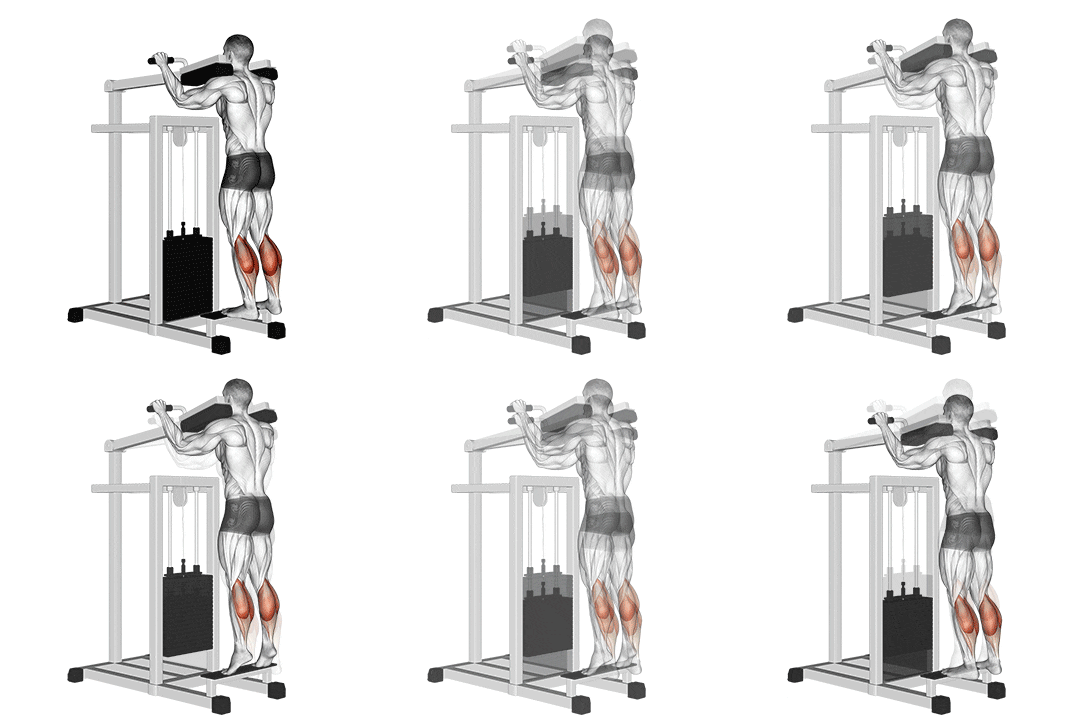
The lever standing calf raise is an exercise that targets the calf muscles, specifically the gastrocnemius and soleus. It involves using a lever or machine to perform a calf raise motion, which helps to strengthen and develop the muscles of the lower legs. This exercise is effective for improving calf muscle size, strength, and overall lower leg stability. ## Instructions 1. Start by standing on a lever standing calf raise machine with the balls of your feet positioned securely on the footplate. Your heels should extend off the edge of the footplate. 2. Adjust the machine settings to position the shoulder pads comfortably on your shoulders. 3. Keep your back straight, engage your core, and maintain a neutral spine throughout the exercise. 4. Grasp the handles or hold onto the side bars of the machine for support and stability. 5. Slowly raise your heels by pushing up with the balls of your feet. Lift your body upward as high as possible, emphasizing the contraction of your calf muscles. 6. Hold the raised position for a brief moment, squeezing your calf muscles at the top. 7. Lower your heels back down in a controlled manner until your calves are fully stretched. 8. Repeat the movement for the desired number of repetitions. ## Variations - **Seated Calf Raise:** If a lever standing calf raise machine is not available, you can perform seated calf raises using dumbbells, a barbell, or a calf raise machine with a seated position. Sit on a bench or chair, place the weight on your thighs or shoulders, and perform the calf raise motion by pushing up with the balls of your feet. - **Single-Leg Calf Raise:** Perform the standing calf raise exercise on one leg at a time to increase the intensity and focus on each calf individually. This variation requires balance and stability. - **Calf Raises on an Elevated Surface:** Stand on an elevated surface, such as a step or sturdy platform, with the balls of your feet positioned on the edge. Perform the calf raise motion by raising your heels up and down while maintaining balance. ## Muscles Worked The lever standing calf raise primarily targets the following muscles: - Gastrocnemius (the larger, outer calf muscle) - Soleus (a deeper calf muscle) ## Common Mistakes - **Bouncing or Using Momentum:** Avoid bouncing at the bottom of the movement or using momentum to lift the weight. Focus on a controlled and deliberate calf raise motion. - **Rounding the Shoulders or Back:** Keep your shoulders back and your back straight throughout the exercise. Avoid hunching forward or rounding the upper body. - **Not Fully Extending or Contracting:** Raise your heels as high as possible and fully contract your calf muscles at the top of the movement. Avoid shortening the range of motion by not lifting your heels high enough or stopping before the full contraction. - **Leaning too Far Forward or Backward:** Maintain an upright posture and avoid leaning too far forward or backward during the exercise. This helps to target the calf muscles effectively and maintain balance. ## Safety Precautions - If you have any pre-existing medical conditions or injuries, consult with a healthcare professional before attempting this exercise. - Adjust the machine settings and footplate position according to your comfort and biomechanics. - Start with a weight or resistance level that is suitable for your fitness level and gradually increase as you become stronger. - Use controlled movements and avoid jerking or sudden motions. - Maintain proper posture throughout the exercise, with your core engaged and spine neutral. - If you experience any pain or discomfort, particularly in the calves or feet, stop immediately and consult a qualified fitness professional. - Ensure that the footplate is secure and stable before starting the exercise.
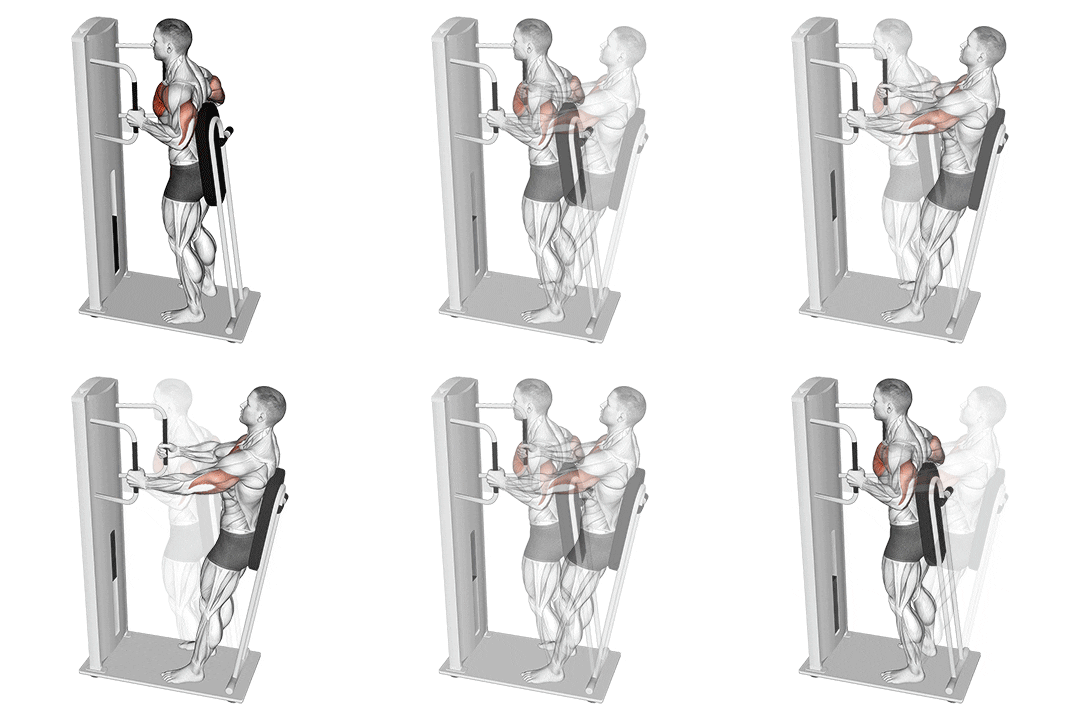
The lever standing chest press is a resistance training exercise that primarily targets the muscles of the chest, specifically the pectoralis major. It also engages the shoulders, triceps, and stabilizing muscles of the core. This exercise is performed using a lever machine, which provides a controlled and stable movement pattern. It allows for a pushing motion that mimics the pressing action of a traditional barbell or dumbbell chest press. ## Instructions 1. Adjust the lever machine to the appropriate height. The handles should be positioned at chest level. 2. Stand with your feet shoulder-width apart and maintain a slight bend in your knees. 3. Grasp the handles with an overhand grip (palms facing down) and position your elbows slightly below your shoulders. 4. Keep your chest up, shoulders back, and core engaged for stability. 5. Begin the movement by pushing the handles forward while maintaining control and stability. 6. Fully extend your arms without locking out the elbows, squeezing your chest muscles at the end of the movement. 7. Slowly reverse the motion, bringing the handles back to the starting position under control. 8. Repeat for the desired number of repetitions. ## Variations Here are some variations or modifications to consider: 1. Resistance Adjustment: The lever machine typically has a weight stack that can be adjusted to increase or decrease the resistance. Choose a weight that challenges you while allowing for proper form. 2. Single-Arm Press: Perform the exercise using one arm at a time. This variation helps improve stability and can help address muscular imbalances. 3. Alternate Press: Instead of pressing both handles simultaneously, press one handle while the other returns to the starting position. Alternate the pressing motion between the two handles. ## Muscles Worked The lever standing chest press primarily targets the following muscles: - Pectoralis major (chest muscles) - Anterior deltoids (front of the shoulders) - Triceps brachii (back of the upper arms) - Stabilizing muscles of the core and upper body ## Common Mistakes Here are some common mistakes to avoid while performing the lever standing chest press: 1. Using Excessive Momentum: Avoid using momentum or jerking the handles to press the weight. Focus on controlled and deliberate movements. 2. Rounded Shoulders: Keep your shoulders pulled back and avoid hunching or rounding your upper back during the exercise. 3. Locking Out Elbows: Do not fully lock out your elbows at the end of the movement. Maintain a slight bend to keep tension on the muscles and reduce stress on the joints. 4. Poor Posture: Maintain good posture throughout the exercise. Avoid leaning forward or backward, and keep your core engaged for stability. ## Safety Precautions To ensure safety during the lever standing chest press exercise, consider the following precautions: 1. Warm-up: Prior to starting the exercise, warm up your muscles with light cardio activity and dynamic stretching. 2. Proper Weight Selection: Choose a weight that challenges you without compromising your form or causing excessive strain. 3. Maintain Control: Focus on controlled movements throughout the exercise, maintaining proper form and avoiding sudden or jerky motions. 4. Breathing: Breathe naturally throughout the exercise. Exhale as you push the handles forward and inhale as you return to the starting position. 5. Consult a Professional: If you are new to resistance training or have any underlying health conditions, it's recommended to consult with a fitness professional or healthcare provider before attempting this exercise. Remember, if you experience any pain or discomfort during the exercise, stop immediately and consult a healthcare professional.
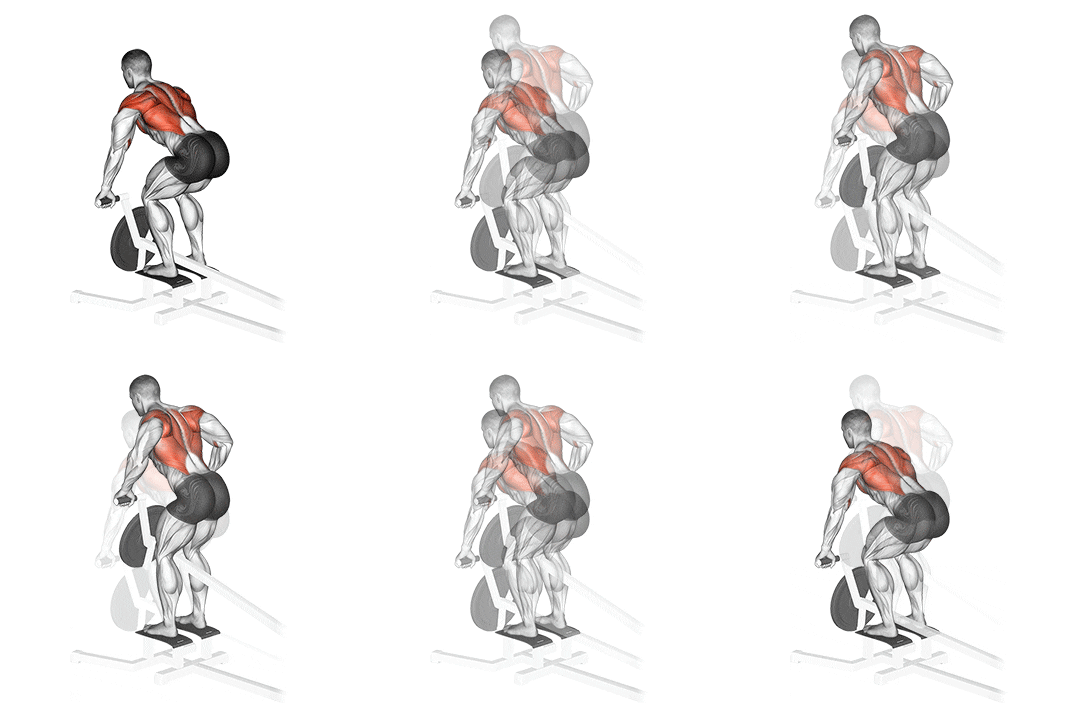
The lever T-bar row is a compound exercise that targets the muscles of the back, primarily the latissimus dorsi (lats) and the rhomboids. It also engages the muscles of the upper back, biceps, and shoulders. This exercise is performed using a lever machine with a T-bar attachment, which allows for a controlled pulling motion similar to a traditional T-bar row using a barbell. ## Instructions 1. Adjust the lever machine to the appropriate height. The T-bar attachment should be positioned near waist level. 2. Stand facing the machine with your feet shoulder-width apart and your knees slightly bent. 3. Bend at the waist and grasp the T-bar attachment with an overhand grip (palms facing down) at a comfortable width. 4. Keep your back straight, chest up, and shoulders back throughout the exercise. 5. Begin the movement by retracting your shoulder blades and pulling the T-bar toward your abdomen. 6. Focus on using your back muscles to initiate the pull, squeezing your shoulder blades together at the end of the movement. 7. Pause for a moment, then slowly release and extend your arms, returning to the starting position. 8. Repeat for the desired number of repetitions. ## Variations Here are some variations or modifications to consider: 1. Grip Variations: You can use different grip variations on the T-bar attachment, such as an underhand grip (palms facing up) or a wide grip, to target different areas of the back. 2. Single-Arm Row: Instead of using both hands on the T-bar attachment, perform the exercise using one arm at a time. This variation helps improve stability and can address muscular imbalances. 3. Bent-Over T-Bar Row: If your lever machine allows, you can perform the exercise in a bent-over position, with your torso parallel to the ground. This variation increases the recruitment of the lower back muscles. ## Muscles Worked The lever T-bar row primarily targets the following muscles: - Latissimus dorsi (lats) - Rhomboids - Trapezius (upper and middle fibers) - Posterior deltoids (rear shoulders) - Biceps brachii (front of the upper arms) ## Common Mistakes Here are some common mistakes to avoid while performing the lever T-bar row: 1. Using Excessive Momentum: Avoid using momentum or swinging your body to pull the weight. Focus on a controlled and smooth pulling motion. 2. Rounded Back: Keep your back straight throughout the exercise. Avoid rounding or hunching your upper back, as this can lead to injury. 3. Shrugging Shoulders: Avoid shrugging your shoulders or lifting them toward your ears during the movement. Focus on pulling with your back muscles and keeping your shoulders down and back. 4. Pulling with the Arms: Emphasize the use of your back muscles to initiate the pull, rather than relying solely on your arms. Visualize squeezing your shoulder blades together. 5. Using Excessive Weight: Start with a weight that allows you to maintain proper form and control. Using excessive weight can compromise your technique and increase the risk of injury. ## Safety Precautions To ensure safety during the lever T-bar row exercise, consider the following precautions: 1. Warm-up: Prior to starting the exercise, warm up your muscles with light cardio activity and dynamic stretching. 2. Proper Weight Selection: Choose a weight that challenges you while allowing for proper form and control. 3. Core Engagement: Engage your core muscles to stabilize your spine and maintain proper posture throughout the exercise. 4. Breathing: Breathe naturally during the movement. Exhale as you pull the T-bar toward your abdomen and inhale as you
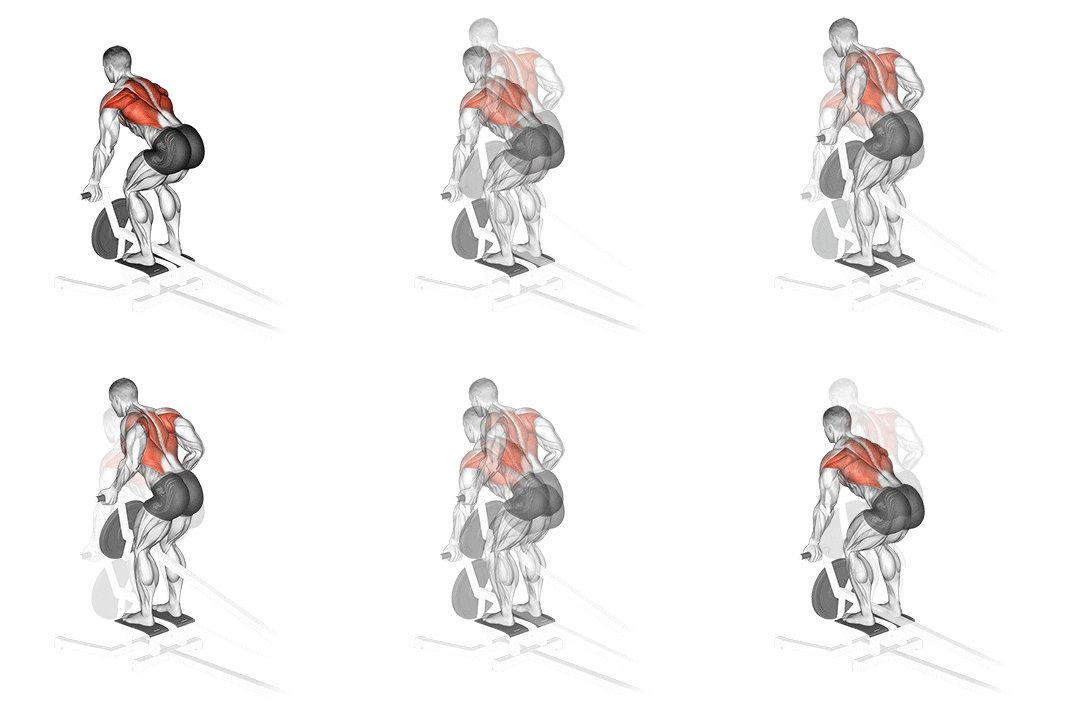
The lever T-bar reverse grip row is a compound exercise that primarily targets the muscles of the back, particularly the upper back and biceps. By using an underhand grip, this exercise places additional emphasis on the biceps, providing a variation to the traditional T-bar row. ## Instructions 1. Position the lever machine T-bar attachment at waist level. 2. Stand facing the machine with your feet shoulder-width apart and your knees slightly bent. 3. Bend at the waist, keeping your back straight, and grasp the T-bar attachment with an underhand grip (palms facing up) at a comfortable width. 4. Maintain a slight forward lean, engaging your core for stability. 5. Begin the movement by retracting your shoulder blades and pulling the T-bar toward your abdomen, leading with your elbows. 6. Keep your elbows close to your body as you pull, focusing on engaging your back muscles and squeezing your shoulder blades together at the top of the movement. 7. Pause briefly in the contracted position, then slowly release and extend your arms, returning to the starting position. 8. Repeat for the desired number of repetitions. ## Variations Here are some variations or modifications to consider: 1. Grip Width: Adjust the grip width on the T-bar attachment to target different areas of the back and biceps. A narrower grip may increase biceps engagement, while a wider grip may emphasize the back muscles. 2. Single-Arm Row: Perform the exercise using one arm at a time to improve stability and address muscle imbalances. 3. Bent-Over T-Bar Reverse Grip Row: If your lever machine allows, perform the exercise in a bent-over position, with your torso parallel to the ground. This variation increases the activation of the lower back muscles. ## Muscles Worked The lever T-bar reverse grip row primarily targets the following muscles: - Latissimus dorsi (lats) - Rhomboids - Trapezius (upper and middle fibers) - Biceps brachii (front of the upper arms) - Brachialis (underneath the biceps) ## Common Mistakes Here are some common mistakes to avoid while performing the lever T-bar reverse grip row: 1. Rounding the Back: Maintain proper spinal alignment throughout the exercise. Avoid rounding or hunching your upper back. 2. Shrugging Shoulders: Keep your shoulders down and away from your ears. Avoid lifting or shrugging them during the movement. 3. Using Excessive Momentum: Focus on a controlled and deliberate pulling motion. Avoid using momentum to swing the weight. 4. Pulling with the Arms: Initiate the movement by squeezing your back muscles and pulling with your elbows, rather than relying solely on your arms. 5. Using Excessive Weight: Choose a weight that allows you to maintain proper form and control. Using too much weight can compromise your technique and increase the risk of injury. ## Safety Precautions To ensure safety during the lever T-bar reverse grip row exercise, consider the following precautions: 1. Warm-up: Prior to starting the exercise, warm up your muscles with light cardio activity and dynamic stretching. 2. Proper Weight Selection: Select a weight that challenges you while still allowing for proper form and control. 3. Core Engagement: Engage your core muscles to stabilize your spine and maintain proper posture throughout the exercise. 4. Breathing: Breathe naturally during the movement. Exhale as you pull the T-bar toward your abdomen and inhale as you return to the starting position. 5. Avoid Excessive Jerking: Focus on smooth and controlled movements without using jerking or swinging motions. 6. Consult a Professional: If you are new to resistance training or have any underlying health conditions, it
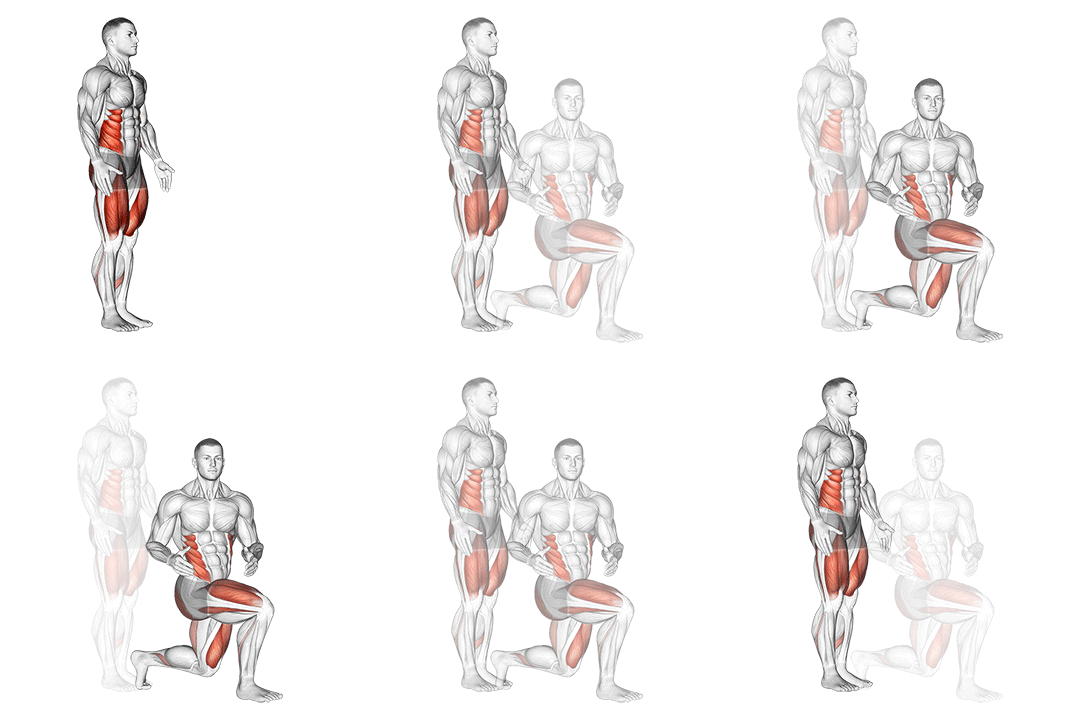
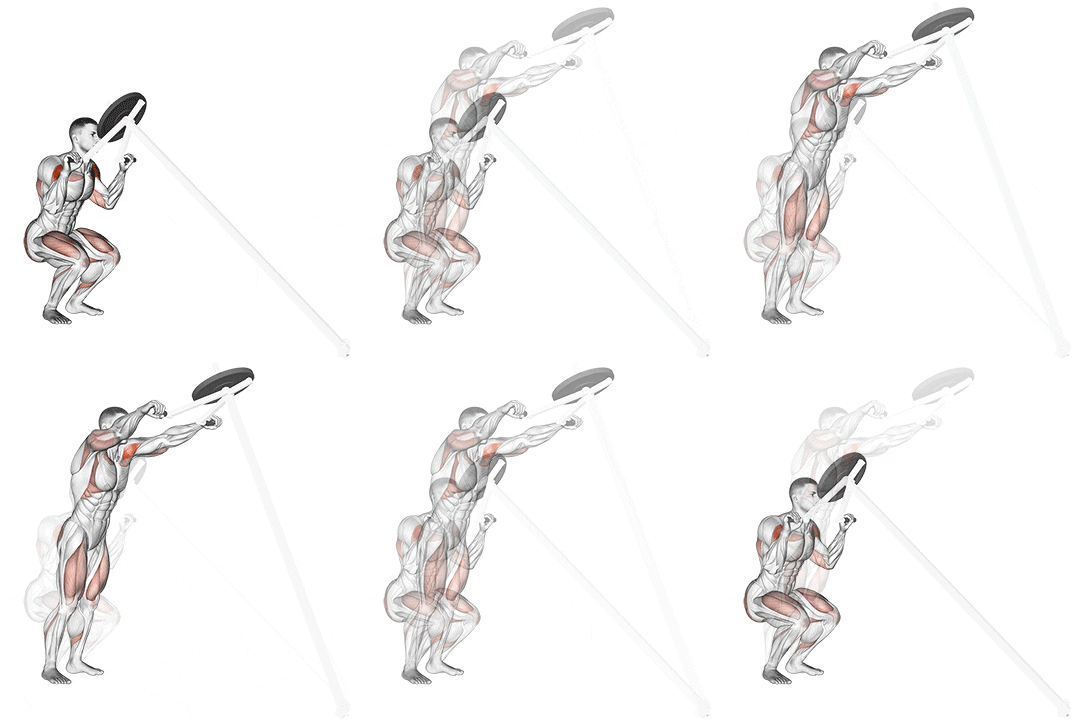
The lunge with twist is a dynamic exercise that combines the lower body strength and stability of lunges with the rotational movement of a twist. It targets multiple muscle groups, including the lower body, core, and oblique muscles. This exercise helps improve lower body strength, balance, coordination, and rotational mobility. ## Instructions 1. Start by standing tall with your feet hip-width apart and your arms relaxed at your sides. 2. Take a step forward with your right foot, maintaining a proper lunge stance. Your right knee should be bent at a 90-degree angle, and your left knee should be close to the ground without touching it. 3. As you lunge forward, simultaneously rotate your torso to the right, bringing your hands together in front of your chest. 4. Keep your back straight, chest lifted, and core engaged throughout the movement. 5. Pause for a moment in the bottom position, feeling the stretch in your hip flexors and maintaining balance. 6. Reverse the movement by pushing through your right foot and stepping back to the starting position. 7. As you step back, return your torso to the center and relax your arms by your sides. 8. Repeat the movement on the opposite side by stepping forward with your left foot and twisting your torso to the left. 9. Continue alternating sides for the desired number of repetitions. ## Variations Here are some variations or modifications to consider: 1. Weighted Lunge with Twist: Hold a dumbbell, kettlebell, or medicine ball in your hands at chest level while performing the lunge with twist to add resistance and increase the challenge. 2. Reverse Lunge with Twist: Instead of stepping forward, step backward into a lunge position and perform the twist. This variation targets the muscles in a slightly different way. 3. Walking Lunge with Twist: Perform the exercise by walking forward, alternating lunges with twists with each step. This variation adds an element of dynamic movement and coordination. ## Muscles Worked The lunge with twist targets the following muscles: - Quadriceps (front of the thighs) - Hamstrings (back of the thighs) - Gluteus maximus (buttocks) - Adductor muscles (inner thighs) - Core muscles (including the abdominals, obliques, and spinal stabilizers) - Hip flexors - Rotator muscles of the torso ## Common Mistakes Here are some common mistakes to avoid while performing the lunge with twist: 1. Incorrect Lunge Form: Ensure that your front knee stays in line with your ankle, and your back knee is close to the ground without touching it. Avoid letting your front knee extend beyond your toes. 2. Lack of Core Engagement: Keep your core muscles activated throughout the exercise to maintain stability and control. 3. Over-rotating the Torso: Focus on rotating your torso to a comfortable and controlled range of motion without excessive twisting. Avoid straining or jerking your upper body. 4. Poor Balance and Stability: Maintain a stable base by planting your front foot firmly on the ground and distributing your weight evenly between your front and back foot. 5. Rushing the Exercise: Perform the movement slowly and with control. Avoid rushing through the lunge or twist portion, as this can compromise form and effectiveness. ## Safety Precautions To ensure safety during the lunge with twist exercise, consider the following precautions: 1. Warm-up: Prior to starting the exercise, warm up your muscles with light cardio activity and dynamic stretching. 2. Proper Form: Maintain proper form throughout the exercise, focusing on a controlled and stable movement. 3. Suitable Surface: Perform the exercise on a stable and non-slip surface to minimize the risk of slipping or losing balance. 4