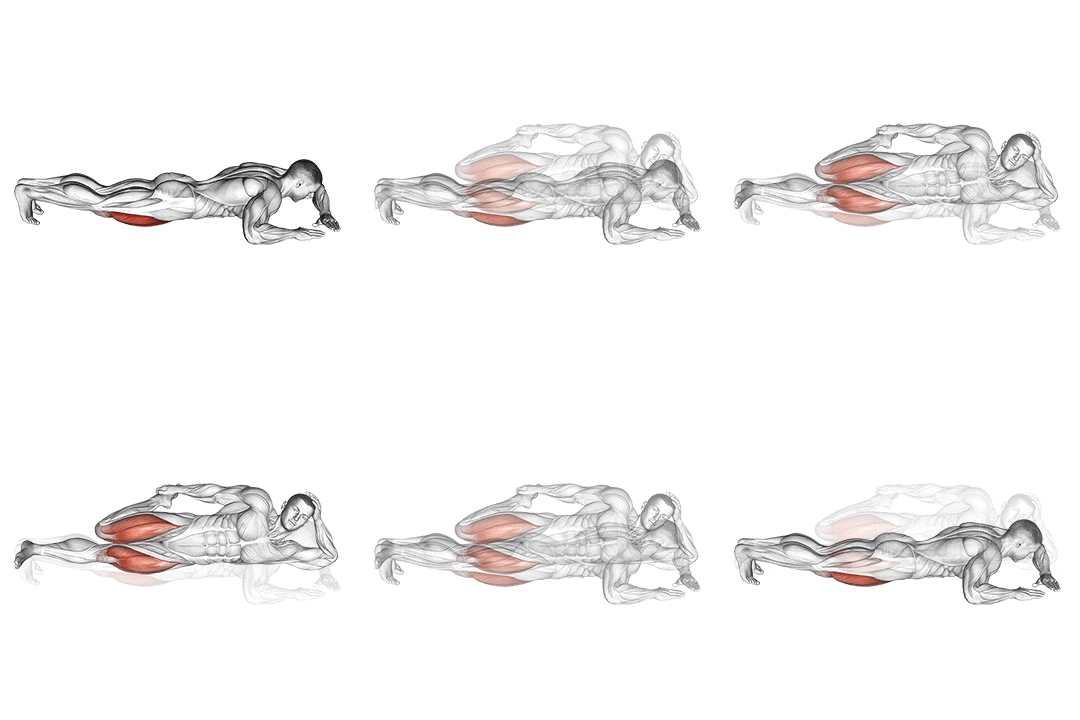
The lying quads stretch is a static stretch that primarily targets the quadriceps muscles located in the front of the thighs. This stretch helps to improve flexibility and range of motion in the quads, reducing muscle tension and promoting overall lower body mobility. ## Instructions 1. Start by lying on your side on a comfortable exercise mat or the floor. Extend your legs straight out and align your body in a straight line. 2. Bend your bottom knee and bring your heel toward your glutes. 3. Reach back with your top hand and grasp your top foot or ankle. If you have difficulty reaching, you can use a towel or strap to loop around your foot and hold onto it. 4. Gently pull your foot toward your glutes, feeling a stretch in the front of your thigh. 5. Keep your hips stacked and maintain a neutral spine throughout the stretch. 6. Hold the stretch for 20 to 30 seconds while focusing on deep breathing. 7. Release the stretch and repeat on the other side. ## Variations Here are some variations or modifications to consider: 1. Standing Quad Stretch: Instead of lying on your side, stand upright and bend one knee, bringing your heel toward your glutes. Hold onto your foot or ankle and gently pull to stretch the quad. Use a wall or support if needed for balance. 2. Prone Quad Stretch: Lie on your stomach and reach back to grab your foot or ankle. Pull your foot toward your glutes to stretch the quad. This variation also engages the hip flexors to a greater extent. ## Muscles Worked The lying (side) quads stretch primarily targets the quadriceps muscles (rectus femoris, vastus lateralis, vastus intermedius, and vastus medialis) located in the front of the thigh. ## Common Mistakes Here are some common mistakes to avoid while performing the lying (side) quads stretch: 1. Arching the Back: Ensure that you maintain a neutral spine throughout the stretch. Avoid overarching or excessive extension in the lower back. 2. Pulling Too Hard: Be gentle and avoid pulling or yanking on your foot or ankle. Gradually increase the stretch without causing pain or discomfort. 3. Holding Your Breath: Remember to breathe deeply and continuously throughout the stretch. Avoid holding your breath, as it can increase tension in the muscles. 4. Raising or Twisting the Hips: Keep your hips stacked and aligned vertically. Avoid raising or twisting the hips during the stretch to maintain proper form and target the quads effectively. ## Safety Precautions To ensure safety during the lying (side) quads stretch, consider the following precautions: 1. Start Gradually: If you have tight quads or limited flexibility, start with a shorter hold time and gradually increase the duration as you become more comfortable. 2. Listen to Your Body: Pay attention to your body and avoid pushing the stretch beyond your comfort zone. Mild tension is normal, but sharp or intense pain should be avoided. 3. Modify as Needed: If you have difficulty reaching your foot or ankle, use a towel, strap, or resistance band to assist in holding onto your foot. 4. Consult a Professional: If you have any pre-existing injuries or conditions affecting your knees, hips, or lower back, consult with a healthcare professional or a qualified fitness trainer before attempting this stretch. They can provide guidance and adaptations specific to your needs.
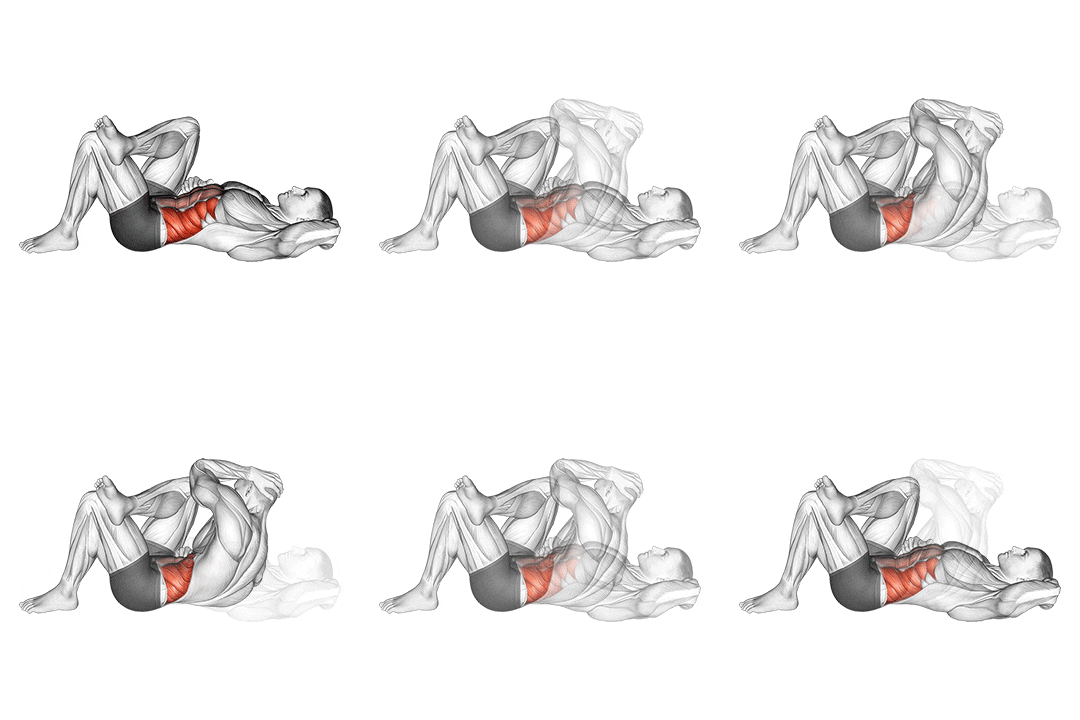
The lying elbow to knee exercise is a core strengthening exercise that targets the abdominal muscles, particularly the rectus abdominis (six-pack muscles). It involves a twisting motion that engages the obliques and helps improve core stability and definition. ## Instructions 1. Start by lying on your back on an exercise mat or the floor. Bend your knees and place your feet flat on the ground, hip-width apart. 2. Place your hands behind your head, elbows pointing out to the sides. Keep your elbows wide and avoid pulling on your head or neck during the exercise. 3. Engage your core muscles by drawing your belly button in toward your spine. 4. Lift your head, shoulders, and upper back slightly off the ground, keeping them in a fixed position throughout the exercise. 5. Simultaneously lift your right shoulder and twist your torso, bringing your left elbow toward your right knee. Your right leg can extend or remain bent on the ground. 6. Slowly return to the starting position, lowering your head, shoulders, and left elbow back to the ground. 7. Repeat the movement on the other side, lifting your left shoulder and bringing your right elbow toward your left knee. 8. Continue alternating sides in a controlled and fluid motion. 9. Aim for a smooth and controlled movement, focusing on engaging the abdominal muscles throughout the exercise. ## Variations Here are some variations or modifications to consider: 1. Modified Elbow to Knee: If the full exercise is too challenging, you can perform a modified version by keeping your head, shoulders, and upper back on the ground. Lift one leg at a time and bring the opposite elbow toward the lifted knee. 2. Bicycle Crunches: Instead of keeping your shoulders off the ground throughout the exercise, you can perform bicycle crunches. Lift your head, shoulders, and upper back off the ground, and bring your opposite elbow to the opposite knee in a cycling motion. 3. Weighted Elbow to Knee: To increase the challenge, you can hold a dumbbell, medicine ball, or weight plate in your hands while performing the exercise. ## Muscles Worked The lying elbow to knee exercise primarily targets the following muscles: - Rectus abdominis (six-pack muscles) - Obliques (internal and external) - Transverse abdominis (deep core muscles) ## Common Mistakes Here are some common mistakes to avoid while performing the lying elbow to knee exercise: 1. Pulling on the Neck: Avoid pulling on your head or neck with your hands. Instead, keep your elbows wide and focus on engaging the abdominal muscles to perform the movement. 2. Using Momentum: Maintain control throughout the exercise and avoid using momentum to swing your upper body. Perform the movement in a slow and controlled manner to fully engage the targeted muscles. 3. Holding Your Breath: Remember to breathe throughout the exercise. Exhale as you lift your head and twist your torso, and inhale as you return to the starting position. 4. Overarching the Lower Back: Keep your lower back pressed against the ground or exercise mat. Avoid excessive arching or lifting of the lower back, as it can strain the lumbar spine. ## Safety Precautions To ensure safety during the lying elbow to knee exercise, consider the following precautions: 1. Start Gradually: If you're a beginner or new to this exercise, start with a small range of motion and gradually increase it as your core strength improves. 2. Use Proper Form: Focus on maintaining proper form and technique throughout the exercise. Avoid straining your neck or lower back. 3. Listen to Your Body: If you experience any pain or discomfort, stop the exercise and consult with a healthcare professional or a qualified fitness trainer. 4.
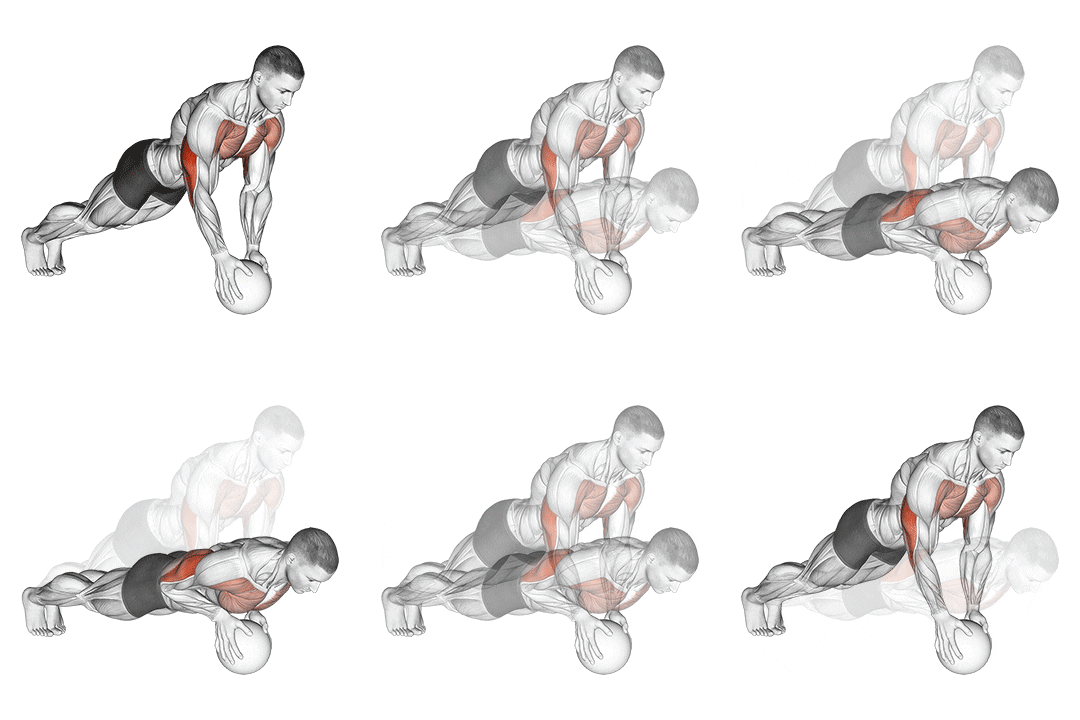
The medicine ball close grip push-up is a variation of the traditional push-up exercise that targets the chest, triceps, and core muscles. It involves using a medicine ball to increase the instability of the movement, which adds an extra challenge and engages more stabilizing muscles. ## Instructions 1. Start by placing a medicine ball on the floor and assume a standard push-up position with your hands positioned close together, directly on top of the medicine ball. 2. Position your hands slightly wider than shoulder-width apart, fingers pointing forward. 3. Engage your core muscles and maintain a straight line from your head to your heels. 4. Lower your chest towards the medicine ball by bending your elbows, while keeping your body aligned and your elbows close to your sides. 5. Pause for a brief moment when your chest is close to the medicine ball. 6. Push through your palms and extend your arms, returning to the starting position. 7. Repeat for the desired number of repetitions. ## Variations - Beginner: If you find the exercise challenging, you can perform the push-up with your knees on the ground instead of your toes. - Advanced: To increase the difficulty, you can try elevating your feet on a stable surface, such as a bench or step, while performing the push-up. ## Muscles Worked The medicine ball close grip push-up primarily targets the following muscles: - Chest (pectoralis major and minor) - Triceps - Shoulders (deltoids) - Core muscles (abdominals and lower back) ## Common Mistakes - Arching the back: Avoid sagging or arching your back during the exercise. Maintain a straight line from your head to your heels. - Flaring elbows: Keep your elbows close to your sides throughout the movement. Avoid letting them flare out to the sides, which can place unnecessary stress on the shoulder joints. - Insufficient depth: Aim to lower your chest close to the medicine ball to fully engage the targeted muscles. Avoid performing shallow push-ups that limit the range of motion. ## Safety Precautions - Warm up before starting the exercise to prepare your muscles for the movement. - If you have any pre-existing shoulder, wrist, or lower back issues, consult with a healthcare professional or a qualified fitness trainer before attempting this exercise. - Use a stable and non-slippery surface to prevent the medicine ball from rolling away during the exercise. - Start with a lighter medicine ball or modify the exercise if you're new to this movement or have limited upper body strength. - If you experience any pain or discomfort during the exercise, stop immediately and seek professional guidance.
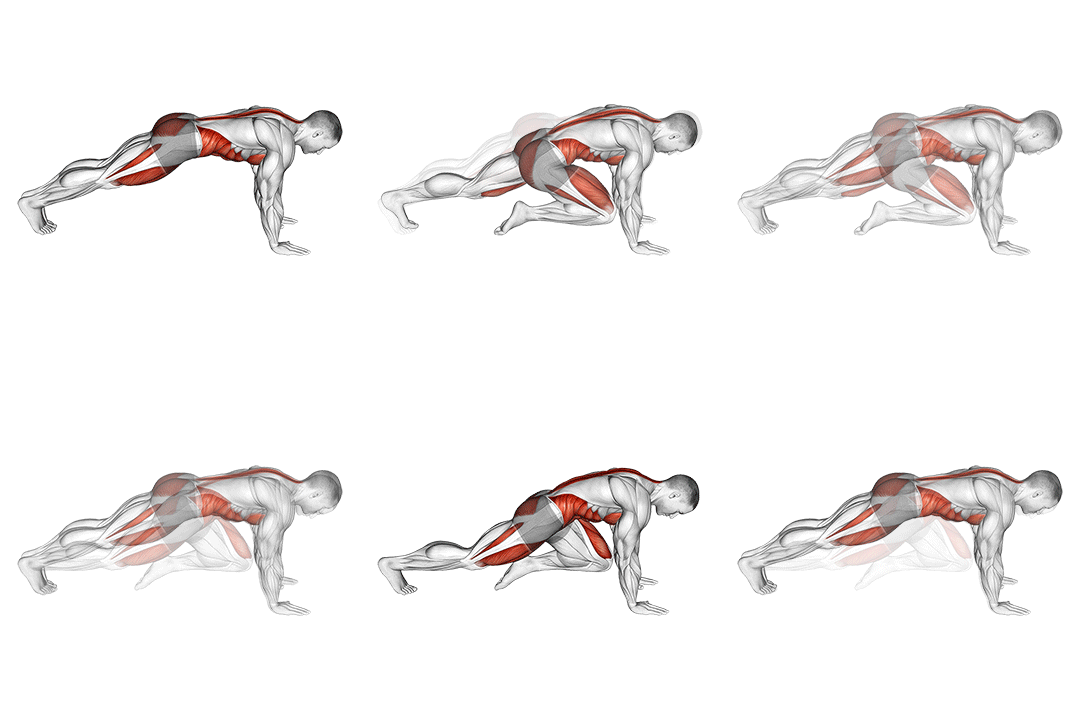
The mountain climber is a dynamic exercise that targets multiple muscle groups, including the core, shoulders, arms, and legs. It simulates the movements of climbing and provides cardiovascular benefits along with strengthening various muscle groups. ## Instructions 1. Start in a high plank position with your hands directly under your shoulders and your body forming a straight line from your head to your heels. 2. Engage your core muscles by drawing your belly button in towards your spine. 3. Lift your right foot off the ground and bring your right knee towards your chest, maintaining a flat back and stable upper body. 4. Quickly switch legs, extending your right leg back to the starting position while bringing your left knee towards your chest. 5. Continue alternating legs in a fluid and controlled motion, as if you are running in place with your hands on the ground. 6. Maintain a steady rhythm and try to perform the exercise at a challenging but sustainable pace. 7. Repeat for the desired duration or number of repetitions. ## Variations - Beginner: If you find the exercise challenging, you can perform the mountain climber at a slower pace or with your hands on an elevated surface, such as a bench or step, to reduce the intensity. - Advanced: To increase the difficulty, you can perform the exercise with your hands on a stability ball or with sliders under your feet, which will increase the instability and engage more stabilizing muscles. ## Muscles Worked The mountain climber primarily targets the following muscles: - Core muscles (abdominals, obliques, and lower back) - Shoulders (deltoids) - Arms (triceps and biceps) - Legs (quadriceps, hamstrings, and calves) ## Common Mistakes - Sagging hips: Avoid letting your hips drop or sag towards the ground. Keep your core engaged and maintain a straight line from your head to your heels throughout the exercise. - Incorrect leg alignment: Ensure that your knees are brought towards your chest in a controlled manner and in a straight line, avoiding inward or outward rotations. - Rushing the exercise: Maintain a controlled pace and avoid rushing through the movement. Focus on maintaining proper form and engaging the targeted muscles. ## Safety Precautions - Warm up before starting the exercise to prepare your muscles for the movement. - If you have any pre-existing wrist, shoulder, or lower back issues, consult with a healthcare professional or a qualified fitness trainer before attempting this exercise. - Engage your core muscles throughout the exercise to protect your lower back and maintain stability. - Start with a manageable duration or number of repetitions and gradually increase as your fitness level improves. - Listen to your body and stop if you experience any pain or discomfort.
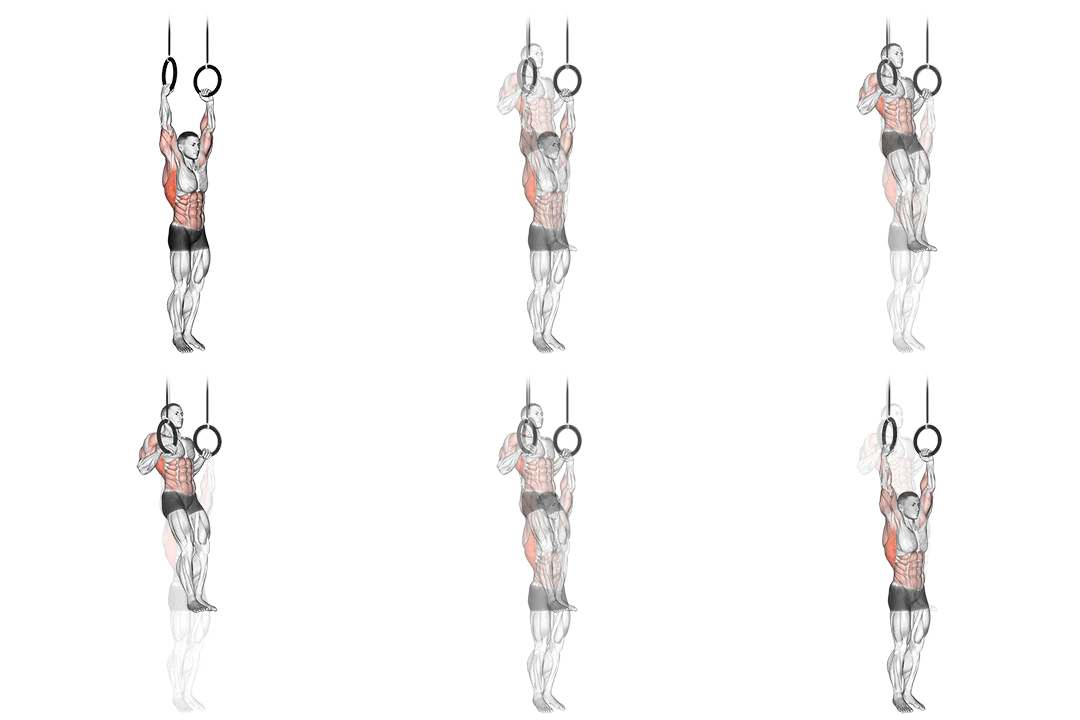
The muscle-up is an advanced calisthenics exercise that combines elements of a pull-up and a dip. It targets the muscles of the upper body, particularly the back, chest, shoulders, and arms. The muscle-up requires a significant amount of upper body strength, coordination, and control. ## Instructions 1. Begin by gripping the pull-up bar with an overhand grip, slightly wider than shoulder-width apart. 2. Hang from the bar with your arms fully extended and your body relaxed. 3. Initiate the movement by performing a pull-up, pulling your chest up towards the bar while keeping your elbows close to your sides. 4. As you reach the top of the pull-up, transition your grip from overhand to an inward-facing false grip. This means your palms will face towards you, and your wrists will be positioned on top of the bar. 5. Once you have the false grip, continue pulling your body upwards until your chest is above the bar. 6. From this position, smoothly transition into a dip by straightening your arms and pushing your body up. 7. Fully extend your arms at the top of the movement. 8. Reverse the motion by bending your arms and descending back down to the starting position. 9. Repeat the exercise for the desired number of repetitions. ## Variations - Assisted Muscle-Up: If you're working towards a full muscle-up, you can use resistance bands or an assisted pull-up machine to provide assistance during the movement. - Jumping Muscle-Up: Start with your feet on the ground and use a slight jump to help propel yourself up into the muscle-up position. This variation allows you to focus on the transition and dip phase of the movement. - Negative Muscle-Up: Begin at the top of the movement with your chest above the bar and slowly lower yourself down, focusing on the controlled descent. This variation helps build strength and control in the pulling portion of the exercise. ## Muscles Worked The muscle-up targets the following muscles: - Latissimus dorsi (lats) - Rhomboids - Biceps brachii - Deltoids - Pectoralis major - Triceps brachii ## Common Mistakes - Lack of proper shoulder mobility: It is important to have adequate shoulder mobility and flexibility to perform a muscle-up safely. Work on improving shoulder mobility through stretching and mobility exercises. - Insufficient pulling strength: If you struggle with the pulling phase of the muscle-up, focus on strengthening your pulling muscles, particularly your back and biceps, through exercises like pull-ups and rows. - Poor transition technique: The transition from the pull-up to the dip can be challenging. Practice the transition separately and work on the technique to achieve a smooth and controlled movement. ## Safety Precautions - Ensure that the bar you are using is sturdy and secure. - Warm up thoroughly before attempting the exercise to prepare your muscles and joints. - Start with progressions and variations that suit your current strength level. - If you are new to the muscle-up or have any concerns, seek guidance from a qualified trainer to ensure proper technique and avoid injury. - Listen to your body and progress gradually. Overexertion or attempting the exercise beyond your capabilities can increase the risk of injury.
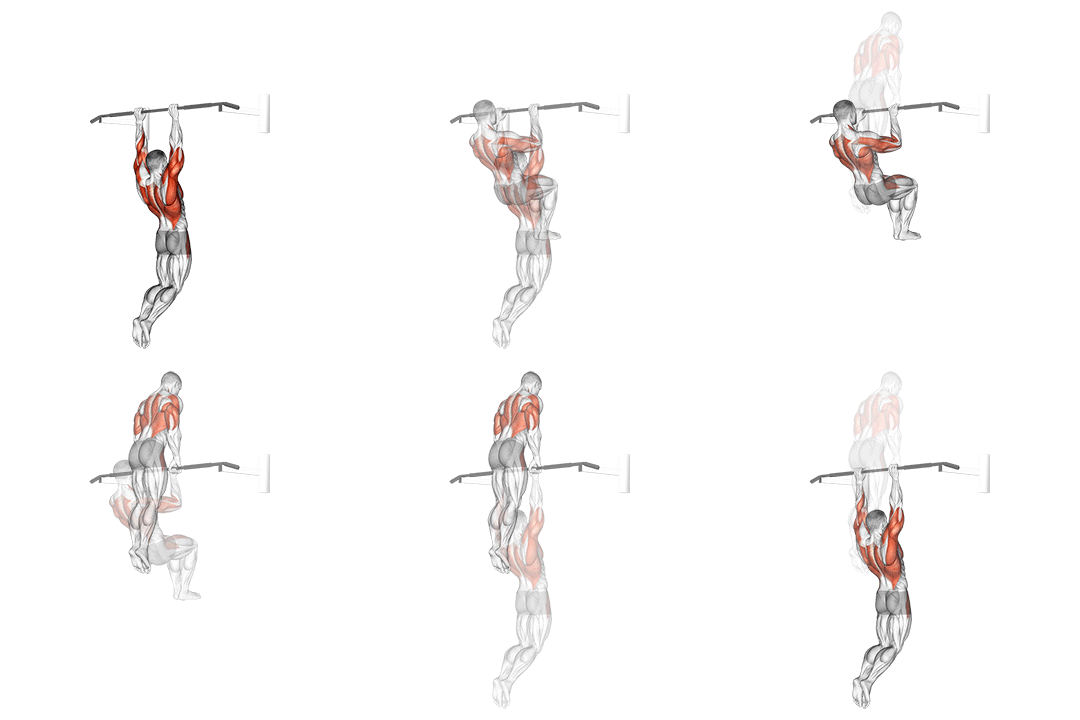
The muscle-up on a vertical bar is an advanced calisthenics exercise that combines a pull-up with a dip on a vertical bar. It targets the muscles of the upper body, particularly the back, chest, shoulders, and arms. The muscle-up on a vertical bar requires significant upper body strength, coordination, and control. ## Instructions 1. Begin by standing in front of a vertical bar, with your feet shoulder-width apart. 2. Reach up and grip the bar with your palms facing away from you, slightly wider than shoulder-width apart. 3. Jump or use a slight leg drive to help propel your body upward, allowing your chest to reach above the bar. 4. Once your chest is above the bar, quickly transition your grip from an overhand grip to an underhand grip (also known as a supine grip), while simultaneously pulling your body higher. 5. As you reach the top of the pulling phase, shift your body forward, bringing your chest over the bar and transitioning into the dip position. 6. Keep your elbows close to your sides and lower your body down by bending your arms. 7. Descend until your arms are at a 90-degree angle or slightly lower. 8. Push through your palms, extend your arms, and press your body upward to complete the dip. 9. Return to the starting position by lowering your body back down in a controlled manner. 10. Repeat the exercise for the desired number of repetitions. ## Variations - Assisted Muscle-Up: If you're working towards a full muscle-up on a vertical bar, you can use resistance bands or an assisted pull-up machine to provide assistance during the movement. - Negative Muscle-Up: Begin at the top of the movement with your chest above the bar, then slowly lower yourself down, focusing on the controlled descent. This variation helps build strength and control in the pulling phase of the exercise. - Band-Assisted Dip: If you find the dip portion challenging, you can use resistance bands to assist you during the dip movement. ## Muscles Worked The muscle-up on a vertical bar primarily targets the following muscles: - Latissimus dorsi (lats) - Rhomboids - Biceps brachii - Deltoids - Pectoralis major - Triceps brachii ## Common Mistakes - Lack of proper shoulder mobility: Ensure you have adequate shoulder mobility and flexibility to perform the exercise safely. Work on improving shoulder mobility through stretching and mobility exercises. - Inefficient kip or swing: Avoid relying too much on swinging or kipping to complete the muscle-up. Instead, focus on a controlled and controlled pulling and dipping motion. - Insufficient pulling or dipping strength: If you struggle with the pulling or dipping phase of the muscle-up, focus on strengthening your pulling and dipping muscles through exercises like pull-ups, dips, and assisted variations. ## Safety Precautions - Ensure that the bar you are using is sturdy and secure. - Warm up thoroughly before attempting the exercise to prepare your muscles and joints. - Start with progressions and variations that suit your current strength level. - If you are new to the muscle-up or have any concerns, seek guidance from a qualified trainer to ensure proper technique and avoid injury. - Listen to your body and progress gradually. Overexertion or attempting the exercise beyond your capabilities can increase the risk of injury.
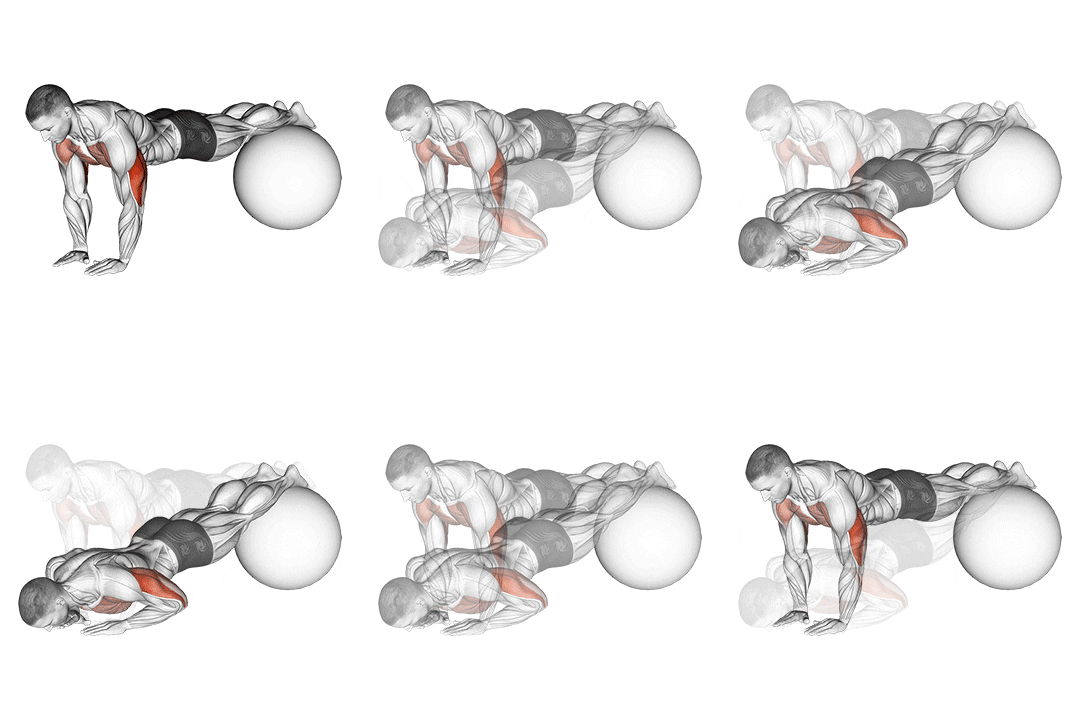
The narrow push-up on an exercise ball is a challenging variation of the traditional push-up exercise. By using an exercise ball, this exercise adds an element of instability, requiring increased core activation and balance. The narrow hand position targets the triceps and chest muscles. ## Instructions 1. Start by placing an exercise ball on the floor and assume a push-up position with your hands directly under your shoulders. 2. Position your hands closer together than in a regular push-up, with your thumbs almost touching. 3. Place your shins on top of the exercise ball, creating a straight line from your head to your feet. 4. Engage your core and maintain a stable torso throughout the exercise. 5. Lower your body by bending your elbows, keeping them close to your sides and pointing backward. 6. Descend until your chest is just above the exercise ball or as low as you can comfortably go. 7. Push through your hands and extend your elbows to return to the starting position. 8. Repeat the exercise for the desired number of repetitions. ## Variations - Elevated Narrow Push-Up: If using an exercise ball is too challenging, you can perform the narrow push-up with your hands placed on an elevated surface, such as a bench or step. - Knee-Modified Narrow Push-Up: If performing the exercise on your toes is too difficult, you can modify it by performing the exercise on your knees while maintaining the narrow hand position. This variation reduces the amount of bodyweight being lifted. - Wall Narrow Push-Up: If the floor-based versions are still challenging, you can perform the exercise against a wall by placing your hands close together and leaning into the wall. This modification reduces the amount of bodyweight being lifted and allows for a less intense variation. ## Muscles Worked The narrow push-up on an exercise ball primarily targets the following muscles: - Triceps brachii (back of the upper arms) - Pectoralis major (chest) - Anterior deltoids (front of the shoulders) - Core muscles (abdominals and lower back) for stabilization ## Common Mistakes - Sagging hips or back: Maintain a straight line from your head to your feet throughout the exercise. Avoid allowing your hips to sag or your back to arch. - Flaring elbows: Keep your elbows pointing backward and close to your sides throughout the movement. Avoid letting your elbows flare out to the sides, which puts unnecessary strain on the shoulder joints. - Lack of core engagement: Focus on engaging your core muscles throughout the exercise to maintain stability and control. ## Safety Precautions - Choose an appropriately sized exercise ball that provides stability and supports your weight. - If you are new to this exercise or have any concerns, start with a modified version or seek guidance from a qualified trainer. - Ensure that the exercise ball is properly inflated and placed on a non-slip surface. - Listen to your body and stop the exercise if you experience any pain or discomfort. - Perform the exercise in a controlled manner to maintain balance and avoid injury. - If you have any pre-existing wrist, shoulder, or lower back issues, consult with a healthcare professional or a qualified fitness trainer before attempting this exercise.
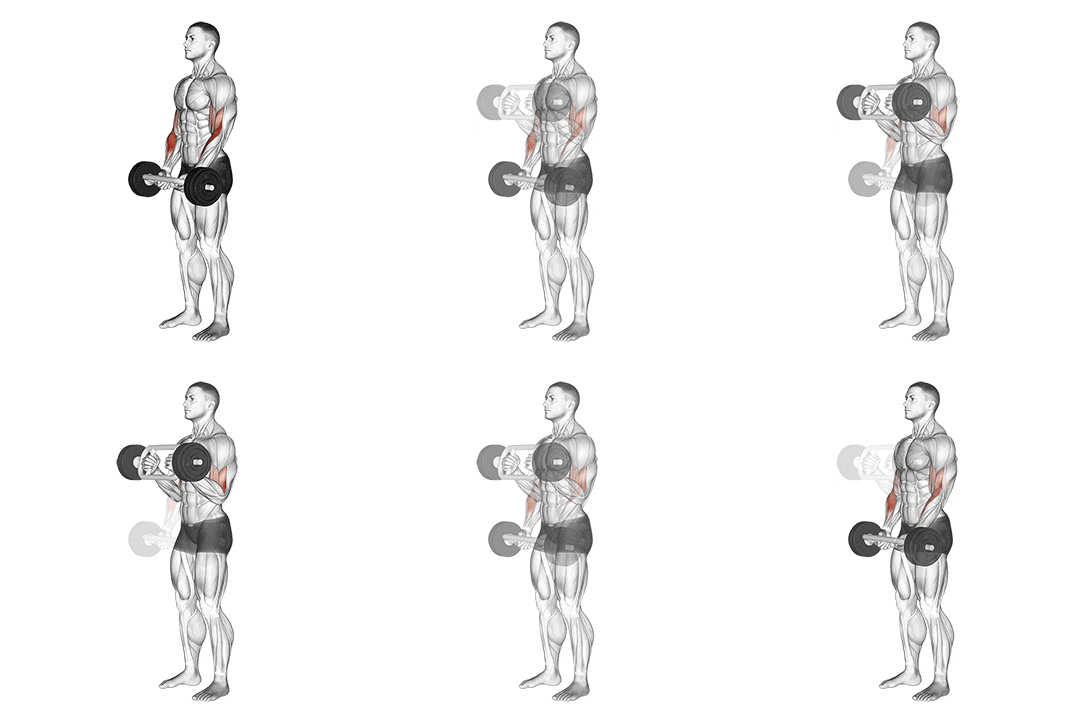
The Olympic barbell hammer curl is a variation of the traditional bicep curl exercise. It targets the muscles of the upper arm, specifically the brachialis and brachioradialis. This exercise also engages the biceps brachii to a lesser extent. The hammer grip, with the palms facing inwards, emphasizes the brachialis and brachioradialis muscles. ## Instructions 1. Stand up straight with your feet shoulder-width apart and a slight bend in your knees. 2. Hold an Olympic barbell with a pronated (overhand) grip, with your hands shoulder-width apart. Your palms should be facing your body (hammer grip). 3. Keep your upper arms close to your torso, perpendicular to the floor, and your elbows slightly bent. 4. While maintaining a stable upper body, exhale and curl the barbell upwards, keeping your wrists straight. 5. Continue curling until your forearms are nearly vertical and the barbell is close to your shoulders. 6. Hold the contracted position for a brief pause, squeezing your biceps and forearms. 7. Inhale and slowly lower the barbell back to the starting position in a controlled manner. 8. Repeat the exercise for the desired number of repetitions. ## Variations - Dumbbell Hammer Curl: Instead of using a barbell, you can perform the exercise using dumbbells. This allows for greater range of motion and can help isolate each arm individually. - Alternating Hammer Curl: Perform the hammer curl one arm at a time, alternating between each arm. This variation can help improve muscular balance and coordination. - EZ-Bar Hammer Curl: Use an EZ-bar, which has a slight curve in the grip, to perform the hammer curl. This can provide a more comfortable grip and reduce wrist strain. ## Muscles Worked The Olympic barbell hammer curl primarily targets the following muscles: - Brachialis - Brachioradialis - Biceps brachii (to a lesser extent) - Forearm muscles (such as the wrist flexors and extensors) ## Common Mistakes - Using excessive momentum: Avoid swinging the barbell or using momentum to lift the weight. Focus on controlled and smooth movements. - Allowing the elbows to flare out: Keep your upper arms stationary and close to your torso throughout the exercise. Avoid allowing your elbows to move forward or flare out to the sides. - Using a grip that is too wide or too narrow: Maintain a shoulder-width grip on the barbell to target the intended muscles effectively. - Rounding the back or hunching the shoulders: Maintain proper posture throughout the exercise, keeping your back straight and shoulders back and down. ## Safety Precautions - Start with an appropriate weight that allows you to maintain proper form and control. - Warm up your muscles before performing the exercise to reduce the risk of injury. - Maintain proper form and control throughout the movement to prevent strain on the wrists and elbows. - If you have any pre-existing wrist, elbow, or shoulder issues, consult with a healthcare professional or a qualified fitness trainer before attempting this exercise. - Listen to your body and stop the exercise if you experience any pain or discomfort. - Gradually increase the weight as you become stronger and more comfortable with the exercise.
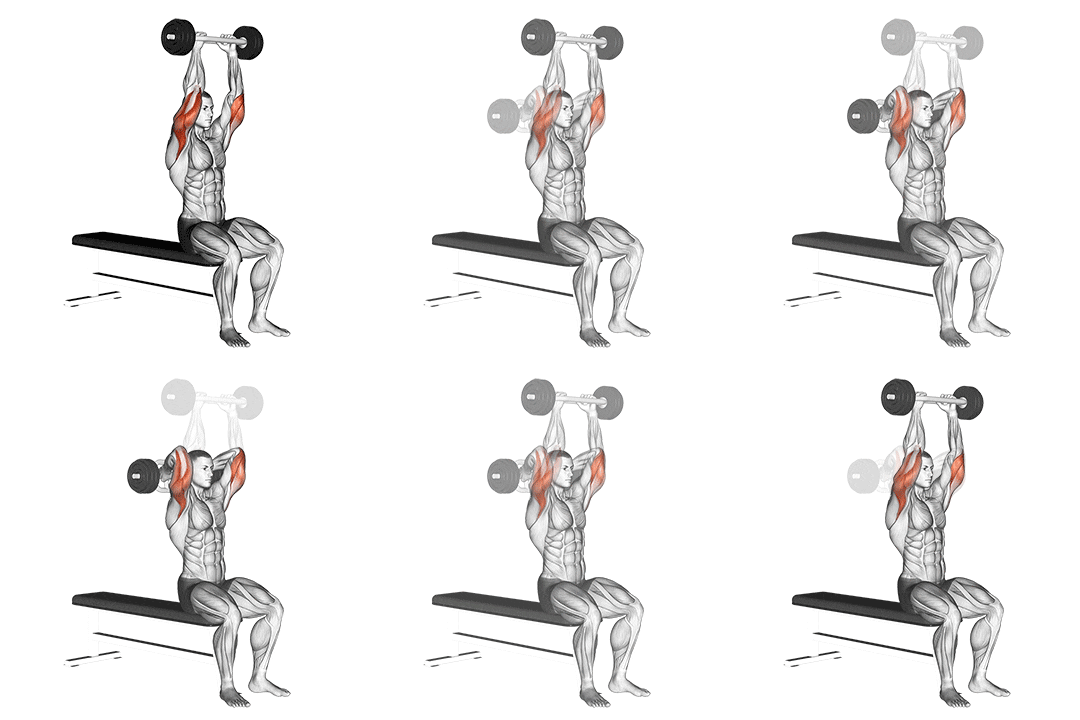
The Olympic barbell triceps extension, also known as the skull crusher, is an exercise that targets the triceps muscles of the upper arm. It involves extending the elbows while holding a barbell, effectively working the muscles responsible for arm extension. This exercise helps strengthen and develop the triceps, which are important for various pushing and pressing movements. ## Instructions 1. Start by lying on a flat bench with your feet planted firmly on the floor. 2. Hold an Olympic barbell with an overhand grip, keeping your hands shoulder-width apart. 3. Extend your arms straight up over your chest, with the barbell directly above your shoulders. 4. Keep your upper arms close to your head throughout the exercise. 5. Slowly lower the barbell by bending your elbows, allowing the barbell to come towards your forehead or just above. 6. Keep your upper arms stationary and perpendicular to the floor. 7. Pause briefly at the bottom of the movement, feeling a stretch in your triceps. 8. Exhale and extend your arms, raising the barbell back to the starting position. 9. Repeat the exercise for the desired number of repetitions. ## Variations - EZ-Bar Triceps Extension: Use an EZ-bar, which has a curved grip, instead of a straight barbell. The curved shape can provide a more comfortable grip and reduce strain on the wrists. - Dumbbell Triceps Extension: Perform the exercise using dumbbells instead of a barbell. This allows for greater range of motion and can help isolate each arm individually. - Cable Triceps Extension: Use a cable machine with a rope or straight bar attachment to perform triceps extensions. This provides constant tension throughout the movement. ## Muscles Worked The Olympic barbell triceps extension primarily targets the following muscles: - Triceps brachii (all three heads: long head, lateral head, medial head) - Anconeus (a small muscle located near the elbow joint) ## Common Mistakes - Using excessive weight: Start with a weight that allows you to maintain proper form and control. Using too much weight can lead to improper technique and potential injury. - Flaring the elbows: Keep your elbows close to your head throughout the exercise. Avoid letting your elbows flare out to the sides, as it can place unnecessary stress on the shoulder joints. - Lowering the bar too far: Avoid lowering the barbell too far down towards the forehead, as it can place excessive strain on the elbow joints. Stop just before it reaches the forehead or a comfortable distance above. - Arching the back or lifting the hips: Keep your back flat against the bench and maintain stability throughout the exercise. Avoid arching the back or lifting the hips off the bench. ## Safety Precautions - Use a spotter or exercise partner when handling heavy weights to ensure safety and assistance if needed. - Start with a weight that is suitable for your strength level and gradually increase as you progress. - Perform the exercise on a stable and secure bench or exercise surface. - Maintain proper form and control throughout the movement to prevent strain on the elbows and shoulders. - If you have any pre-existing elbow, shoulder, or wrist issues, consult with a healthcare professional or a qualified fitness trainer before attempting this exercise. - Listen to your body and stop the exercise if you experience any pain or discomfort. - Use collars on the barbell to secure the weights in place and prevent them from sliding off during the exercise.