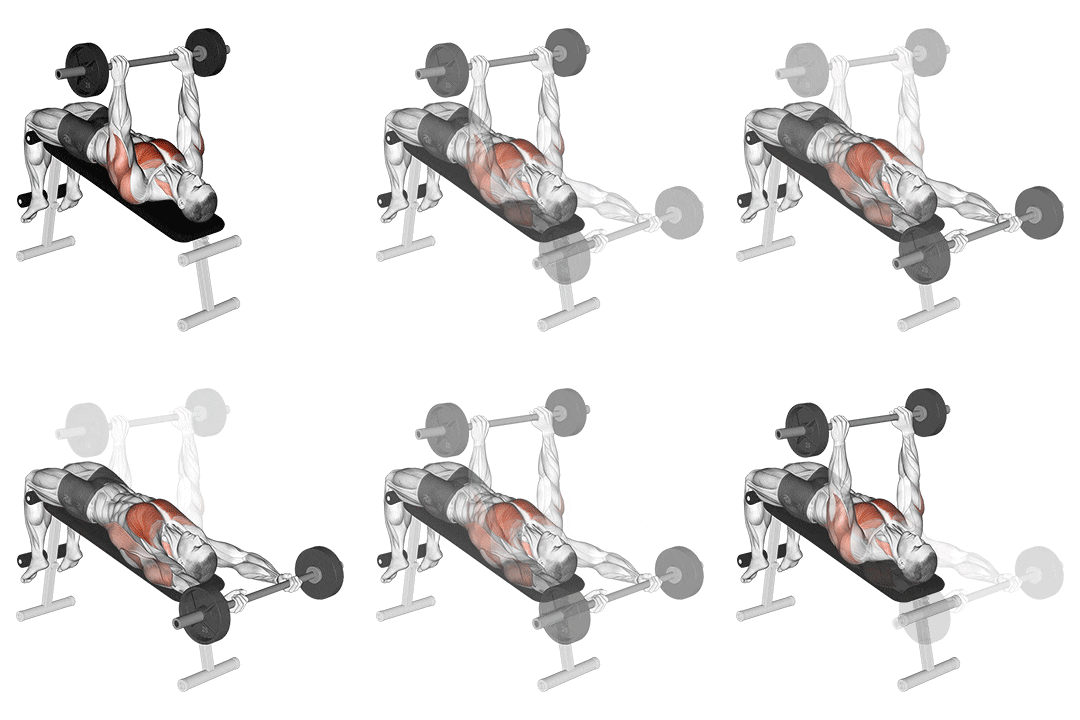
The barbell decline pullover is an exercise that primarily targets the muscles of the chest, specifically the lower pectoralis major. It also engages the latissimus dorsi (lats), triceps, and serratus anterior muscles. This exercise involves a decline bench and a barbell, and it is an effective way to strengthen the chest muscles and improve upper body stability. ## Instructions 1. Set up a decline bench at a decline angle of around 30 to 45 degrees. 2. Lie down on the bench with your head positioned at the lower end and your feet secured at the upper end. 3. Grip a barbell with a pronated (overhand) grip, slightly wider than shoulder-width apart. 4. Hold the barbell directly above your chest, with your arms extended and perpendicular to the floor. 5. Lower the barbell in a controlled manner behind your head while maintaining a slight bend in your elbows. 6. Keep your core engaged and maintain a slight arch in your lower back throughout the movement. 7. Once you feel a stretch in your chest muscles, pause for a moment, and then raise the barbell back to the starting position by contracting your chest muscles. 8. Exhale as you raise the barbell and inhale as you lower it. 9. Repeat for the desired number of repetitions. ## Variations - Dumbbell Decline Pullover: Instead of using a barbell, you can perform the decline pullover using dumbbells. Hold a dumbbell in each hand and follow the same instructions. - Stability Ball Decline Pullover: Place a stability ball between your shoulder blades and the decline bench to add an element of instability, challenging your core muscles further. - Resistance Band Decline Pullover: Attach a resistance band to a sturdy anchor point behind you. Hold the ends of the band with your hands and perform the decline pullover motion while maintaining tension in the band. ## Muscles Worked - Primary muscles: Lower pectoralis major (chest) - Secondary muscles: Latissimus dorsi (lats), triceps, serratus anterior ## Common Mistakes - Arching the lower back excessively: Keep your lower back slightly arched but avoid excessive arching, as it can lead to strain or injury. - Allowing the barbell to drift too far back: Maintain control over the barbell and avoid letting it drift too far back behind your head, as it can place excessive stress on the shoulder joints. - Using excessive weight: Start with a manageable weight that allows you to maintain proper form throughout the exercise. Using too much weight can compromise your technique and increase the risk of injury. - Failing to fully extend the arms at the top: Make sure to fully extend your arms and squeeze your chest muscles at the top of the movement to maximize the exercise's benefits. ## Safety Precautions - Warm up adequately before performing the exercise to prepare your muscles for the movement. - Start with a conservative weight and gradually increase it as you become more comfortable and confident with the exercise. - Maintain proper form throughout the movement to avoid strain or injury. - If you have any pre-existing shoulder or back conditions, consult with a healthcare professional or fitness trainer before attempting the exercise to ensure it is safe for you. - If you experience any pain or discomfort during the exercise, stop immediately and seek medical advice if needed.
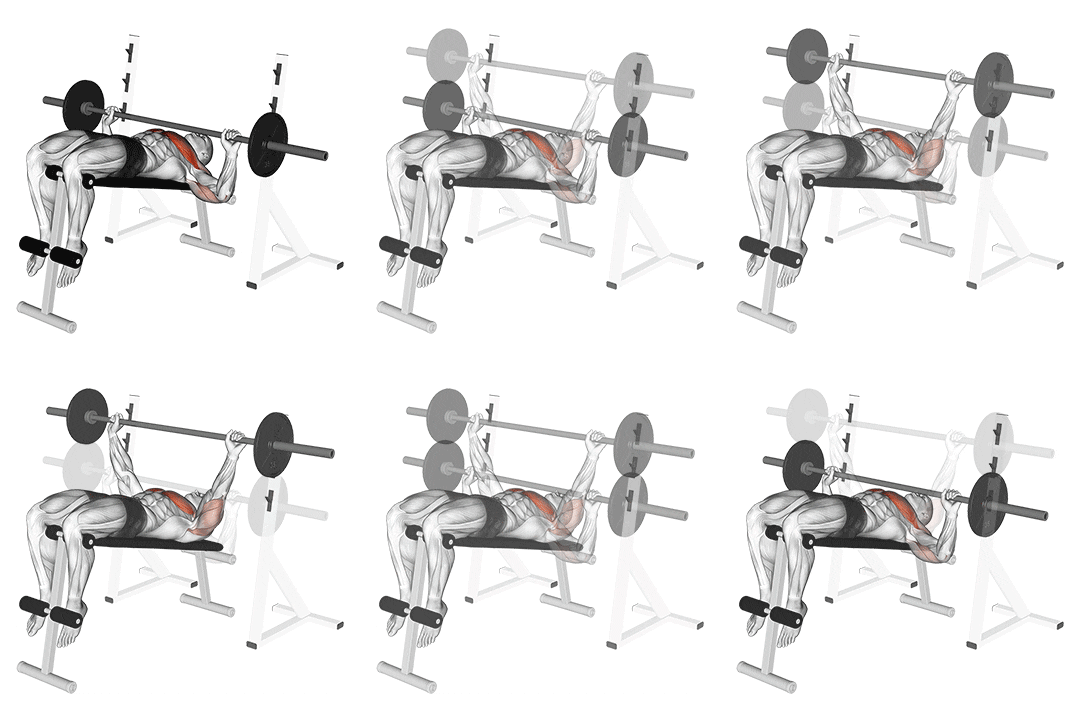
The barbell decline wide-grip press is an exercise that primarily targets the chest muscles, particularly the outer portion of the pectoralis major. It also engages the triceps and anterior deltoids to a lesser extent. This exercise involves a decline bench and a barbell, and it can help develop upper body strength and enhance the appearance of a well-defined chest. ## Instructions 1. Set up a decline bench at a decline angle of around 30 to 45 degrees. 2. Lie down on the bench with your head positioned at the lower end and your feet secured at the upper end. 3. Grip a barbell with a wide overhand grip, placing your hands slightly wider than shoulder-width apart. 4. Lift the barbell off the rack and hold it directly above your chest with your arms extended and perpendicular to the floor. 5. Lower the barbell in a controlled manner towards the lower portion of your chest, allowing your elbows to flare out to the sides. 6. Keep your core engaged and maintain a slight arch in your lower back throughout the movement. 7. Once the barbell lightly touches your chest, push it back up to the starting position by extending your arms and contracting your chest muscles. 8. Exhale as you push the barbell up and inhale as you lower it. 9. Repeat for the desired number of repetitions. ## Variations - Dumbbell Decline Wide-Grip Press: Instead of using a barbell, you can perform the exercise with dumbbells. Hold a dumbbell in each hand and follow the same instructions. - Smith Machine Decline Wide-Grip Press: If a decline bench and barbell are not available, you can use a Smith machine. Set the bar at an appropriate height and perform the wide-grip press on a decline bench positioned underneath it. ## Muscles Worked - Primary muscles: Pectoralis major (outer portion) - Secondary muscles: Triceps, anterior deltoids ## Common Mistakes - Using too much weight: Start with a weight that allows you to maintain proper form and control throughout the exercise. Using excessive weight can compromise your technique and increase the risk of injury. - Flaring the elbows excessively: While it's natural for the elbows to flare out to the sides during this exercise, avoid excessive elbow flare, as it can put unnecessary stress on the shoulder joints. Find a balance between a comfortable range of motion and proper alignment. - Allowing the barbell to touch the neck or throat: Lower the barbell towards the lower portion of your chest, avoiding contact with the neck or throat area. This helps maintain a safe range of motion and reduces the risk of injury. - Arching the lower back excessively: Keep your lower back slightly arched but avoid excessive arching, as it can lead to strain or injury. Maintain a stable and controlled posture throughout the exercise. ## Safety Precautions - Warm up adequately before performing the exercise to prepare your muscles for the movement. - Use a spotter or have someone nearby to assist you, especially when using heavy weights. - Maintain proper form throughout the exercise, focusing on controlled movements and a stable body position. - If you have any pre-existing shoulder or back conditions, consult with a healthcare professional or fitness trainer before attempting the exercise to ensure it is safe for you. - If you experience any pain or discomfort during the exercise, stop immediately and seek medical advice if needed.
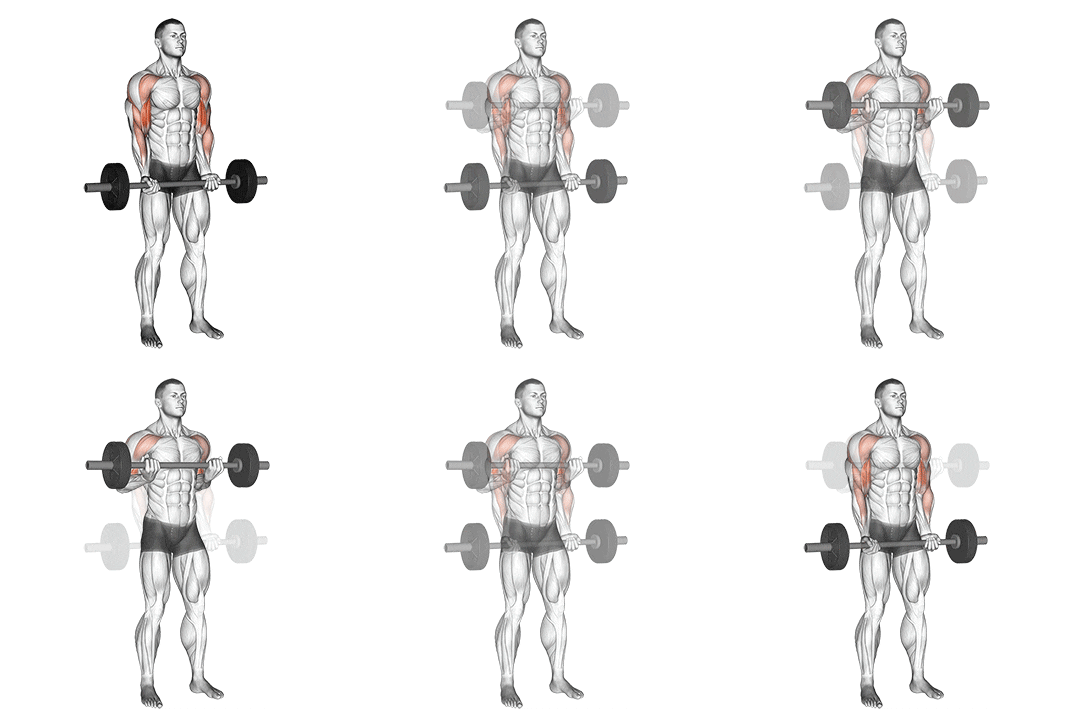
The barbell drag curl is an exercise that primarily targets the biceps muscles. It is a variation of the traditional bicep curl that emphasizes the contraction of the biceps while minimizing the involvement of the shoulders and forearms. The drag curl helps develop strength and size in the biceps, contributing to well-rounded upper arm development. ## Instructions 1. Stand upright with your feet shoulder-width apart, holding a barbell with an underhand grip (palms facing up). Your hands should be positioned slightly narrower than shoulder-width apart. 2. Allow the barbell to hang down in front of your thighs, with your arms fully extended. 3. Keeping your elbows close to your body, initiate the movement by flexing your biceps and lifting the barbell towards your chest. 4. As you curl the barbell upward, focus on dragging it along your torso. Keep your elbows behind your body and avoid any swinging or excessive shoulder involvement. 5. Continue curling until the barbell reaches your upper chest or touches the front of your shoulders, and your biceps are fully contracted. 6. Pause for a moment, squeezing your biceps at the top of the movement. 7. Slowly lower the barbell back to the starting position, maintaining control and resisting the weight on the way down. 8. Repeat for the desired number of repetitions. ## Variations - EZ-Bar Drag Curl: Instead of using a straight barbell, you can perform the drag curl with an EZ-bar. The EZ-bar has a zigzag shape that offers a more comfortable grip and places less stress on the wrists. - Dumbbell Drag Curl: Perform the exercise using dumbbells instead of a barbell. This allows for greater freedom of movement and may be beneficial for individuals with imbalances between their left and right arms. ## Muscles Worked - Primary muscles: Biceps brachii - Secondary muscles: Brachialis, brachioradialis ## Common Mistakes - Using excessive weight: Start with a weight that allows you to maintain proper form and technique. Using too much weight can compromise your form and shift the emphasis away from the biceps. - Swinging the body or using momentum: Keep your upper body stationary throughout the exercise. Avoid using momentum or swinging the weight to lift it. Focus on controlled and deliberate movements. - Allowing the elbows to drift forward: Keep your elbows fixed and close to your body throughout the movement. Avoid letting them drift forward, as it reduces the effectiveness of the exercise for the biceps. - Neglecting the full range of motion: Lower the barbell fully on each repetition, allowing it to hang down in front of your thighs, and fully contract the biceps at the top. This ensures you engage the biceps through their full range of motion. ## Safety Precautions - Warm up adequately before performing the exercise to prepare your muscles for the movement. - Use a weight that challenges your biceps without compromising your form. - Maintain proper posture throughout the exercise, keeping your back straight and core engaged. - If you have any pre-existing elbow or shoulder conditions, consult with a healthcare professional or fitness trainer before attempting the exercise to ensure it is safe for you. - If you experience any pain or discomfort during the exercise, stop immediately and seek medical advice if needed.
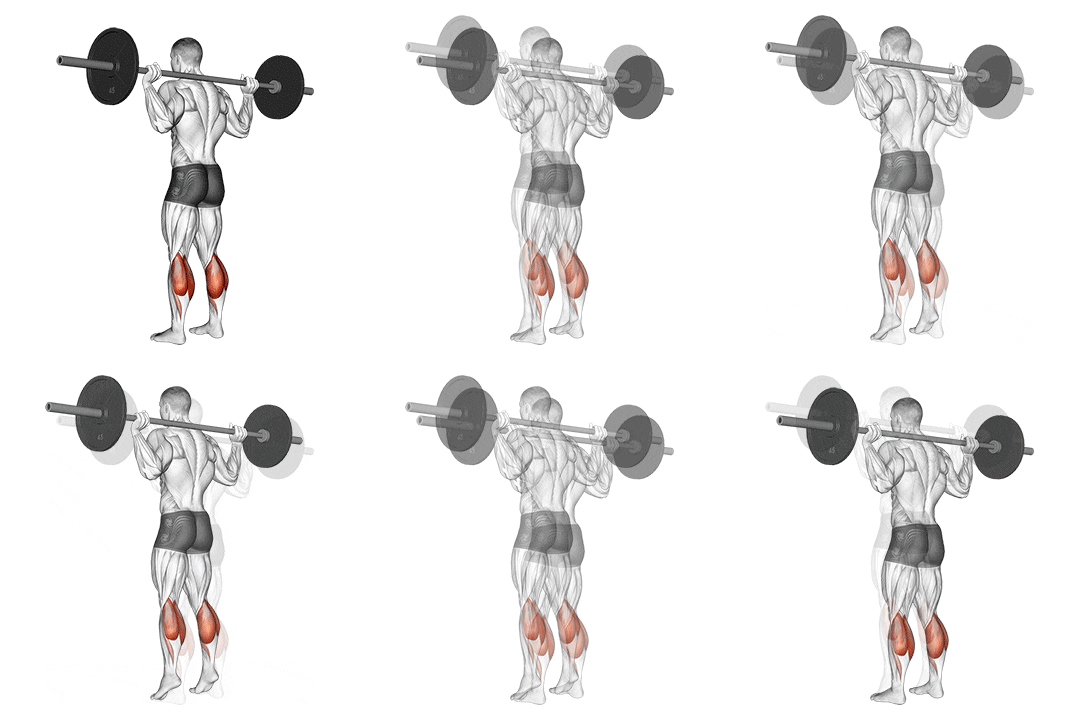
The barbell floor calf raise is an exercise that specifically targets the calf muscles, namely the gastrocnemius and soleus. This exercise is performed with a barbell while standing on a raised platform, such as weight plates or a block. It helps strengthen and develop the calves, which can improve lower leg stability and enhance athletic performance. ## Instructions 1. Place a barbell across your upper back, resting it on your trapezius muscles. Ensure a comfortable grip on the barbell with your hands slightly wider than shoulder-width apart. 2. Stand on a raised platform, such as weight plates or a calf block, with the balls of your feet positioned securely on the edge and your heels hanging off. 3. Your feet should be parallel and shoulder-width apart. 4. Start with your heels lowered as far as possible, so you feel a stretch in your calf muscles. 5. Slowly raise your heels by pushing through the balls of your feet, lifting your body upward as high as you can onto your tiptoes. 6. Hold the raised position for a brief moment, emphasizing the contraction in your calves. 7. Slowly lower your heels back down, returning to the starting position and feeling a stretch in your calves again. 8. Repeat for the desired number of repetitions. ## Variations - Single-Leg Barbell Floor Calf Raise: Perform the exercise with one leg at a time. This variation adds an additional challenge and can help address any imbalances between the calves. - Dumbbell Floor Calf Raise: Hold dumbbells in each hand instead of using a barbell. This allows for a more comfortable grip and may be preferable for individuals with wrist or shoulder limitations. - Machine Calf Raise: If a barbell is not available, you can use a calf raise machine at the gym. Follow the machine's instructions and adjust the weight accordingly. ## Muscles Worked - Primary muscles: Gastrocnemius, soleus (calf muscles) ## Common Mistakes - Raising the entire body instead of just the heels: Focus on isolating the calf muscles and avoid using excessive momentum or body sway. Keep your core engaged and concentrate on the upward movement of your heels. - Not utilizing a full range of motion: Lower your heels as far as possible to feel a stretch in your calves and raise them as high as you can onto your tiptoes. This ensures you engage the calf muscles through their complete range of motion. - Relying on momentum: Perform the exercise with controlled movements, avoiding any sudden or jerky motions. This allows for better muscle activation and prevents strain or injury. ## Safety Precautions - Warm up your calf muscles before performing the exercise to prevent strain or injury. - Start with a lighter weight or no weight at all to get accustomed to the movement and ensure proper form. - Maintain proper balance and stability by gripping the barbell securely and keeping your core engaged. - If you have any pre-existing foot, ankle, or calf injuries or conditions, consult with a healthcare professional or fitness trainer before attempting the exercise to ensure it is safe for you. - Avoid excessive weight on the barbell to prevent loss of control or potential injuries. - If you experience any pain or discomfort during the exercise, stop immediately and seek medical advice if needed.
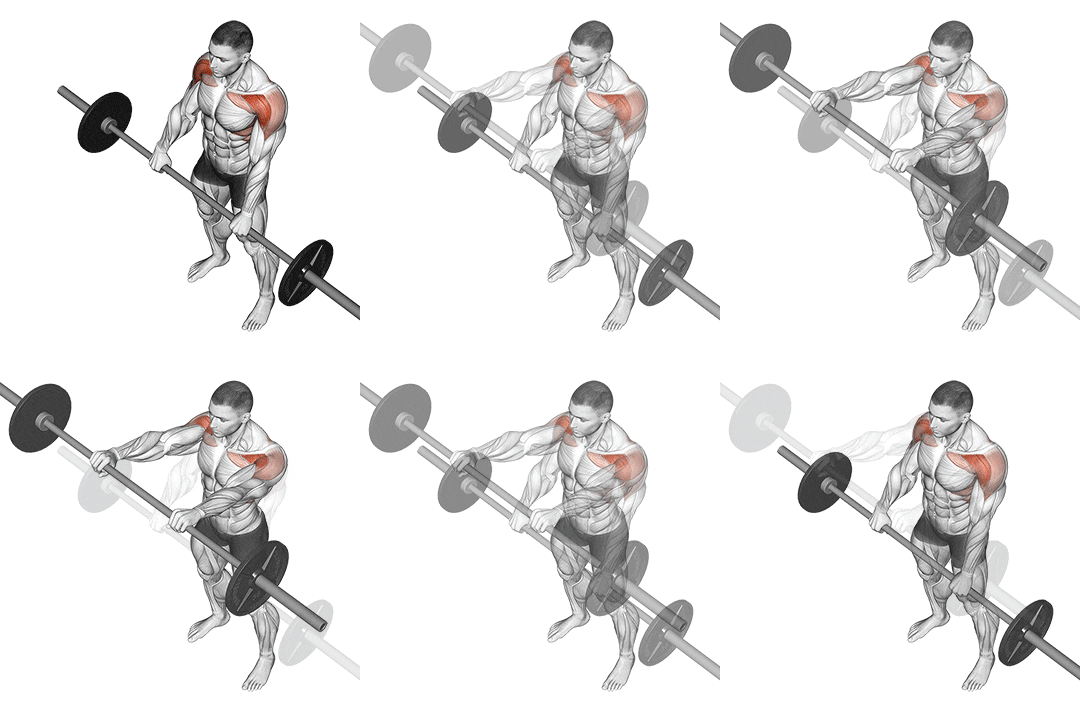
The barbell front raise is an exercise that primarily targets the front deltoids (anterior deltoids) of the shoulder. It involves lifting a barbell from a hanging position in front of the thighs to shoulder level, with the arms extended. This exercise helps develop shoulder strength and stability, enhances shoulder definition, and contributes to overall upper body aesthetics. ## Instructions 1. Stand upright with your feet shoulder-width apart, holding a barbell with an overhand grip (palms facing down). Your hands should be positioned slightly wider than shoulder-width apart. 2. Allow the barbell to hang in front of your thighs with your arms fully extended, maintaining a slight bend in your elbows. 3. Keep your core engaged and maintain a neutral spine throughout the exercise. 4. Initiate the movement by lifting the barbell straight in front of you, raising it to shoulder level. Keep your arms extended and your wrists straight. 5. As you lift the barbell, focus on using your front deltoids to perform the movement. Avoid excessive swinging or using momentum from other body parts. 6. Once the barbell reaches shoulder level, pause for a moment and squeeze your front deltoids. 7. Slowly lower the barbell back to the starting position in a controlled manner, maintaining tension in your shoulder muscles. 8. Repeat for the desired number of repetitions. ## Variations - Dumbbell Front Raise: Instead of using a barbell, you can perform the exercise with dumbbells. Hold a dumbbell in each hand and follow the same instructions. - Alternating Front Raise: Perform the exercise by raising one arm at a time. Lift the barbell or dumbbell with one arm while keeping the other arm extended downward. This variation can help address any strength imbalances between the shoulders. ## Muscles Worked - Primary muscles: Anterior deltoids (front deltoids) - Secondary muscles: Lateral deltoids (side deltoids), trapezius, biceps ## Common Mistakes - Using excessive weight: Start with a weight that allows you to maintain proper form and technique. Using too much weight can compromise your form, strain your shoulder joints, and reduce the effectiveness of the exercise. - Swinging the body or using momentum: Keep your upper body stable throughout the exercise. Avoid using momentum or swinging the weight to lift it. Focus on controlled and deliberate movements. - Raising the arms above shoulder level: Avoid lifting the barbell or dumbbells higher than shoulder level. Doing so can put unnecessary stress on the shoulder joints and potentially lead to injury. Stick to a comfortable range of motion that allows for proper muscle engagement. - Holding the breath: Remember to breathe throughout the exercise. Inhale during the lowering phase and exhale during the lifting phase. ## Safety Precautions - Warm up adequately before performing the exercise to prepare your muscles for the movement. - Use a weight that challenges your front deltoids without compromising your form. - Maintain proper posture throughout the exercise, keeping your back straight and core engaged. - If you have any pre-existing shoulder or back conditions, consult with a healthcare professional or fitness trainer before attempting the exercise to ensure it is safe for you. - If you experience any pain or discomfort during the exercise, stop immediately and seek medical advice if needed.
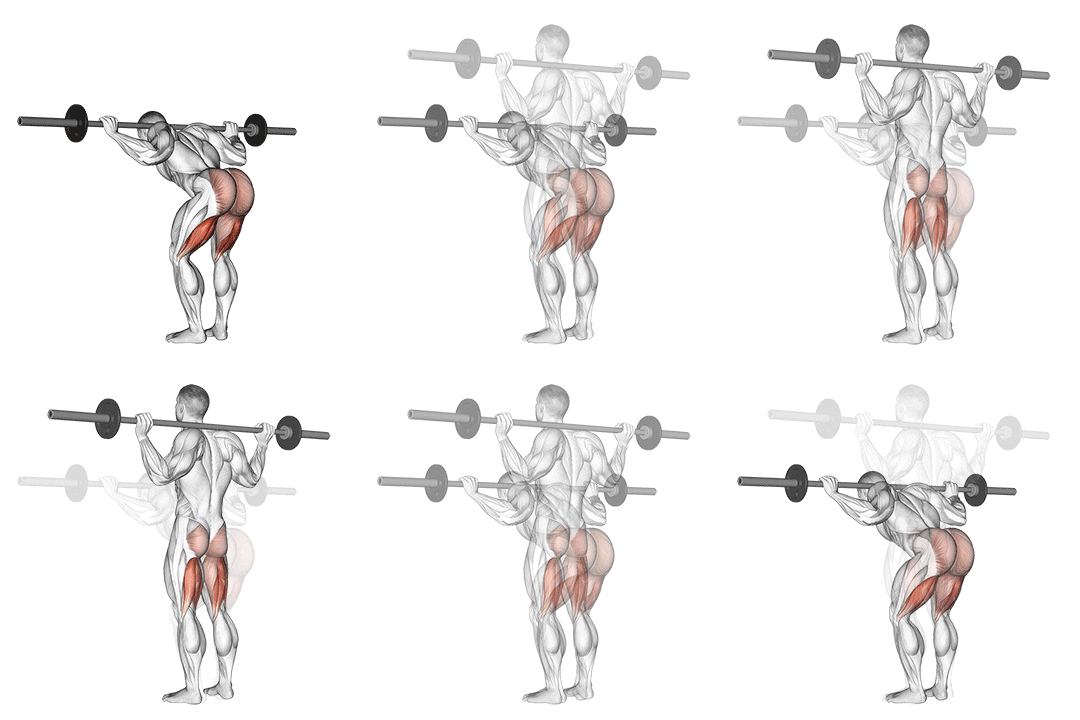
The barbell good morning is a compound exercise that primarily targets the posterior chain, including the hamstrings, glutes, and lower back. It involves bending forward at the hips while keeping the back straight, similar to the motion of bowing. This exercise helps to strengthen the hip and posterior chain muscles, improve hip mobility, and enhance overall athletic performance. ## Instructions 1. Start by setting up a barbell on a squat rack at an appropriate height. Place it on your upper back, just below your traps, and grip the bar wider than shoulder-width apart. 2. Step away from the rack and position your feet shoulder-width apart. Your toes can be slightly angled outwards for comfort. 3. Engage your core muscles by drawing your belly button in towards your spine and maintaining a straight back throughout the exercise. 4. Begin the movement by unlocking your hips and pushing them backward, allowing your torso to lean forward. Keep your knees slightly bent but avoid excessive flexion. 5. Continue bending at the hips until you feel a stretch in your hamstrings. Your torso should be almost parallel to the floor, but avoid rounding your back. 6. Pause briefly at the bottom position and then reverse the movement by driving your hips forward and returning to the starting position. Focus on using your glutes and hamstrings to initiate the movement. 7. Repeat for the desired number of repetitions. ## Variations - **Dumbbell or Kettlebell Good Morning**: Instead of using a barbell, hold a dumbbell or kettlebell in each hand at your sides while performing the exercise. This variation allows for greater freedom of movement and can be beneficial for individuals with limited access to barbells. - **Banded Good Morning**: Attach resistance bands around your hips or hold them in your hands while performing the exercise to add extra resistance and increase muscle activation. - **Romanian Deadlift**: The Romanian deadlift (RDL) is a similar exercise that targets similar muscle groups. In the RDL, you hold the barbell in front of your thighs and focus on bending at the hips while maintaining a neutral spine. ## Muscles Worked - Hamstrings (primary) - Glutes (primary) - Erector spinae (lower back muscles) - Core muscles (stabilizers) ## Common Mistakes - Rounding the back: Maintain a neutral spine throughout the exercise to avoid excessive stress on the lower back. Keep your core engaged and focus on hinging at the hips. - Arching the back excessively: Avoid hyperextending your lower back at the top of the movement. Maintain a controlled range of motion and focus on squeezing your glutes. - Using too much weight: Start with lighter weights to master the technique and gradually increase the load as your form and strength improve. - Not controlling the descent: Maintain control throughout the movement, especially during the eccentric phase (bending forward). Avoid rushing or letting gravity take over. ## Safety Precautions - Ensure that the barbell is securely positioned on your upper back before starting the exercise. - Start with a lighter weight to familiarize yourself with the movement pattern and gradually increase the load as you become more comfortable and proficient. - Keep a slight bend in your knees throughout the exercise to avoid placing excessive stress on the joints. - If you have any existing lower back or hamstring issues, consult with a fitness professional or healthcare provider before attempting this exercise. - If you experience any pain or discomfort, especially in your lower back, stop the exercise and seek guidance from a qualified professional.
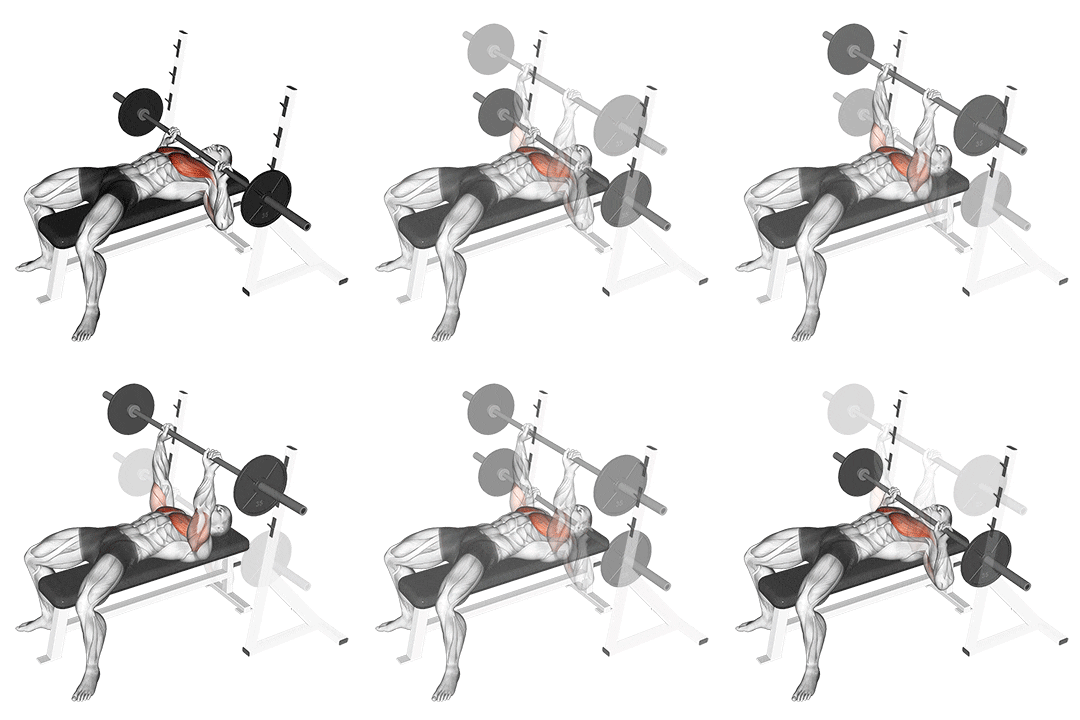
The barbell guillotine bench press is a variation of the traditional bench press exercise. It targets the upper chest muscles (pectoralis major), shoulders (deltoids), and triceps. The main difference between the guillotine bench press and the regular bench press is that the barbell is lowered to the neck or throat area, emphasizing the upper portion of the chest muscles. ## Instructions 1. Lie flat on a bench with your feet firmly planted on the floor, ensuring stability throughout the exercise. 2. Grasp the barbell with a wide overhand grip, wider than shoulder-width apart. Lift the barbell from the rack and hold it directly above your chest with your arms extended. 3. Carefully lower the barbell towards your neck or throat area, allowing your elbows to flare out to the sides. This is the key difference from a regular bench press where the barbell is typically lowered to the mid-chest. 4. Keep your wrists straight and aligned with your forearms throughout the movement. 5. Once the barbell reaches the desired depth, push it back up using the strength of your upper chest and shoulders until your arms are fully extended. 6. Repeat for the desired number of repetitions. ## Variations - **Dumbbell Guillotine Bench Press**: Perform the exercise with dumbbells instead of a barbell. This allows for a greater range of motion and may be beneficial for individuals who experience discomfort with a barbell. - **Incline Guillotine Bench Press**: Perform the exercise on an incline bench to target the upper chest muscles more specifically. - **Machine Guillotine Press**: If available, use a chest press machine that allows you to perform a guillotine press motion. This can provide stability and control for beginners or individuals with limited strength. ## Muscles Worked - Upper pectoralis major (primary) - Anterior deltoids (front shoulders) - Triceps (secondary) ## Common Mistakes - Lowering the barbell too far: Avoid lowering the barbell to a point where it places excessive stress on the neck or throat. Find a depth that challenges the upper chest muscles without compromising your safety. - Arching the lower back: Maintain a neutral spine throughout the exercise and avoid excessive arching of the lower back. Keep your core engaged and your shoulder blades retracted. - Using excessive weight: Start with lighter weights and focus on mastering the technique before gradually increasing the load. Using too much weight can compromise form and lead to injury. - Flaring the elbows excessively: While the elbows may naturally flare out to some extent, avoid excessive flaring, as it can place excessive strain on the shoulders and increase the risk of injury. ## Safety Precautions - Use a spotter when performing the guillotine bench press, especially if you're using heavier weights. A spotter can assist you in case you struggle with the lift or need help reracking the barbell. - Start with a lighter weight to ensure proper form and technique before progressing to heavier weights. - If you have any shoulder or neck issues, consider consulting with a fitness professional or healthcare provider before attempting this exercise. - Pay attention to your body and any discomfort or pain. If you experience any sharp pain or discomfort, stop the exercise and seek appropriate guidance.
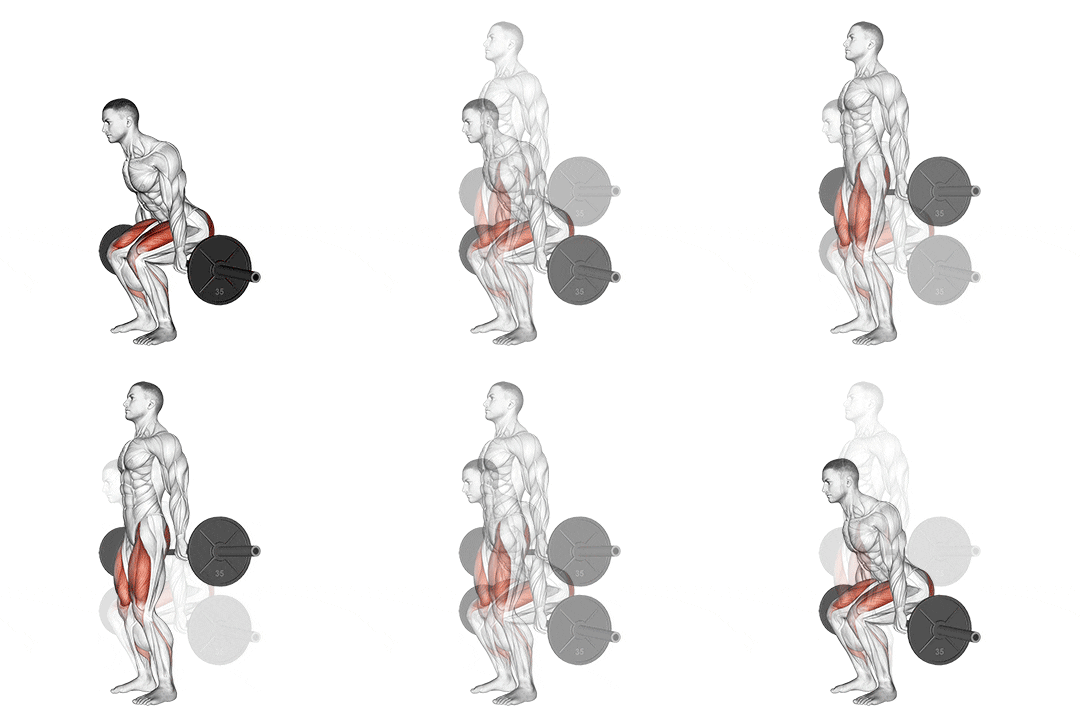
The barbell hack squat is a compound exercise that primarily targets the quadriceps muscles (front of the thighs) while also engaging the glutes, hamstrings, and calves. This exercise is performed by holding a barbell behind your body and squatting down, simulating a hack squat machine. It can help develop lower body strength, power, and muscular endurance. ## Instructions 1. Begin by standing with your feet hip-width apart, toes pointed slightly outward. Position the barbell on the floor behind your legs. 2. Bend down and grip the barbell with an overhand grip, palms facing backward. Your hands should be shoulder-width apart or slightly wider. 3. Keeping your back straight, stand up by lifting the barbell off the floor and allowing it to rest on the back of your thighs. 4. Take a step or two forward to clear the barbell from any obstacles behind you. 5. Position your feet slightly wider than shoulder-width apart, ensuring your weight is evenly distributed through your midfoot and heels. 6. Brace your core, maintain an upright torso, and initiate the squat by bending at the knees and hips simultaneously. Keep your chest lifted throughout the movement. 7. Descend until your thighs are parallel to the ground or slightly below, ensuring that your knees track in line with your toes. 8. Pause briefly at the bottom position and then push through your heels to extend your knees and hips, returning to the starting position. 9. Repeat for the desired number of repetitions. ## Variations - **Dumbbell Hack Squat**: Perform the exercise using dumbbells held at your sides instead of a barbell. This variation can provide a different stimulus and allow for a greater range of motion. - **Smith Machine Hack Squat**: Utilize a Smith machine to perform the hack squat. The guided movement can help with stability and control. - **Narrow or Wide Stance**: Experiment with different foot positions, such as a narrow stance for targeting the quads more specifically or a wider stance to emphasize the glutes and inner thighs. ## Muscles Worked - Quadriceps (primary) - Glutes (secondary) - Hamstrings (secondary) - Calves (secondary) - Core muscles (stabilizers) ## Common Mistakes - Rounding the lower back: Maintain a neutral spine throughout the exercise to avoid excessive stress on the lower back. Engage your core muscles and keep your chest lifted. - Allowing knees to collapse inward: Ensure that your knees track in line with your toes throughout the movement. Avoid letting them cave inward, as it can strain the knee joints. - Leaning too far forward: Maintain an upright torso throughout the exercise to maximize quadriceps activation. Avoid excessive forward lean, as it may shift the focus to the lower back or hamstrings. - Using excessive weight: Start with a manageable weight and focus on maintaining proper form and technique. Gradually increase the load as your strength and proficiency improve. ## Safety Precautions - Ensure that the barbell is securely held behind your legs before starting the exercise. - Use collars on the barbell to prevent the plates from sliding during the movement. - Start with lighter weights and gradually increase the load as you become more comfortable and proficient with the exercise. - If you have any knee or lower back issues, consult with a fitness professional or healthcare provider before attempting this exercise. - Listen to your body and avoid pushing through any sharp pain or discomfort. If you experience any pain, stop the exercise and seek appropriate guidance.
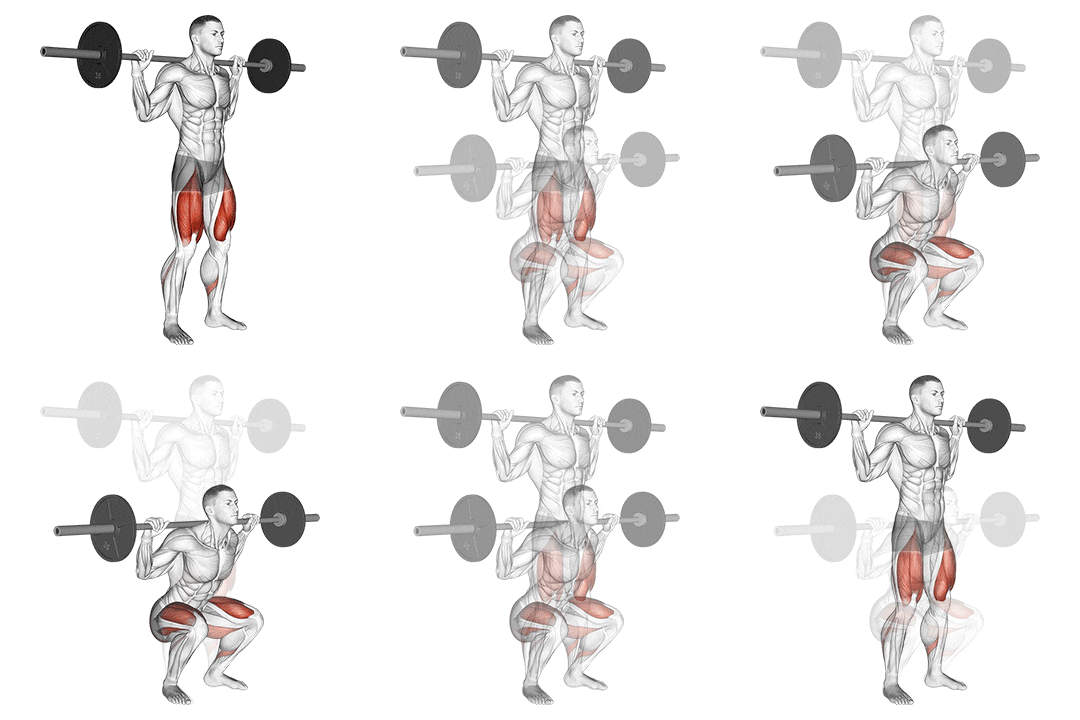
The barbell high bar squat is a fundamental compound exercise that targets the muscles of the lower body, including the quadriceps, glutes, hamstrings, and calves. It involves placing the barbell on the upper traps and performing a squatting motion, emphasizing overall lower body strength, stability, and muscle development. ## Instructions 1. Set the barbell on a squat rack at an appropriate height. Position it just below shoulder level. 2. Approach the bar and position it across your upper traps, slightly below the base of your neck. Grasp the bar with an overhand grip, wider than shoulder-width apart. 3. Step back from the rack, ensuring your feet are shoulder-width apart or slightly wider. Point your toes slightly outward for comfort and stability. 4. Take a deep breath and brace your core muscles to stabilize your torso. 5. Initiate the squat by bending at the hips and knees simultaneously. Keep your chest lifted and your gaze forward. 6. Descend by pushing your hips back and lowering your body until your thighs are parallel to the ground or slightly below. Maintain a neutral spine throughout the movement. 7. Pause briefly at the bottom position and then push through your heels to extend your knees and hips, returning to the starting position. 8. Exhale at the top of the movement and repeat for the desired number of repetitions. ## Variations - **Low Bar Squat**: In the low bar squat, the barbell is positioned lower on the back, resting across the rear delts and upper back. This variation shifts the emphasis to the posterior chain (glutes, hamstrings, lower back) and may allow for a slightly greater load. - **Front Squat**: In the front squat, the barbell is positioned across the front of the shoulders, held in a clean grip or crossed-arm grip. This variation places more emphasis on the quadriceps and core stability. - **Box Squat**: Perform the squat by squatting onto a box or bench, briefly resting on it before standing back up. This variation can help improve depth and control, especially for individuals with mobility limitations. ## Muscles Worked - Quadriceps (primary) - Glutes (secondary) - Hamstrings (secondary) - Calves (secondary) - Core muscles (stabilizers) ## Common Mistakes - Rounding the lower back: Maintain a neutral spine throughout the exercise to avoid excessive stress on the lower back. Engage your core muscles and keep your chest lifted. - Allowing knees to collapse inward: Ensure that your knees track in line with your toes throughout the movement. Avoid letting them cave inward, as it can strain the knee joints. - Insufficient depth: Aim to squat to at least parallel or slightly below parallel, ensuring your thighs are parallel to the ground. Avoid shallow squats that limit the involvement of the target muscles. - Leaning too far forward: Maintain an upright torso throughout the exercise to maximize quadriceps activation. Avoid excessive forward lean, as it may shift the focus to the lower back or hamstrings. ## Safety Precautions - Use collars on the barbell to secure the plates in place during the exercise. - Start with lighter weights to practice proper form and technique before gradually increasing the load. - Ensure that the squat rack is stable and secure before using it. - If you have any knee or lower back issues, consult with a fitness professional or healthcare provider before attempting this exercise. - Listen to your body and avoid pushing through any sharp pain or discomfort. If you experience any pain, stop the exercise and seek appropriate guidance.