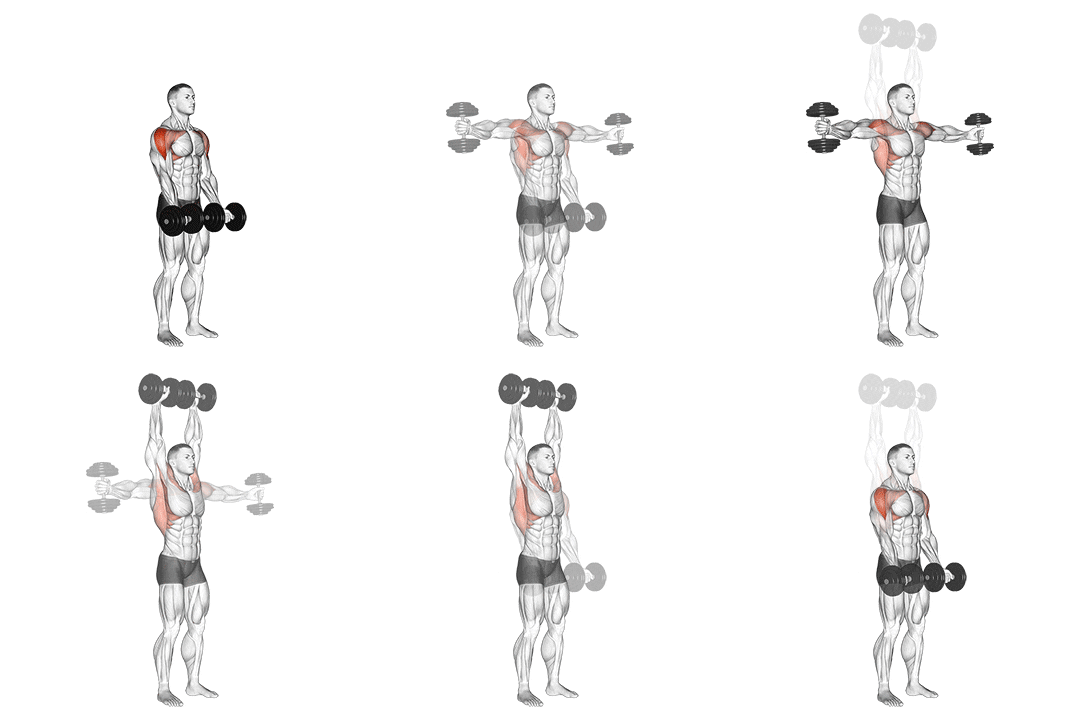
The dumbbell standing around the world exercise is a dynamic movement that targets the shoulders and the muscles of the upper body. It involves moving the dumbbells in a circular motion, mimicking the path of tracing a circle around the body. This exercise helps to improve shoulder mobility, stability, and strength. ## Instructions 1. Stand with your feet shoulder-width apart, holding a dumbbell in each hand. Extend your arms out to the sides, parallel to the ground. This is your starting position. 2. Keeping your arms straight and maintaining a slight bend in your elbows, begin the movement by lifting the dumbbells forward and upward, tracing a circular path in front of your body. 3. Continue the circular motion until the dumbbells reach the top position, directly above your head. 4. From the top position, lower the dumbbells in a controlled manner behind your head and continue the circular motion until the dumbbells are back in the starting position. 5. Complete the desired number of repetitions in one direction (clockwise or counterclockwise), then switch directions and repeat the movement. 6. Maintain control throughout the exercise and avoid using excessive momentum. 7. Focus on engaging the shoulder muscles and maintaining proper form throughout the entire range of motion. ## Variations - Alternating Around the World: Instead of performing the movement simultaneously with both arms, alternate the direction and path of each dumbbell. - Standing Around the World with Wrist Rotation: Add a wrist rotation to the movement as you lift the dumbbells overhead and lower them behind your head. Rotate your wrists inwards as you lift and outwards as you lower the weights. - Seated Around the World: Perform the exercise while seated on a bench or stability ball for added stability and support. ## Muscles Worked - Deltoids (shoulders) - Trapezius (upper back) - Rhomboids (upper back) - Biceps and triceps (secondary muscles) ## Common Mistakes - Using excessive weight: Choose dumbbells that allow you to maintain proper form and control throughout the movement. Using too much weight can lead to compromised technique and increased risk of injury. - Shrugging the shoulders: Keep your shoulders relaxed and avoid shrugging them towards your ears. Maintain proper posture throughout the exercise. - Swinging the body: Maintain a stable and controlled stance throughout the movement. Avoid swinging or using excessive momentum. - Arching the lower back: Engage your core muscles and maintain a neutral spine. Avoid excessive arching or overarching of the lower back. ## Safety Precautions - Use weights that are appropriate for your strength and fitness level. Start with lighter weights and gradually increase as you progress. - If you have any shoulder or neck injuries, consult with a healthcare professional before attempting this exercise. - Keep the movement controlled and avoid jerking or swinging the weights, as this can increase the risk of injury. - If you experience any pain or discomfort during the exercise, stop and consult with a fitness professional or healthcare provider.
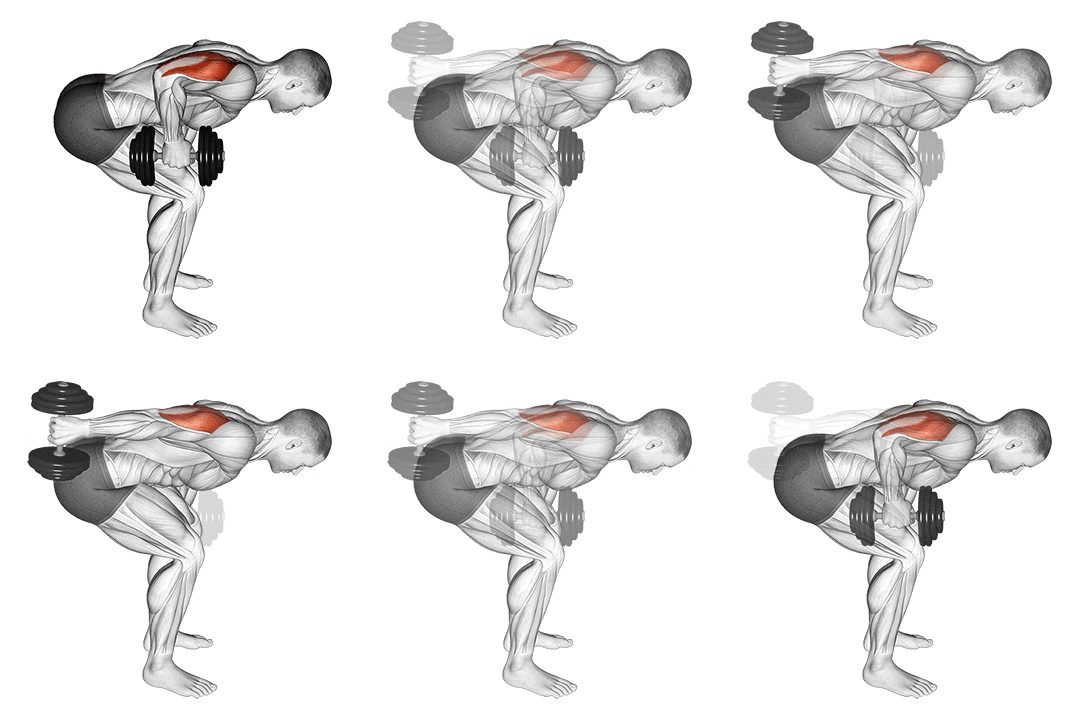
The dumbbell standing bent over one arm triceps extension is an isolation exercise that specifically targets the triceps, the muscles located at the back of the upper arm. By performing this exercise, you can effectively strengthen and tone your triceps, improving arm definition and overall upper body strength. ## Instructions 1. Stand with your feet shoulder-width apart and hold a dumbbell in your right hand. 2. Bend your knees slightly and hinge forward at the hips, keeping your back straight and your core engaged. Allow your right arm to hang down towards the floor. This is your starting position. 3. Keep your upper arm parallel to the ground and your elbow tucked in close to your side. 4. Begin the movement by extending your right forearm back, straightening your arm completely. Exhale during this phase. 5. Pause briefly at the top of the movement, squeezing your triceps. 6. Slowly lower the dumbbell back to the starting position in a controlled manner while maintaining a slight bend in your elbow. Inhale during this phase. 7. Repeat the desired number of repetitions on your right arm, then switch to your left arm and repeat the exercise. ## Variations - Double Arm Triceps Extension: Perform the exercise with both arms simultaneously, holding a dumbbell in each hand. - Seated Bent Over Triceps Extension: Perform the exercise while seated on a bench or stability ball for added support and stability. - Overhead Triceps Extension: Instead of extending the arm behind you, extend it overhead while holding a dumbbell. This variation targets the triceps from a different angle. ## Muscles Worked - Triceps (back of the upper arm) - Posterior deltoids (back of the shoulders) - Rhomboids (upper back) ## Common Mistakes - Using excessive weight: Start with a weight that allows you to maintain proper form and control throughout the exercise. Using too much weight can compromise your technique and increase the risk of injury. - Allowing the elbow to flare out: Keep your elbow close to your side throughout the movement. Avoid letting it flare outwards, as this reduces the engagement of the triceps. - Hunching or rounding the back: Maintain a straight and stable back throughout the exercise. Avoid hunching or rounding the back, as this can strain the lower back. - Using momentum: Focus on a slow and controlled movement, avoiding any swinging or jerking motions. Engage the triceps and maintain tension throughout the exercise. ## Safety Precautions - Choose weights that are suitable for your strength and fitness level. Begin with lighter weights and gradually increase as you become more comfortable and proficient. - If you have any pre-existing elbow or shoulder injuries, consult with a healthcare professional before attempting this exercise. - Keep your core engaged and maintain proper posture throughout the exercise to minimize the risk of strain on your lower back. - If you experience any pain or discomfort during the exercise, stop and consult with a fitness professional or healthcare provider.
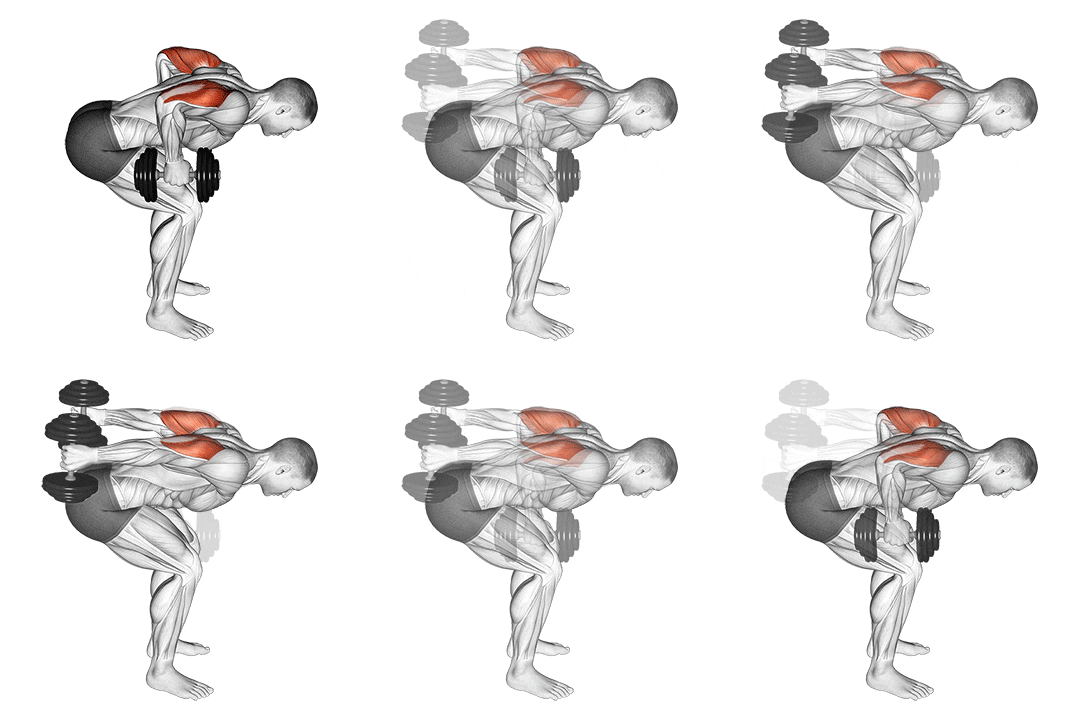
The dumbbell standing bent over two arm triceps extension is an exercise that targets the triceps muscles, located at the back of the upper arms. This exercise helps to strengthen and tone the triceps, improving arm definition and overall upper body strength. ## Instructions 1. Stand with your feet shoulder-width apart, holding a dumbbell in each hand. 2. Bend your knees slightly and hinge forward at the hips, keeping your back straight and your core engaged. Allow your arms to hang down towards the floor, palms facing each other. This is your starting position. 3. Keep your upper arms parallel to the ground and your elbows tucked in close to your sides. 4. Begin the movement by extending both forearms back, straightening your arms completely. Exhale during this phase. 5. Pause briefly at the top of the movement, focusing on squeezing your triceps. 6. Slowly lower the dumbbells back to the starting position in a controlled manner while maintaining a slight bend in your elbows. Inhale during this phase. 7. Repeat for the desired number of repetitions. ## Variations - Seated Bent Over Two Arm Triceps Extension: Perform the exercise while seated on a bench or stability ball for added support and stability. - Resistance Band Two Arm Triceps Extension: Use a resistance band instead of dumbbells. Attach the band to a sturdy anchor point, hold the ends of the band in each hand, and perform the extension movement. - Overhead Two Arm Triceps Extension: Instead of extending the arms behind you, extend them overhead while holding the dumbbells. This variation targets the triceps from a different angle. ## Muscles Worked - Triceps (back of the upper arm) - Posterior deltoids (back of the shoulders) - Rhomboids (upper back) ## Common Mistakes - Using excessive weight: Choose weights that allow you to maintain proper form and control throughout the exercise. Using too much weight can compromise your technique and increase the risk of injury. - Allowing the elbows to flare out: Keep your elbows close to your sides throughout the movement. Avoid letting them flare outwards, as this reduces the engagement of the triceps. - Hunching or rounding the back: Maintain a straight and stable back throughout the exercise. Avoid hunching or rounding the back, as this can strain the lower back. - Using momentum: Focus on a slow and controlled movement, avoiding any swinging or jerking motions. Engage the triceps and maintain tension throughout the exercise. ## Safety Precautions - Choose weights that are suitable for your strength and fitness level. Begin with lighter weights and gradually increase as you become more comfortable and proficient. - If you have any pre-existing elbow or shoulder injuries, consult with a healthcare professional before attempting this exercise. - Keep your core engaged and maintain proper posture throughout the exercise to minimize the risk of strain on your lower back. - If you experience any pain or discomfort during the exercise, stop and consult with a fitness professional or healthcare provider.
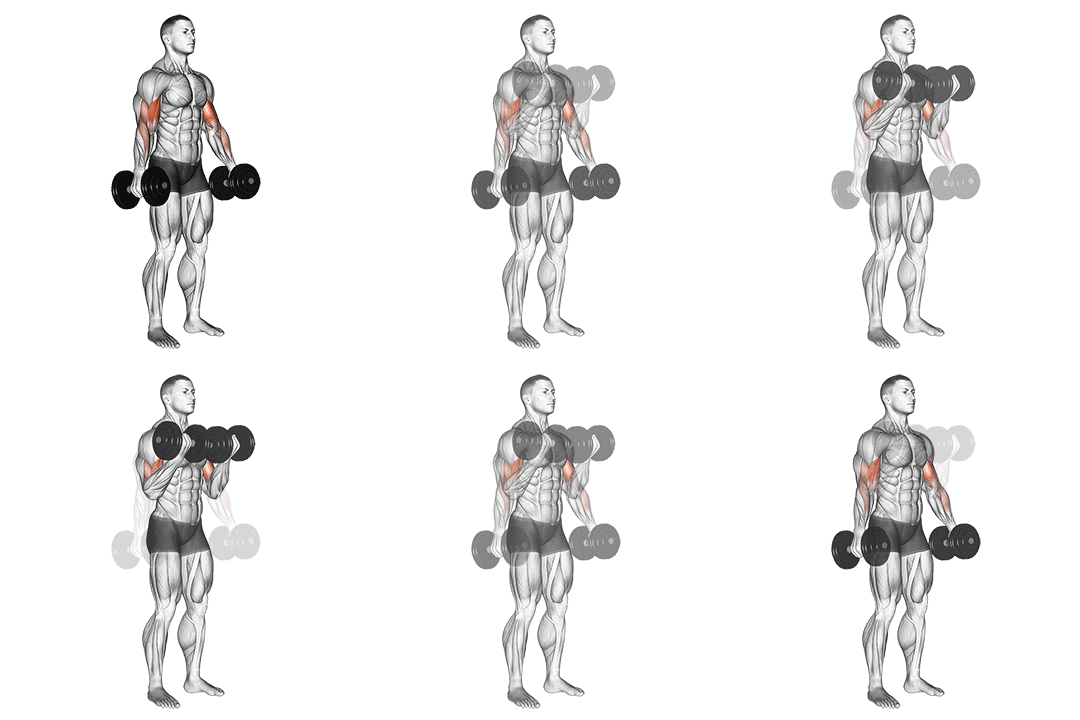
The dumbbell standing biceps curl is a popular exercise that targets the biceps muscles, which are located in the front of the upper arm. This exercise helps to strengthen and tone the biceps, improving arm definition and overall upper body strength. ## Instructions 1. Stand with your feet shoulder-width apart, holding a dumbbell in each hand, palms facing forward. This is your starting position. 2. Keep your upper arms close to your sides, with your elbows slightly bent and your shoulders relaxed. 3. While keeping your upper arms stationary, exhale and curl the dumbbells upward towards your shoulders, contracting your biceps. Focus on squeezing the biceps at the top of the movement. 4. Pause briefly at the top of the movement, then inhale and slowly lower the dumbbells back to the starting position in a controlled manner. 5. Repeat for the desired number of repetitions. ## Variations - Hammer Curl: Instead of keeping your palms facing forward, turn them inward so that they face each other throughout the movement. This targets both the biceps and the brachialis muscle. - Alternating Biceps Curl: Perform the exercise one arm at a time, curling one dumbbell while keeping the other arm in the starting position. This variation allows for better focus and control on each arm individually. - Seated Biceps Curl: Perform the exercise while seated on a bench or stability ball to eliminate any potential momentum from the lower body. ## Muscles Worked - Biceps brachii (front of the upper arm) - Brachialis (located underneath the biceps) - Brachioradialis (forearm muscle) ## Common Mistakes - Using momentum: Avoid using momentum to swing the dumbbells up. Focus on a slow and controlled movement to engage the biceps effectively. - Arching the back: Keep your back straight and avoid arching it backward during the curl. Engage your core muscles to maintain proper posture throughout the exercise. - Allowing the elbows to move forward: Keep your elbows close to your sides throughout the movement. Avoid allowing them to move forward, as this reduces the engagement of the biceps. - Gripping the dumbbells too tightly: Maintain a relaxed grip on the dumbbells. Avoid excessive tension in your forearms and focus on contracting the biceps. ## Safety Precautions - Choose weights that are suitable for your strength and fitness level. Start with lighter weights and gradually increase as you become more comfortable and proficient. - If you have any pre-existing elbow or shoulder injuries, consult with a healthcare professional before attempting this exercise. - Keep your wrists in a neutral position throughout the movement to minimize strain on the wrists and forearms. - If you experience any pain or discomfort during the exercise, stop and consult with a fitness professional or healthcare provider.
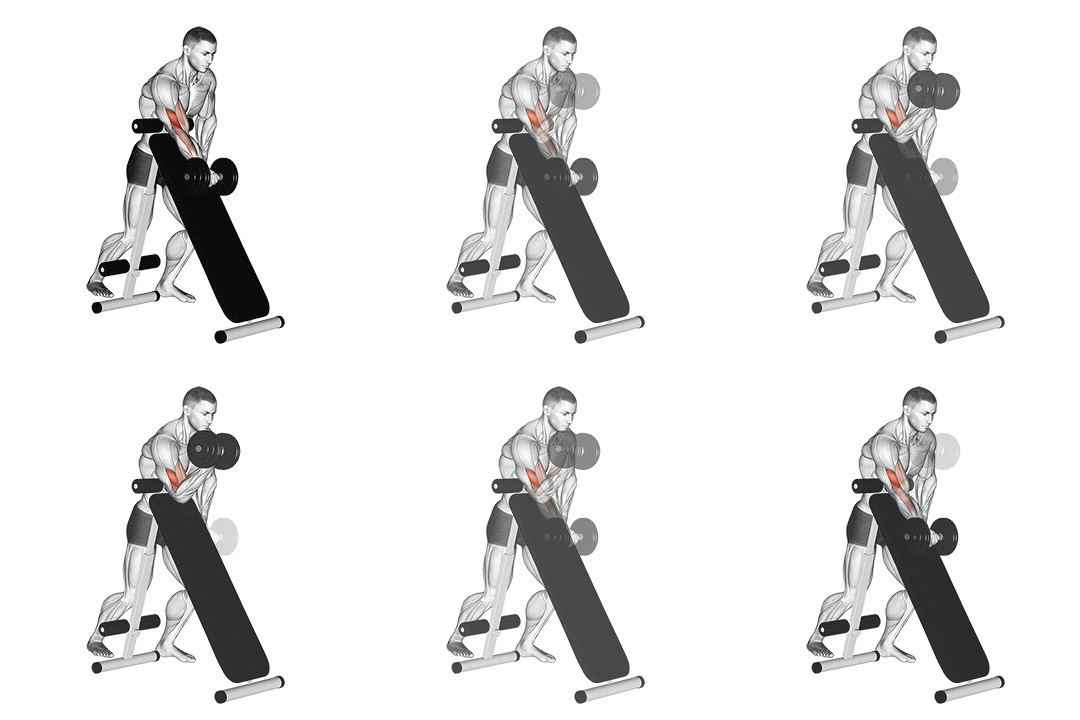
The dumbbell standing one arm curl over an incline bench is an exercise that targets the biceps brachii muscle while providing additional support to the back and reducing the involvement of other muscles. By performing the curl over an incline bench, it isolates the biceps and allows for a greater range of motion. ## Instructions 1. Set up an incline bench at approximately a 45-degree angle. 2. Stand facing the incline bench with your feet shoulder-width apart. 3. Hold a dumbbell in one hand with an underhand grip (palm facing upward). 4. Rest the back of your upper arm against the incline bench, ensuring that your arm is fully extended and perpendicular to the floor. 5. Keep your back straight, chest up, and core engaged throughout the exercise. 6. Begin the movement by flexing your elbow and curling the dumbbell upward while keeping your upper arm stationary. 7. Continue curling until the dumbbell is close to your shoulder, focusing on contracting the biceps. 8. Pause for a moment at the top of the contraction, squeezing the biceps. 9. Slowly lower the dumbbell back to the starting position, fully extending your arm. 10. Repeat for the desired number of repetitions. 11. Switch to the opposite arm and perform the same steps. ## Variations - Seated One Arm Curl (Over Incline Bench): Sit on the incline bench while performing the exercise to reduce lower body involvement and focus more on the biceps. - Alternating One Arm Curl (Over Incline Bench): Perform the exercise by alternating arms rather than completing all repetitions on one side before switching to the other. - Resistance Band One Arm Curl (Over Incline Bench): Instead of using dumbbells, you can use a resistance band. Attach one end of the band to a secure anchor and hold the other end with your hand, then follow the same technique as described. ## Muscles Worked The dumbbell standing one arm curl over an incline bench primarily targets the biceps brachii muscle. It also engages the brachialis and brachioradialis muscles of the forearm. ## Common Mistakes 1. Using Momentum: Avoid swinging or using momentum to lift the weight. Keep the movement slow and controlled to maximize muscle engagement. 2. Lifting Shoulder or Elbow: Keep your upper arm stationary against the incline bench throughout the exercise. Avoid lifting the shoulder or elbow off the bench, as this reduces the isolation of the biceps. 3. Leaning or Arching Back: Maintain proper posture by keeping your back against the incline bench and avoiding excessive leaning or arching of the lower back. ## Safety Precautions - Begin with a weight that allows you to maintain proper form and technique. - Use an incline bench that is stable and secure to avoid any accidents or imbalance. - Warm up your biceps and forearm muscles before performing the exercise to reduce the risk of injury. - If you have any pre-existing arm or shoulder injuries, consult with a fitness professional or healthcare provider before attempting this exercise. - If you feel any pain or discomfort during the exercise, stop immediately and seek medical advice if necessary.
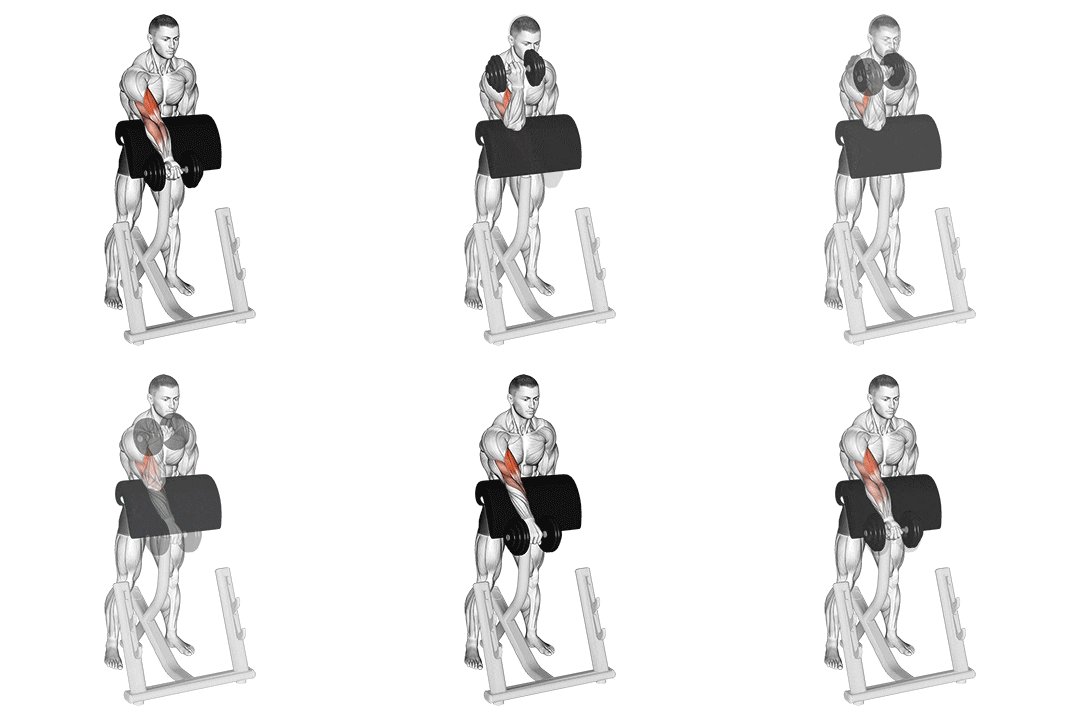
The dumbbell standing Zottman preacher curl is a variation of the biceps curl exercise that targets both the biceps and the forearms. It involves a combination of supination (palms facing up) during the curling phase and pronation (palms facing down) during the lowering phase. This exercise helps to develop and strengthen the biceps, brachialis, and forearms, contributing to overall arm strength and definition. ## Instructions 1. Position a preacher bench in front of you and adjust the height to ensure that your upper arms rest comfortably on the angled surface. 2. Stand with your feet shoulder-width apart, holding a dumbbell in each hand with an underhand grip (palms facing upward). 3. Place the back of your upper arms against the preacher bench, allowing your arms to fully extend toward the floor. 4. Keep your core engaged, maintain a straight back, and avoid excessive arching or swinging motions. 5. Exhale and slowly curl the dumbbells upward by contracting your biceps. As you curl, rotate your wrists outward (supination) so that your palms face up. 6. Continue curling until your forearms are fully contracted and the dumbbells are close to your shoulders. 7. Hold the contracted position for a brief moment, squeezing your biceps. 8. Inhale and gradually rotate your wrists inward (pronation), turning your palms downward, while lowering the dumbbells back to the starting position. 9. Repeat the exercise for the desired number of repetitions. ## Variations - Seated Dumbbell Zottman Preacher Curl: Perform the exercise while seated on a preacher bench or an incline bench for added stability. - Alternating Dumbbell Zottman Preacher Curl: Perform the exercise one arm at a time, alternating between arms. - Zottman Curl with Hammer Grip: Use a neutral or hammer grip (palms facing each other) throughout the exercise instead of alternating supination and pronation. ## Muscles Worked - Primary muscles: Biceps brachii, brachialis - Secondary muscles: Brachioradialis, forearm muscles ## Common Mistakes - Using excessive momentum: Avoid swinging or jerking the weight upward. Focus on controlled and smooth movements. - Allowing the upper arms to move: Keep your upper arms stationary against the preacher bench throughout the exercise, using only your forearms to perform the movement. - Gripping too tightly: Hold the dumbbells with a firm grip but avoid excessive gripping tension that may cause forearm strain. - Arching the back: Maintain a neutral spine and avoid excessive backward leaning or overarching. ## Safety Precautions - Choose an appropriate weight that challenges your biceps and forearms without compromising your form or causing excessive strain. - Maintain proper form throughout the exercise to avoid wrist or forearm injuries. - If you have any pre-existing wrist, elbow, or forearm injuries, consult with a healthcare professional before performing this exercise. - If you experience any pain or discomfort during the exercise, stop immediately and seek guidance from a fitness professional or healthcare provider.
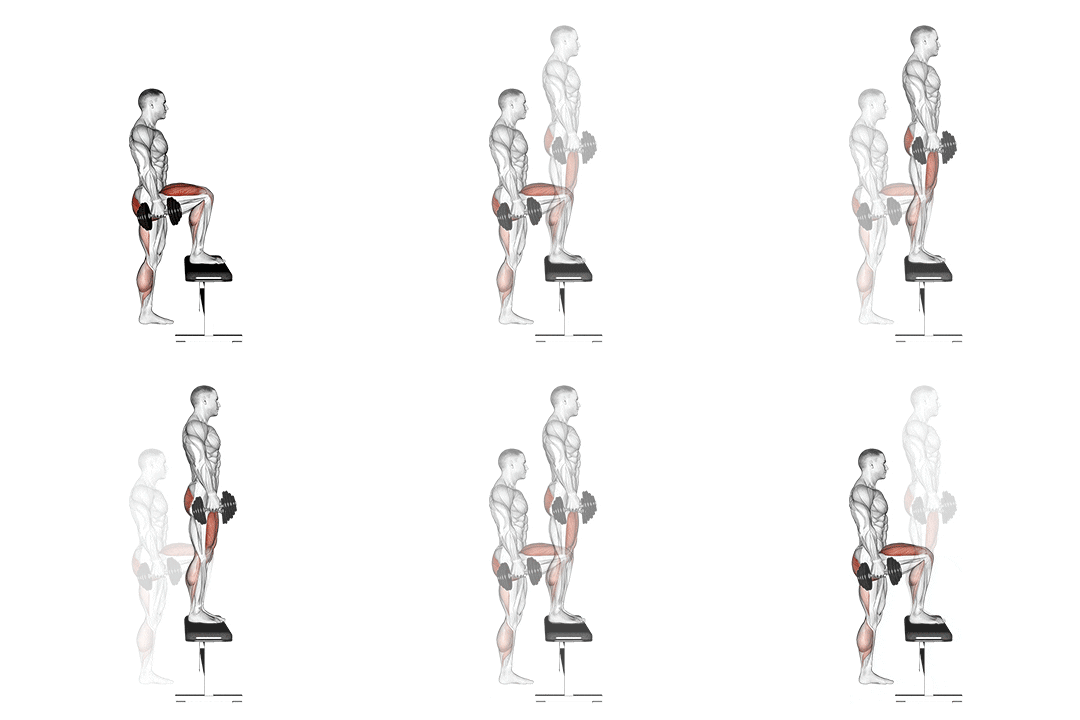
The dumbbell step-up is a compound exercise that primarily targets the lower body, specifically the quadriceps, hamstrings, and glutes. It involves stepping onto an elevated platform while holding dumbbells, which helps improve lower body strength, stability, and balance. ## Instructions 1. Stand facing an elevated platform or step with a dumbbell in each hand, arms fully extended by your sides. 2. Position your feet hip-width apart and maintain a straight posture with your core engaged. 3. Step onto the platform with one foot, ensuring that your entire foot is firmly placed on the surface. 4. Push through the heel of the leading foot to lift your body upward, fully extending the hip and knee joints. 5. As you step onto the platform, bring the trailing foot up and place it next to the leading foot on the platform. 6. Stand tall on the platform, maintaining balance and stability. 7. Step down with the trailing foot, returning to the starting position. 8. Repeat the exercise, alternating the leading foot with each repetition. ## Variations - Weighted Vest Step-Up: Wear a weighted vest to increase the resistance and challenge your lower body further. - Single Leg Dumbbell Step-Up: Perform the exercise using only one leg at a time, focusing on balance and stability. - Lateral Dumbbell Step-Up: Instead of stepping directly onto the platform, step onto the platform from the side, emphasizing the lateral muscles of the legs. ## Muscles Worked - Primary muscles: Quadriceps (front of the thighs), gluteus maximus (buttocks), hamstrings (back of the thighs) - Secondary muscles: Calves, hip adductors and abductors, core muscles for stability ## Common Mistakes - Using excessive momentum: Avoid using momentum to lift your body onto the platform. Focus on controlled movements. - Leaning forward excessively: Keep your torso upright throughout the exercise to engage the lower body muscles effectively. - Not fully extending the hip and knee joints: Make sure to fully extend the leading leg on the platform for maximum muscle activation. - Neglecting proper foot placement: Ensure that your entire foot is placed firmly on the platform for stability and balance. ## Safety Precautions - Start with a lower platform height and lighter dumbbells if you are new to the exercise or have any lower body limitations. - Choose a platform height that allows your knee to bend at a 90-degree angle when your foot is placed on the platform. - Maintain proper form and control throughout the exercise to prevent any sudden jerking movements. - If you have any knee, hip, or lower back issues, consult with a healthcare professional before performing this exercise. - If you experience any pain or discomfort during the exercise, stop immediately and seek guidance from a fitness professional or healthcare provider.
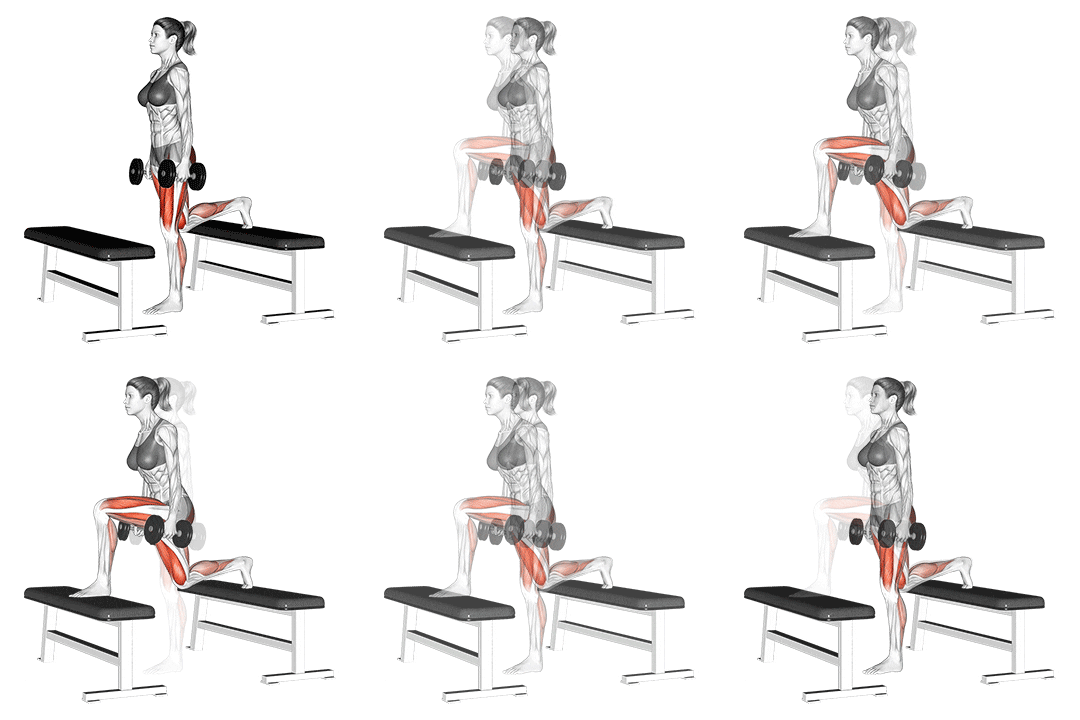
The dumbbell step-up lunge combines the movements of a step-up and a lunge to create a challenging lower body exercise. It targets the quadriceps, hamstrings, glutes, and calves while also engaging the core muscles. This exercise helps improve lower body strength, balance, and stability. ## Instructions 1. Stand facing an elevated platform or step with a dumbbell in each hand, arms fully extended by your sides. 2. Position your feet hip-width apart and maintain a straight posture with your core engaged. 3. Step onto the platform with one foot, ensuring that your entire foot is firmly placed on the surface. 4. Push through the heel of the leading foot to lift your body upward, fully extending the hip and knee joints. 5. As you step onto the platform, bring the trailing foot up and move it backward, transitioning into a lunge position. 6. Lower your body into a lunge by bending the knee of the trailing leg until it nearly touches the ground. 7. Keep your torso upright, with your front knee aligned with your ankle and your back knee hovering just above the ground. 8. Push through the heel of the front foot to rise back up to the starting position. 9. Step down with the trailing foot, returning to the ground. 10. Repeat the exercise, alternating the leading foot with each repetition. ## Variations - Weighted Vest Step-Up Lunge: Wear a weighted vest to increase the resistance and challenge your lower body further. - Single Leg Dumbbell Step-Up Lunge: Perform the exercise using only one leg at a time, focusing on balance and stability. - Dumbbell Reverse Lunge: Instead of stepping onto the platform, step backward into a lunge position to target the muscles differently. ## Muscles Worked - Primary muscles: Quadriceps, hamstrings, gluteus maximus, calves - Secondary muscles: Hip adductors and abductors, core muscles for stability ## Common Mistakes - Leaning the torso forward excessively: Keep your torso upright throughout the exercise to maintain proper form and maximize muscle engagement. - Allowing the front knee to extend beyond the toes: Ensure that your front knee stays in line with your ankle to avoid unnecessary stress on the knee joint. - Not fully extending the hip and knee joints during the step-up: Fully extend the leading leg on the platform to maximize muscle activation. - Neglecting proper foot placement: Ensure that your entire foot is placed firmly on the platform or ground for stability and balance. ## Safety Precautions - Start with a lower platform height and lighter dumbbells if you are new to the exercise or have any lower body limitations. - Choose a platform height that allows your knee to bend at a 90-degree angle when your foot is placed on the platform. - Maintain proper form and control throughout the exercise to prevent any sudden jerking movements. - If you have any knee, hip, or lower back issues, consult with a healthcare professional before performing this exercise. - If you experience any pain or discomfort during the exercise, stop immediately and seek guidance from a fitness professional or healthcare provider.
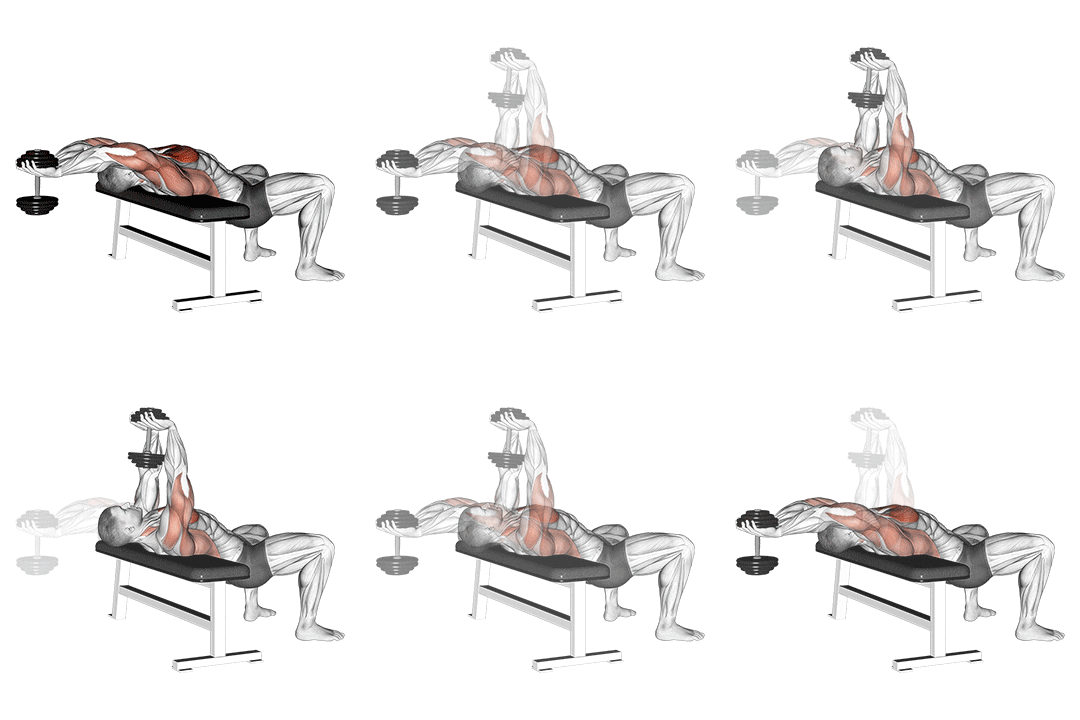
The dumbbell straight arm pullover is an exercise that primarily targets the muscles of the upper body, including the chest, back, and shoulders. It involves a controlled movement of the arms and shoulders while lying on a bench or stable surface. The exercise helps strengthen the chest, back, and shoulder muscles, and also engages the core for stability. ## Instructions 1. Lie down on a flat bench or stable surface with your head resting on the bench and your feet flat on the floor. 2. Hold a dumbbell with both hands, gripping it firmly on the inside plates, and extend your arms straight above your chest. 3. Brace your core and maintain a slight bend in your elbows throughout the exercise. 4. Inhale deeply and slowly lower the dumbbell in an arc motion behind your head while keeping your arms straight. Maintain control and avoid excessive bending at the elbows. 5. Continue lowering until you feel a stretch in your chest and shoulders, but be cautious not to overstretch or experience discomfort. 6. Exhale and reverse the motion by engaging your chest and shoulder muscles to raise the dumbbell back to the starting position above your chest. 7. Repeat for the desired number of repetitions. ## Variations - **Barbell Straight Arm Pullover**: Instead of using dumbbells, you can perform the exercise with a barbell, which allows you to lift heavier loads. - **Cable Straight Arm Pullover**: Using a cable machine with a straight bar attachment, you can perform the exercise in a standing or kneeling position, allowing for a different range of motion and muscle engagement. ## Muscles Worked - Primary muscles: Pectoralis major (chest), latissimus dorsi (back), serratus anterior (side of the chest), anterior deltoids (front of the shoulders). - Secondary muscles: Triceps, core muscles (abdominals, obliques). ## Common Mistakes - Overarching the lower back: Avoid excessive arching of the lower back during the exercise. Maintain a neutral spine position and engage your core for stability. - Bending the elbows too much: Keep a slight bend in the elbows throughout the movement, but avoid excessive bending as it reduces the focus on the targeted muscles. - Lowering the weight too far behind the head: Be cautious not to overstretch or go beyond a comfortable range of motion. Lower the weight until you feel a stretch in the chest and shoulders, but not to the point of discomfort. - Relying on momentum: Perform the exercise in a controlled manner, avoiding any jerking or swinging motions. Focus on engaging the targeted muscles throughout the movement. ## Safety Precautions - If you have any pre-existing shoulder, chest, or back injuries, consult with a healthcare professional before attempting this exercise. - Use a weight that allows you to maintain proper form and control throughout the exercise. - Ensure that your lower back is supported and stable on the bench or surface you are lying on. - If you experience any pain or discomfort during the exercise, stop immediately and seek professional advice. - It's advisable to start with lighter weights and gradually increase the load as your strength and technique improve.