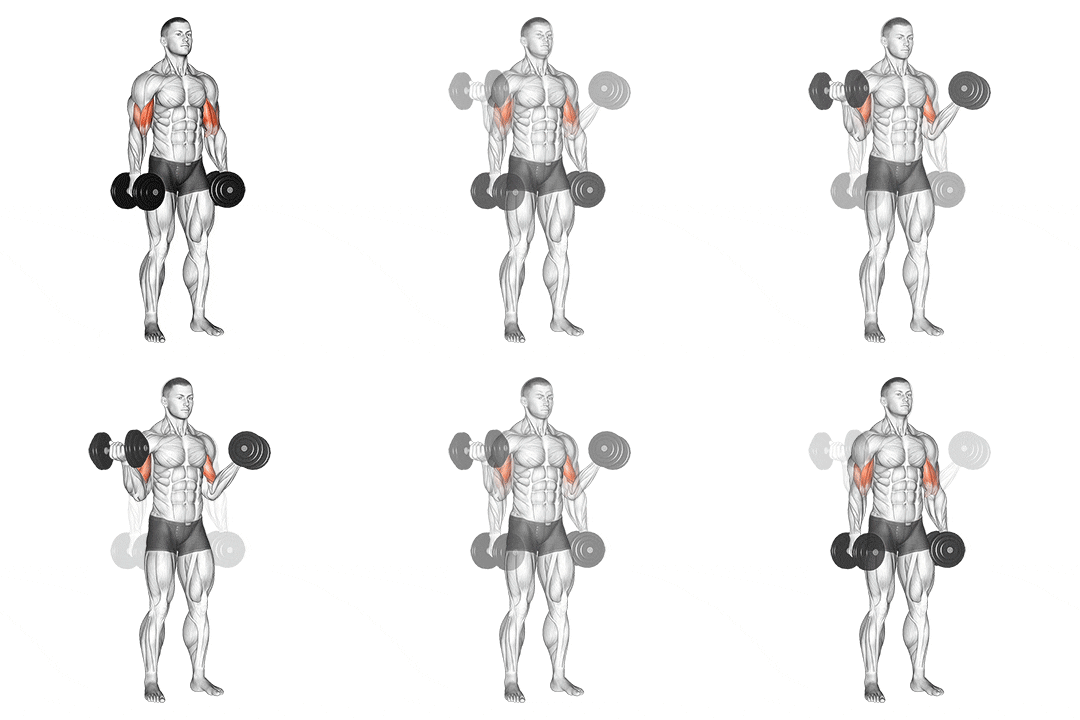
The dumbbell standing inner biceps curl is a variation of the traditional biceps curl exercise that specifically targets the inner head of the biceps brachii muscle. By adjusting the grip placement, this exercise emphasizes the development and strength of the inner portion of the biceps. ## Instructions 1. Stand with your feet shoulder-width apart, holding a dumbbell in each hand with an underhand grip (palms facing upward). 2. Let your arms hang fully extended by your sides, allowing the dumbbells to rest against your thighs. 3. Keep your back straight, chest up, and core engaged throughout the exercise. 4. Begin the movement by flexing your elbows and curling the dumbbells upward while maintaining an underhand grip. Keep your upper arms stationary. 5. As you curl the weights upward, focus on squeezing the inner portion of your biceps. 6. Continue curling until the dumbbells reach shoulder level, while maintaining control and a slow, controlled tempo. 7. Pause for a moment at the top of the contraction, squeezing the biceps. 8. Slowly lower the dumbbells back to the starting position, fully extending your arms. 9. Repeat for the desired number of repetitions. ## Variations - Alternating Inner Biceps Curl: Perform the exercise by curling one arm at a time, alternating between the right and left arms. - Seated Inner Biceps Curl: Sit on a bench or chair while performing the exercise to reduce lower body involvement and focus more on the biceps. - Hammer Grip Biceps Curl: Instead of an underhand grip, use a neutral grip (palms facing each other) while performing the biceps curl. This variation targets both the inner and outer heads of the biceps. ## Muscles Worked The dumbbell standing inner biceps curl primarily targets the inner head of the biceps brachii muscle. It also engages the outer head of the biceps brachii and the brachialis muscle. ## Common Mistakes 1. Swinging the Body: Avoid using momentum or swinging the body to lift the weights. Keep the movement controlled and focus on isolating the biceps. 2. Lifting Shoulders: Be mindful not to shrug or lift your shoulders during the exercise. Keep your shoulders relaxed and fixed throughout the movement. 3. Leaning Backward: Maintain an upright posture throughout the exercise. Avoid leaning backward or arching your lower back to generate momentum. ## Safety Precautions - Begin with a weight that allows you to maintain proper form and technique. - Warm up your biceps and forearm muscles before performing the exercise to reduce the risk of injury. - If you have any pre-existing arm or shoulder injuries, consult with a fitness professional or healthcare provider before attempting this exercise. - If you experience pain or discomfort in your arms or any other part of your body during the exercise, stop immediately and seek medical advice if necessary.
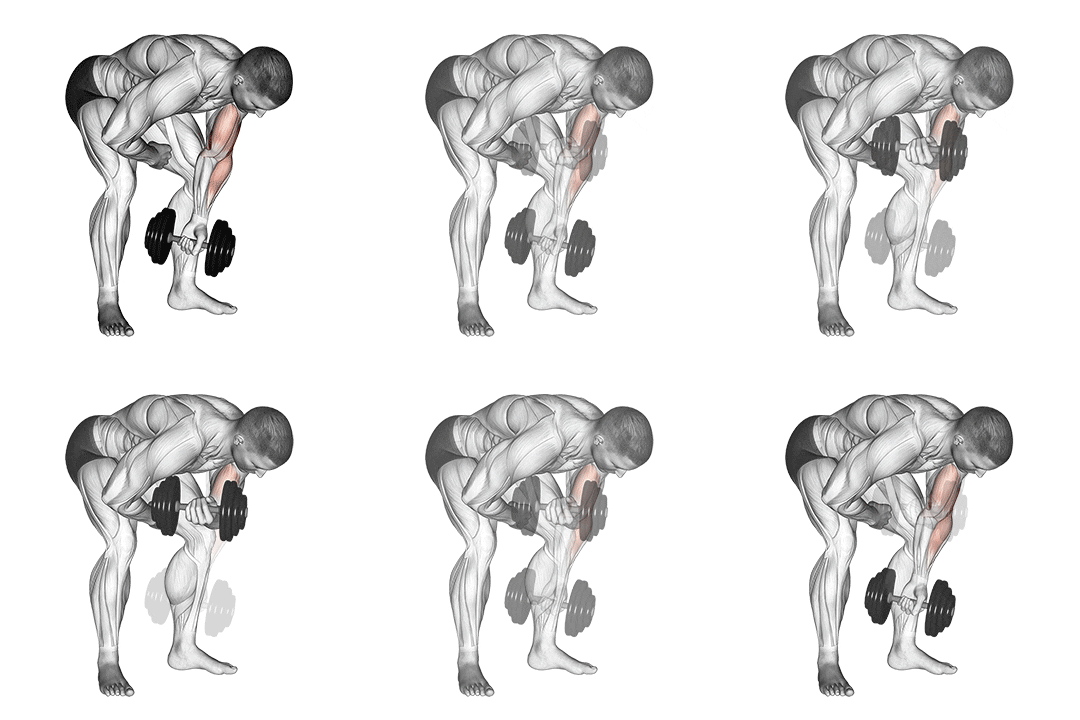
The dumbbell standing one arm concentration curl is an exercise that targets and isolates the biceps brachii muscle. By performing the exercise one arm at a time, it allows for a focused contraction of the biceps, helping to increase strength and muscle development. ## Instructions 1. Stand with your feet shoulder-width apart, holding a dumbbell in one hand with an underhand grip (palm facing upward). 2. Place your opposite hand on your thigh or use a bench for support. 3. Position your working arm's elbow against the inside of your thigh, just above the knee, with the dumbbell hanging down and your arm fully extended. 4. Keep your back straight, chest up, and core engaged throughout the exercise. 5. Begin the movement by curling the dumbbell upward while keeping your upper arm stationary. Focus on contracting the biceps. 6. Continue curling until the dumbbell is close to your shoulder, while maintaining control and a slow, controlled tempo. 7. Pause for a moment at the top of the contraction, squeezing the biceps. 8. Slowly lower the dumbbell back to the starting position, fully extending your arm. 9. Repeat for the desired number of repetitions. 10. Switch to the opposite arm and perform the same steps. ## Variations - Seated One Arm Concentration Curl: Sit on a bench or chair while performing the exercise to reduce lower body involvement and focus more on the biceps. - Alternating One Arm Concentration Curl: Perform the exercise by alternating arms rather than completing all repetitions on one side before switching to the other. - Resistance Band One Arm Concentration Curl: Instead of using dumbbells, you can use a resistance band. Step on the band with one foot and hold the other end with your hand, then follow the same technique as described. ## Muscles Worked The dumbbell standing one arm concentration curl primarily targets the biceps brachii muscle. It also engages the brachialis and brachioradialis muscles of the forearm. ## Common Mistakes 1. Using Momentum: Avoid swinging or using momentum to lift the weight. Keep the movement slow and controlled to maximize muscle engagement. 2. Poor Elbow Positioning: Make sure to keep your elbow firmly against the inside of your thigh throughout the movement. This helps isolate the biceps and prevents excessive involvement of other muscles. 3. Leaning or Twisting: Maintain an upright posture and avoid leaning or twisting your body during the exercise. Keep your torso stable to target the biceps effectively. ## Safety Precautions - Begin with a weight that allows you to maintain proper form and technique. - Warm up your biceps and forearm muscles before performing the exercise to reduce the risk of injury. - If you have any pre-existing arm or shoulder injuries, consult with a fitness professional or healthcare provider before attempting this exercise. - If you feel any pain or discomfort during the exercise, stop immediately and seek medical advice if necessary.
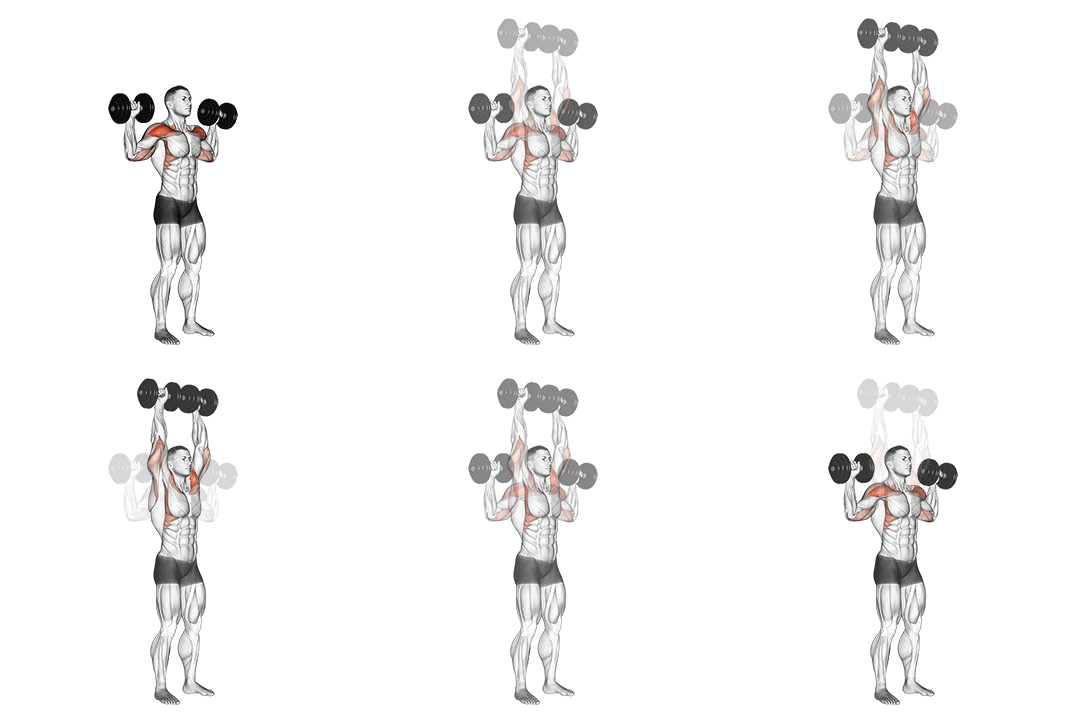
The dumbbell standing overhead press is a compound exercise that primarily targets the shoulders, specifically the deltoid muscles. It also engages the triceps, upper back, and core muscles. This exercise involves pressing dumbbells overhead from a standing position, which helps to improve shoulder strength, stability, and overall upper body development. ## Instructions 1. Begin by standing with your feet shoulder-width apart and a dumbbell in each hand. Hold the dumbbells at shoulder height, with your palms facing forward and elbows bent. 2. Engage your core muscles and maintain a straight posture throughout the exercise. 3. Exhale and push the dumbbells upward in a controlled manner, extending your arms fully overhead. 4. Pause briefly at the top of the movement and feel the contraction in your shoulder muscles. 5. Inhale and slowly lower the dumbbells back to the starting position, maintaining control and keeping your elbows slightly bent. 6. Repeat the exercise for the desired number of repetitions. ## Variations - Seated Dumbbell Overhead Press: Perform the exercise while seated on a bench or chair, which provides additional stability. - Single Arm Dumbbell Overhead Press: Instead of using both dumbbells simultaneously, perform the exercise one arm at a time to focus on each shoulder independently. - Alternating Dumbbell Overhead Press: Start with both dumbbells at shoulder height, then press one dumbbell overhead while keeping the other at shoulder height. Alternate the pressing motion between arms. ## Muscles Worked - Primary muscles: Shoulders (deltoids) - Secondary muscles: Triceps, upper back muscles, core muscles ## Common Mistakes - Arching the back: Avoid leaning backward excessively during the movement. Keep your core engaged and maintain a neutral spine. - Using momentum: Do not use momentum or jerking motions to lift the dumbbells. Focus on controlled and smooth movements. - Shrugging the shoulders: Avoid shrugging your shoulders toward your ears. Keep them down and relaxed throughout the exercise. - Flaring the elbows: Keep your elbows slightly in front of your body and avoid excessive outward movement. ## Safety Precautions - Start with lighter weights and gradually increase the resistance as you become comfortable with the exercise. - Maintain proper form throughout the movement to avoid straining the shoulders or back. - If you have any pre-existing shoulder or back injuries, it's recommended to consult with a healthcare professional before attempting this exercise. - If you experience any pain or discomfort during the exercise, stop immediately and seek guidance from a fitness professional or healthcare provider.
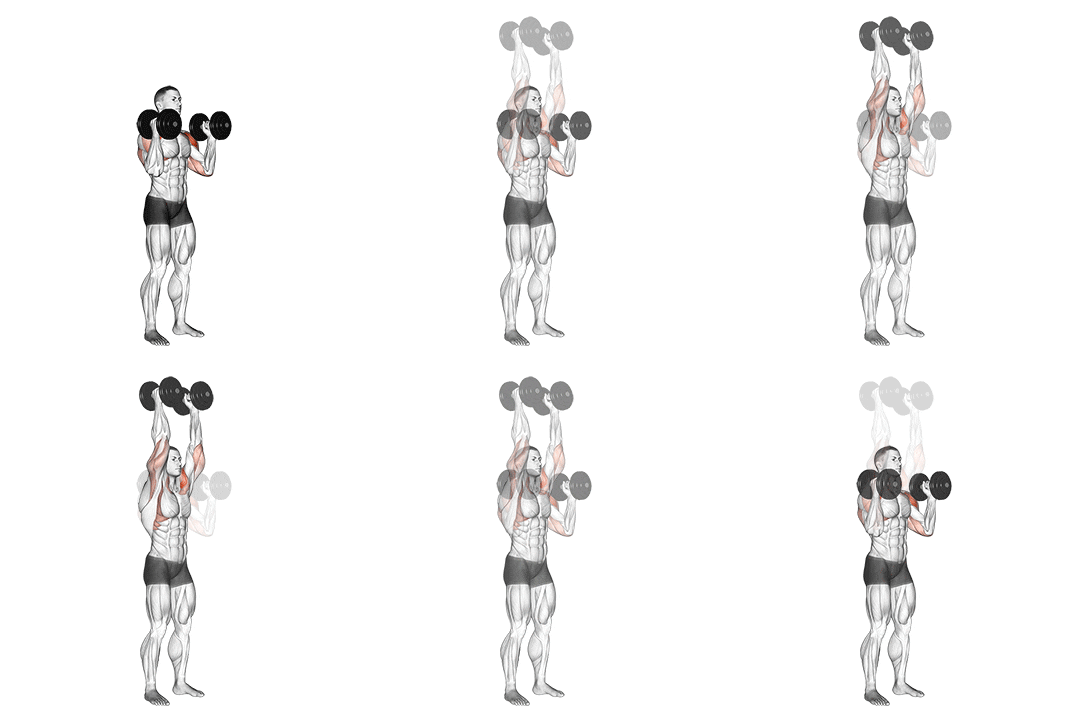
The dumbbell standing palms-in press is a variation of the overhead press that focuses on the front and middle deltoid muscles. By rotating the palms inward during the pressing motion, this exercise emphasizes the shoulder muscles from a different angle. It also engages the triceps and upper back muscles while promoting shoulder strength and stability. ## Instructions 1. Begin by standing with your feet shoulder-width apart and a dumbbell in each hand. Hold the dumbbells at shoulder height, with your palms facing inward and elbows bent. 2. Engage your core muscles and maintain proper posture throughout the exercise. 3. Exhale and push the dumbbells upward while simultaneously rotating your palms inward. Extend your arms fully overhead, bringing the dumbbells close together without allowing them to touch. 4. Pause briefly at the top of the movement, feeling the contraction in your shoulder muscles. 5. Inhale and slowly lower the dumbbells back to the starting position, maintaining control and keeping your elbows slightly bent. 6. Repeat the exercise for the desired number of repetitions. ## Variations - Seated Dumbbell Palms-In Press: Perform the exercise while seated on a bench or chair to provide additional stability. - Single Arm Dumbbell Palms-In Press: Perform the exercise one arm at a time, focusing on each shoulder independently. - Alternating Dumbbell Palms-In Press: Start with both dumbbells at shoulder height, then press one dumbbell overhead with palms inward while keeping the other at shoulder height. Alternate the pressing motion between arms. ## Muscles Worked - Primary muscles: Front and middle deltoids (shoulders) - Secondary muscles: Triceps, upper back muscles, core muscles ## Common Mistakes - Arching the back: Maintain a neutral spine and avoid excessive backward leaning throughout the exercise. - Using momentum: Perform the movement in a controlled manner without relying on momentum or jerking motions. - Shrugging the shoulders: Keep your shoulders down and relaxed throughout the exercise. Avoid shrugging them toward your ears. - Allowing elbows to flare out: Keep your elbows slightly in front of your body and avoid excessive outward movement. ## Safety Precautions - Start with lighter weights and gradually increase the resistance as you become comfortable with the exercise. - Maintain proper form and technique throughout the movement to avoid straining the shoulders or back. - If you have any pre-existing shoulder or back injuries, it's recommended to consult with a healthcare professional before attempting this exercise. - If you experience any pain or discomfort during the exercise, stop immediately and seek guidance from a fitness professional or healthcare provider.
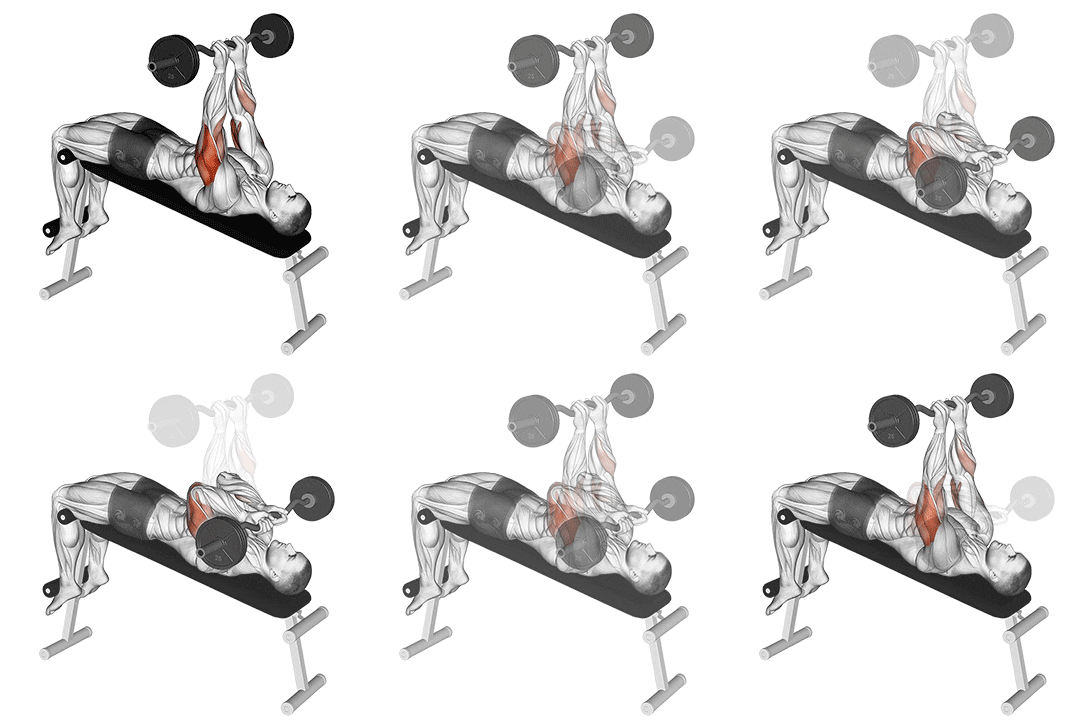
The EZ barbell decline close grip face press is a compound exercise that primarily targets the triceps brachii muscles, located on the back of the upper arms. This exercise combines a decline bench press motion with a close grip and brings the barbell towards the face, engaging the triceps muscles to a greater extent. It also works the chest and shoulders to a lesser degree. ## Instructions 1. Set up a decline bench at an angle of around 30-45 degrees. 2. Lie down on the bench and position yourself so that your head is lower than your feet, securing your legs and feet in place. 3. Grab the EZ barbell with a close grip (hands positioned around 6-8 inches apart) and palms facing upward (supinated grip). 4. Lift the barbell off the rack or have a spotter hand it to you. 5. Begin with the barbell directly above your face, arms fully extended. 6. Inhale and slowly lower the barbell towards your face by bending your elbows. Keep your elbows tucked in and close to your body throughout the movement. 7. Lower the barbell until it is a few inches above your face, or until you feel a comfortable stretch in your triceps. 8. Pause briefly in this position, then exhale and push the barbell back up to the starting position by extending your arms and contracting your triceps. 9. Repeat for the desired number of repetitions. ## Variations - Dumbbell Decline Close Grip Face Press: Perform the exercise with dumbbells instead of an EZ barbell. This allows for independent arm movement and can help to address any muscle imbalances. - Smith Machine Decline Close Grip Face Press: Use a Smith machine instead of a barbell to perform the exercise. This can provide added stability and control during the movement. ## Muscles Worked The EZ barbell decline close grip face press primarily targets the following muscles: - Triceps brachii (long head, medial head, and lateral head) - Chest (pectoralis major and minor) - secondary involvement - Anterior deltoids (front shoulders) - secondary involvement ## Common Mistakes - Flaring the elbows: Keep your elbows close to your body throughout the exercise. Avoid letting them flare out to the sides, as this shifts the emphasis away from the triceps and can strain the shoulders. - Lowering the bar too far: Avoid lowering the barbell too close to your face, as this can put excessive stress on the wrists and elbows. Stop the descent when the barbell is a few inches above your face or when you feel a comfortable stretch in your triceps. - Using excessive weight: Start with a weight that allows you to maintain proper form and control throughout the exercise. Using excessively heavy weights can compromise your technique and increase the risk of injury. ## Safety Precautions - It is essential to have a spotter or trainer present during this exercise, especially if you're using heavy weights or are new to the movement. - Ensure that the decline bench is securely set at the appropriate angle and is stable. - Choose a weight that challenges you but allows you to maintain proper form and control. - If you experience any pain or discomfort in your wrists, elbows, or shoulders, stop the exercise and consult with a fitness professional or healthcare provider. - If you have any pre-existing conditions or injuries, consult with a healthcare professional before attempting this exercise.
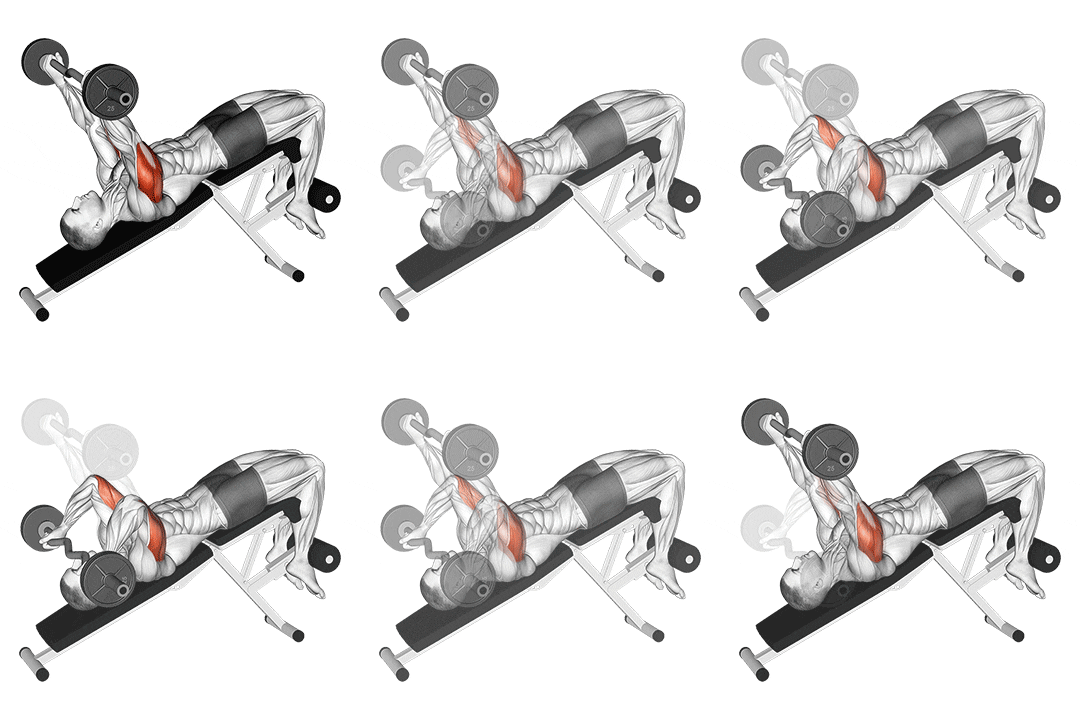
The EZ barbell decline triceps extension, also known as the decline skull crusher, is an exercise that primarily targets the triceps brachii muscles located on the back of the upper arms. This exercise is performed on a decline bench, which increases the range of motion and places greater emphasis on the triceps. It helps to build strength and definition in the triceps while also engaging the shoulders and chest to a lesser extent. ## Instructions 1. Set up a decline bench at an angle of approximately 30-45 degrees. 2. Lie down on the bench and secure your feet to ensure stability. 3. Hold the EZ barbell with an overhand grip (palms facing away from you) and your hands shoulder-width apart. 4. Extend your arms directly above your chest, keeping them perpendicular to the floor. This is your starting position. 5. Inhale and slowly lower the barbell towards your forehead by bending your elbows. Keep your upper arms stationary and close to your head throughout the movement. 6. Lower the barbell until your forearms are parallel to the floor or until you feel a stretch in your triceps. 7. Pause briefly in this position, then exhale and push the barbell back up to the starting position by extending your arms and contracting your triceps. 8. Repeat for the desired number of repetitions. ## Variations - Dumbbell Decline Triceps Extension: Perform the exercise with dumbbells instead of an EZ barbell. This allows for greater independent arm movement and can help address any muscle imbalances. - Cable Decline Triceps Extension: Attach a straight bar or rope handle to a cable machine and perform the triceps extension on a decline bench. This variation provides constant tension throughout the movement. ## Muscles Worked The EZ barbell decline triceps extension primarily targets the following muscles: - Triceps brachii (long head, medial head, and lateral head) - Anconeus (located near the elbow joint) - secondary involvement ## Common Mistakes - Flaring the elbows: Keep your elbows close to your head and stationary throughout the exercise. Avoid letting them flare out to the sides, as this reduces the tension on the triceps and can strain the shoulders. - Lowering the bar too far: Avoid lowering the barbell too close to your forehead. Stop the descent when your forearms are parallel to the floor or when you feel a comfortable stretch in your triceps. - Using excessive weight: Start with a weight that allows you to maintain proper form and control. Using too heavy weights can compromise your technique and increase the risk of injury. ## Safety Precautions - Use a spotter or trainer to assist you during this exercise, especially if you're using heavy weights or are new to the movement. - Ensure that the decline bench is securely set at the appropriate angle and is stable. - Choose a weight that challenges you but allows you to maintain proper form and control. - If you experience any pain or discomfort in your elbows, shoulders, or wrists, stop the exercise and consult with a fitness professional or healthcare provider. - If you have any pre-existing conditions or injuries, consult with a healthcare professional before attempting this exercise.
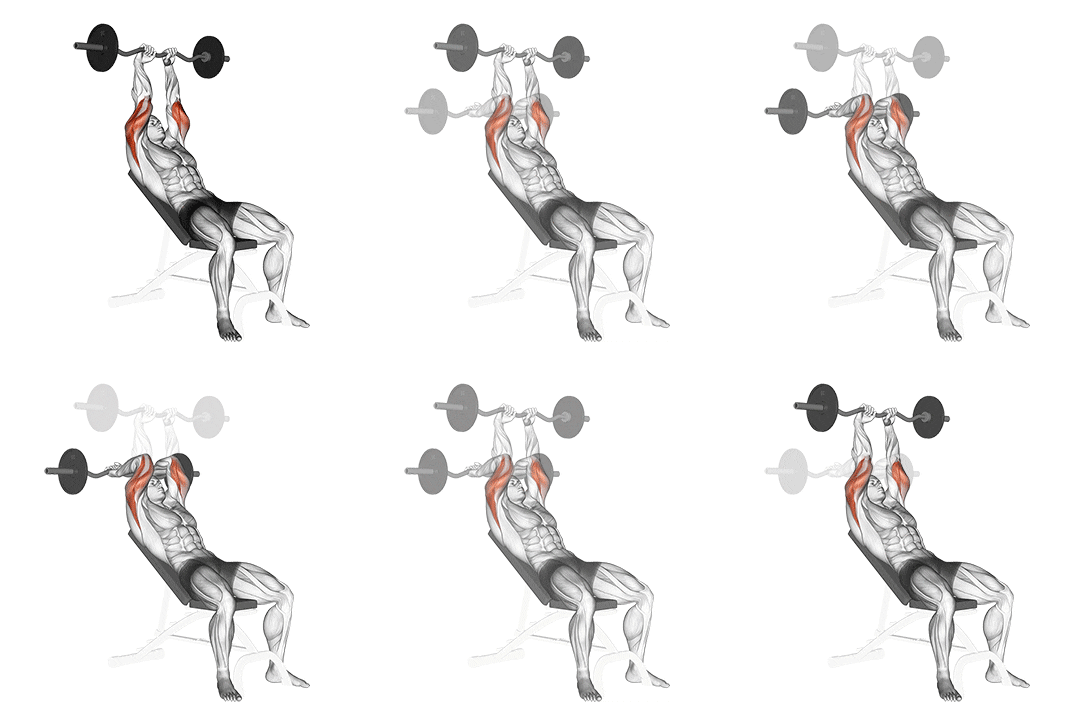
The EZ barbell incline triceps extension is an exercise that primarily targets the triceps brachii muscles located on the back of the upper arms. This exercise is performed on an incline bench, which changes the angle of the movement and places greater emphasis on the triceps. It helps to build strength and definition in the triceps while also engaging the shoulders and chest to a lesser extent. ## Instructions 1. Set up an incline bench at an angle of approximately 30-45 degrees. 2. Sit on the bench and position yourself with your back firmly against the backrest. 3. Hold the EZ barbell with an overhand grip (palms facing away from you) and your hands shoulder-width apart. 4. Extend your arms above your head, keeping them perpendicular to the floor. This is your starting position. 5. Inhale and slowly lower the barbell behind your head by bending your elbows. Keep your upper arms close to your head throughout the movement. 6. Lower the barbell until your forearms are parallel to the floor or until you feel a stretch in your triceps. 7. Pause briefly in this position, then exhale and push the barbell back up to the starting position by extending your arms and contracting your triceps. 8. Repeat for the desired number of repetitions. ## Variations - Dumbbell Incline Triceps Extension: Perform the exercise with dumbbells instead of an EZ barbell. This allows for greater independent arm movement and can help address any muscle imbalances. - Cable Incline Triceps Extension: Attach a straight bar or rope handle to a cable machine and perform the triceps extension on an incline bench. This variation provides constant tension throughout the movement. ## Muscles Worked The EZ barbell incline triceps extension primarily targets the following muscles: - Triceps brachii (long head, medial head, and lateral head) - Anconeus (located near the elbow joint) - secondary involvement ## Common Mistakes - Allowing elbows to flare out: Keep your elbows close to your head and stationary throughout the exercise. Avoid letting them flare out to the sides, as this reduces the tension on the triceps and can strain the shoulders. - Lowering the weight too far: Avoid lowering the barbell too close to your head or beyond a comfortable range of motion. Stop the descent when your forearms are parallel to the floor or when you feel a stretch in your triceps. - Using excessive weight: Start with a weight that allows you to maintain proper form and control. Using too heavy weights can compromise your technique and increase the risk of injury. ## Safety Precautions - Use a spotter or trainer to assist you during this exercise, especially if you're using heavy weights or are new to the movement. - Ensure that the incline bench is securely set at the appropriate angle and is stable. - Choose a weight that challenges you but allows you to maintain proper form and control. - If you experience any pain or discomfort in your elbows, shoulders, or wrists, stop the exercise and consult with a fitness professional or healthcare provider. - If you have any pre-existing conditions or injuries, consult with a healthcare professional before attempting this exercise.
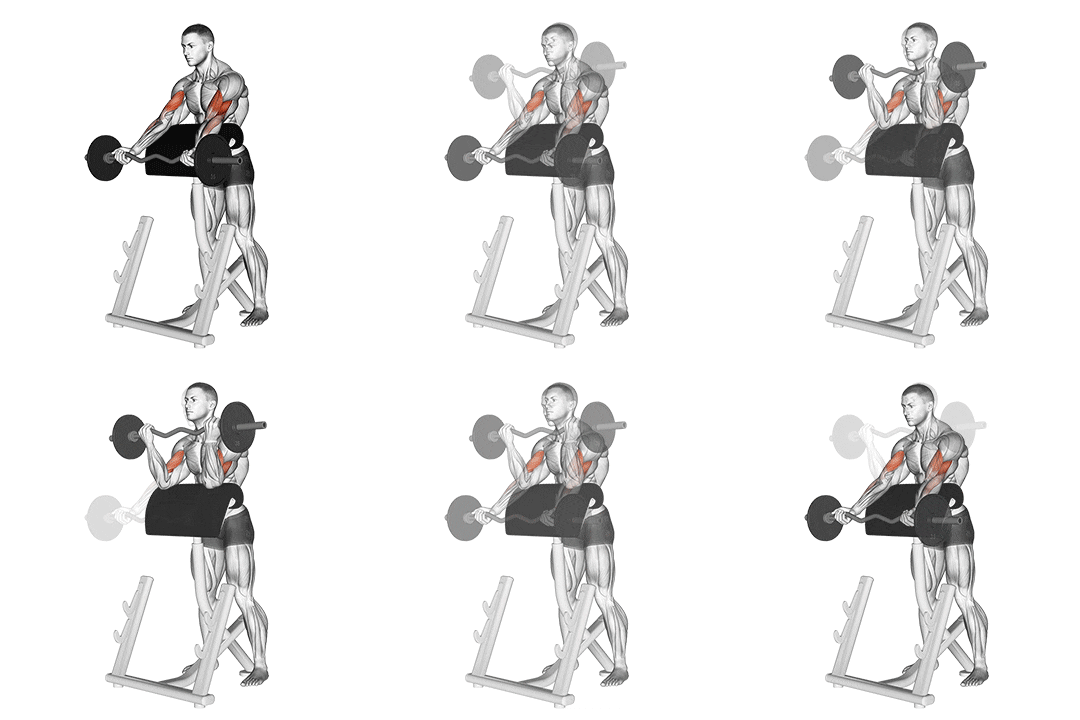
The EZ Barbell Spider Curl is an isolation exercise that primarily targets the biceps brachii muscles, specifically the short head of the biceps. It is performed using an EZ barbell, which has a zigzag or W-shaped grip in the center. This exercise helps to develop and strengthen the biceps, contributing to overall arm strength and aesthetics. ## Instructions 1. Start by setting up an EZ barbell on a preacher curl bench. Adjust the seat height so that your armpits are comfortably resting at the top of the bench pad. 2. Grab the EZ barbell with an underhand grip (palms facing upward) at a shoulder-width distance. 3. Position yourself on the preacher curl bench, allowing your arms to fully extend while holding the barbell. 4. Rest your upper arms firmly against the pad of the bench, ensuring that your armpits are at the top of the pad. 5. Keeping your upper arms stationary and pressed against the pad, exhale and curl the barbell upward, contracting your biceps. Continue lifting until your forearms are perpendicular to the ground. 6. Pause briefly at the top of the movement, squeezing your biceps. 7. In a controlled manner, inhale and slowly lower the barbell back down to the starting position, fully extending your arms. 8. Repeat for the recommended number of repetitions. ## Variations - Dumbbell Spider Curl: Perform the same movement using dumbbells instead of an EZ barbell. This variation allows for a more independent range of motion for each arm. - Single-Arm Spider Curl: Perform the exercise one arm at a time to focus on each bicep individually. This variation can help identify and correct strength imbalances. - Preacher Curl Machine: If an EZ barbell or dumbbells are not available, you can use a preacher curl machine. Follow the same arm positioning and curling motion while using the machine's handles. ## Muscles Worked The EZ Barbell Spider Curl primarily targets the following muscles: - Biceps brachii (short head) - Brachialis (located underneath the biceps) ## Common Mistakes - Using excessive weight: Avoid using weights that are too heavy, as it can compromise your form and increase the risk of injury. Start with lighter weights and gradually increase as your strength improves. - Allowing the upper arms to leave the bench: Keep your upper arms firmly pressed against the pad throughout the exercise. This helps isolate the biceps and prevents swinging or using momentum. - Rounding the back: Maintain proper posture and avoid rounding your back during the exercise. Engage your core and keep your spine neutral throughout the movement. - Using momentum: Avoid using momentum to lift the weight. Focus on a controlled and deliberate movement, emphasizing the contraction of the biceps. ## Safety Precautions - Warm up adequately before starting the exercise to prepare the muscles for the workout. - Choose an appropriate weight that allows you to maintain proper form throughout the movement. - If you have any pre-existing arm or shoulder injuries, consult with a healthcare professional before attempting this exercise. - If you experience any pain or discomfort during the exercise, stop immediately and seek medical advice. - Always listen to your body and perform the exercise within your limits.
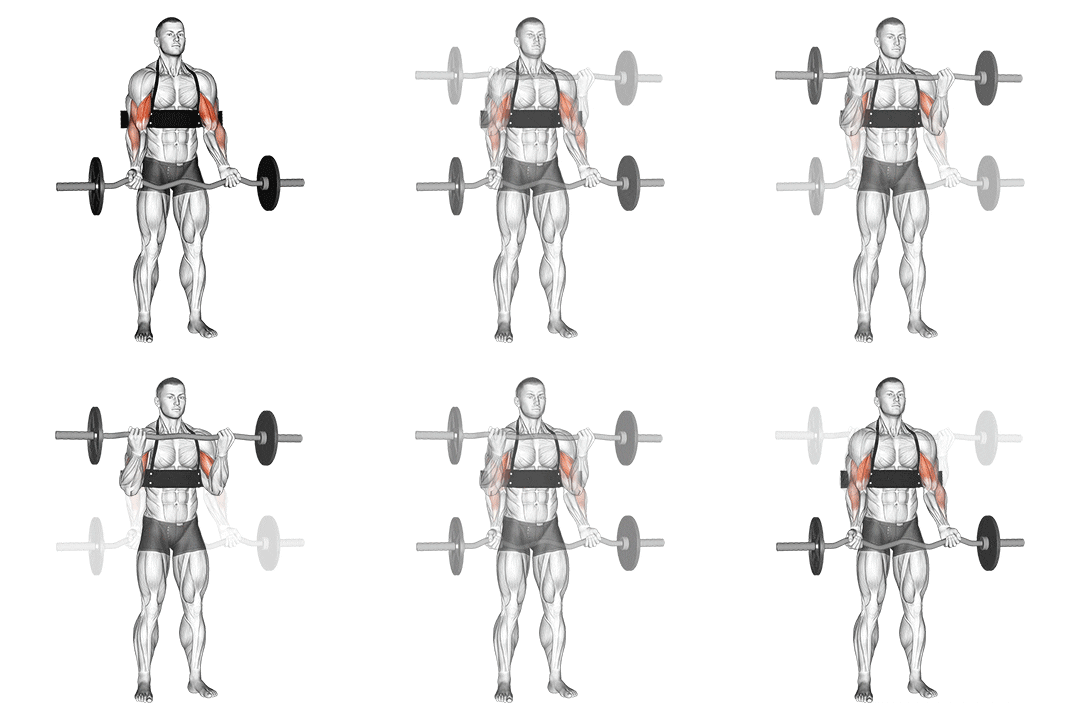
The EZ-Bar Biceps Curl with an Arm Blaster is a variation of the traditional biceps curl exercise that targets the biceps brachii muscles. The Arm Blaster is a metal or padded device that helps stabilize the upper arms and restricts momentum, allowing for strict and isolated biceps contractions. This exercise emphasizes the development and strengthening of the biceps while minimizing the involvement of other muscle groups. ## Instructions 1. Place the Arm Blaster around your neck, positioning it across your chest and under your armpits. The Arm Blaster should provide support to keep your upper arms and elbows locked in place. 2. Stand upright with your feet shoulder-width apart and grip the EZ-barbell with an underhand grip (palms facing upward), hands shoulder-width apart. 3. Allow your arms to hang straight down in front of your body, maintaining tension in your biceps. 4. Keeping your upper arms and elbows locked in place by the Arm Blaster, exhale and curl the barbell upward by flexing your elbows. Keep your upper arms stationary throughout the movement. 5. Continue curling until your forearms are fully contracted, and the barbell is close to your shoulders. 6. Pause briefly at the top of the movement, squeezing your biceps. 7. In a controlled manner, inhale and slowly lower the barbell back down to the starting position, fully extending your arms. 8. Repeat for the desired number of repetitions. ## Variations - Dumbbell Biceps Curl with Arm Blaster: Instead of using an EZ-barbell, you can perform the exercise using dumbbells. Hold a dumbbell in each hand, and follow the same technique as described above while wearing the Arm Blaster. - Cable Biceps Curl with Arm Blaster: Attach a straight bar or rope attachment to a cable machine. Position yourself in front of the cable machine, wearing the Arm Blaster, and perform the biceps curl motion while maintaining the same upper arm position. - Resistance Band Biceps Curl with Arm Blaster: Attach a resistance band to a sturdy anchor point or use a resistance band with handles. Step on the band, wear the Arm Blaster, and perform the biceps curl motion with the resistance band. ## Muscles Worked The EZ-Bar Biceps Curl with Arm Blaster primarily targets the following muscles: - Biceps brachii (both long and short heads) - Brachialis (located underneath the biceps) ## Common Mistakes - Using excessive weight: Avoid selecting weights that are too heavy, as it may compromise your form and lead to poor exercise execution. Start with a weight that allows you to maintain proper technique and gradually increase as your strength improves. - Swinging the torso: Maintain a stable and upright torso throughout the exercise. Avoid using momentum or swinging your body to lift the weight. Engage your core muscles and keep your upper body steady. - Allowing the elbows to move forward: Ensure that your upper arms remain stationary and pressed against the Arm Blaster throughout the movement. Avoid allowing your elbows to move forward or flare out to the sides. - Using excessive range of motion: While maintaining proper form, focus on a controlled range of motion that allows for a full contraction and extension of the biceps without compromising stability or engaging other muscle groups. ## Safety Precautions - Before performing the exercise, warm up your biceps and surrounding muscles with dynamic stretches or light exercises. - Choose an appropriate weight or resistance level that suits your fitness level and allows you to maintain proper form. - If you have any pre-existing arm or shoulder injuries, consult with a healthcare professional or fitness trainer before attempting this exercise. - Maintain proper breathing throughout the