
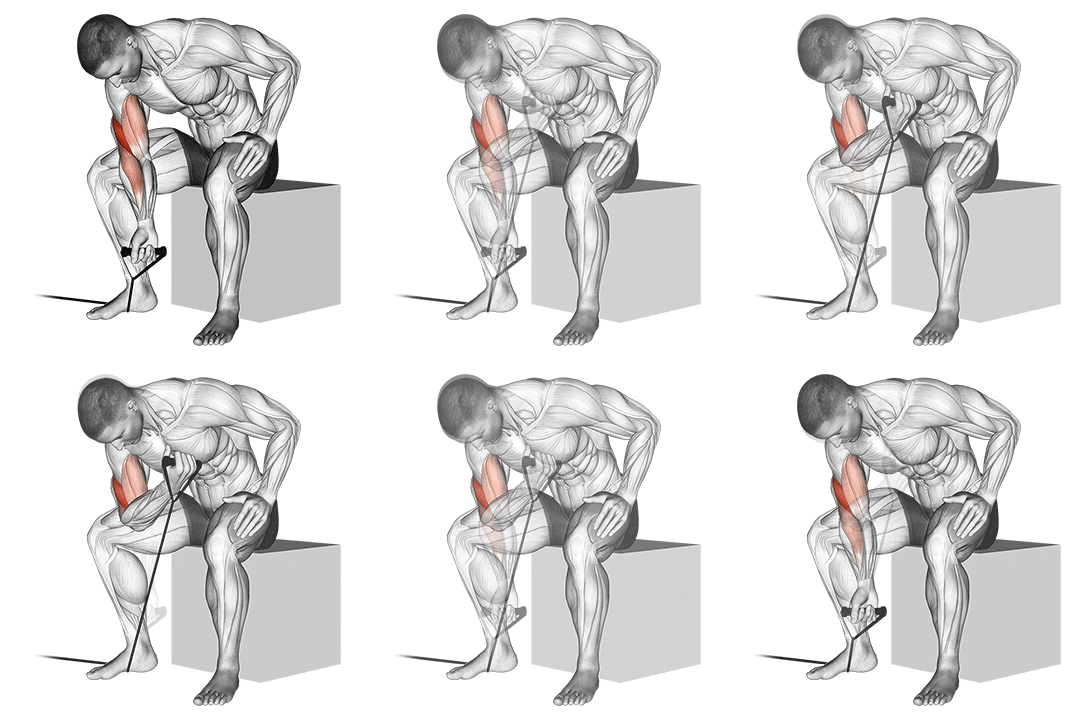
The band concentration curl is an isolation exercise that targets the biceps muscles. By using a resistance band, this exercise provides constant tension throughout the entire range of motion, effectively working the biceps and promoting muscle strength and definition. ## Instructions 1. Sit on a chair or bench and place one end of the resistance band under your foot. Hold the other end of the band with your working hand. 2. Position your elbow against the inside of your thigh, near the knee, with your arm fully extended and your palm facing upward. 3. Keep your back straight and your core engaged throughout the exercise. 4. Without moving your upper arm, slowly curl the band upward by flexing your elbow. Focus on contracting the biceps muscle. 5. Continue the movement until your forearm is fully contracted and your hand is close to your shoulder. 6. Pause briefly at the top of the movement, then slowly lower the band back to the starting position. 7. Repeat for the desired number of repetitions, then switch arms and repeat the exercise on the other side. ## Variations - Band Preacher Curl: Perform the exercise while seated at a preacher curl bench, resting your upper arms on the pad, and using the resistance band to curl the forearms upward. - Band Hammer Curl: Instead of having your palm facing upward, perform the curl with a neutral grip, where your palm faces inward throughout the movement. This variation targets the brachialis muscle along with the biceps. - Band Standing Curl: Stand on the middle of the resistance band and curl both arms simultaneously, allowing for a greater challenge and targeting both biceps muscles simultaneously. ## Muscles Worked - Primary muscles: Biceps brachii (long head and short head) - Secondary muscles: Brachialis, brachioradialis (forearm muscle) ## Common Mistakes - Swinging or using momentum: Avoid using your body's momentum to lift the band. Keep your upper arm stationary and focus on controlling the movement solely with your biceps. - Not fully extending or contracting: Make sure to fully extend your elbow at the bottom of the movement and fully contract your biceps at the top to maximize the effectiveness of the exercise. - Gripping the band too tightly: Maintain a firm grip on the band, but avoid excessive tension in your hand and forearm, as it can reduce the engagement of the biceps. ## Safety Precautions - Choose a resistance band with an appropriate tension level for your fitness level and gradually increase the resistance as you progress. - Pay attention to your form and technique to avoid unnecessary strain on your joints and muscles. - If you have any pre-existing conditions or injuries in your elbows or wrists, consult with a healthcare professional before attempting this exercise. - Control the movement throughout and avoid rapid or jerky motions to prevent injuries. - If you experience pain or discomfort, stop the exercise and seek guidance from a fitness professional or healthcare provider.
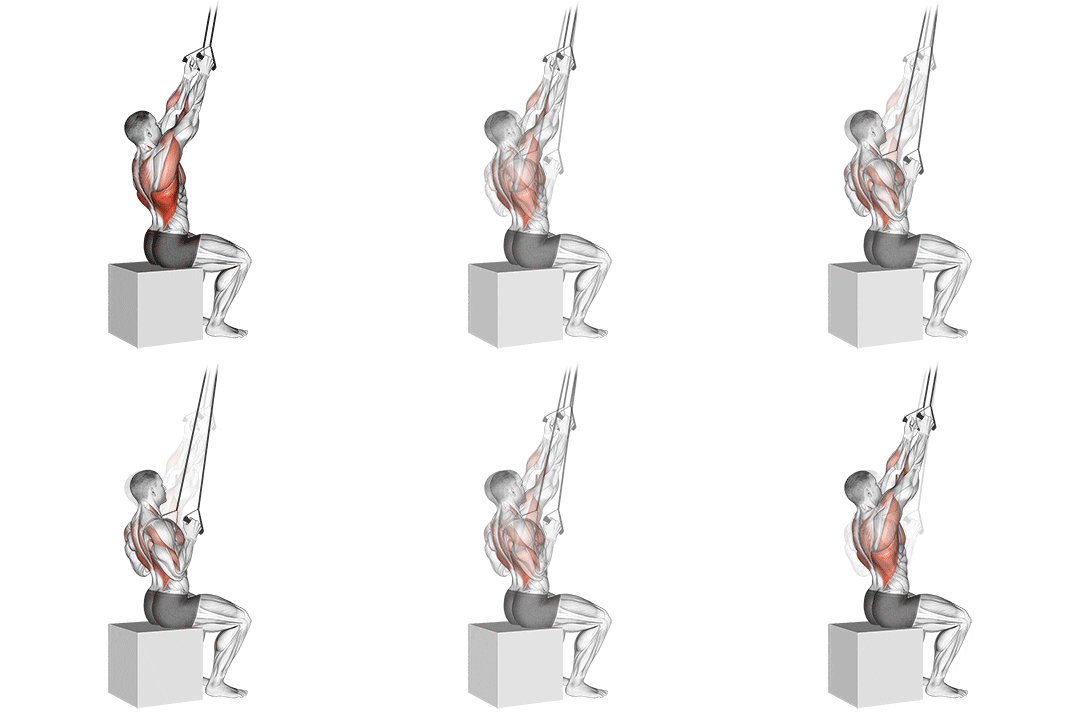
The band fixed back close grip pulldown is an exercise that primarily targets the muscles of the back, specifically the latissimus dorsi (lats), rhomboids, and rear deltoids. This exercise mimics the movement pattern of a lat pulldown machine using resistance bands. It helps to strengthen the upper back, improve posture, and enhance overall upper body strength. ## Instructions 1. Attach a resistance band securely to a fixed anchor point above your head. 2. Sit on a chair or bench facing the anchor point, with your feet flat on the ground. 3. Grasp the band with a close grip, palms facing inward, and hands shoulder-width apart. 4. Start with your arms fully extended, pulling the band taut. 5. Keep your back straight, chest up, and shoulders down and back throughout the exercise. 6. Engage your core and squeeze your shoulder blades together. 7. Pull the band down toward your upper chest by flexing your elbows and driving your elbows down and back. 8. Continue pulling until your hands reach your upper chest and your elbows are in line with your torso. 9. Pause briefly in the contracted position, focusing on squeezing your back muscles. 10. Slowly reverse the movement and return to the starting position with your arms fully extended. 11. Repeat for the desired number of repetitions. ## Variations - Band Assisted Pull-Up: If you find it challenging to perform the exercise without assistance, loop the resistance band around a pull-up bar or sturdy anchor point and place your feet or knees in the band to provide assistance as you pull yourself up. - Band Standing Row: Stand facing the anchor point, holding the band with an overhand grip, and perform a rowing motion by pulling the band toward your midsection. This variation targets similar muscles as the fixed back close grip pulldown but with a different body position. ## Muscles Worked - Primary muscles: Latissimus dorsi (lats), rhomboids, rear deltoids - Secondary muscles: Biceps brachii, brachialis, brachioradialis, forearm muscles, core muscles for stabilization ## Common Mistakes - Using excessive momentum: Avoid swinging or using momentum to pull the band down. Focus on controlled and deliberate movements to engage the target muscles effectively. - Rounding the back: Maintain proper posture throughout the exercise by keeping your back straight and avoiding rounding or hunching your shoulders. - Not fully extending or contracting: Make sure to fully extend your arms at the top and fully contract your back muscles at the bottom of the movement for maximum benefit. ## Safety Precautions - Choose a resistance band with an appropriate tension level for your fitness level and gradually increase the resistance as you get stronger. - Securely anchor the band to a stable and sturdy structure to avoid any accidents or injuries. - Use a controlled and smooth motion throughout the exercise to prevent strain on your joints and muscles. - If you have any pre-existing conditions or injuries in your shoulders, elbows, or back, consult with a healthcare professional before attempting this exercise. - If you experience any pain or discomfort during the exercise, stop immediately and seek guidance from a fitness professional or healthcare provider.
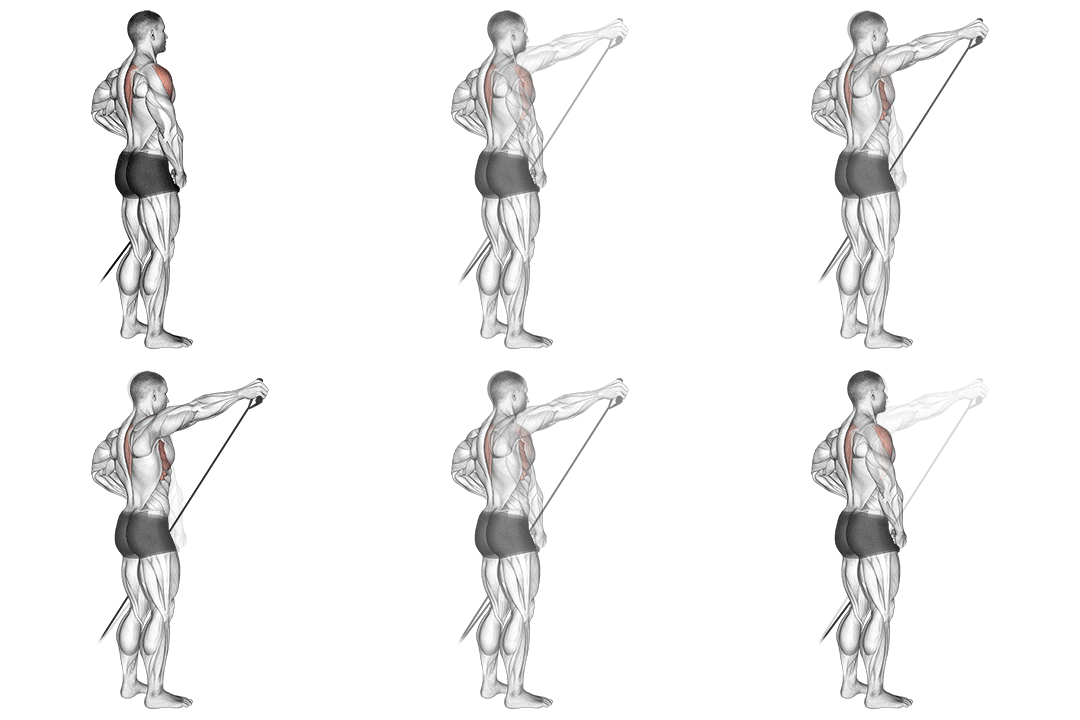
The band front lateral raise is an exercise that primarily targets the front and side shoulder muscles, specifically the anterior deltoids (front delts) and medial deltoids (side delts). This exercise helps to strengthen and tone the shoulder muscles, improve shoulder stability, and enhance overall upper body aesthetics. ## Instructions 1. Stand with your feet shoulder-width apart and place the middle of a resistance band under both feet. 2. Hold the ends of the band with an overhand grip, palms facing downward. 3. Keep a slight bend in your elbows and maintain a straight posture throughout the exercise. 4. Start with your hands resting at your thighs, with the band slightly taut. 5. Engage your core and maintain stability in your lower body. 6. Slowly raise your arms forward and upward in a controlled motion, keeping them parallel to the ground. 7. Continue raising your arms until they are slightly above shoulder level, maintaining a slight bend in your elbows. 8. Pause briefly at the top of the movement, focusing on contracting your shoulder muscles. 9. Slowly lower your arms back to the starting position, resisting the pull of the band. 10. Repeat for the desired number of repetitions. ## Variations - Band Bent-Over Lateral Raise: Bend forward at the hips, maintaining a flat back, and perform the lateral raise with your arms hanging down vertically. This variation emphasizes the rear deltoids and helps to develop a well-rounded shoulder profile. - Band Seated Lateral Raise: Sit on a chair or bench while performing the lateral raise, which reduces the involvement of the lower body and focuses more on the shoulder muscles. ## Muscles Worked - Primary muscles: Anterior deltoids (front delts), medial deltoids (side delts) - Secondary muscles: Upper trapezius, triceps brachii, core muscles for stabilization ## Common Mistakes - Using excessive momentum: Avoid swinging or using momentum to raise your arms. Focus on controlled movements and engage your shoulder muscles throughout the exercise. - Lifting too high: Avoid lifting your arms above shoulder level, as it can place unnecessary stress on the shoulder joints. Maintain a controlled range of motion within a comfortable and pain-free range. - Rounding the back or hunching the shoulders: Keep your back straight, chest up, and shoulders down and back throughout the exercise. Avoid hunching or rounding your shoulders forward. ## Safety Precautions - Choose a resistance band with an appropriate tension level for your fitness level and gradually increase the resistance as you get stronger. - Maintain proper form and technique throughout the exercise to avoid strain on your shoulders and back. - If you have any pre-existing shoulder or back injuries, consult with a healthcare professional before attempting this exercise. - Control the movement and avoid rapid or jerky motions to prevent injuries. - If you experience any pain or discomfort, stop the exercise and seek guidance from a fitness professional or healthcare provider.
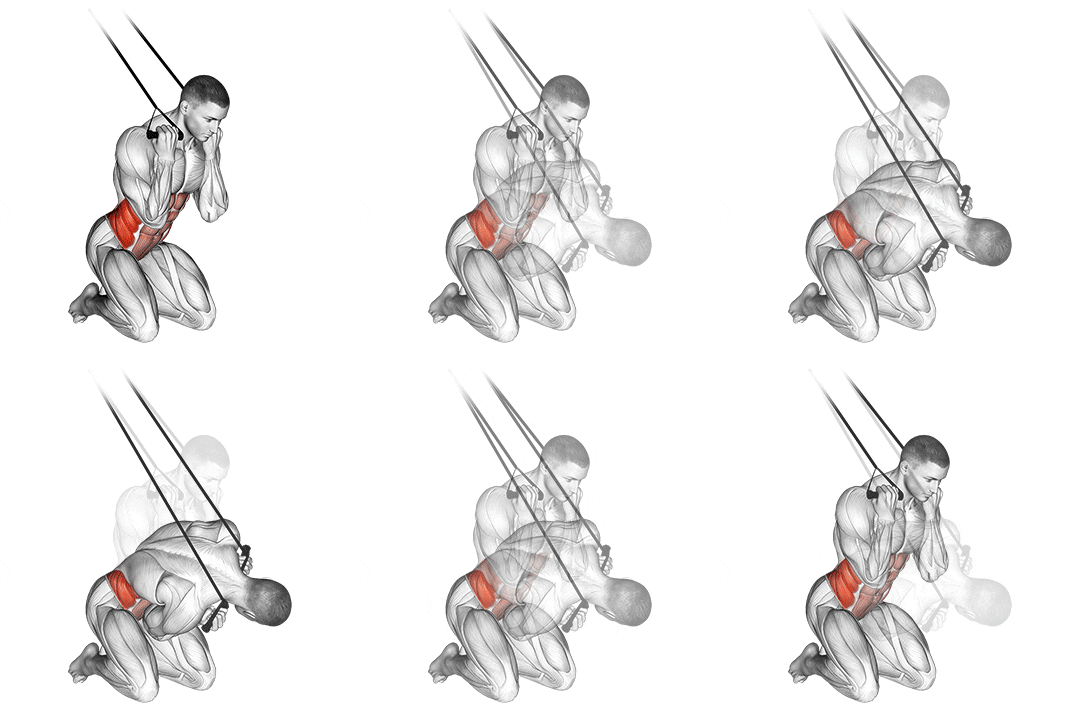
The band kneeling twisting crunch is an exercise that targets the abdominal muscles, particularly the obliques. It involves a combination of rotational movement and core stabilization, making it an effective exercise for strengthening the core and improving rotational power. ## Instructions 1. Attach a resistance band to a sturdy anchor point at waist height. 2. Kneel down facing the anchor point and hold the band with both hands in front of your chest. Your knees should be hip-width apart, and your feet can be either flat on the ground or toes tucked under. 3. Engage your core and maintain an upright posture throughout the exercise. 4. Begin the movement by rotating your torso to one side, while keeping your hips and lower body stable. Exhale as you rotate. 5. Return to the starting position and then rotate your torso to the opposite side, again keeping your hips stable. Exhale as you rotate. 6. Repeat the twisting motion for the desired number of repetitions, alternating sides each time. ## Variations - **Resistance Level**: You can adjust the resistance level of the exercise by using a band with higher or lower tension. - **Seated Variation**: Instead of kneeling, you can perform the exercise while seated on a stability ball or a bench, which adds an element of balance and stability challenge. ## Muscles Worked - Rectus Abdominis (front of the abdomen) - External and Internal Obliques (side of the abdomen) - Transverse Abdominis (deep core muscles) - Erector Spinae (back muscles) ## Common Mistakes - **Using Momentum**: Avoid swinging your body or relying on momentum to perform the movement. Focus on controlled and deliberate rotations. - **Overarching the Lower Back**: Keep your core engaged and your lower back neutral throughout the exercise. Avoid excessive arching or rounding of the lower back. - **Not Rotating Enough**: Make sure to rotate your torso fully to each side to effectively engage the oblique muscles. ## Safety Precautions - Consult with a healthcare professional or fitness trainer before attempting this exercise, especially if you have any pre-existing medical conditions or injuries. - Choose an appropriate resistance band tension that allows you to maintain proper form and control throughout the exercise. - Start with lighter resistance and gradually increase it as you become comfortable with the movement. - If you experience any pain or discomfort during the exercise, stop immediately and seek medical advice. - Maintain proper breathing throughout the exercise by exhaling during the twisting motion and inhaling during the return to the starting position. - Keep the band securely anchored to avoid it snapping back and causing injury.
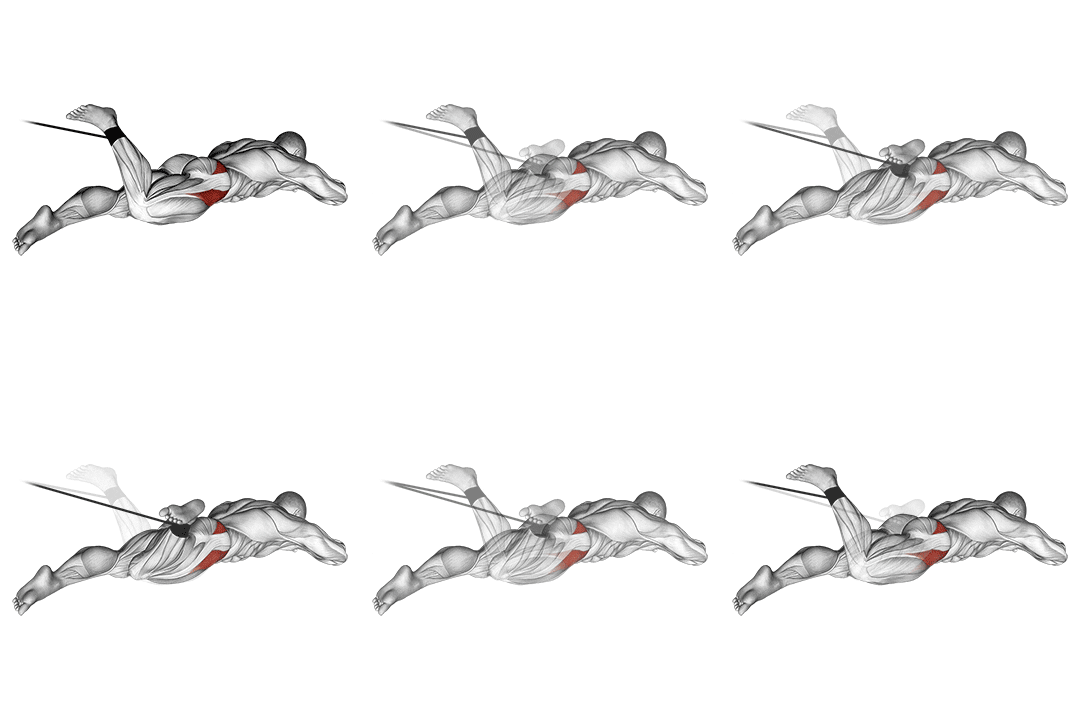
The band lying hip internal rotation exercise targets the hip abductor muscles, specifically the gluteus medius and minimus. It helps to strengthen and stabilize the hips, improving hip mobility and preventing issues such as hip pain and instability. ## Instructions 1. Lie down on your side with your legs extended and stacked on top of each other. 2. Place a resistance band just above your knees and loop it around both legs. 3. Rest your upper body on your bottom arm for support, keeping your head aligned with your spine. 4. Engage your core muscles and maintain a neutral spine throughout the exercise. 5. Keep your feet together and lift your top knee upward, against the resistance of the band. 6. Slowly lower your knee back down to the starting position. 7. Repeat the movement for the desired number of repetitions on one side before switching to the other side. ## Variations - **Band Resistance**: You can adjust the resistance level by using bands with different tensions. Thicker bands offer more resistance. - **Band Placement**: Instead of placing the band above the knees, you can position it closer to the ankles for a different angle of resistance. - **Elevated Variation**: To increase the challenge, perform the exercise with your bottom leg elevated on a bench or step, while the top leg remains on the ground. ## Muscles Worked - Gluteus Medius - Gluteus Minimus - Tensor Fasciae Latae ## Common Mistakes - **Excessive Hip Rotation**: Avoid rotating your hips backward or forward during the movement. Focus on isolating the hip abduction without rotating the pelvis. - **Insufficient Band Tension**: Ensure that the resistance band is not too loose, as it may reduce the effectiveness of the exercise. The band should provide enough tension to challenge the hip abductors. - **Lifting the Leg Too High**: Lift your knee to a comfortable height, keeping it in line with your hip. Avoid excessively raising the leg, as it may engage other muscle groups and diminish the targeted effect. ## Safety Precautions - Consult with a healthcare professional or fitness trainer before attempting this exercise, especially if you have any hip or knee injuries or conditions. - Choose a resistance band with appropriate tension for your fitness level. - Maintain proper form throughout the exercise by engaging your core, keeping your spine neutral, and avoiding any jerky or uncontrolled movements. - If you experience pain or discomfort in the hips or knees, discontinue the exercise and seek professional advice. - Perform the exercise in a controlled manner, focusing on the muscles being targeted, rather than relying on momentum. - Gradually increase the resistance or repetitions as your strength and control improve.
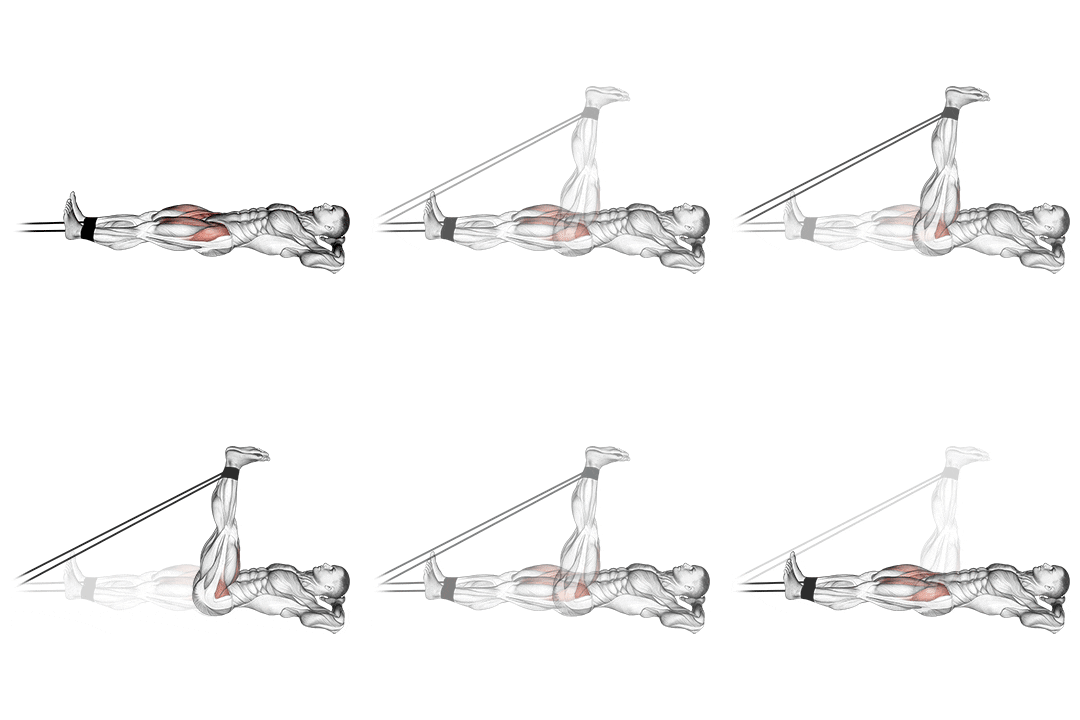
The band lying straight leg raise is an exercise that primarily targets the hip flexor muscles, including the iliopsoas and rectus femoris. It also engages the abdominal muscles to stabilize the core. This exercise helps strengthen the hip flexors and improve lower body mobility. ## Instructions 1. Lie down on your back with your legs extended and a resistance band securely looped around the balls of your feet. 2. Place your hands by your sides, palms facing down, for stability. 3. Engage your core muscles by gently pressing your lower back into the floor. 4. Keeping your legs straight, slowly lift them upward towards the ceiling, against the resistance of the band. 5. Continue raising your legs until they are perpendicular to the floor or until you feel a comfortable stretch in your hip flexors. 6. Hold the raised position briefly, then slowly lower your legs back down to the starting position. 7. Repeat the movement for the desired number of repetitions. ## Variations - **Band Resistance**: You can adjust the resistance level by using bands with different tensions. Thicker bands offer more resistance. - **Bent Knee Variation**: If you find it challenging to keep your legs straight, you can perform the exercise with your knees slightly bent, focusing on the hip flexor engagement. - **Single Leg Variation**: To increase the intensity and challenge your hip flexors further, perform the exercise with one leg at a time, while keeping the other leg extended just above the floor. ## Muscles Worked - Iliopsoas - Rectus Femoris (part of the quadriceps) - Abdominal muscles (stabilization) ## Common Mistakes - **Arching the Lower Back**: Avoid excessive arching of the lower back during the leg raise. Keep your core engaged and maintain a neutral spine throughout the exercise. - **Using Momentum**: Perform the leg raise in a controlled manner, focusing on the muscles being targeted, rather than relying on swinging or momentum. - **Lifting Legs Too High**: Raise your legs to a comfortable height, ensuring that your lower back stays in contact with the floor. Avoid excessively lifting the legs beyond your hip flexibility. ## Safety Precautions - Consult with a healthcare professional or fitness trainer before attempting this exercise, especially if you have any pre-existing hip or lower back conditions. - Use a resistance band with appropriate tension for your fitness level. - Maintain proper form throughout the exercise by engaging your core and keeping your spine neutral. - If you experience any pain or discomfort, particularly in the lower back or hip area, discontinue the exercise and seek professional advice. - Start with a lower resistance or fewer repetitions and gradually increase the difficulty as you build strength and control. - Breathe naturally during the exercise, avoiding breath-holding or shallow breathing. - Keep the resistance band securely fastened to prevent it from slipping or snapping during the exercise.
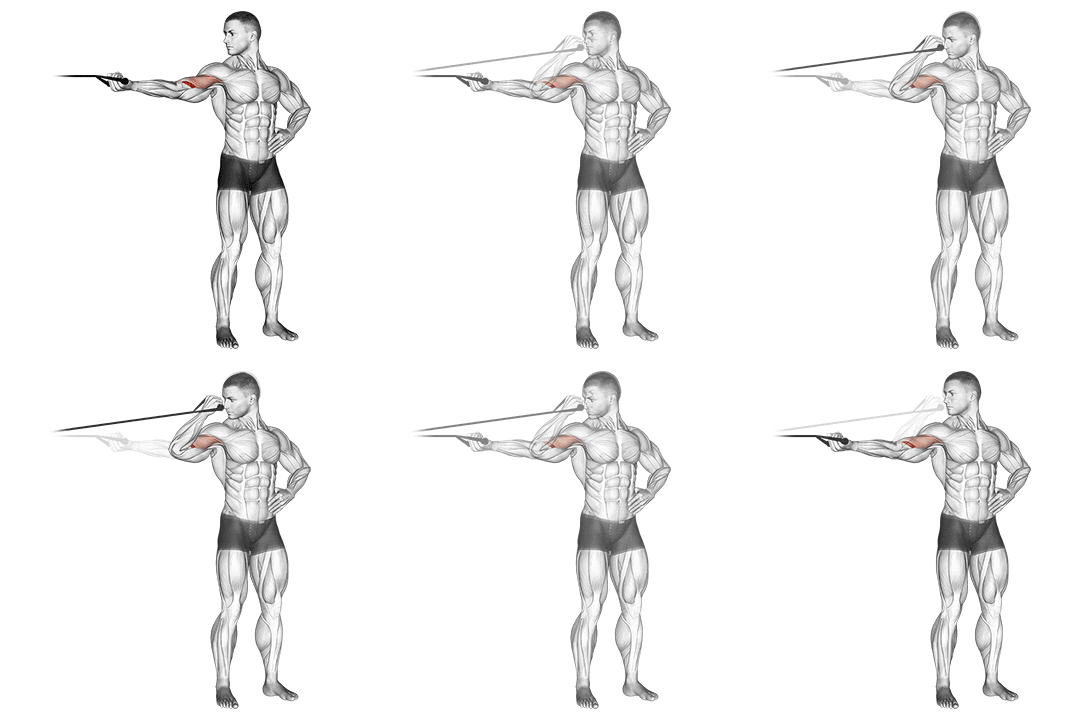
The band one arm overhead biceps curl is an exercise that primarily targets the biceps brachii, the muscles in the front of the upper arm. By performing this exercise with a resistance band, you can effectively strengthen and tone your biceps while also engaging the stabilizing muscles of the shoulder. ## Instructions 1. Stand with your feet shoulder-width apart, firmly planting one foot slightly in front of the other for stability. 2. Hold the resistance band with one hand, gripping it firmly. Ensure there is enough tension in the band to provide resistance throughout the movement. 3. Extend your arm fully overhead, keeping it in line with your shoulder and slightly behind your head. 4. Brace your core to maintain stability and avoid arching your back. 5. With your palm facing forward, slowly bend your elbow, bringing your hand towards your shoulder while keeping your upper arm stationary. 6. Pause for a moment when your hand is near your shoulder, feeling the contraction in your biceps. 7. Slowly straighten your arm, returning to the starting position with control. 8. Repeat the movement for the desired number of repetitions on one arm before switching to the other arm. ## Variations - **Band Resistance**: You can adjust the resistance level by using bands with different tensions. Thicker bands offer more resistance. - **Bilateral Curl**: Instead of performing the exercise with one arm at a time, you can use both arms simultaneously, gripping the band with both hands. - **Seated Variation**: If standing is not comfortable or feasible, you can perform the exercise while seated on a bench or chair, maintaining proper posture. ## Muscles Worked - Biceps Brachii (primary) - Brachialis - Brachioradialis - Anterior Deltoid (stabilizer) ## Common Mistakes - **Using Momentum**: Avoid swinging your arm or relying on momentum to lift the band. Perform the movement in a controlled manner, focusing on the contraction of the biceps. - **Elbow Movement**: Keep your upper arm stationary throughout the exercise. Avoid allowing your elbow to move forward or backward as you perform the curl. - **Poor Posture**: Maintain good posture throughout the exercise, avoiding excessive leaning or arching of the back. Engage your core and keep your shoulders back and down. ## Safety Precautions - Consult with a healthcare professional or fitness trainer before attempting this exercise, especially if you have any pre-existing conditions or injuries. - Choose a resistance band with appropriate tension for your fitness level. Start with a lighter resistance and gradually increase as you become stronger. - Ensure that the band is securely anchored or stepped on to prevent it from snapping back during the exercise. - Control the movement and avoid sudden or jerky motions to prevent strain or injury to the muscles or joints. - If you experience any pain or discomfort, particularly in the shoulder or elbow, discontinue the exercise and seek professional advice. - Perform the exercise in a well-ventilated area with enough space to avoid any obstacles or hazards. - Breathe naturally throughout the exercise, exhaling as you curl your arm and inhaling as you return to the starting position.
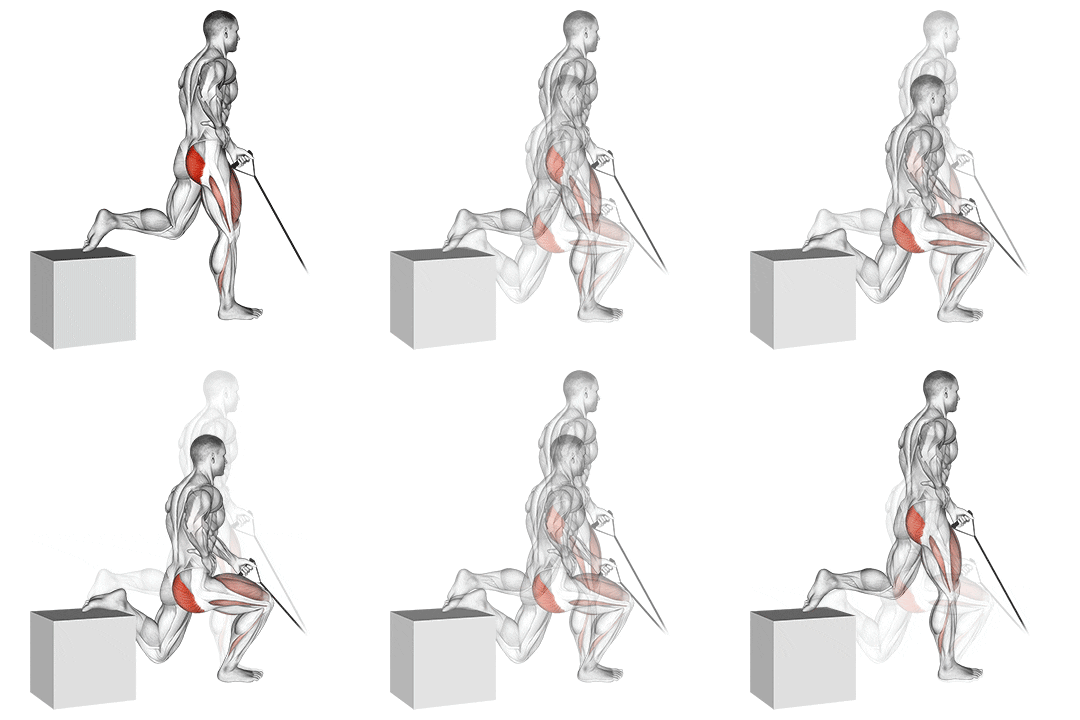
The band one arm single leg split squat is a lower body exercise that targets the quadriceps, hamstrings, glutes, and core muscles. It helps to improve leg strength, balance, and stability. ## Instructions 1. Start by standing with your feet hip-width apart and a resistance band looped around one shoulder. 2. Step one foot forward, approximately two to three feet, into a split stance position. 3. Shift your weight onto the front foot and lift the back foot off the ground, maintaining balance on the front leg. 4. Hold onto a stable object or keep your arms extended to the sides for balance if needed. 5. Engage your core and maintain an upright posture throughout the exercise. 6. Slowly lower your body by bending the front knee, keeping the back knee slightly bent and hovering above the ground. 7. Continue lowering until the front thigh is parallel to the ground or as low as your flexibility allows. 8. Push through the heel of the front foot to return to the starting position, extending the front leg and keeping the back foot elevated. 9. Repeat the movement for the desired number of repetitions on one leg before switching to the other leg. ## Variations - **Band Resistance**: You can adjust the resistance level by using bands with different tensions. Thicker bands offer more resistance. - **Assisted Variation**: If balance is challenging, you can perform the exercise near a wall or with the assistance of a stable object to hold onto for support. - **Rear Foot Elevated Variation**: To increase the difficulty and target the glutes and hamstrings more, you can perform the exercise with the back foot elevated on a step or platform. ## Muscles Worked - Quadriceps (front of the thigh) - Hamstrings (back of the thigh) - Glutes - Core muscles (stabilization) ## Common Mistakes - **Leaning Forward**: Maintain an upright posture throughout the exercise. Avoid leaning forward excessively as you lower your body, as this can put additional strain on the knee and reduce the effectiveness of the exercise. - **Knee Alignment**: Keep your front knee aligned with your toes, avoiding it from collapsing inward or extending too far past the toes. Ensure the knee tracks in line with the middle toe throughout the movement. - **Lack of Control**: Focus on controlling the descent and ascent of the movement. Avoid dropping quickly or bouncing at the bottom position. ## Safety Precautions - Consult with a healthcare professional or fitness trainer before attempting this exercise, especially if you have any knee, hip, or balance issues. - Choose a resistance band with appropriate tension for your fitness level. Start with lighter resistance and gradually increase as you become stronger and more stable. - Perform the exercise on a stable surface to minimize the risk of slipping or losing balance. - Take your time to find your balance before initiating the movement, especially if performing the exercise without assistance. - If you experience any pain or discomfort, particularly in the knee or hip, discontinue the exercise and seek professional advice. - Engage your core muscles throughout the exercise to provide stability and support for your spine. - Breathe naturally throughout the exercise, exhaling as you lower your body and inhaling as you return to the starting position. - Gradually increase the range of motion and depth of the squat as your strength and flexibility improve.
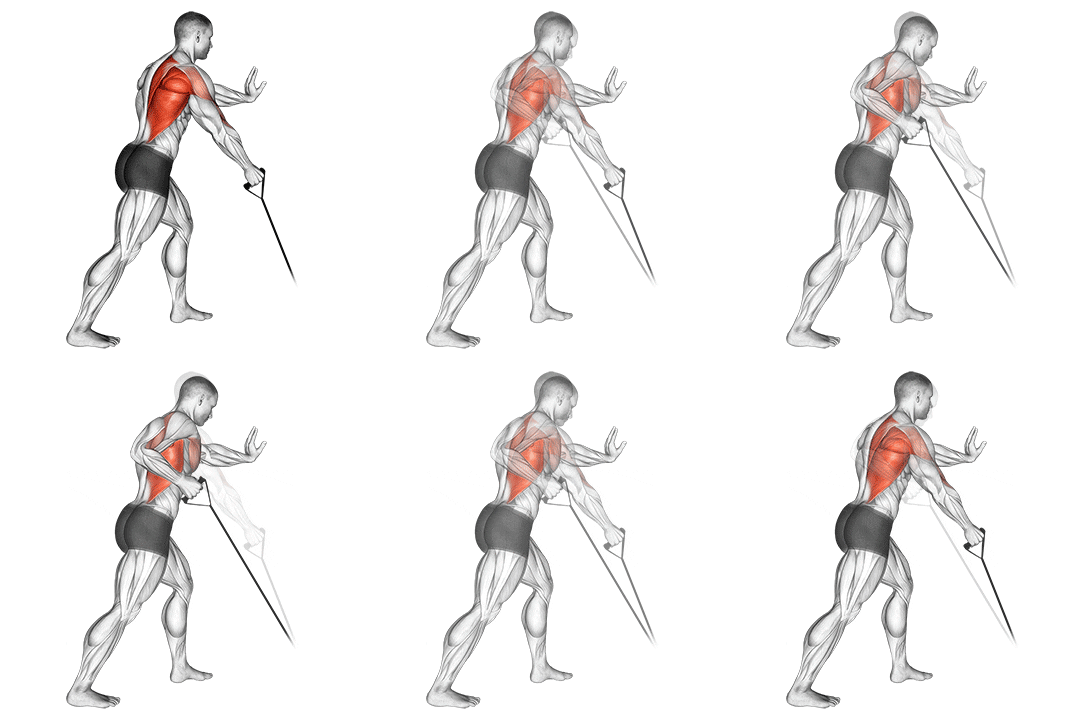
The band one arm standing low row is an exercise that targets the muscles of the upper back, specifically the latissimus dorsi, rhomboids, and rear deltoids. It helps to improve upper body strength, posture, and stability. ## Instructions 1. Begin by standing with your feet shoulder-width apart, knees slightly bent, and a resistance band securely anchored in front of you. 2. Hold the band with one hand, palm facing inward (pronated grip), and step back to create tension in the band. 3. Position your arm so that it is fully extended in front of you, keeping a slight bend in the elbow. 4. Engage your core and maintain an upright posture throughout the exercise. 5. Initiate the movement by retracting your shoulder blade and pulling your elbow back and toward your side, while keeping your arm close to your body. 6. Squeeze your back muscles at the top of the movement, then slowly extend your arm back to the starting position. 7. Repeat the movement for the desired number of repetitions on one arm before switching to the other arm. ## Variations - **Band Resistance**: You can adjust the resistance level by using bands with different tensions. Thicker bands offer more resistance. - **Bilateral Row**: Instead of performing the exercise with one arm at a time, you can use both arms simultaneously, holding a resistance band in each hand and performing a standing low row. - **Seated Variation**: If standing is not comfortable or feasible, you can perform the exercise while seated on a bench or chair, maintaining proper posture. ## Muscles Worked - Latissimus Dorsi (lats) - Rhomboids - Rear Deltoids - Biceps - Forearm muscles (grip) ## Common Mistakes - **Rounded Shoulders**: Maintain good posture throughout the exercise, avoiding rounding of the shoulders or hunching the upper back. Keep your chest lifted and shoulder blades down and back. - **Using Momentum**: Avoid using momentum to pull the band. Focus on controlled movements, squeezing the back muscles at the top of the row. - **Insufficient Range of Motion**: Pull the band until your elbow is fully retracted and your shoulder blade is squeezed. Avoid shortening the range of motion by stopping the movement too soon. ## Safety Precautions - Consult with a healthcare professional or fitness trainer before attempting this exercise, especially if you have any pre-existing shoulder or back conditions. - Choose a resistance band with appropriate tension for your fitness level. Start with lighter resistance and gradually increase as you become stronger. - Ensure that the band is securely anchored and positioned to prevent it from slipping or snapping during the exercise. - Maintain proper form throughout the exercise by engaging your core and avoiding excessive twisting or bending of the torso. - Control the movement and avoid jerky or sudden motions to prevent strain or injury to the muscles or joints. - If you experience any pain or discomfort, particularly in the shoulder or back, discontinue the exercise and seek professional advice. - Breathe naturally throughout the exercise, exhaling as you pull the band and inhaling as you return to the starting position. - Gradually increase the resistance and repetitions as your strength and control improve.