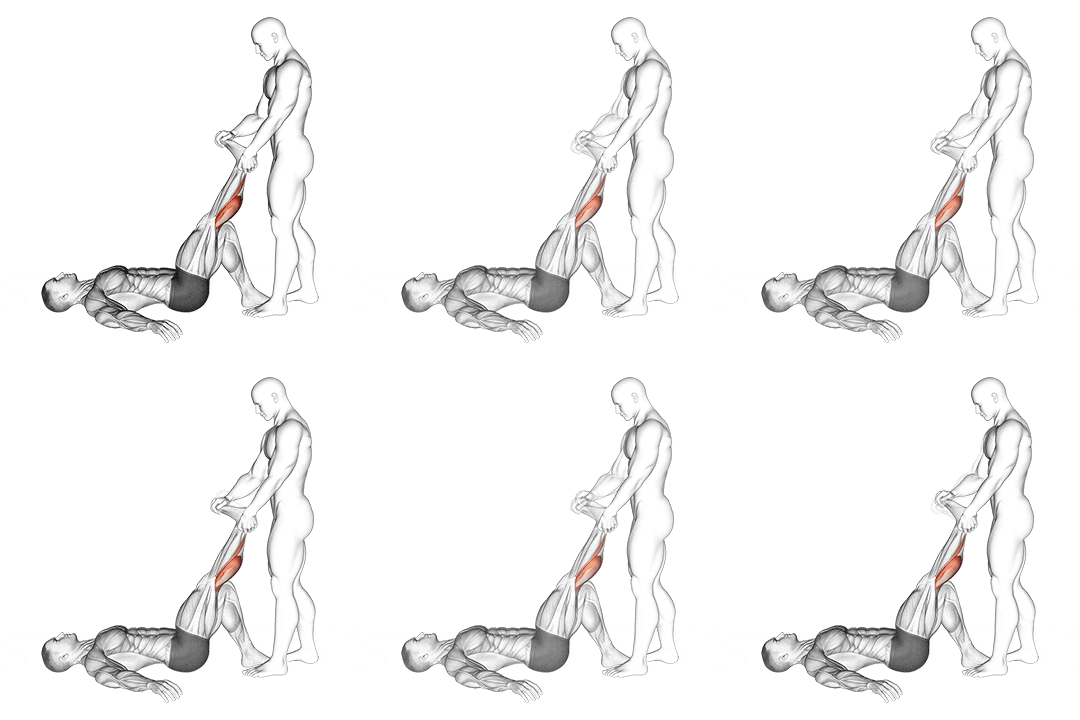
The Assisted Lying Calves Stretch is an exercise that targets the calf muscles. It involves stretching the muscles of the lower leg to improve flexibility, relieve tightness, and enhance overall lower body mobility. ## Instructions 1. Find a comfortable surface, such as an exercise mat, and lie down on your back. 2. Extend your legs fully and relax your feet. 3. If you have a partner or assistant, they can stand at the end of the mat, near your feet. 4. Lift one leg at a time and place it on your partner's or assistant's shoulder. The shoulder should be positioned near the back of your calf. 5. As your leg rests on the shoulder, your partner or assistant can apply gentle downward pressure, providing an assisted stretch to your calf muscle. 6. Hold the stretch for 20-30 seconds, feeling a gentle pull in the calf muscle. 7. Release the stretch and repeat on the other leg. 8. Perform the stretch for the desired number of repetitions. ## Variations - If you don't have a partner or assistant, you can use a wall or a stable surface to assist with the stretch. Stand facing the wall, place the ball of your foot against the wall, and lean your body forward, keeping your leg straight. This will create a stretch in the calf. - To increase the stretch, you can use a towel or resistance band. Wrap the towel or band around the ball of your foot and gently pull it towards you, while keeping your leg extended. ## Muscles Worked - Gastrocnemius (outer calf muscle) - Soleus (inner calf muscle) ## Common Mistakes - Overstretching: Avoid applying excessive force or pulling too hard during the stretch. It should be a gentle and controlled movement. - Holding your breath: Remember to breathe deeply and relax throughout the stretch. Avoid holding your breath, as it can contribute to muscle tension. - Neglecting both legs: Ensure that you stretch both legs equally to maintain balance and symmetry. ## Safety Precautions - Avoid bouncing or jerking movements during the stretch. Maintain a steady and controlled motion. - If you have any pre-existing conditions or injuries, consult with a healthcare professional before attempting this exercise. - Do not push the stretch to the point of pain. A gentle pulling sensation is sufficient. - If you feel any sharp pain or discomfort, stop the stretch immediately and seek guidance from a qualified healthcare provider.
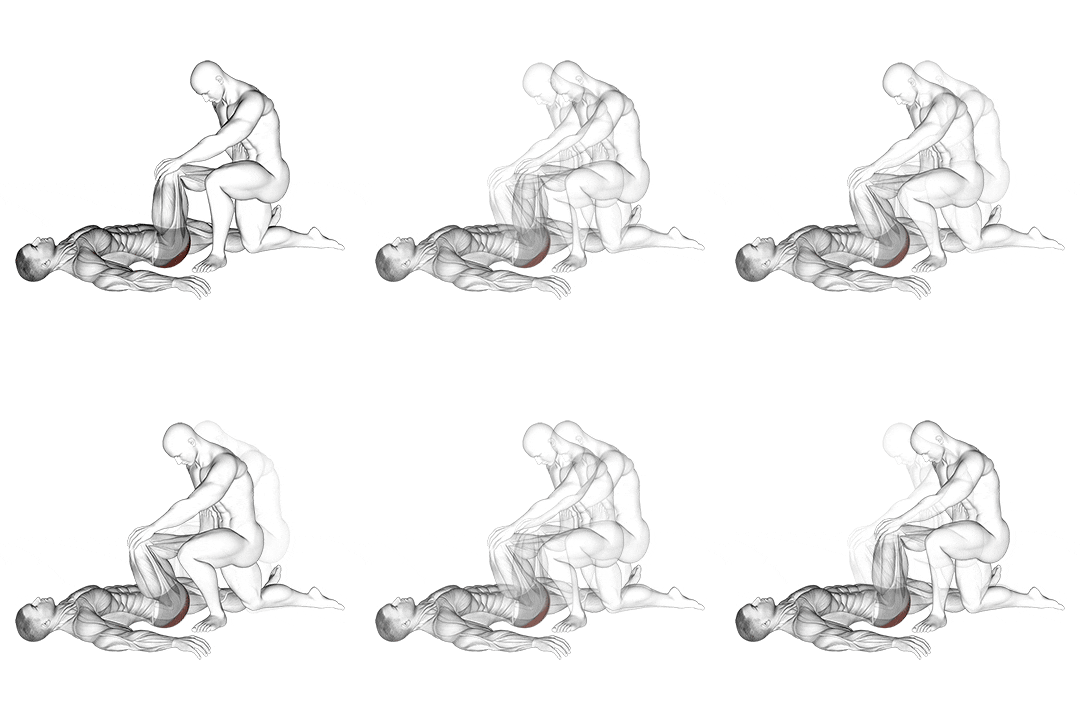
The Assisted Lying Glutes Stretch is an exercise that targets the gluteal muscles, specifically the gluteus maximus. It involves stretching the muscles of the buttocks to improve flexibility, relieve tightness, and enhance overall lower body mobility. ## Instructions 1. Find a comfortable surface, such as an exercise mat, and lie down on your back. 2. Bend both knees and place your feet flat on the mat, hip-width apart. 3. Lift one leg at a time and cross it over the opposite knee, creating a figure-four shape with your legs. 4. Use your hands to gently pull the uncrossed leg towards your chest, creating a stretch in the gluteal area. 5. Hold the stretch for 20-30 seconds, feeling a gentle pull in the gluteal muscles. 6. Release the stretch and repeat on the other leg. 7. Perform the stretch for the desired number of repetitions. ## Variations - If you have difficulty reaching your leg or need additional support, you can use a towel or a strap. Place the towel or strap around the uncrossed leg, just above the knee, and hold onto the ends of the towel or strap. Use it to gently pull the leg towards your chest. - If you prefer a deeper stretch, you can perform the stretch while standing. Cross one leg over the other and slowly lower your upper body towards your crossed leg, bending at the hips. You should feel a stretch in the gluteal muscles of the crossed leg. ## Muscles Worked - Gluteus maximus (main gluteal muscle) ## Common Mistakes - Pulling too hard: Avoid applying excessive force when pulling the leg towards your chest. The stretch should be gentle and controlled. - Holding your breath: Remember to breathe deeply and relax throughout the stretch. Avoid holding your breath, as it can contribute to muscle tension. - Allowing the back to arch excessively: Maintain a neutral spine position during the stretch. Avoid overarching the lower back, as this can compromise the effectiveness of the stretch. ## Safety Precautions - If you have any pre-existing conditions or injuries, consult with a healthcare professional before attempting this exercise. - Avoid jerking or bouncing movements during the stretch. Maintain a steady and controlled motion. - If you feel any sharp pain or discomfort, stop the stretch immediately and seek guidance from a qualified healthcare provider. - Modify the stretch as needed to suit your flexibility level. Do not force the stretch beyond your comfort zone.
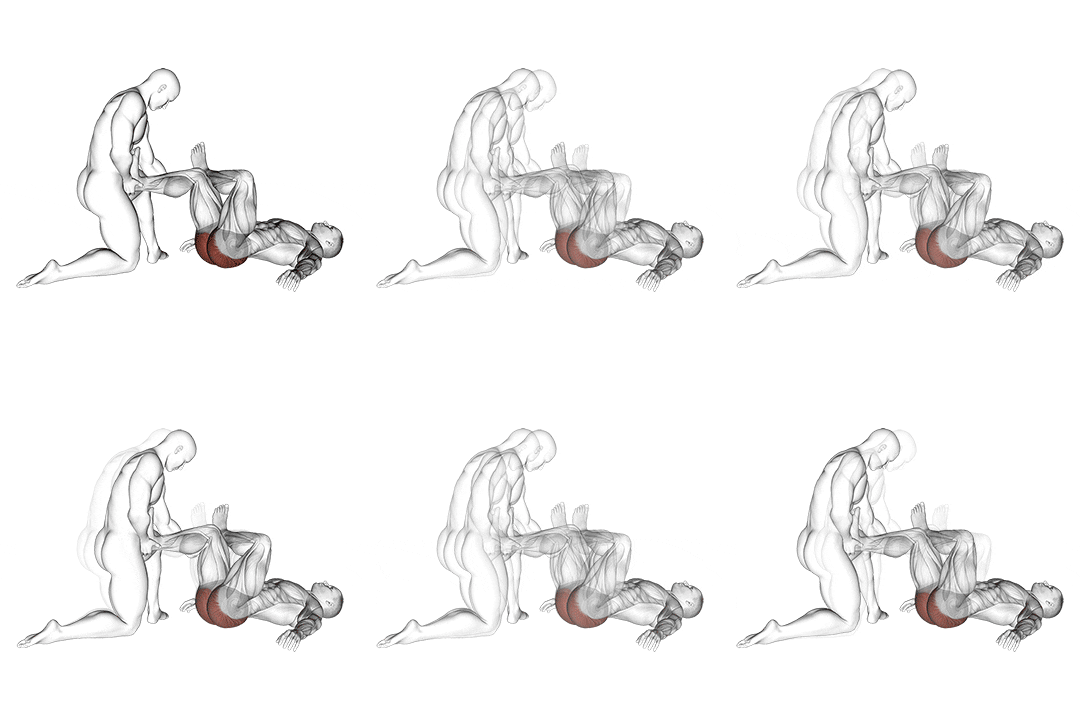
The Assisted Lying Gluteus and Piriformis Stretch targets the gluteal muscles, particularly the gluteus maximus and the piriformis. This stretch helps alleviate tightness in the glutes and piriformis, improving hip mobility and reducing the risk of hip and lower back discomfort. ## Instructions 1. Find a comfortable surface, such as an exercise mat, and lie down on your back. 2. Bend both knees and place your feet flat on the mat, hip-width apart. 3. Lift one leg and cross it over the opposite knee, creating a figure-four shape with your legs. 4. Place your hands behind the thigh of the uncrossed leg and gently pull it towards your chest until you feel a stretch in the gluteal and piriformis region. 5. Keep your head and shoulders relaxed on the mat throughout the stretch. 6. Hold the stretch for 20-30 seconds, feeling a gentle pull in the gluteus and piriformis muscles. 7. Release the stretch and repeat on the other leg. 8. Perform the stretch for the desired number of repetitions. ## Variations - If you find it challenging to reach your leg or need additional support, you can use a towel or a strap. Loop the towel or strap around the back of your uncrossed thigh and hold onto the ends. Use it to assist in pulling the leg towards your chest. - If you prefer a deeper stretch, you can perform the stretch while sitting. Sit on the edge of a chair or bench, cross one ankle over the opposite knee, and gently press down on the crossed knee to increase the stretch in the gluteus and piriformis muscles. ## Muscles Worked - Gluteus maximus (main gluteal muscle) - Piriformis (deep muscle of the buttocks) ## Common Mistakes - Pulling too hard: Avoid excessive force when pulling the leg towards your chest. The stretch should be gentle and controlled. - Holding your breath: Remember to breathe deeply and relax throughout the stretch. Avoid holding your breath, as it can contribute to muscle tension. - Allowing the back to arch excessively: Maintain a neutral spine position during the stretch. Avoid overarching the lower back, as this may diminish the effectiveness of the stretch. ## Safety Precautions - If you have any pre-existing conditions or injuries, consult with a healthcare professional before attempting this exercise. - Avoid jerking or bouncing movements during the stretch. Maintain a steady and controlled motion. - If you feel any sharp pain or discomfort, stop the stretch immediately and seek guidance from a qualified healthcare provider. - Modify the stretch as needed to suit your flexibility level. Do not force the stretch beyond your comfort zone.
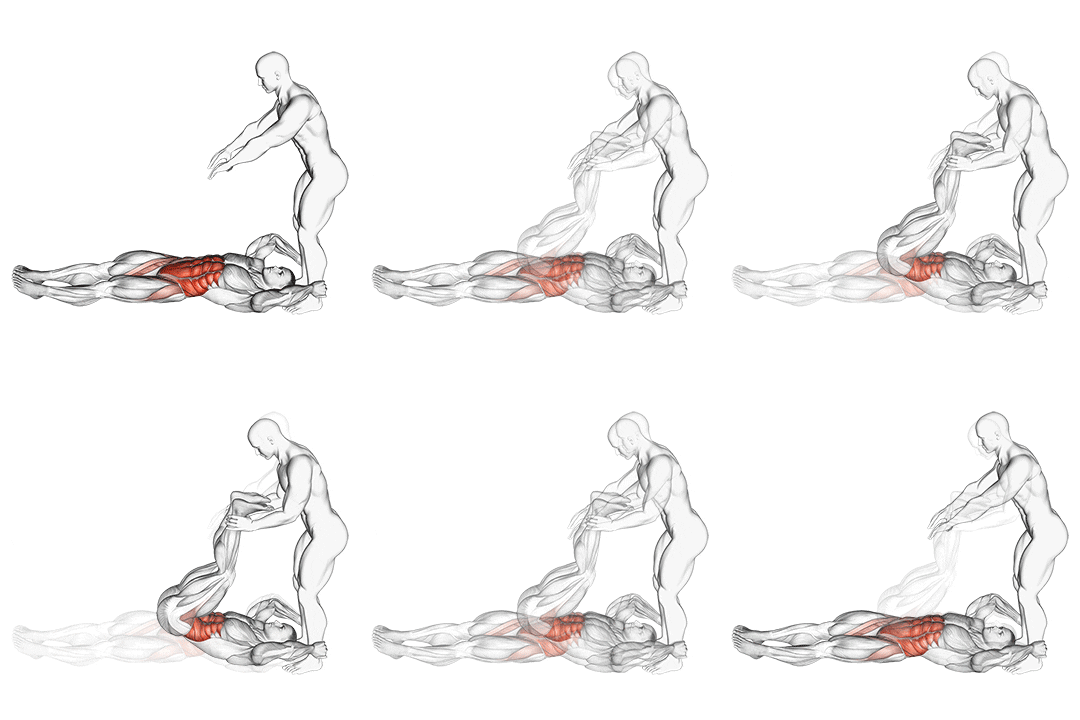
The Assisted Lying Leg Raise with Lateral Throw Down is an exercise that targets the abdominal muscles, particularly the lower abs, as well as the hip flexors. It involves a combination of leg raises and lateral movements to strengthen the core and improve hip stability. ## Instructions 1. Lie down on your back on a mat or a comfortable surface. 2. Extend your legs fully and place your arms by your sides for support. 3. If you have a partner or assistant, they can stand on one side of you, near your feet. 4. Lift both legs together, keeping them straight, until they are perpendicular to the ground. 5. While keeping your legs lifted, your partner or assistant will gently push your legs to one side, creating a lateral throw down motion. 6. Control the movement and bring your legs back up to the starting position. 7. Repeat the lateral throw down motion on the other side. 8. Continue alternating sides for the desired number of repetitions. ## Variations - If you find it challenging to keep your legs straight during the exercise, you can perform the leg raises with a slight knee bend. - If you don't have a partner or assistant, you can perform the exercise without the lateral throw down. Simply lift both legs, hold for a second, and lower them back down without the lateral movement. ## Muscles Worked - Rectus abdominis (lower abs) - Hip flexors ## Common Mistakes - Using momentum: Avoid swinging your legs or relying on momentum to lift them. Focus on controlled movements and engage your core muscles. - Allowing the back to arch excessively: Maintain a neutral spine position throughout the exercise. Avoid overarching the lower back, as it may strain the back muscles. - Not engaging the core: Remember to actively engage your abdominal muscles throughout the exercise to maximize the benefits and maintain stability. ## Safety Precautions - If you have any pre-existing conditions or injuries, consult with a healthcare professional before attempting this exercise. - Start with a suitable range of motion that allows you to maintain control and proper form. Gradually increase the range as you become more comfortable and stronger. - Perform the exercise in a slow and controlled manner to minimize the risk of injury. - If you feel any sharp pain or discomfort, stop the exercise immediately and seek guidance from a qualified healthcare provider. - Communicate with your partner or assistant to ensure they provide the appropriate level of assistance and support.
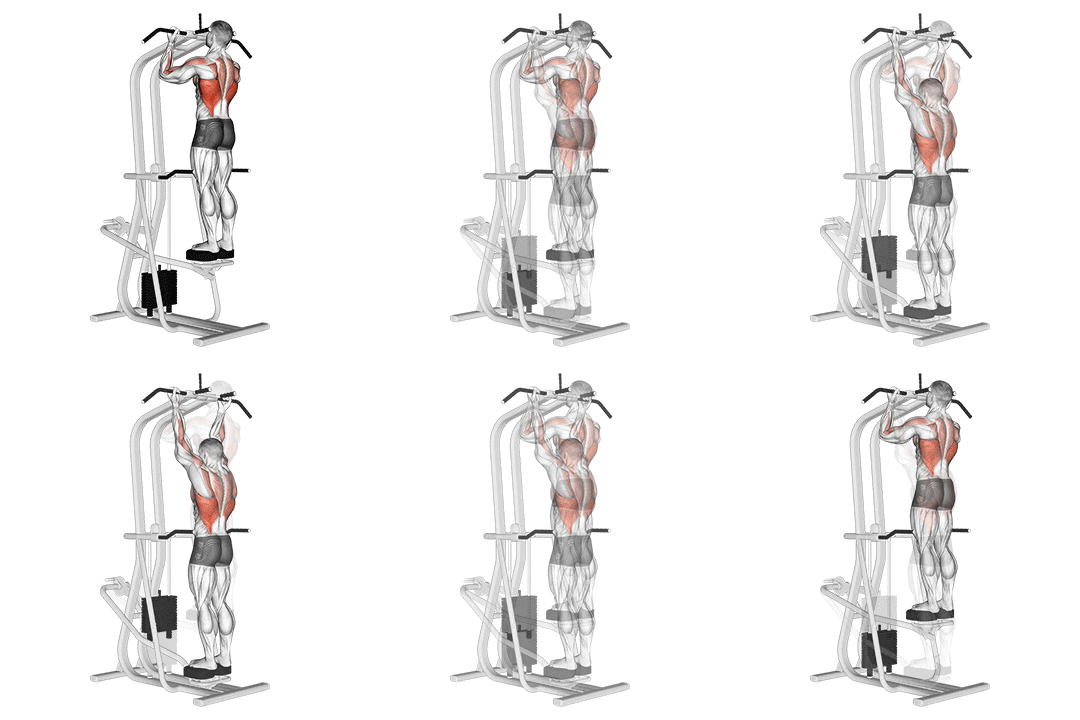
The assisted standing chin-up is a compound exercise that primarily targets the muscles of the upper body, particularly the back, biceps, and shoulders. It is performed using an assistive machine or resistance bands to provide assistance during the movement. ## Instructions 1. Stand facing the chin-up bar or the appropriate equipment for assisted chin-ups. 2. Position your hands slightly wider than shoulder-width apart on the bar, with an underhand grip (palms facing towards you). 3. Keep your feet flat on the floor and maintain a straight posture. 4. Engage your core muscles and slightly lean back. 5. Initiate the movement by pulling your body upward, focusing on squeezing your shoulder blades together. 6. Continue pulling until your chin is above the bar or until your upper chest is close to the bar. 7. Pause briefly at the top of the movement, then slowly lower yourself back down with control. 8. Repeat for the desired number of repetitions. ## Variations - Resistance band assisted chin-up: Attach a resistance band to the chin-up bar and place one or both feet into the band to provide assistance during the exercise. - Machine-assisted chin-up: Utilize an assisted chin-up machine that has a counterweight to support a portion of your body weight. ## Muscles Worked - Primary muscles: Latissimus dorsi (back muscles), biceps brachii (upper arm muscles), and rhomboids (mid-back muscles). - Secondary muscles: Deltoids (shoulder muscles), brachialis (forearm muscles), and lower trapezius (back muscles). ## Common Mistakes - Using excessive momentum: Avoid swinging or kicking your legs to generate momentum. Focus on using controlled strength to perform the exercise. - Partial range of motion: Ensure that you perform the full range of motion by pulling yourself up until your chin is above the bar or close to it. - Rounded shoulders: Keep your shoulders pulled back and down throughout the movement to maintain proper posture and engage the correct muscles. ## Safety Precautions - If using resistance bands, choose a band with appropriate tension that allows you to perform the exercise with control and without compromising form. - Make sure the chin-up bar or equipment is securely mounted and can support your body weight. - If you have any pre-existing shoulder or back injuries, consult with a qualified fitness professional or healthcare provider before attempting this exercise.
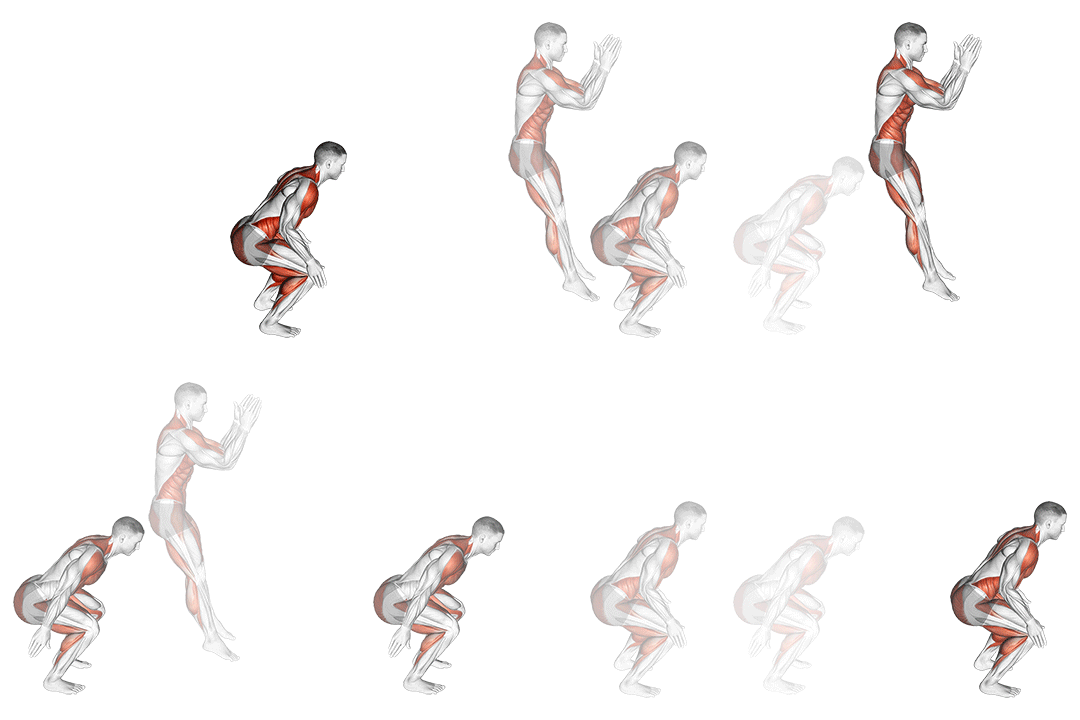
The backward jump is a plyometric exercise that targets the lower body, particularly the quadriceps, hamstrings, glutes, and calves. It improves explosive power, agility, and overall lower body strength. ## Instructions 1. Stand with your feet shoulder-width apart and your arms relaxed by your sides. 2. Engage your core muscles to maintain stability throughout the exercise. 3. Bend your knees slightly and hinge forward at the hips, maintaining a slight forward lean. 4. Swing your arms backward for momentum. 5. Push off the balls of your feet and jump backward as far as you can, extending your legs fully. 6. Land softly on the balls of your feet and immediately go into the next repetition. 7. Repeat the exercise for the desired number of repetitions or as instructed. ## Variations - Beginners: Perform the exercise on a flat surface and focus on jumping a shorter distance. - Advanced: Perform the exercise on an elevated platform or use a weighted vest for added resistance. ## Muscles Worked - Quadriceps (front thigh muscles) - Hamstrings (back thigh muscles) - Glutes (buttocks muscles) - Calves (gastrocnemius and soleus muscles) ## Common Mistakes - Not maintaining a slight forward lean: Ensure that your body maintains a slight forward lean throughout the exercise to engage the correct muscles and maintain balance. - Insufficient knee bend: Bend your knees slightly to generate power and protect your joints during the jump. - Landing with a flat foot: Land softly on the balls of your feet to absorb the impact and reduce stress on your joints. - Lack of arm swing: Use your arms to generate momentum and increase the power of the jump. ## Safety Precautions - Perform this exercise on a flat and non-slippery surface to minimize the risk of slipping or losing balance. - Start with shorter jumps and gradually increase the distance as your strength and coordination improve. - Listen to your body and stop if you experience any pain or discomfort. - If you have any pre-existing injuries or medical conditions, consult with a qualified fitness professional or healthcare provider before attempting this exercise.
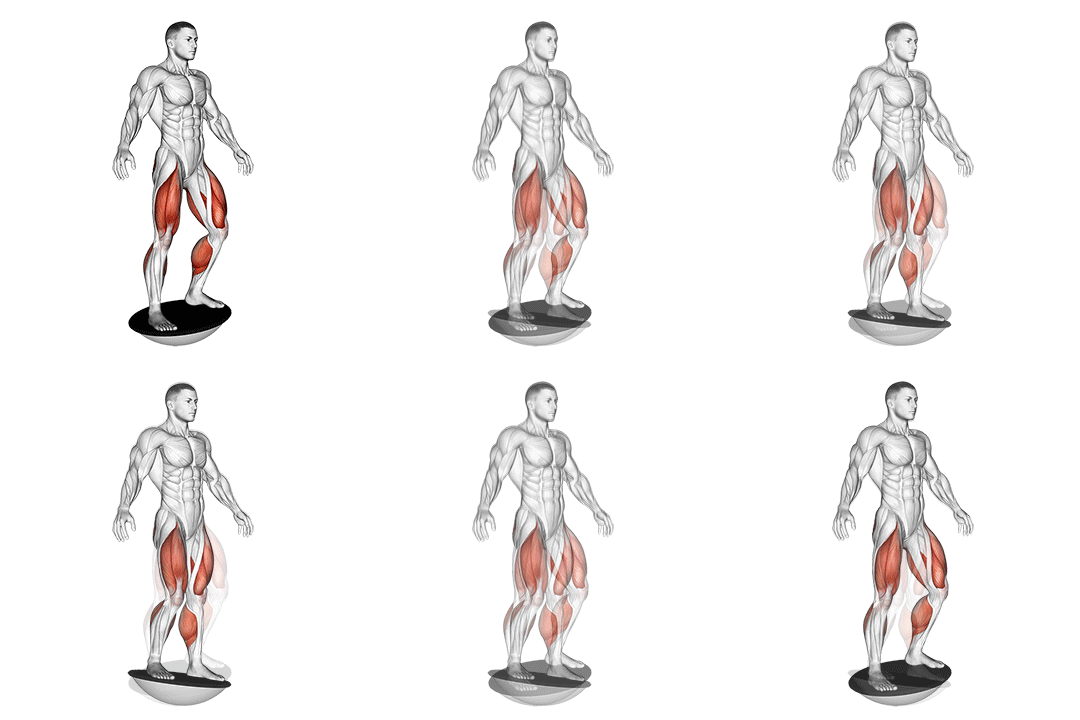
A balance board is a training tool designed to improve balance, stability, and core strength. It consists of a platform that is mounted on a fulcrum, creating an unstable surface. By standing or performing exercises on the balance board, you challenge your body's ability to maintain equilibrium, which engages various muscles and enhances overall balance. ## Instructions 1. Place the balance board on a flat and stable surface, ensuring it is secure and won't slide. 2. Stand on the balance board with your feet shoulder-width apart and your knees slightly bent. 3. Engage your core muscles to maintain balance and stability throughout the exercise. 4. Distribute your weight evenly on both feet and keep your gaze focused straight ahead. 5. Start by finding your balance in a stationary position. 6. Once you feel comfortable, try shifting your weight from side to side while keeping the board level. 7. Gradually increase the challenge by incorporating small movements, such as rocking forward and backward or rotating in a circular motion. 8. As you progress, you can perform additional exercises on the balance board, such as squats, lunges, or upper body movements while maintaining balance. ## Variations - Beginners: Start by using the balance board with a wider stance or with a support nearby, such as a wall or chair, to assist with balance. - Advanced: Increase the difficulty by narrowing your stance or performing single-leg exercises on the balance board. ## Muscles Worked - Core muscles (abdominals, obliques, and lower back) - Lower body muscles (quadriceps, hamstrings, calves, and glutes) - Ankle and foot stabilizers ## Common Mistakes - Leaning too far forward or backward: Maintain an upright posture and avoid excessive leaning to maintain balance. - Gripping the board with your toes: Relax your toes and distribute your weight evenly on the entire foot. - Holding your breath: Remember to breathe steadily throughout the exercise to support stability and relaxation. - Overexertion or fatigue: Start with shorter durations and gradually increase the time spent on the balance board to avoid muscle fatigue and prevent injury. ## Safety Precautions - Start with basic balance exercises and progress gradually to more advanced movements as your balance and stability improve. - Place the balance board on a non-slip surface to prevent slipping. - Use caution and have a support nearby, such as a wall or chair, especially if you are new to balance training or have limited stability. - If you have any pre-existing injuries or medical conditions, consult with a qualified fitness professional or healthcare provider before using a balance board.
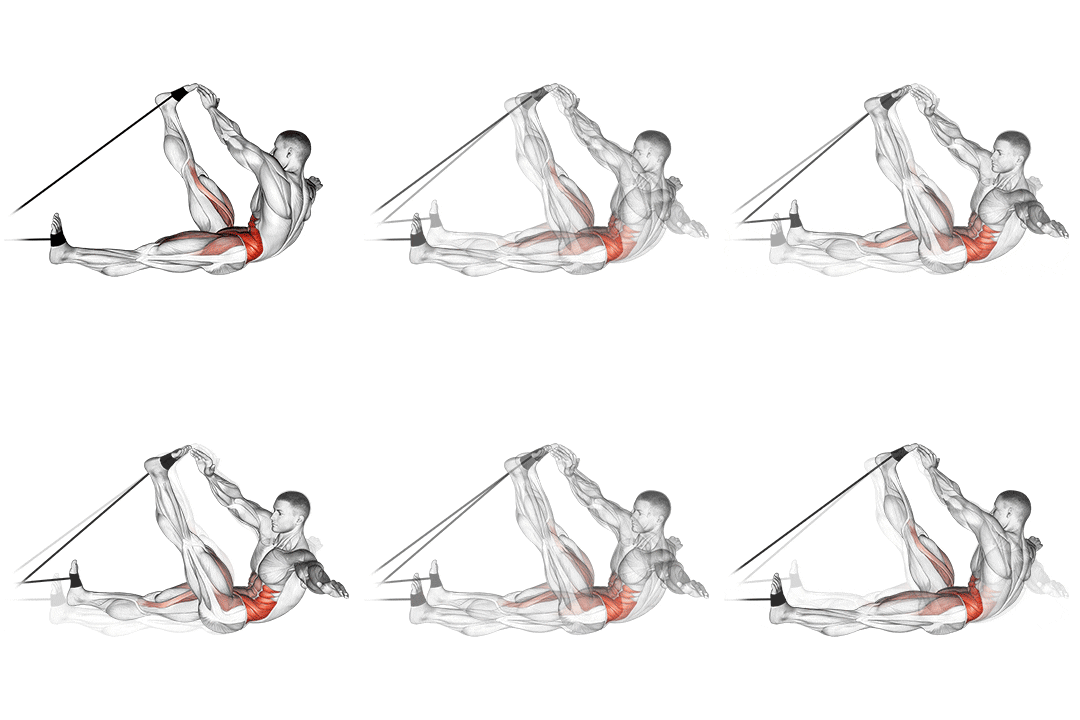
The band alternating V-up is an exercise that targets the abdominal muscles, specifically the rectus abdominis (six-pack muscles), and also engages the hip flexors. It involves using a resistance band to add tension and increase the challenge of the exercise. The band alternating V-up helps to strengthen the core, improve abdominal definition, and enhance overall stability. ## Instructions 1. Lie flat on your back with your legs extended and your arms stretched overhead, holding the ends of a resistance band. 2. Secure the resistance band around the arches of your feet, ensuring it is taut but not overly stretched. 3. Engage your core muscles to stabilize your spine and maintain proper alignment throughout the exercise. 4. Begin by simultaneously lifting your upper body and legs off the ground, reaching towards each other with your hands and feet. 5. As you lift, focus on contracting your abdominal muscles and exhale. 6. Slowly lower your upper body and legs back down to the starting position, inhaling as you do so. 7. Repeat the movement on the opposite side, reaching with the opposite hand and foot. 8. Continue alternating sides for the desired number of repetitions or as instructed. ## Variations - Beginners: If using a resistance band is too challenging, perform the exercise without the band until sufficient core strength is developed. - Advanced: Increase the difficulty by using a stronger resistance band or by adding a twist to the movement, reaching across the body with the opposite hand towards the opposite foot. ## Muscles Worked - Rectus abdominis (six-pack muscles) - Hip flexors ## Common Mistakes - Using momentum: Avoid using momentum to swing your body up. Instead, focus on controlled and deliberate movements, engaging the abdominal muscles throughout. - Allowing the back to arch excessively: Keep your lower back pressed against the ground and maintain a neutral spine position to avoid strain or injury. - Holding your breath: Remember to breathe continuously throughout the exercise to support proper muscle activation and oxygenation. - Not fully extending or reaching: Aim to fully extend your arms and legs, reaching towards each other, to maximize the engagement of the abdominal muscles. ## Safety Precautions - If you have any pre-existing back or neck conditions, perform this exercise with caution and stop if you experience any pain or discomfort. - Choose a resistance band with an appropriate level of tension for your fitness level. It should provide enough challenge without compromising your form. - Ensure that the resistance band is securely anchored around your feet to prevent it from slipping or snapping during the exercise. - If you are new to this exercise, start with a lower number of repetitions and gradually increase as your core strength improves.
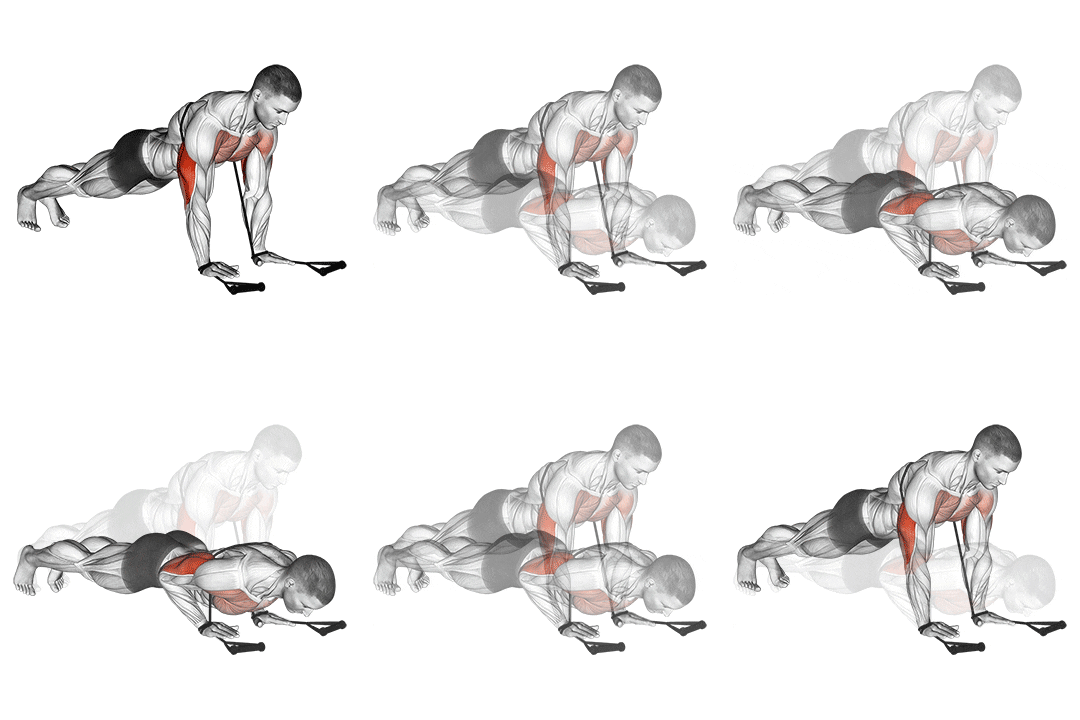
The band close-grip push-up is a variation of the traditional push-up exercise that utilizes resistance bands. It primarily targets the muscles of the chest, triceps, and shoulders. By bringing the hands closer together, this exercise places increased emphasis on the triceps muscles compared to regular push-ups. The addition of resistance bands further challenges the muscles and enhances overall strength and muscle development. ## Instructions 1. Begin by attaching a resistance band securely to a fixed anchor point or placing it around your back, just below the shoulder blades. 2. Assume a standard push-up position on the floor with your hands placed slightly closer than shoulder-width apart. 3. Keep your body straight and engage your core muscles. 4. Lower yourself towards the floor by bending your elbows, maintaining control and stability throughout the movement. 5. Push through your palms and extend your arms to raise your body back to the starting position, fully extending your elbows. 6. Repeat for the desired number of repetitions. ## Variations - Modified Band Close-Grip Push-Up: Perform the exercise from an elevated surface, such as a bench or step, to reduce the amount of bodyweight resistance. - Assisted Band Close-Grip Push-Up: If you find it challenging to complete the exercise with proper form, loop the resistance band around your knees or thighs to provide assistance and reduce the load. - Advanced Band Close-Grip Push-Up: Elevate your feet on a stable surface, such as a box or step, to increase the intensity and engage the muscles in a different manner. ## Muscles Worked - Primary muscles: Chest (pectoralis major), triceps brachii, anterior deltoids (front shoulder muscles) - Secondary muscles: Core muscles (abdominals, obliques), shoulder stabilizers ## Common Mistakes - Flaring elbows outward: Keep your elbows close to your body throughout the movement to effectively target the triceps and avoid excessive stress on the shoulder joints. - Drooping or sagging hips: Maintain a straight line from your head to your heels throughout the exercise. Avoid letting your hips sag or rise too high, as it compromises proper form and reduces the effectiveness of the exercise. - Insufficient range of motion: Lower your body until your chest nearly touches the floor to ensure a full range of motion. Avoid performing shallow or partial repetitions. ## Safety Precautions - Warm up before attempting the exercise to prepare your muscles and joints. - Choose an appropriate resistance band tension that provides a challenging workout without compromising your form. - If you experience any pain or discomfort, modify the exercise or consult with a fitness professional or healthcare provider. - Maintain proper breathing throughout the exercise by inhaling on the way down and exhaling as you push up. - If you have any pre-existing shoulder or wrist injuries, consider consulting with a healthcare professional before attempting this exercise.