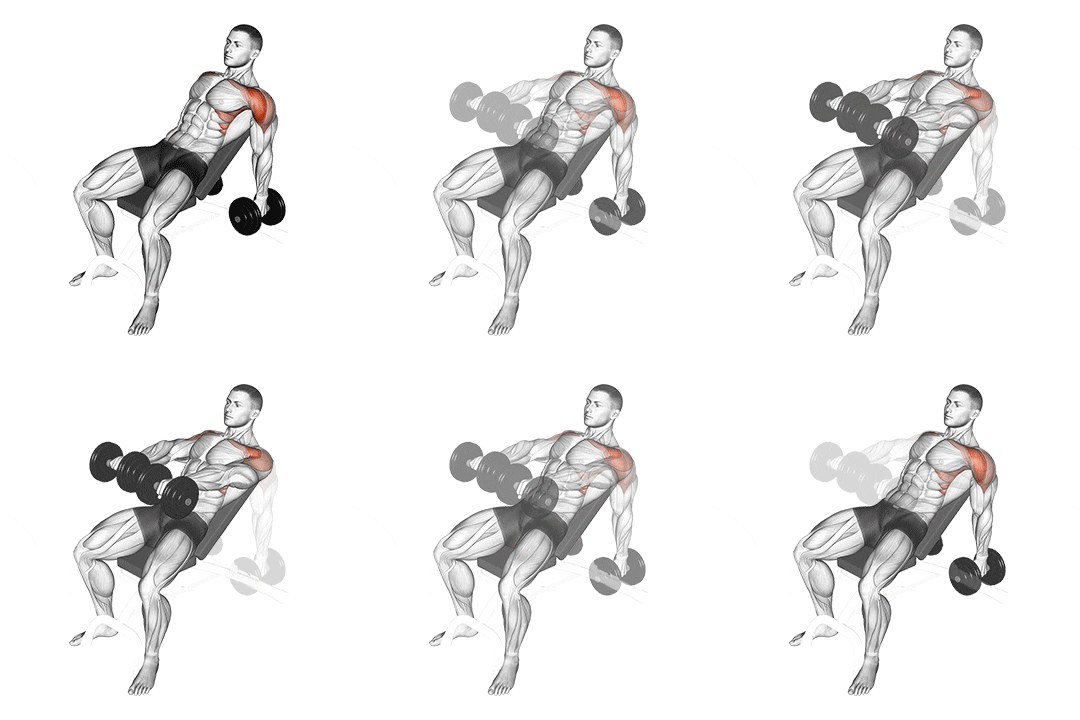
The dumbbell incline raise is an exercise that primarily targets the deltoid muscles, specifically the front deltoids (anterior deltoids). It involves lifting dumbbells in an upward motion while positioned on an incline bench. This exercise helps develop shoulder strength and stability, enhances shoulder aesthetics, and contributes to overall upper body development. ## Instructions 1. Set up an incline bench at a 45-degree angle. 2. Grab a dumbbell in each hand and sit on the incline bench with your back against the pad and feet firmly on the ground. 3. Allow your arms to hang straight down by your sides with your palms facing your body. 4. Engage your core and maintain a stable position on the bench. 5. Initiate the movement by raising both dumbbells simultaneously in an upward arc, leading with your elbows. 6. Keep your arms straight or maintain a slight bend in your elbows throughout the exercise. 7. Continue raising the dumbbells until your arms are parallel to the ground or slightly above shoulder level. 8. Hold the top position for a brief moment and focus on squeezing your front deltoids. 9. Slowly lower the dumbbells back down to the starting position in a controlled manner. 10. Repeat the exercise for the desired number of repetitions. ## Variations - Alternating Dumbbell Incline Raise: Instead of raising both dumbbells simultaneously, you can perform the exercise by alternating between the left and right arm raises. - Dumbbell Incline Lateral Raise: Instead of raising the dumbbells in front of your body, perform a lateral raise by lifting the dumbbells out to the sides, targeting the medial deltoids (side deltoids). ## Muscles Worked - Front deltoids (anterior deltoids) - Side deltoids (medial deltoids) - Upper trapezius muscles ## Common Mistakes - Using excessive momentum: Avoid swinging the dumbbells or using momentum to lift the weights. Focus on controlled movements to effectively engage the targeted muscles. - Rounding the back: Keep your back against the bench throughout the exercise and avoid arching or hunching your shoulders. - Lifting the weights too high: Raise the dumbbells until your arms are parallel to the ground or slightly above shoulder level. Avoid lifting too high, as it can put unnecessary strain on the shoulder joints. - Shrugging the shoulders: Keep your shoulders down and avoid shrugging or elevating them during the exercise. Maintain a stable and relaxed shoulder position. ## Safety Precautions - Choose an appropriate weight that allows you to maintain proper form and control. - Adjust the incline bench to a comfortable angle that supports your back and allows for full range of motion. - If you have any pre-existing shoulder conditions or injuries, consult with a healthcare professional before attempting this exercise. - Start with lighter dumbbells and gradually increase the weight as you become more comfortable and confident with the movement. - If you experience any pain or discomfort during the exercise, stop immediately and seek guidance from a qualified fitness instructor or healthcare professional.
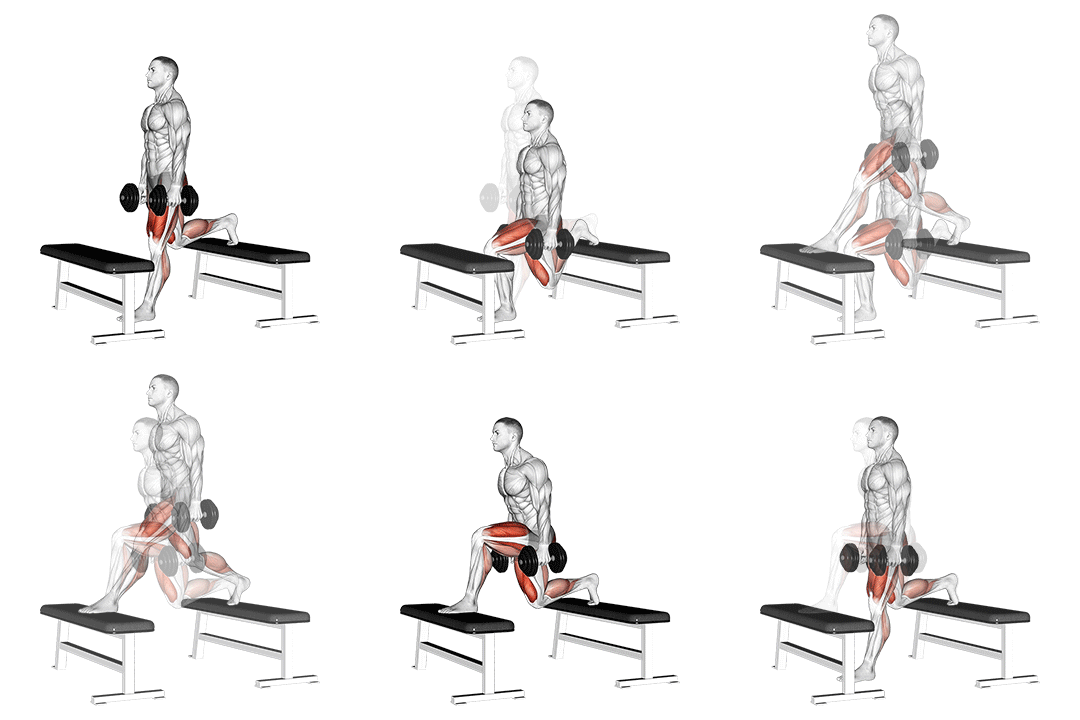
The dumbbell step-up split squat is a compound exercise that targets the lower body, specifically the quadriceps, glutes, and hamstrings. It combines the movements of a step-up and a split squat to provide a challenging workout for the lower body muscles. This exercise helps improve lower body strength, stability, and balance. ## Instructions 1. Stand in front of a sturdy step or platform with a dumbbell in each hand, palms facing your body. 2. Place your right foot on the step, ensuring that your entire foot is securely planted on the surface. 3. Step up onto the platform by driving through your right heel and straightening your right leg. Fully extend your right hip and knee. 4. Lift your left foot off the ground and bring it up to the step, placing it next to your right foot. 5. Stand tall on the step, maintaining a stable and balanced position. 6. Slowly lower your left foot back down to the starting position, allowing your right foot to remain on the step. 7. Perform a reverse lunge with your left leg, stepping back and lowering your body until your left knee is just above the ground. 8. Push through your right heel to return to the starting position. 9. Repeat the movement for the desired number of repetitions. 10. Switch sides and perform the exercise with your left foot on the step and your right foot performing the reverse lunge. ## Variations - Bodyweight Step-Up Split Squat: Perform the exercise without using dumbbells, relying solely on bodyweight resistance. - Bulgarian Split Squat: Instead of using a step or platform, place your rear foot on a bench or elevated surface to increase the range of motion and difficulty. - Single Dumbbell Step-Up Split Squat: Hold a single dumbbell in a goblet position (held at your chest) or a rack position (held at your shoulders) to challenge your core stability. ## Muscles Worked - Quadriceps (front of the thighs) - Glutes (buttocks) - Hamstrings (back of the thighs) - Calves - Core muscles for stability ## Common Mistakes - Leaning forward excessively: Maintain an upright posture throughout the exercise. Avoid leaning too far forward, as it puts unnecessary strain on the lower back. - Using momentum: Focus on controlled movements and avoid using momentum to lift yourself up or lower yourself down. - Allowing the front knee to go past the toes: Keep your front knee in line with your toes to prevent excessive stress on the knee joint. Adjust the step height or depth of the lunge to maintain proper alignment. - Not engaging the core: Keep your core muscles engaged throughout the exercise to maintain stability and balance. ## Safety Precautions - Choose an appropriate step height or platform that allows you to perform the exercise comfortably and safely. - Start with lighter dumbbells or bodyweight and gradually increase the weight as you become more proficient with the movement. - Use a spotter or have a stable support nearby if needed, especially when first attempting the exercise or using heavier weights. - Ensure that the step or platform is secure and stable before stepping onto it. - If you have any knee or lower back issues, consult with a healthcare professional before attempting this exercise. - Maintain proper form and control throughout the exercise to avoid injury. - If you experience any pain or discomfort during the exercise, stop immediately and seek guidance from a qualified fitness instructor or healthcare professional.
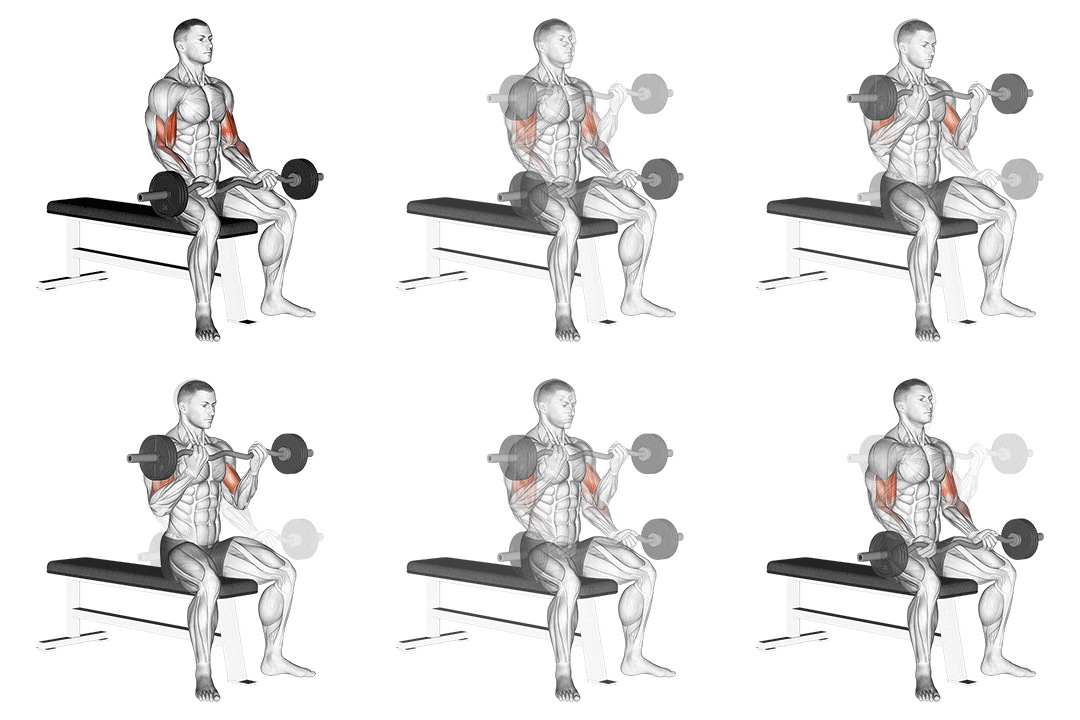
EZ barbell seated curls are an exercise that primarily targets the biceps brachii, the muscles located in the front of the upper arm. This exercise helps build strength and size in the biceps, improving the overall appearance and definition of the arms. ## Instructions 1. Sit on a bench with your back straight and feet firmly planted on the ground. 2. Grasp an EZ barbell with an underhand grip (palms facing upward) and hands shoulder-width apart. 3. Rest your upper arms on the top of your thighs, allowing the barbell to hang down in front of you. 4. Keep your elbows close to your torso and ensure that your upper arms remain stationary throughout the exercise. 5. Exhale and slowly curl the barbell upward by flexing your biceps. Keep your wrists in a neutral position. 6. Continue the curl until your biceps are fully contracted, and the barbell is at shoulder level. 7. Pause for a brief moment, squeezing your biceps at the top of the movement. 8. Inhale and gradually lower the barbell back to the starting position, fully extending your arms. 9. Repeat the exercise for the desired number of repetitions. ## Variations - Standing EZ Barbell Curls: Perform the same curling motion while standing instead of sitting. This variation engages additional core and stabilizer muscles. - Wide Grip EZ Barbell Curls: Use a wider grip on the barbell, placing your hands slightly wider than shoulder-width apart. This variation emphasizes the outer portion of the biceps. - Reverse Grip EZ Barbell Curls: Grip the barbell with an overhand grip (palms facing downward). This variation targets the brachialis muscles, which are located underneath the biceps. ## Muscles Worked - Biceps brachii (main target) - Brachialis (secondary muscle) ## Common Mistakes - Swinging the barbell: Avoid using momentum or swinging your body to lift the weight. Maintain strict form and control throughout the exercise. - Rounding the back: Keep your back straight and avoid hunching or rounding the shoulders. - Lifting with the shoulders: Focus on isolating the biceps and avoid lifting the barbell with your shoulders. Keep your upper arms stationary throughout the movement. - Using excessive weight: Choose a weight that allows you to maintain proper form and control. Using too much weight can compromise technique and increase the risk of injury. ## Safety Precautions - Start with a light weight to familiarize yourself with the movement and gradually increase the weight as you become comfortable and stronger. - Maintain proper form throughout the exercise to avoid unnecessary strain on the wrists, elbows, and back. - Warm up your biceps with some dynamic stretches or lighter sets before starting the exercise. - If you have any pre-existing wrist, elbow, or shoulder conditions, consult with a healthcare professional before attempting this exercise. - Listen to your body and stop immediately if you experience any pain or discomfort. Seek guidance from a qualified fitness instructor or healthcare professional if needed.
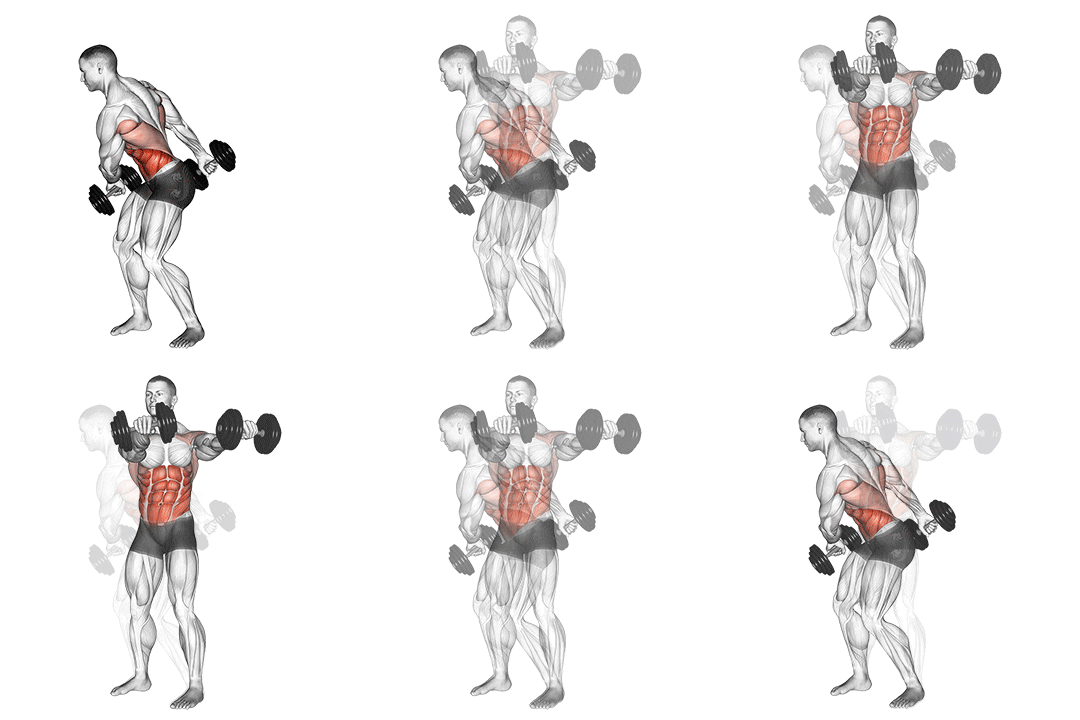
The spell caster is a compound exercise that works the obliques, shoulders, back, hips, and legs. It is a challenging exercise that can help you build muscle and improve your core strength. ## Instructions 1. Stand with your feet shoulder-width apart and your knees slightly bent. 2. Hold a dumbbell in each hand with a pronated grip (palms facing down). 3. Twist your torso to the right and bring the dumbbells up to your chest. 4. Return to the starting position. 5. Repeat on the left side. 6. Continue alternating sides for the desired number of repetitions. ## Tips * Use light weights at first until you get the hang of the movement. * Keep your core engaged throughout the exercise. * Don't swing the weights; control the movement with your muscles. * Don't twist your knees; keep them slightly bent. * Stop if you feel any pain. ## Variations * To make the exercise easier, use lighter weights or do fewer repetitions. * To make the exercise harder, use heavier weights or do more repetitions. * You can also do the spell caster with a cable machine or resistance band. ## Muscles Worked * Obliques * Shoulders * Back * Hips * Legs ## Common Mistakes * Not engaging the core * Swinging the weights * Twisting the knees * Not using the correct form ## Safety Precautions * Listen to your body and stop if you feel any pain. * Be careful not to twist your back. * Use light weights until you get the hang of the movement. ## Additional Benefits * Improves balance and coordination * Helps to prevent injuries * Burns calories * Improves mood * Reduces stress
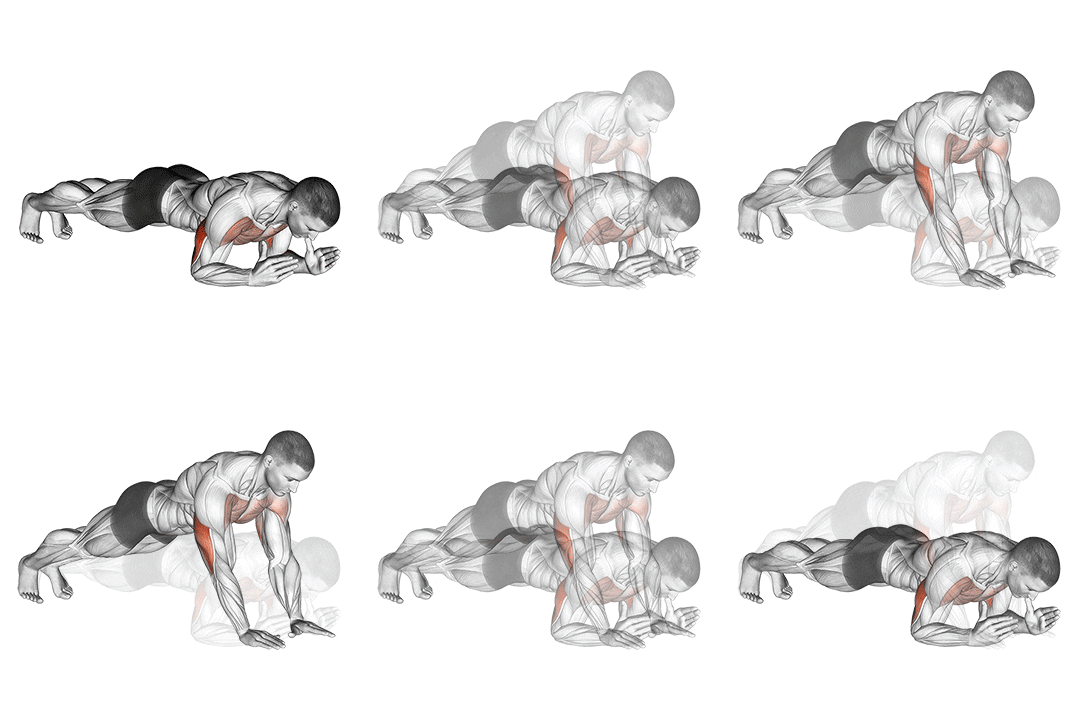
The plank up is a challenging variation of the traditional plank exercise. It primarily targets the core muscles, including the rectus abdominis, transverse abdominis, and obliques. It also engages the muscles of the upper body, including the shoulders, chest, and arms, making it a great full-body exercise. The plank up helps improve core stability, strengthens the upper body, and enhances overall body control and endurance. ## Instructions 1. Start by assuming a plank position with your forearms on the ground, elbows directly beneath your shoulders, and toes tucked under. 2. Engage your core muscles and maintain a straight line from your head to your heels. Avoid sagging your hips or raising your buttocks too high. 3. Push through your forearms and lift your right hand off the ground. 4. Place your right hand on the mat where your right forearm was, directly beneath your right shoulder. 5. Push through your right hand and lift your left hand off the ground. 6. Place your left hand on the mat where your left forearm was, directly beneath your left shoulder. 7. You are now in a high plank position with your hands directly beneath your shoulders. 8. Reverse the movement by lowering your right forearm to the ground, followed by your left forearm, returning to the starting plank position. 9. Repeat the process, leading with your left hand this time. 10. Continue alternating the leading hand for the desired number of repetitions or time. ## Variations - Modified Plank Up: Perform the exercise from your knees instead of your toes to reduce the intensity. - Side Plank Up: After reaching the high plank position, transition into a side plank by rotating your body and lifting one arm toward the ceiling. Alternate sides for each repetition. - Weighted Plank Up: Place a weight plate or dumbbell on your upper back while performing the exercise to increase the resistance and challenge your muscles further. ## Muscles Worked - Core muscles (rectus abdominis, transverse abdominis, obliques) - Shoulders - Chest - Arms ## Common Mistakes - Sagging hips: Avoid allowing your hips to sink or your lower back to arch during the exercise. Maintain a straight line from your head to your heels. - Raising buttocks too high: Similarly, avoid lifting your buttocks too high, as it can create excessive stress on your lower back. Keep your body in a neutral position. - Lack of core engagement: Ensure that you actively engage your core muscles throughout the exercise to maximize its effectiveness. - Incorrect hand placement: Make sure to place your hands directly beneath your shoulders in the high plank position to maintain proper alignment and stability. ## Safety Precautions - Listen to your body and start with a modified version or lighter intensity if you're a beginner or have any underlying health conditions. - Avoid straining your neck or shoulders. Keep your head in line with your spine and relax your shoulders. - If you experience any pain or discomfort, stop the exercise and consult a fitness professional or healthcare provider.
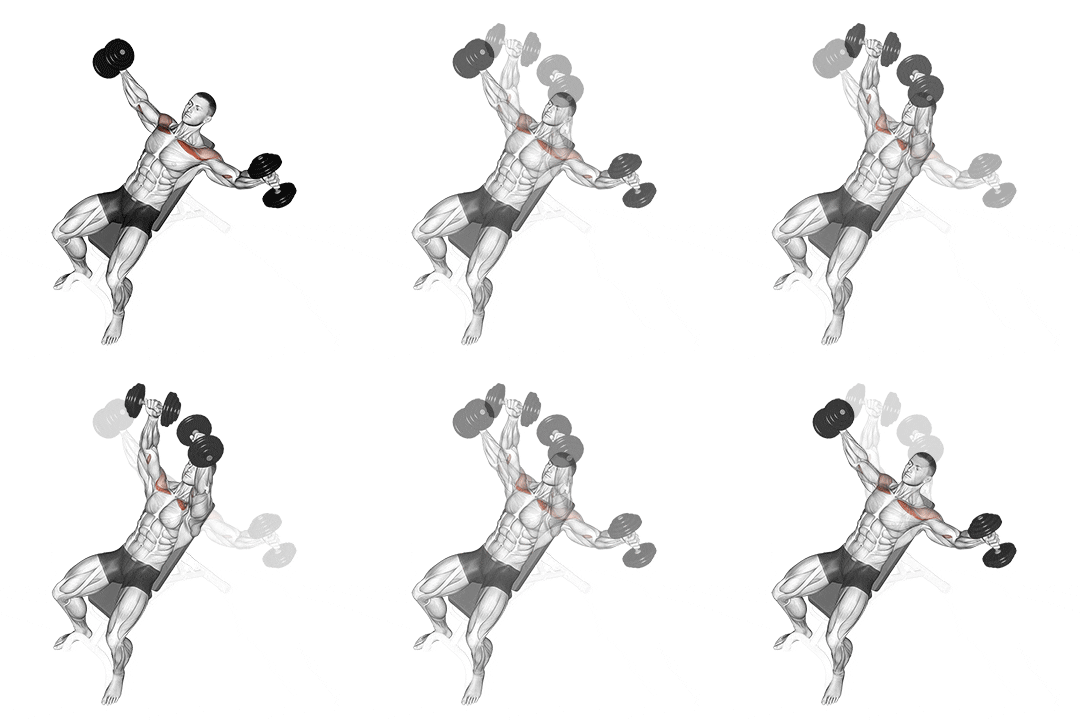
The incline dumbbell fly is an exercise that primarily targets the muscles of the chest, particularly the pectoralis major. It also engages the shoulders and triceps. The exercise is performed on an incline bench, which changes the angle of the movement and places more emphasis on the upper portion of the chest. Incline dumbbell flys help build strength, muscle definition, and overall development of the chest muscles. ## Instructions 1. Set an incline bench at an angle of around 30-45 degrees. 2. Hold a dumbbell in each hand and sit on the bench with your back against the pad. 3. Plant your feet firmly on the ground and maintain a stable position. 4. Start with the dumbbells held above your chest, palms facing inward (neutral grip), and elbows slightly bent. 5. Inhale and slowly lower the dumbbells out to the sides in a wide arc until you feel a stretch in your chest muscles. Keep your elbows slightly bent throughout the movement. 6. Exhale and use your chest muscles to bring the dumbbells back to the starting position, following the same arc. 7. Repeat the movement for the desired number of repetitions. ## Variations - Flat Dumbbell Fly: Perform the exercise on a flat bench instead of an incline bench to target the entire chest. - Decline Dumbbell Fly: Perform the exercise on a decline bench to place more emphasis on the lower portion of the chest. - Single-Arm Dumbbell Fly: Instead of using both arms simultaneously, perform the exercise one arm at a time to focus on each side independently. ## Muscles Worked - Pectoralis major (upper chest) - Anterior deltoids (front shoulders) - Triceps (secondary muscles) ## Common Mistakes - Using excessive weight: Select a weight that allows you to maintain proper form and control throughout the movement. Using weights that are too heavy can compromise your technique and increase the risk of injury. - Flaring elbows: Avoid allowing your elbows to excessively flare out to the sides. Keep them slightly bent and maintain control throughout the exercise. - Not maintaining a neutral spine: Ensure that your back is pressed against the bench and maintain a neutral spine position throughout the exercise. Avoid arching your back or allowing excessive rounding. - Using momentum: Focus on a slow and controlled movement, avoiding any swinging or jerking motions. This helps maximize muscle engagement and prevents strain on the joints. ## Safety Precautions - Warm up before performing the exercise to prepare your muscles for the workload. - Use a spotter or ask for assistance when handling heavy weights. - If you have any shoulder or chest injuries or conditions, consult with a healthcare professional or fitness expert before attempting this exercise. - Start with lighter weights and gradually increase the resistance as you become comfortable with the movement. - If you experience any pain or discomfort, stop the exercise and seek guidance from a qualified professional.