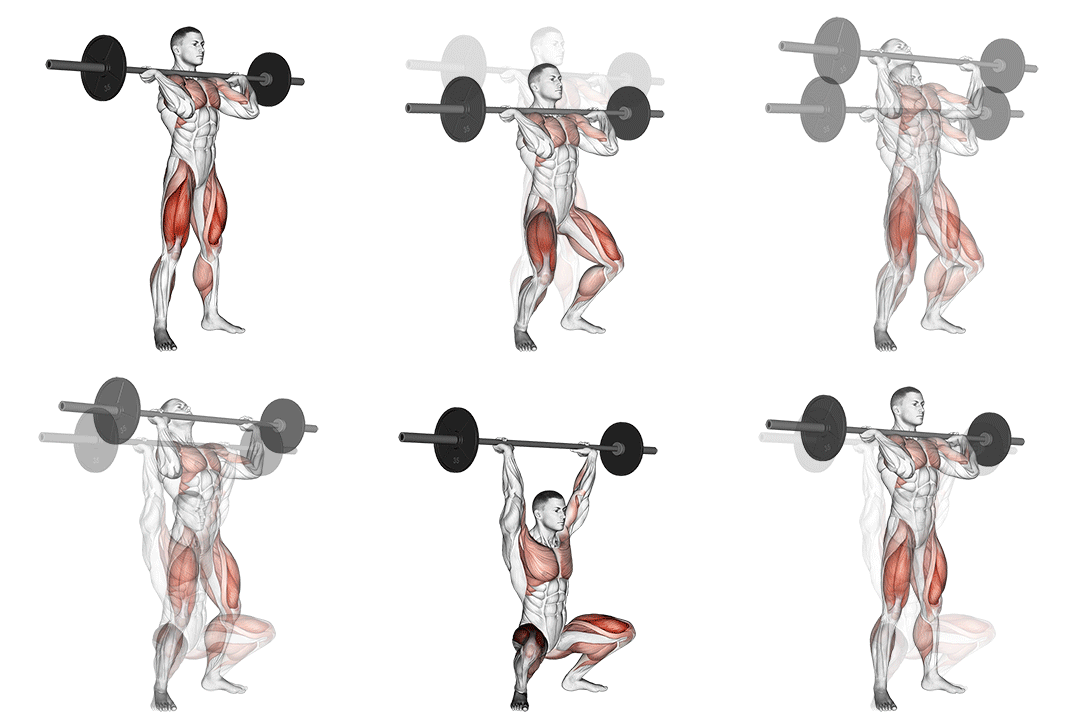
The squat jerk is an advanced weightlifting movement that combines elements of the jerk and the squat. It involves lifting a barbell from the front rack position and transitioning into a deep squat position while simultaneously locking out the arms overhead. The squat jerk primarily targets the lower body, including the quadriceps, glutes, and hamstrings, while also engaging the core, shoulders, and triceps. It requires strength, mobility, coordination, and balance. ## Instructions 1. Begin with the barbell resting on your front shoulders, using a grip slightly wider than shoulder-width apart. 2. Position your feet slightly wider than hip-width apart, toes pointed slightly outward. 3. Initiate the movement by performing a dip and drive: Bend your knees and hips slightly, then explosively extend your legs and drive the barbell upward. 4. As the barbell reaches its peak height, quickly drop into a deep squat position, descending as low as you comfortably can while maintaining balance and stability. 5. Simultaneously, rotate your elbows forward and lock out your arms overhead, supporting the weight of the barbell. 6. Maintain an upright torso and balance throughout the squat position. 7. From the deep squat, stand back up by extending your knees and hips, keeping the barbell overhead. 8. Return to the starting position by bringing the barbell back down to the front rack position. 9. Repeat for the desired number of repetitions. ## Variations - Power Jerk: If the full squat jerk is challenging, you can modify the movement by performing a power jerk instead. Instead of descending into a deep squat, you catch the barbell in a partial squat position with your knees bent to around 90 degrees. - Split Jerk: Another variation is the split jerk, where you split your legs into a lunge-like position during the overhead phase instead of descending into a deep squat. ## Muscles Worked The squat jerk primarily targets the following muscles: - Quadriceps - Glutes - Hamstrings - Core muscles (abdominals, lower back) - Shoulders - Triceps ## Common Mistakes 1. Lack of mobility: Adequate ankle, hip, and shoulder mobility are crucial for performing the squat jerk correctly. Insufficient mobility may hinder your ability to maintain balance and execute the movement effectively. 2. Insufficient leg drive: The dip and drive phase is essential for generating power to lift the barbell overhead. Ensure you engage your legs and drive through your heels to maximize power output. 3. Forward or backward barbell displacement: Pay attention to the vertical bar path during the lift. Avoid allowing the barbell to drift too far forward or backward, as this can compromise stability and make the lift more challenging. ## Safety Precautions - Before attempting the squat jerk, ensure you have a solid foundation in weightlifting and are proficient in the jerk and squat techniques. - Start with lighter weights to practice the movement pattern and gradually increase the load as you gain proficiency. - Use proper spotters or a weightlifting coach when performing heavy squat jerks to ensure safety and proper form. - Maintain a strong and stable core throughout the exercise to protect your lower back. - If you have any existing injuries, particularly in the shoulders, knees, or lower back, it's advisable to consult with a qualified weightlifting coach or healthcare professional before attempting the squat jerk.
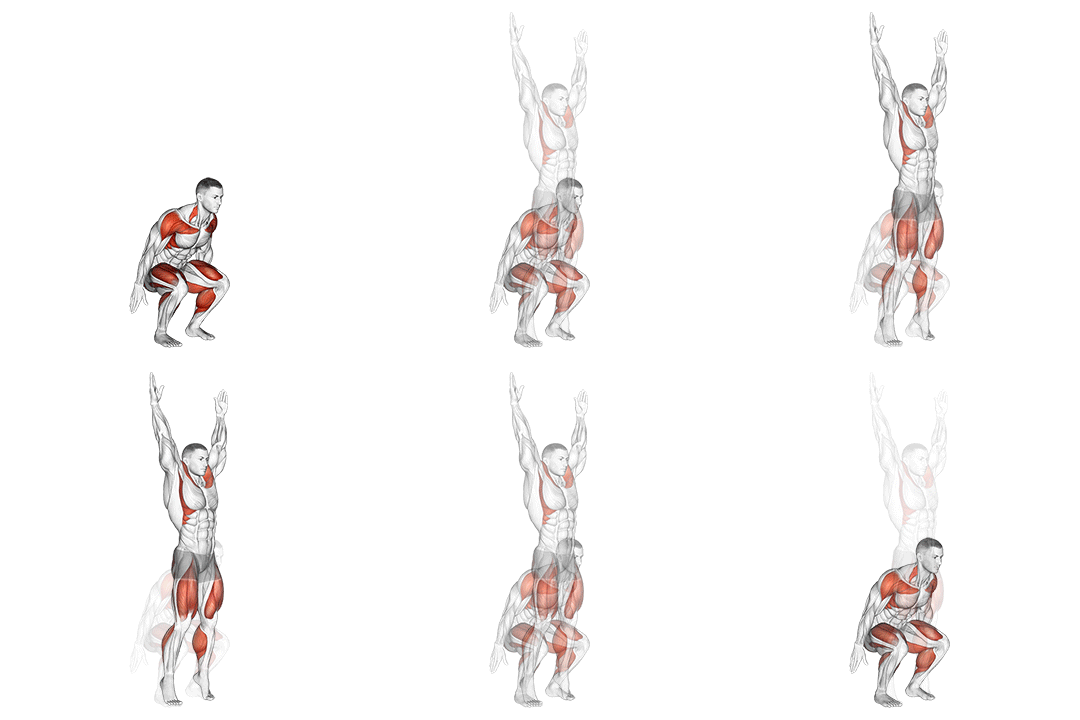
The squat to overhead reach is a compound exercise that targets multiple muscle groups in the lower body, core, and upper body. It combines the squatting movement with an overhead reach, providing a full-body workout. This exercise helps improve lower body strength, core stability, and upper body mobility. ## Instructions 1. Stand with your feet shoulder-width apart, toes slightly turned out. 2. Engage your core muscles and maintain a straight back throughout the exercise. 3. Lower your body into a squat position by bending your knees and pushing your hips back. 4. Keep your weight on your heels and lower down until your thighs are parallel to the ground. Maintain a neutral spine. 5. As you reach the bottom of the squat, extend your arms overhead, reaching towards the ceiling. 6. Push through your heels and return to the starting position, simultaneously lowering your arms back down. 7. Repeat the movement for the desired number of repetitions. ## Variations - Bodyweight Variation: Perform the exercise without any added weight. - Dumbbell Variation: Hold a dumbbell in each hand, with arms extended overhead, throughout the movement. - Kettlebell Variation: Hold a kettlebell with both hands by the handle, resting it against your chest. Perform the squat and overhead reach as described. - Stability Ball Variation: Place a stability ball between your lower back and a wall. Perform the squat to overhead reach, using the ball for support and stability. ## Muscles Worked - Quadriceps (front thigh muscles) - Hamstrings (back thigh muscles) - Glutes (butt muscles) - Calves - Core muscles (including abdominals and lower back) - Shoulders - Upper back muscles ## Common Mistakes - Allowing the knees to collapse inward: Keep your knees in line with your toes throughout the movement. - Arching the lower back: Maintain a neutral spine position to avoid excessive stress on the lower back. - Lifting the heels: Keep your weight on the heels and ensure they remain in contact with the ground. - Overextending the neck: Avoid straining your neck by keeping it in a neutral position and looking straight ahead. - Not reaching full depth in the squat: Aim to lower down until your thighs are parallel to the ground for maximum effectiveness. ## Safety Precautions - Consult with a healthcare professional before starting any new exercise program, especially if you have any pre-existing medical conditions or injuries. - Warm up adequately before performing the exercise to prepare your muscles for the movements. - Start with lighter weights or bodyweight and gradually increase the resistance as you become more comfortable and stronger. - Maintain proper form and technique throughout the exercise to prevent injury. - If you experience any pain or discomfort during the exercise, stop immediately and seek professional advice.
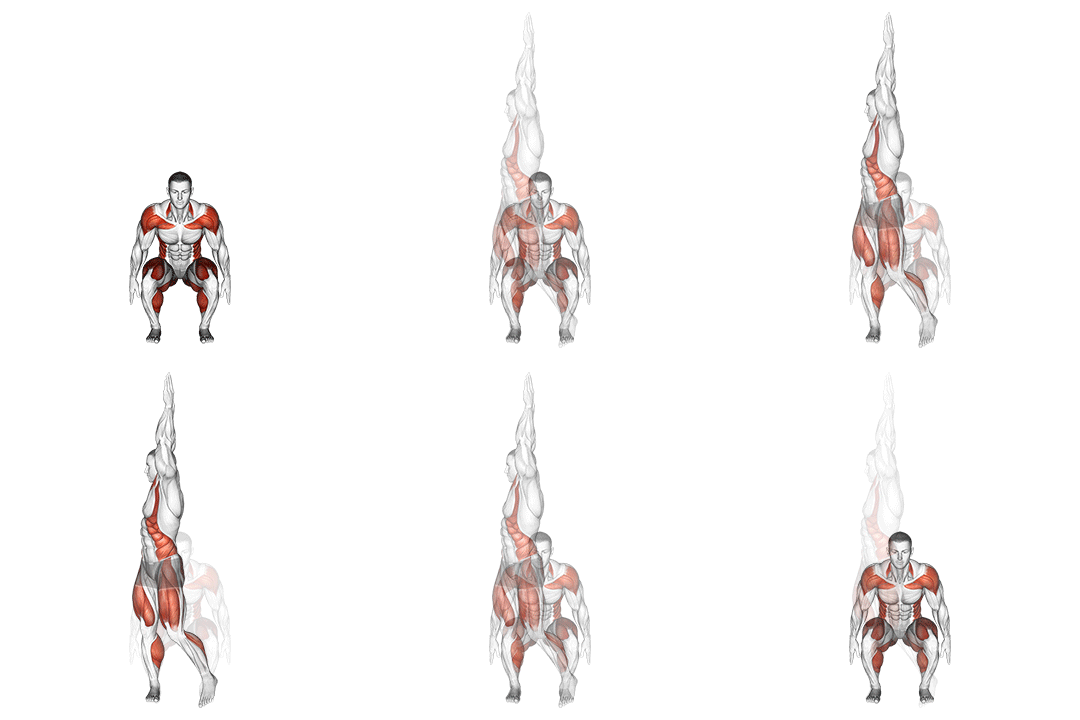
The squat to overhead reach with twist is a compound exercise that targets multiple muscle groups, including the lower body, core, and upper body. This exercise combines the benefits of a squat, which primarily works the legs and glutes, with an overhead reach and twist, which engages the core and upper body muscles. ## Instructions 1. Start by standing with your feet slightly wider than shoulder-width apart, toes pointed slightly outward. 2. Engage your core muscles and keep your back straight throughout the exercise. 3. Lower your body into a squat position by bending your knees and pushing your hips back, as if you were sitting into a chair. Keep your weight in your heels. 4. As you reach the lowest point of the squat, extend your arms overhead, keeping them straight. 5. From the squat position, rotate your torso to the right side, twisting from your waist. Keep your hips and lower body stable. 6. Return to the center position, then repeat the twist to the left side. 7. After twisting to both sides, lower your arms back down and push through your heels to stand back up, returning to the starting position. 8. Repeat the exercise for the desired number of repetitions. ## Variations - **Weighted Variation**: Hold a dumbbell or kettlebell in your hands while performing the exercise to add resistance and increase the challenge. - **Modified Variation**: If you have difficulty performing a full squat, you can modify the exercise by only squatting halfway down or using a stability ball against a wall for support. - **Assisted Variation**: If you need assistance with balance, you can hold onto a sturdy object, such as a bar or TRX straps, while performing the exercise. ## Muscles Worked - Quadriceps (front of the thighs) - Hamstrings (back of the thighs) - Glutes (buttocks) - Core muscles (including abs and obliques) - Shoulders - Upper back ## Common Mistakes - Allowing the knees to cave inward during the squat: Focus on keeping your knees in line with your toes throughout the movement. - Rounding the back: Maintain a straight back and avoid rounding your shoulders or hunching forward. - Overarching the lower back: Avoid excessive arching of the lower back by engaging your core and maintaining proper form throughout the exercise. ## Safety Precautions - Start with a weight or resistance level that is appropriate for your fitness level. - If you have any pre-existing medical conditions or injuries, consult with a healthcare professional before attempting this exercise. - Warm up properly before starting the exercise to prepare your muscles for movement. - Maintain proper form throughout the exercise to avoid strain or injury. - Listen to your body and stop immediately if you experience any pain or discomfort.
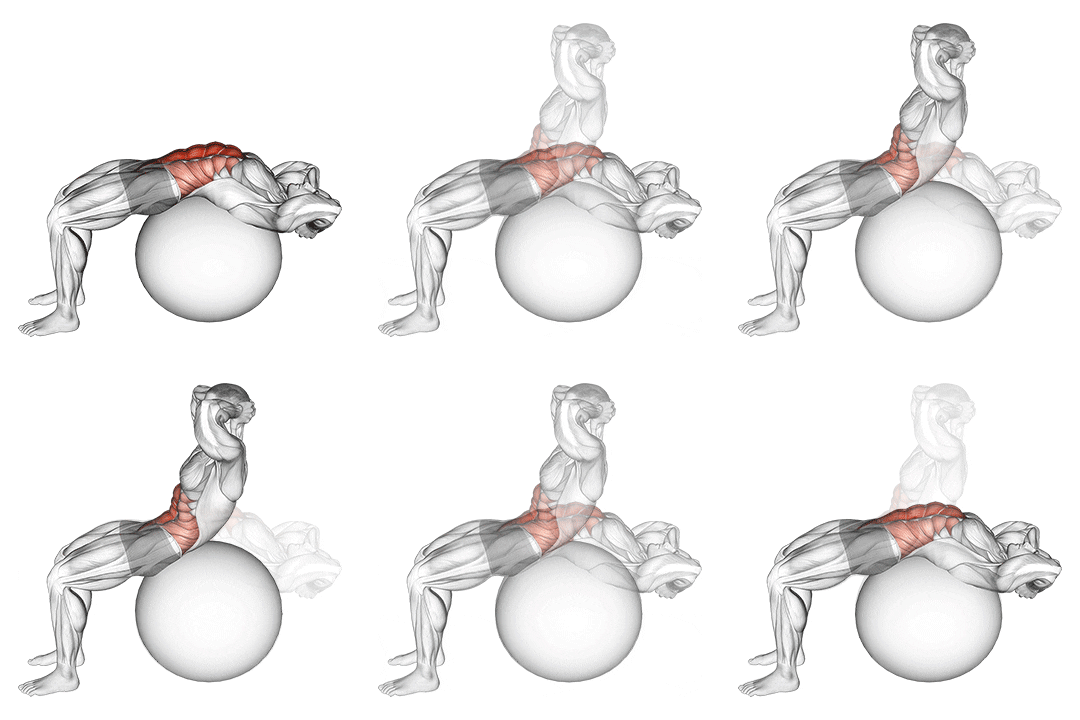
The stability ball crunch is an abdominal exercise that specifically targets the rectus abdominis, commonly known as the "six-pack" muscles. Performing this exercise on a stability ball adds an element of instability, engaging the core muscles even more and challenging your balance. ## Instructions 1. Start by sitting on a stability ball and walk your feet forward until your lower back is supported on the ball. Your knees should be bent at a 90-degree angle, feet planted firmly on the ground. 2. Place your hands behind your head, interlocking your fingers or crossing your arms over your chest. 3. Engage your core by drawing your belly button in towards your spine. 4. Slowly and with control, curl your upper body off the ball, lifting your shoulder blades off the ball as you perform a crunch. 5. Exhale as you crunch up and contract your abdominal muscles. 6. Pause briefly at the top of the movement, then slowly lower yourself back down to the starting position. 7. Repeat the exercise for the desired number of repetitions. ## Variations - **Modified Variation**: If you find it challenging to maintain your balance or stability on the ball, you can perform the crunch on a stable surface such as a mat or bench. - **Weighted Variation**: To increase the intensity, you can hold a weight plate or a dumbbell across your chest while performing the crunch. - **Oblique Focus**: To target the oblique muscles on the sides of your abdomen, you can perform the stability ball crunch with a twisting motion. As you crunch up, rotate your torso to one side, then alternate sides with each repetition. ## Muscles Worked - Rectus abdominis (six-pack muscles) - Obliques (side abdominal muscles) - Transverse abdominis (deep core muscles) - Hip flexors ## Common Mistakes - Pulling on the neck: Avoid placing excessive strain on your neck by keeping your hands lightly supporting your head, without pulling or tugging on it. - Using momentum: Focus on performing the crunch with control, using your abdominal muscles to lift your upper body rather than relying on momentum or swinging motions. - Arching the lower back: Keep your lower back in contact with the stability ball throughout the exercise and avoid excessive arching or hyperextension. ## Safety Precautions - Choose a stability ball that is the appropriate size for your height. Your knees should be at a 90-degree angle when seated on the ball. - Start with a stable and properly inflated stability ball to ensure safety and proper support. - If you have any pre-existing back or neck conditions, consult with a healthcare professional before attempting this exercise. - Engage your core and maintain proper form throughout the movement to avoid strain or injury. - If you experience any pain or discomfort, stop the exercise and consult a fitness professional or healthcare provider.
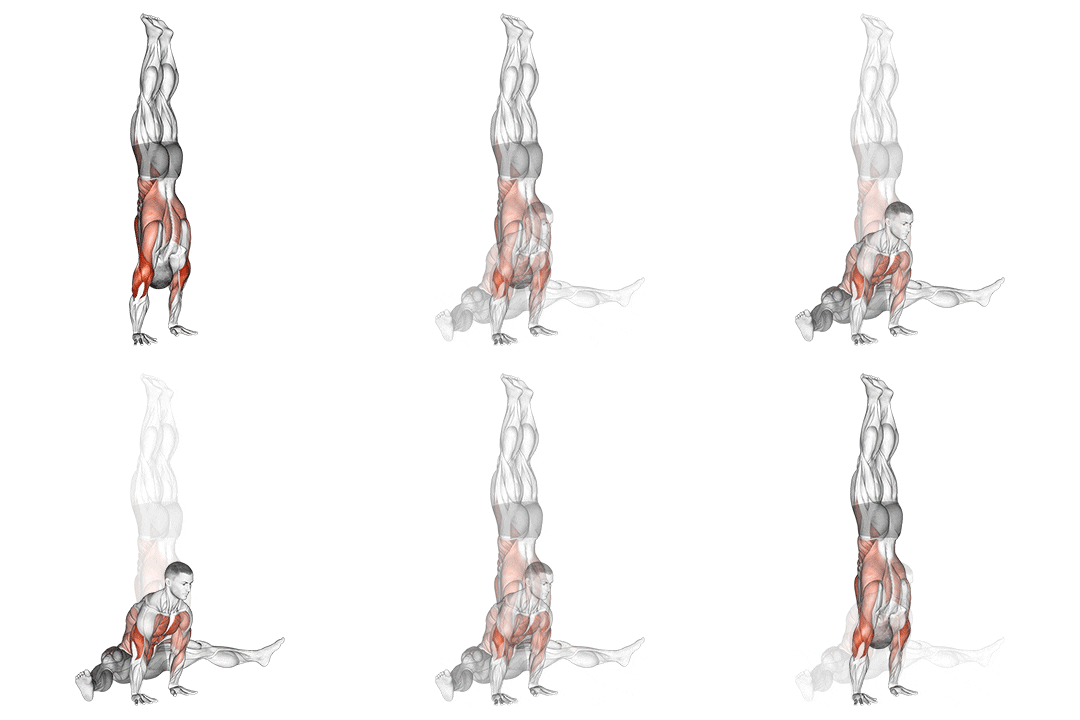
The Stalder press is an advanced gymnastics exercise that targets the shoulders, core, and upper body. It requires a high level of strength, stability, and flexibility. The exercise involves transitioning from a hanging L-sit position to a handstand while maintaining control and balance throughout the movement. ## Instructions 1. Begin by hanging from a high bar or rings with an overhand grip. 2. Engage your core muscles and lift your legs, bringing them together and straight out in front of you, forming an L-shaped position. 3. From the L-sit position, initiate the press by leaning your upper body forward while maintaining the L shape with your legs. 4. As your body leans forward, use the strength of your shoulders and arms to push yourself upward, transitioning into a handstand position. 5. Throughout the movement, focus on maintaining control and balance, keeping your body aligned and your core engaged. 6. Once you are in the handstand position, hold it briefly, then lower yourself back down with control, returning to the L-sit position. 7. Repeat the exercise for the desired number of repetitions. ## Variations - **Assisted Variation**: If you are working on building strength and balance for the Stalder press, you can use a spotter or resistance bands for assistance. The spotter can provide support or guide your legs during the press, or the resistance bands can assist in lifting your bodyweight. - **Pike Press**: A modified version of the Stalder press is the Pike press. Instead of starting from a hanging L-sit, you begin in a pike position with your hands on the ground or on parallettes. From there, you press your body up into a handstand, maintaining control and balance. ## Muscles Worked - Shoulders (deltoids) - Triceps - Core muscles (abdominals, obliques) - Upper back muscles - Chest muscles (pectorals) - Scapular stabilizers ## Common Mistakes - Lack of core engagement: It's essential to engage your core muscles throughout the movement to maintain control and stability. Focus on keeping your abs tight and your body aligned. - Insufficient shoulder strength: Building adequate shoulder strength is crucial for performing the Stalder press. If you find it challenging, focus on exercises that target the shoulders, such as shoulder presses and handstand holds, to build strength before attempting the Stalder press. - Not mastering the L-sit position: Before attempting the Stalder press, ensure you can hold a strong L-sit position. Work on developing the necessary strength and stability in your core and hip flexors. ## Safety Precautions - The Stalder press is an advanced exercise that requires a high level of strength, stability, and flexibility. Ensure you have a solid foundation in strength and gymnastics skills before attempting this exercise. - Perform this exercise on a stable surface, such as gymnastics rings or a sturdy high bar. - Always warm up properly before attempting the Stalder press to prepare your muscles and joints for the demands of the exercise. - Use caution and progress gradually. If you feel any pain or discomfort, stop the exercise and consult with a qualified gymnastics coach or fitness professional. - Consider working with a spotter or trainer experienced in gymnastics movements to provide guidance and assistance.
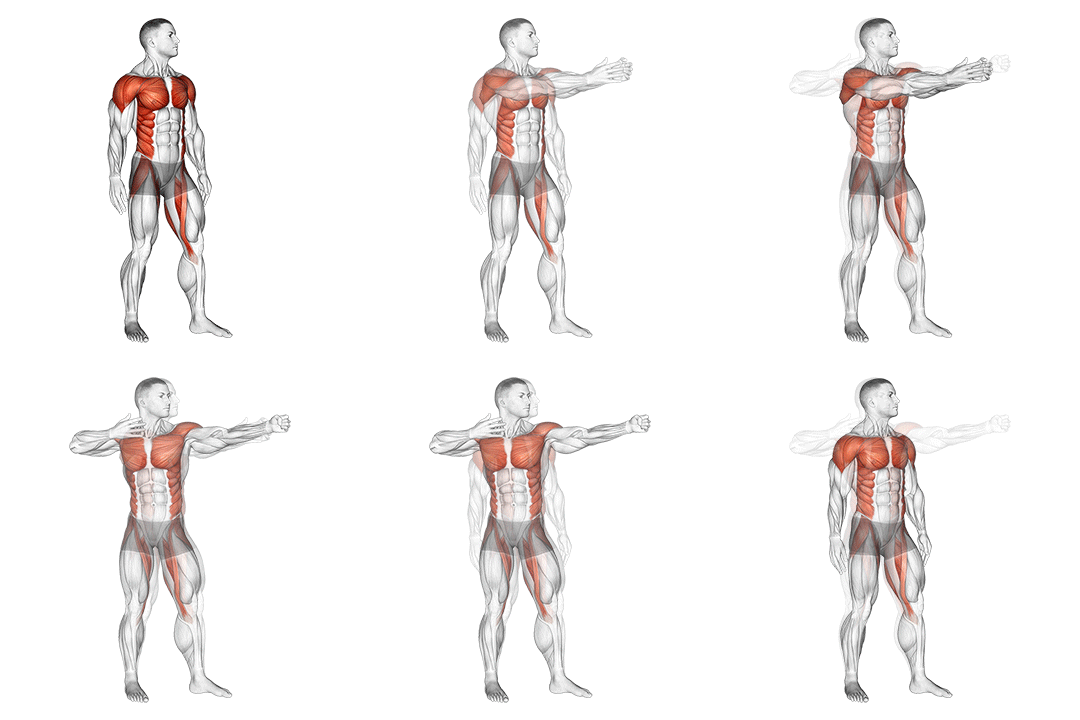
The standing archer is a resistance band exercise that targets the muscles of the upper body, including the chest, back, and shoulders. It mimics the motion of drawing a bow and arrow, hence the name "archer." This exercise helps improve upper body strength, stability, and posture. ## Instructions 1. Stand with your feet shoulder-width apart and place one end of a resistance band securely under your front foot. 2. Hold the other end of the resistance band with your opposite hand, crossing it over your body. 3. Extend your arm straight out in front of you, parallel to the ground, with the resistance band pulled taut. 4. Take a step back with your rear leg, assuming a lunge position. Keep your front knee slightly bent and your back leg straight. 5. As you maintain the lunge position, initiate the movement by pulling the resistance band horizontally across your body. 6. Rotate your torso and reach your opposite arm back, as if you were drawing a bowstring. 7. Maintain control and engage your upper body muscles as you pull the resistance band. Keep your core stable and avoid excessive twisting or bending. 8. Slowly return to the starting position, resisting the pull of the resistance band. 9. Repeat the exercise for the desired number of repetitions, then switch sides. ## Variations - **Resistance Level**: Adjust the resistance of the band based on your strength level. Use a lighter resistance band for beginners or increase the resistance by using a thicker band or adding multiple bands. - **Single Arm Variation**: Instead of using both arms simultaneously, you can perform the exercise one arm at a time. This allows you to focus more on each side individually and increase the intensity. - **Staggered Stance**: Instead of a traditional lunge position, you can try a staggered stance with one foot slightly forward and the other foot slightly back. This variation can help with stability and balance. ## Muscles Worked - Pectoralis major (chest) - Rhomboids and middle trapezius (upper back) - Deltoids (shoulders) - Biceps and triceps (arms) - Core muscles (engaged for stability) ## Common Mistakes - Rounded shoulders: Maintain proper posture throughout the exercise. Avoid hunching or rounding your shoulders forward. - Using excessive momentum: Focus on controlled movements, avoiding quick or jerky motions. This ensures that the targeted muscles are effectively engaged. - Not engaging the core: Keep your core muscles activated throughout the exercise to provide stability and support for the upper body movements. ## Safety Precautions - Choose a resistance band appropriate for your strength level. Start with a lighter resistance and progress gradually. - Ensure the resistance band is securely anchored and positioned under your foot to prevent it from slipping. - Keep a stable base and proper balance throughout the exercise. Use caution when stepping back into the lunge position to maintain stability. - If you have any pre-existing shoulder or back conditions, consult with a healthcare professional before attempting this exercise. - Start with a controlled range of motion and gradually increase the intensity as your strength and stability improve. - Listen to your body and stop the exercise if you experience any pain or discomfort.
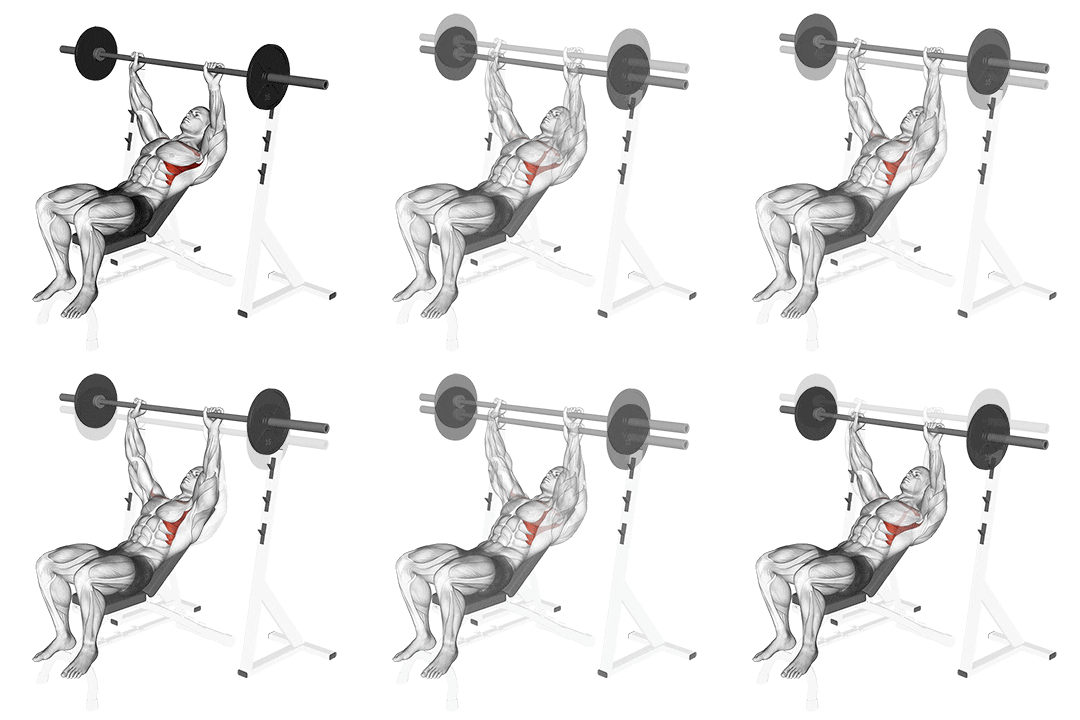
The barbell incline shoulder raise is an exercise that targets the muscles of the shoulders, specifically the front deltoids (anterior deltoids) and the side deltoids (lateral deltoids). It involves performing shoulder raises on an incline bench, which allows for a greater range of motion and places emphasis on the front and side delts. This exercise helps strengthen and develop the shoulder muscles, enhancing shoulder stability and aesthetics. ## Instructions 1. Set an adjustable bench to an incline of approximately 45 degrees. 2. Sit on the incline bench with your feet firmly planted on the floor for stability. 3. Hold a barbell with an overhand grip, hands slightly wider than shoulder-width apart. Position the barbell in front of your thighs, resting on your upper thighs. 4. Keep your back straight and your chest lifted. Engage your core for stability. 5. Begin the movement by raising the barbell in a controlled manner, keeping your arms straight, until they are parallel to the floor or slightly above shoulder level. 6. Hold the position for a brief moment, focusing on squeezing your shoulder muscles. 7. Slowly lower the barbell back to the starting position under control. 8. Repeat for the desired number of repetitions. ## Variations - **Dumbbell Incline Shoulder Raise**: Perform the exercise using dumbbells instead of a barbell. This allows for independent movement of each arm, providing a greater challenge to shoulder stability. - **Front Raise**: Instead of raising the barbell to the sides, raise it directly in front of your body. This variation primarily targets the front deltoids. - **Seated Incline Shoulder Raise**: If an incline bench is not available, you can perform the exercise while sitting upright on a regular bench or chair. ## Muscles Worked - Anterior deltoids (front shoulders) - Lateral deltoids (side shoulders) - Upper trapezius (secondary) - Rotator cuff muscles (stabilizers) ## Common Mistakes - Using excessive weight: Start with lighter weights to ensure proper form and technique. Avoid using momentum or swinging the barbell to lift the weight. - Shrugging the shoulders: Keep your shoulders down and relaxed throughout the movement. Avoid shrugging or tensing the neck muscles. - Rounding the back: Maintain good posture with a neutral spine throughout the exercise. Avoid rounding the upper back or hunching the shoulders forward. - Lifting too high or too low: Raise the barbell to shoulder level or slightly above, maintaining control throughout the movement. Avoid lifting too high, which may strain the shoulder joints. ## Safety Precautions - Ensure that the bench is securely positioned and stable before performing the exercise. - Use collars on the barbell to prevent the plates from sliding during the movement. - Start with lighter weights and focus on mastering the technique before gradually increasing the load. - If you have any shoulder or neck issues, consult with a fitness professional or healthcare provider before attempting this exercise. - Listen to your body and avoid pushing through any sharp pain or discomfort. If you experience any pain, stop the exercise and seek appropriate guidance.
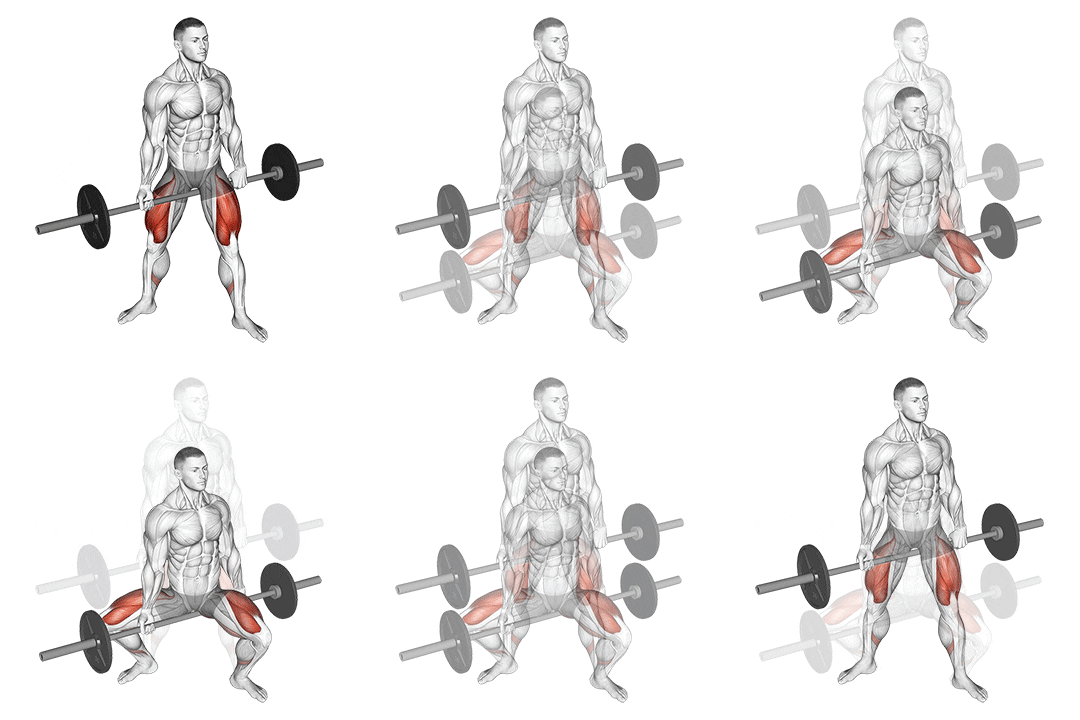
The barbell Jefferson squat is a unique lower body exercise that targets the quadriceps, hamstrings, glutes, and adductor muscles. It involves straddling the barbell and performing a squatting motion, providing a challenging and effective workout for the lower body. ## Instructions 1. Stand with your feet wider than shoulder-width apart and position the barbell perpendicular to your body. 2. Step over the barbell, placing your left foot on the left side and your right foot on the right side, so you are straddling the bar. 3. Grasp the barbell with an overhand grip using your right hand in front of your body and your left hand behind your body. 4. Keep your back straight, chest lifted, and core engaged. 5. Initiate the movement by bending at the knees and hips simultaneously, lowering your body into a squat position. Your thighs should be parallel to the ground or slightly below. 6. Push through your heels and extend your knees and hips to return to the starting position. 7. Repeat the movement for the desired number of repetitions, then switch your hand positions and foot placement to perform the exercise on the opposite side. ## Variations - **Dumbbell Jefferson Squat**: Instead of using a barbell, hold a dumbbell in each hand, one in front of your body and one behind your body, while performing the squatting motion. - **Jefferson Deadlift**: Perform a deadlift motion while straddling the barbell, focusing on the posterior chain muscles (hamstrings, glutes, lower back). - **Single-Leg Jefferson Squat**: Perform the Jefferson squat using one leg at a time, alternating between legs. This variation increases the challenge and balance requirements. ## Muscles Worked - Quadriceps (primary) - Hamstrings (primary) - Glutes (primary) - Adductors (inner thigh muscles) - Calves (secondary) - Core muscles (stabilizers) ## Common Mistakes - Rounding the lower back: Maintain a neutral spine throughout the exercise to avoid excessive stress on the lower back. Engage your core muscles and keep your chest lifted. - Allowing knees to collapse inward: Ensure that your knees track in line with your toes throughout the movement. Avoid letting them cave inward, as it can strain the knee joints. - Leaning too far forward: Maintain an upright torso throughout the exercise to maximize lower body muscle engagement. Avoid excessive forward lean, as it may shift the focus to the lower back or hamstrings. - Using excessive weight: Start with a manageable weight and focus on maintaining proper form and technique. Gradually increase the load as your strength and proficiency improve. ## Safety Precautions - Use collars on the barbell to secure the plates in place during the exercise. - Start with lighter weights to practice proper form and technique before gradually increasing the load. - Ensure that the barbell is properly centered between your legs and does not shift during the movement. - If you have any lower back, knee, or hip issues, consult with a fitness professional or healthcare provider before attempting this exercise. - Listen to your body and avoid pushing through any sharp pain or discomfort. If you experience any pain, stop the exercise and seek appropriate guidance.
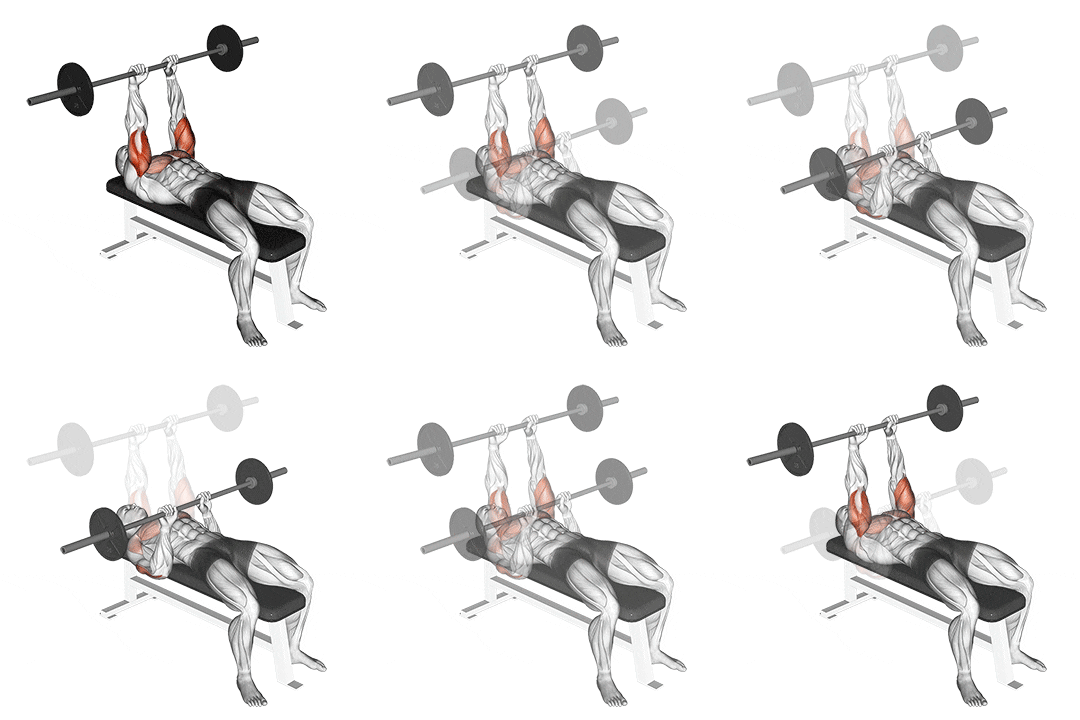
The barbell JM bench press is a variation of the traditional bench press exercise. It was popularized by powerlifter and strength coach JM Blakley. This exercise targets the chest (pectoral muscles), shoulders (anterior deltoids), and triceps. It involves a partial range of motion, focusing on the lockout portion of the bench press movement. The JM bench press can help develop strength, power, and hypertrophy in the upper body muscles. ## Instructions 1. Begin by lying flat on a bench with your feet planted firmly on the floor. 2. Position yourself under the barbell with your eyes aligned with the barbell. 3. Grasp the barbell with an overhand grip, hands slightly wider than shoulder-width apart. 4. Lift the barbell off the rack and lower it to your chest, allowing your elbows to flare out to the sides. 5. Press the barbell upward, driving it towards the lockout position while keeping your elbows slightly bent. 6. As you approach the lockout position, engage your triceps and focus on squeezing your chest and shoulders. 7. Hold the lockout position for a brief moment, maintaining tension in the targeted muscles. 8. Slowly lower the barbell back to your chest and repeat the movement for the desired number of repetitions. ## Variations - **Close-Grip JM Bench Press**: Perform the JM bench press with a narrower grip, hands positioned closer together. This variation places more emphasis on the triceps. - **Board Press**: Place wooden boards or blocks on your chest to limit the range of motion. This variation helps develop strength in the lockout portion of the bench press. - **Dumbbell JM Bench Press**: Instead of using a barbell, use dumbbells to perform the JM bench press. This allows for independent arm movement and increased stability. ## Muscles Worked - Pectoralis major (chest muscles) - Anterior deltoids (front shoulders) - Triceps brachii (back of the upper arms) - Secondary muscles: Biceps brachii, serratus anterior, upper back muscles (e.g., rhomboids, trapezius) ## Common Mistakes - Arching the back excessively: Maintain a natural arch in your lower back, but avoid excessive arching, as it can put strain on the lower back and reduce stability. - Flaring the elbows too much: Keep your elbows at a moderate angle, not excessively flared out or tucked in too close to the body. This helps maintain proper shoulder alignment and reduces the risk of injury. - Bouncing the barbell off the chest: Control the descent of the barbell and avoid bouncing it off your chest. Maintain a controlled and smooth movement throughout the exercise. - Using excessive weight: Start with a weight that allows you to maintain proper form and control. Avoid using too much weight that compromises your technique and increases the risk of injury. ## Safety Precautions - Use a spotter when performing the JM bench press, especially when lifting heavier weights. - Ensure that the bench is stable and secure before starting the exercise. - Warm up adequately before attempting heavy lifts to prepare the muscles and joints. - If you have any shoulder, chest, or elbow issues, consult with a fitness professional or healthcare provider before attempting this exercise. - Listen to your body and avoid pushing through any sharp pain or discomfort. If you experience any pain, stop the exercise and seek appropriate guidance.