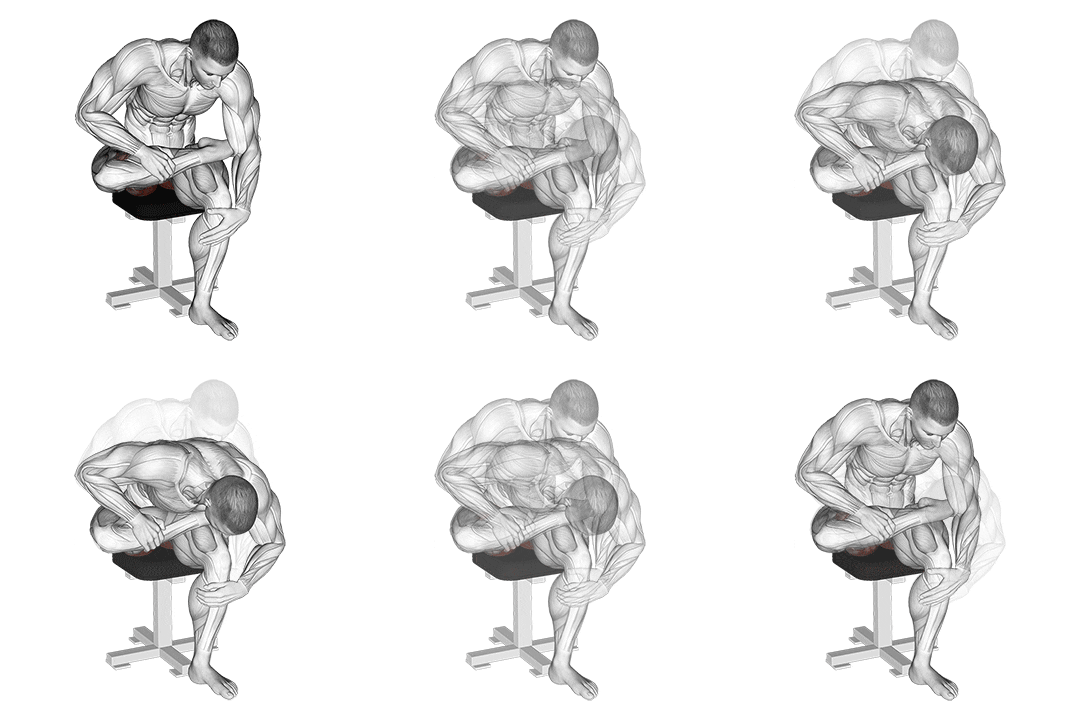
The seated piriformis stretch targets the piriformis muscle, which is located deep within the gluteal region. This stretch helps to relieve tension and tightness in the piriformis, which can contribute to hip and lower back discomfort. It is particularly beneficial for individuals who experience sciatic nerve pain or have tightness in the glutes and hips. ## Instructions 1. Sit on a chair or bench with your feet flat on the floor, hip-width apart. 2. Place your right ankle on top of your left knee, allowing your right knee to fall out to the side. 3. Keep your back straight and your chest lifted. 4. Gently press down on your right knee with your right hand, applying light pressure to deepen the stretch. 5. Lean forward slightly, maintaining a neutral spine and feeling the stretch in your right glute and piriformis. 6. Hold the stretch for 20 to 30 seconds, while maintaining a relaxed breathing pattern. 7. Release the stretch and repeat on the opposite side. ## Variations - If sitting on a chair is uncomfortable, you can perform a similar stretch lying on your back. Lie on the floor with your knees bent and feet flat on the ground. Cross one ankle over the opposite knee and gently pull the bottom leg towards your chest, feeling the stretch in the piriformis and gluteal region. - For a deeper stretch, you can add a gentle twist to the seated piriformis stretch. After crossing one ankle over the opposite knee, rotate your torso in the direction of the crossed leg, placing your opposite elbow on the outside of the crossed knee. This variation increases the stretch in the piriformis and engages the muscles of the core and obliques. ## Muscles Worked The seated piriformis stretch primarily targets the piriformis muscle, which is located deep in the gluteal region. It also stretches the other muscles of the hip and glutes, such as the gluteus maximus, gluteus medius, and external rotators of the hip. ## Common Mistakes - Rounding the back: Maintain good posture throughout the stretch. Avoid rounding your back or slouching forward. - Applying excessive force: The stretch should be gentle and controlled. Avoid using excessive force or pushing beyond your comfort zone, as it may lead to injury. - Holding the breath: Remember to breathe deeply and naturally during the stretch. Avoid holding your breath, as it can create unnecessary tension in the body. - Twisting the torso too forcefully: If adding a twist to the stretch, ensure that it is a gentle rotation. Avoid forcing the twist or going beyond a comfortable range of motion. ## Safety Precautions - If you have any pre-existing injuries or conditions related to the hip or gluteal muscles, it's advisable to consult with a healthcare professional or a qualified fitness trainer before performing this exercise. - Start with a slow and controlled range of motion to ensure proper form and to avoid overexertion. - If you experience any sharp pain or discomfort during the stretch, stop immediately and seek medical advice. - Perform the stretch on a stable surface to ensure balance and stability. - Engage your core muscles throughout the exercise to provide stability and protect the lower back.
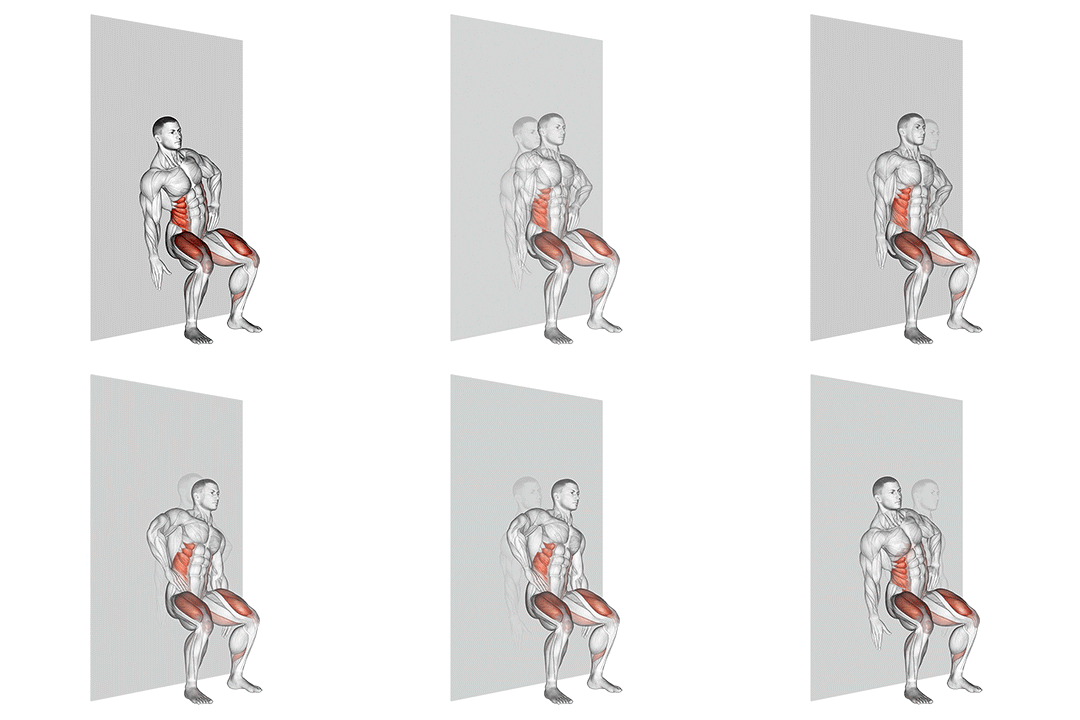
The seated side crunch (wall) is an abdominal exercise that targets the oblique muscles on the sides of the waist. By performing controlled and deliberate crunching motions while seated against a wall, this exercise helps to strengthen and tone the obliques, enhancing core stability and improving overall abdominal strength. ## Instructions 1. Sit on the floor with your back against a wall and your knees bent, feet flat on the floor. 2. Place your hands lightly behind your head, elbows pointing out to the sides. 3. Engage your core muscles by drawing your navel towards your spine. 4. Lean slightly back against the wall while keeping your back straight. 5. Contract your right oblique muscles, bringing your right elbow down towards your right hip as you crunch sideways. 6. Simultaneously lift your right knee towards your chest, aiming to touch your right elbow to your right knee. 7. Hold the contracted position briefly and then return to the starting position. 8. Repeat the movement on the left side, bringing your left elbow towards your left hip while lifting your left knee towards your chest. 9. Continue alternating sides for the desired number of repetitions. ## Variations - To increase the difficulty of the exercise, you can hold a dumbbell or a medicine ball against your chest while performing the crunching motion. This adds resistance and further engages the oblique muscles. - If sitting on the floor is uncomfortable, you can perform the seated side crunch against a stability ball or on a bench. The movement remains the same, but the stability ball or bench provides support and allows for a more comfortable seated position. ## Muscles Worked The seated side crunch primarily targets the oblique muscles, specifically the external obliques. It also engages the rectus abdominis (the "six-pack" muscles) to stabilize the core during the exercise. ## Common Mistakes - Using momentum: Avoid using momentum or swinging your body to perform the crunch. Focus on controlled and deliberate movements to fully engage the oblique muscles. - Pulling on the neck: Do not pull on your neck or use your hands to forcefully lift your head. Your hands should be lightly supporting your head, while the main effort comes from the oblique muscles. - Rounding the lower back: Maintain a straight back throughout the exercise. Avoid rounding your lower back or slouching against the wall. - Not fully contracting the obliques: Ensure that you fully contract the oblique muscles during the crunching motion. Aim to bring your elbow and knee as close together as possible on each side. ## Safety Precautions - If you have any pre-existing neck or lower back conditions, it's advisable to consult with a healthcare professional or a qualified fitness trainer before performing this exercise. - Start with a range of motion and intensity that feels comfortable for your fitness level. Gradually increase the difficulty as you become more accustomed to the exercise. - If you experience any sharp pain or discomfort during the exercise, stop immediately and seek medical advice. - Engage your core muscles throughout the exercise to provide stability and protect the lower back. - Maintain proper breathing throughout the movement. Exhale as you crunch and inhale as you return to the starting position.
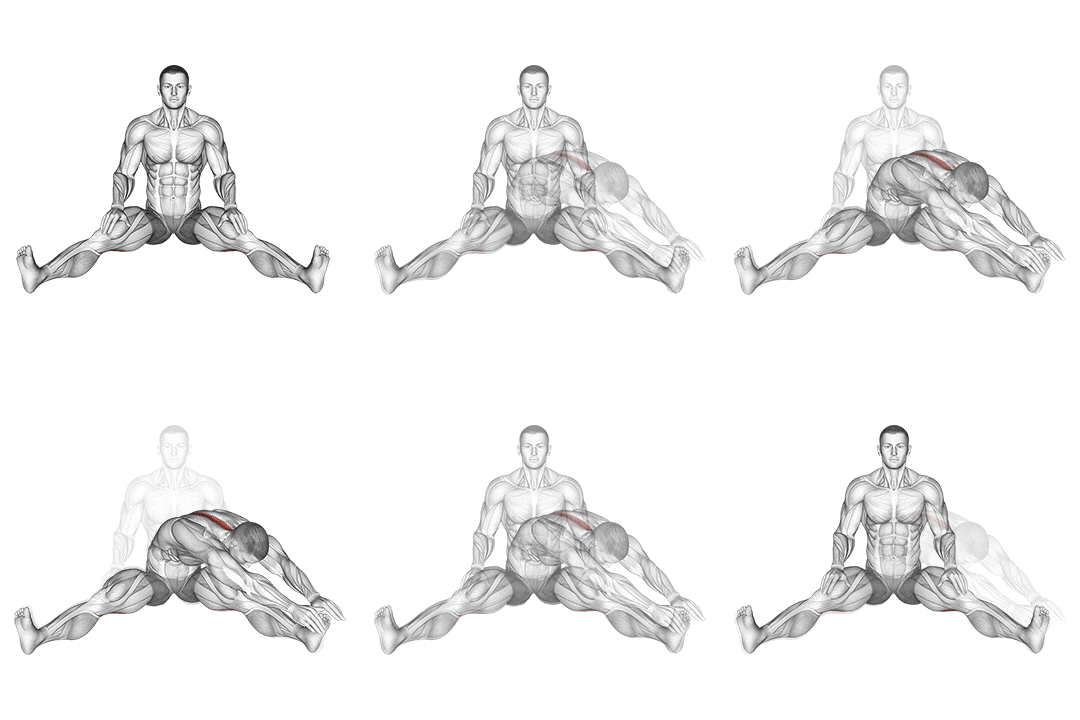
The seated wide angle pose sequence, also known as Upavistha Konasana sequence, is a series of yoga poses that target the inner thighs, hamstrings, and groins. This sequence helps improve flexibility, open the hips, and release tension in the lower body. It is a great practice for increasing overall lower body mobility and promoting relaxation. ## Instructions 1. Sit on the floor with your legs extended wide apart, forming a V shape. 2. Keep your spine tall and straight, with your hands resting beside your hips for support. 3. Inhale and lengthen your spine, reaching the crown of your head towards the ceiling. 4. Exhale and slowly begin to walk your hands forward, hinging at the hips. 5. Only go as far forward as you can while keeping your spine long and without rounding your back. 6. Hold this position, called Upavistha Konasana, for 30 seconds to 1 minute, breathing deeply. 7. To deepen the stretch, you can gently use your hands to press into the floor and slide them farther forward. 8. After holding Upavistha Konasana, sit up and bring your right hand to the inside of your right leg. 9. Inhale and lift your left arm overhead, lengthening your left side. 10. Exhale and bend sideways towards the right, keeping your left sitting bone grounded. 11. Hold this side stretch for 30 seconds to 1 minute, breathing deeply. 12. Repeat the side stretch on the opposite side, bringing your left hand to the inside of your left leg and bending towards the left. 13. After the side stretches, return to the center and place your hands behind your hips for support. 14. Slowly and gently bring your legs together, bending your knees as needed, and come to a comfortable seated position. ## Variations - If sitting with the legs extended wide apart is challenging, you can sit on a folded blanket or cushion to elevate your hips and reduce strain on the hamstrings. - For individuals with limited flexibility, you can place a bolster or folded blanket under your knees for support while folding forward in Upavistha Konasana. - If you find it difficult to reach forward, you can use a yoga strap or towel around the feet and hold onto it to assist in maintaining an extended spine. ## Muscles Worked The seated wide angle pose sequence primarily targets the inner thighs (adductors), hamstrings, and groins. It also engages and stretches the muscles of the hips, including the hip flexors and external rotators. ## Common Mistakes - Rounding the back: Avoid rounding your back or hunching forward during the forward fold. Keep your spine lengthened and maintain a tall posture. - Straining the knees: Be mindful of your knee position and avoid forcing the legs to spread wider than is comfortable. Listen to your body and respect your natural range of motion. - Holding the breath: Remember to breathe deeply and continuously throughout the sequence. Avoid holding your breath, as it may increase tension in the body. - Overexertion: Do not push yourself beyond your comfort zone. Allow your body to gradually open up and deepen the stretches over time. ## Safety Precautions - If you have any pre-existing hip, knee, or lower back injuries or conditions, it's advisable to consult with a healthcare professional or a qualified yoga instructor before attempting this sequence. - Warm up your body with gentle movements or stretches before starting the sequence to prepare the muscles and joints. - Listen to your body and modify the poses as needed. Do not push into any position that causes pain or discomfort. - Do not force the legs
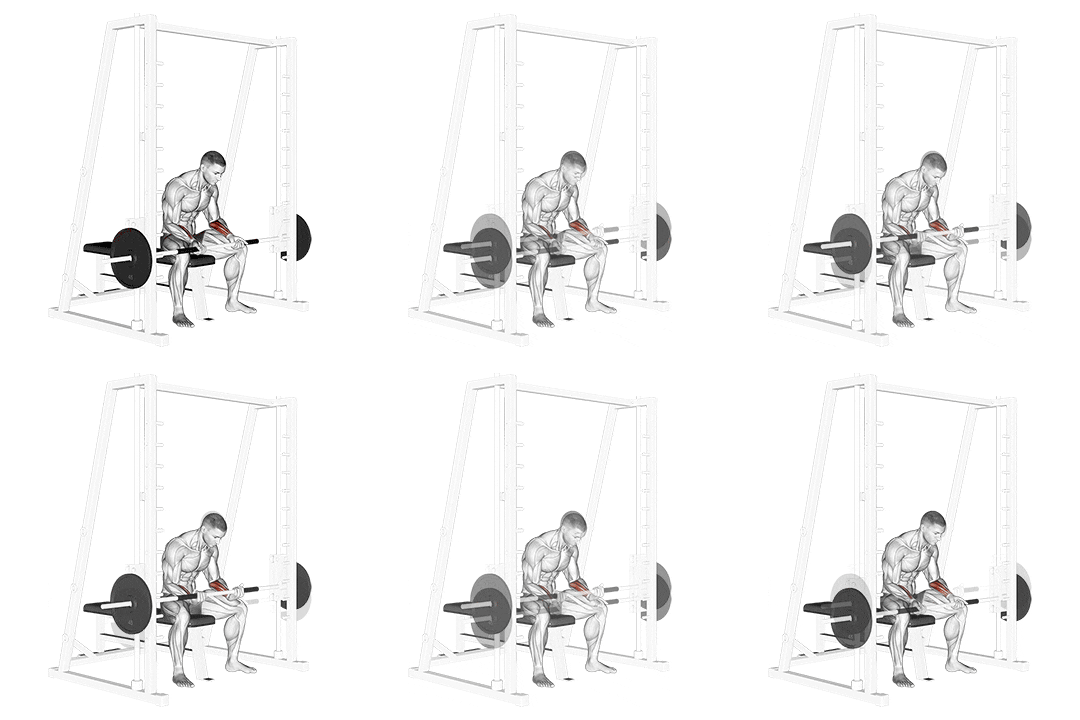
The Smith seated wrist curl is an exercise that targets the forearm muscles, specifically the wrist flexors. By performing this exercise, you can strengthen the muscles of your forearms, which play a crucial role in grip strength and wrist stability. This exercise can be beneficial for individuals involved in activities that require a strong grip, such as weightlifting, rock climbing, and racquet sports. ## Instructions 1. Set up the Smith machine by adjusting the barbell to a suitable height. The barbell should be positioned at approximately wrist level when seated on the bench. 2. Sit on a bench placed underneath the Smith machine bar. Position yourself with your feet flat on the floor, hip-width apart. 3. Grasp the barbell with an underhand grip, palms facing upward. Your hands should be shoulder-width apart. 4. Rest your forearms on your thighs, allowing your wrists to hang off the edge of your knees. 5. Engage your core and maintain an upright posture throughout the exercise. 6. Lower the barbell by flexing your wrists, allowing the weight to roll down towards your fingertips. Feel the stretch in your forearm muscles. 7. Curl the barbell back up by flexing your wrists, lifting the weight as high as possible. 8. Pause briefly at the top of the movement, feeling the contraction in your forearm muscles. 9. Slowly lower the barbell back down, repeating the curling motion for the desired number of repetitions. ## Variations - Dumbbell Seated Wrist Curl: Instead of using the Smith machine, you can perform the exercise using dumbbells. Sit on a bench, hold a dumbbell in each hand with an underhand grip, and perform the curling motion as described above. - Reverse Seated Wrist Curl: To target the wrist extensors, you can perform the exercise with an overhand grip, allowing the barbell or dumbbells to roll towards your fingertips. ## Muscles Worked The main muscles targeted during the Smith seated wrist curl include: - Wrist Flexors: The muscles located on the front side of the forearm that are responsible for flexing the wrist joint. ## Common Mistakes - Using excessive weight: Start with lighter weights to ensure proper form and gradually increase the weight as your forearm strength improves. Using too much weight can lead to compromised form and increased risk of injury. - Allowing the wrists to collapse: Maintain a neutral wrist position throughout the exercise, avoiding excessive flexion or extension. This helps target the forearm muscles effectively and reduces stress on the wrist joints. - Using momentum: Avoid using momentum or jerking the weight up. Focus on a slow and controlled movement to fully engage the forearm muscles. ## Safety Precautions - If you have any existing wrist or forearm injuries or conditions, consult with a healthcare professional before attempting the seated wrist curl. - Start with lighter weights or no weight at all if you are new to this exercise. Gradually increase the weight as your forearm strength and stability improve. - Maintain proper form throughout the exercise and avoid compensating with other muscle groups. Focus on isolating the forearm muscles. - If you experience any pain or discomfort, especially in the wrists or forearms, stop the exercise and seek medical advice if necessary.
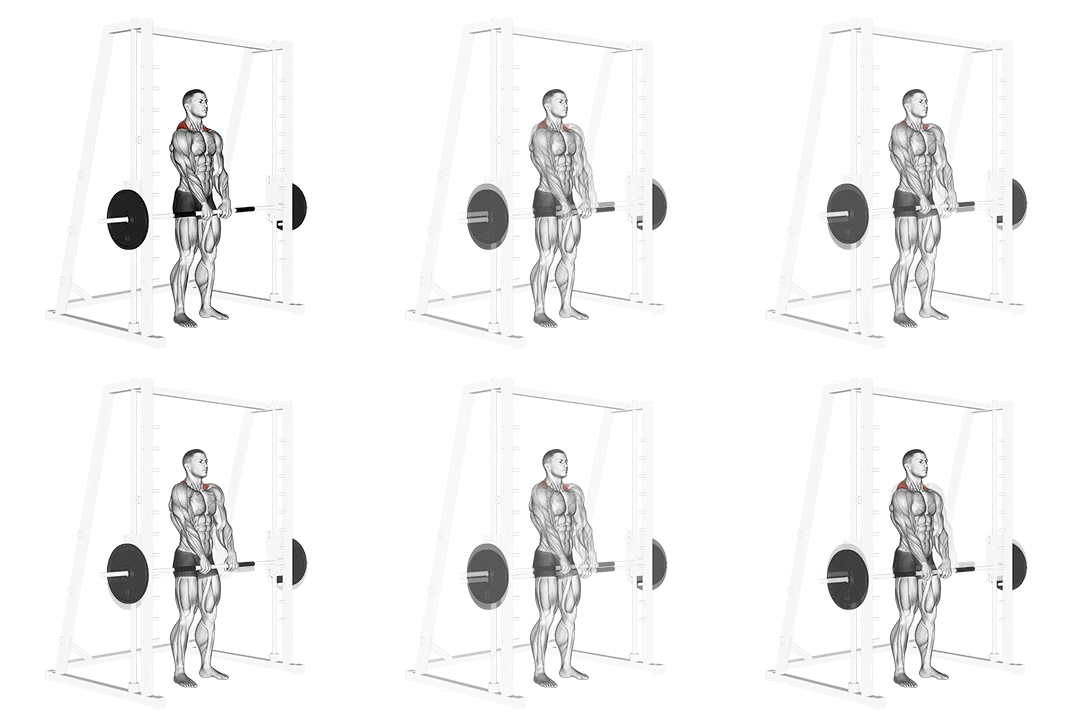
The Smith shrug is an exercise that targets the trapezius muscles, specifically the upper trapezius. It involves lifting and lowering the shoulders in a controlled manner, mimicking a shrugging motion. This exercise helps to develop and strengthen the upper back, improve posture, and enhance shoulder stability. ## Instructions 1. Set up the Smith machine by adjusting the barbell to a suitable height. The barbell should be positioned slightly above your hips when standing in front of it. 2. Stand facing the Smith machine, with your feet shoulder-width apart and your knees slightly bent. 3. Grasp the barbell with an overhand grip, slightly wider than shoulder-width apart. Your palms should be facing your thighs. 4. Lift the barbell by raising your shoulders as high as possible. Focus on contracting the upper trapezius muscles. 5. Hold the contracted position at the top for a brief pause, squeezing the muscles. 6. Slowly lower the barbell back down to the starting position, allowing your shoulders to relax and your arms to fully extend. 7. Repeat the movement for the desired number of repetitions. ## Variations - Dumbbell Shrugs: If a Smith machine is not available, you can perform shrugs using dumbbells. Hold a dumbbell in each hand, palms facing your thighs, and follow the same lifting and lowering motion as described above. - Barbell Shrug Behind the Back: Instead of lifting the barbell in front of you, you can perform shrugs with the barbell behind your back. Stand with your feet hip-width apart, grasp the barbell with an overhand grip behind your thighs, and lift your shoulders upward. ## Muscles Worked The main muscles targeted during the Smith shrug include: - Upper Trapezius: The large muscle that runs from the base of the skull to the middle of the back. It is responsible for elevating and retracting the shoulder blades. ## Common Mistakes - Rounding the back: Maintain a neutral spine and avoid excessive rounding of the back during the exercise. Keep your core engaged and your chest lifted. - Using excessive weight: Start with lighter weights to ensure proper form and gradually increase the weight as your upper back strength improves. Using too much weight can compromise your form and increase the risk of injury. - Not fully extending the shoulders: Lift your shoulders as high as possible, feeling a strong contraction in the upper trapezius muscles. Avoid shallow movements that limit muscle engagement. ## Safety Precautions - If you have any existing shoulder or back injuries, consult with a healthcare professional before attempting the Smith shrug. - Maintain proper form throughout the exercise and avoid compensating with other muscle groups. Focus on isolating the upper trapezius muscles. - If you experience any pain or discomfort, especially in the shoulders or upper back, stop the exercise and seek medical advice if necessary. - Use controlled movements and avoid jerking the weight up or using momentum. Focus on a slow and controlled lifting and lowering motion.
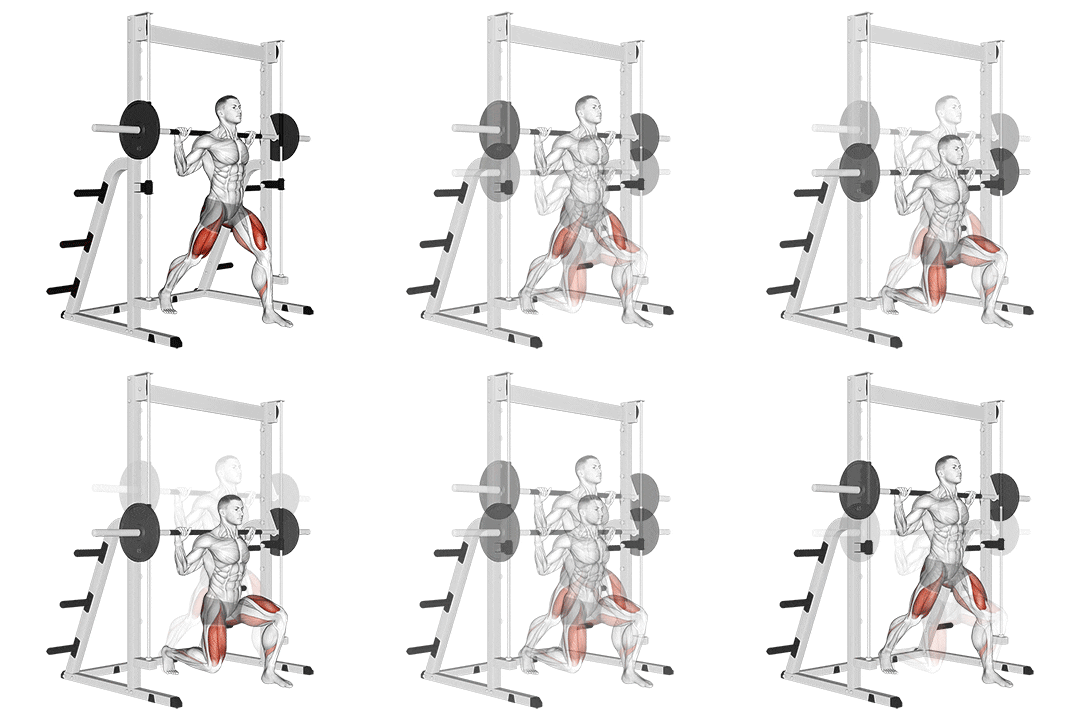
The Smith sprint lunge is a dynamic exercise that targets the lower body, particularly the quadriceps, hamstrings, glutes, and calves. It is a combination of a lunge and a sprinting motion, performed on a Smith machine. This exercise helps improve leg strength, power, and coordination. ## Instructions 1. Set up the Smith machine: Adjust the barbell height to a position just below shoulder level. Make sure the machine is securely locked in place. 2. Stand facing away from the machine with your feet shoulder-width apart. Position yourself in a staggered stance, with one foot forward and the other foot back. The front knee should be slightly bent. 3. Grip the barbell with an overhand grip, palms facing away from you, and rest it on your upper back and shoulders. Maintain a tight grip throughout the exercise. 4. Begin the movement by simultaneously lowering your body into a lunge position and explosively driving the front knee forward and up towards your chest. 5. As you lunge down, push off the back foot and propel your body forward, transitioning into a sprinting motion. Swing the opposite arm forward to counterbalance the movement. 6. Extend the front leg forward and flex the rear leg at the hip and knee, driving the knee up as high as possible. Aim to maintain a fluid and explosive movement. 7. Continue sprinting forward for a predetermined distance or time, focusing on maintaining good form and speed. 8. Once the desired distance or time is completed, gradually slow down your pace and come to a controlled stop. 9. Repeat the exercise for the desired number of repetitions or sets. ## Variations - Bodyweight Sprint Lunge: Perform the exercise without using a Smith machine. Instead of holding a barbell, keep your hands on your hips or use light dumbbells for added resistance. - Walking Sprint Lunge: Instead of sprinting in a linear direction, perform the exercise while walking forward or in a circular pattern. - Weighted Sprint Lunge: Increase the intensity by adding weights such as dumbbells or a weighted vest. ## Muscles Worked - Quadriceps (front of the thighs) - Hamstrings (back of the thighs) - Glutes (buttocks) - Calves ## Common Mistakes - Allowing the front knee to extend too far past the toes during the lunge portion. Keep the knee in line with the toes to avoid excessive stress on the knee joint. - Leaning too far forward or backward during the movement. Maintain an upright posture throughout to engage the targeted muscles effectively. - Neglecting proper form and speed. Focus on explosive movements and maintain a brisk pace during the sprinting portion. ## Safety Precautions - Warm up adequately before performing the exercise to prepare your muscles for the dynamic movements. - Start with lighter weights or bodyweight and gradually increase the load as you become more comfortable and proficient with the exercise. - Pay attention to your surroundings and ensure there is enough space to perform the sprinting portion safely. - If you have any pre-existing knee or lower body injuries, consult with a healthcare professional before attempting this exercise. - Stop the exercise immediately if you experience any pain, discomfort, or dizziness, and seek medical advice if necessary.
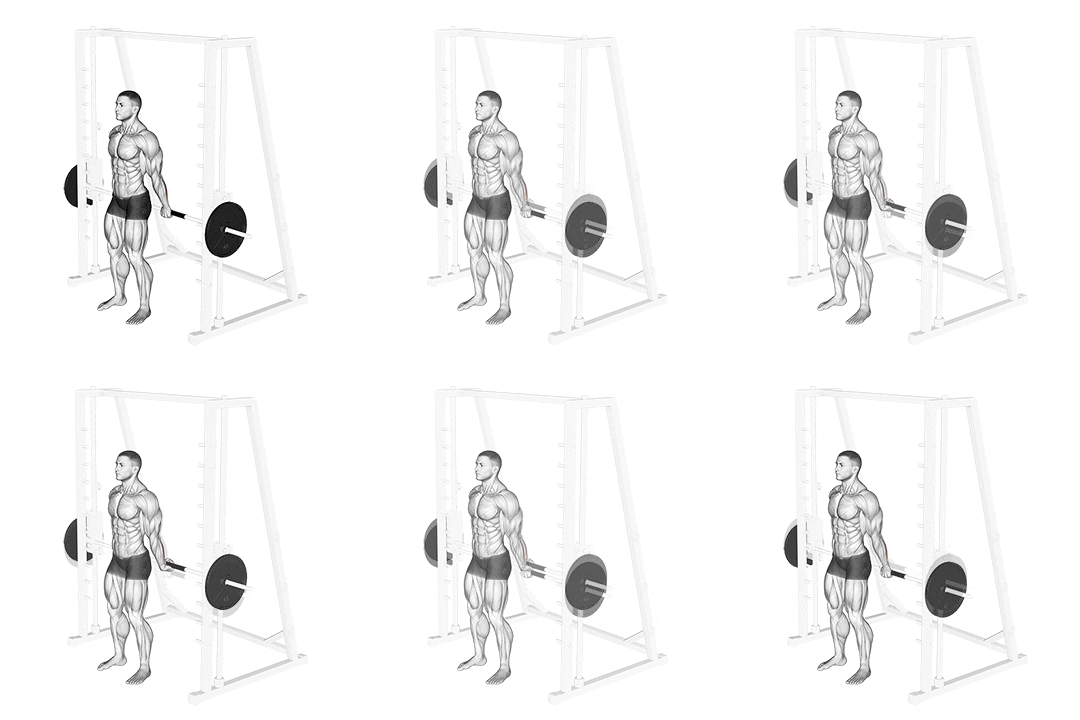
The Smith standing back wrist curl is an exercise that primarily targets the muscles of the forearms, particularly the extensor muscles. It involves wrist extension against resistance, which helps strengthen and develop the muscles responsible for wrist stability and grip strength. ## Instructions 1. Set up the Smith machine: Adjust the barbell height to a position just below waist level. Ensure that the machine is securely locked in place. 2. Stand facing the machine with your feet shoulder-width apart. Position yourself close enough to the barbell so that you can comfortably grip it with your palms facing down. 3. Grasp the barbell with an overhand grip, hands shoulder-width apart. Your hands should be positioned in front of your thighs, with the barbell resting against your fingers and the backs of your hands. 4. Begin the movement by allowing the barbell to roll down towards the fingertips, causing your wrists to extend backward. 5. Slowly reverse the motion by curling your wrists upward, bringing the barbell back up towards your palms. 6. Focus on squeezing the muscles of your forearms as you perform the wrist curl. Maintain control and avoid using momentum to lift the weight. 7. Continue the movement for the desired number of repetitions or sets. ## Variations - Dumbbell Wrist Curl: Instead of using a Smith machine, perform the exercise with a dumbbell in each hand. Hold the dumbbells with an overhand grip, palms facing down, and curl your wrists upward. - Reverse Wrist Curl: Reverse the grip so that your palms face upward. Perform the wrist curl by curling your wrists downward, targeting the flexor muscles of the forearm. ## Muscles Worked - Forearm extensors (muscles on the back of the forearm) ## Common Mistakes - Using excessive weight: Start with a lighter weight to ensure proper form and technique. Using too much weight can lead to compromised form and potential injury. - Allowing the wrists to drop: Maintain control throughout the movement and avoid letting your wrists sag or drop during the wrist curl. Keep the wrists straight and aligned with the forearms. - Using momentum: Avoid swinging or using momentum to lift the weight. Focus on controlled, deliberate movements to engage the target muscles effectively. ## Safety Precautions - Warm up your wrists and forearms before performing the exercise to prepare the muscles for the movement. - Start with light weights and gradually increase the resistance as your wrists and forearms get stronger. - If you have any pre-existing wrist or forearm injuries or conditions, consult with a healthcare professional before attempting this exercise. - If you experience pain or discomfort during the exercise, stop immediately and consult a qualified fitness professional or medical practitioner. - Maintain proper form throughout the movement and avoid any excessive strain on the wrists and forearms.
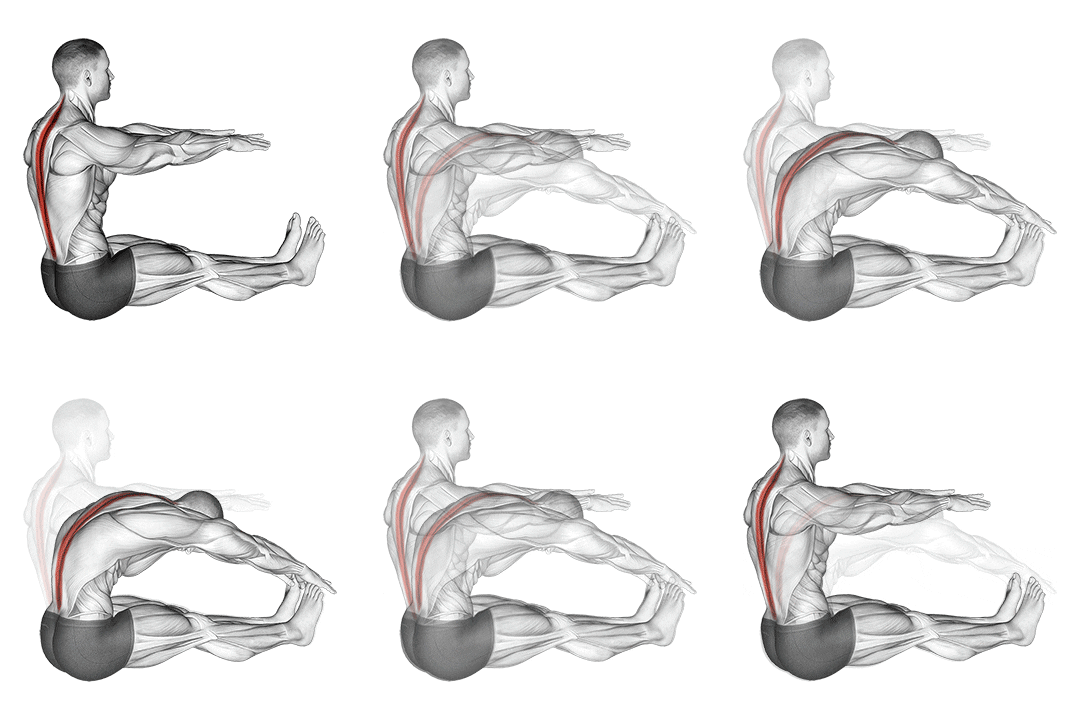
The spine stretch is a Pilates exercise that targets the muscles of the core and improves flexibility in the spine. It involves a forward bending motion that stretches and mobilizes the muscles along the back and promotes better posture. ## Instructions 1. Start by sitting on a mat or the floor with your legs extended in front of you, hip-width apart. 2. Sit tall, lengthening your spine, and engage your abdominal muscles. 3. Extend your arms straight out in front of you at shoulder height, palms facing downward. 4. Inhale deeply to prepare. 5. Exhale as you initiate the movement by tucking your chin towards your chest and articulating your spine to roll down, one vertebra at a time. 6. Continue rolling forward until your upper body is flexed forward, reaching toward your feet. 7. Inhale at the bottom position, maintaining the forward flexion of the spine. 8. Exhale as you reverse the movement by initiating from the lower back and sequentially stacking each vertebra back up to an upright seated position. 9. Repeat the exercise for the desired number of repetitions. ## Variations - Seated Spine Stretch: If you have difficulty maintaining balance in the seated position, you can perform the exercise sitting on a stability ball or with your back against a wall for added support. - Assisted Spine Stretch: If you have limited flexibility or find it challenging to reach your feet, you can use a towel or exercise band looped around your feet to assist the forward bending motion. ## Muscles Worked The spine stretch primarily targets the following muscles: - Abdominal muscles (rectus abdominis, transverse abdominis) - Lower back (erector spinae) - Hamstrings - Spinal extensors ## Common Mistakes 1. Rounding the shoulders: Keep your shoulders relaxed and avoid rounding them forward during the movement. Focus on maintaining an open chest. 2. Using momentum: Avoid using momentum to roll down or up. Perform the movement slowly and with control to engage the muscles effectively. 3. Straining the neck: Keep your neck aligned with your spine throughout the exercise. Avoid excessive tension in the neck muscles by not pulling or straining the head forward. ## Safety Precautions - If you have any pre-existing spinal or back conditions, consult with a healthcare professional or a qualified Pilates instructor to ensure that the exercise is suitable for you. - Perform the exercise on a stable surface, such as a mat or a non-slip floor, to prevent slipping or losing balance. - If you feel any pain or discomfort during the exercise, modify the range of motion or stop the exercise and consult with a professional. Listen to your body and work within your comfortable range of motion. - Keep the movement controlled and avoid jerking or forcing the spine into positions that feel uncomfortable.
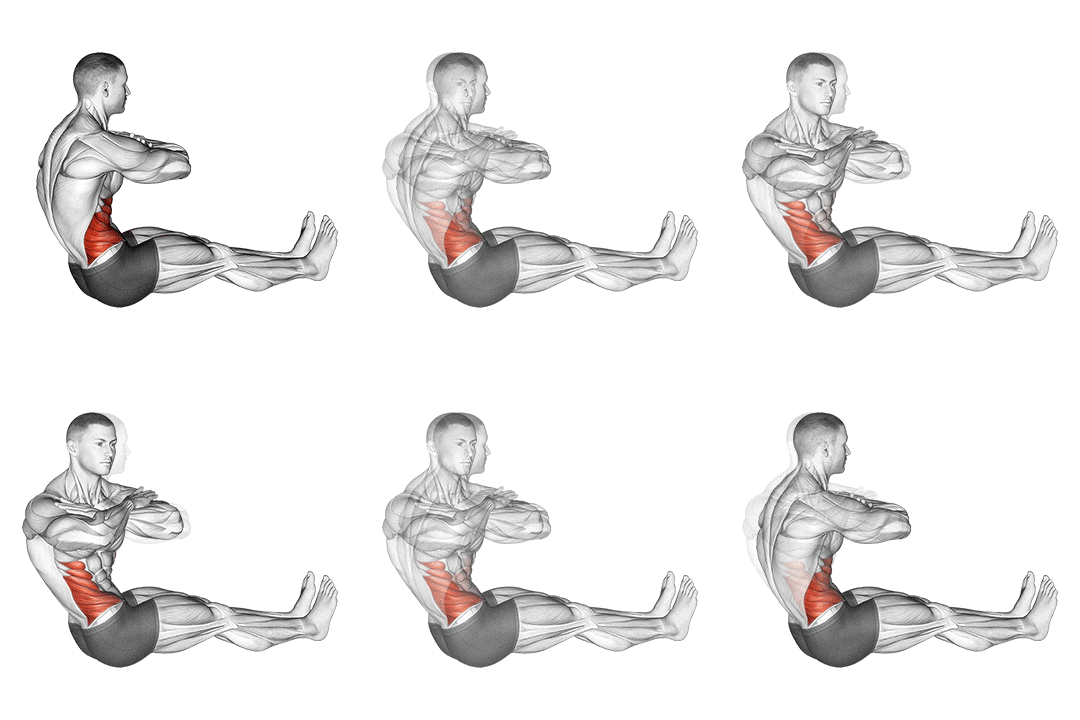
The spine twist is a Pilates exercise that targets the muscles of the core, particularly the obliques. It involves rotating the spine while maintaining a stable and engaged core. This exercise helps improve spinal mobility, strengthens the abdominal muscles, and enhances overall torso stability. ## Instructions 1. Start by sitting on a mat with your legs extended in front of you. 2. Bend your knees and bring your feet closer to your hips, keeping them flat on the ground. 3. Engage your core by drawing your navel in towards your spine and sitting tall, with an upright posture. 4. Extend your arms straight in front of you at shoulder height, palms facing downward. This is the starting position. 5. Inhale to prepare, and as you exhale, begin to rotate your torso to the right, leading with your ribs and keeping your hips stable. 6. Continue rotating until your arms are parallel to the ground, perpendicular to your torso, and your gaze follows the movement. 7. Hold the twisted position briefly, feeling the engagement in your obliques and the stretch in your back. 8. Inhale to return to the starting position, maintaining control and stability throughout the movement. 9. Repeat the twist to the opposite side, exhaling as you rotate and inhaling as you return to the center. 10. Perform the desired number of repetitions, alternating sides with each twist. ## Variations - Seated Spine Twist: This is the traditional version described above. However, variations can include using props such as a Pilates ring or a resistance band to add extra resistance or challenge to the exercise. - Supine Spine Twist: Instead of sitting, you can perform the spine twist exercise lying on your back. Bend your knees and let them fall to one side while keeping your shoulders anchored to the ground. This variation provides a different range of motion and targets the obliques and hip muscles. ## Muscles Worked The spine twist primarily targets the following muscles: - Obliques (internal and external) - Transverse abdominis - Erector spinae - Multifidus - Quadratus lumborum ## Common Mistakes 1. Collapsing the chest: Maintain an upright posture and avoid rounding or collapsing the chest during the twist. Imagine lengthening the spine and maintaining a lifted chest throughout the movement. 2. Twisting from the neck: The movement should originate from the ribs and torso, not from the neck. Focus on rotating your entire upper body while keeping your neck relaxed. 3. Over-rotating or forcing the twist: Start with a comfortable range of motion and gradually increase it as your mobility improves. Avoid over-twisting or forcing the movement, which can strain the spine. ## Safety Precautions - If you have any pre-existing spinal conditions or injuries, it's advisable to consult with a healthcare professional or a qualified Pilates instructor before attempting this exercise. - Start with small movements and gradually increase the range of motion as you become more comfortable and flexible. - Listen to your body and avoid any movements that cause pain or discomfort. Modify the exercise or seek guidance if needed. - Maintain proper alignment and engagement of the core muscles throughout the exercise to support your spine.