
The reverse hyper on a flat bench is an exercise that targets the muscles of the lower back, glutes, and hamstrings. It involves lying face down on a flat bench and performing a controlled lifting motion with the legs, engaging the posterior chain muscles. This exercise helps strengthen the lower back, improve hip mobility, and enhance overall posterior chain strength. ## Instructions 1. Lie face down on a flat exercise bench, with your hips positioned at the edge of the bench and your legs extended behind you. 2. Place your hands on the bench or grip the sides for stability. 3. Engage your core muscles and maintain a neutral spine throughout the exercise. 4. Begin the movement by squeezing your glutes and lifting your legs upward as high as comfortably possible. Focus on using your lower back muscles and hamstrings to lift the legs, while keeping the rest of your body stable. 5. Pause briefly at the top of the movement, feeling the contraction in your lower back and glutes. 6. Lower your legs back down in a controlled manner until they are parallel with the ground or slightly lower, maintaining tension in your muscles. 7. Repeat for the desired number of repetitions. ## Variations - **Weighted Reverse Hyper on Flat Bench**: Hold a dumbbell or a weighted plate between your feet to add resistance and increase the intensity of the exercise. - **Unweighted Reverse Hyper on Flat Bench**: If you find the exercise challenging or need to modify due to strength limitations, you can perform the movement without additional weight. ## Muscles Worked - Lower back (erector spinae) - Glutes (gluteus maximus) - Hamstrings (biceps femoris, semitendinosus, semimembranosus) ## Common Mistakes - Raising the legs too high: Avoid overextending or hyperextending your lower back by lifting your legs too high. Focus on maintaining control and a range of motion that feels comfortable for your body. - Using momentum: Perform the exercise with a slow and controlled motion, avoiding any swinging or jerking movements. - Allowing the lower back to sag: Keep your core engaged and maintain a neutral spine position throughout the exercise. Avoid letting your lower back sag or arch excessively. ## Safety Precautions - Ensure that the bench is sturdy and stable before performing the exercise. - Start with a controlled range of motion and gradually increase as your strength and flexibility improve. - If you have any lower back or hip injuries or conditions, consult with a healthcare professional before attempting this exercise. - Engage your core muscles and maintain proper form throughout the exercise to avoid strain on the back or hips. - If you experience any pain or discomfort during the exercise, stop immediately and seek guidance from a qualified fitness professional.
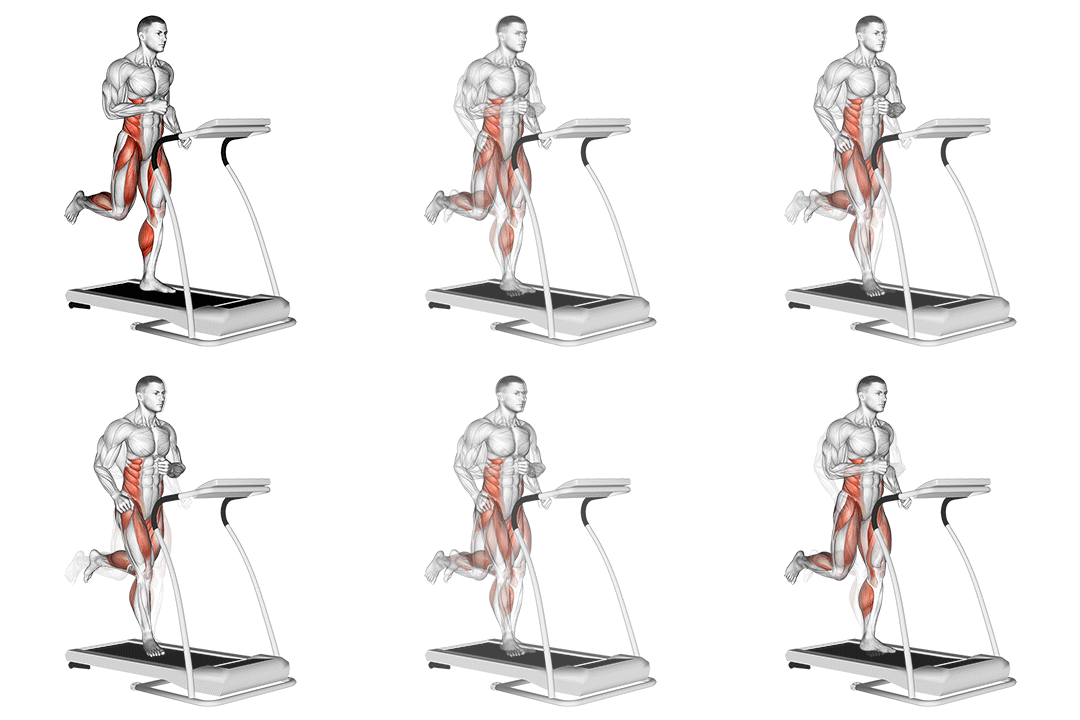
Running is a popular form of exercise that can be performed with minimal equipment. However, certain equipment can enhance your running experience, provide support, and improve safety. This section will cover some common equipment used during running. ## Instructions 1. Running Shoes: Invest in a pair of quality running shoes that provide proper cushioning, support, and stability for your feet. Visit a specialized running store to get fitted for the right shoe based on your foot type, gait, and running style. 2. Moisture-Wicking Clothing: Wear lightweight, moisture-wicking clothing that helps to keep you dry and comfortable during your run. Choose materials that allow for breathability and prevent chafing. 3. Sports Bra (for Women): Women should wear a supportive sports bra designed for running to provide proper breast support and reduce discomfort during the run. 4. Socks: Choose moisture-wicking socks with padding or cushioning in the areas prone to friction or blister formation. Avoid cotton socks as they can retain moisture, increasing the risk of blisters. 5. GPS Running Watch or Smartphone: Use a GPS running watch or smartphone app to track your running distance, time, and pace. It can also provide additional features such as heart rate monitoring and route mapping. 6. Headphones: If you enjoy listening to music or podcasts while running, use comfortable and secure headphones that won't fall out during your run. Ensure that you are still aware of your surroundings and able to hear potential hazards, such as traffic. 7. Reflective Gear and Lights: If running in low-light conditions or at night, wear reflective clothing or accessories and use lights to improve visibility and safety. ## Variations - Running Belt or Waist Pack: Carry essentials such as keys, ID, phone, or energy gels in a lightweight running belt or waist pack. - Hydration Gear: Use a handheld water bottle, a hydration belt, or a hydration backpack to stay hydrated during longer runs. - Compression Gear: Consider wearing compression socks, sleeves, or tights to improve circulation, reduce muscle vibration, and potentially enhance recovery. ## Muscles Worked The main muscles targeted or engaged during running are: - Quadriceps (front of thighs) - Hamstrings (back of thighs) - Calves - Glutes (buttocks) - Hip flexors - Core muscles (abdominals and obliques) ## Common Mistakes - Wearing worn-out or improper footwear: Use running shoes that provide adequate cushioning, support, and fit your feet properly to avoid discomfort and potential injuries. - Ignoring proper clothing: Wearing cotton clothing or non-moisture-wicking materials can lead to discomfort and chafing. Opt for appropriate running apparel to enhance your comfort. - Overloading with unnecessary gear: While some equipment is beneficial, avoid carrying excessive weight or unnecessary items that may hinder your running form or cause discomfort. ## Safety Precautions - Regularly check and replace your running shoes when they show signs of wear and tear to maintain proper support and cushioning. - Stay visible, especially when running near traffic or in low-light conditions, by wearing reflective gear and using lights. - If using headphones, keep the volume low enough to remain aware of your surroundings, including approaching vehicles, cyclists, or pedestrians. - Stay hydrated by carrying water or utilizing hydration gear during longer runs, especially in hot weather. - Gradually increase your running distance and intensity to prevent overuse injuries. Listen to your body and take rest days when needed. - If you have any pre-existing health conditions or concerns, consult with a healthcare professional before starting a running program or using specific equipment.

The runner's stretch is a stretching exercise that primarily targets the muscles in the legs, particularly the hamstrings, hip flexors, and calves. It helps improve flexibility, increase range of motion, and alleviate muscle tightness in the lower body. This stretch is especially beneficial for runners and athletes involved in activities that require significant leg movement. ## Instructions 1. Begin by standing tall with your feet hip-width apart. 2. Take a step forward with your right foot, ensuring that your knee is directly above your ankle and your toes are pointing forward. 3. Shift your weight onto your right leg, keeping your left leg straight and extended behind you. 4. Place your hands on your right thigh for support and stability. 5. Slowly bend your right knee and lower your hips downward until you feel a gentle stretch in the left hip flexor and right hamstring. 6. Keep your upper body upright and avoid leaning forward or arching your back. 7. Hold the stretch for about 20-30 seconds while maintaining steady breathing. 8. To deepen the stretch, you can lean slightly forward, keeping your back straight, or raise your arms overhead. 9. Repeat the stretch on the other side by stepping forward with your left foot and extending your right leg behind you. ## Variations - Modified Runner's Stretch: If balance is an issue, you can perform this stretch while holding onto a stable object, such as a wall or chair, for support. - Seated Runner's Stretch: Sit on the edge of a chair or bench and extend one leg straight in front of you while bending the other leg and placing the foot flat on the floor. Lean forward, reaching toward your extended foot to stretch the hamstring. - Pigeon Pose: From a kneeling position, extend one leg straight behind you while bending the other leg and placing the foot in front of your body, near the opposite hip. Lean forward, aiming to keep your hips level, to stretch the glutes and hip rotators. ## Muscles Worked The runner's stretch primarily targets the following muscles: - Hamstrings - Hip flexors (specifically the iliopsoas muscle) - Calves ## Common Mistakes - Rounded back: Avoid rounding or hunching your back during the stretch. Keep your back straight and tall to maximize the effectiveness of the stretch. - Overstretching: Be cautious not to push the stretch to the point of pain or discomfort. A gentle pull should be felt in the target muscles without causing excessive strain. - Uneven weight distribution: Ensure that your weight is evenly distributed between your front and back legs to maintain balance and stability throughout the stretch. - Holding your breath: Remember to breathe deeply and naturally during the stretch to promote relaxation and enhance the stretch. ## Safety Precautions - If you have any pre-existing injuries or conditions, such as a hamstring strain or lower back problems, consult with a healthcare professional or physical therapist before performing this stretch. - Avoid bouncing or jerking movements while in the stretched position, as it can increase the risk of injury. - Perform the stretch on a non-slip surface to prevent slipping or loss of balance. - If you feel any sharp or intense pain during the stretch, stop immediately and seek medical advice. - Gradually increase the intensity and duration of the stretch over time as your flexibility improves. - Warm up your muscles with light aerobic activity before performing the runner's stretch to prepare them for stretching.
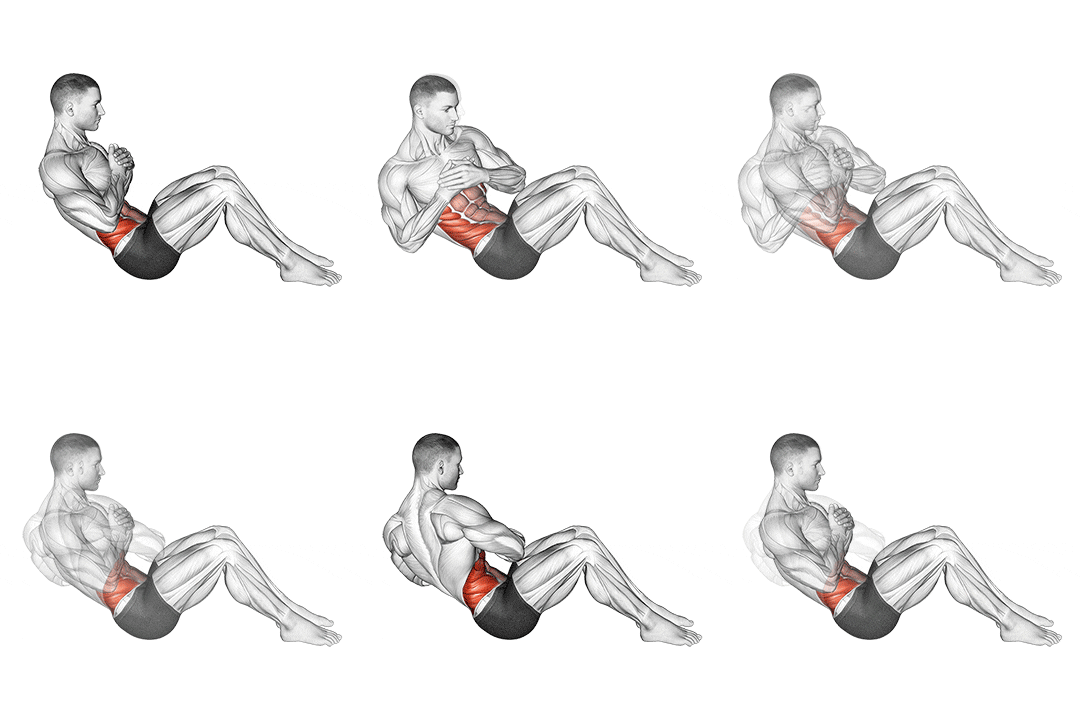
The Russian twist is an exercise that targets the abdominal muscles, primarily the obliques. It involves a rotational movement of the torso, which helps strengthen the core, improve stability, and enhance athletic performance. ## Instructions 1. Sit on the floor with your knees bent and your feet flat on the ground, hip-width apart. You may choose to elevate your feet by lifting them a few inches off the ground for an added challenge. 2. Lean back slightly, maintaining a straight spine and engaging your core muscles. 3. Interlace your fingers or hold a weight (such as a dumbbell, medicine ball, or kettlebell) in front of your chest. 4. Keeping your lower body stable, exhale and twist your torso to the right, bringing the weight or your hands beside your right hip. 5. Inhale as you return to the center and then exhale as you twist your torso to the left, bringing the weight or your hands beside your left hip. 6. Continue alternating sides in a controlled and fluid motion, aiming for a full range of motion with each twist. 7. Repeat for the desired number of repetitions or time duration. ## Variations - Feet Elevated Russian Twist: Perform the Russian twist with your feet lifted off the ground, either with bent knees or straight legs, to increase the challenge and engage the core muscles more intensely. - Weighted Russian Twist: Hold a weight, such as a medicine ball, dumbbell, or plate, in front of your chest to add resistance and increase the difficulty of the exercise. - Banded Russian Twist: Secure a resistance band around a stationary object, such as a pole or heavy piece of furniture, and hold the ends of the band in your hands while performing the Russian twist. The band adds resistance throughout the movement. ## Muscles Worked The main muscles targeted during the Russian twist are: - Obliques (side abdominal muscles) - Rectus abdominis (front abdominal muscles) - Transverse abdominis (deep abdominal muscles) - Hip flexors ## Common Mistakes - Using momentum: Avoid using momentum to swing the weight or your hands from side to side. Focus on controlled and deliberate movements. - Rounding the back: Maintain proper posture and avoid rounding your lower back during the twist. Keep your spine straight and engaged throughout the exercise. - Not engaging the core: Remember to actively engage your core muscles throughout the movement to maximize the effectiveness of the exercise. - Twisting only the arms: The rotation should come from the torso, not just the arms. Focus on rotating the entire upper body. ## Safety Precautions - Start with a weight or difficulty level that suits your fitness and strength level. Gradually increase the resistance or difficulty as you become more comfortable and stronger. - If you have any pre-existing back or spinal conditions, consult with a healthcare professional before attempting this exercise. - Keep your movements controlled and within a pain-free range of motion. Avoid any jerking or abrupt motions that may strain the muscles or joints. - Breathe consistently throughout the exercise, inhaling and exhaling with each twist to maintain a steady rhythm and prevent breath-holding. - If you experience any pain or discomfort, stop the exercise and consult with a fitness professional or healthcare provider.
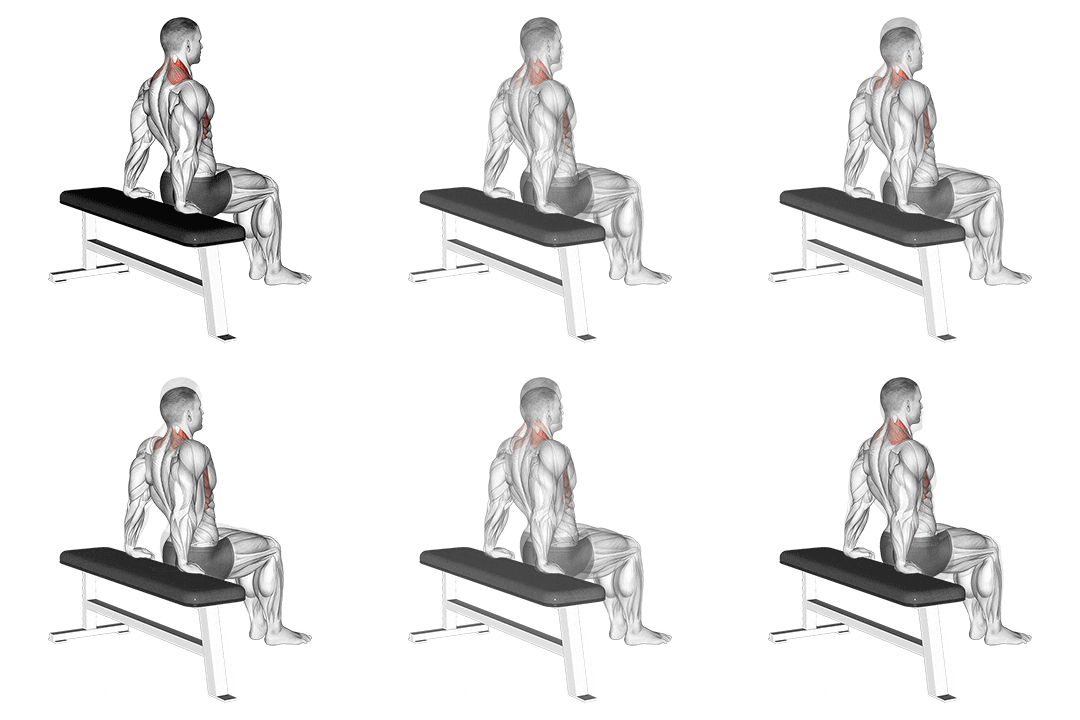
Scapula dips, also known as scapular depression or scapular push-ups, are an exercise that targets the muscles around the shoulder blades (scapulae). This exercise helps strengthen and stabilize the scapulae, which can improve shoulder mobility, posture, and upper body strength. ## Instructions 1. Start by positioning yourself on a stable surface, such as parallel bars, dip bars, or the edge of a sturdy chair or bench. 2. Place your hands shoulder-width apart on the bars or the edge of the surface, with your fingers facing forward. 3. Engage your core muscles and maintain a straight body position throughout the exercise. 4. Lower your body by actively depressing the scapulae (moving them downward and inward) while keeping your elbows slightly bent. 5. Keep your shoulders down and away from your ears as you lower your body. 6. Once you reach the lowest point, slowly raise your body back to the starting position by retracting the scapulae (moving them back and upward). 7. Repeat the movement for the desired number of repetitions. ## Variations - Assisted Scapula Dips: If you find scapula dips challenging, you can perform them with your knees bent and feet on the ground to reduce the load on your upper body. - Scapula Push-Ups: Instead of using parallel bars or a surface, perform scapula dips in a push-up position. Lower your body while maintaining a straight line from head to toe and focus on the scapular movement. ## Muscles Worked The main muscles targeted or engaged during scapula dips are: - Rhomboids - Trapezius (middle and lower fibers) - Serratus anterior - Latissimus dorsi - Deltoids (posterior fibers) - Rotator cuff muscles ## Common Mistakes - Shrugging the shoulders: Avoid elevating the shoulders toward the ears during the movement. Keep them down and away from the ears to maximize scapular depression and engagement of the targeted muscles. - Overarching or rounding the back: Maintain a neutral spine throughout the exercise and avoid excessive arching or rounding of the back. - Not fully depressing the scapulae: Focus on actively depressing the scapulae downward and inward at the bottom of the movement to fully engage the targeted muscles. ## Safety Precautions - Start with a proper warm-up to prepare your shoulders and upper body for the exercise. - Perform scapula dips on a stable surface to ensure safety and stability during the movement. - If you have any shoulder or upper body injuries or conditions, consult with a healthcare professional before attempting scapula dips. - Maintain control and avoid jerky or uncontrolled movements to reduce the risk of injury. - Start with a suitable difficulty level and gradually increase the intensity as you become more comfortable and stronger. - If you experience pain or discomfort during the exercise, stop and consult with a healthcare professional.
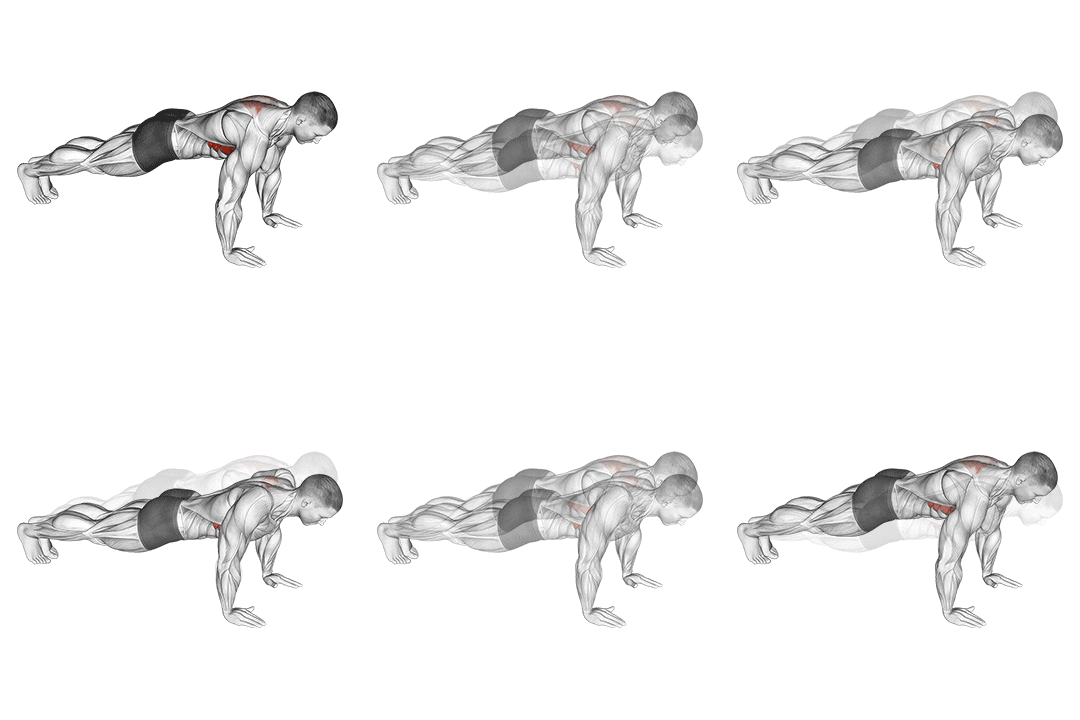
The scapula push-up, also known as the scapular push-up or scapular protraction exercise, targets the muscles surrounding the shoulder blades (scapulae). It focuses on the movement of the scapulae, specifically protraction and retraction. This exercise helps improve scapular stability, upper body posture, and shoulder mobility. ## Instructions 1. Start by assuming a push-up position with your hands placed slightly wider than shoulder-width apart on the floor. 2. Keep your body in a straight line from head to toe, with your core engaged and your feet together. 3. Begin the movement by protracting the scapulae (pushing the shoulder blades apart) by rounding the upper back and slightly pushing the shoulders forward. 4. Maintain tension in the scapulae and slowly retract them (squeeze them together) by pulling the shoulder blades back and down. 5. Continue to focus on the scapular movement while keeping your elbows slightly bent throughout the exercise. 6. Repeat the protraction and retraction movement for the desired number of repetitions. ## Variations - Incline Scapula Push-Up: Perform the scapula push-up with your hands placed on an elevated surface, such as a bench or step, to decrease the intensity and make it easier. - Decline Scapula Push-Up: Place your feet on an elevated surface, such as a bench or step, while performing the scapula push-up to increase the intensity. - Assisted Scapula Push-Up: If you find the exercise challenging, you can perform it on your knees or with your hands on an elevated surface, such as a bench or step, to reduce the load on your upper body. ## Muscles Worked The main muscles targeted or engaged during scapula push-ups are: - Serratus anterior - Pectoralis minor - Rhomboids - Trapezius (middle and lower fibers) - Deltoids (anterior fibers) - Rotator cuff muscles ## Common Mistakes - Rounding or sagging the lower back: Maintain a straight line from head to toe throughout the exercise and avoid excessive arching or sagging of the lower back. - Shrugging the shoulders: Keep your shoulders down and away from the ears throughout the movement. Avoid shrugging or tensing the upper traps. - Insufficient scapular movement: Focus on actively protracting and retracting the scapulae to ensure proper engagement of the targeted muscles. - Elbow locking: Keep a slight bend in your elbows throughout the exercise to avoid excessive strain on the joints. ## Safety Precautions - Warm up your shoulders and upper body before performing scapula push-ups to prevent injury. - Perform the exercise on a stable surface to ensure safety and stability during the movement. - If you have any shoulder or upper body injuries or conditions, consult with a healthcare professional before attempting scapula push-ups. - Start with a suitable difficulty level and gradually increase the intensity as you become more comfortable and stronger. - Maintain control and avoid jerky or uncontrolled movements to reduce the risk of injury. - If you experience pain or discomfort during the exercise, stop and consult with a healthcare professional.
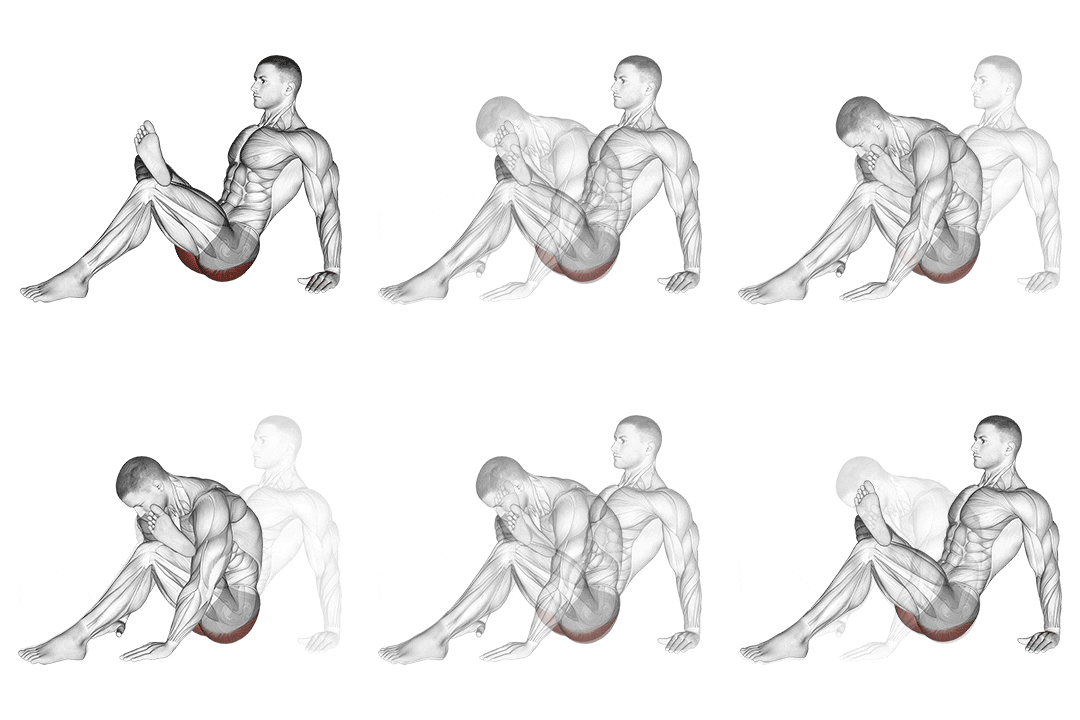
The seated glute stretch is a stretching exercise that targets the gluteal muscles, specifically the gluteus maximus and gluteus medius. This stretch helps to improve hip flexibility and alleviate tightness in the glutes. It is particularly beneficial for individuals who spend long periods sitting or those involved in activities that engage the glute muscles, such as running, cycling, or weightlifting. ## Instructions 1. Sit on the edge of a mat or a stable surface with your legs extended in front of you. 2. Bend your right knee and cross it over your left leg, placing your right foot flat on the floor on the outside of your left knee. 3. Keep your left leg straight and extend it forward, pointing your toes upward. 4. Place your left hand on the floor or mat behind you for support. 5. Slowly rotate your upper body to the right, using your right hand to gently push against your right knee, encouraging a deeper stretch. 6. Continue to rotate until you feel a gentle stretch in your right glute. 7. Hold the stretch for 20 to 30 seconds while maintaining a relaxed breathing pattern. 8. Repeat the stretch on the other side by crossing your left knee over your right leg. ## Variations - If sitting on the floor is uncomfortable, you can perform this stretch on a chair. Sit on the edge of a chair, cross one ankle over the opposite knee, and gently lean forward, keeping your back straight, until you feel the stretch in your glutes. - To increase the intensity of the stretch, you can use your hand to apply gentle pressure on the bent knee, pressing it down slightly while maintaining the stretch position. - If you have difficulty balancing or need additional support, you can use a wall or a sturdy object to stabilize yourself while performing the stretch. ## Muscles Worked The seated glute stretch primarily targets the gluteus maximus and gluteus medius muscles. These muscles are responsible for hip extension, abduction, and external rotation. ## Common Mistakes - Rounding the back: Ensure that you maintain a straight back throughout the stretch. Avoid rounding your back or hunching your shoulders. - Applying excessive force: The stretch should be gentle and controlled. Avoid using excessive force or pushing beyond your comfort zone, as it may lead to injury. - Neglecting the breathing pattern: Remember to breathe deeply and naturally during the stretch. Avoid holding your breath, as it can increase tension in the muscles. ## Safety Precautions - If you have any pre-existing injuries or conditions related to the gluteal muscles or hips, it's advisable to consult with a healthcare professional or a qualified fitness trainer before performing this exercise. - Avoid forcing the stretch or going beyond a comfortable range of motion. Be mindful of your body's limitations and adjust the intensity of the stretch accordingly. - If you experience any sharp pain or discomfort, stop the stretch immediately and seek medical advice. - Perform the stretch on a stable surface to ensure balance and stability. - Remember to warm up before stretching to prepare your muscles and reduce the risk of injury.
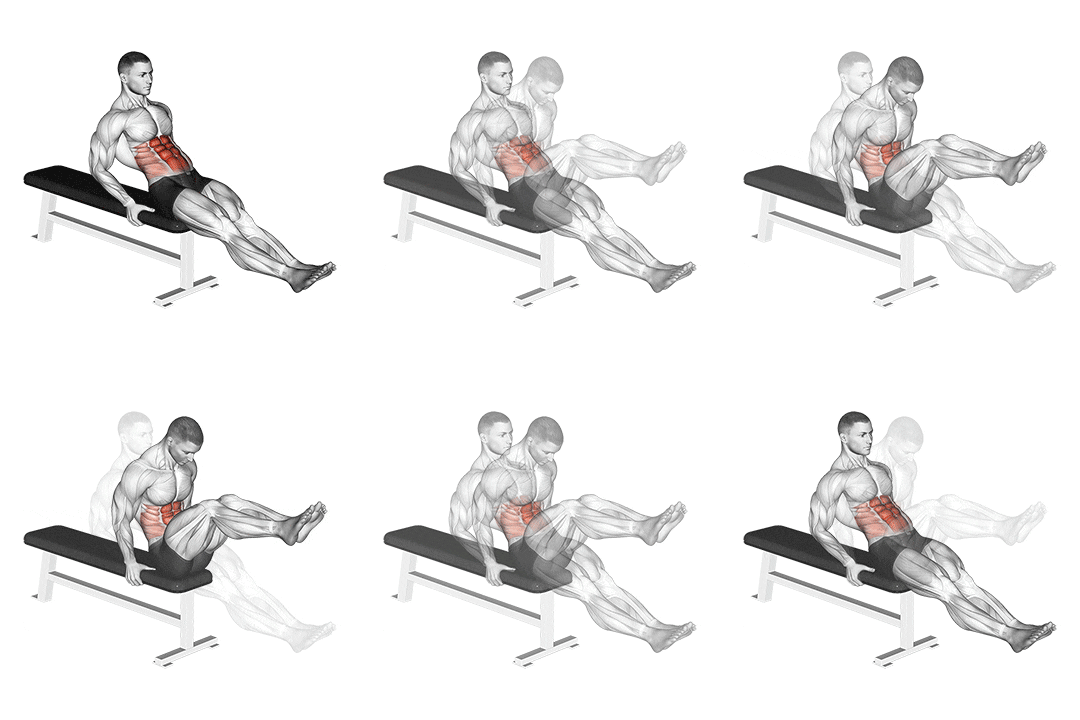
The seated leg raise is an exercise that targets the muscles of the lower abdomen, particularly the hip flexors. It involves lifting the legs while seated to strengthen the core and improve hip flexibility. This exercise is beneficial for individuals looking to tone their abdominal muscles and enhance overall core stability. ## Instructions 1. Sit on a sturdy chair or bench with your back straight and your feet flat on the floor. 2. Place your hands on the sides of the chair for support. 3. Engage your core muscles by drawing your navel towards your spine. 4. Slowly lift one leg off the floor, extending it straight out in front of you. 5. Hold the lifted leg in the raised position for a few seconds, ensuring that you maintain control and stability. 6. Lower the leg back down to the starting position. 7. Repeat the movement with the opposite leg. 8. Continue alternating legs for the desired number of repetitions. ## Variations - To increase the intensity of the exercise, you can add ankle weights or use a resistance band around your ankles. - If you have access to an exercise ball, you can perform the seated leg raise by sitting on the ball and lifting one leg at a time. This variation engages additional stabilizing muscles. - For individuals with lower back issues, it is advisable to perform the exercise with a smaller range of motion or consult with a healthcare professional or fitness trainer for guidance. ## Muscles Worked The seated leg raise primarily targets the hip flexor muscles, including the iliopsoas and rectus femoris. It also engages the lower abdominal muscles, such as the transverse abdominis and rectus abdominis, to stabilize the core during the movement. ## Common Mistakes - Using momentum: Avoid swinging or using momentum to lift the legs. The movement should be controlled and initiated by the hip flexor muscles. - Rounding the back: Maintain good posture throughout the exercise. Avoid rounding your back or slouching forward. - Lifting the leg too high: Lift the leg to a comfortable and controlled height. Going beyond your range of motion can strain the lower back and hip joints. - Holding the breath: Remember to breathe consistently throughout the exercise. Avoid holding your breath, as it can create unnecessary tension in the body. ## Safety Precautions - If you have any pre-existing injuries or conditions related to the lower back or hips, it's advisable to consult with a healthcare professional or a qualified fitness trainer before performing this exercise. - Start with a slow and controlled range of motion to ensure proper form and to avoid overexertion. - If you experience pain or discomfort in the lower back or hips during the exercise, stop immediately and seek medical advice. - Ensure that the chair or bench you are using is stable and secure. - Engage your core muscles throughout the exercise to provide stability and protect the lower back.
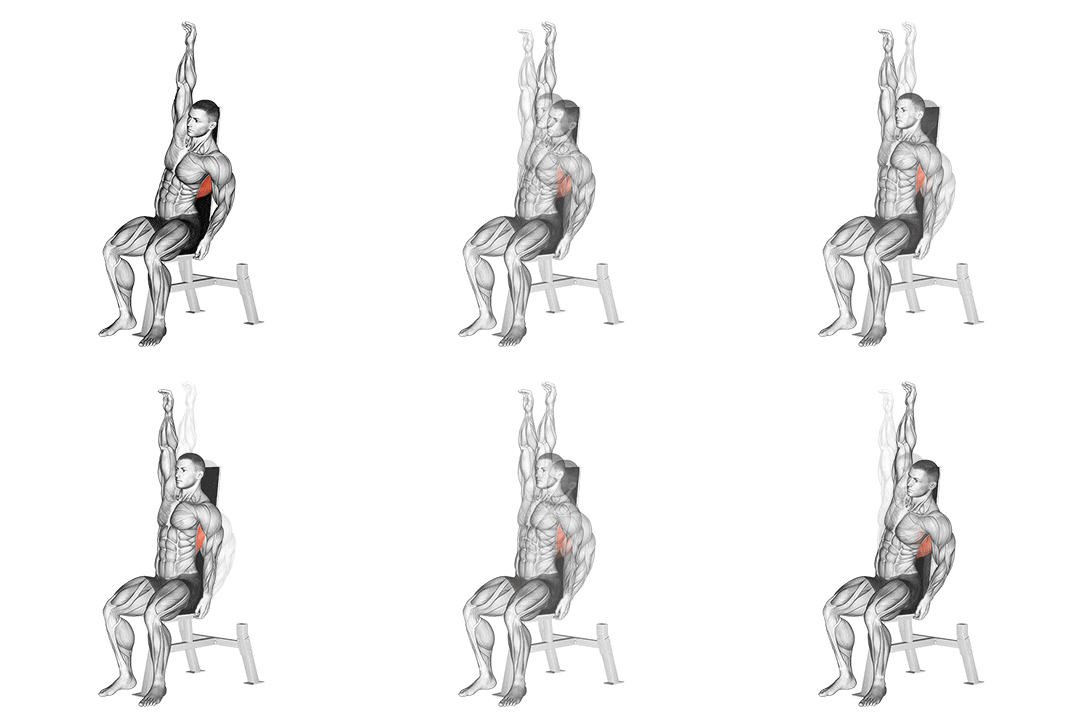
The seated lower back stretch is a gentle stretching exercise that targets the muscles of the lower back, providing relief and promoting flexibility in that area. It is particularly beneficial for individuals who experience tightness or discomfort in their lower back due to prolonged sitting or physical activity. ## Instructions 1. Sit on a chair with your feet flat on the floor, shoulder-width apart. 2. Place your hands on your thighs or beside you for support. 3. Slowly and gently arch your lower back by pushing your chest forward and sticking your buttocks out slightly. 4. Hold the stretch for 10 to 15 seconds, feeling a gentle stretch in your lower back. 5. Return to the starting position with a neutral spine. 6. Repeat the stretch for 2 to 3 sets, taking breaks as needed. ## Variations - If you prefer a deeper stretch, you can cross one ankle over the opposite knee and then perform the seated lower back stretch. This variation targets not only the lower back but also adds a stretch to the hip muscles. - For individuals with limited mobility or flexibility, you can perform a modified seated lower back stretch by sitting on the edge of a chair and leaning forward slightly, allowing your upper body to hang between your legs. This variation provides a stretch to the entire back and can be more comfortable for some individuals. ## Muscles Worked The seated lower back stretch primarily targets the muscles of the lower back, including the erector spinae muscles. It also helps to stretch and relieve tension in the surrounding muscles, such as the hip flexors and glutes. ## Common Mistakes - Overarching the lower back: Avoid excessive arching of the lower back, as it may strain the muscles or lead to discomfort. Focus on a gentle and controlled stretch without forcing the range of motion. - Holding the breath: Remember to breathe deeply and naturally during the stretch. Holding your breath can increase tension and limit the effectiveness of the stretch. - Using excessive force: Be cautious not to push or pull too hard during the stretch. It should be a gentle and comfortable movement. - Rushing the stretch: Take your time with each repetition and hold the stretch for the recommended duration. Avoid rushing through the exercise to ensure proper relaxation and elongation of the muscles. ## Safety Precautions - If you have any pre-existing lower back conditions or injuries, consult with a healthcare professional or a qualified fitness trainer before performing this exercise. - Start with a gentle range of motion and gradually increase the intensity of the stretch over time. Listen to your body and avoid any movements that cause pain or discomfort. - If you experience any sharp or prolonged pain during the stretch, stop immediately and seek medical advice. - Maintain proper posture throughout the exercise, keeping your spine aligned and avoiding slouching or rounding of the back. - Adjust the stretch intensity based on your comfort level. The goal is to feel a gentle stretch without causing pain.