
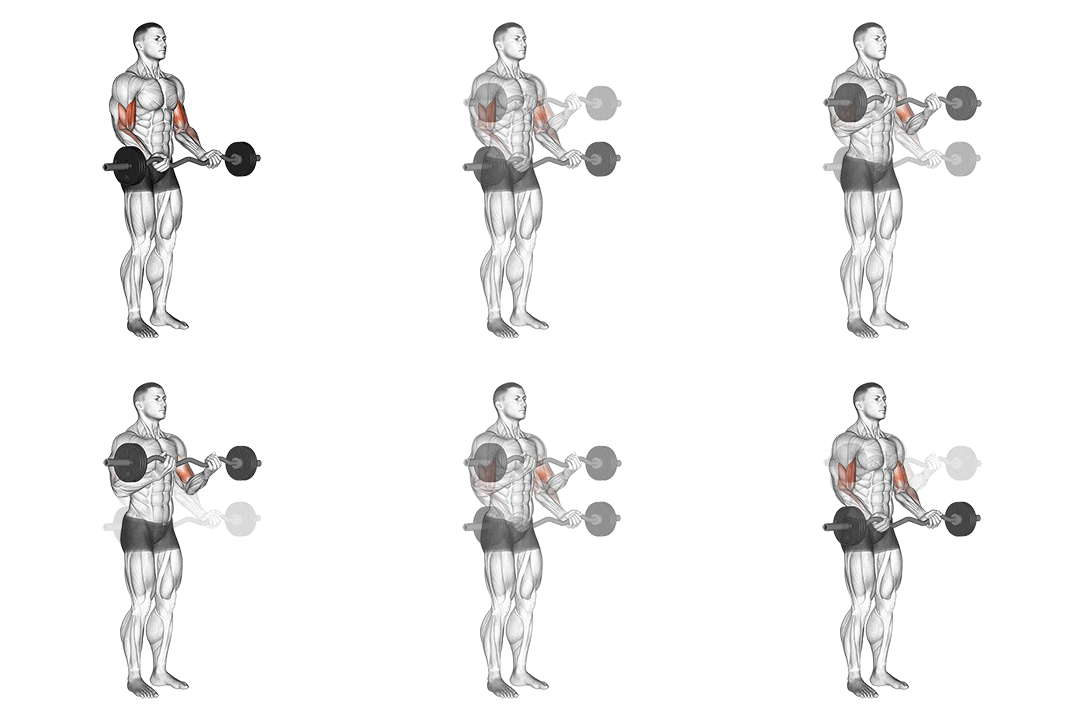
The EZ barbell curl is a popular strength training exercise that primarily targets the biceps brachii muscle, located in the upper arm. It is a variation of the traditional barbell curl, where the unique shape of the EZ barbell provides a more comfortable grip and reduces stress on the wrists and forearms. This exercise helps to develop and strengthen the biceps, contributing to arm definition and overall upper body strength. ## Instructions 1. Stand up straight with your feet shoulder-width apart, and grab the EZ barbell with an underhand grip (palms facing upward) at shoulder-width distance. 2. Allow the barbell to hang in front of your thighs with your arms fully extended and elbows close to your torso. 3. Keeping your upper arms stationary, exhale and curl the barbell upward by contracting your biceps. Focus on using your biceps to lift the weight rather than relying on momentum. 4. Continue the movement until your forearms are fully contracted and the barbell is at shoulder level. 5. Hold the contracted position for a brief pause, squeezing your biceps to maximize the muscle engagement. 6. Inhale and slowly lower the barbell back to the starting position in a controlled manner, fully extending your arms. 7. Repeat for the desired number of repetitions. ## Variations - Dumbbell Curl: Instead of using an EZ barbell, you can perform the exercise with dumbbells. This allows for greater freedom of movement and independent arm action. - Hammer Curl: With an EZ barbell or dumbbells, you can perform hammer curls by maintaining a neutral grip (palms facing each other) throughout the exercise. This variation targets both the biceps and the brachialis muscle. - Preacher Curl: Use an EZ barbell or dumbbells on a preacher curl bench to perform preacher curls. This variation provides additional stability and isolates the biceps effectively. ## Muscles Worked The EZ barbell curl primarily targets the following muscles: - Biceps brachii (both the long head and short head) - Brachialis (located underneath the biceps) - Brachioradialis (forearm muscle) ## Common Mistakes - Using momentum: Avoid swinging the weight or using your back, shoulders, or hips to lift the barbell. Keep the movement controlled and focus on using your biceps to perform the curl. - Elbow movement: Keep your elbows close to your torso throughout the exercise. Avoid letting them move forward or outward, as this reduces the emphasis on the biceps and can strain the shoulders. - Partial range of motion: Aim for a full range of motion by fully extending your arms at the bottom and achieving a complete contraction at the top of the movement. Avoid shortening the range of motion, as it limits the effectiveness of the exercise. ## Safety Precautions - Start with a weight that allows you to maintain proper form and technique. Gradually increase the weight as you become stronger and more comfortable with the exercise. - Warm up your arms with some light stretching or a few sets of lighter weight curls to prepare the muscles for the exercise. - If you have any pre-existing conditions or injuries, consult with a fitness professional or healthcare provider before attempting this exercise. - Avoid excessively heavy weights that may compromise your form and lead to injury. - If you experience any pain or discomfort during the exercise, stop immediately and seek guidance from a qualified professional.
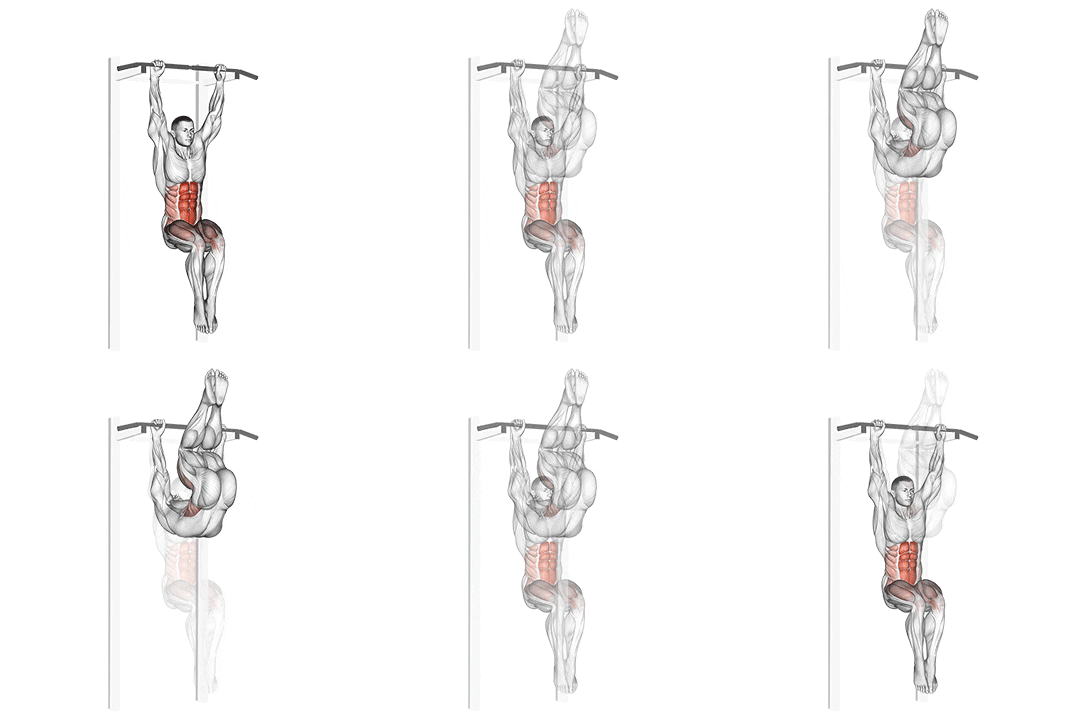
The hanging pike is an advanced abdominal exercise that targets the entire core, with a particular emphasis on the lower abdominal muscles. This exercise involves lifting the legs while hanging from a bar or other stable overhead apparatus and folding the body into a pike position. The hanging pike helps strengthen the core, improve stability, and enhance overall abdominal muscle development. ## Instructions 1. Find a sturdy pull-up bar or overhead apparatus that can support your body weight. Ensure that it is secure and at a height that allows your legs to hang freely. 2. Stand underneath the bar and reach up to grip it with an overhand grip, slightly wider than shoulder-width apart. 3. Hang from the bar with your arms fully extended, ensuring your shoulders are relaxed and your core is engaged. 4. Keep your legs straight and together throughout the exercise. 5. Initiate the movement by engaging your core muscles and lifting your legs upward. 6. Simultaneously raise your legs and bend at the hips, aiming to bring your feet toward the bar or as close to it as possible. 7. As you lift your legs, focus on folding your body at the waist, creating a "V" shape or pike position. 8. Pause briefly at the top of the movement, feeling the contraction in your lower abdominal muscles. 9. Slowly lower your legs back down to the starting position with control, extending your hips and returning to the hanging position. 10. Repeat for the desired number of repetitions. ## Tips and Precautions - Maintain control throughout the exercise, avoiding swinging or using momentum to lift your legs. - Engage your core muscles and focus on the abdominal contraction as you lift your legs into the pike position. - Keep your legs straight and together to maximize the engagement of the lower abdominal muscles. - Start with a comfortable range of motion and gradually increase it as you become stronger and more flexible. - If you have any lower back issues or find it difficult to perform the exercise, consult with a fitness professional or modify the movement to a variation that suits your abilities. ## Variations - Hanging Knee Raise: If the hanging pike is too challenging, you can start with the hanging knee raise, where you bring your knees toward your chest while hanging. - Hanging Pike with Bent Knees: Instead of keeping your legs straight, you can perform the hanging pike with bent knees, focusing on folding at the hips and bringing your knees toward your chest in a tucked position. ## Muscles Worked - Rectus Abdominis (six-pack muscles) - Lower Abdominals - Hip Flexors ## Common Mistakes - Using momentum: Avoid swinging the legs or using momentum to lift them into the pike position. Focus on controlled movements and engaging the core muscles. - Arching the back: Maintain a neutral spine position throughout the exercise. Avoid excessive arching of the lower back to prevent strain or injury. - Not fully extending the hips: Ensure that you fully extend your hips at the bottom of the movement before initiating the next repetition. This maximizes the engagement of the core muscles. ## Safety Precautions - Ensure that the bar or overhead apparatus is securely fixed and can support your body weight. - If you have any pre-existing conditions or injuries, consult with a healthcare professional or fitness expert before attempting the exercise. - Start with proper warm-up exercises to prepare your muscles for the movement. - If you experience any pain or discomfort during the exercise, particularly in the lower back, stop immediately and seek guidance from a qualified professional.
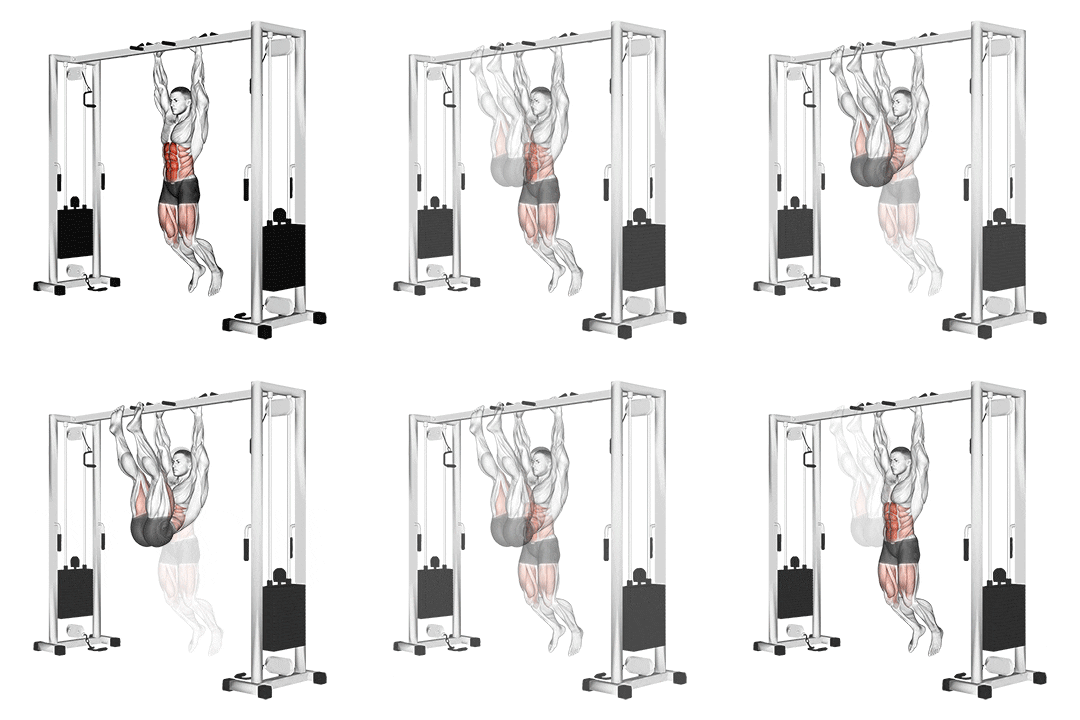
The hanging straight leg hip raise is an advanced exercise that primarily targets the lower abdominal muscles. This exercise involves hanging from a bar or other stable overhead apparatus while raising the legs in a controlled manner, engaging the core and hip flexors. The hanging straight leg hip raise helps develop core strength, improve stability, and enhance overall abdominal muscle definition. ## Instructions 1. Find a sturdy pull-up bar or overhead apparatus that can support your body weight. Ensure that it is secure and at a height that allows your legs to hang freely. 2. Stand underneath the bar and reach up to grip it with an overhand grip, slightly wider than shoulder-width apart. 3. Hang from the bar with your arms fully extended, ensuring your shoulders are relaxed and your core is engaged. 4. Straighten your legs and keep them together throughout the exercise. 5. Initiate the movement by engaging your core muscles and hip flexors. 6. Maintain a straight body position as you raise your legs upward, aiming to bring them parallel to the floor or as high as you can comfortably go. 7. Focus on lifting your legs using your lower abdominal muscles, avoiding swinging or using momentum. 8. Pause briefly at the top of the movement, feeling the contraction in your lower abs. 9. Slowly lower your legs back down to the starting position with control, maintaining a controlled descent. 10. Repeat for the desired number of repetitions. ## Tips and Precautions - Keep your legs straight and together throughout the exercise to maximize the engagement of the lower abdominal muscles. - Engage your core muscles and focus on the contraction in your lower abs as you raise your legs. - Control the movement and avoid swinging or using momentum to lift your legs. - Start with a comfortable range of motion and gradually increase it as you become stronger and more flexible. - If you have any lower back issues or find it difficult to perform the exercise, consult with a fitness professional or modify the movement to a variation that suits your abilities. ## Variations - Hanging Knee Raise: If the hanging straight leg hip raise is too challenging, you can start with the hanging knee raise, where you bring your knees toward your chest while hanging. - Hanging Bicycle Crunch: Instead of lifting both legs together, perform a bicycle crunch motion by bringing one knee toward your chest while extending the other leg straight, alternating sides. ## Muscles Worked - Rectus Abdominis (six-pack muscles) - Lower Abdominals - Hip Flexors ## Common Mistakes - Using momentum: Avoid swinging the legs or using momentum to lift them. Focus on controlled movements and engage the core muscles. - Arching the back: Maintain a neutral spine position throughout the exercise. Avoid excessive arching of the lower back to prevent strain or injury. - Not fully extending the hips: Ensure that you fully extend your hips at the bottom of the movement before initiating the next repetition. This maximizes the engagement of the core muscles. ## Safety Precautions - Ensure that the bar or overhead apparatus is securely fixed and can support your body weight. - If you have any pre-existing conditions or injuries, consult with a healthcare professional or fitness expert before attempting the exercise. - Start with proper warm-up exercises to prepare your muscles for the movement. - If you experience any pain or discomfort during the exercise, particularly in the lower back, stop immediately and seek guidance from a qualified professional.
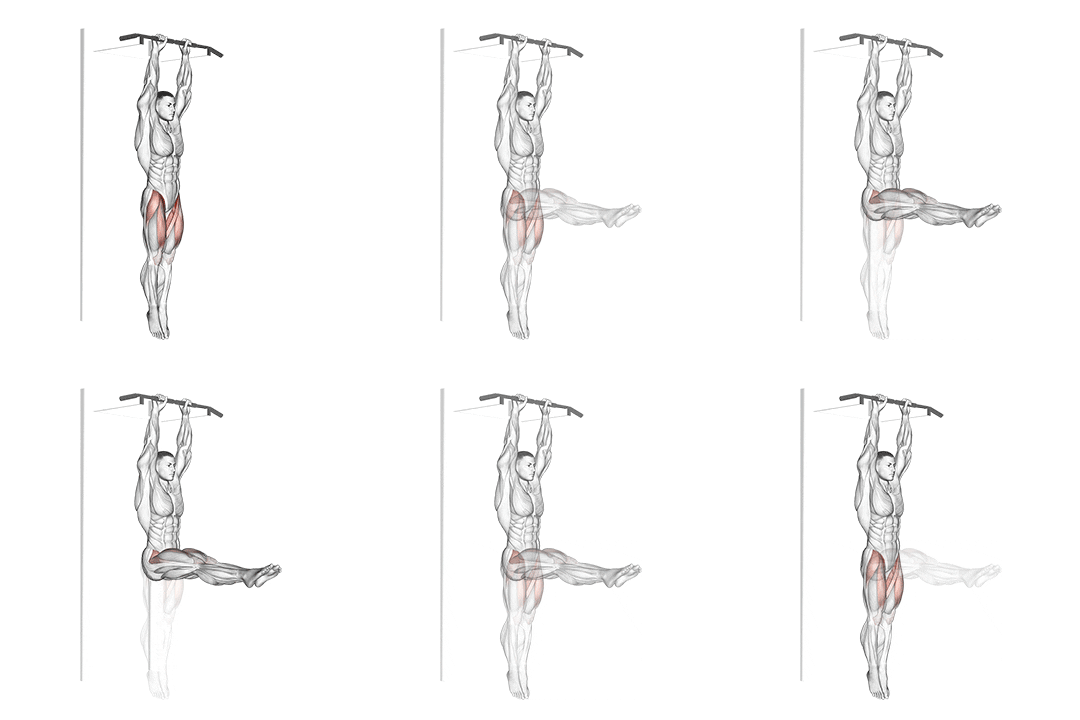
The hanging straight leg raise is an exercise that targets the lower abdominal muscles, hip flexors, and the muscles of the lower back. This exercise involves hanging from a bar or other stable overhead apparatus while lifting the legs in a controlled manner. Performing hanging straight leg raises helps strengthen the core, improve hip flexibility, and develop overall abdominal muscle definition. ## Instructions 1. Find a sturdy pull-up bar or overhead apparatus that can support your body weight. Ensure that it is secure and at a height that allows your legs to hang freely. 2. Stand underneath the bar and reach up to grip it with an overhand grip, slightly wider than shoulder-width apart. 3. Hang from the bar with your arms fully extended, ensuring your shoulders are relaxed and your core is engaged. 4. Keep your legs straight and together throughout the exercise. 5. Initiate the movement by engaging your core muscles and hip flexors. 6. Maintain a straight body position as you raise your legs upward, aiming to bring them as close to perpendicular to the floor as possible. 7. Focus on lifting your legs using your lower abdominal muscles, avoiding swinging or using momentum. 8. Pause briefly at the top of the movement, feeling the contraction in your lower abs. 9. Slowly lower your legs back down to the starting position with control, maintaining a controlled descent. 10. Repeat for the desired number of repetitions. ## Tips and Precautions - Keep your legs straight and together throughout the exercise to maximize the engagement of the lower abdominal muscles. - Engage your core muscles and focus on the contraction in your lower abs as you lift your legs. - Control the movement and avoid swinging or using momentum to lift your legs. - Start with a comfortable range of motion and gradually increase it as you become stronger and more flexible. - If you have any lower back issues or find it difficult to perform the exercise, consult with a fitness professional or modify the movement to a variation that suits your abilities. ## Variations - Hanging Knee Raise: If the hanging straight leg raise is too challenging, you can start with the hanging knee raise, where you bring your knees toward your chest while hanging. - Hanging Oblique Knee Raise: Instead of raising both legs together, perform the exercise by lifting one leg at a time, alternating sides. This targets the oblique muscles more specifically. ## Muscles Worked - Rectus Abdominis (six-pack muscles) - Lower Abdominals - Hip Flexors - Lower Back Muscles (Erector Spinae) ## Common Mistakes - Using momentum: Avoid swinging the legs or using momentum to lift them. Focus on controlled movements and engage the core muscles. - Arching the back excessively: Maintain a neutral spine position throughout the exercise. Avoid excessive arching of the lower back to prevent strain or injury. - Not fully extending the hips: Ensure that you fully extend your hips at the bottom of the movement before initiating the next repetition. This maximizes the engagement of the core muscles. ## Safety Precautions - Ensure that the bar or overhead apparatus is securely fixed and can support your body weight. - If you have any pre-existing conditions or injuries, consult with a healthcare professional or fitness expert before attempting the exercise. - Start with proper warm-up exercises to prepare your muscles for the movement. - If you experience any pain or discomfort during the exercise, particularly in the lower back, stop immediately and seek guidance from a qualified professional.
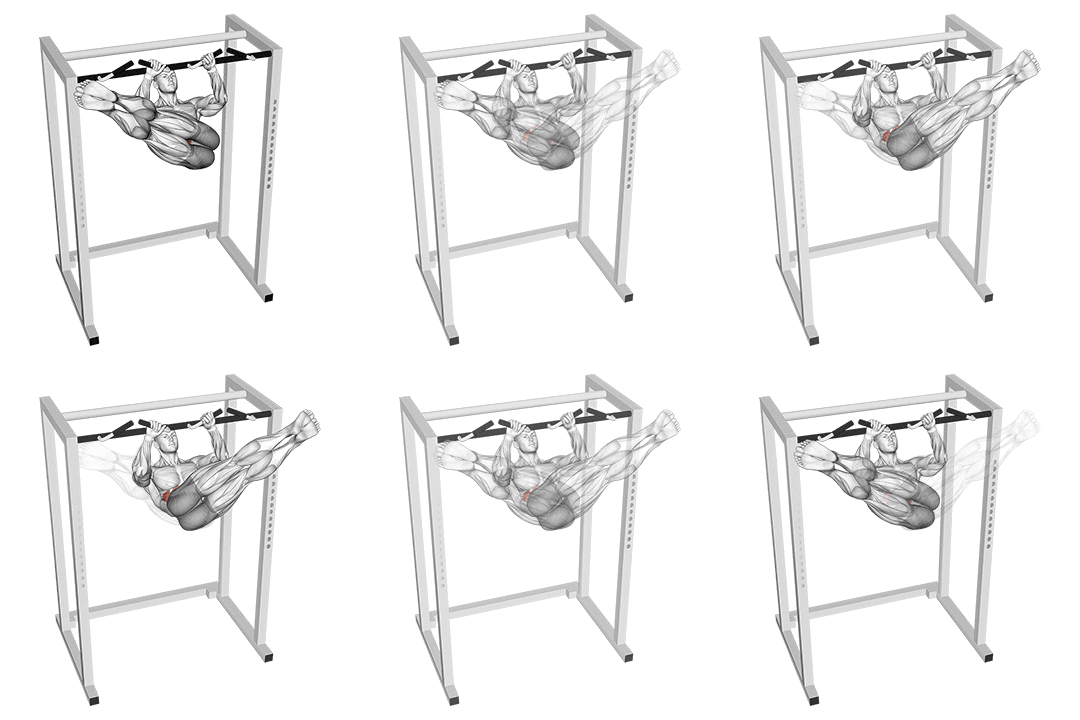
The hanging straight twisting leg hip raise is an advanced exercise that targets the lower abdominal muscles, obliques, hip flexors, and the muscles of the lower back. This exercise combines the straight leg hip raise with a twisting motion, adding an extra challenge and increased engagement of the oblique muscles. Performing hanging straight twisting leg hip raises helps strengthen and define the core muscles while improving hip mobility and stability. ## Instructions 1. Find a sturdy pull-up bar or overhead apparatus that can support your body weight. Ensure that it is secure and at a height that allows your legs to hang freely. 2. Stand underneath the bar and reach up to grip it with an overhand grip, slightly wider than shoulder-width apart. 3. Hang from the bar with your arms fully extended, ensuring your shoulders are relaxed and your core is engaged. 4. Keep your legs straight and together throughout the exercise. 5. Initiate the movement by engaging your core muscles and hip flexors. 6. As you raise your legs upward, twist your hips and legs to one side, bringing your legs toward your opposite shoulder. 7. Focus on lifting your legs using your lower abdominal muscles and obliques, avoiding swinging or using momentum. 8. Pause briefly at the top of the movement, feeling the contraction in your obliques. 9. Slowly lower your legs back down to the starting position with control, maintaining a controlled descent. 10. Repeat the exercise, this time twisting your hips and legs to the other side. 11. Alternate the twisting motion with each repetition. ## Tips and Precautions - Keep your legs straight and together throughout the exercise to maximize the engagement of the lower abdominal muscles and obliques. - Engage your core muscles and focus on the contraction in your lower abs and obliques as you lift and twist your legs. - Control the movement and avoid swinging or using momentum to lift your legs. - Start with a comfortable range of motion and gradually increase it as you become stronger and more flexible. - If you have any lower back issues or find it difficult to perform the exercise, consult with a fitness professional or modify the movement to a variation that suits your abilities. ## Variations - Hanging Knee Twist: If the hanging straight twisting leg hip raise is too challenging, you can modify the exercise by performing knee raises with a twisting motion instead of straight leg raises. - Hanging Windshield Wipers: This variation involves keeping the legs straight and together while lowering them from side to side without the twisting motion. ## Muscles Worked - Rectus Abdominis (six-pack muscles) - Obliques (Internal and External) - Lower Abdominals - Hip Flexors - Lower Back Muscles (Erector Spinae) ## Common Mistakes - Using momentum: Avoid swinging the legs or using momentum to lift and twist them. Focus on controlled movements and engage the core muscles. - Arching the back excessively: Maintain a neutral spine position throughout the exercise. Avoid excessive arching of the lower back to prevent strain or injury. - Not fully extending the hips: Ensure that you fully extend your hips at the bottom of the movement before initiating the next repetition. This maximizes the engagement of the core muscles. ## Safety Precautions - Ensure that the bar or overhead apparatus is securely fixed and can support your body weight. - If you have any pre-existing conditions or injuries, consult with a healthcare professional or fitness expert before attempting the exercise. - Start with proper warm-up exercises to prepare your muscles for the movement. - If you experience any pain or discomfort during the exercise, particularly in the lower back, stop immediately and seek guidance from a qualified professional.
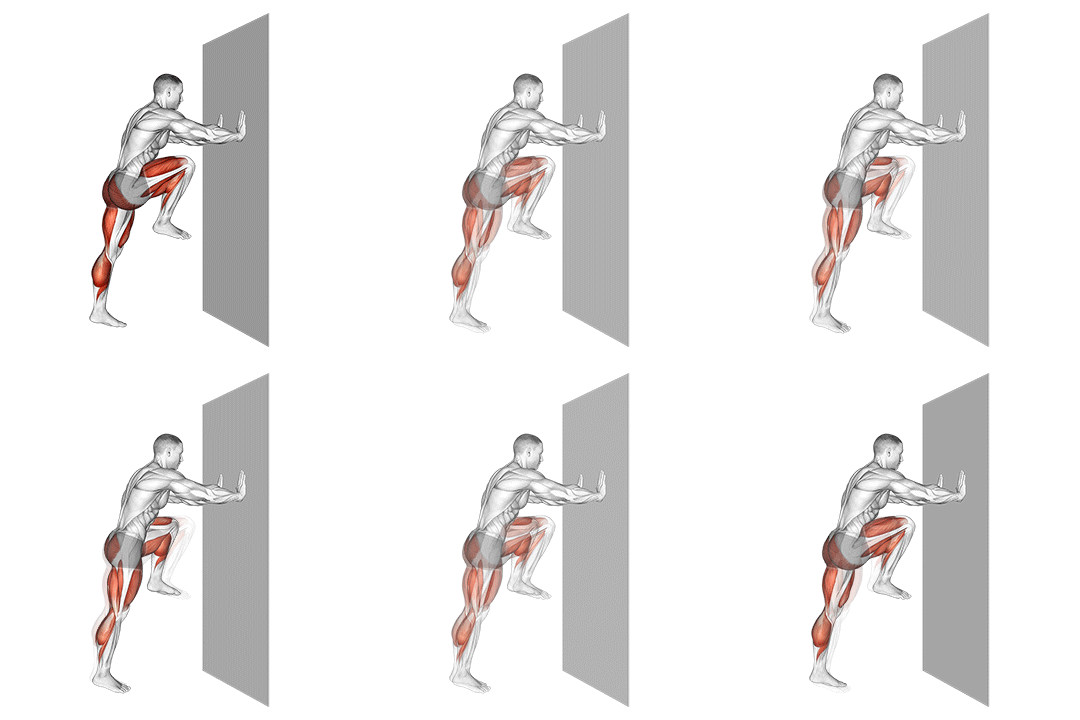
High knee against wall is an exercise that targets the lower body, specifically the quadriceps, hip flexors, and core muscles. This exercise involves lifting your knees up towards your chest while leaning against a wall for support. It helps improve lower body strength, stability, and cardiovascular endurance. ## Instructions 1. Stand facing a wall with your feet hip-width apart. 2. Lean forward slightly and place both hands on the wall for support. 3. Engage your core muscles to maintain stability and good posture throughout the exercise. 4. Lift your right knee up towards your chest as high as possible, while keeping the other foot planted on the ground. 5. Lower your right leg back down to the starting position and immediately lift your left knee up towards your chest. 6. Continue alternating between legs, performing a running motion against the wall. 7. Aim for a smooth and controlled movement, focusing on lifting your knees as high as you comfortably can. 8. Keep a brisk pace to increase the intensity of the exercise. 9. Repeat for the desired number of repetitions or time duration. ## Tips and Precautions - Keep your torso upright and avoid leaning too far forward or backward. - Engage your core muscles throughout the exercise to maintain stability and control. - Lift your knees as high as you comfortably can while maintaining good form. - Maintain a brisk pace to make the exercise more challenging and increase cardiovascular benefits. - If you have any knee or hip issues, perform the exercise with caution or consult with a healthcare professional before attempting it. ## Variations - High Knee March: Instead of performing a running motion, march in place while lifting your knees as high as possible. - High Knee Jogging: Perform the exercise by jogging in place, lifting your knees as high as possible with each step. - High Knee Running: Perform the exercise by running in place, lifting your knees as high as possible while maintaining a quick pace. ## Muscles Worked - Quadriceps (front thigh muscles) - Hip Flexors - Core Muscles (Abdominals, Obliques) ## Common Mistakes - Leaning too far forward or backward: Maintain an upright posture and avoid excessive leaning. - Not engaging the core: Keep your core muscles activated to stabilize your body and maintain good form. - Not lifting knees high enough: Focus on lifting your knees as high as you comfortably can to engage the targeted muscles effectively. ## Safety Precautions - Ensure that the wall is sturdy and can provide support during the exercise. - If you have any pre-existing conditions or injuries, consult with a healthcare professional or fitness expert before attempting the exercise. - Start with a gentle warm-up before performing high knee against wall to prepare your muscles for the movement. - Listen to your body and perform the exercise at a comfortable pace and range of motion. - If you experience any pain or discomfort during the exercise, stop immediately and seek guidance from a qualified professional.
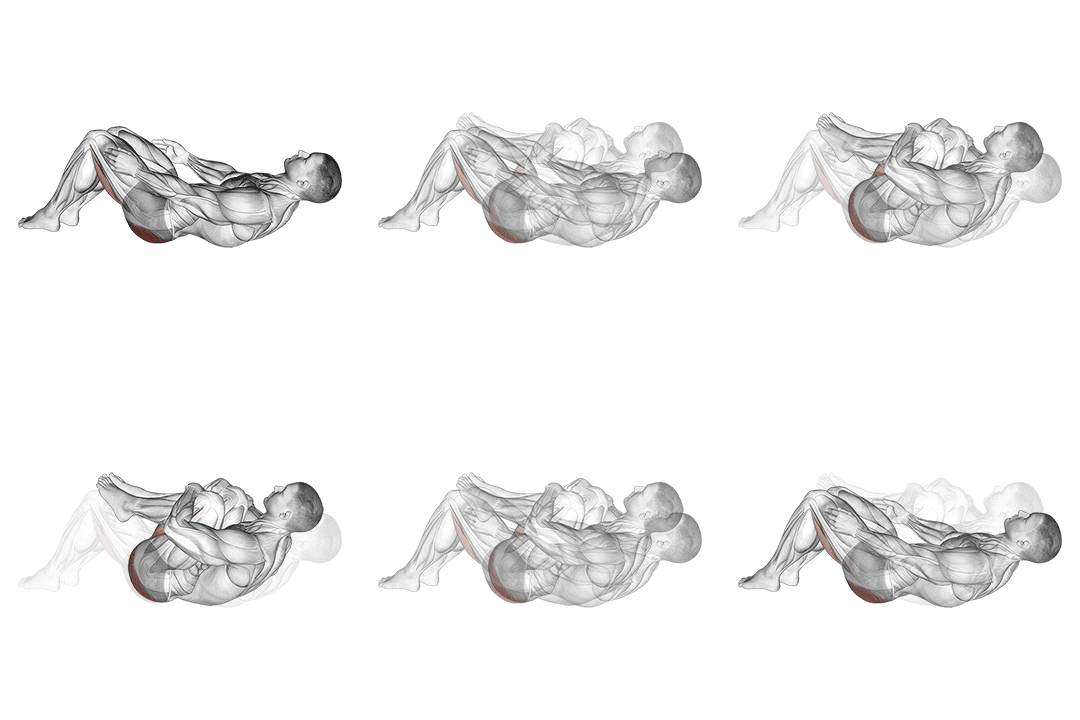
The hug knees to chest exercise is a simple yet effective movement that targets the abdominal muscles, particularly the rectus abdominis, as well as the hip flexors. It involves bringing both knees up towards the chest while lying on your back. This exercise helps improve core strength, flexibility, and mobility. ## Instructions 1. Start by lying flat on your back on a comfortable surface, such as a mat or the floor. 2. Extend your legs out straight and relax your arms by your sides. 3. Take a deep breath in. 4. As you exhale, engage your abdominal muscles and lift both knees up towards your chest. 5. Wrap your arms around your knees and gently hug them, providing a gentle pressure. 6. Maintain the position for a few seconds while focusing on the contraction in your abs. 7. Inhale and slowly release the hug, lowering your legs back down to the starting position. 8. Repeat the movement for the desired number of repetitions. ## Tips and Precautions - Keep your movements slow and controlled throughout the exercise. - Maintain proper breathing by inhaling deeply before starting the movement and exhaling as you lift your knees. - Focus on engaging your abdominal muscles to initiate the movement and avoid relying solely on momentum. - If you have lower back issues, use a mat or folded towel to provide some cushioning and support. - Start with a comfortable range of motion and gradually increase it as you become more comfortable and flexible. ## Variations - Single Leg Hug: Instead of hugging both knees to your chest, you can perform the exercise with one leg at a time, while keeping the other leg extended. - Hug with Rotation: After hugging your knees to your chest, you can add a rotation by gently twisting your torso from side to side while maintaining the hug position. ## Muscles Worked - Rectus Abdominis (six-pack muscles) - Hip Flexors ## Common Mistakes - Using momentum: Avoid using momentum to swing your legs up. Focus on controlled movements and engage your abdominal muscles to lift your knees. - Allowing the lower back to arch excessively: Maintain a neutral spine position throughout the exercise. Avoid excessive arching of the lower back to prevent strain or discomfort. - Not fully engaging the abdominal muscles: Make sure to actively engage your core muscles and feel the contraction in your abs as you lift your knees. ## Safety Precautions - If you have any pre-existing conditions or injuries, consult with a healthcare professional or fitness expert before attempting the exercise. - Perform the exercise on a comfortable surface, such as a mat, to provide cushioning and support for your back. - If you experience any pain or discomfort during the exercise, particularly in the lower back, stop immediately and seek guidance from a qualified professional.
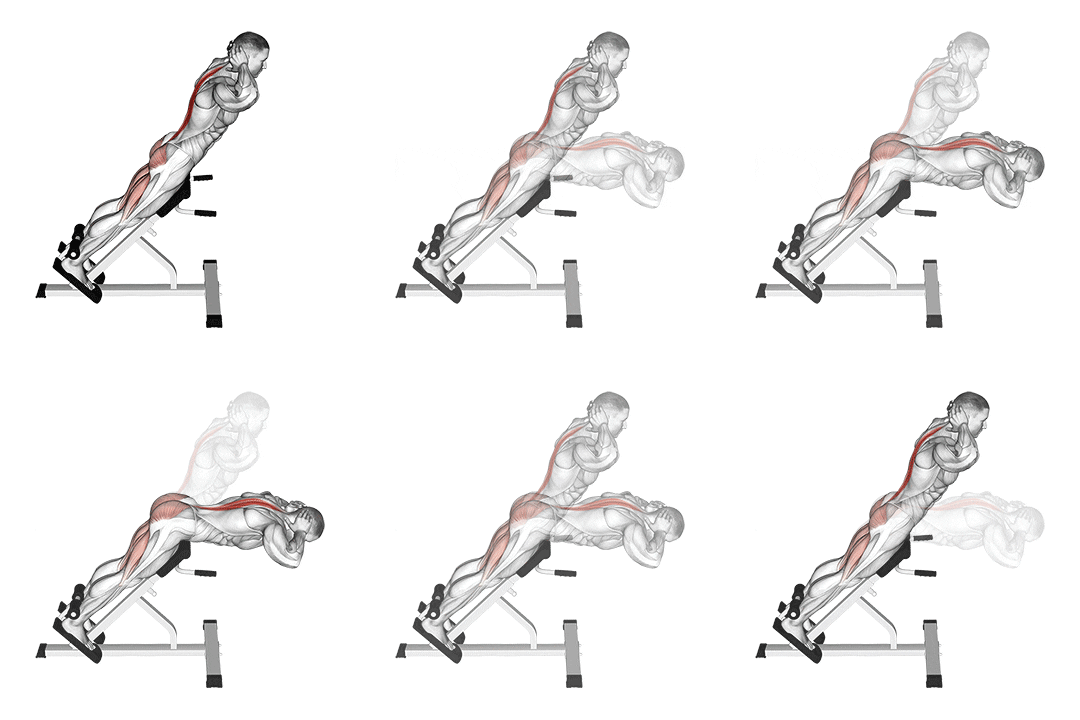
The hyperextension exercise is a strength training exercise that primarily targets the muscles of the lower back, particularly the erector spinae muscles. It also engages the glutes and hamstrings to a lesser extent. The exercise involves extending the spine against resistance, which helps strengthen the muscles responsible for spinal stability and proper posture. ## Instructions 1. Start by positioning yourself on a hyperextension bench or Roman chair. Adjust the equipment according to your height, ensuring that your hips are resting comfortably on the pad and your feet are secured under the footpads. 2. Position your body so that your upper thighs and hips are resting on the bench, and your upper body is free to move. 3. Cross your arms in front of your chest or place your hands behind your head, whichever is more comfortable for you. 4. Engage your core muscles and maintain a neutral spine throughout the exercise. 5. Slowly lower your upper body towards the floor while keeping your back straight. Allow your torso to descend until you feel a stretch in your lower back. 6. Begin the upward movement by contracting your lower back muscles. Lift your torso back up to the starting position, making sure not to hyperextend your back at the top. 7. Repeat for the desired number of repetitions. ## Variations - Beginner Variation: If you're new to the exercise or have lower back issues, you can perform the exercise without any additional resistance. Focus on mastering the movement and gradually increase the intensity as you become more comfortable. - Advanced Variation: For an added challenge, you can hold a weight plate or dumbbell against your chest while performing the exercise. Make sure to choose a weight that allows you to maintain proper form throughout the movement. ## Muscles Worked - Primary muscles: Erector spinae (lower back muscles) - Secondary muscles: Glutes (butt muscles), hamstrings ## Common Mistakes - Rounding the back: Avoid rounding your back during the exercise, as it can strain the lower back and increase the risk of injury. Keep your spine neutral and maintain good posture throughout the movement. - Hyperextending at the top: While it's called a hyperextension exercise, it's important not to overextend your back at the top of the movement. Focus on a controlled range of motion and avoid excessive arching. - Using momentum: Do not rely on momentum to lift your torso up. Use the muscles of your lower back to perform the movement and avoid any jerking or swinging motions. ## Safety Precautions - If you have a history of lower back pain or any spinal issues, it's advisable to consult with a healthcare professional or a qualified fitness trainer before attempting this exercise. - Start with lighter resistance or bodyweight only, and gradually increase the intensity as you gain strength and confidence. - Engage your core muscles throughout the exercise to provide stability and support for your lower back. - If you experience any pain or discomfort during the exercise, stop immediately and consult a professional.
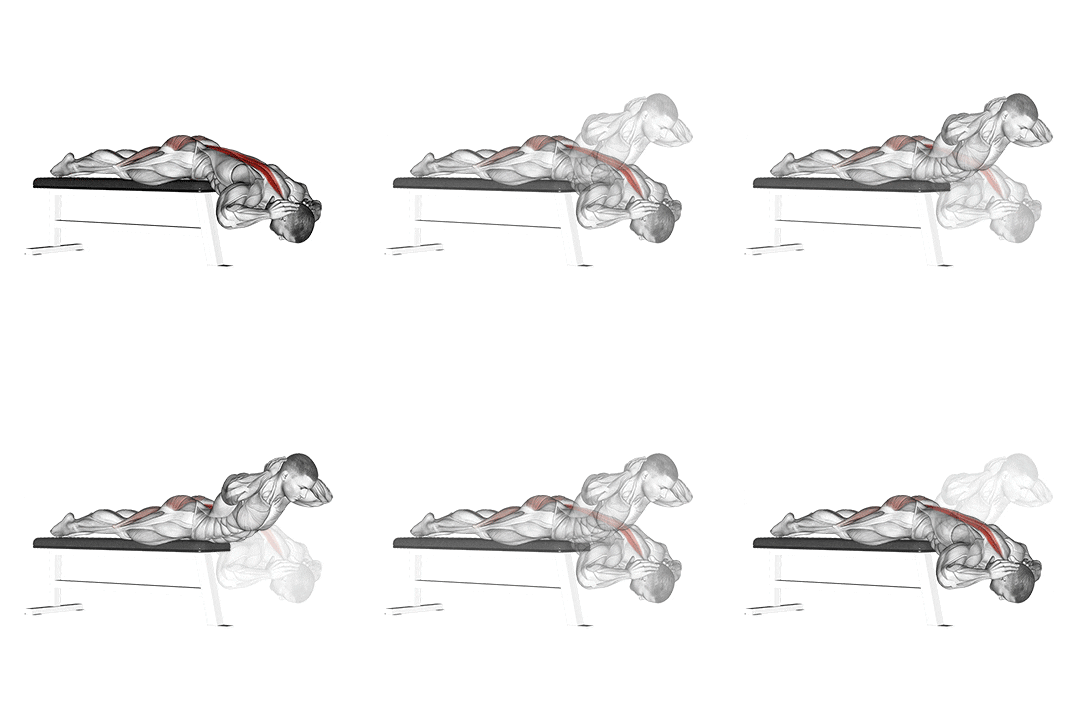
The hyperextension exercise on a bench is a strength training exercise that primarily targets the muscles of the lower back, including the erector spinae. This exercise also engages the glutes, hamstrings, and core muscles. It involves extending the spine against resistance, helping to strengthen the muscles responsible for spinal stability and promoting good posture. ## Instructions 1. Position yourself on a hyperextension bench with your upper thighs and hips resting on the pad and your feet securely placed under the footpads. 2. Cross your arms in front of your chest or place your hands behind your head, whichever is more comfortable for you. 3. Engage your core muscles and maintain a neutral spine throughout the exercise. 4. Slowly lower your upper body towards the floor while keeping your back straight. Descend until you feel a stretch in your lower back, but avoid excessive rounding or hyperextension. 5. Engage your lower back muscles and squeeze your glutes to lift your upper body back up to the starting position. 6. Repeat the movement for the desired number of repetitions. ## Variations - Beginner Variation: If you're new to this exercise, you can start by using just your body weight or very light resistance. Focus on mastering the movement and gradually increase the difficulty over time. - Advanced Variation: To increase the challenge, you can hold a weight plate or dumbbell against your chest during the exercise. Ensure you maintain proper form and choose a weight that challenges you without compromising your technique. ## Muscles Worked - Primary muscles: Erector spinae (lower back muscles) - Secondary muscles: Glutes (butt muscles), hamstrings, core muscles ## Common Mistakes - Rounding the back: Avoid rounding your back during the exercise, as it can strain the lower back and increase the risk of injury. Keep your spine neutral and maintain good posture throughout the movement. - Hyperextending at the top: While it's called a hyperextension exercise, it's important not to overextend your back at the top of the movement. Focus on a controlled range of motion and avoid excessive arching. - Using momentum: Do not rely on momentum to lift your torso up. Use the muscles of your lower back and glutes to perform the movement, and avoid any jerking or swinging motions. ## Safety Precautions - If you have a history of lower back pain or any spinal issues, it's advisable to consult with a healthcare professional or a qualified fitness trainer before attempting this exercise. - Start with lighter resistance or bodyweight only, and gradually increase the intensity as you gain strength and confidence. - Engage your core muscles throughout the exercise to provide stability and support for your lower back. - If you experience any pain or discomfort during the exercise, stop immediately and consult a professional. - Use proper form and control throughout the movement to minimize the risk of injury.