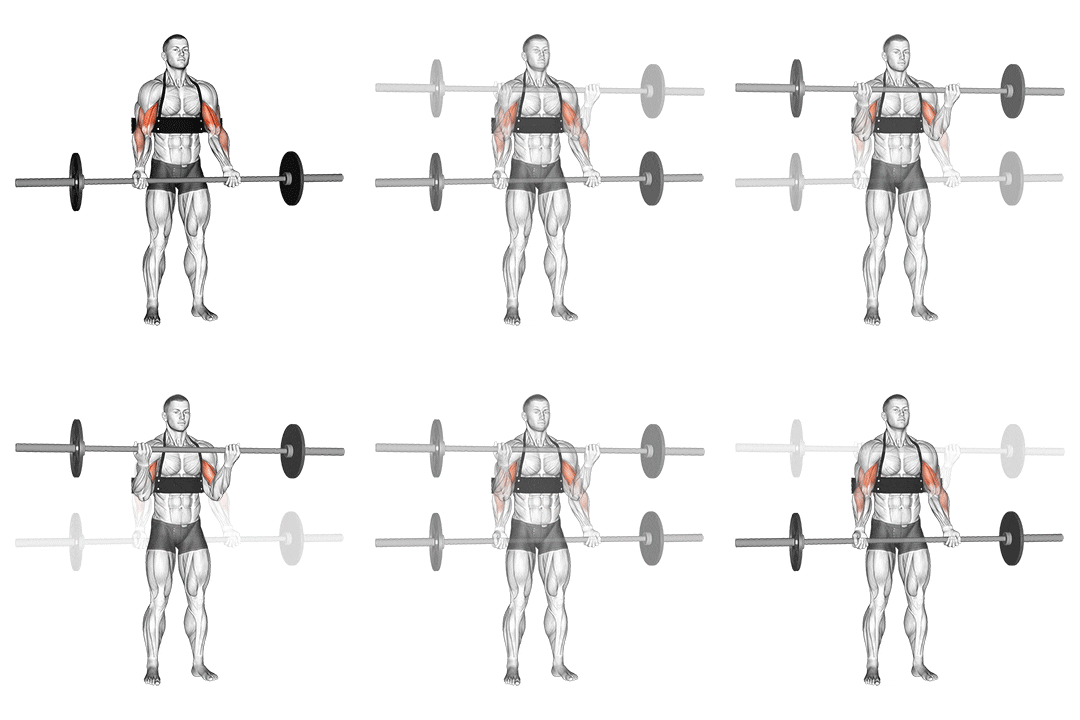
The barbell biceps curl with an arm blaster is an isolation exercise that specifically targets the biceps muscles. It involves using a barbell with an arm blaster, a device that helps stabilize the elbows and isolate the biceps, allowing for a more focused and intense biceps workout. This exercise is effective for developing strength and size in the biceps. ## Instructions 1. Stand up straight and place the arm blaster around your upper arms, positioning it just above the elbows. Adjust the arm blaster straps to ensure a snug and secure fit. 2. Hold a barbell with an underhand grip (palms facing up), slightly wider than shoulder-width apart. Allow your arms to fully extend down in front of your body. This is your starting position. 3. Keep your upper arms locked against the arm blaster throughout the exercise to isolate the biceps. 4. Without moving your upper arms, exhale and curl the barbell upward by contracting your biceps. Continue curling until your forearms are fully contracted and the barbell is at shoulder level. 5. Hold the contracted position for a brief pause, squeezing your biceps. 6. Inhale and slowly lower the barbell back to the starting position, fully extending your arms. 7. Repeat the exercise for the recommended number of repetitions. ## Variations - Dumbbell Biceps Curl: If a barbell is not available, you can perform this exercise with dumbbells. Hold a dumbbell in each hand, palms facing up, and follow the same instructions. - EZ Bar Biceps Curl: An EZ bar, which has a zigzag shape, can be used instead of a straight barbell. The grip on the EZ bar can help reduce wrist strain and provide a more comfortable curling motion. - Preacher Curl with Arm Blaster: Instead of performing standing curls, you can use an arm blaster with a preacher curl bench. Sit on the preacher curl bench, place your upper arms against the arm pad, and follow the same curling motion with the arm blaster. ## Muscles Worked - Primary muscles: Biceps brachii (short and long heads) - Secondary muscles: Brachialis, brachioradialis, forearm muscles (as stabilizers) ## Common Mistakes - Using excessive momentum: Avoid swinging or using momentum to lift the barbell. Focus on slow and controlled movements, emphasizing the contraction of the biceps. - Allowing the shoulders to move: Keep your upper arms locked against the arm blaster throughout the exercise. Minimize shoulder movement to isolate the biceps. - Using improper grip or hand placement: Maintain a firm grip on the barbell with your palms facing up. Avoid gripping the barbell too tightly or too wide, as it may strain the wrists or engage other muscle groups excessively. ## Safety Precautions - Warm up: Prior to starting the exercise, warm up your biceps with dynamic stretches or light cardio to increase blood flow and prepare the muscles. - Choose an appropriate weight: Select a weight that challenges your biceps without compromising your form. Gradually increase the weight as your strength improves. - Use proper form and technique: Focus on maintaining good posture throughout the exercise. Keep your core engaged, shoulders back, and avoid excessive leaning or swaying. - Start with lighter weights: If you are new to this exercise or have any existing biceps or elbow issues, it's recommended to start with lighter weights and gradually progress to heavier weights to minimize the risk of injury. - If you experience any pain or discomfort during the exercise, stop immediately and consult with a fitness professional or healthcare provider.
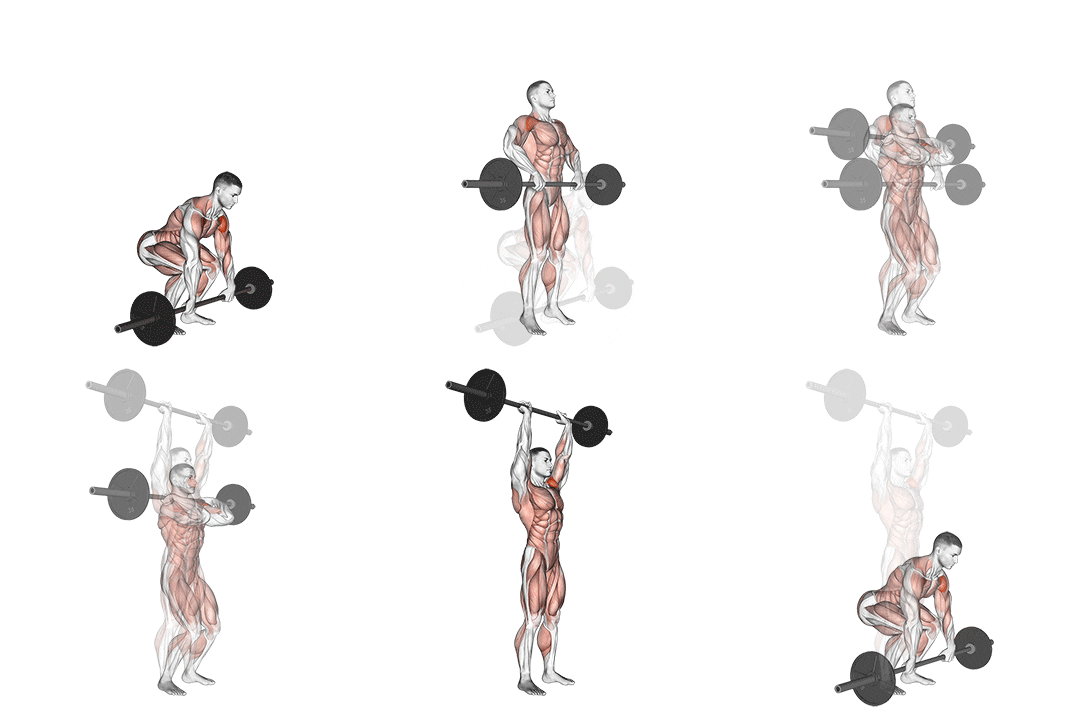
The barbell clean and press is a compound exercise that targets multiple muscle groups, including the shoulders, upper back, legs, and core. It combines a power clean, which involves lifting the barbell from the floor to the shoulders, with an overhead press, where the weight is pressed overhead. This exercise helps develop total body strength, power, and coordination. ## Instructions 1. Stand with your feet shoulder-width apart, toes pointing slightly outward. Place a barbell on the floor in front of you. 2. Bend your knees and hips, keeping your back straight, and grip the barbell with an overhand grip slightly wider than shoulder-width apart. Your shoulders should be directly above or slightly in front of the barbell. 3. In one explosive movement, extend your knees and hips, driving the barbell upward while keeping it close to your body. As the barbell reaches hip level, quickly pull yourself under it by bending your elbows and raising your shoulders. 4. Catch the barbell on the front of your shoulders in a front rack position. Your elbows should be high, and your upper arms should be parallel to the ground. 5. From the front rack position, press the barbell overhead by fully extending your arms, while keeping your core engaged and maintaining proper form. 6. Lower the barbell back down to the front rack position and then lower it to the starting position on the floor in a controlled manner. 7. Repeat the exercise for the recommended number of repetitions. ## Variations - Dumbbell Clean and Press: If a barbell is not available, you can perform the exercise with dumbbells. Hold a dumbbell in each hand and follow the same instructions. - Kettlebell Clean and Press: Use kettlebells instead of a barbell. Hold a kettlebell in each hand, perform a clean to bring them to the rack position, and then press them overhead. - Push Press: If you find it challenging to press the weight overhead after the clean, you can perform a push press. Use a slight dip and leg drive to assist in pressing the weight overhead. ## Muscles Worked - Primary muscles: Deltoids (shoulders), trapezius (upper back), quadriceps (thighs), glutes (buttocks), erector spinae (lower back) - Secondary muscles: Triceps brachii (arms), core muscles (abdominals, obliques), hamstrings (back of thighs) ## Common Mistakes - Rounded back during the clean: Maintain a neutral spine throughout the exercise. Avoid rounding your back during the initial lift from the floor. Keep your chest up and engage your core to protect your lower back. - Lack of explosiveness: The clean portion of the exercise should be explosive. Generate power from your lower body and use the momentum to drive the barbell upward. - Pressing with excessive back arch: While pressing the barbell overhead, avoid excessive arching of the lower back. Maintain a strong core and engage your glutes to maintain a stable and safe position. ## Safety Precautions - Start with light weights: Master the technique before increasing the weight. Proper form is essential for performing this exercise safely and effectively. - Warm up: Prior to starting the exercise, warm up your entire body with dynamic stretches or light cardio to increase blood flow and prepare the muscles. - Use proper grip and wrist alignment: Maintain a secure grip on the barbell with your wrists in a neutral position. Avoid excessive bending or hyperextension of the wrists, which can lead to strain or injury. - Clear lifting area: Ensure you have sufficient space around you to perform the exercise safely, free from any obstacles or other individuals. - If you
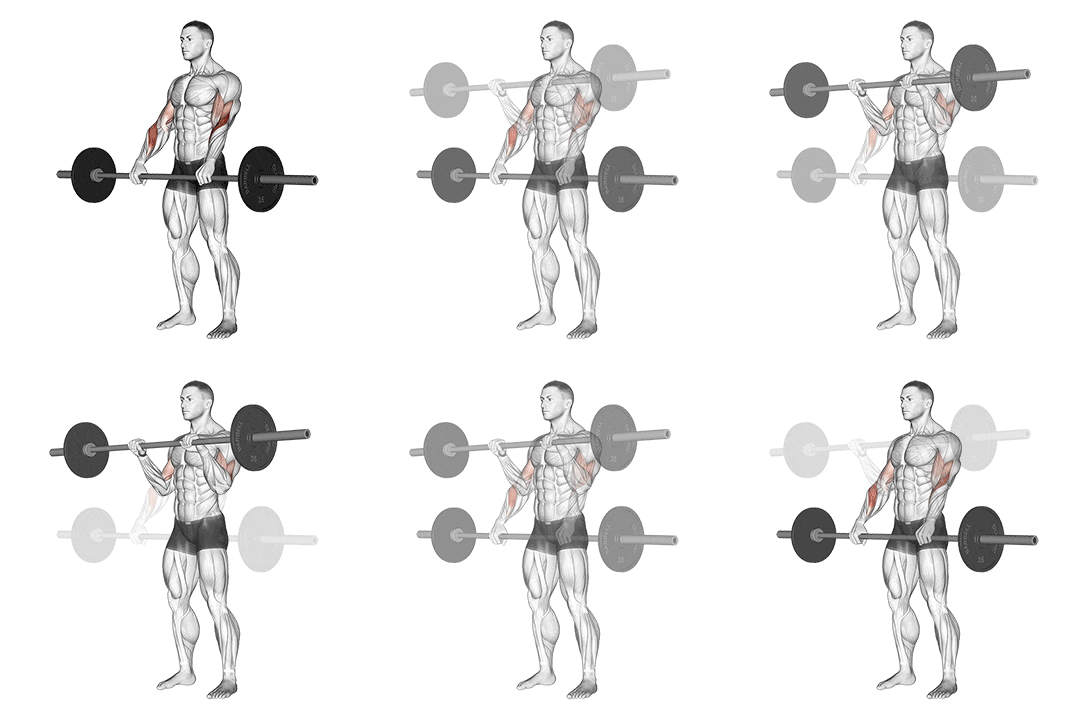
The barbell reverse curl is an exercise that primarily targets the muscles of the forearms, specifically the brachioradialis and the biceps brachii. This exercise involves flexing the elbows while holding a barbell with an overhand grip (palms facing down). It helps develop forearm strength, grip strength, and overall arm aesthetics. ## Instructions 1. Stand with your feet shoulder-width apart and hold a barbell with an overhand grip, hands slightly wider than shoulder-width apart. 2. Let your arms hang naturally at your sides, with the barbell in front of your thighs. 3. Keep your back straight, chest up, and engage your core for stability. 4. With your elbows close to your sides, exhale and curl the barbell upward by flexing your forearms. 5. Continue curling until the barbell is near shoulder level, maintaining control and keeping your wrists in a neutral position. 6. At the top of the movement, squeeze your forearms and biceps, and pause briefly to maximize muscle contraction. 7. In a controlled manner, inhale and lower the barbell back to the starting position, fully extending your arms. 8. Repeat the movement for the desired number of repetitions. ## Variations - Dumbbell Reverse Curl: This exercise can be performed using dumbbells instead of a barbell, allowing for more independent movement of each arm and a different grip orientation. - EZ-Bar Reverse Curl: Use an EZ-bar (a curved barbell) to perform the reverse curl. The EZ-bar can provide a more comfortable grip and put less strain on the wrists. - Cable Reverse Curl: Attach a straight bar handle to a low cable pulley and perform the reverse curl motion while standing or sitting. This variation provides constant tension throughout the movement. ## Muscles Worked The barbell reverse curl primarily targets the following muscles: - Brachioradialis (forearms) - Biceps brachii (outer head) ## Common Mistakes - Swinging or using momentum: Avoid using your upper body or hips to generate momentum and swing the barbell. Keep the movement controlled and isolate the muscles of the forearms and biceps. - Allowing the wrists to flex: Keep your wrists in a neutral position throughout the exercise. Avoid excessive flexion or extension of the wrists, as this can put strain on the joint. - Not maintaining proper form: Keep your back straight, chest up, and elbows close to your sides. Avoid leaning back or arching the lower back during the movement. ## Safety Precautions - Start with a light weight and gradually increase it as your strength improves. - Use an appropriate grip that feels comfortable and secure for your wrists and hands. - Avoid lifting excessive weight that compromises your form and puts unnecessary strain on your wrists and forearms. - If you have any pre-existing wrist or forearm injuries, it's advisable to consult with a healthcare professional before attempting this exercise. - Warm up your wrists and forearms before performing this exercise to reduce the risk of injury. - If you experience any pain or discomfort during the exercise, stop immediately and seek guidance from a fitness professional or healthcare provider.
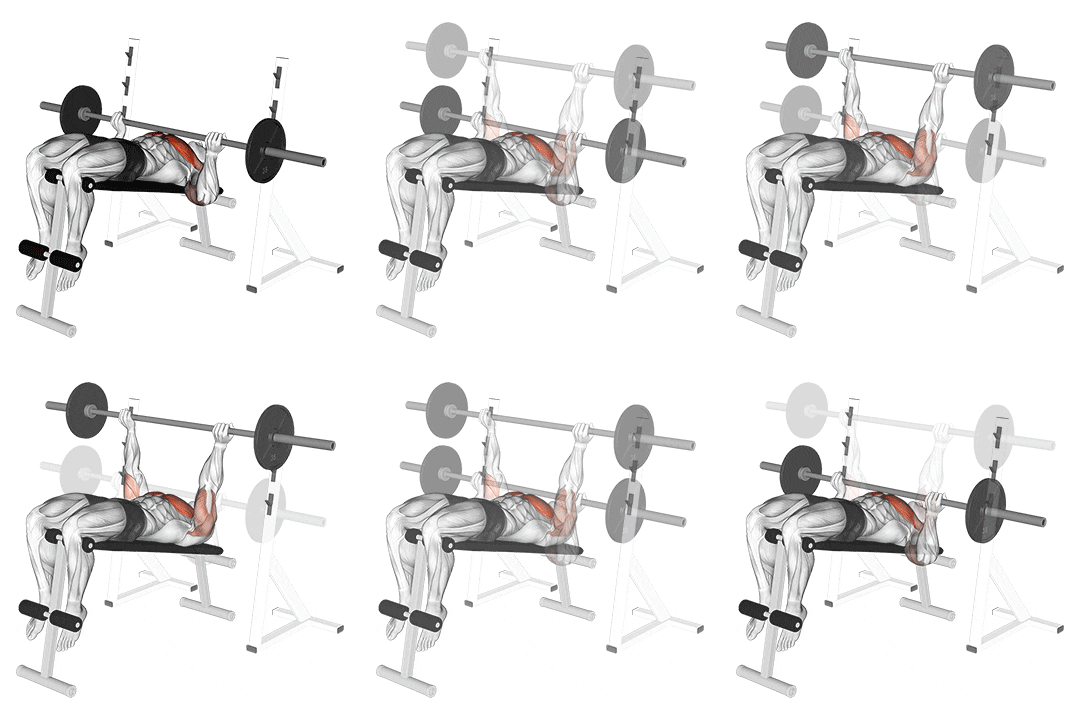
The barbell reverse grip decline bench press is a variation of the bench press exercise that targets the lower chest, triceps, and shoulders. By using a reverse grip (palms facing up) and performing the exercise on a decline bench, the emphasis is placed on the lower portion of the chest. This exercise helps to develop strength and size in the chest muscles, particularly the lower pecs. ## Instructions 1. Set up a decline bench at an angle of around 30-45 degrees. 2. Lie down on the bench with your feet secured under the foot pads or by placing them flat on the floor. 3. Grasp the barbell with a reverse grip, with your palms facing up and your hands slightly wider than shoulder-width apart. 4. Lift the barbell off the rack or have a spotter hand it to you. 5. Lower the barbell slowly and under control towards the lower part of your chest, allowing your elbows to flare out slightly. 6. Pause briefly when the barbell lightly touches your chest. 7. Push the barbell back up by extending your arms, focusing on using your chest muscles to drive the movement. 8. Exhale as you press the barbell back to the starting position. 9. Repeat the movement for the desired number of repetitions. ## Variations - Dumbbell Reverse Grip Decline Bench Press: Instead of using a barbell, you can perform the exercise with dumbbells. This allows for a greater range of motion and independent movement of each arm. - Machine Reverse Grip Decline Press: If available, you can use a decline chest press machine that allows you to perform the exercise with a reverse grip. The machine provides stability and can be helpful for beginners or individuals with limited equipment. ## Muscles Worked The barbell reverse grip decline bench press primarily targets the following muscles: - Lower chest (pectoralis major, sternal fibers) - Triceps (long head) - Anterior deltoids (shoulders) ## Common Mistakes - Using excessive weight: Start with a weight that allows you to maintain proper form and control. Using too much weight can compromise your technique and increase the risk of injury. - Flaring the elbows too much: While it's natural for the elbows to flare out slightly during this exercise, avoid excessively flaring them, as it can strain the shoulder joint. Keep the elbows in a comfortable and controlled position. - Arching the back excessively: Maintain a neutral spine and avoid excessive arching of the back. Keep your core engaged and your back in contact with the bench for stability. ## Safety Precautions - Use a spotter or perform this exercise within a power rack with safety pins set at an appropriate height to catch the barbell if needed. - Warm up properly before attempting heavy lifts to prepare your muscles and joints. - Maintain control throughout the exercise. Avoid bouncing the barbell off your chest or using momentum to lift the weight. - If you have any pre-existing shoulder or elbow injuries, it's advisable to consult with a healthcare professional before attempting this exercise. - Listen to your body and stop the exercise if you experience any pain or discomfort. - Ensure that the decline bench is securely set and stable before performing the exercise.
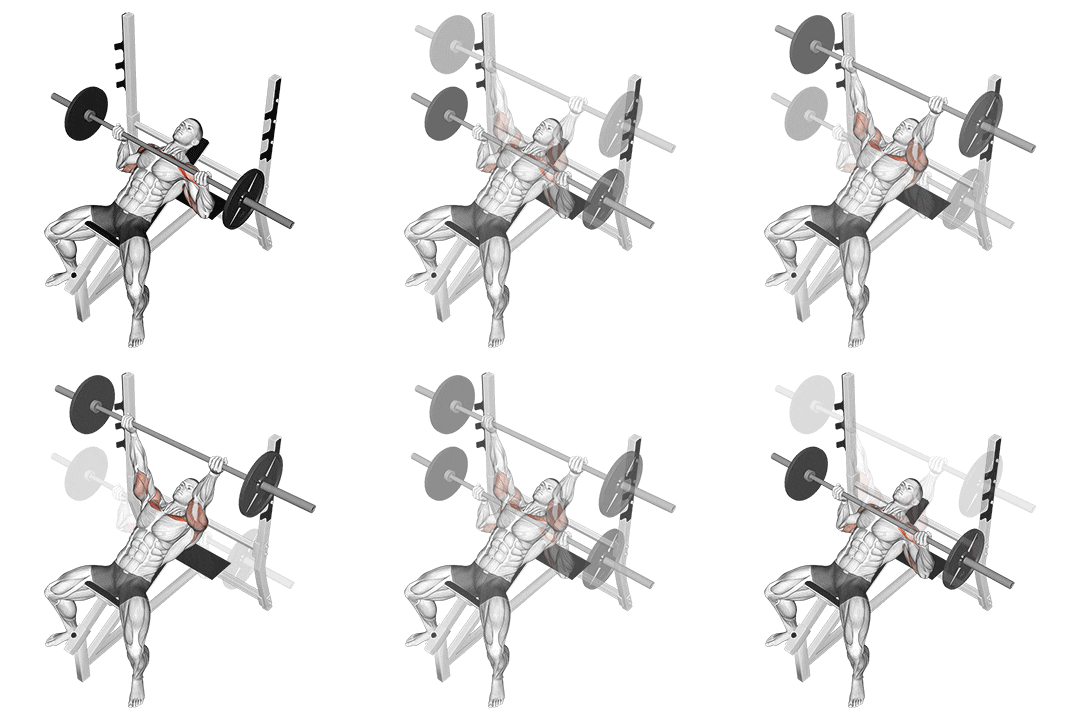
The barbell reverse grip incline bench press is an exercise that targets the upper chest, shoulders, and triceps. By using a reverse grip (palms facing up) and performing the exercise on an incline bench, the emphasis is placed on the upper portion of the chest. This exercise helps to develop strength and size in the upper chest muscles, contributing to a well-rounded and balanced upper body. ## Instructions 1. Set up an incline bench at an angle of around 30-45 degrees. 2. Sit on the incline bench with your feet planted firmly on the floor. 3. Grasp the barbell with a reverse grip, with your palms facing up and your hands slightly wider than shoulder-width apart. 4. Lift the barbell off the rack or have a spotter hand it to you. 5. Lower the barbell slowly and under control towards the upper part of your chest, allowing your elbows to flare out slightly. 6. Pause briefly when the barbell lightly touches your chest. 7. Push the barbell back up by extending your arms, focusing on using your chest muscles to drive the movement. 8. Exhale as you press the barbell back to the starting position. 9. Repeat the movement for the desired number of repetitions. ## Variations - Dumbbell Reverse Grip Incline Bench Press: Instead of using a barbell, you can perform the exercise with dumbbells. This allows for a greater range of motion and independent movement of each arm. - Machine Reverse Grip Incline Press: If available, you can use an incline chest press machine that allows you to perform the exercise with a reverse grip. The machine provides stability and can be helpful for beginners or individuals with limited equipment. ## Muscles Worked The barbell reverse grip incline bench press primarily targets the following muscles: - Upper chest (pectoralis major, clavicular fibers) - Anterior deltoids (shoulders) - Triceps (long head) ## Common Mistakes - Using excessive weight: Start with a weight that allows you to maintain proper form and control. Using too much weight can compromise your technique and increase the risk of injury. - Flaring the elbows too much: While it's natural for the elbows to flare out slightly during this exercise, avoid excessively flaring them, as it can strain the shoulder joint. Keep the elbows in a comfortable and controlled position. - Arching the back excessively: Maintain a neutral spine and avoid excessive arching of the back. Keep your core engaged and your back in contact with the bench for stability. ## Safety Precautions - Use a spotter or perform this exercise within a power rack with safety pins set at an appropriate height to catch the barbell if needed. - Warm up properly before attempting heavy lifts to prepare your muscles and joints. - Maintain control throughout the exercise. Avoid bouncing the barbell off your chest or using momentum to lift the weight. - If you have any pre-existing shoulder or elbow injuries, it's advisable to consult with a healthcare professional before attempting this exercise. - Listen to your body and stop the exercise if you experience any pain or discomfort. - Ensure that the incline bench is securely set and stable before performing the exercise.
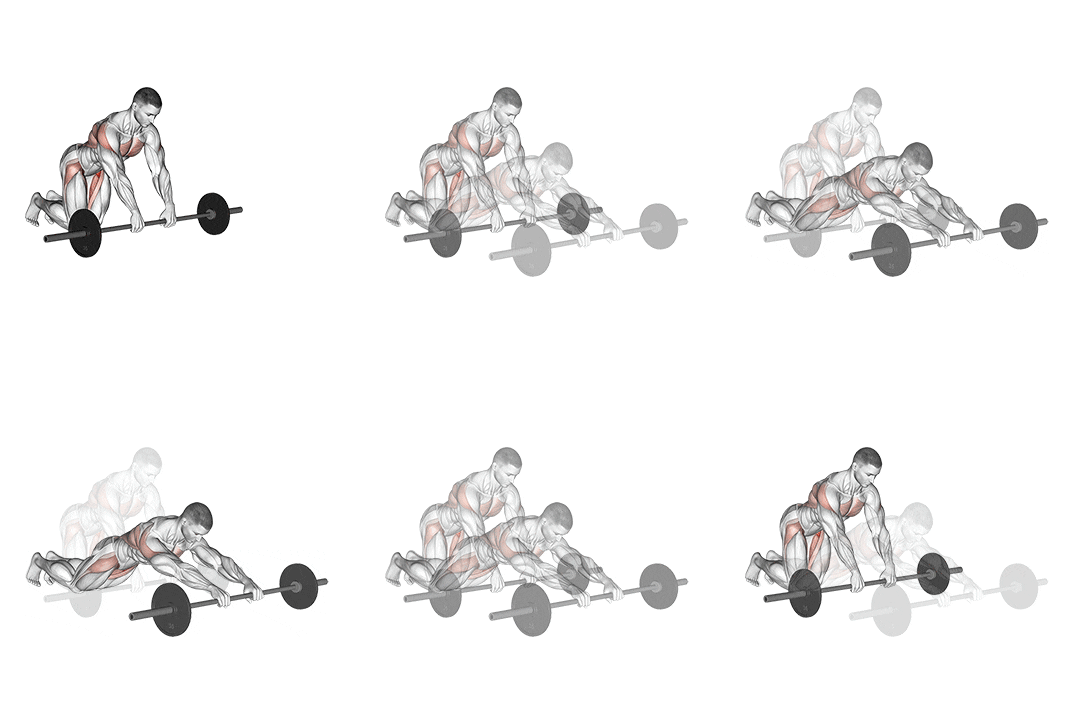
The barbell rollout is an advanced core exercise that targets the abdominal muscles, particularly the rectus abdominis (six-pack muscles), as well as the obliques and the deep stabilizing muscles of the core. It involves extending the body forward from a kneeling position while holding onto a barbell, and then retracting back to the starting position using the core muscles. ## Instructions 1. Start by kneeling on the floor or on a mat with your knees hip-width apart. 2. Position a barbell on the floor in front of you and grasp it with an overhand grip, slightly wider than shoulder-width apart. 3. Engage your core muscles and maintain a neutral spine position throughout the exercise. 4. Begin the movement by slowly rolling the barbell forward, allowing your body to extend along with it. Keep your arms straight and your shoulders down. 5. Continue rolling the barbell forward until you feel a stretch in your abdominal muscles or until your body is almost fully extended. 6. Pause briefly in the extended position, then slowly retract by using your core muscles to pull the barbell back towards your knees. 7. Keep the movement controlled and avoid sagging or arching your lower back. 8. Return to the starting position by pulling the barbell back as far as you comfortably can while maintaining proper form. 9. Repeat for the desired number of repetitions. ## Variations - **Elevated Barbell Rollout**: Perform the exercise with the barbell placed on an elevated surface, such as a weight plate or a stability ball, to increase the range of motion and difficulty. - **Ab Wheel Rollout**: If a barbell is not available, you can use an ab wheel or an exercise wheel with handles to perform a similar movement. ## Muscles Worked - Rectus abdominis (six-pack muscles) - Obliques - Transverse abdominis - Deep stabilizing muscles of the core ## Common Mistakes - **Using momentum**: Avoid using momentum or relying solely on the arms to roll the barbell. The movement should be controlled and driven by the core muscles. - **Overarching or sagging the back**: Maintain a neutral spine throughout the exercise. Avoid arching your lower back or allowing it to sag. - **Insufficient core engagement**: Remember to engage your core muscles throughout the movement. This will help stabilize your body and maximize the effectiveness of the exercise. ## Safety Precautions - If you have any pre-existing back or shoulder issues, it's advisable to consult with a qualified fitness professional or healthcare provider before attempting the barbell rollout. - Start with a lighter weight or progression, and gradually increase the load as you become comfortable with the exercise. - Avoid performing the barbell rollout on a hard or slippery surface. Use a mat or an exercise mat to provide cushioning and stability. - Listen to your body and stop the exercise if you experience any pain or discomfort.
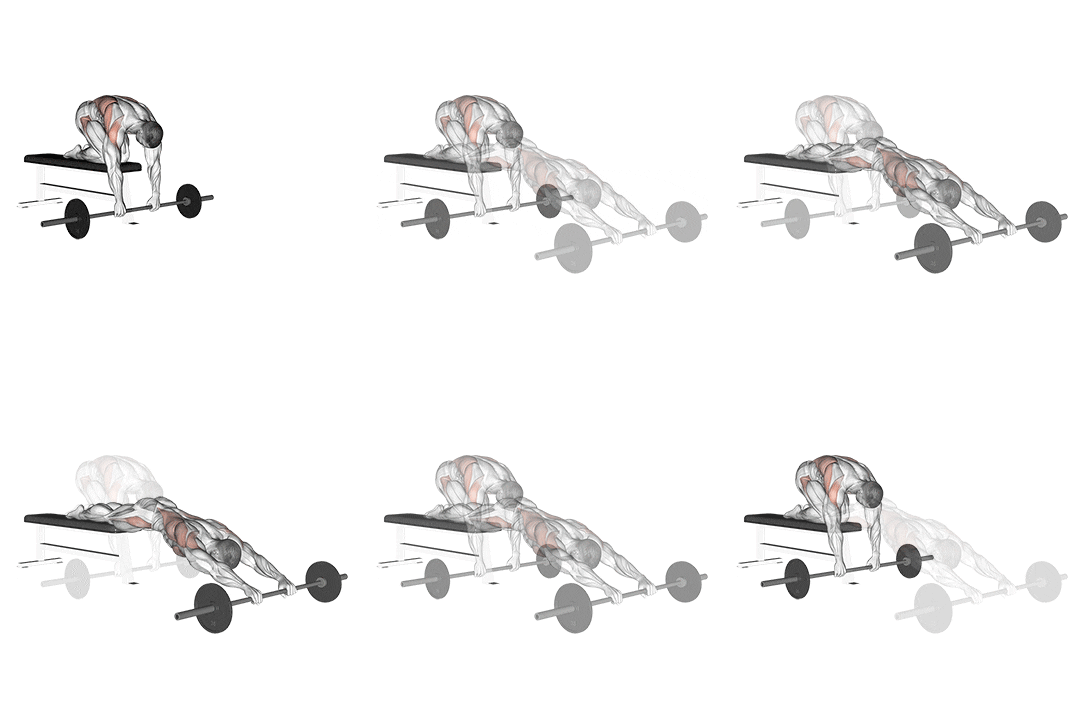
The barbell rollout from the bench is an advanced core exercise that targets the abdominal muscles, including the rectus abdominis, obliques, and deep stabilizing muscles of the core. This variation adds an extra challenge by performing the exercise with the upper body elevated on a bench, increasing the range of motion and intensity. ## Instructions 1. Place a bench parallel to the direction you'll be rolling the barbell. 2. Kneel down in front of the bench and position a barbell on the floor, perpendicular to the bench. 3. Grasp the barbell with an overhand grip, slightly wider than shoulder-width apart. 4. Place your forearms and elbows on the bench, positioning them about shoulder-width apart. 5. Engage your core muscles and maintain a neutral spine throughout the exercise. 6. Begin the movement by slowly rolling the barbell forward, extending your body along with it. 7. As you roll out, keep your arms straight, shoulders down, and maintain a strong core. 8. Continue rolling the barbell forward until you feel a stretch in your abdominal muscles or until your body is almost fully extended. 9. Pause briefly in the extended position, then use your core muscles to pull the barbell back toward the bench. 10. Keep the movement controlled and avoid sagging or arching your lower back. 11. Return to the starting position by pulling the barbell back as far as you comfortably can while maintaining proper form. 12. Repeat for the desired number of repetitions. ## Variations - **Assisted Barbell Rollout**: If the exercise is too challenging, you can have a partner assist you by holding onto your legs or providing support as you roll out and in. - **Ab Wheel Rollout from Bench**: Instead of using a barbell, you can perform the exercise with an ab wheel or exercise wheel while keeping your forearms and elbows on the bench. ## Muscles Worked - Rectus abdominis (six-pack muscles) - Obliques - Transverse abdominis - Deep stabilizing muscles of the core ## Common Mistakes - **Using momentum**: Avoid using momentum or relying solely on the arms to roll the barbell. The movement should be controlled and driven by the core muscles. - **Overarching or sagging the back**: Maintain a neutral spine throughout the exercise. Avoid arching your lower back or allowing it to sag. - **Insufficient core engagement**: Remember to engage your core muscles throughout the movement. This will help stabilize your body and maximize the effectiveness of the exercise. ## Safety Precautions - If you have any pre-existing back or shoulder issues, it's advisable to consult with a qualified fitness professional or healthcare provider before attempting the barbell rollout from the bench. - Start with a lighter weight or progression, and gradually increase the load as you become comfortable with the exercise. - Ensure the bench is stable and secure before performing the exercise. - Listen to your body and stop the exercise if you experience any pain or discomfort.
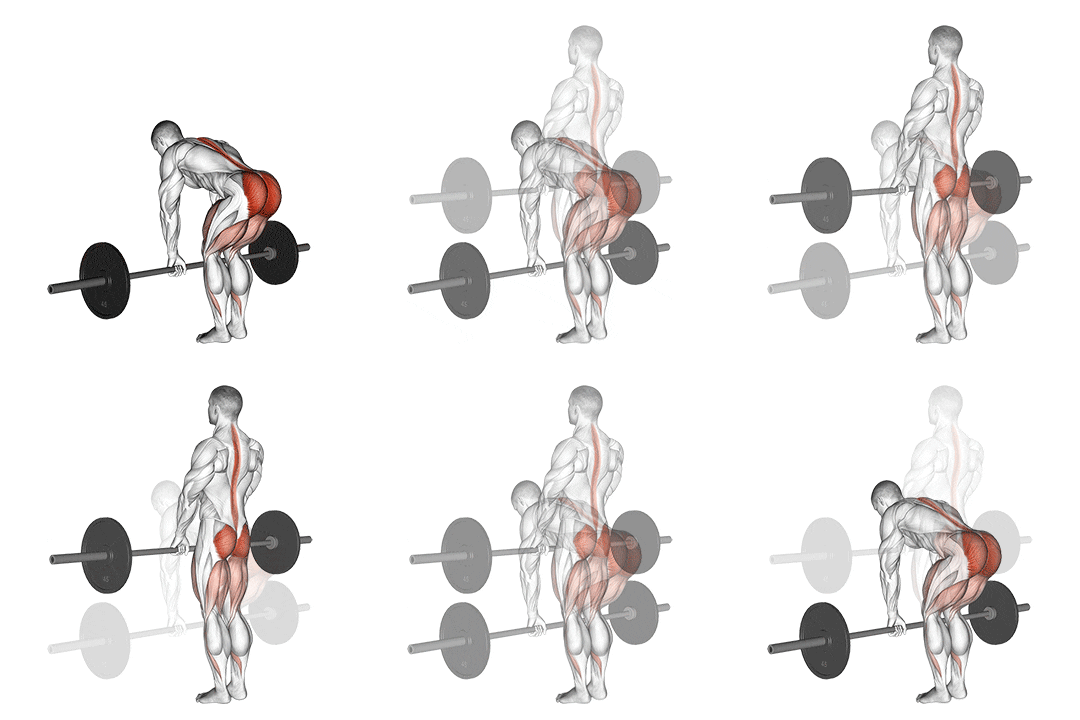
The barbell Romanian deadlift (RDL) is a compound exercise that primarily targets the posterior chain muscles, including the hamstrings, glutes, and lower back. It involves hinging at the hips and lowering the barbell while maintaining a slight bend in the knees, placing a significant emphasis on the hip and hamstring muscles. The RDL helps improve strength, muscular development, and overall posterior chain function. ## Instructions 1. Begin by standing with your feet shoulder-width apart and the barbell in front of you on the floor. 2. Position your hands on the barbell using an overhand grip, slightly wider than shoulder-width apart. 3. Engage your core muscles and maintain a neutral spine throughout the exercise. 4. Soften your knees and initiate the movement by pushing your hips back while maintaining a slight bend in the knees. 5. Keep your chest up and your back straight as you hinge at the hips, allowing the barbell to descend in a controlled manner. 6. Lower the barbell by keeping it close to your body, sliding it down your thighs, and maintaining a slight bend in your knees. 7. Continue descending until you feel a stretch in your hamstrings or until your torso is parallel to the floor. 8. Pause briefly in the stretched position, then reverse the movement by driving your hips forward and standing up, pulling the barbell back up to the starting position. 9. Keep the movement controlled throughout the exercise. 10. Repeat for the desired number of repetitions. ## Variations - **Dumbbell Romanian Deadlift**: If a barbell is not available, you can perform the exercise with dumbbells held in each hand, allowing for more freedom of movement. - **Single-Leg Romanian Deadlift**: This variation involves performing the exercise with one leg at a time, which increases the challenge on balance and stability while targeting each leg individually. ## Muscles Worked - Hamstrings (biceps femoris, semitendinosus, semimembranosus) - Glutes (gluteus maximus) - Lower back (erector spinae) - Calves (gastrocnemius, soleus) - Core muscles for stabilization ## Common Mistakes - **Rounding the back**: Maintain a neutral spine throughout the exercise and avoid rounding your back. Keep your chest up and engage your core muscles to support your back. - **Using too much weight**: Start with a lighter weight and focus on proper form and technique before progressing to heavier loads. Using excessive weight can compromise your form and increase the risk of injury. - **Locking the knees**: Maintain a slight bend in the knees throughout the movement. Locking your knees can put excessive stress on the joint and reduce the effectiveness of the exercise. - **Not maintaining tension in the hamstrings**: Keep tension on the hamstrings throughout the movement. Avoid relaxing or letting the weight pull your hips down too far, as this can limit the engagement of the target muscles. ## Safety Precautions - Prioritize proper form and technique over using heavy weights. - Start with a thorough warm-up to prepare your muscles and joints for the exercise. - Keep the barbell close to your body throughout the movement to maintain balance and stability. - If you have any pre-existing back or hamstring issues, consult with a qualified fitness professional or healthcare provider before attempting the barbell Romanian deadlift. - Listen to your body and stop the exercise if you experience any pain or discomfort.
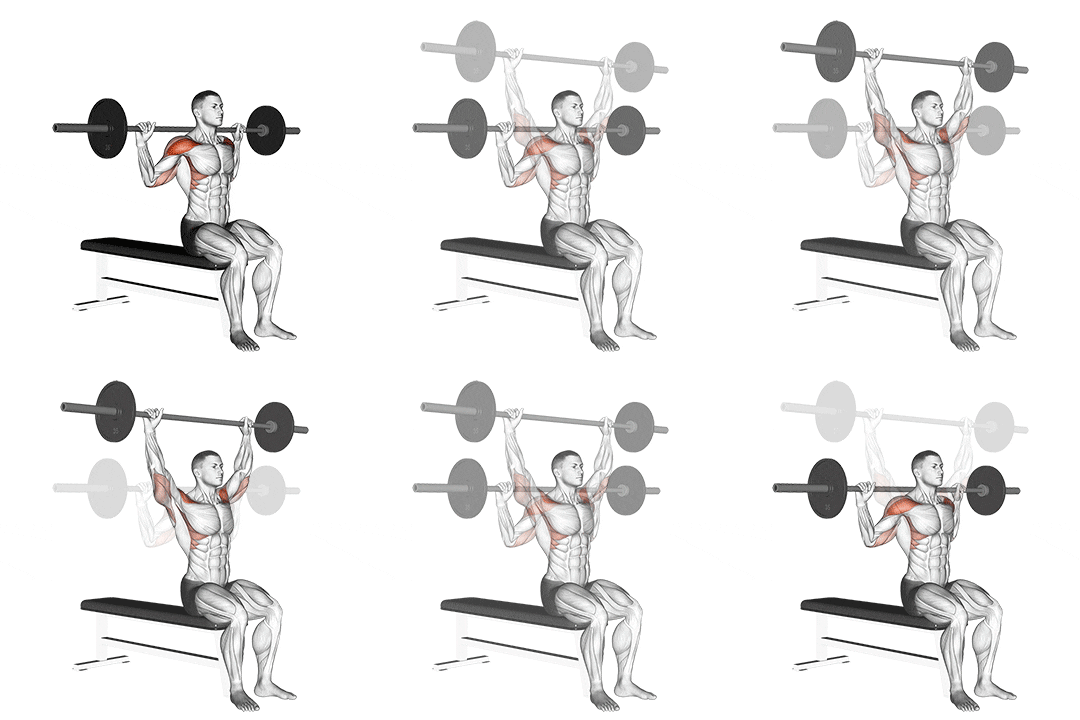
The barbell seated behind-head military press, also known as the barbell seated press, is a compound exercise that primarily targets the shoulder muscles, particularly the deltoids (shoulder muscles) and the triceps. It involves pressing a barbell from a seated position behind the head to an overhead position. This exercise helps develop upper body strength and shoulder stability. ## Instructions 1. Start by sitting on a bench with a backrest that supports your lower back. Place your feet flat on the floor, shoulder-width apart. 2. Grasp the barbell with a pronated grip (palms facing forward) slightly wider than shoulder-width apart. Lift the barbell from a rack or have a spotter hand it to you. 3. Raise the barbell to shoulder level, holding it behind your head with your elbows bent and pointing forward. 4. Engage your core muscles and maintain a neutral spine throughout the exercise. 5. Begin the movement by pressing the barbell overhead, extending your arms fully while keeping the barbell in line with the back of your head. 6. Pause briefly at the top position with your arms fully extended, but without locking your elbows. 7. Lower the barbell back down behind your head, returning to the starting position with your elbows bent and the barbell at shoulder level. 8. Repeat for the desired number of repetitions. ## Variations - **Dumbbell Seated Behind-Head Press**: If a barbell is not available, you can perform the exercise using dumbbells. Hold a dumbbell in each hand with your palms facing forward, and follow the same instructions for the seated behind-head press. - **Smith Machine Seated Behind-Head Press**: The Smith machine can be used for added stability. Set the bar of the Smith machine to an appropriate height, sit on a bench beneath it, and follow the same instructions for the exercise. ## Muscles Worked - Deltoids (shoulder muscles) - Triceps - Trapezius - Upper chest muscles (clavicular head of pectoralis major) ## Common Mistakes - **Lifting too heavy**: Start with a weight that allows you to maintain proper form and gradually increase the load as you become comfortable with the exercise. - **Leaning excessively forward or backward**: Maintain an upright posture throughout the movement. Avoid excessive leaning forward or backward, as it can strain the lower back or compromise stability. - **Not fully extending the arms**: Ensure that you fully extend your arms at the top of the movement without locking your elbows. - **Lowering the barbell too far**: Avoid lowering the barbell too far behind your head, as it can strain the shoulder joint. Lower it to shoulder level and maintain control. ## Safety Precautions - If you have any pre-existing shoulder or back issues, it's advisable to consult with a qualified fitness professional or healthcare provider before attempting the barbell seated behind-head military press. - Perform the exercise in a controlled manner, focusing on proper form and technique. - Start with a lighter weight or progression, and gradually increase the load as you become comfortable and confident with the exercise. - Keep your core engaged and maintain a stable position on the bench throughout the exercise. - Listen to your body and stop the exercise if you experience any pain or discomfort.