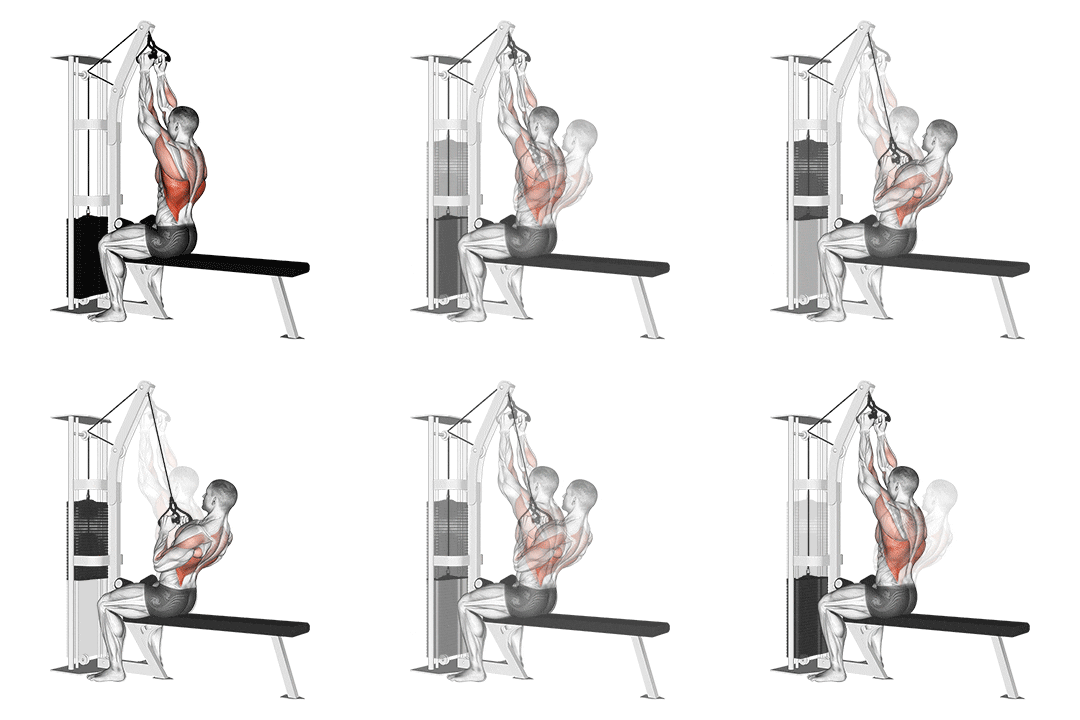
The cable seated high row, also known as the v-bar seated row, is an exercise that primarily targets the muscles of the upper back, including the rhomboids, trapezius, and rear deltoids. It is performed using a cable machine with a v-bar attachment, providing a compound movement that helps improve upper body strength and posture. ##Instructions 1. Start by adjusting the cable machine's pulley to a height slightly above your seated position. Attach a v-bar to the cable. 2. Sit on a bench or seat facing the cable machine. Place your feet flat on the floor, and ensure your back is straight. 3. Grab the v-bar with an overhand grip (palms facing down) and position your hands shoulder-width apart. 4. Sit tall and lean slightly forward from your hips while maintaining a straight back. Your arms should be fully extended, and the v-bar should be at chest level. 5. Keeping your core engaged and your back straight, exhale and retract your shoulder blades, pulling the v-bar toward your upper abdomen. 6. Squeeze your shoulder blades together at the end of the movement, focusing on contracting the muscles of the upper back. 7. Pause briefly at the peak of the contraction and then slowly extend your arms back to the starting position while inhaling. 8. Repeat the movement for the desired number of repetitions. ##Variations - Wide grip: Instead of placing your hands shoulder-width apart on the v-bar, widen your grip to target the outer back muscles more specifically. - Narrow grip: Bring your hands closer together on the v-bar to emphasize the inner back muscles. - One-arm seated high row: Perform the exercise using one arm at a time to focus on each side of the back individually. This variation can help correct muscle imbalances. ##Muscles Worked The cable seated high row primarily targets the rhomboids, trapezius (middle and lower fibers), and rear deltoids. It also engages the biceps, forearm muscles, and the muscles of the upper back and shoulders as stabilizers. ##Common Mistakes - Using excessive weight: Choose a weight that allows you to maintain proper form and control throughout the exercise. Avoid using momentum or jerking motions. - Rounded back: Keep your back straight throughout the movement. Avoid rounding your shoulders or hunching forward. - Pulling with the arms instead of the back: Focus on initiating the movement with your back muscles rather than solely relying on your arms to pull the weight. ##Safety Precautions - Maintain proper form and avoid using jerking motions to prevent strain or injury. - Start with lighter weights and gradually increase the resistance as you become more comfortable and confident with the exercise. - If you have any pre-existing back or shoulder injuries, consult with a healthcare professional before performing this exercise. - Engage your core muscles and maintain a stable seated position throughout the movement to avoid excessive strain on your lower back.
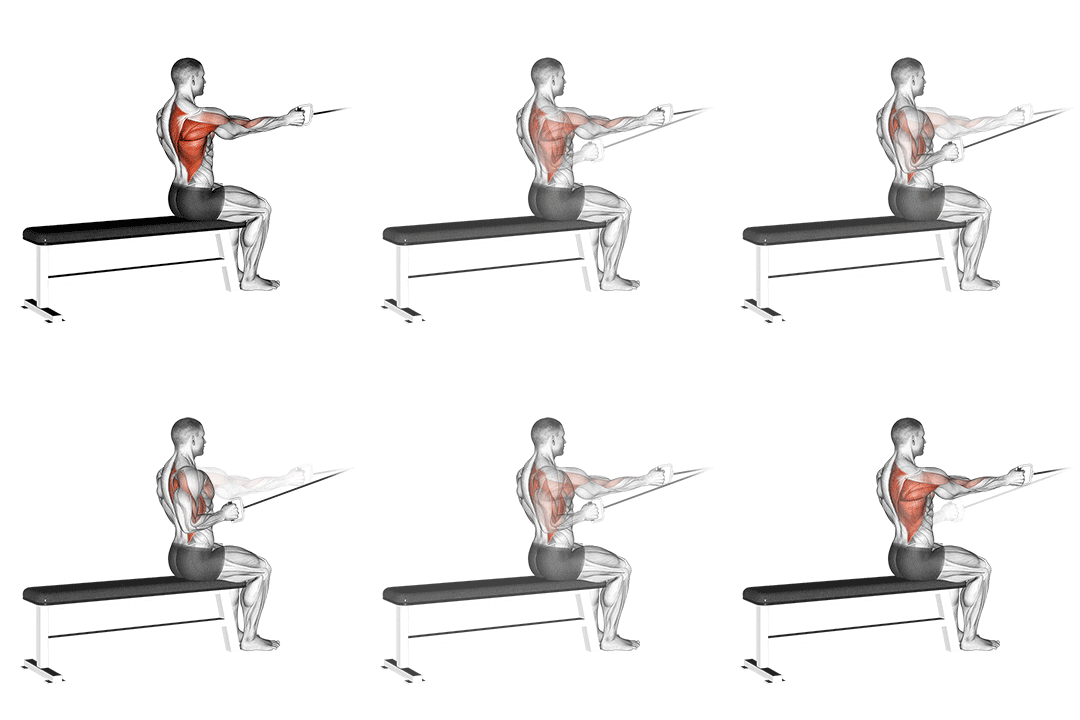
The cable seated one arm alternate row is an exercise that primarily targets the muscles of the upper back, including the rhomboids, trapezius, and rear deltoids. It is performed using a cable machine and helps to improve upper body strength, posture, and muscle balance. ##Instructions 1. Start by adjusting the cable machine's pulley to a height slightly above your seated position. Attach a single-handle attachment to the cable. 2. Sit on a bench or seat facing the cable machine. Place your feet flat on the floor, and ensure your back is straight. 3. Grab the single-handle attachment with an overhand grip (palm facing down) and extend your arm fully. Your arm should be straight and in line with the cable. 4. Sit tall and lean slightly forward from your hips while maintaining a straight back. Your arm should be fully extended. 5. Keeping your core engaged and your back straight, exhale and retract your shoulder blade, pulling the handle towards your upper abdomen while keeping your elbow close to your side. 6. Squeeze your shoulder blade at the end of the movement, focusing on contracting the muscles of the upper back. 7. Pause briefly at the peak of the contraction and then slowly extend your arm back to the starting position while inhaling. 8. Repeat the movement on the opposite side, alternating between the right and left arms for the desired number of repetitions. ##Variations - Two-arm seated alternate row: Perform the exercise with both arms simultaneously, rowing both handles towards your body at the same time. - Single-arm seated row: Use a handle or attachment that allows you to row both arms together while maintaining a single-arm grip. This variation provides a bilateral movement that targets both sides of the upper back simultaneously. ##Muscles Worked The cable seated one arm alternate row primarily targets the rhomboids, trapezius (middle and lower fibers), and rear deltoids. It also engages the biceps, forearm muscles, and the muscles of the upper back and shoulders as stabilizers. ##Common Mistakes - Using excessive weight: Choose a weight that allows you to maintain proper form and control throughout the exercise. Avoid using momentum or jerking motions. - Rounding the back: Keep your back straight throughout the movement. Avoid rounding your shoulders or hunching forward. - Pulling with the arms instead of the back: Focus on initiating the movement with your back muscles rather than solely relying on your arms to pull the weight. ##Safety Precautions - Maintain proper form and avoid using jerking motions to prevent strain or injury. - Start with lighter weights and gradually increase the resistance as you become more comfortable and confident with the exercise. - If you have any pre-existing back or shoulder injuries, consult with a healthcare professional before performing this exercise. - Engage your core muscles and maintain a stable seated position throughout the movement to avoid excessive strain on your lower back.
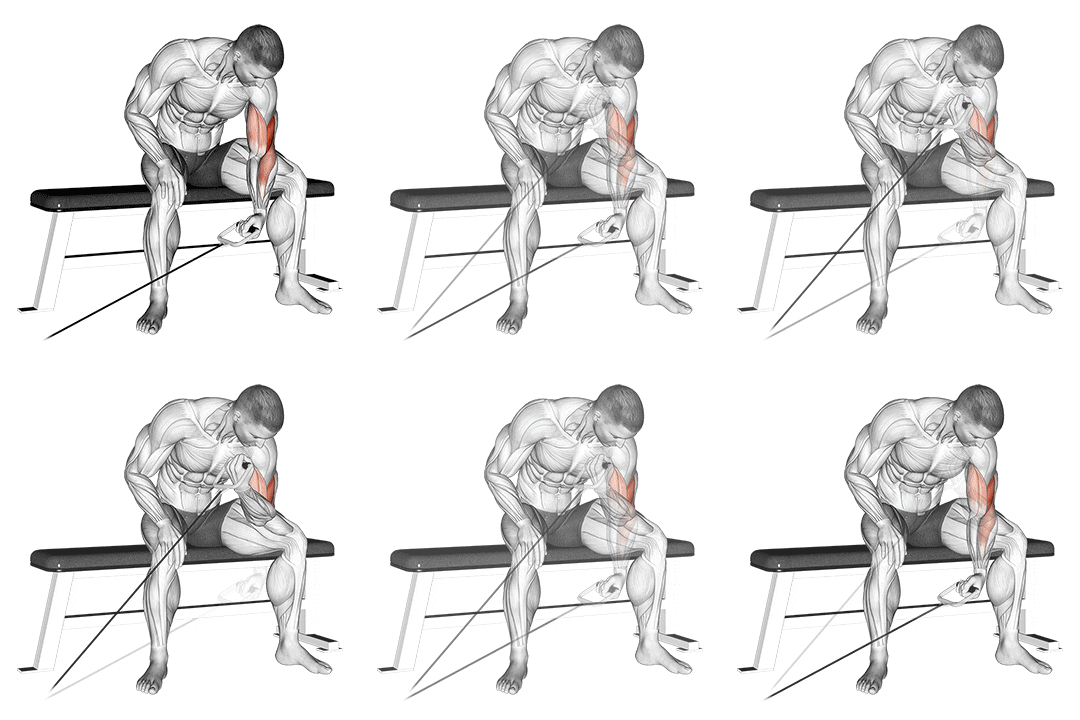
The cable seated one arm concentration curl is an exercise that targets the biceps muscles in the upper arms. It is performed using a cable machine and a bench or seat, providing stability and isolating the biceps for effective muscle engagement. ##Instructions 1. Start by adjusting the cable machine's pulley to the lowest position. Attach a single-handle attachment to the cable. 2. Sit on a bench or seat sideways to the cable machine. Position yourself in a way that the side of your working arm is closest to the cable machine. 3. Grab the single-handle attachment with an underhand grip (palm facing up) and place your elbow against the inside of your thigh on the same side. Your arm should be fully extended, and the cable should be taut. 4. Lean forward slightly, maintaining a straight back, and let your arm hang straight down with the weight. 5. Keeping your upper arm stationary, exhale and curl the handle upward by contracting your biceps. Focus on squeezing your biceps at the top of the movement. 6. Pause briefly at the top of the contraction and then slowly lower the handle back to the starting position while inhaling. 7. Repeat the movement for the desired number of repetitions and then switch sides to work the other arm. ##Variations - Seated two-arm concentration curl: Perform the exercise with both arms simultaneously, using a double-handle attachment and sitting facing the cable machine. This variation allows for bilateral movement and engagement of both biceps at the same time. - Dumbbell concentration curl: Instead of using a cable machine, use a dumbbell while maintaining the seated position. This variation provides a similar movement pattern and targets the biceps effectively. ##Muscles Worked The cable seated one arm concentration curl primarily targets the biceps brachii, which is the main muscle group in the upper arm responsible for elbow flexion. It also engages the brachialis muscle and the brachioradialis muscle to a lesser extent. ##Common Mistakes - Using excessive momentum: Avoid swinging or using your body's momentum to lift the weight. Keep your upper arm stationary throughout the exercise. - Allowing the elbow to move: Keep your elbow firmly against the inside of your thigh throughout the movement. Avoid allowing it to move away from your leg. - Not fully extending the arm: Make sure to fully extend your arm at the bottom of the movement to maximize the range of motion and stretch the biceps. ##Safety Precautions - Choose an appropriate weight that allows you to maintain proper form and control throughout the exercise. - Keep your back supported against the seat and maintain proper spinal alignment. - If you have any pre-existing elbow or shoulder injuries, consult with a healthcare professional before performing this exercise. - Start with lighter weights and gradually increase the resistance as you become more comfortable and confident with the movement.
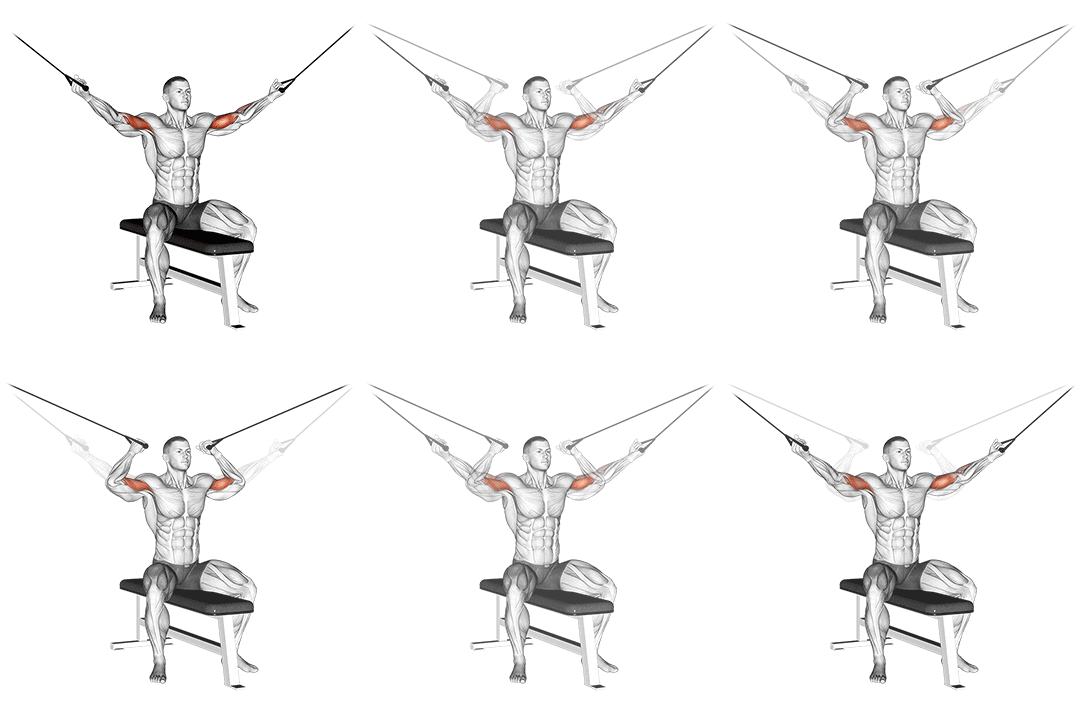
The cable seated overhead curl is an exercise that primarily targets the biceps muscles in the upper arms. It involves curling the weight from an overhead position, providing a unique stimulus to the biceps and challenging their strength and stability. ##Instructions 1. Start by adjusting the cable machine's pulley to a high position. Attach a straight bar or an EZ-bar to the cable. 2. Sit on a bench or seat facing away from the cable machine. Position yourself in a way that your feet are flat on the floor and your back is straight. 3. Grab the bar with an underhand grip (palms facing up) and keep your hands slightly wider than shoulder-width apart. 4. With your arms fully extended, raise the bar overhead so that your upper arms are parallel to the floor and your elbows are slightly bent. 5. Keep your upper arms stationary and exhale as you curl the bar upward by contracting your biceps. Focus on squeezing your biceps at the top of the movement. 6. Pause briefly at the top of the contraction and then slowly lower the bar back to the starting position while inhaling. 7. Repeat the movement for the desired number of repetitions. ##Variations - Single-arm cable seated overhead curl: Perform the exercise using one arm at a time to focus on each bicep individually. This variation can help correct muscle imbalances. - Dumbbell seated overhead curl: Instead of using a cable machine, you can use dumbbells while maintaining the seated position. This variation allows for greater freedom of movement and grip variation. ##Muscles Worked The cable seated overhead curl primarily targets the biceps brachii, which is the main muscle group in the upper arm responsible for elbow flexion. Additionally, it also engages the brachialis and brachioradialis muscles to a lesser extent. The exercise also requires stabilization from the shoulder muscles. ##Common Mistakes - Using excessive momentum: Avoid swinging or using your body's momentum to lift the weight. Keep your upper arms stationary throughout the exercise. - Allowing the elbows to flare out: Keep your elbows close to your sides and avoid allowing them to flare out during the movement. This helps maintain tension on the biceps. - Leaning back or arching the lower back: Maintain an upright posture throughout the exercise. Avoid leaning back or arching your lower back to prevent strain. ##Safety Precautions - Choose an appropriate weight that allows you to maintain proper form and control throughout the exercise. - Keep your back supported against the seat and maintain proper spinal alignment. - If you have any pre-existing elbow or shoulder injuries, consult with a healthcare professional before performing this exercise. - Start with lighter weights and gradually increase the resistance as you become more comfortable and confident with the movement.
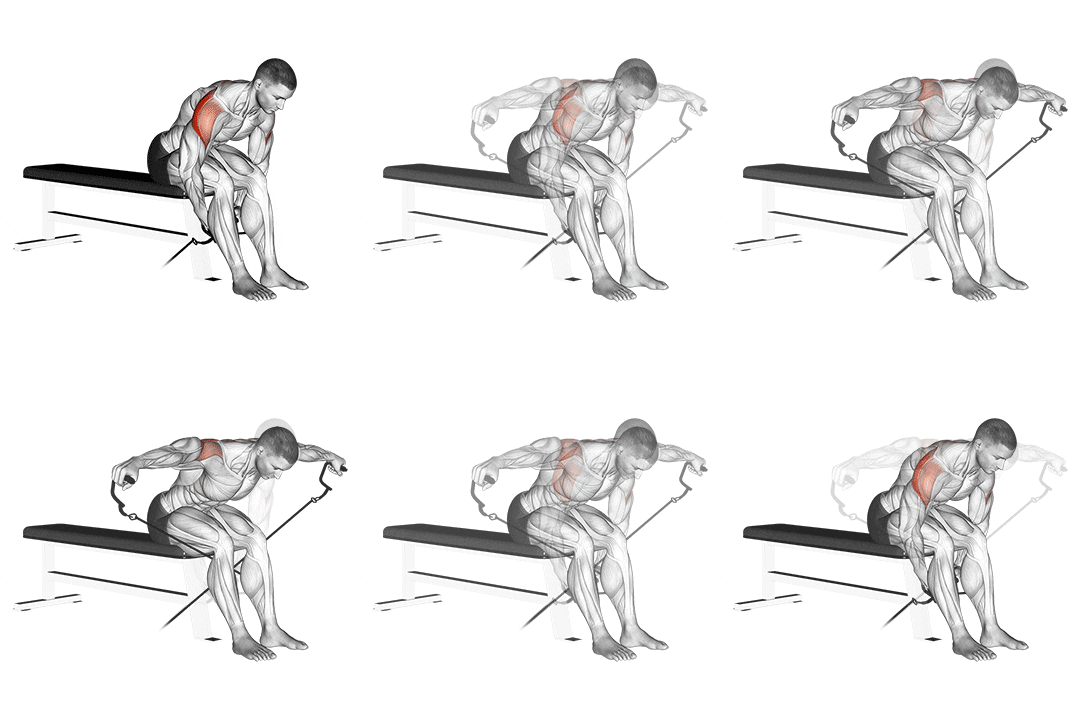
The cable seated rear lateral raise is an exercise that targets the rear deltoid muscles, which are located at the back of the shoulder. It involves lifting the arms backward against resistance, effectively working the posterior shoulder muscles. ##Instructions 1. Start by adjusting the cable machine's pulleys to a low position. Attach two handles or D-handles to the cables. 2. Sit on a bench or seat facing the cable machine. Position yourself in a way that your feet are flat on the floor and your back is straight. 3. Grab the handles or D-handles with an overhand grip (palms facing down) and keep your arms extended straight in front of you. 4. Keeping a slight bend in your elbows, inhale and exhale as you pull the handles backward and outward, squeezing your shoulder blades together. 5. Continue raising your arms backward until they are in line with your shoulders or slightly higher. Keep your core engaged and maintain a slight bend in your elbows throughout the movement. 6. Pause briefly at the top of the movement, feeling the contraction in your rear deltoids. 7. In a controlled manner, inhale and return your arms to the starting position, keeping tension on the rear deltoids. 8. Repeat the movement for the desired number of repetitions. ##Variations - Seated rear lateral raise with single-arm: Perform the exercise using one arm at a time to focus on each side individually. This variation can help identify and correct muscle imbalances. - Standing cable rear lateral raise: Instead of sitting, perform the exercise in a standing position, using the same cable machine setup. This variation adds an element of balance and engages additional stabilizer muscles. ##Muscles Worked The cable seated rear lateral raise primarily targets the rear deltoid muscles, which are responsible for shoulder extension and horizontal abduction. Additionally, it also engages the upper back muscles, including the rhomboids and trapezius, as well as the posterior fibers of the deltoids. ##Common Mistakes - Using excessive weight: Start with lighter weights to ensure proper form and prevent strain. Focus on maintaining control throughout the movement. - Rounding the back: Keep your back straight and avoid rounding your shoulders or hunching forward. Engage your core to maintain stability. - Using momentum: Avoid swinging or using momentum to lift the weights. Focus on controlled and deliberate movements. ##Safety Precautions - Choose an appropriate weight that allows you to maintain proper form and control throughout the exercise. - Keep your back supported against the seat and maintain proper spinal alignment. - If you have any pre-existing shoulder or back injuries, consult with a healthcare professional before performing this exercise. - Start with lighter weights and gradually increase the resistance as you become more comfortable and confident with the movement. - If you experience any pain or discomfort during the exercise, stop immediately and seek guidance from a qualified fitness professional.
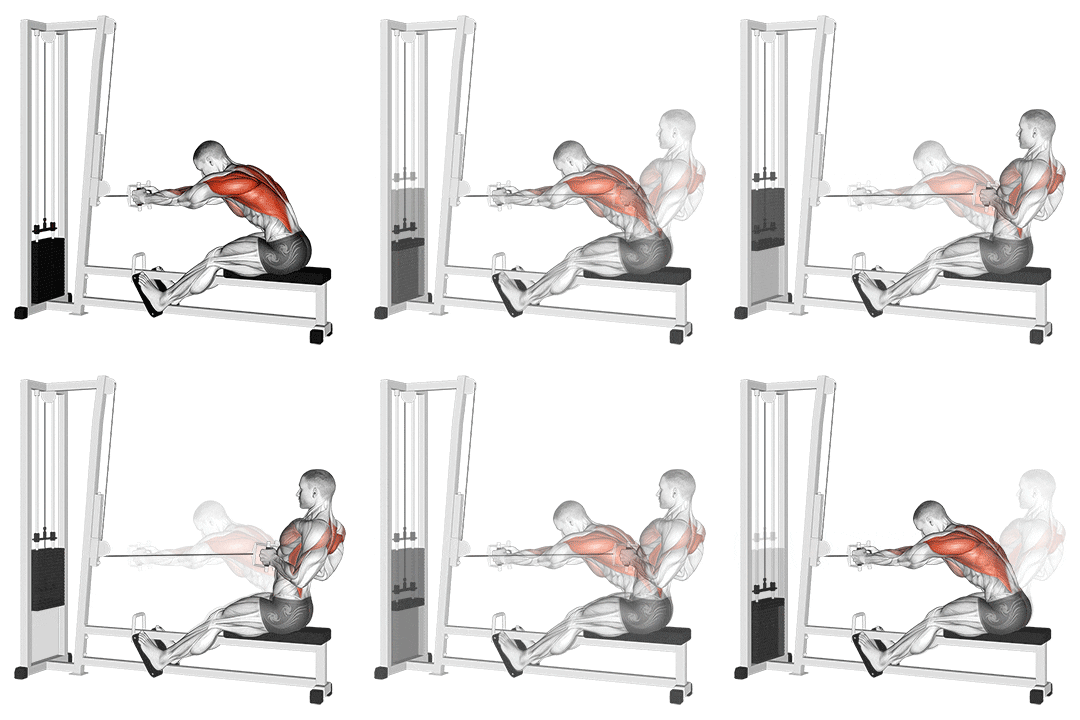
The cable seated row is a compound exercise that primarily targets the muscles of the back, including the latissimus dorsi (lats), rhomboids, and trapezius. It also engages the biceps, forearms, and rear deltoids. The exercise involves pulling a cable attachment towards the body while seated, mimicking a rowing motion. ##Instructions 1. Sit on a bench or seat in front of a cable machine with your feet placed firmly on the footrest or the floor. 2. Adjust the cable machine's pulleys to a low position and attach a straight bar or a handle. 3. Grab the bar or handle with an overhand grip (palms facing down) and extend your arms forward, keeping a slight bend in your elbows. 4. Lean forward slightly, maintain a straight back, and avoid rounding your shoulders. 5. Inhale and exhale as you pull the bar or handle towards your abdomen by retracting your shoulder blades and bending your elbows. 6. Squeeze your back muscles at the end of the movement, holding the contraction for a moment. 7. Slowly release the tension and extend your arms forward again while inhaling. 8. Repeat the movement for the desired number of repetitions. ##Variations - Underhand grip: Instead of using an overhand grip, you can use an underhand grip (palms facing up). This variation places more emphasis on the biceps muscles. - Single-arm cable seated row: Perform the exercise using one arm at a time to focus on each side individually. This variation can help identify and correct muscle imbalances. ##Muscles Worked The cable seated row primarily targets the following muscles: - Latissimus dorsi (lats): Located in the back, these muscles contribute to overall back width and provide pulling power. - Rhomboids: Situated between the shoulder blades, the rhomboids retract the scapulae and help maintain proper posture. - Trapezius: The upper, middle, and lower fibers of the trapezius muscles work together to stabilize and move the shoulder blades. - Biceps: The biceps muscles act as secondary movers during the pulling motion of the exercise. - Forearms: The muscles in the forearms, such as the brachioradialis and brachialis, assist in gripping and pulling the handle. ##Common Mistakes - Rounding the back: Maintain a straight back throughout the exercise to avoid excessive strain on the spine. - Using momentum: Avoid using momentum to complete the movement. Instead, focus on controlled and deliberate pulling. - Pulling with the arms only: Initiate the movement by squeezing your shoulder blades together and engaging the back muscles. The arms should act as levers rather than the primary movers. ##Safety Precautions - Choose an appropriate weight that allows you to maintain proper form and control throughout the exercise. - Keep your back supported against the seat and maintain proper spinal alignment. - If you have any pre-existing back or shoulder injuries, consult with a healthcare professional before performing this exercise. - Start with lighter weights and gradually increase the resistance as you become more comfortable and confident with the movement. - If you experience any pain or discomfort during the exercise, stop immediately and seek guidance from a qualified fitness professional.
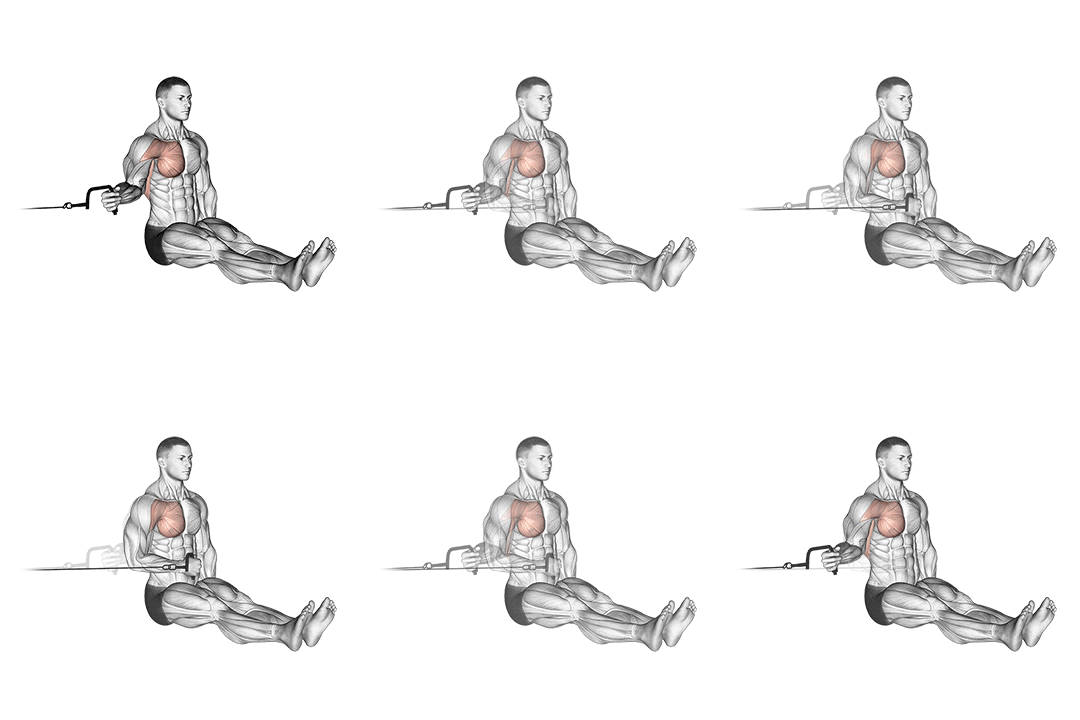
The cable seated shoulder internal rotation exercise targets the muscles involved in internal rotation of the shoulder joint, specifically the subscapularis muscle. This exercise helps to strengthen and stabilize the shoulder joint, improve posture, and enhance overall upper body strength and function. ##Instructions 1. Sit on a bench or seat facing the cable machine with your feet flat on the floor. 2. Adjust the cable machine's pulley to a low position and attach a handle or a rope. 3. Hold the handle or rope with your hand of the side you're targeting, and position your arm across your body with your elbow bent at a 90-degree angle. Your forearm should be parallel to the floor. 4. Keep your upper arm close to your body and your elbow tucked in. 5. Begin the movement by inhaling and exhale as you internally rotate your shoulder, moving your hand and forearm towards the midline of your body. 6. Focus on engaging the subscapularis muscle and feeling the contraction in the front of your shoulder. 7. Pause for a moment at the end of the movement and then slowly return to the starting position, controlling the weight and inhaling. 8. Repeat the movement for the desired number of repetitions and then switch to the other side. ##Variations - Single-arm cable seated shoulder internal rotation: Perform the exercise with one arm at a time to focus on each side individually. This can help identify and correct muscle imbalances. - Alternating cable seated shoulder internal rotation: Instead of performing the exercise on one side at a time, alternate between the left and right sides, creating a continuous movement. ##Muscles Worked The cable seated shoulder internal rotation primarily targets the subscapularis muscle, which is one of the four muscles that make up the rotator cuff. It is responsible for internal rotation of the shoulder joint. Additionally, this exercise also engages other muscles in the shoulder, including the teres major and the anterior deltoid. ##Common Mistakes - Using excessive weight: Start with lighter weights to ensure proper form and prevent strain. Focus on maintaining control throughout the movement. - Allowing the elbow to move away from the body: Keep your upper arm close to your body and your elbow tucked in. Avoid allowing the elbow to move away from the body, as this reduces the effectiveness of the exercise. - Overarching or rounding the back: Maintain proper posture with a neutral spine throughout the exercise. Avoid excessive arching or rounding of the back. ##Safety Precautions - Choose an appropriate weight that allows you to maintain proper form and control throughout the exercise. - Keep your back supported against the seat and maintain proper spinal alignment. - If you have any pre-existing shoulder injuries or conditions, consult with a healthcare professional before performing this exercise. - Start with lighter weights and gradually increase the resistance as you become more comfortable and confident with the movement. - If you experience any pain or discomfort during the exercise, stop immediately and seek guidance from a qualified fitness professional.
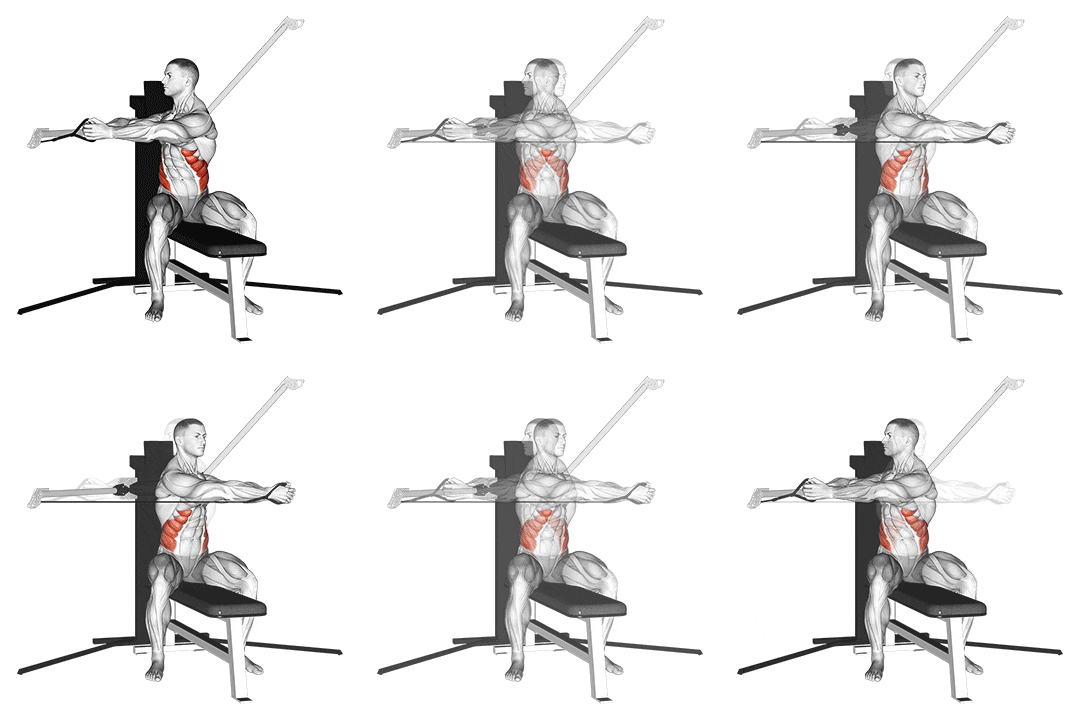
The cable seated twist is an exercise that targets the muscles of the core, particularly the obliques. It involves rotating the torso while seated and pulling the cable attachment across the body. This exercise helps strengthen the abdominal muscles, improve rotational stability, and enhance overall core strength and mobility. ##Instructions 1. Sit on a bench or seat facing the cable machine with your feet flat on the floor. 2. Adjust the cable machine's pulley to a high position and attach a handle or a rope. 3. Hold the handle or rope with both hands, gripping it firmly in front of your chest. 4. Sit tall with a straight back and engage your core muscles. 5. Begin the movement by exhaling and rotating your torso to one side, pulling the handle or rope across your body. 6. Rotate as far as comfortable, feeling the contraction in your obliques. 7. Pause briefly at the end of the rotation and then inhale as you return to the starting position. 8. Repeat the movement to the opposite side, exhaling as you rotate and inhaling as you return. 9. Continue alternating sides for the desired number of repetitions. ##Variations - Seated twist with resistance band: If a cable machine is not available, you can perform the seated twist using a resistance band attached to a stationary object. Hold the band with both hands and follow the same rotational movement. - Weighted seated twist: To increase the intensity, you can hold a weight plate or a dumbbell in front of your chest while performing the seated twist. ##Muscles Worked The cable seated twist primarily targets the obliques, which are the muscles responsible for rotational movements of the torso. It also engages the rectus abdominis (the "six-pack" muscles) and the transverse abdominis, as well as the muscles of the lower back and hips. ##Common Mistakes - Rounding the back: Maintain proper posture with a straight back throughout the exercise. Avoid rounding or hunching the shoulders. - Using momentum: Focus on controlled movements and avoid using momentum to rotate the torso. Engage the core muscles to initiate and control the movement. - Pulling with the arms: The arms should act as levers while the rotation is generated by the core muscles. Avoid relying solely on the arms to pull the cable across the body. ##Safety Precautions - Choose an appropriate weight or resistance level that allows you to maintain proper form and control throughout the exercise. - Keep your back supported against the seat and maintain proper spinal alignment. - If you have any pre-existing back or spinal conditions, consult with a healthcare professional before performing this exercise. - Start with lighter resistance and gradually increase as you become more comfortable and confident with the movement. - If you experience any pain or discomfort during the exercise, stop immediately and seek guidance from a qualified fitness professional.
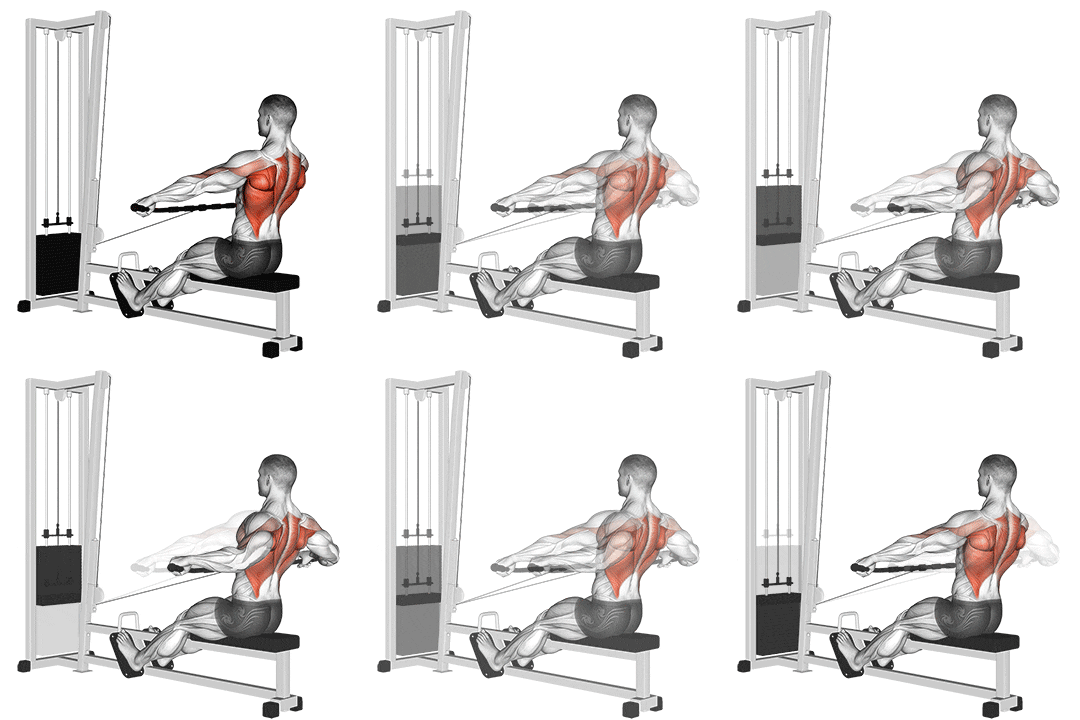
The cable seated wide-grip row is an exercise that targets the muscles of the upper back, including the latissimus dorsi, rhomboids, and rear deltoids. It involves pulling the cable attachment towards the body while seated, with a wide grip. This exercise helps to improve upper body strength, posture, and overall back development. ##Instructions 1. Sit on a bench or seat facing the cable machine with your feet flat on the floor. 2. Adjust the cable machine's pulley to a low position and attach a wide-grip handle. 3. Sit tall with a straight back and grab the handle with a wide overhand grip. 4. Extend your arms fully in front of you, maintaining a slight bend in your elbows. 5. Lean slightly forward while keeping your back straight and chest lifted. 6. Initiate the movement by squeezing your shoulder blades together and pulling the handle towards your midsection. 7. Focus on engaging the muscles of your upper back as you pull the handle towards your lower chest. 8. Keep your elbows pointed out to the sides and continue pulling until your hands are just below your chest. 9. Pause for a moment at the end of the movement, feeling the contraction in your upper back muscles. 10. Slowly extend your arms forward, returning to the starting position in a controlled manner. 11. Repeat the movement for the desired number of repetitions. ##Variations - Close-grip cable seated row: Perform the exercise with a close-grip handle to target the middle back muscles and emphasize the rhomboids. - One-arm cable seated row: Instead of using both hands on the handle, perform the exercise with one arm at a time to focus on each side individually. ##Muscles Worked The cable seated wide-grip row primarily targets the latissimus dorsi, which is the large muscle of the back responsible for adduction, extension, and rotation of the shoulder joint. It also engages the rhomboids, which retract the scapulae, and the rear deltoids, which help with shoulder extension. ##Common Mistakes - Using excessive momentum: Avoid using momentum to pull the cable. Focus on a controlled and deliberate movement throughout the exercise. - Rounded back: Maintain proper posture with a straight back and avoid rounding or hunching the shoulders. - Pulling with the arms instead of the back: The movement should be initiated by squeezing the shoulder blades together and engaging the back muscles. Avoid relying solely on the arms to pull the cable. ##Safety Precautions - Choose an appropriate weight or resistance level that allows you to maintain proper form and control throughout the exercise. - Keep your back supported against the seat and maintain proper spinal alignment. - If you have any pre-existing back or shoulder conditions, consult with a healthcare professional before performing this exercise. - Start with lighter weights and gradually increase the resistance as you become more comfortable and confident with the movement. - If you experience any pain or discomfort during the exercise, stop immediately and seek guidance from a qualified fitness professional.